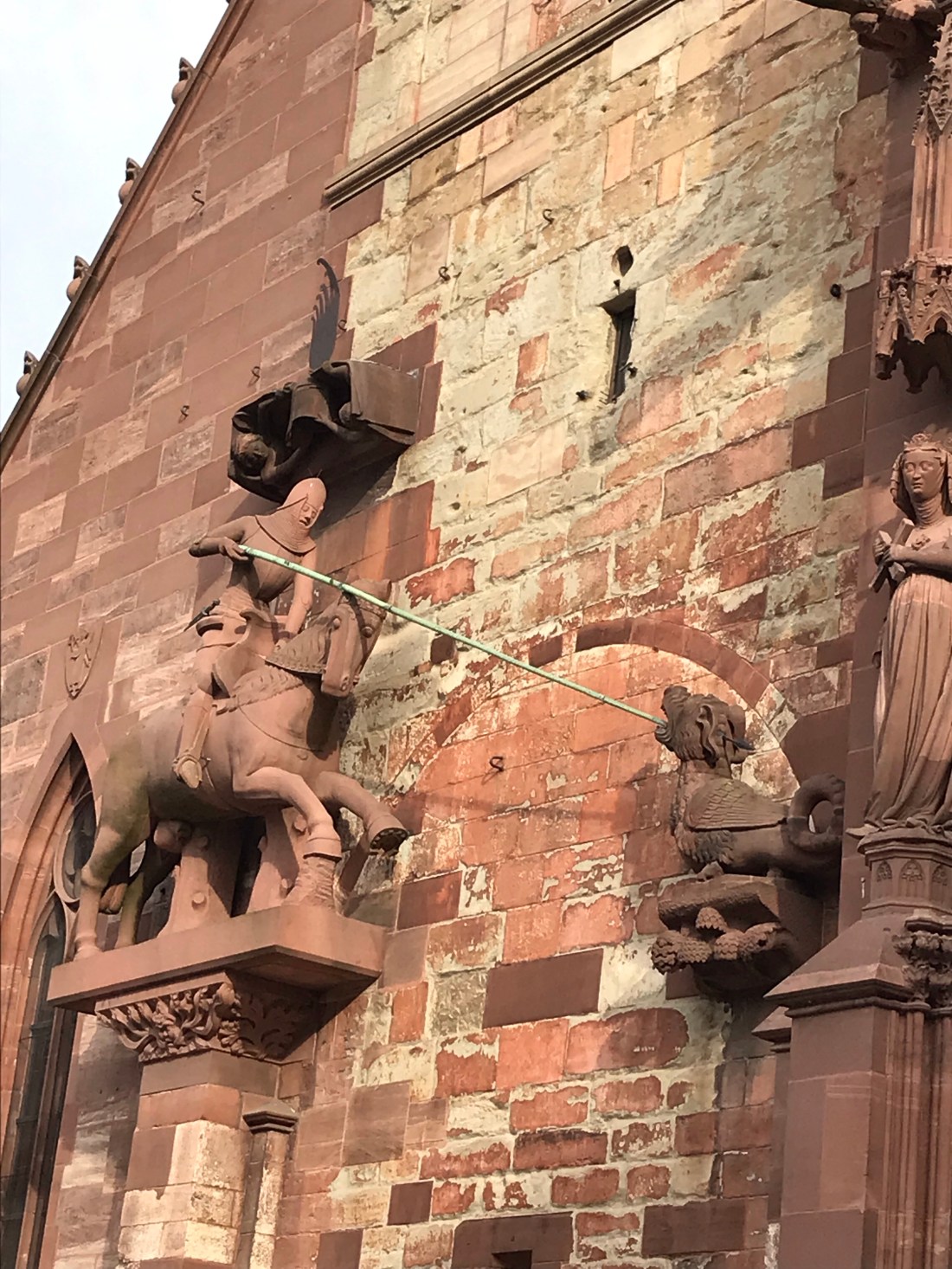
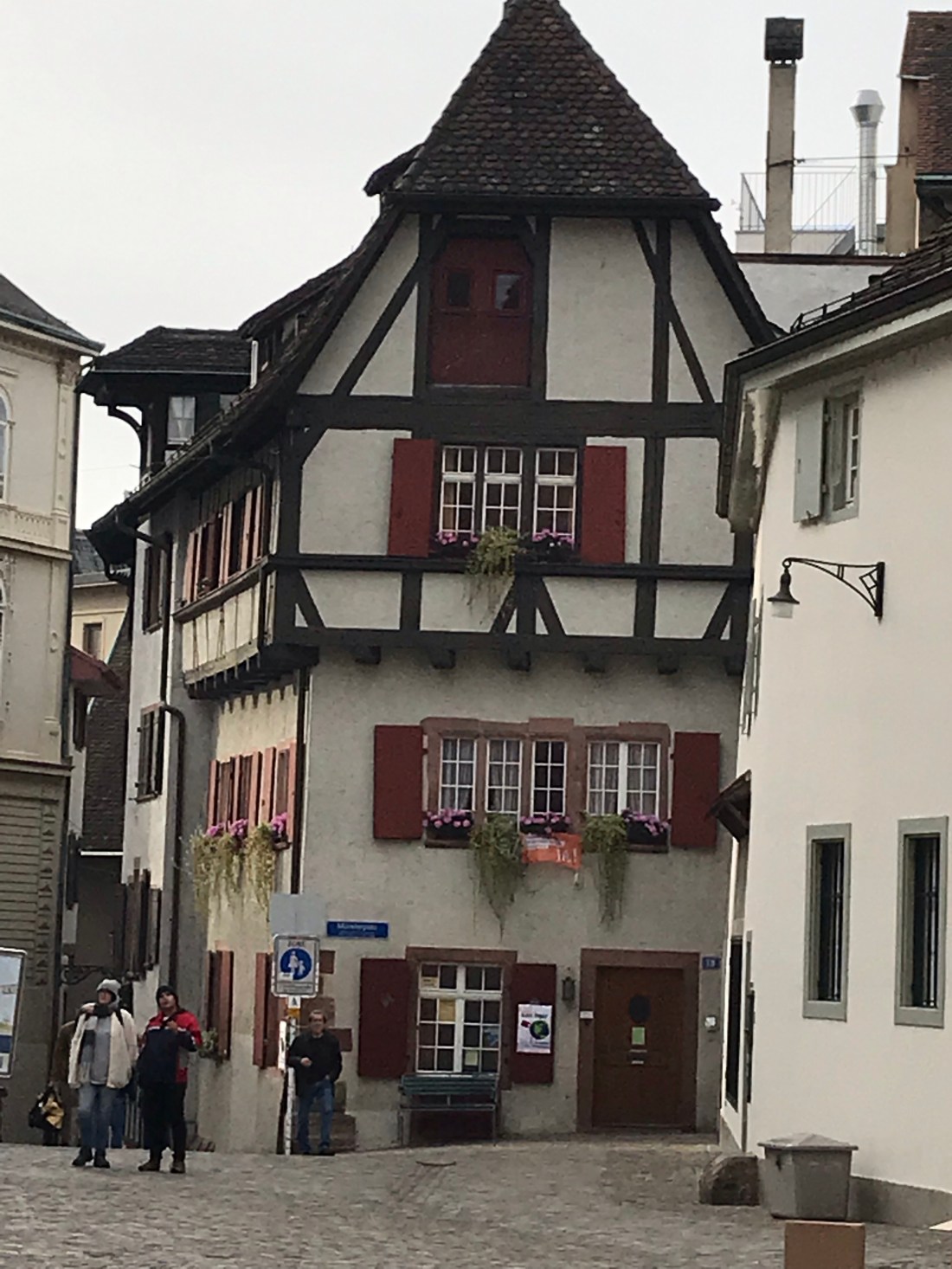
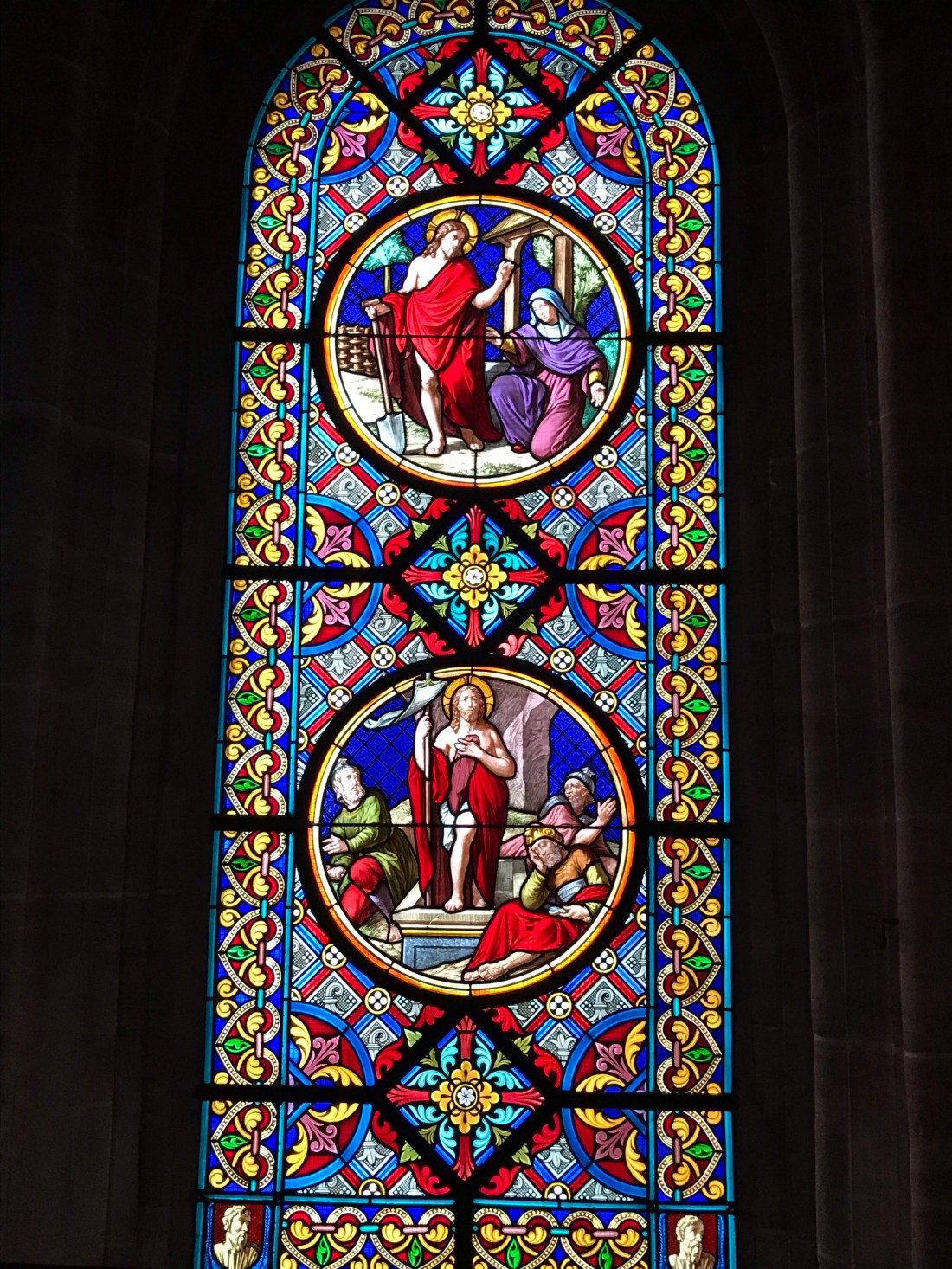
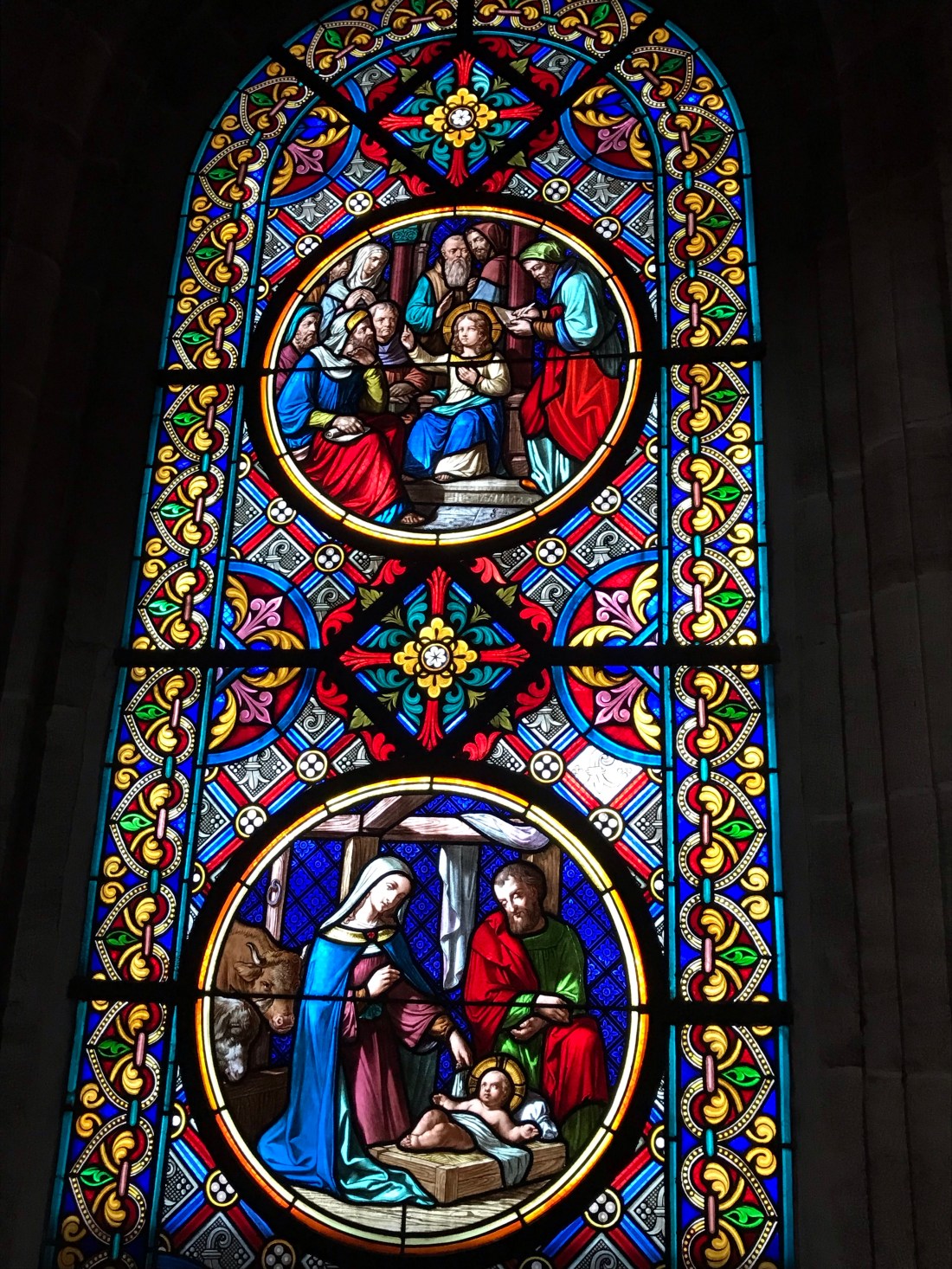
A small world

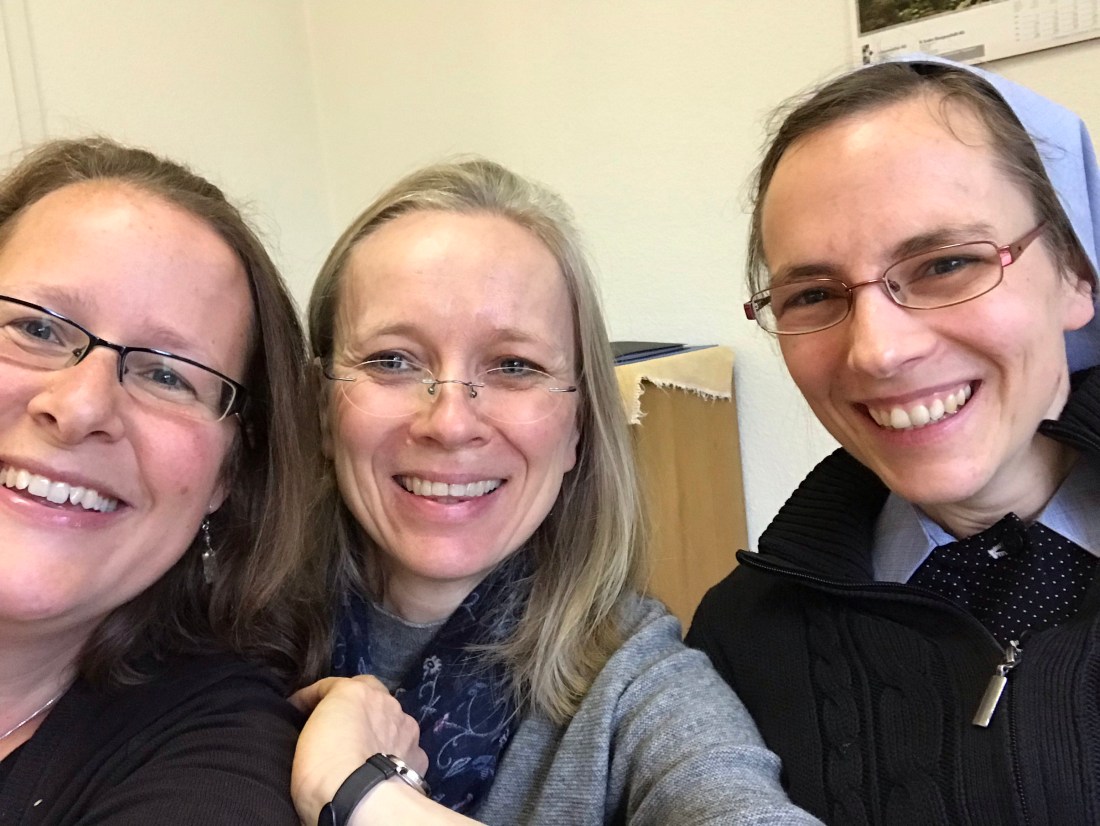
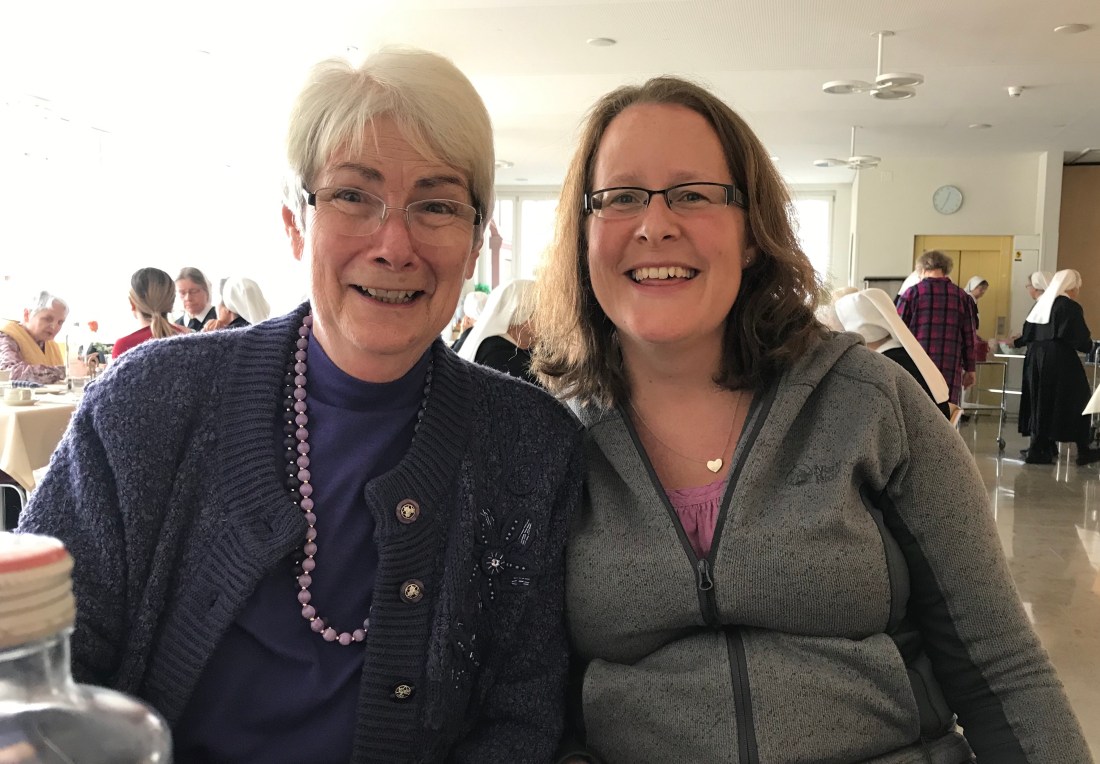
Would you believe it, over lunch on Sunday, I ended up sitting on the same table as another English guest… who turns out to also be from Sheffield, a member of a church of which my friend is the vicar, and, with her husband a great supporter of a community initiative run by a friend and colleague of mine.

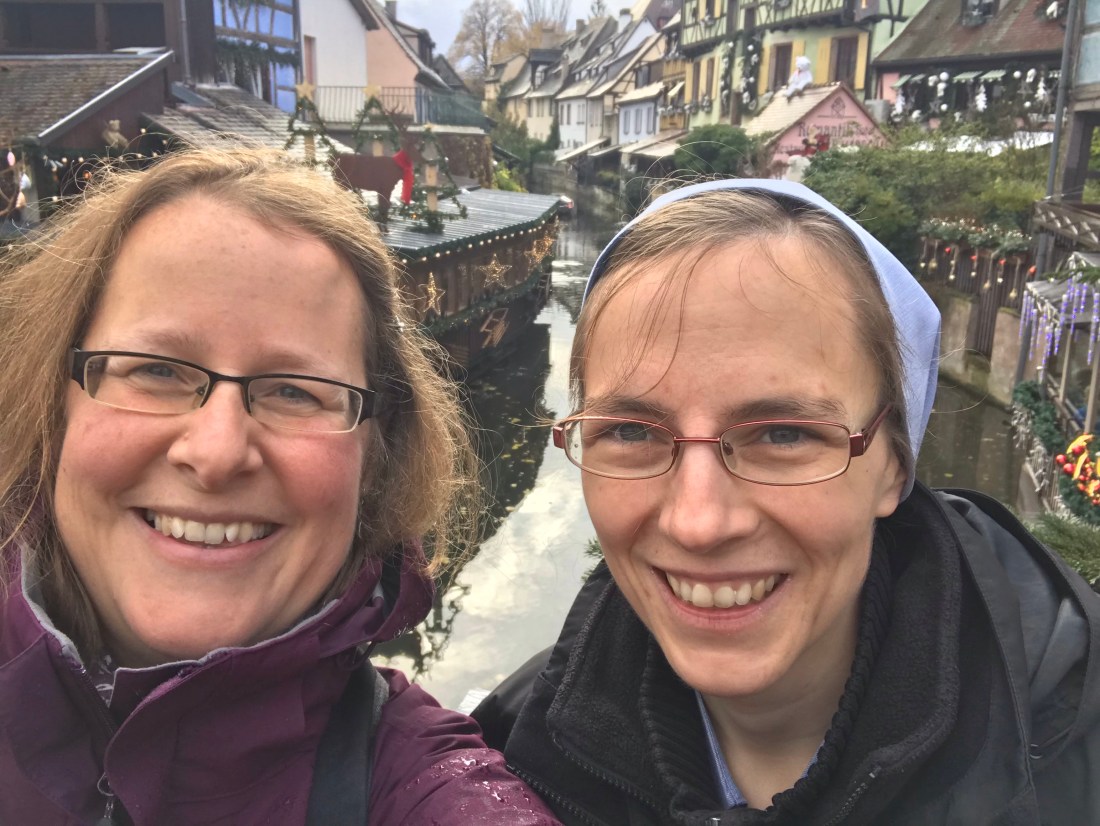
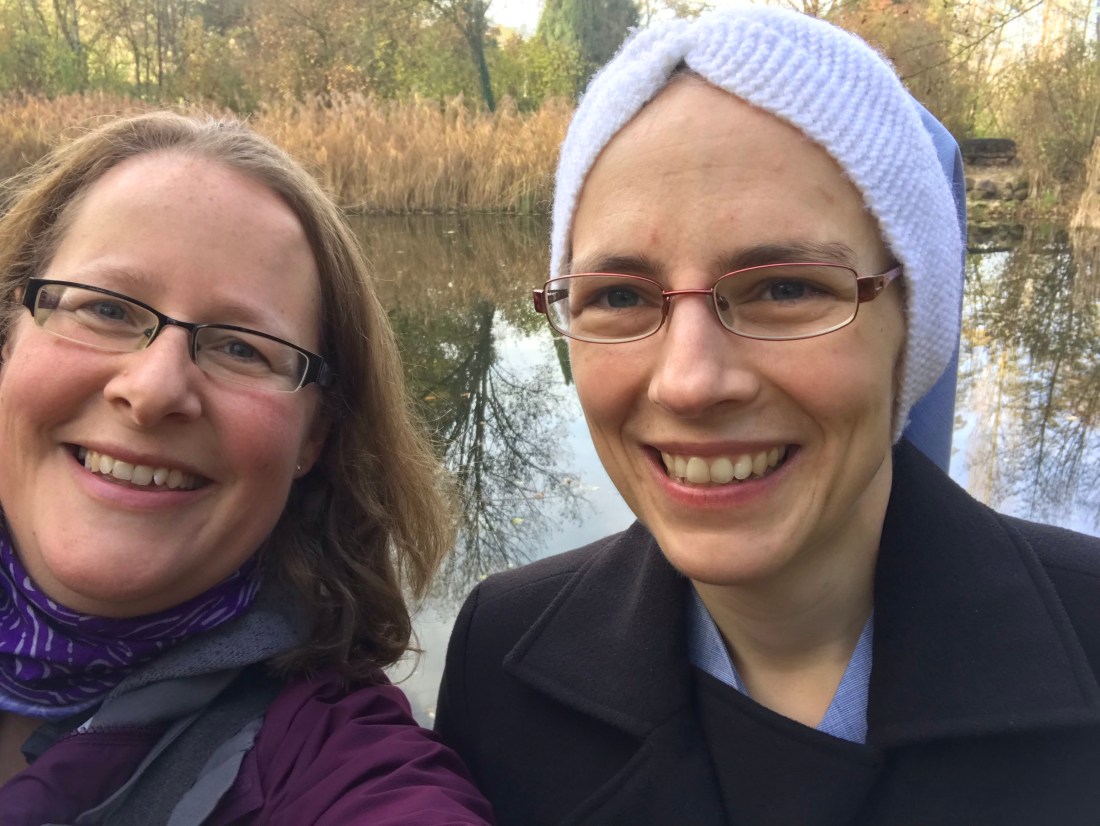
Here is Ruth, who was staying in the convent just for the weekend, to present a paper (at a conference organised by Stadtmission Basel) about her Father’s friendship with Dietrich Bonhoeffer in between the two world wars:

And then, after choir practice, where I was enthusiastically welcomed as a one off singer, I discovered that Sister Gertrude, who I’d just been singing next to all evening, had been an au pair for a vicar in Sharrow, in Sheffield in the 1960s.

And yet another of the sisters came to England a long time ago and lived and worked for a while in the town where I was born.

Well, you travel all the way round the world, stop off at a convent in Basel for a week, and meet people from home (or who at least lived in your home town at one time). Who knew?!

Borderlands

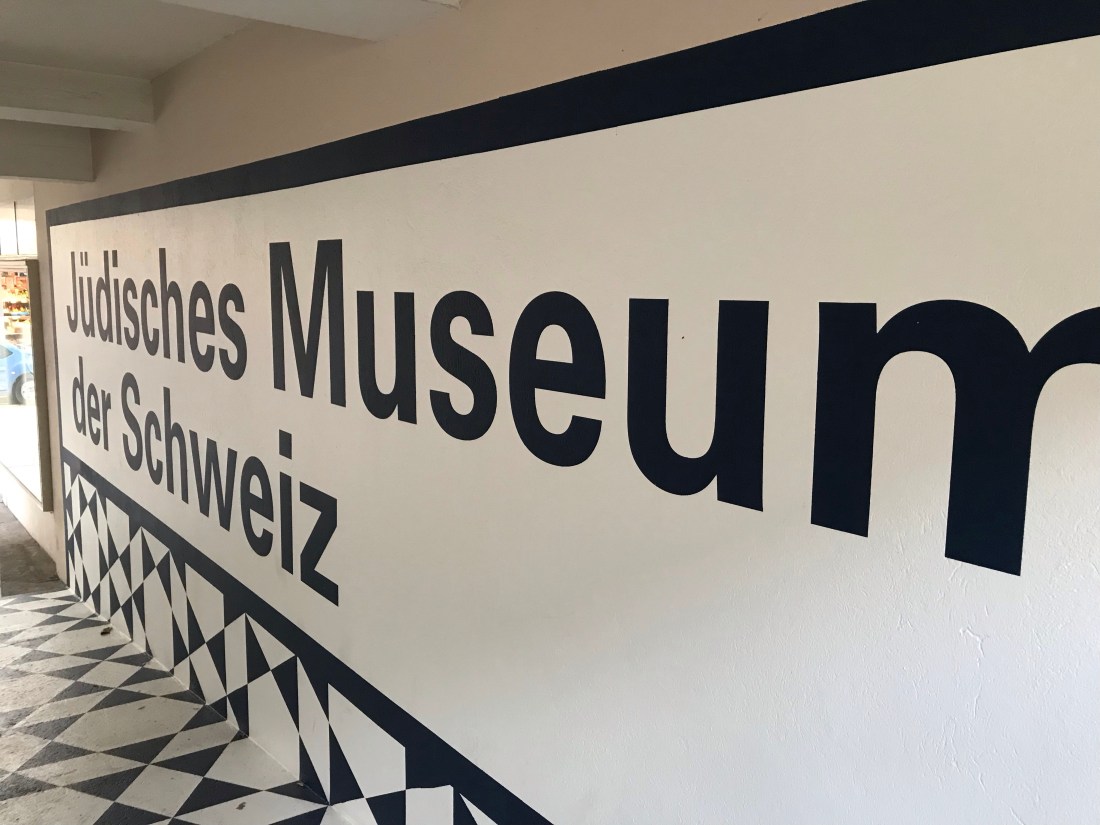
I have arrived at Kommunität Diakonissenhaus Riehen. This convent was founded in 1852 with just a few women living here. By the 1940s-50s the community had grown exponentially, and included hundreds of sisters, though not all of them were based here. Many lived embedded in local communities in various places. Now the community of 62 sisters and quite a few other inhabitants and guests connected with it is mainly housed in Riehen. I was very surprised to find such a thriving convent here, as many monastic orders in England are smaller now. I think I was picturing one building housing maybe about 12 sisters!

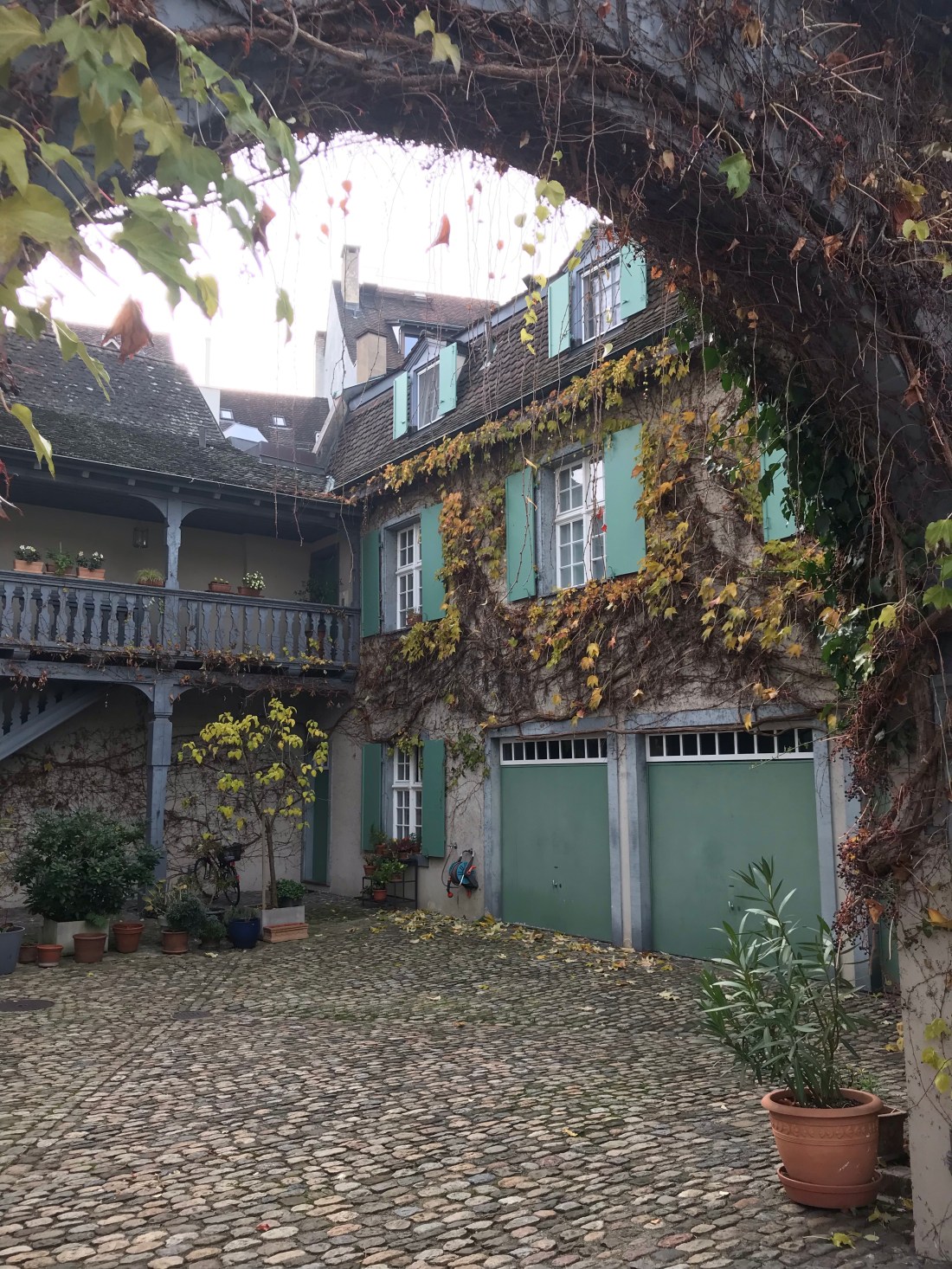
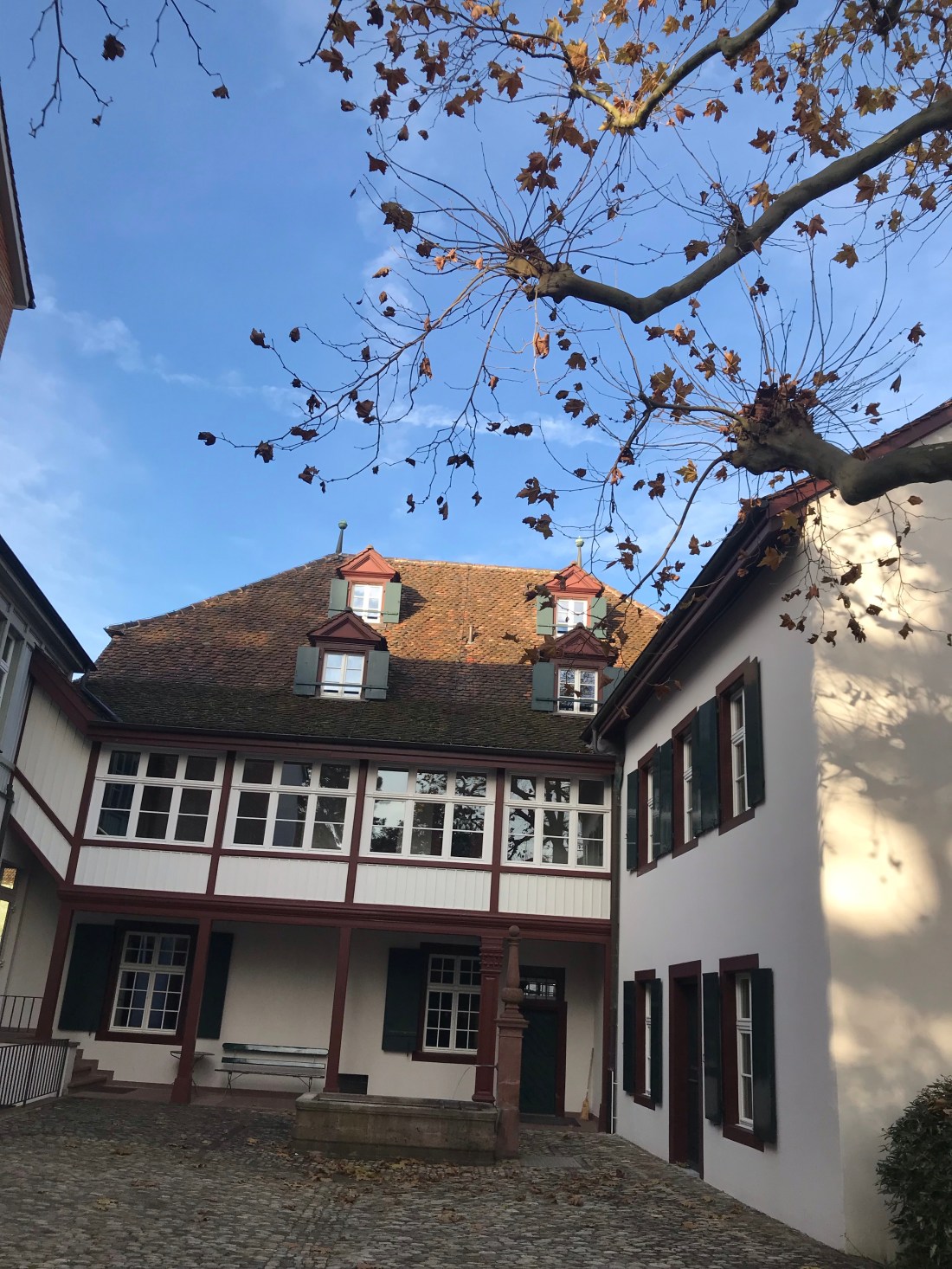
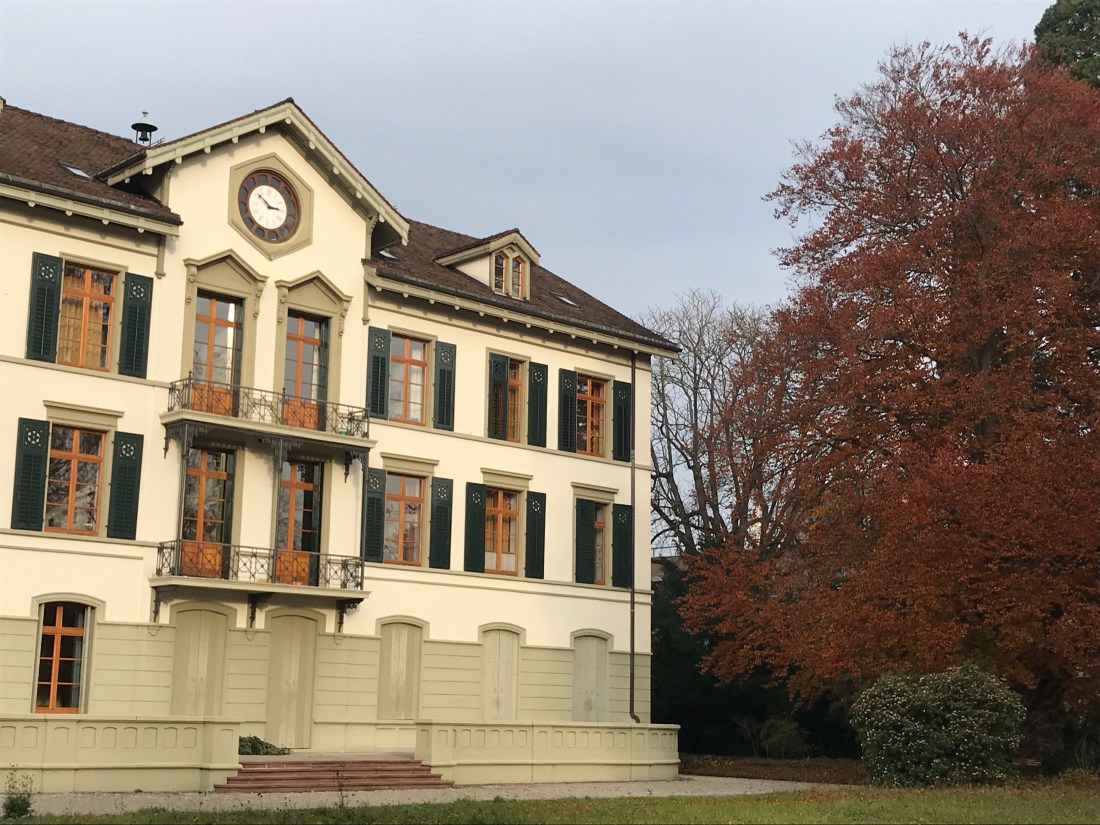
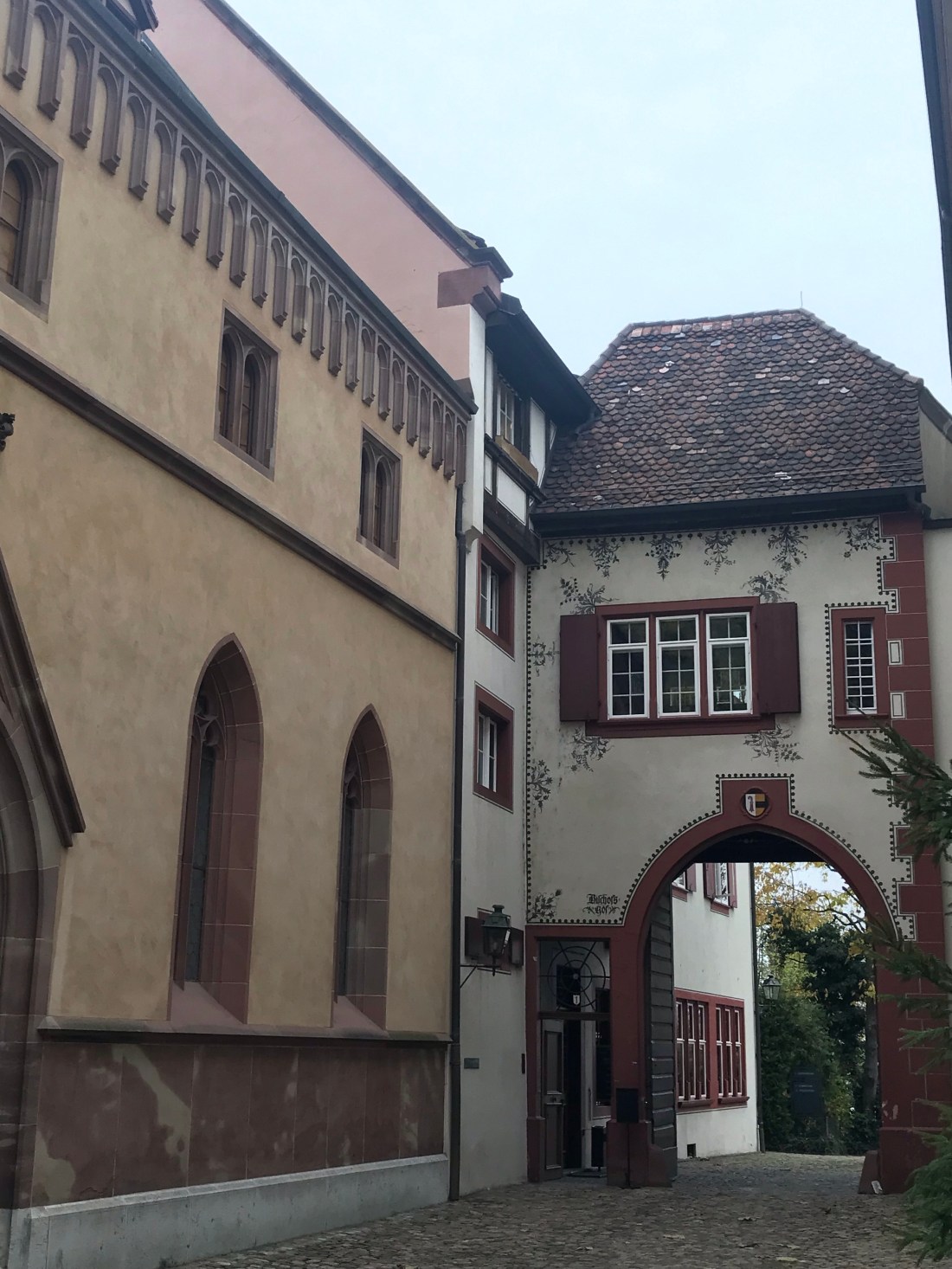
Here is the oldest original part of the convent:

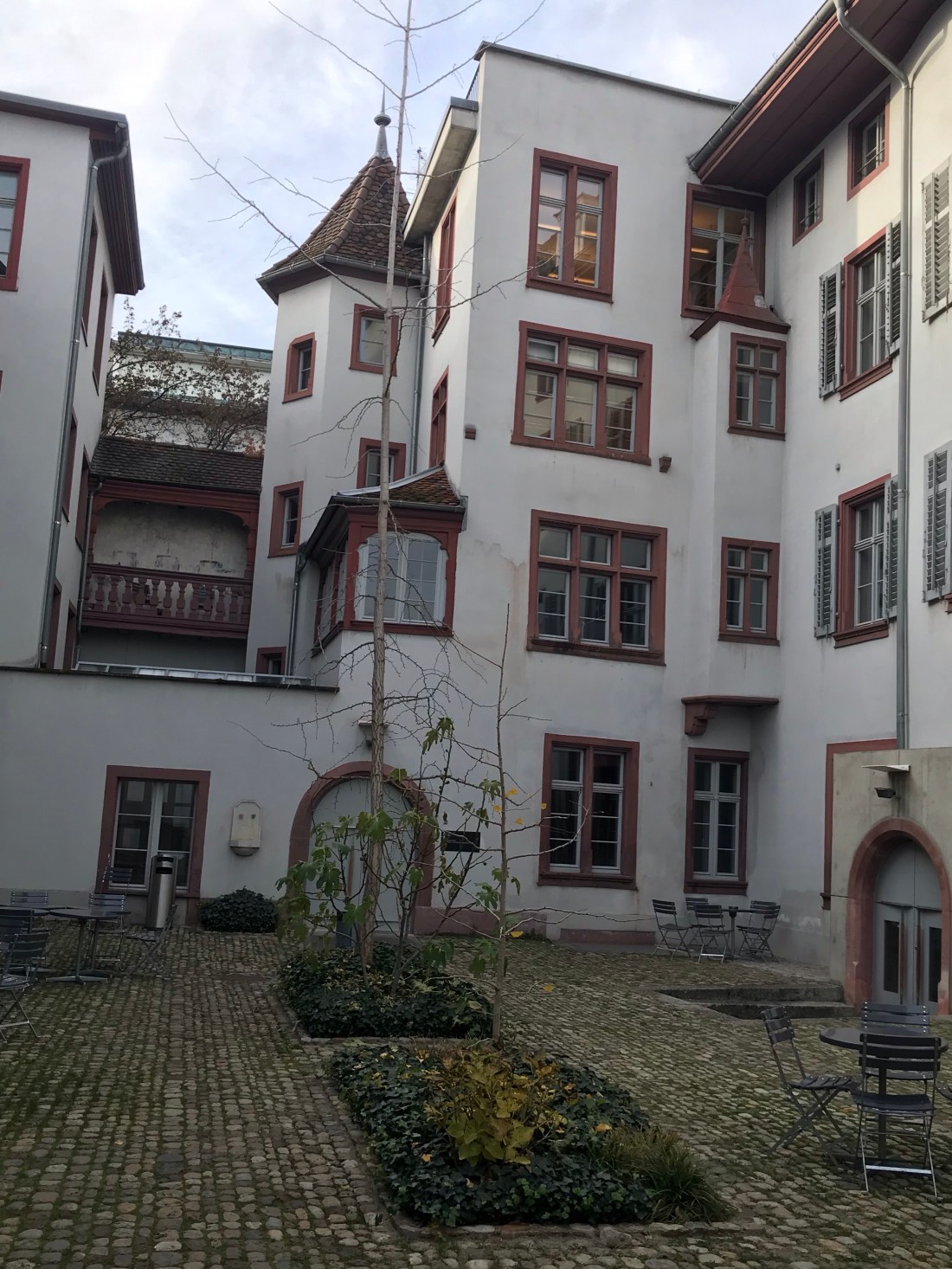
And here is the current “Mutterhaus”, where I am staying, which also includes the chapel and main dining area:

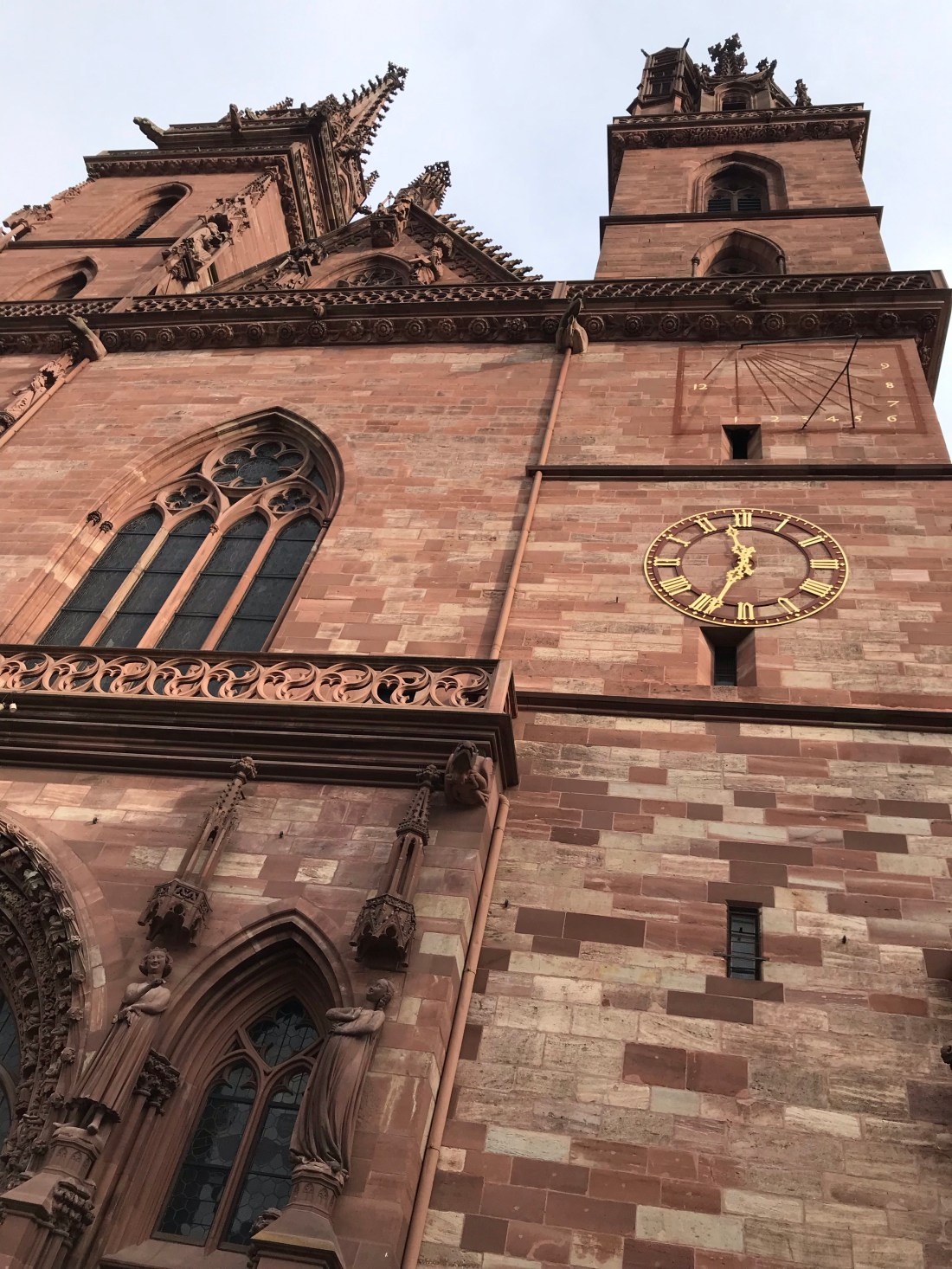
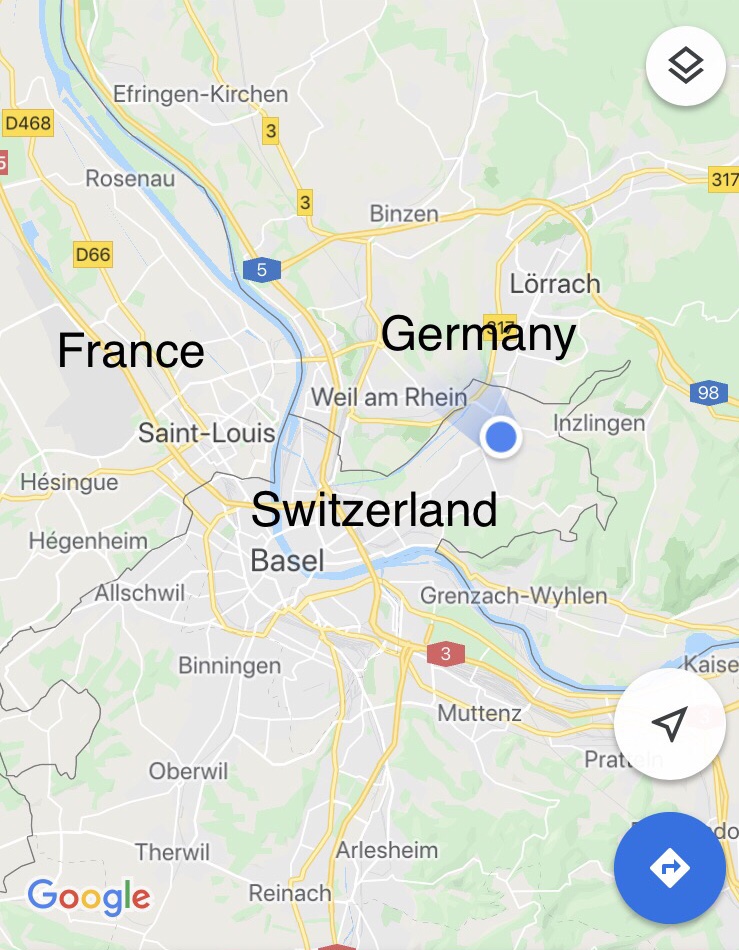
One of the extraordinary things about Basel is its proximity to France and Germany. There are places where you can be standing in one country and you can see the other two. Or where you are effectively walking along the border between two of the countries, though there may be very little evidence of it.

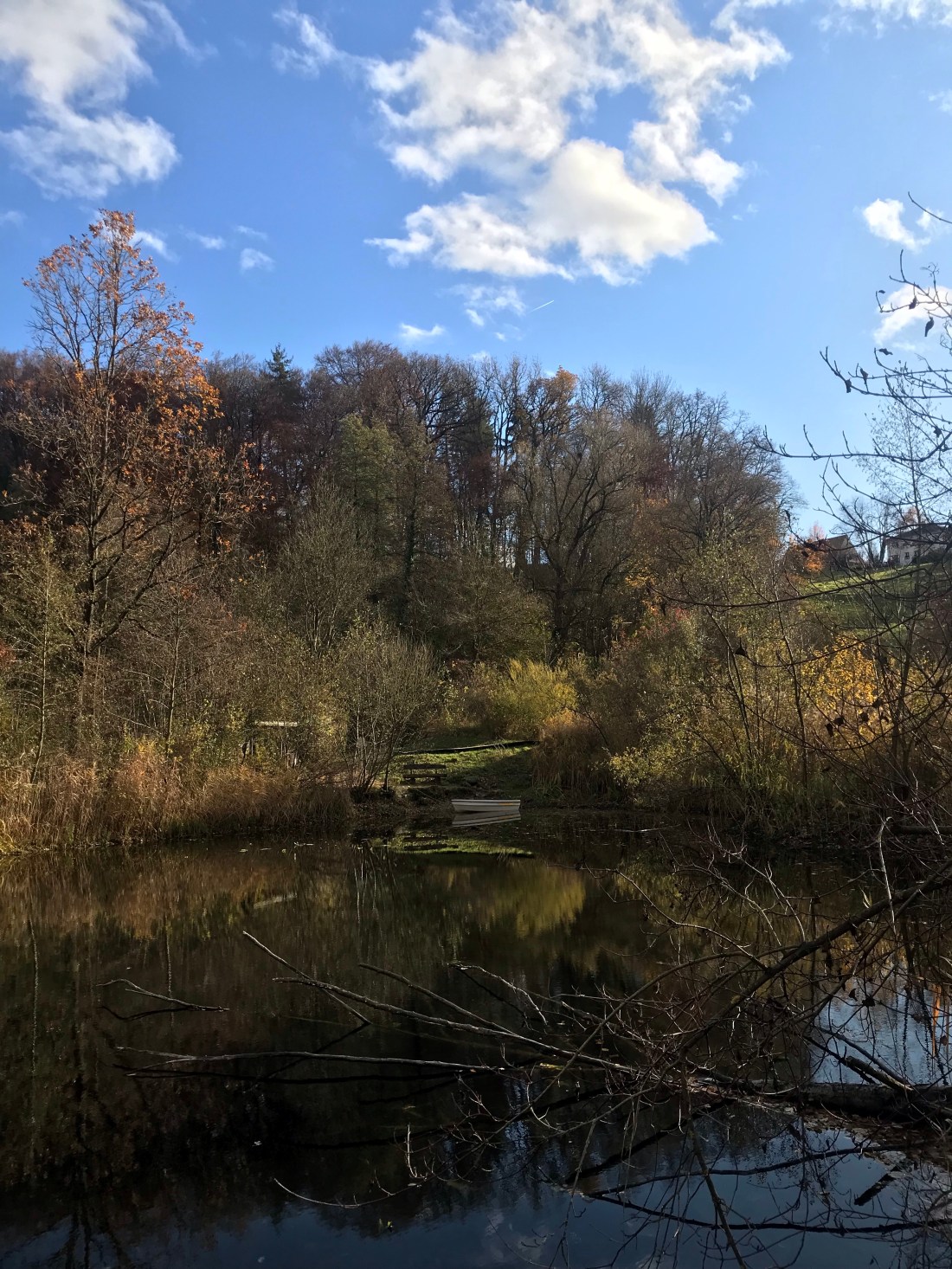
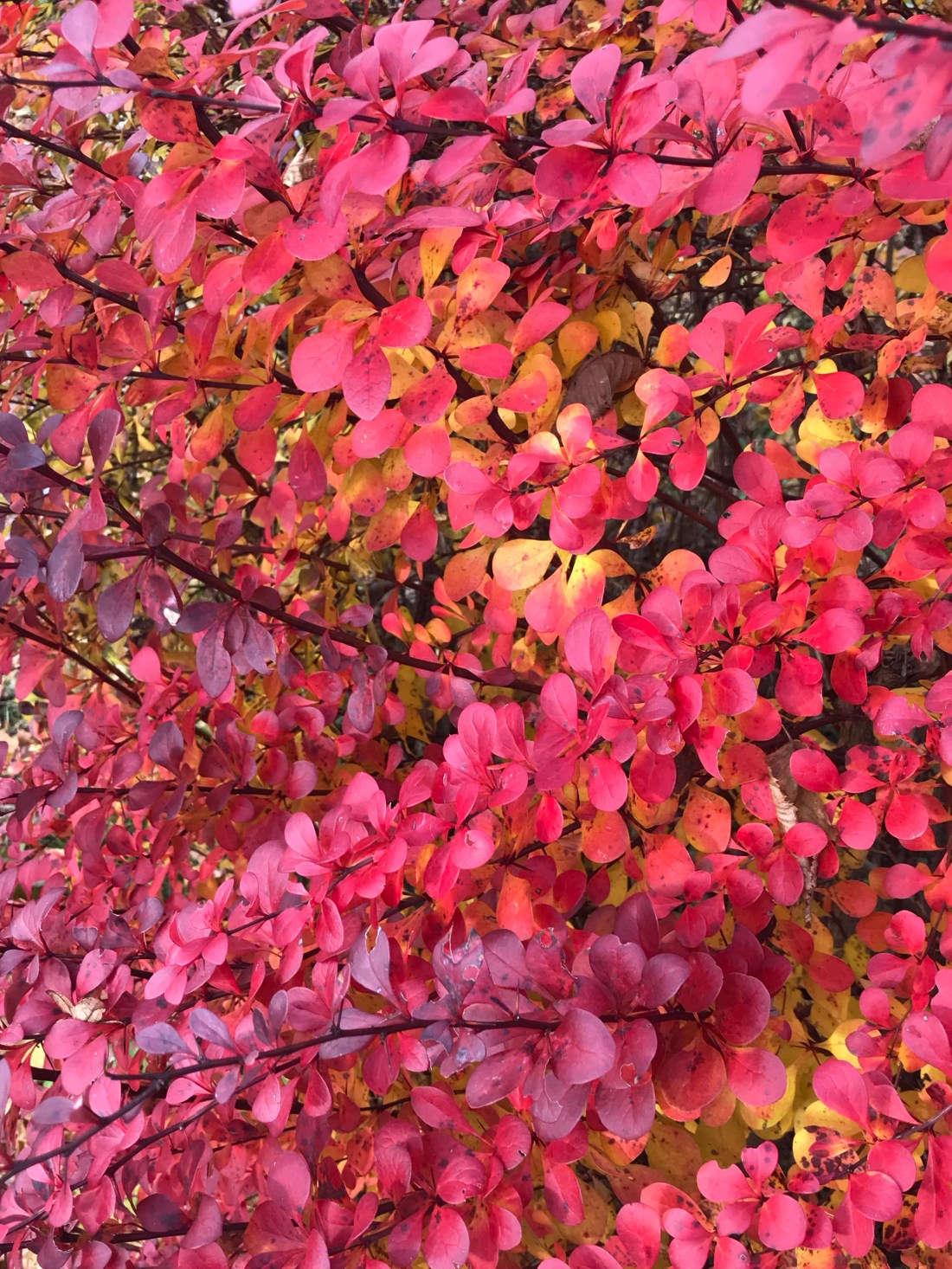
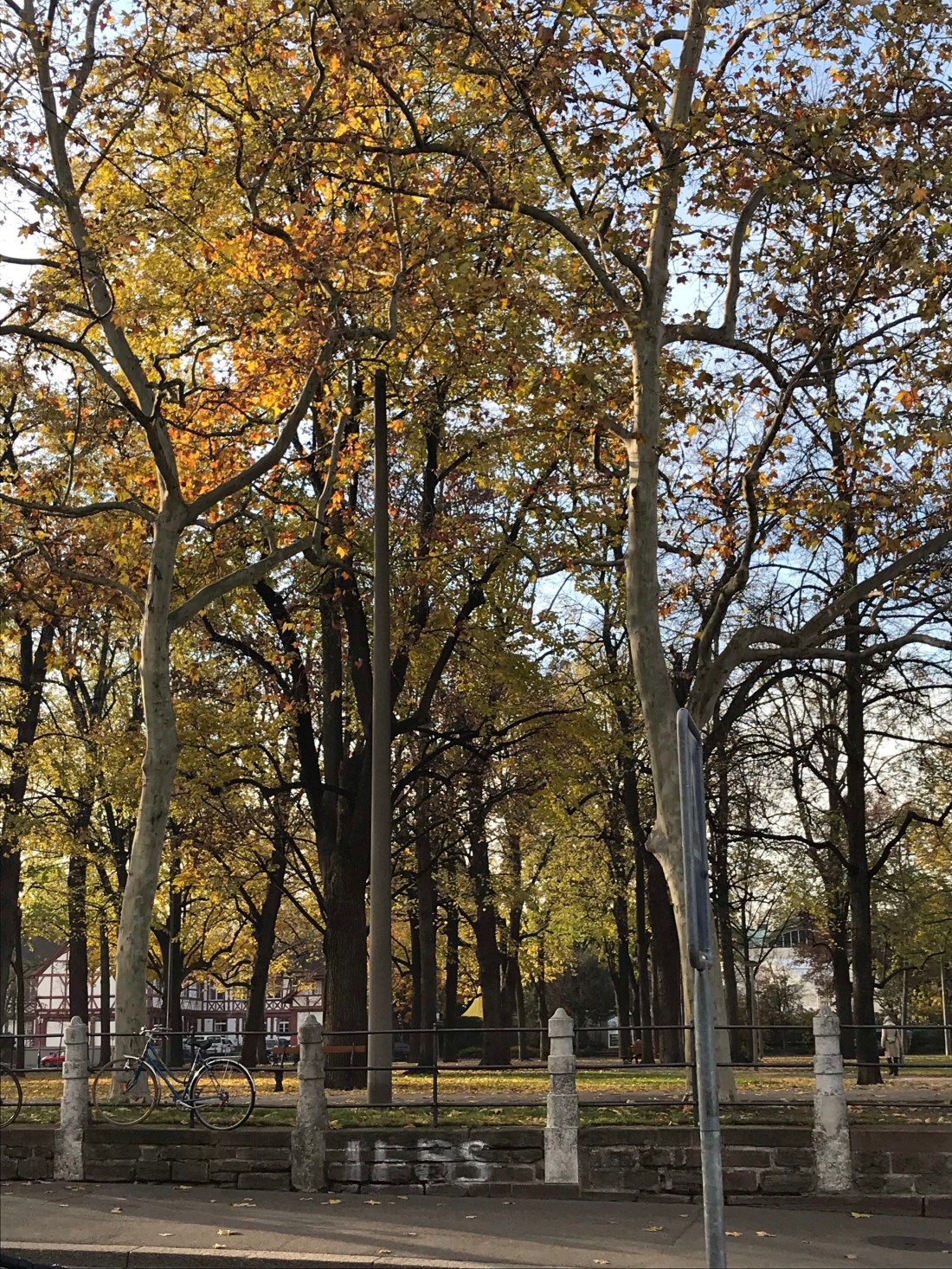
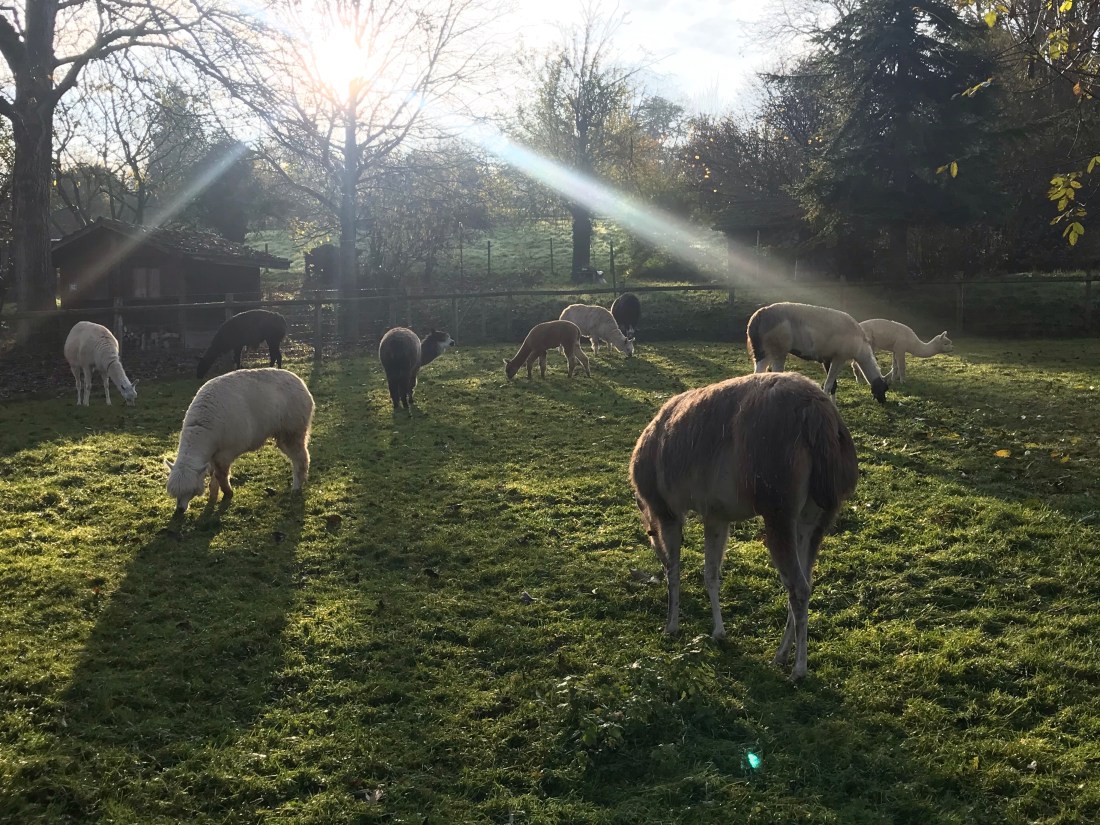
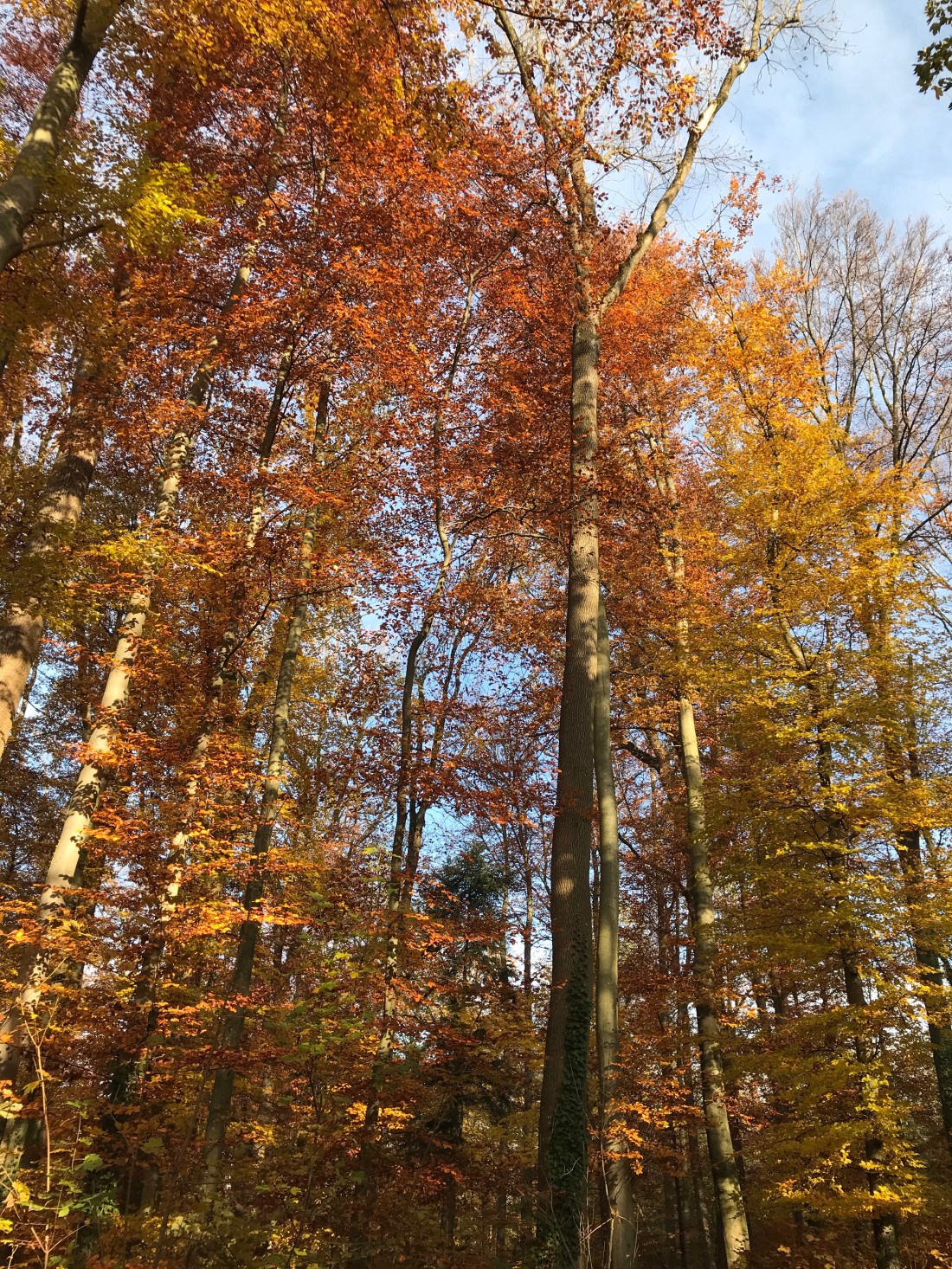
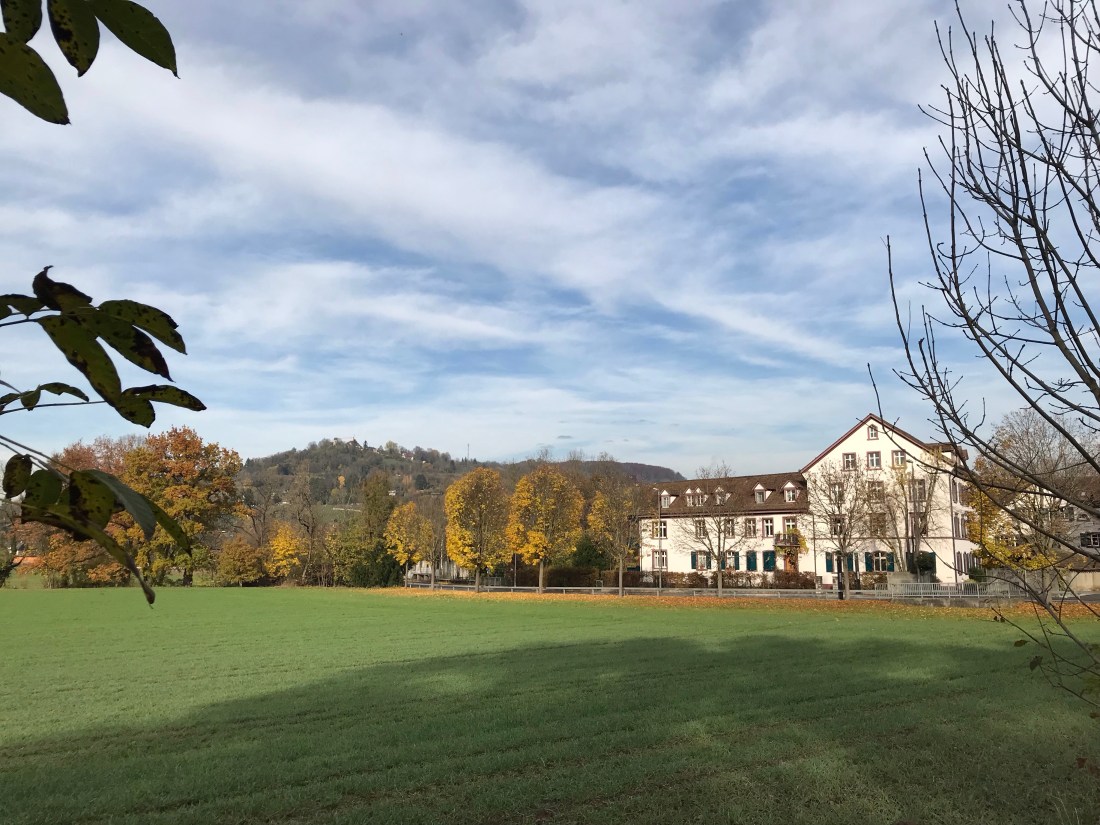
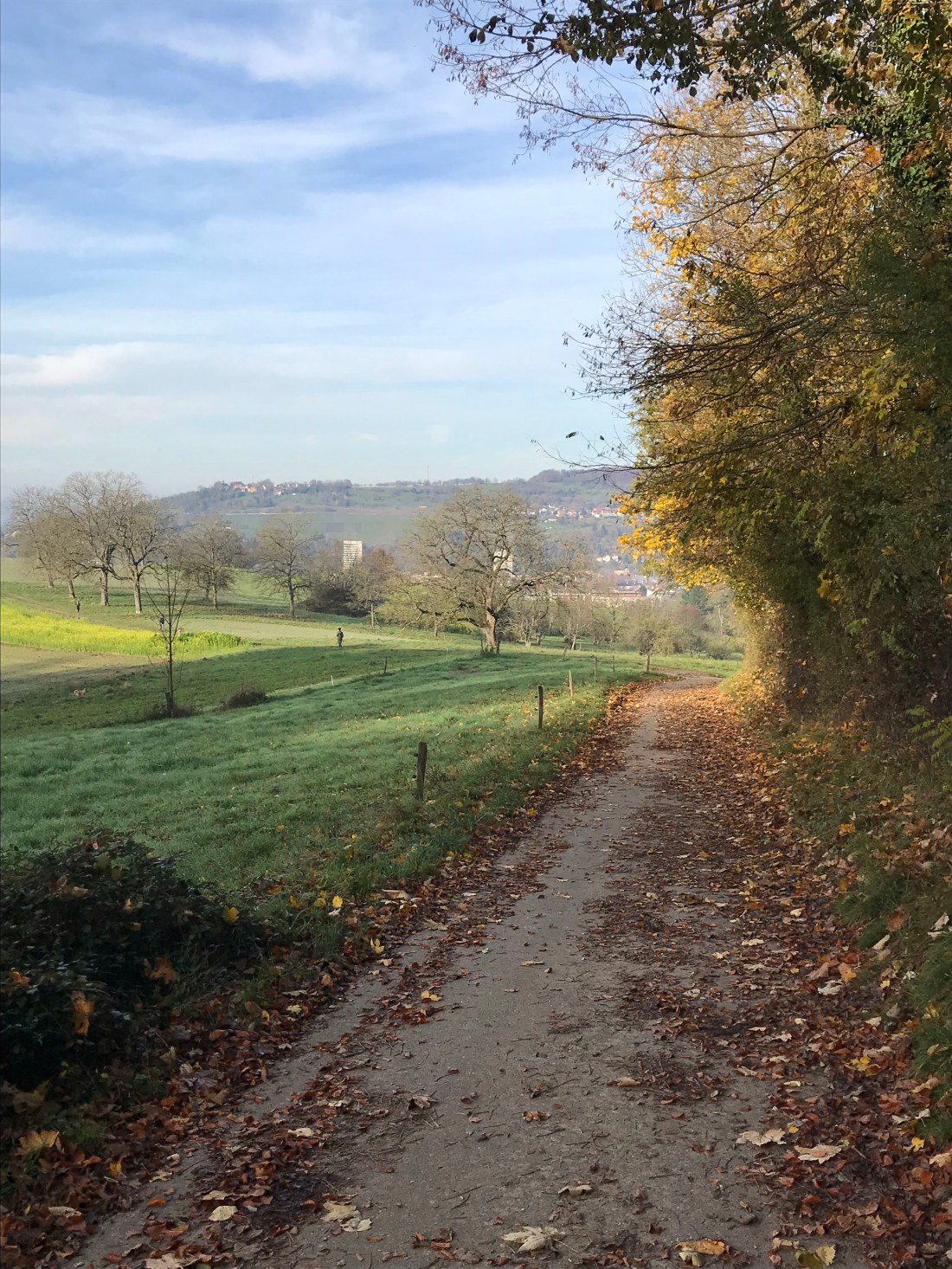
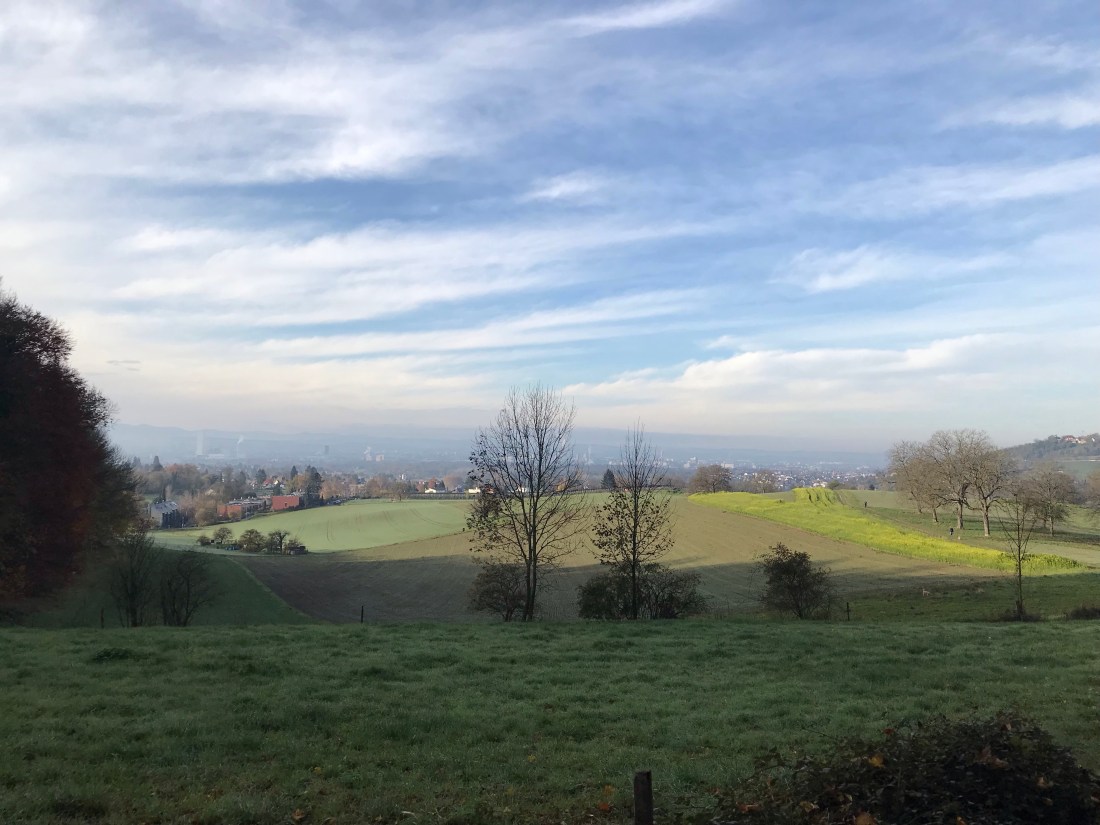
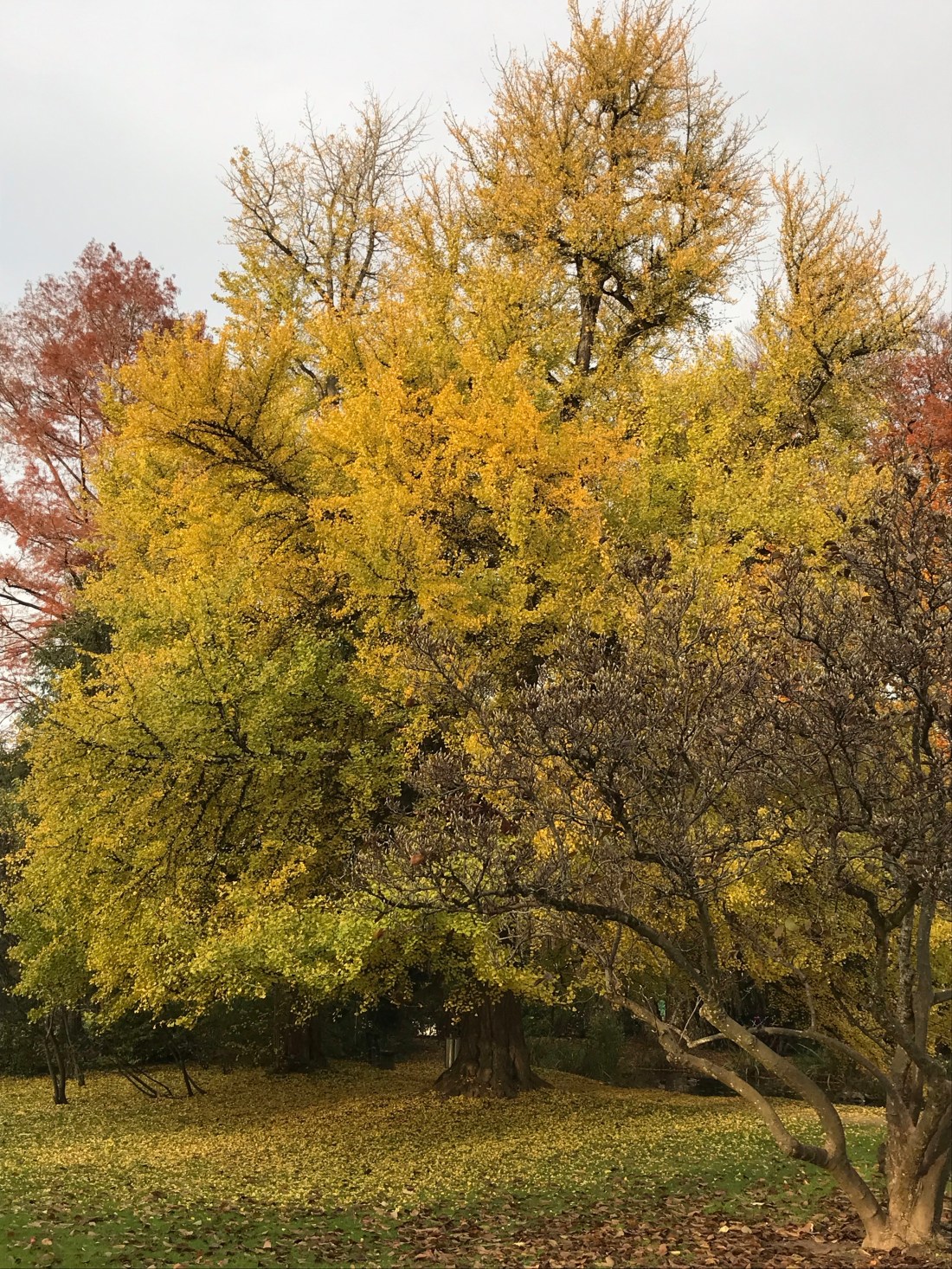
On Sunday, my first full day in Riehen, Sr Delia and I went for two walks in the surrounding countryside. I am absolutely loving the cold, fresh air, and seeing the beautiful autumn leaves all around. Here were some of the sights we saw:

As we walked along this path (below), Delia explained that the woods were in Switzerland, but the path we were walking was right on the border. In front of us was Germany and over to our left in the distance was France. A police car passed us, and she explained that this was the mobile border patrol. They were not at all interested in us, though later she mentioned how her adopted sister, who has darker skin, is often stopped and has to show her passport or ID card.

The view over towards France:

Apparently as recently as the mid 90s, the border controls were much more strictly enforced. But currently the borders are very open, so you often see German buses in Basel, which will take you right across the border to neighbouring towns and villages in Germany. Delia’s Dad and brother and his family have relocated to Germany, but in fact this doesn’t much feel like a relocation, because they always lived pretty close to the German border anyway.

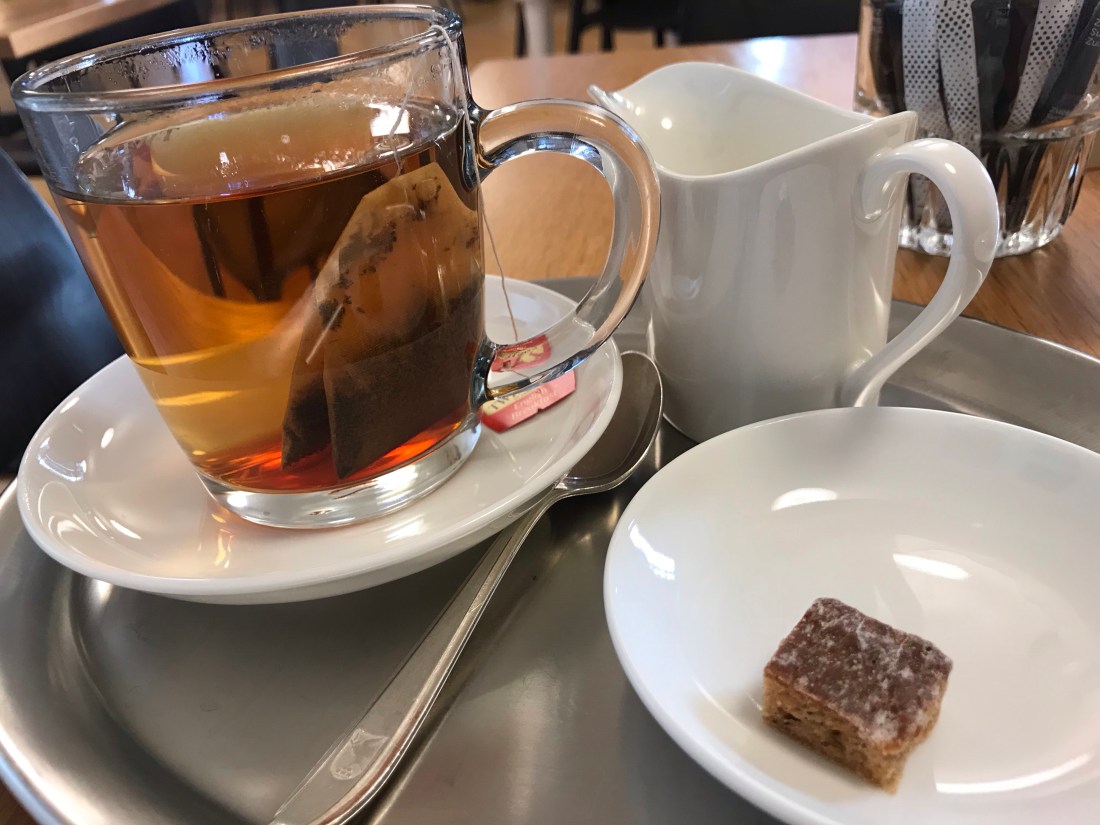
As I’m gradually discovering, Swiss German is an interesting dialect. I can’t appreciate this fully as I only speak a tiny bit of German. But in this region there are many French words or words that are at least a bit French sounding that people use all the time. For example, I noticed the ticket collector on the train said “merci” as people showed her their tickets. And if you want tea with milk you ask for “Tee Crème”, which seems wrong to me on so many levels! (Don’t put cream in tea!)

Of course there are French speaking parts of Switzerland too, mainly further to the Southwest of the country, Swiss Italian in the South and Romansch in a small, mainly mountainous part of the Southeast.

Apparently the dialect of Swiss German spoken in Basel is very different from that of Zürich, which is only an hour away! (And both are different from “High” German, the language you learn in school.) But consider this: there are only about 37000 people who speak Romansch (the smallest proportion of any of the nation’s languages), but there are five dialects of Romansch!! Five!! How anyone ever understands anyone else here, I’ll never know!

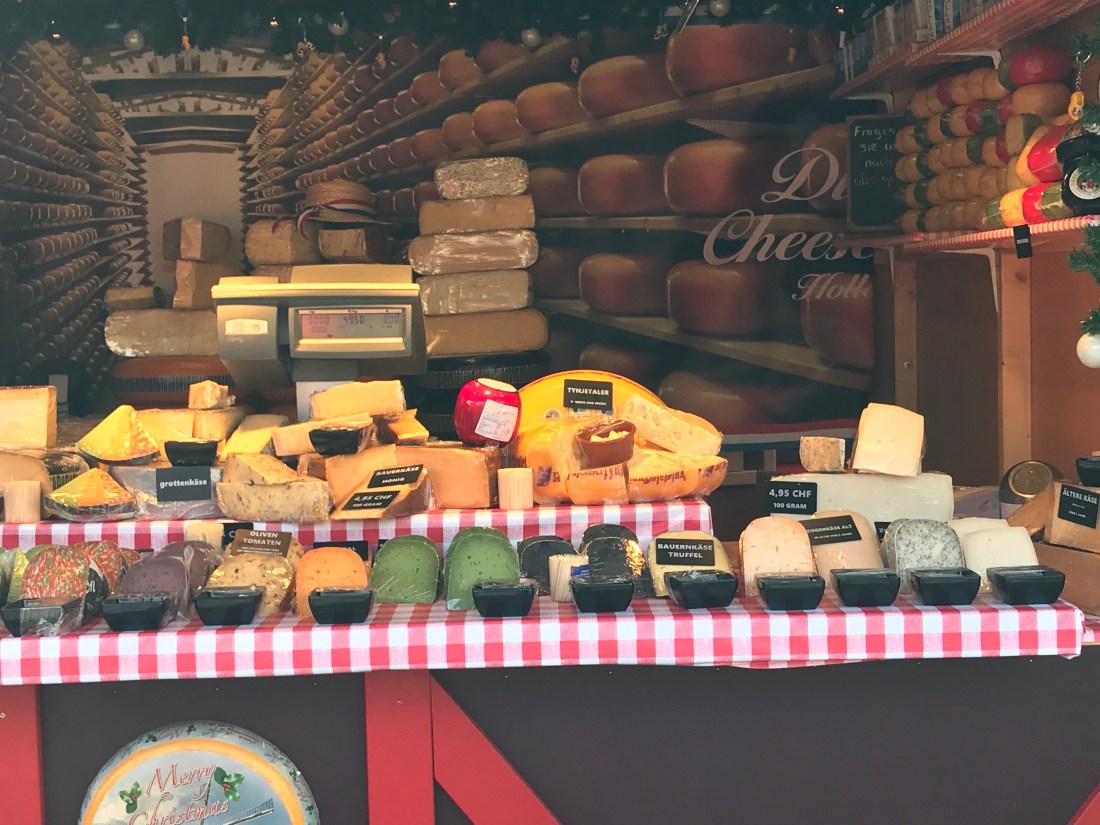
Switzerland is notable not just for its excellent chocolate, stinky cheeses (to use Sr Delia’s technical term!), glüwein and skiing, but also for its endless capacity for careful and extensively collaborative decision making. In Switzerland, virtually everything is decided by referenda, or so I gather. It’s a very cautious nation, always wanting lots of research before the potential choices are put to the people, even. Delia tells me that for this reason, decision making is terribly slow, but usually once the decision has been made, people accept it, even if it wasn’t what they wanted. (Hmmm… maybe in the UK we could learn something from this…? But I think our problem is we’re just not used to having referenda for individual topics, so we did the Brexit referendum spectacularly inadequately. If we had followed the Swiss model, everyone would have had a shed load more information about how this would impact the UK before taking the vote. And if we were more like the Swiss, we would probably read and inwardly digest all of this information carefully before casting our votes. And take out insurance against the outcome of the vote too! (Apparently there is insurance for everything here. “Insurances”, actually – Versicherungen – as my brother ably informed me, the word is plural, because of the many things that could go wrong, I guess?!)

It does seem pretty remarkable, though, how Switzerland has managed to be such an equitable and peaceful place, given the challenges of having people of multiple languages and cultures living here.

My experience at the airport was also that Switzerland polices its borders in a most unruffled way. I know I flew in from Singapore, so I guess they could have confidence my luggage had been checked already, but I breezed past the passport control in the airport much more quickly than anywhere else I’ve been in the world. Passport control consisted of an impeccably smart, cheerful lady who smiled and nodded me through without a second glance. No landing card, no scrutiny of luggage, no questions about my occupation or when I last visited, no stern appraising look designed to strike fear into the hearts of potential terrorists, nothing.

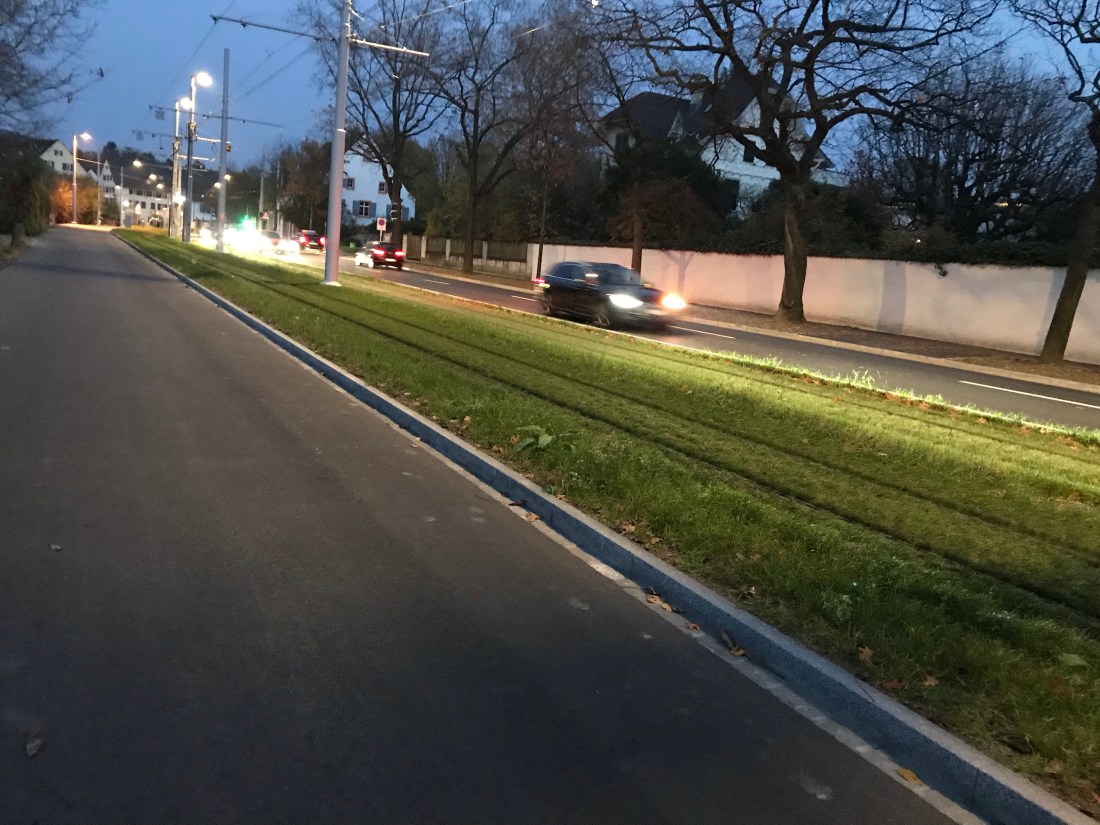
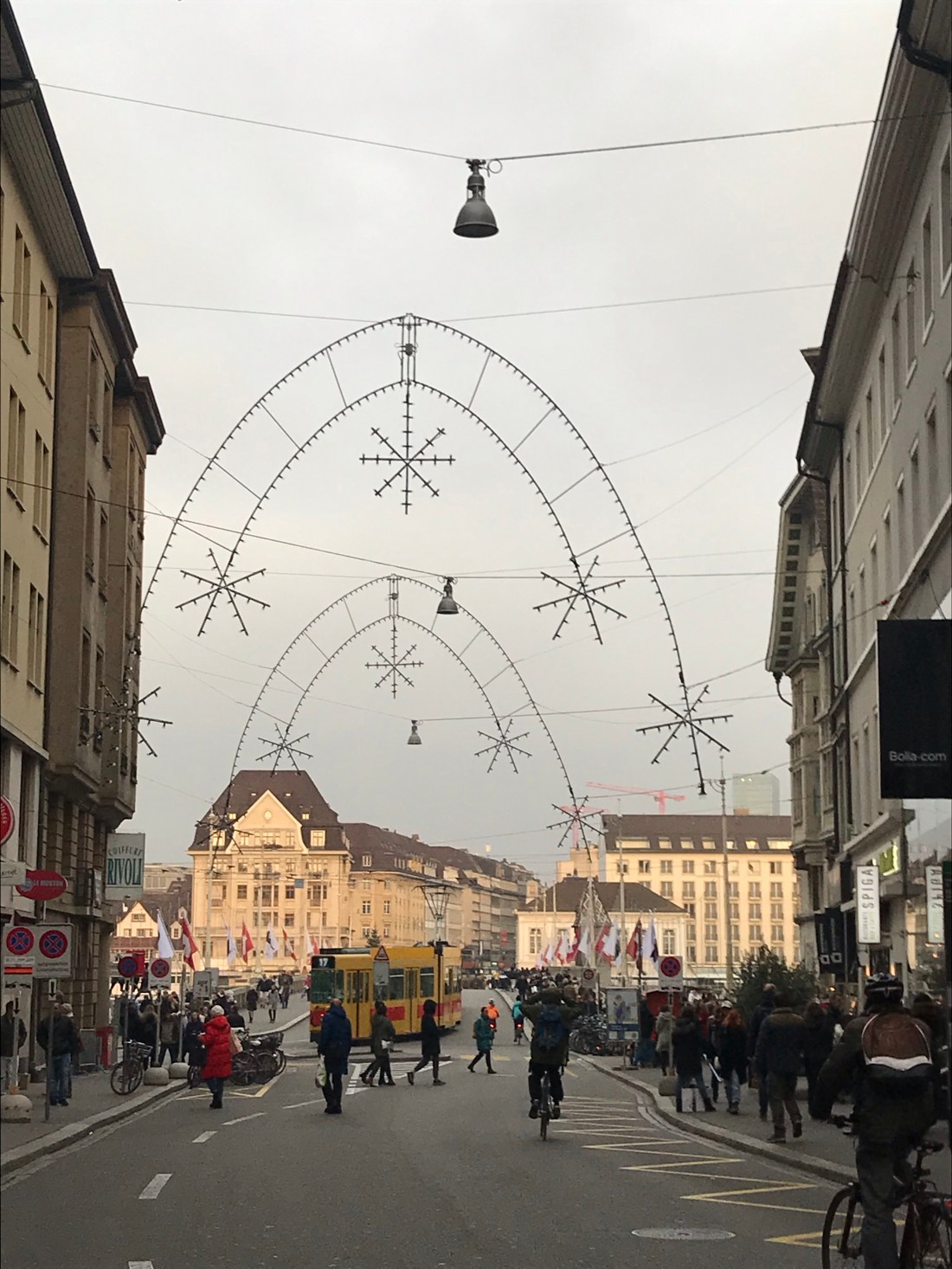
I have also been impressed with public transport here. Basel being a politically Left and Green leaning area, has reduced the width of roads and introduced substantial cycle lanes alongside the tramlines. I have never seen such frequent trams and buses. Except perhaps in Melbourne. But even there you wouldn’t get a traffic jam of trams. Here, that’s a common sight in the city and also sometimes further out. These lanes are for bikes/pedestrians, trams and then cars:

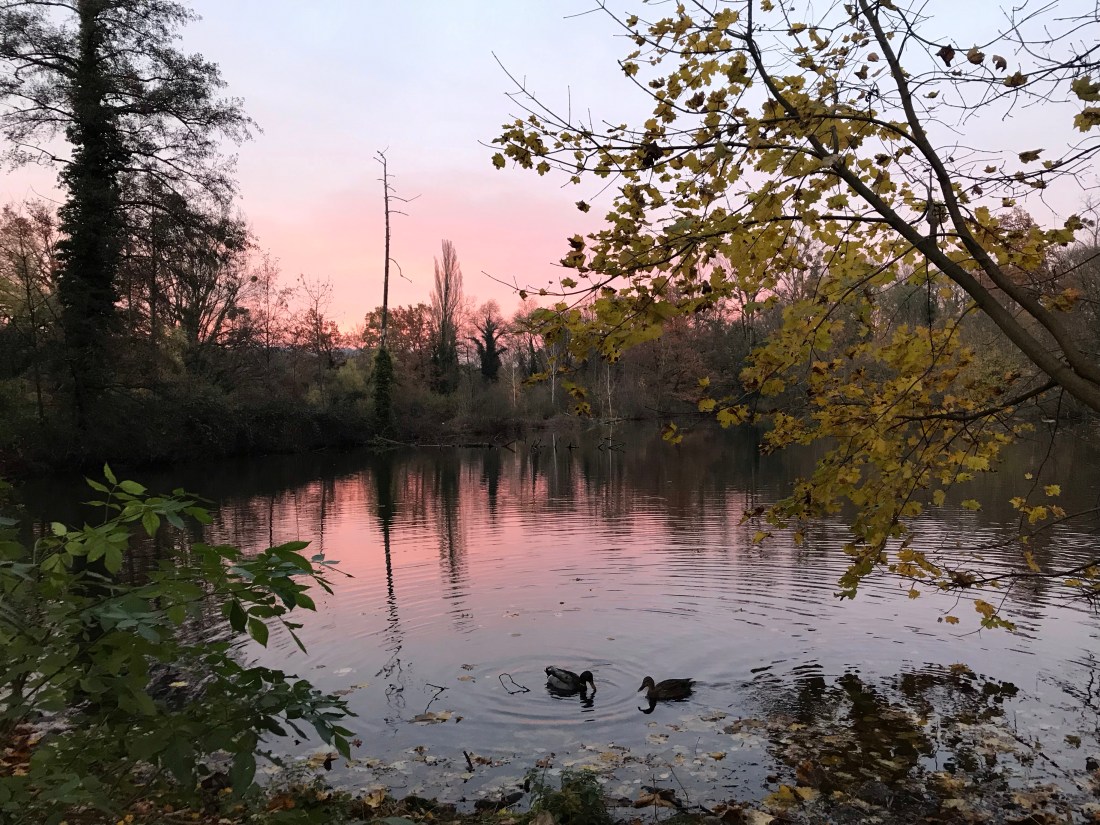
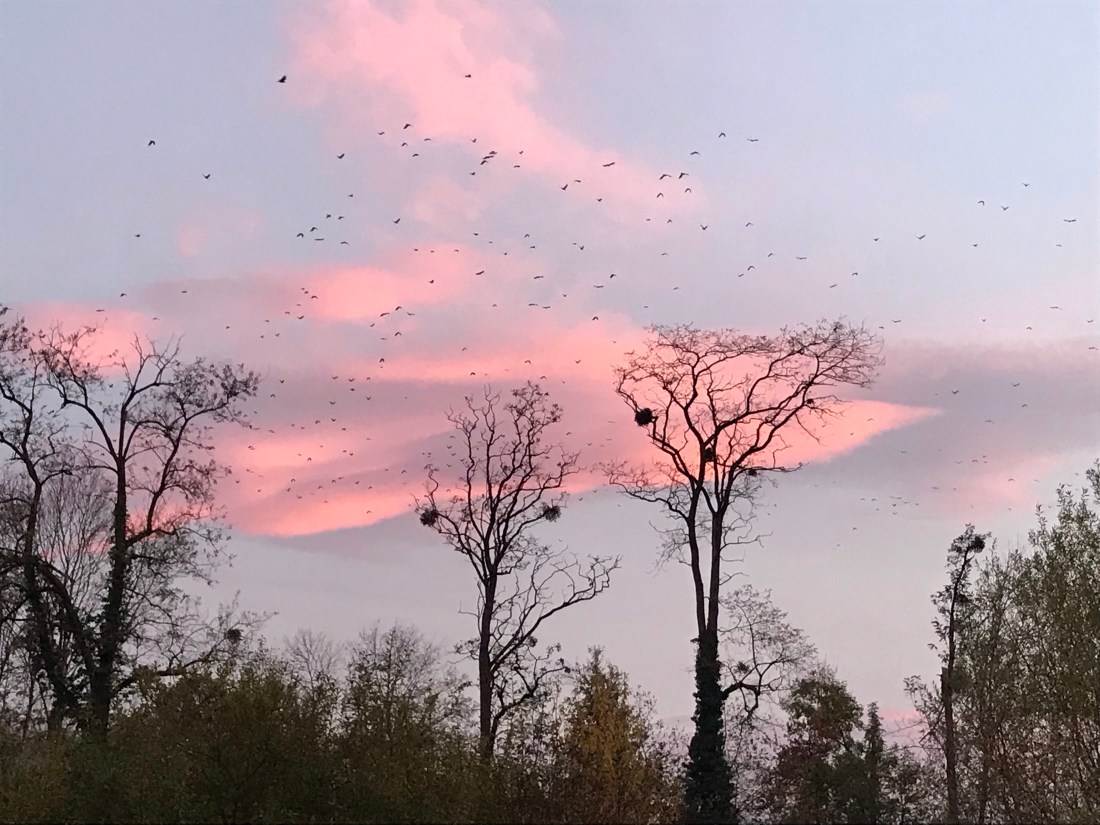
Some more pics of this beautiful countryside from our evening walk:

Basel

I arrived in Basel around midday, dropped my luggage in the unmanned and extremely efficiently automated left luggage area, and went off to explore the city before meeting up with my friend Delia to go with her to her convent in Riehen, where I am staying for a week.

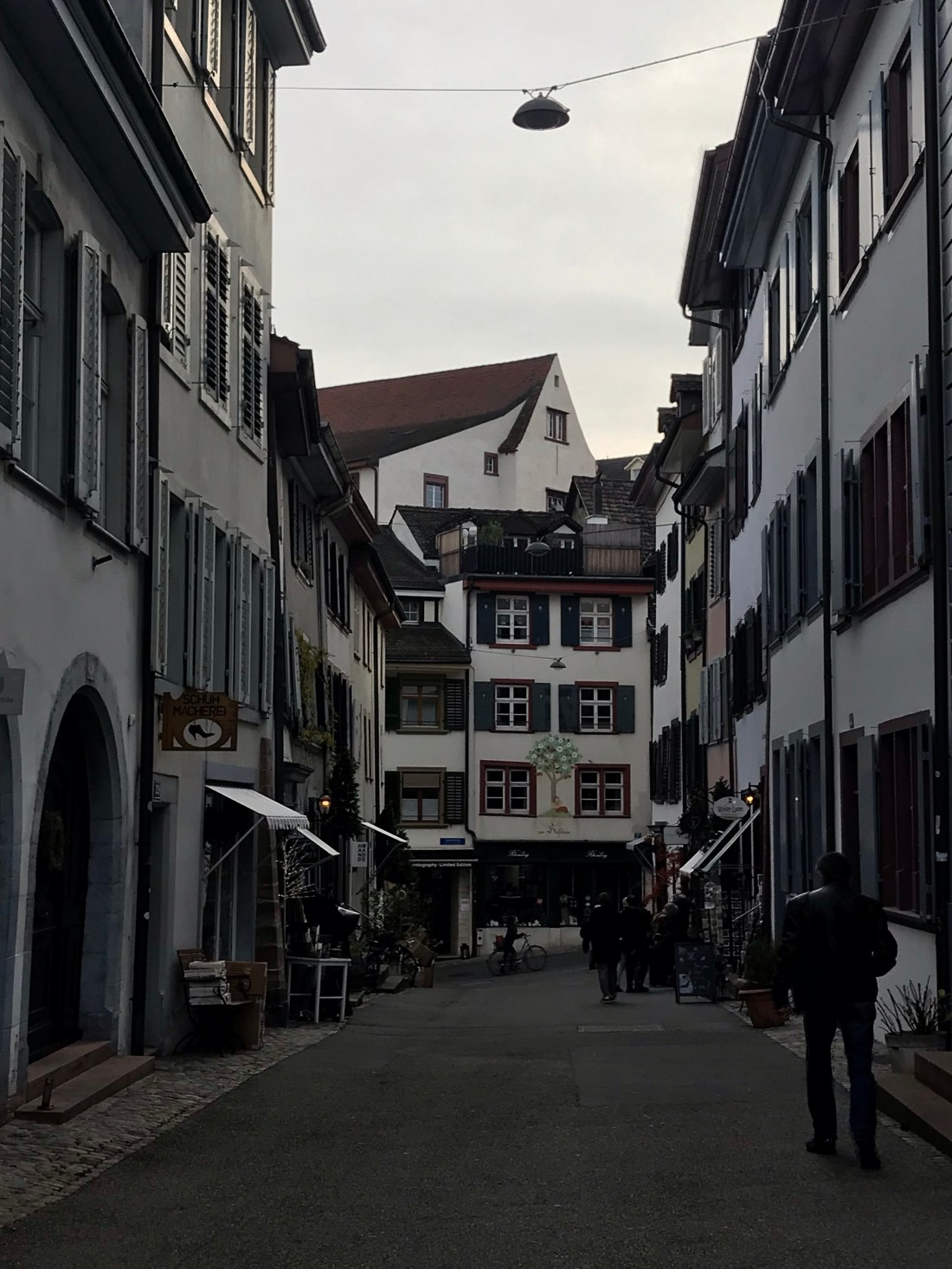
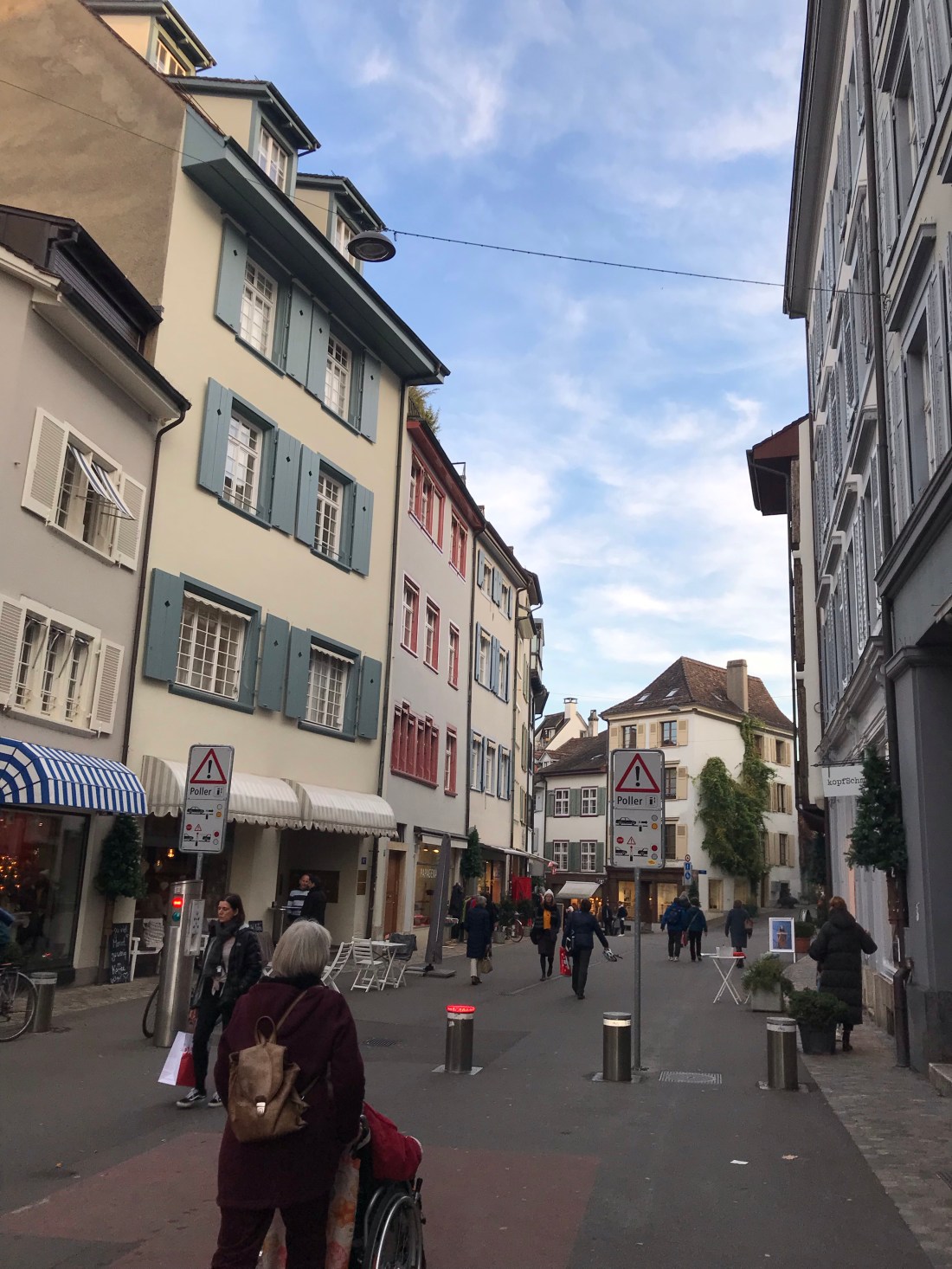
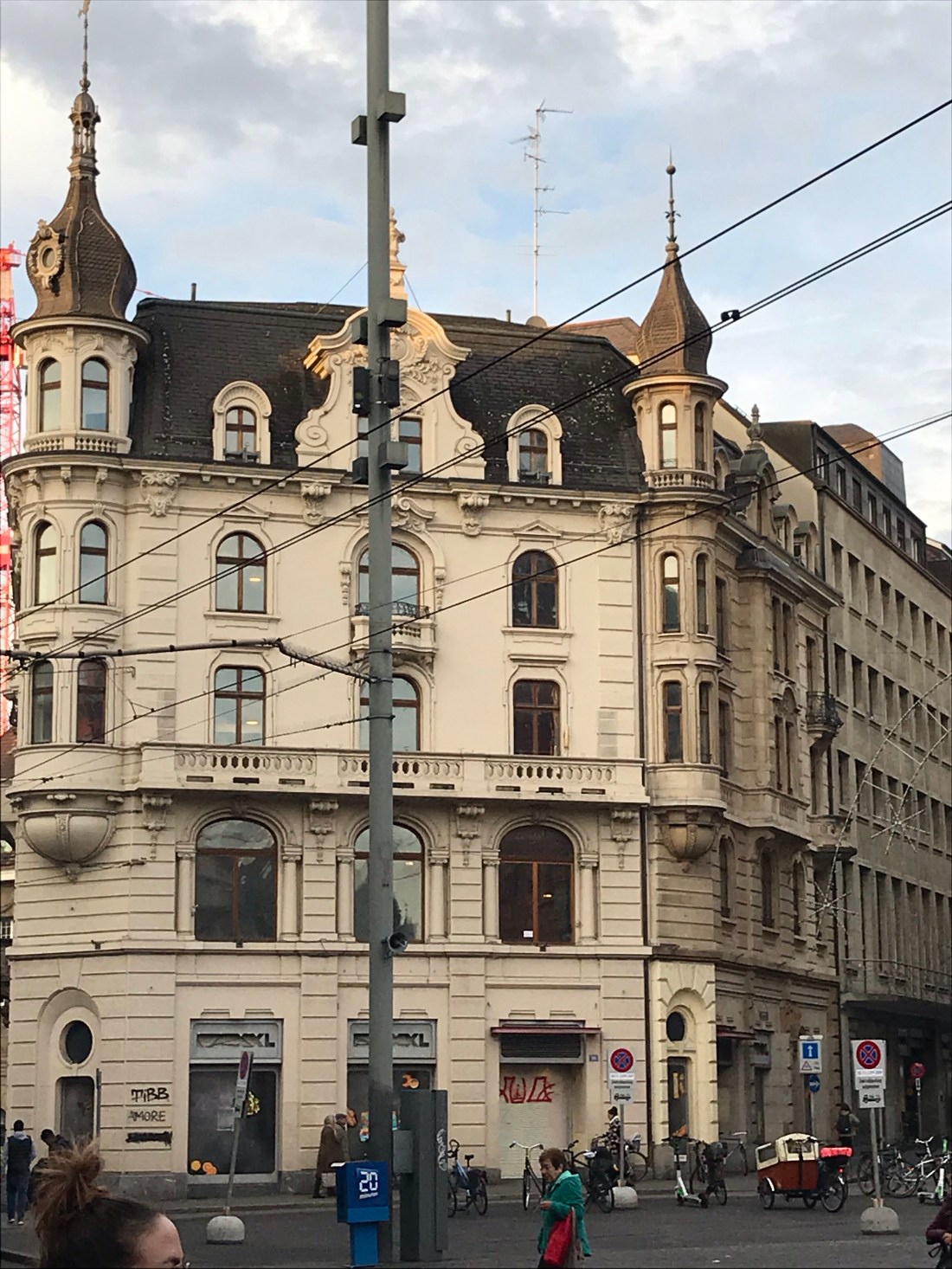
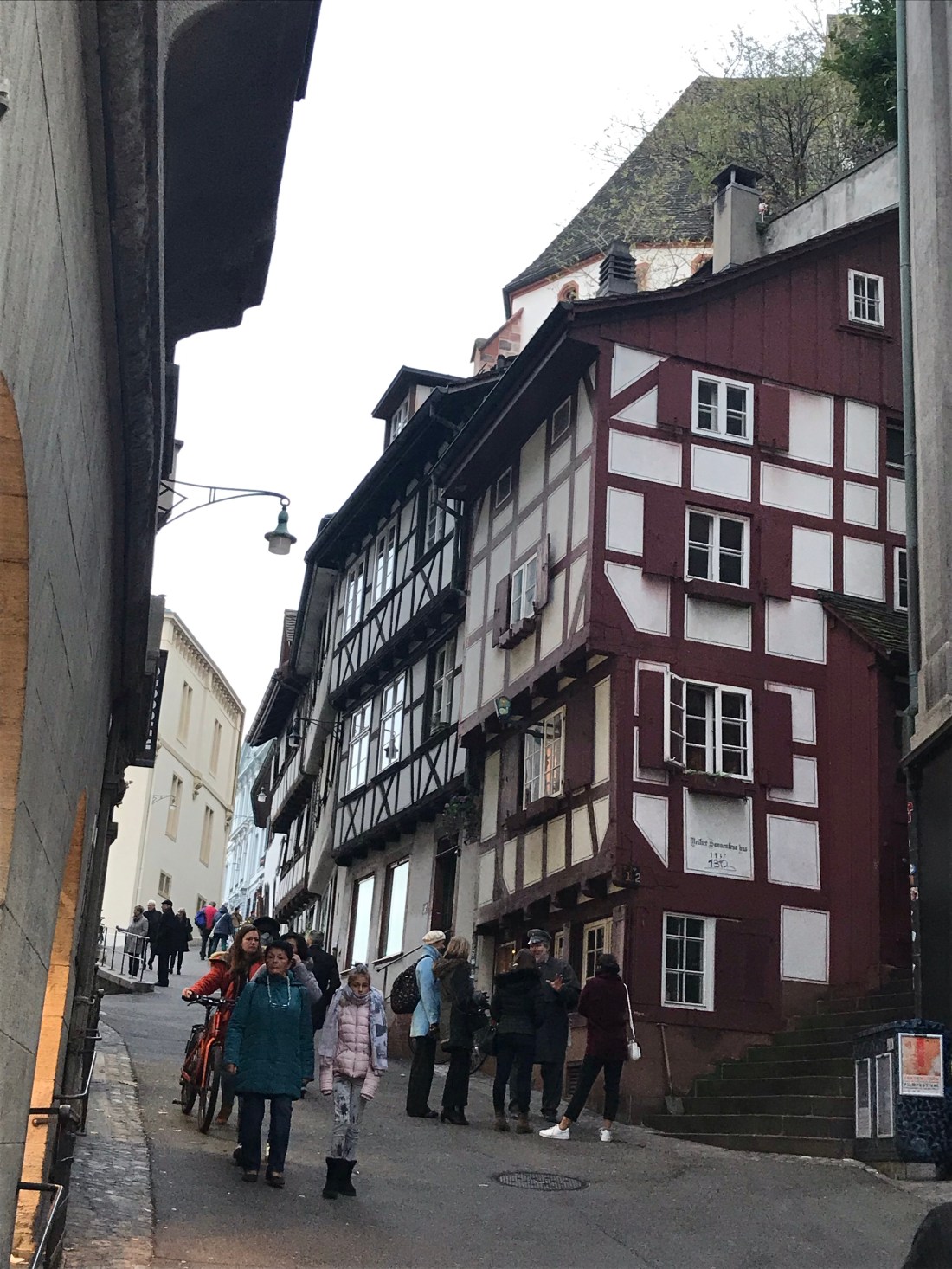
Here are some first impressions of Basel, which is a city I should have visited many years ago when my brother lived and worked here for a year. (Why? Why didn’t I visit? I guess I was scared of this far away place that would be so different from what I was used to. Ironic that in the context of my worldwide travels, I am deriving such comfort from the many familiar things I’m finding here.)

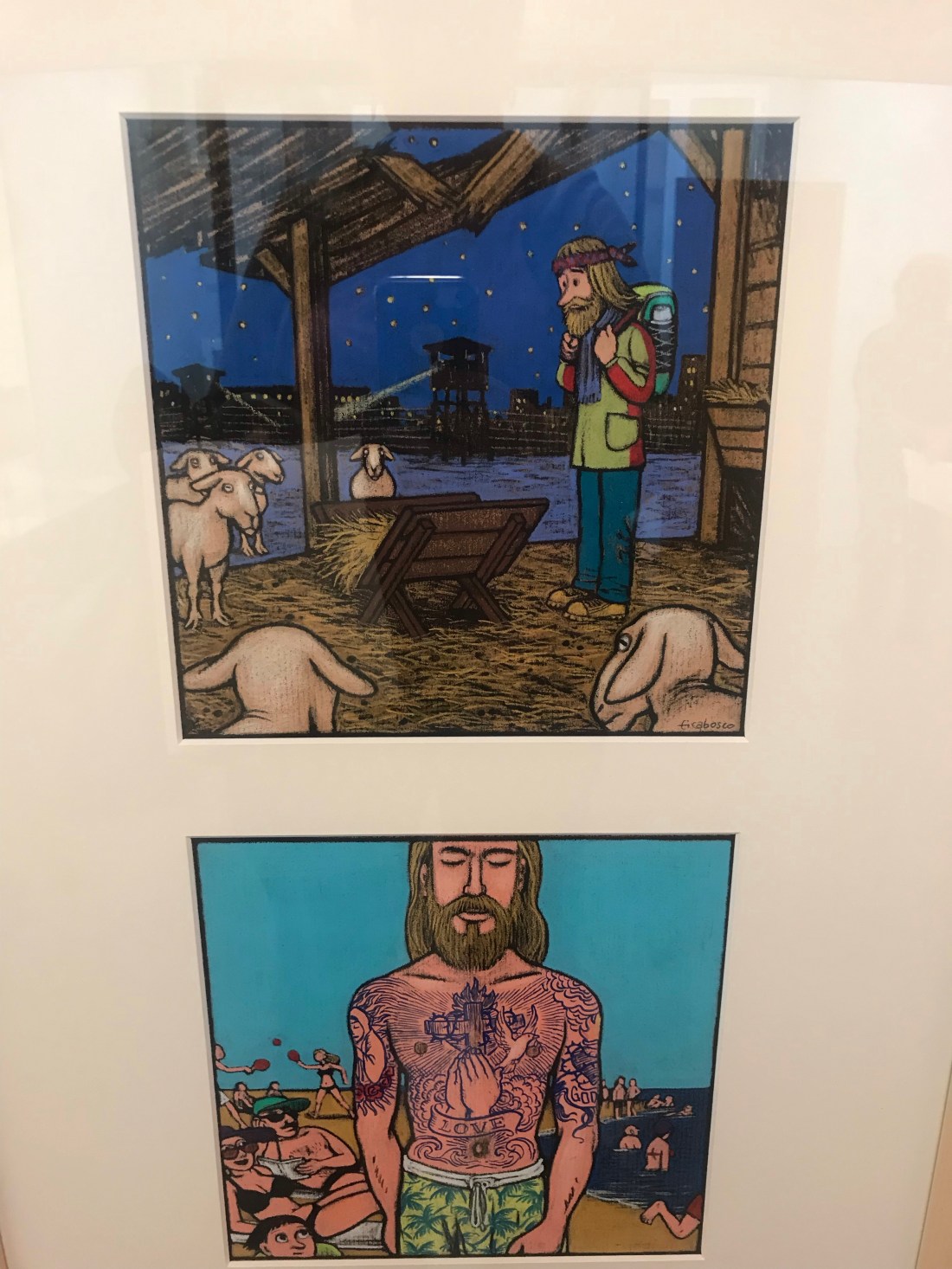
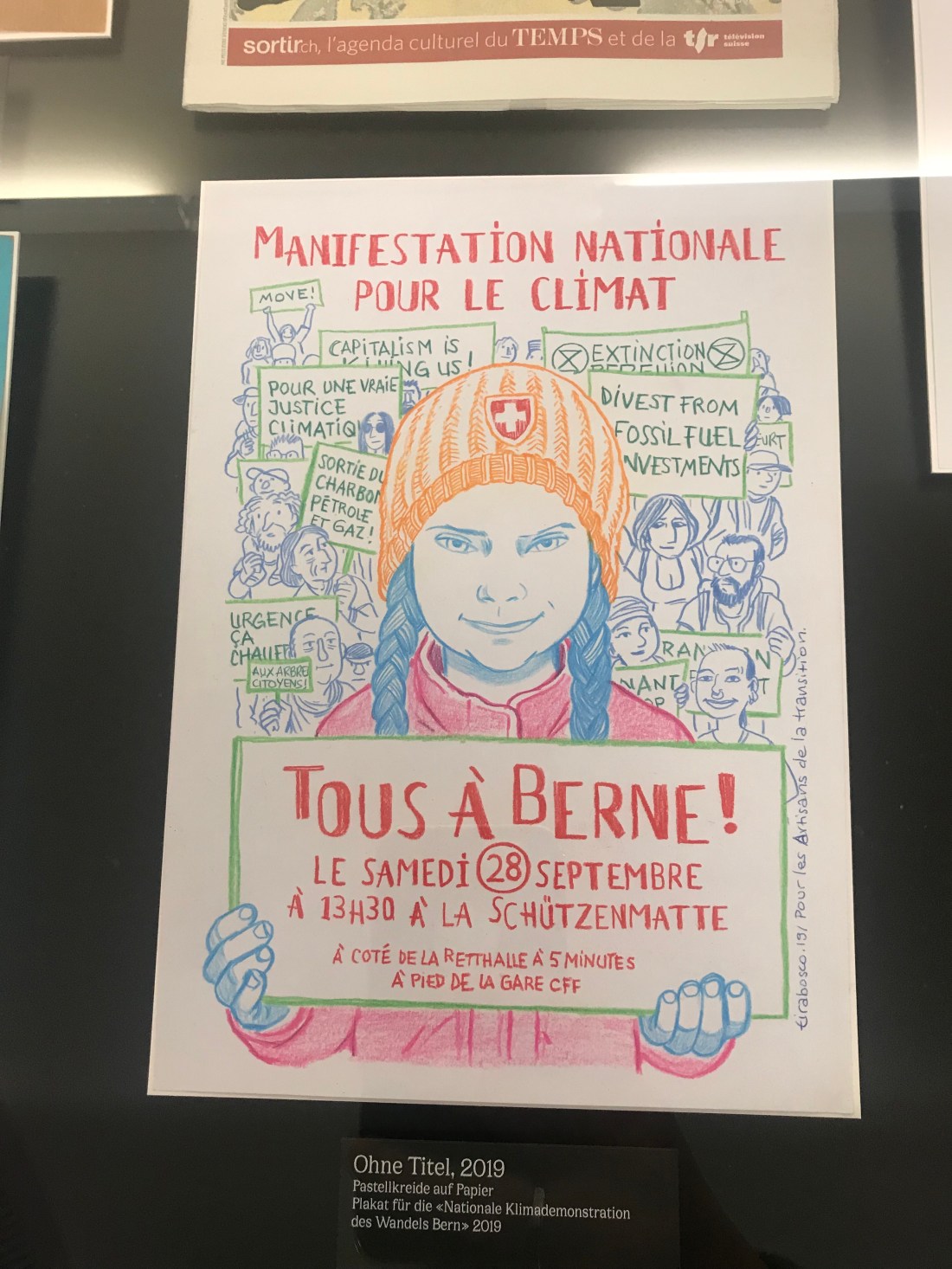
In the Cartoon museum (there seems to be a tendency to call art galleries museums here for some reason – maybe in the hope that the art will taken seriously? – aha! I have been corrected, this is because in Germany (and perhaps therefore also in German speaking Switzerland) a gallery is a place where the art is for sale, whereas a museum is where you just go to look at it. Come to think of it, maybe it’s like that in England too?), I saw an extraordinary collection by Tom Tirabosco who creates a lot of art relating to our relationship with the environment and climate change, often depicting businessmen in sharp suits with their heads obliterated by burning fossil fuels, interspersed with disturbingly accurate depictions of dead birds. Not what I was expecting from a cartoon museum, but well worth engaging with, anyway.

He also drew these enterprising speculations about the modern life of Jesus:

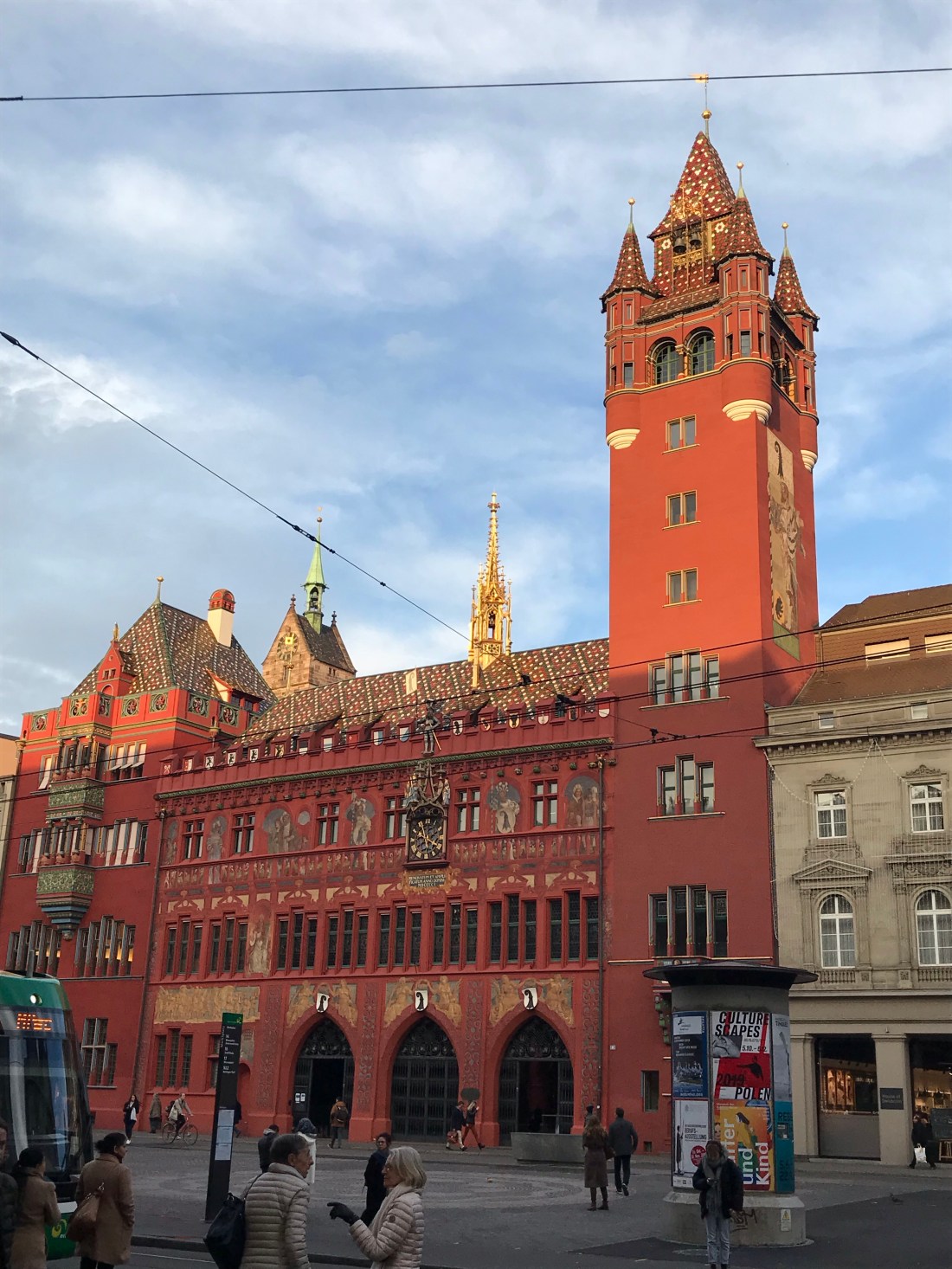
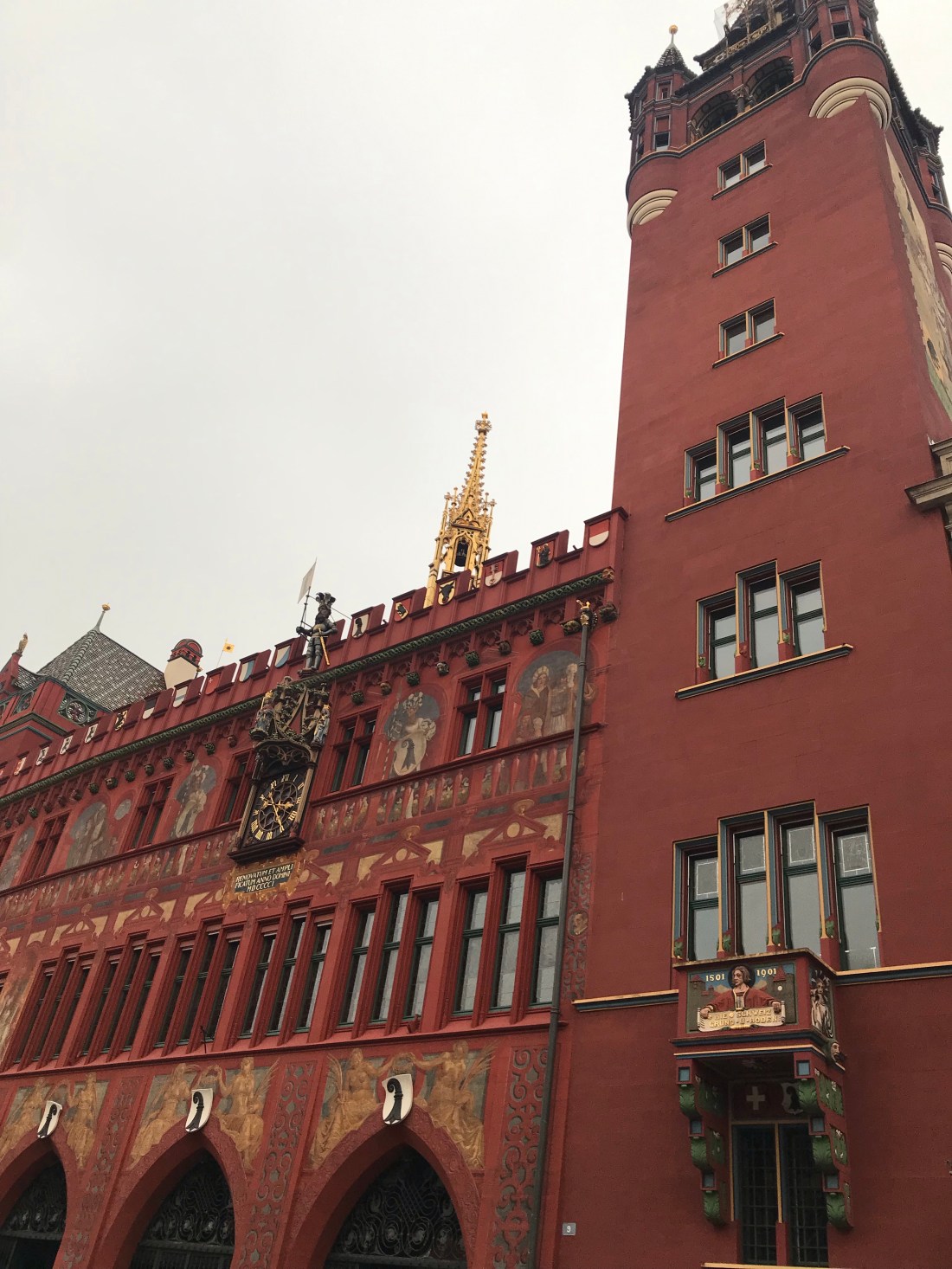
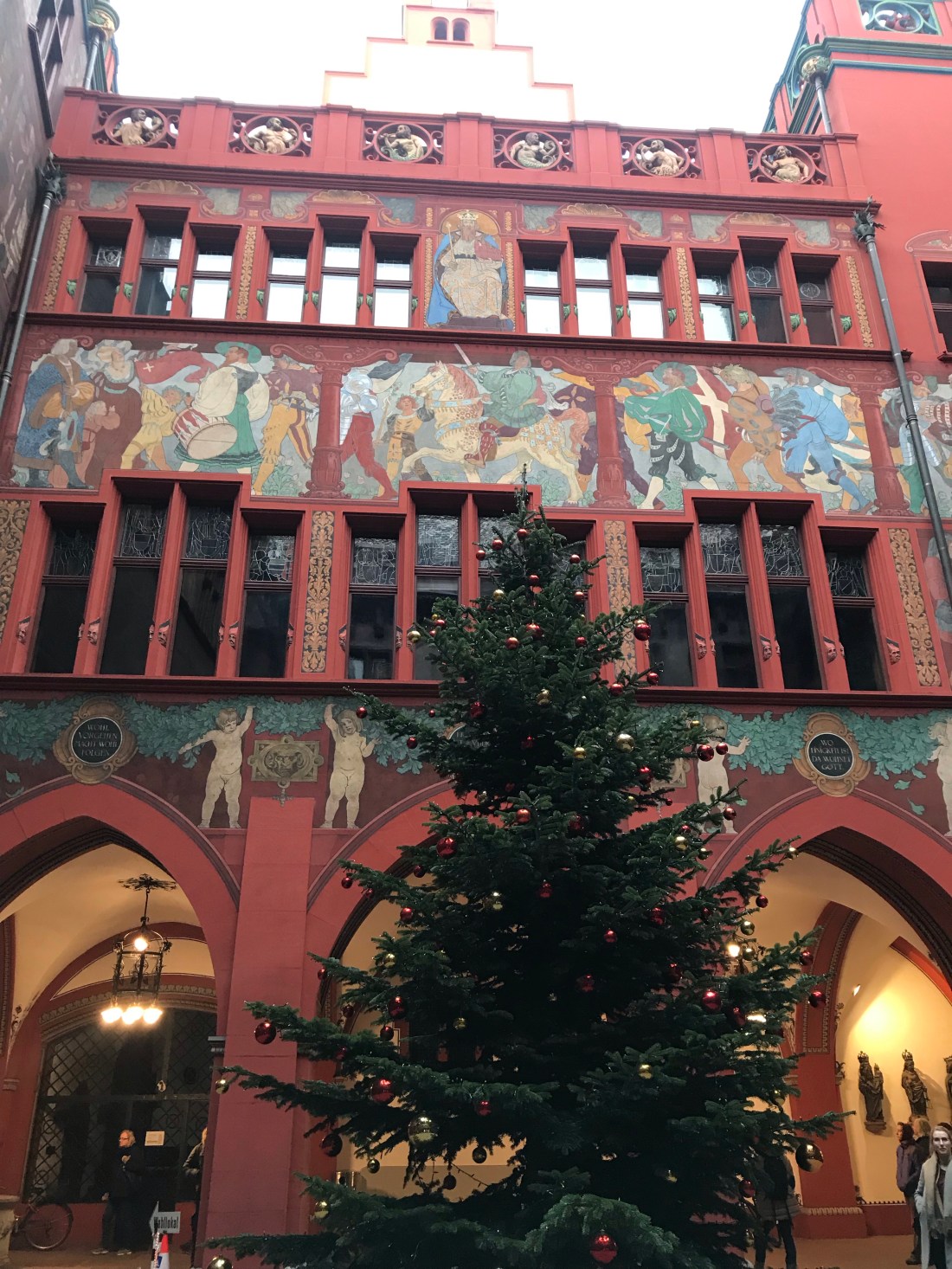
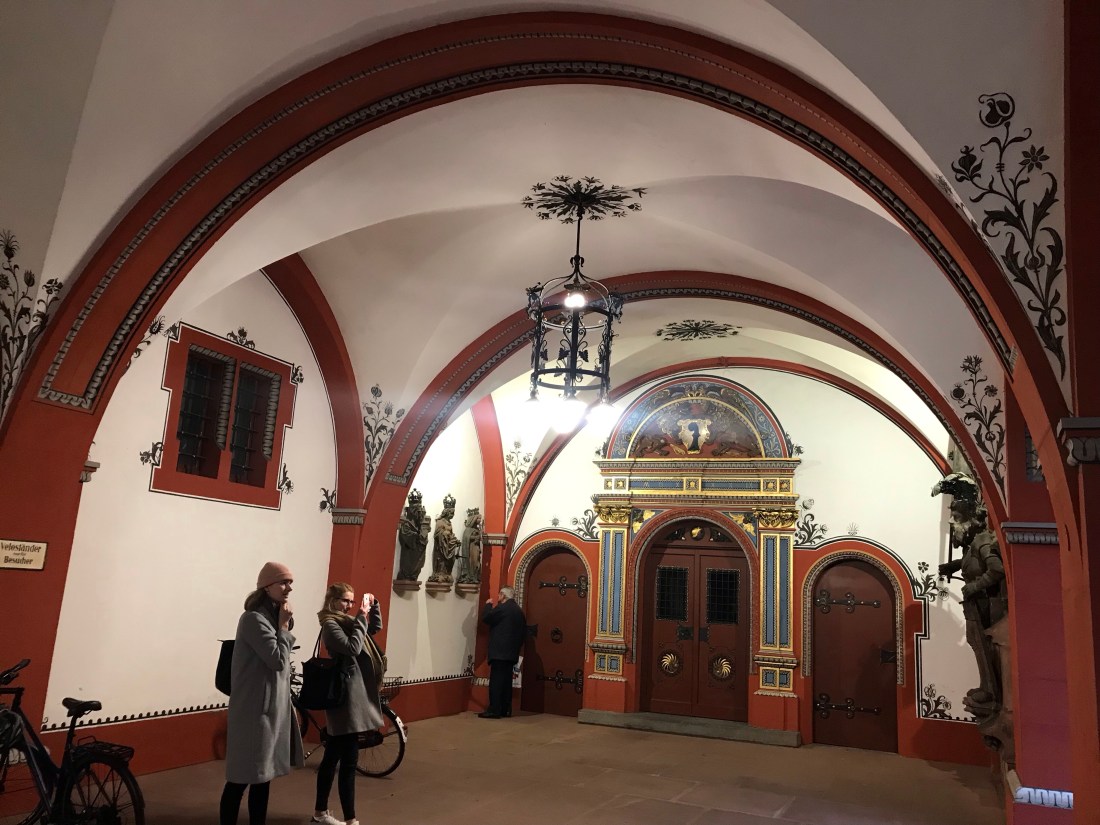
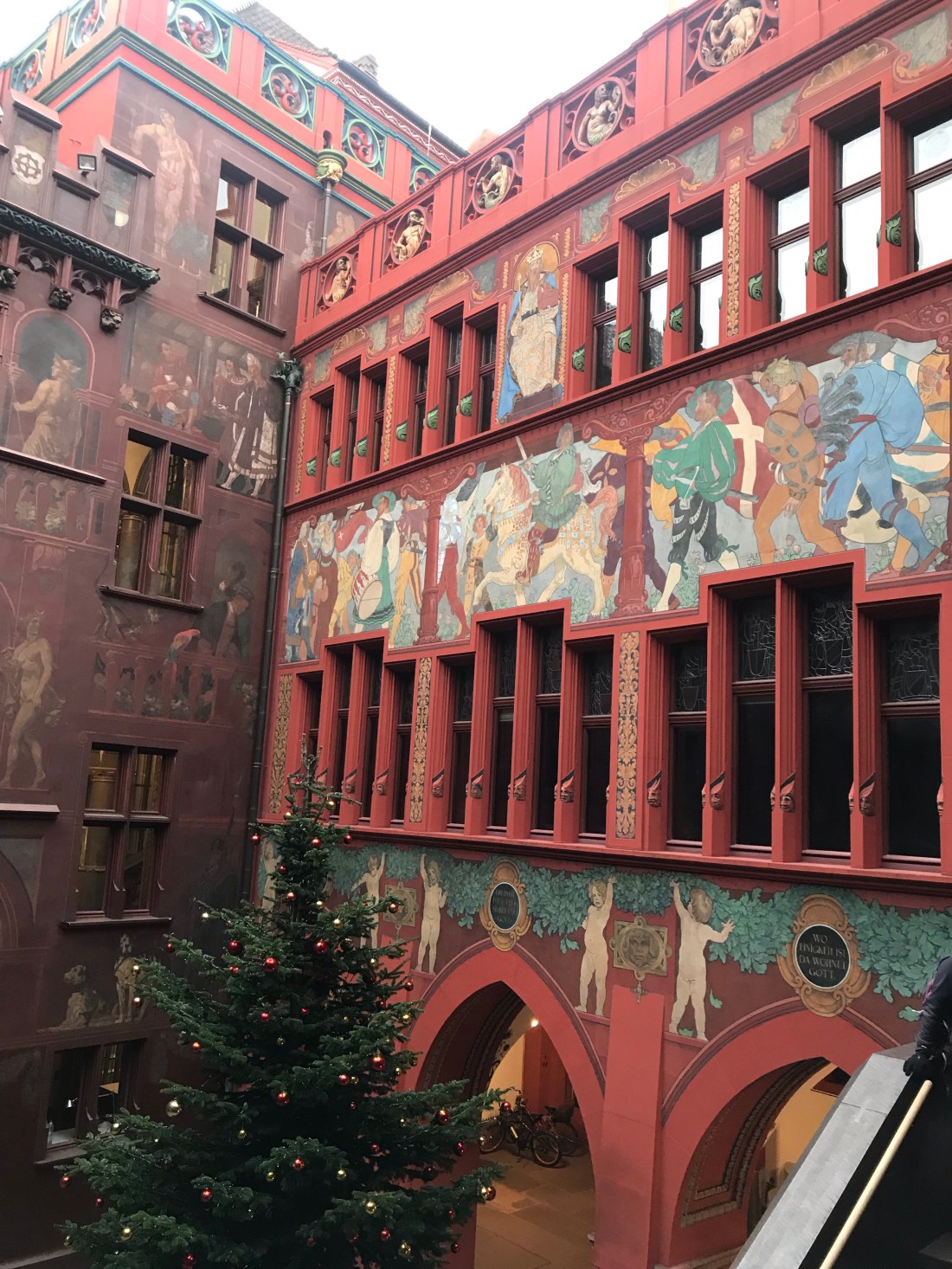
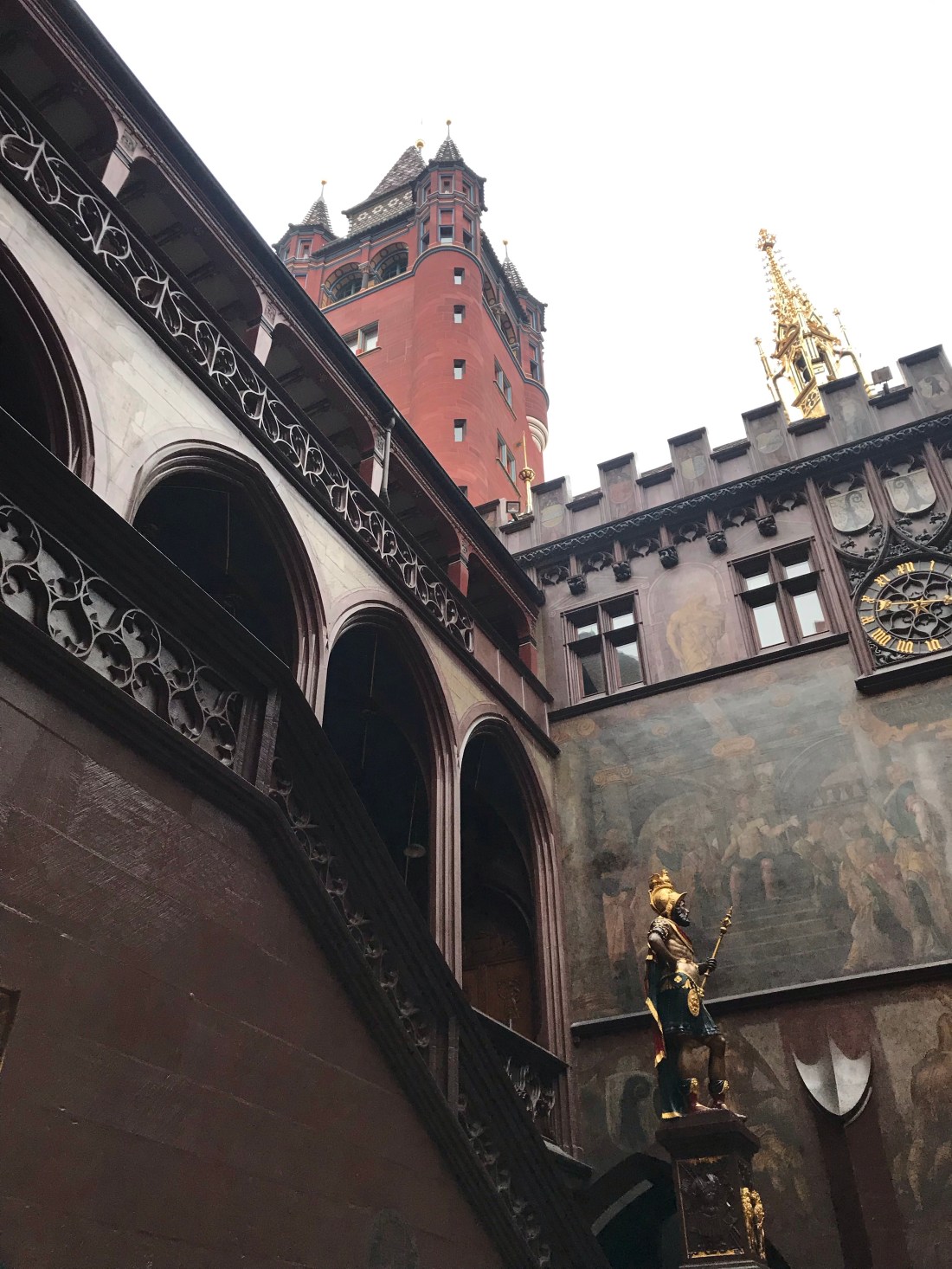
This magnificent red building is the town hall, where an extremely good cellist was busking some famous classical pieces to a backing track. I enjoyed the little concert as I wandered around the building:

Willkommen in der Schweiz

The air here is cold. Cold and very dry, somehow and I could see my breath as I emerged bleary eyed from the airport and gratefully walked straight onto the hotel shuttle bus at about 6:45am. Which for me today was about 12 hours after midnight (the wonder of traversing time zones).

The quickest way to get to Zurich city is to get the hotel airport shuttle back to the airport then hop on a train. The lady at the hotel reception waxed lyrical about the Christmas market which is already open and apparently very pretty. So, even though I felt tired from the flight, I decided to go with her suggestion while the hotel prepared my room.

5 minutes from the hotel, having decanted a rucksack of essentials and left the rest of my luggage at reception and I’m back at the airport. Half an hour later, having negotiated train ticketing and having asked people for help to find the correct station platform (asking for help like a pro now – well at least now it doesn’t take me so long to summon up the courage for it) and 15 minutes on a train and I’m here in the heart of Zürich.

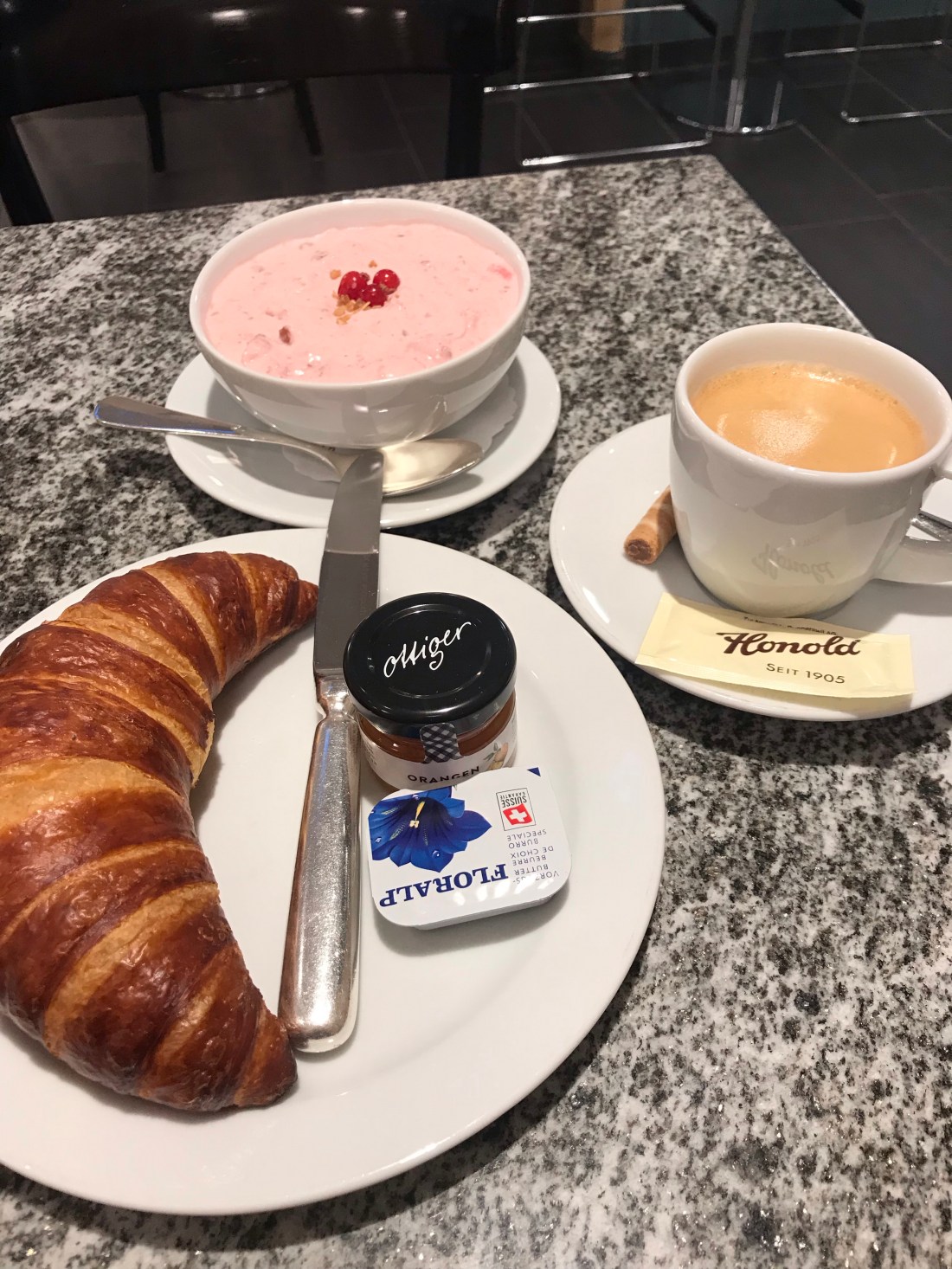
Most things were not open when I arrived, but I gratefully found a very swish café already serving breakfast, which I was ready for despite having had a collection of boiled veg on the plane (hmmm vegan breakfast fail Swiss Air! Though the hash brown was tasty). From the café I established contact with Delia who I’d meet the next day. The bowl of pink stuff was delicious bircher 😋

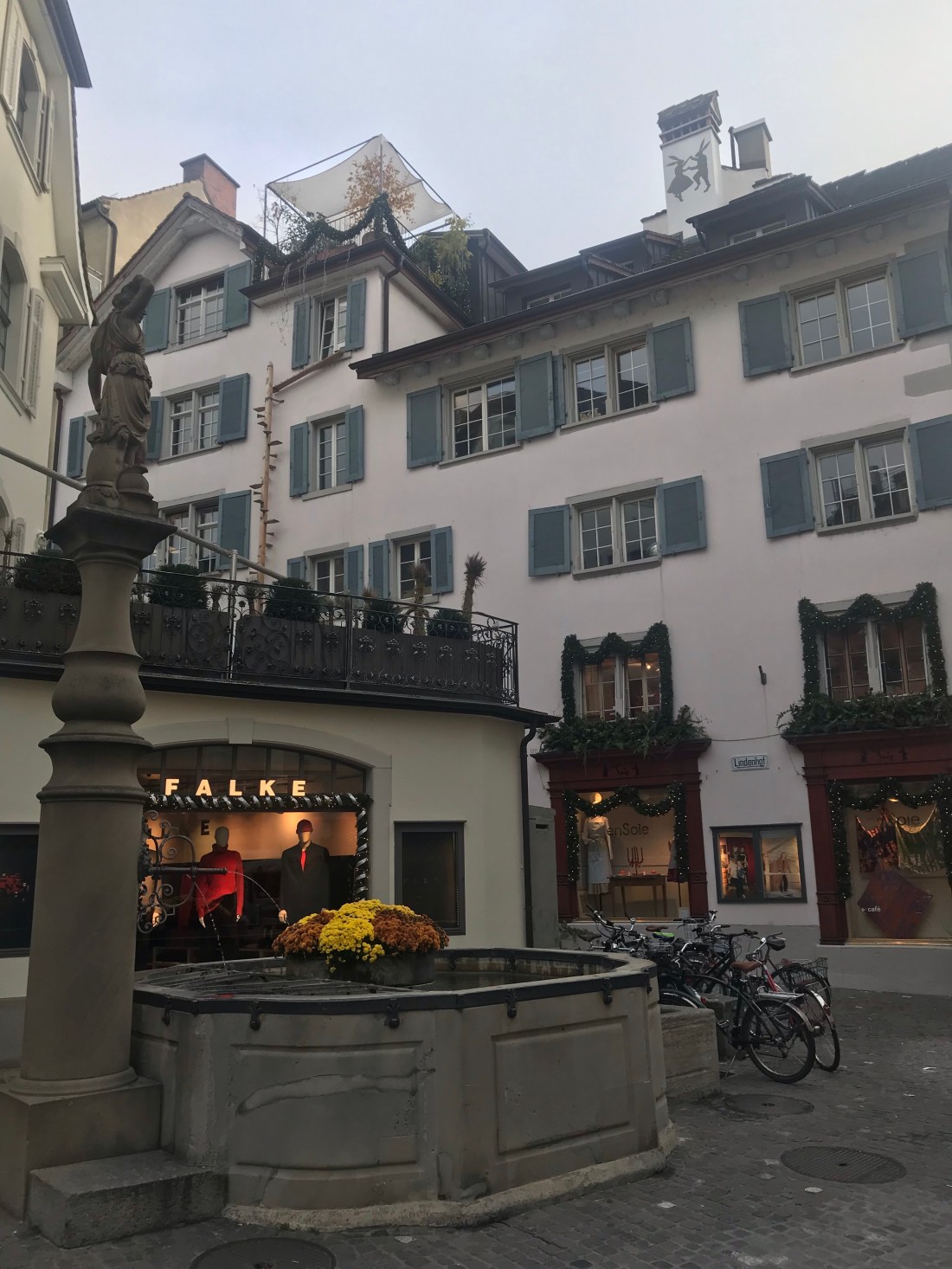
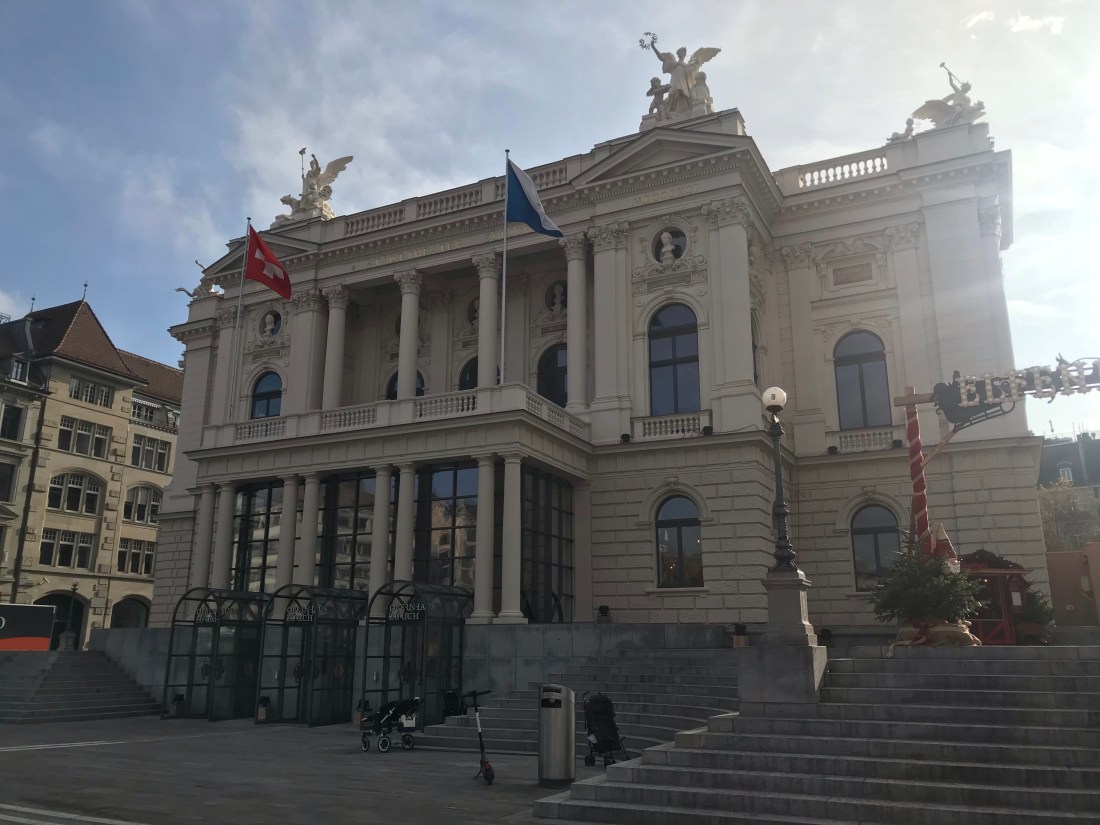
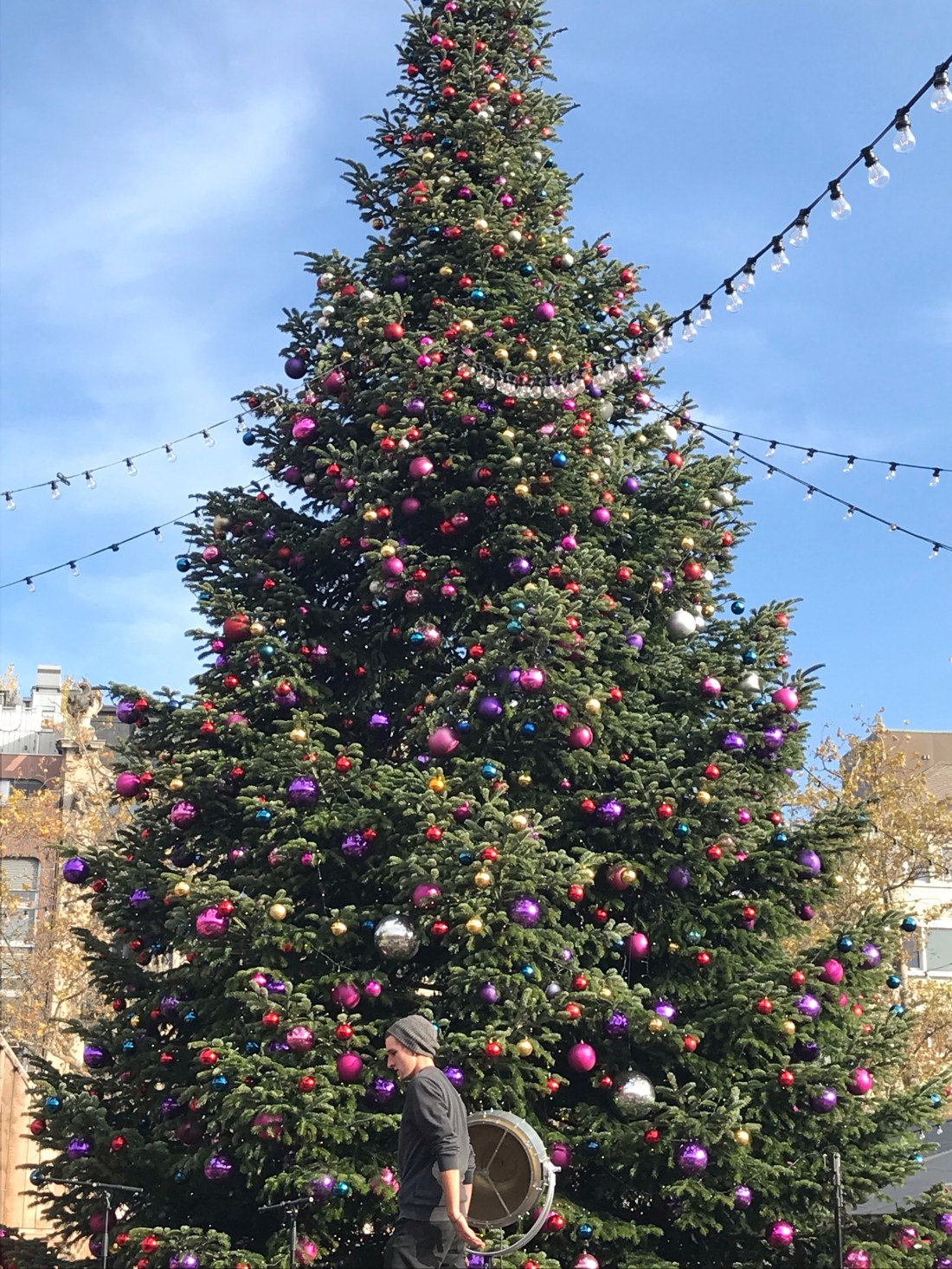
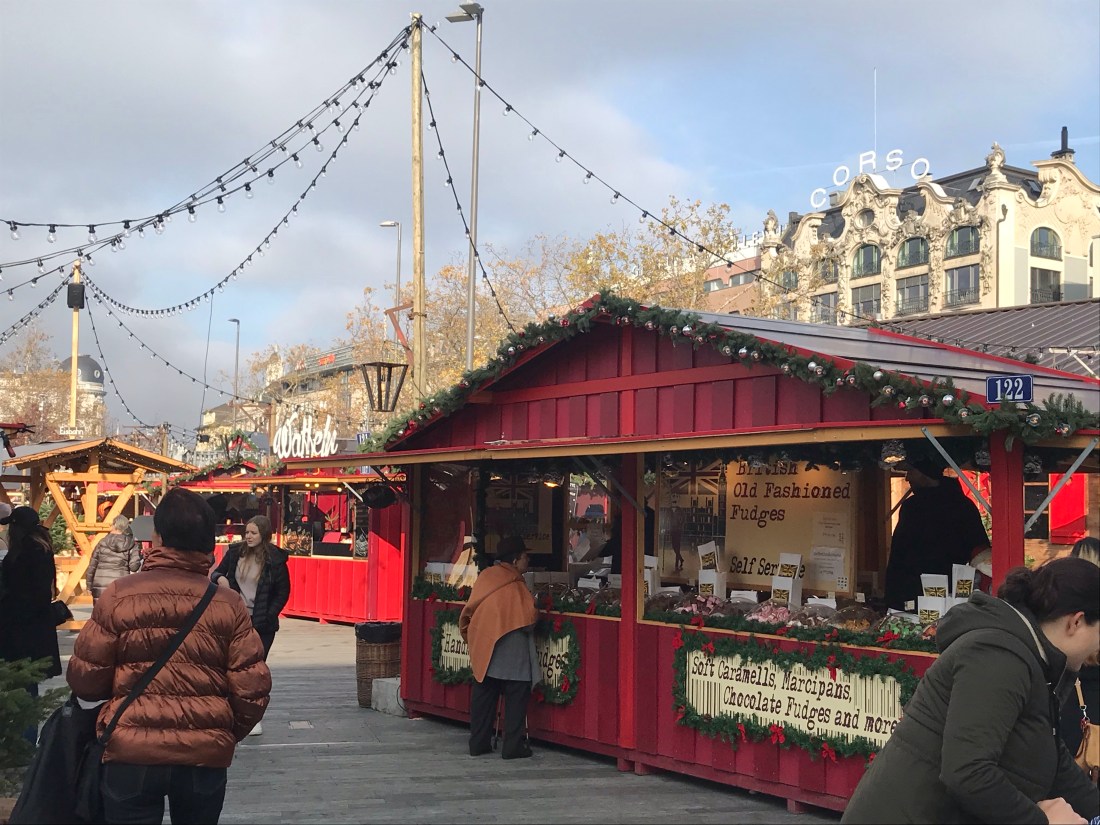
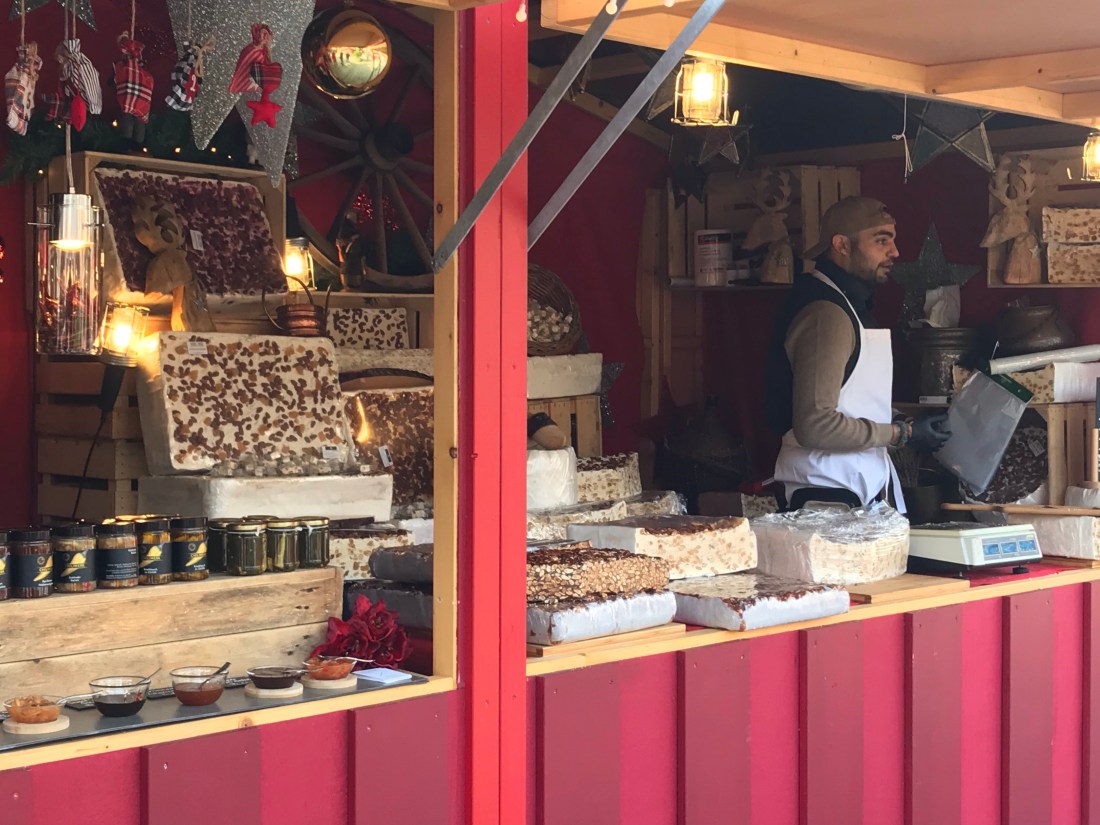
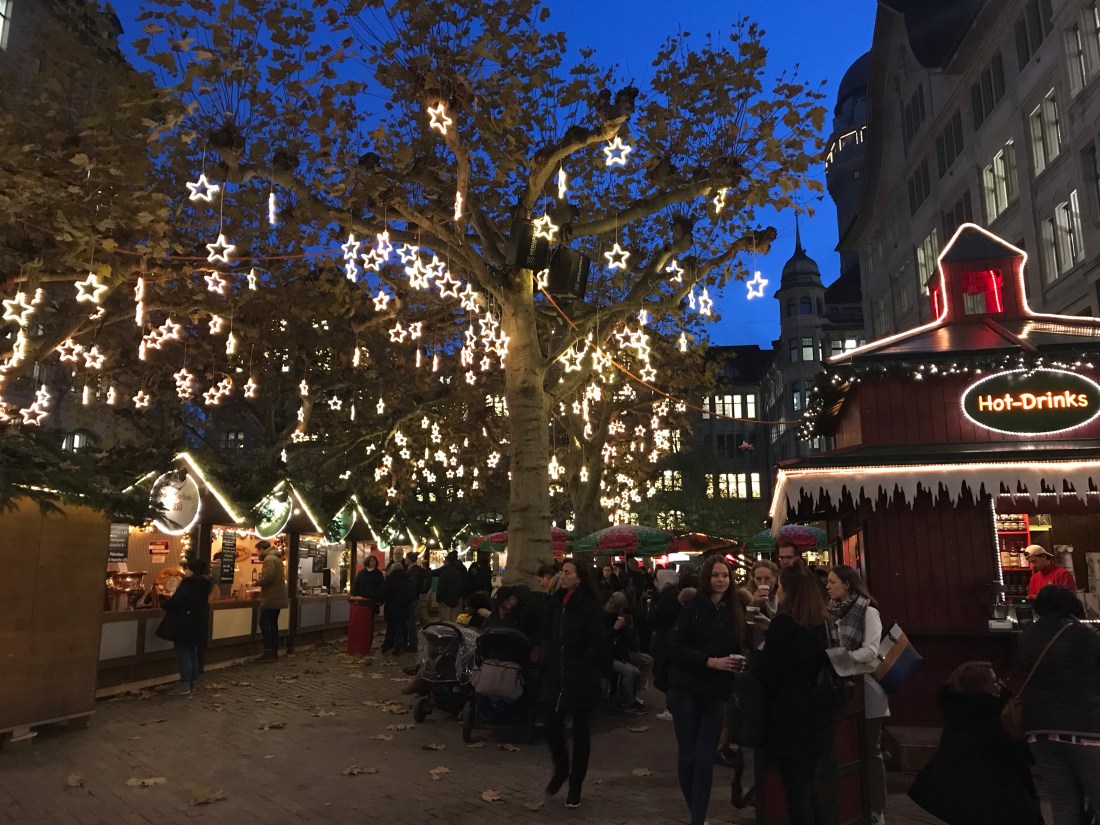
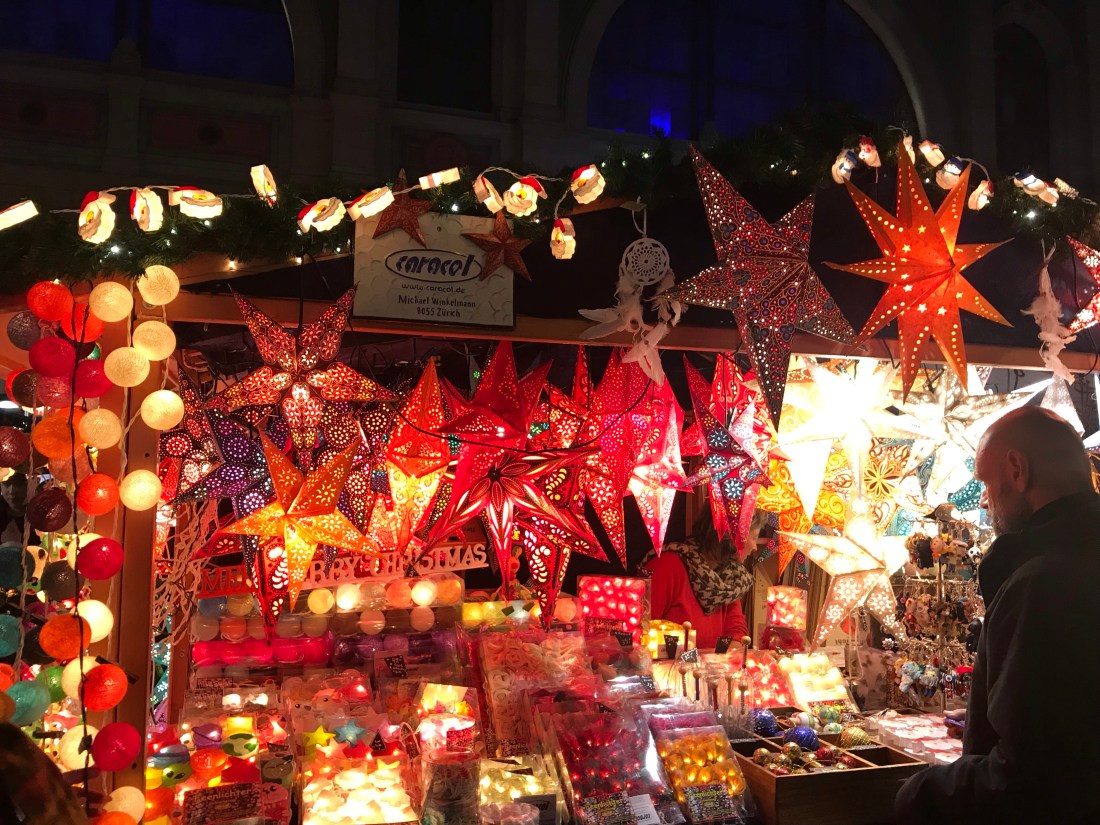
There’s a main Christmas market, not far from the river and the centre of Zürich, but actually there are lots of little cobbled corners lit up with huge Christmas trees and temporary lanes of wooden huts selling Glüwein, Wafflen, Würst, along with every kind of gift you can imagine.

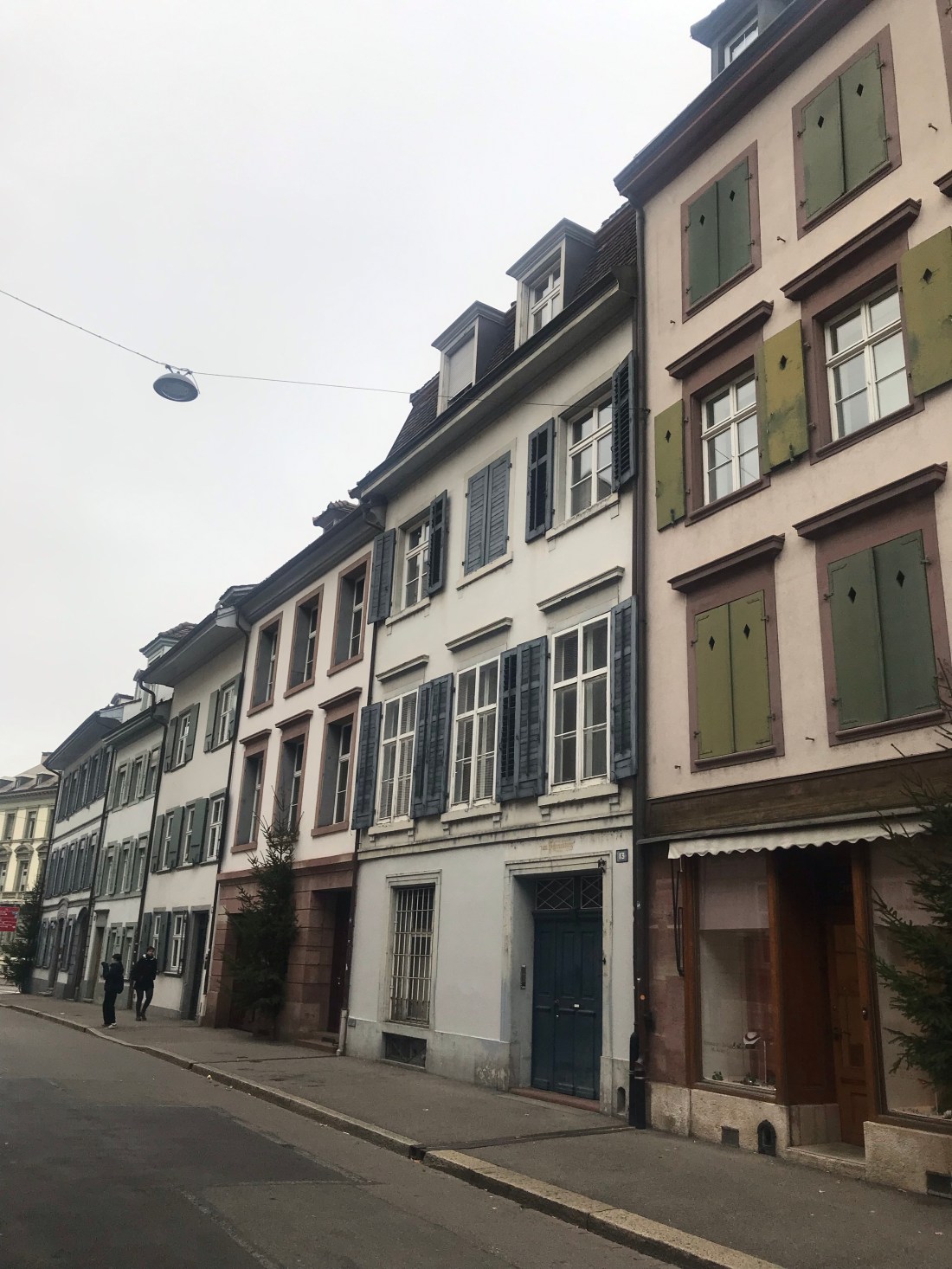
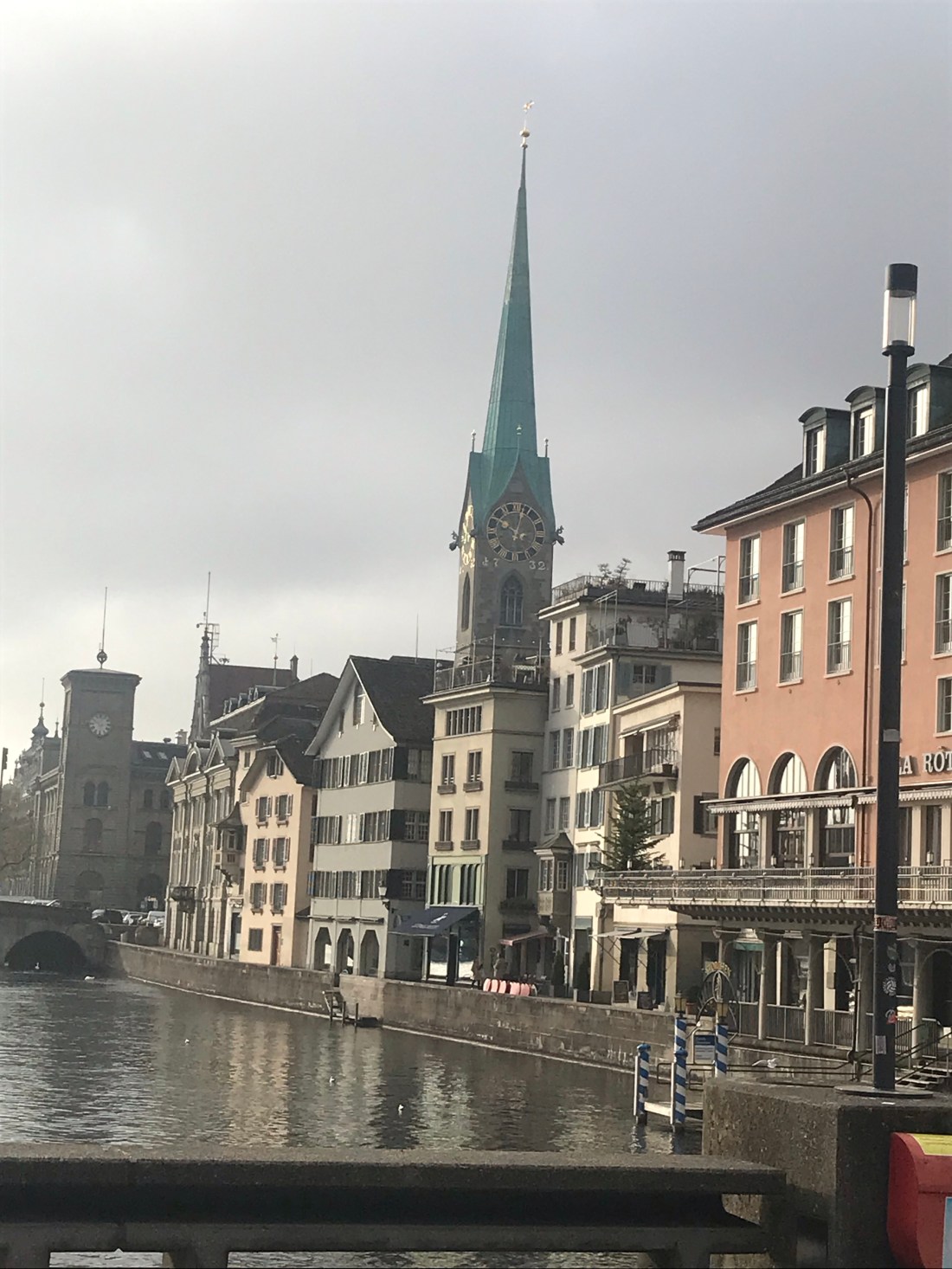
Attempting to feel my way towards the centre of things, I gravitated towards the river, lined with pretty Swiss houses replete with wooden shutters. Then stumbled across a music shop, where I warmed up for a bit browsing the shelves.

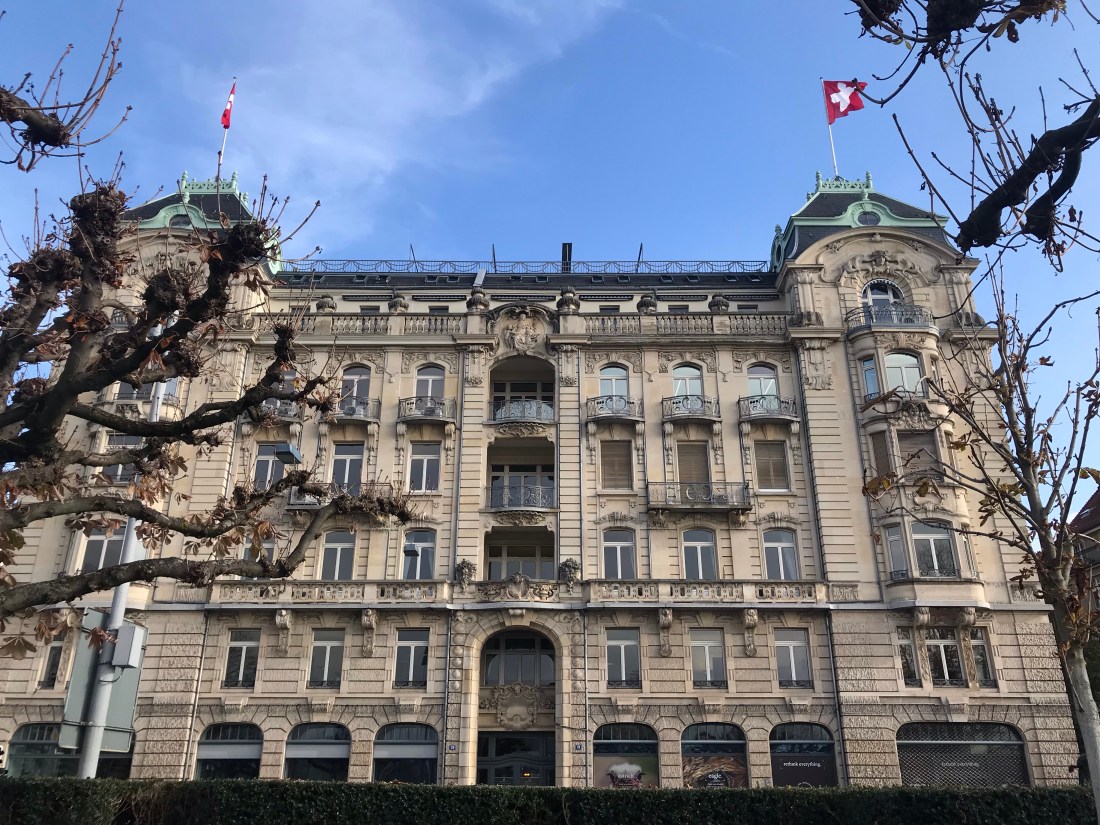
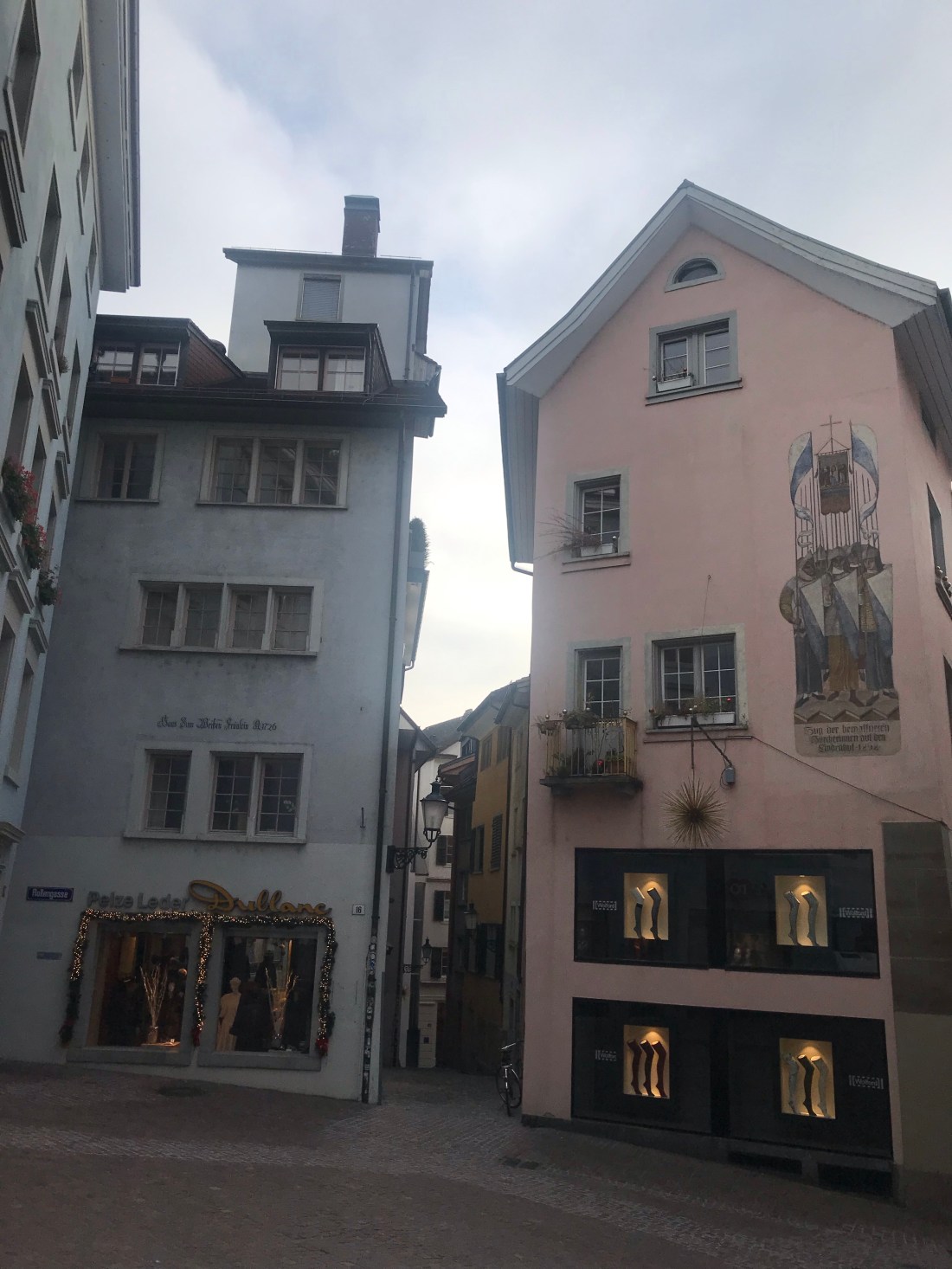
I never thought that architecture could bring comfort with it before, but Jamie and Shiv have mentioned this phenomenon to me, in terms of the post colonial architecture in Penang and Malacca in Malaysia and in Singapore too. In Zürich, virtually every corner I rounded I found another historical building, with a date painted ornately on the immaculate render, along with something about its history. Somehow it felt very comforting to be surrounded by old things again. I’ve really missed that.

Before long, I found myself near the Kunsthaus Art Museum, where I spent a couple of hours pondering sculptures by Rodin, sculptures and drawings by Matisse, paintings by Picasso and by quite a few Swiss artists and sculptures by Giacometti.

The Gates of Hell by Rodin

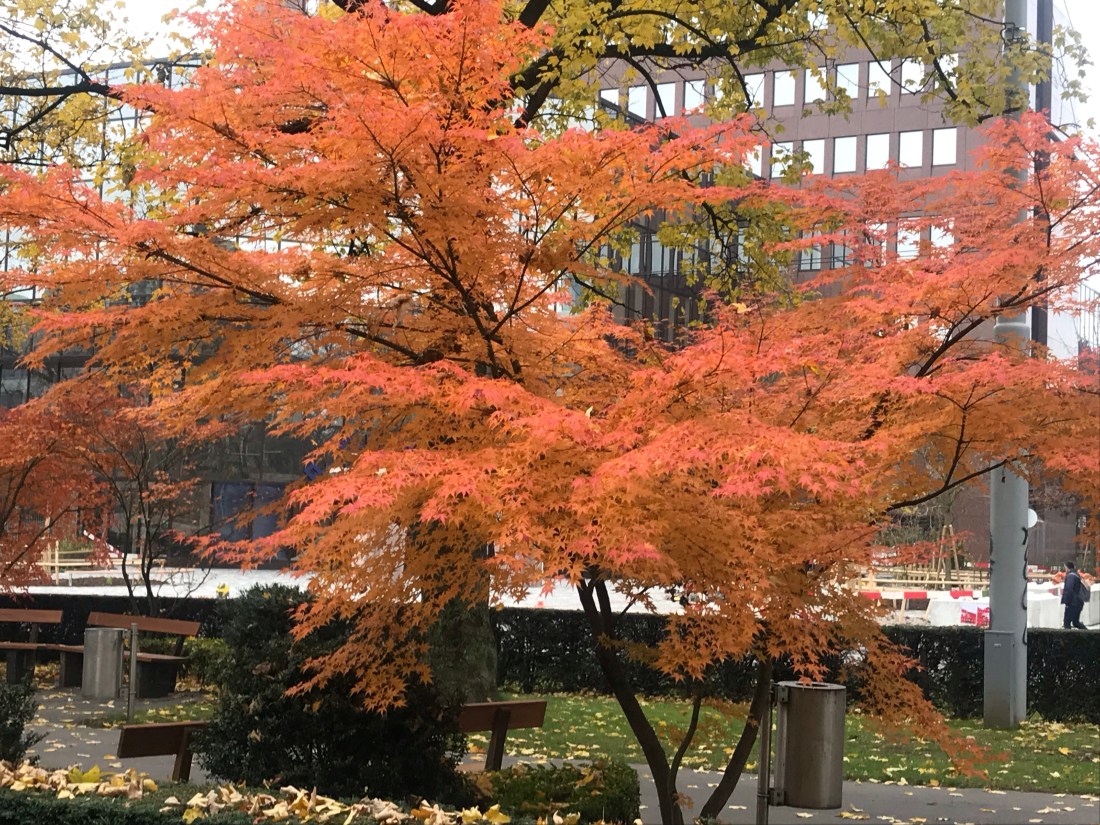
On my meandering path you can’t begin to imagine how much pleasure I was deriving from being in a place still experiencing the last vestiges of autumn. The colours of leaves on the trees, the misty sky, the cold air, all things I have so missed on my travels that I found myself feeling surprisingly at home here.

At the Christmas market, I resisted the many other temptations on offer but indulged in Würst for a late lunch.

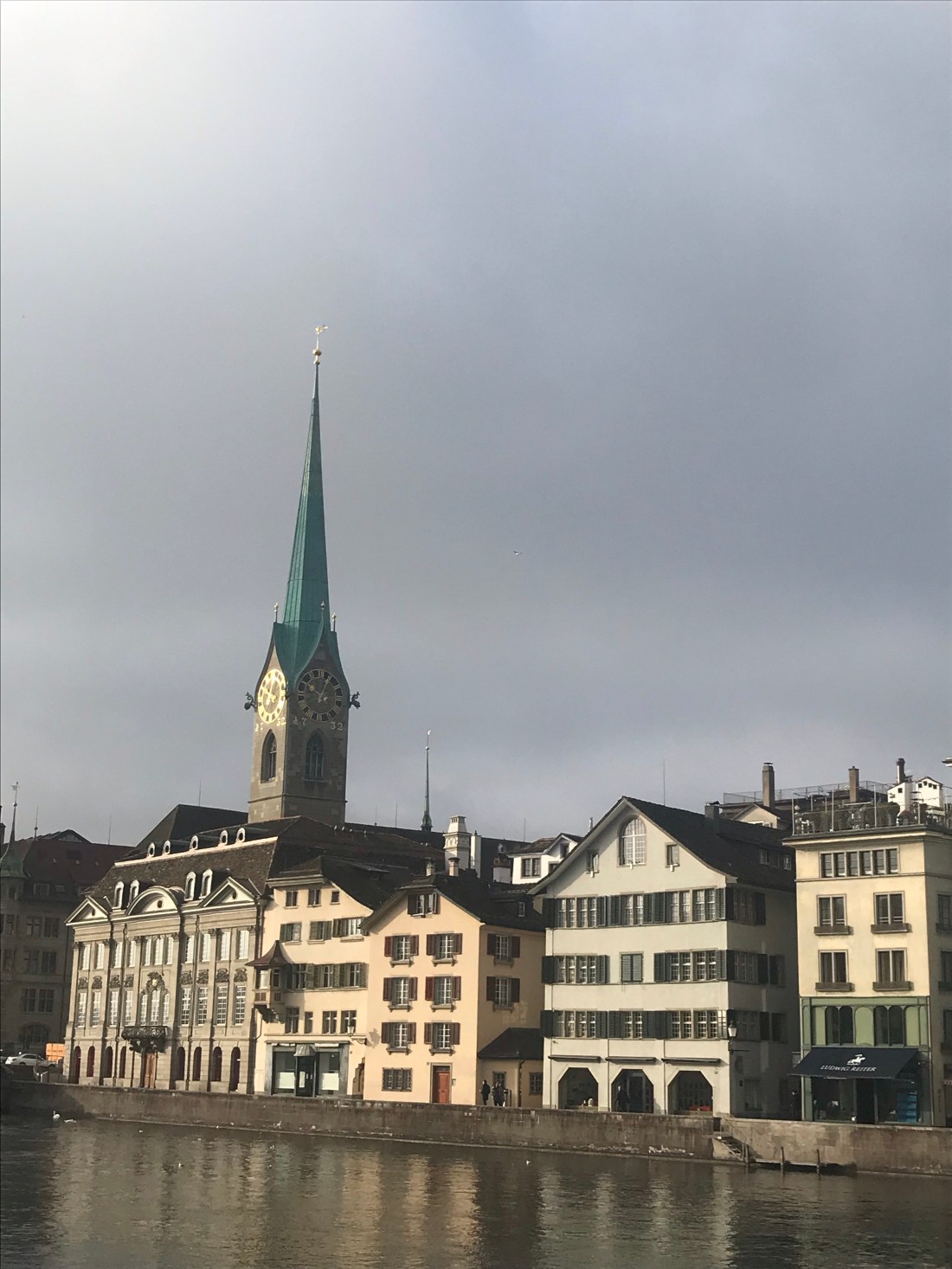
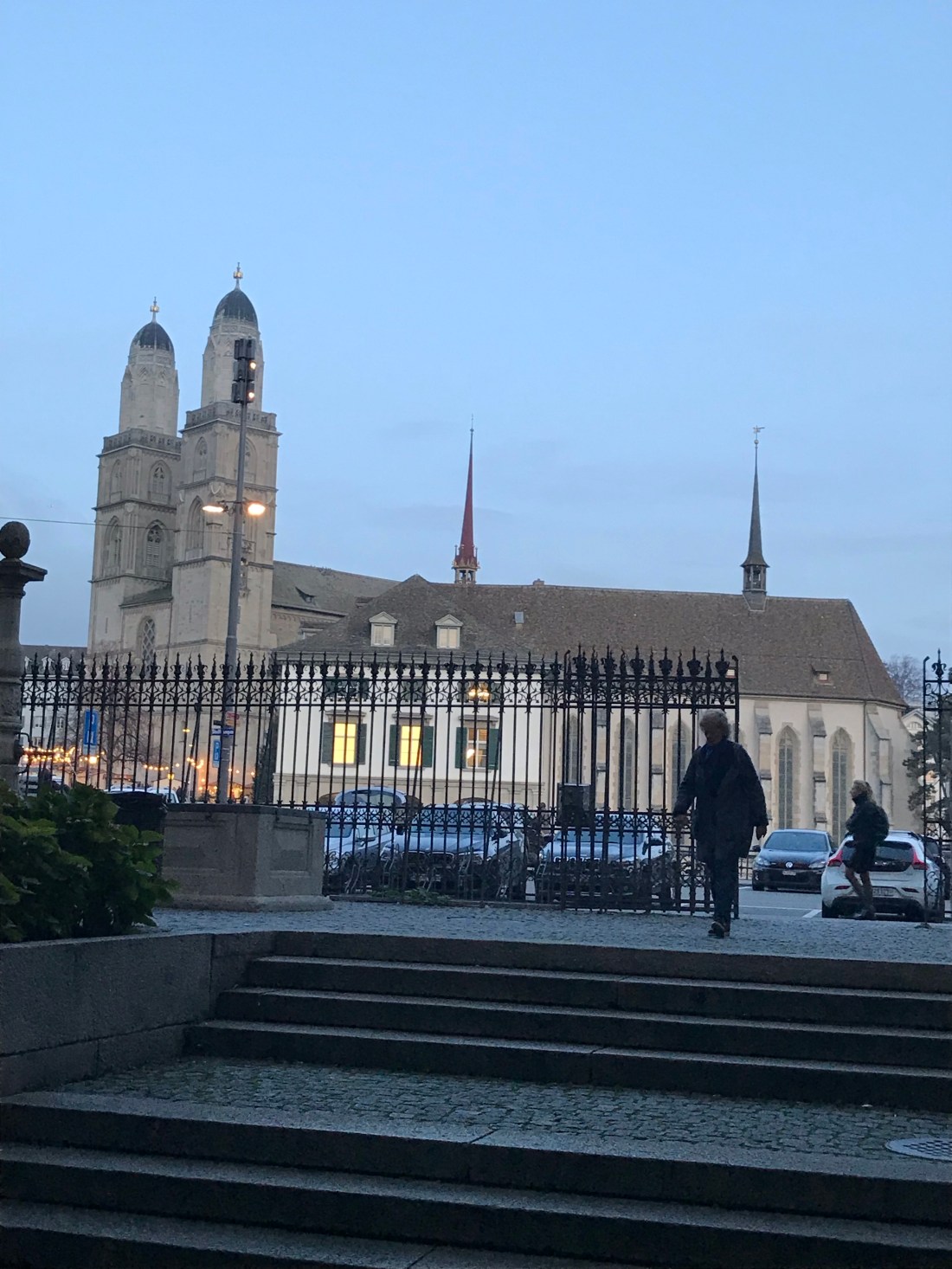
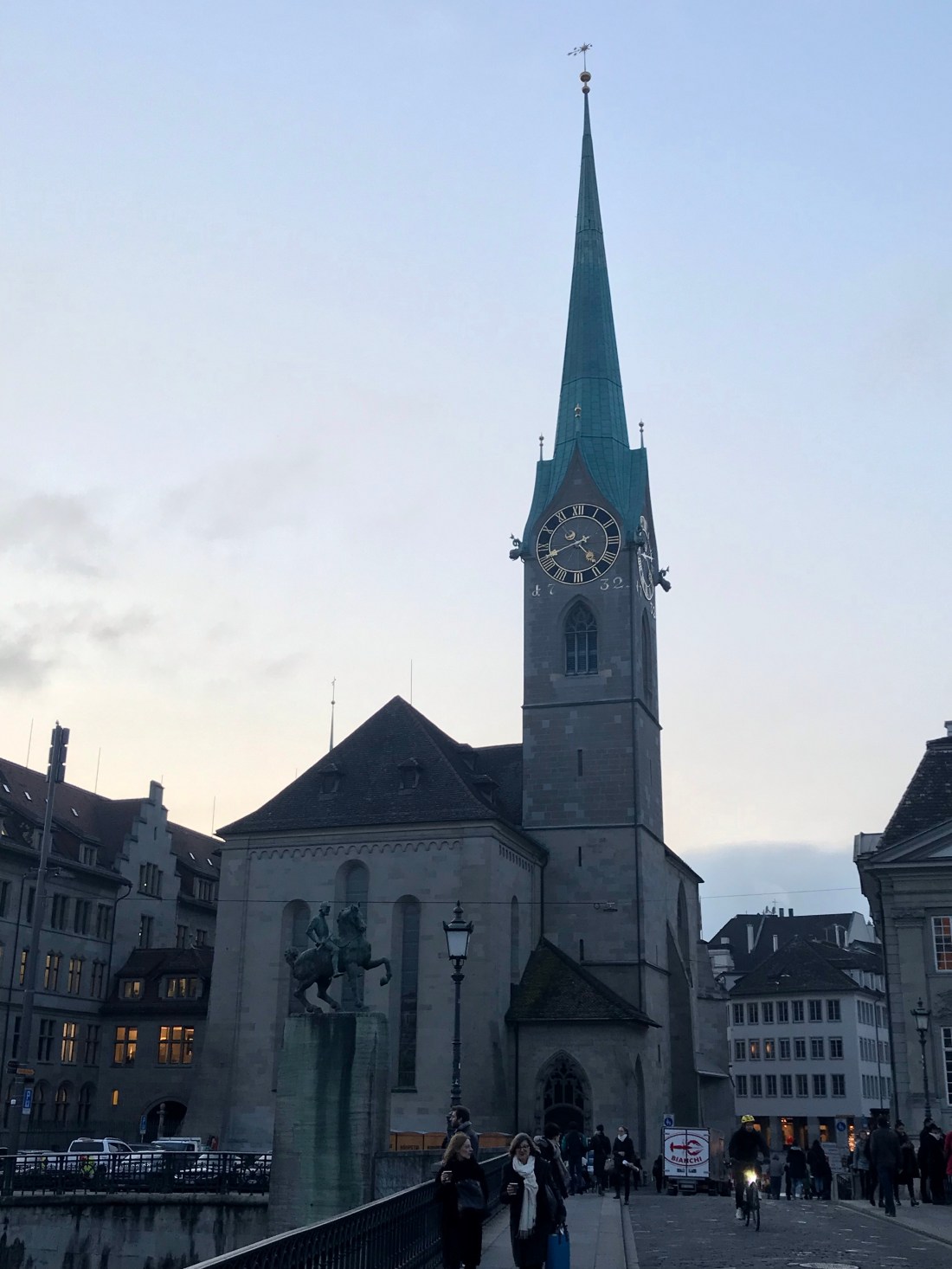
On my way back to the station, I managed to have a quick look around the Grossmünster and the Fraumünster (two of the biggest churches in the middle of Zürich) just before they closed. I was particularly interested in the latter, which began life as a Benedictine convent, founded in 853 by Louis the German for his daughter Hildegard. He gave the convent the land of Zürich, Uri and the Albis Forest. In 1045, King Henry III gave the convent the right to hold markets, collect tolls and mint coins, which apparently effectively made the Abbess the ruler of the city. But in 1336 the city’s first independent mayor was appointed (ie not the Abbess’ appointment), and the convent’s political power waned.

The abbey was dissolved in 1524 in the course of the Reformation by Zwingli. Its last abbess, Katharina Von Zimmern, to whom there is a memorial altar, agreed to its dissolution, though it must have cost her a lot. A lady also spending a thoughtful moment here, told me in halting English that Katharina was a great lady, because she was so concerned about disunity in the church that she decided to allow the abbey to be dissolved, rather than engage in a fight to save it that would create further discord with Zwingli and the Reformers. Food for thought.

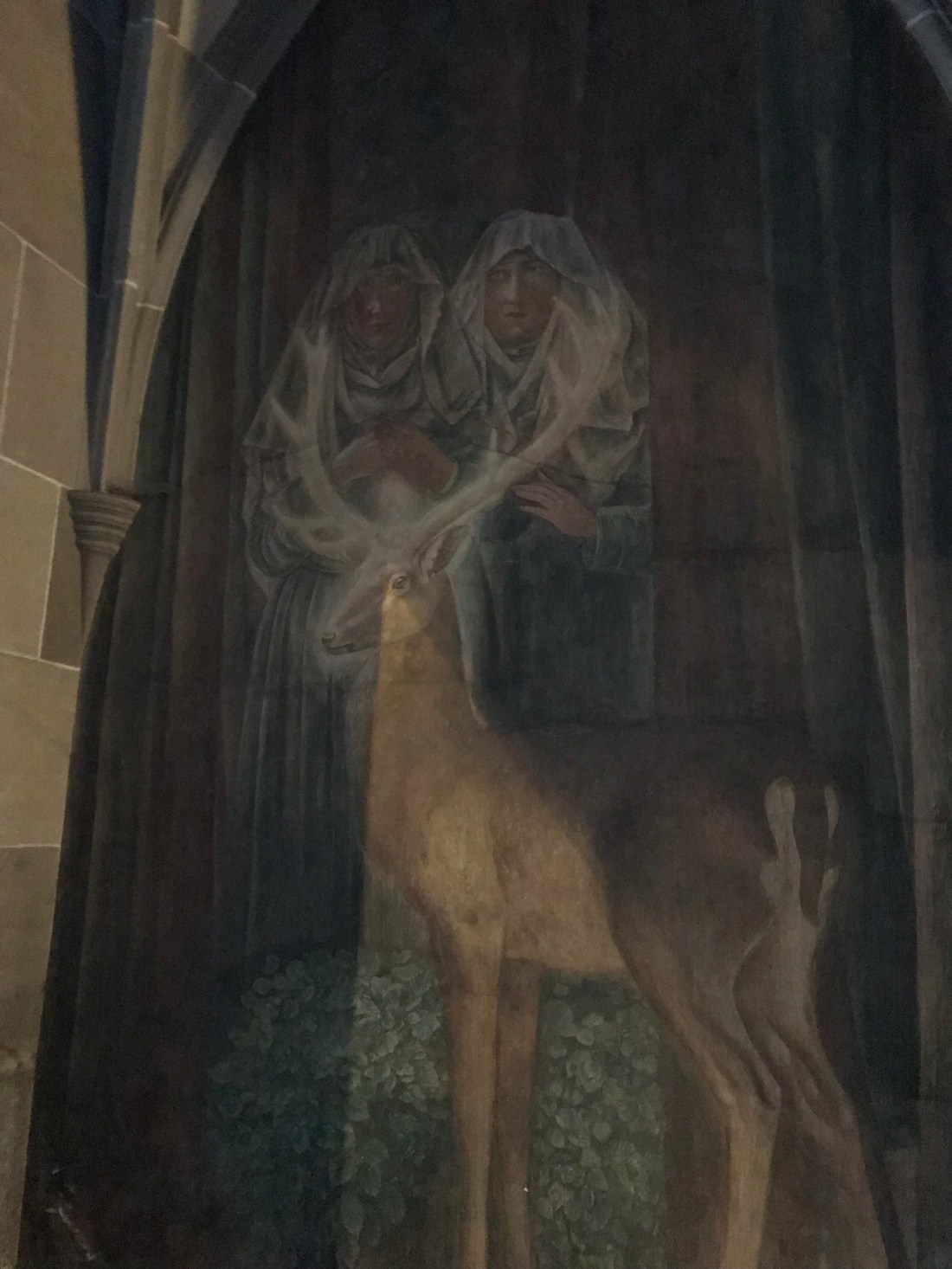
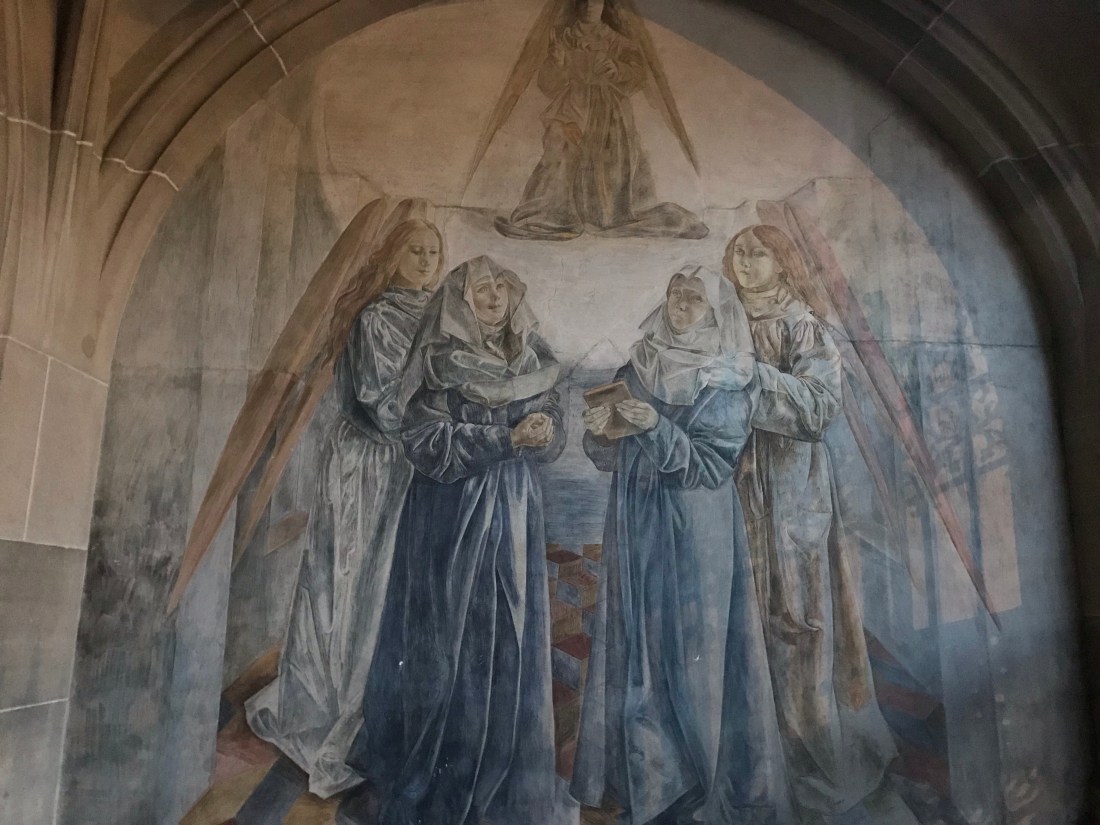
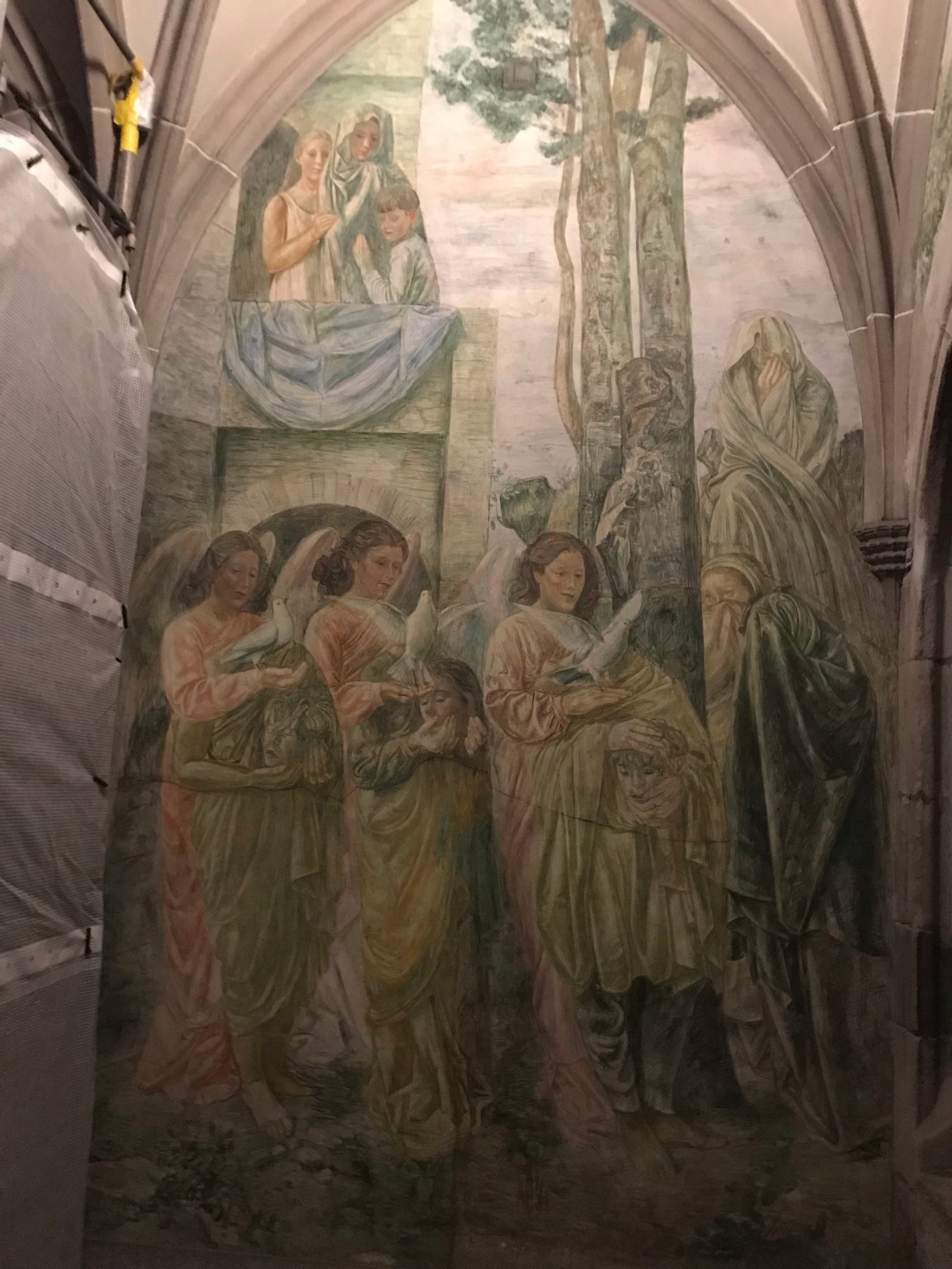
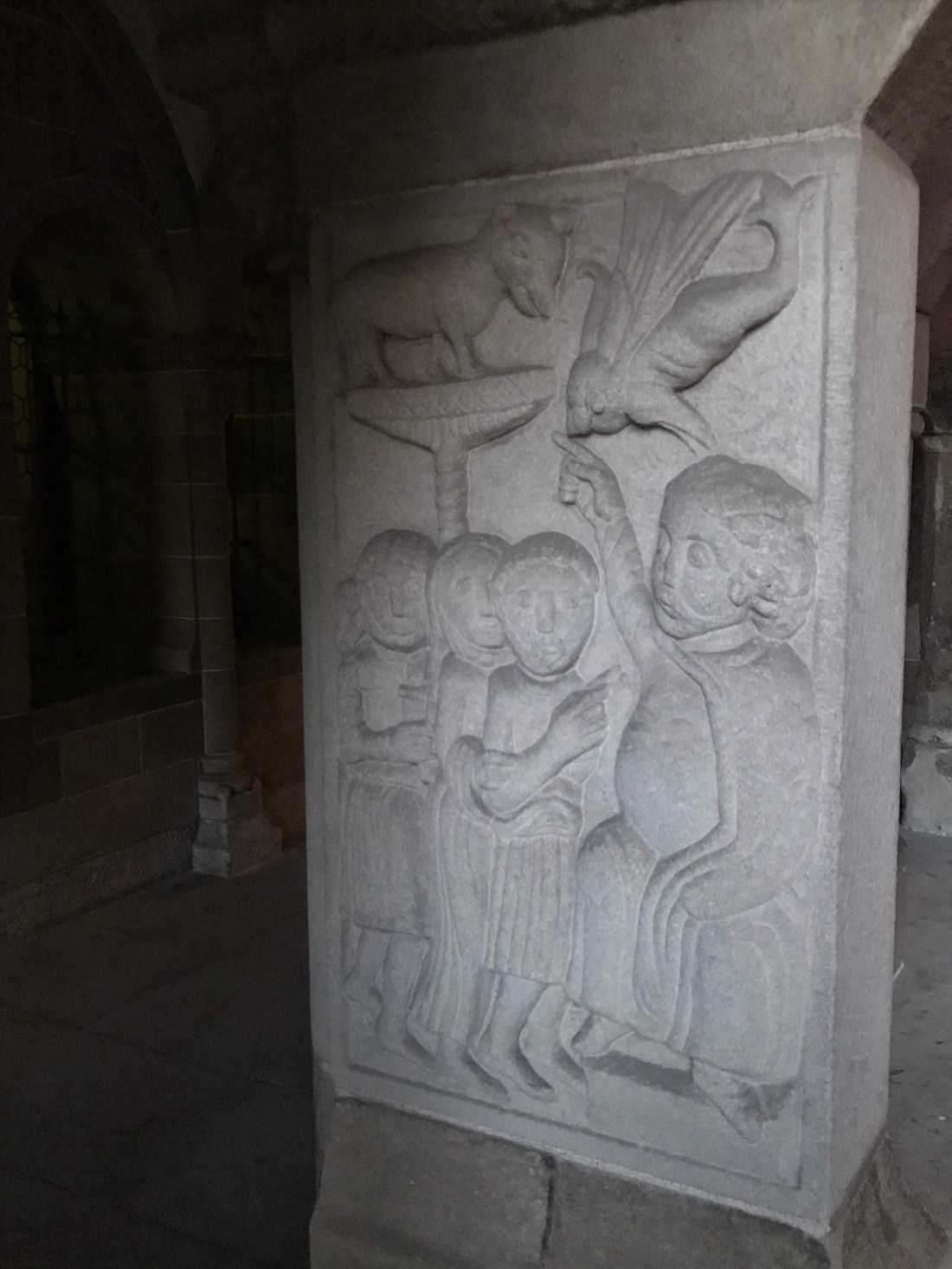
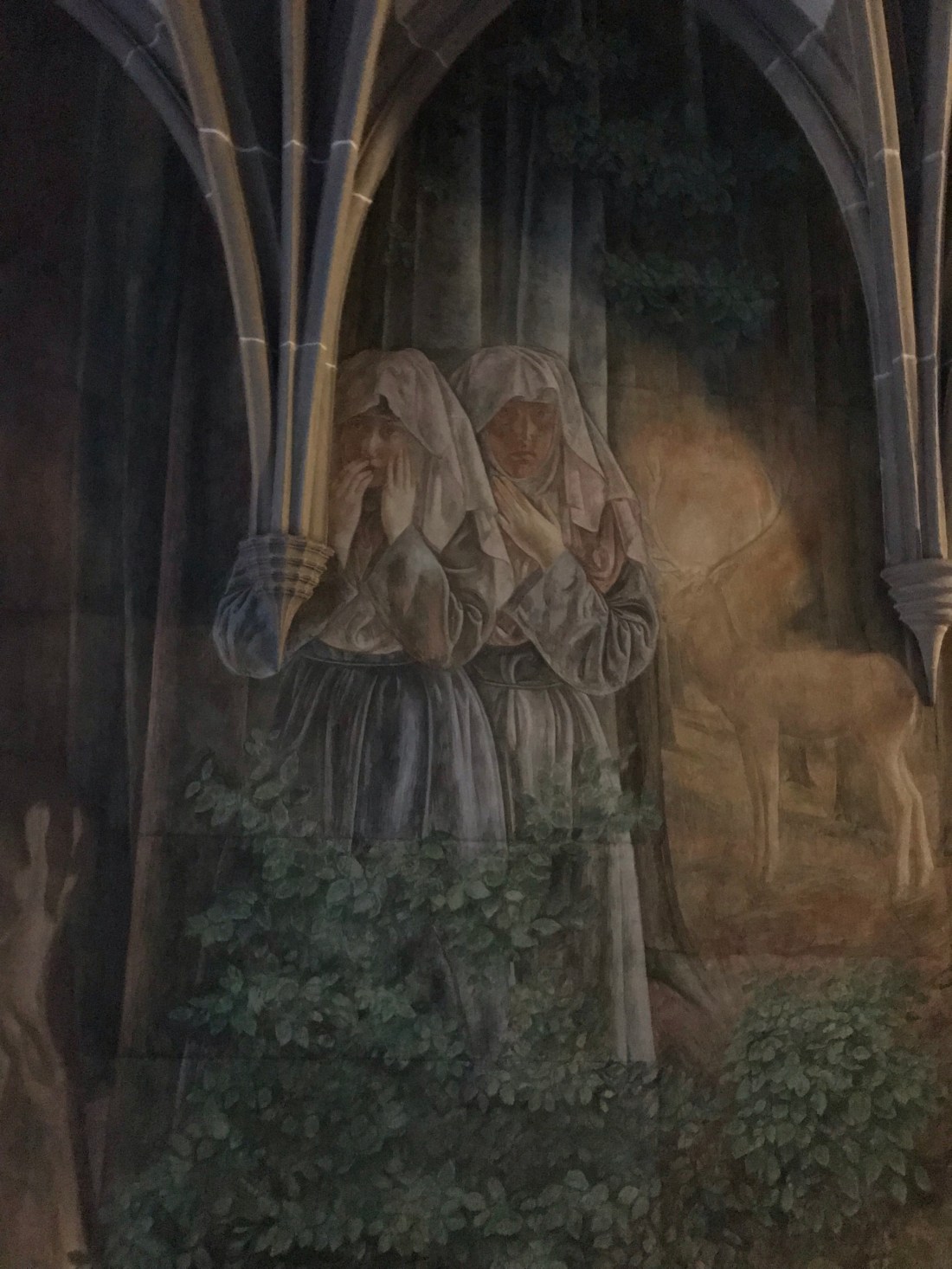
I was either too late or you can’t currently see inside the church space where apparently there are five windows by Mark Chagall and another one by Giacometti that I’d have loved to have seen. But I could see the numerous frescoes on the cloister walls.

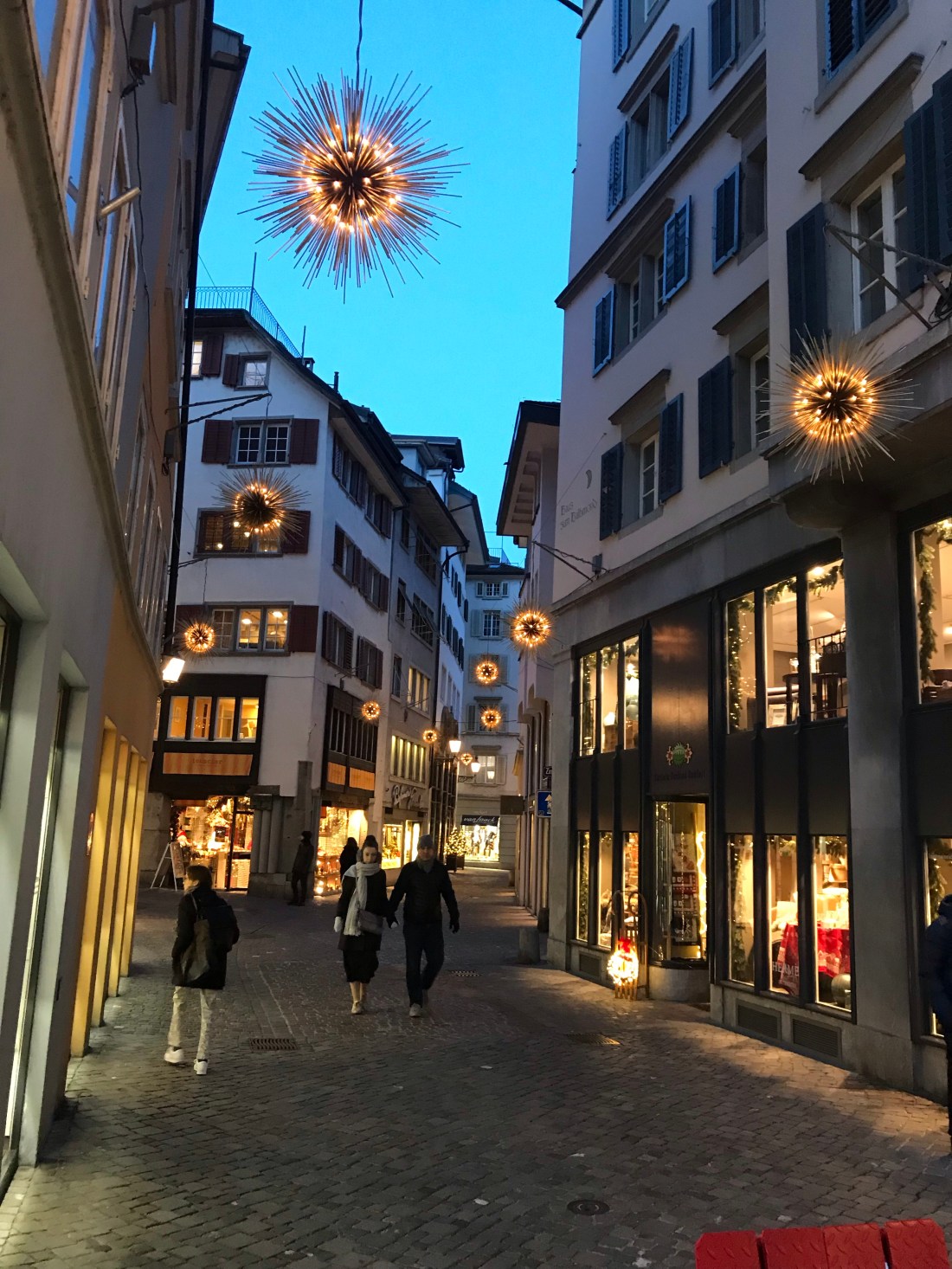
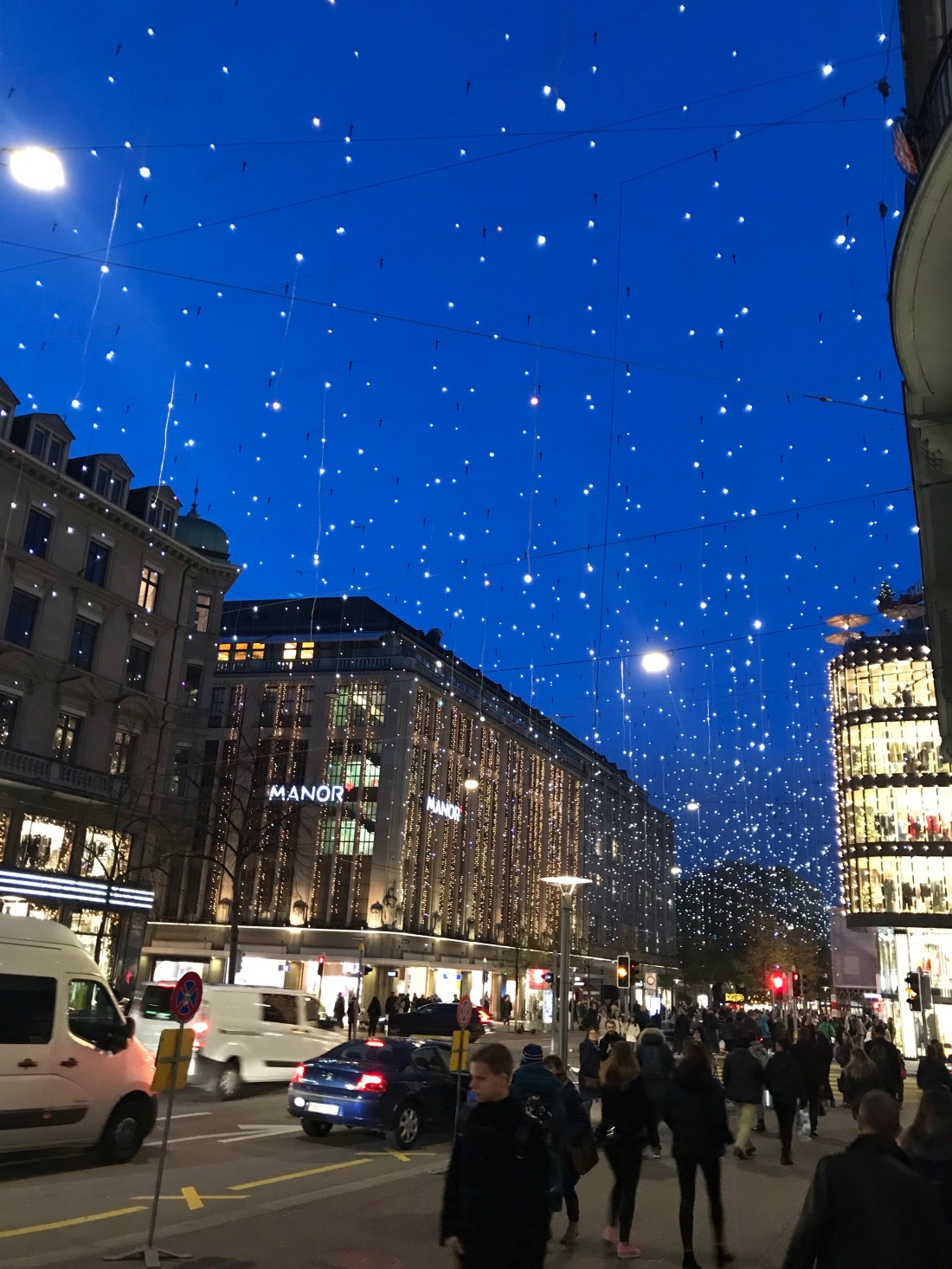
Somehow, in spite of my plans to spend a lazy day in the hotel, Zürich enticed me to stay until the evening, when the whole place was lit with tiny white fairy lights apparently strung from the sky like stars.

Farewell Singapore

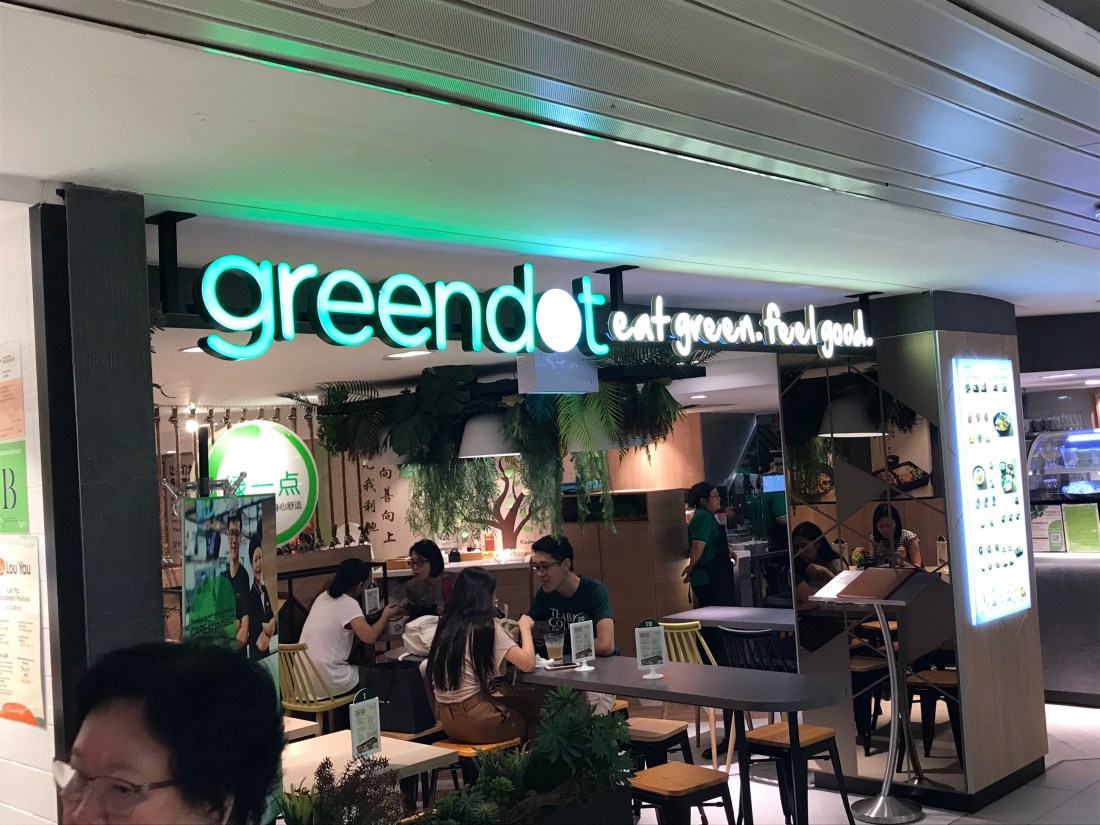
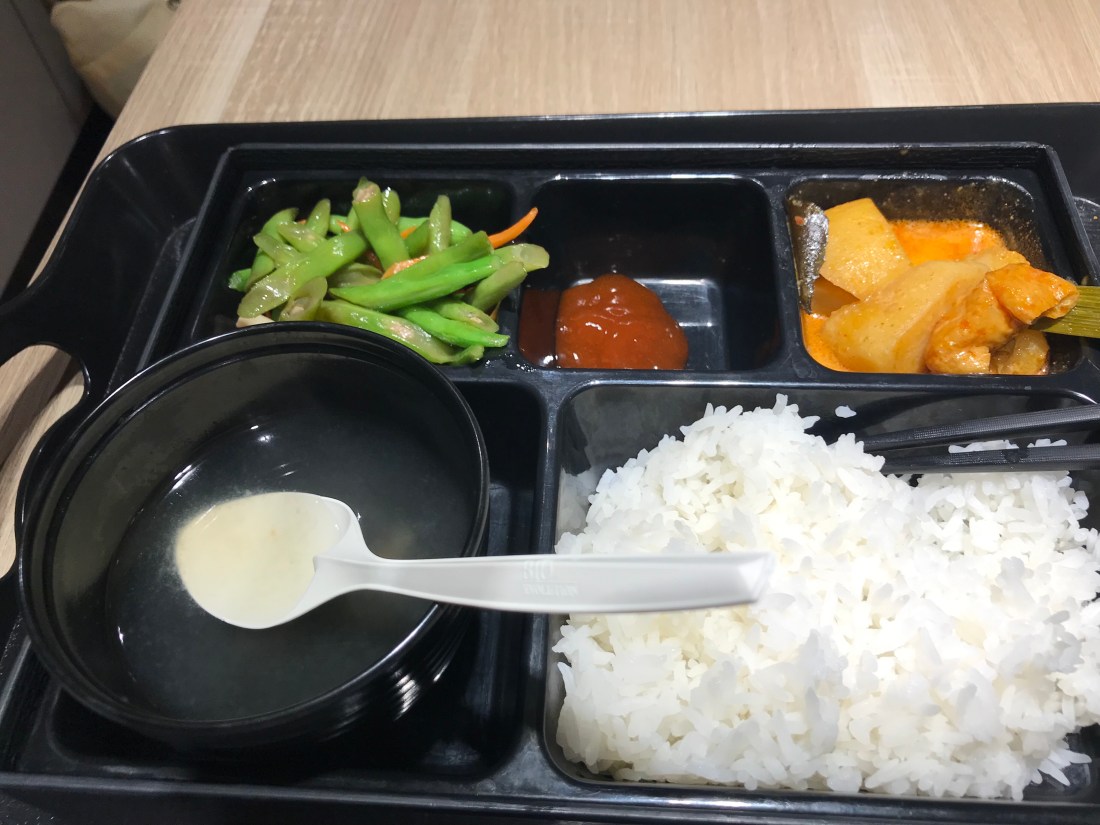
On my last day in Singapore, I got to taste some wonderful “Bento” (a box packed meal see pic below) from this veggie café that I’d spotted before. It did not disappoint. It’s amazing just how delicious simple food can be, with a little bit of skill at preparing it:

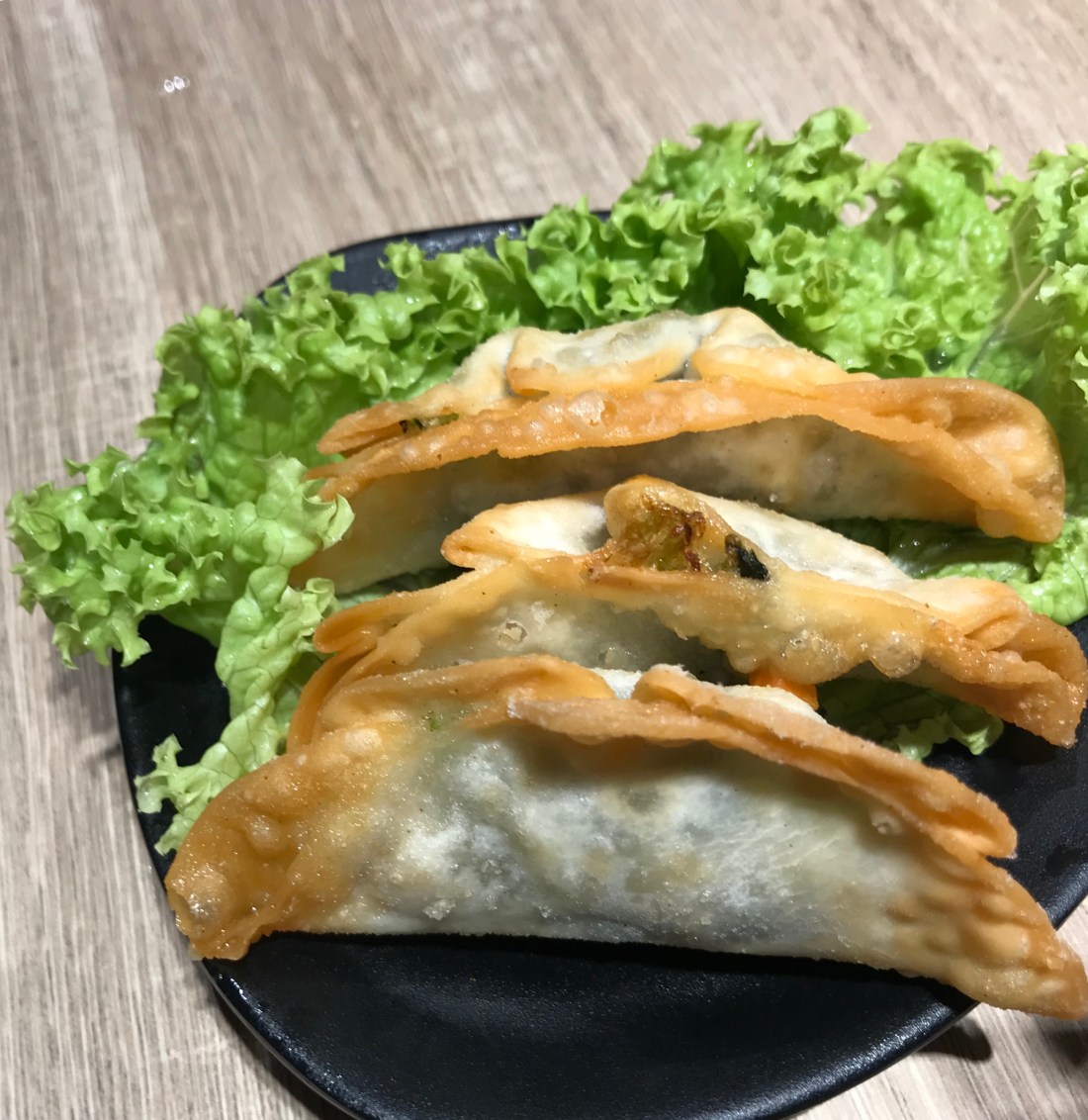
Fragrant rice, soup (remarkably tasty, served with every meal, perhaps aiding digestion?), beans and carrots cooked in some kind of sesame and soy sauce that was delicious, potato and various other veg curry (ooo that was good) and a squidge of chilli sauce, and some veggie gyoza (dumplings- below):

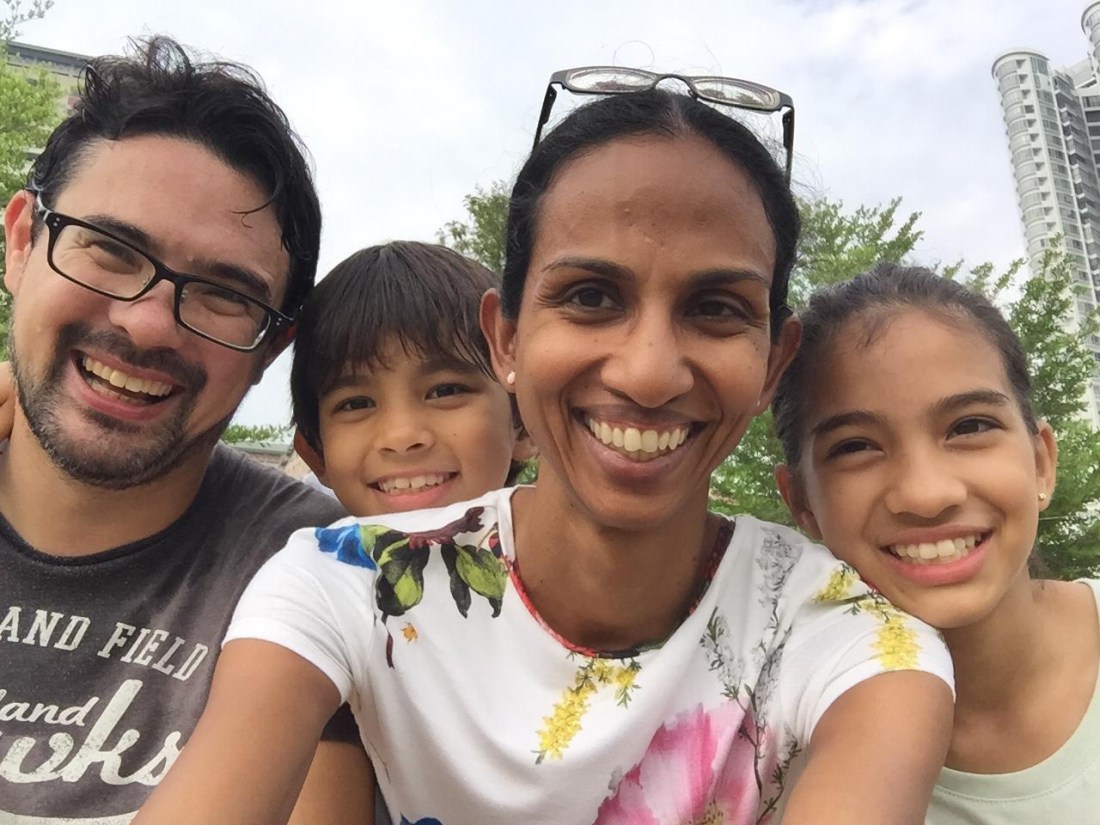
Well, what an incredible Southeast Asian adventure I’ve had! And I am very much going to miss these lovely people who have hosted me so very ably in Singapore. I feel very fortunate to have found such kindred spirits all over the world, who have offered me such amazing hospitality. There was a lump in my throat saying goodbye to these lovelies.

Apparently, when astronauts return to earth, there’s a phenomenon they experience where they cease to be able to understand why nations war against each other. From the viewpoint of space, we are really all just human beings on our one tiny planet, and it seems crazy that we should ever not just get along with each other. (I read about this in The Book of Joy, a very thought provoking and readable book by Douglas Abrams about the Dalai Lama meeting Archbishop Desmond Tutu.)

I know it’s more complicated than that, when people’s land, or means of survival has been taken from them. But then, actually, is it? Why should it ever even enter our brains to take things away from each other? And why should we ever not offer hospitality to a human being in need of it? (Especially those fleeing war or threat of torture or death.) Today it’s them, tomorrow it may well be us, after all.

Nearing the end of my three month journey around the world, I am beginning to feel a bit like the astronauts.

Gardens by the Bay

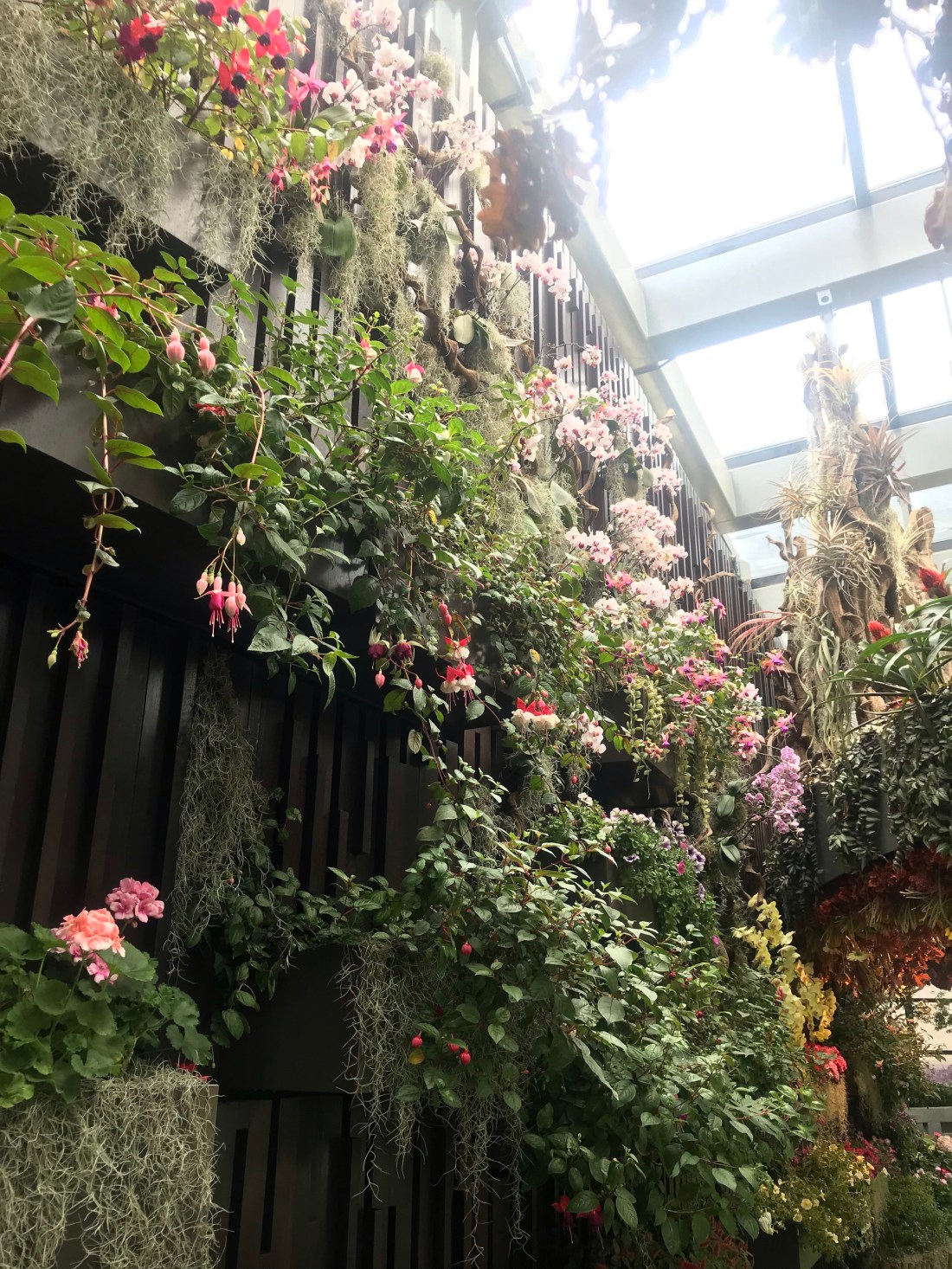
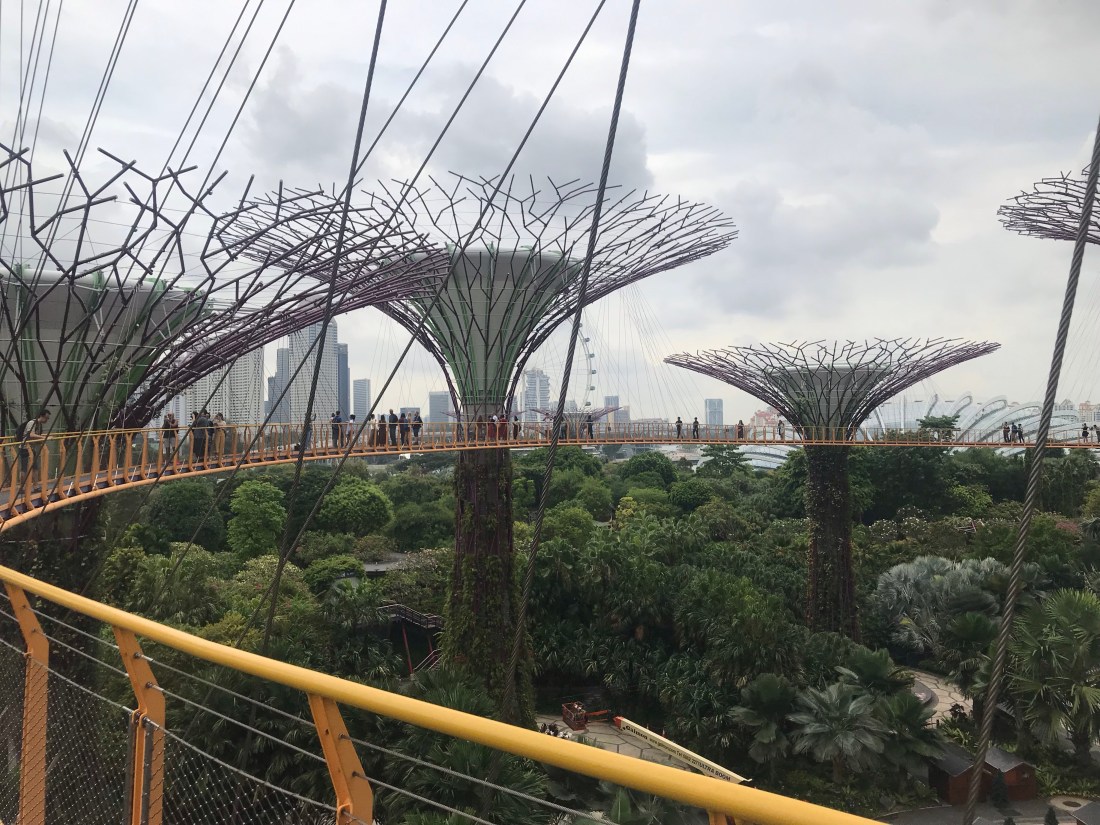
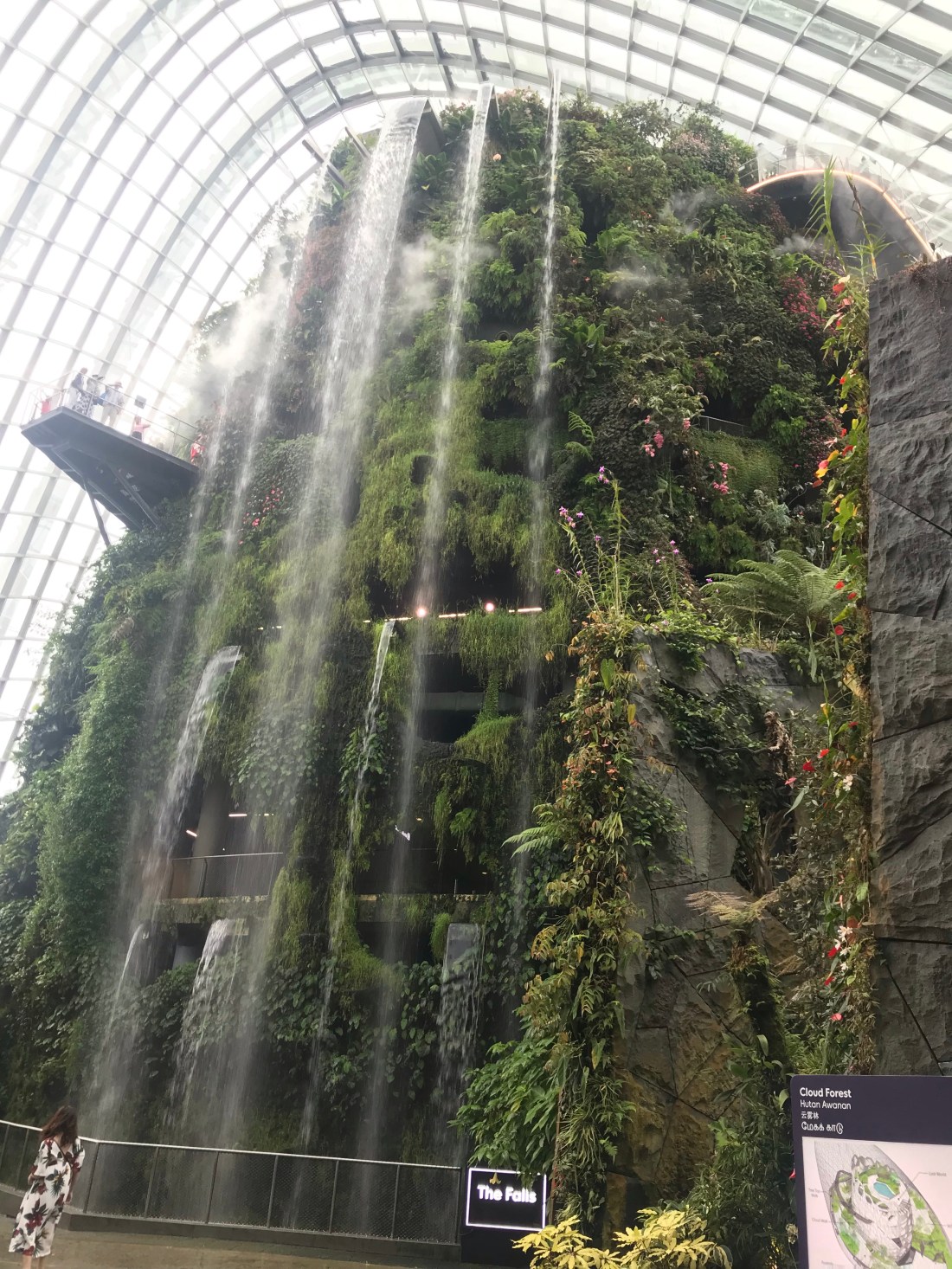
I saved the most dramatic thing until my last full day here. Not much to say, except I thought I’d done with the walking up high on stuff that’s swinging but apparently not! Soon after I’d done the Supertree “Skywalk”, I found myself in the Cloud Forest, going up yet another lift and then walking along another vertiginous narrow path, though this one was more solid feeling. I hope nothing like that awaits me in Switzerland. With practice, I think I’ve actually become more scared rather than less! (Maybe it’s an age thing?)

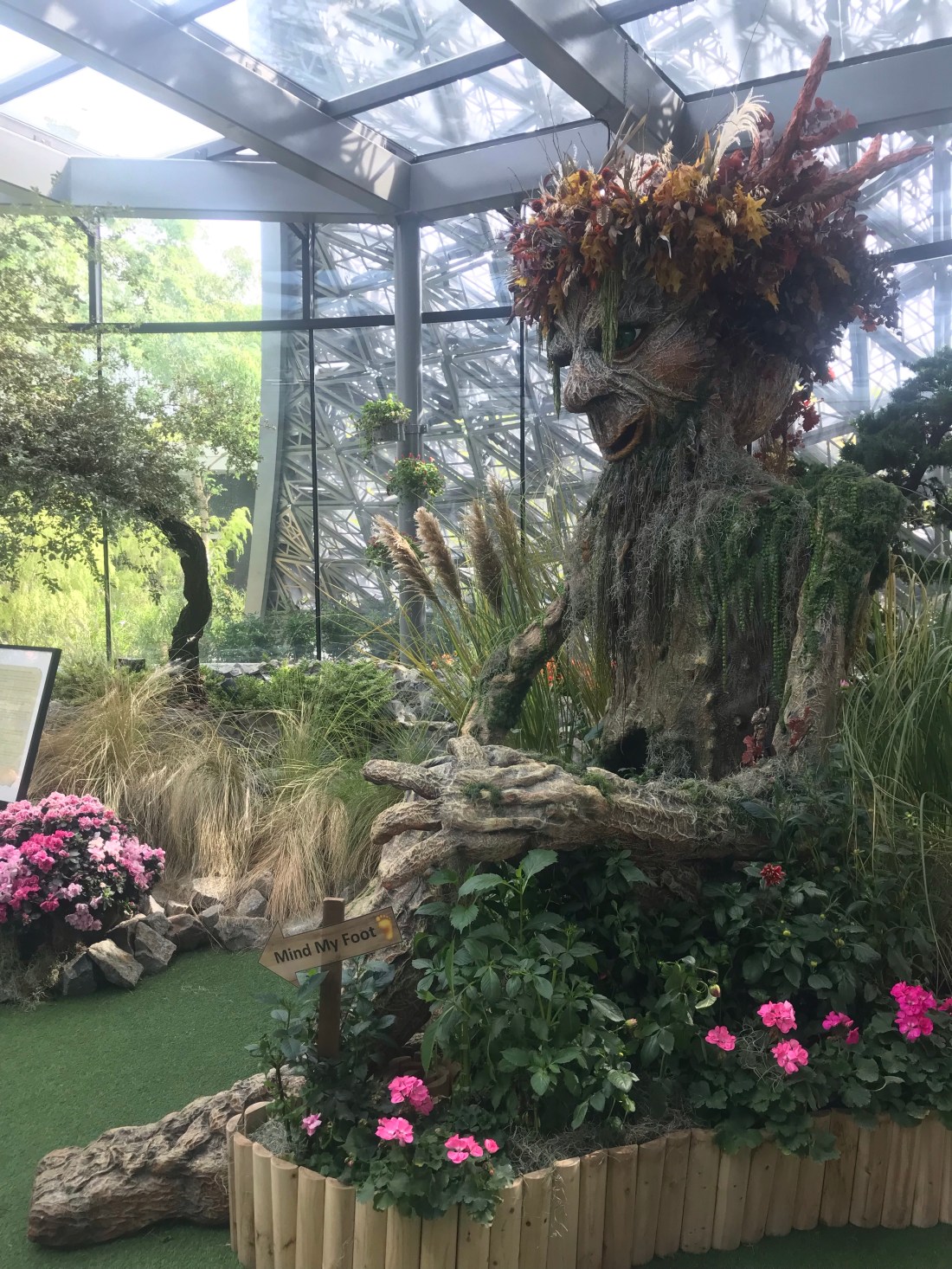
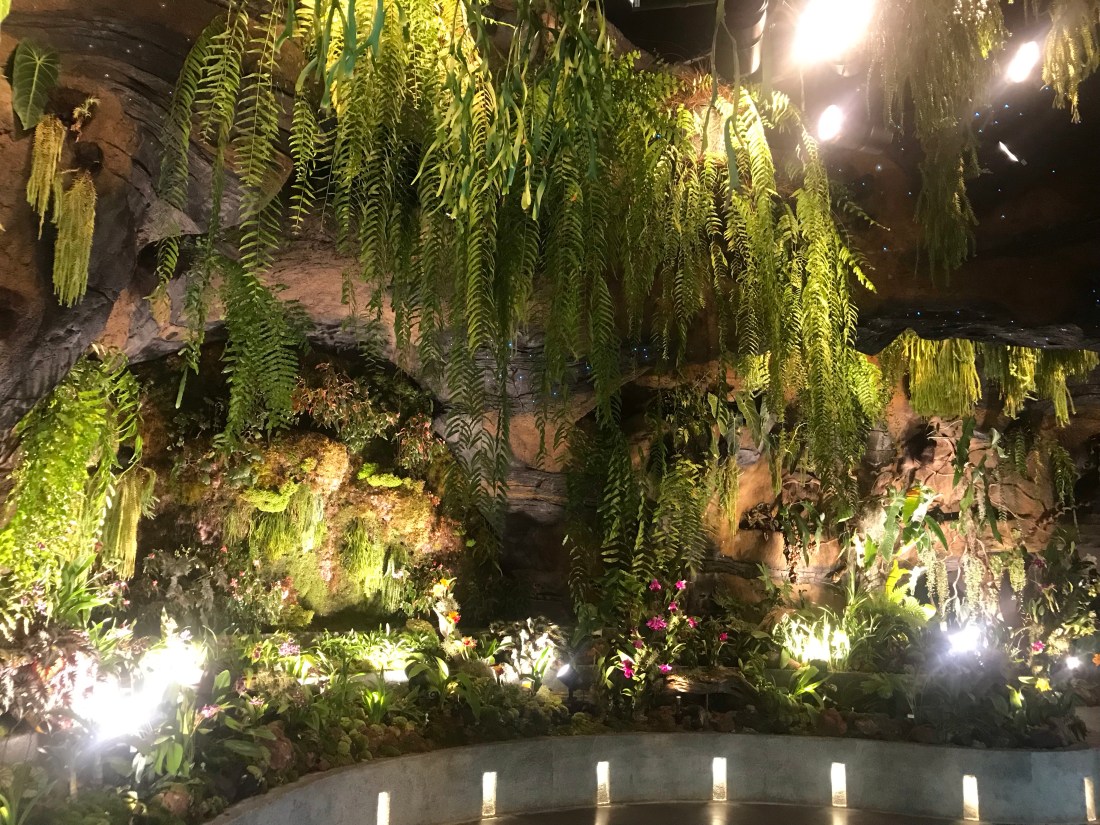
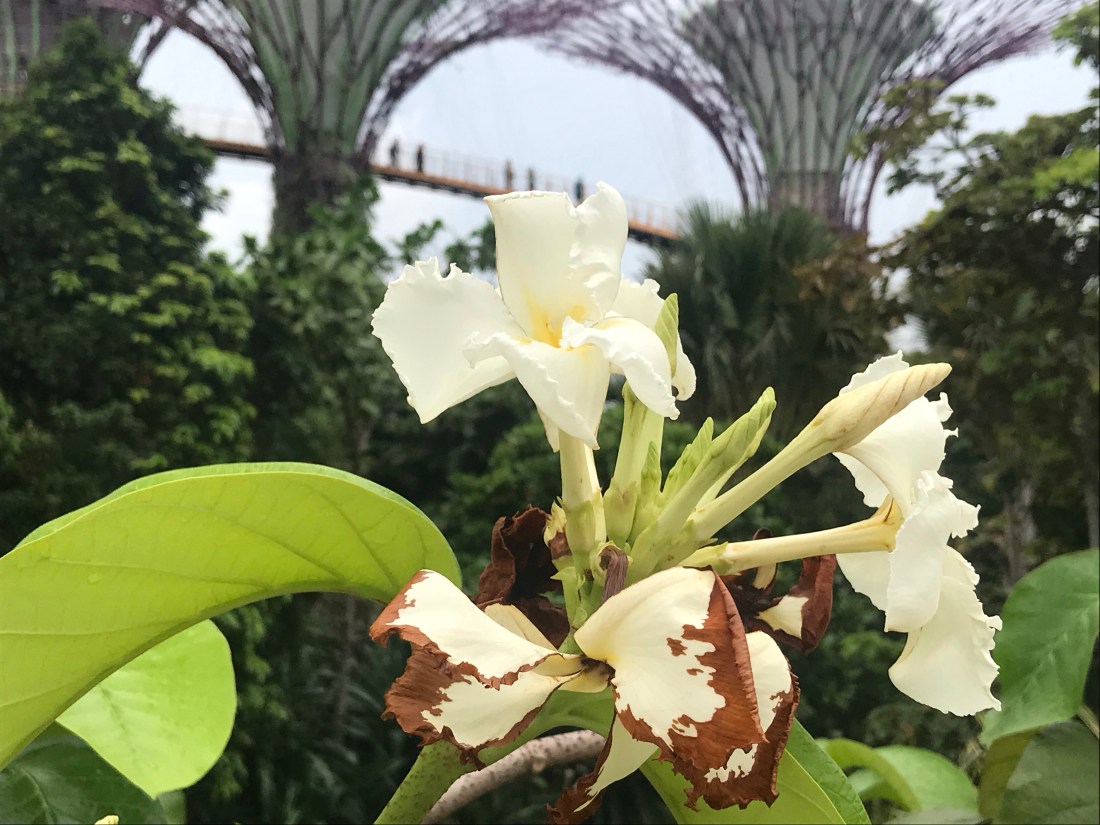
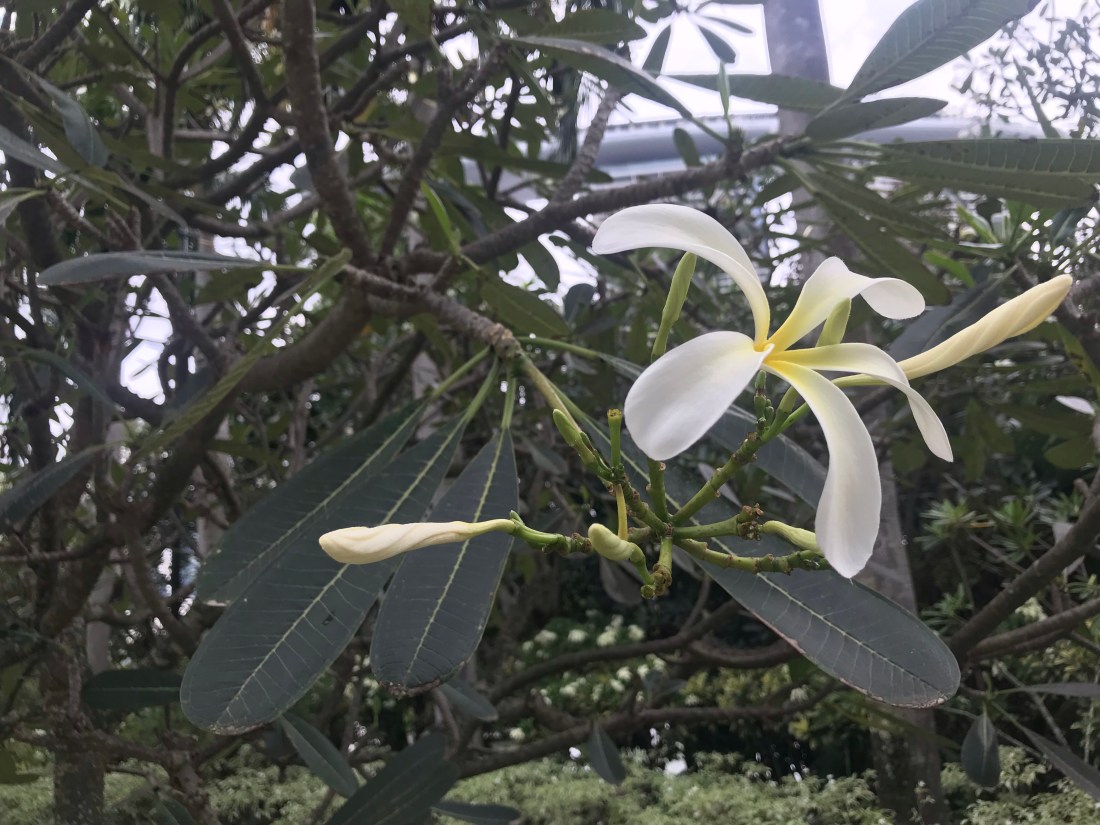
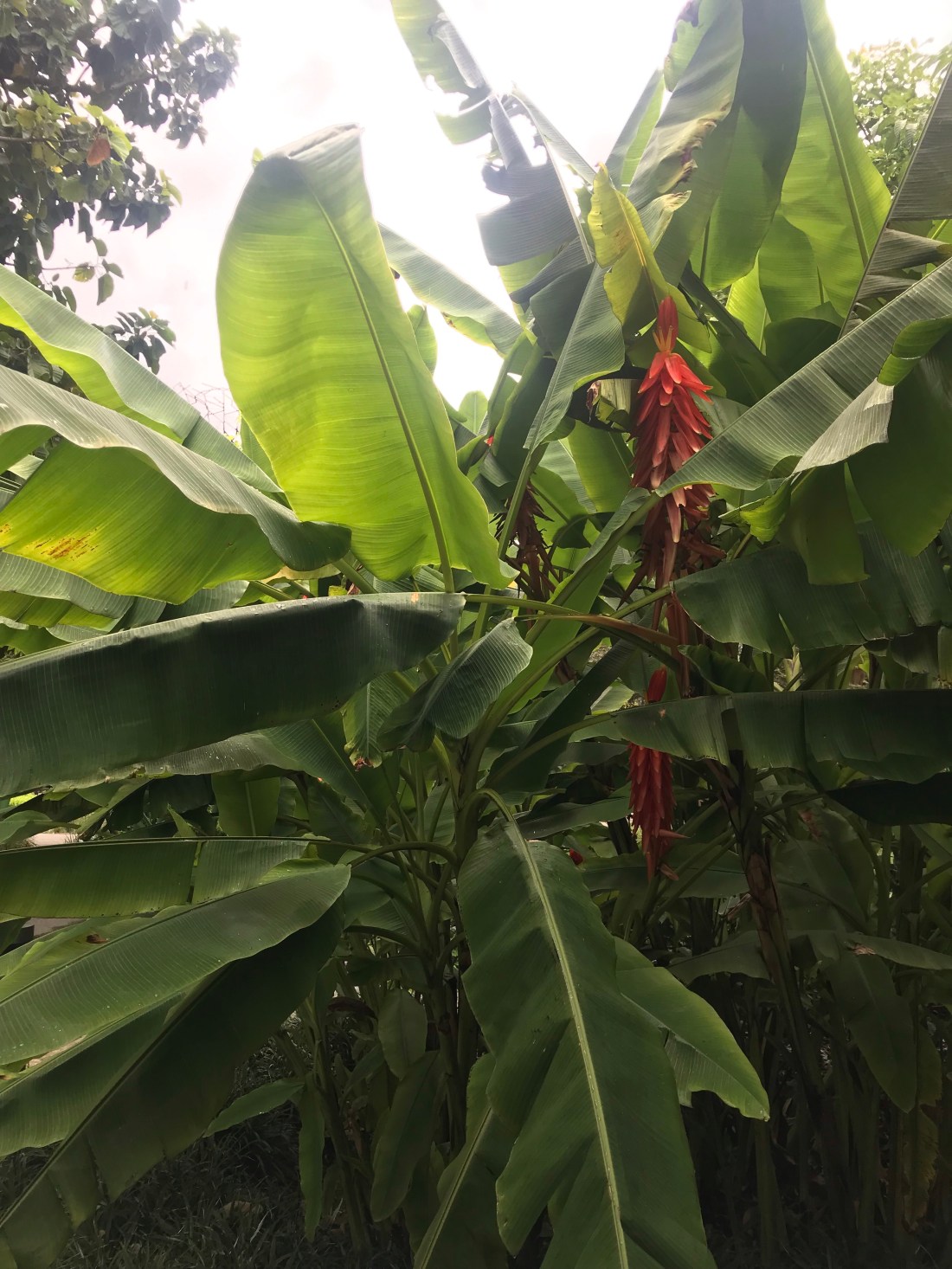
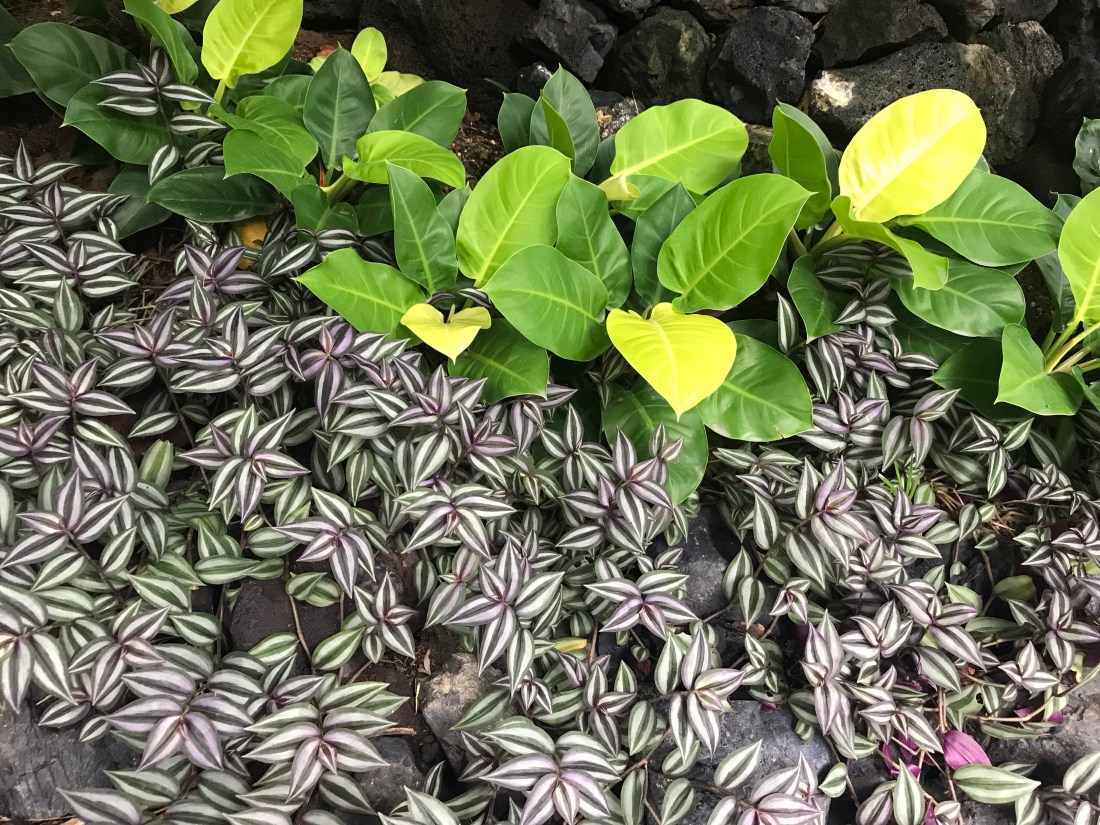
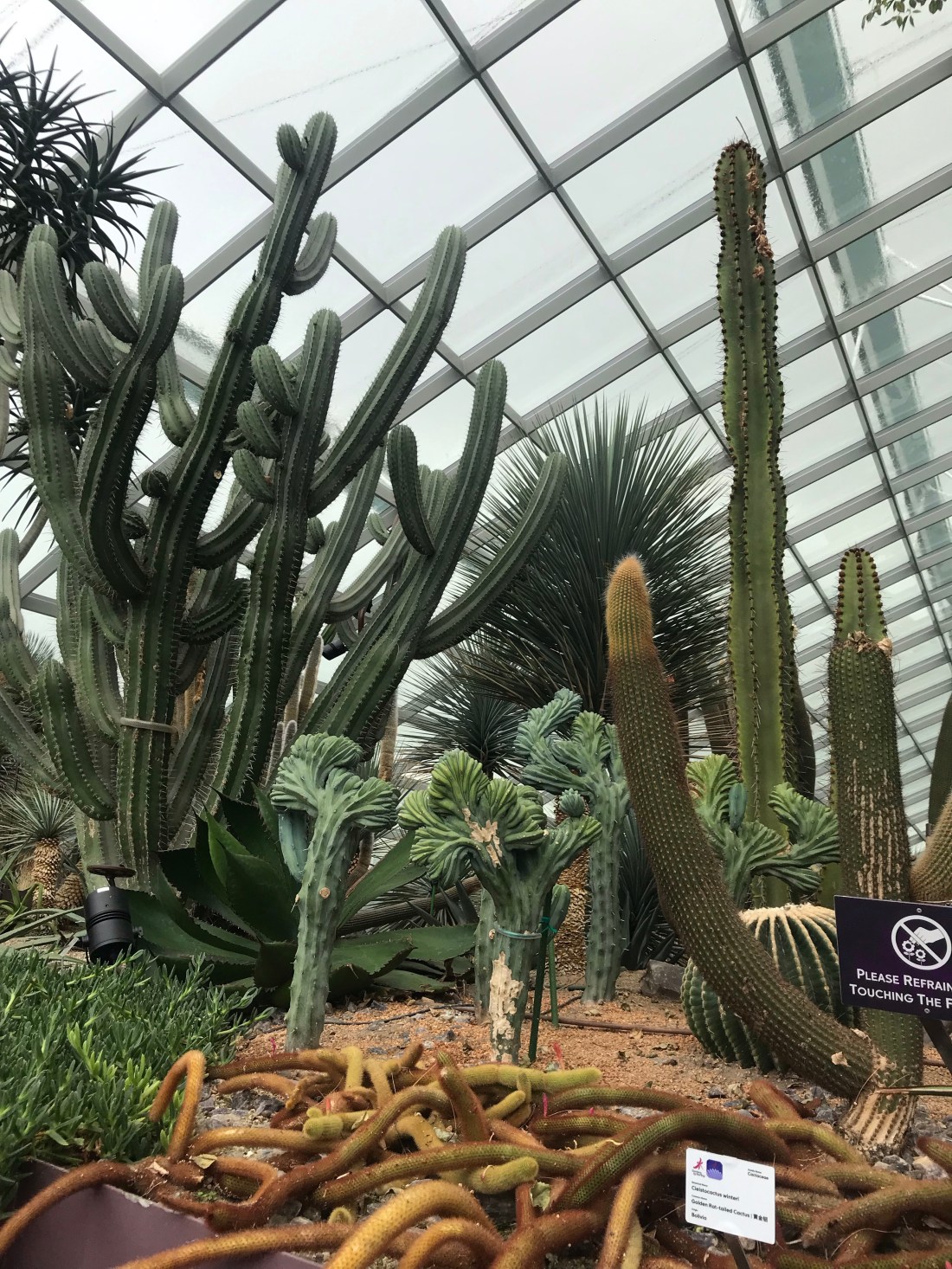
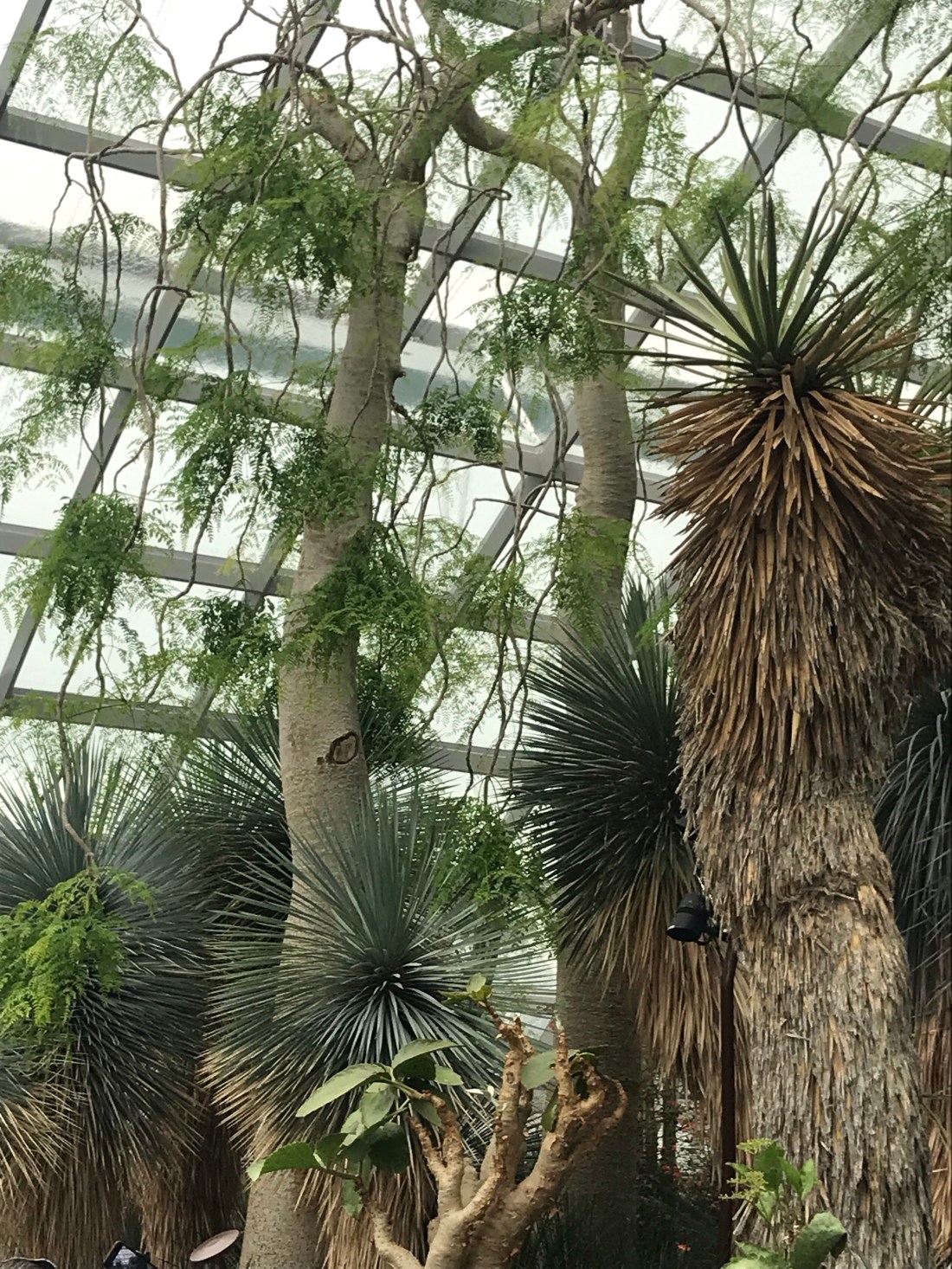
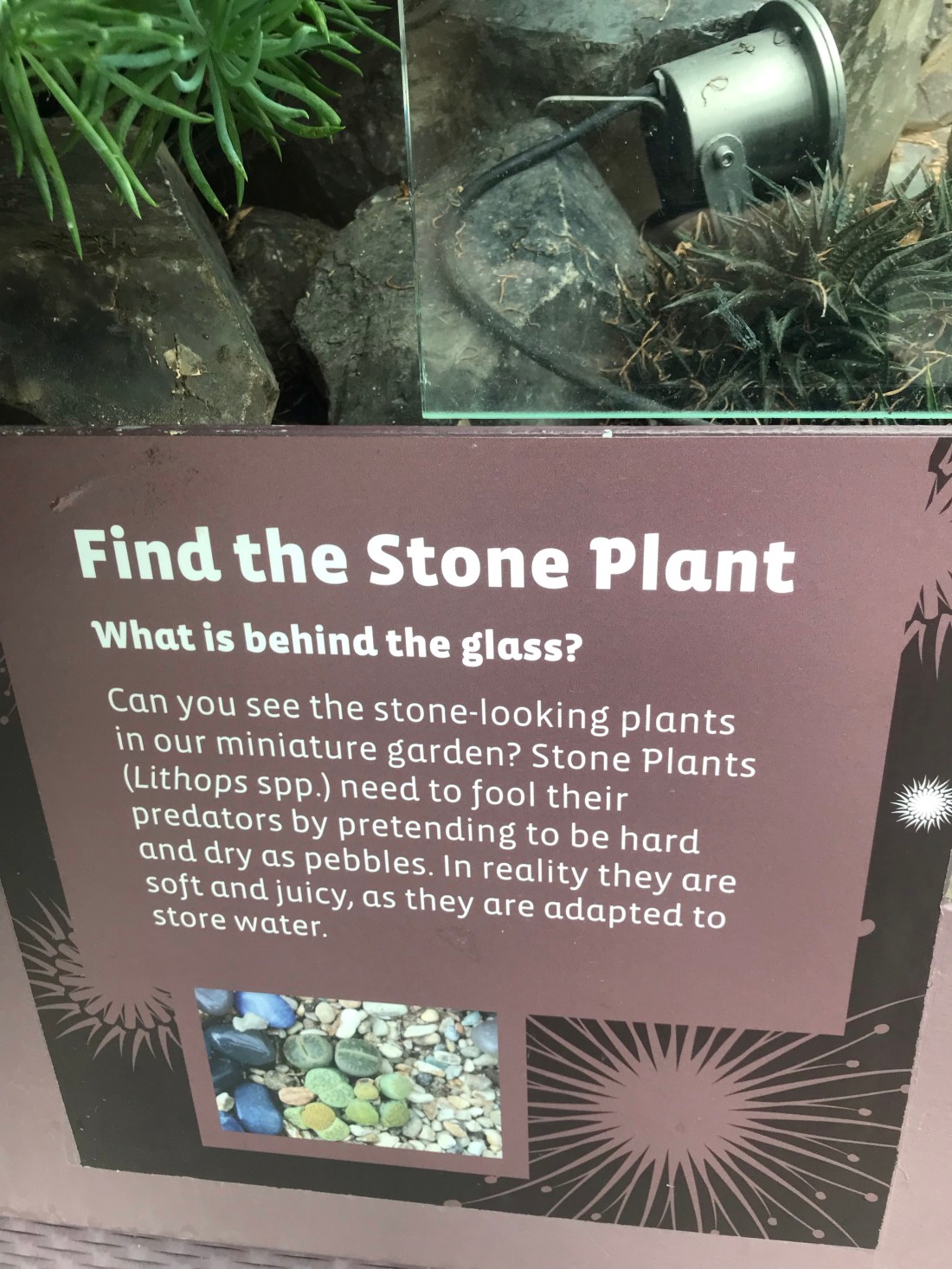
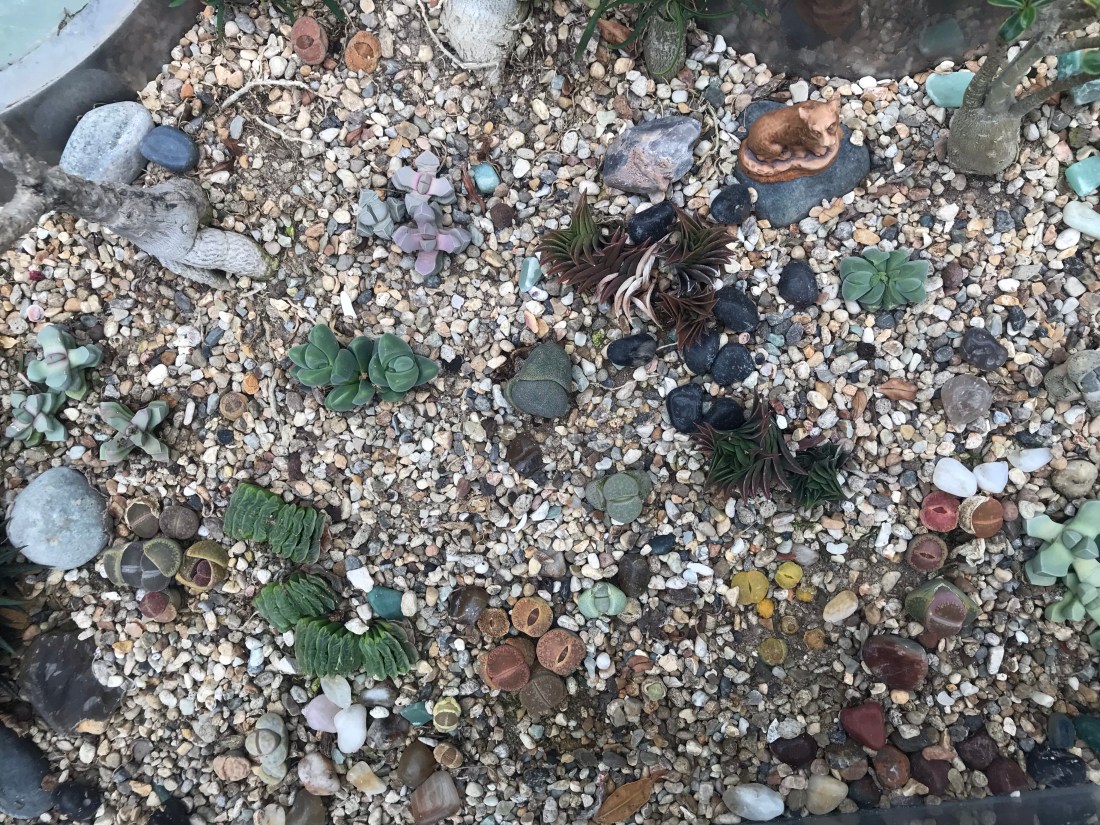
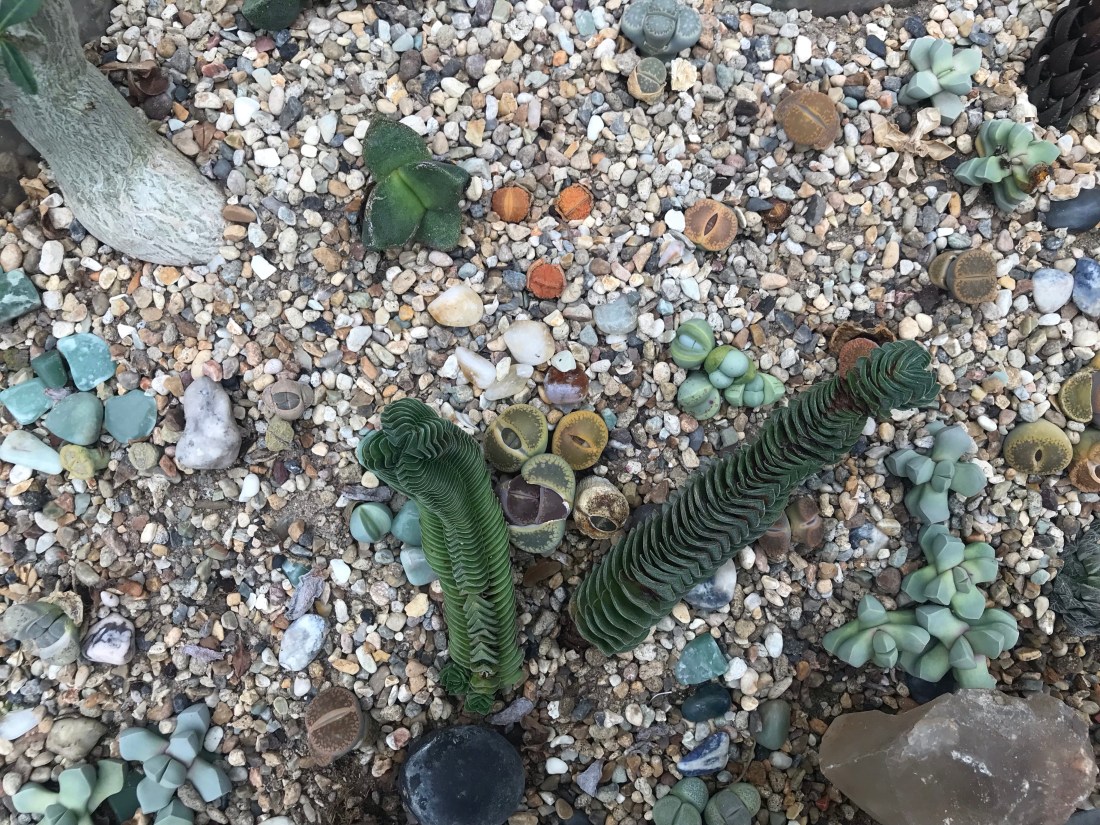
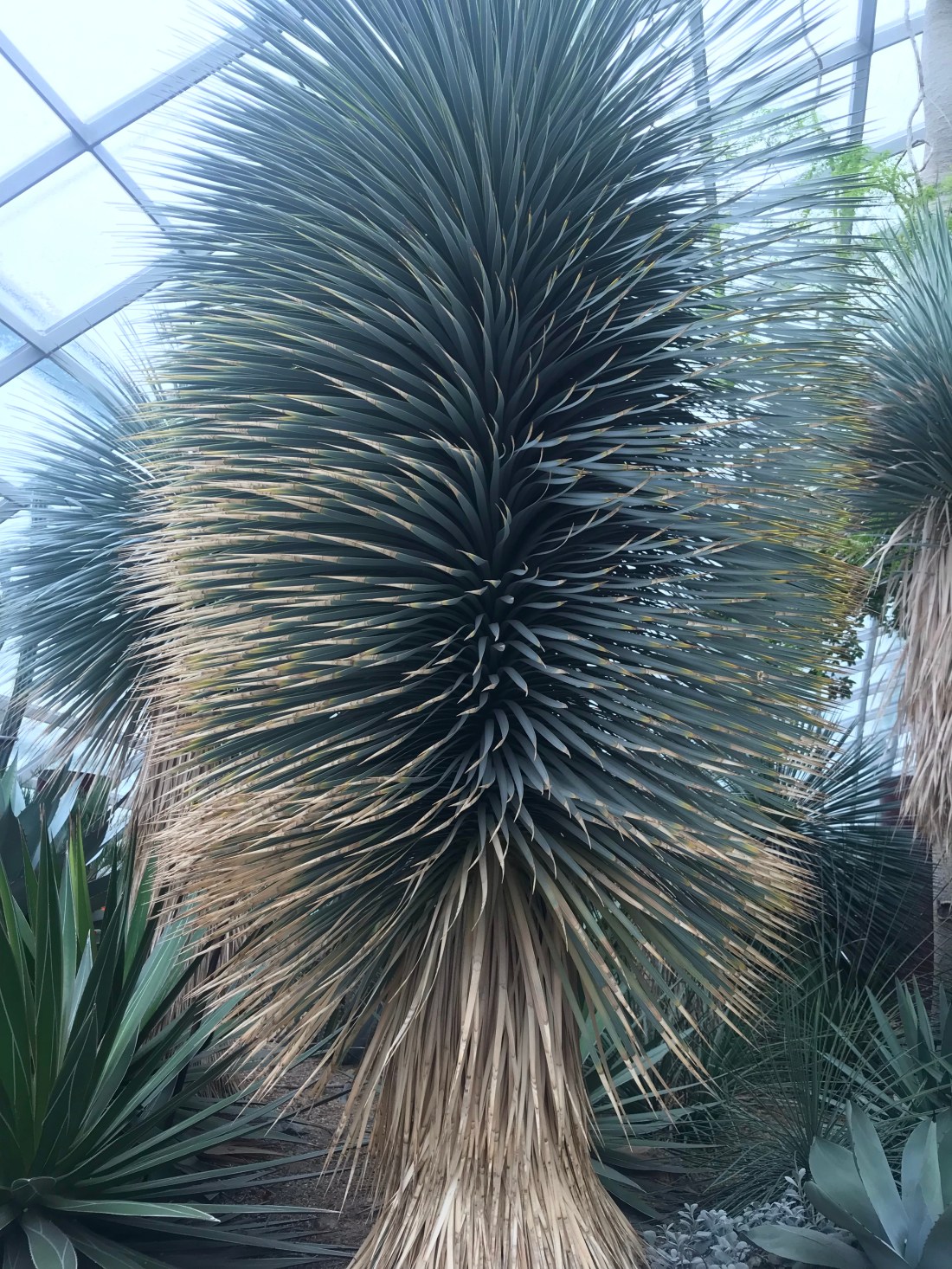
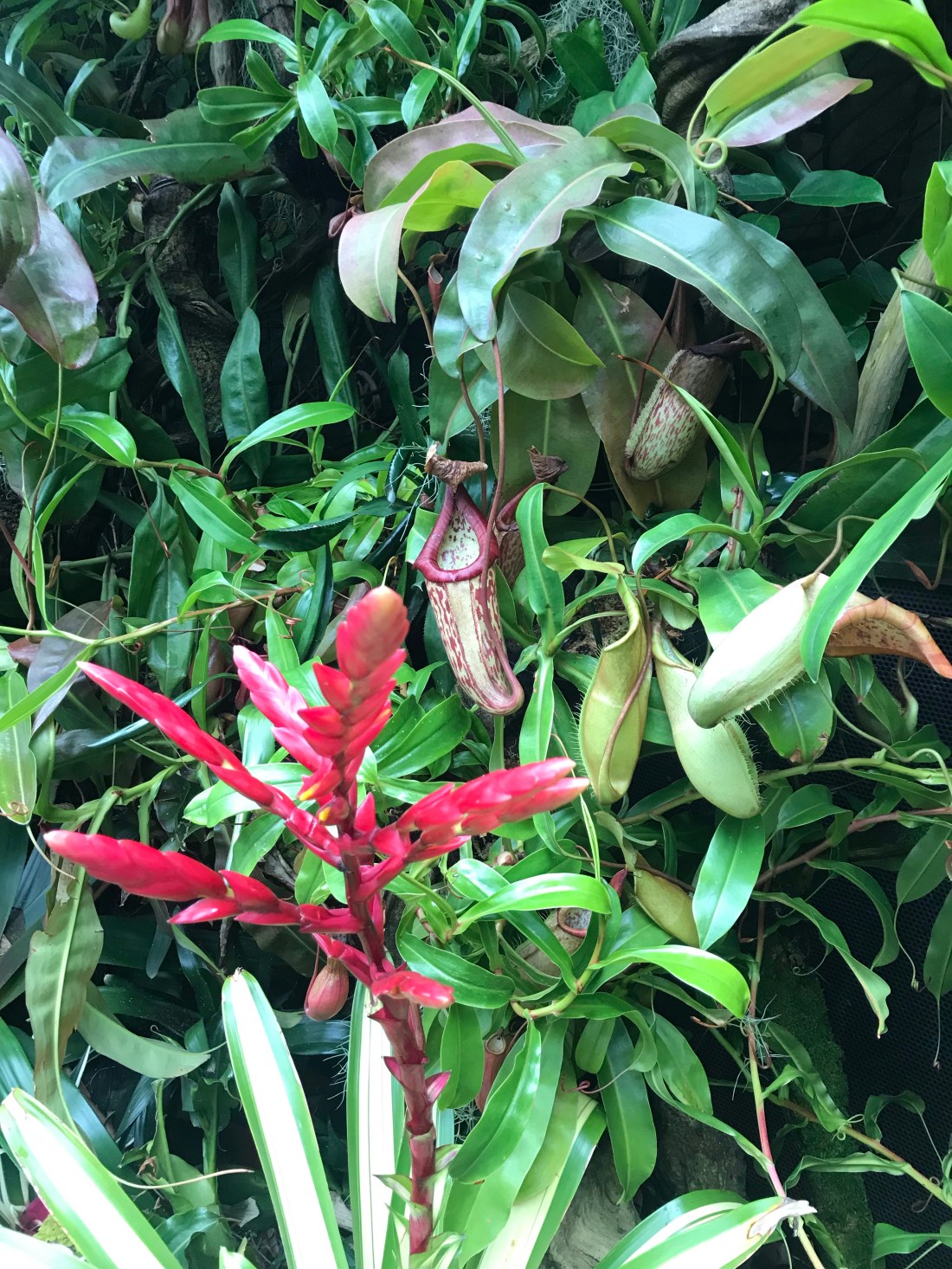
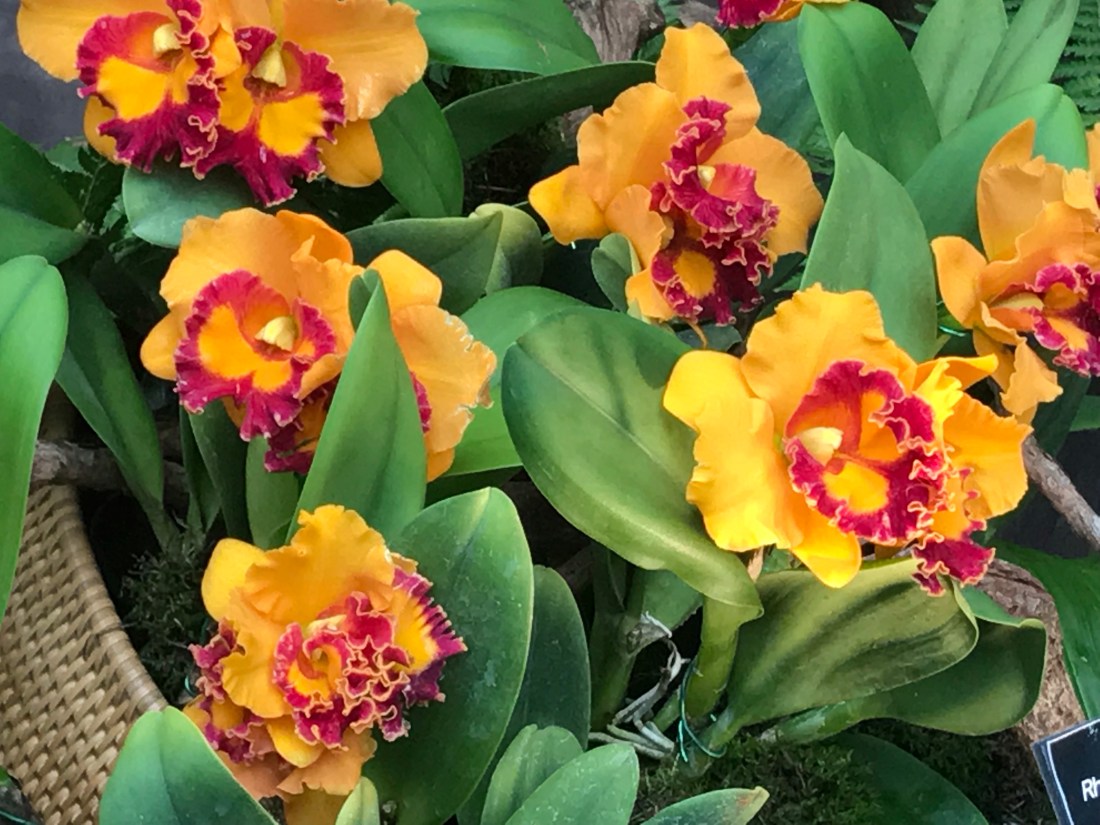
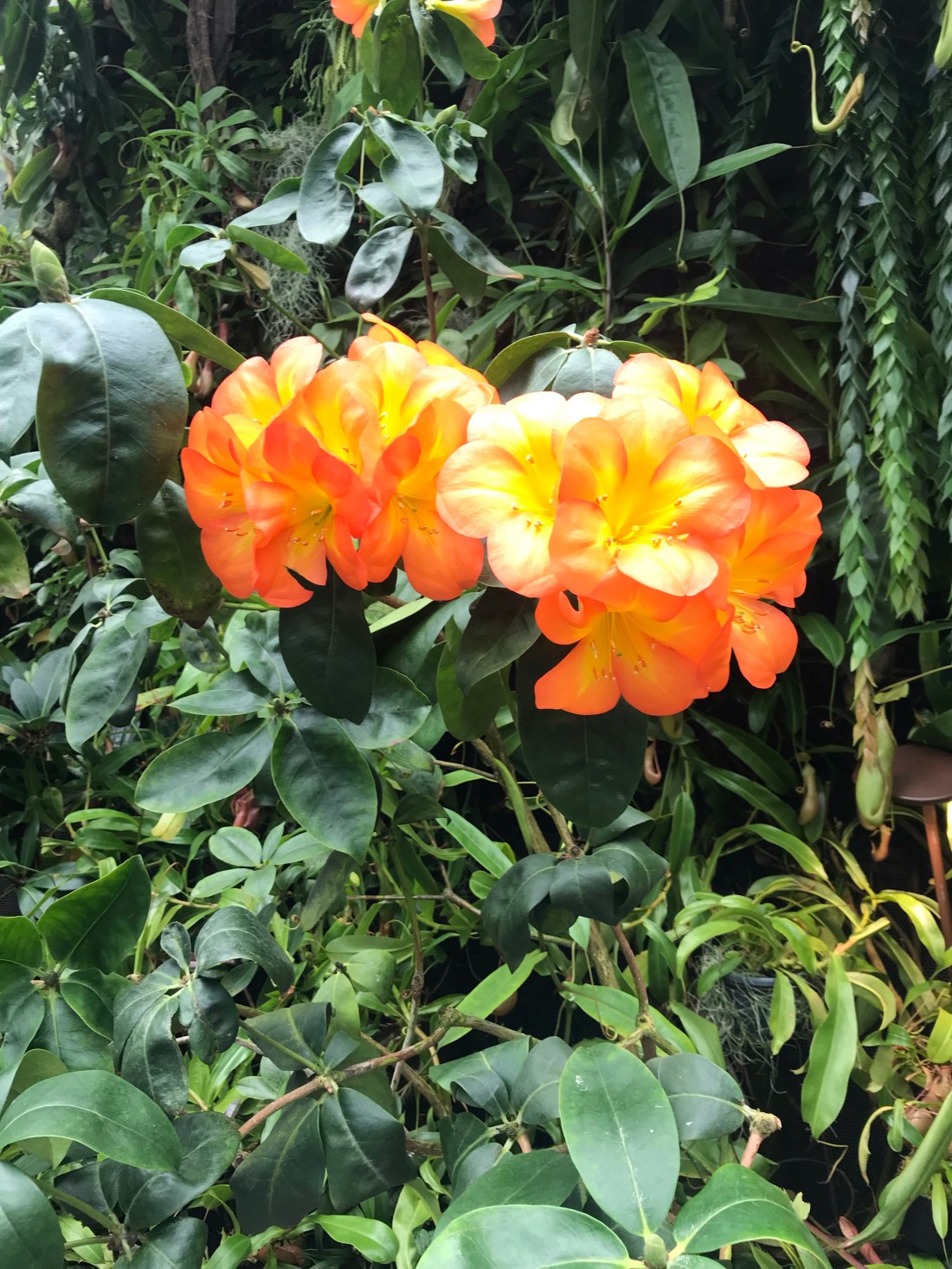
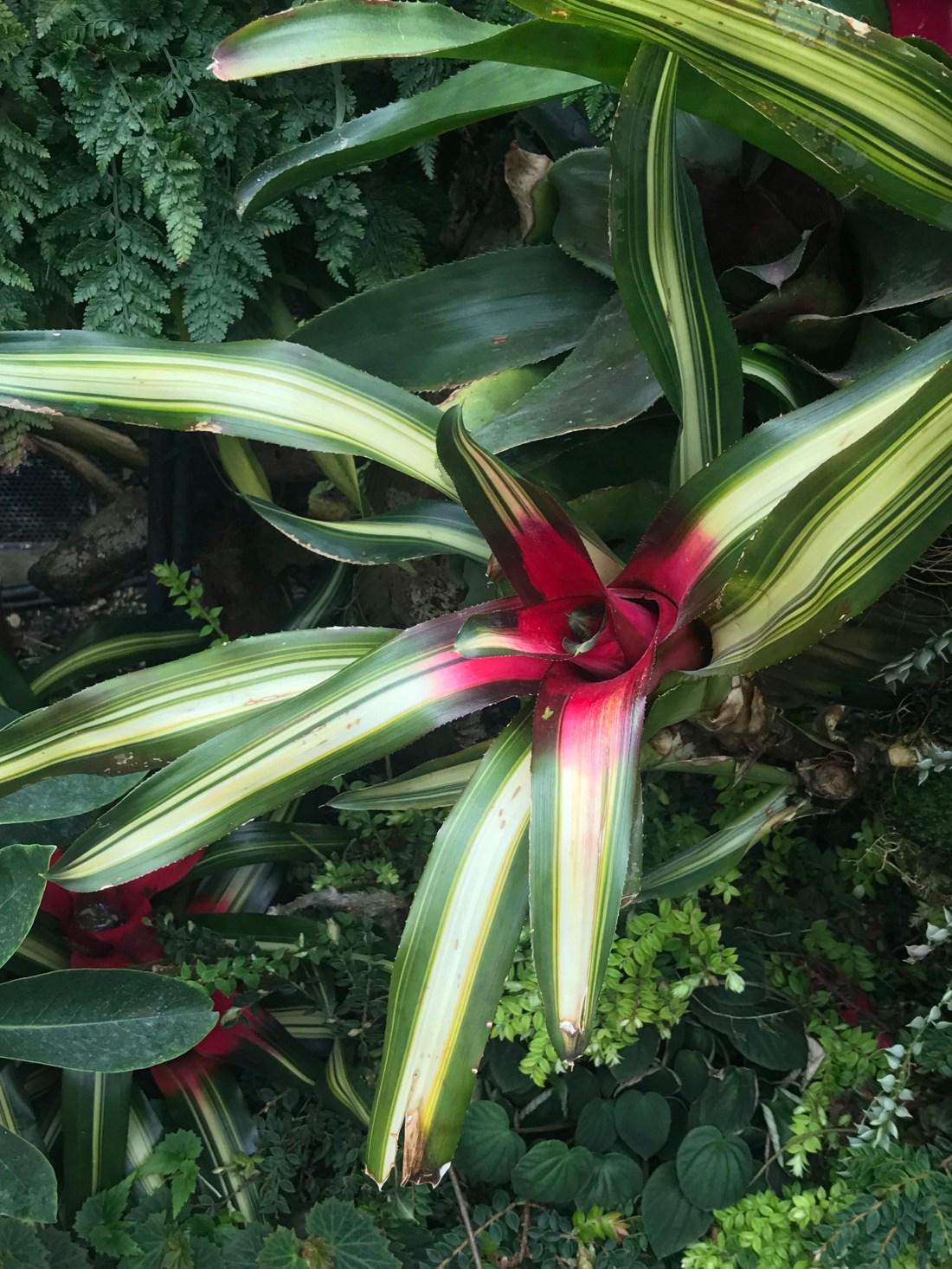
Anyway, photos of the glorious greenness. And also to comment that there was some really good, well presented stuff on climate change too.

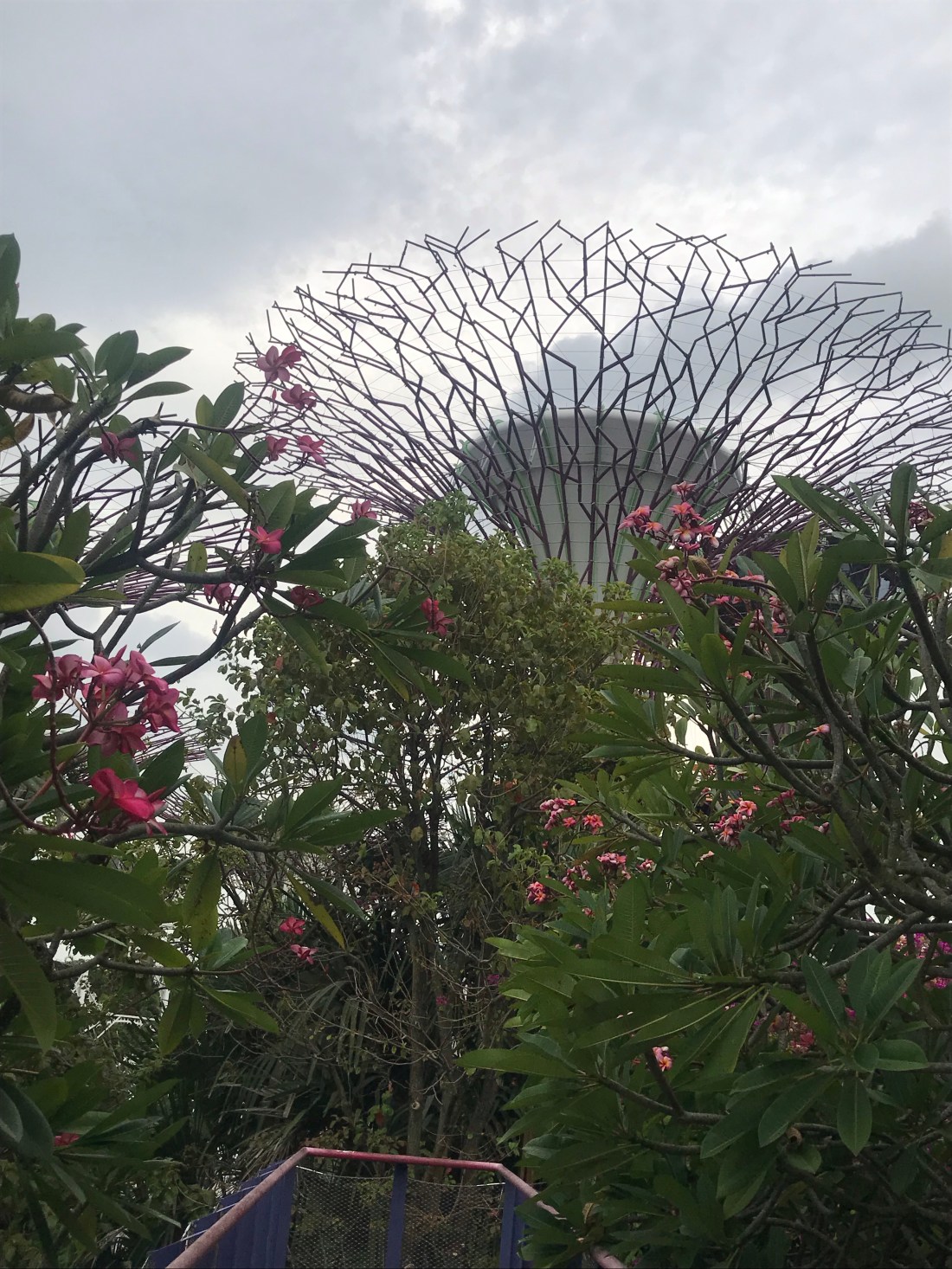
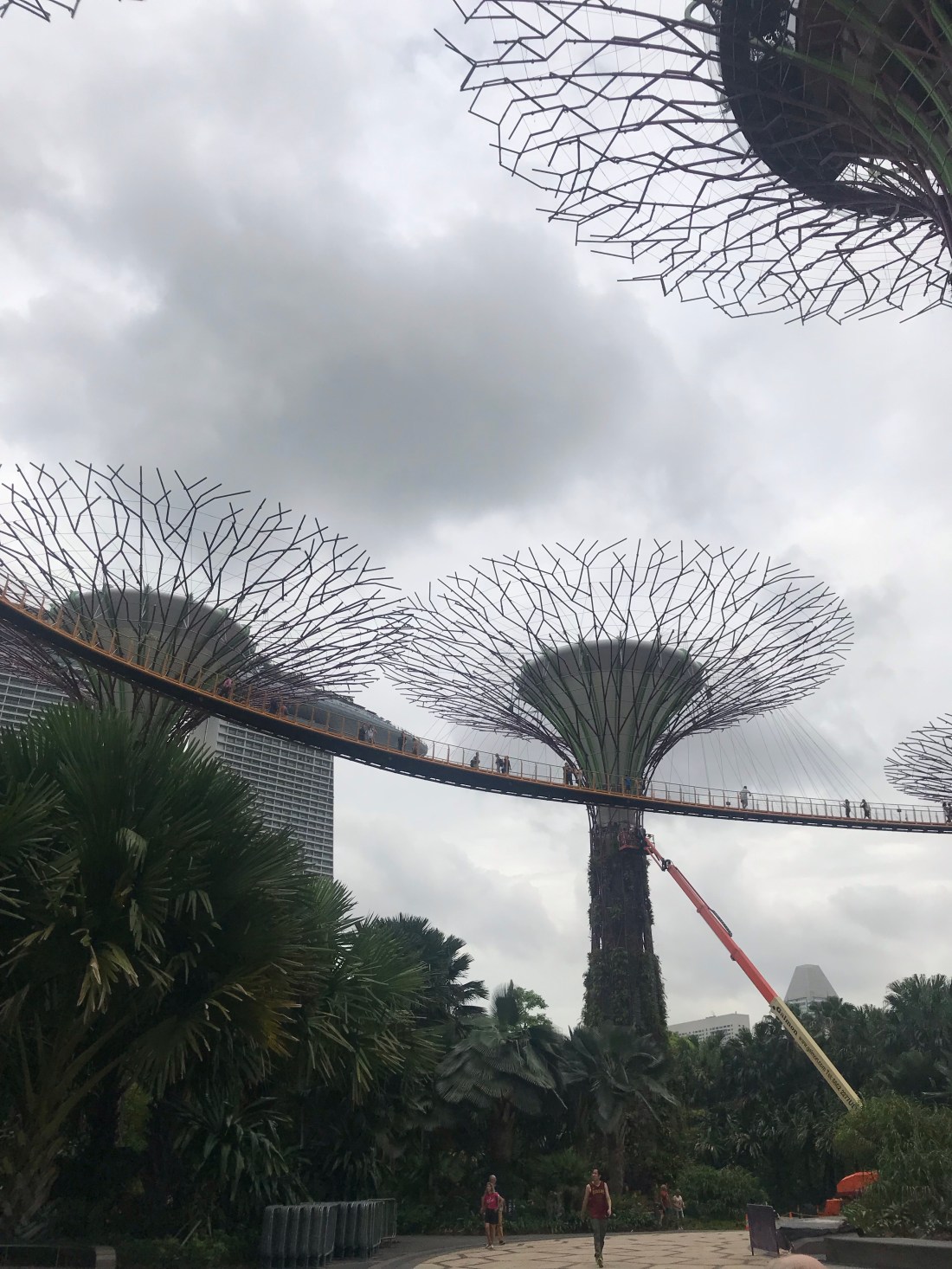
First glimpse of a Supertree:

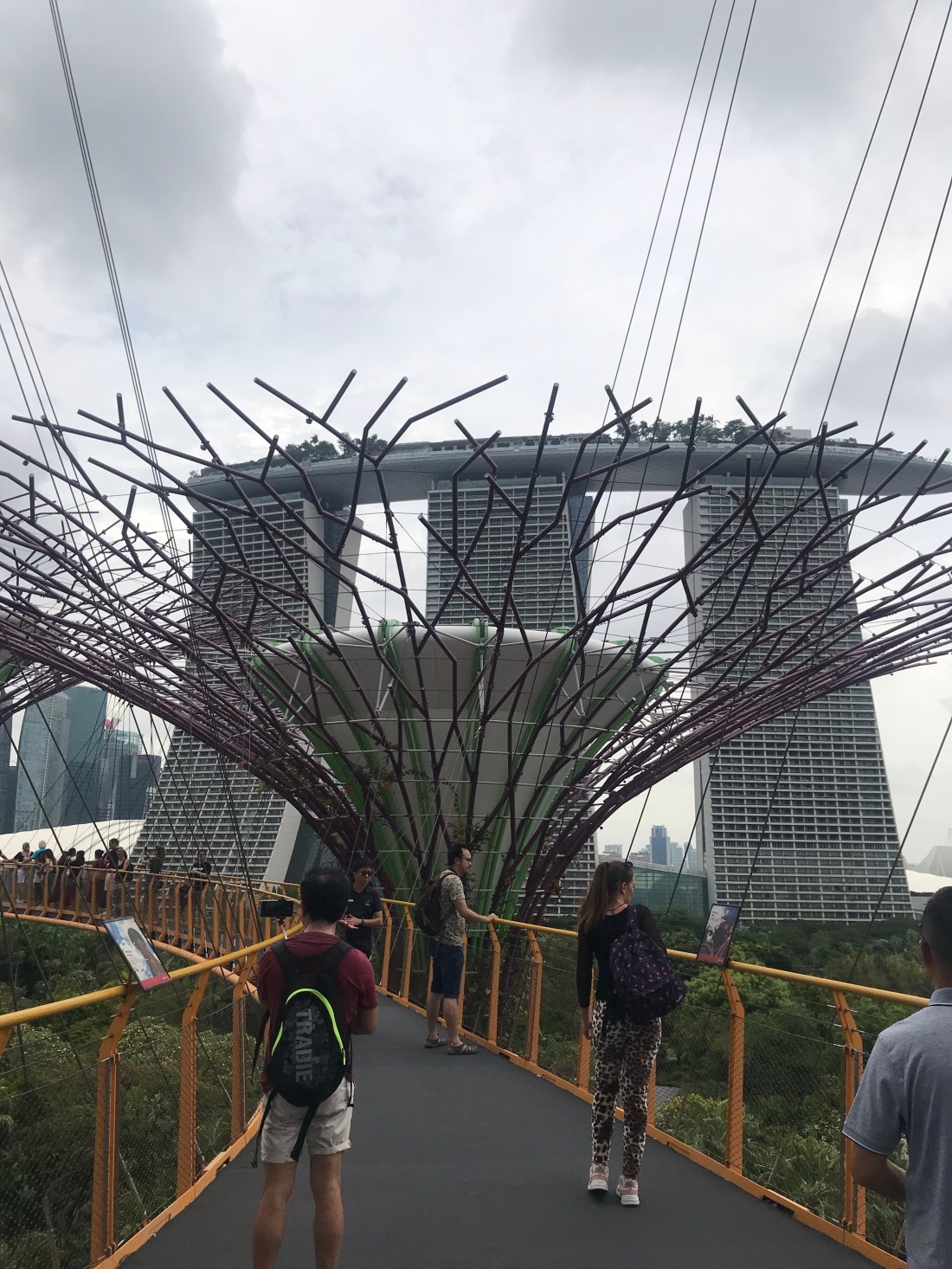
That, up there, is the skywalk (enough to give me collywobbles just looking at it!):

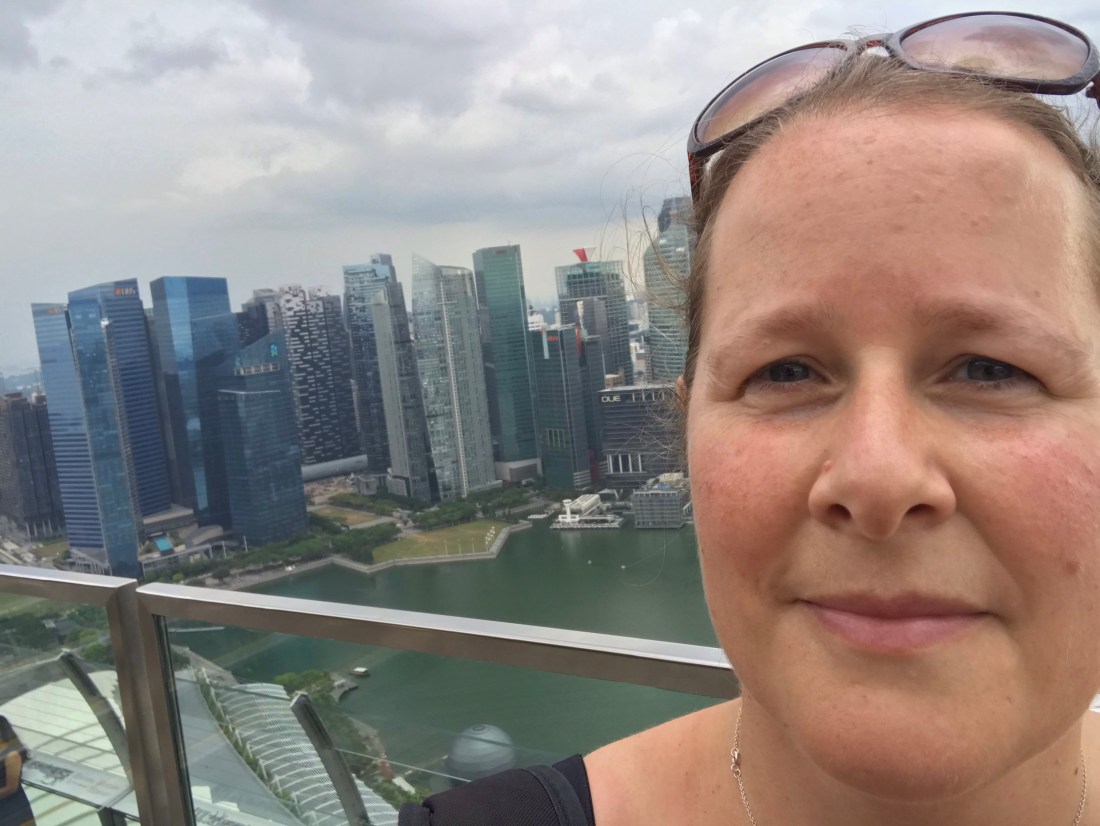
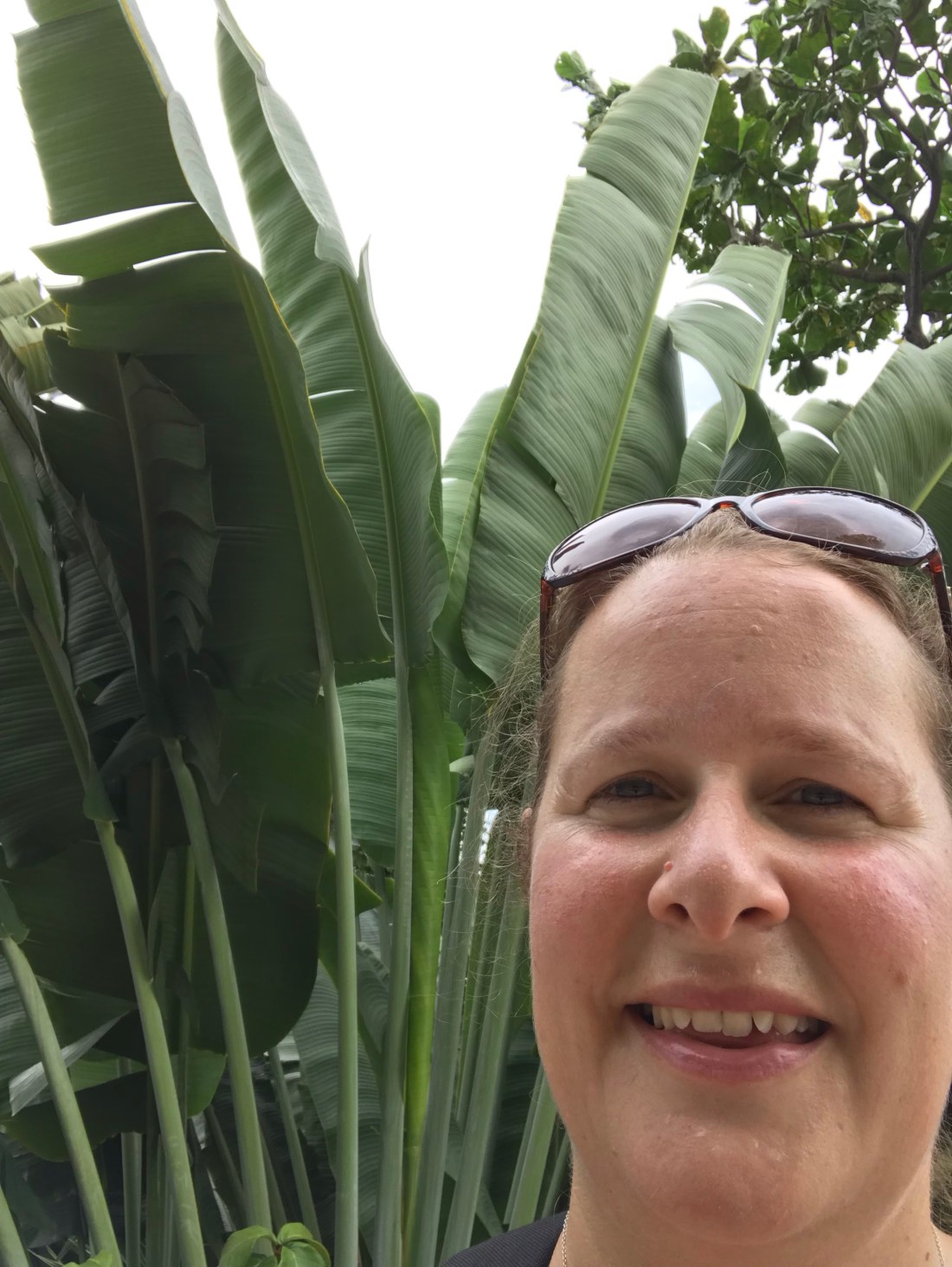
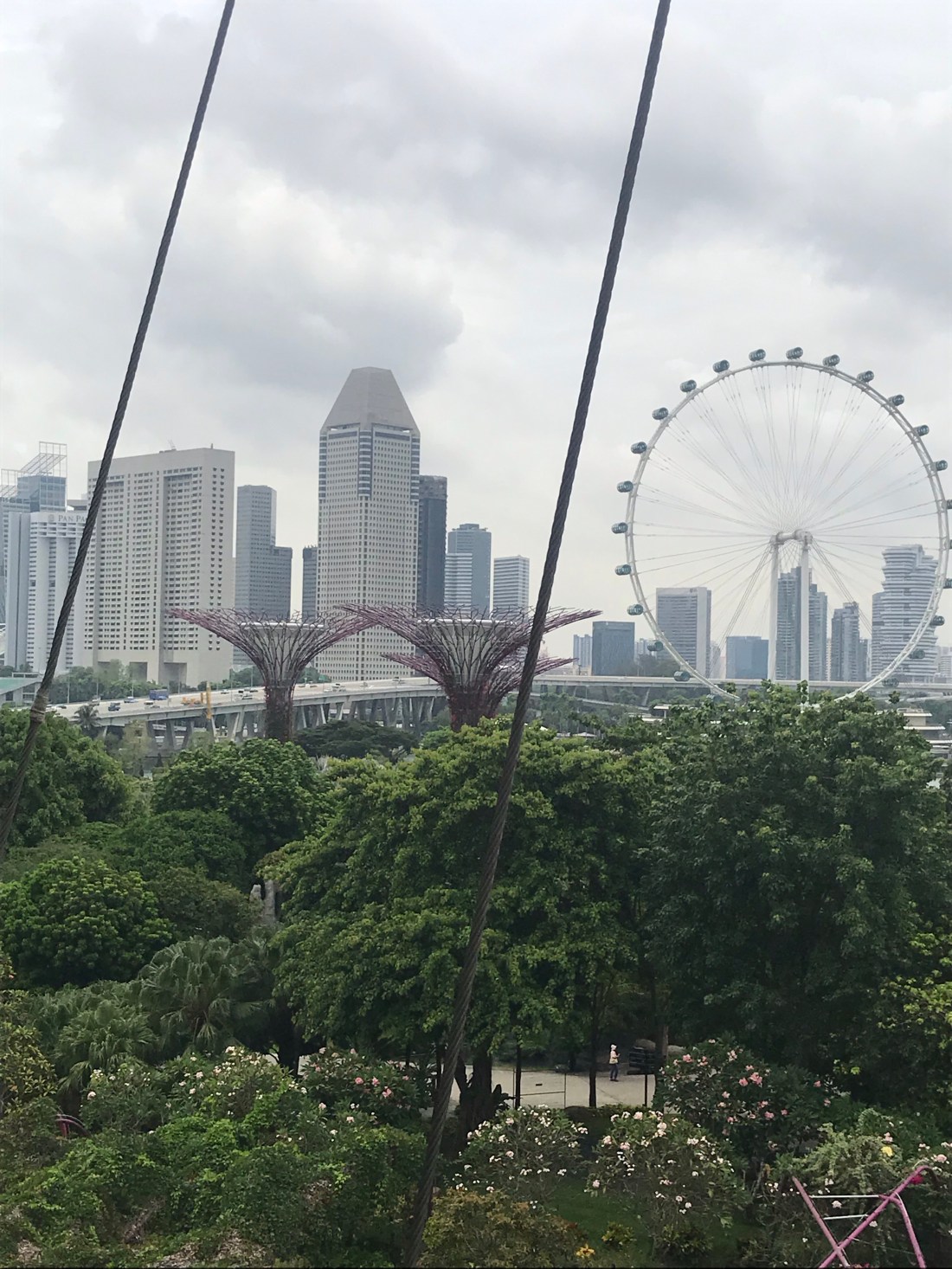
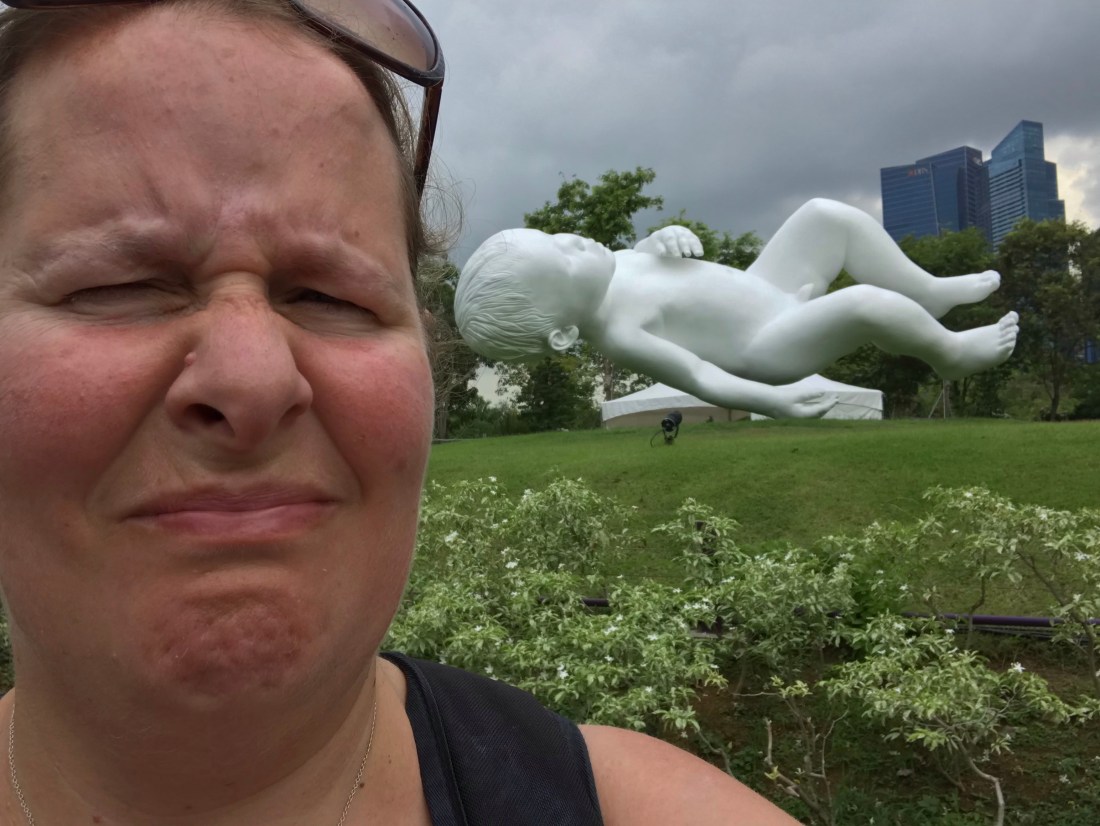
These next two pictures were taken from the Skywalk. I was so wobbly, though, and paranoid that I’d drop my phone over the edge, that I put it away until the end (the next photo) when I managed to get a worried looking selfie and a couple of other pictures of the view:

All the way along the Skywalk, there was a queue of people in front of me waking four slow steps and then stopping to take yet another selfie in front of another view! Meanwhile, I was hanging on to the handrail and gritting my teeth, saying inside my head (“Noooo! Not another selfie!! When are you ever going to look at all these pictures of yourself???”). In the background of this photo you can see the rest of the Skywalk behind me and the little people on it. It is pretty long (especially doing the “4 steps selfie” dance while having collywobbles! 😆):

Not sure what to make of that sculpture👆🏼

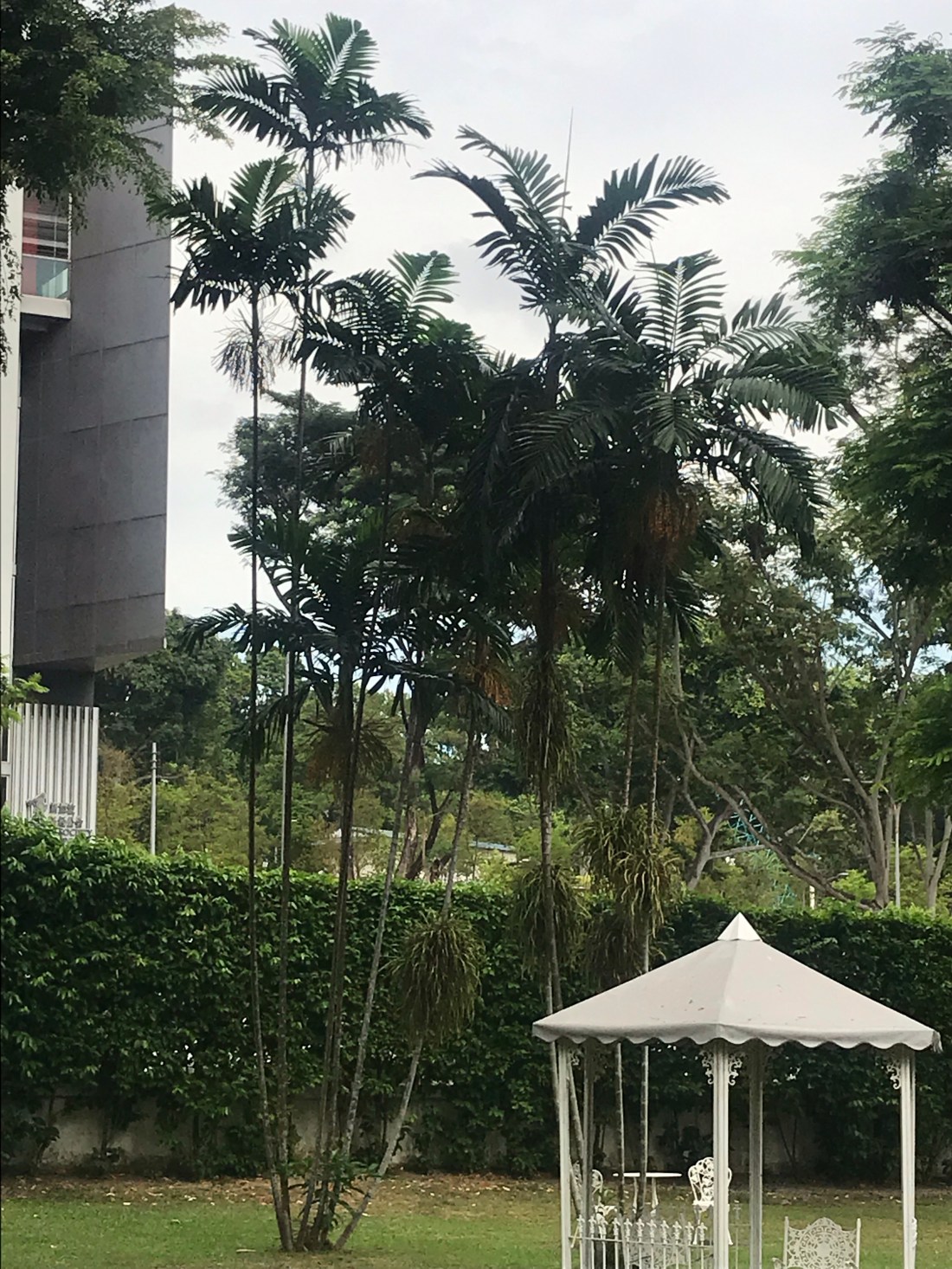
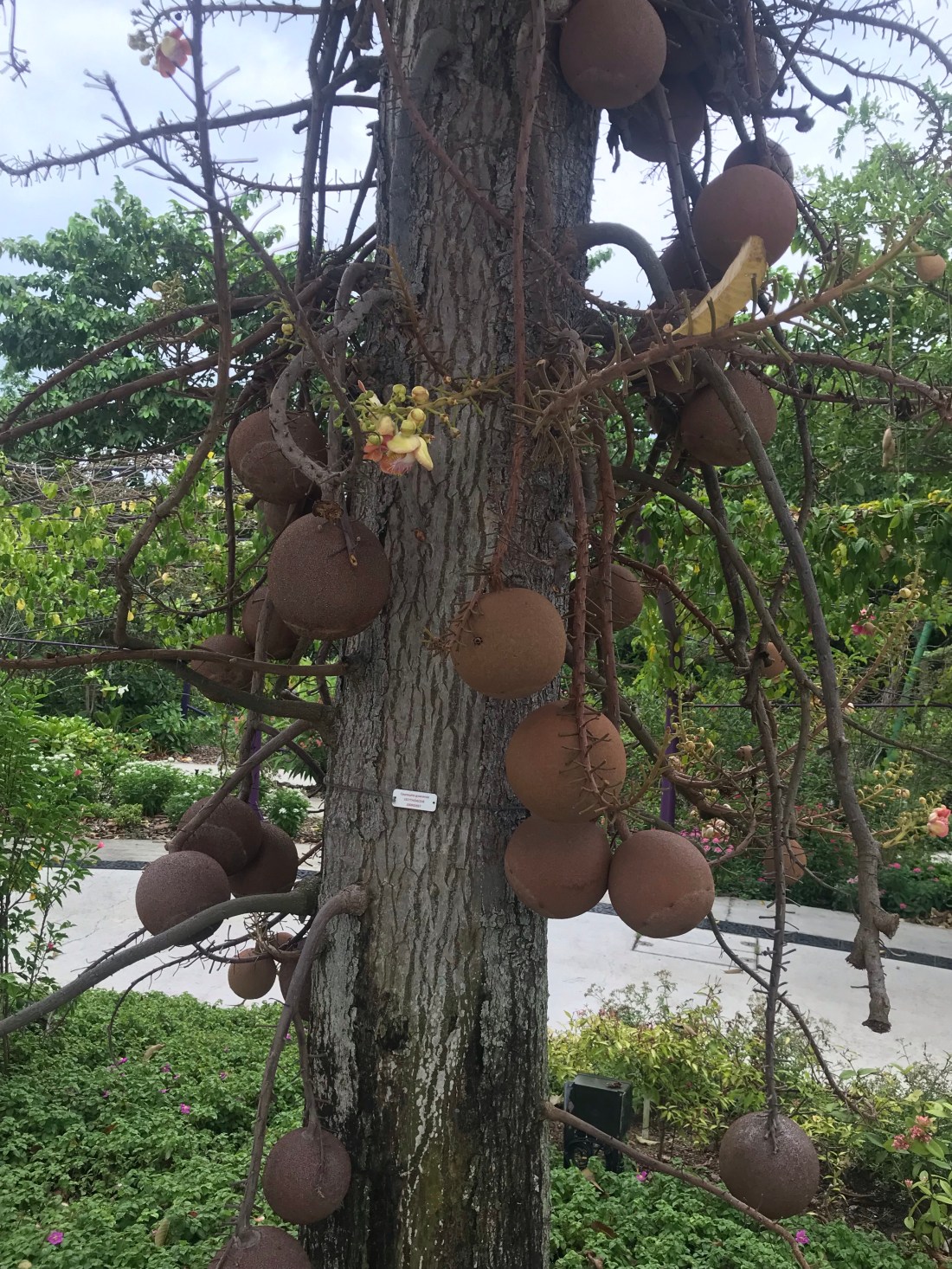
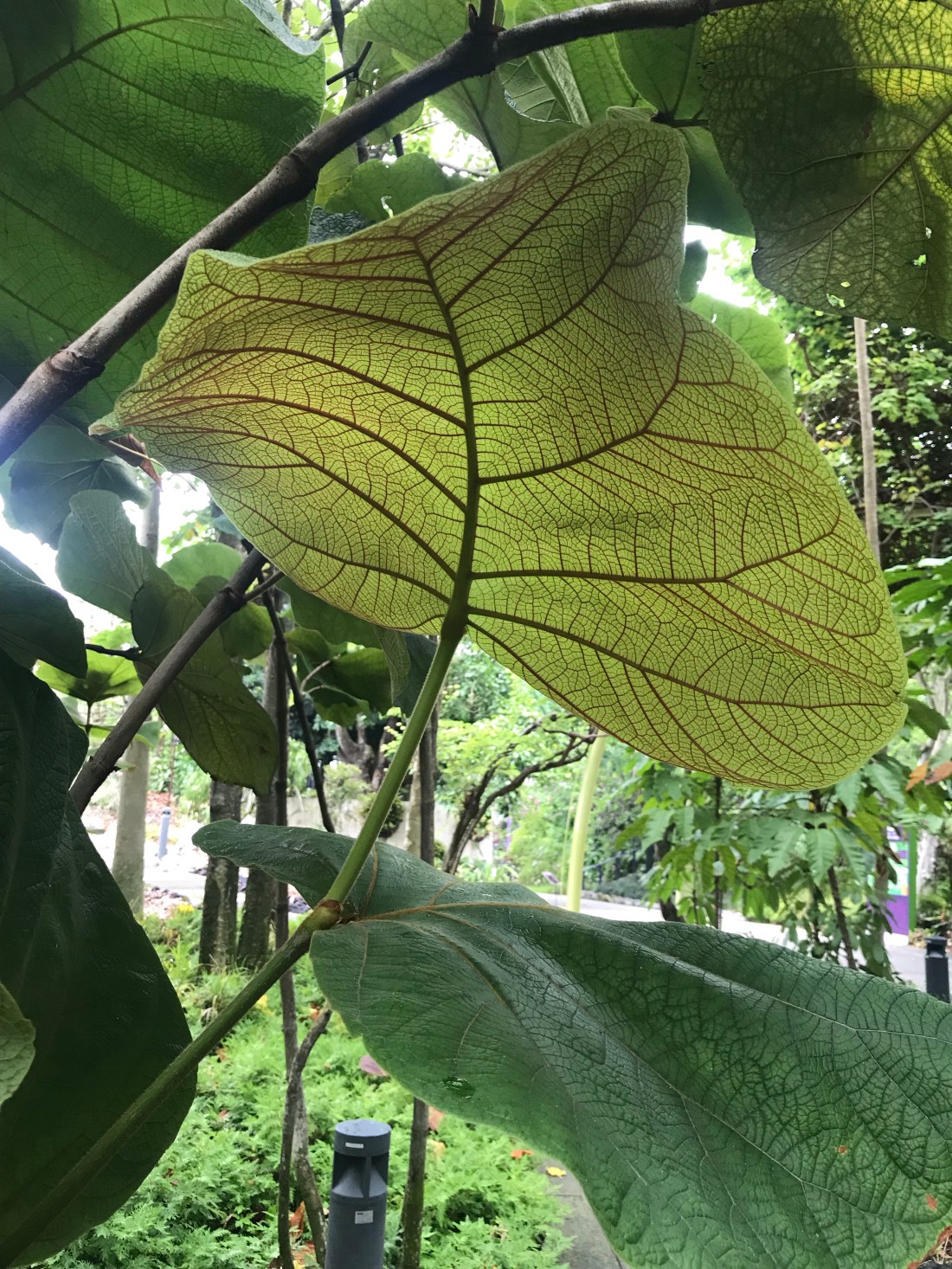
Another Cannonball tree like the one I saw in Penang:

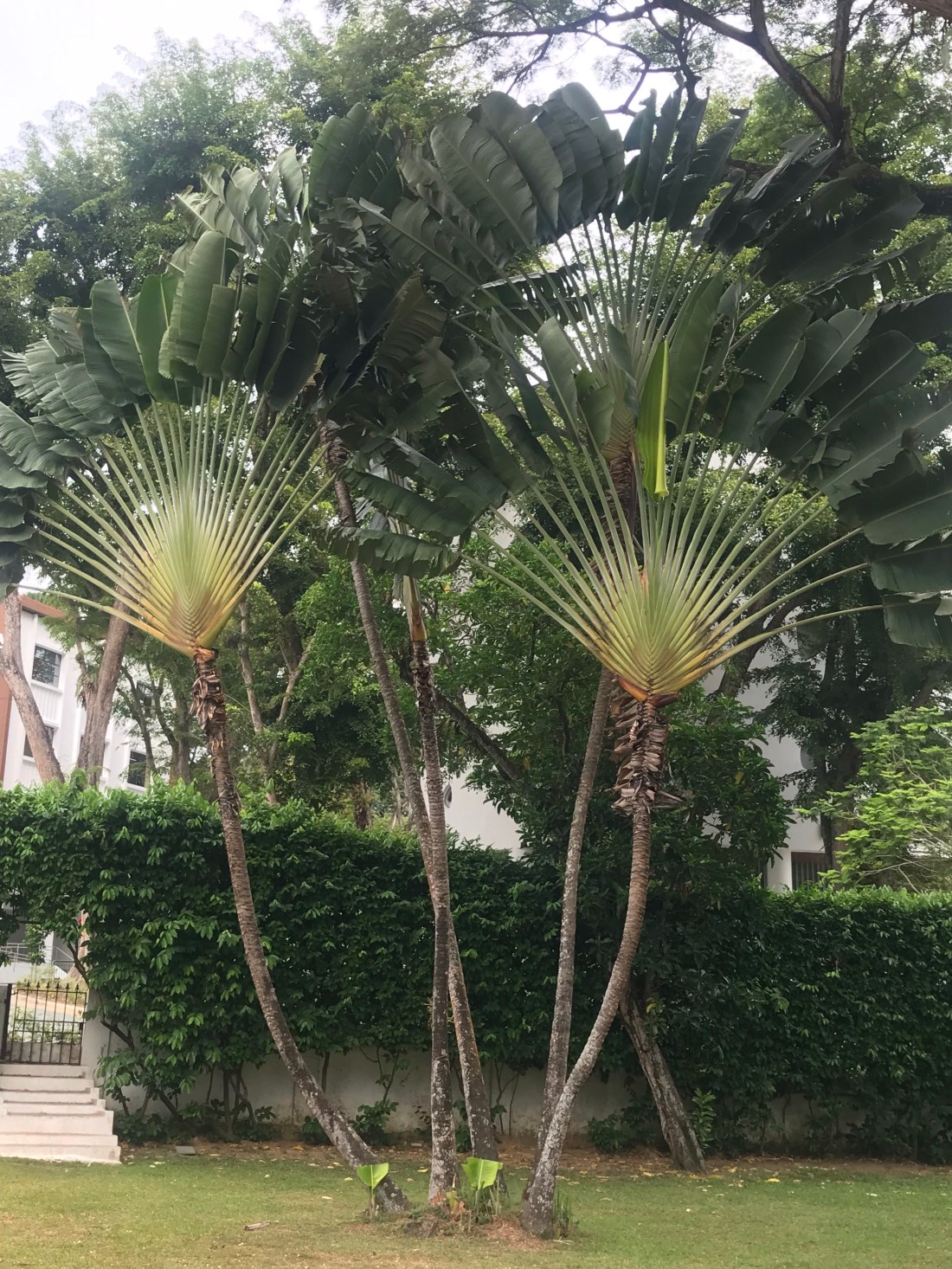
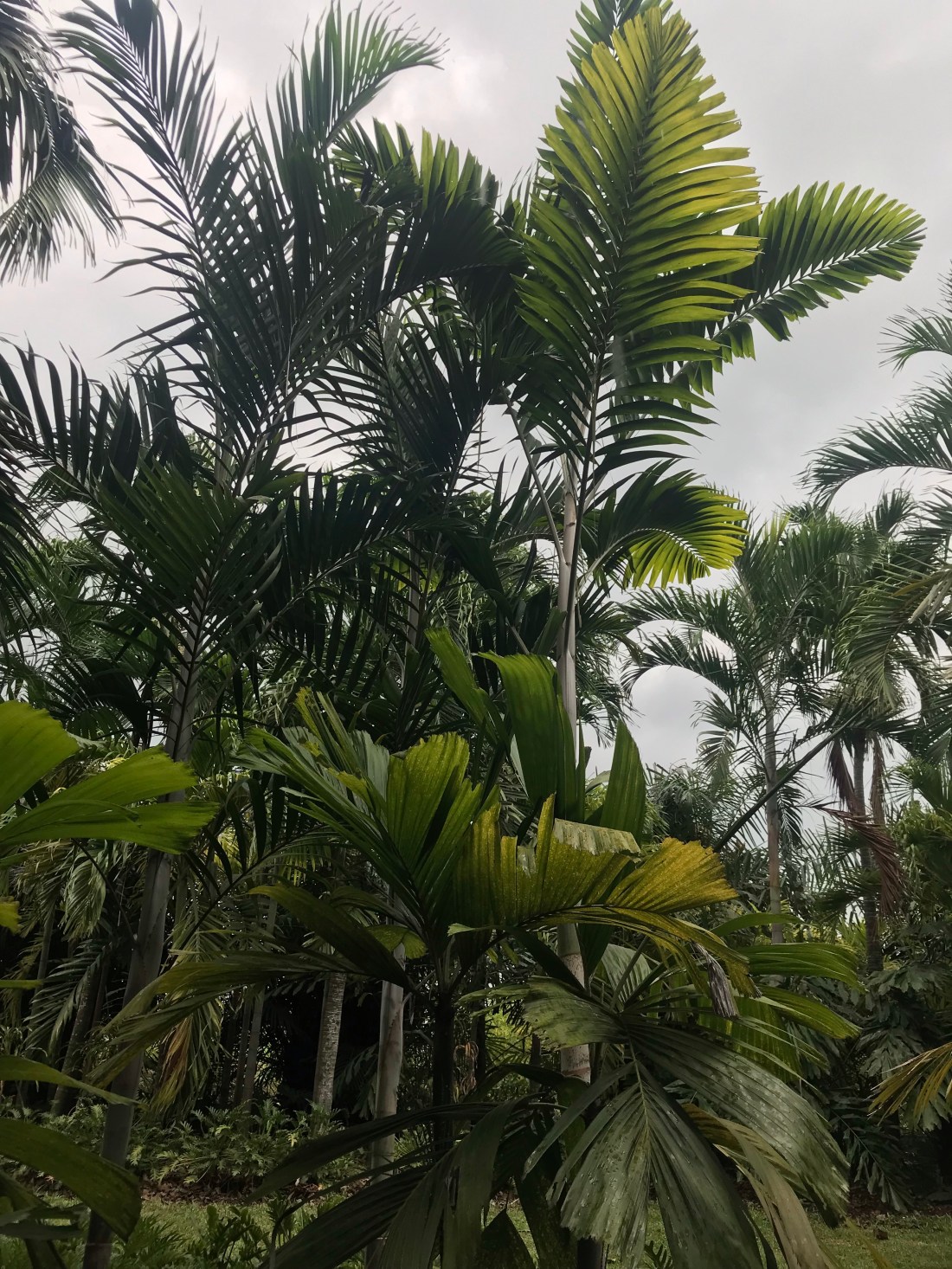
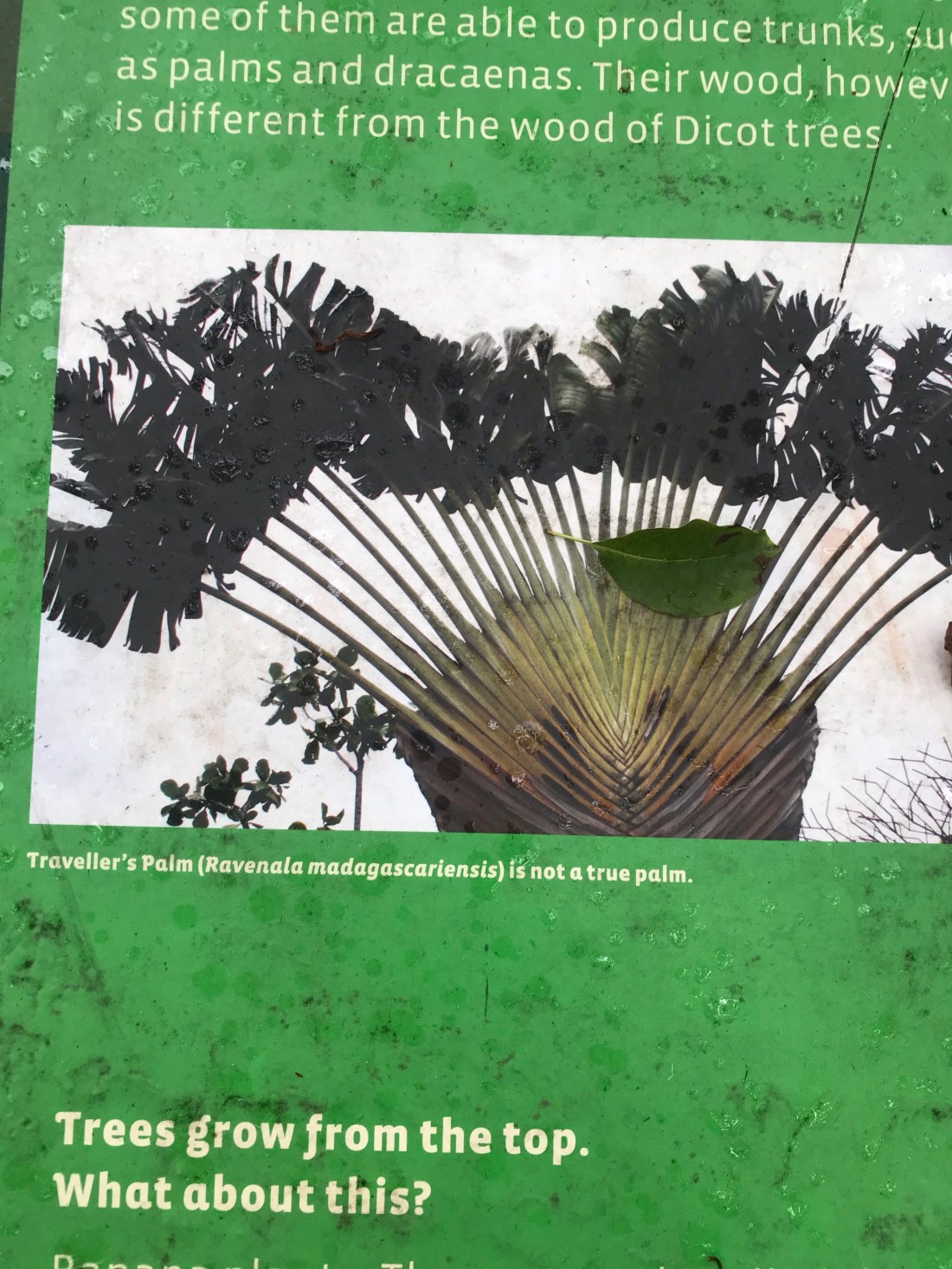
I love these trees, and lo and behold, they’re called Traveller’s Palm!👇🏼

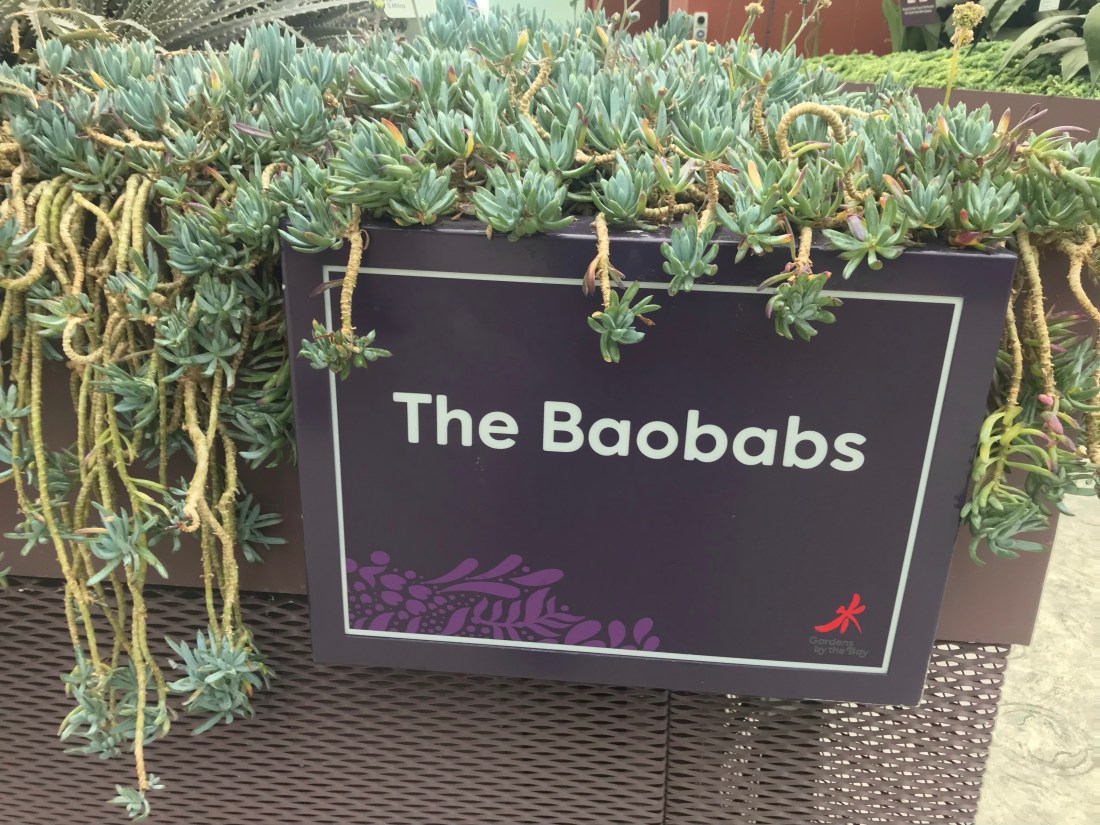
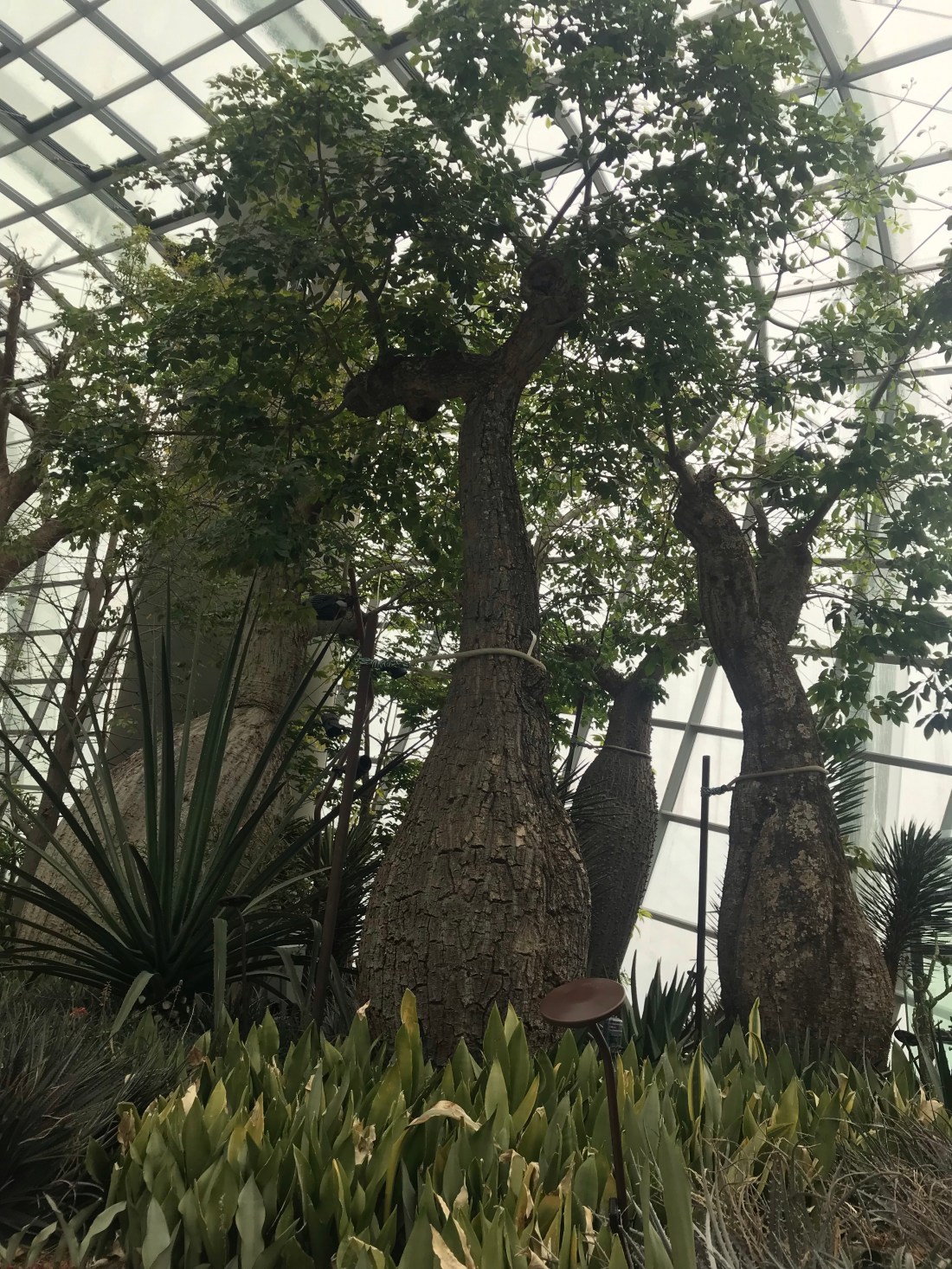
Baobabs; bottle trees whose trunks swell to store water so they can survive long periods of drought:

I love these “bird of paradise” plants. I saw quite a few in NZ and Australia as well as here:

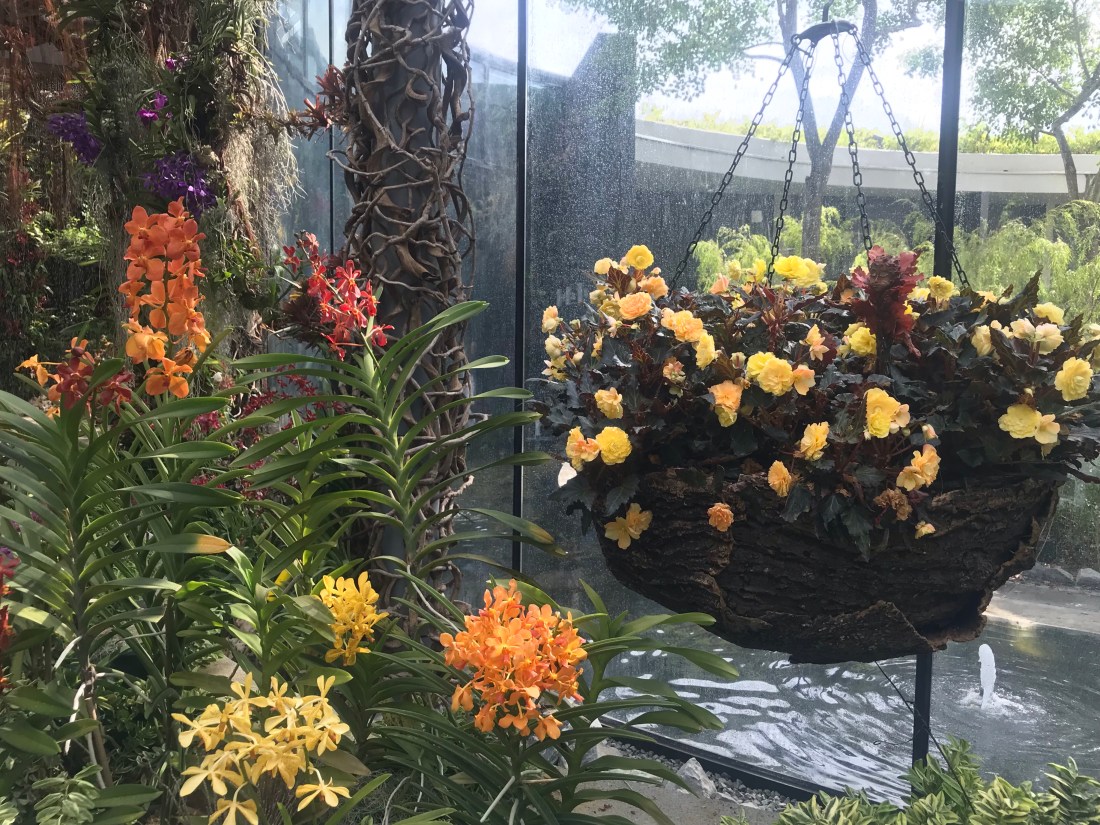
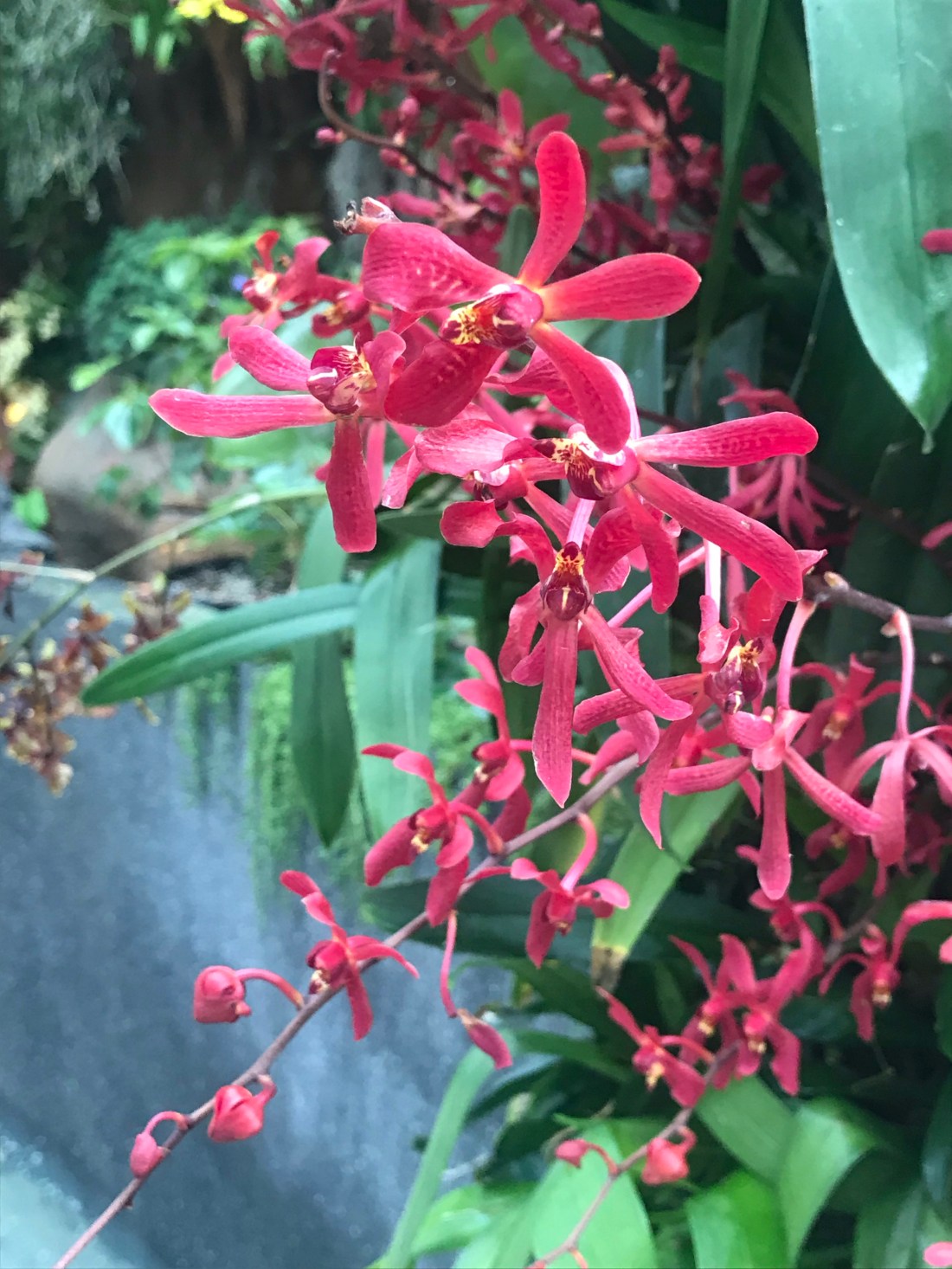
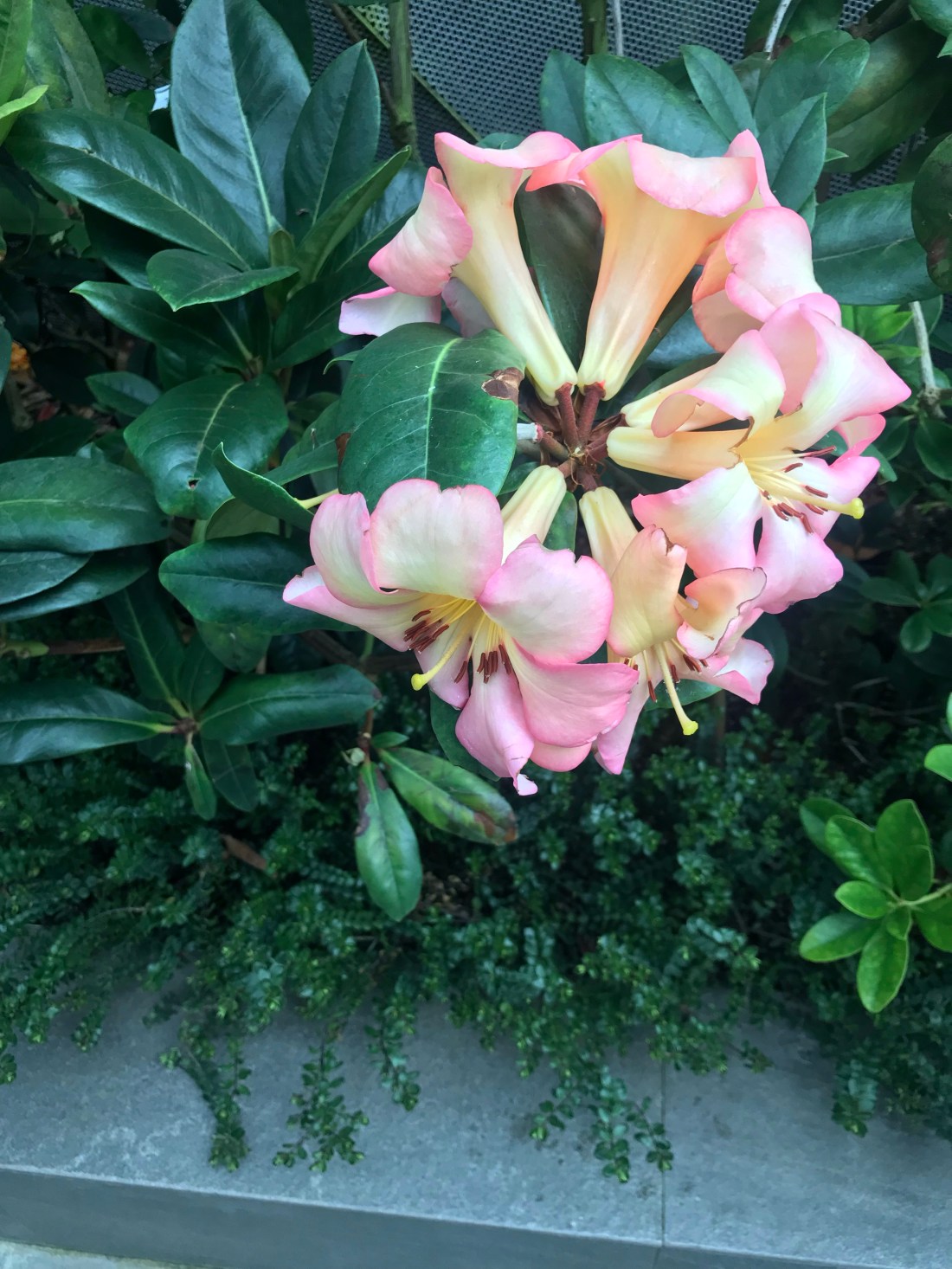
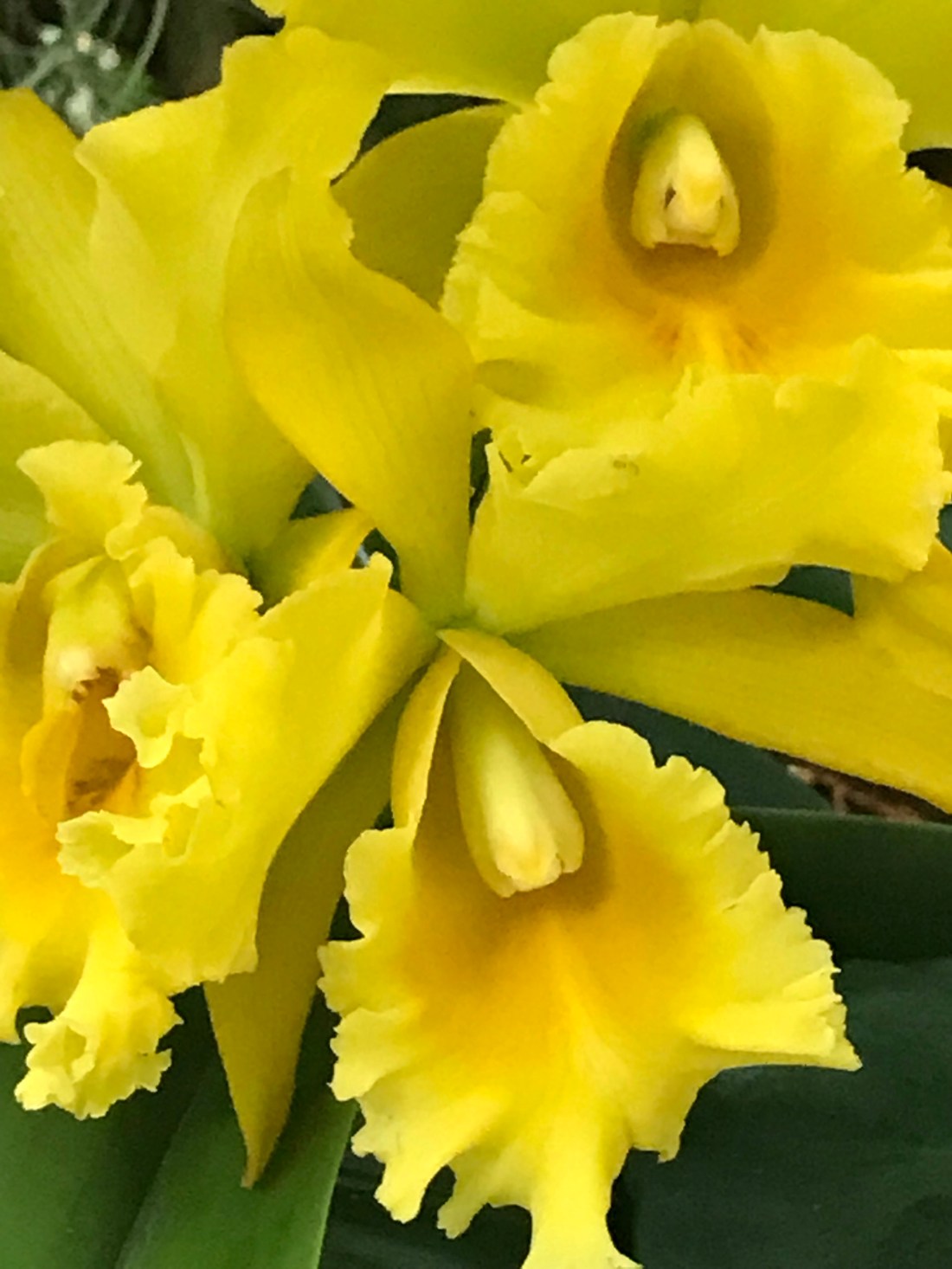
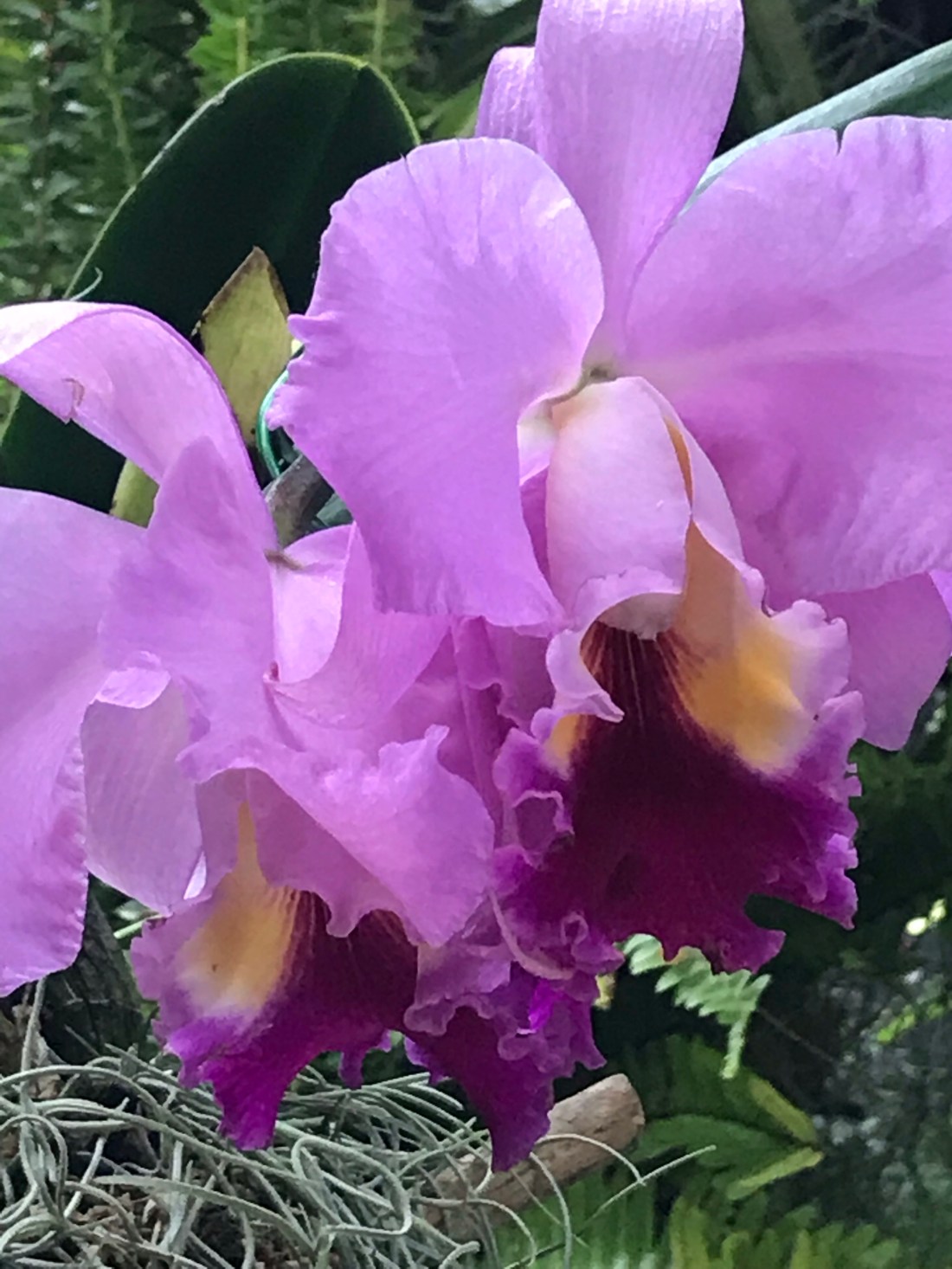
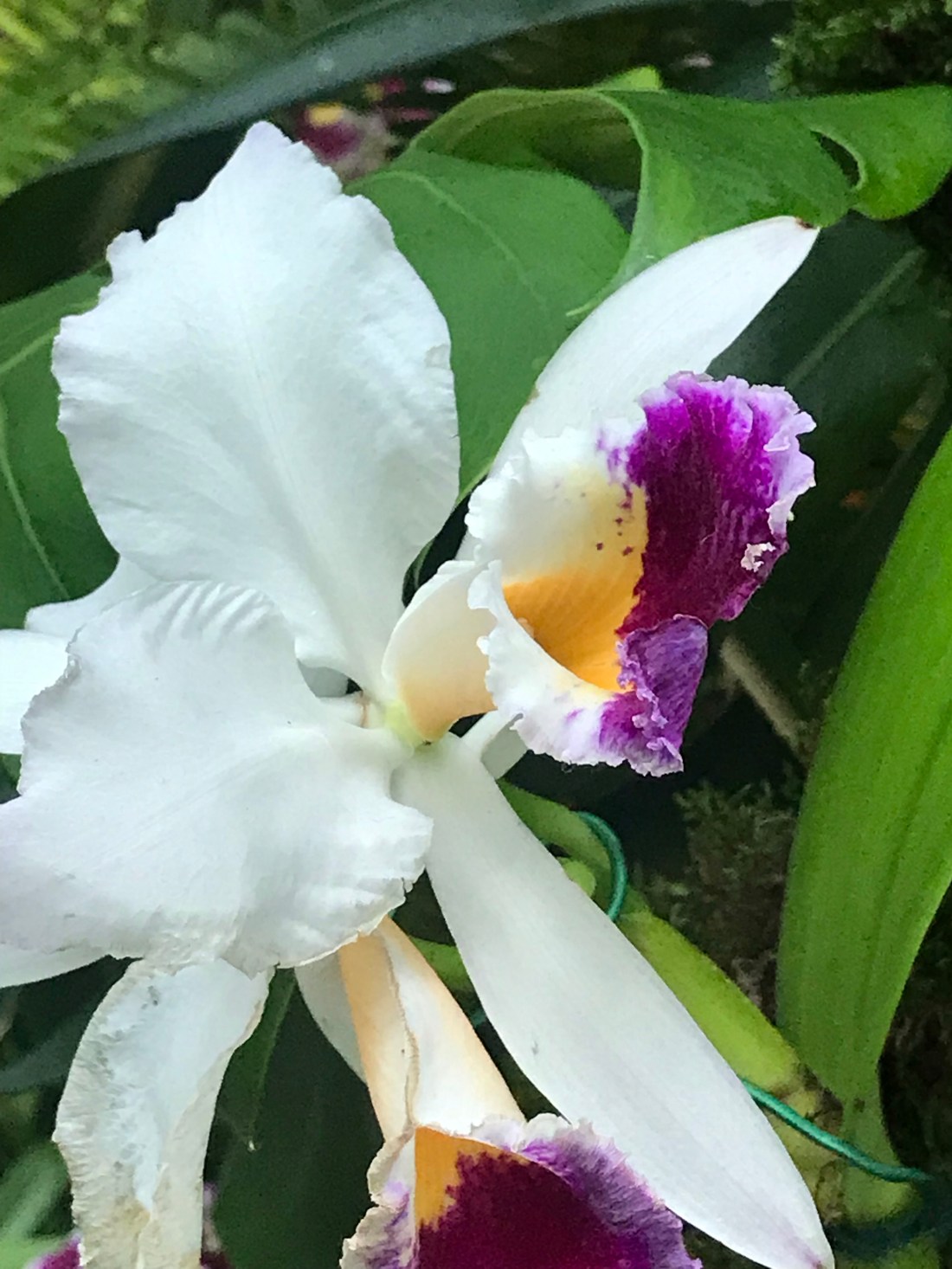
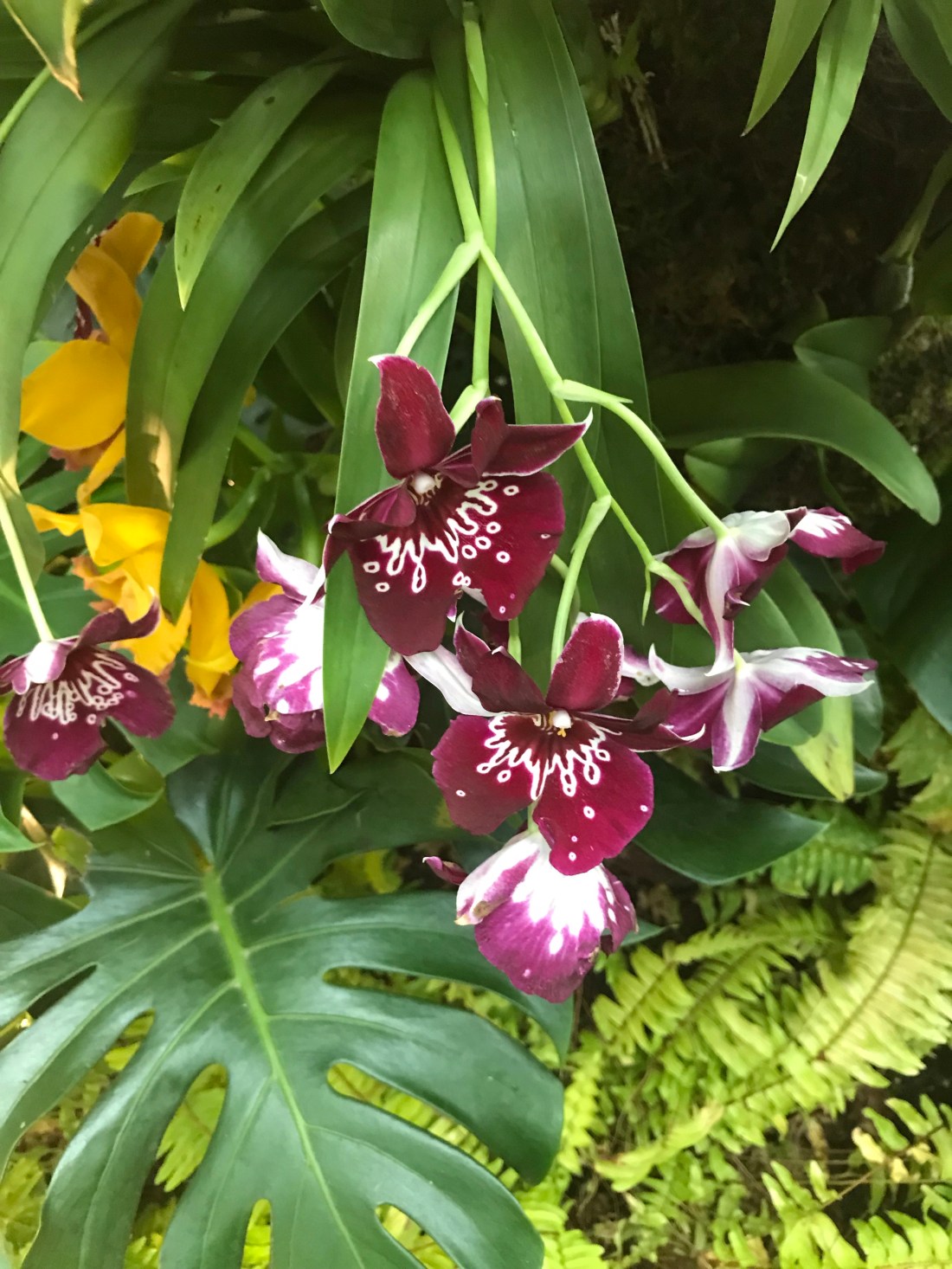
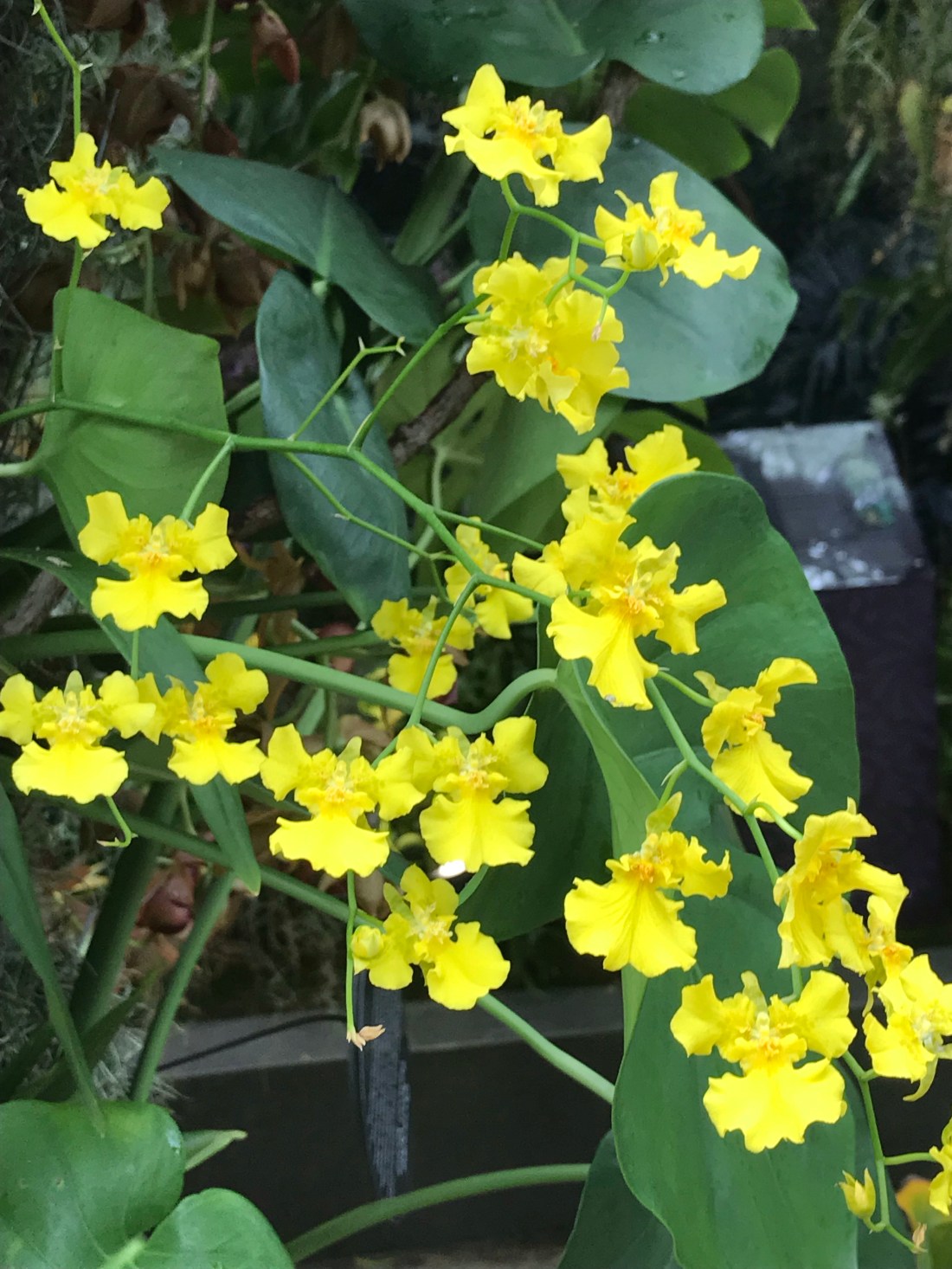
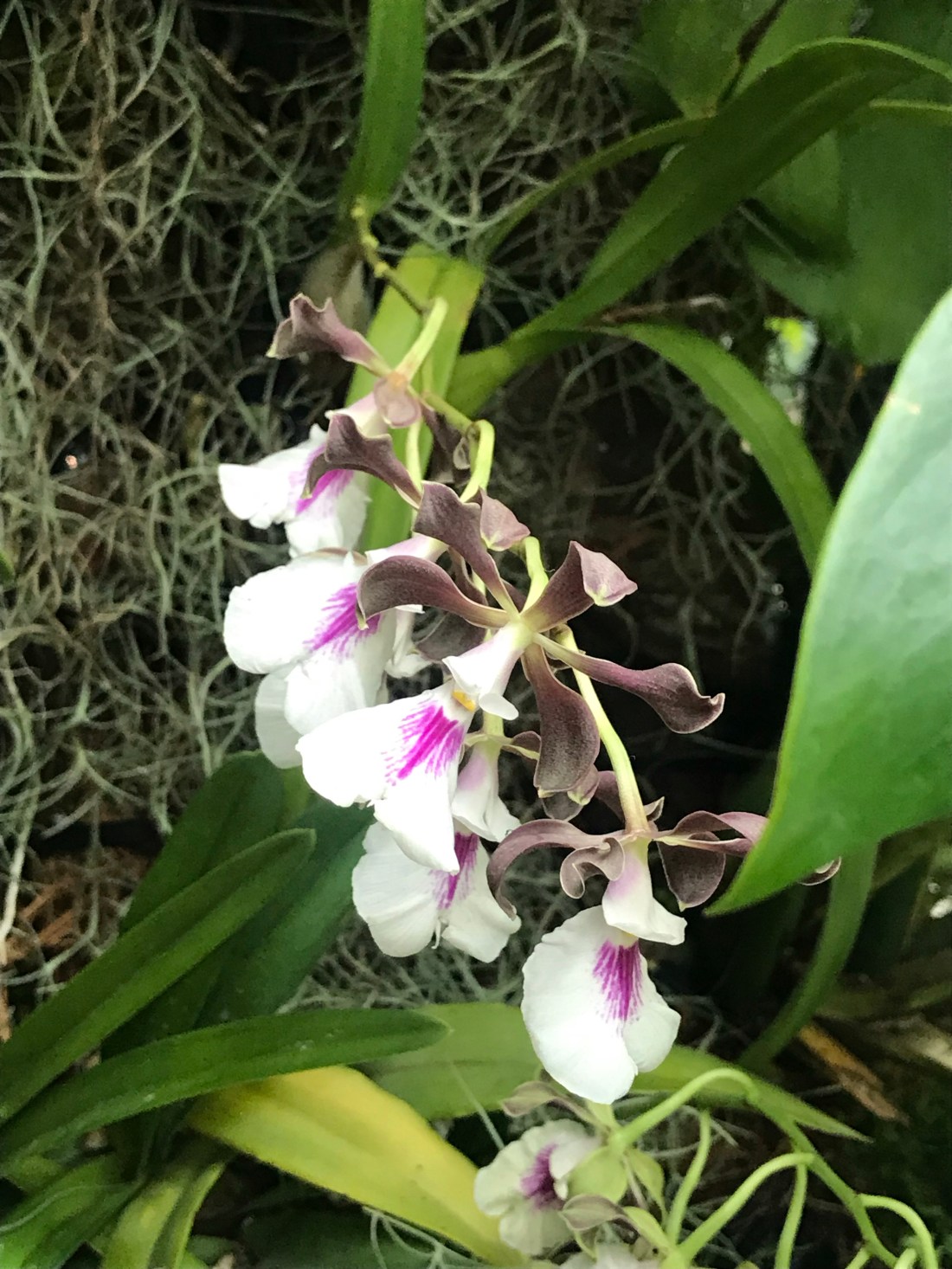
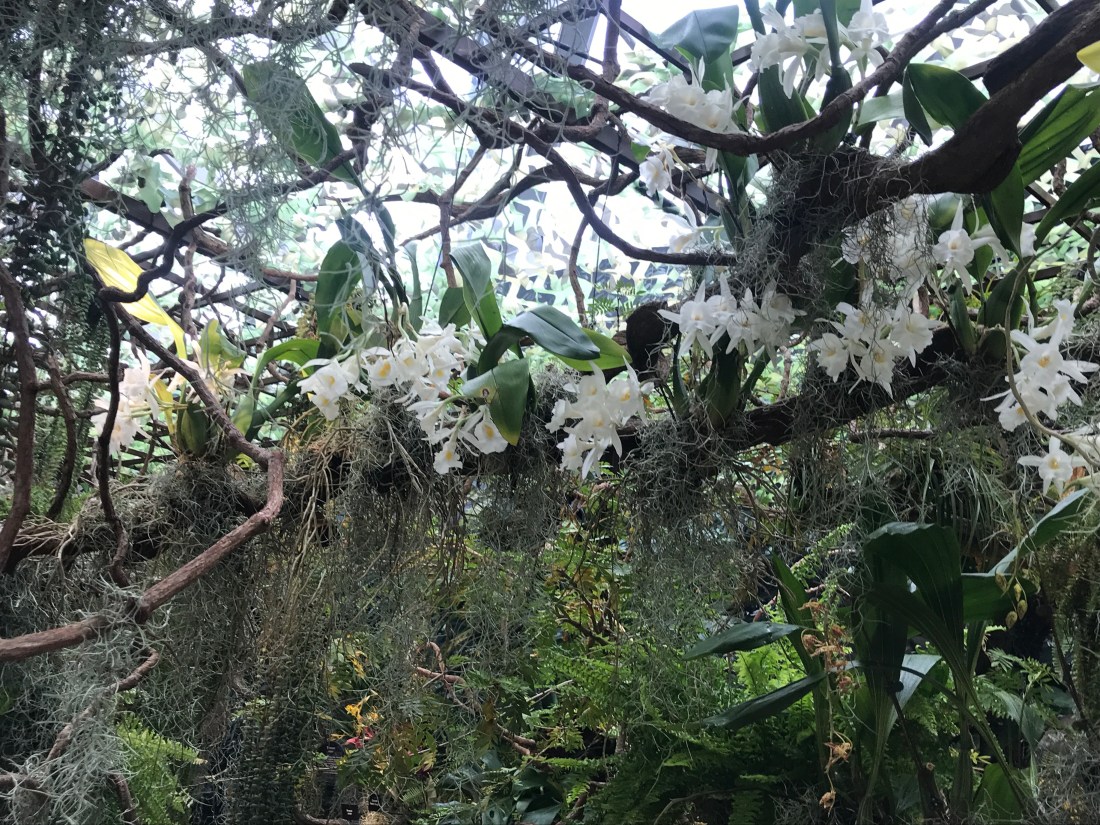
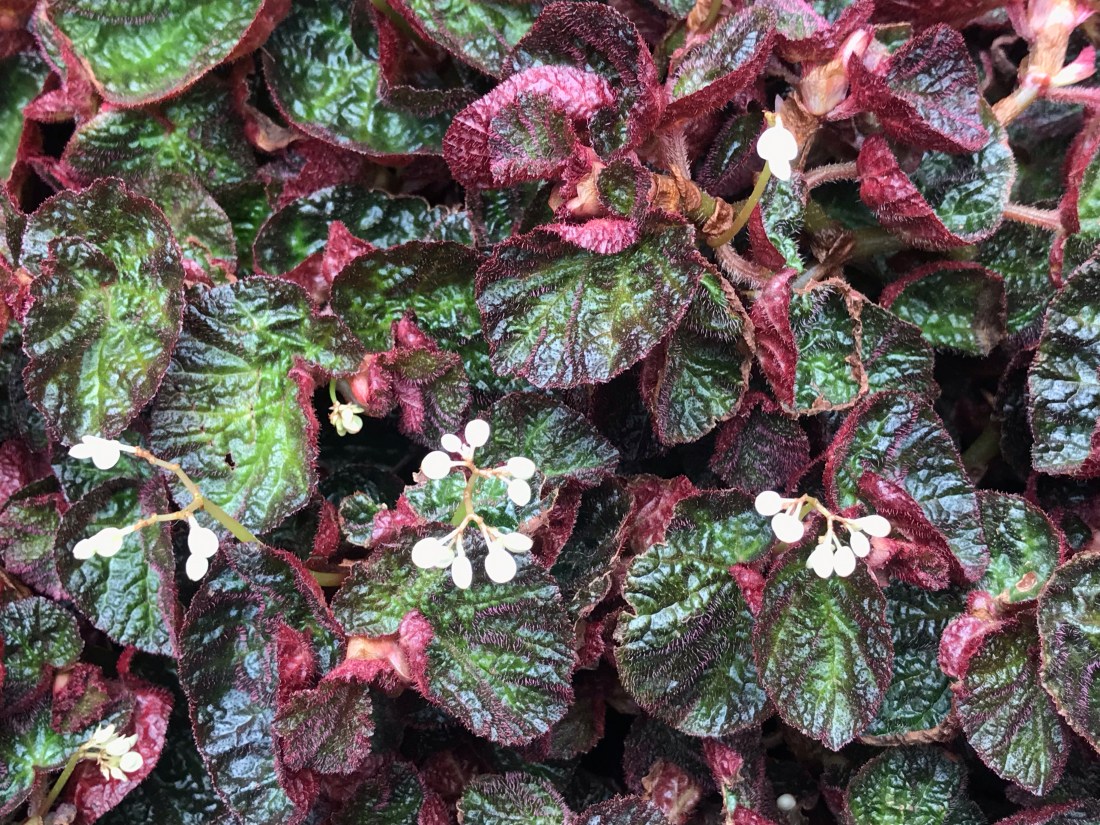
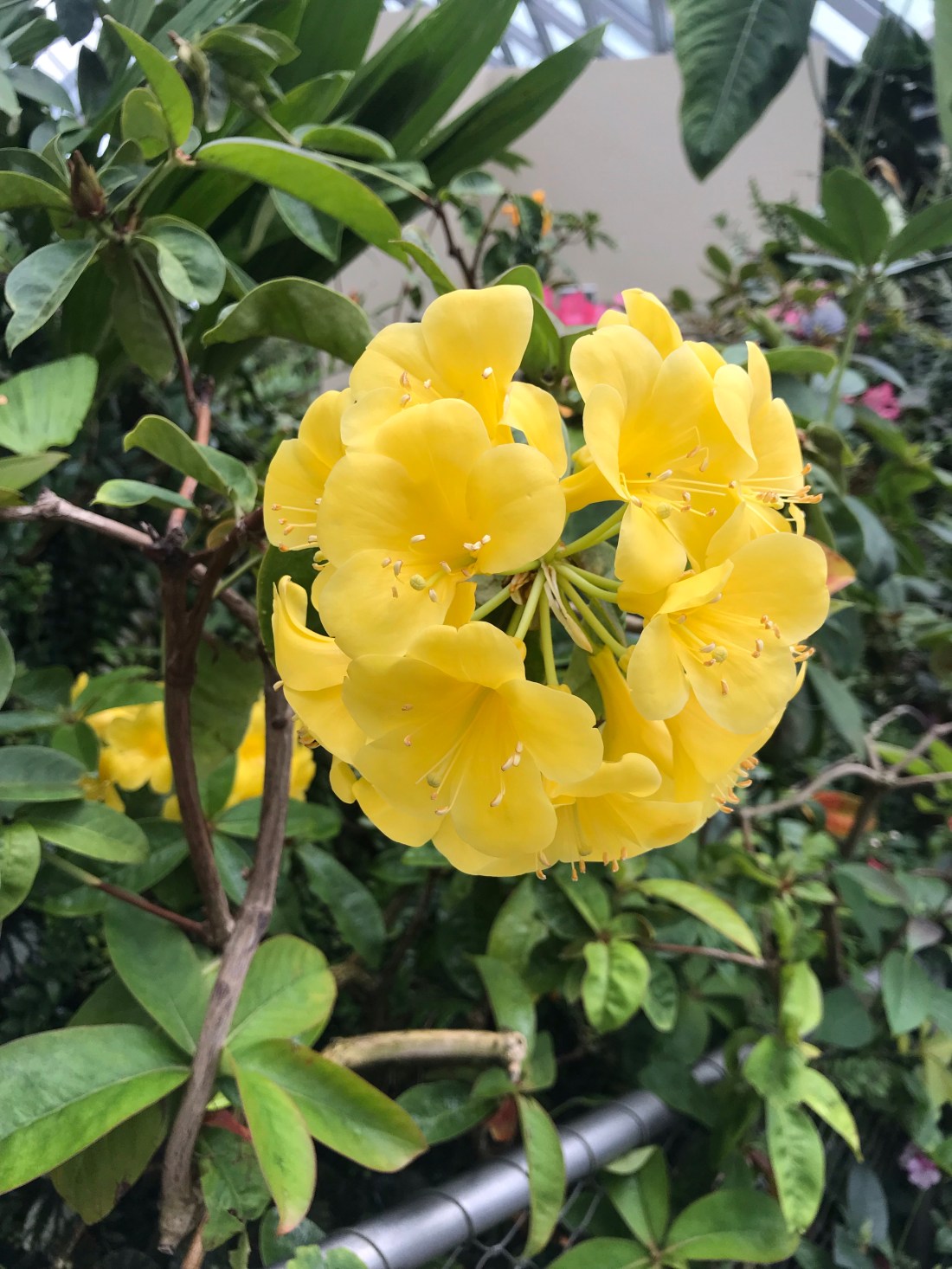
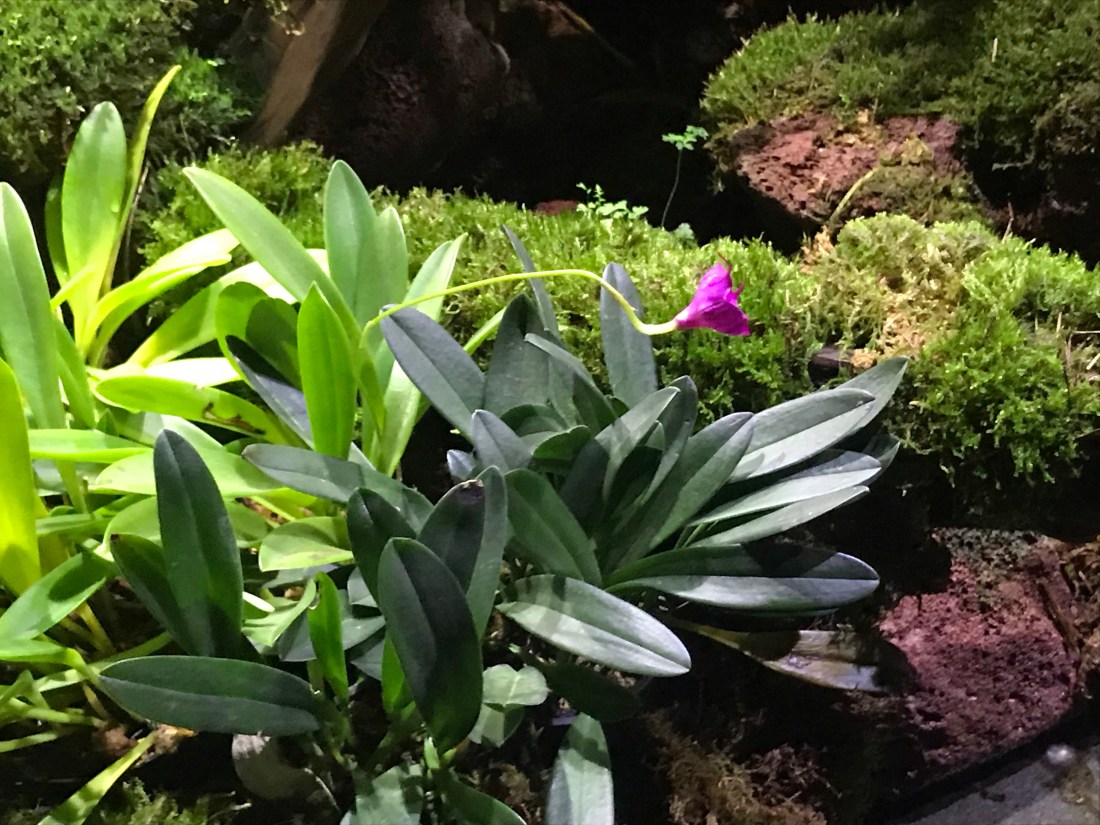
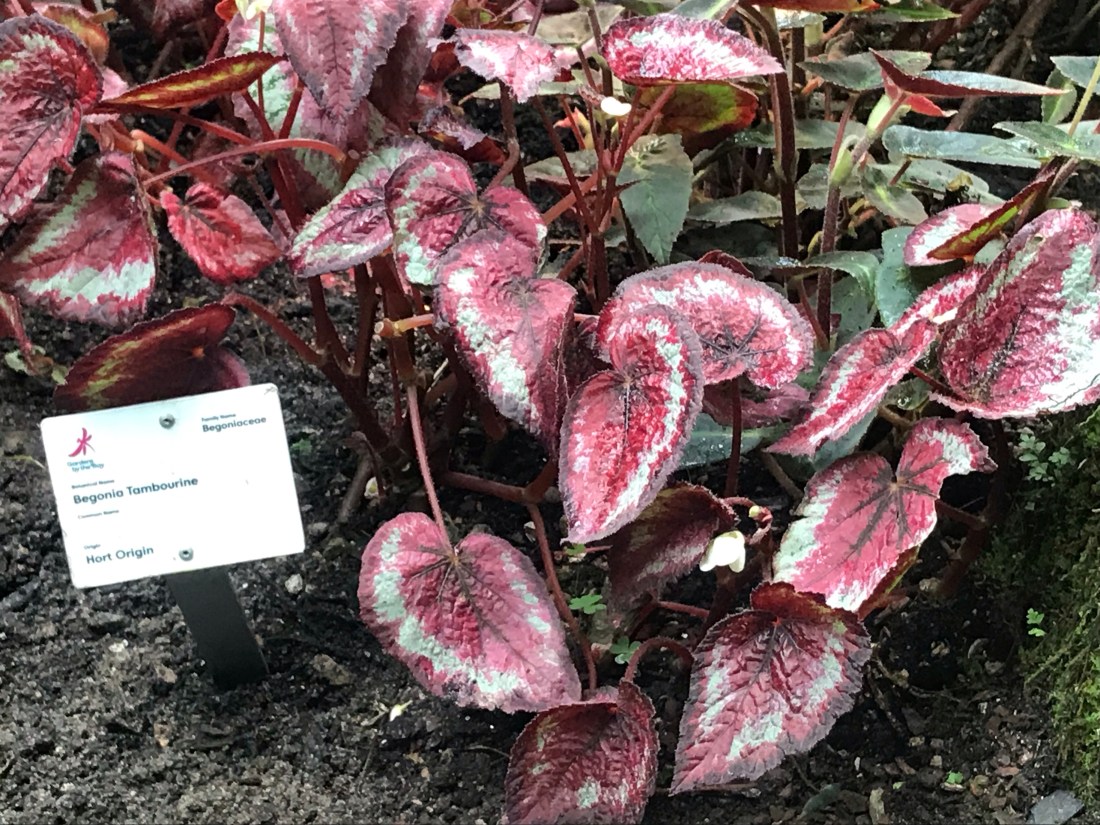
Amazonian orchids:

A civilised day

Yesterday, I decided to make time to enjoy a prayerful time at the cathedral and to admire some of the colonial architecture on the Singapore River, and visit the National Gallery.

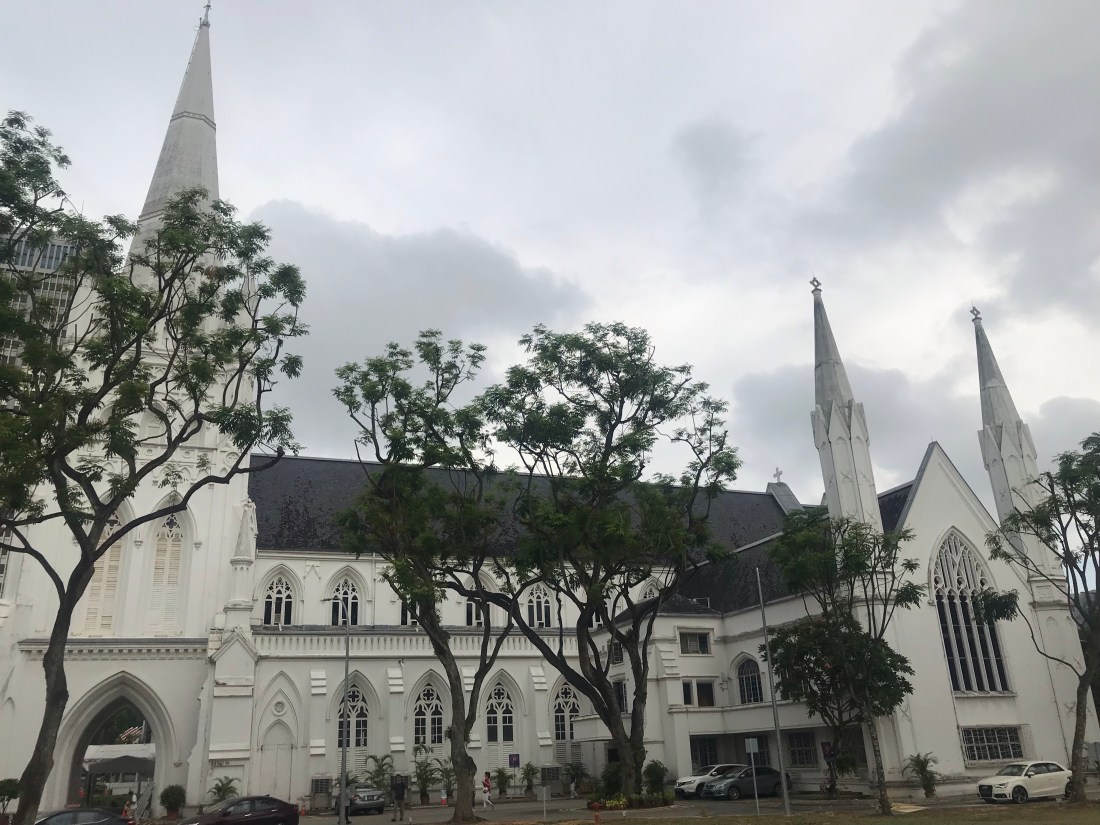
St Andrew’s Cathedral was closed, but I admired it from the outside:
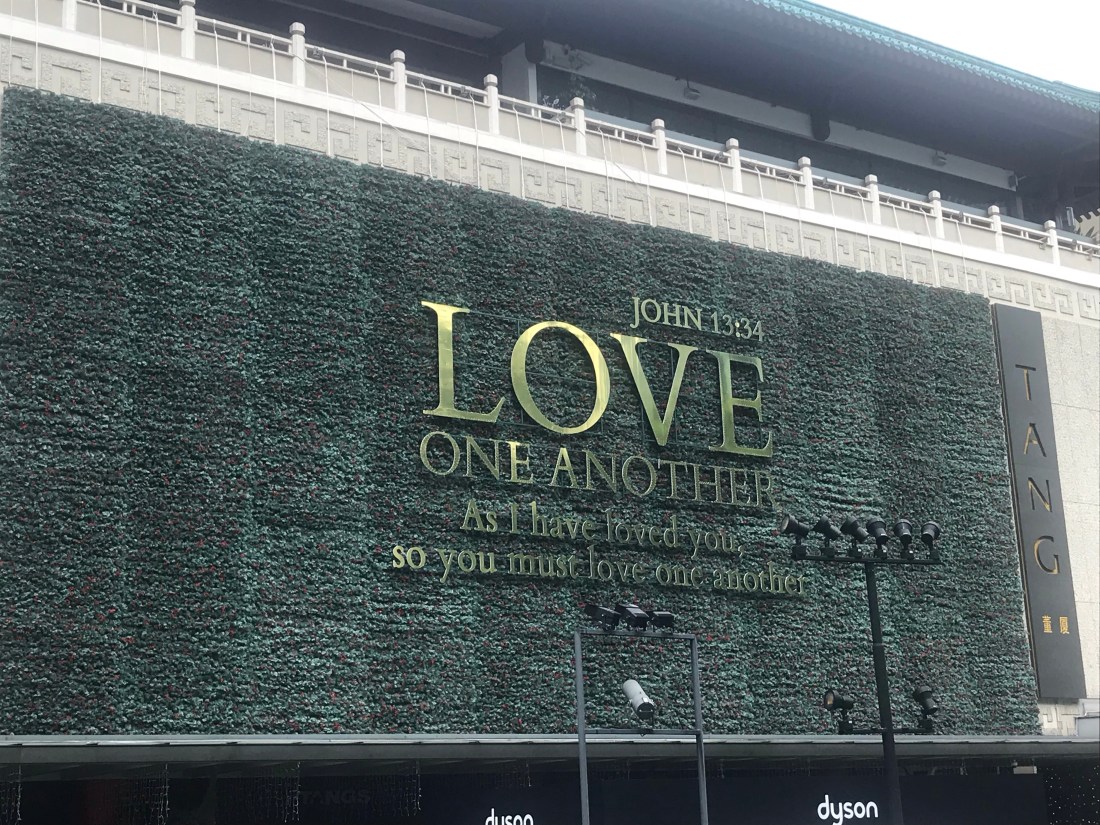
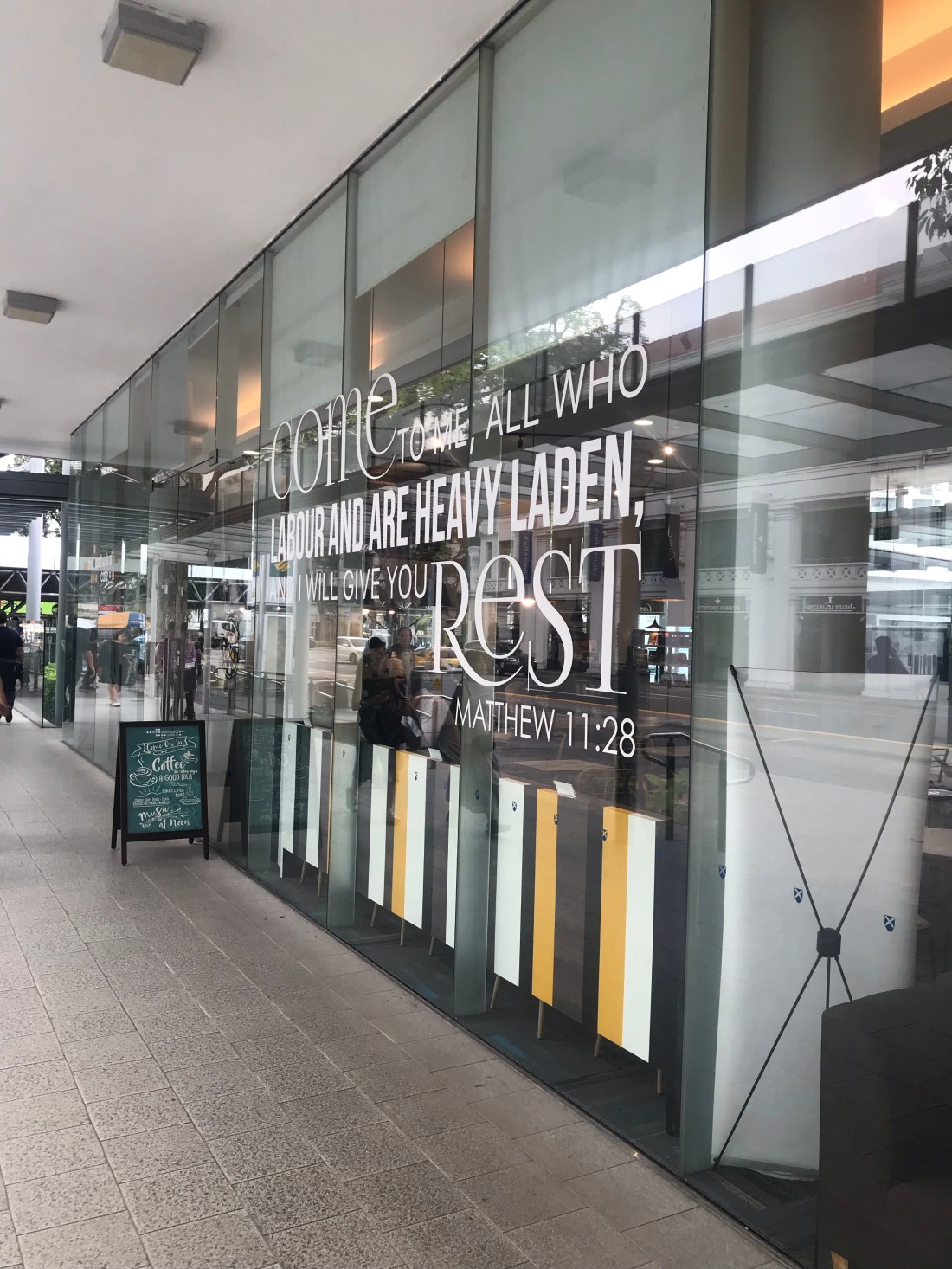
I saw a lady pause and ponder this wonderful saying of Jesus on the cathedral café window for quite some time👇🏼(“Come to me all who labour and are heavy laden, and I will give you rest”). What if we vowed to make this the first thing we in the church greeted people with, always? Rather than condemnation or judgment of any sort (surely we believe it’s for God to judge anyway, after all)?

And what if we also vowed to daily ask God to place a guard over our lips, so that we spoke only love to one another and to others every day?👆🏼 How incredibly transformative that could be.
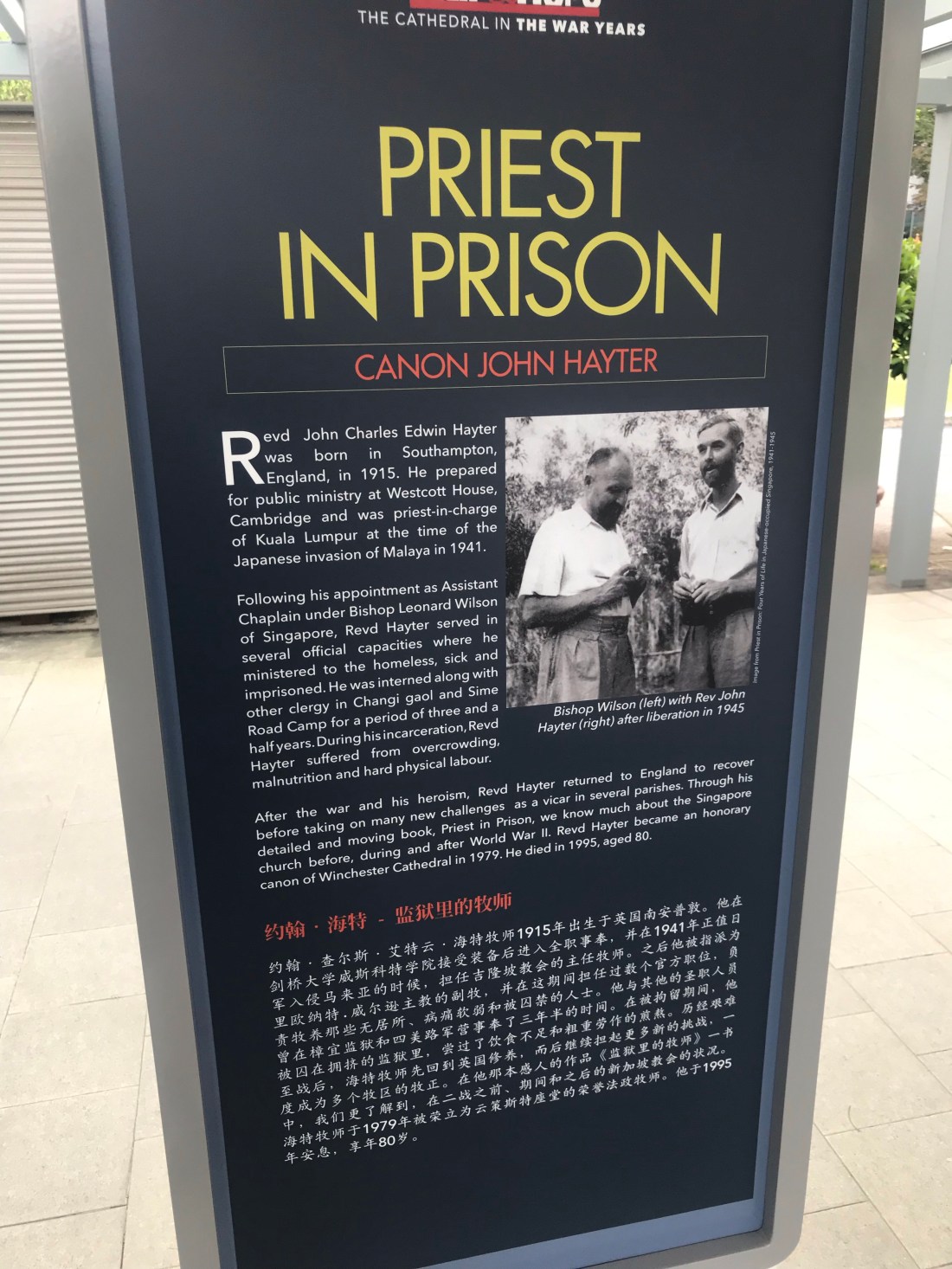
The displays outside the cathedral about the part various clergy played during the Second World War was a bit self aggrandising, though it didn’t take too much reading between the lines to realise that there was a lot of grey area. Jamie had shared his understanding with me that the colonial era was neither as good nor as bad as it is often painted to be, but of course the truth lies somewhere in between. Truly selfless and heroic and good things were done, alongside many things motivated by selfishness or a rather paternalistic attitude towards any culture other than British culture.

For example, Canon John Hayter sounds like a real trooper, imprisoned during the Japanese occupation in terrible conditions for three and a half years:
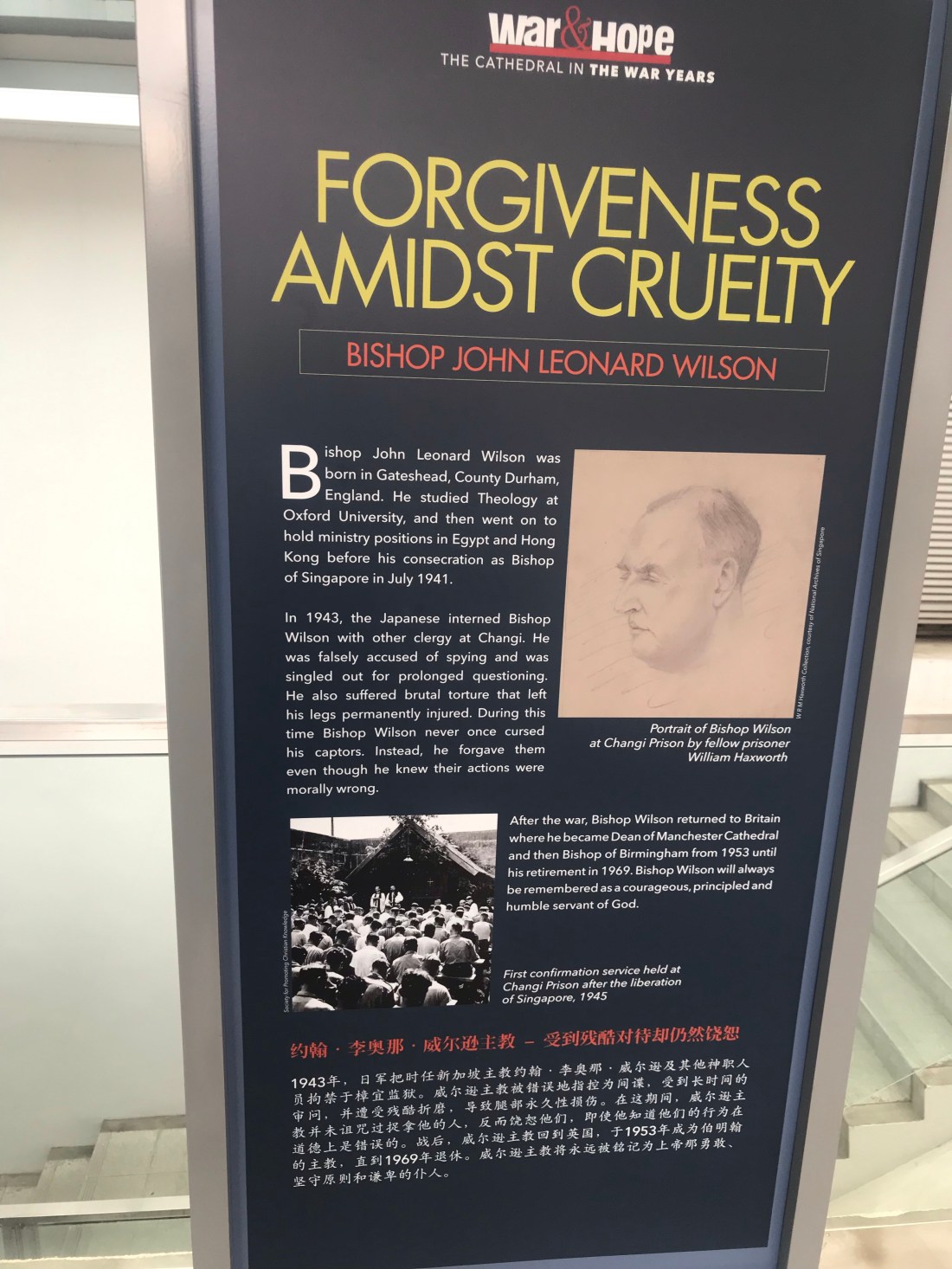
Bishop John Leonard Wilson also sounds like something of a hero, enduring torture from the Japanese regime:
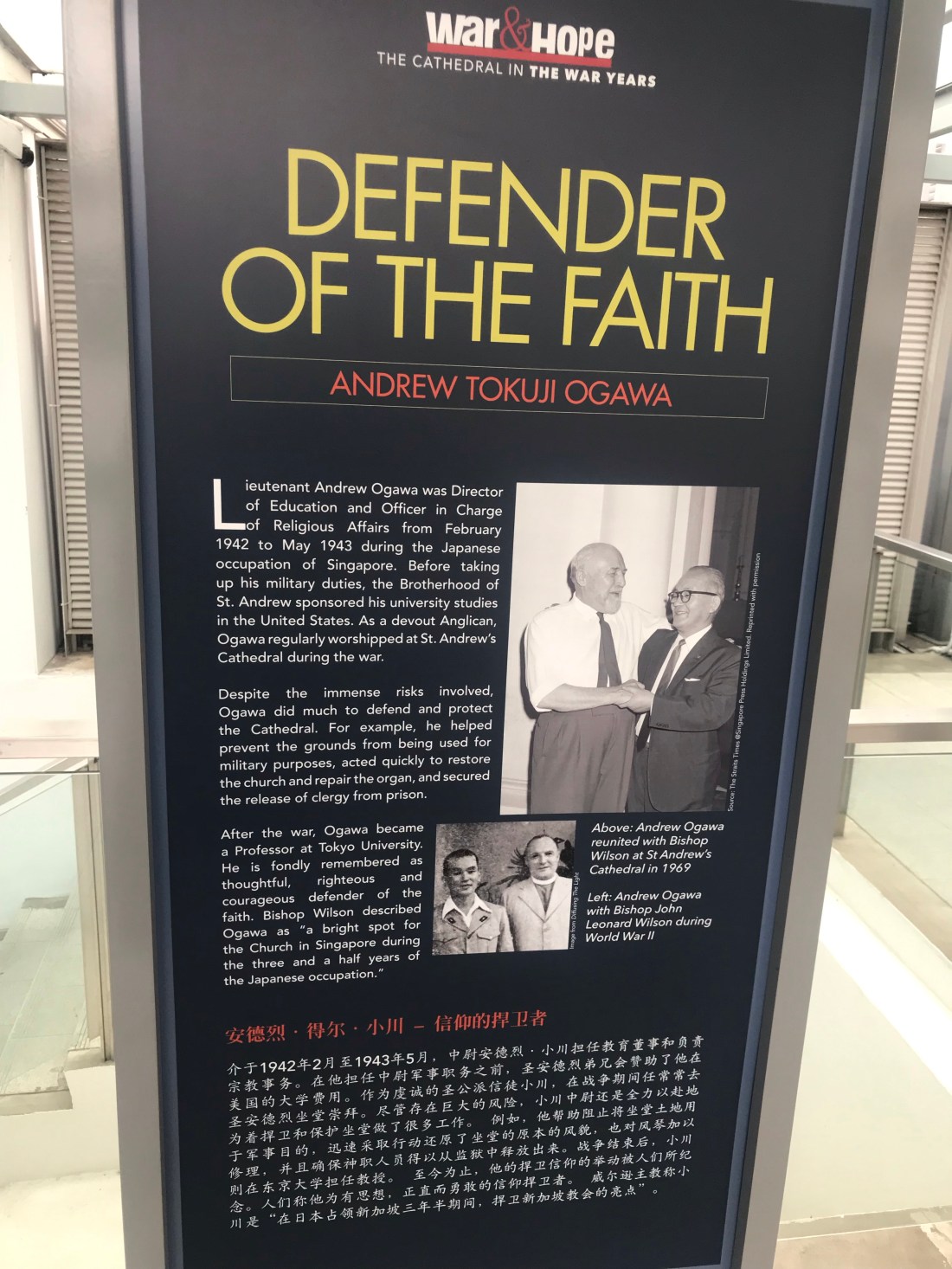
Then you read about Lieutenant Andrew Tokuji Ogawa, who had a high level role during the Japanese occupation. He used his position to protect the cathedral, where he worshipped throughout the war…while all the clergy including the Bishop were being imprisoned and tortured. You’ve got to wonder what was going through the Bishop’s mind when they met afterwards.
Also, I would not be uncritical of the choice of Bible verse to introduce this display (“in all things God works for the good of those who love him” Romans 8.28). In 1942 the Allied forces led by the British surrendered to the Imperial Japanese Army, leaving Singapore defenceless. I’m not sure that using that Bible verse really cuts it. To say nothing of the context of the verse, which is quoted for a pastime out of context.

In Romans 8 Paul is talking about the reality of suffering while we are on earth, but the hope of glory in heaven that will surpass all earthly suffering, which all creation is groaning and longing for. So when he’s talking about God working for the good of those who love him, he’s talking in eternal terms, not at all about the events that are currently happening, for which we as human beings surely have to take responsibility. Theological rant over.

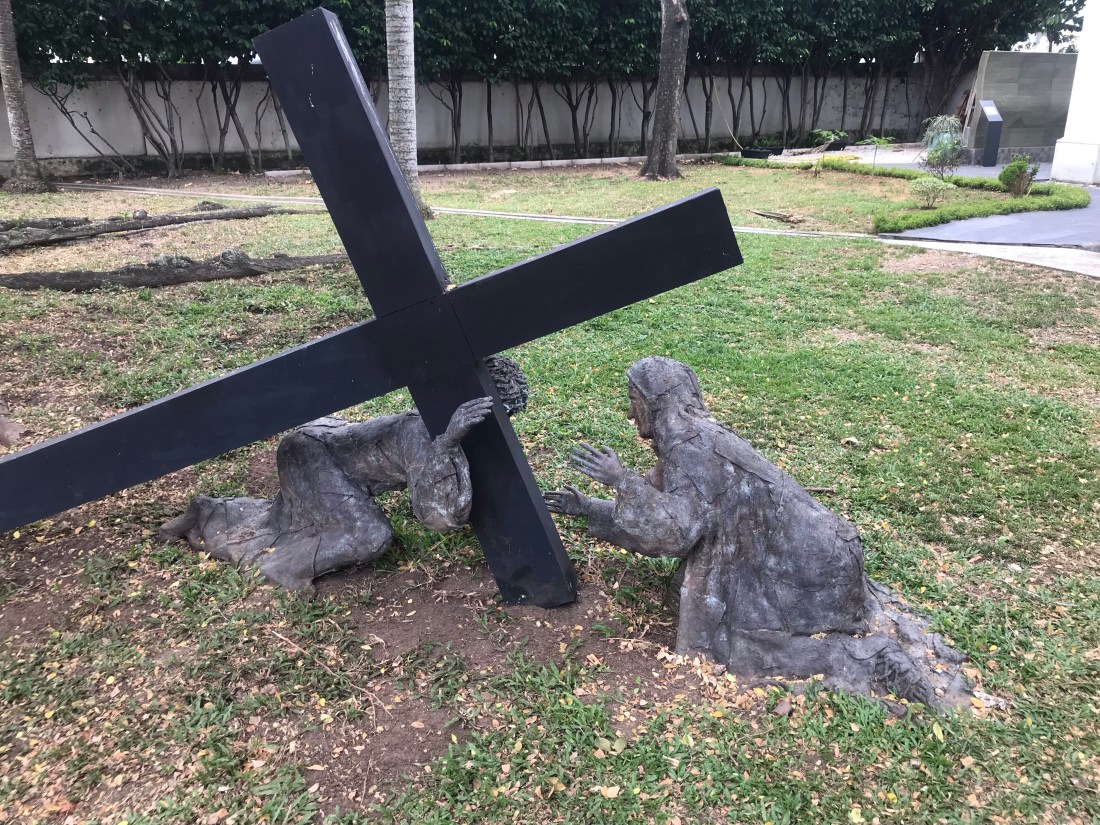
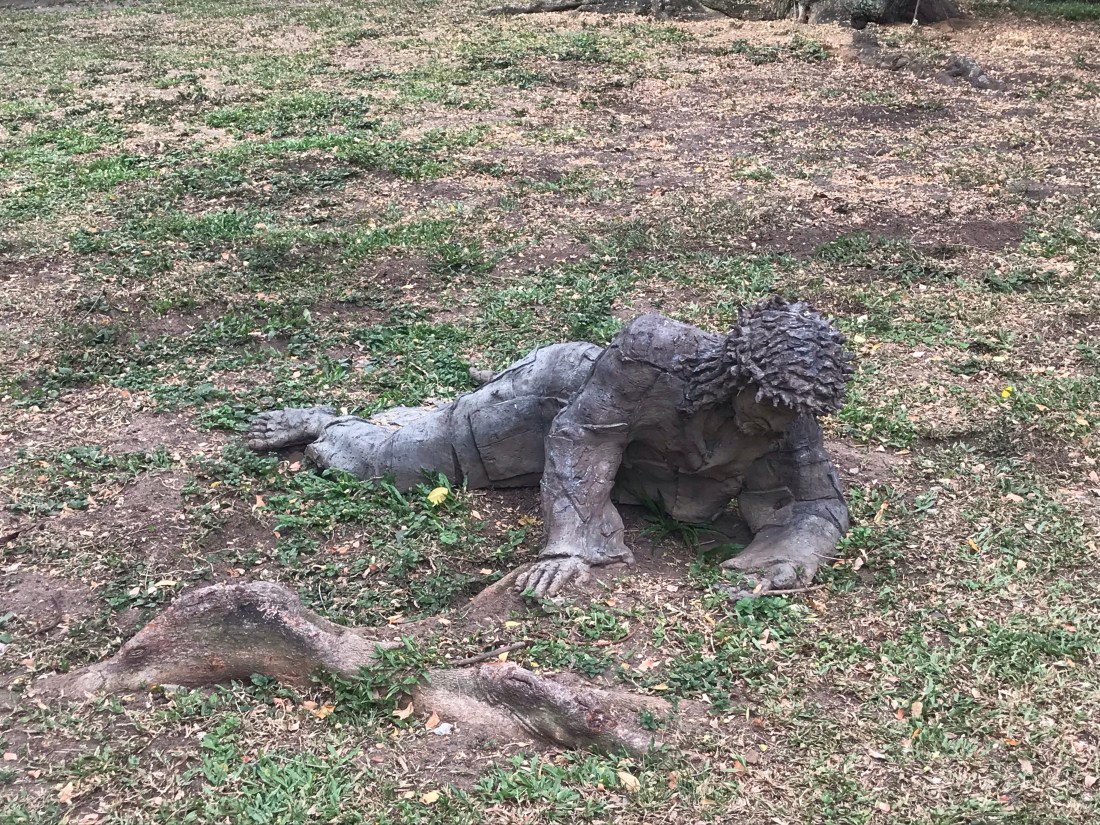
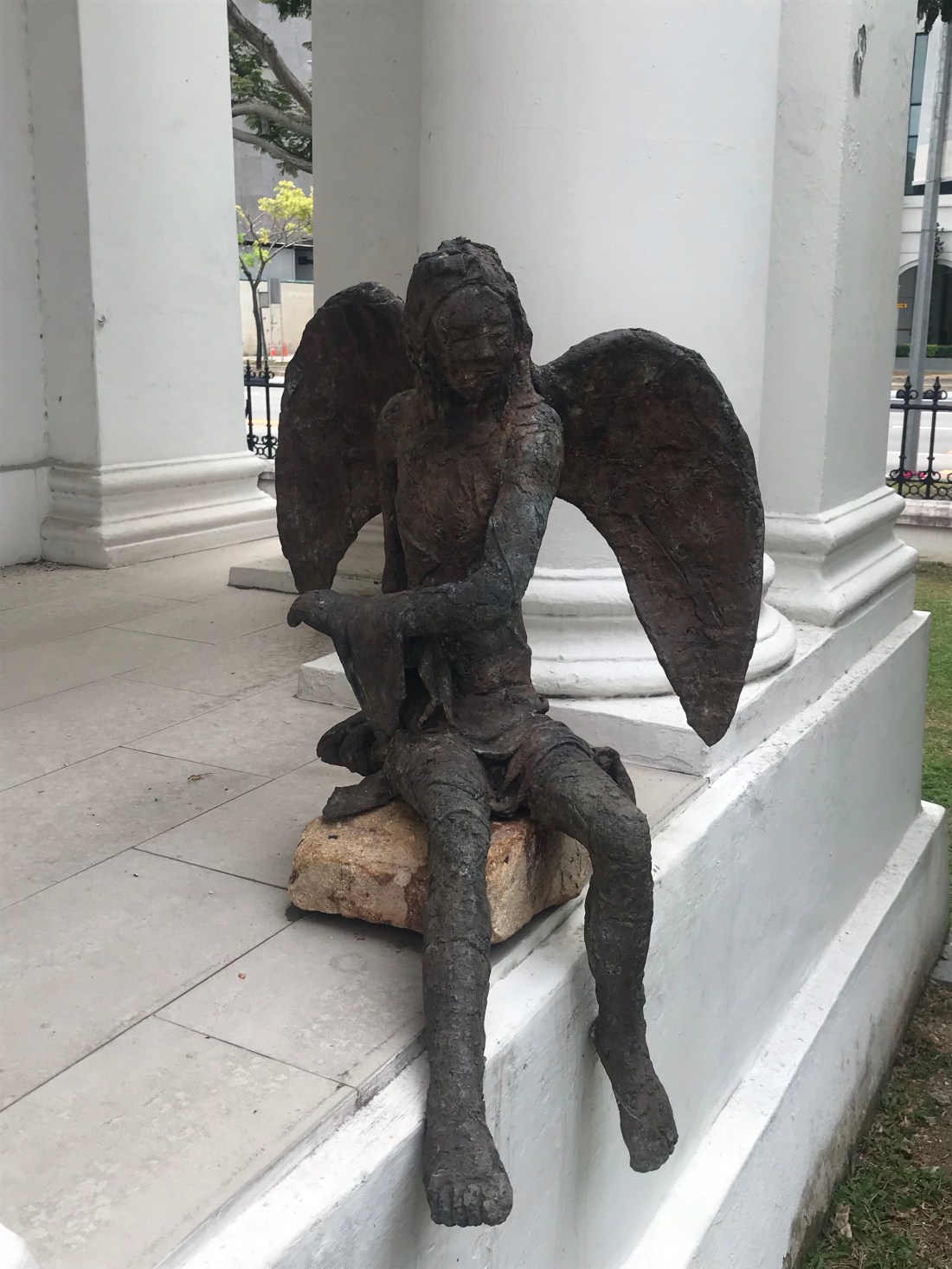
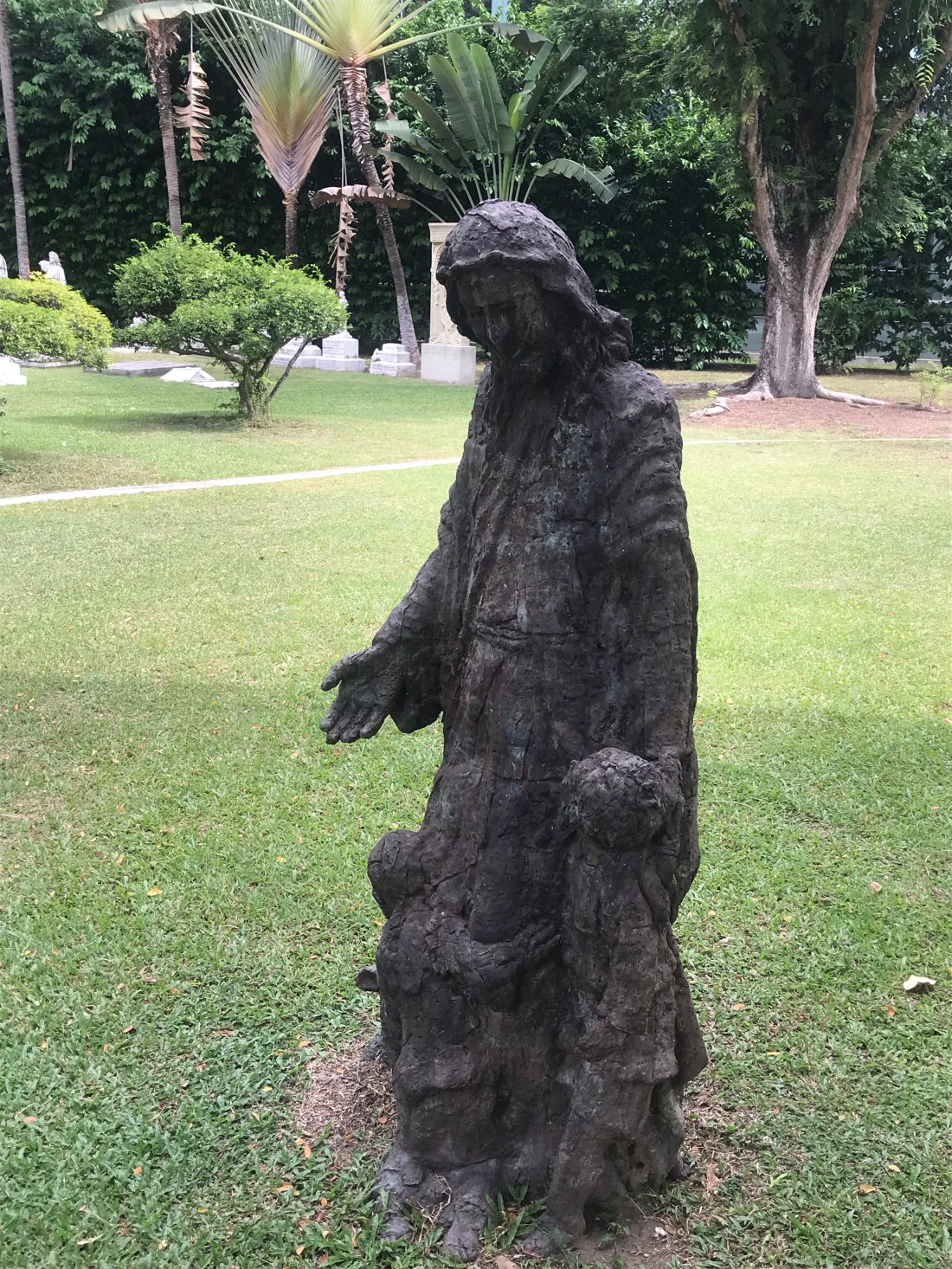
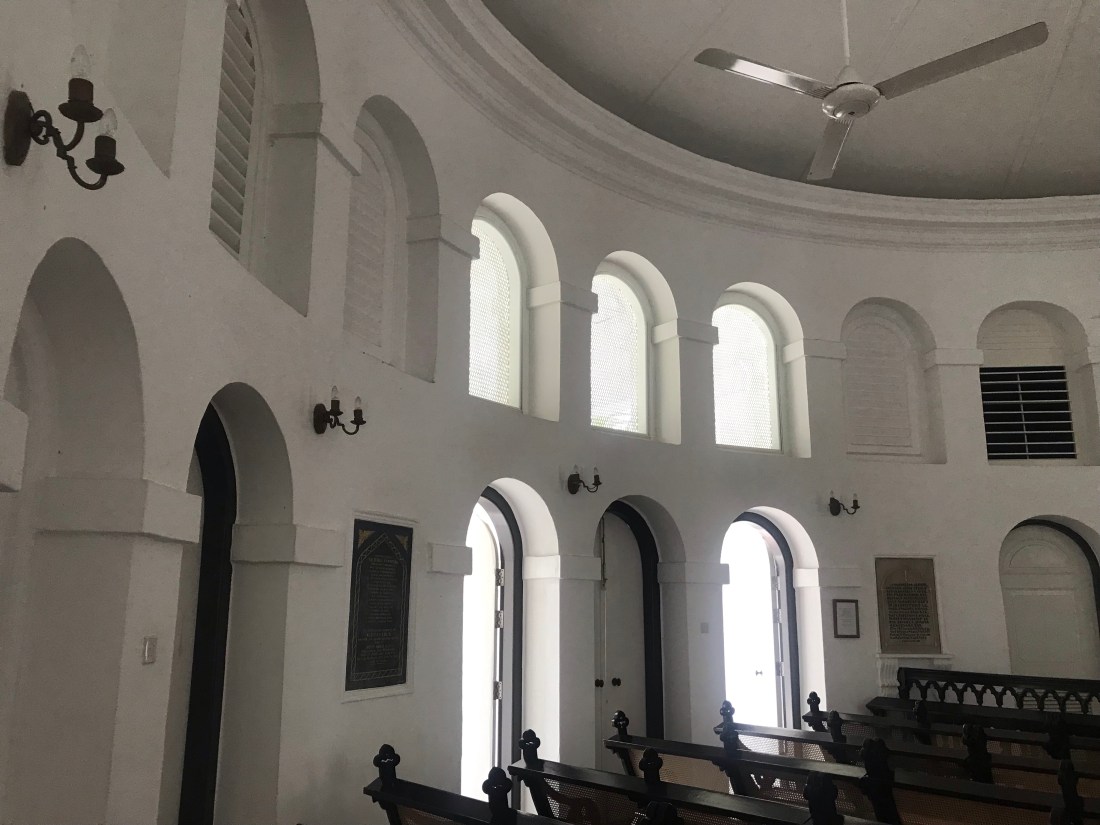
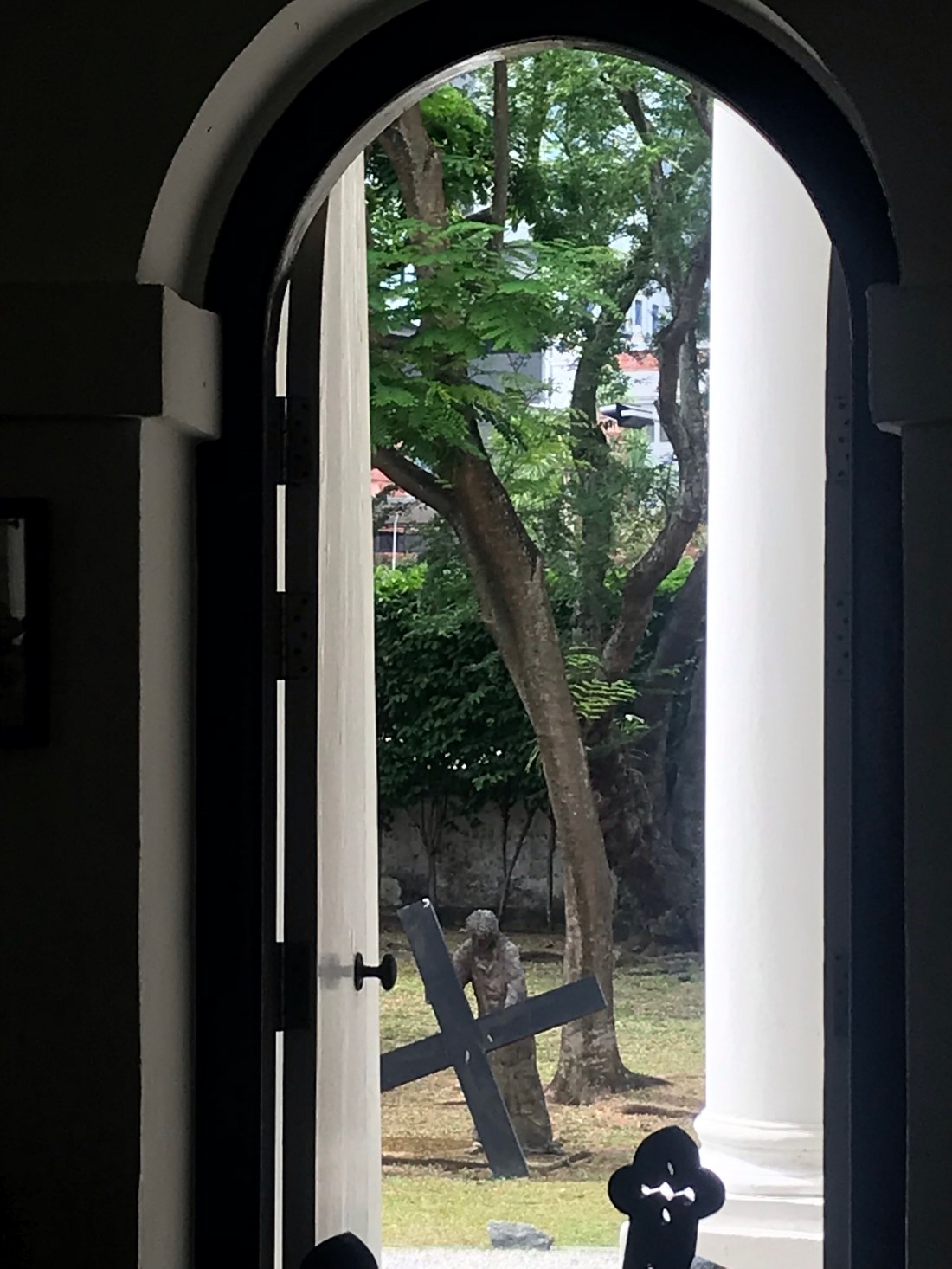
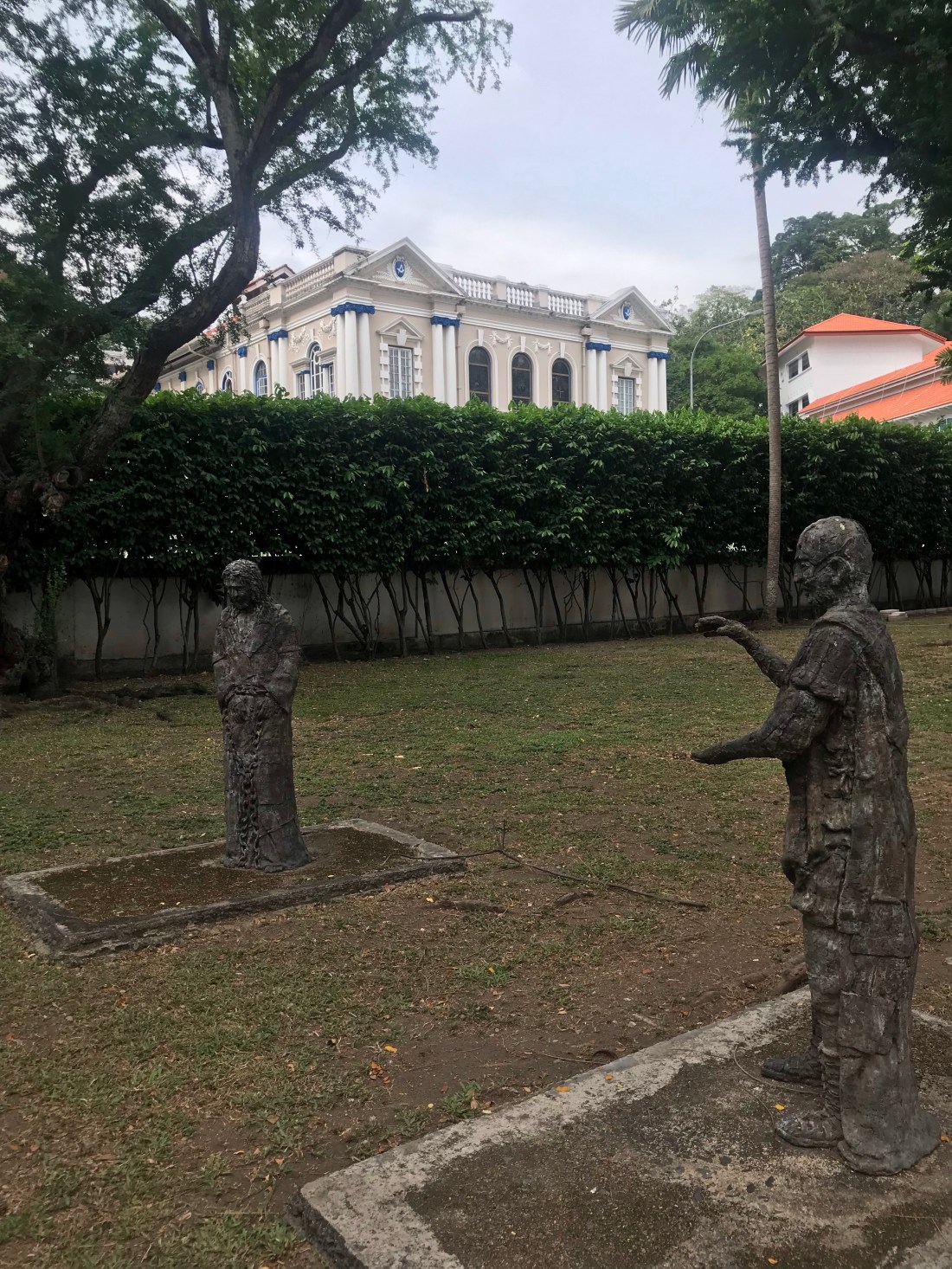
Anyway, disappointed that I couldn’t get in the cathedral to pray, I found my way to the Armenian Church of St Gregory the Illuminator, which I actually found a more prayerful space anyway, with some beautiful modern sculptures showing stages in Christ’s journey to be crucified outside (stations of the cross) along with a couple of intriguing angels and some beautiful trees and plants that looked to me like they were silently praising God. Here I sang (there was a great acoustic in the tiny circular church space), and did some body prayer outside among the trees and sculptures. And I read of the genocide of the Armenian people in 1915 by the Ottoman forces.

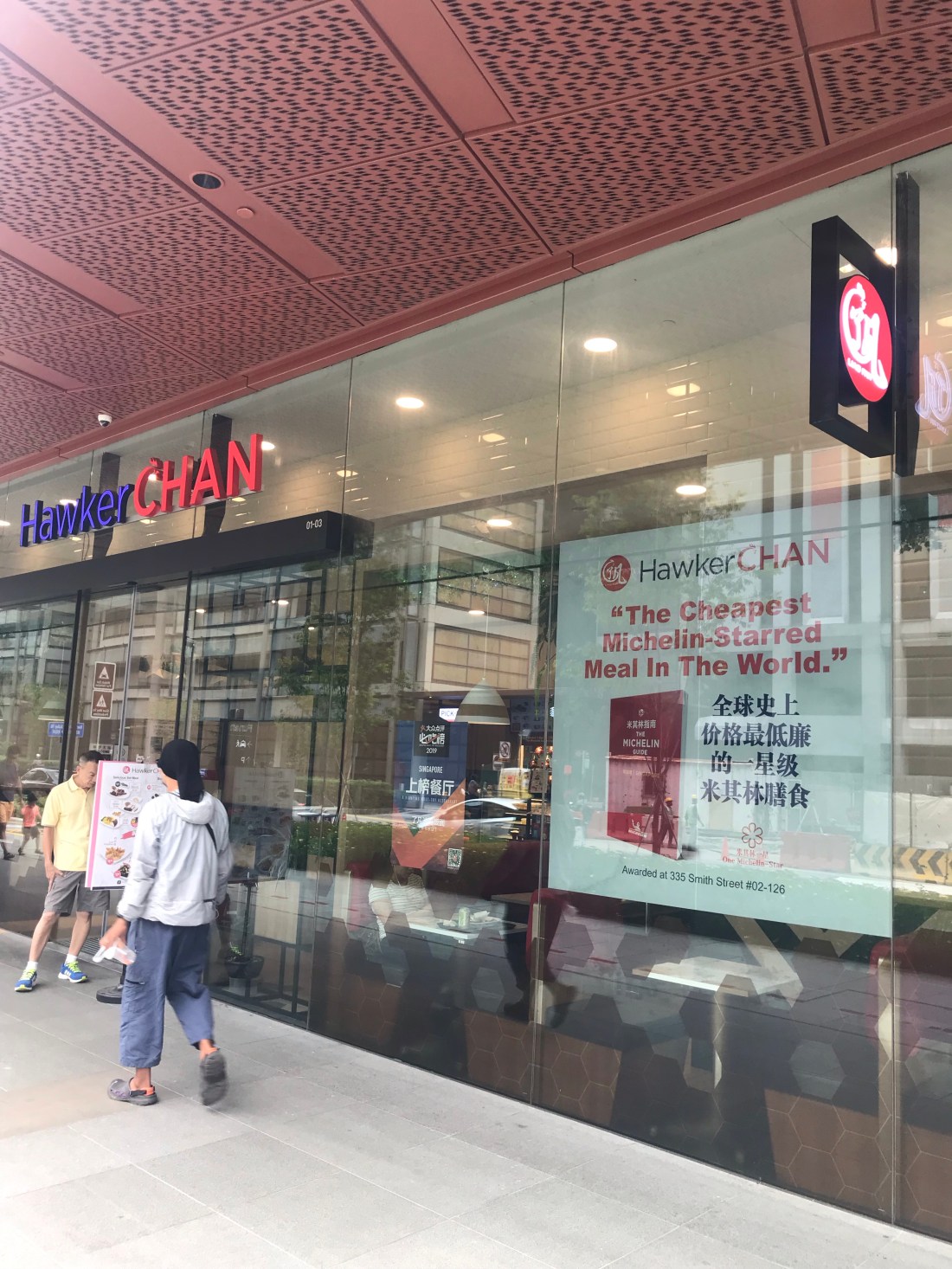
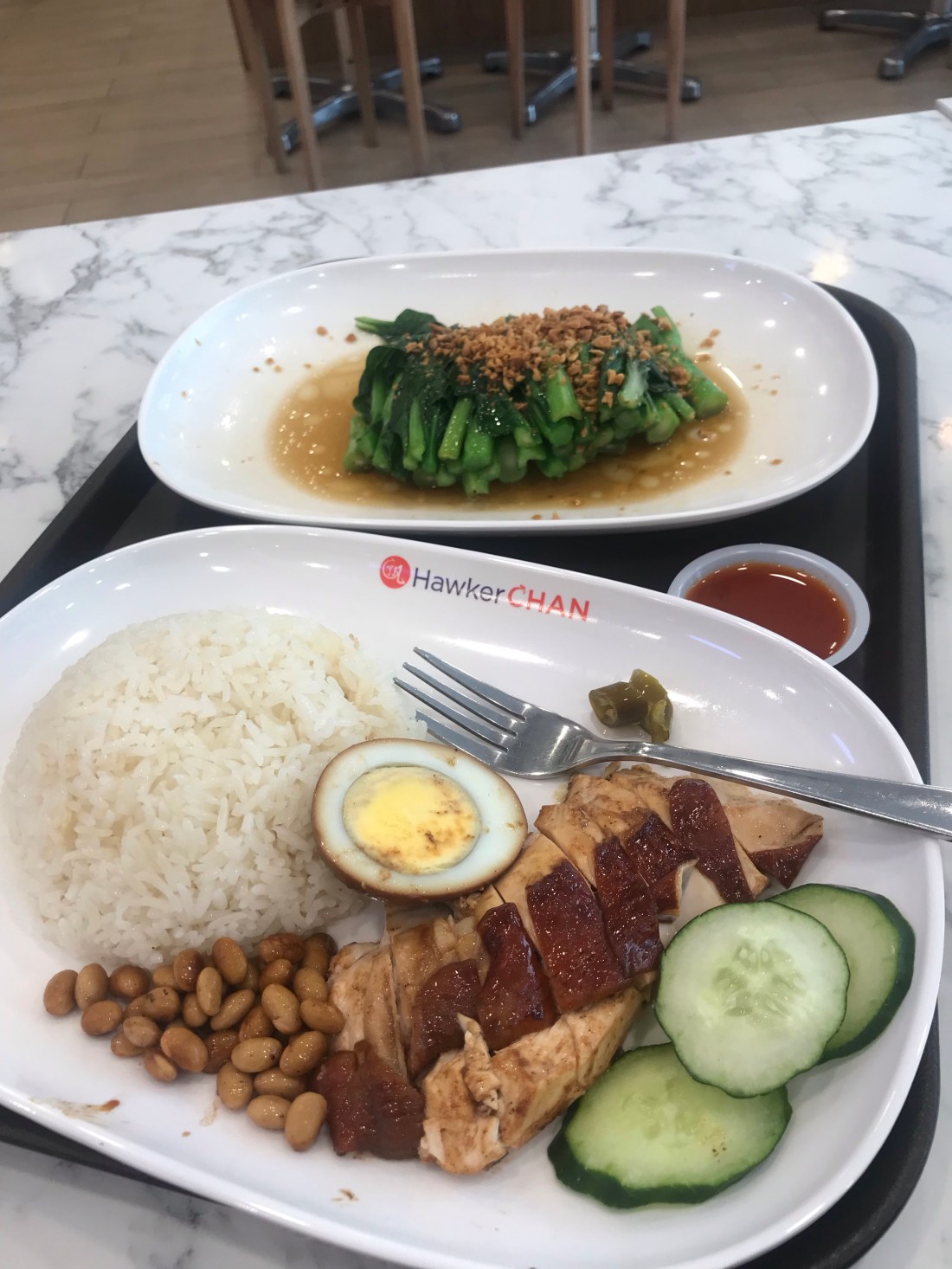
On my way from here to the National Gallery, I stumbled across a real find; Hawker Chan’s! Later in the day I came back here to have the cheapest Michelin starred meal in the world. It was delicious! (And cost me £6.71, drink included.)
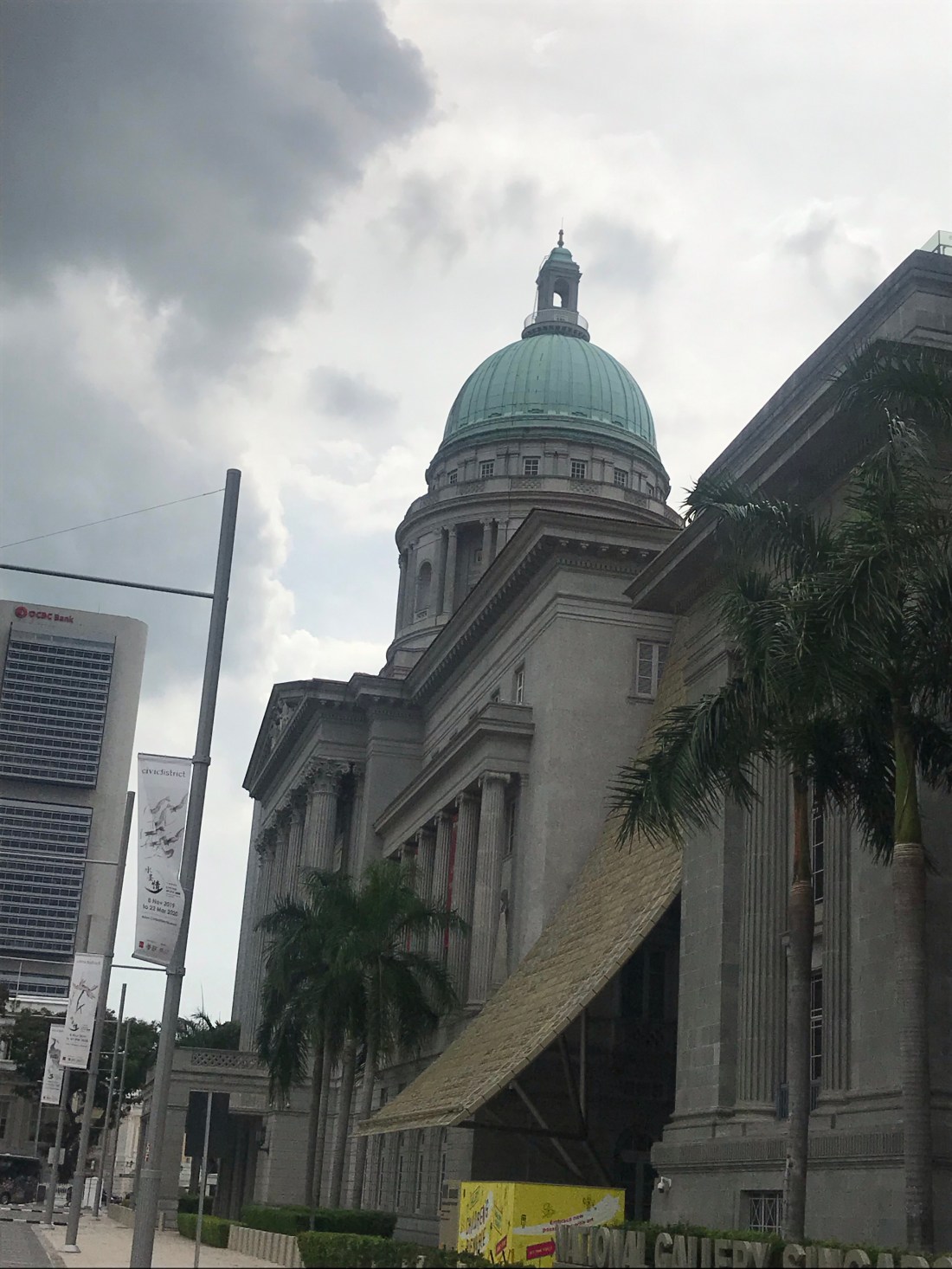
In the National Gallery, I saw more political art than I’d ever seen before. Including one arresting picture of a young North Vietnamese woman going to war with a rifle slung over her shoulder. And many woodcuts and paintings of workers struggling to scratch a living, or banding together in groups to organise resistance to whatever force was occupying their country at the time (the art was from countries throughout Southeast Asia).

I also saw the positive influence of western art techniques and styles through the colonial era and beyond, alongside the strong ability of local artists to delve into their ancient artistic traditions, using old techniques and materials really effectively alongside the new.

Looking at art is a meditative process for me that makes my brain feel cleaned somehow, and opens my mind to new thoughts and ideas. It’s such a gentle and quiet thing to do. I love it!
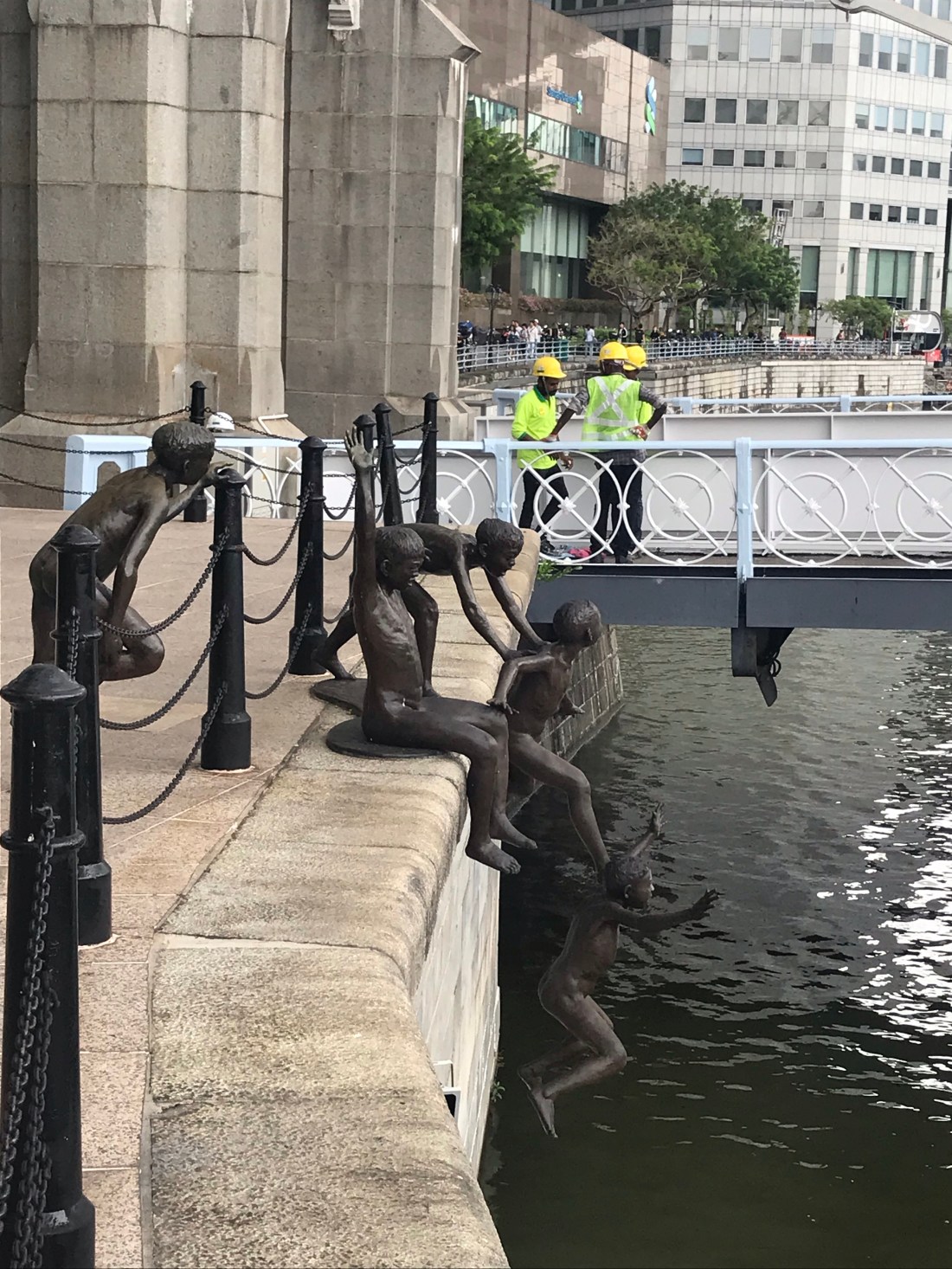
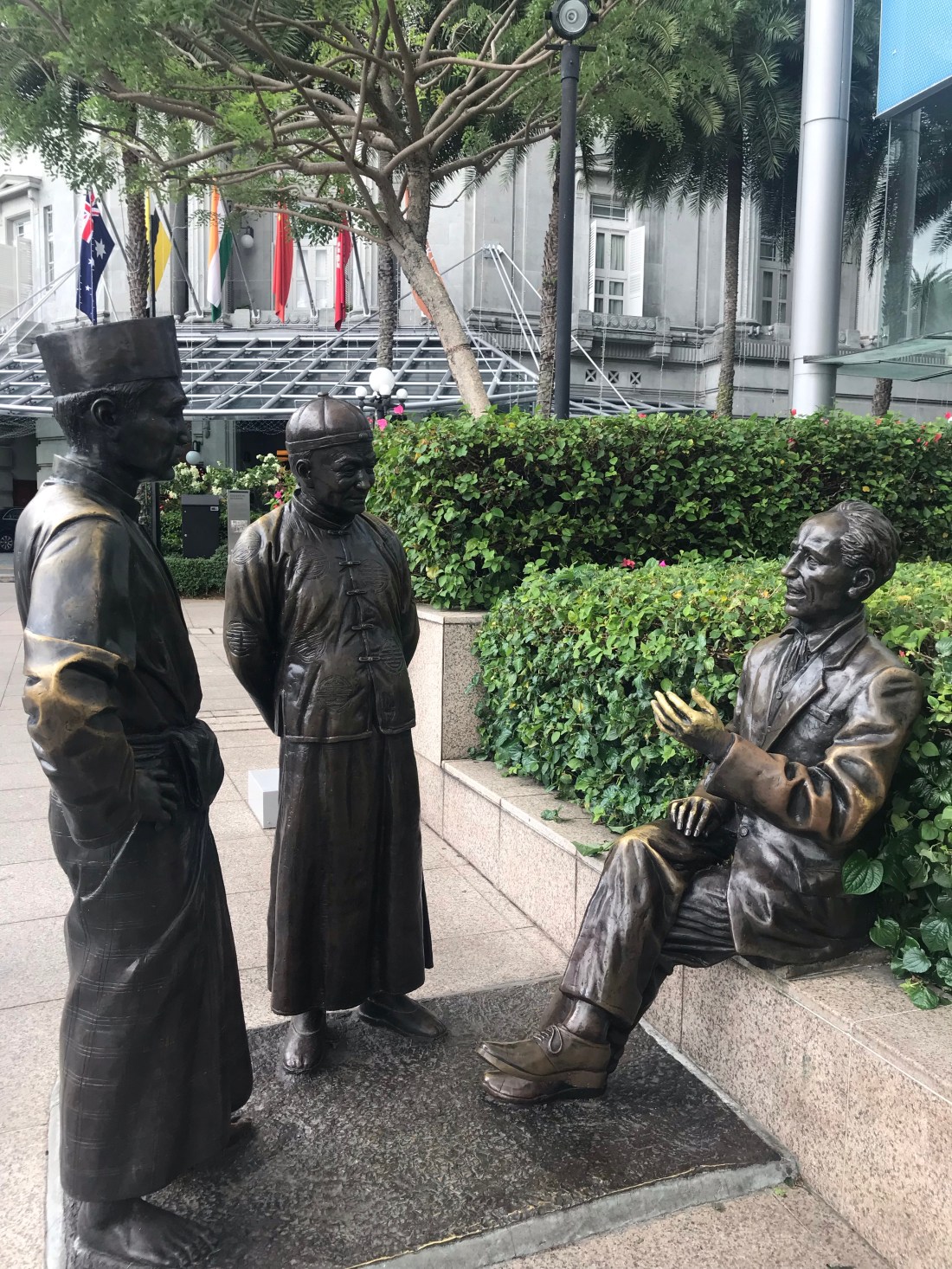
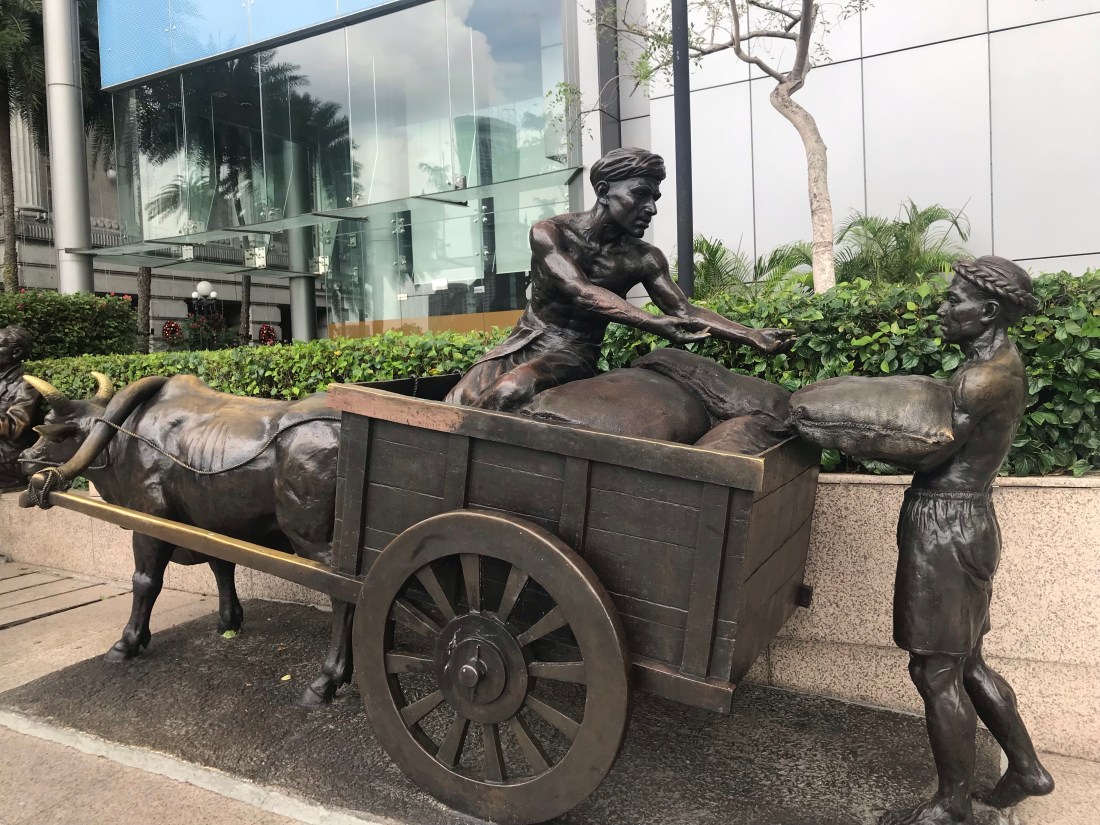
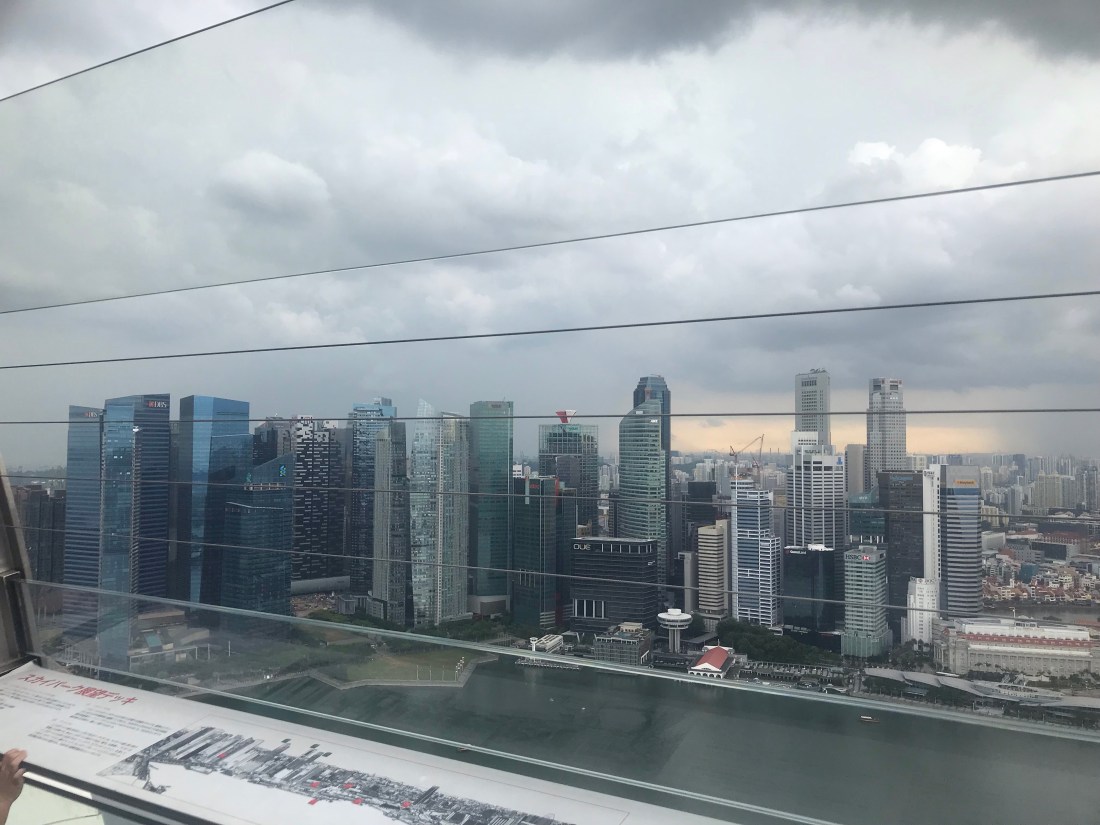
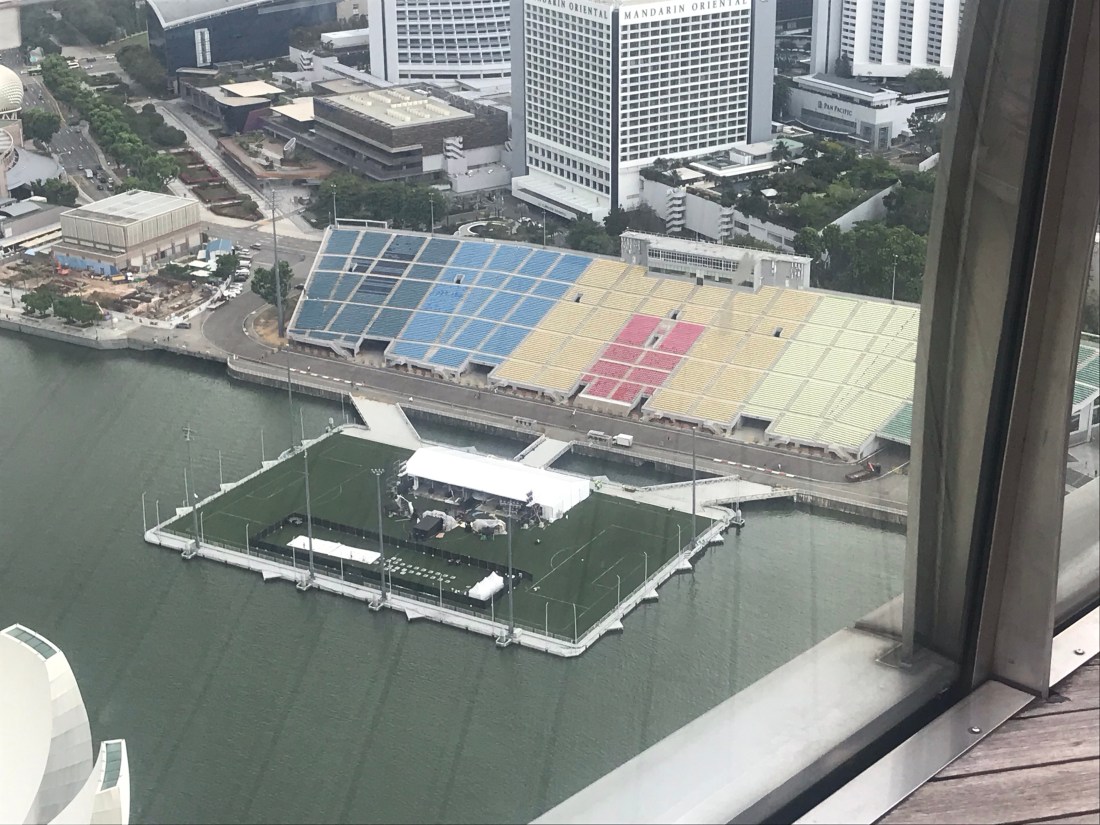
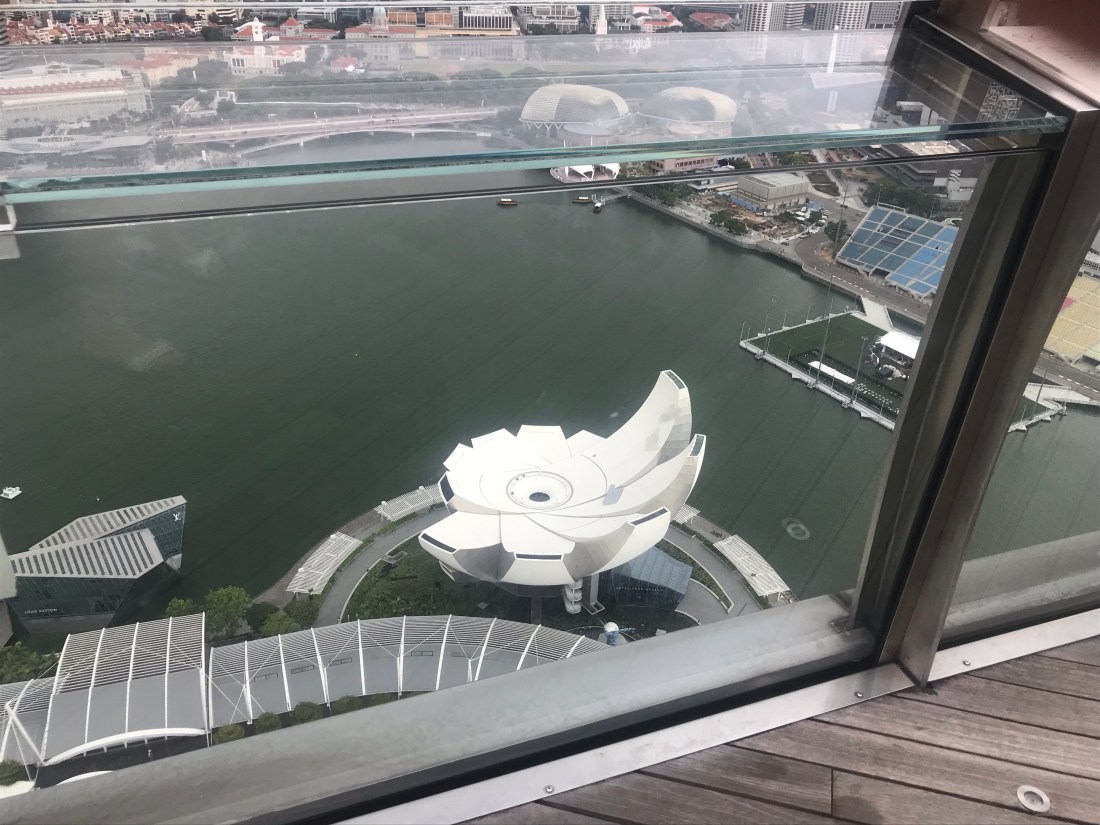
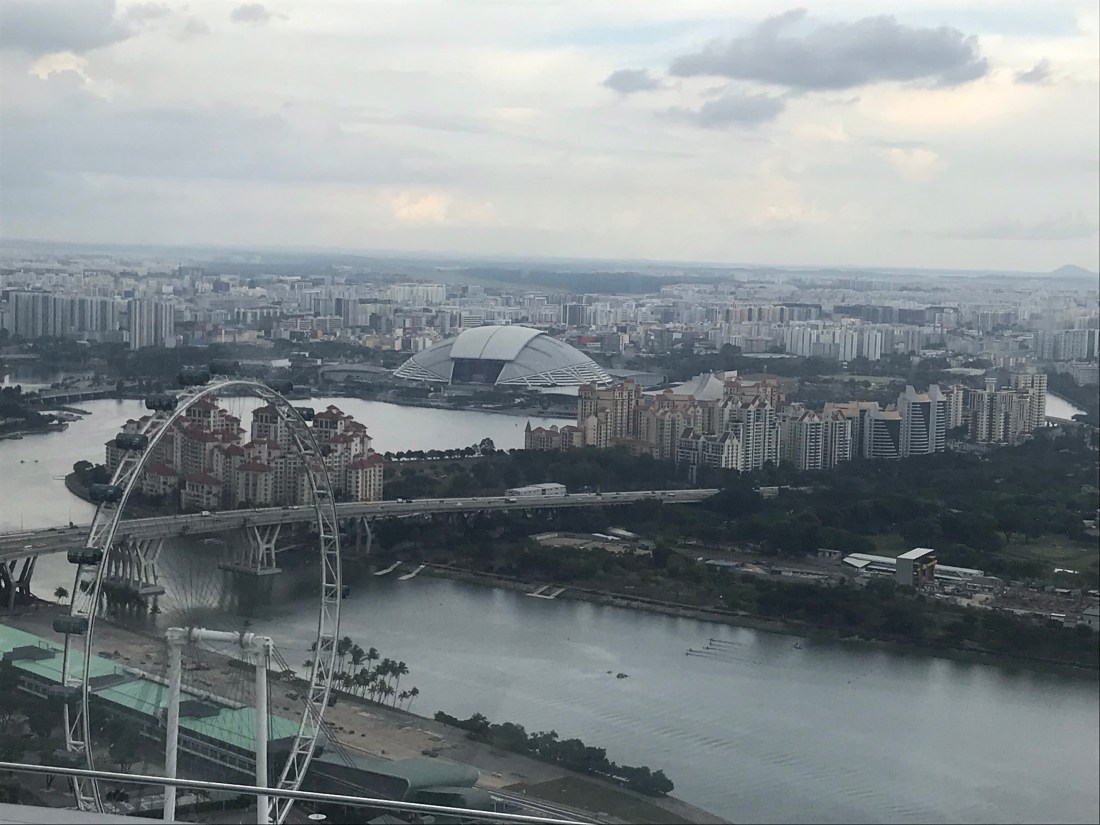
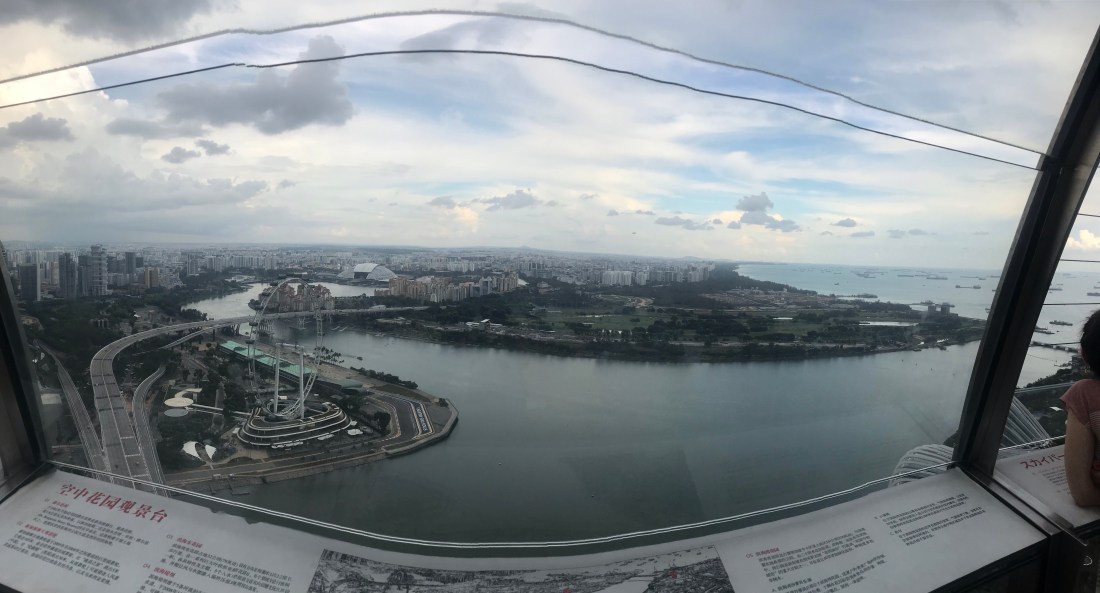
After lunch I explored more of the political statues by the river, and then went up to the Marina Bay Sands observation deck for the obligatory high up view over Singapore.

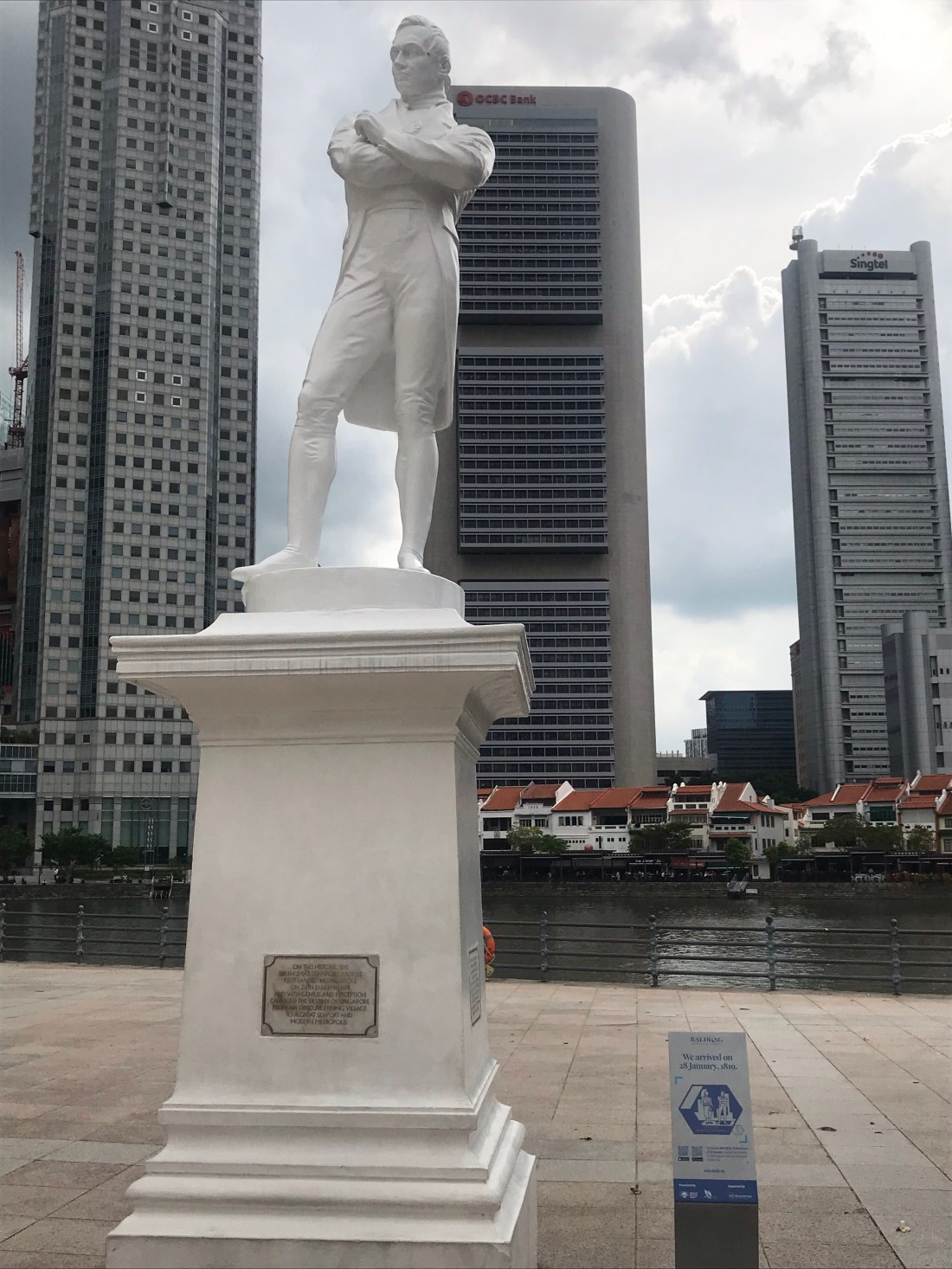
Here’s Stamford Raffles, on the site where he first landed in Singapore to “found” it in 1819:
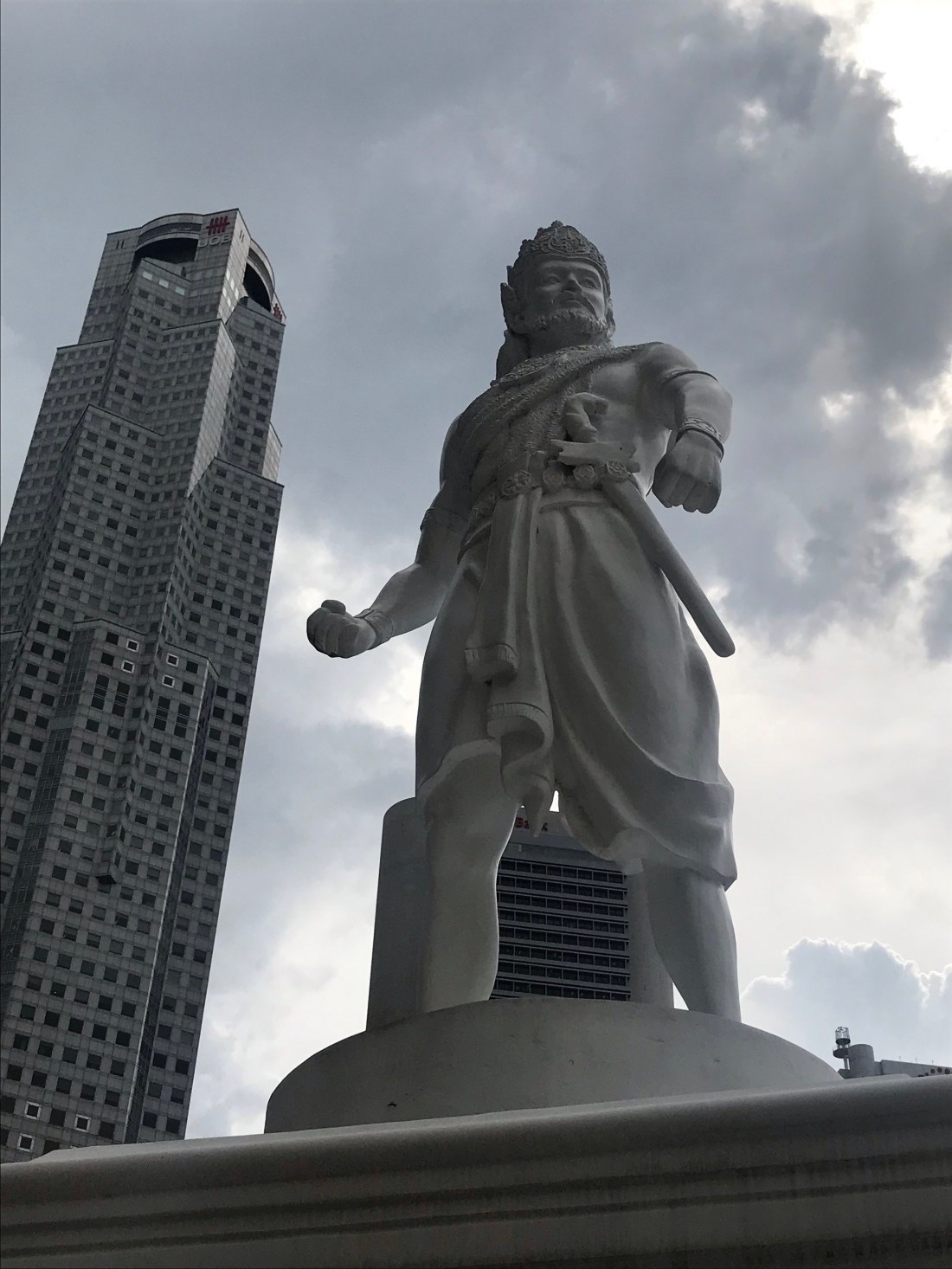
But here’s one of the many previous arrivals, a Palembang Prince called Sang Nika Utama, said to have arrived in 1299, founding the flourishing port city of Singapura (“the lion city”), named after a vision he had of a creature here:
Here’s Den Xiaoping:

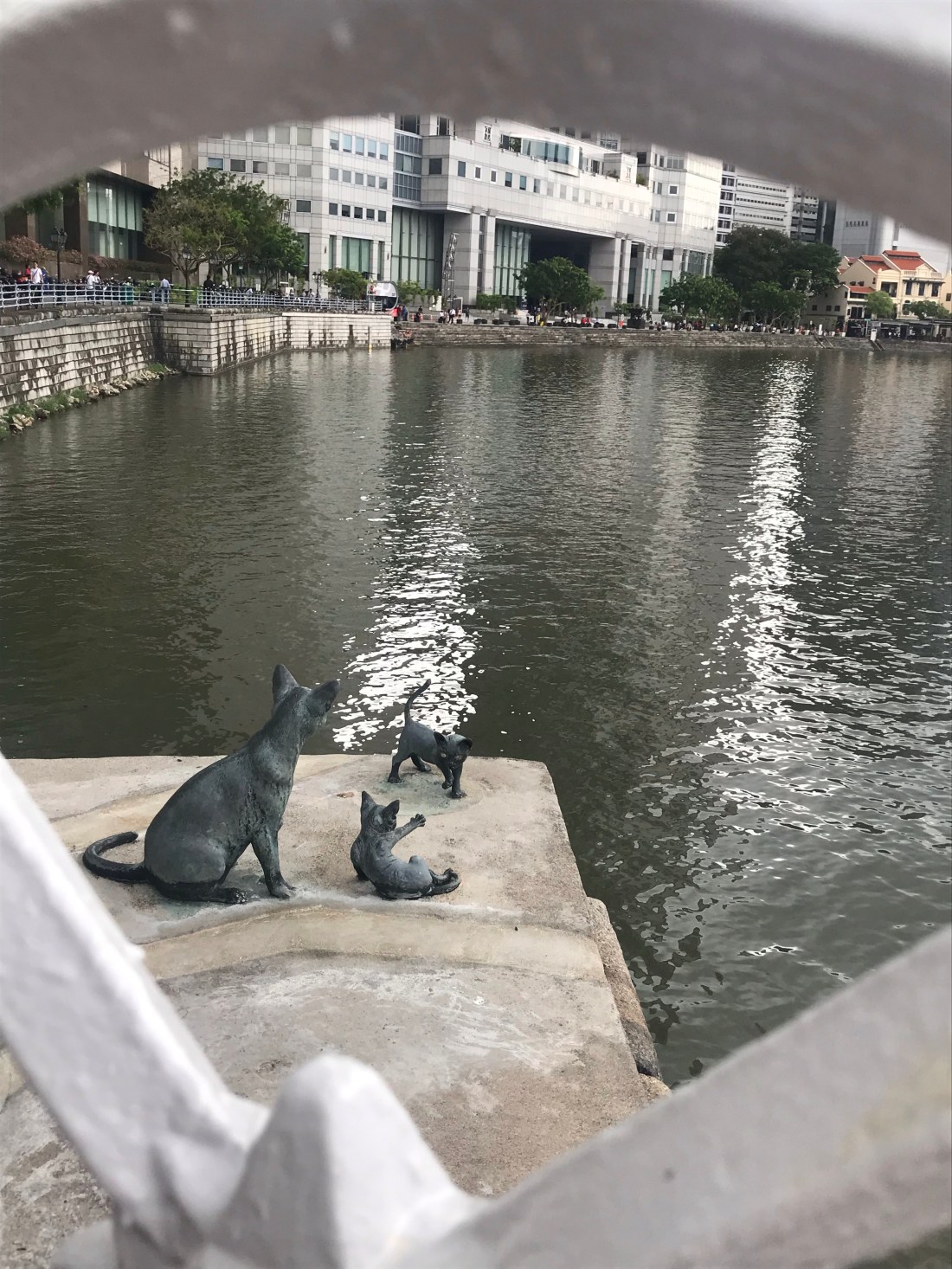
And some other more everyday statues near the river:
Marina Bay Sands (What is it? A posh hotel? A mall? A corridor? A boat ride? A posh dinner? An MRT station? A casino? A garden? A collection of water features? A spa? A “sky park”?):
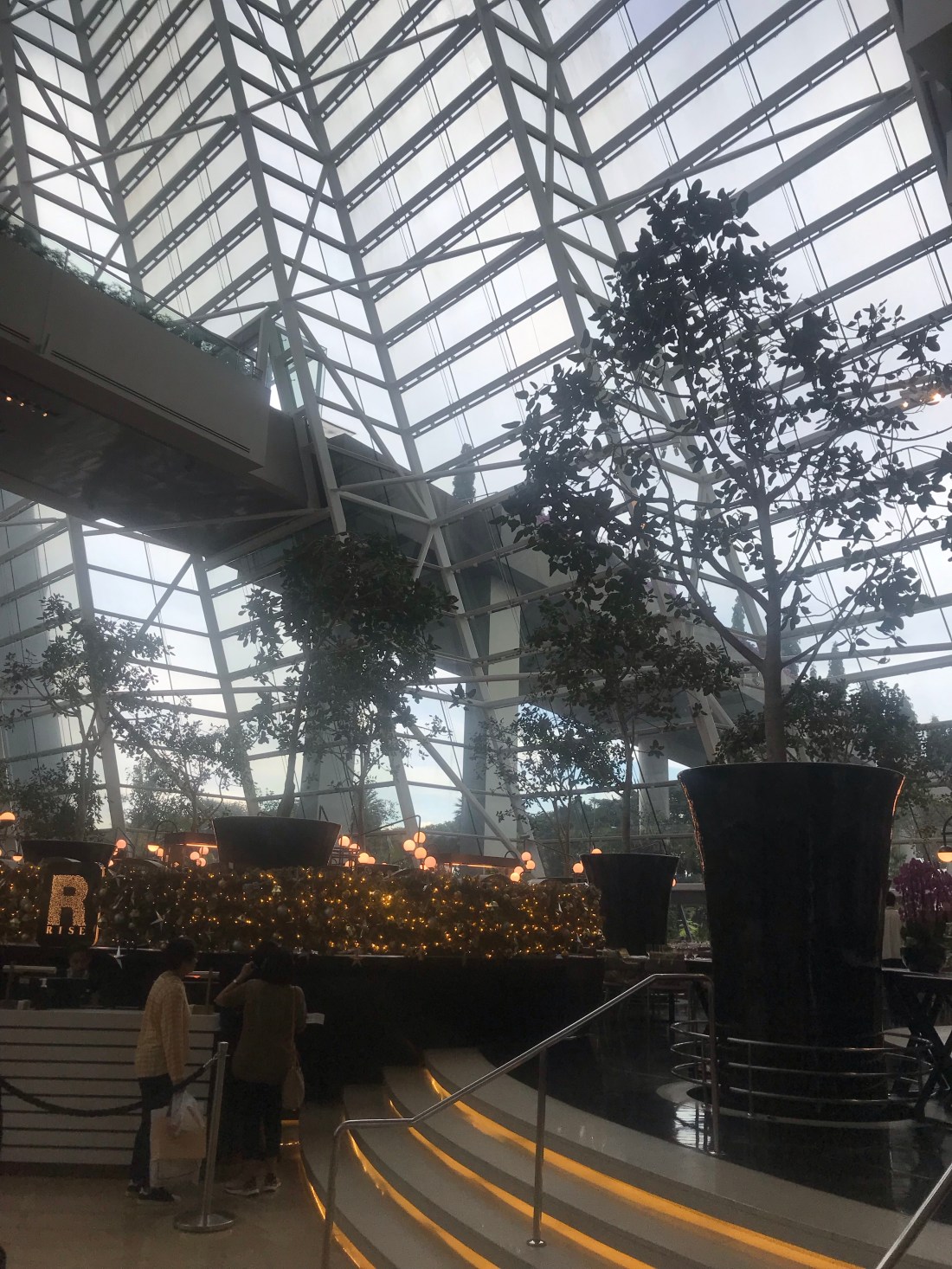
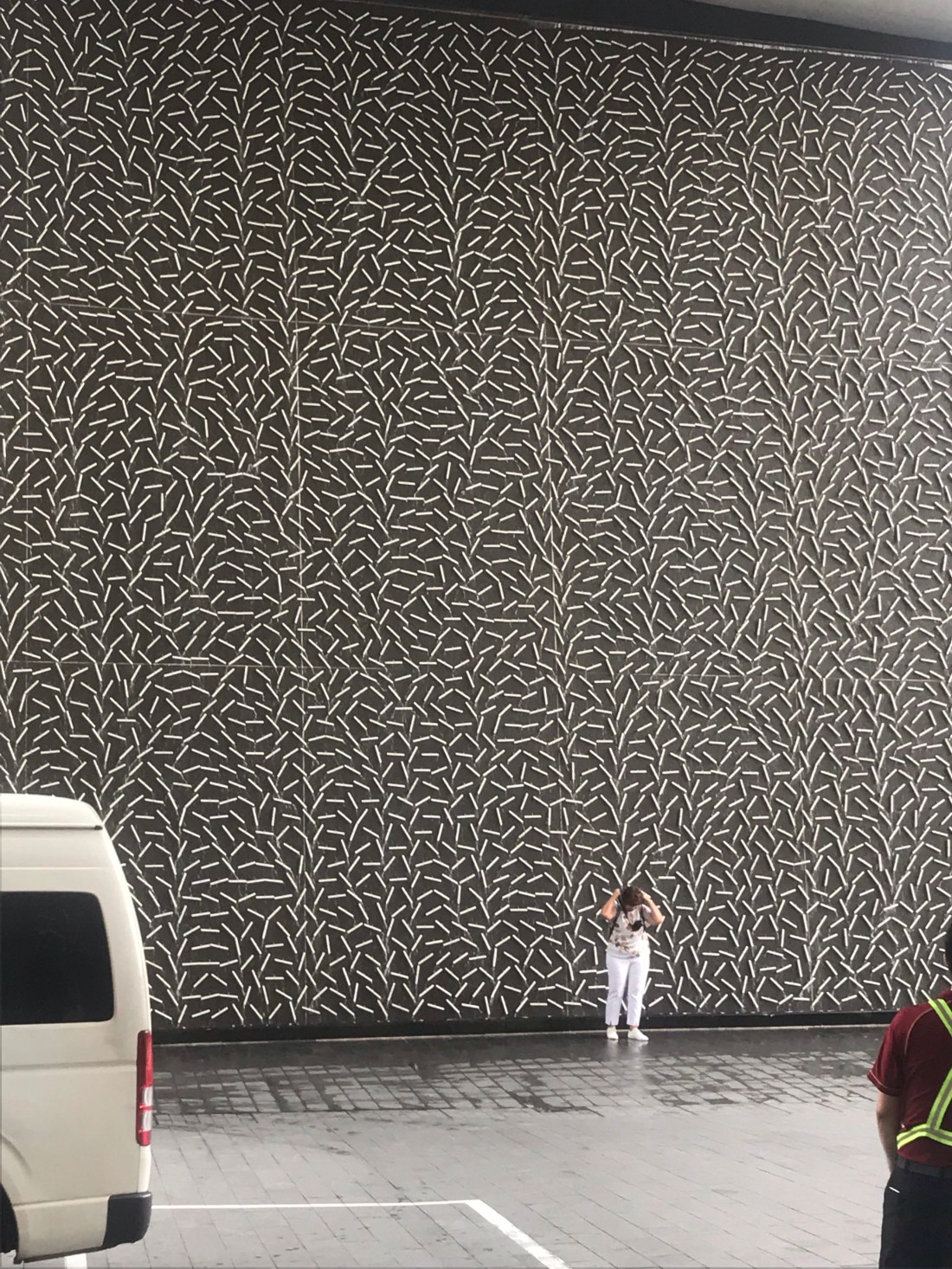
Water ran down this huge wall, moving the metal bars back and forth:That tiny white steeple in the distance just behind the two durian shaped dome things is the cathedral!:
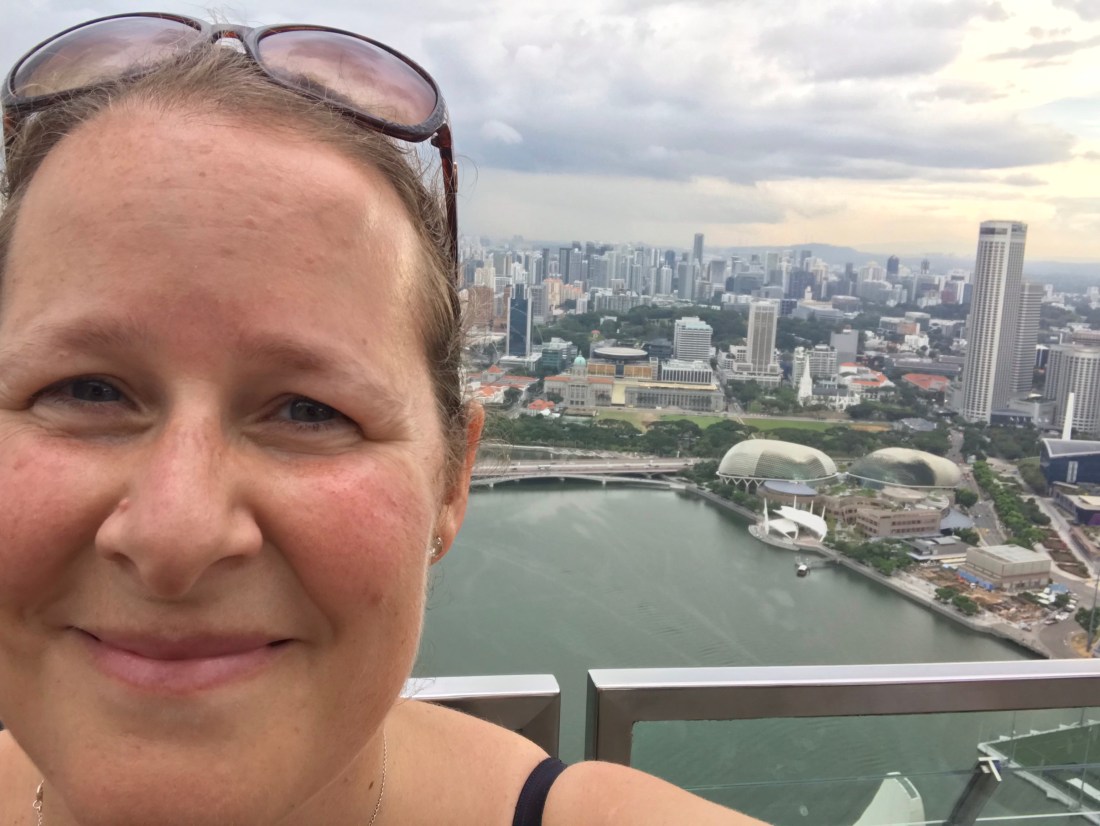
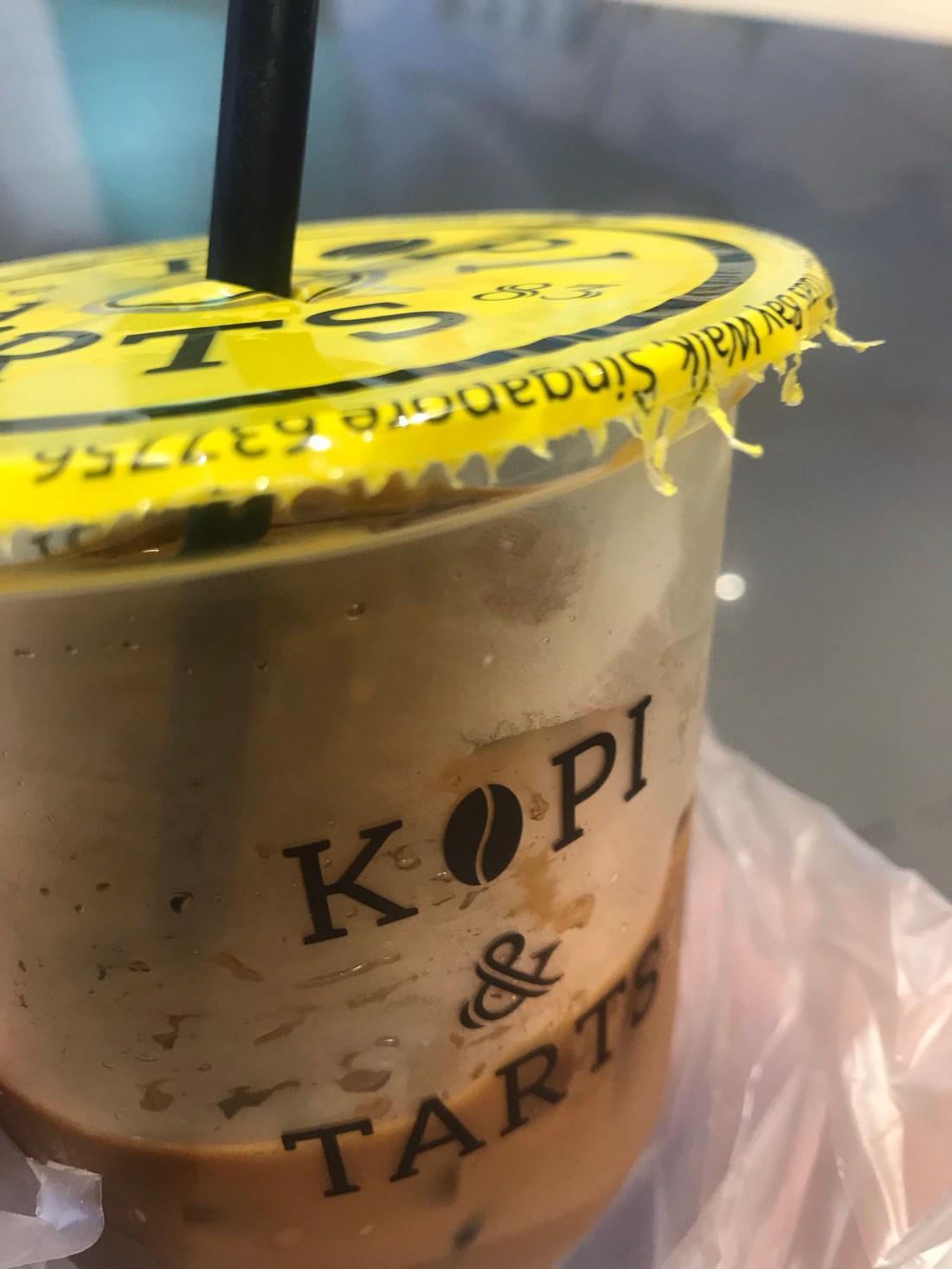
From this point I somehow got stuck in a shopping mall. I still can’t remember why I went in there in the first place. Ah yes- looking for this👇🏼(Singaporean coffee made with condensed milk, that I’d not tasted up until this point. I asked for it to be less sweet, and it was surprisingly refreshing). And a sit down with air conditioning. Then I couldn’t find my way out to the MRT. (A common experience the malls are all so huge.) Eventually I extricated myself.
Hop on hop off

The rest of the day, I mainly stayed on the different bus routes admiring the city from different angles. In the course of which I found out the following things…
Land

Singapore has reclaimed 8000 football pitches worth of land from the sea in the last few decades. This is how Beach Road lost its beaches. In this way, the land surface area of Singapore has increased 25% in the last thirty years or so.
Transport

In Singapore, you need a certificate of entitlement if you want to own a car. I’m not sure how you gain one (I gather it costs something like $SGD 80000, about £45449 according to Wikipedia😳) but the number of certificates issued each year is closely controlled to avoid congestion on the roads. Certificates are only valid for 10 years. (Hence there are hardly any older cars on the road and Singapore is one of the biggest exporters of used cars.) And the tax on the purchase of cars is more than 100%! The more you drive, the bigger your engine and the more congested it is on the routes you drive on, the more tax you pay. All these are measures to deter car ownership and prevent congestion on what is after all a fairly small island. According to Wikipedia again, only 12% population own a car.

The government has also invested heavily in Singapore’s public transport system. The MRT (tube) is driverless, spotless, always punctual, rarely breaks down and remarkably easy to navigate around (even if like me you’ve very little sense of direction), and tube and bus fares are really low. Why would you bother owning a car? On the occasions when you want to go somewhere a bit off the bus or tube routes, or to get somewhere in a hurry, you can take a taxi. And there are marked and numbered pick up points all over the place for taxis, so it’s easy for them to work out where you are, even if you haven’t got a taxi app with location settings turned on.

One of the reasons why the MRT is such a pleasant experience is because you’re not allowed to eat or drink on it (and very few of the stations have food places in them), and everyone obeys the “waiting for everyone to get off before you get on” rule, and obediently stands in the correct spot. Also, the seats nearest the doors are a different colour, and “Stand up Stacey” (a cute cartoon character) encourages everyone to offer them to elderly people, pregnant women, parents with young children or anyone disabled or who looks like they really need a seat.

I must admit, I’ve had to concentrate quite hard to remind myself not to have a sip of my water while I’ve been on the tube or waiting at the station.

When I first arrived, Shiv coached me in MRT etiquette, noticing I was standing on the right of the escalator. She said in mock seriousness, “Here, we are a left standing nation”. Every time I get on an escalator, I remember her saying that! 😂

Someone posted on Facebook the other day an article about how Luxembourg is making all public transport free, in an attempt to reduce car ownership, congestion and all the associated environmental evils that come from it. I wonder if they’ll also follow some of Singapore’s other measures? And I wonder whether we will ever get a government in the UK who will be brave enough to make these sort of policy decisions in the face of climate change, and also the reality that congestion from road traffic is seriously slowing us down now.

Hospitals and “Medical tourism”

This is the Raffles private hospital (both buildings) made famous in 2003 for the first attempt to separate two adult conjoined twins joined at the head. Unfortunately the attempt failed despite the vast resources used to try and bring it off:

Apparently, about half a million foreign patients are catered for in Singapore annually. “Medical tourism” accounts for about 68% patients treated here at any given time.

How the other half live

Here’s the Park Royal hotel with much greenery:

And Marina Bay Sands Hotel (the building at the back below), replete with observation deck, huge swimming pool and garden on top (and one of the casinos inside):

The condos near Orchard Road (a road lined with very posh shops and malls like Oxford Road) apparently sell for $US6 million!!

Whereas a typical HDB (social housing) flat (lived in by about 80% of the population) will set you back $SG250000-350000. Most people get them on a 99 year lease.

Gambling

Apparently (dubious honour) Singapore’s two casinos make $US 6 billion annually, making it rank among the top few countries for revenue generated by casinos. Las Vegas makes a lot more. The difference being that Singapore has only two casinos, whereas Vegas… well.

I think it’s also worth noting that Singaporeans have to pay a pretty steep fee ($SGD150 £85) to get into a casino here, whereas foreigners walk in free. The reason being that there have been so many problems with gambling historically, particularly among the Chinese population, that the government has decided to try and dissuade its own citizens from engaging in it (while encouraging foreigners to spend as much as possible, of course! Fair play to them).

Other sights of interest:

The footbridge modelled on DNA structure

Chinatown

Today, I decided to take the hop on hop off bus tour around the different areas of the city.

I hopped off at Chinatown to have a look around the acclaimed Chinatown Heritage Museum, which is an excellently put together place, offering well researched stories of Chinese people – how and why they came to Singapore in the first place, and what their lives were like in the 1800s and then later in the 20th century too.

Chinese people make up the vast majority of the population in Singapore (over 70%), then Malay people (now under 20% though the Malay people were here before most others, so Malay is actually the national language of Singapore) and then Indian people (under 10%), then people of other ethnicities.

The Chinese people mostly arrived in Singapore from the 1820s onwards (until the First World War, then again after it), having left China in desperation to try and find a better life and a way of earning money to send back home to their poverty stricken families. Quite a lot of people didn’t survive the gruelling voyage to get here. And those who did survive, found that conditions here were not ideal as they’d been led to believe. But they were grafters, who worked incredibly hard in really tough conditions in order to make enough money to survive and then to send some back home as well.

The heritage museum is set up in a series of old shophouses (shops with living quarters at the back and above the shop). They have placed historical artefacts in all the rooms to show what life would’ve been like. There was loads to look at. Here’s just a tiny taste.

Tailor’s shop:

The back of the shop where the apprentices did a lot of the leg work, including looking after the shop owner’s children and running errands for his wife, who cooked for everyone:
This is the bedroom/living area for the tailor’s apprentices. Probably something like 8 of them slept here and lived here when they weren’t working until the shop or running errands!

This is the room of the master tailor of the shophouse, who rented out all the upstairs rooms too. He and his wife and their children lived in this space. This was the most spacious of all the bedroom/living areas in the entire building!:

And this is the kitchen, where the tailor’s wife cooked meals for her family and also all the apprentices. I think the information said she was probably cooking for about 15 people every day. Apprentices got paid a pittance but their food and lodging was supplied:

The upstairs of the shophouse demonstrates something called “cubicle living” and was the really shocking part of the whole museum.

A family of 8 lived in this space. Yes, 8. 2 parents and 6 children.

The upstairs kitchen and shower and toilet area. Shared by about 40 people altogether. Oh my:

The hawker’s home. She lived here with her husband and two children. She would have got up at something like 4am to prepare all the food she would sell in that tiny kitchen before anyone else was up and about. Then she’d load it up on these two baskets (you can probably see one of them in the picture below) hung off the ends of the bamboo pole along with plates and chopsticks/spoons for people to use while they ate it. There are two pails on either side hung underneath the baskets that she’d fill with water from a public standpipe near where she was selling the food, for washing all the plates so they could be reused. Then she’d shoulder the bamboo pole and cycle to the location where she was selling the food. No wonder a lot of these people suffered with back problems:

A clog maker’s:

A physician’s home and area to practise medicine. The museum had a series of interviews with one of his daughters, where she described how she and her two siblings and mum and dad all slept on a mat on the floor of this cubicle. She said in those days people were skinny and short so it wasn’t really a problem. Hmmm. This was by far the most spacious of the upstairs cubicles (physicians being relatively well paid even then, although this guy offered free treatment to anyone too poor to be able to afford it). But… how does your dad see patients with three kids and a wife in this space too??

The rest of the museum talked about the vices people indulged in in order to numb the pain of their exhausting existence (namely, opium, gambling and prostitution), and the secret societies that prospered rather dubiously from them. Then it looked more positively at the social clubs and institutions that formed within the different Chinese families that actually were the first to establish systems of welfare, schools and hospitals for the ordinary people.

And then it depicted a few of the streets as they would have been, including the “Street of the Dead”, where people who had no family in Singapore would go to die. As it pointed out, this nation was built on the backs of many of those people. There was a space set aside for quiet reflection about that.

Apparently one guy who grew up on this street turned out to be a child prodigy on the violin, and ended up living in Manchester (about an hour from where I live in the UK) and from 1980-1996 playing lead violin for the Hallé Orchestra (the orchestra the choir I sing in most often performs with)! What are the chances of that???

Also they depicted the hawkers selling food, letter writers (most people were illiterate so had to pay to get someone to write letters home for them), story tellers, Chinese opera performances (for those wealthy enough to access them) and so on.

Here’s the delicious traditional egg custard with very delicate pastry that I had for free at the famous historical Tong Heng bakery round the corner, courtesy of the museum. It was so tasty, I must confess I tried a couple of other delicacies there in the name of research, and then bought a box of some for Jamie and Shiv and co:

The rest of my time exploring Chinatown was spent admiring street art and finding the rather beautiful Thian Hock Keng temple, dedicated to the goddess Mazu, who people worshipped particularly thankfully when they’d survived the gruelling voyage here from China. Mazu was apparently an actual person, who was an incredibly strong swimmer who did indeed save many people from stormy seas near her home in China in something like the 10th century. She was given goddess status after her death, with legends about her coming back mysteriously to save people from stormy seas still.

Shiv mentioned being at this temple one day when it was raining, and enjoying the sight of the incense smoke drifting upwards as the rain was pouring down from the roof tiles. I know, from the Chinese Garden in Dunedin, New Zealand, that these roof tiles are crafted and aligned in order to direct water in this beautiful way. Although it wasn’t raining when I was here, I could imagine what a wonderful sight this would have been, speaking perhaps something of the blessing of God raining down in response to the prayers, thanks and worship people offer.

Chinatown street art:

A family weekend

I spent a lovely weekend mainly with my friends who have been hosting me so generously and their children.

First stop: Fencing Gala competition with T, who only went and won the whole thing! But, as all the competitors (including some very small children) had to pledge right at the start, “When we win we will not be proud, when we lose we will not cry”, I had better not go on about how good she was! Anyway, good on her! I find myself mulling over the pledge, though. It’s good, and T’s opponent in the final was particularly sporting, giving her a hug and saying “well done” to her in a very genuine way.

But what happens if we’re never allowed to cry? Let me not extrapolate a whole lot of meaning from this one small thing, which is obviously mainly aimed at littlies. But I have just read The language of tears by David Runcorn, which highlights how, in rather repressed British culture, we are often not allowed to cry, or how derogatory words are assigned to crying, to try and avoid the – what – embarrassment (?) of it? And how problematic all the unprocessed griefs of our lives can become if we’re never able to properly lament them. I’m not sure whether the strong concept of shame I think I’ve heard about in Singaporean cultures might lead to similar problems.

I hived off on my own after the fencing victory to have a look around Little India. I kid you not, this was the first sight that greeted me as I surfaced from the tube station (can’t beat a bit of Bhangra – what is it about it that means it’s impossible to not smile or start joining in the dance?!):

I followed Shiv’s recommendation of the veggie restaurant Komala Vilas, where I reckon I had the best curry I’ve ever tasted (and I’ve had a lot of curries!):

After this delicious repast (during which the waiters came round twice to offer me more even though you pay up front), I wandered around a few streets, looking at street art (there is a lot) and colourful buildings and shop displays, but before long found the heat just too much, so I found a café and soaked up the atmosphere from a well fanned seat, sipping a Singapore Sling (well, when in Rome…).

There is a real man walking past this huge mural, but it’s not easy to work out which one is real and which is just in the picture at first:

Later that evening we went altogether with one of T’s friends to a restaurant to sample some really top notch Hainan Chicken Rice, which I gather is really the national dish of Singapore (well, the Singaporean version of it anyway. Best cooked by people from Hainan province in China). Eating out is really very cheap here, and if you know where to go, the food you are served is really good, even though it may be served in a place that doesn’t look like it’s up to much. I was still full from my lunch, but managed to sample something of everything. It was really delicious.

Calamansi – a type of lime juice (calamansi fruit look like limes but are sweeter and have orange flesh. The juice tasted like a type of orange to me)

Achar (chilli chutney; a delicious sweetish vinegarish chutney)

Morning glory (like spinach) in shrimp paste with other spices too.

The chicken (and some pork too), which was roasted in a delicately flavoured broth, which was then used to cook the rice. Hmmm tasty!

On Sunday, we went to church together, which felt slightly disturbingly English to me after all of those temples! (It was an Anglican Church to be fair.) It was good to be on a kind of home territory, and to be among other Christians, doing what we do. Then we piled off to a local mall to eat in the food court there and for some time to chat together with extended family and others. Then we went back for a rest, which in my case was much needed!