Gardens by the Bay

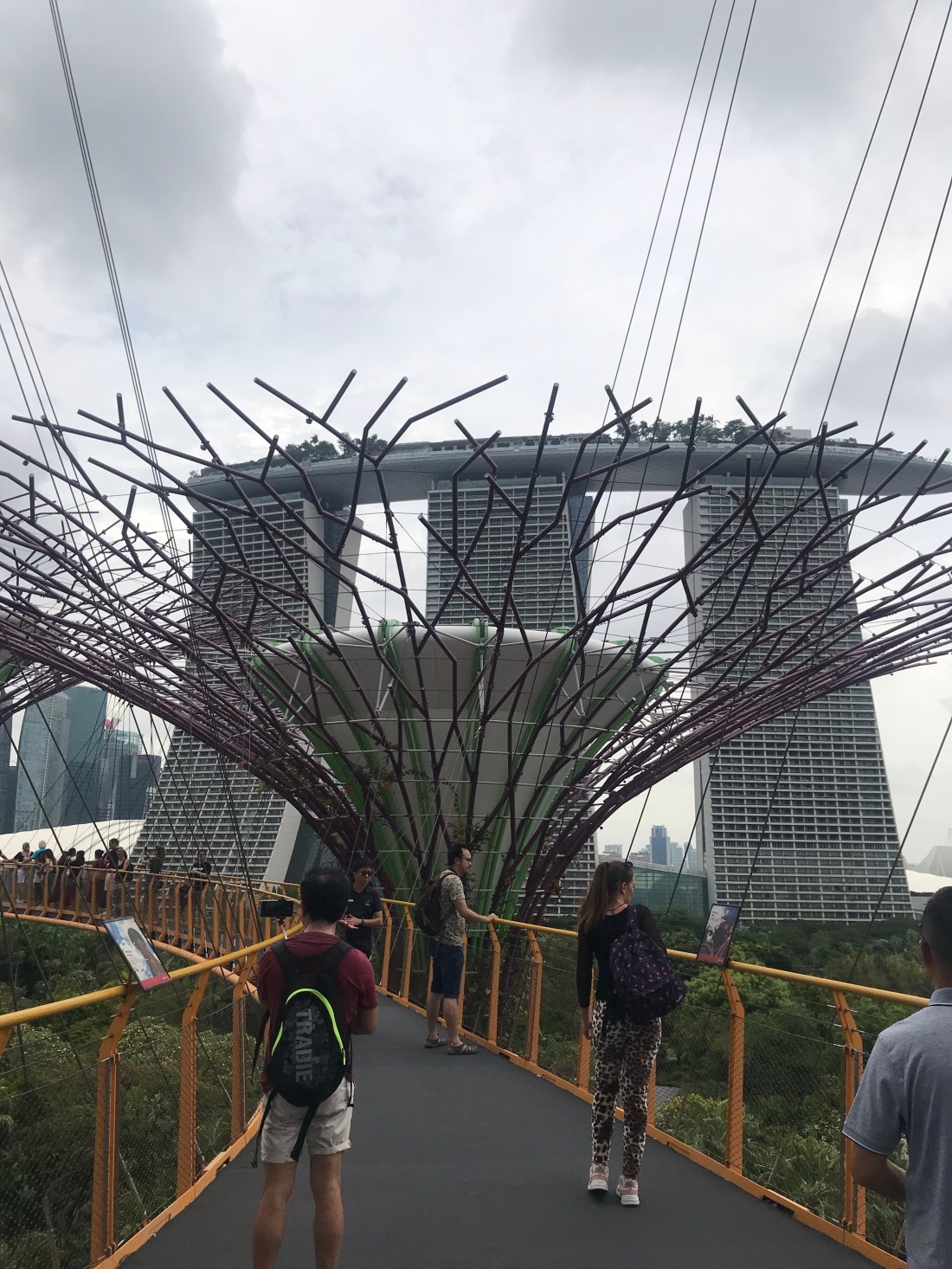
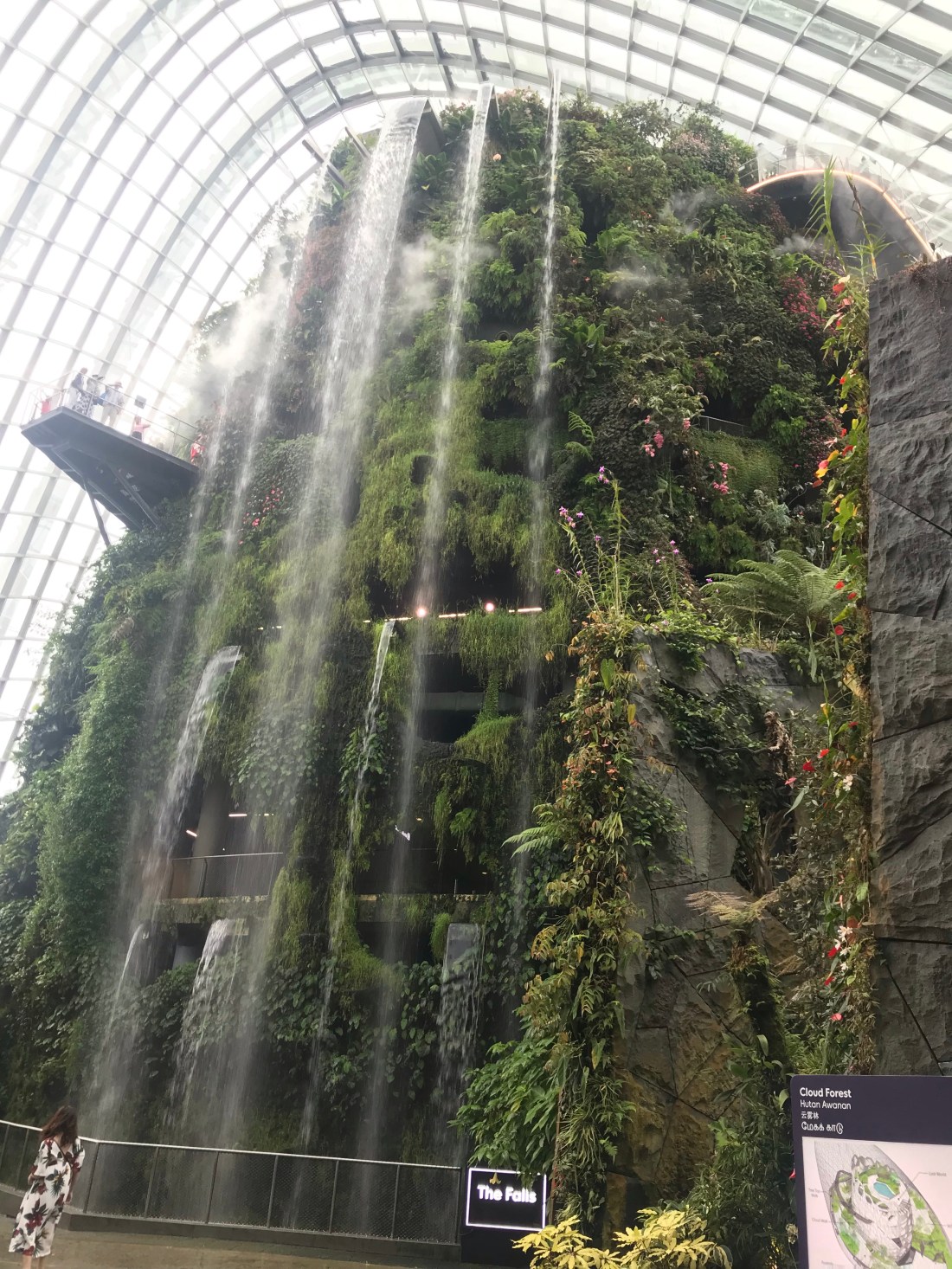
I saved the most dramatic thing until my last full day here. Not much to say, except I thought I’d done with the walking up high on stuff that’s swinging but apparently not! Soon after I’d done the Supertree “Skywalk”, I found myself in the Cloud Forest, going up yet another lift and then walking along another vertiginous narrow path, though this one was more solid feeling. I hope nothing like that awaits me in Switzerland. With practice, I think I’ve actually become more scared rather than less! (Maybe it’s an age thing?)

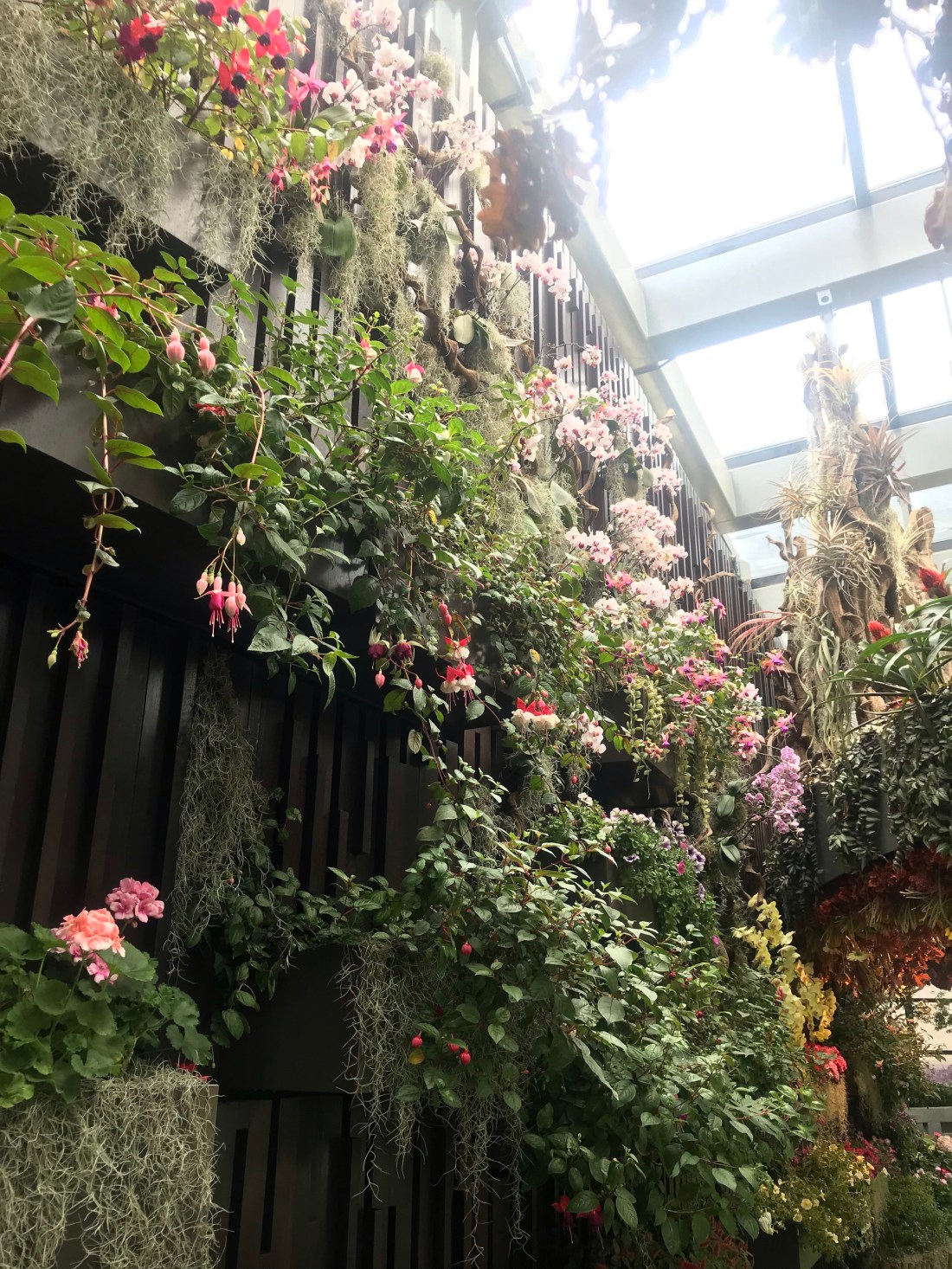
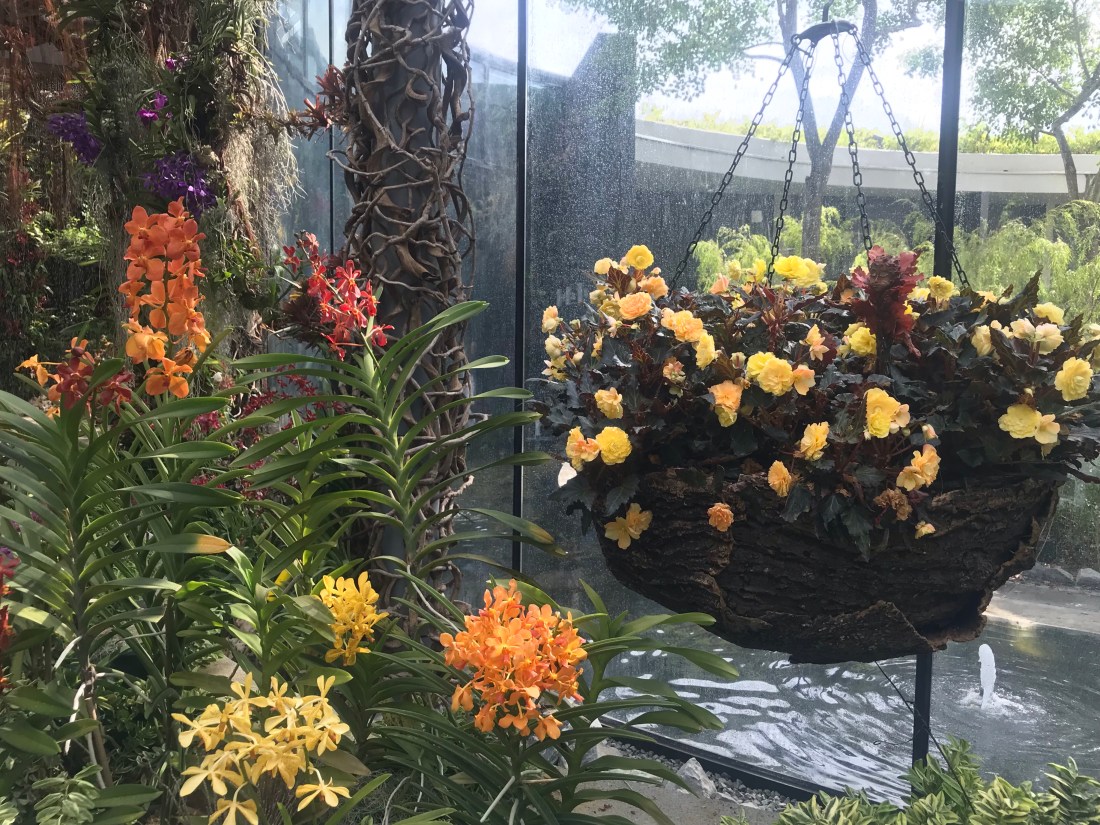
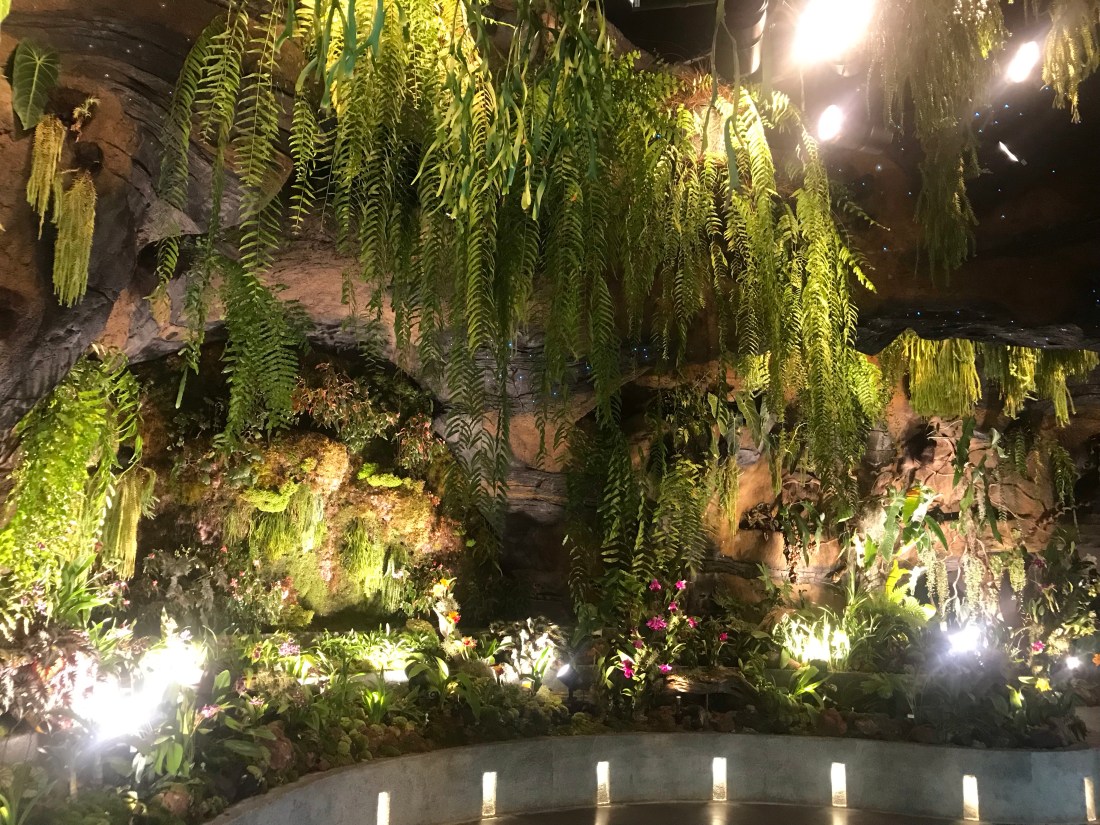
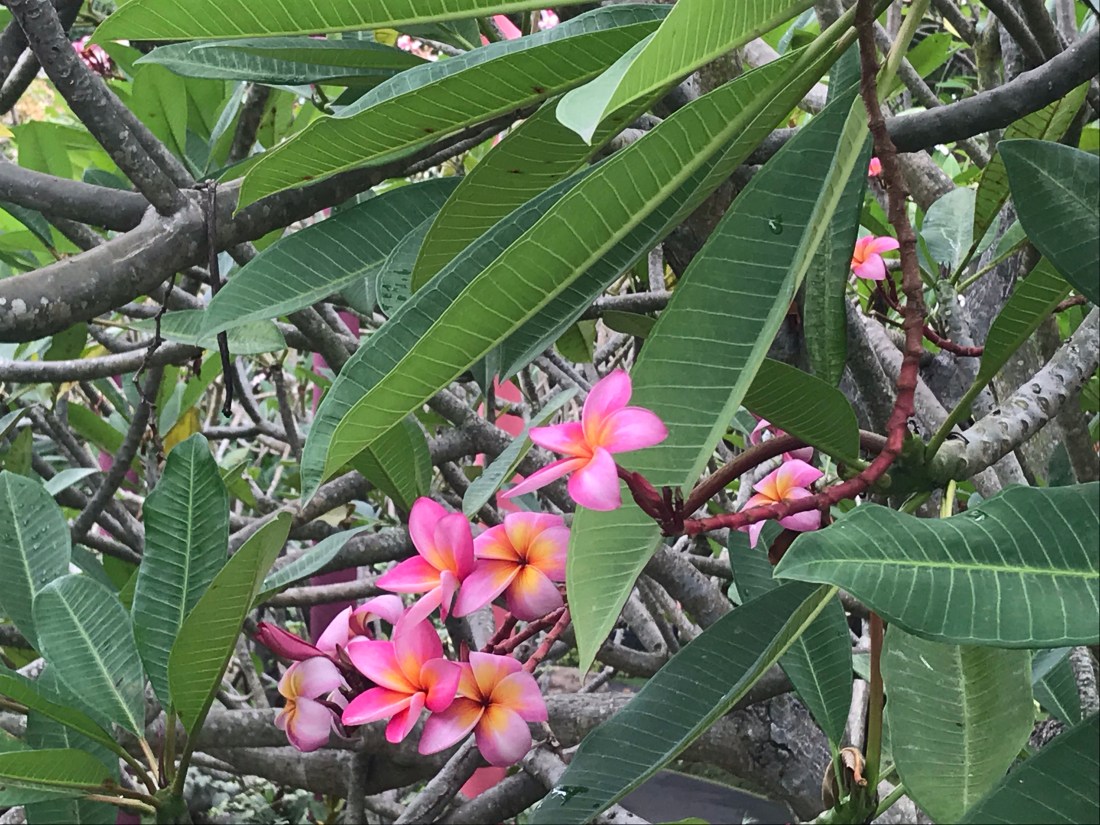
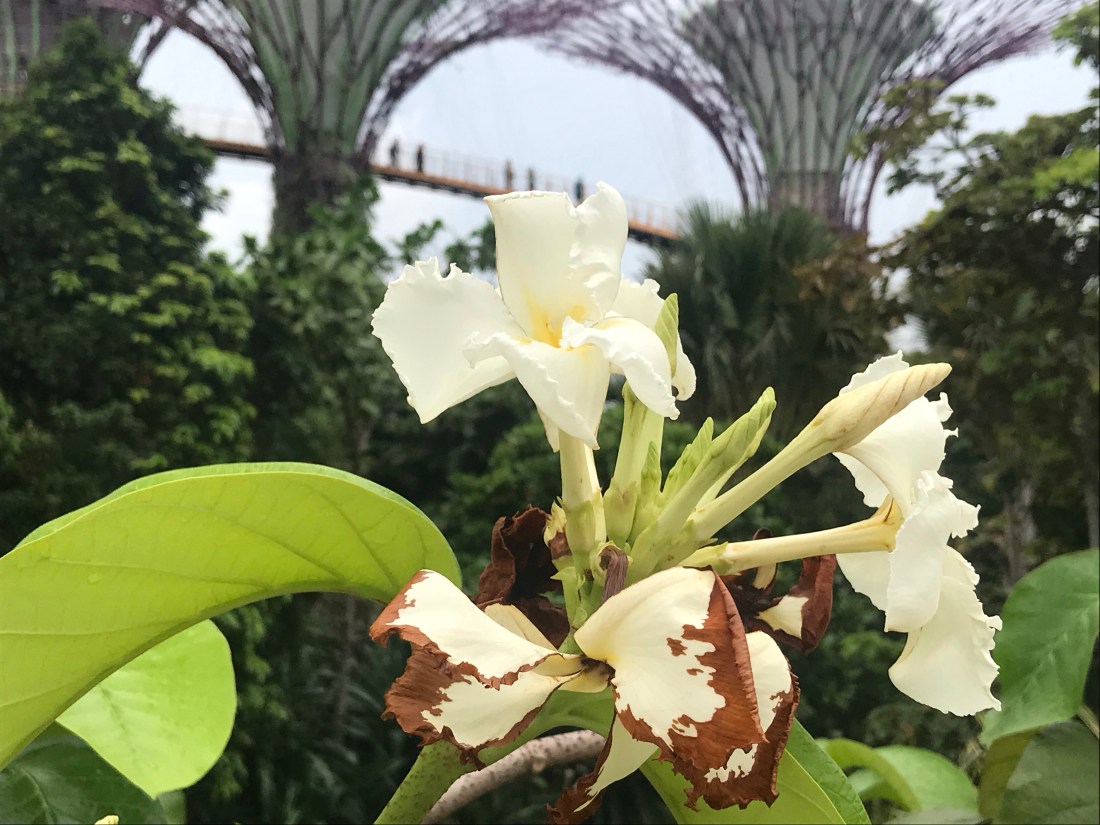
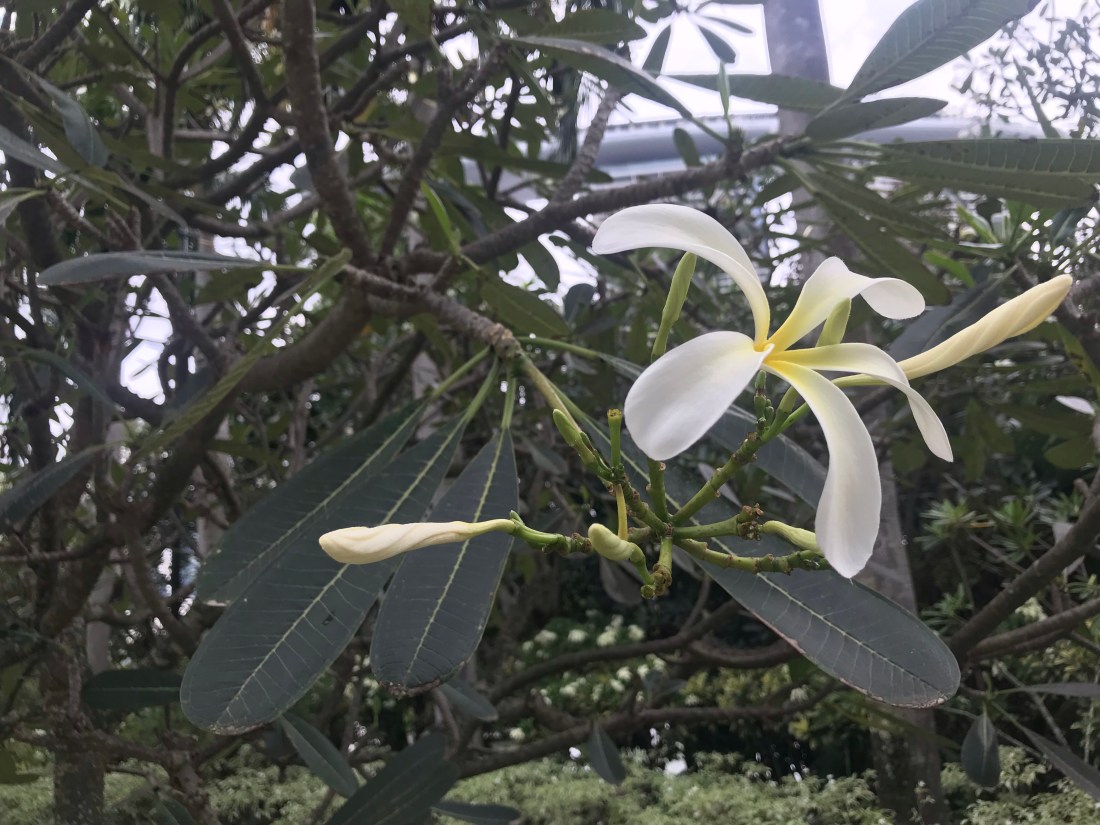
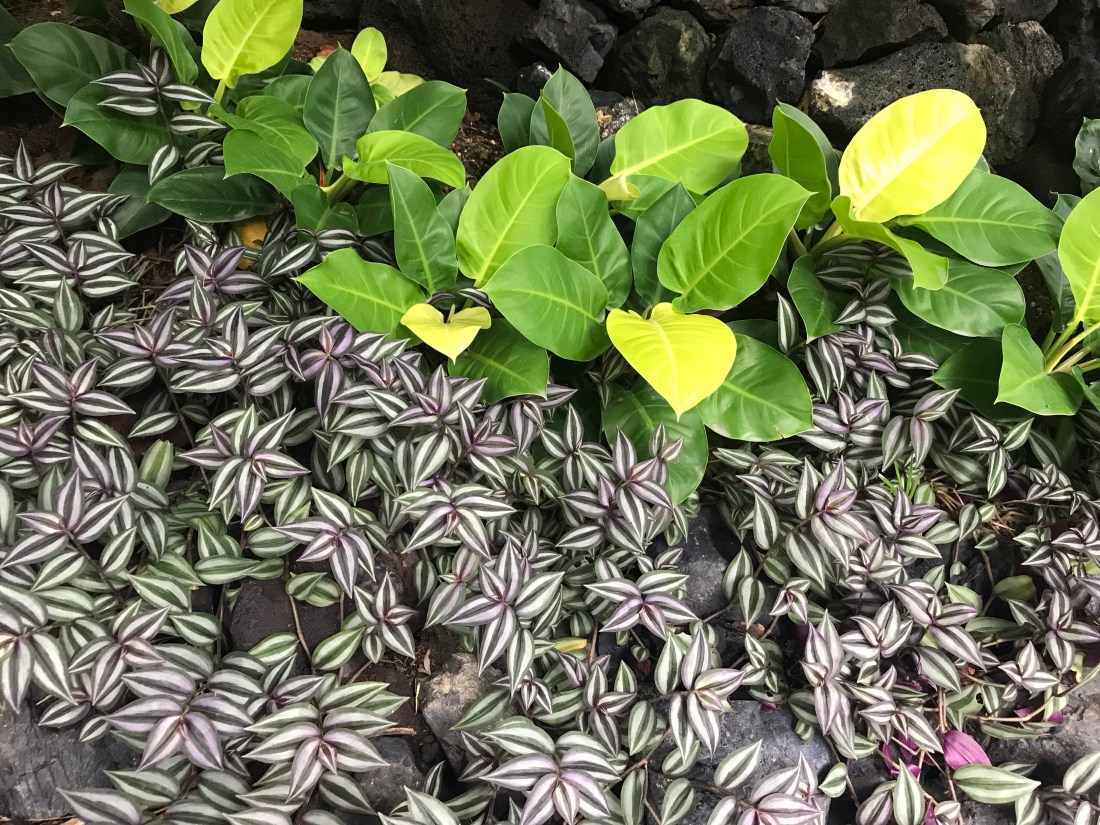
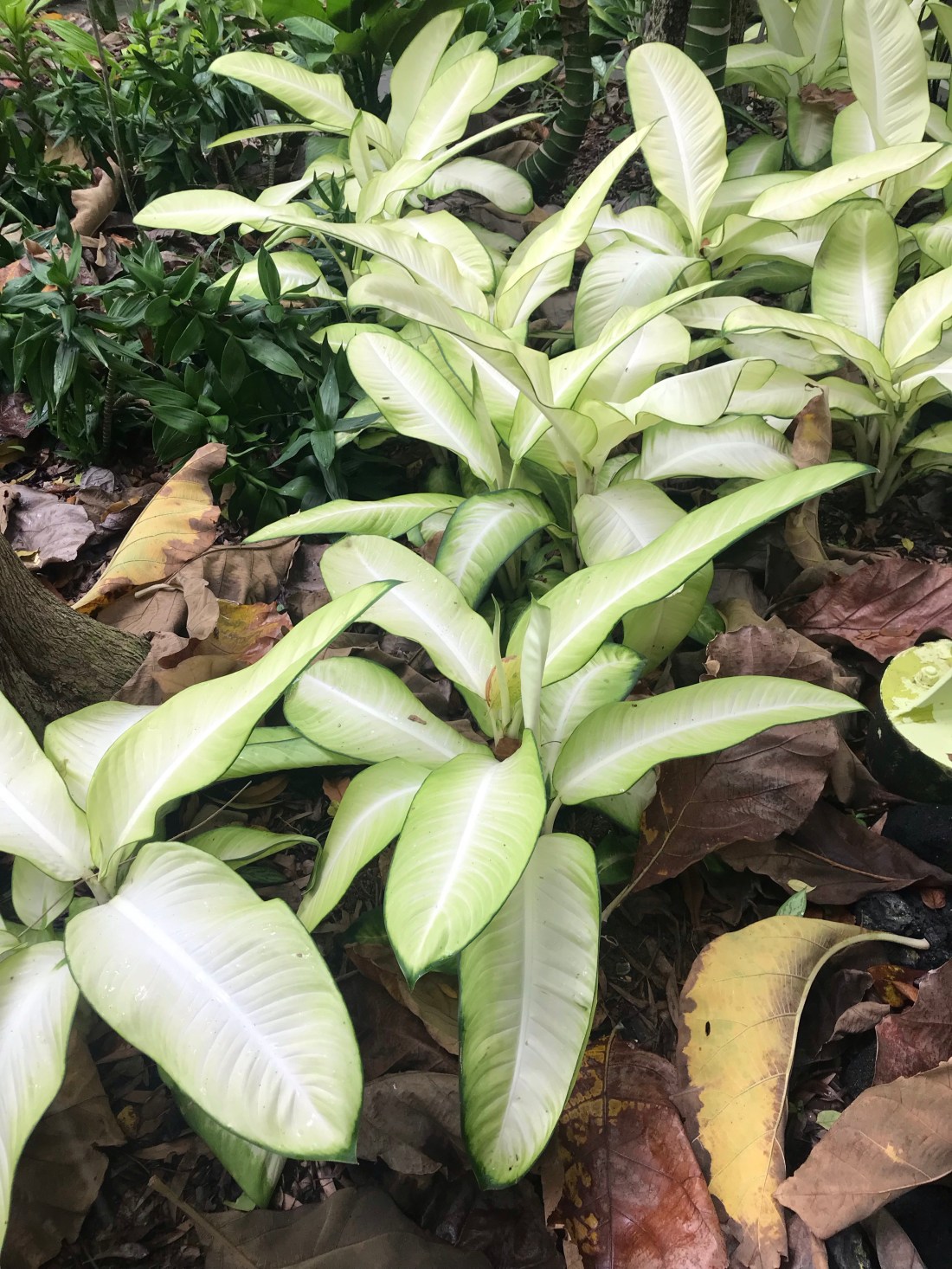
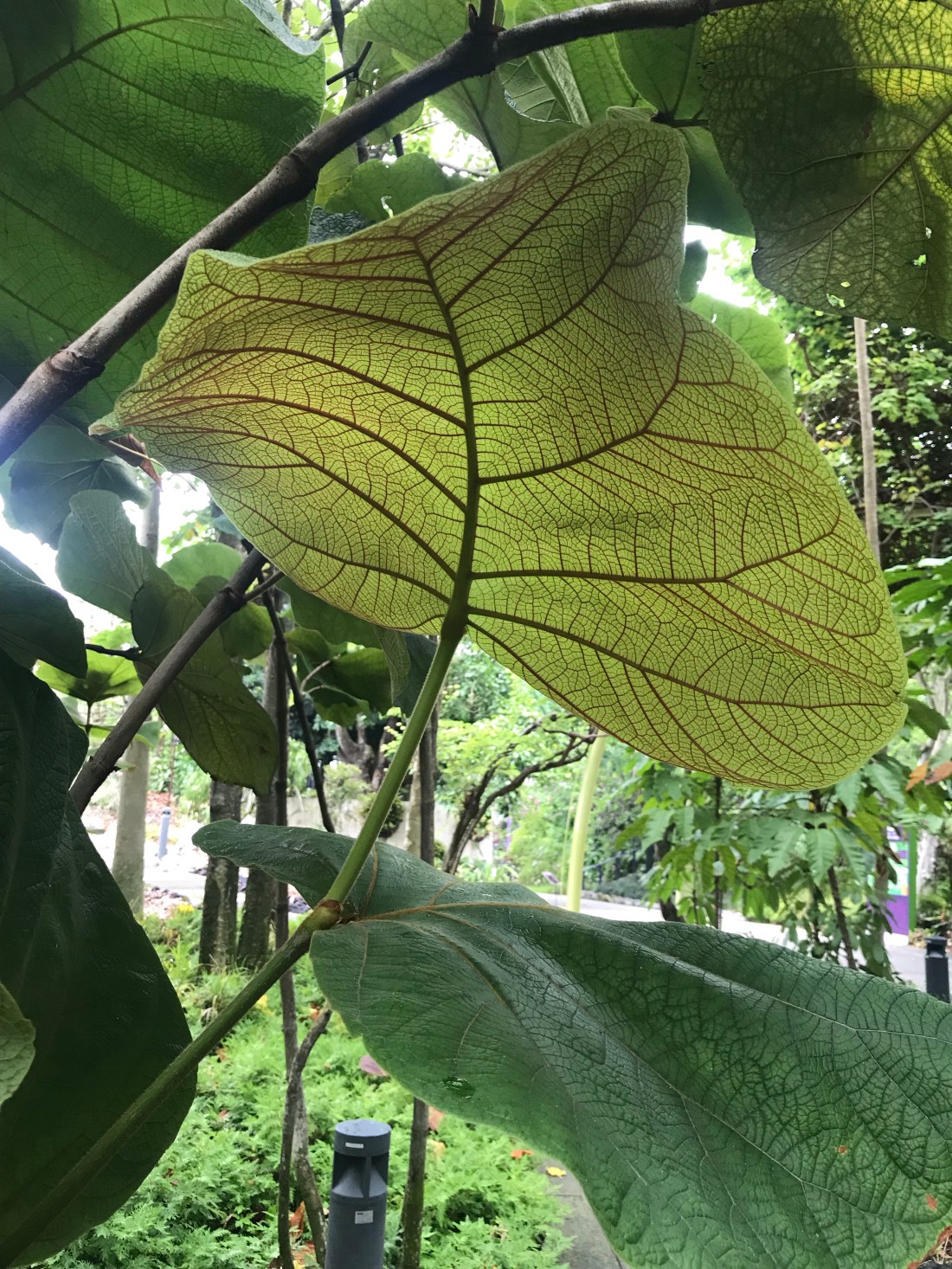
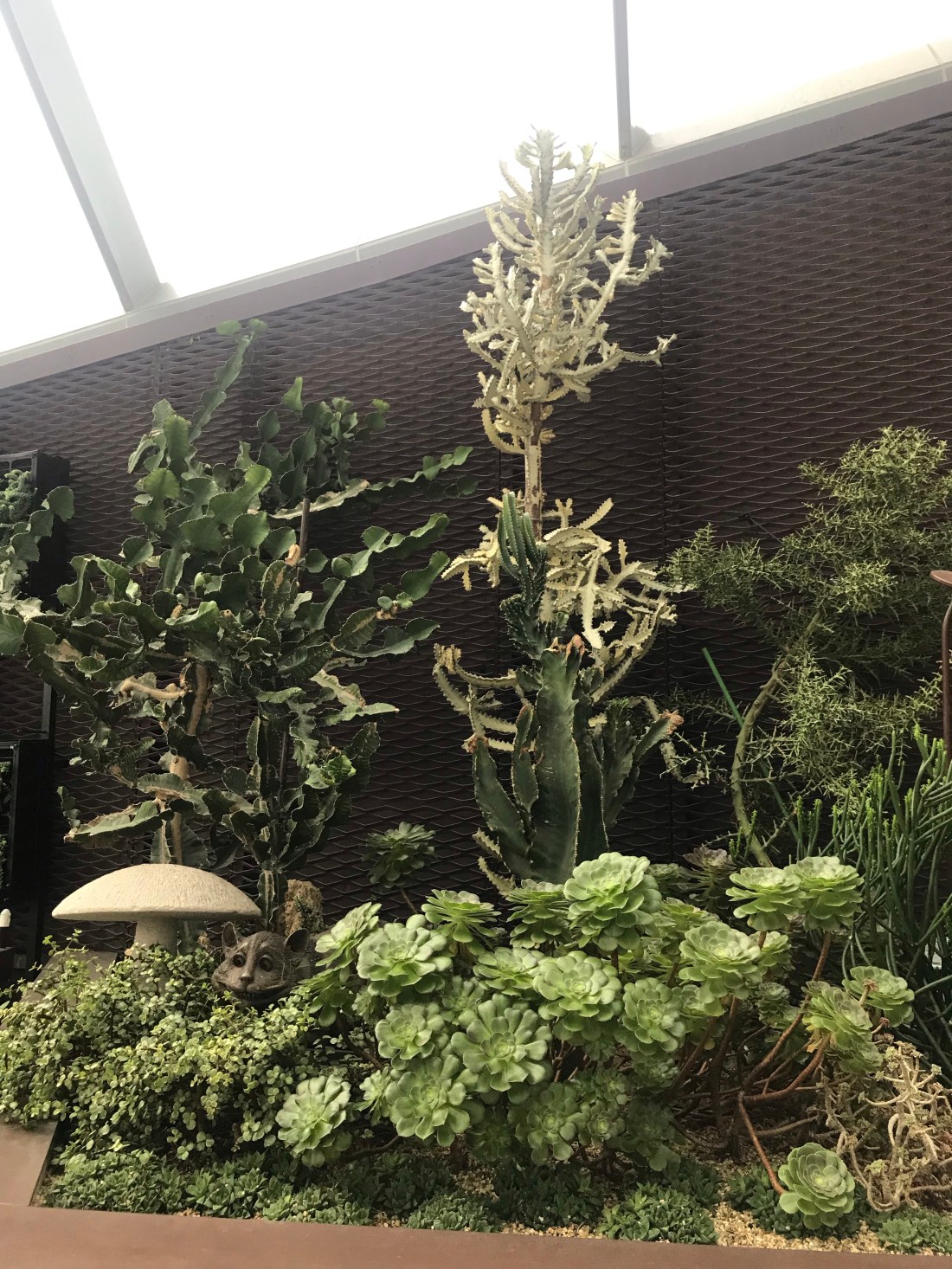
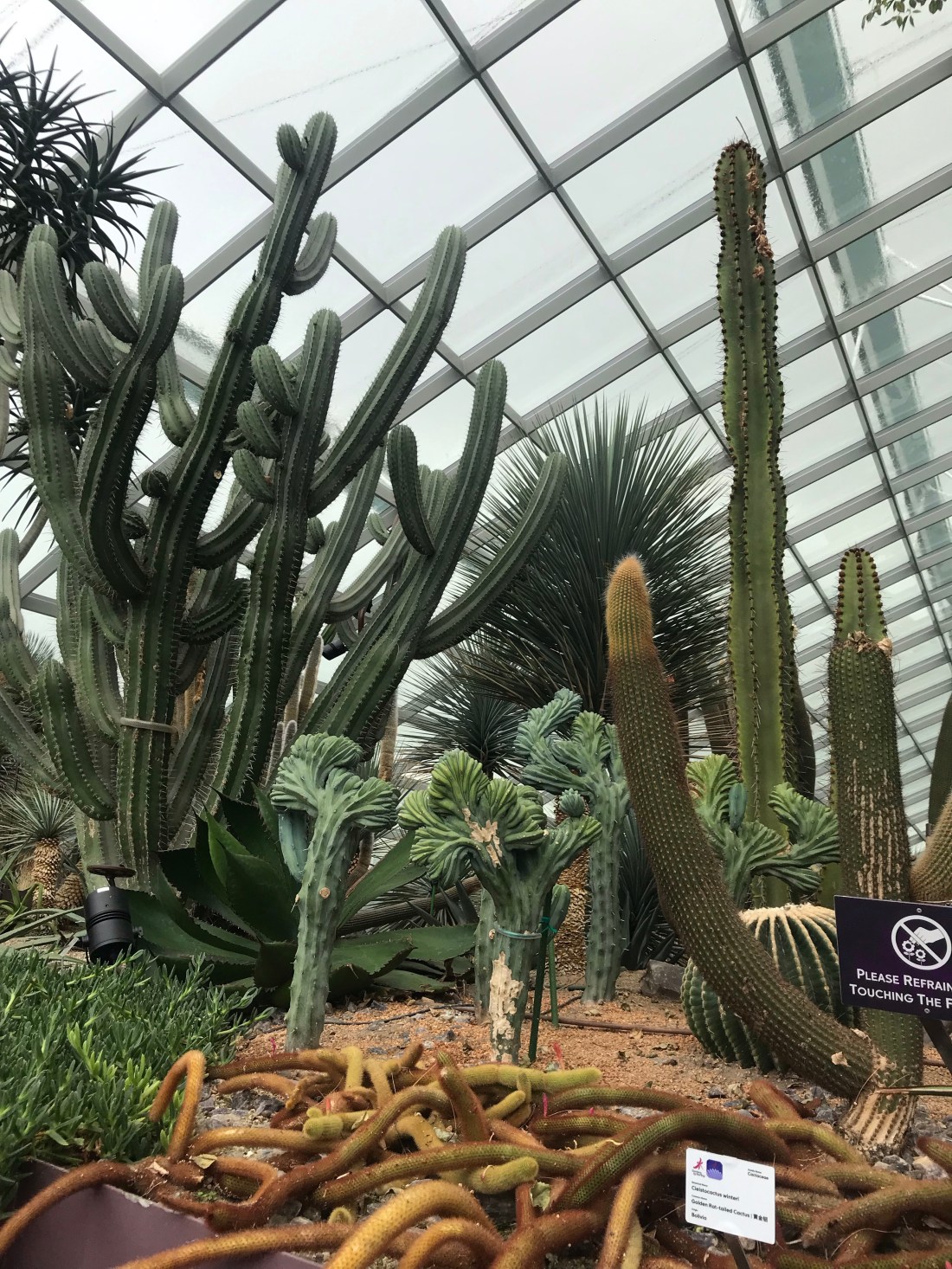
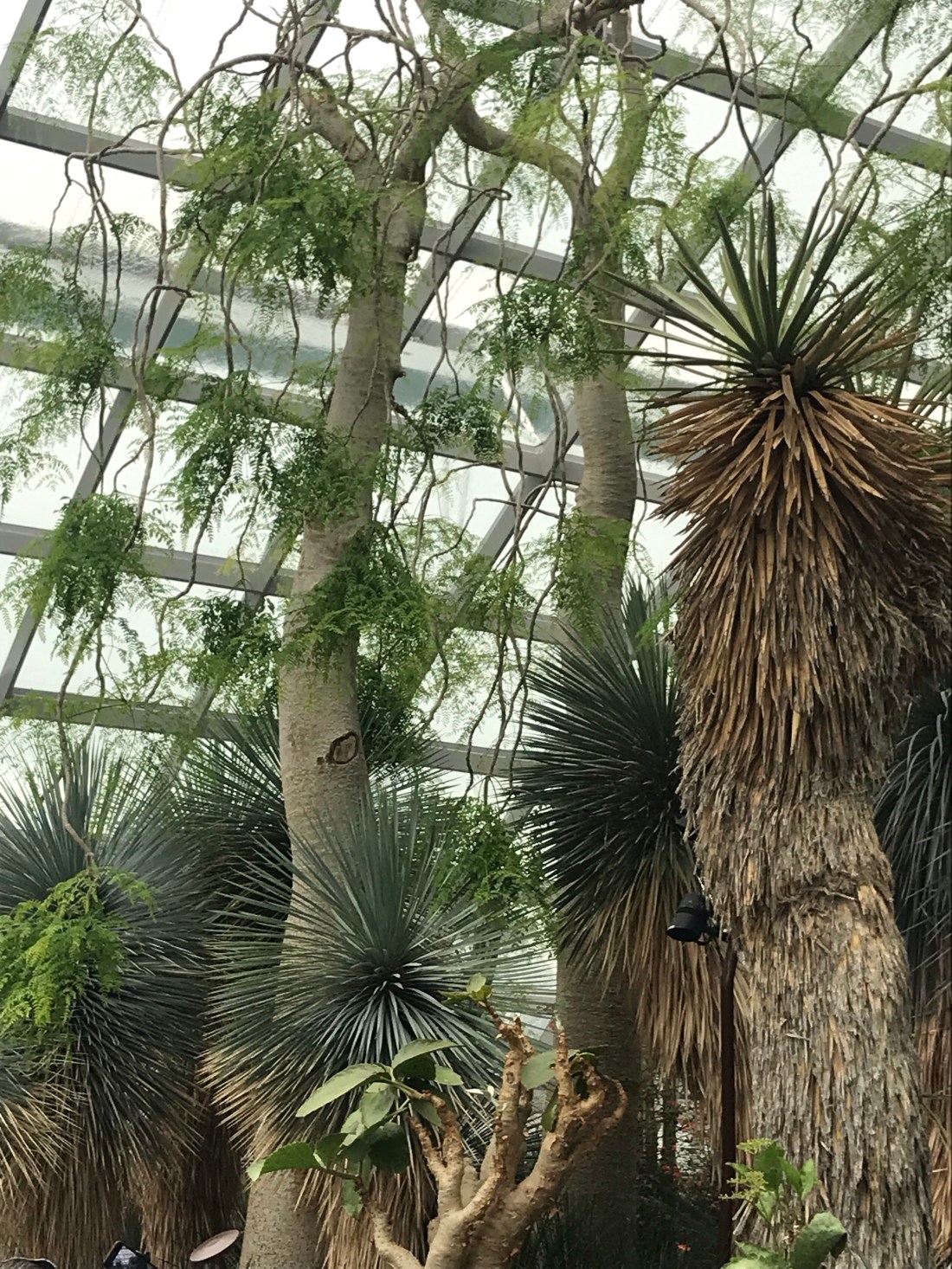
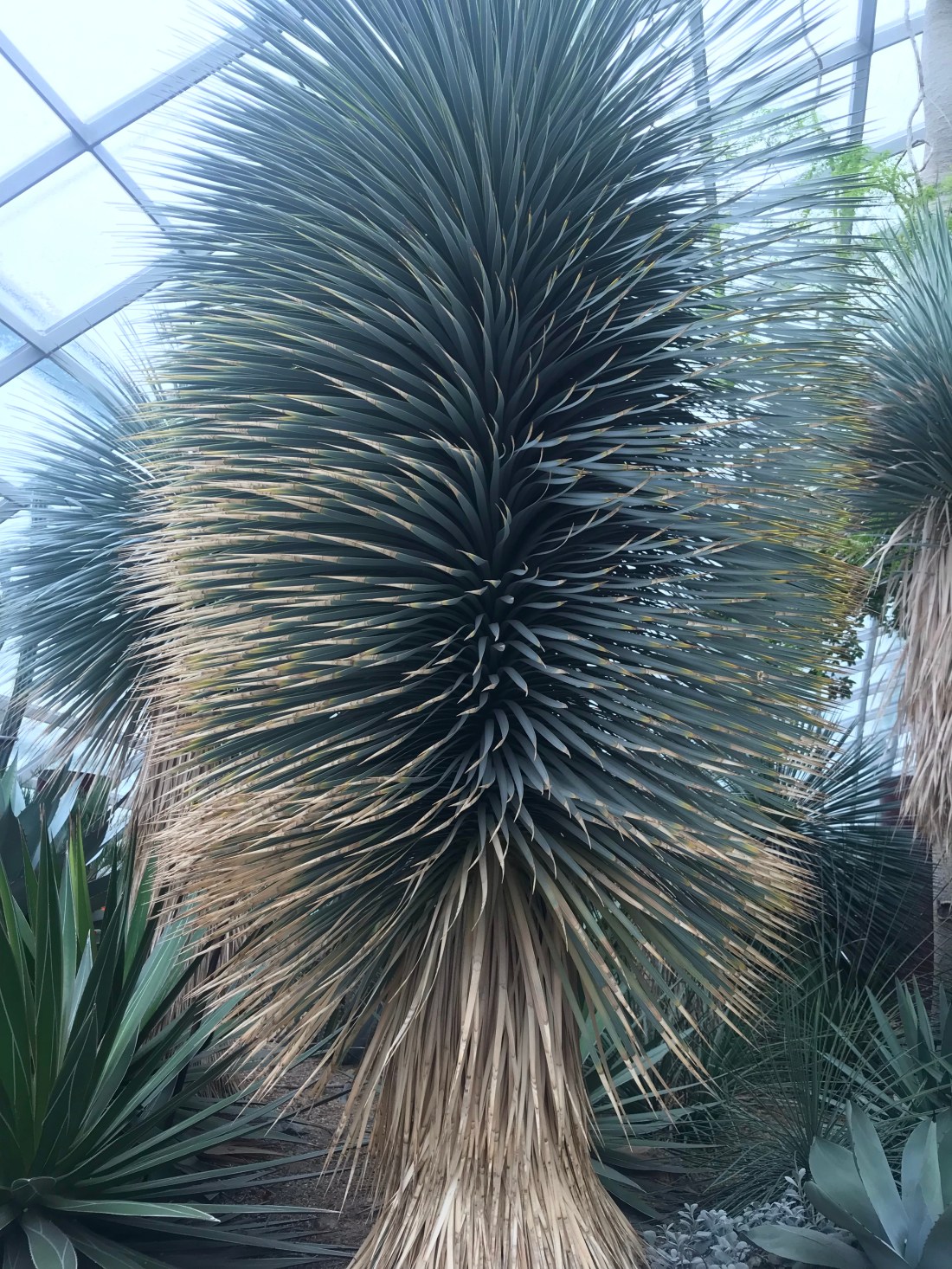
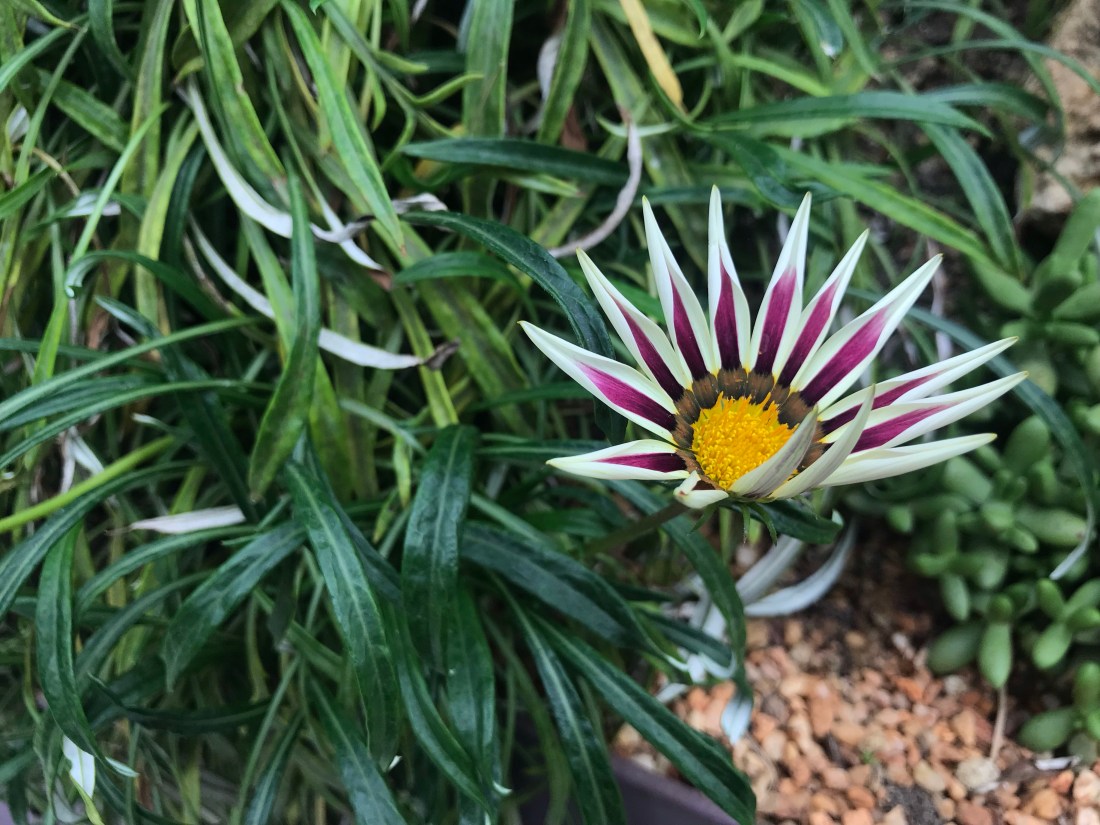
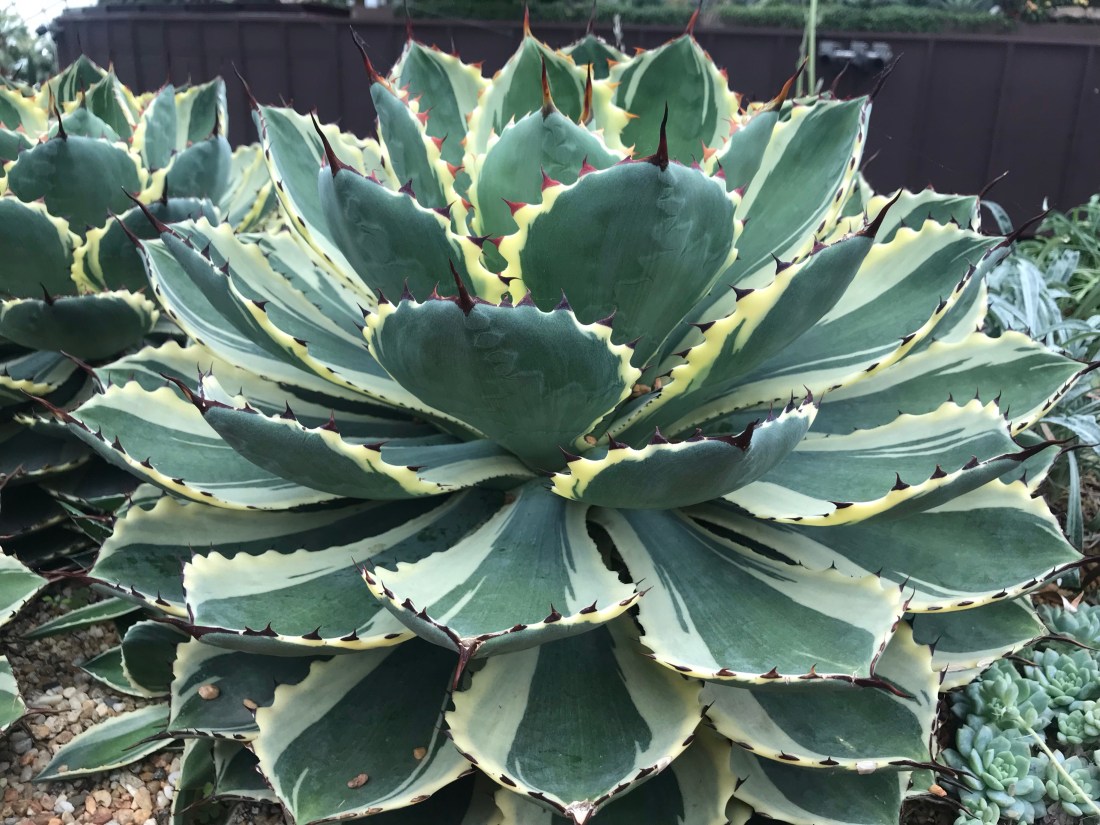
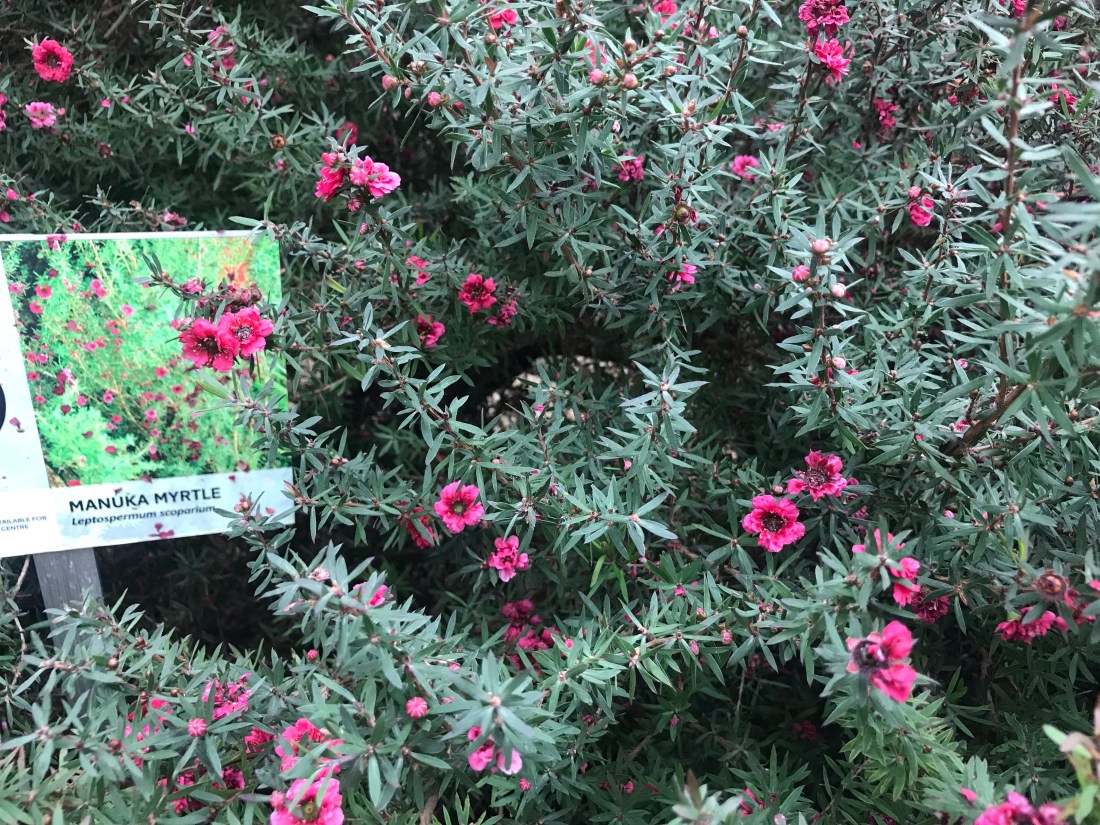
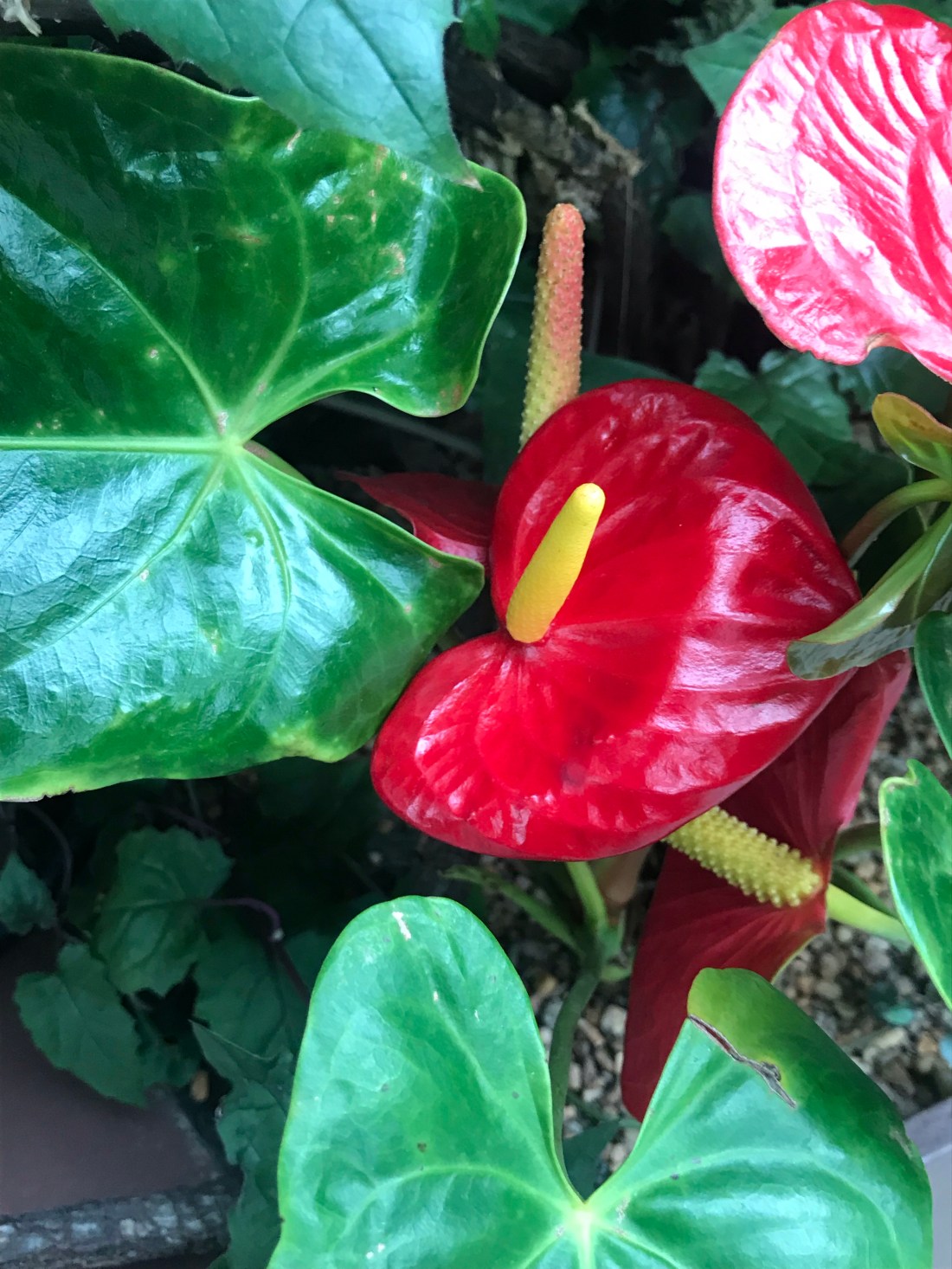
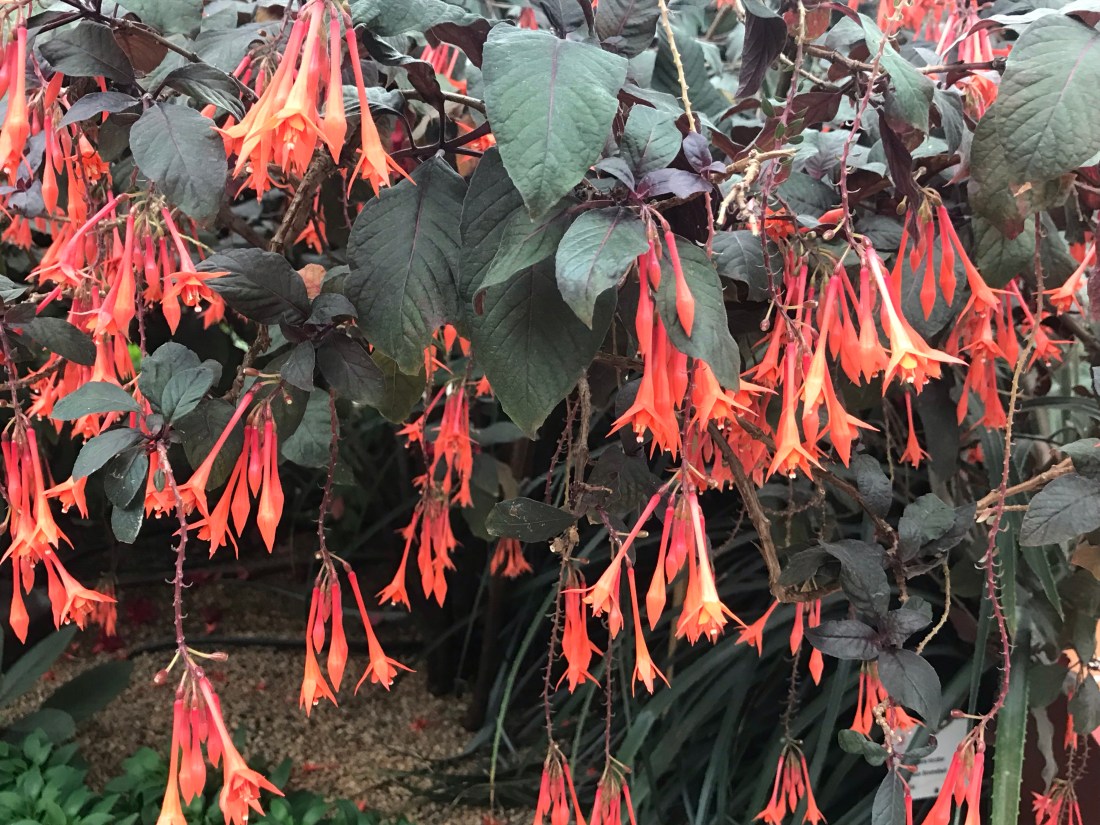
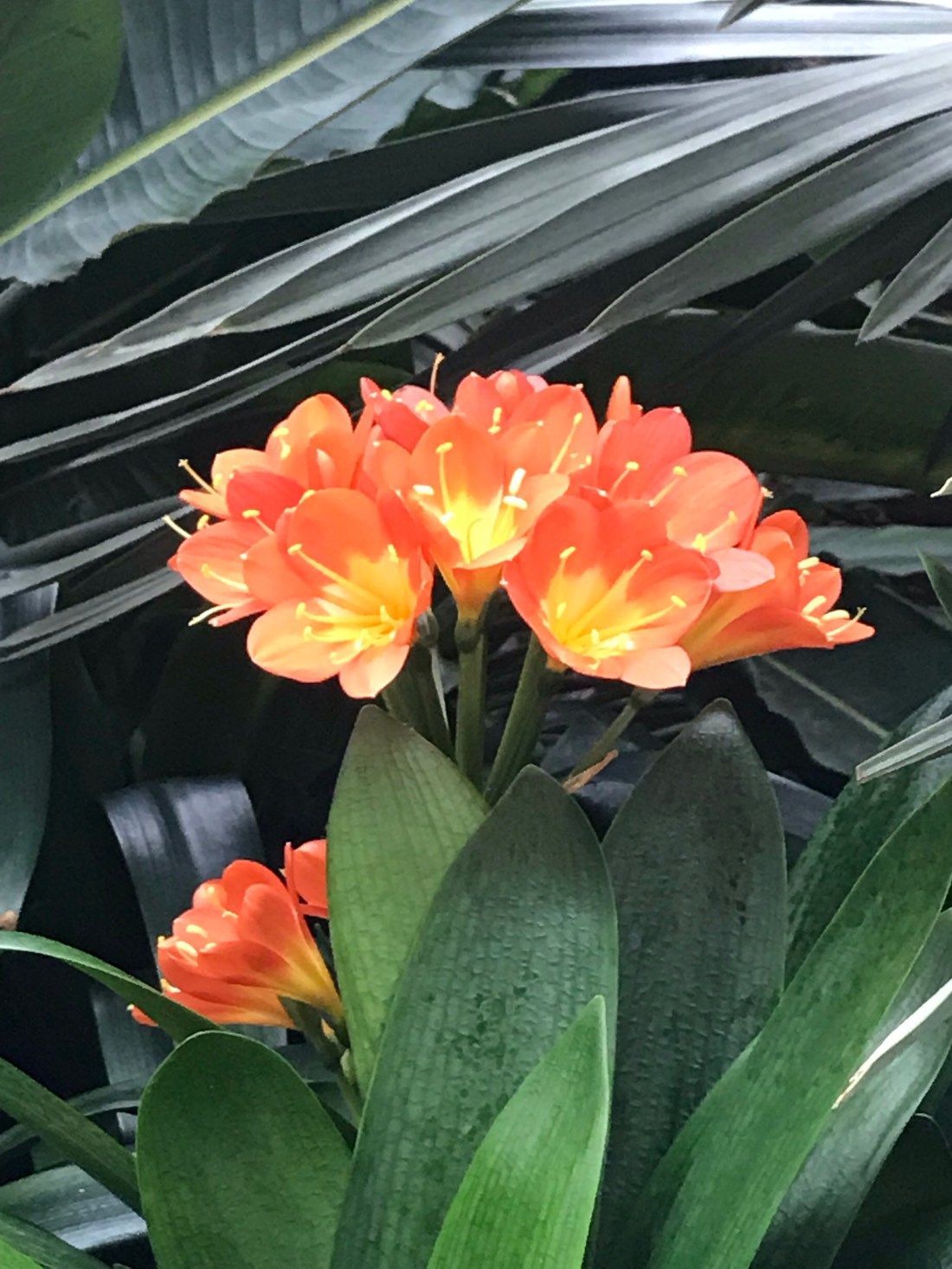
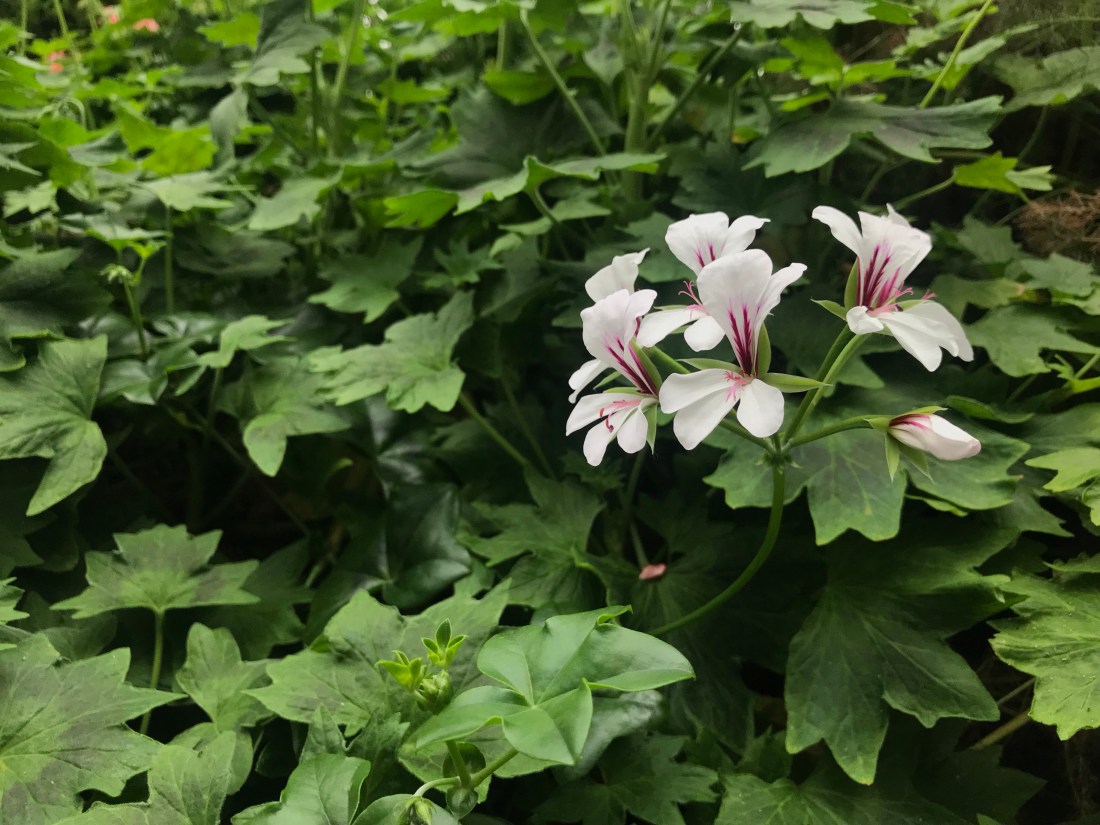
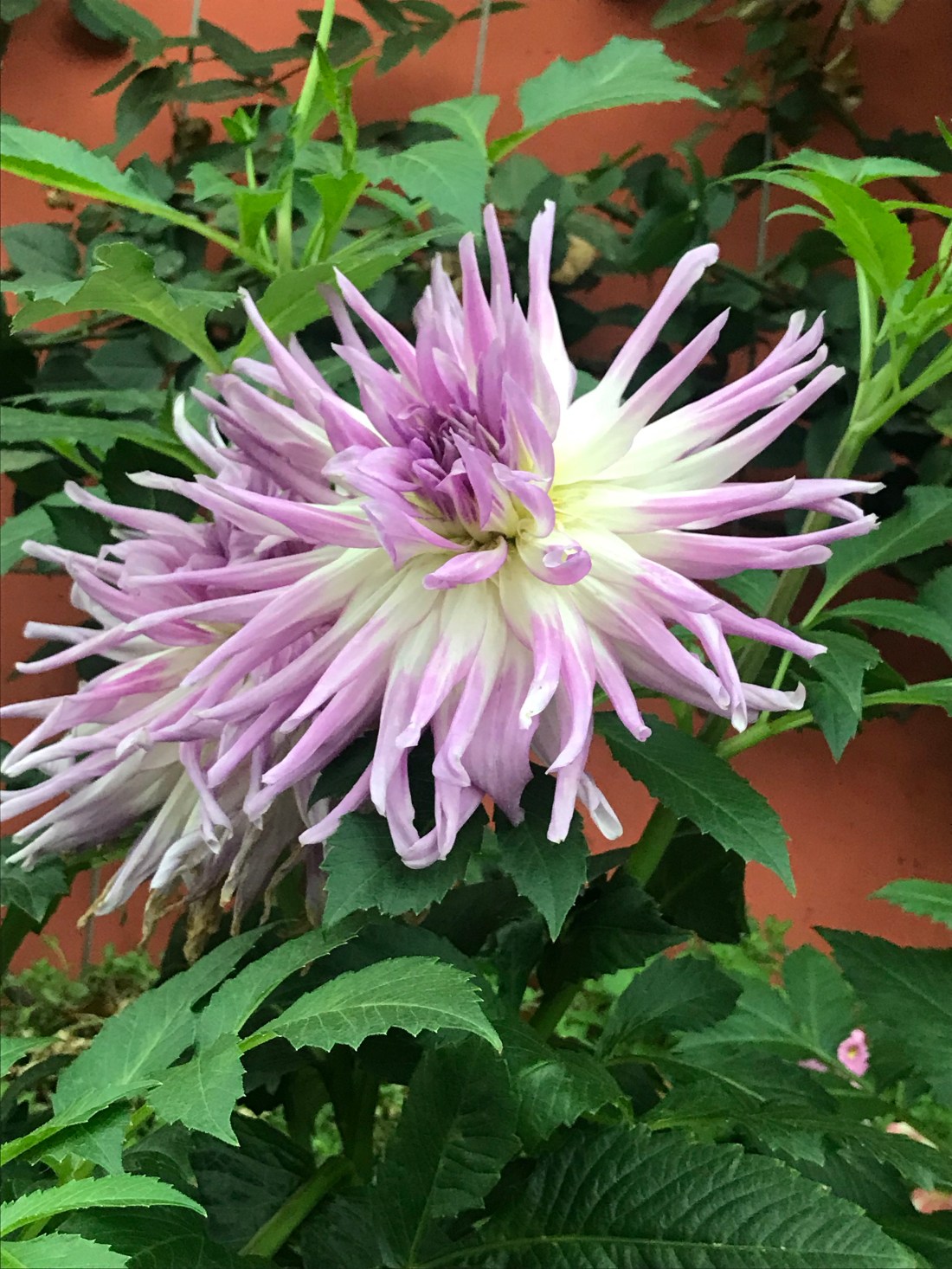
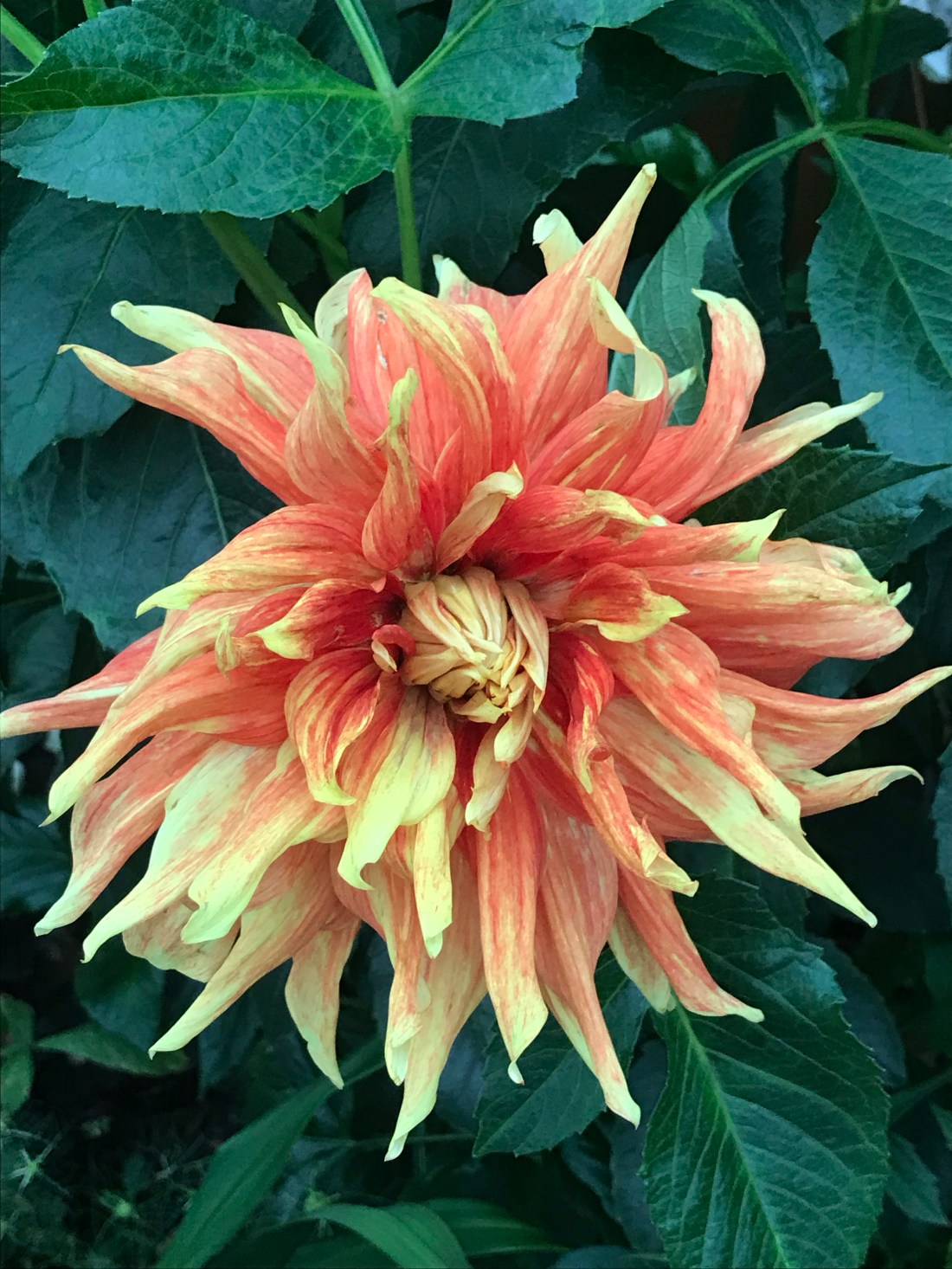
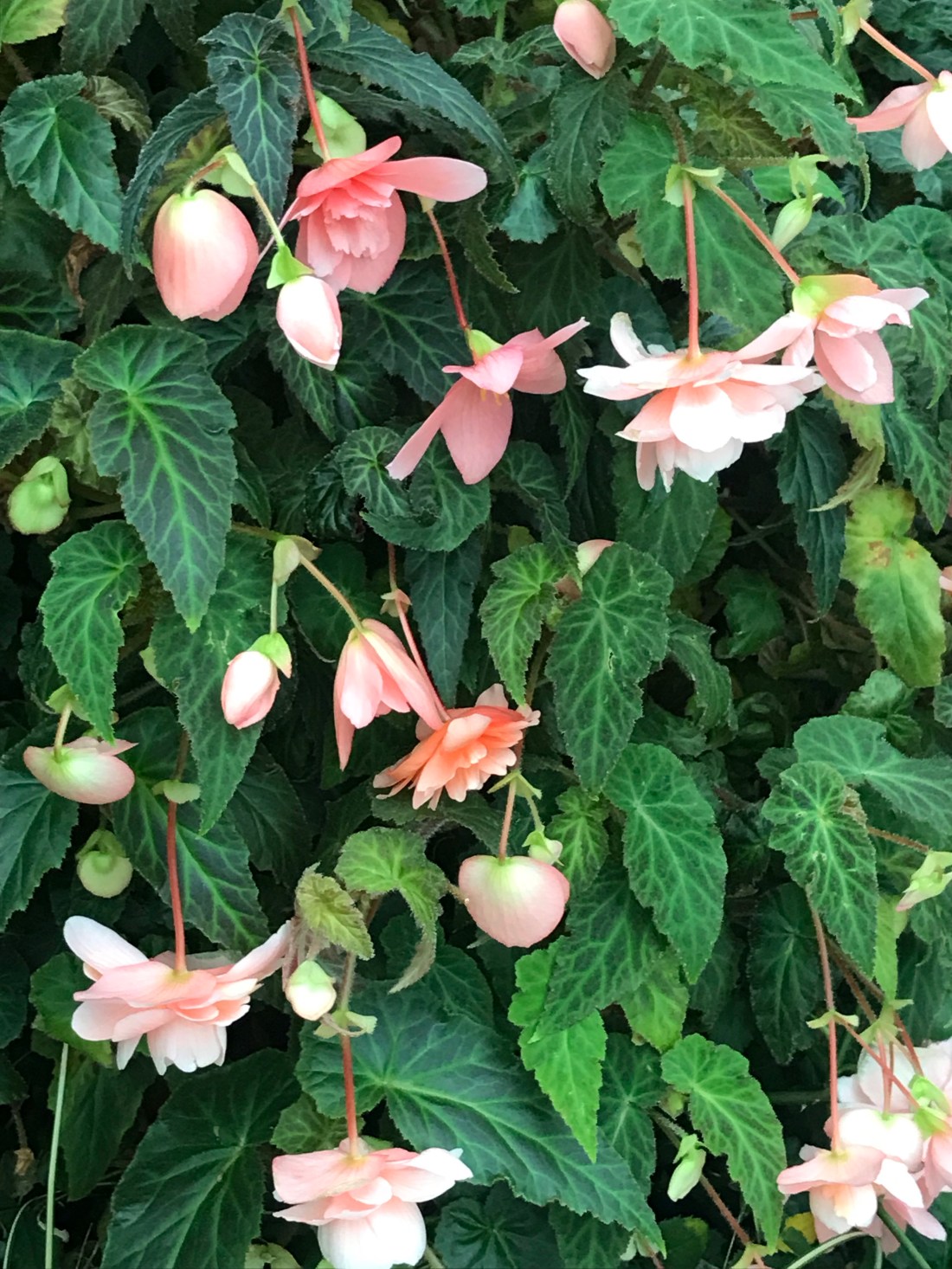
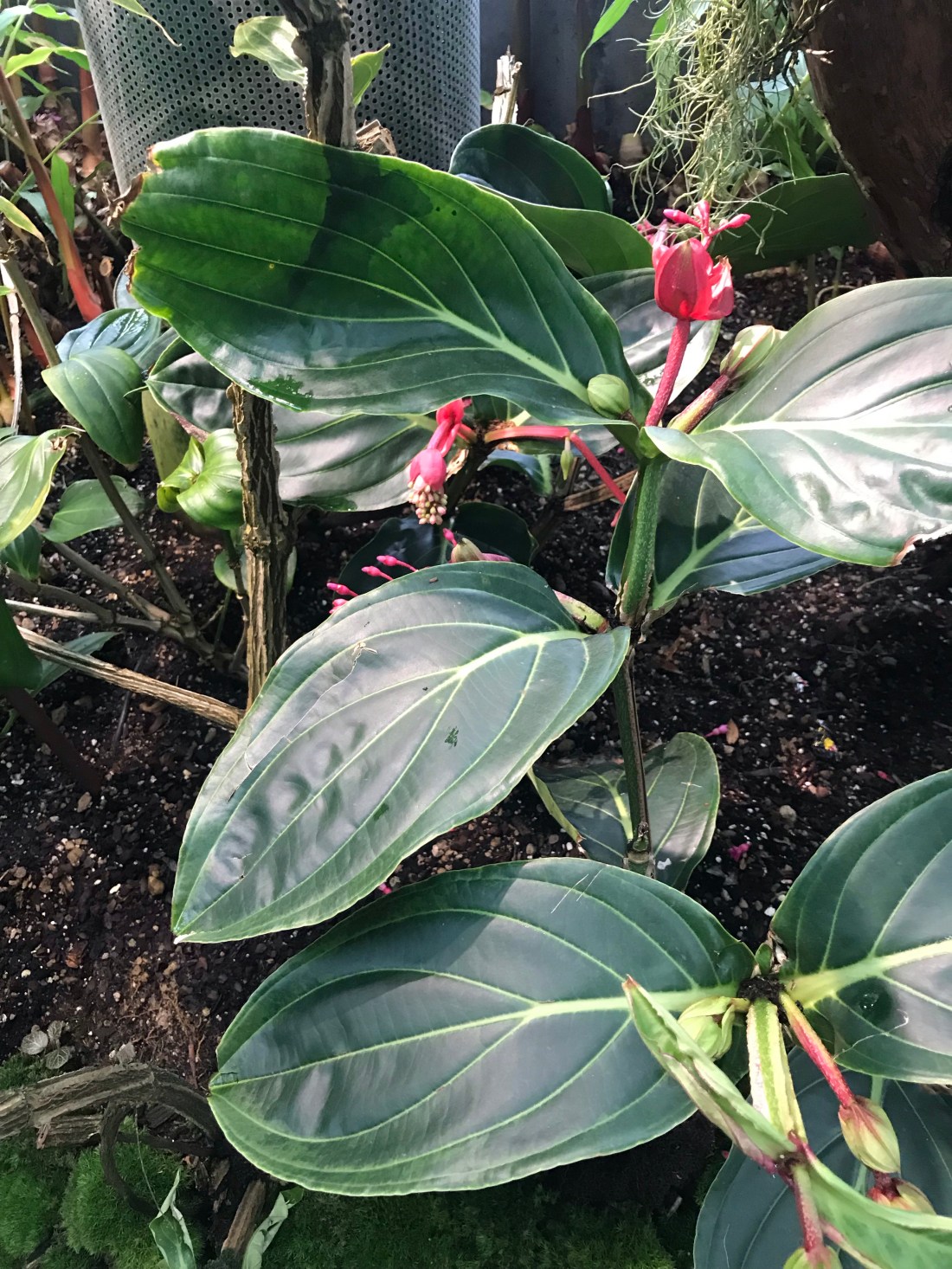
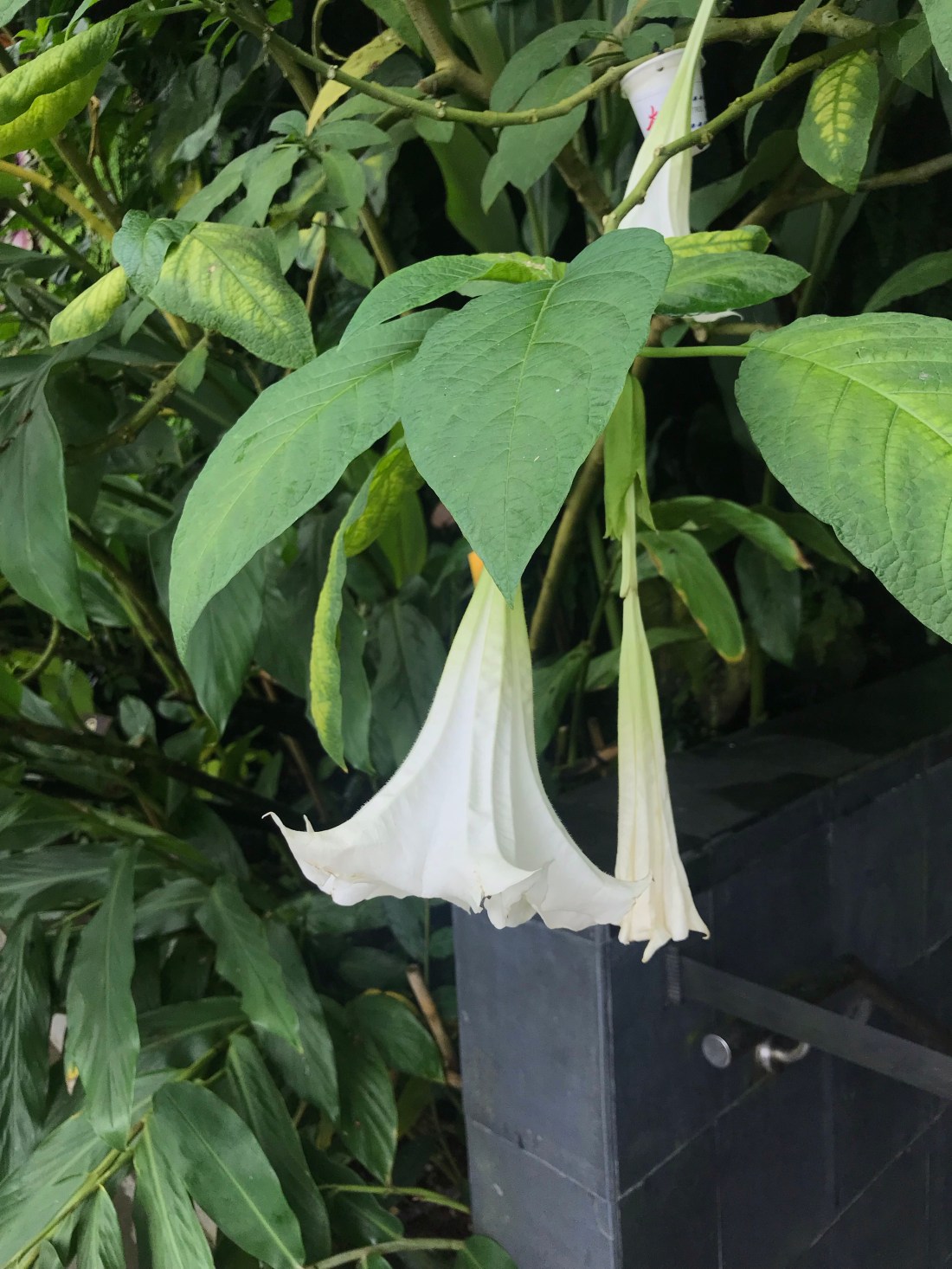
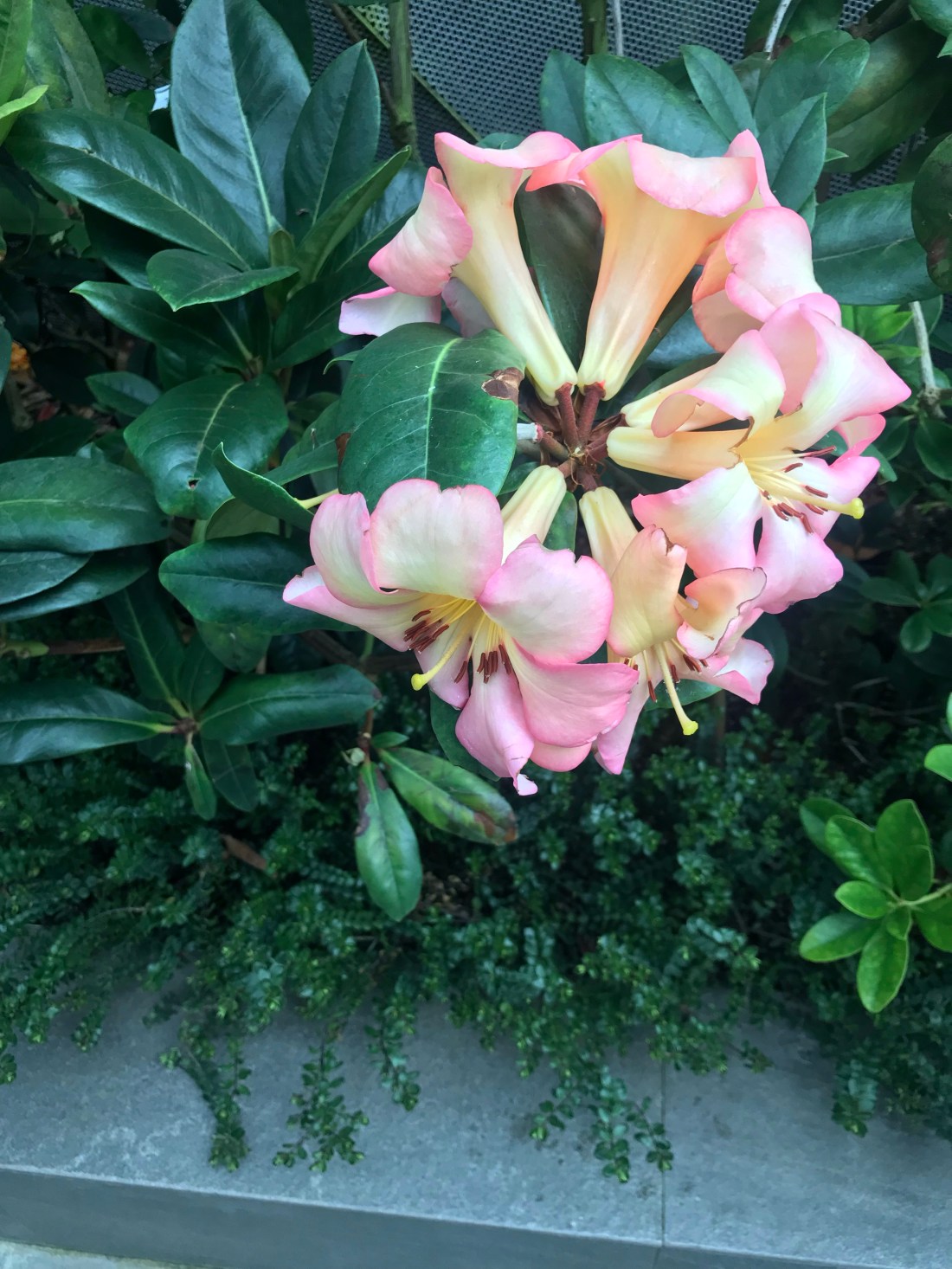
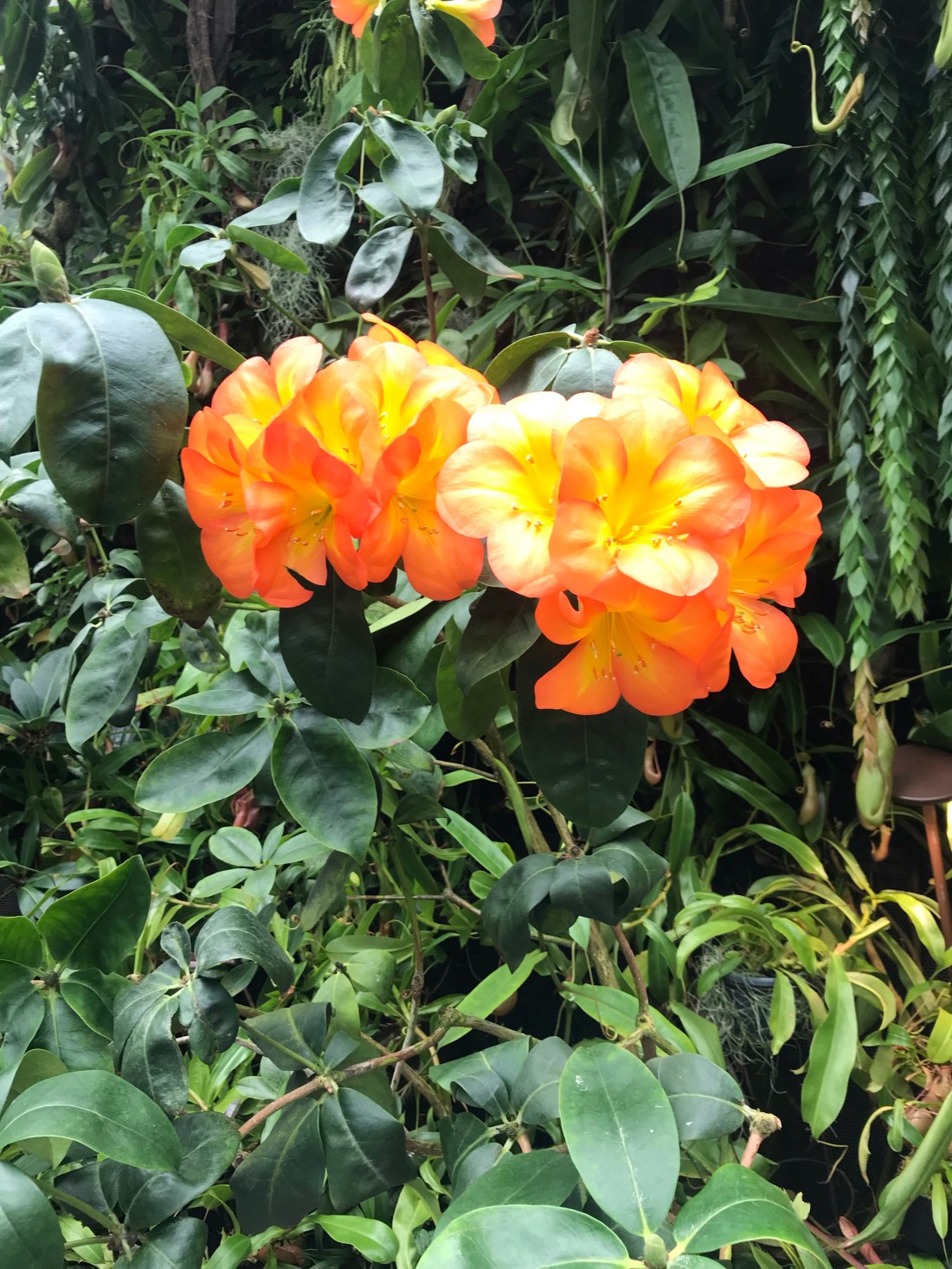
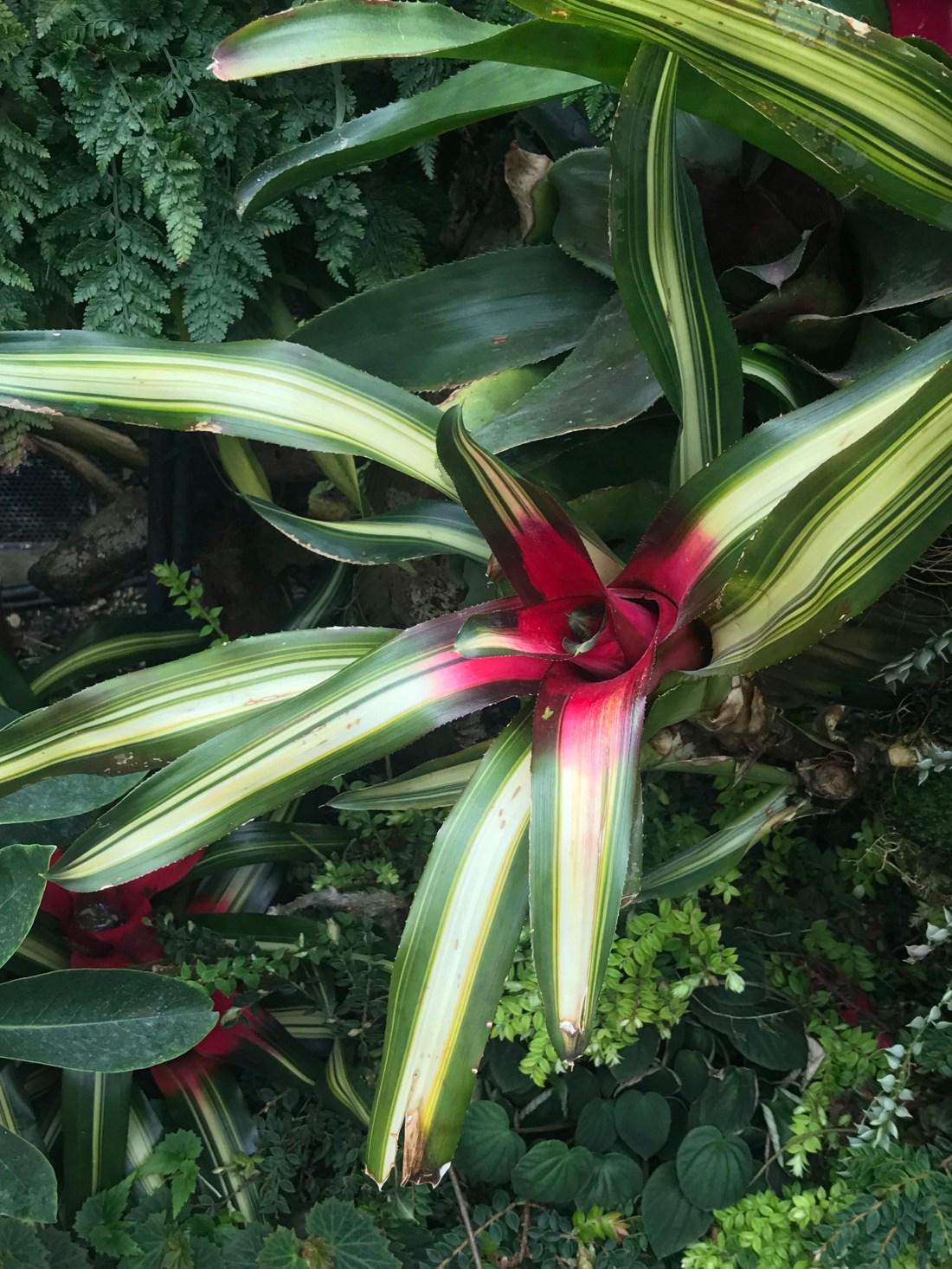
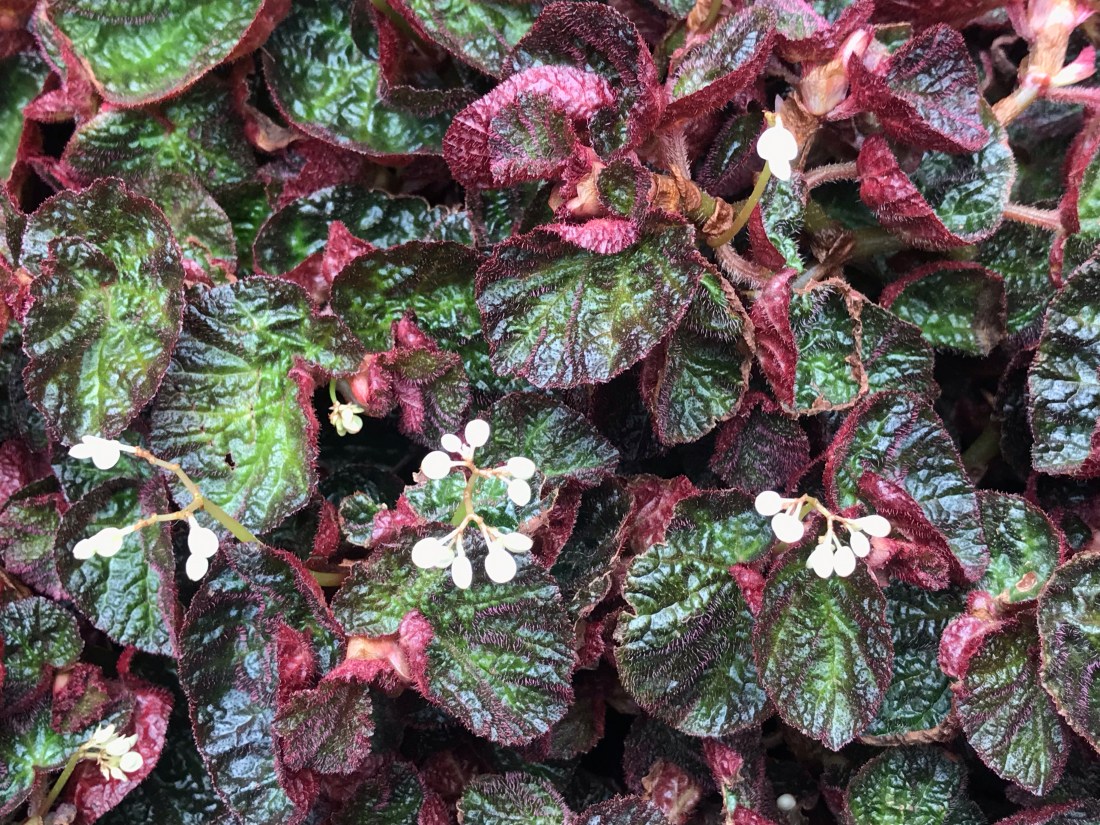
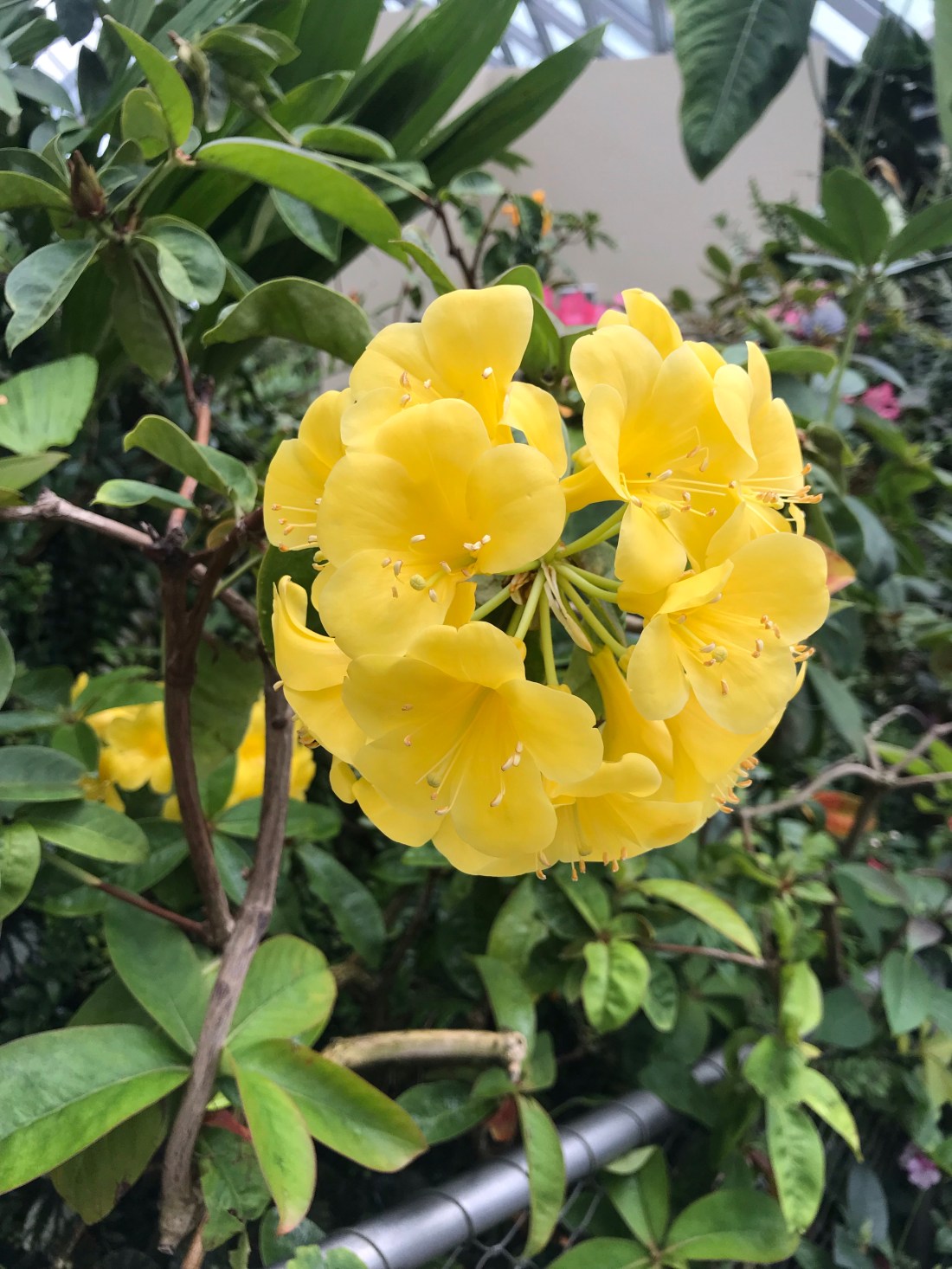
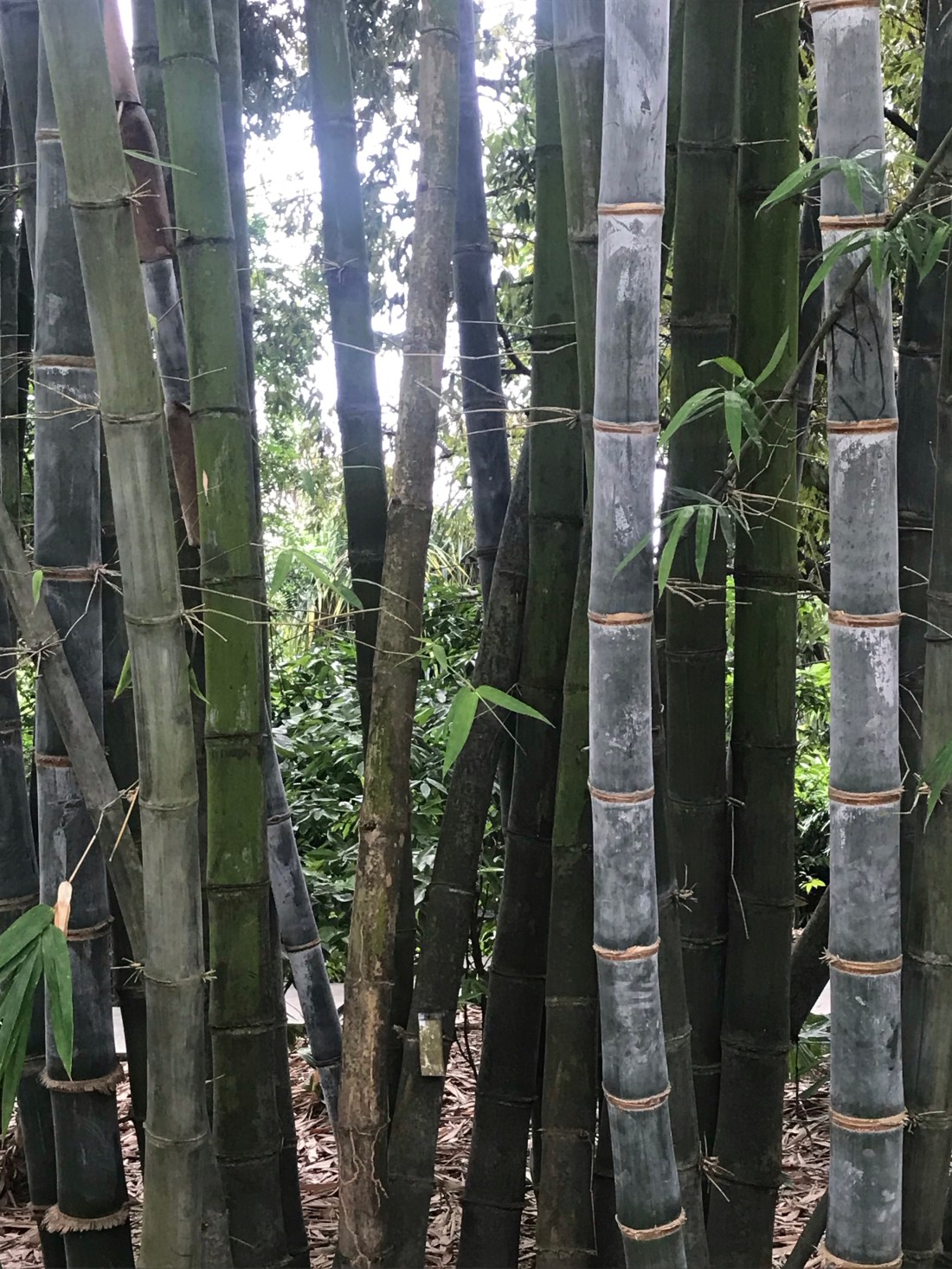
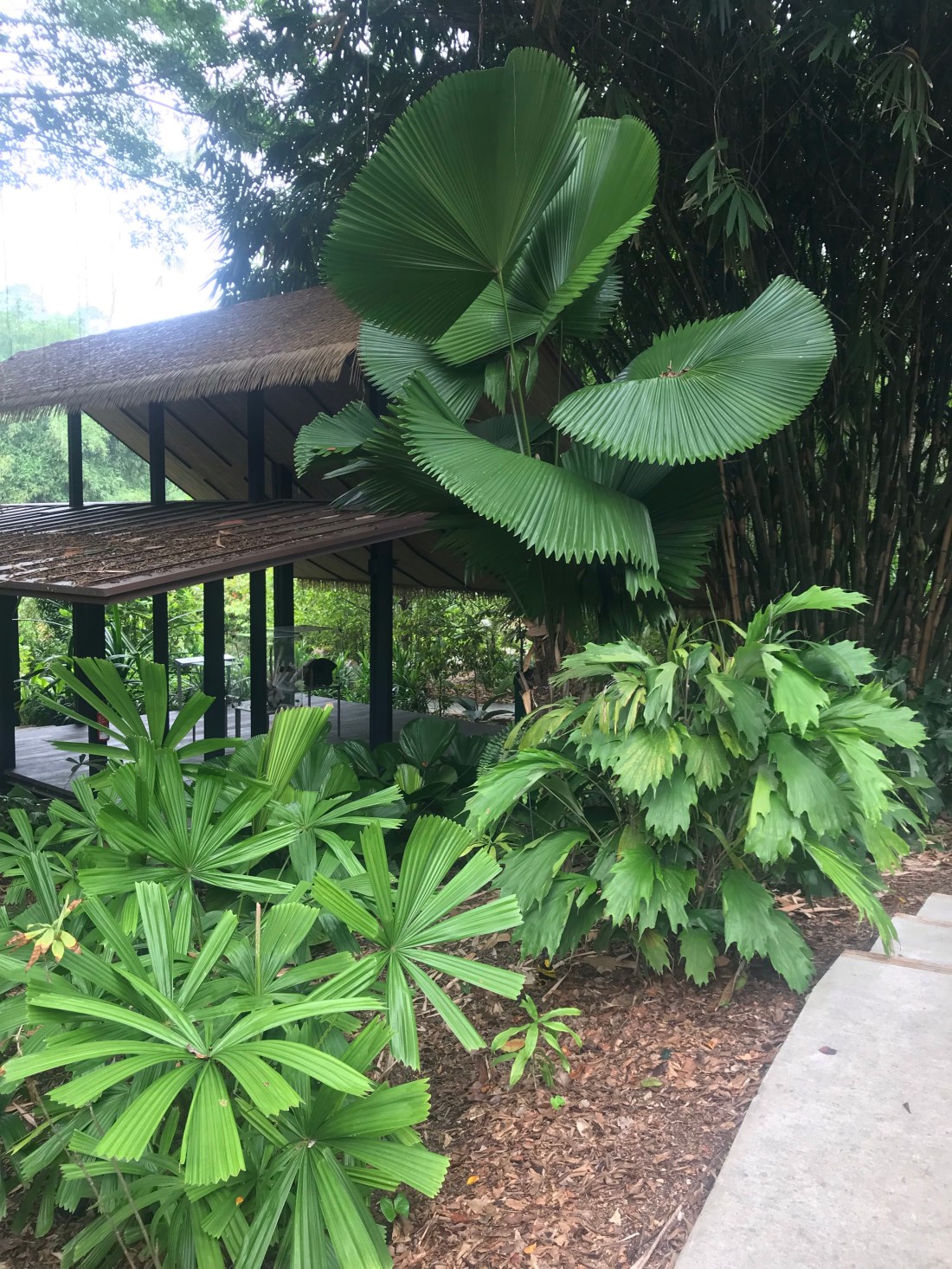
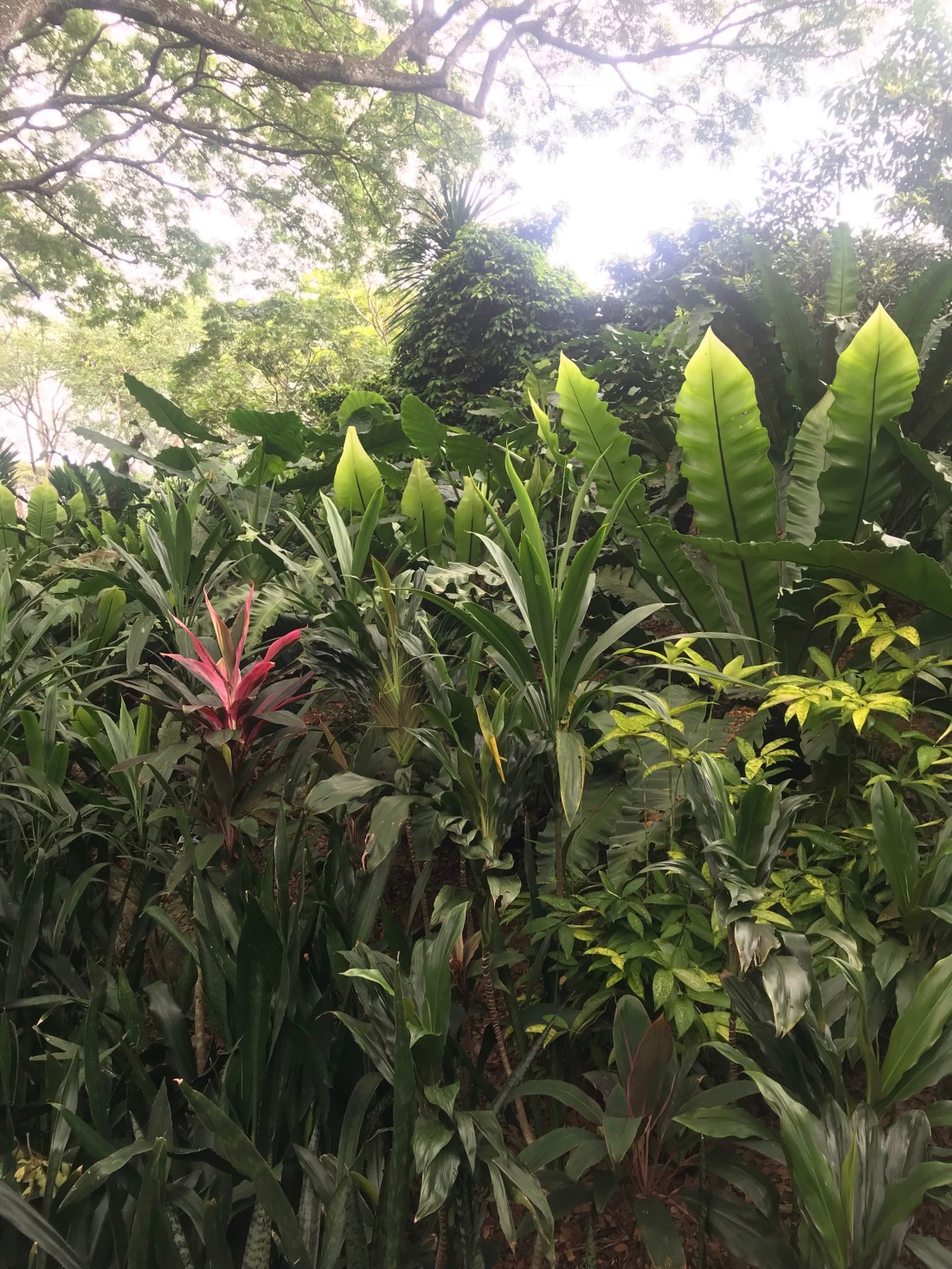
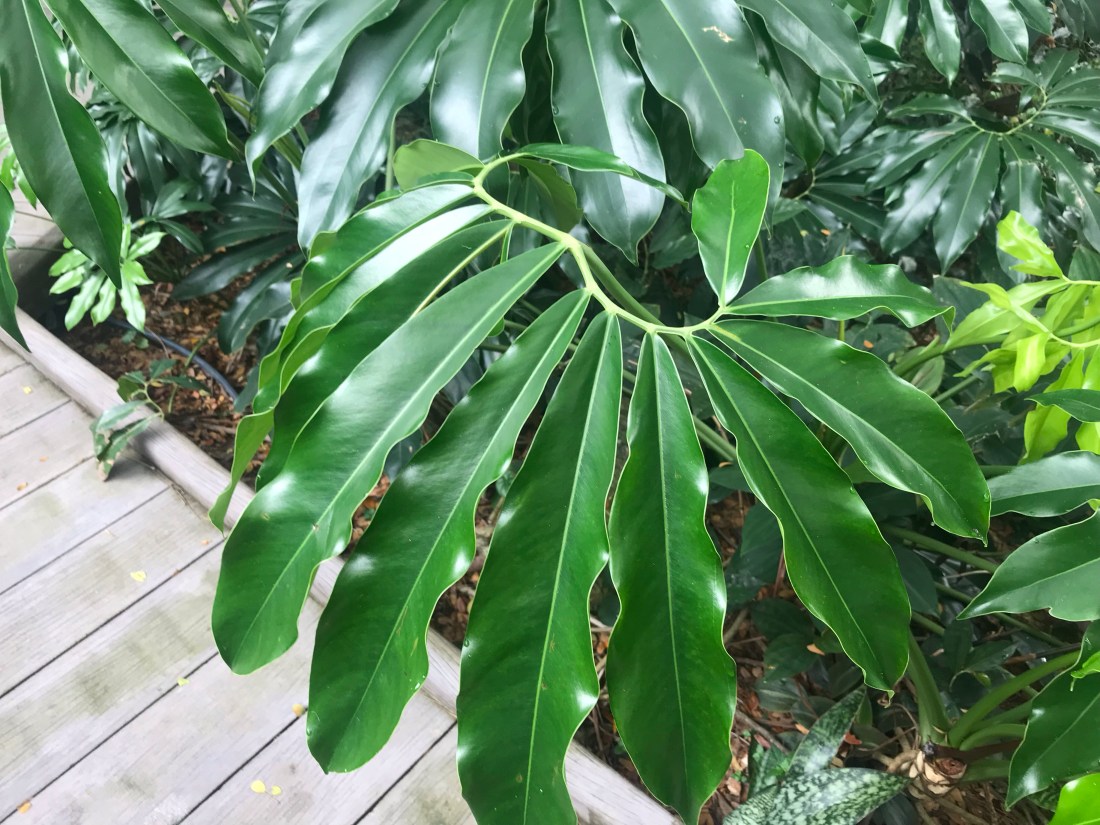
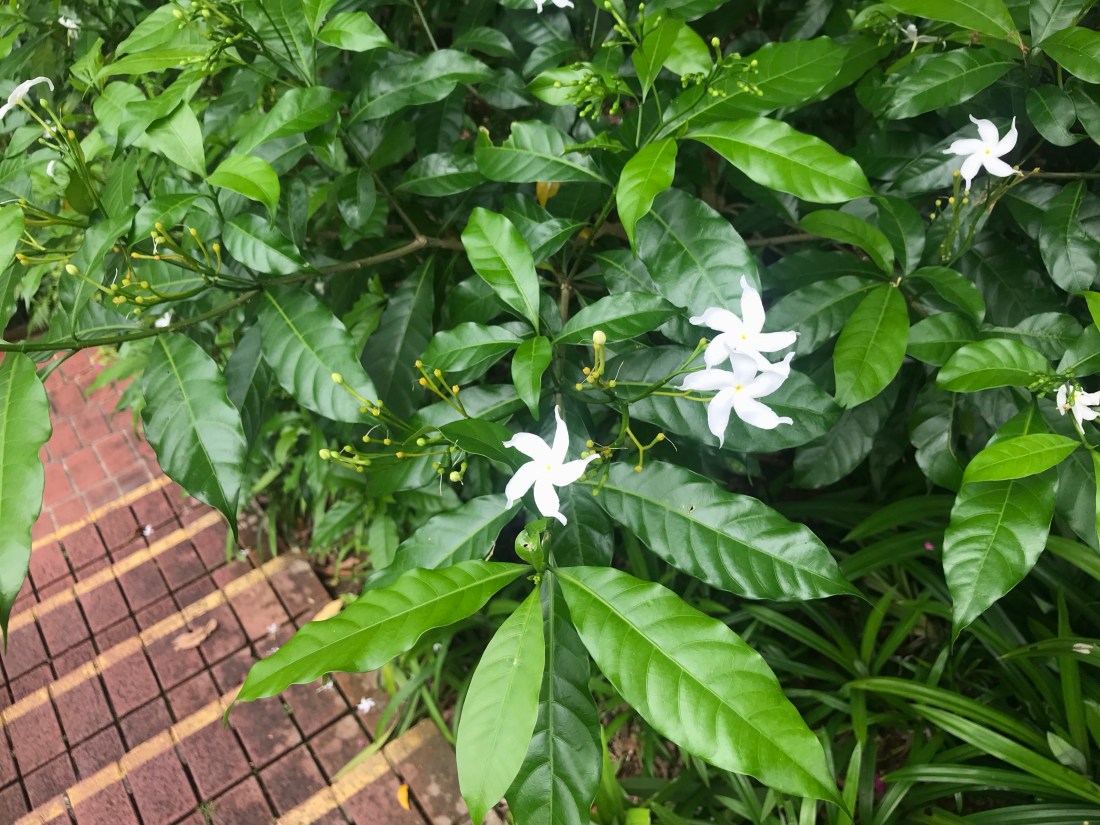
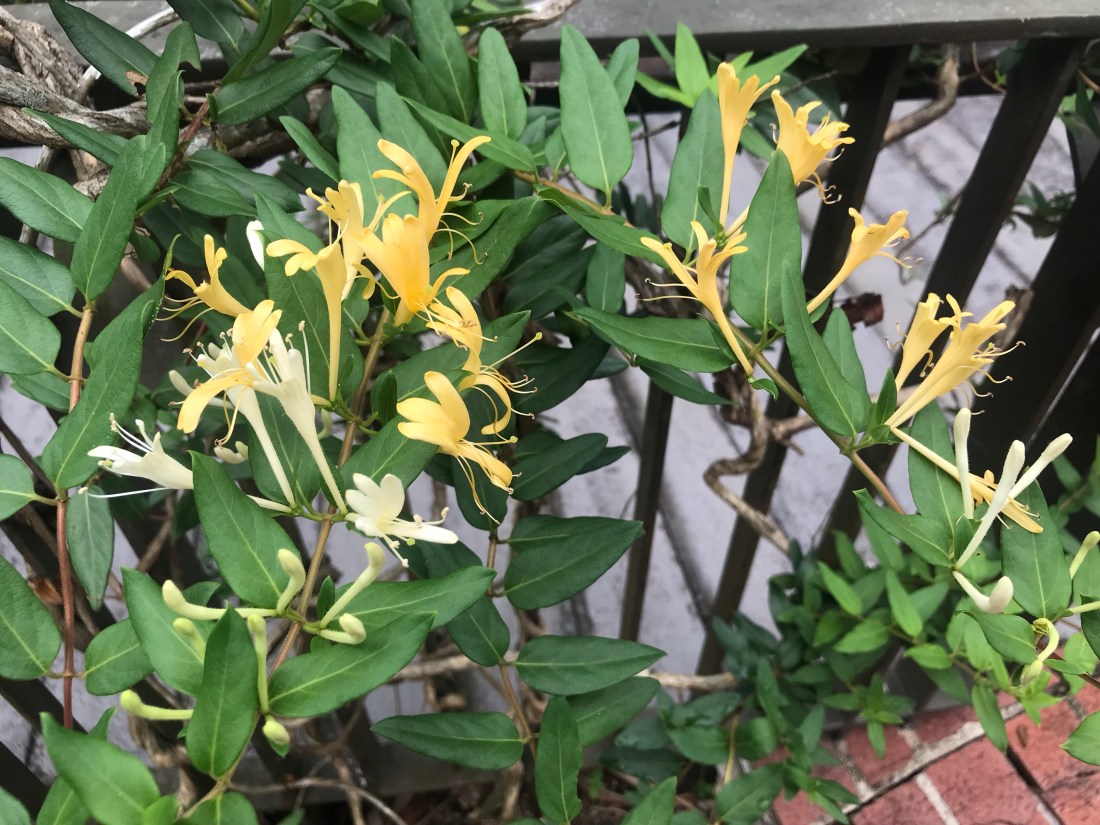
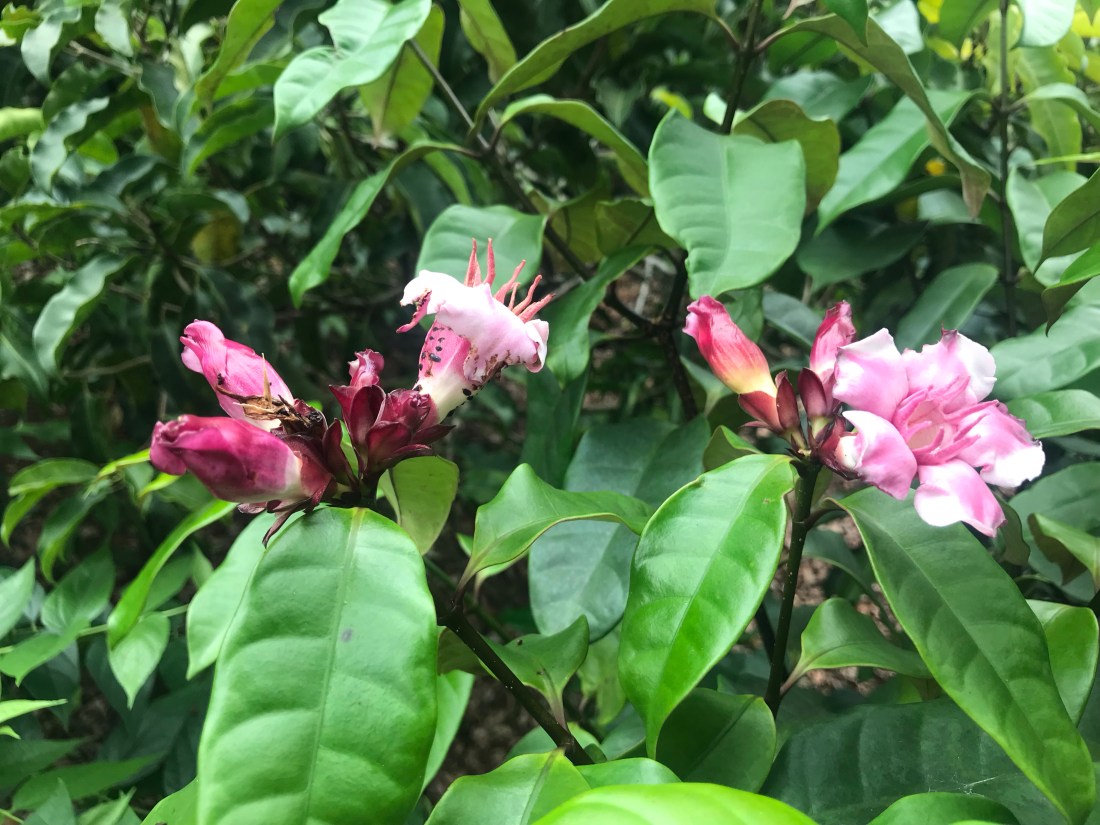
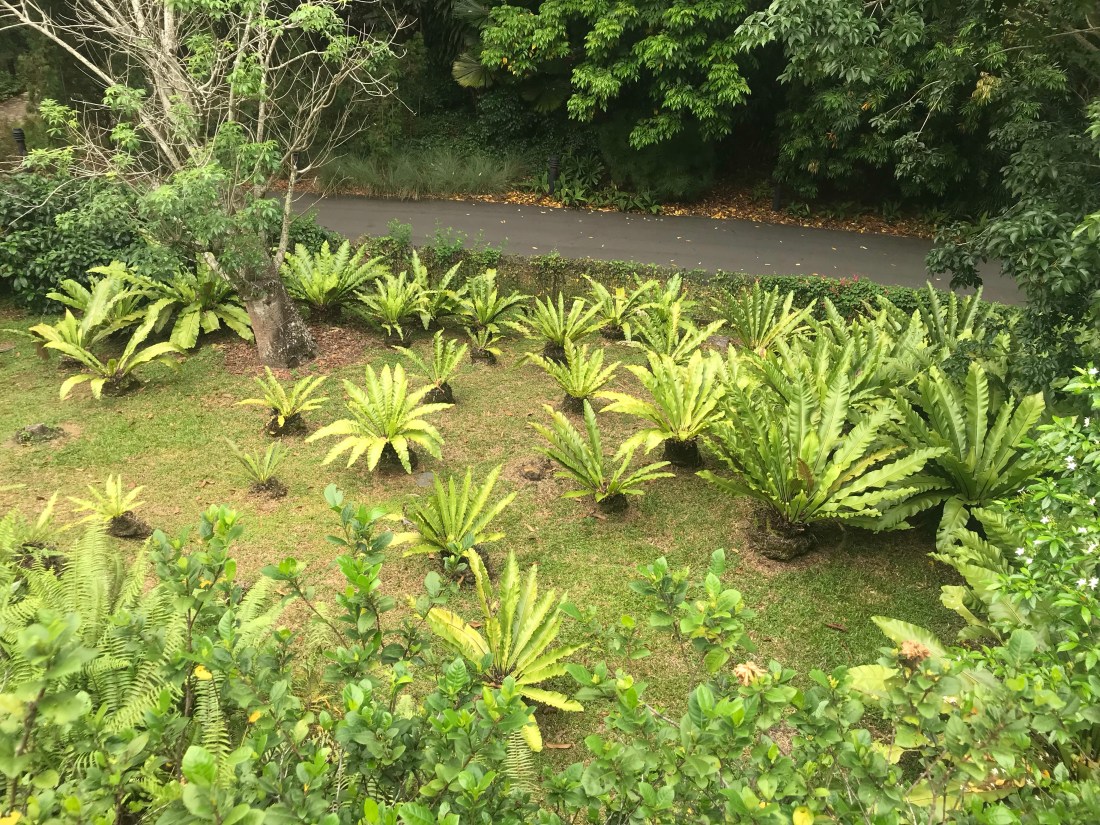
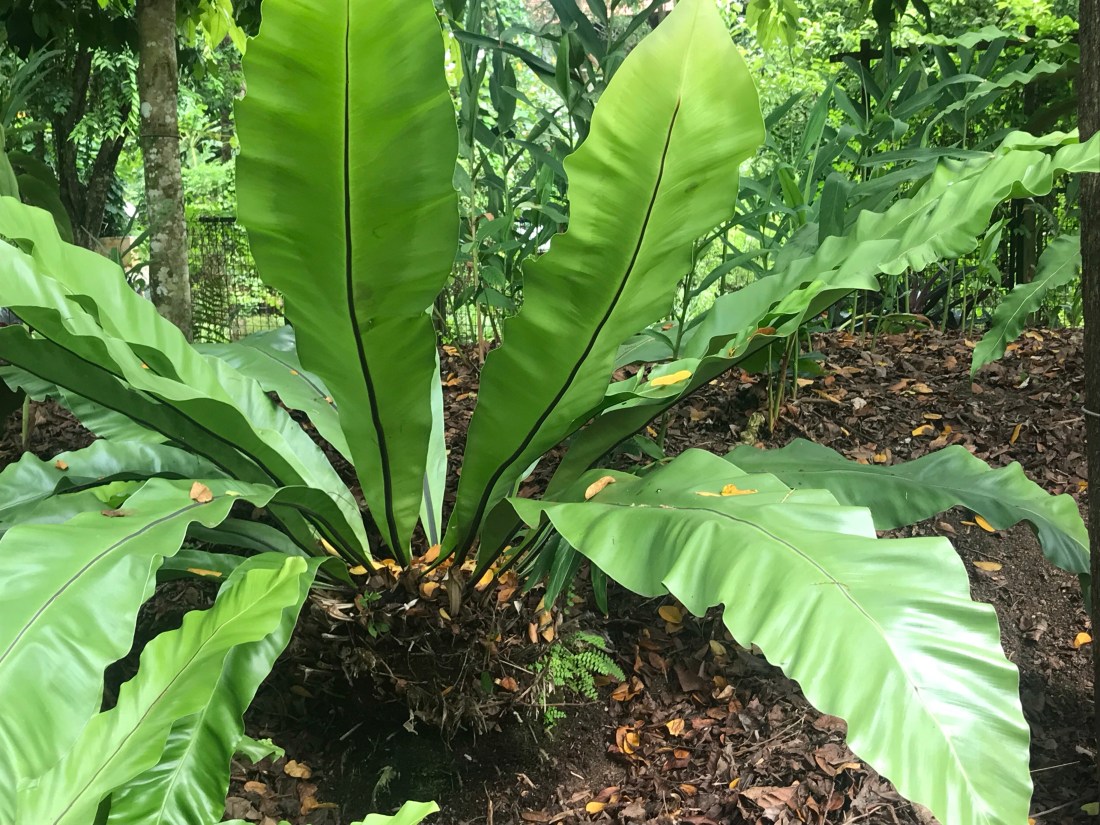
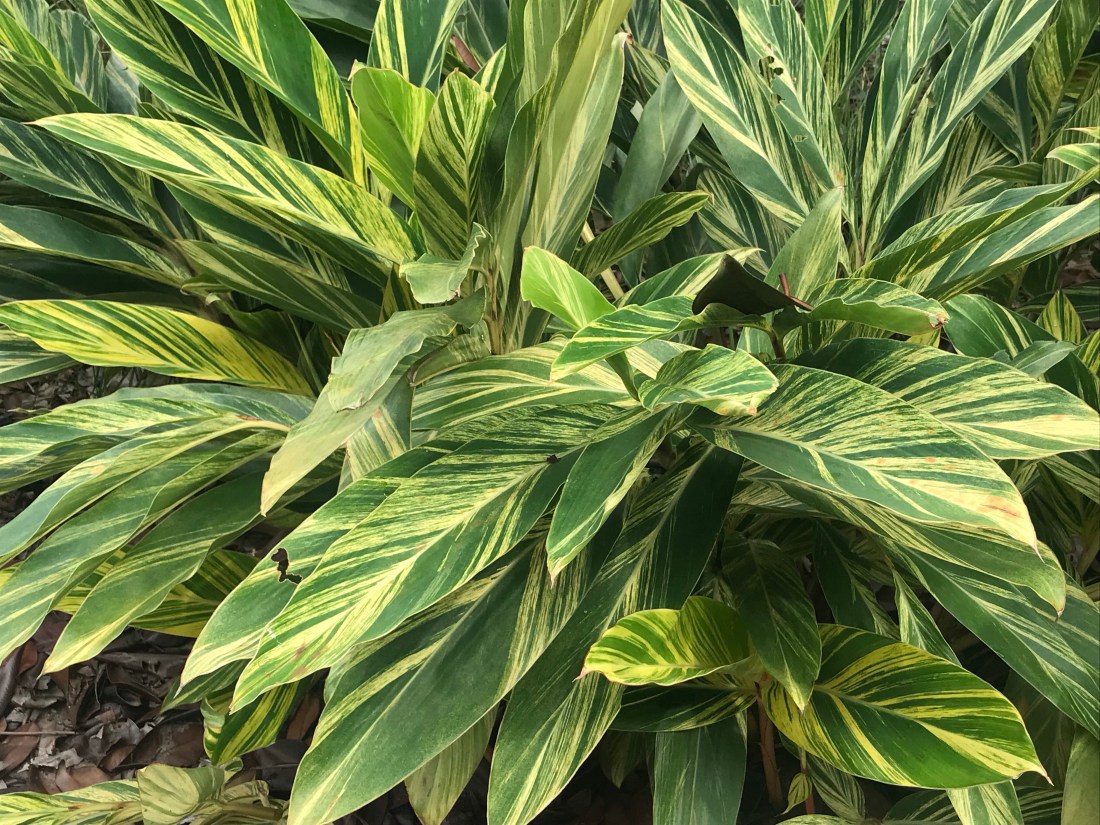
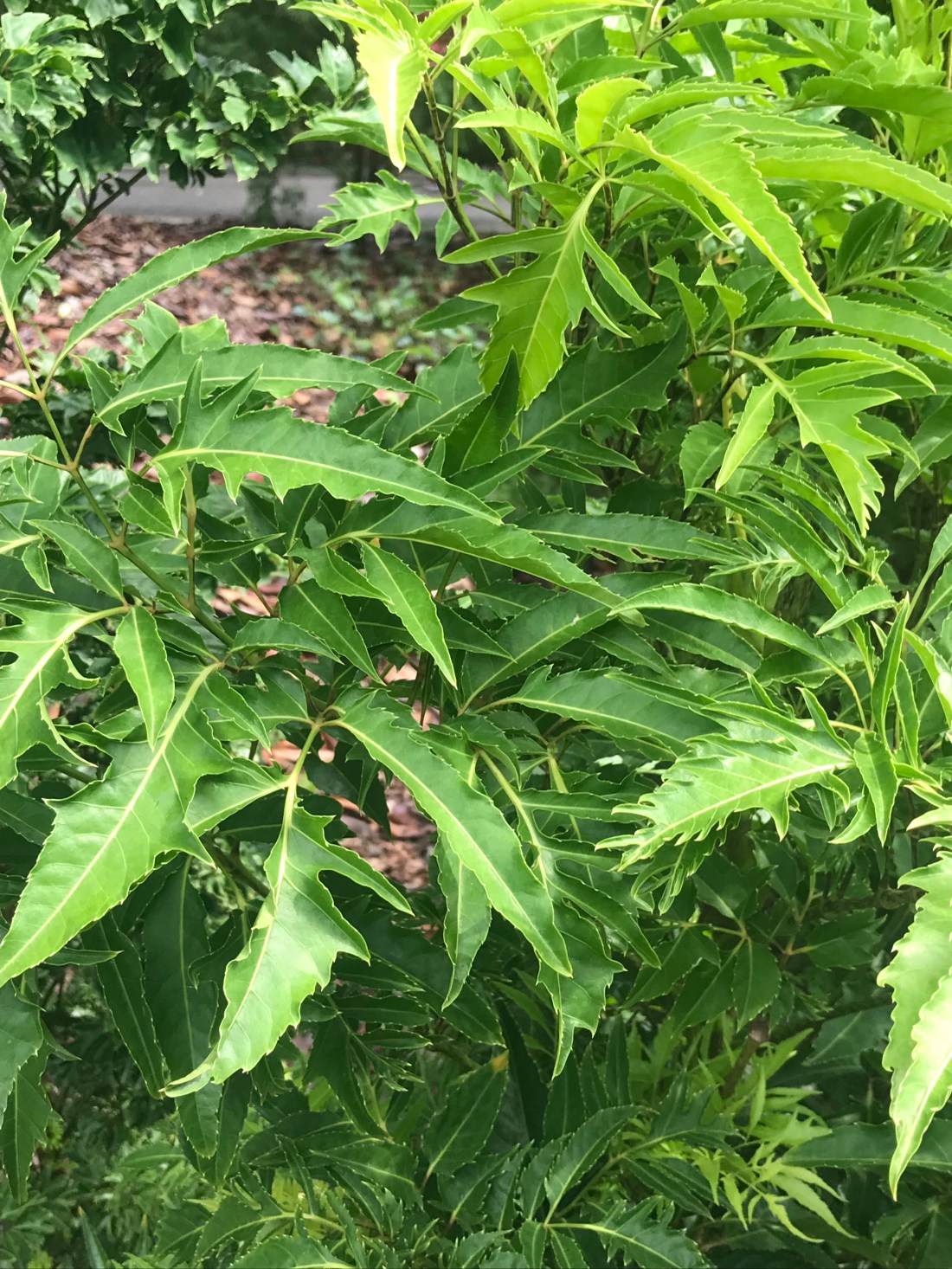
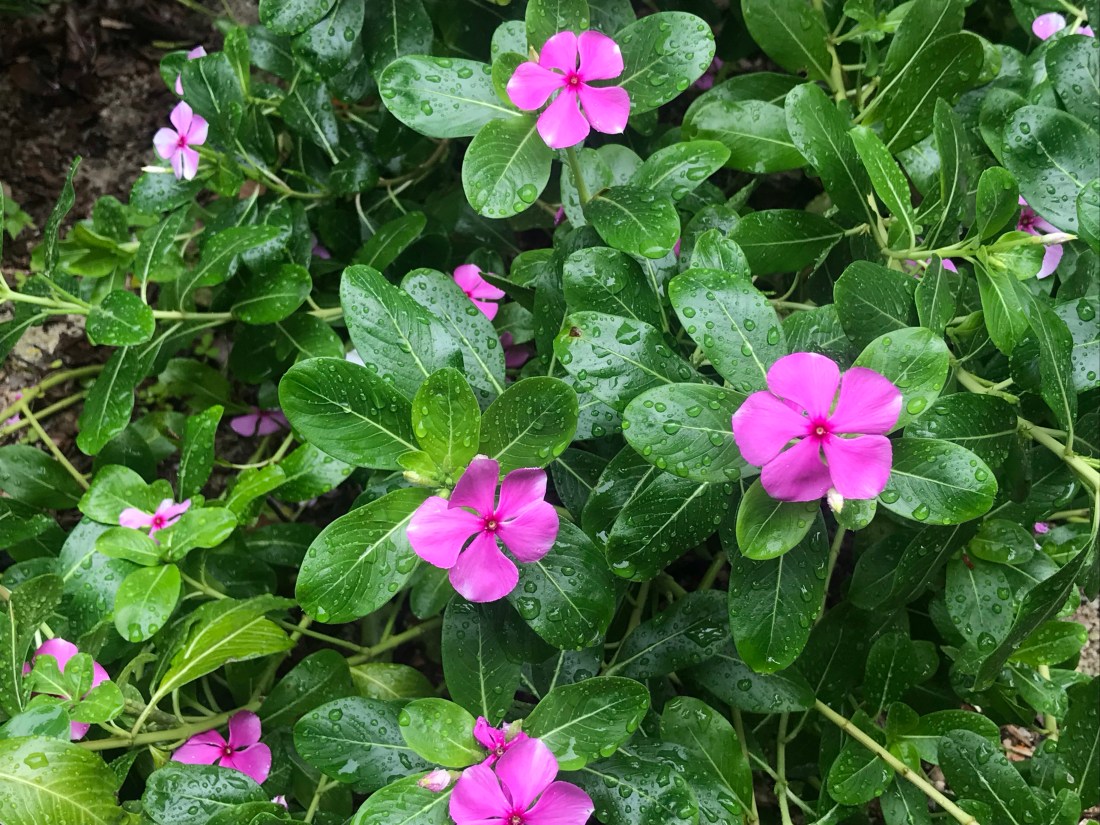
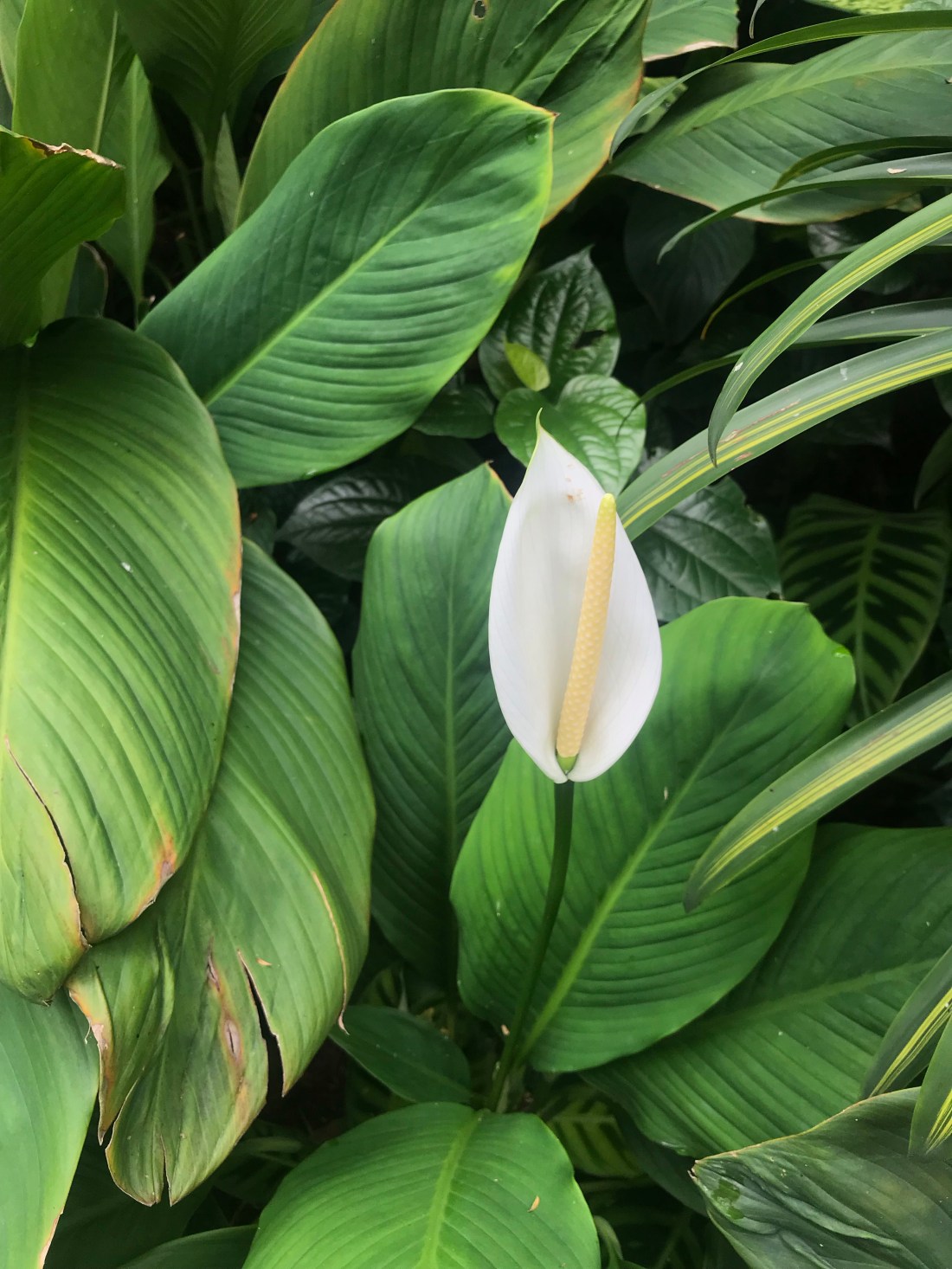
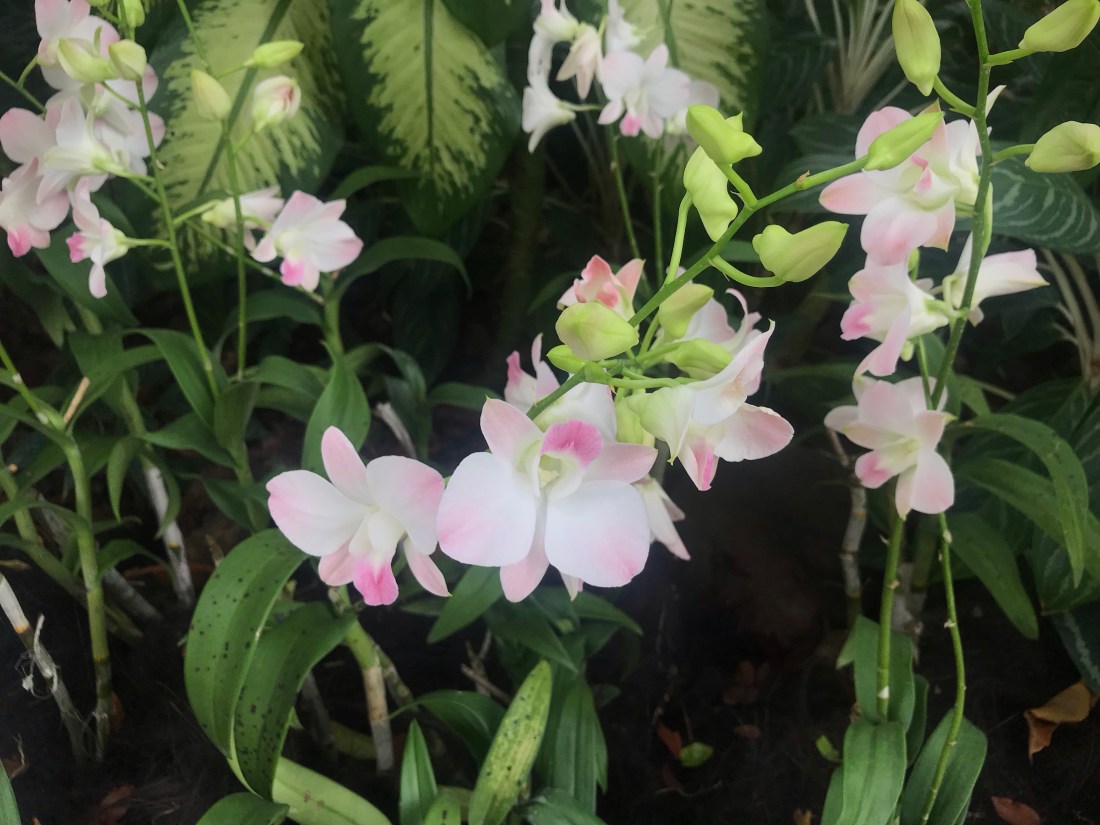
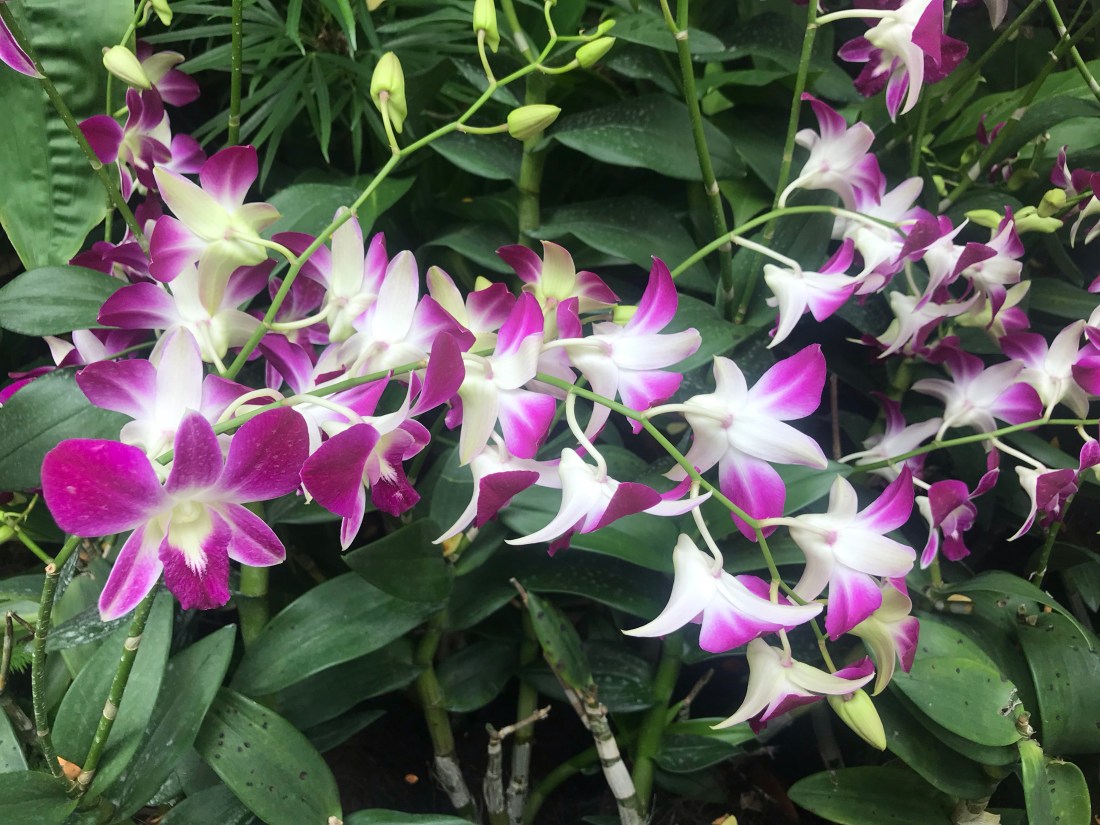
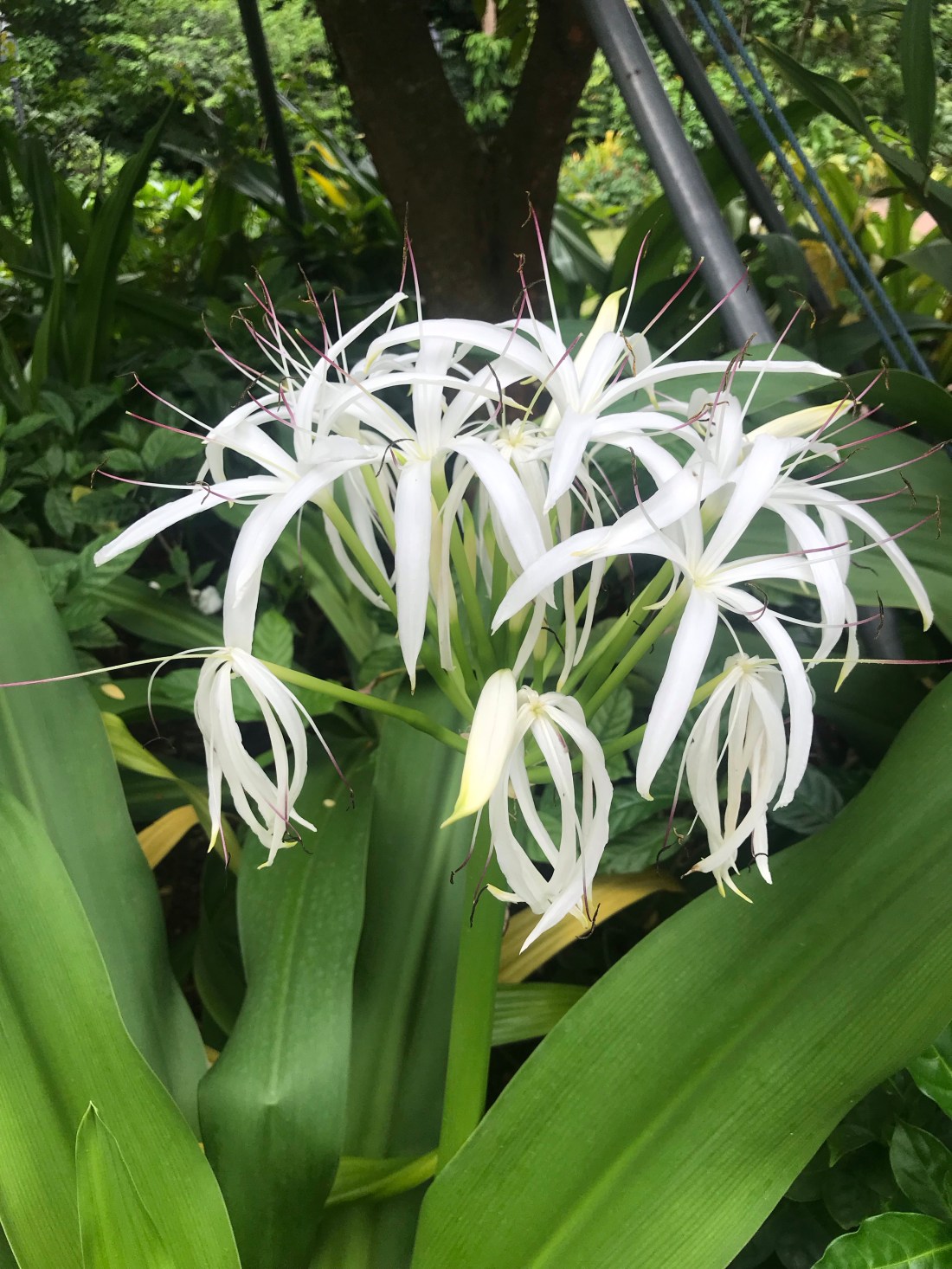
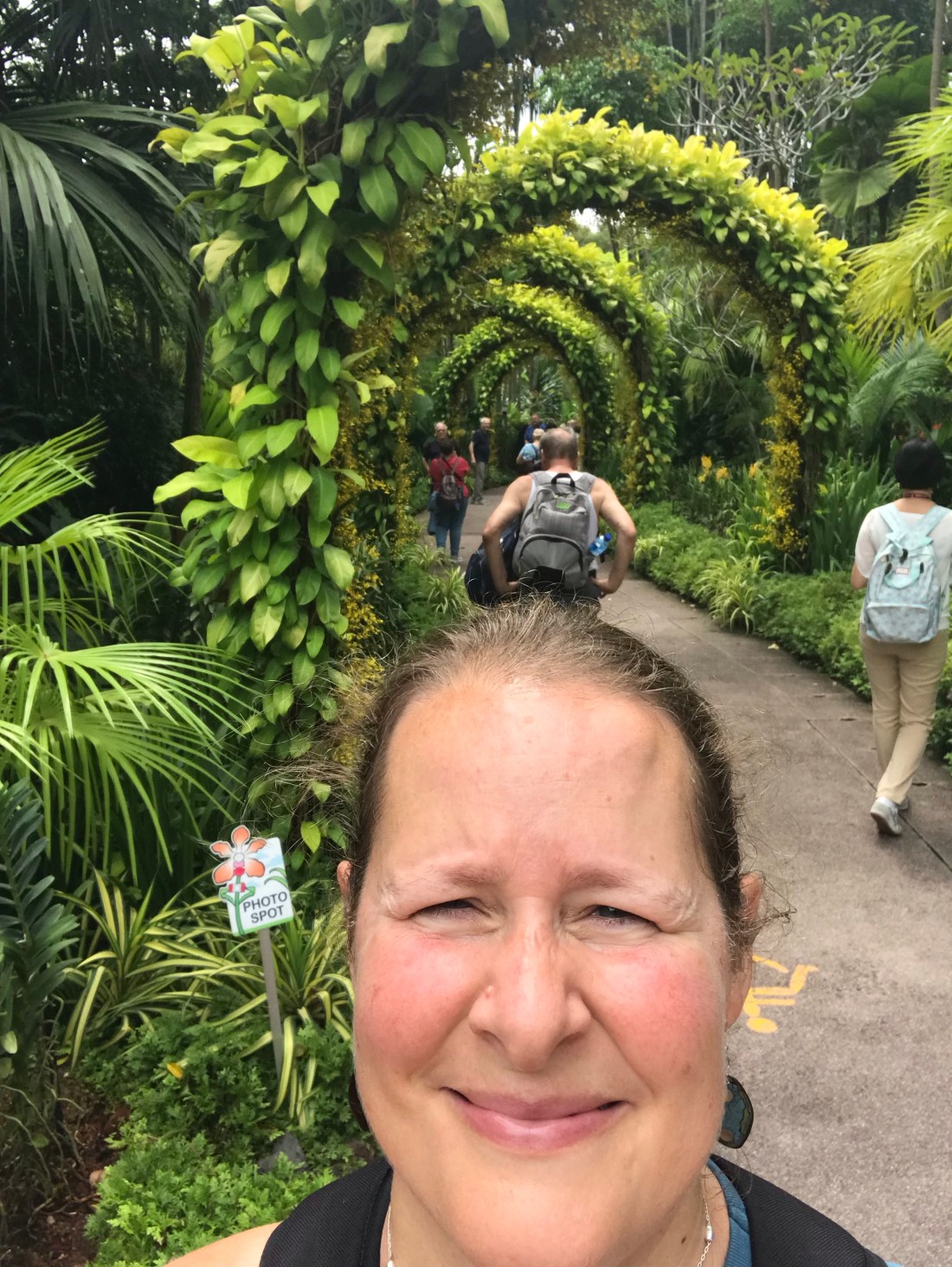
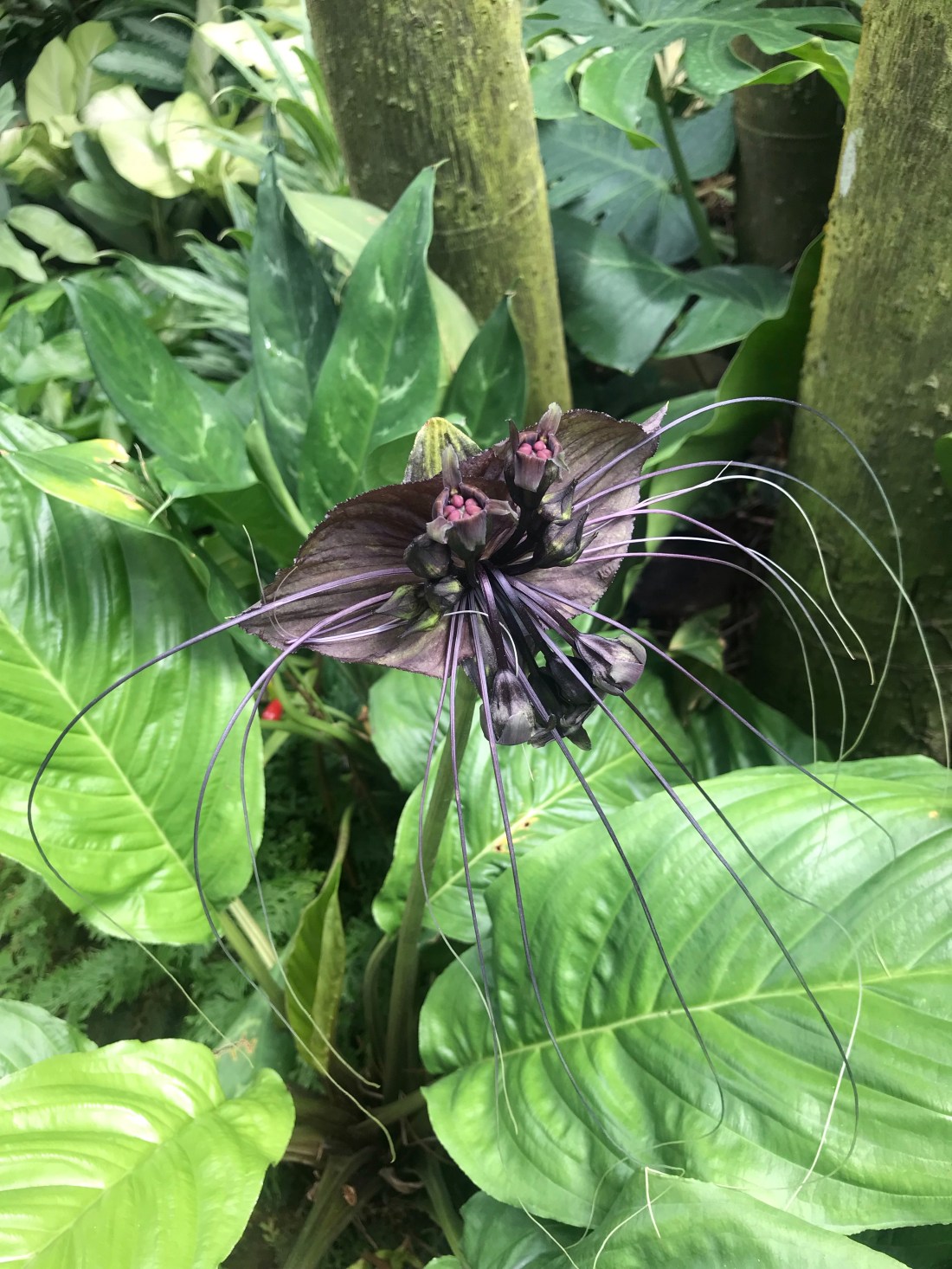
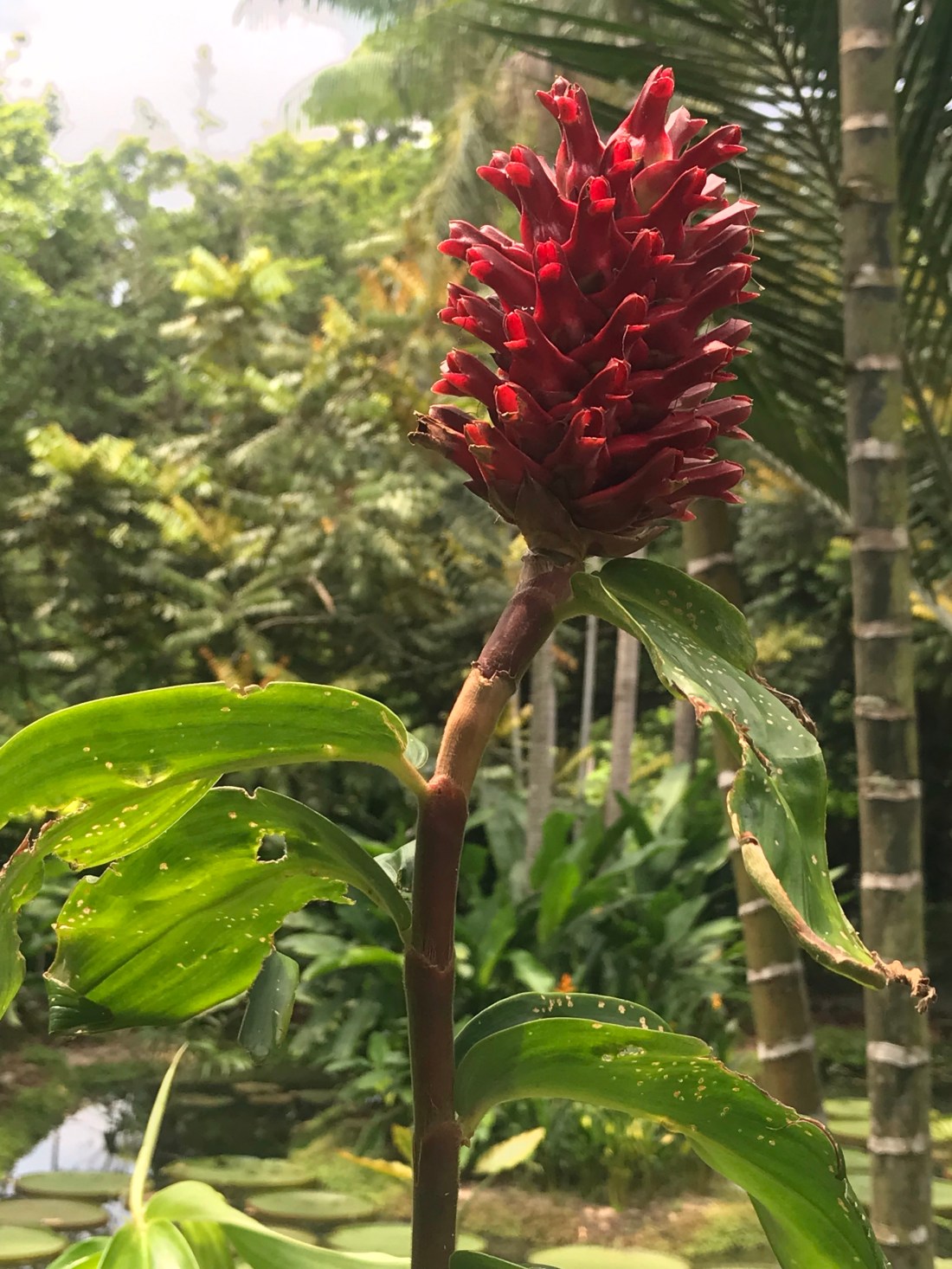
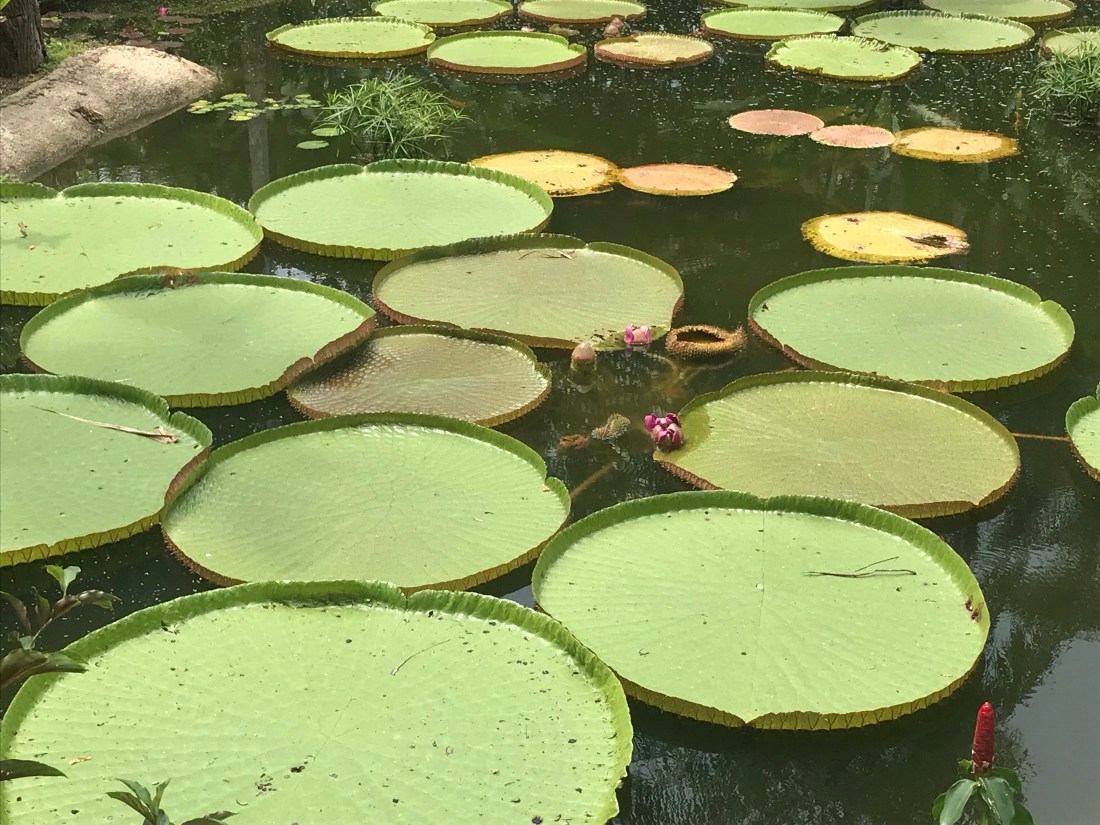
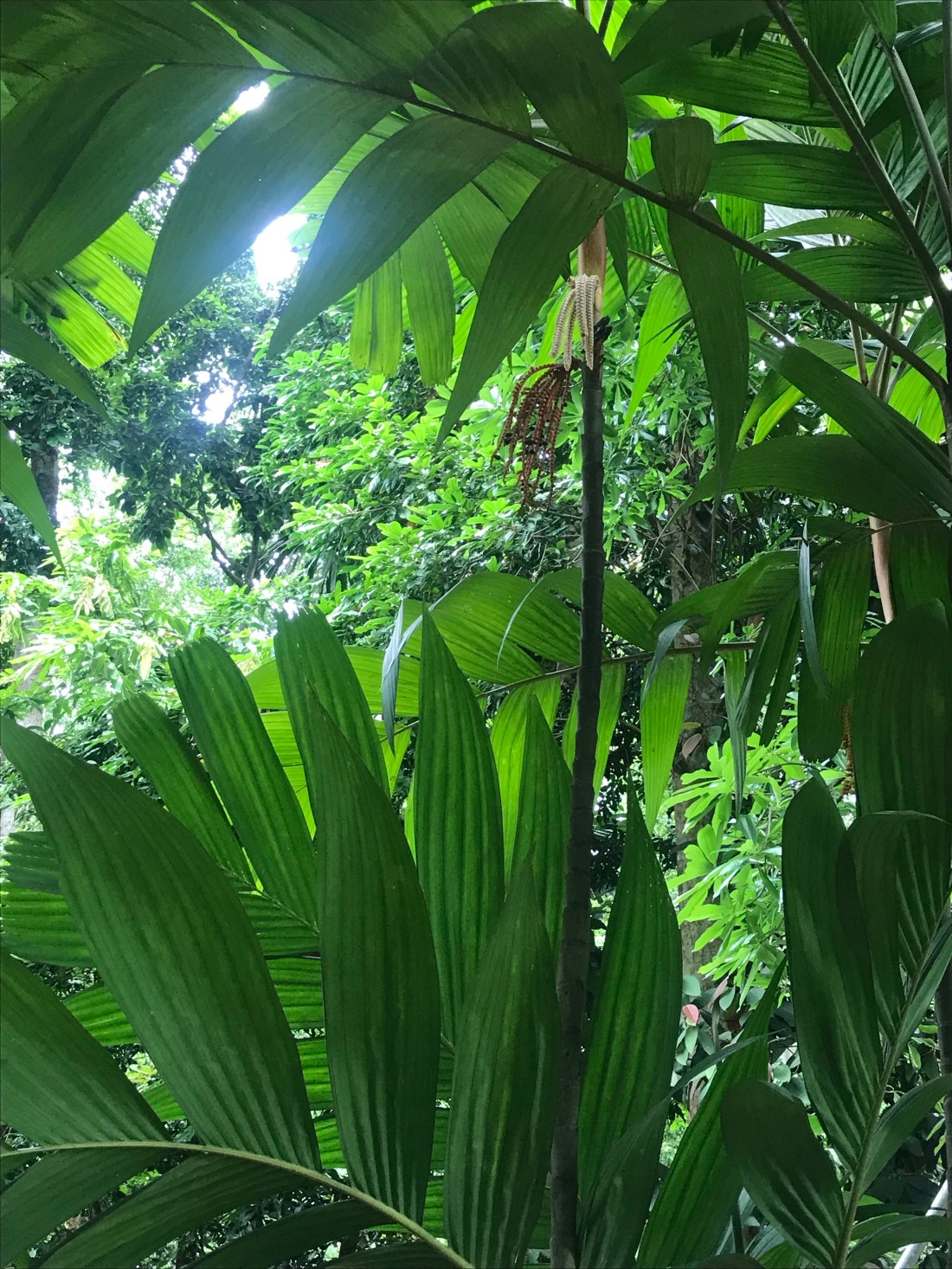
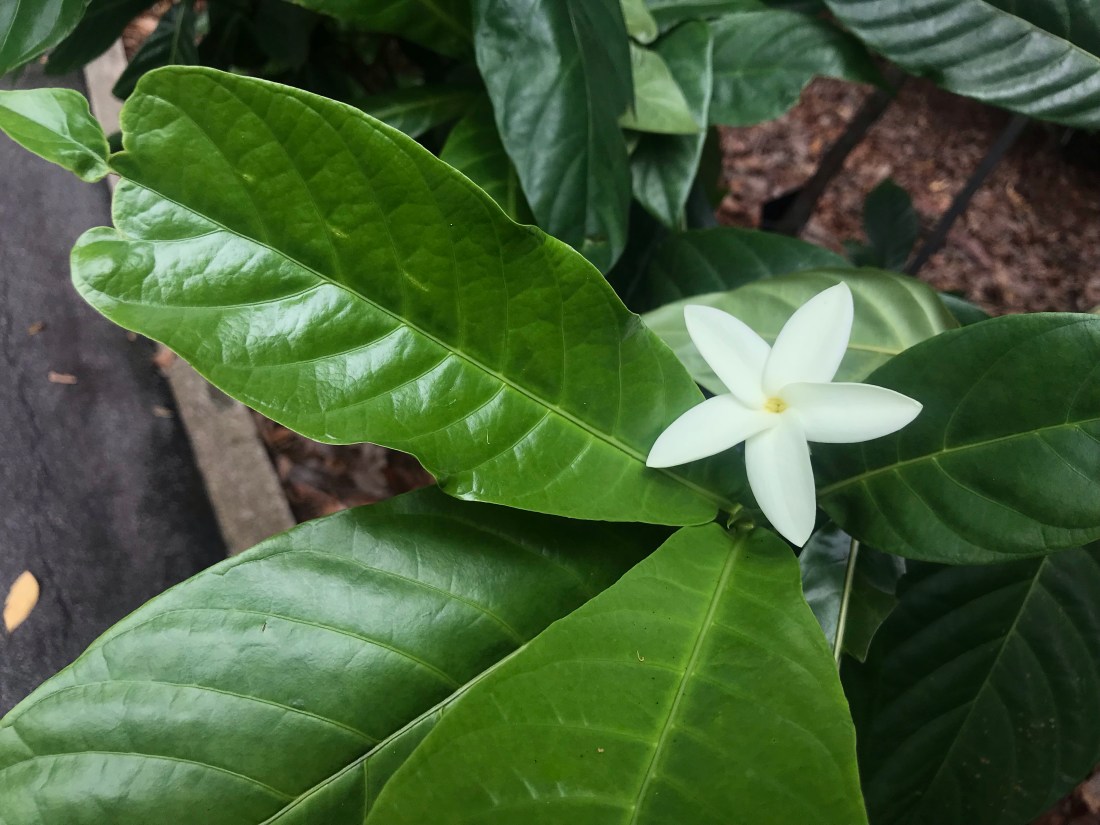
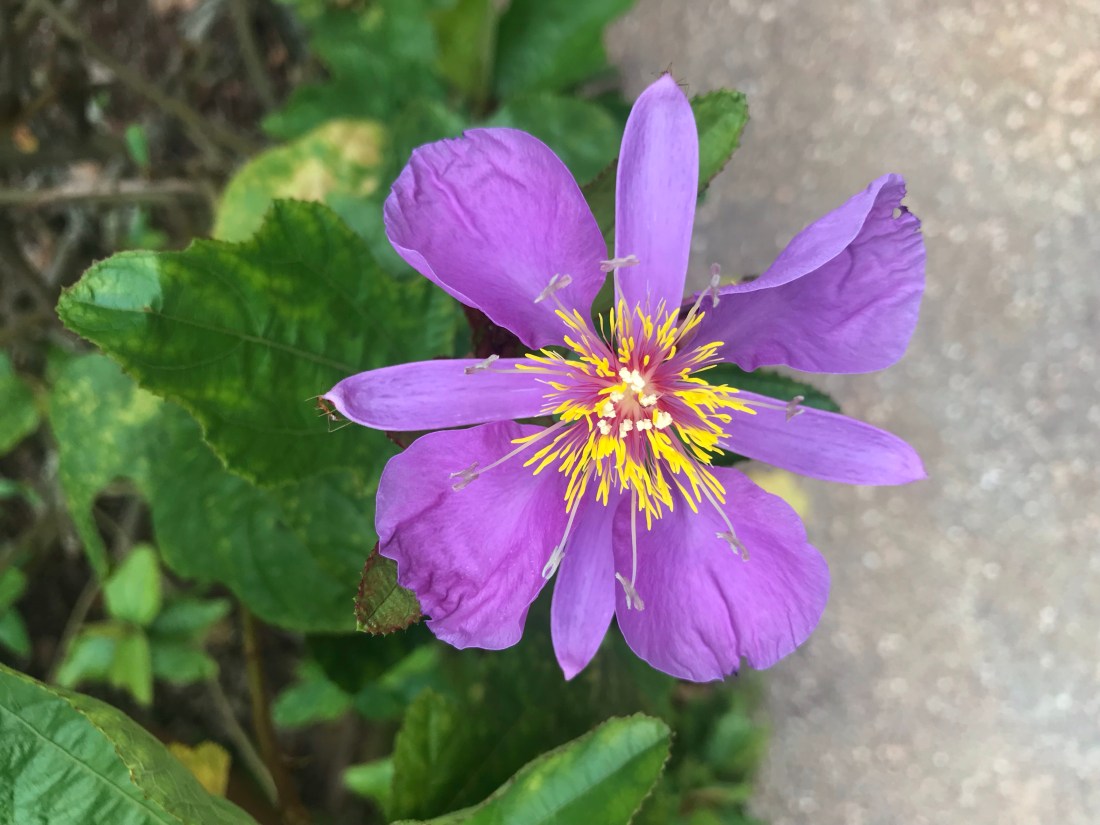
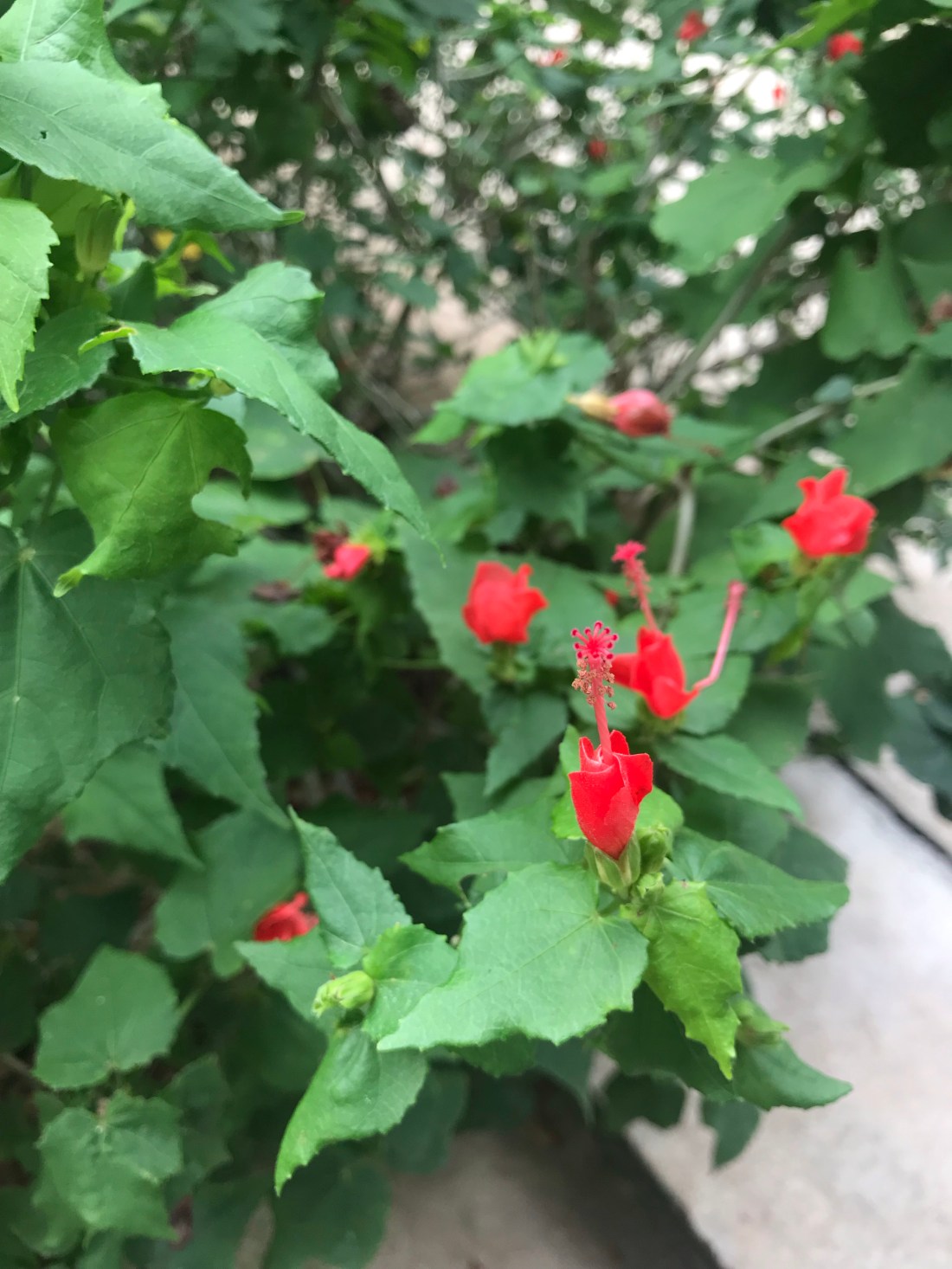
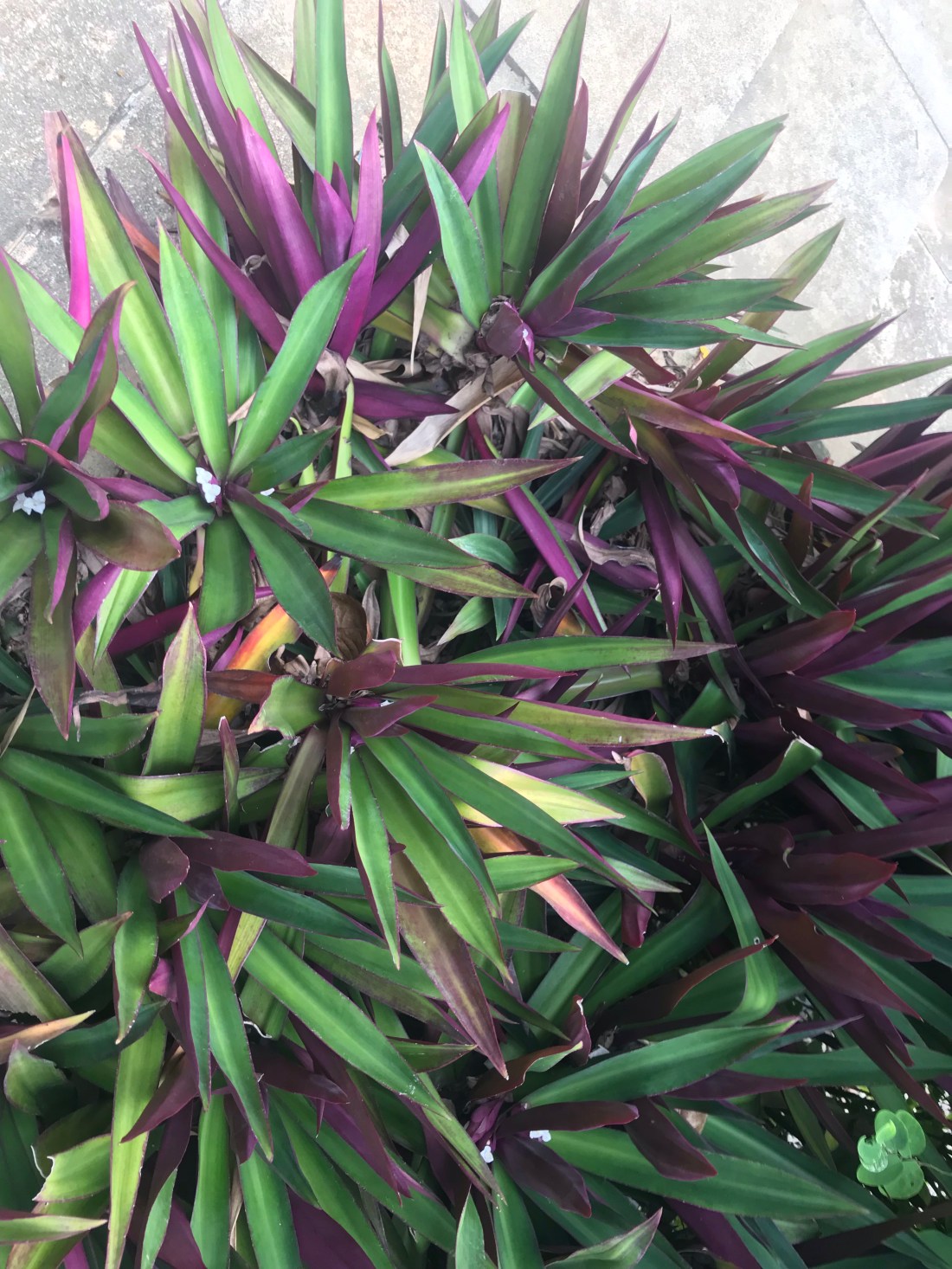
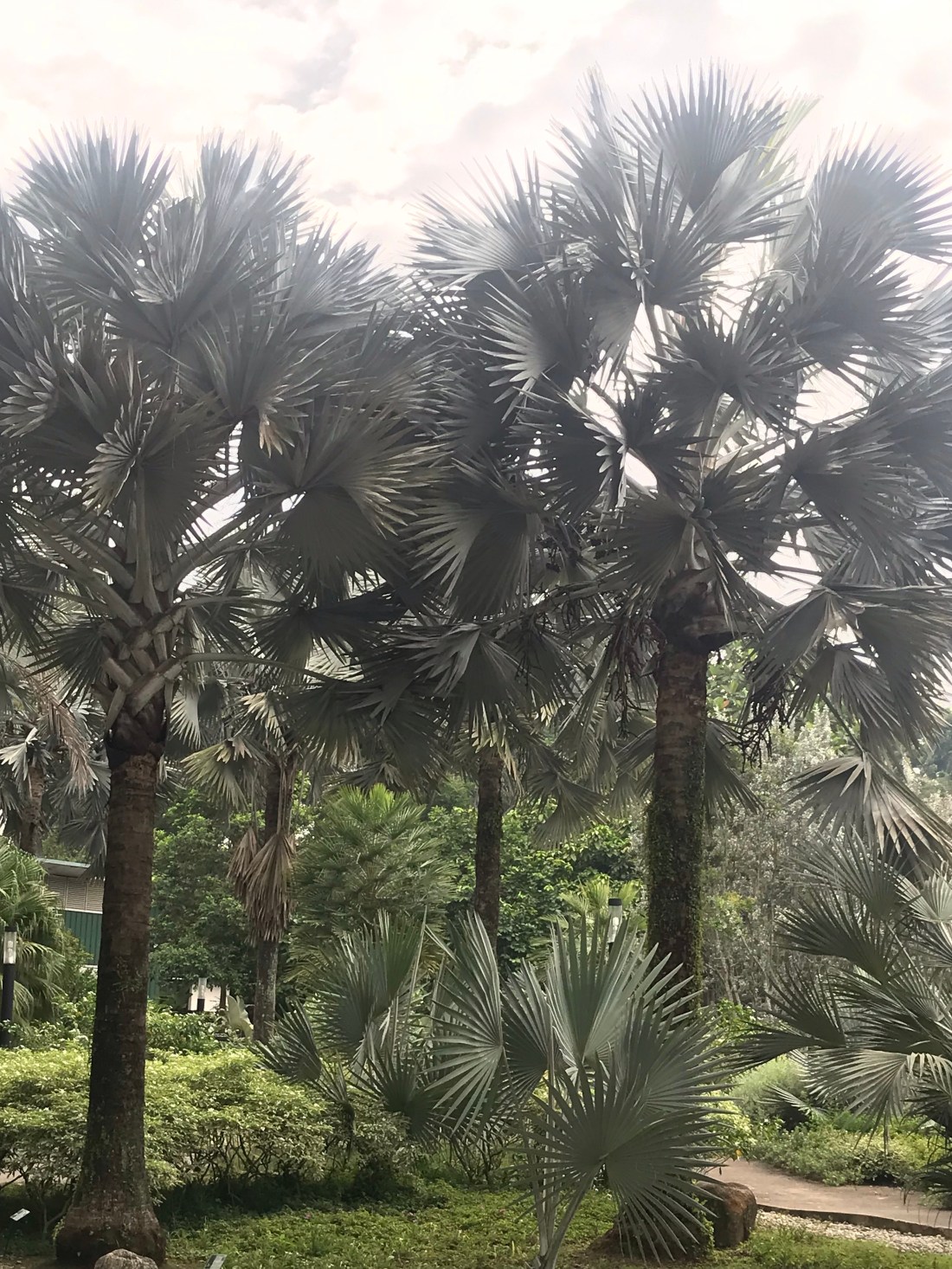
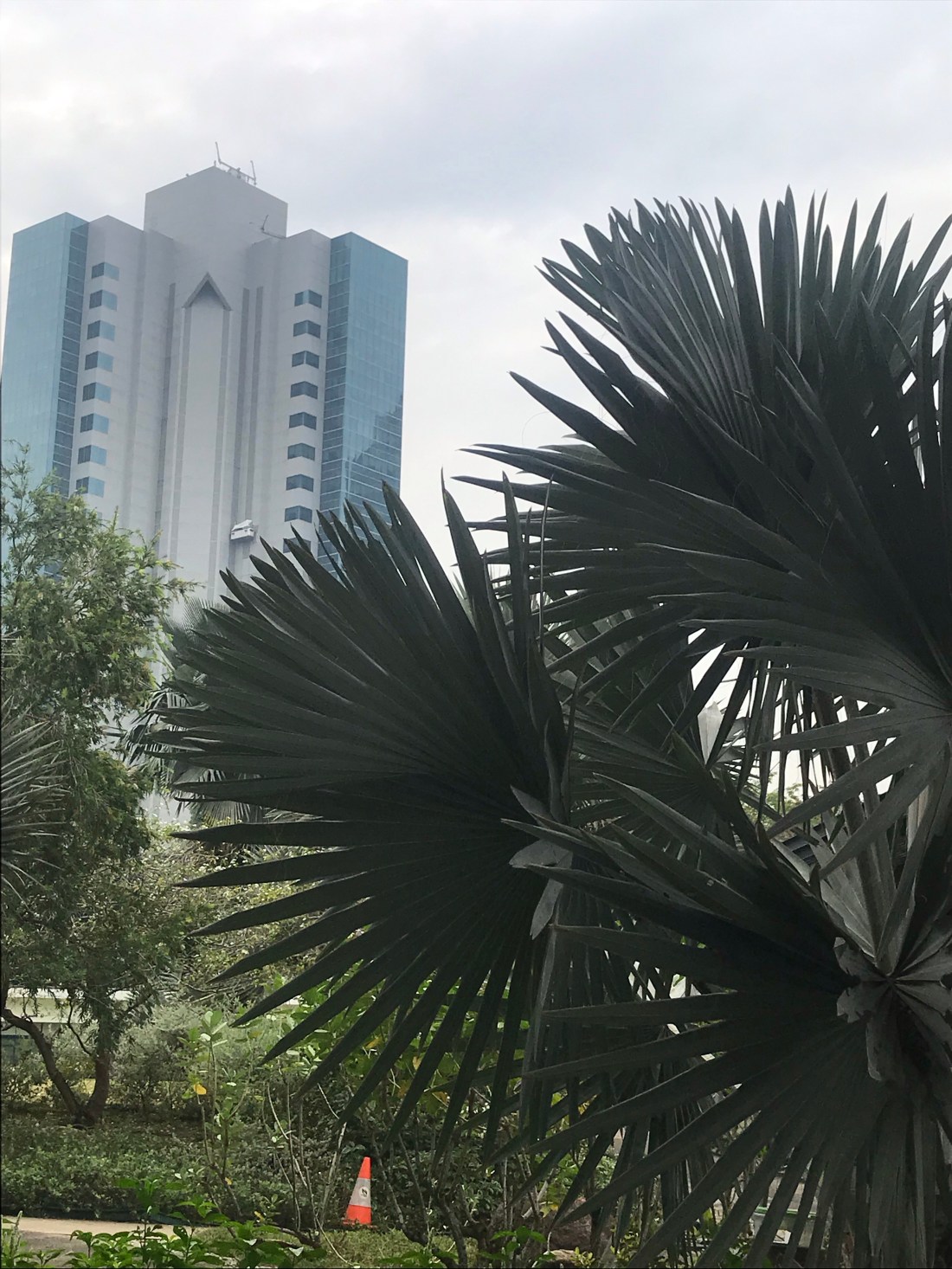
Anyway, photos of the glorious greenness. And also to comment that there was some really good, well presented stuff on climate change too.

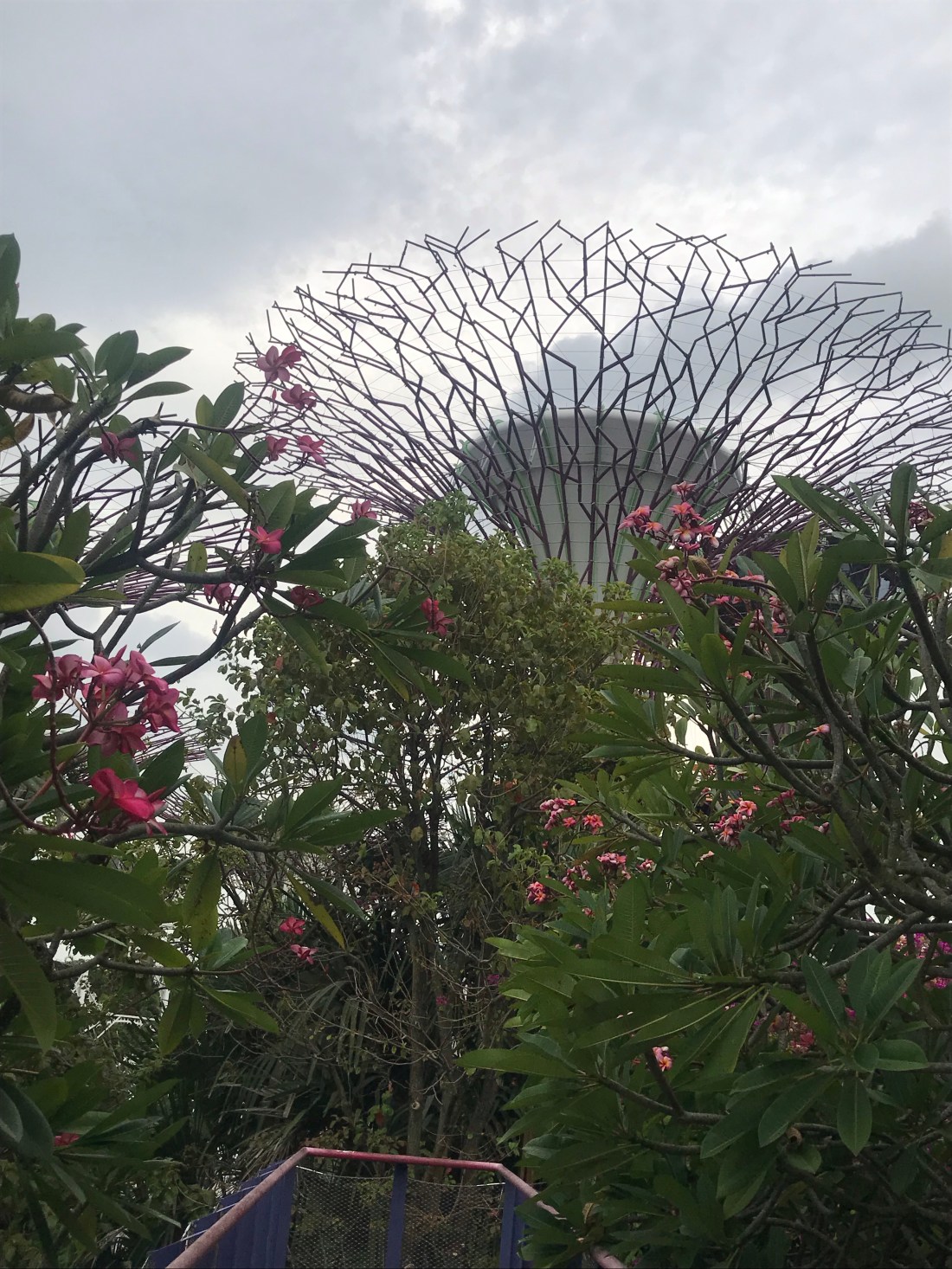
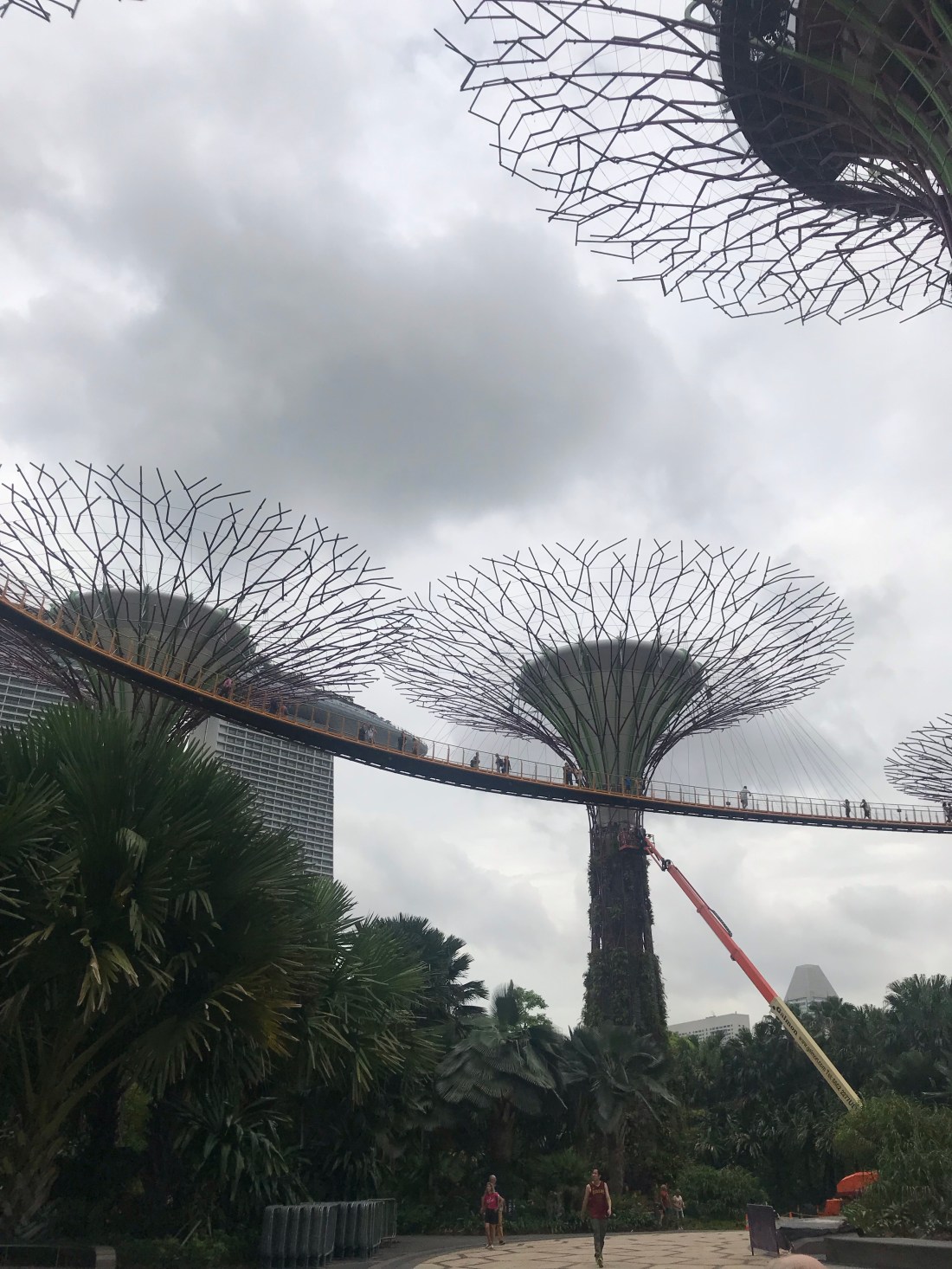
First glimpse of a Supertree:

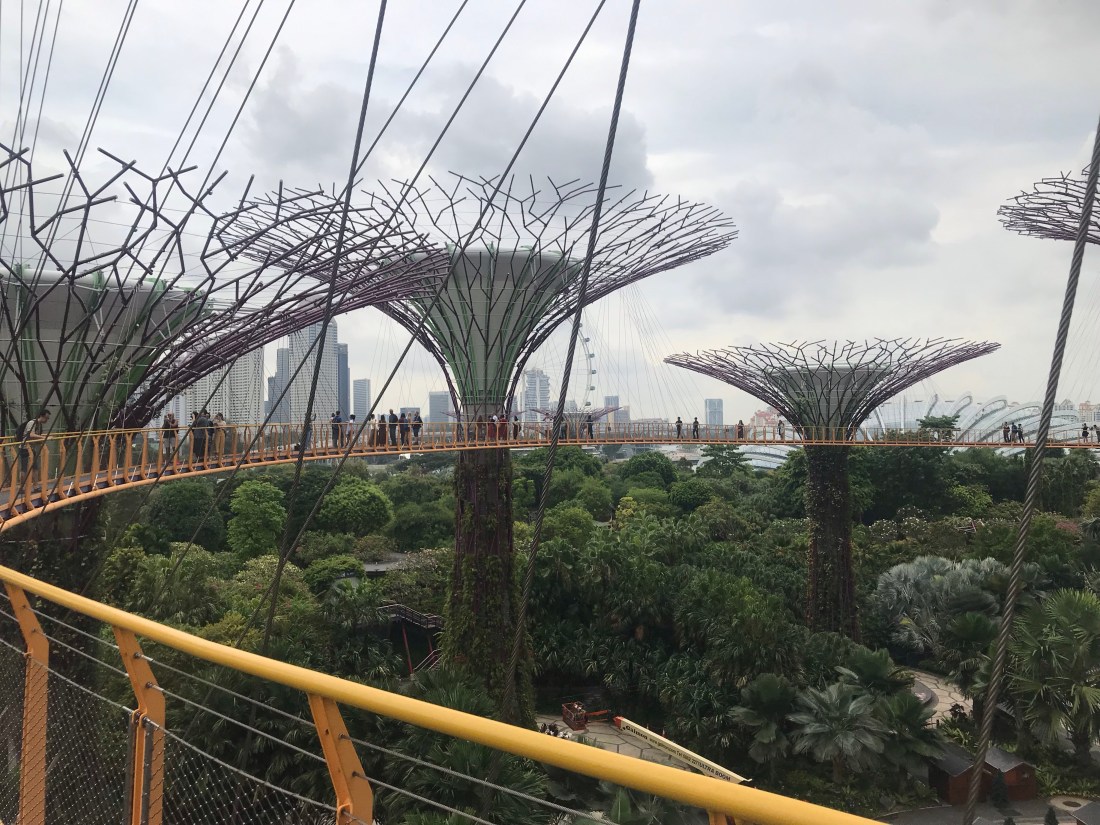
That, up there, is the skywalk (enough to give me collywobbles just looking at it!):

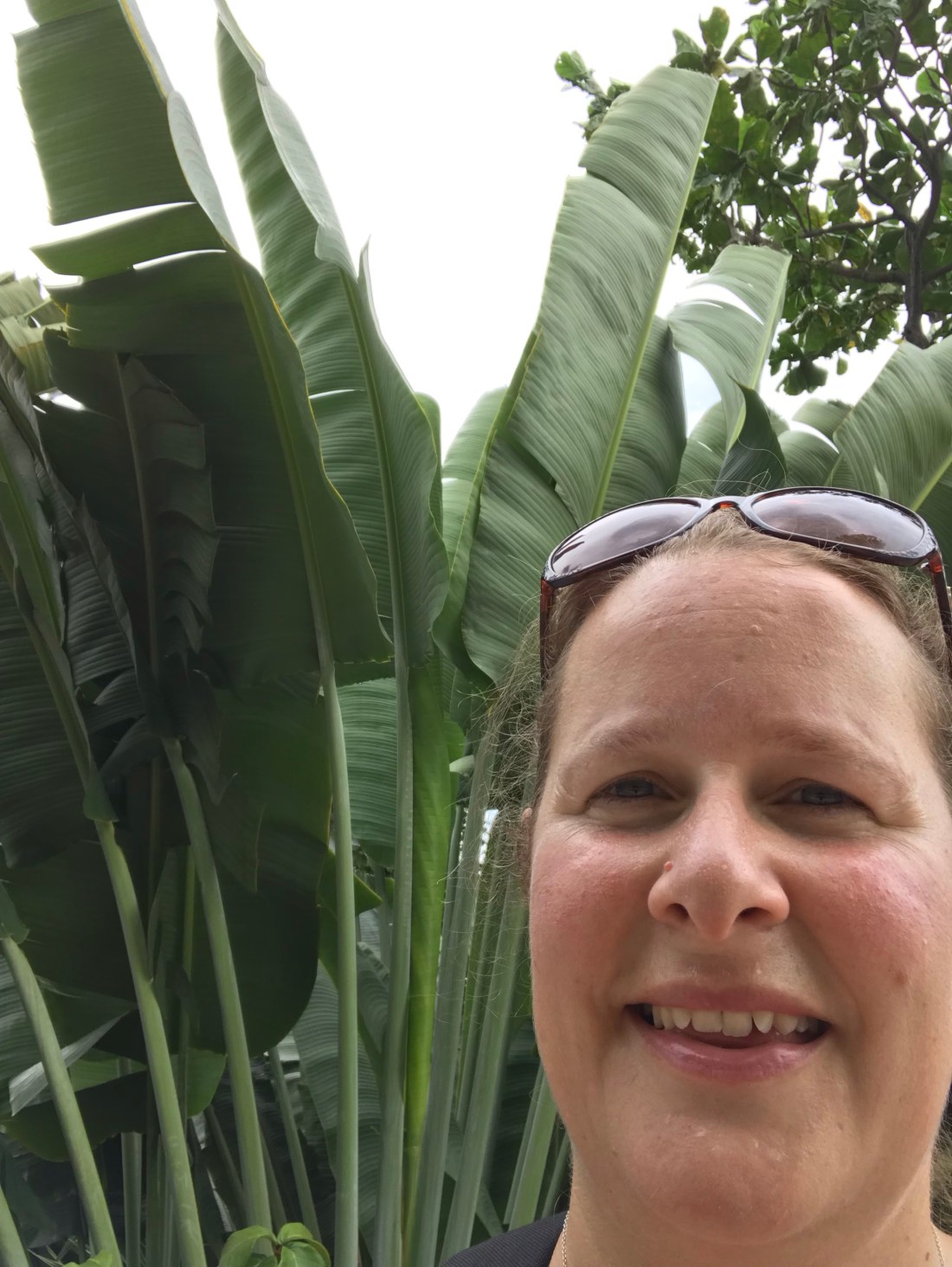
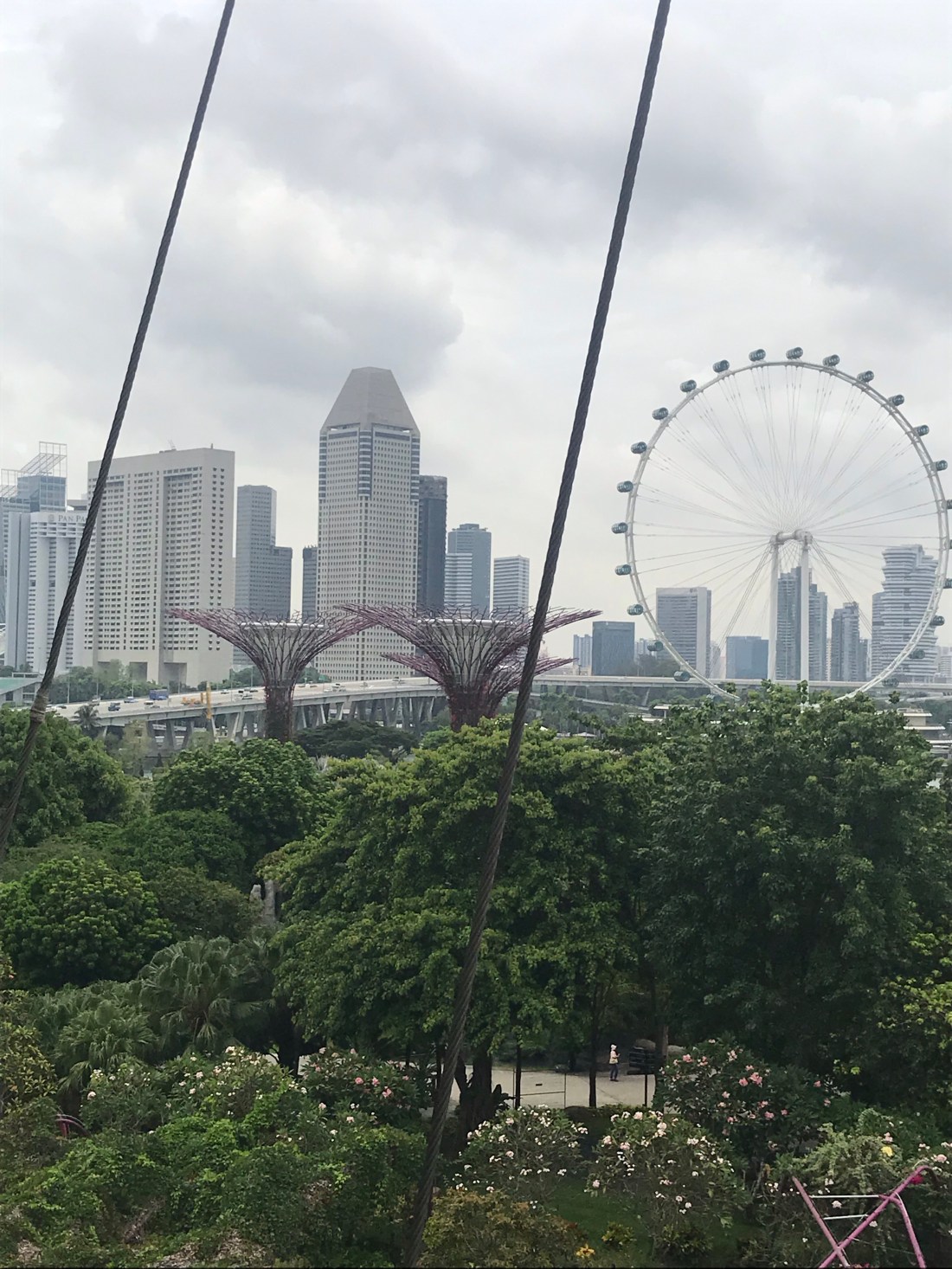
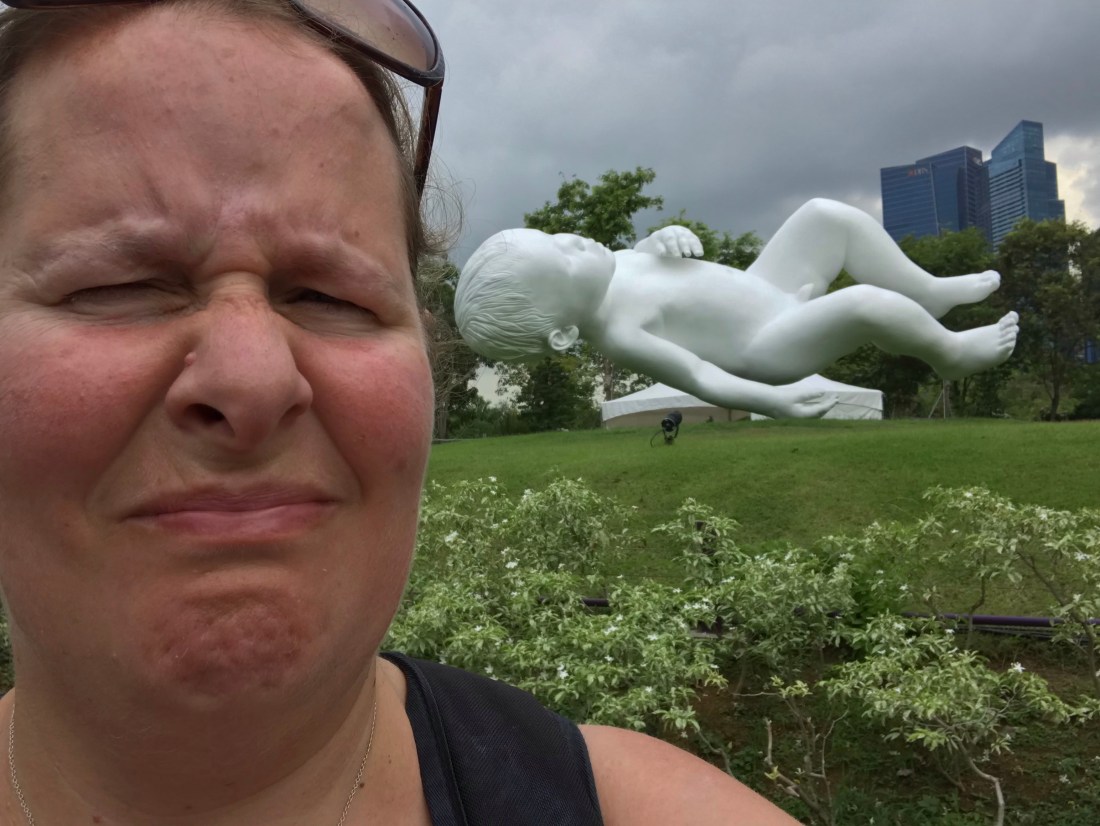
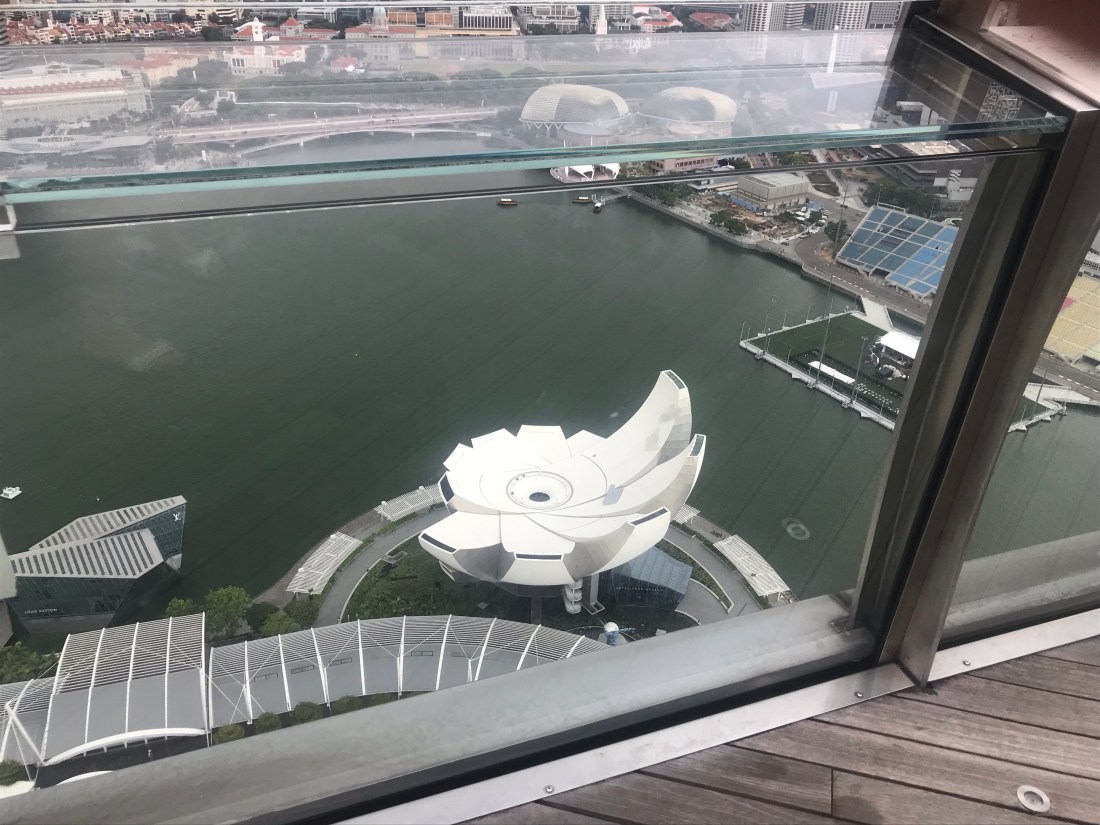
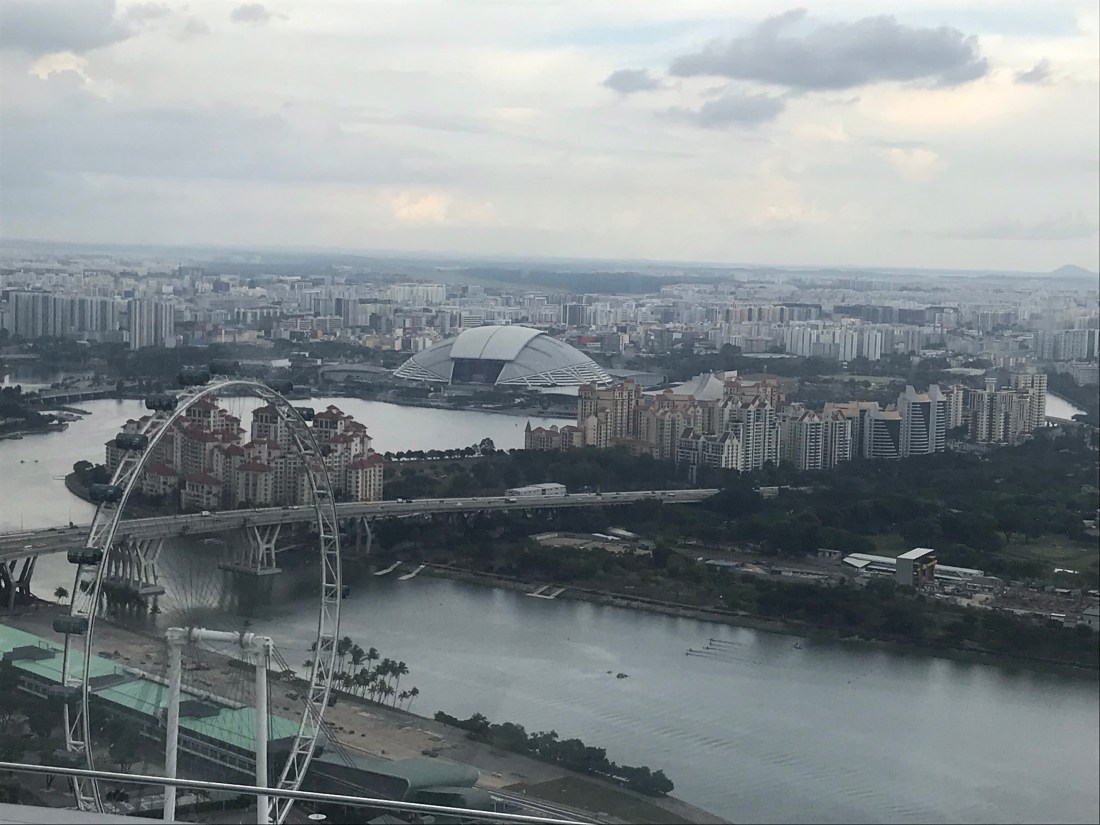
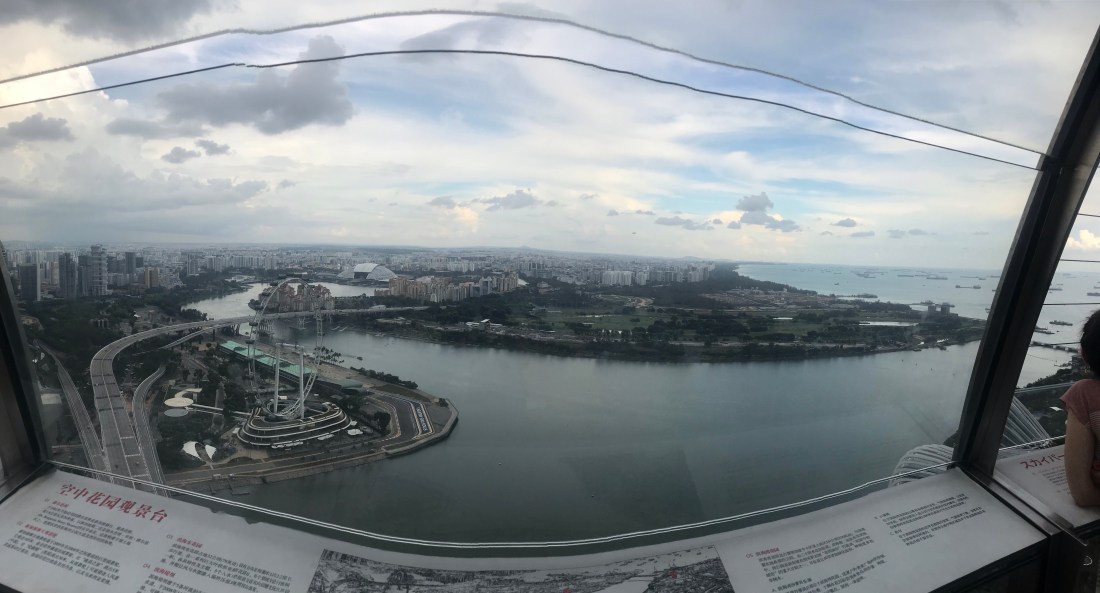
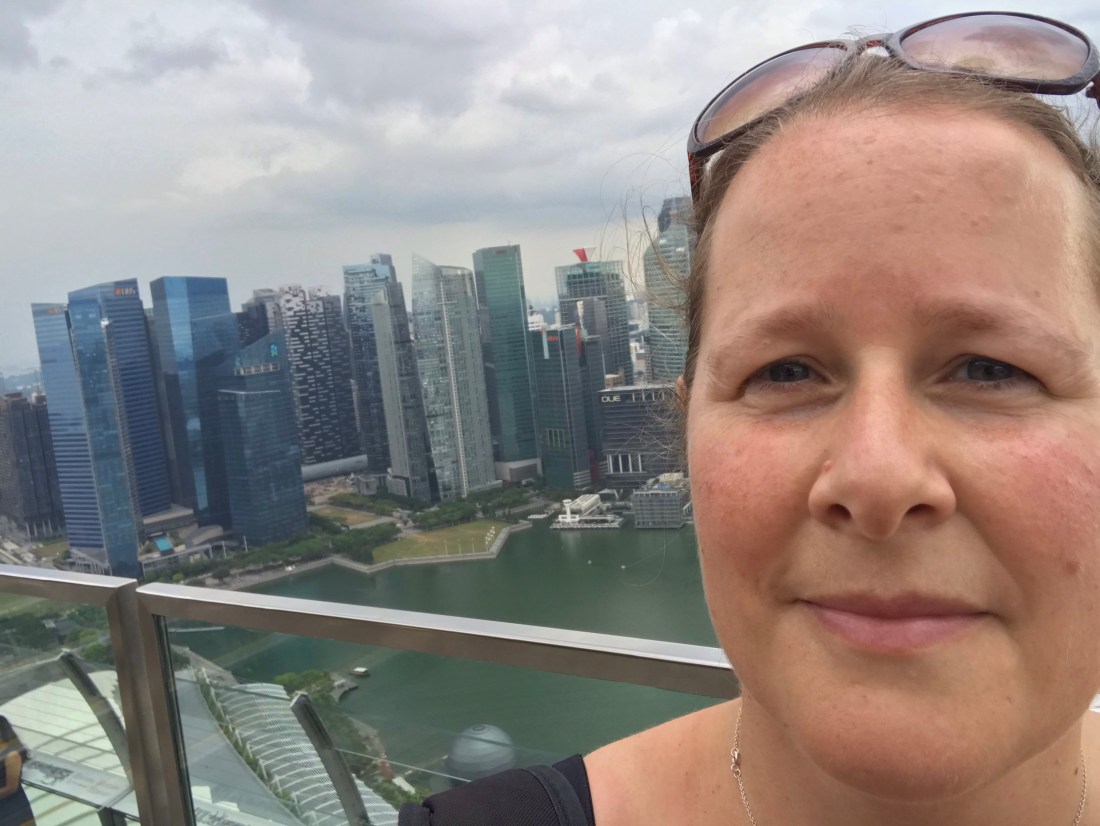
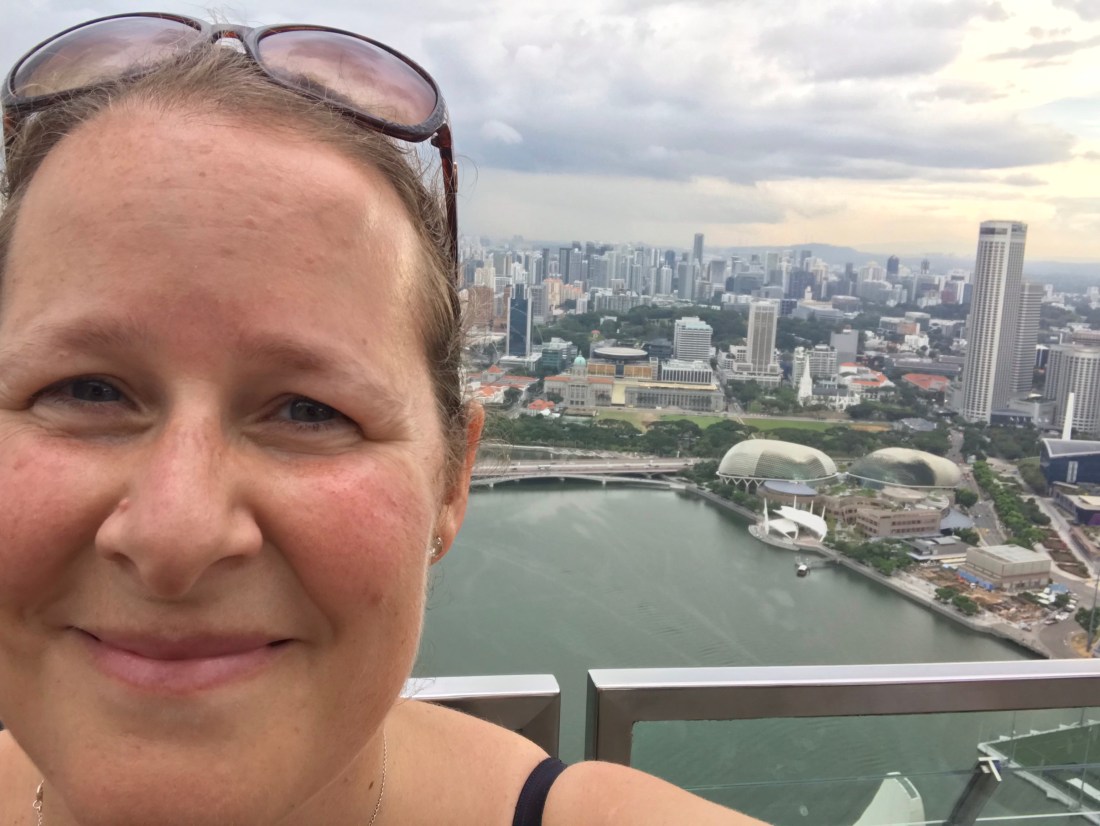
These next two pictures were taken from the Skywalk. I was so wobbly, though, and paranoid that I’d drop my phone over the edge, that I put it away until the end (the next photo) when I managed to get a worried looking selfie and a couple of other pictures of the view:

All the way along the Skywalk, there was a queue of people in front of me waking four slow steps and then stopping to take yet another selfie in front of another view! Meanwhile, I was hanging on to the handrail and gritting my teeth, saying inside my head (“Noooo! Not another selfie!! When are you ever going to look at all these pictures of yourself???”). In the background of this photo you can see the rest of the Skywalk behind me and the little people on it. It is pretty long (especially doing the “4 steps selfie” dance while having collywobbles! 😆):

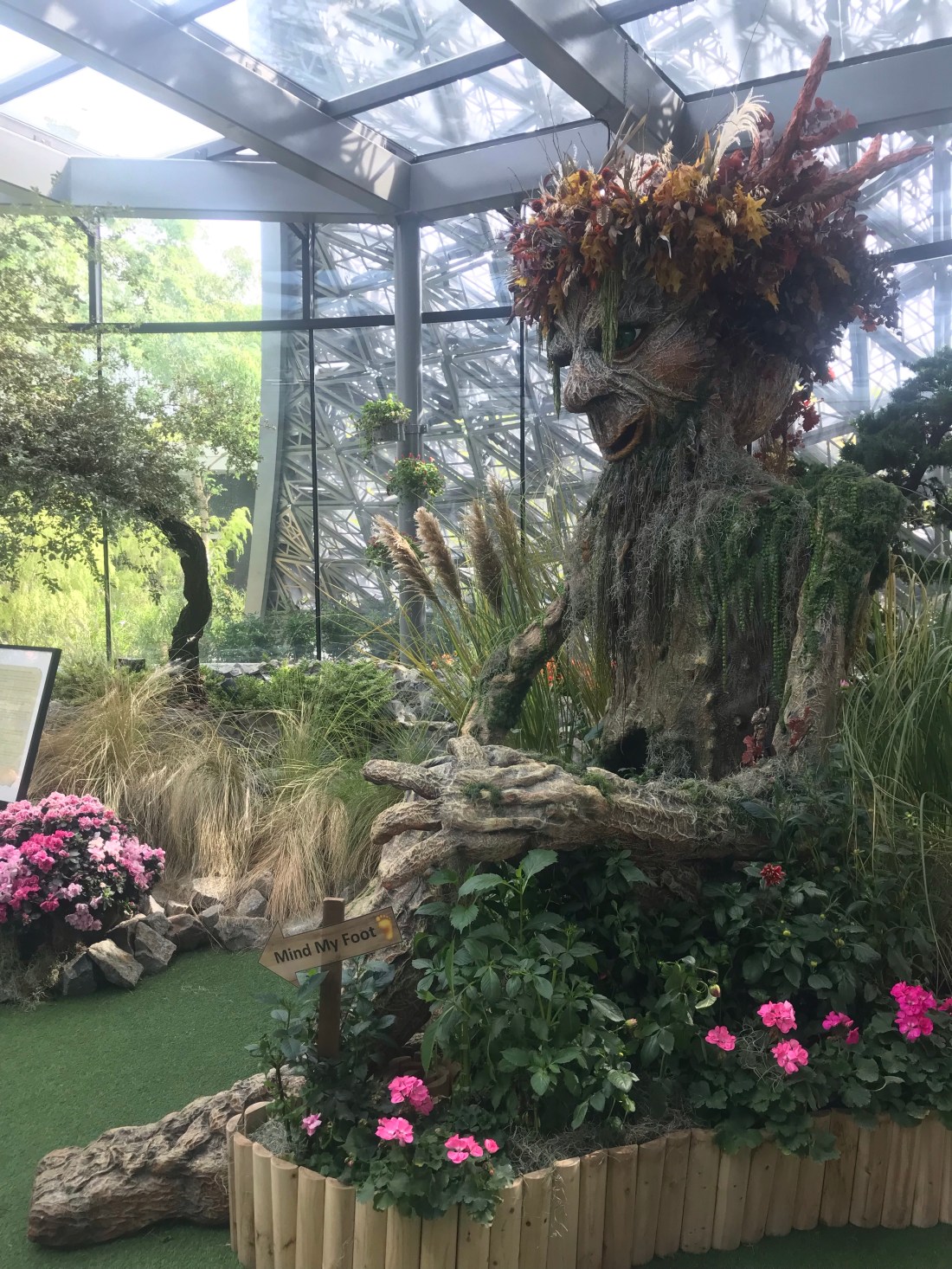
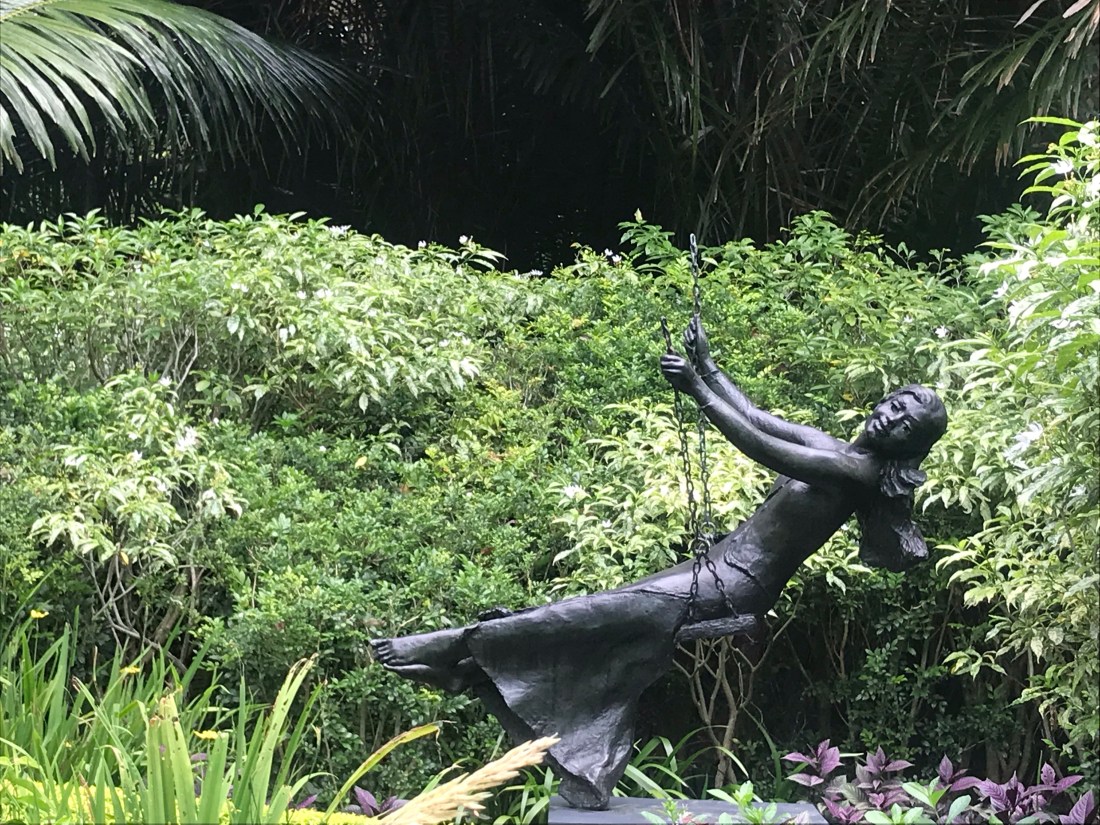
Not sure what to make of that sculpture👆🏼

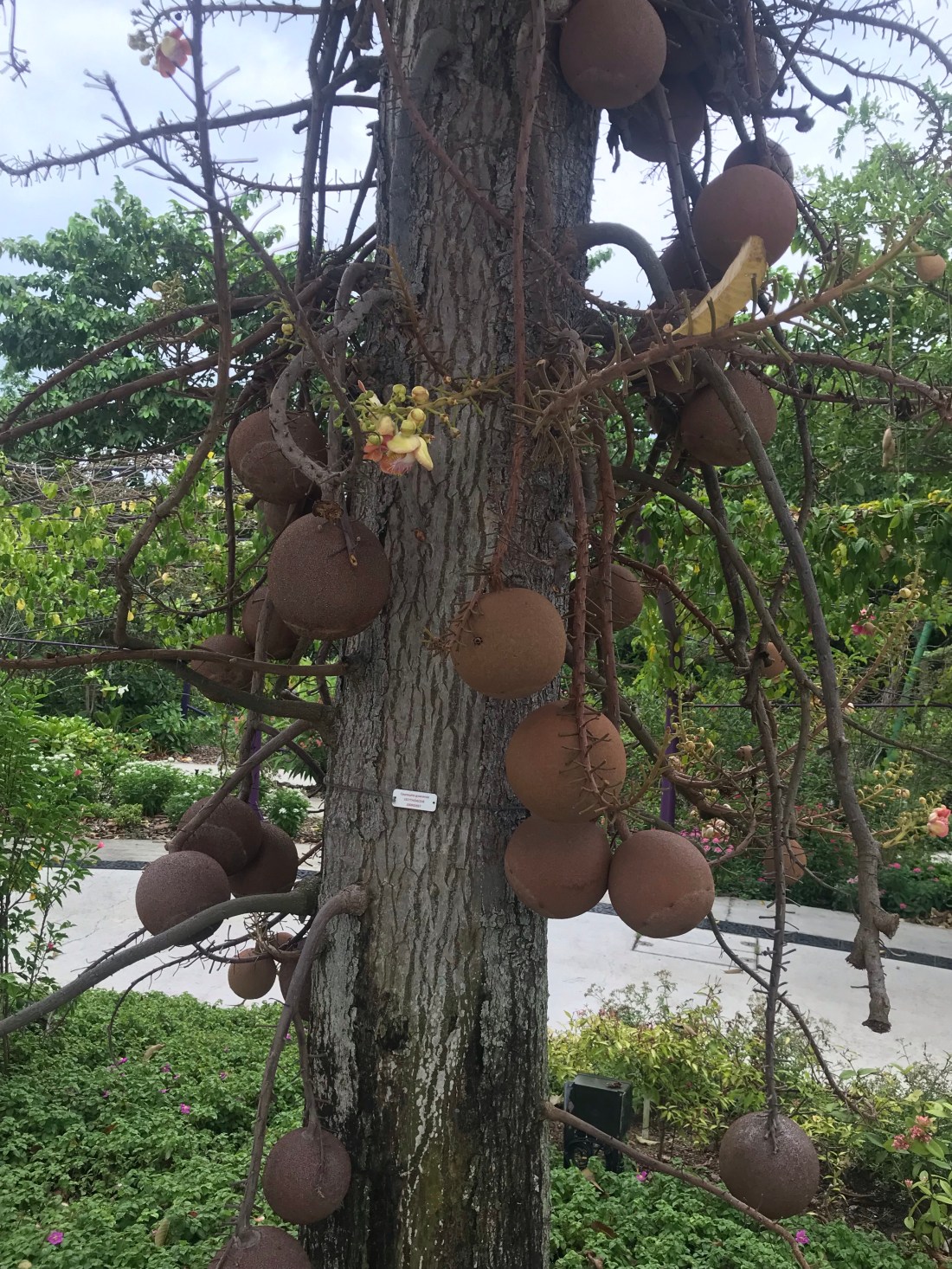
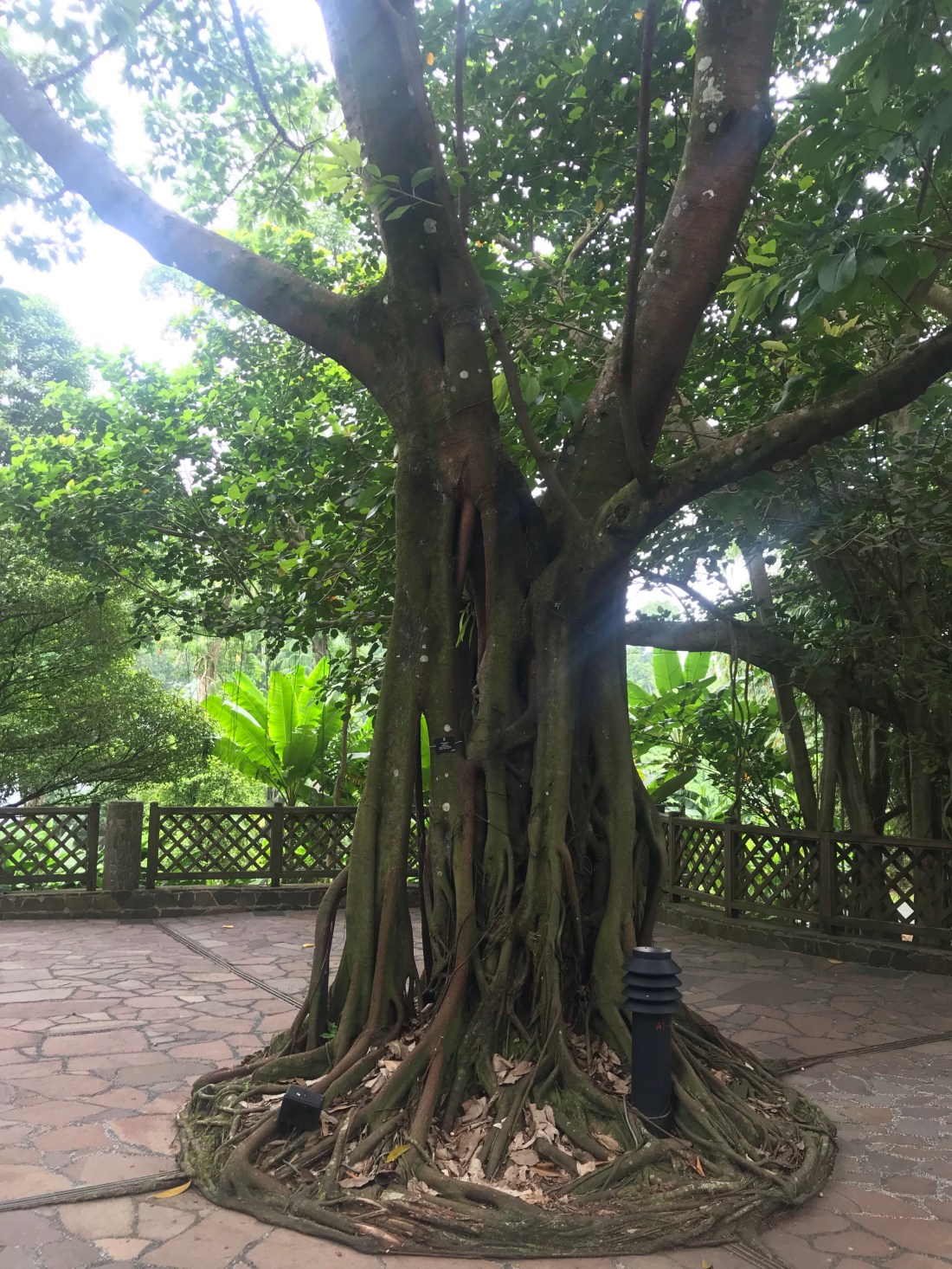
Another Cannonball tree like the one I saw in Penang:

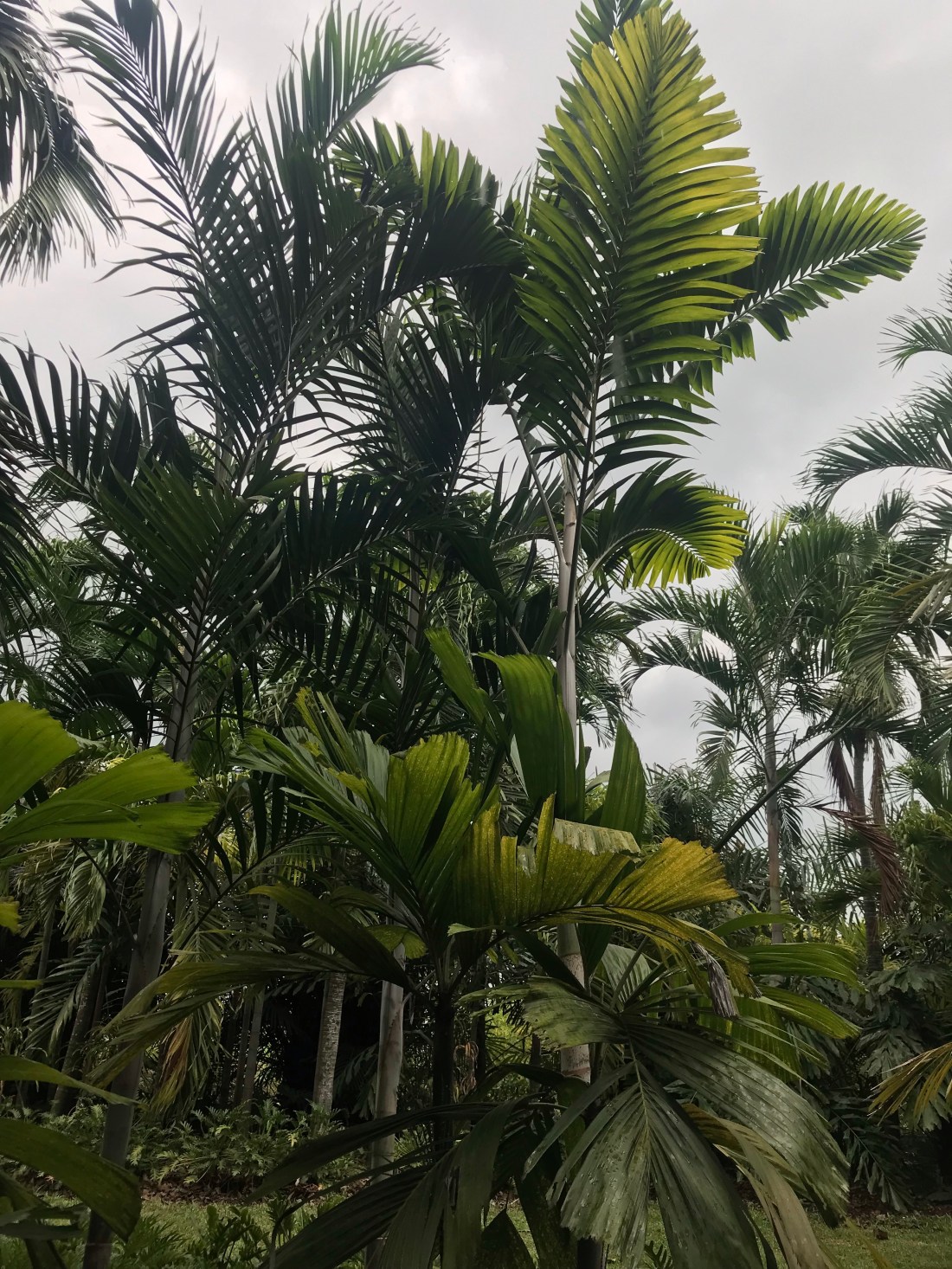
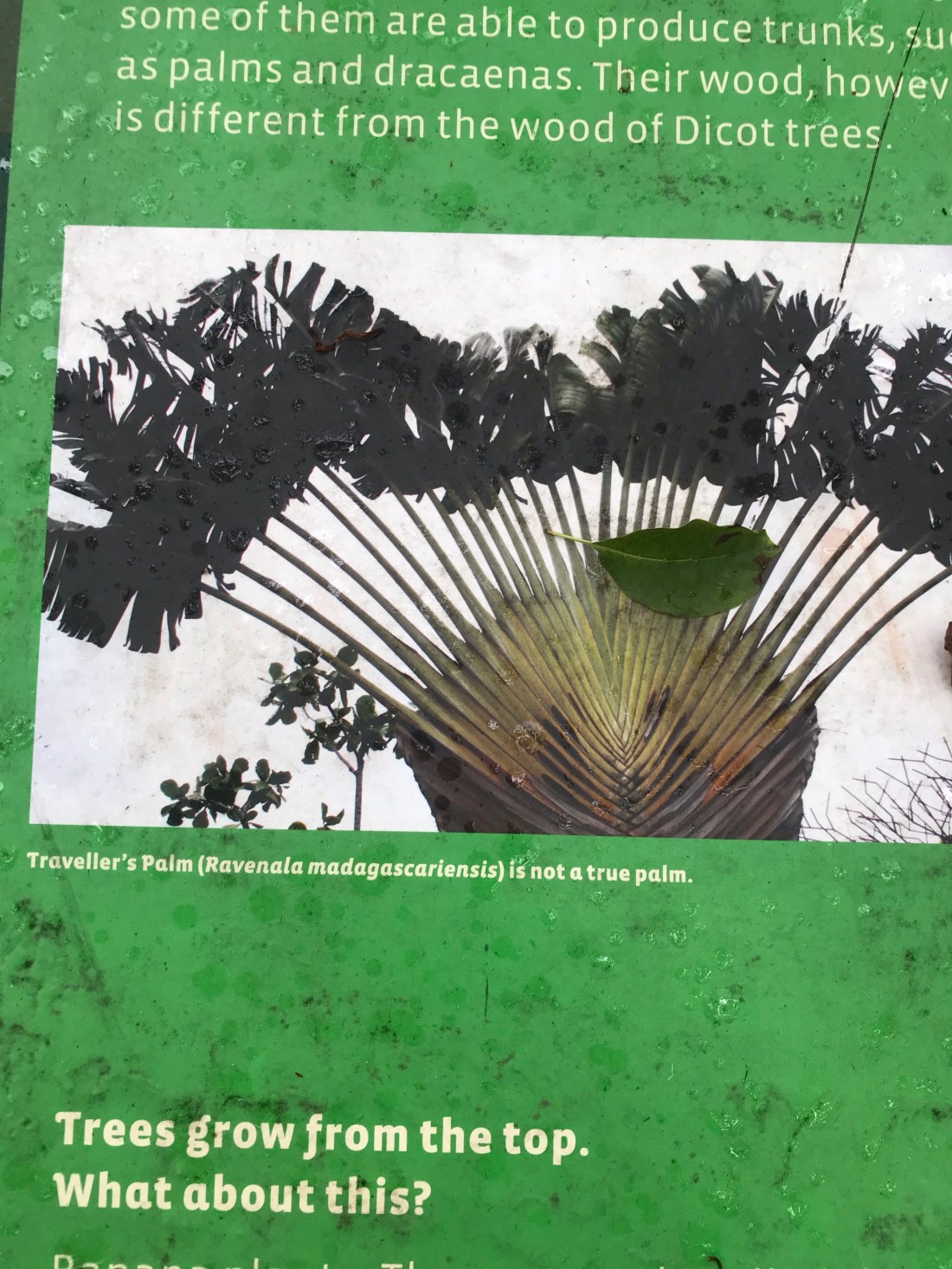
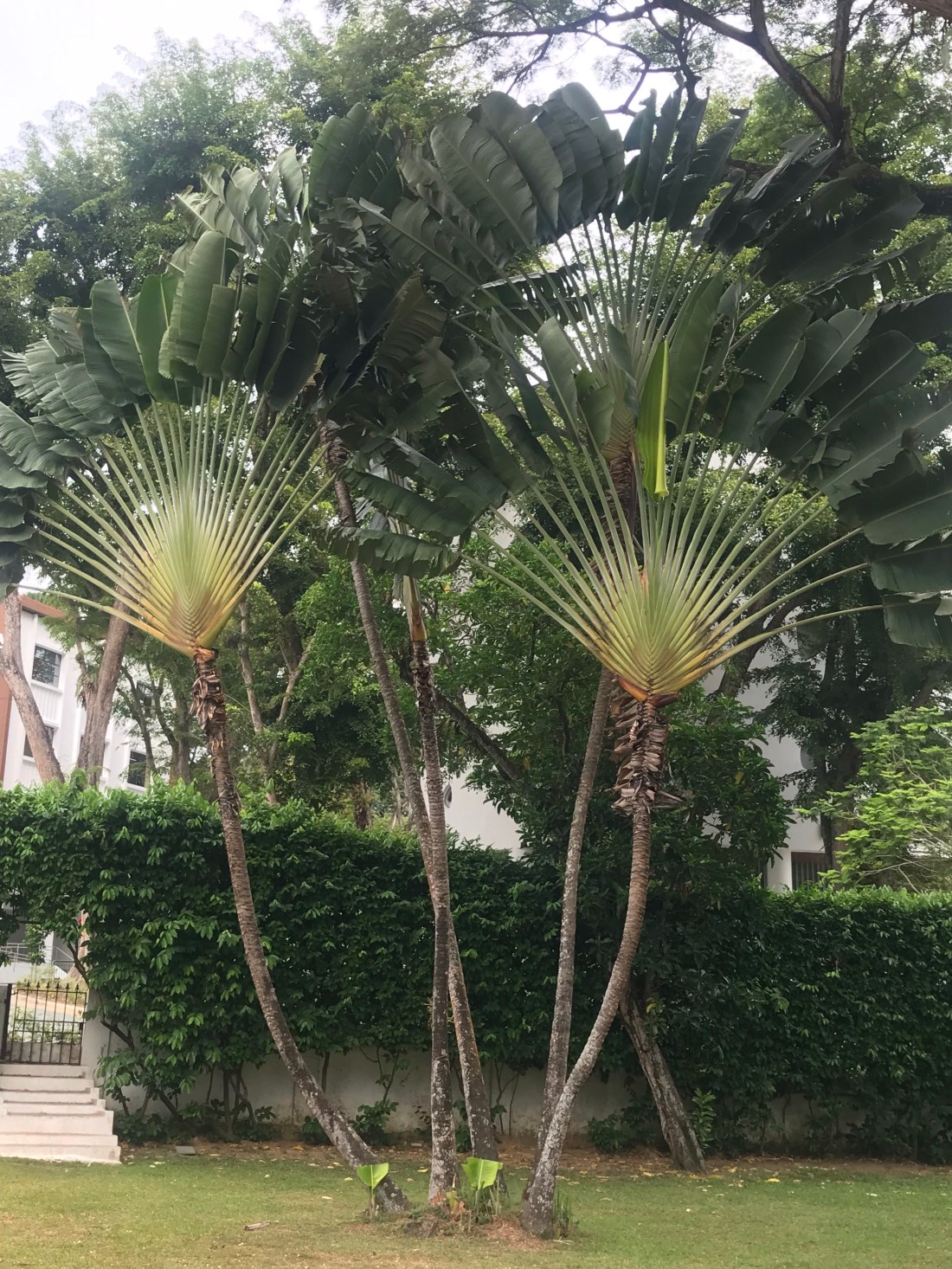
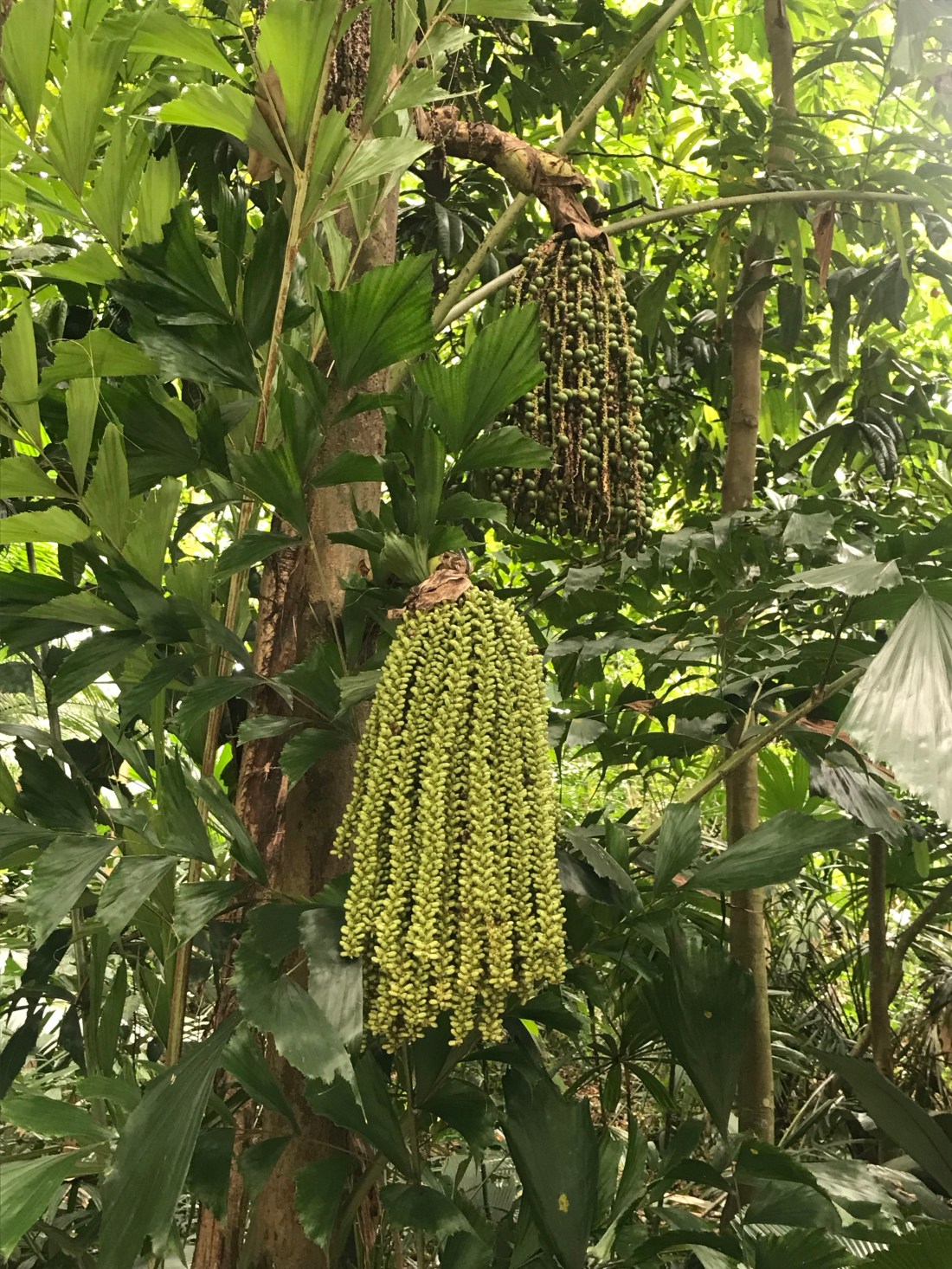
I love these trees, and lo and behold, they’re called Traveller’s Palm!👇🏼

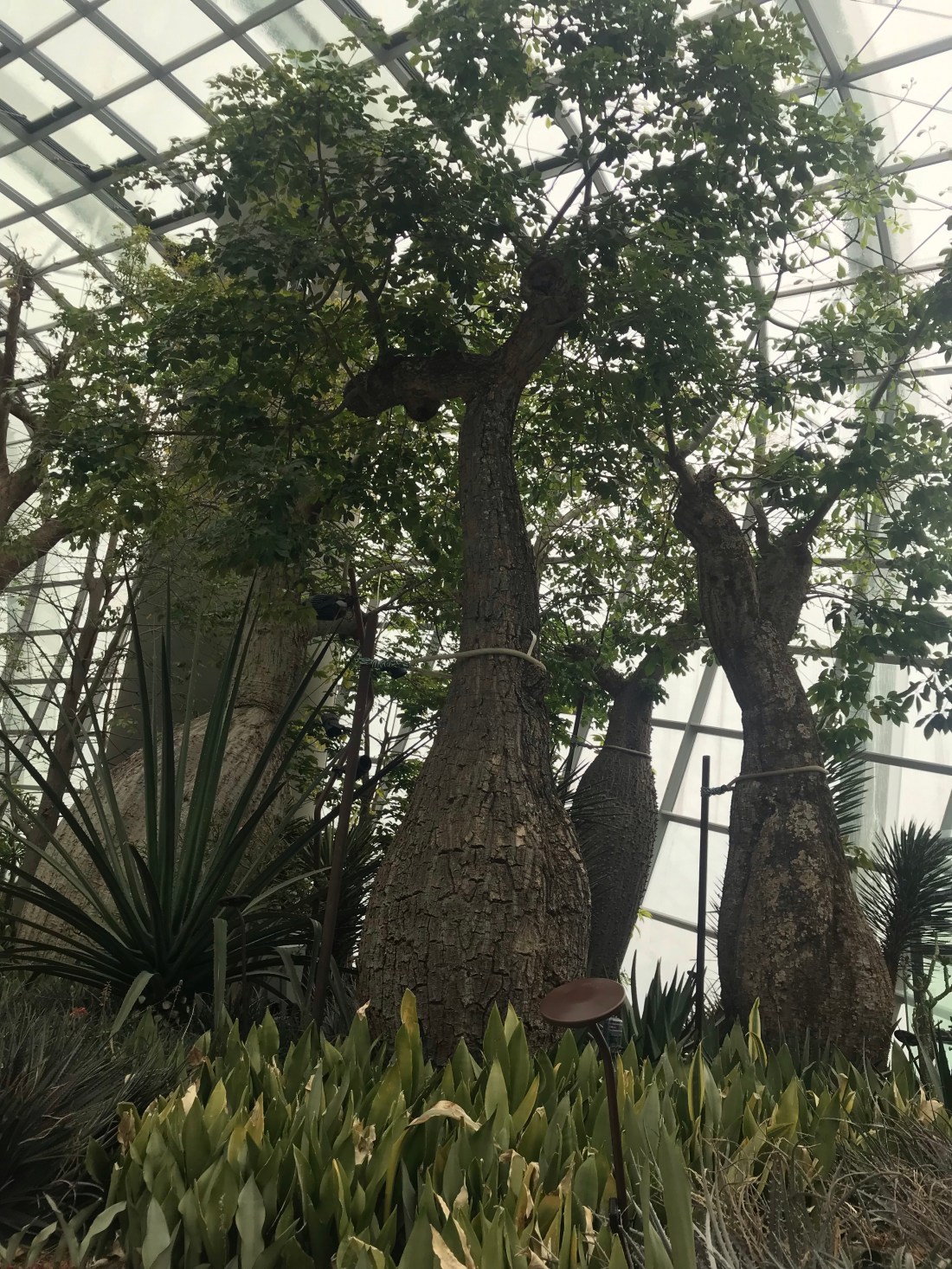
Baobabs; bottle trees whose trunks swell to store water so they can survive long periods of drought:

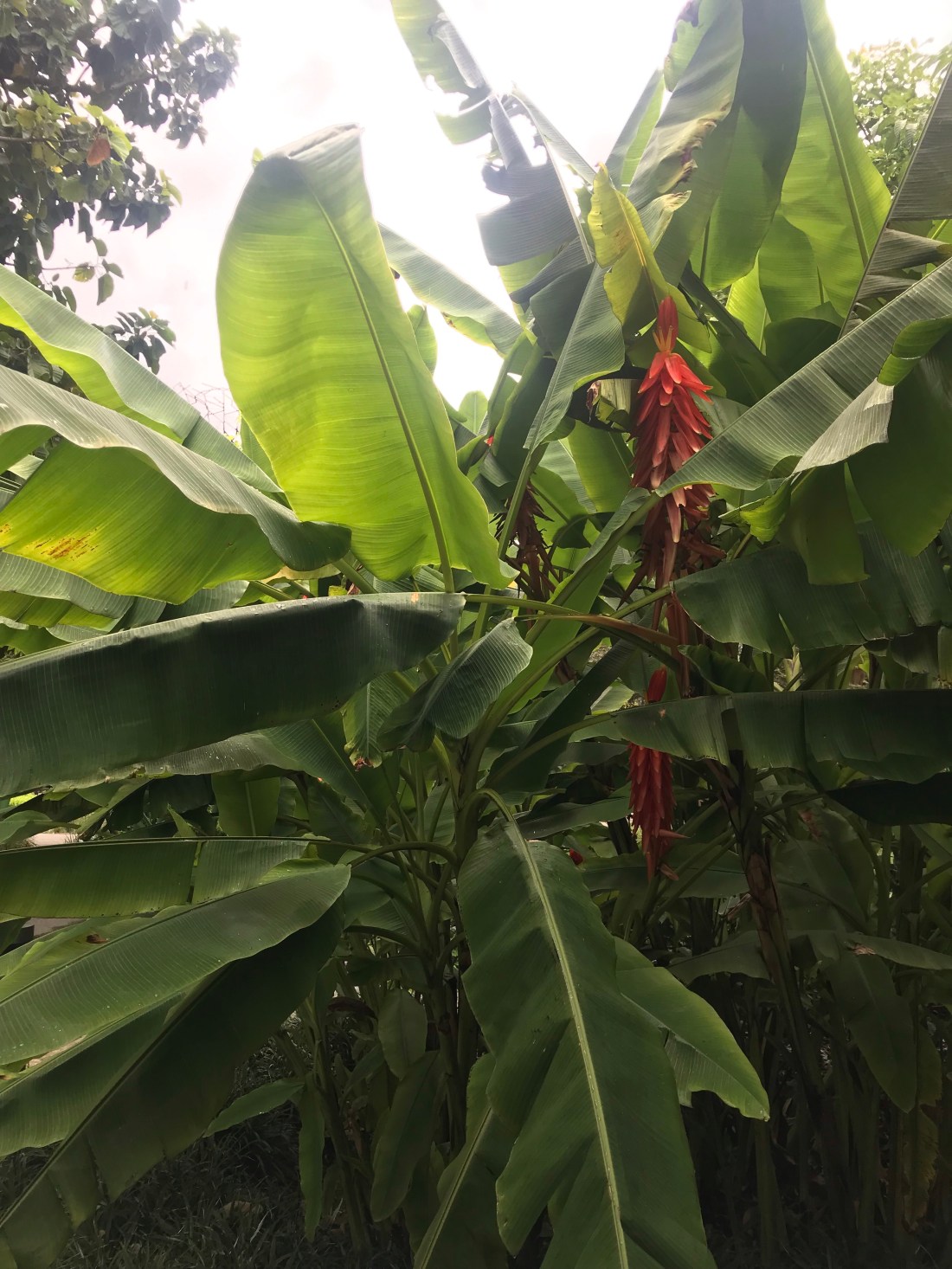
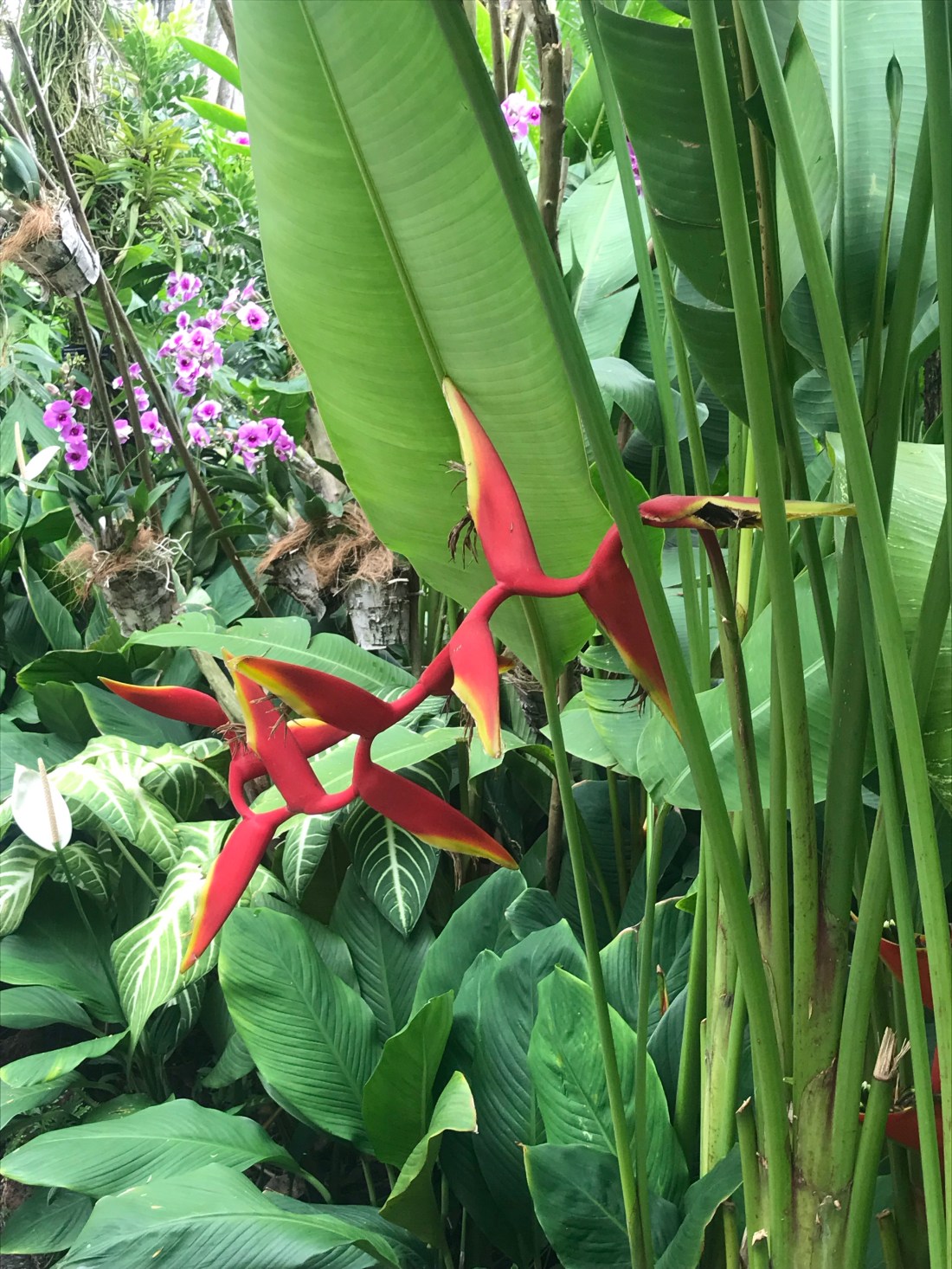
I love these “bird of paradise” plants. I saw quite a few in NZ and Australia as well as here:

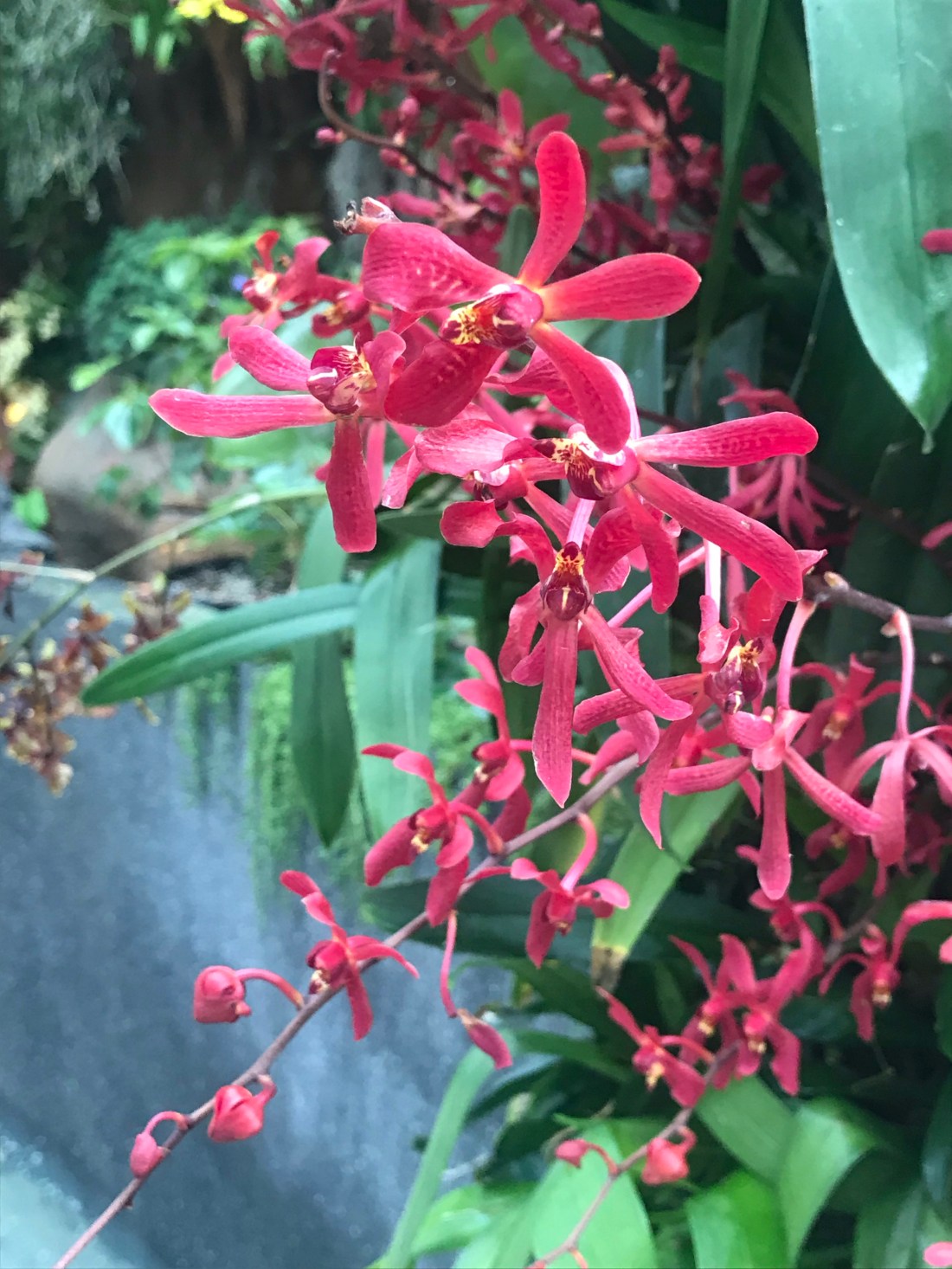
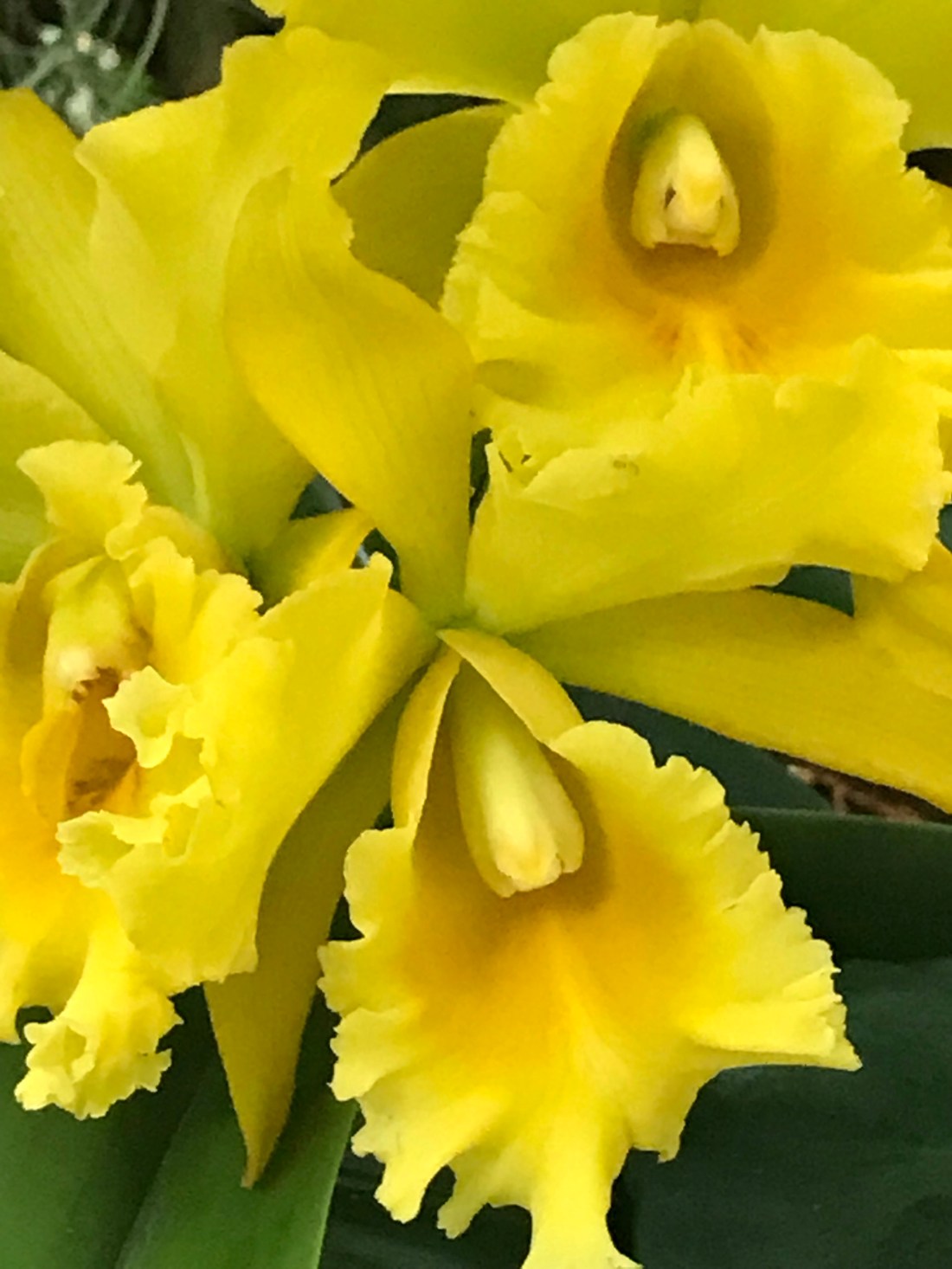
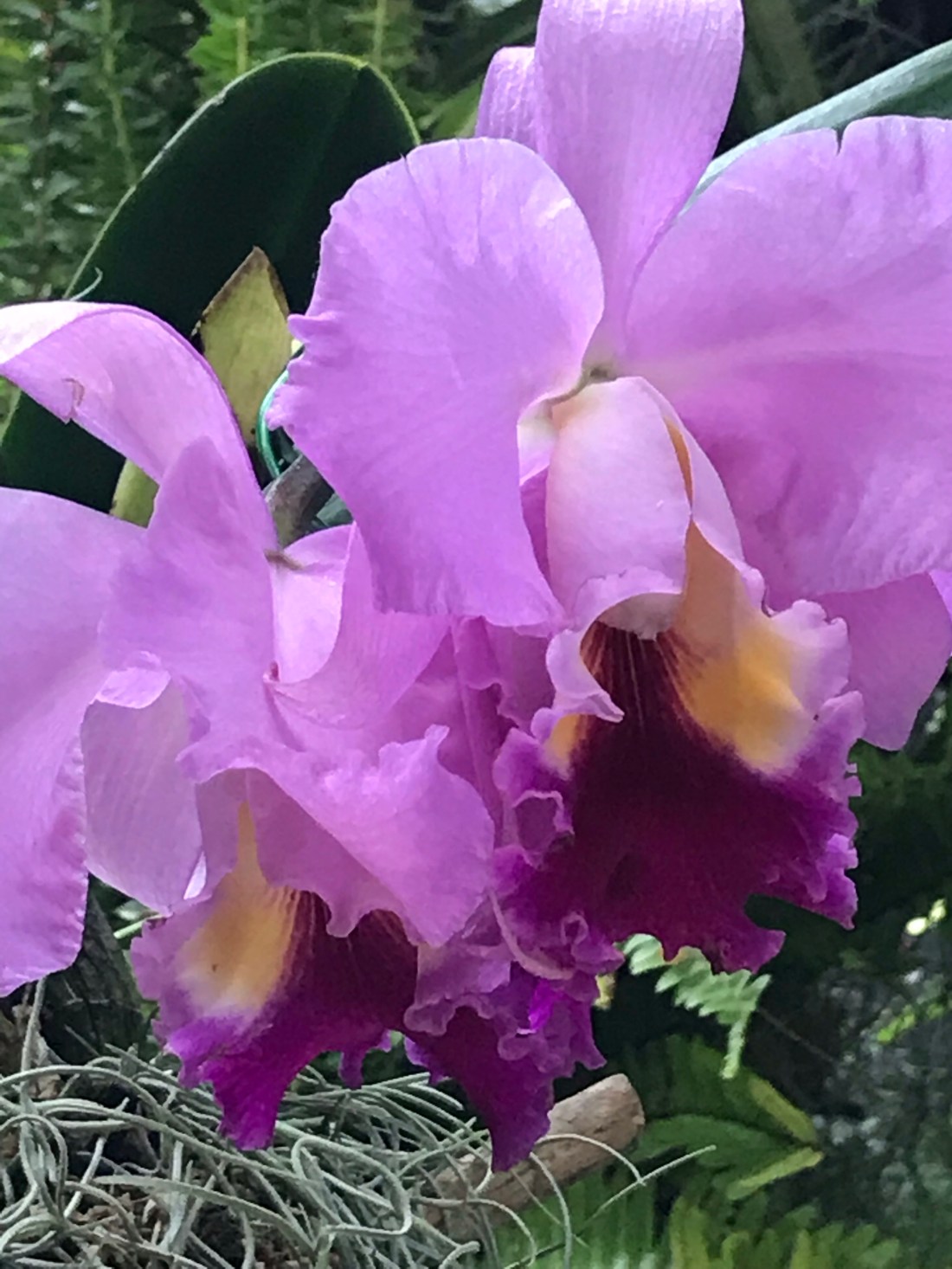
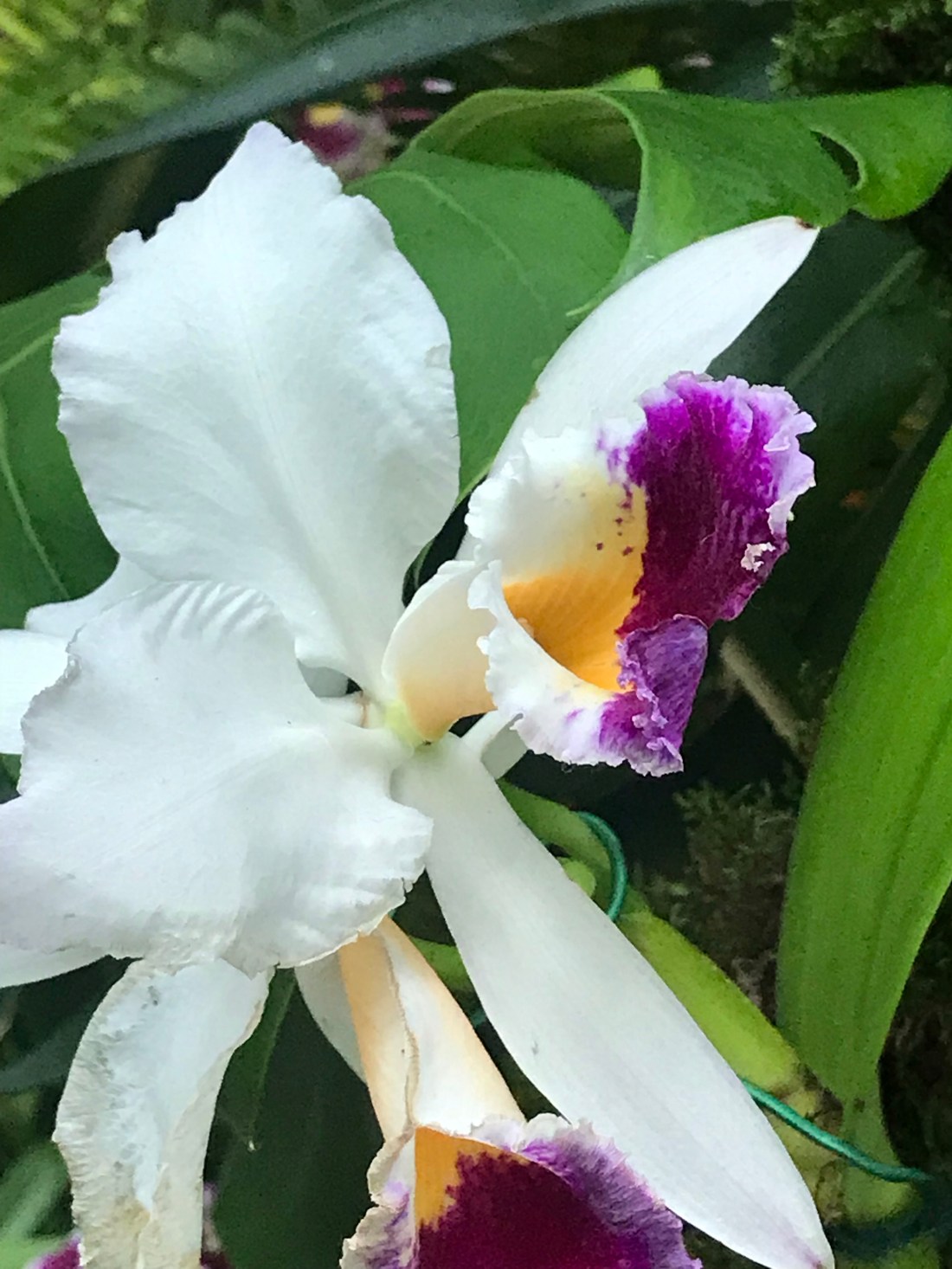
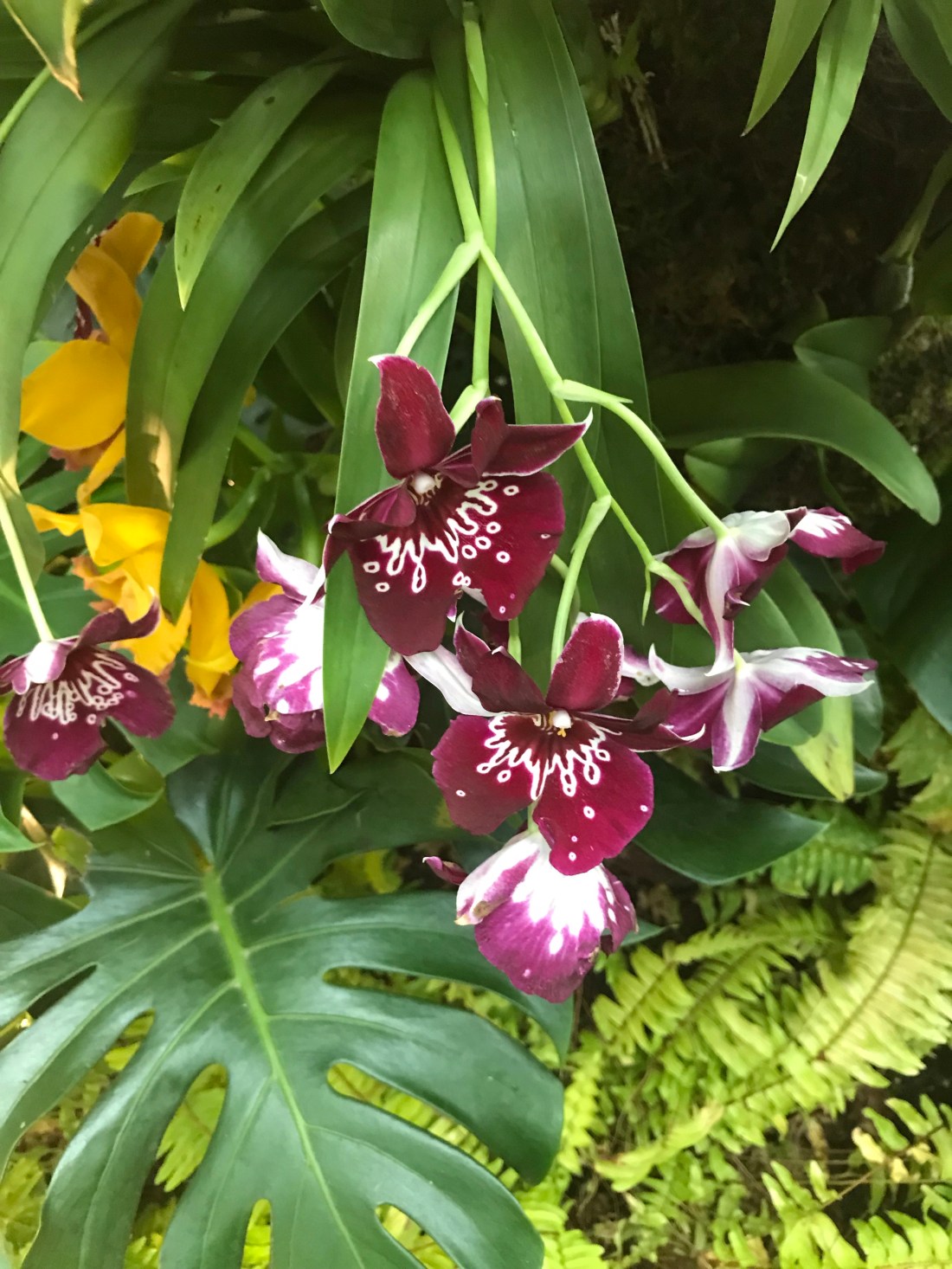
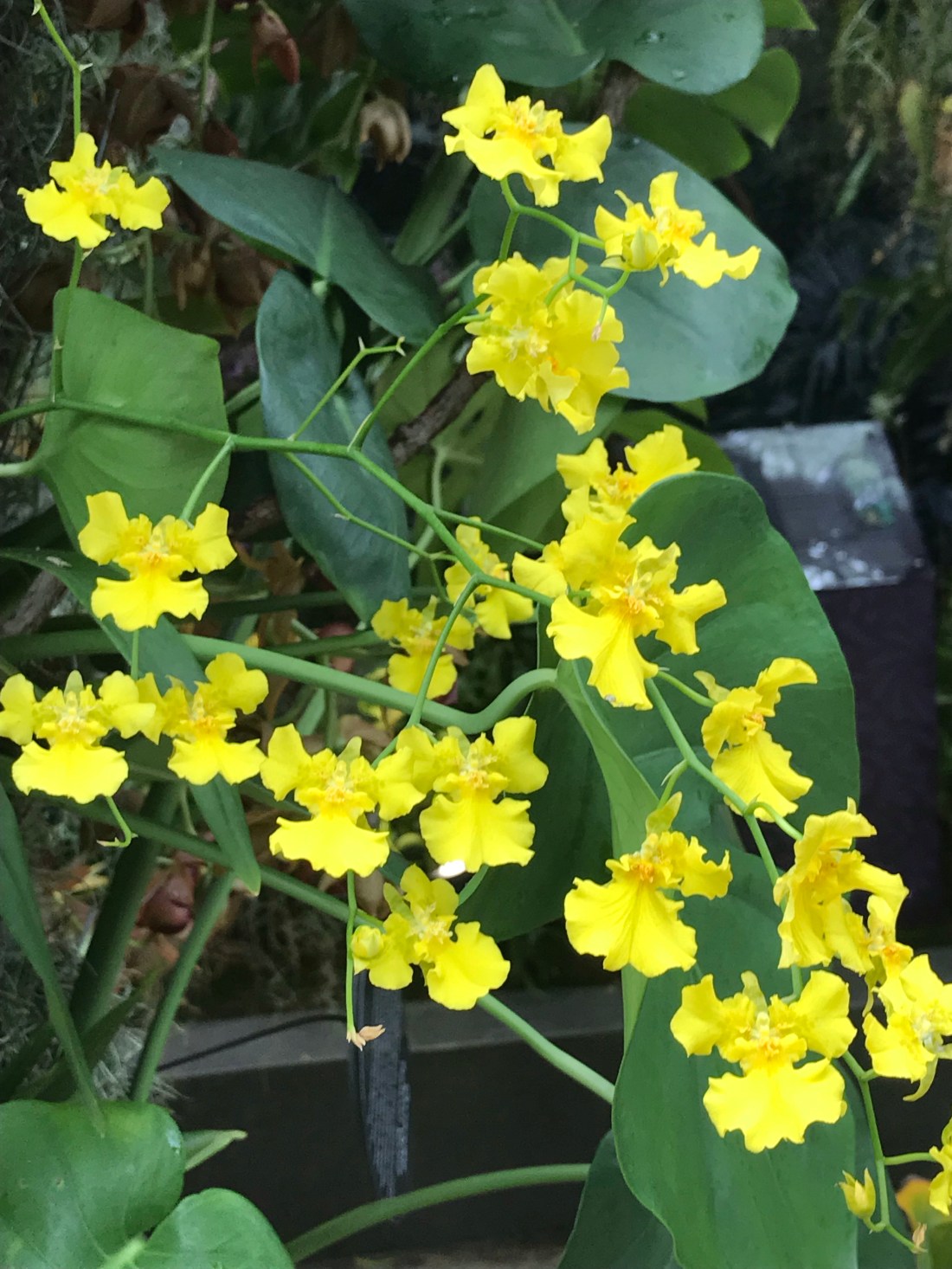
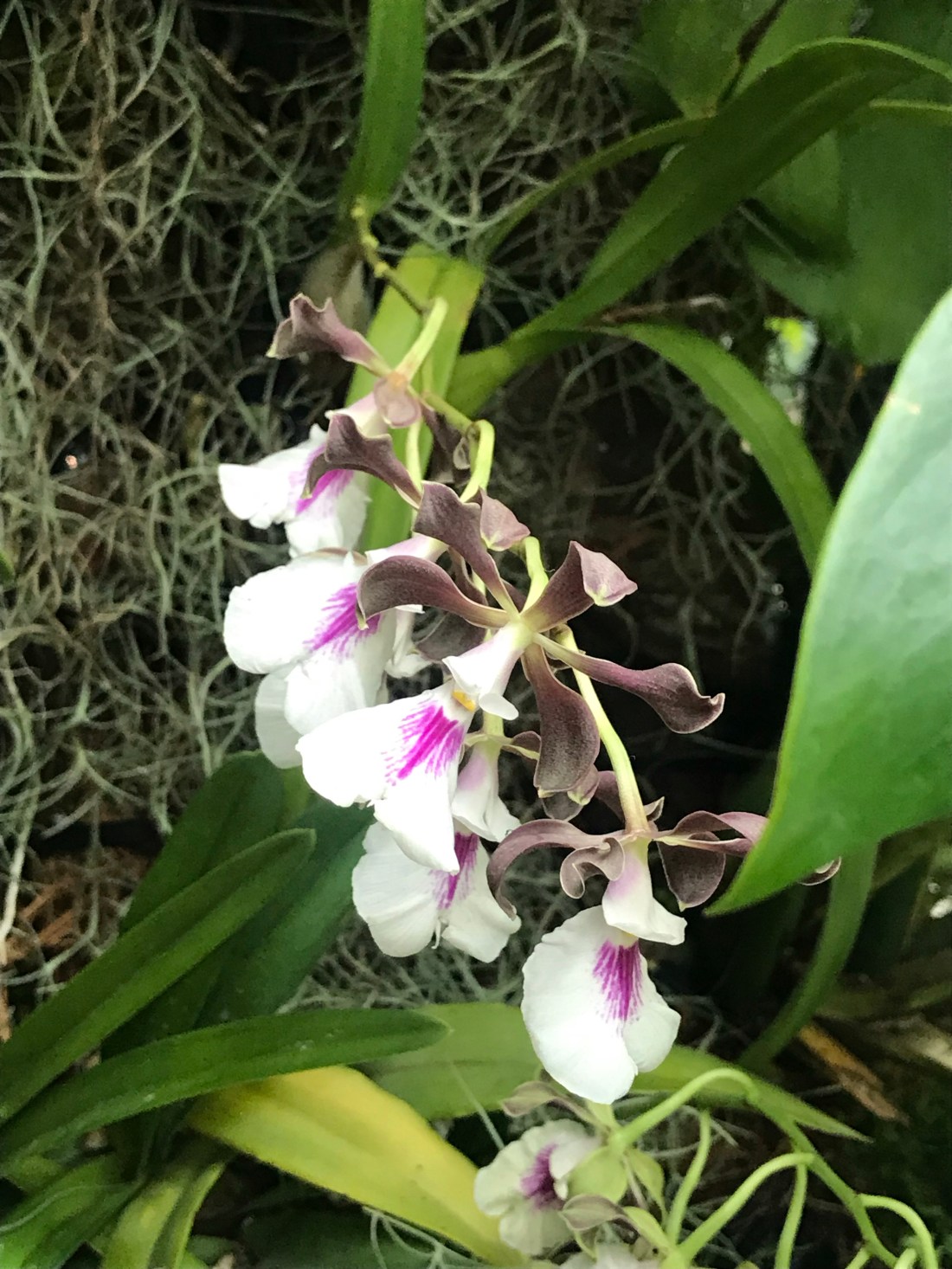
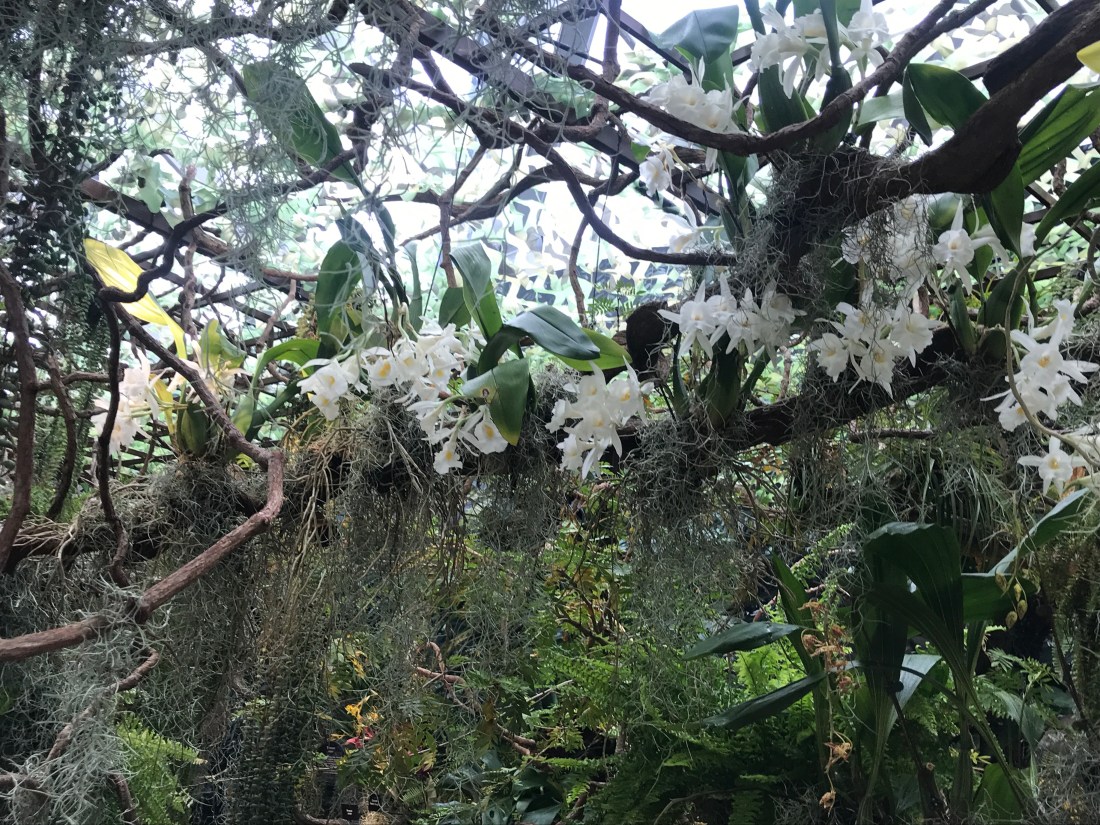
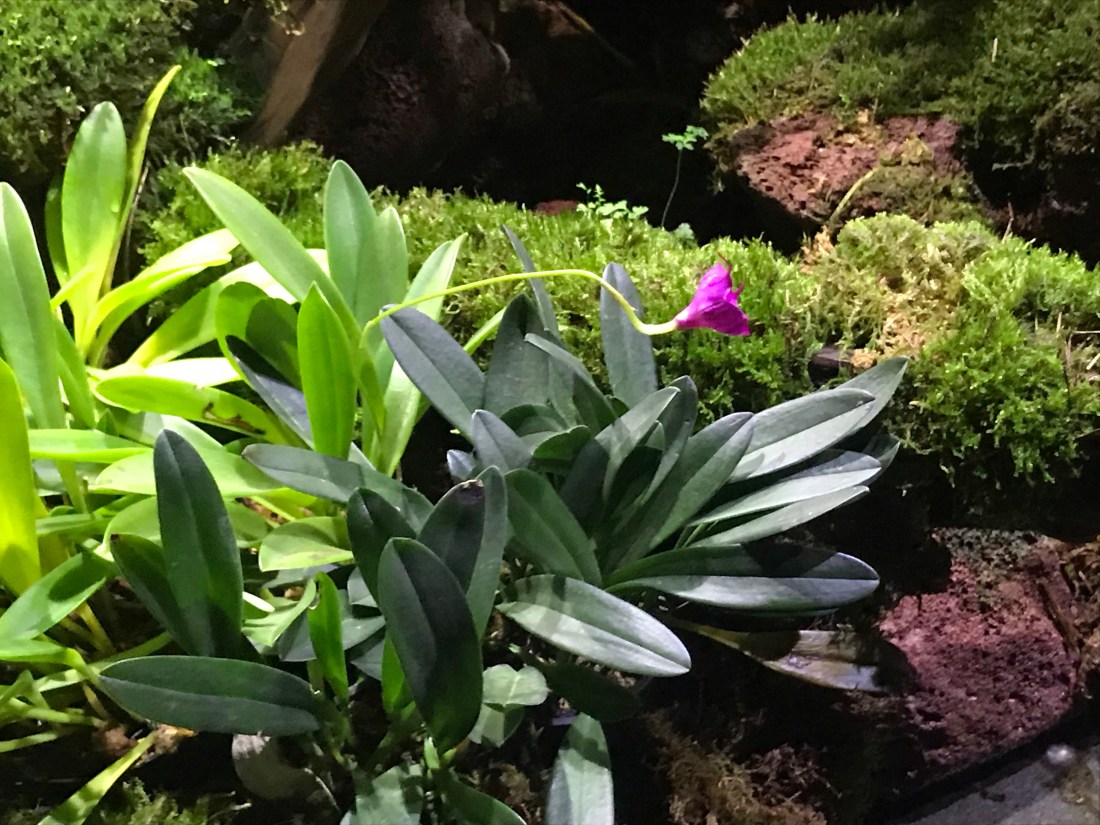
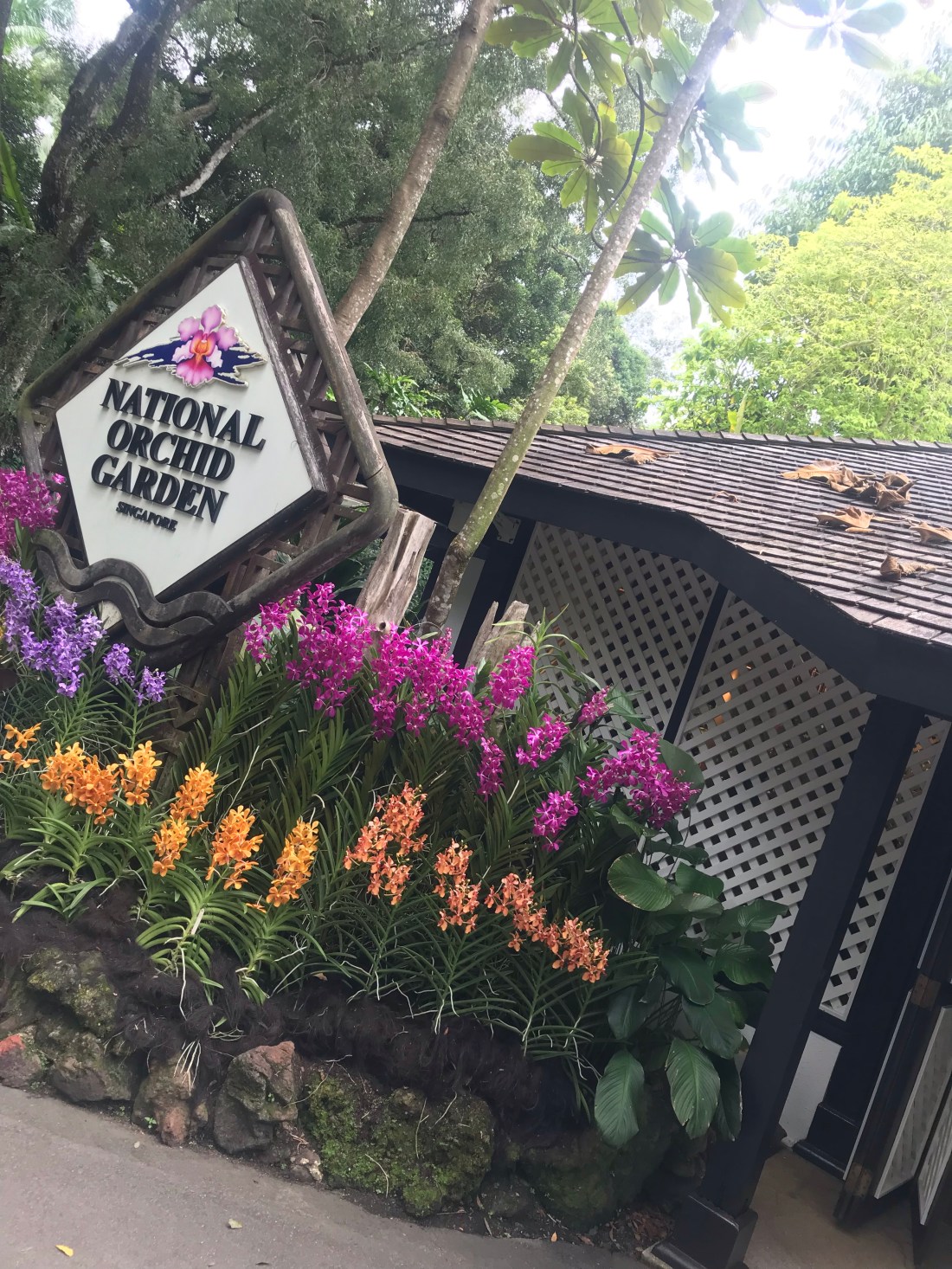
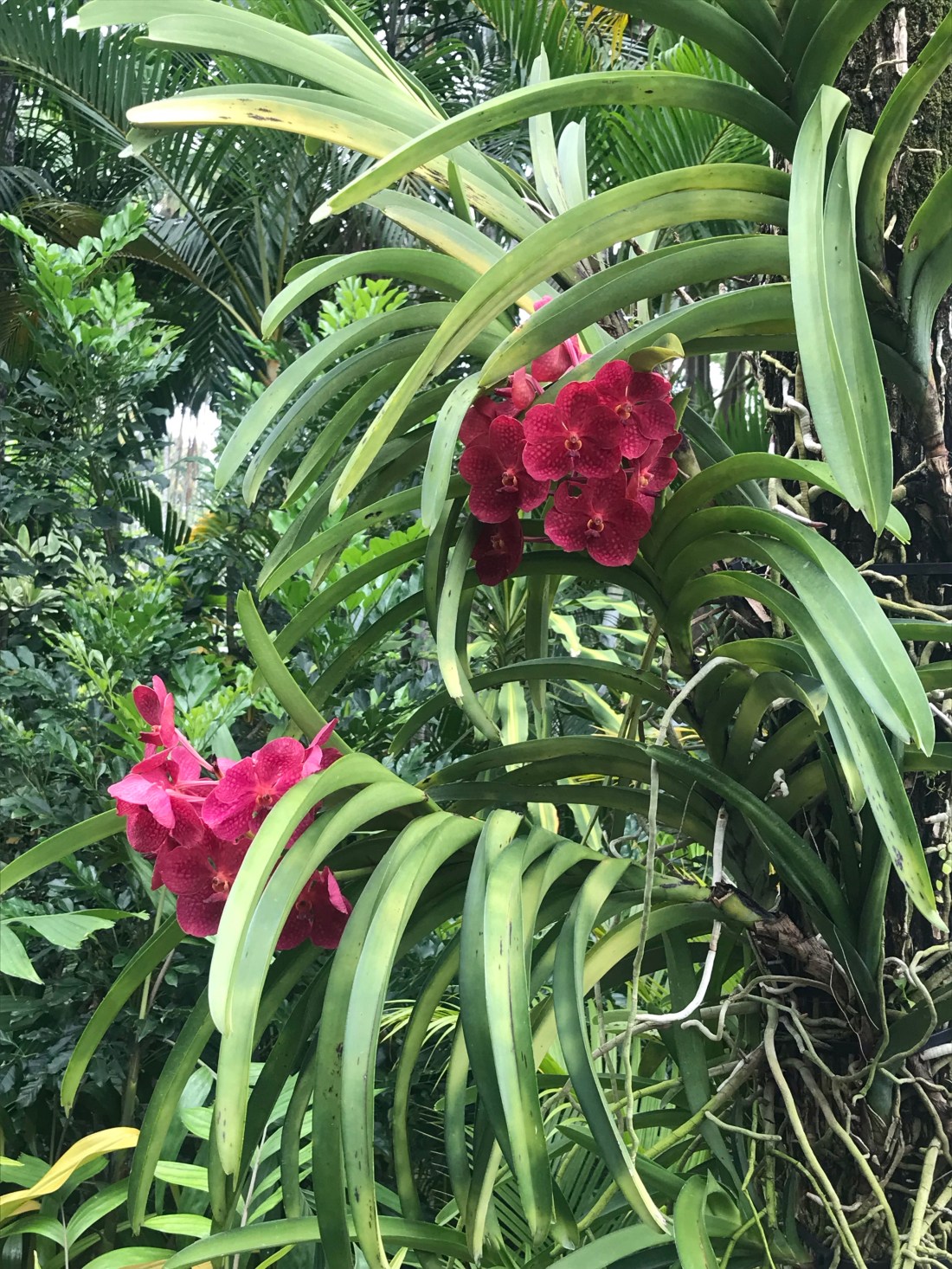
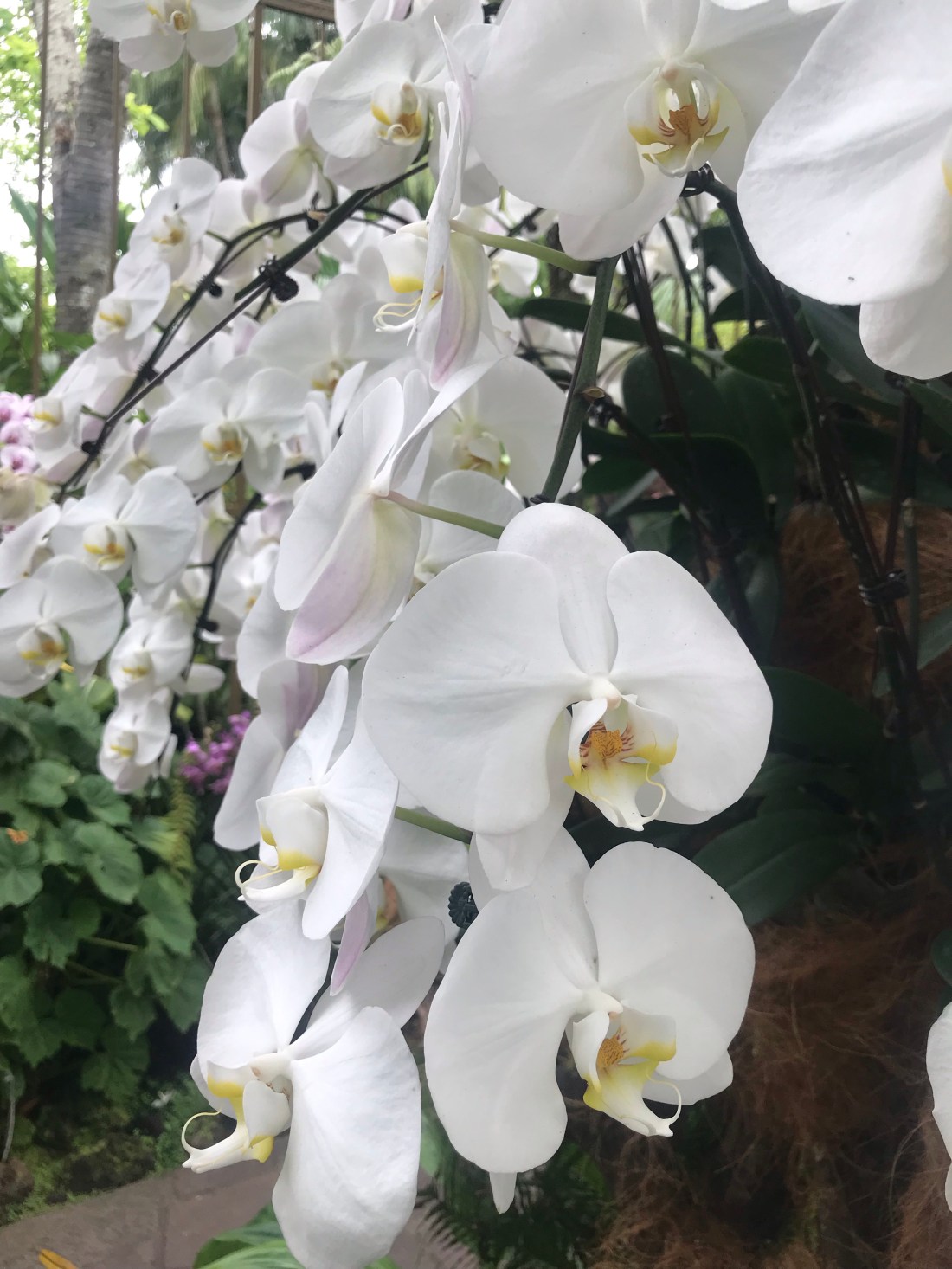
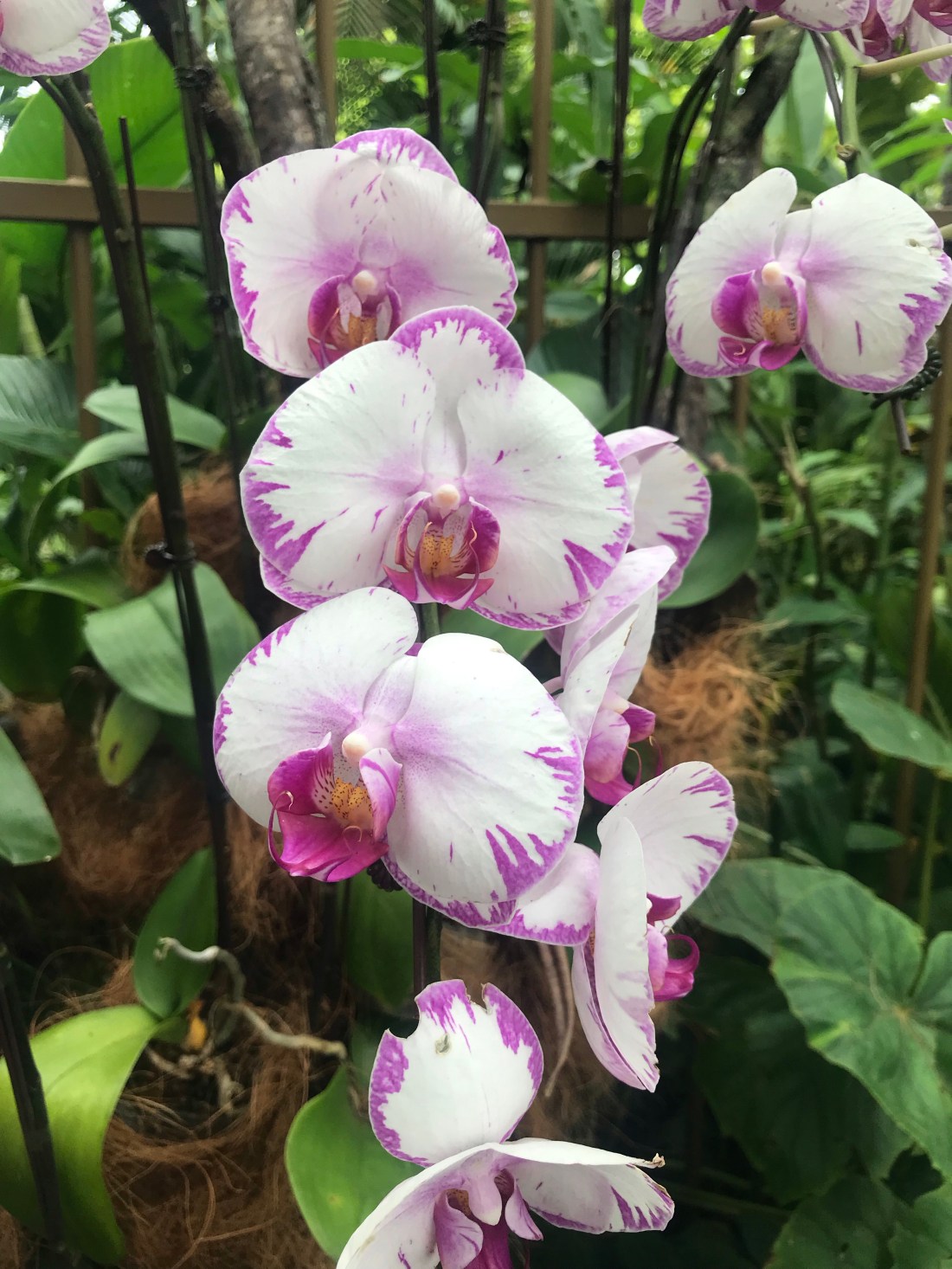
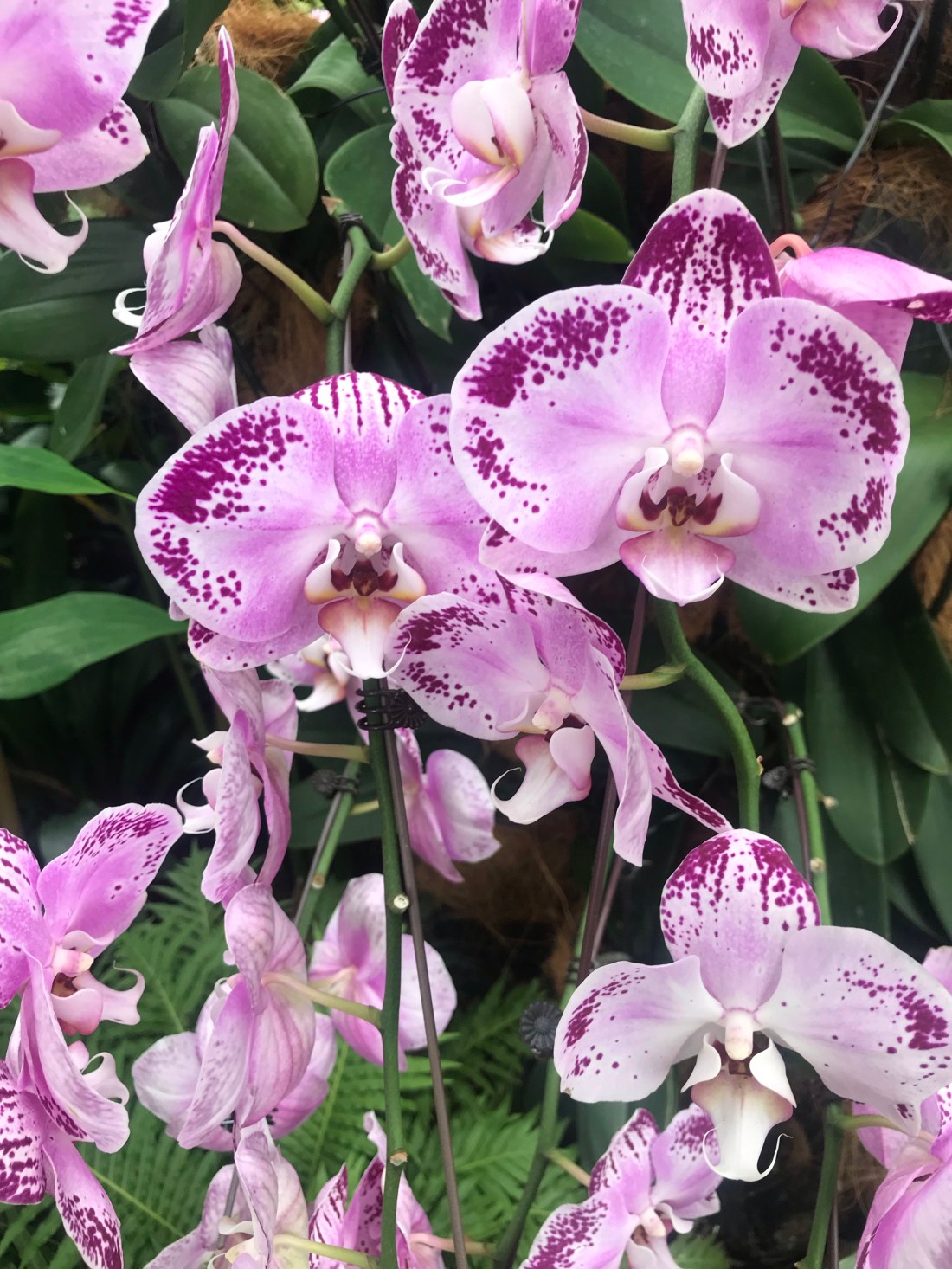
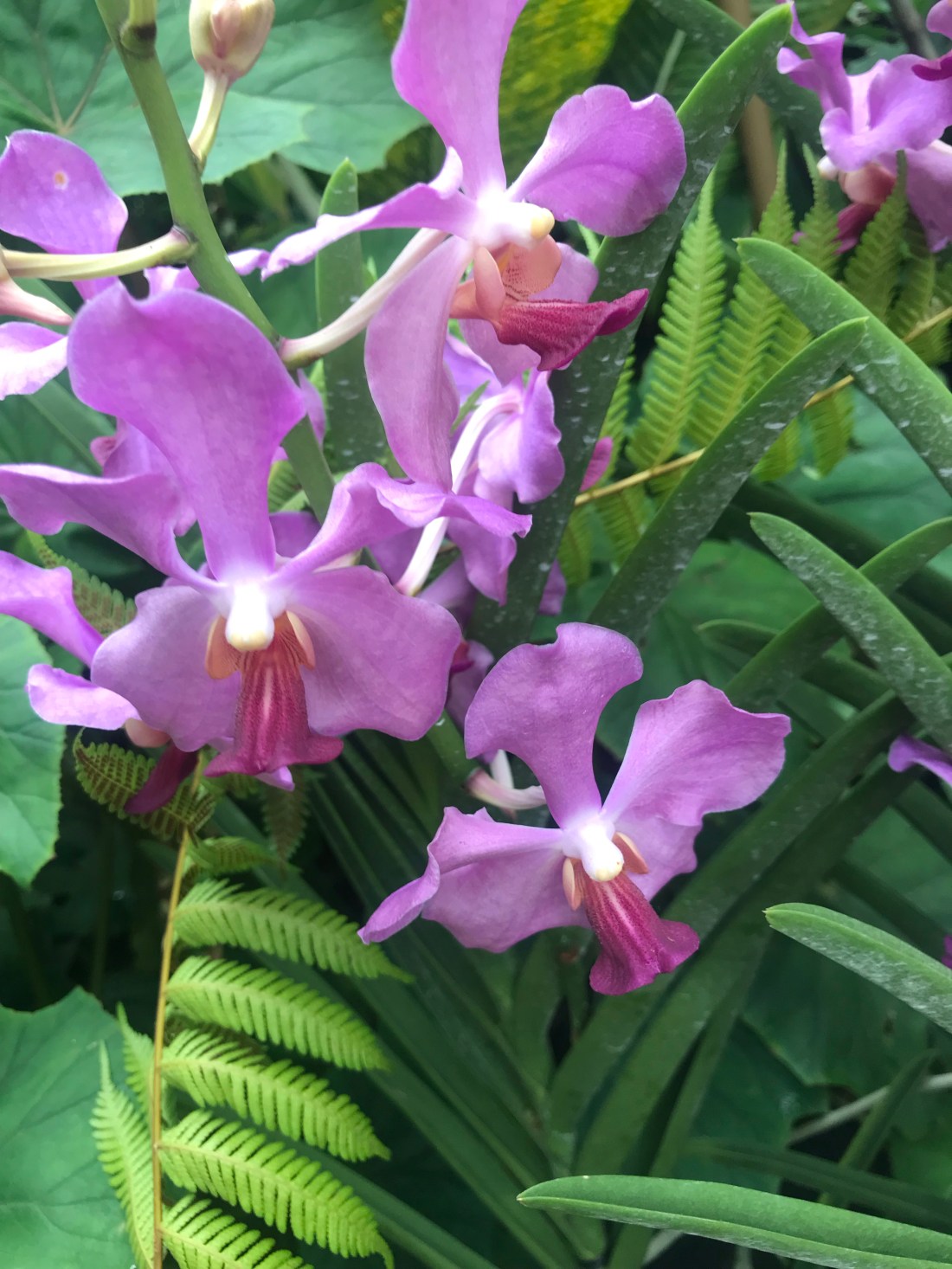
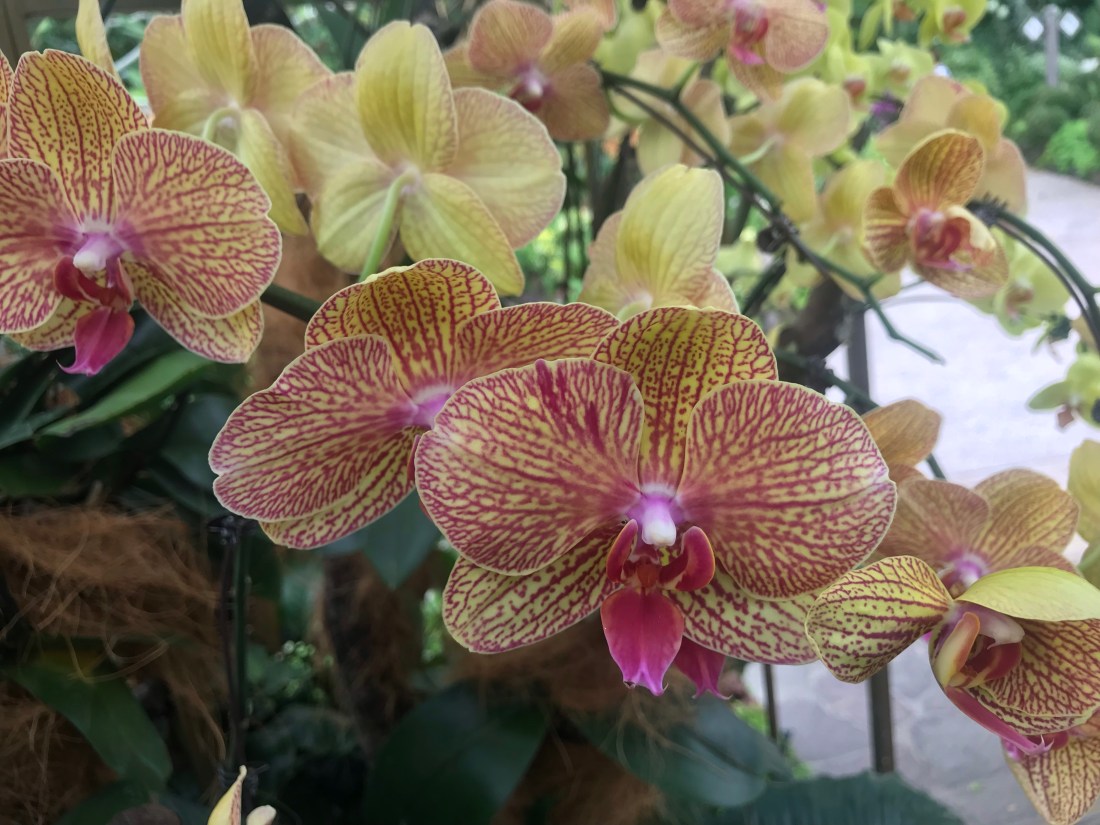
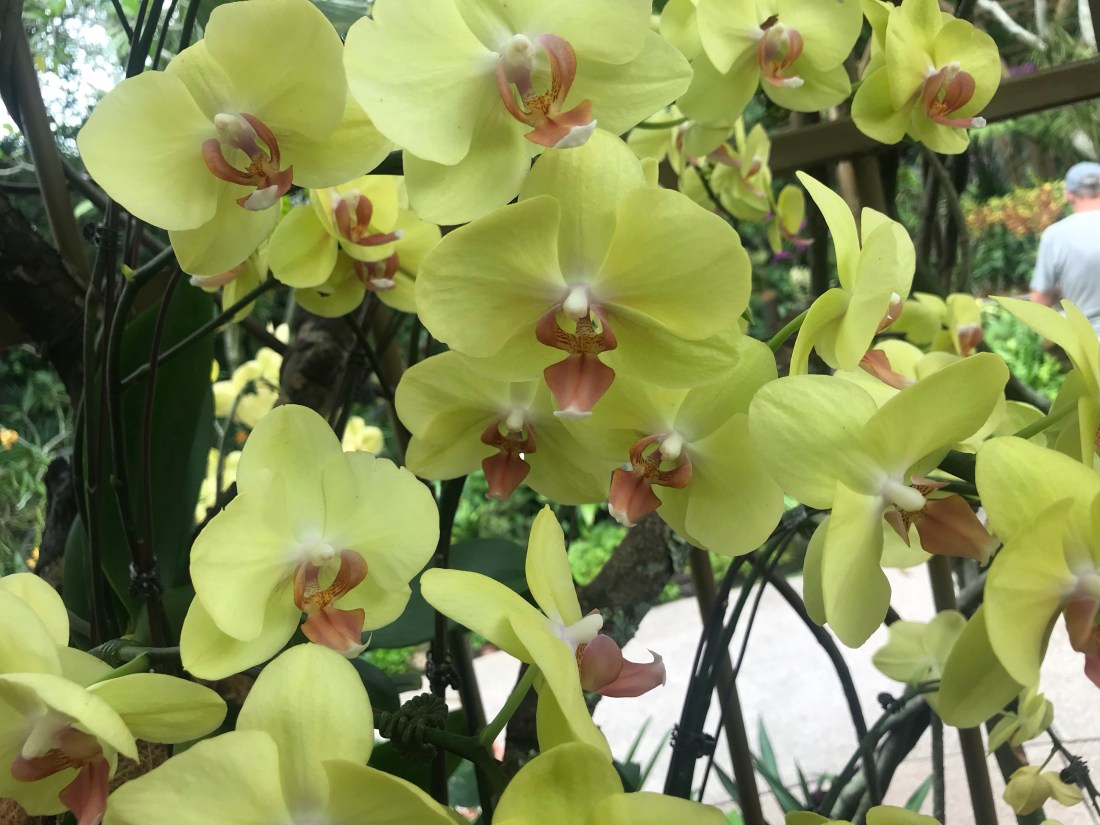
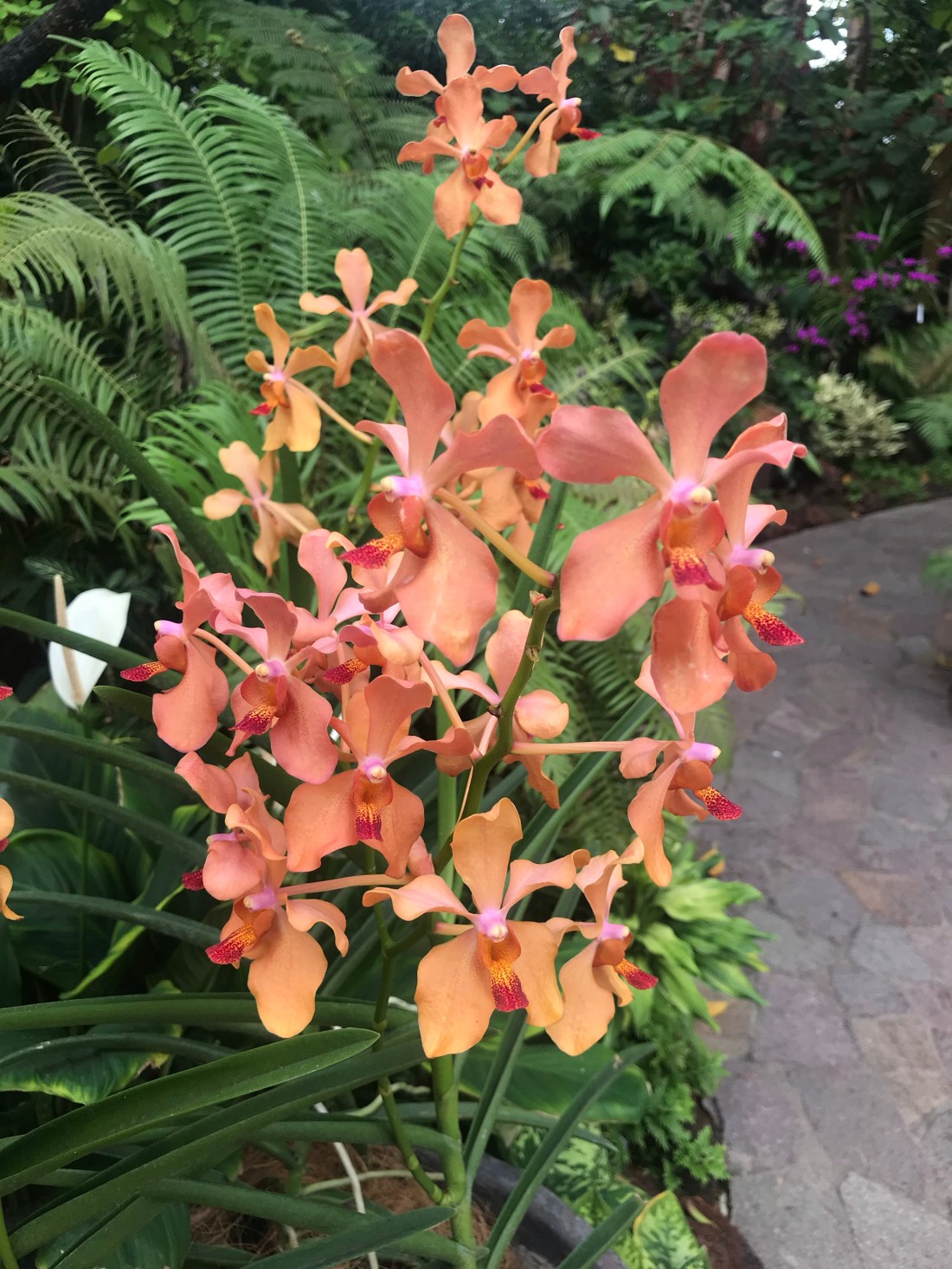
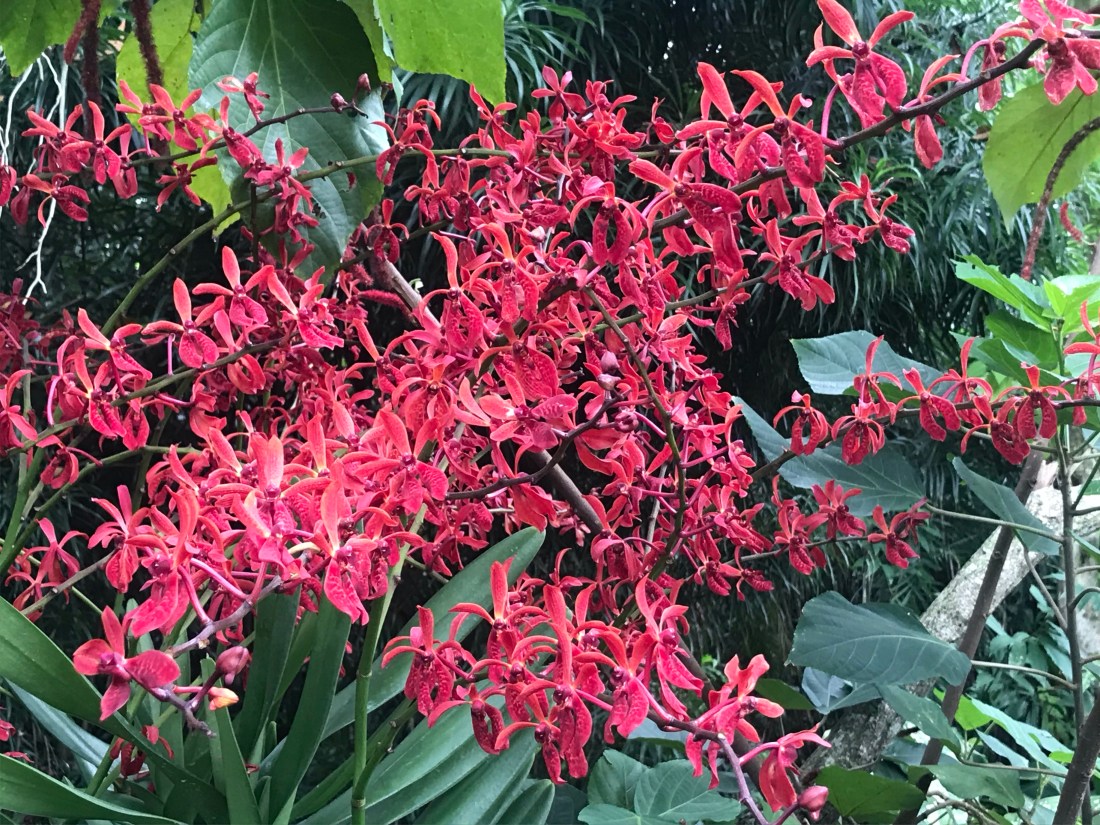
Amazonian orchids:

A civilised day

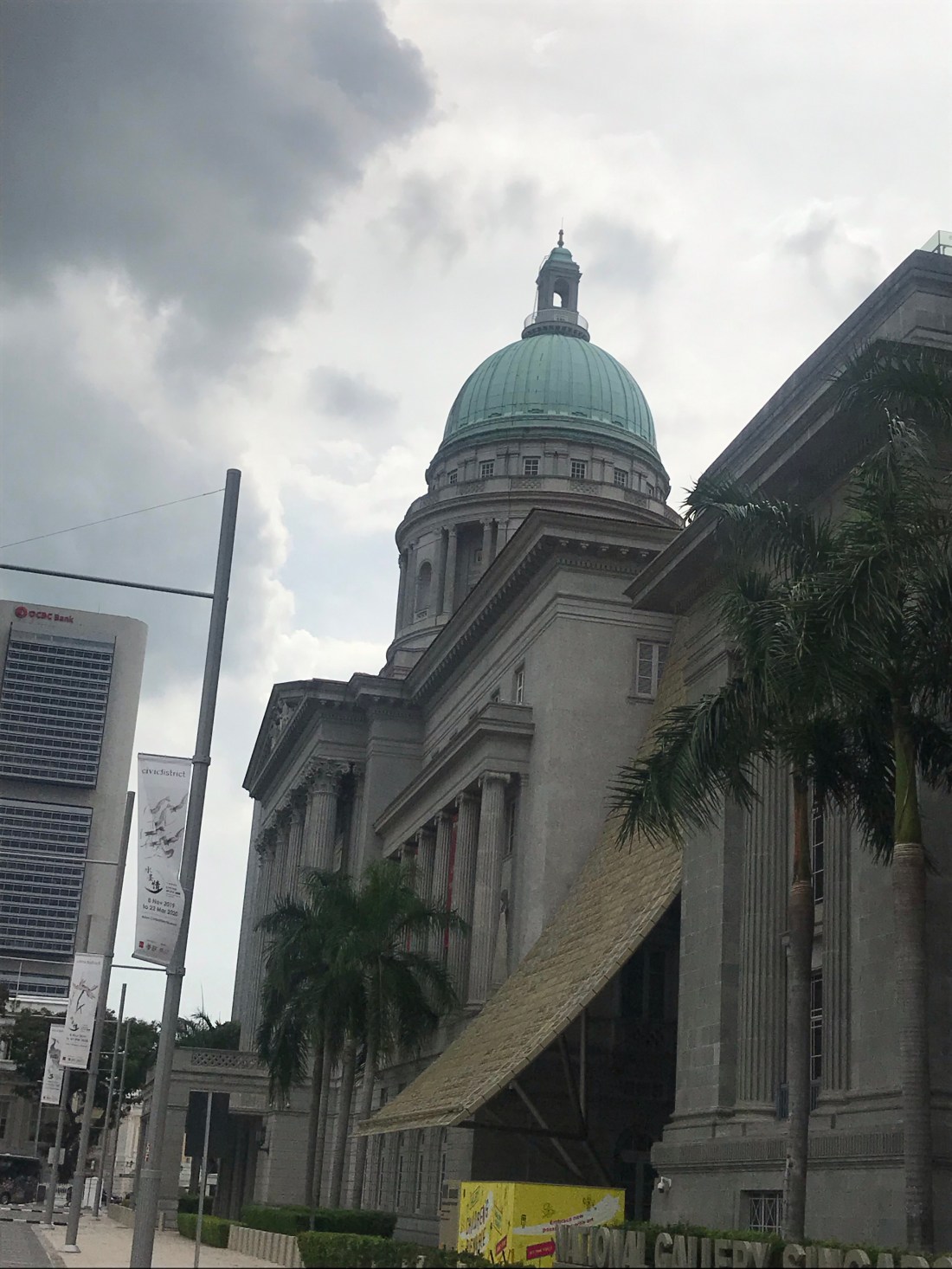
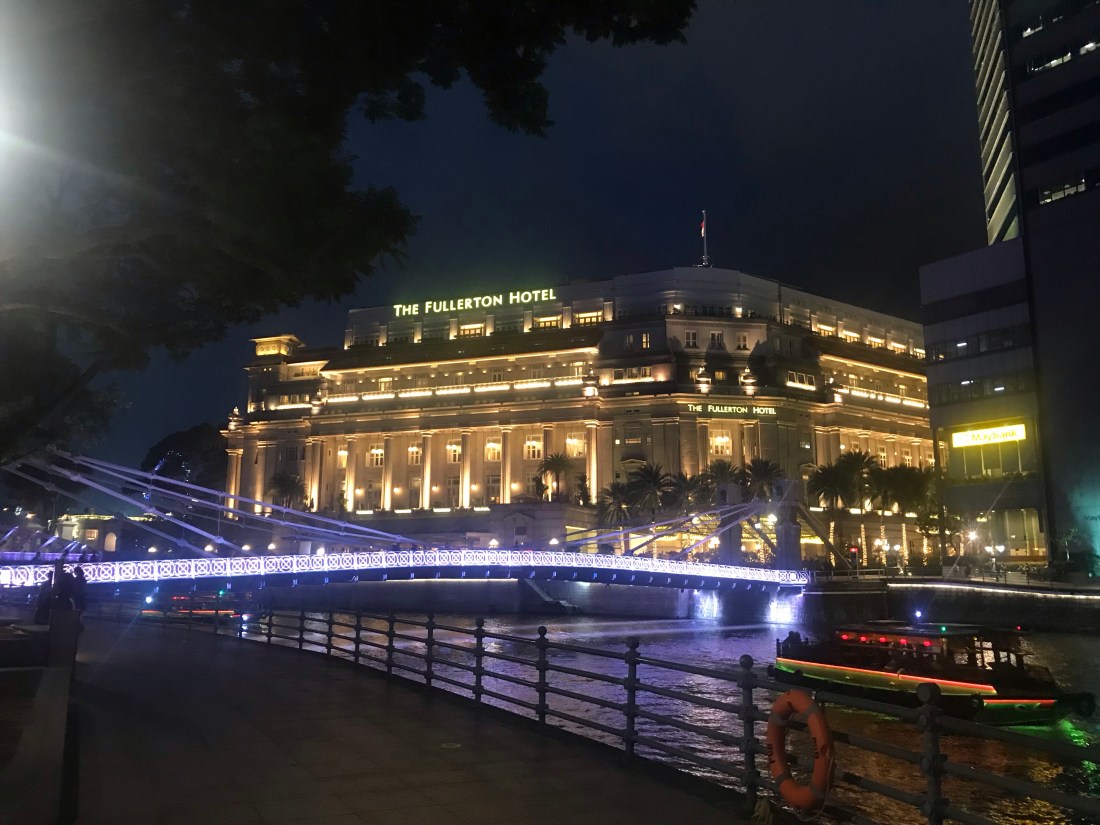
Yesterday, I decided to make time to enjoy a prayerful time at the cathedral and to admire some of the colonial architecture on the Singapore River, and visit the National Gallery.

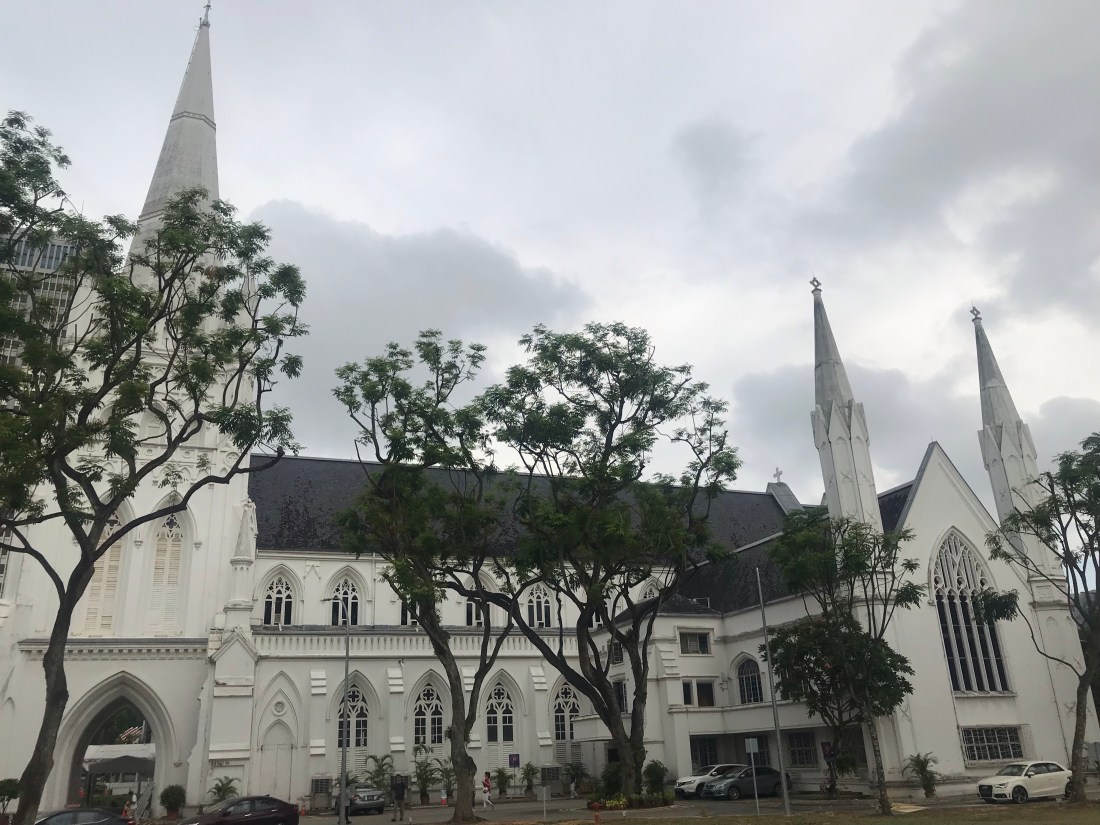
St Andrew’s Cathedral was closed, but I admired it from the outside:

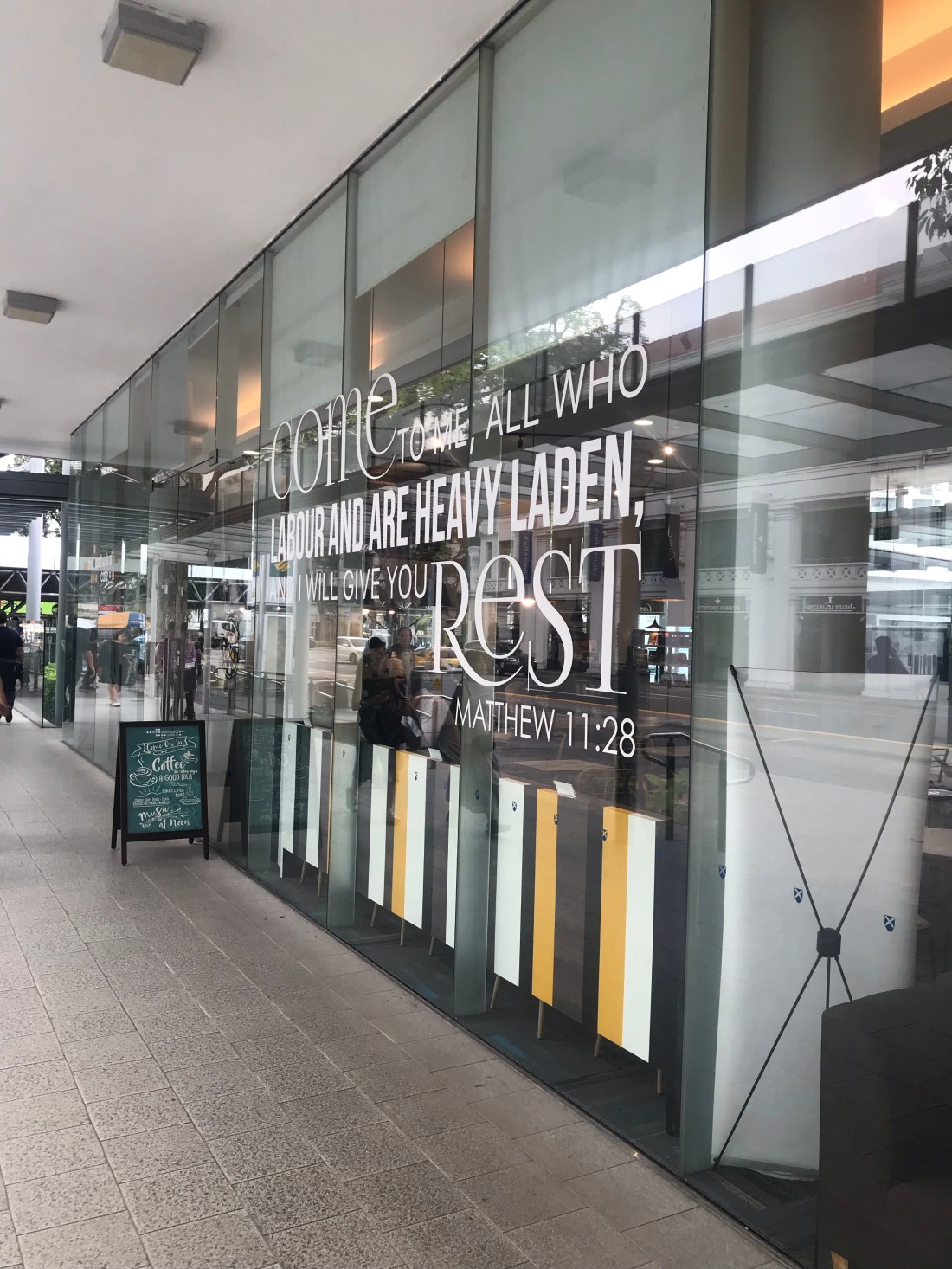
I saw a lady pause and ponder this wonderful saying of Jesus on the cathedral café window for quite some time👇🏼(“Come to me all who labour and are heavy laden, and I will give you rest”). What if we vowed to make this the first thing we in the church greeted people with, always? Rather than condemnation or judgment of any sort (surely we believe it’s for God to judge anyway, after all)?

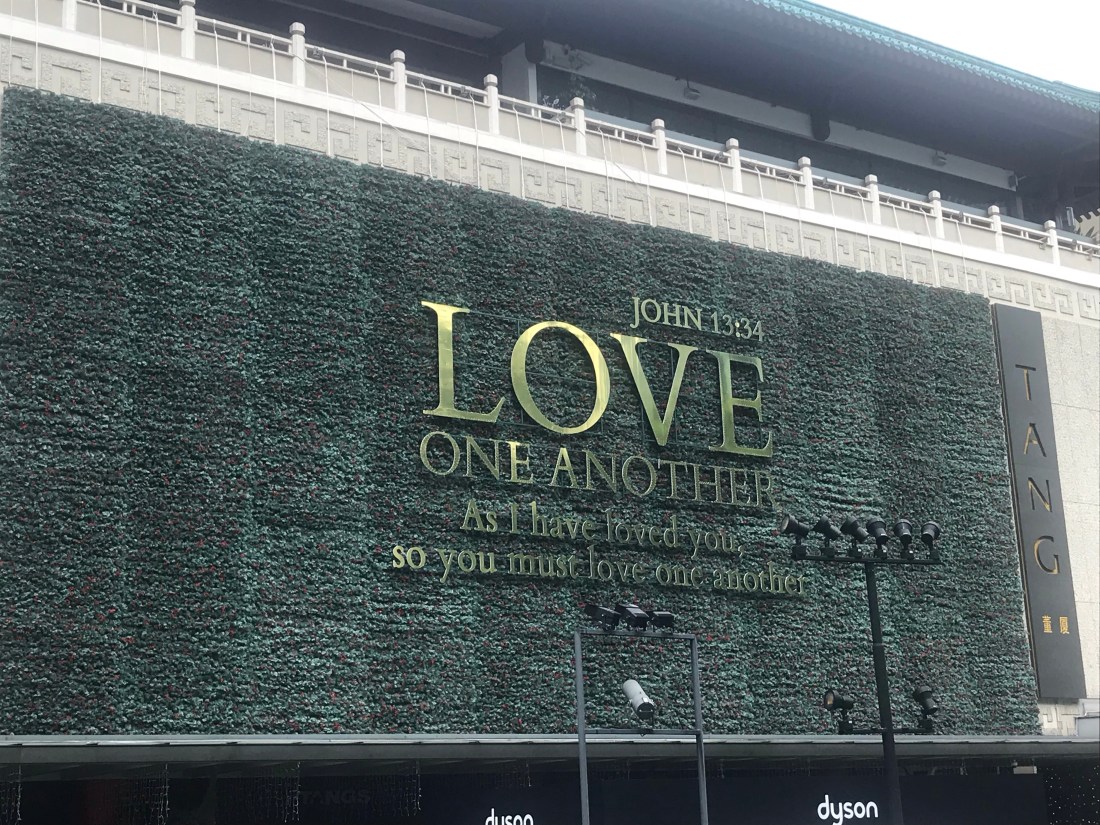
And what if we also vowed to daily ask God to place a guard over our lips, so that we spoke only love to one another and to others every day?👆🏼 How incredibly transformative that could be.

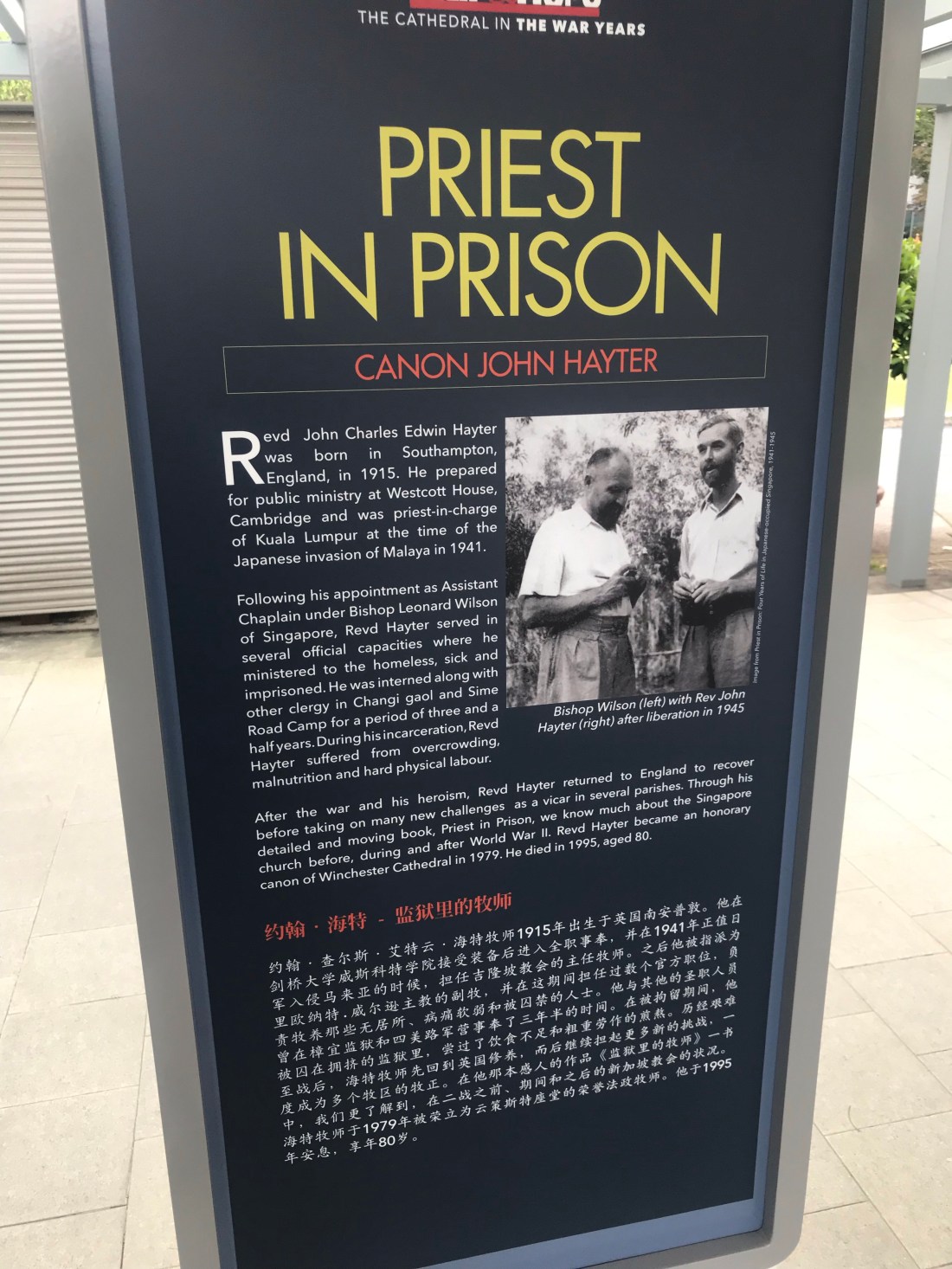
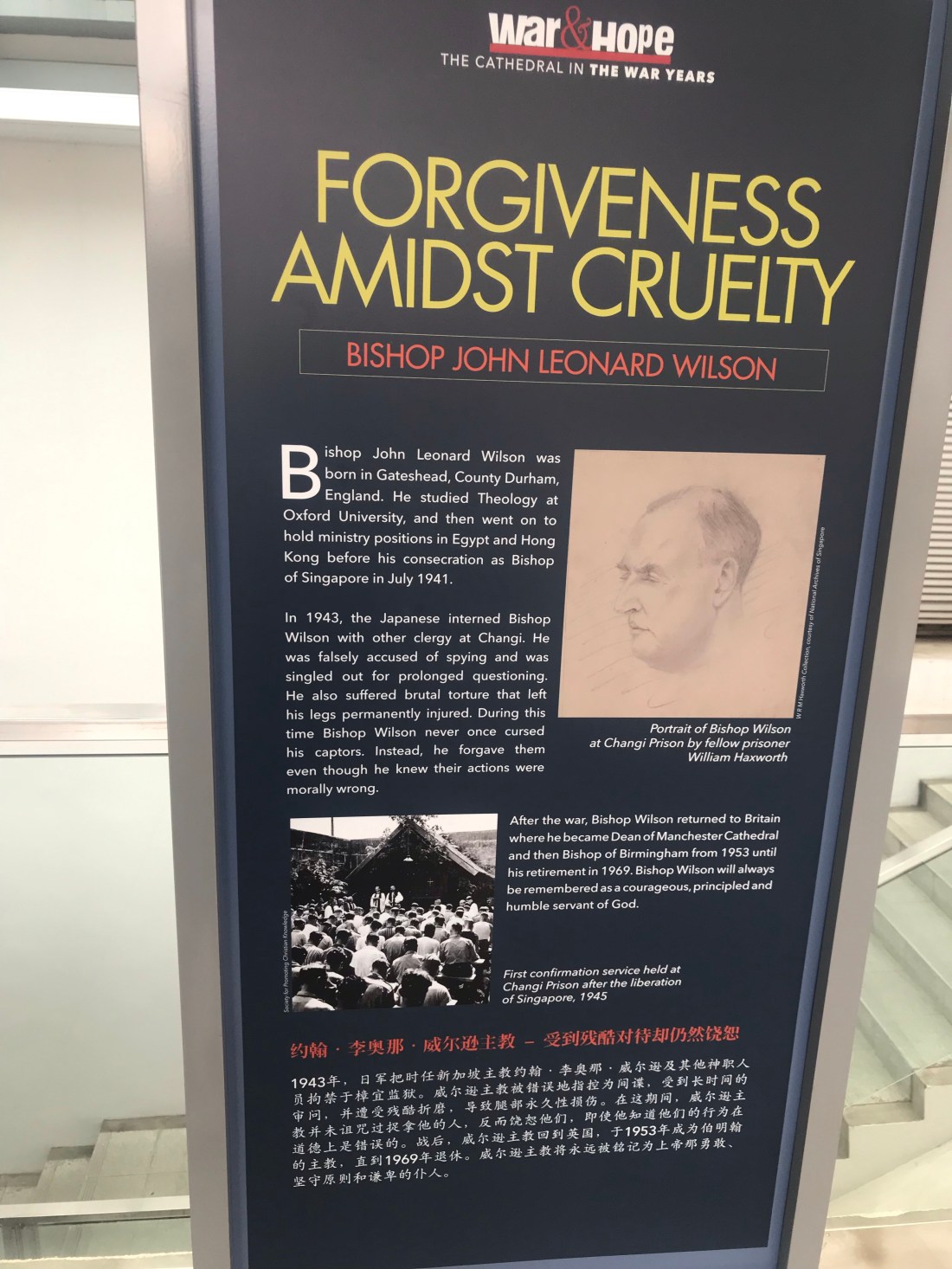
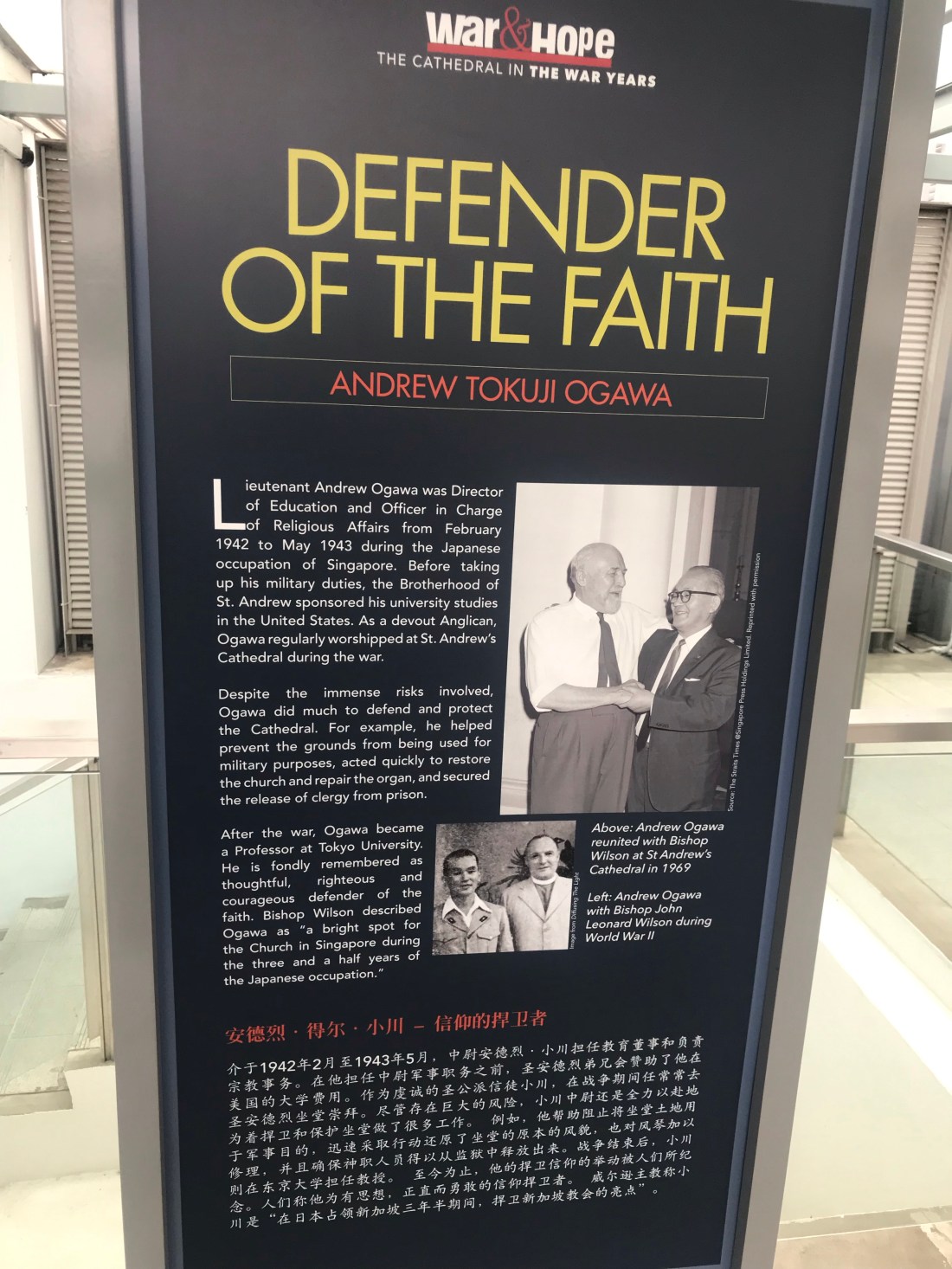
The displays outside the cathedral about the part various clergy played during the Second World War was a bit self aggrandising, though it didn’t take too much reading between the lines to realise that there was a lot of grey area. Jamie had shared his understanding with me that the colonial era was neither as good nor as bad as it is often painted to be, but of course the truth lies somewhere in between. Truly selfless and heroic and good things were done, alongside many things motivated by selfishness or a rather paternalistic attitude towards any culture other than British culture.

For example, Canon John Hayter sounds like a real trooper, imprisoned during the Japanese occupation in terrible conditions for three and a half years:

Bishop John Leonard Wilson also sounds like something of a hero, enduring torture from the Japanese regime:

Then you read about Lieutenant Andrew Tokuji Ogawa, who had a high level role during the Japanese occupation. He used his position to protect the cathedral, where he worshipped throughout the war…while all the clergy including the Bishop were being imprisoned and tortured. You’ve got to wonder what was going through the Bishop’s mind when they met afterwards.

Also, I would not be uncritical of the choice of Bible verse to introduce this display (“in all things God works for the good of those who love him” Romans 8.28). In 1942 the Allied forces led by the British surrendered to the Imperial Japanese Army, leaving Singapore defenceless. I’m not sure that using that Bible verse really cuts it. To say nothing of the context of the verse, which is quoted for a pastime out of context.

In Romans 8 Paul is talking about the reality of suffering while we are on earth, but the hope of glory in heaven that will surpass all earthly suffering, which all creation is groaning and longing for. So when he’s talking about God working for the good of those who love him, he’s talking in eternal terms, not at all about the events that are currently happening, for which we as human beings surely have to take responsibility. Theological rant over.

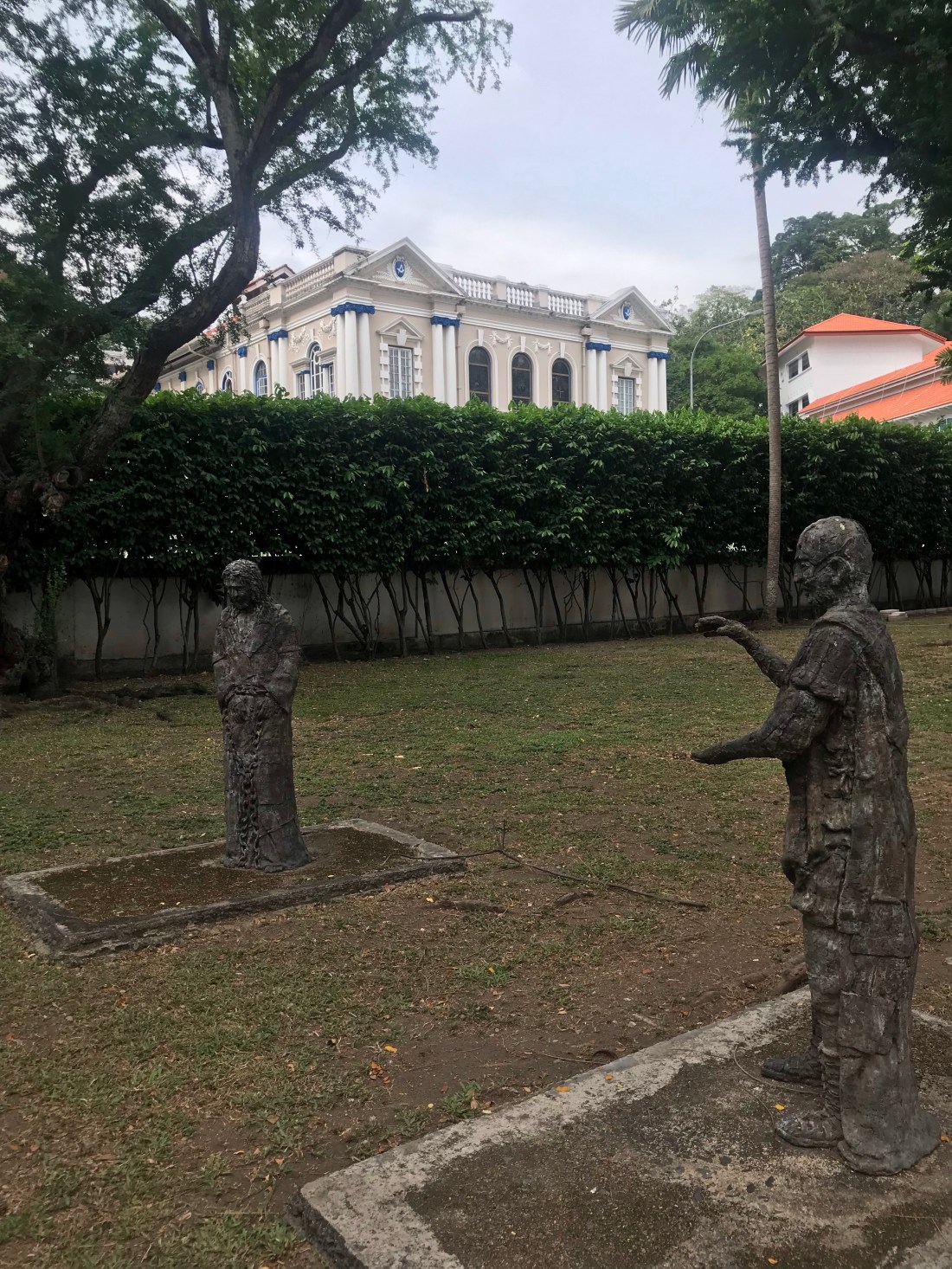
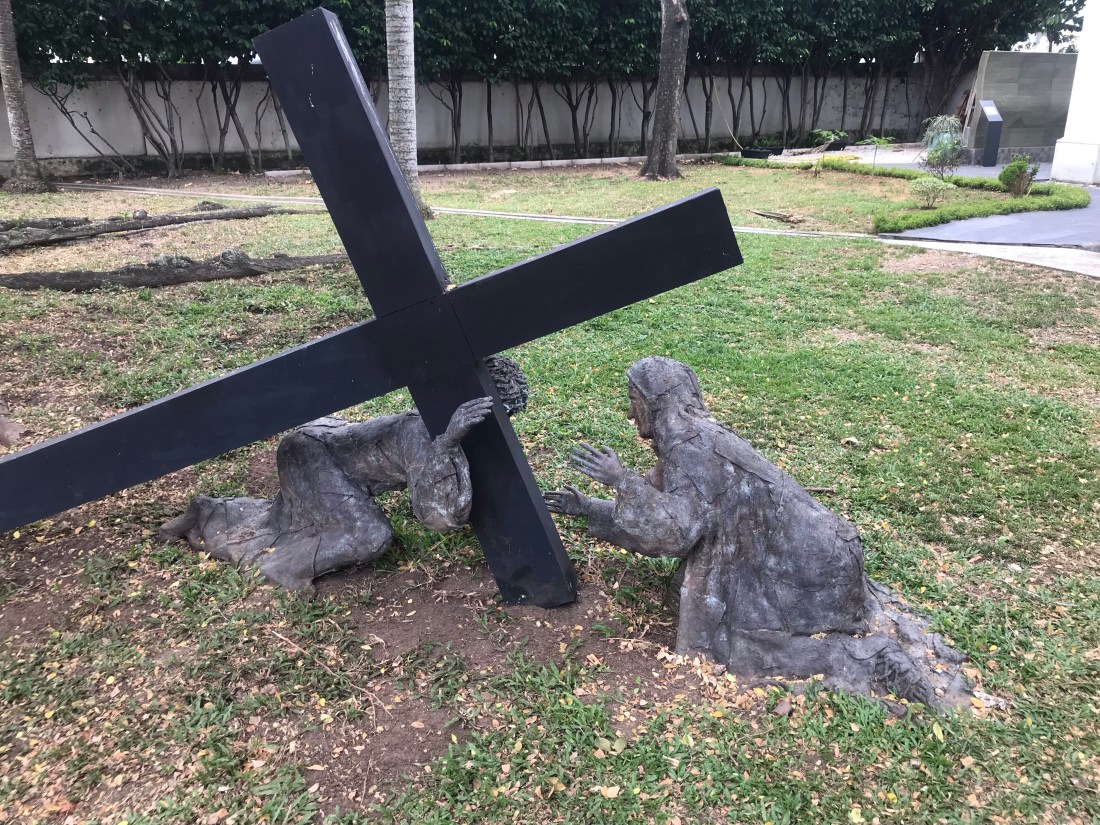
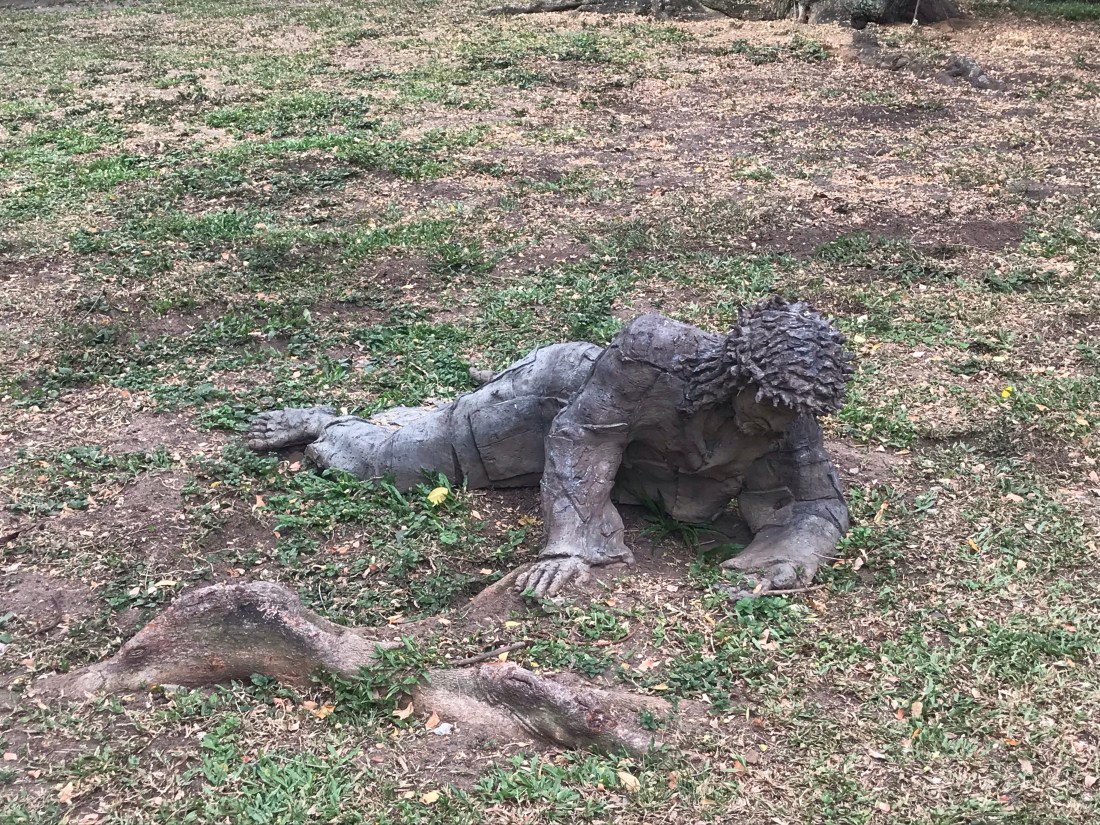
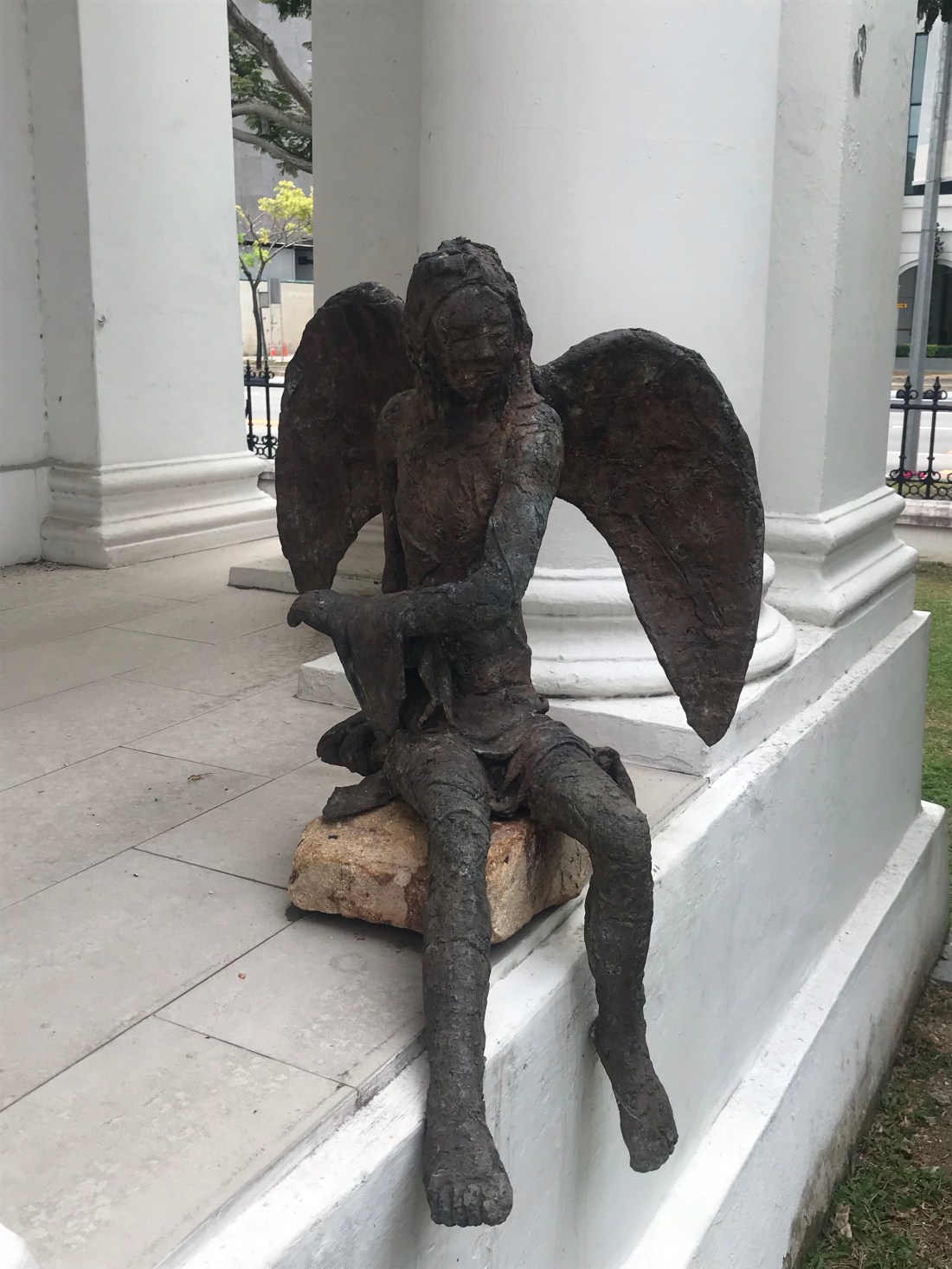
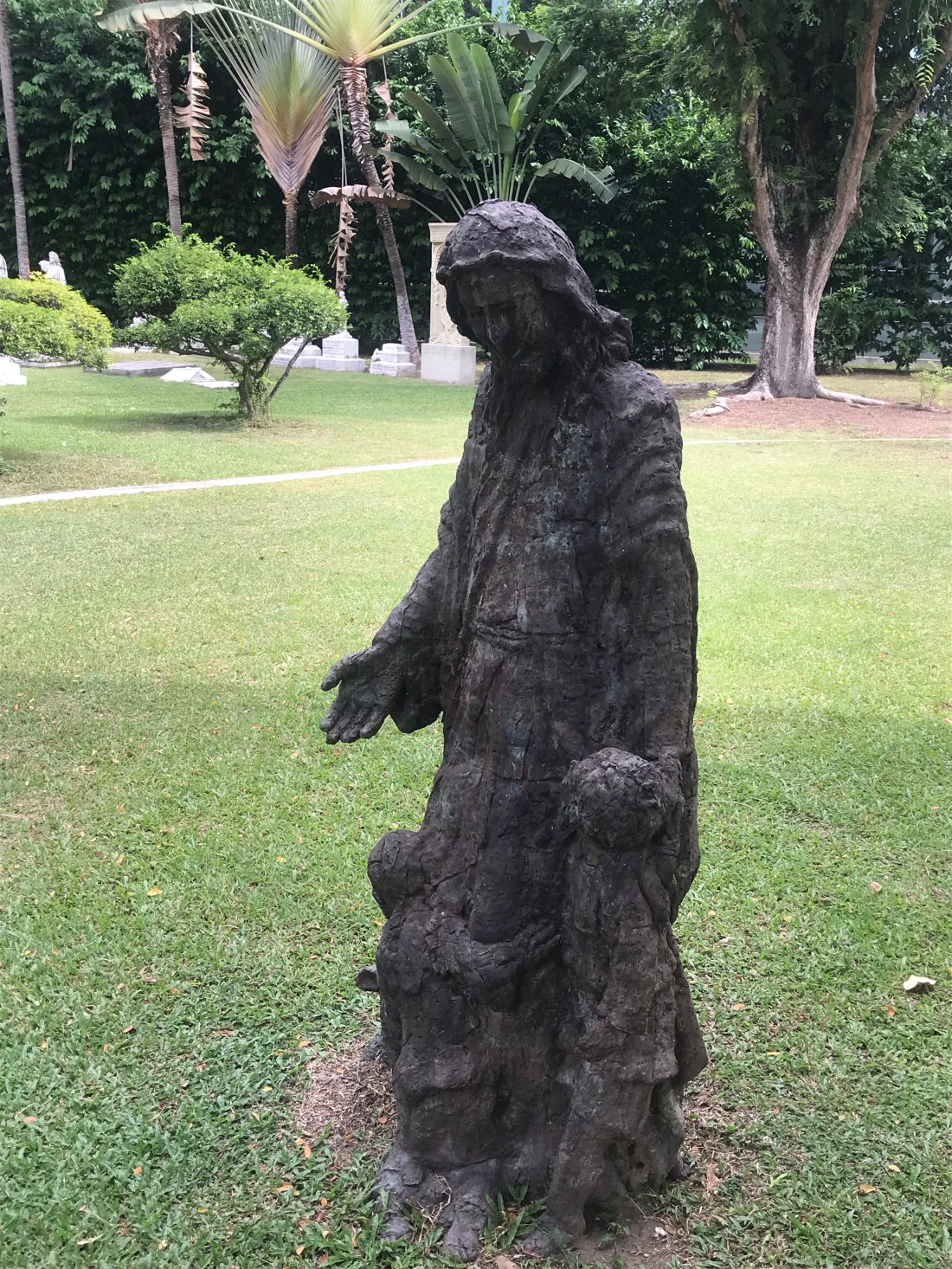
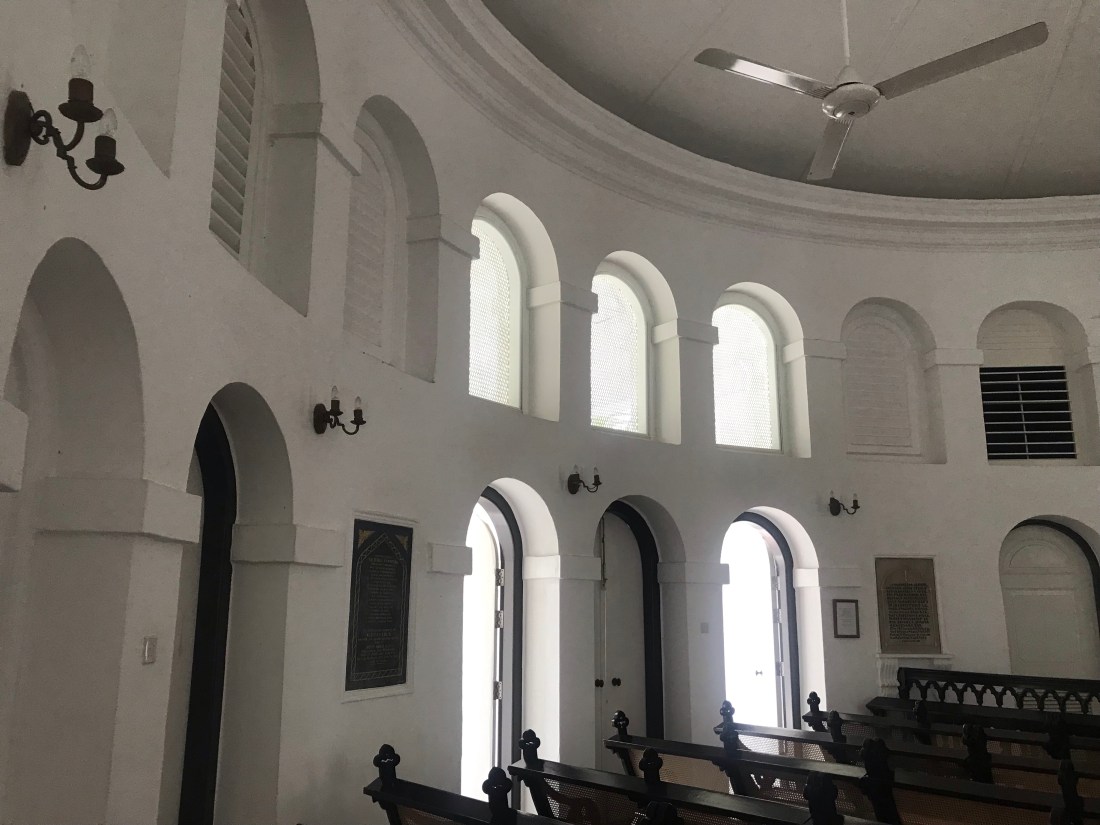
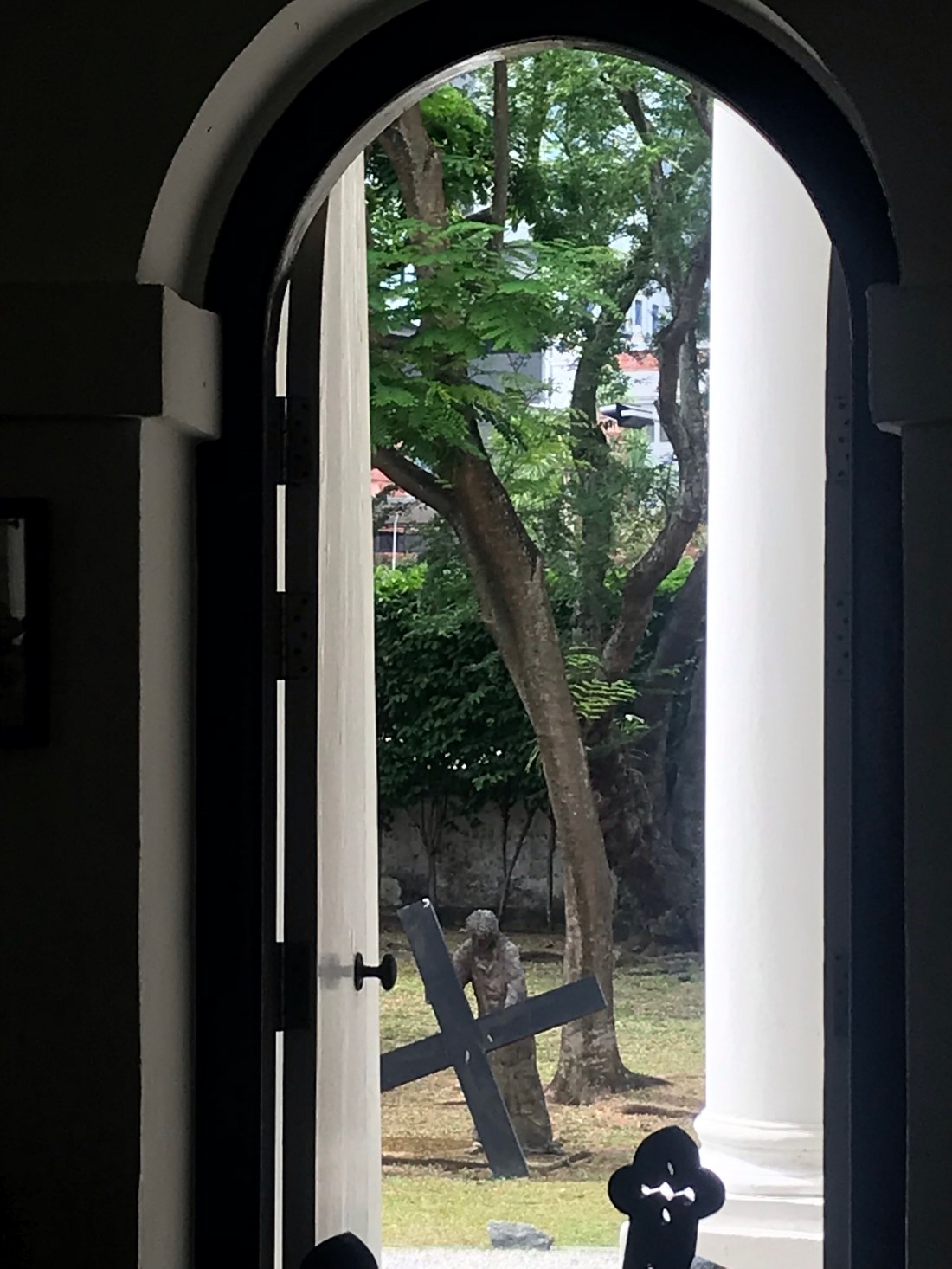
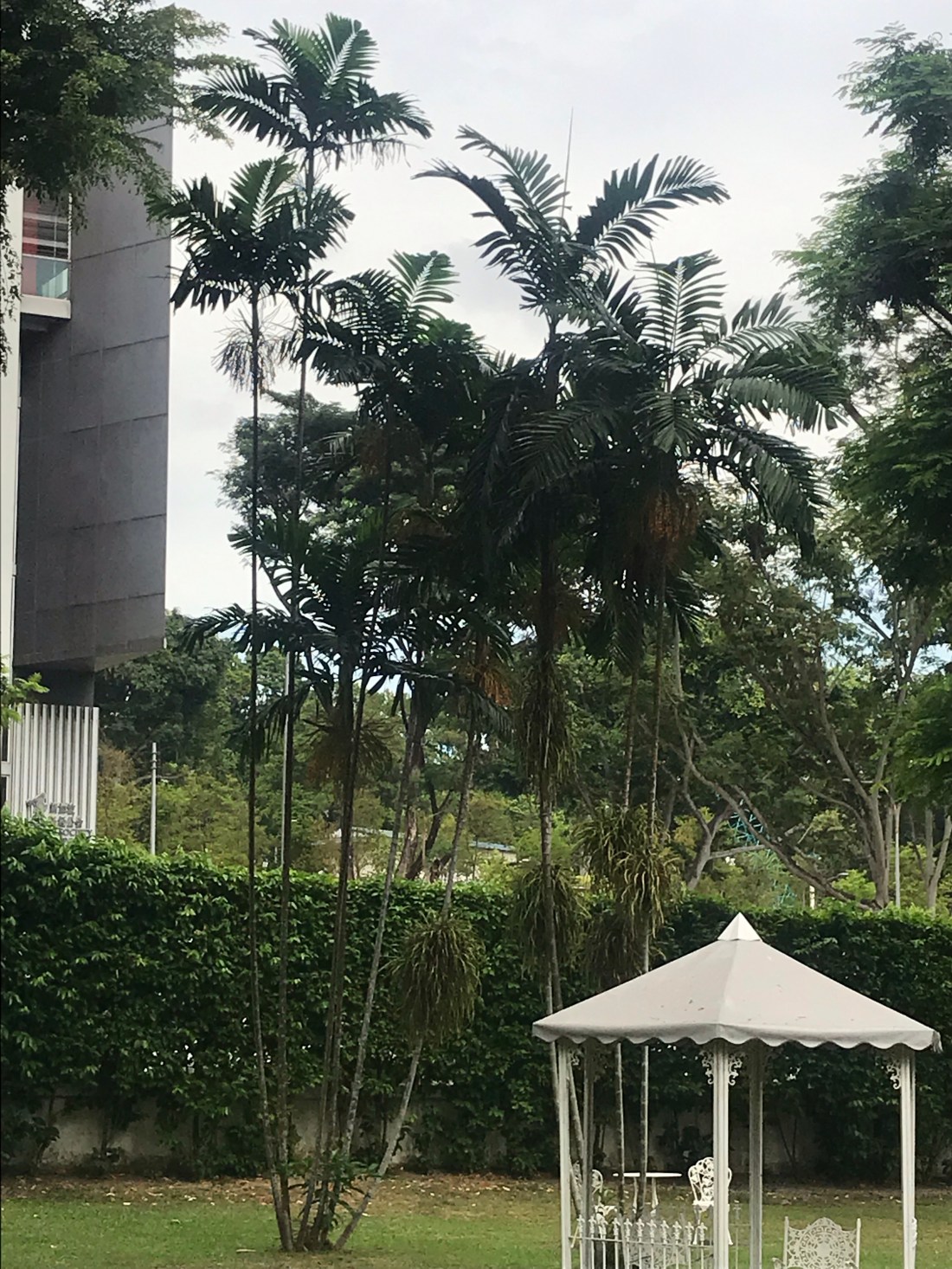
Anyway, disappointed that I couldn’t get in the cathedral to pray, I found my way to the Armenian Church of St Gregory the Illuminator, which I actually found a more prayerful space anyway, with some beautiful modern sculptures showing stages in Christ’s journey to be crucified outside (stations of the cross) along with a couple of intriguing angels and some beautiful trees and plants that looked to me like they were silently praising God. Here I sang (there was a great acoustic in the tiny circular church space), and did some body prayer outside among the trees and sculptures. And I read of the genocide of the Armenian people in 1915 by the Ottoman forces.

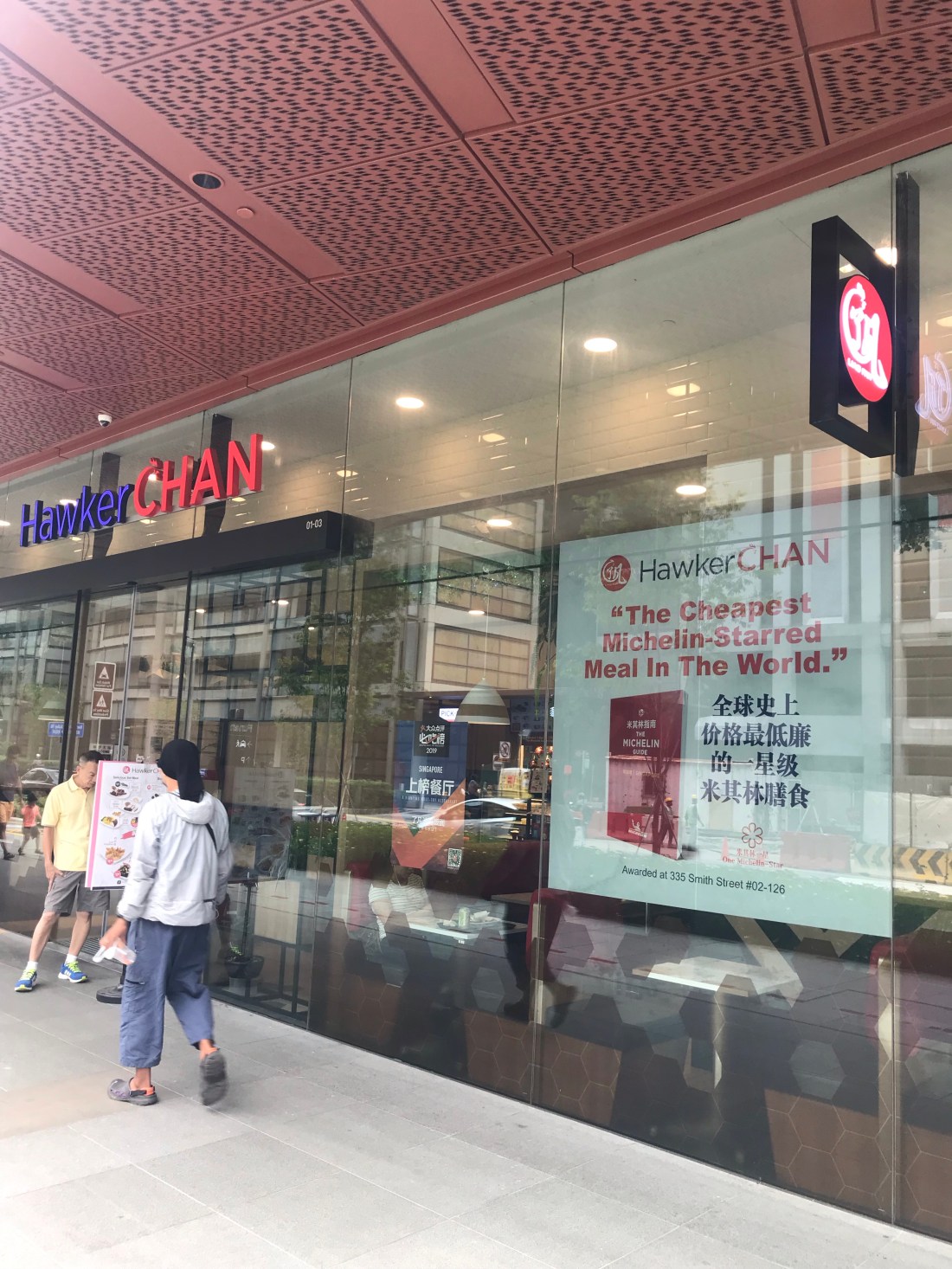
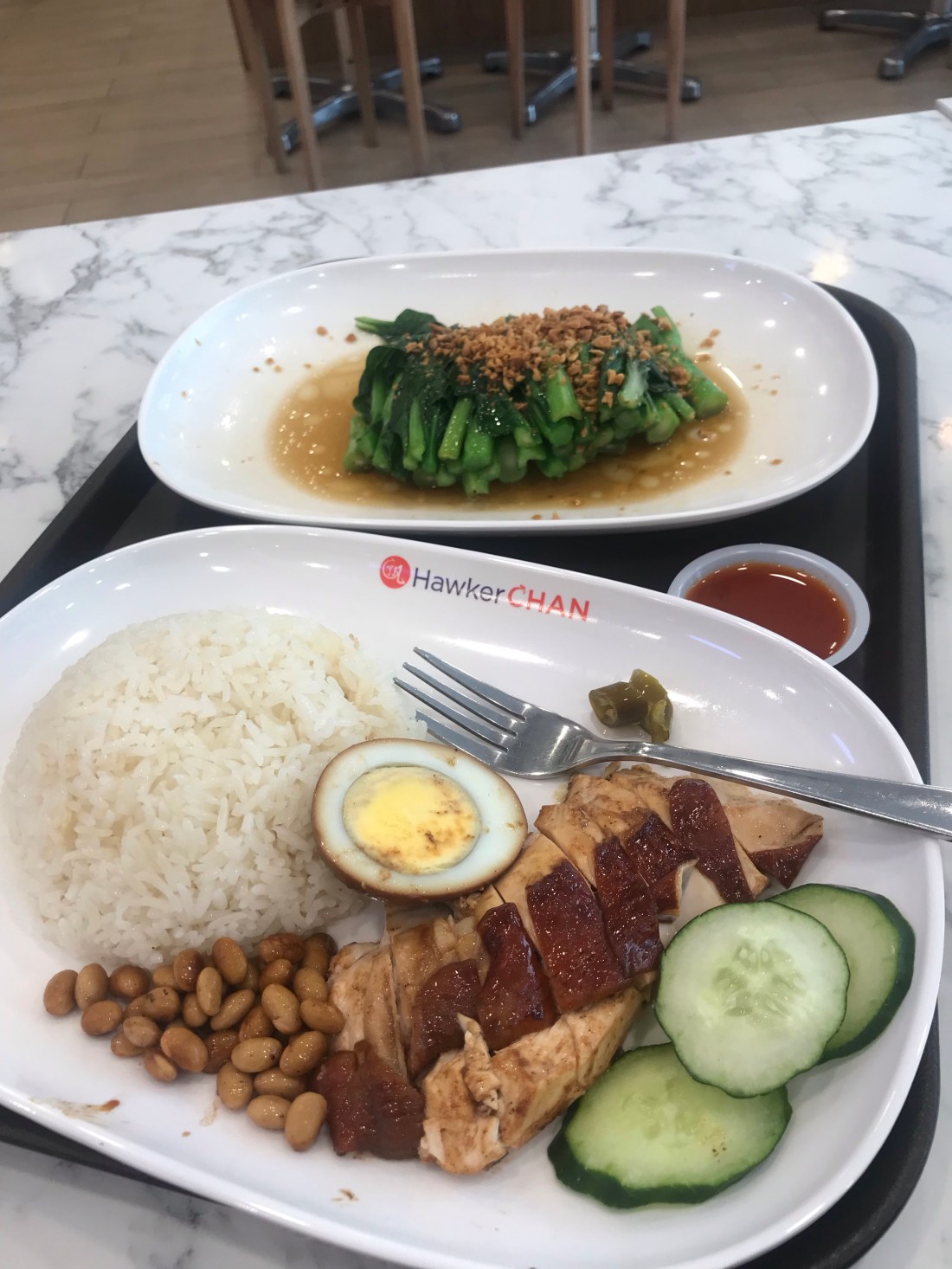
On my way from here to the National Gallery, I stumbled across a real find; Hawker Chan’s! Later in the day I came back here to have the cheapest Michelin starred meal in the world. It was delicious! (And cost me £6.71, drink included.)

In the National Gallery, I saw more political art than I’d ever seen before. Including one arresting picture of a young North Vietnamese woman going to war with a rifle slung over her shoulder. And many woodcuts and paintings of workers struggling to scratch a living, or banding together in groups to organise resistance to whatever force was occupying their country at the time (the art was from countries throughout Southeast Asia).

I also saw the positive influence of western art techniques and styles through the colonial era and beyond, alongside the strong ability of local artists to delve into their ancient artistic traditions, using old techniques and materials really effectively alongside the new.

Looking at art is a meditative process for me that makes my brain feel cleaned somehow, and opens my mind to new thoughts and ideas. It’s such a gentle and quiet thing to do. I love it!

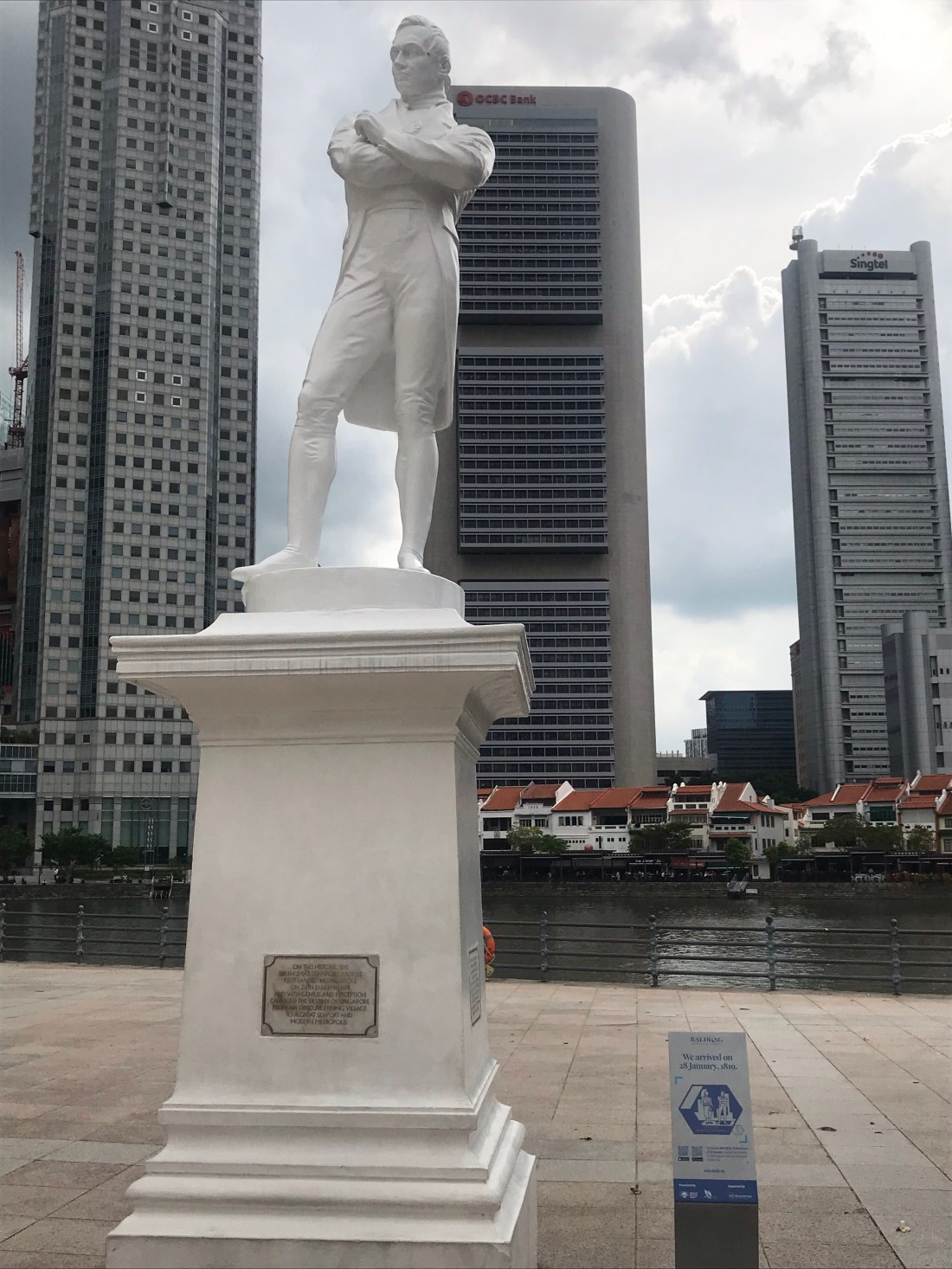
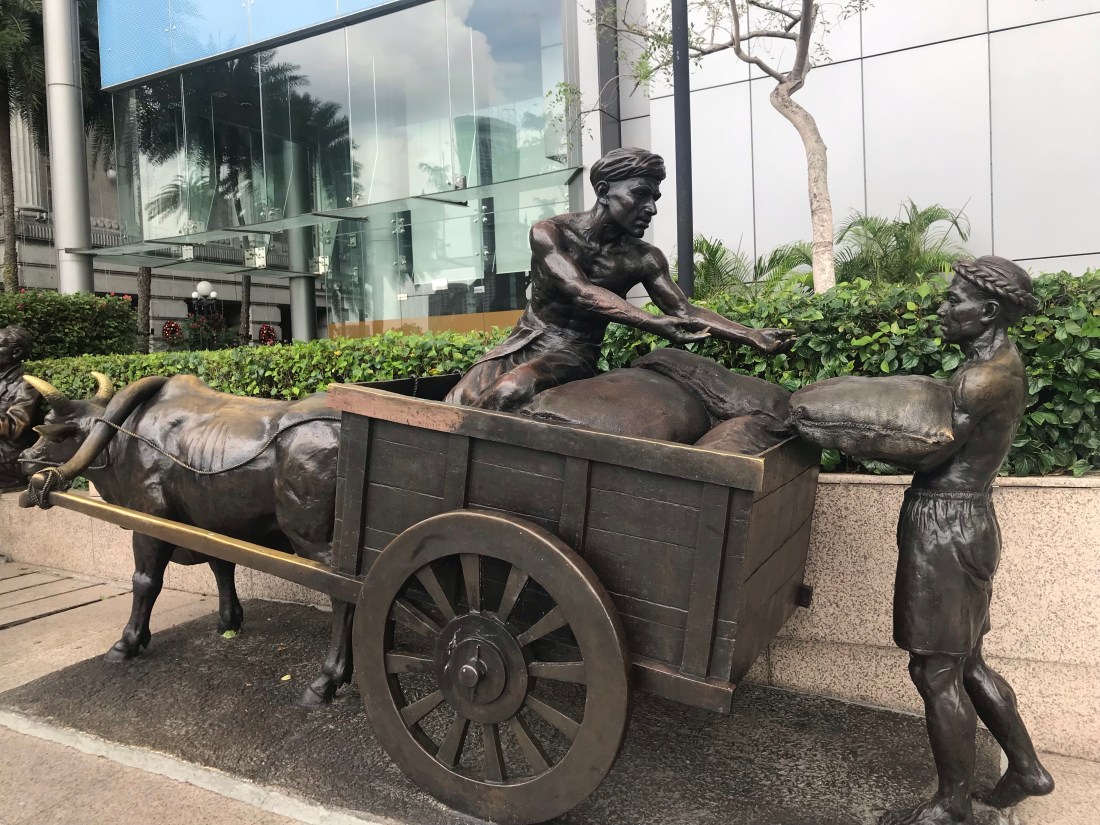
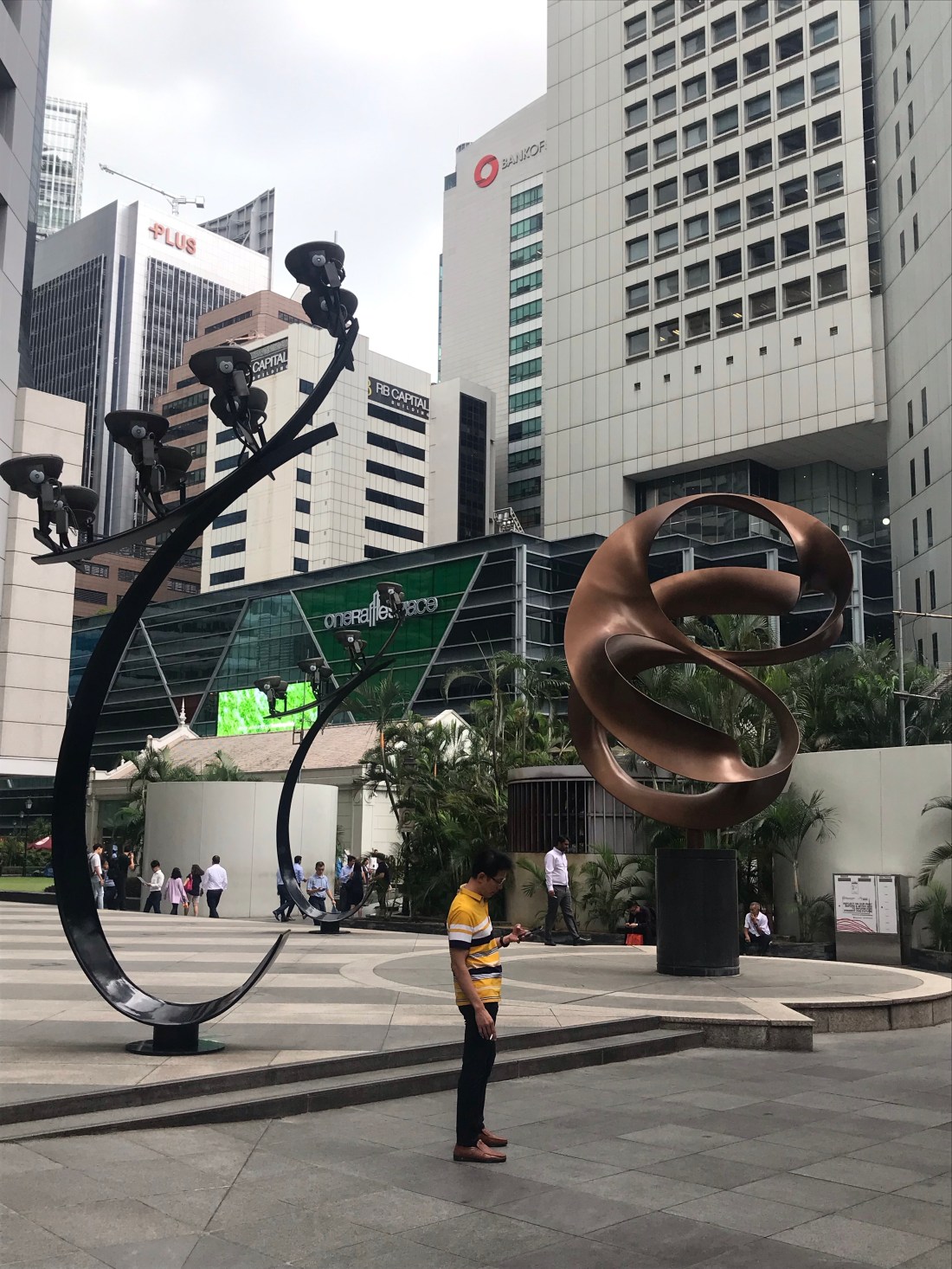
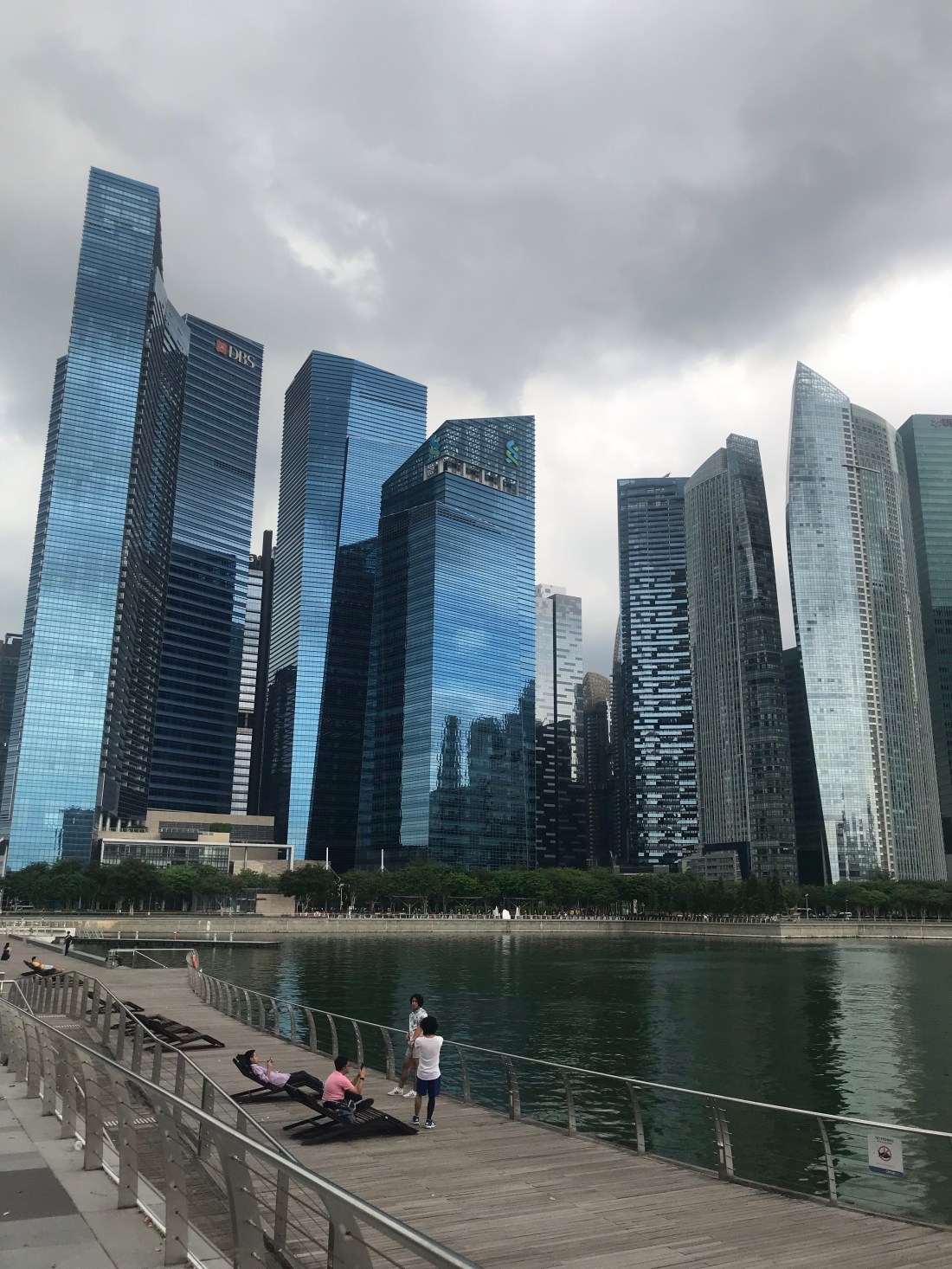
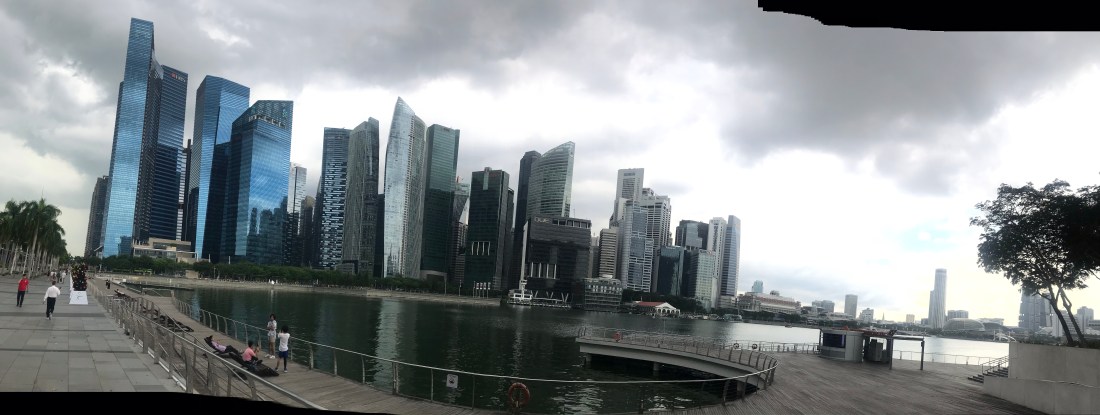
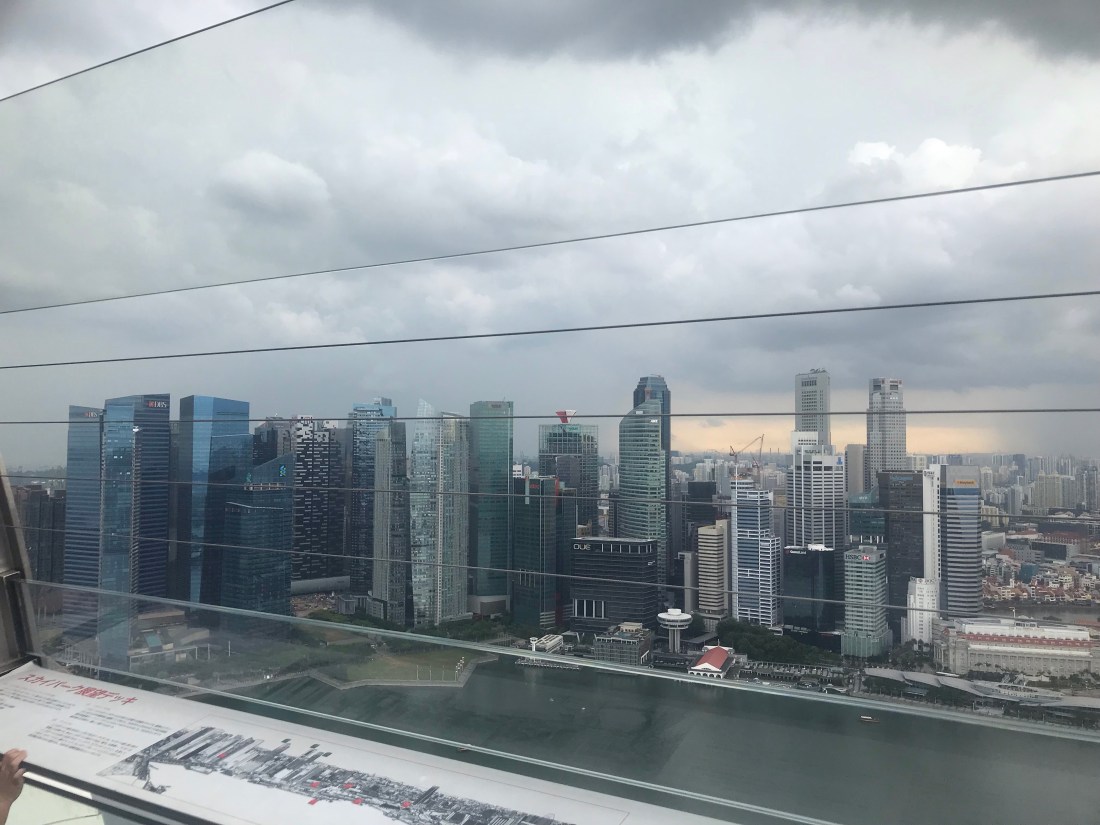
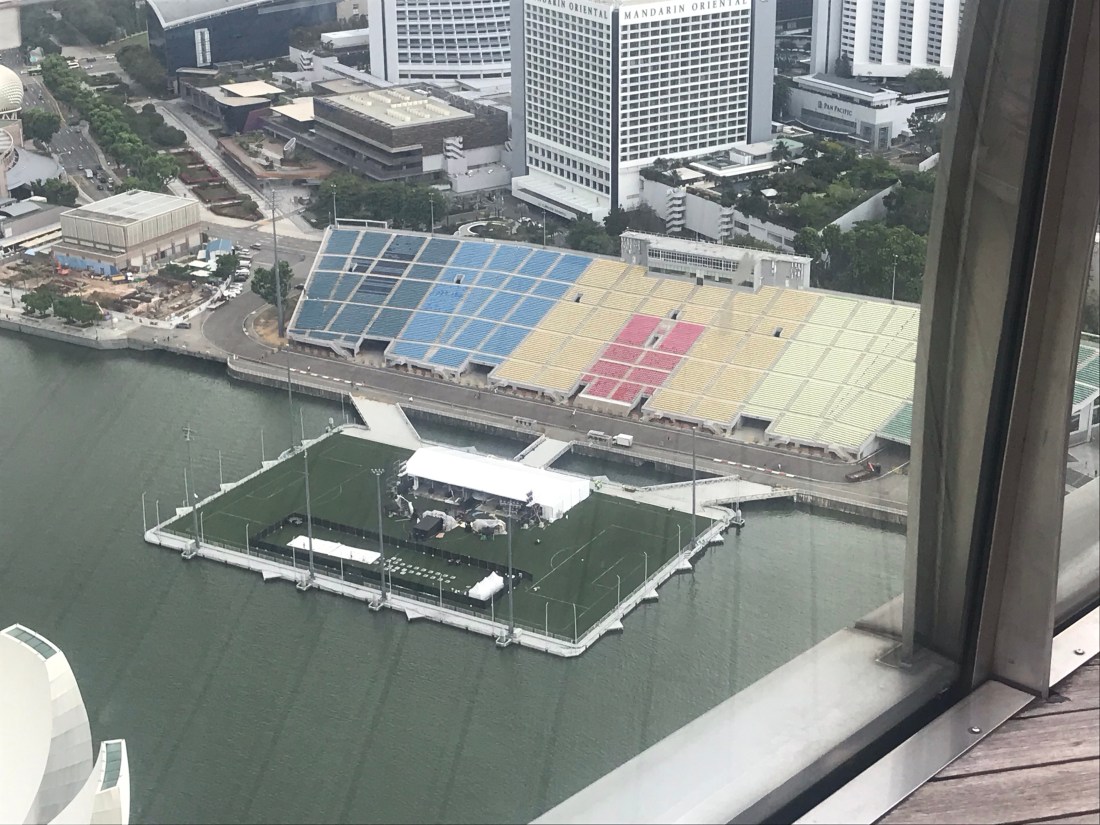
After lunch I explored more of the political statues by the river, and then went up to the Marina Bay Sands observation deck for the obligatory high up view over Singapore.

Here’s Stamford Raffles, on the site where he first landed in Singapore to “found” it in 1819:

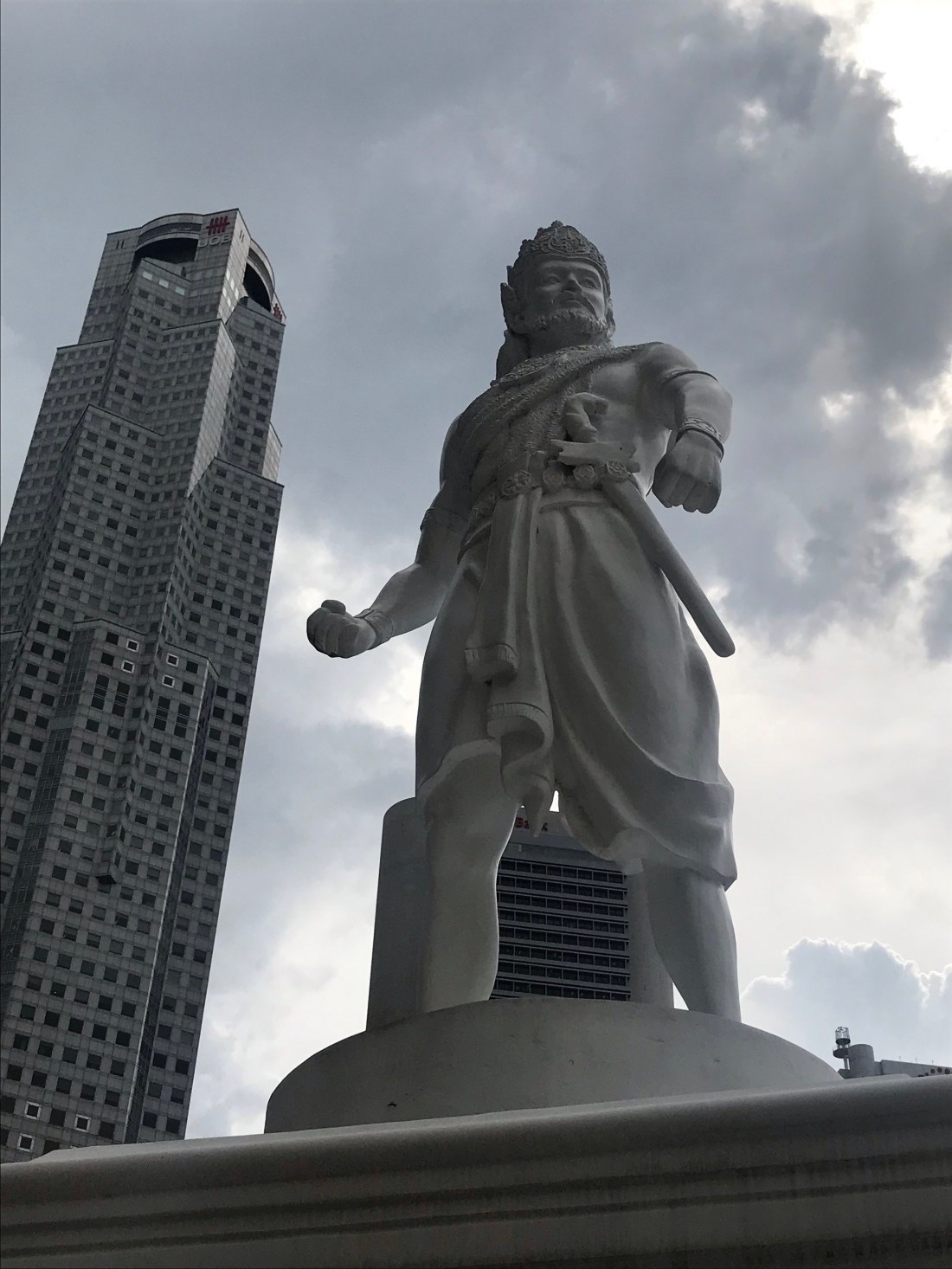
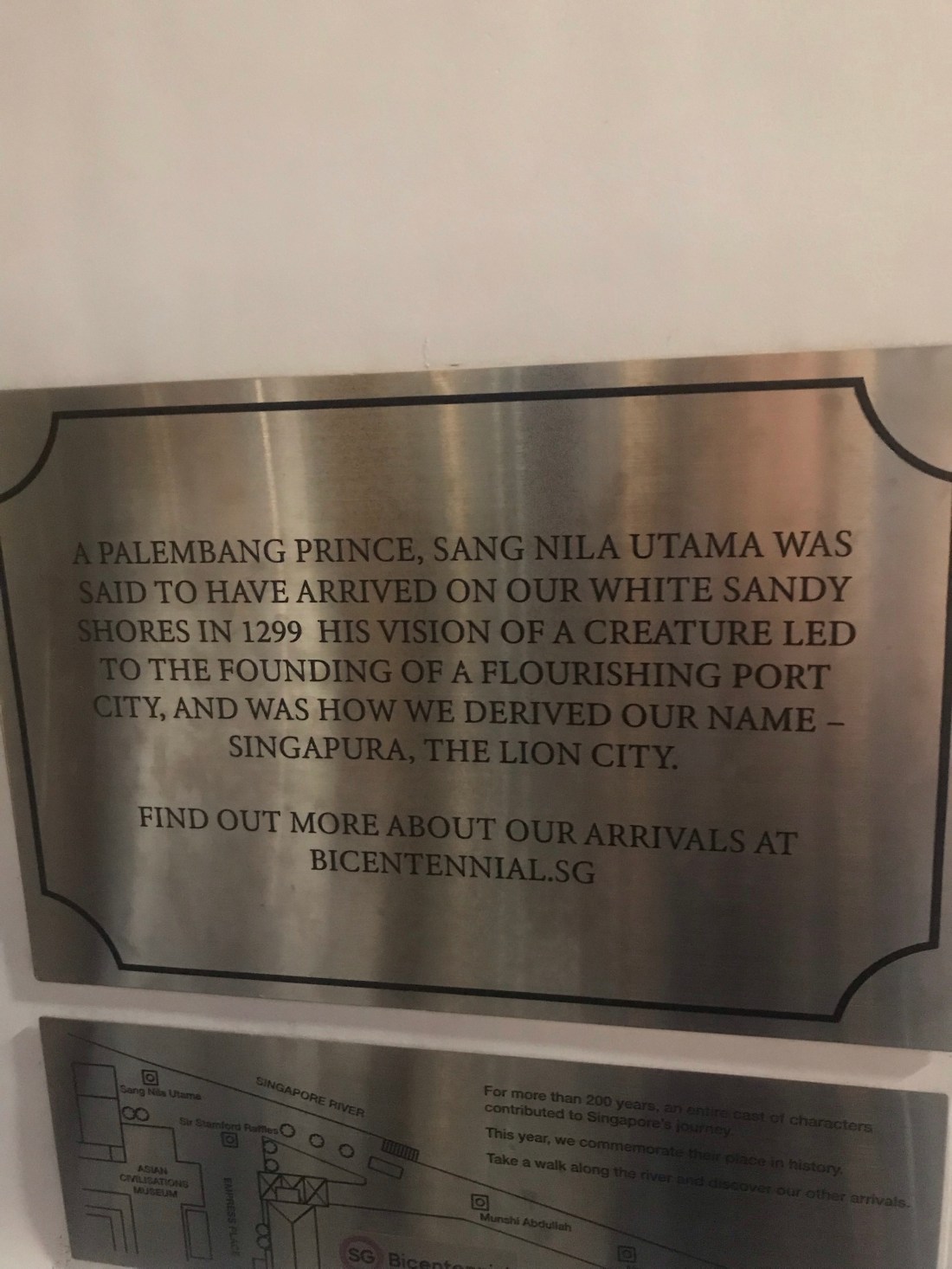
But here’s one of the many previous arrivals, a Palembang Prince called Sang Nika Utama, said to have arrived in 1299, founding the flourishing port city of Singapura (“the lion city”), named after a vision he had of a creature here:

Here’s Den Xiaoping:

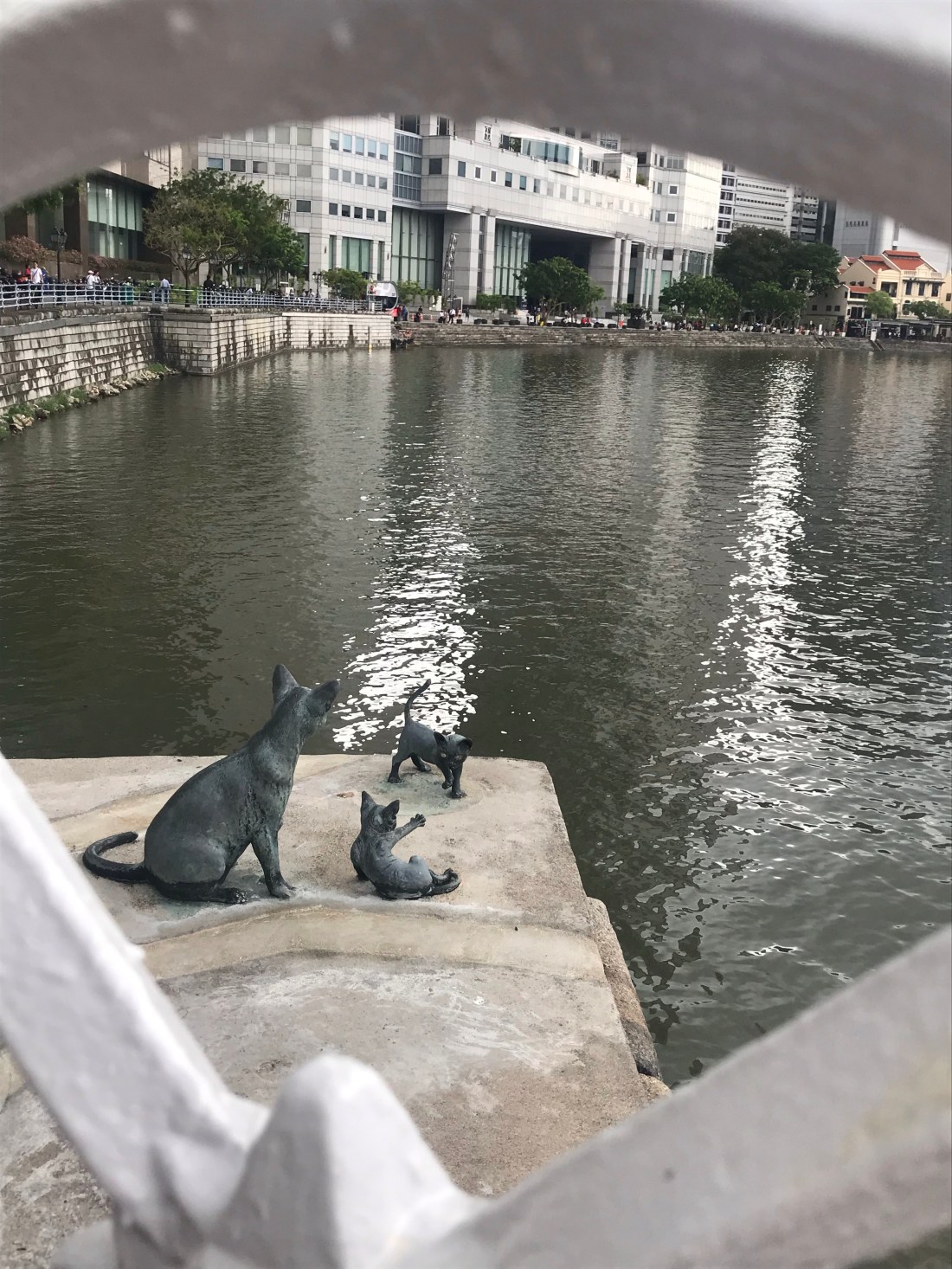
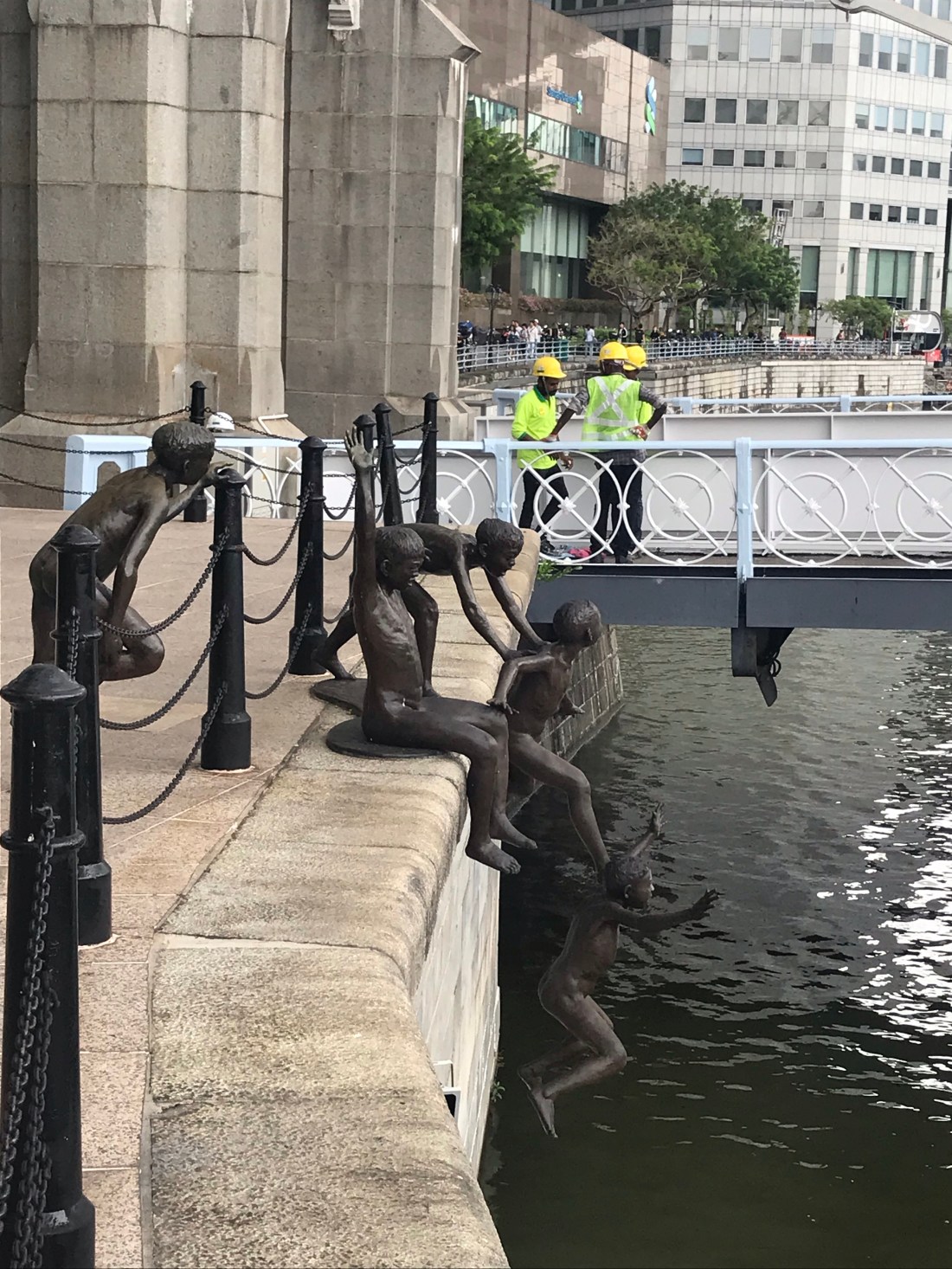
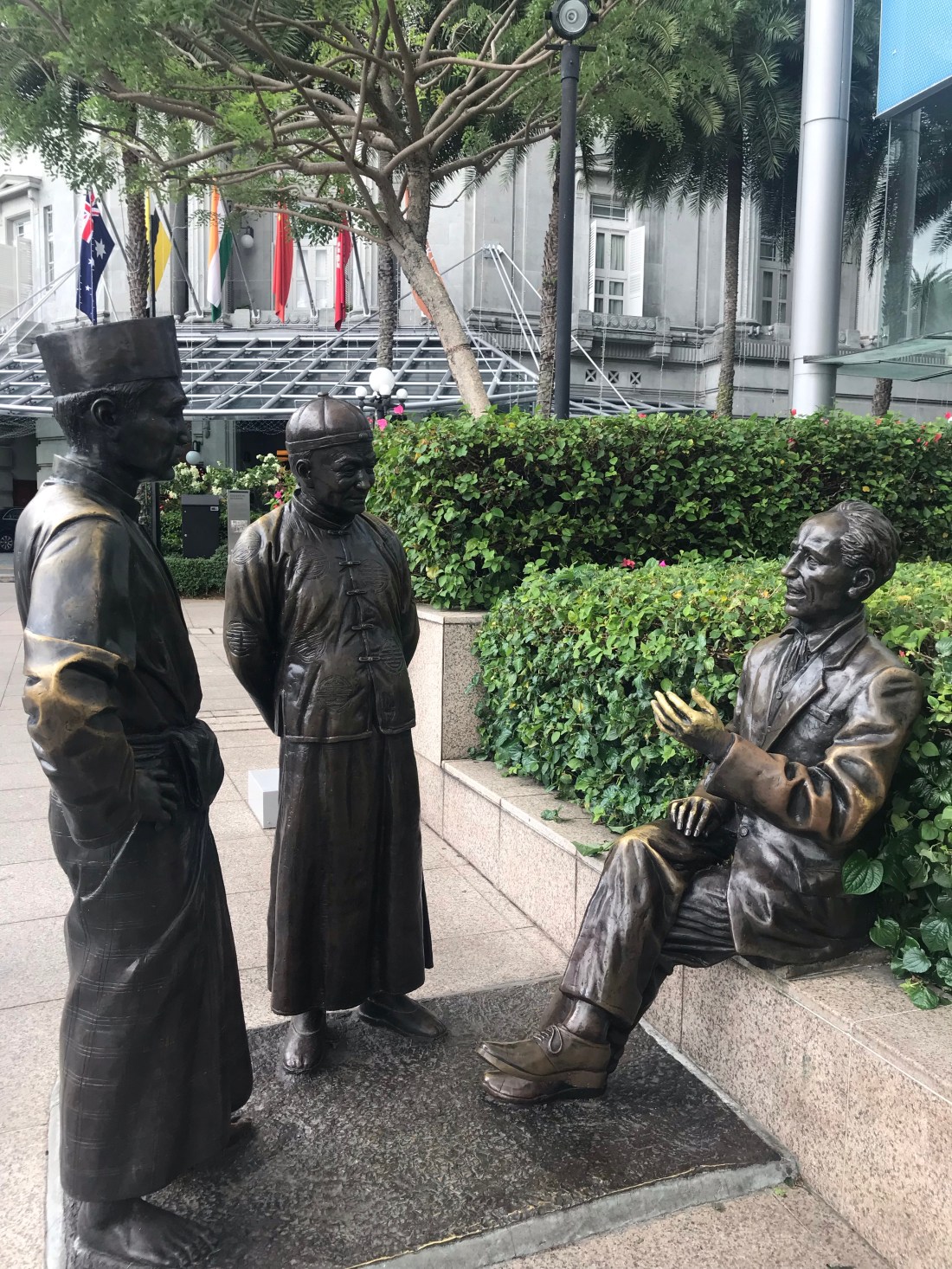
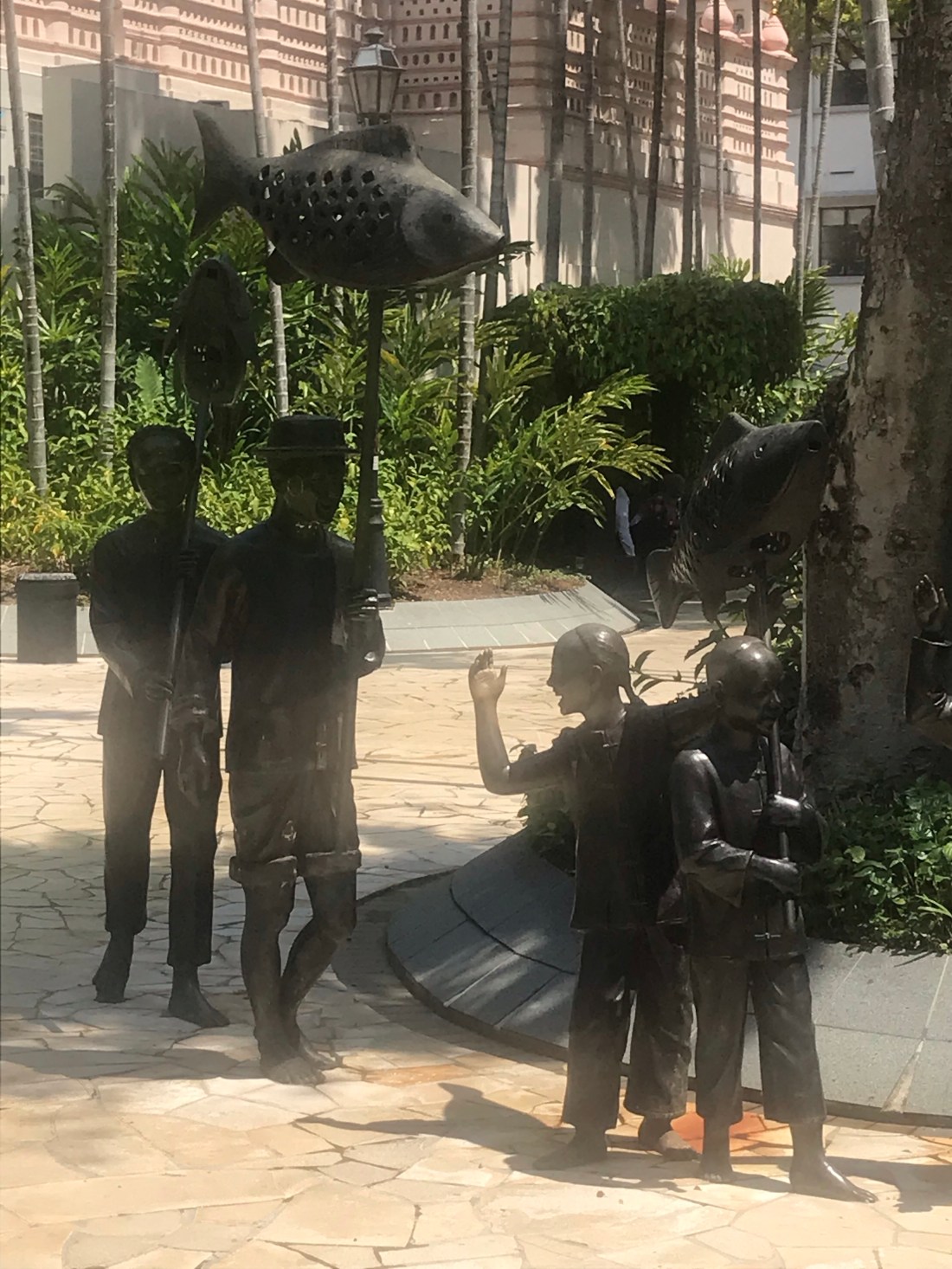
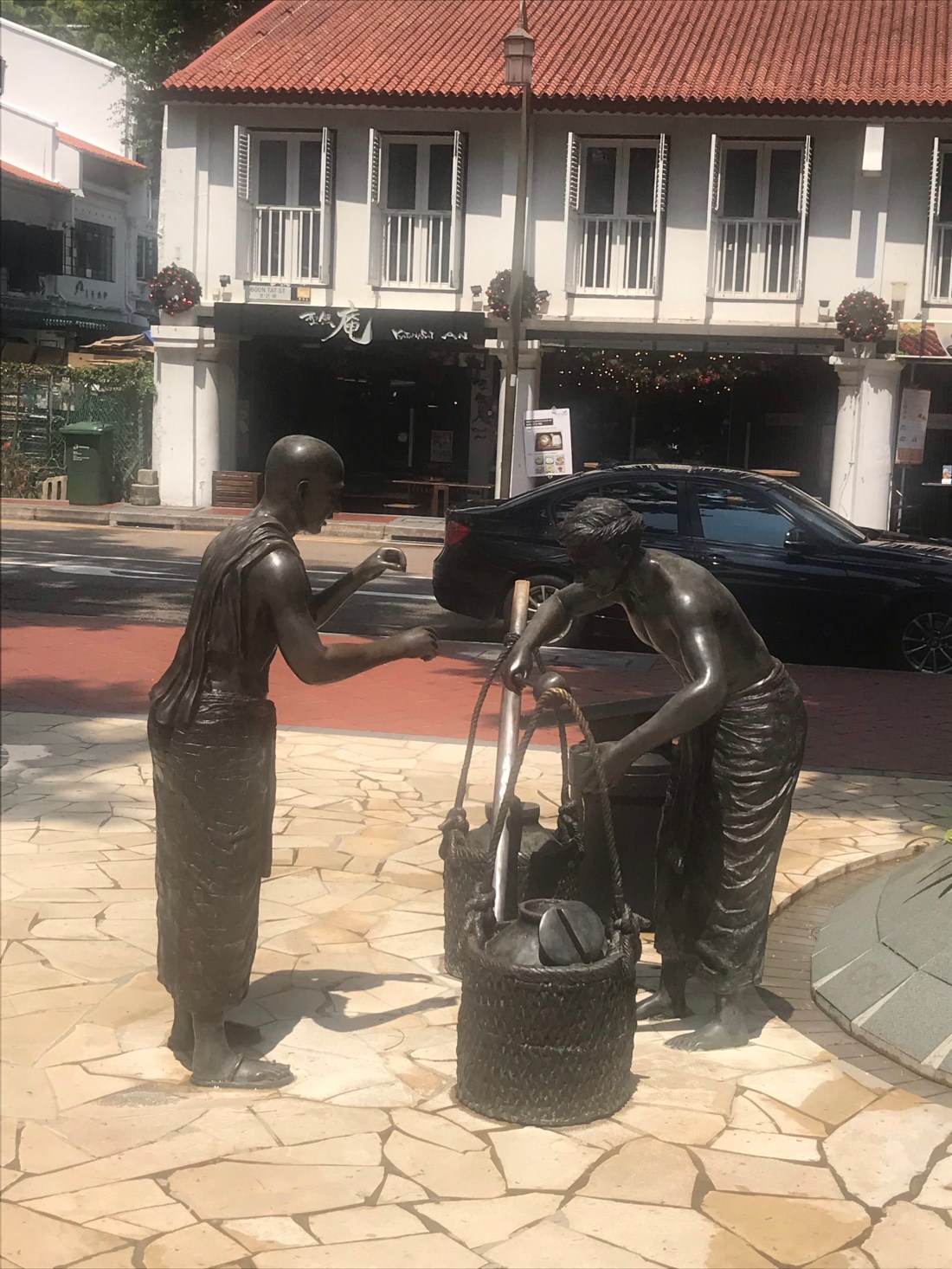
And some other more everyday statues near the river:

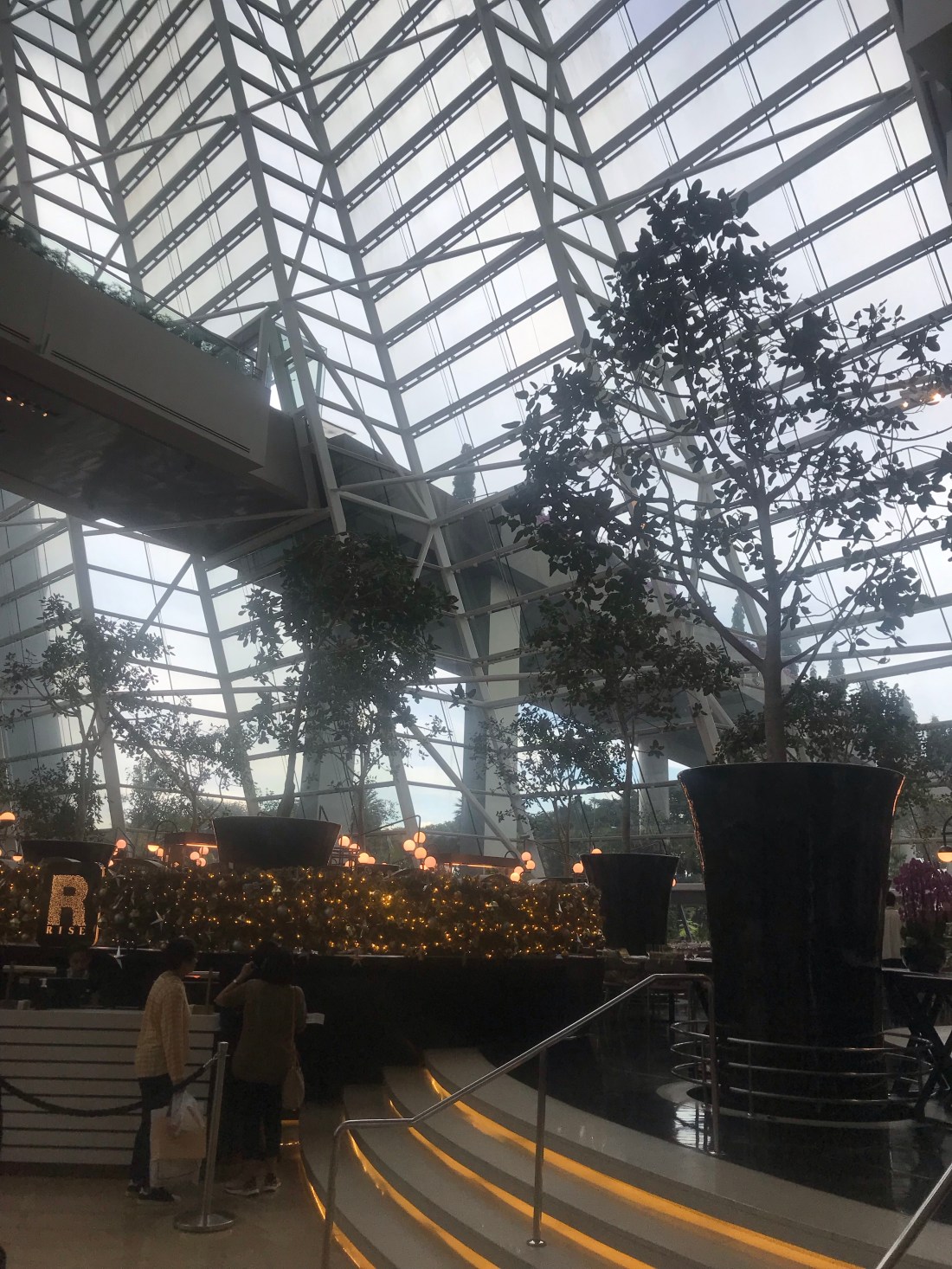
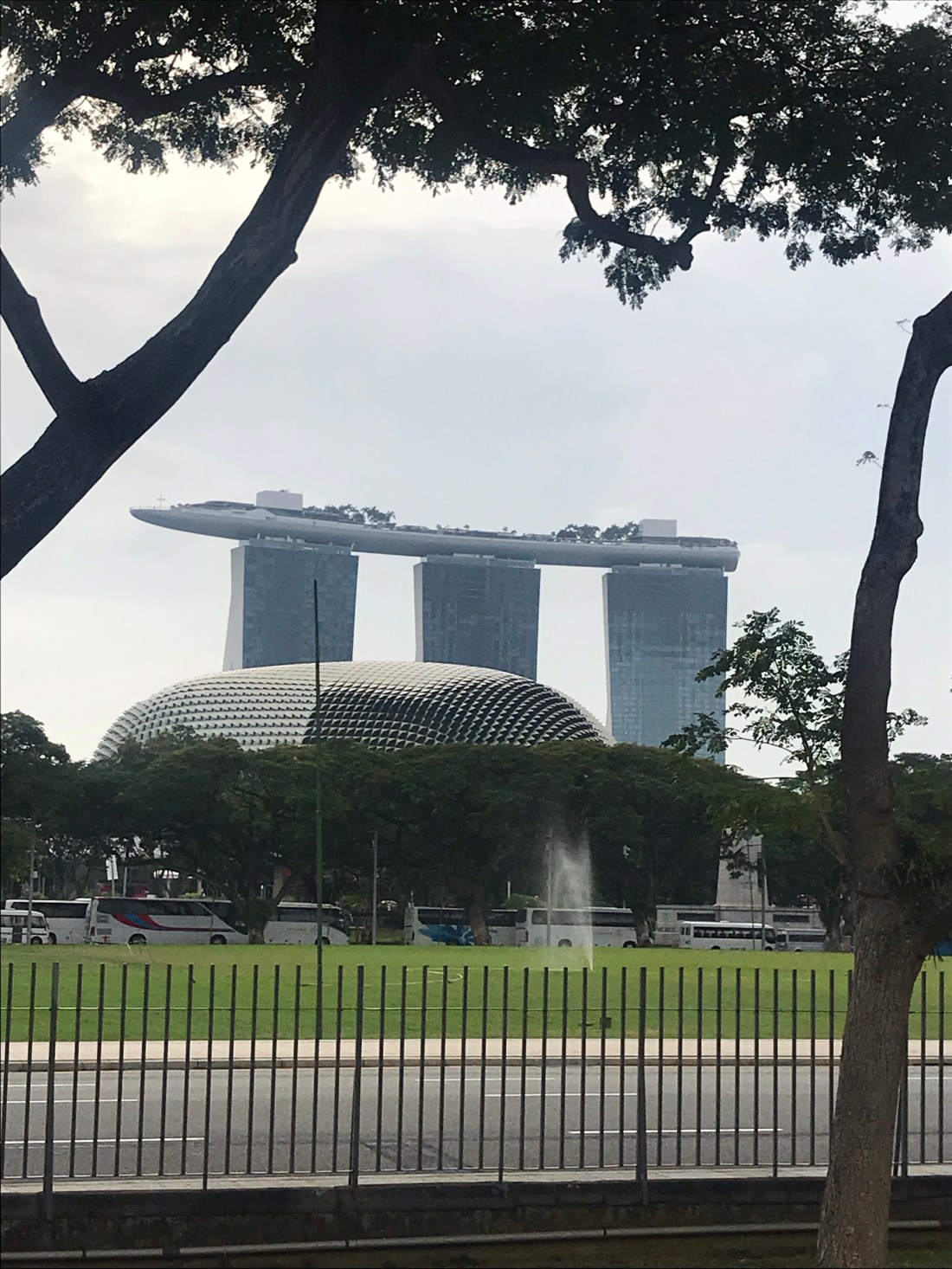
Marina Bay Sands (What is it? A posh hotel? A mall? A corridor? A boat ride? A posh dinner? An MRT station? A casino? A garden? A collection of water features? A spa? A “sky park”?):

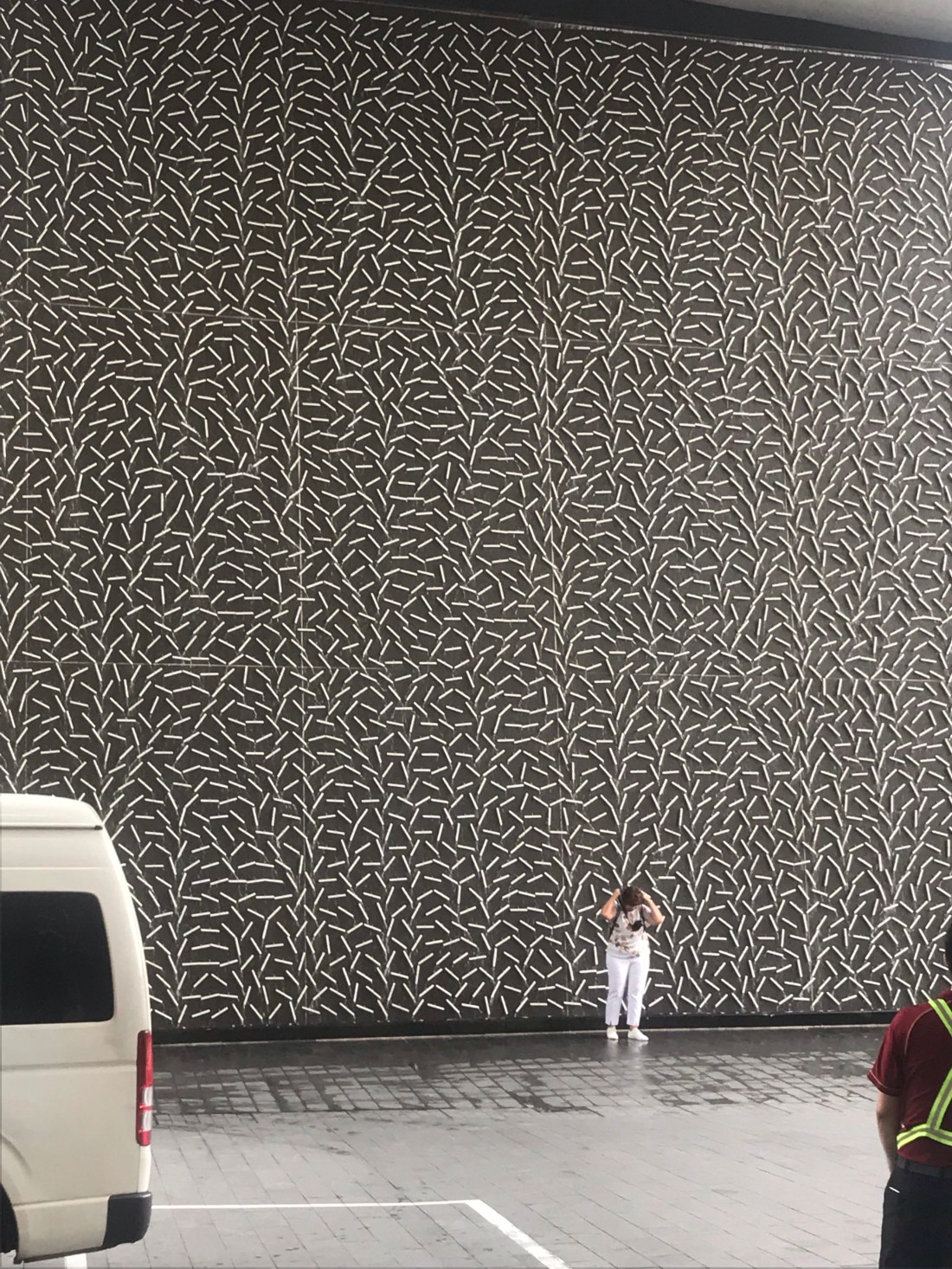
Water ran down this huge wall, moving the metal bars back and forth:That tiny white steeple in the distance just behind the two durian shaped dome things is the cathedral!:

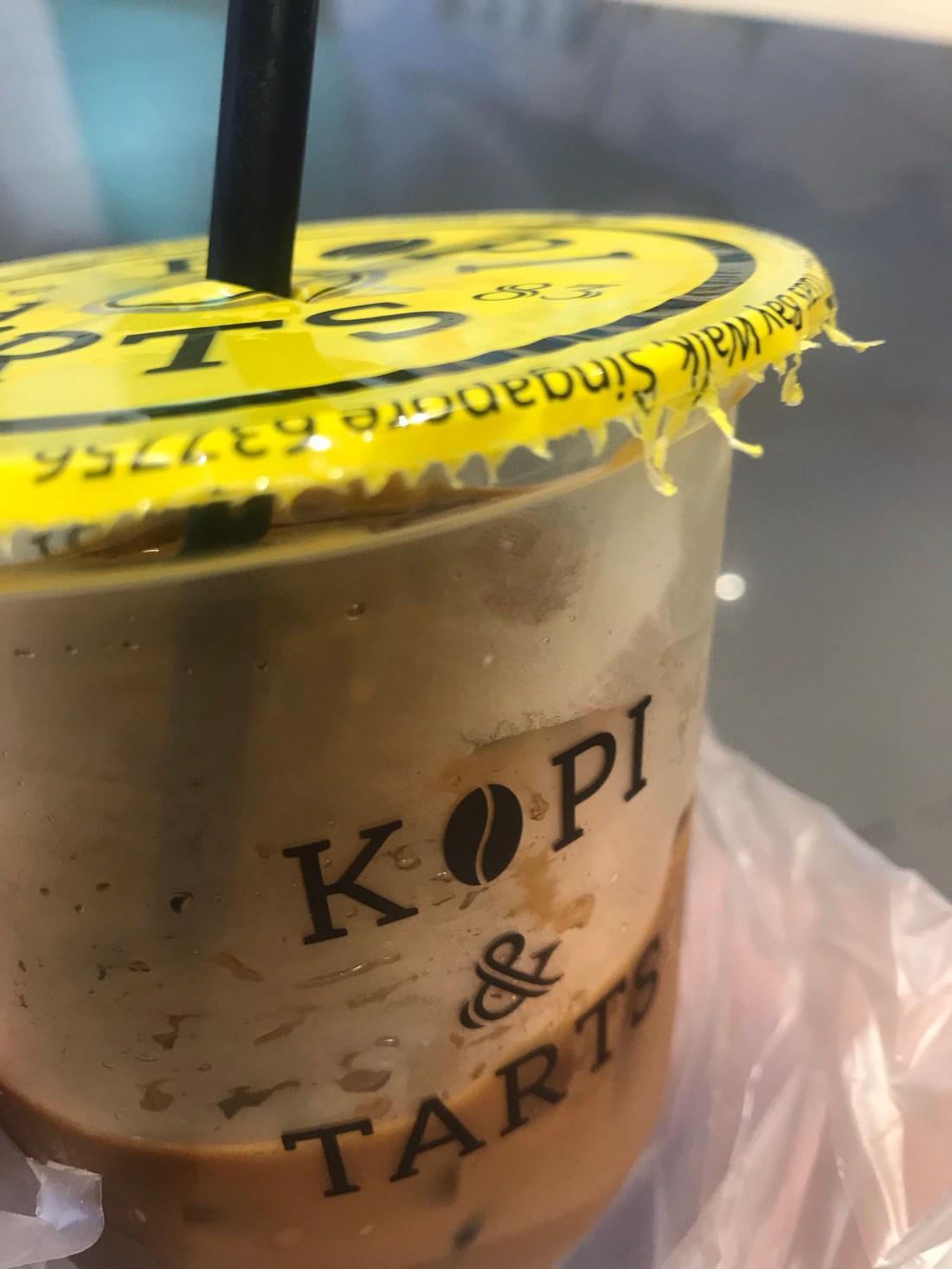
From this point I somehow got stuck in a shopping mall. I still can’t remember why I went in there in the first place. Ah yes- looking for this👇🏼(Singaporean coffee made with condensed milk, that I’d not tasted up until this point. I asked for it to be less sweet, and it was surprisingly refreshing). And a sit down with air conditioning. Then I couldn’t find my way out to the MRT. (A common experience the malls are all so huge.) Eventually I extricated myself.

Hop on hop off

The rest of the day, I mainly stayed on the different bus routes admiring the city from different angles. In the course of which I found out the following things…

Land

Singapore has reclaimed 8000 football pitches worth of land from the sea in the last few decades. This is how Beach Road lost its beaches. In this way, the land surface area of Singapore has increased 25% in the last thirty years or so.

Transport

In Singapore, you need a certificate of entitlement if you want to own a car. I’m not sure how you gain one (I gather it costs something like $SGD 80000, about £45449 according to Wikipedia😳) but the number of certificates issued each year is closely controlled to avoid congestion on the roads. Certificates are only valid for 10 years. (Hence there are hardly any older cars on the road and Singapore is one of the biggest exporters of used cars.) And the tax on the purchase of cars is more than 100%! The more you drive, the bigger your engine and the more congested it is on the routes you drive on, the more tax you pay. All these are measures to deter car ownership and prevent congestion on what is after all a fairly small island. According to Wikipedia again, only 12% population own a car.

The government has also invested heavily in Singapore’s public transport system. The MRT (tube) is driverless, spotless, always punctual, rarely breaks down and remarkably easy to navigate around (even if like me you’ve very little sense of direction), and tube and bus fares are really low. Why would you bother owning a car? On the occasions when you want to go somewhere a bit off the bus or tube routes, or to get somewhere in a hurry, you can take a taxi. And there are marked and numbered pick up points all over the place for taxis, so it’s easy for them to work out where you are, even if you haven’t got a taxi app with location settings turned on.

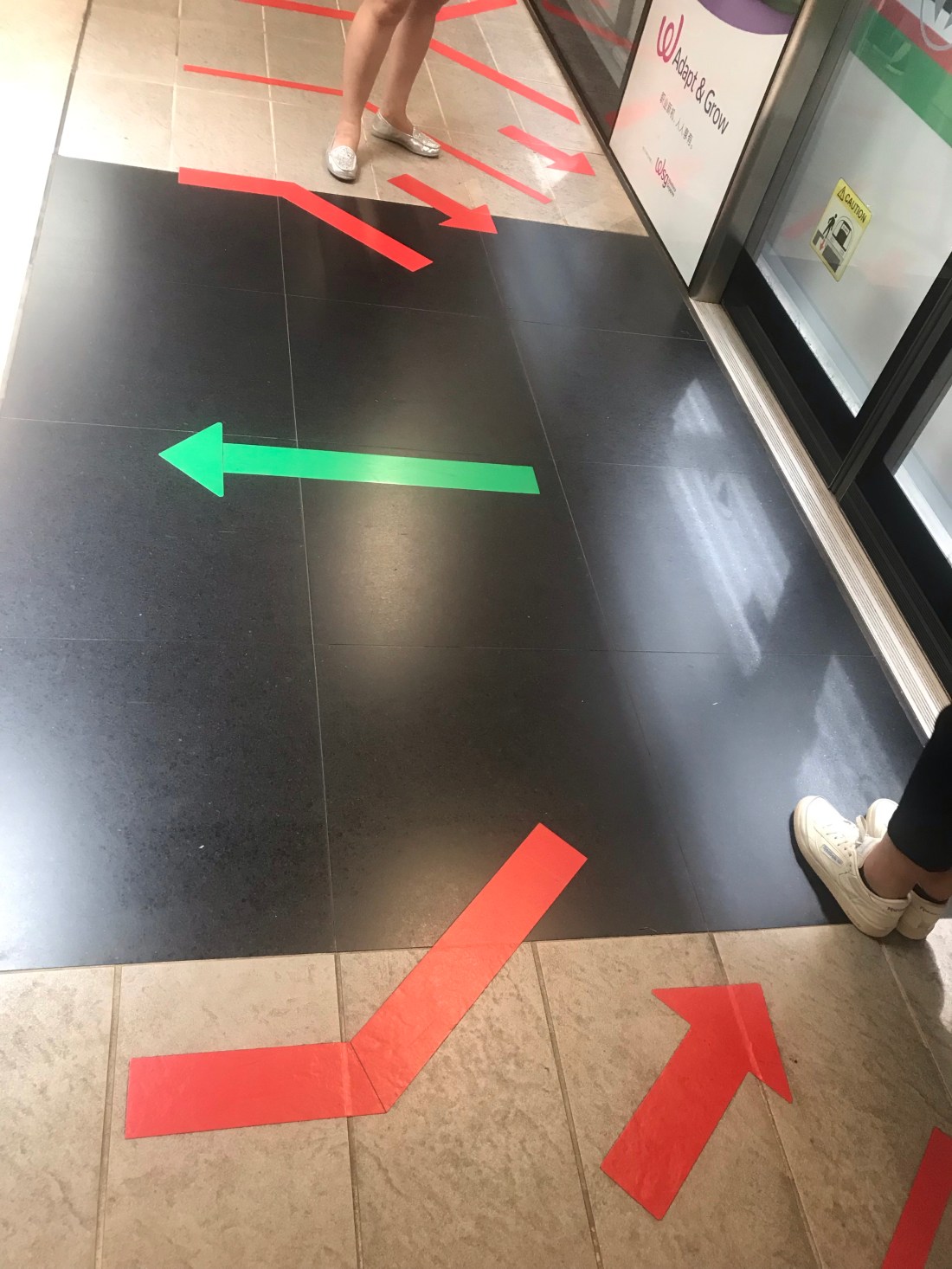
One of the reasons why the MRT is such a pleasant experience is because you’re not allowed to eat or drink on it (and very few of the stations have food places in them), and everyone obeys the “waiting for everyone to get off before you get on” rule, and obediently stands in the correct spot. Also, the seats nearest the doors are a different colour, and “Stand up Stacey” (a cute cartoon character) encourages everyone to offer them to elderly people, pregnant women, parents with young children or anyone disabled or who looks like they really need a seat.

I must admit, I’ve had to concentrate quite hard to remind myself not to have a sip of my water while I’ve been on the tube or waiting at the station.

When I first arrived, Shiv coached me in MRT etiquette, noticing I was standing on the right of the escalator. She said in mock seriousness, “Here, we are a left standing nation”. Every time I get on an escalator, I remember her saying that! 😂

Someone posted on Facebook the other day an article about how Luxembourg is making all public transport free, in an attempt to reduce car ownership, congestion and all the associated environmental evils that come from it. I wonder if they’ll also follow some of Singapore’s other measures? And I wonder whether we will ever get a government in the UK who will be brave enough to make these sort of policy decisions in the face of climate change, and also the reality that congestion from road traffic is seriously slowing us down now.

Hospitals and “Medical tourism”

This is the Raffles private hospital (both buildings) made famous in 2003 for the first attempt to separate two adult conjoined twins joined at the head. Unfortunately the attempt failed despite the vast resources used to try and bring it off:

Apparently, about half a million foreign patients are catered for in Singapore annually. “Medical tourism” accounts for about 68% patients treated here at any given time.

How the other half live

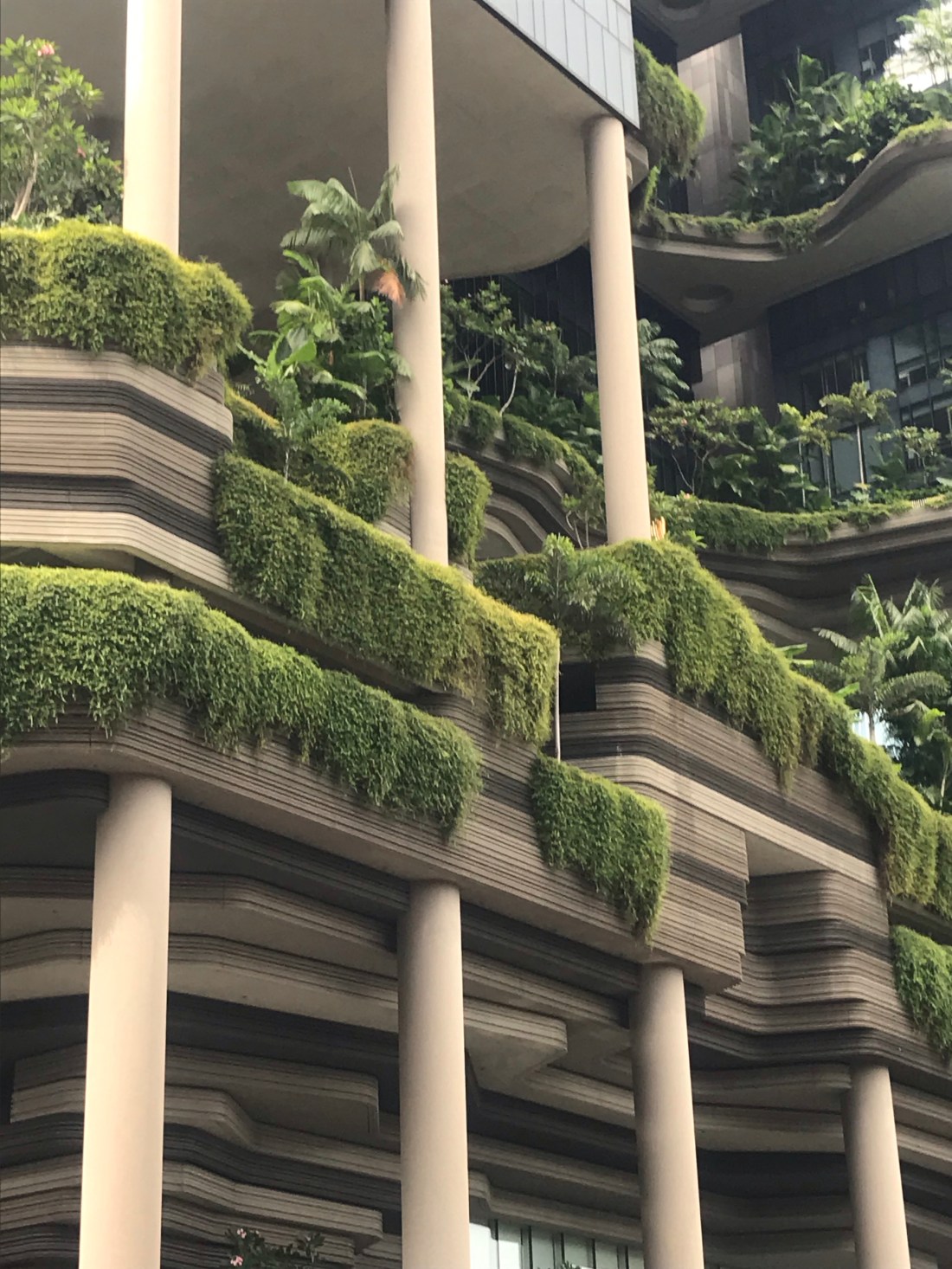
Here’s the Park Royal hotel with much greenery:

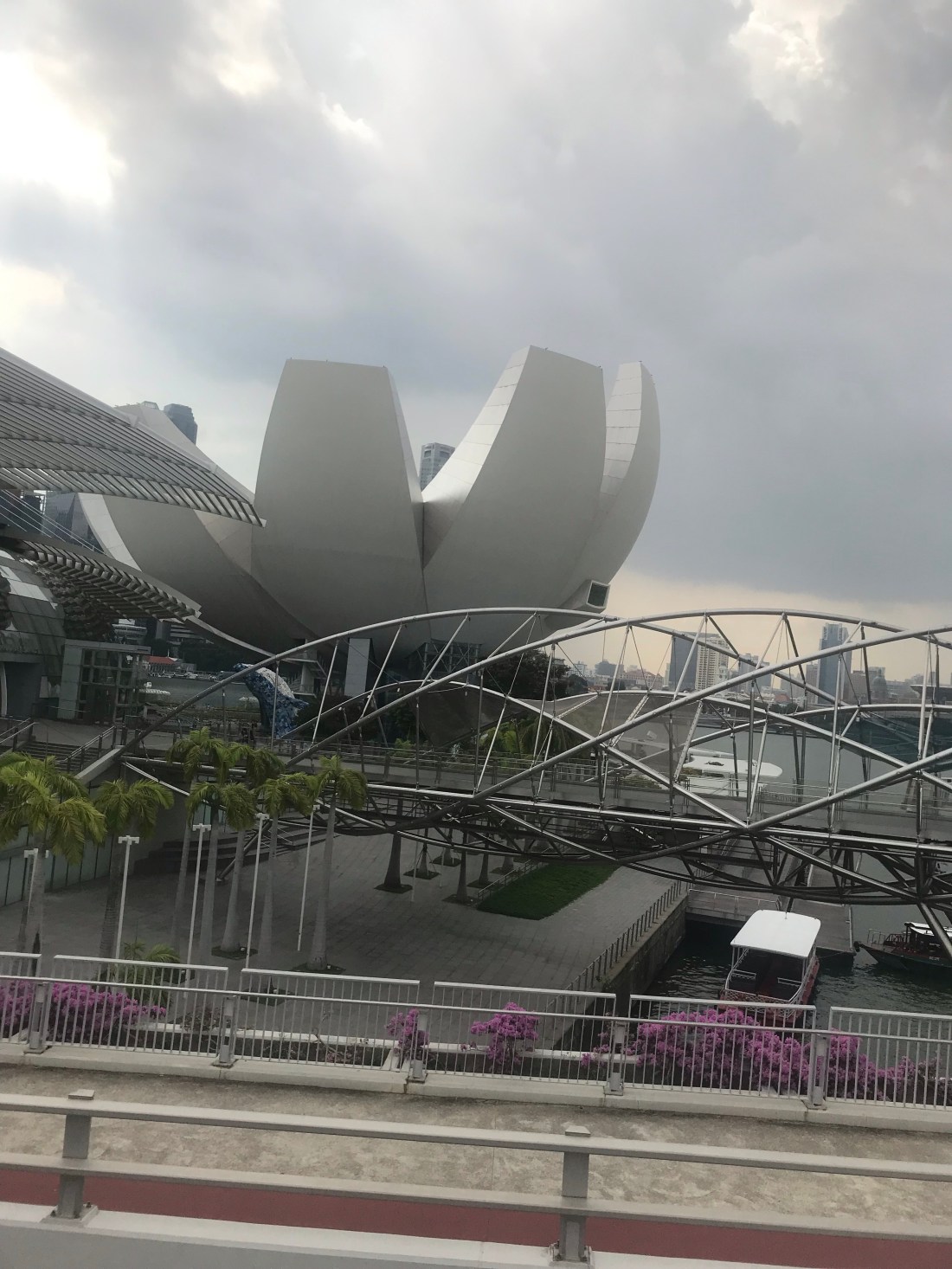
And Marina Bay Sands Hotel (the building at the back below), replete with observation deck, huge swimming pool and garden on top (and one of the casinos inside):

The condos near Orchard Road (a road lined with very posh shops and malls like Oxford Road) apparently sell for $US6 million!!

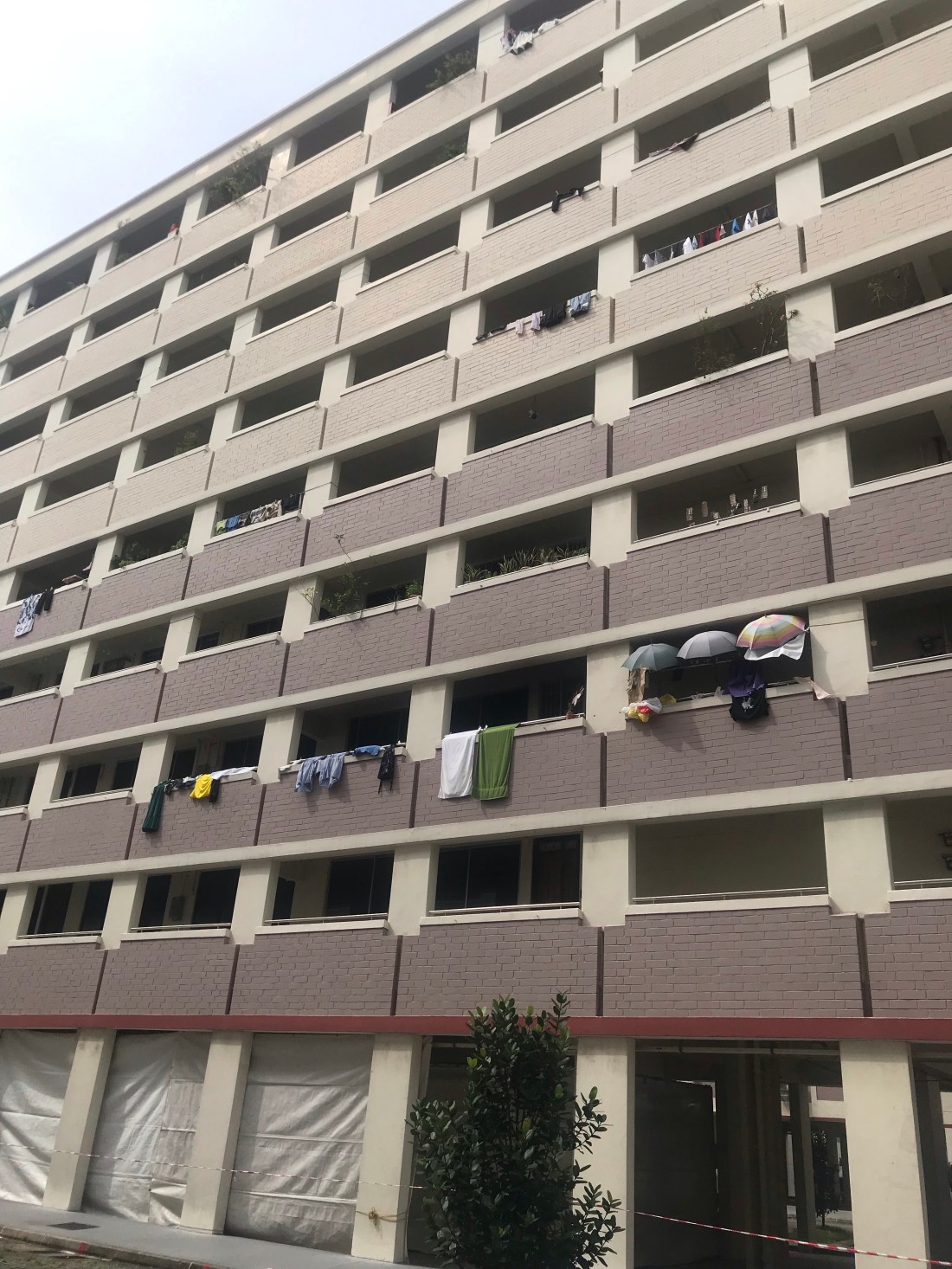
Whereas a typical HDB (social housing) flat (lived in by about 80% of the population) will set you back $SG250000-350000. Most people get them on a 99 year lease.

Gambling

Apparently (dubious honour) Singapore’s two casinos make $US 6 billion annually, making it rank among the top few countries for revenue generated by casinos. Las Vegas makes a lot more. The difference being that Singapore has only two casinos, whereas Vegas… well.

I think it’s also worth noting that Singaporeans have to pay a pretty steep fee ($SGD150 £85) to get into a casino here, whereas foreigners walk in free. The reason being that there have been so many problems with gambling historically, particularly among the Chinese population, that the government has decided to try and dissuade its own citizens from engaging in it (while encouraging foreigners to spend as much as possible, of course! Fair play to them).

Other sights of interest:

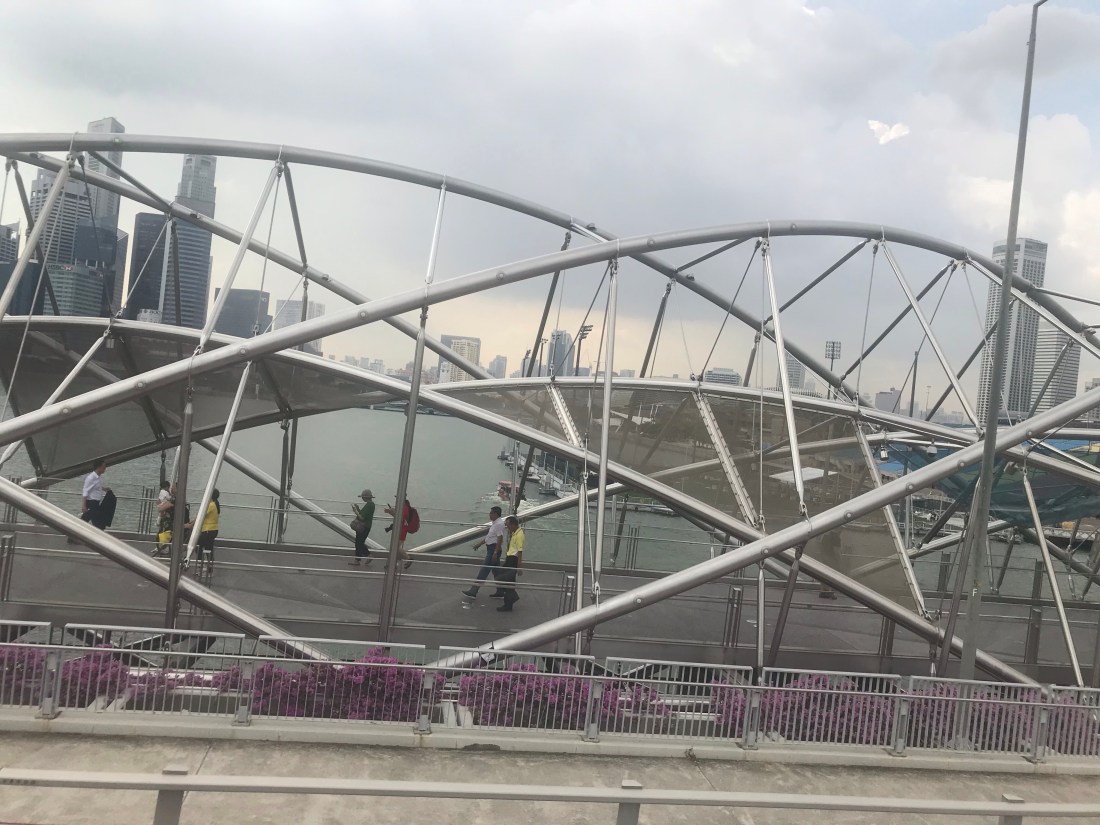
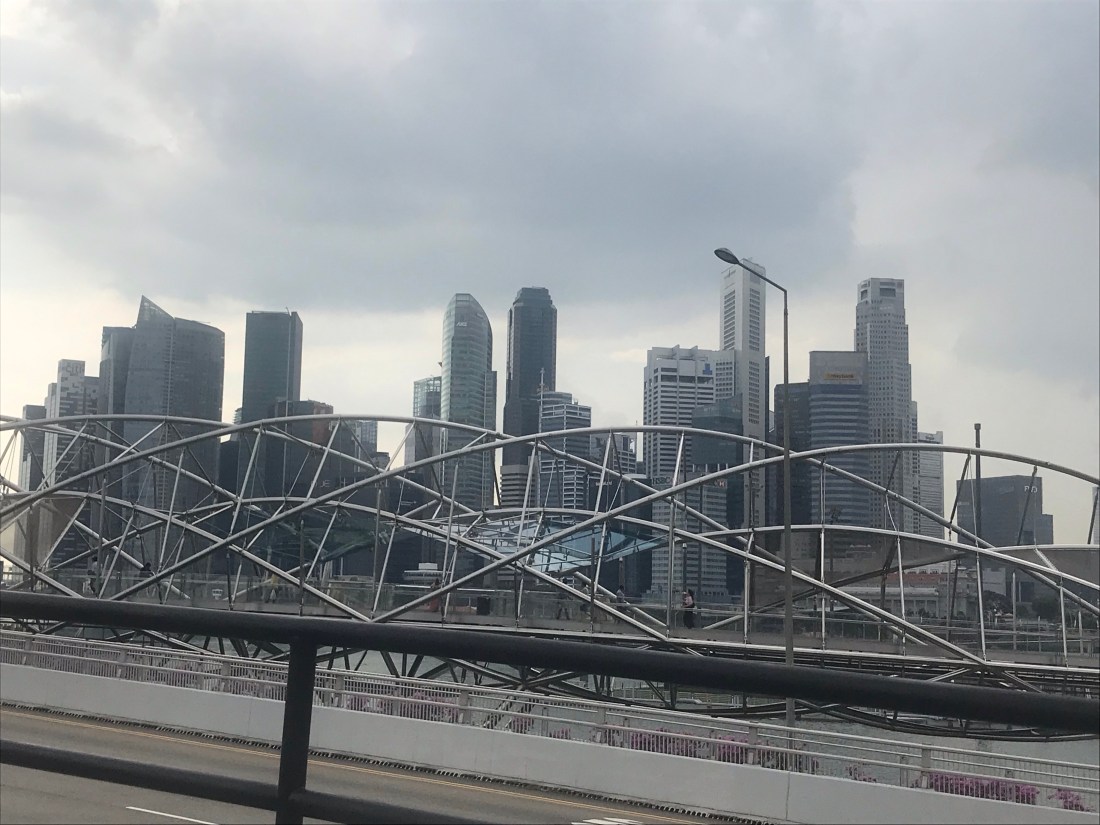
The footbridge modelled on DNA structure

Chinatown

Today, I decided to take the hop on hop off bus tour around the different areas of the city.

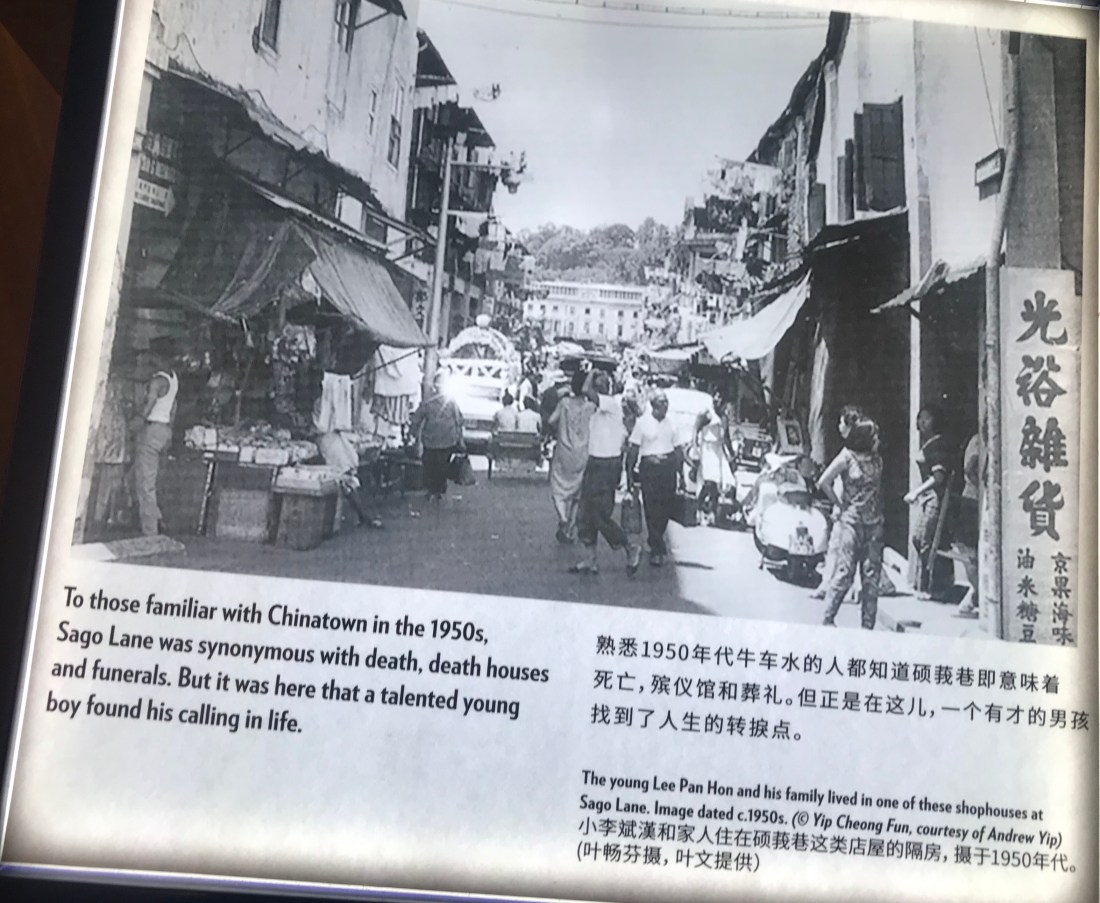
I hopped off at Chinatown to have a look around the acclaimed Chinatown Heritage Museum, which is an excellently put together place, offering well researched stories of Chinese people – how and why they came to Singapore in the first place, and what their lives were like in the 1800s and then later in the 20th century too.

Chinese people make up the vast majority of the population in Singapore (over 70%), then Malay people (now under 20% though the Malay people were here before most others, so Malay is actually the national language of Singapore) and then Indian people (under 10%), then people of other ethnicities.

The Chinese people mostly arrived in Singapore from the 1820s onwards (until the First World War, then again after it), having left China in desperation to try and find a better life and a way of earning money to send back home to their poverty stricken families. Quite a lot of people didn’t survive the gruelling voyage to get here. And those who did survive, found that conditions here were not ideal as they’d been led to believe. But they were grafters, who worked incredibly hard in really tough conditions in order to make enough money to survive and then to send some back home as well.

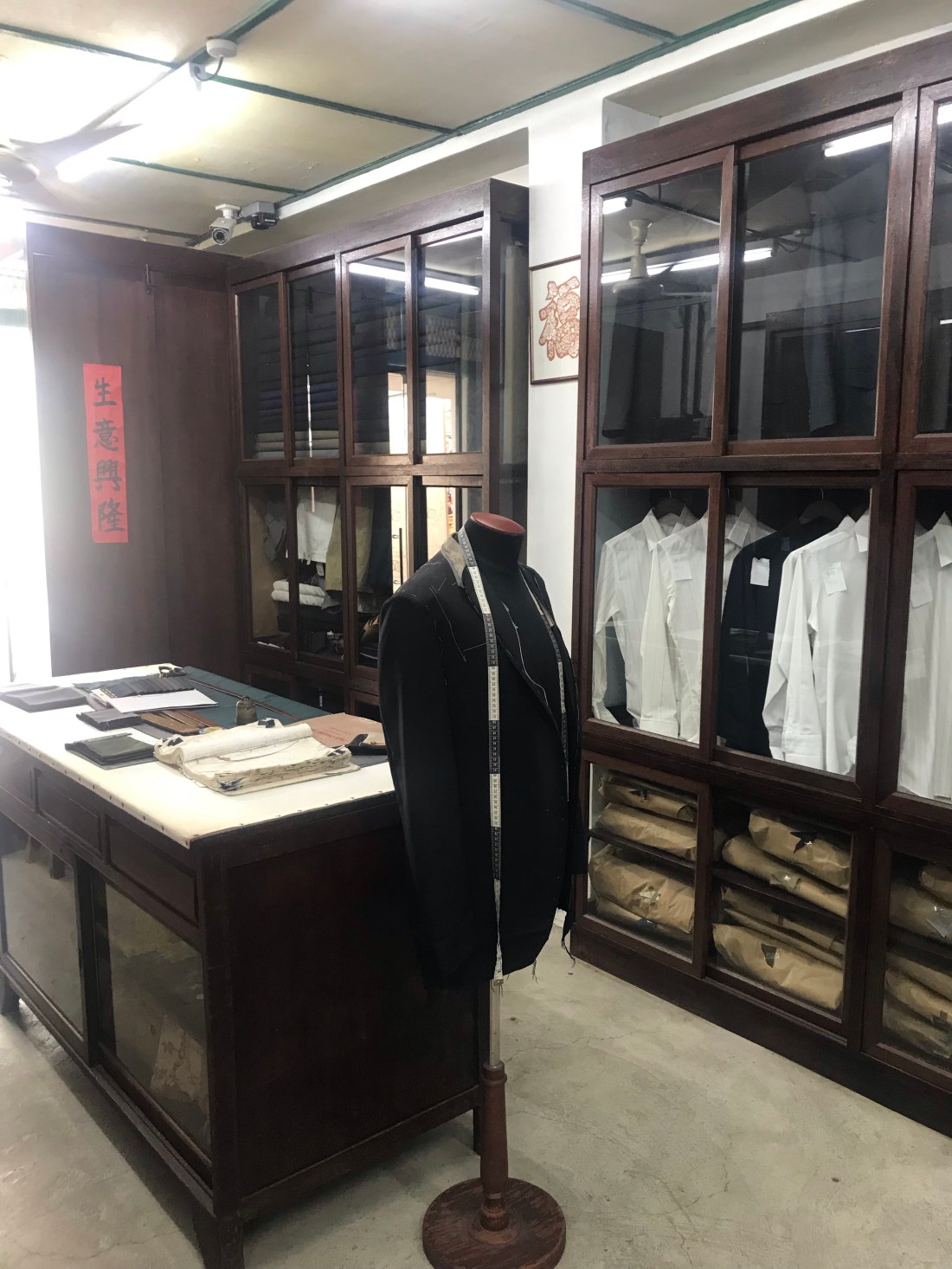
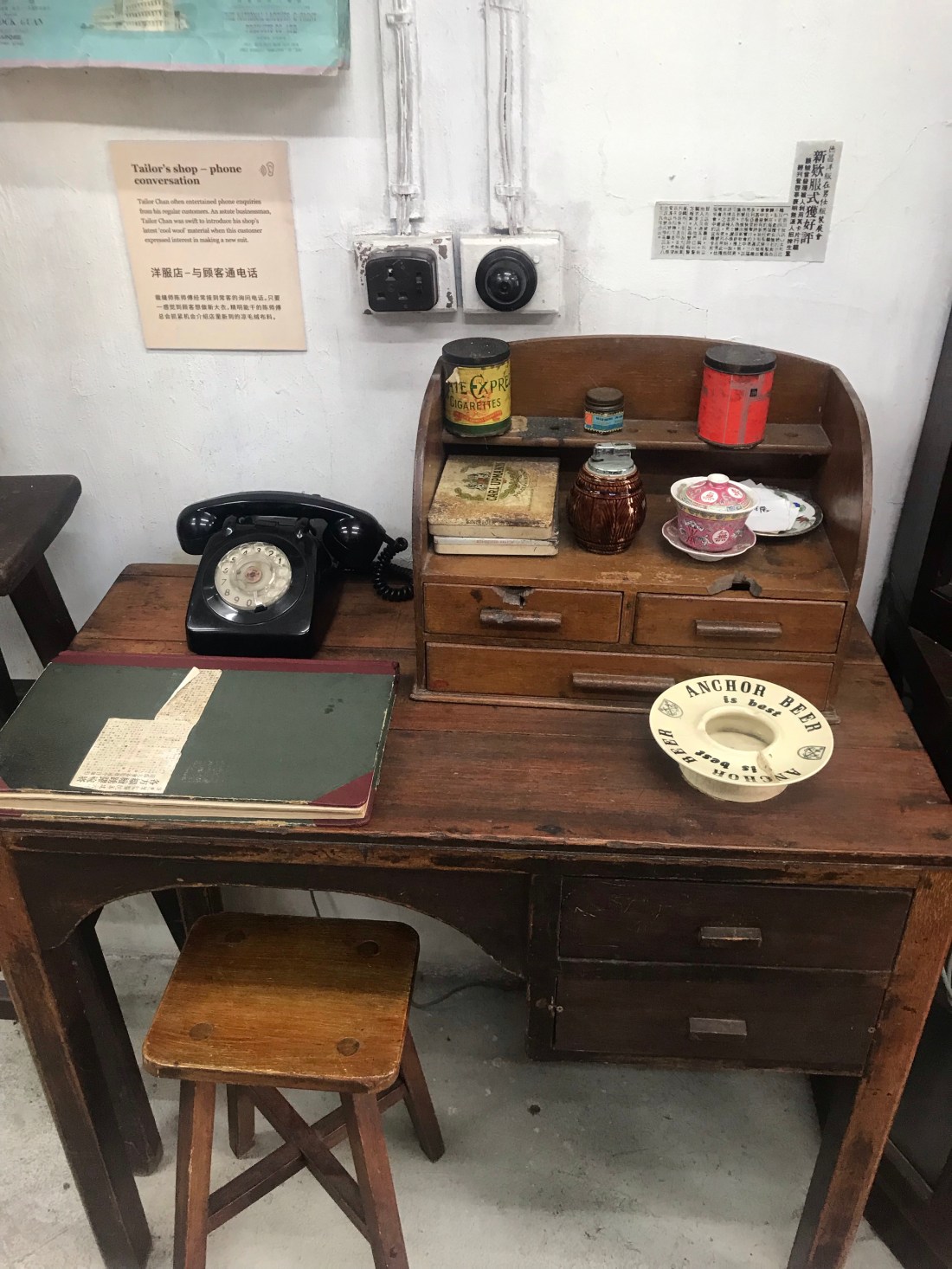
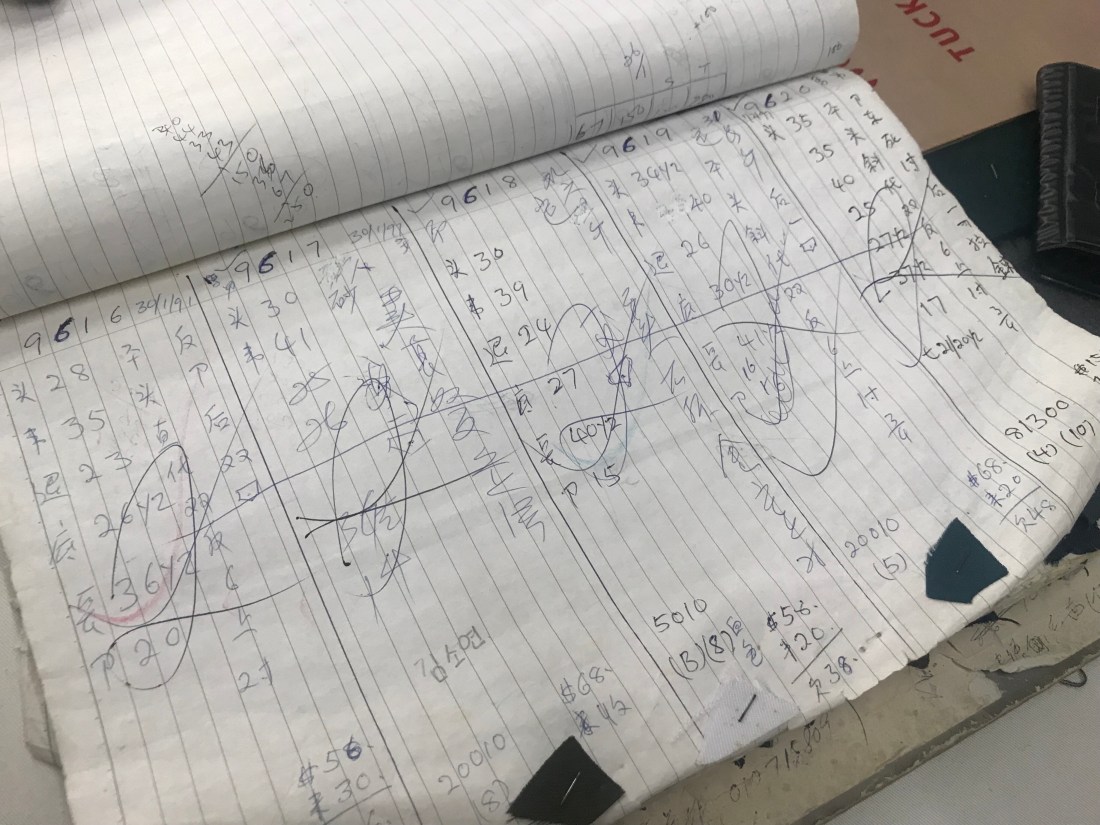
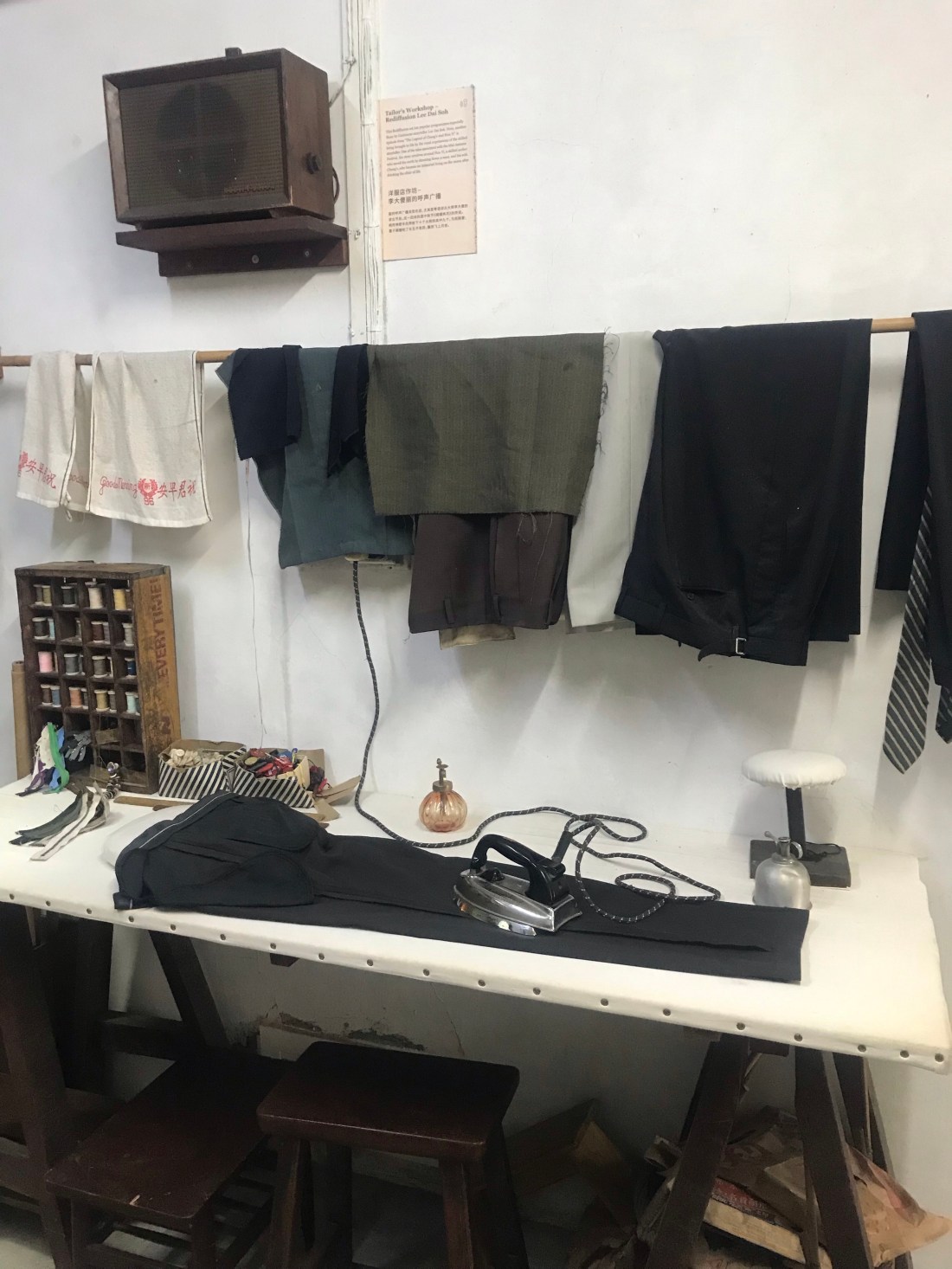
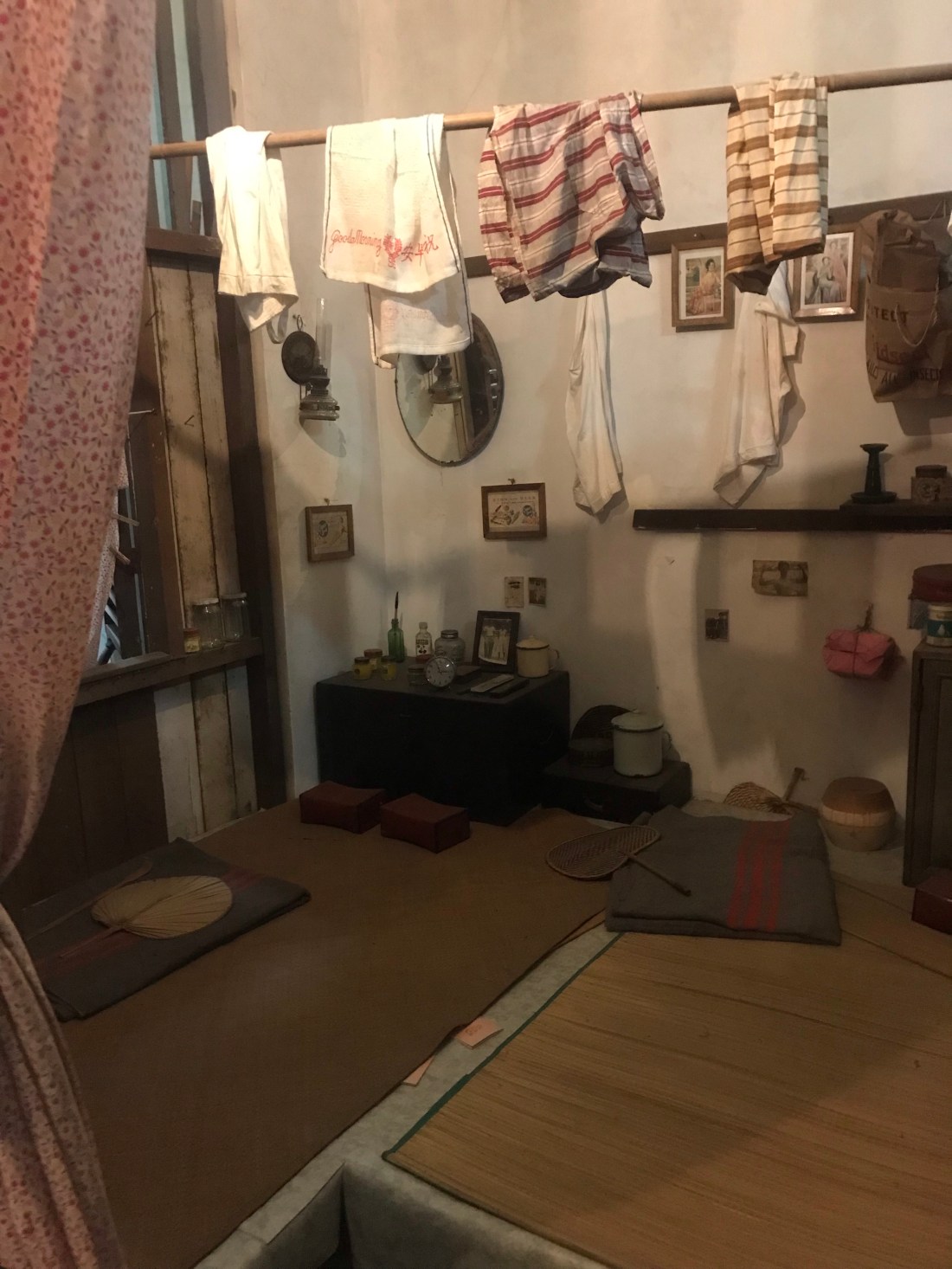
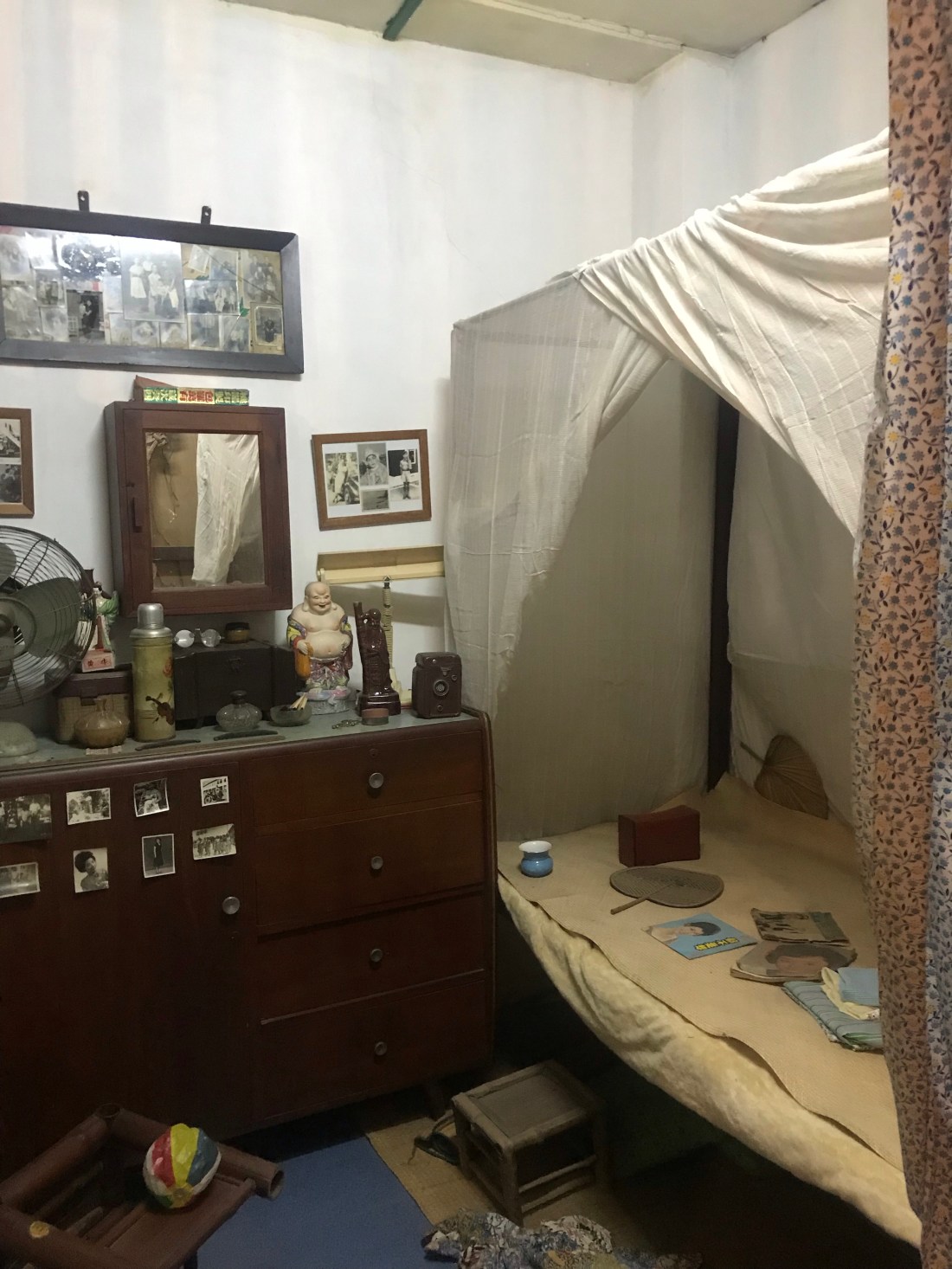
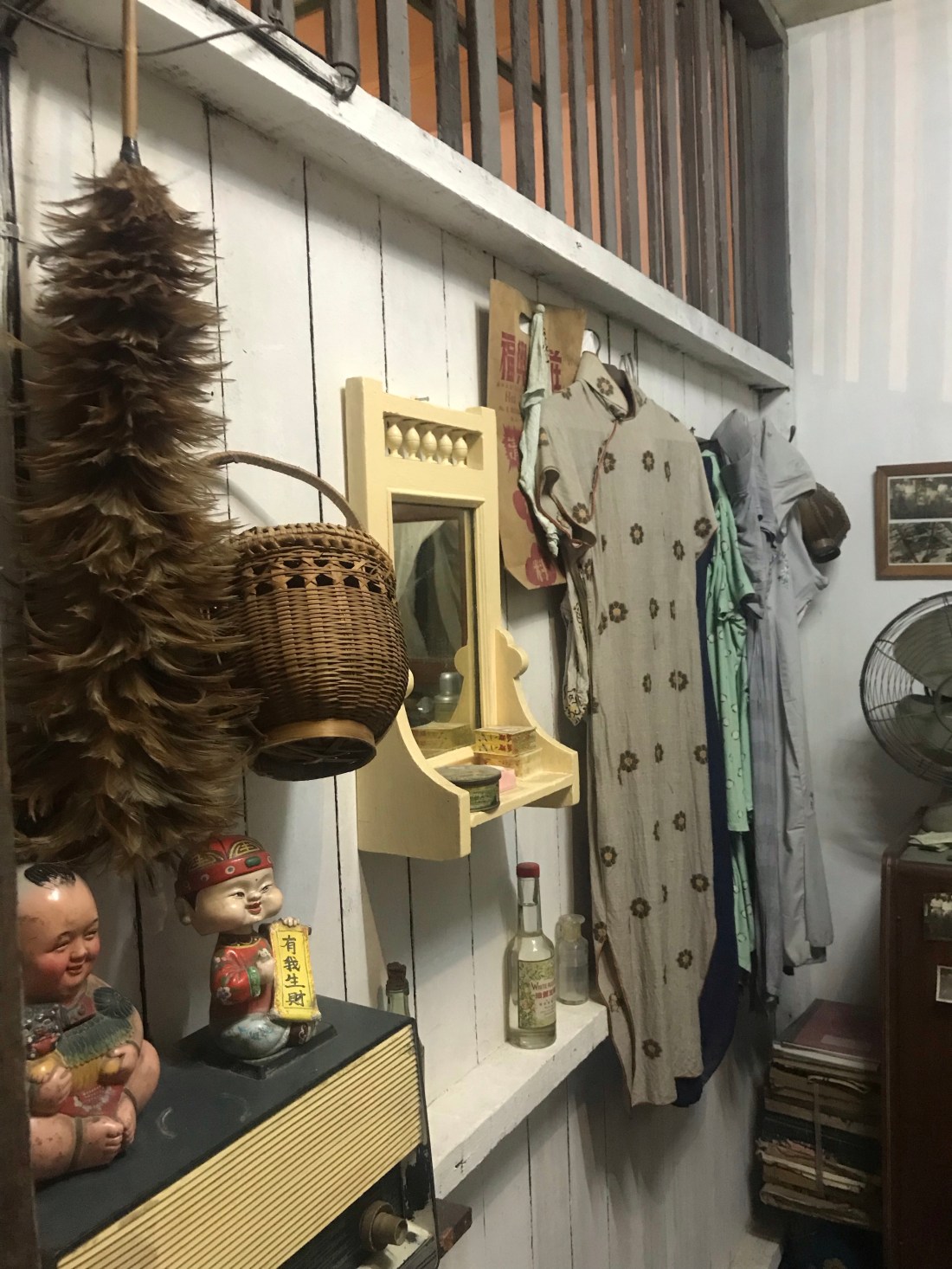
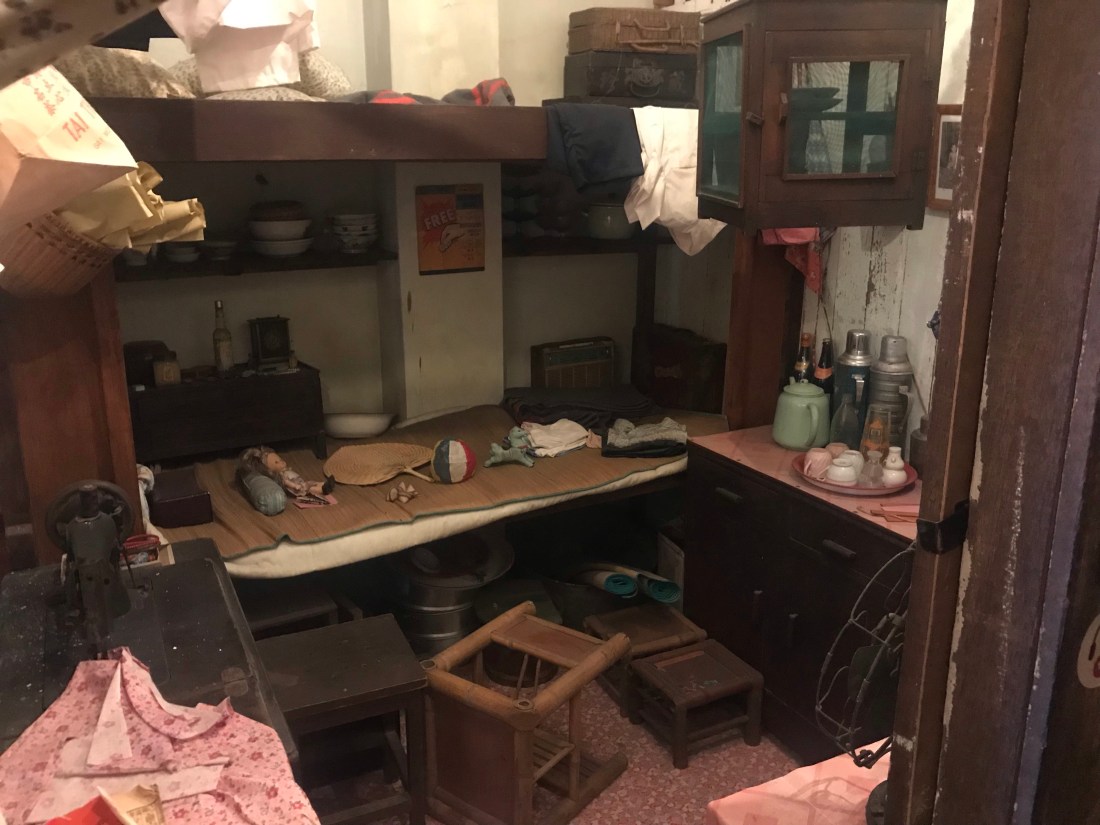
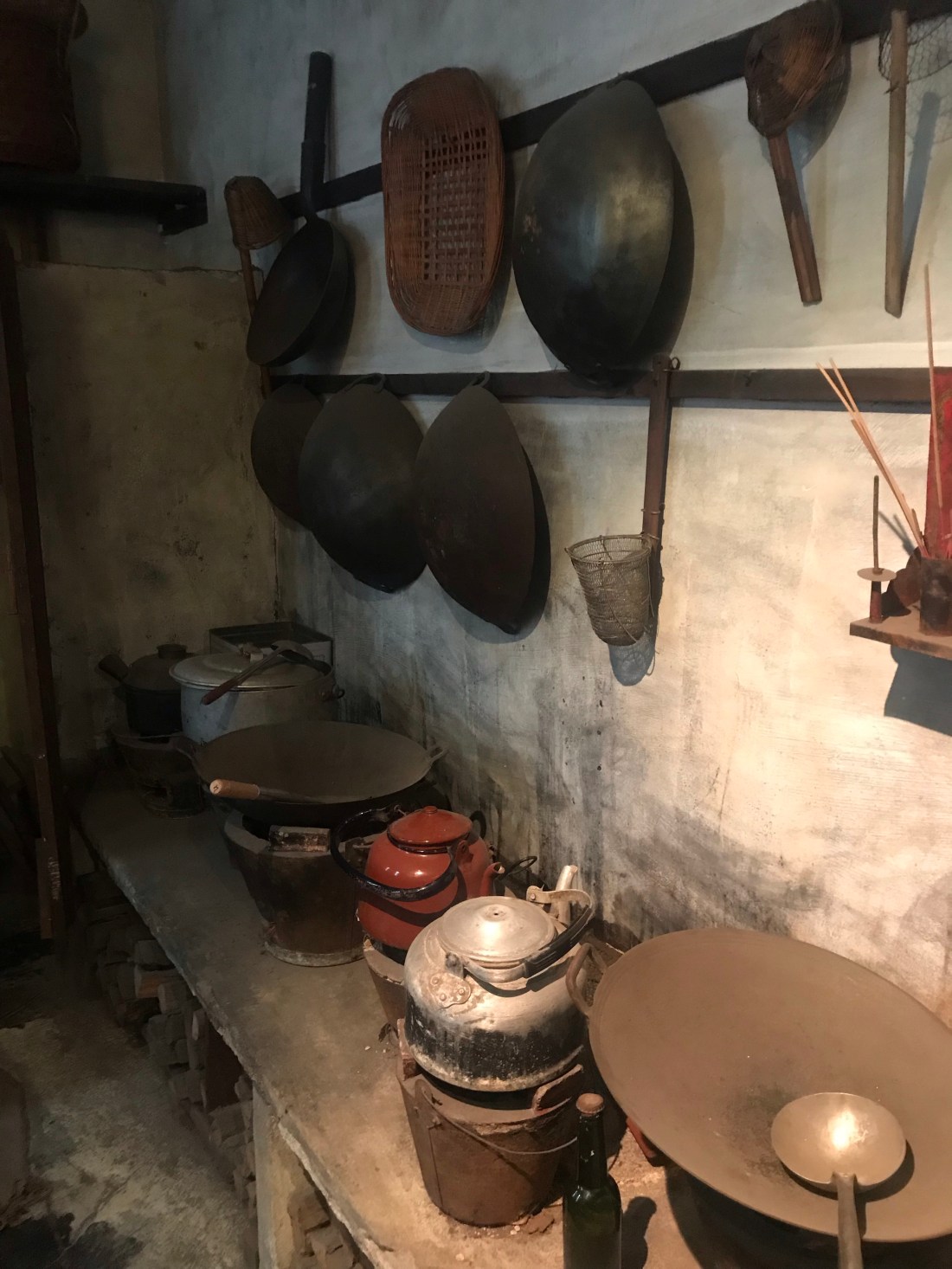
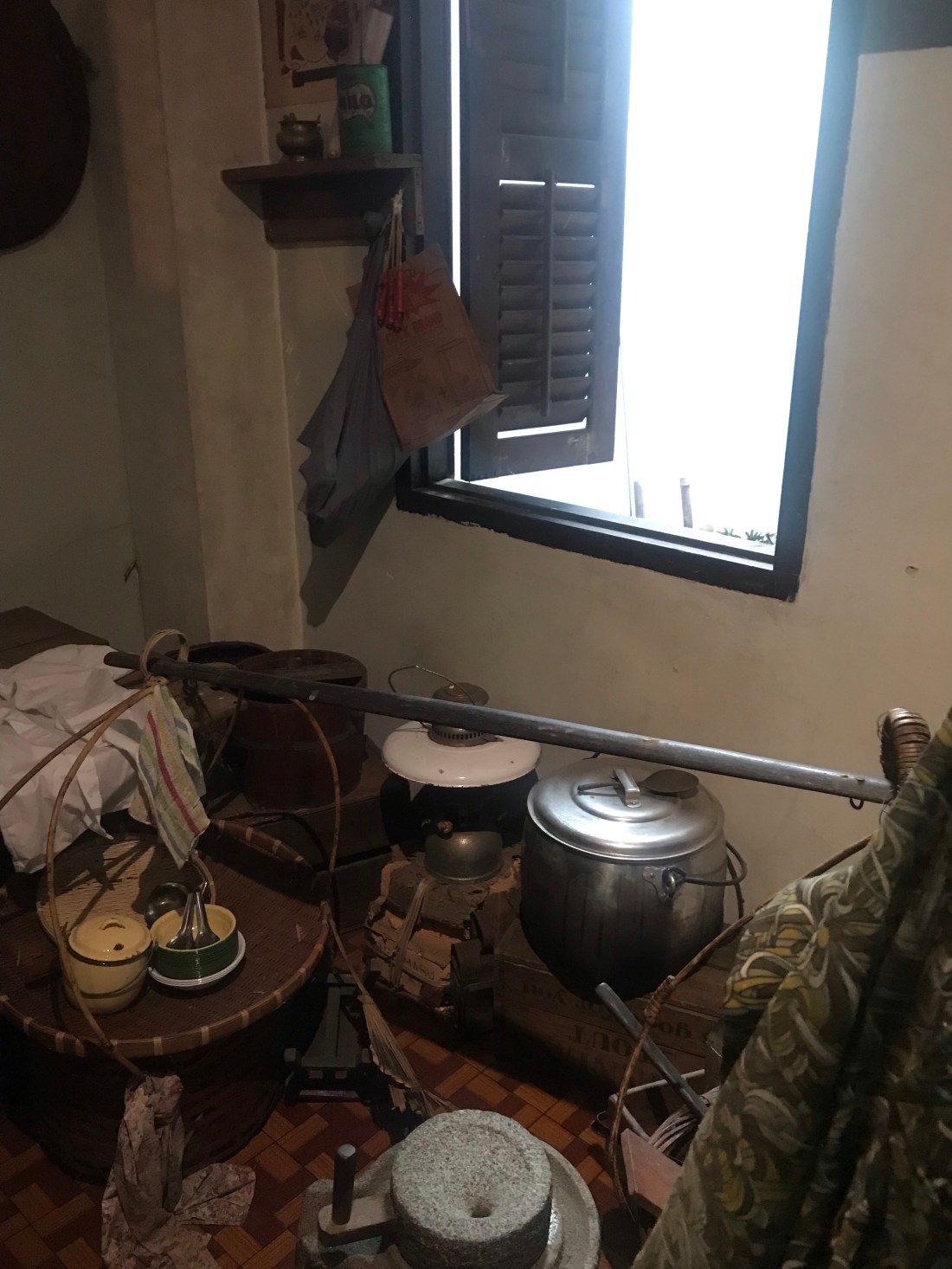
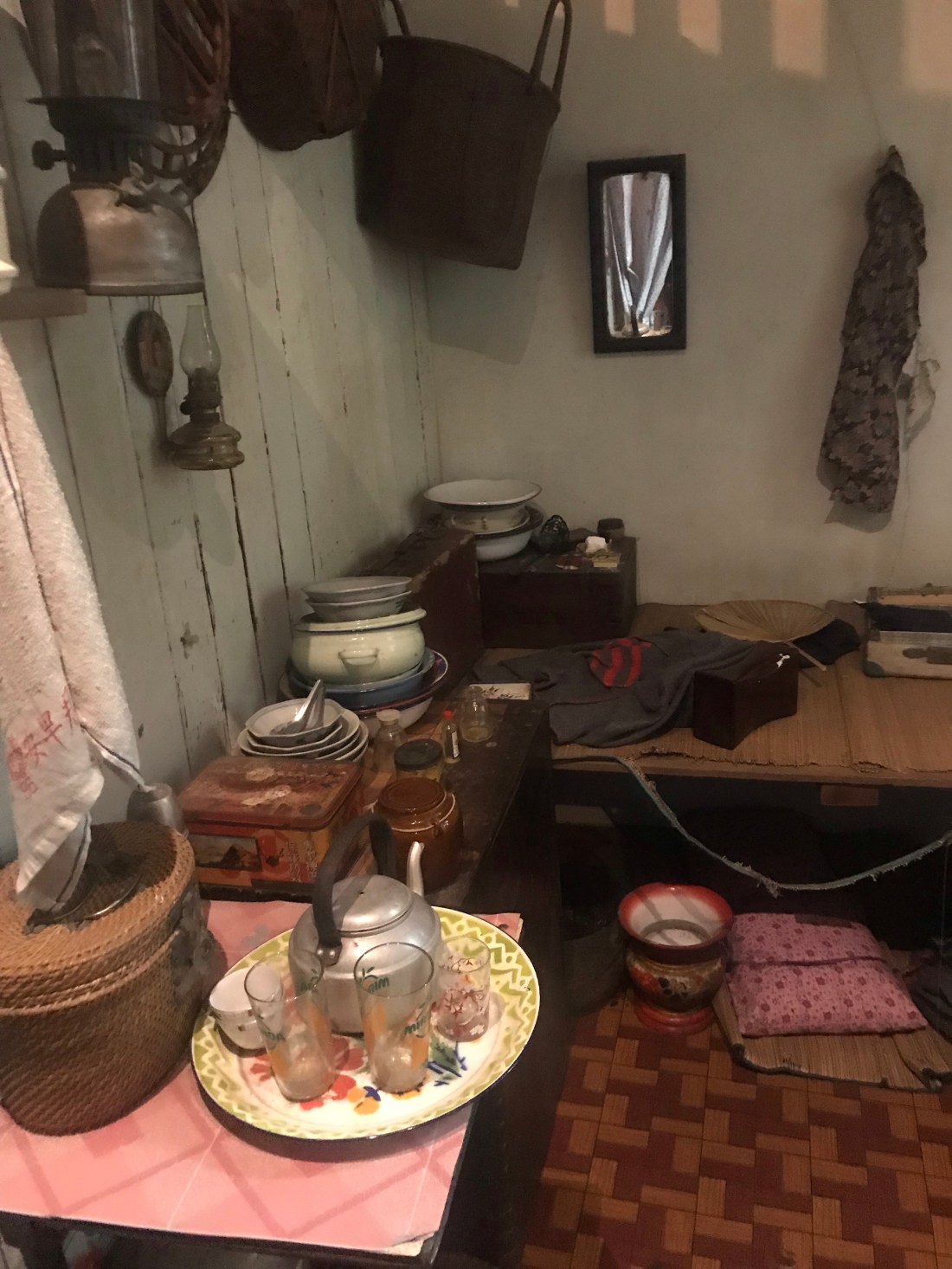
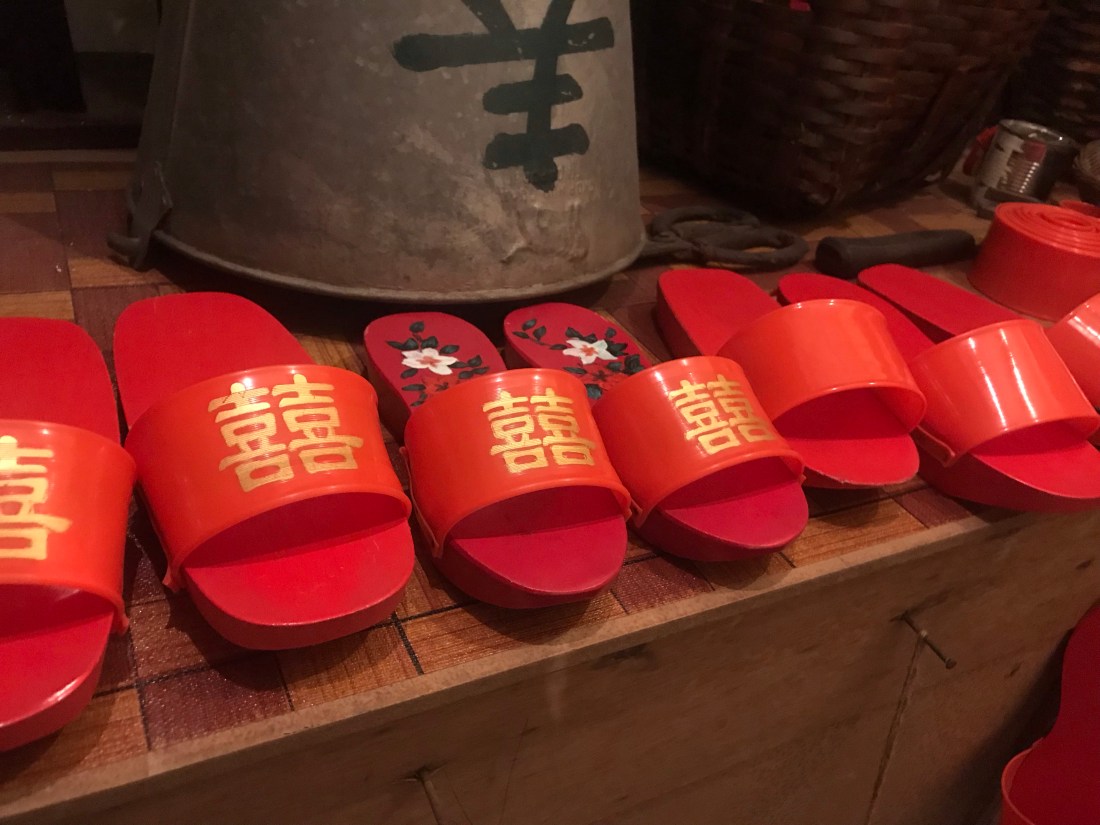
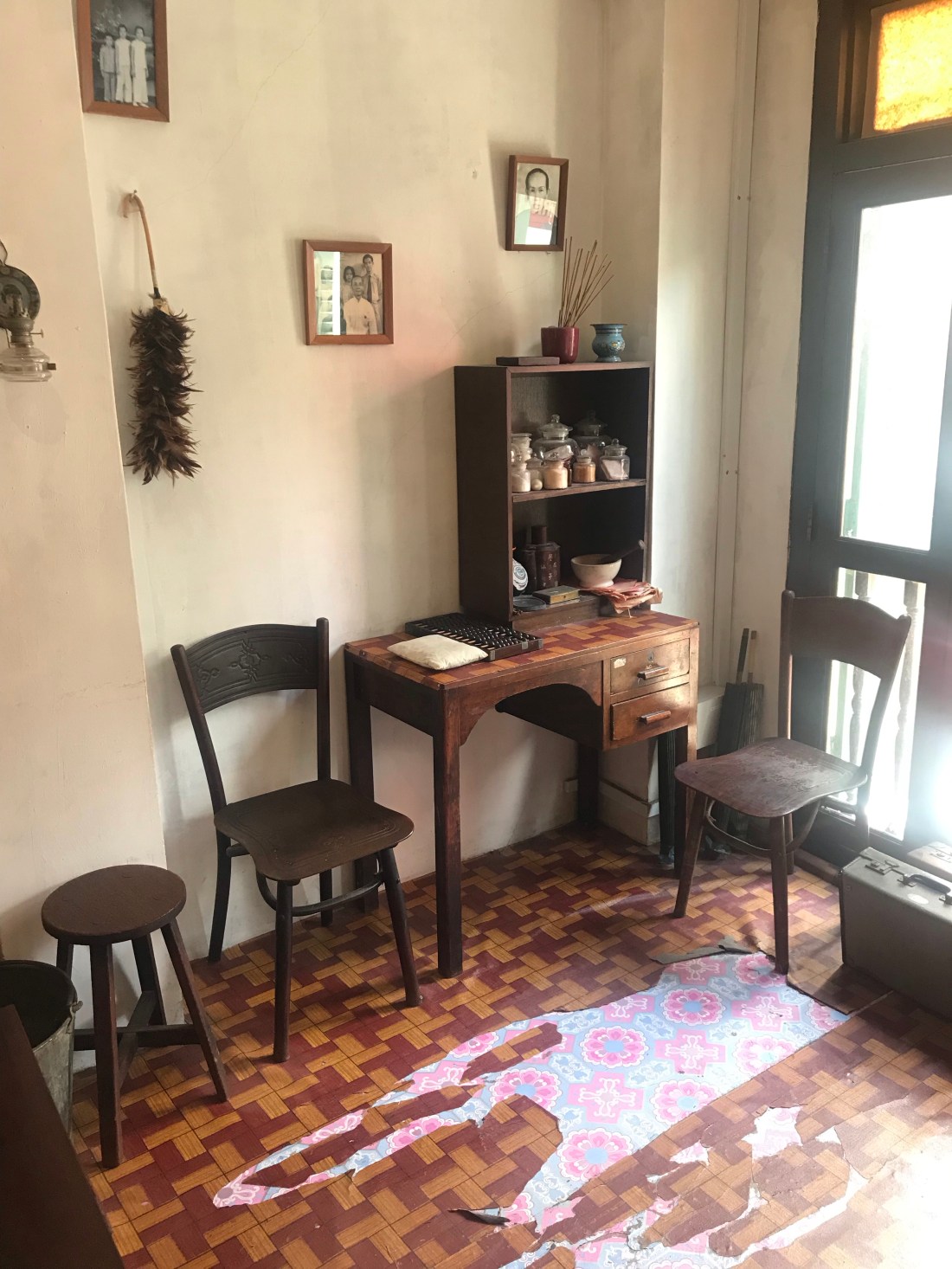
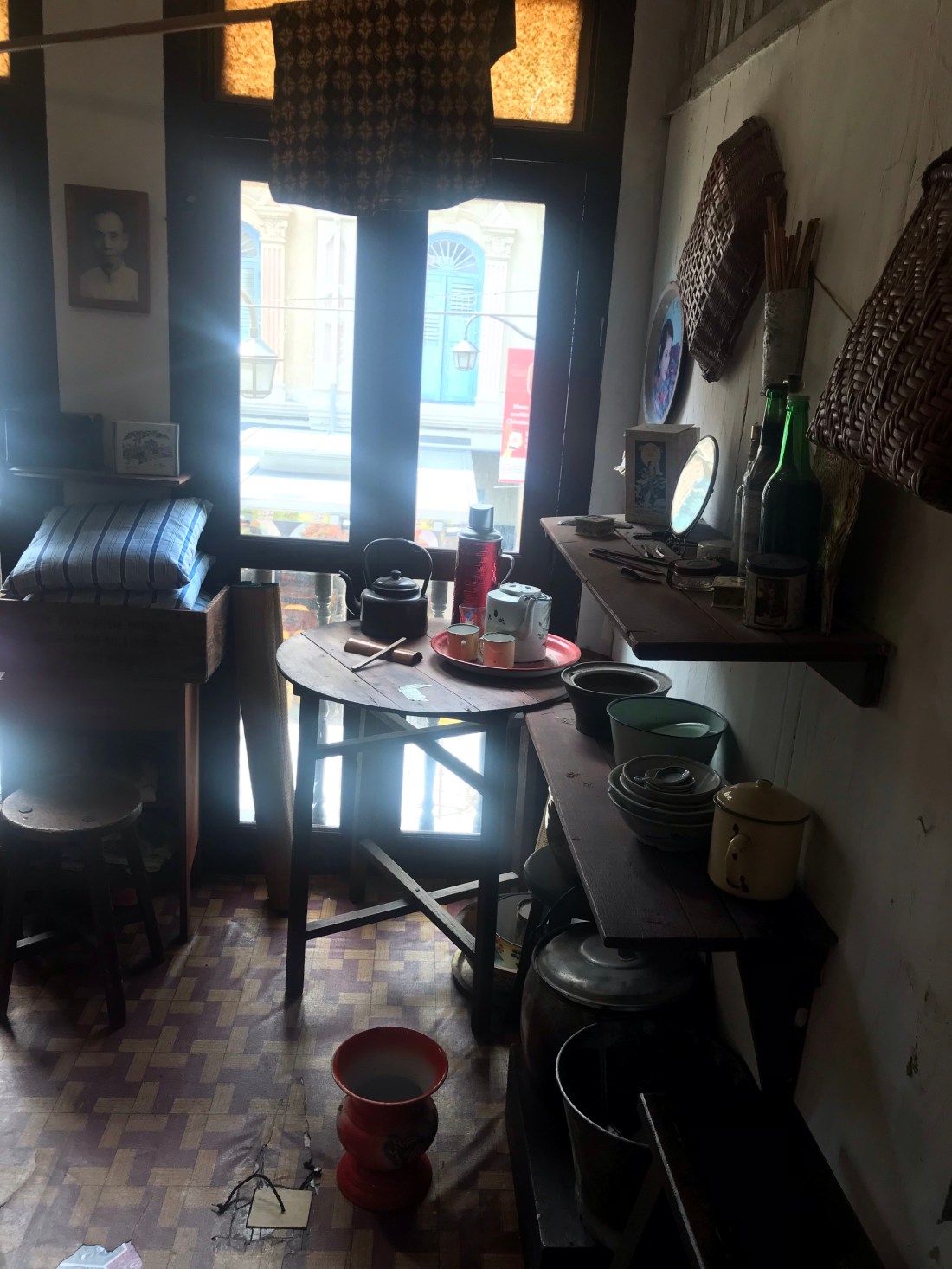
The heritage museum is set up in a series of old shophouses (shops with living quarters at the back and above the shop). They have placed historical artefacts in all the rooms to show what life would’ve been like. There was loads to look at. Here’s just a tiny taste.

Tailor’s shop:

The back of the shop where the apprentices did a lot of the leg work, including looking after the shop owner’s children and running errands for his wife, who cooked for everyone:

This is the bedroom/living area for the tailor’s apprentices. Probably something like 8 of them slept here and lived here when they weren’t working until the shop or running errands!

This is the room of the master tailor of the shophouse, who rented out all the upstairs rooms too. He and his wife and their children lived in this space. This was the most spacious of all the bedroom/living areas in the entire building!:

And this is the kitchen, where the tailor’s wife cooked meals for her family and also all the apprentices. I think the information said she was probably cooking for about 15 people every day. Apprentices got paid a pittance but their food and lodging was supplied:

The upstairs of the shophouse demonstrates something called “cubicle living” and was the really shocking part of the whole museum.

A family of 8 lived in this space. Yes, 8. 2 parents and 6 children.

The upstairs kitchen and shower and toilet area. Shared by about 40 people altogether. Oh my:

The hawker’s home. She lived here with her husband and two children. She would have got up at something like 4am to prepare all the food she would sell in that tiny kitchen before anyone else was up and about. Then she’d load it up on these two baskets (you can probably see one of them in the picture below) hung off the ends of the bamboo pole along with plates and chopsticks/spoons for people to use while they ate it. There are two pails on either side hung underneath the baskets that she’d fill with water from a public standpipe near where she was selling the food, for washing all the plates so they could be reused. Then she’d shoulder the bamboo pole and cycle to the location where she was selling the food. No wonder a lot of these people suffered with back problems:

A clog maker’s:

A physician’s home and area to practise medicine. The museum had a series of interviews with one of his daughters, where she described how she and her two siblings and mum and dad all slept on a mat on the floor of this cubicle. She said in those days people were skinny and short so it wasn’t really a problem. Hmmm. This was by far the most spacious of the upstairs cubicles (physicians being relatively well paid even then, although this guy offered free treatment to anyone too poor to be able to afford it). But… how does your dad see patients with three kids and a wife in this space too??

The rest of the museum talked about the vices people indulged in in order to numb the pain of their exhausting existence (namely, opium, gambling and prostitution), and the secret societies that prospered rather dubiously from them. Then it looked more positively at the social clubs and institutions that formed within the different Chinese families that actually were the first to establish systems of welfare, schools and hospitals for the ordinary people.

And then it depicted a few of the streets as they would have been, including the “Street of the Dead”, where people who had no family in Singapore would go to die. As it pointed out, this nation was built on the backs of many of those people. There was a space set aside for quiet reflection about that.

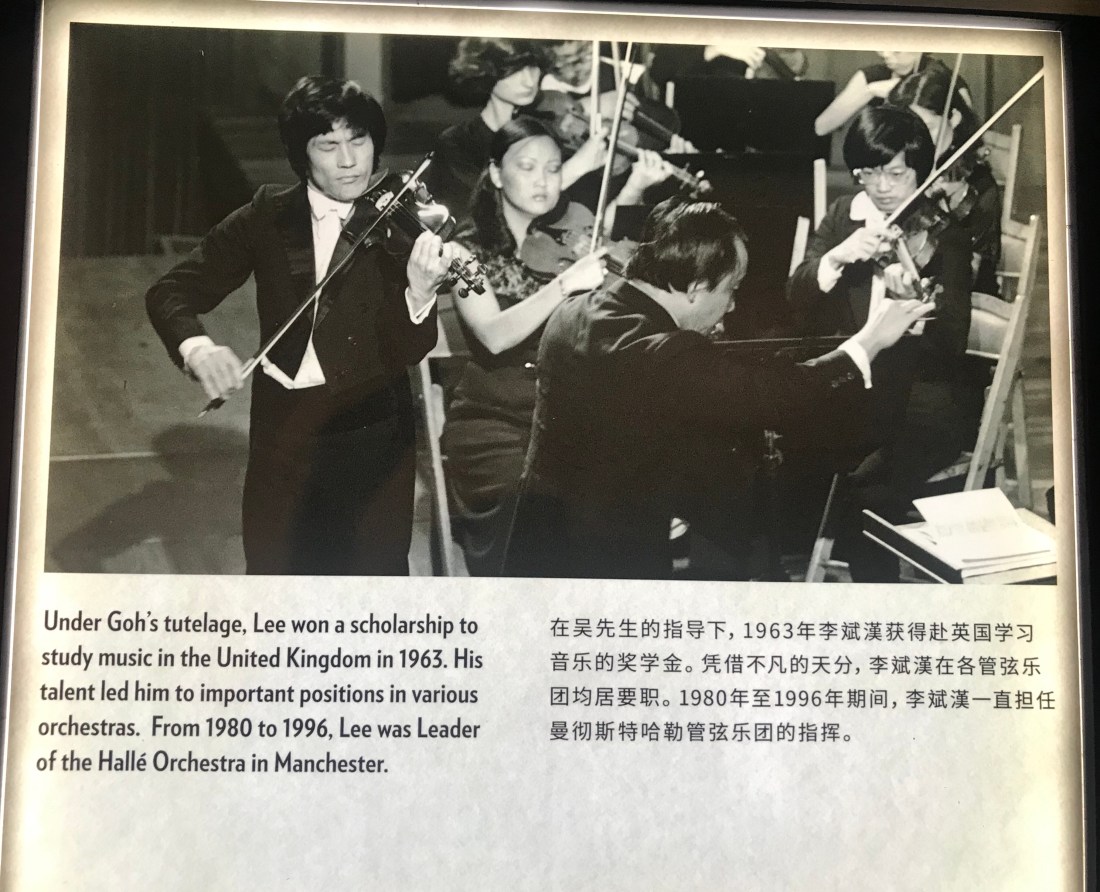
Apparently one guy who grew up on this street turned out to be a child prodigy on the violin, and ended up living in Manchester (about an hour from where I live in the UK) and from 1980-1996 playing lead violin for the Hallé Orchestra (the orchestra the choir I sing in most often performs with)! What are the chances of that???

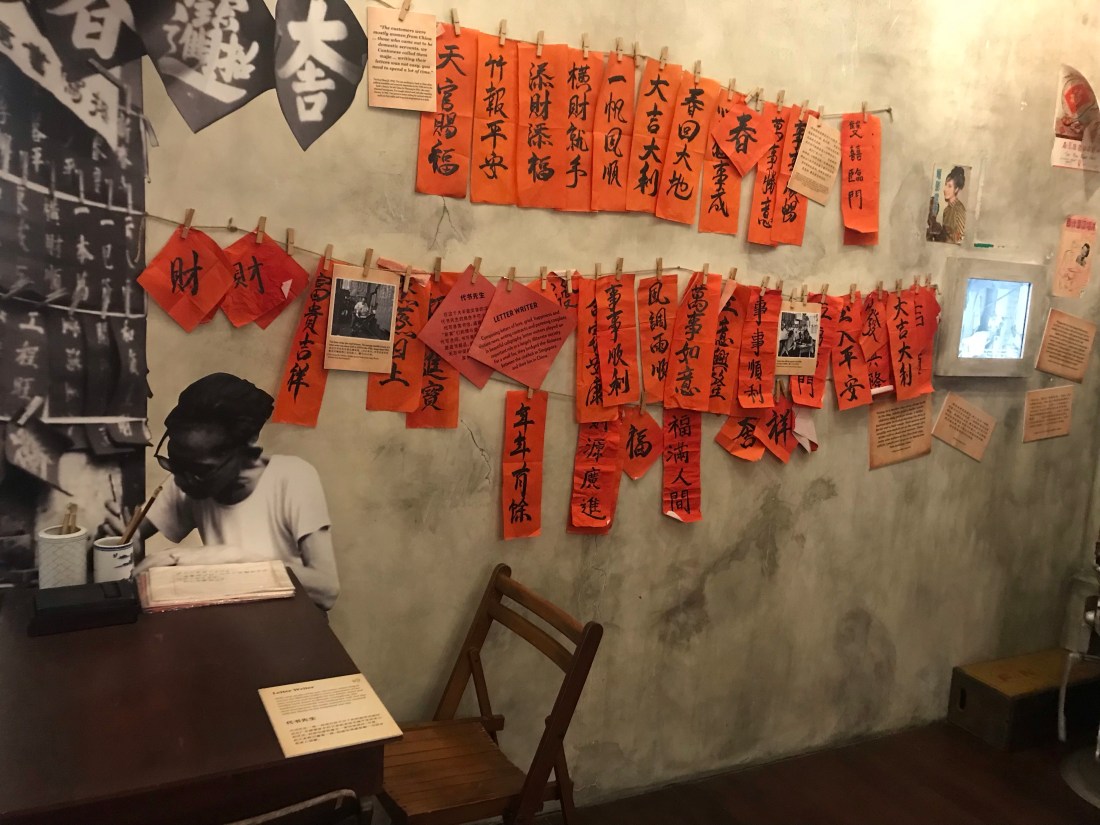
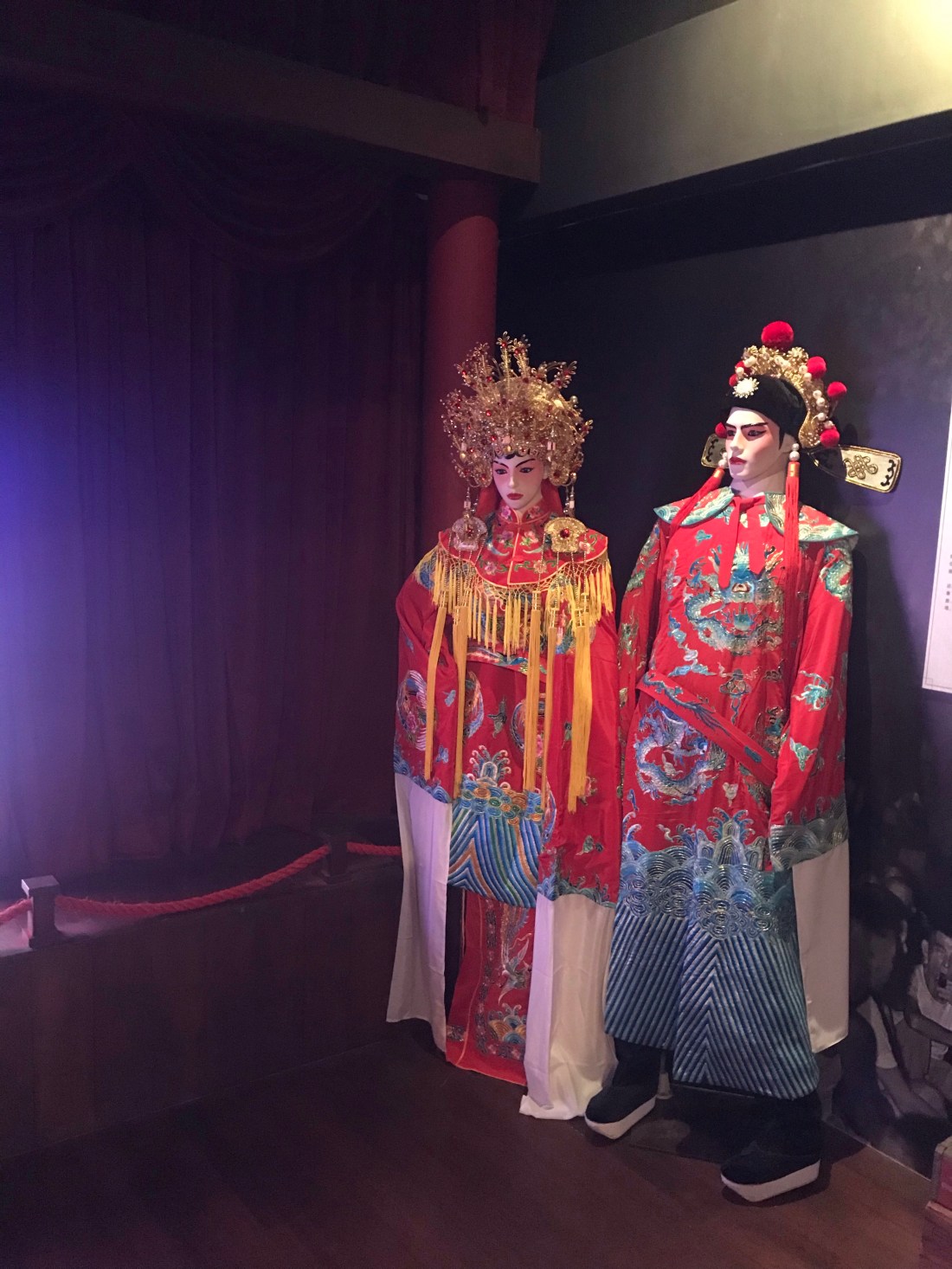
Also they depicted the hawkers selling food, letter writers (most people were illiterate so had to pay to get someone to write letters home for them), story tellers, Chinese opera performances (for those wealthy enough to access them) and so on.

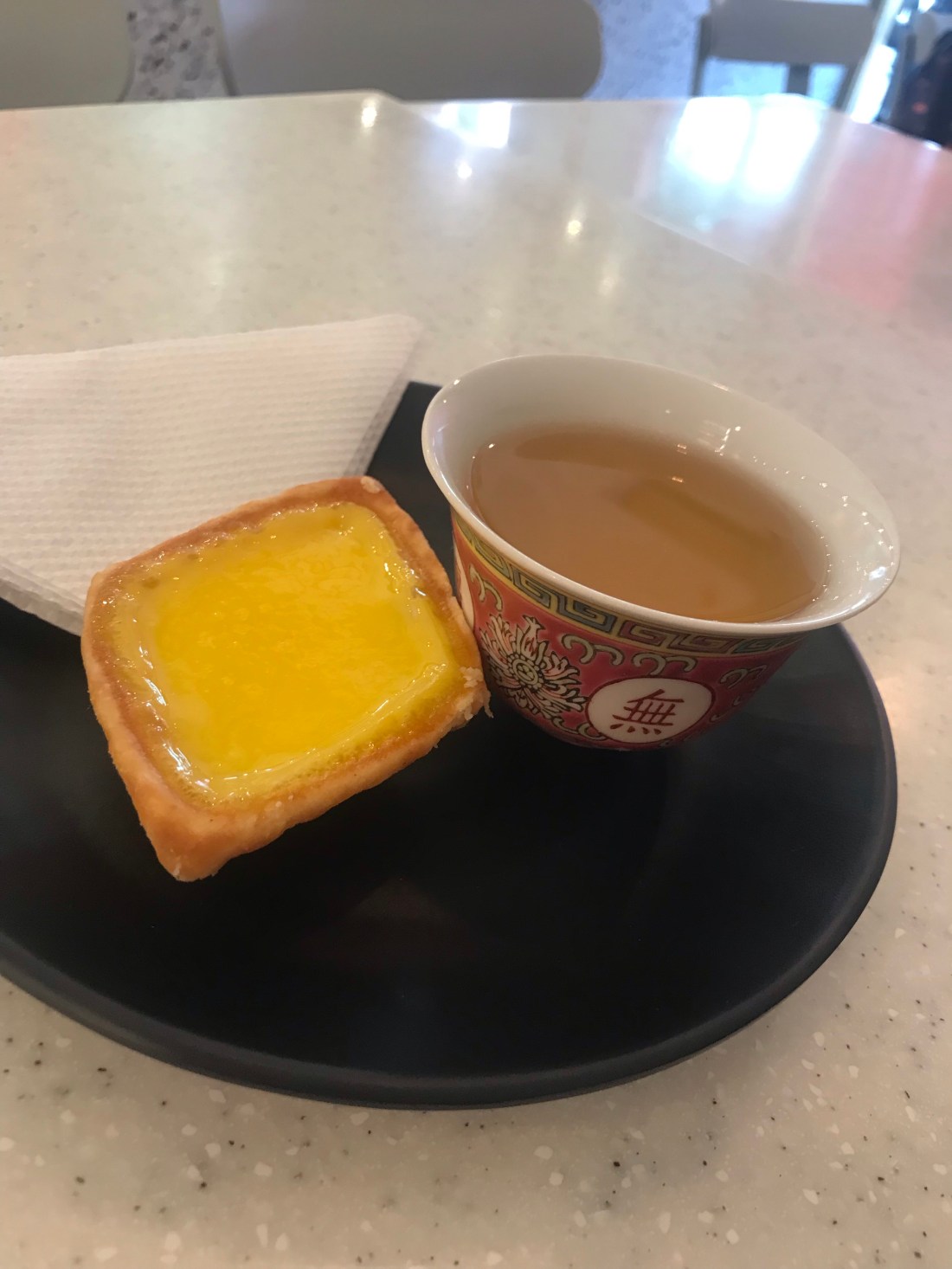
Here’s the delicious traditional egg custard with very delicate pastry that I had for free at the famous historical Tong Heng bakery round the corner, courtesy of the museum. It was so tasty, I must confess I tried a couple of other delicacies there in the name of research, and then bought a box of some for Jamie and Shiv and co:

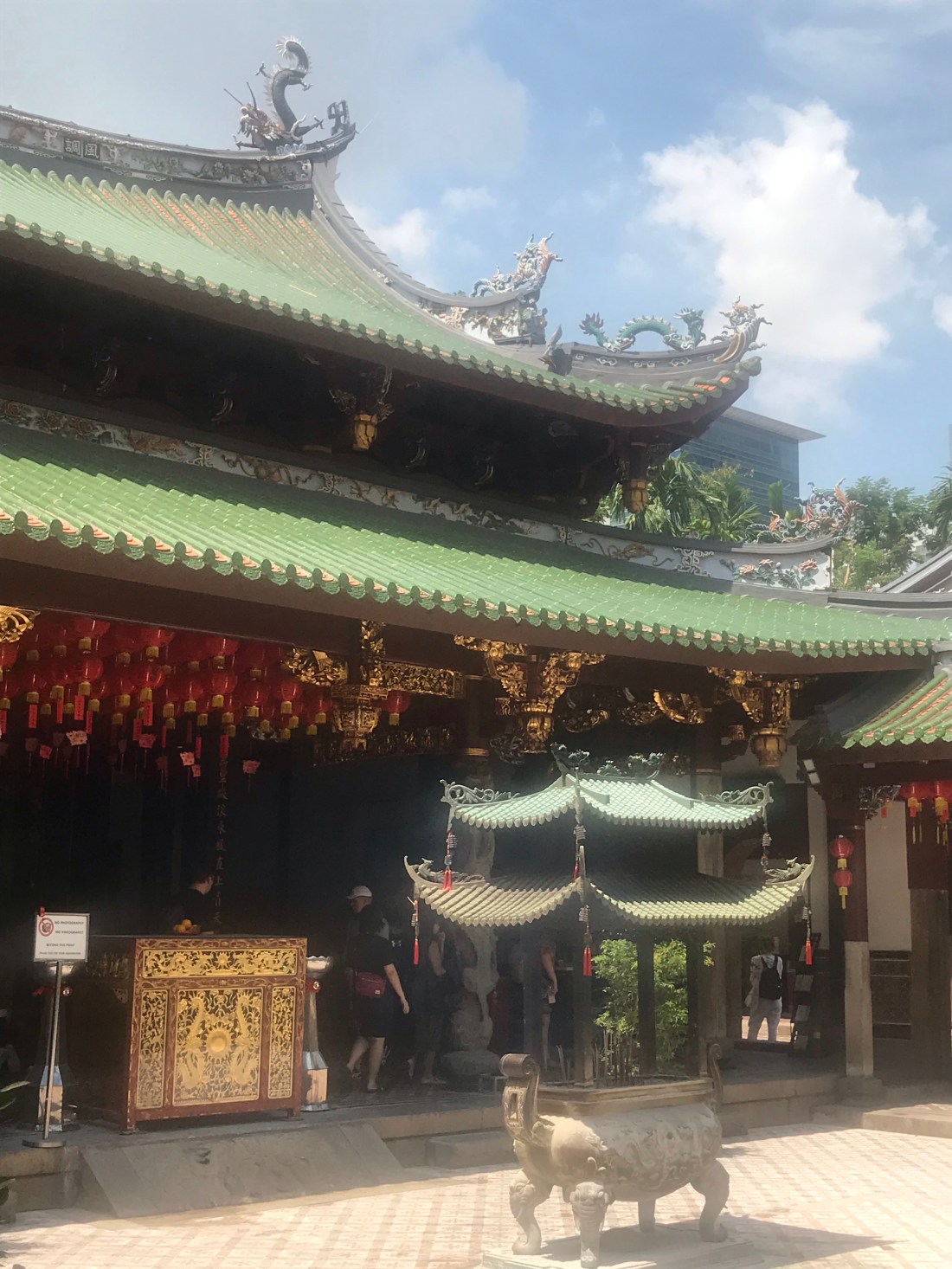
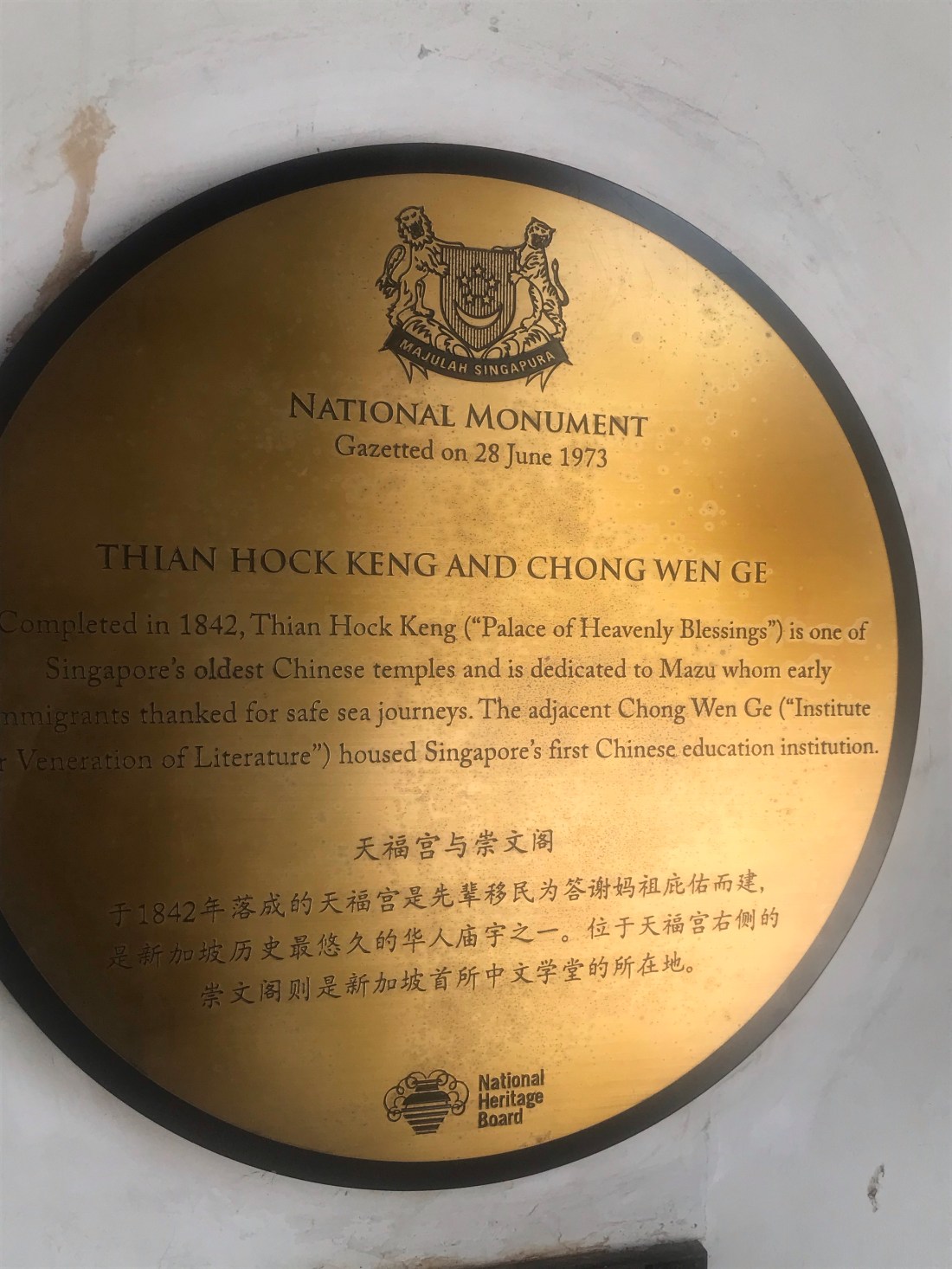
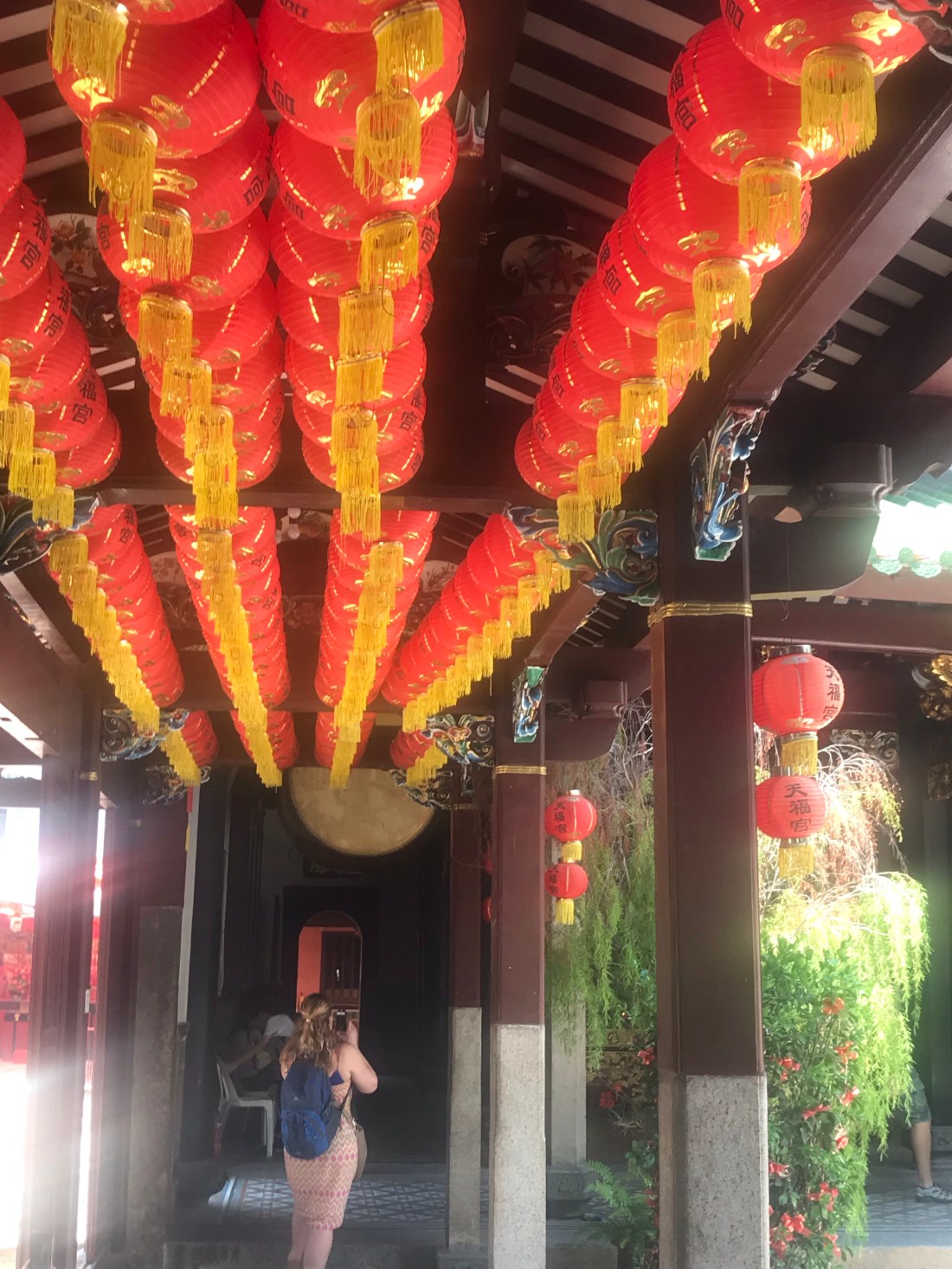
The rest of my time exploring Chinatown was spent admiring street art and finding the rather beautiful Thian Hock Keng temple, dedicated to the goddess Mazu, who people worshipped particularly thankfully when they’d survived the gruelling voyage here from China. Mazu was apparently an actual person, who was an incredibly strong swimmer who did indeed save many people from stormy seas near her home in China in something like the 10th century. She was given goddess status after her death, with legends about her coming back mysteriously to save people from stormy seas still.

Shiv mentioned being at this temple one day when it was raining, and enjoying the sight of the incense smoke drifting upwards as the rain was pouring down from the roof tiles. I know, from the Chinese Garden in Dunedin, New Zealand, that these roof tiles are crafted and aligned in order to direct water in this beautiful way. Although it wasn’t raining when I was here, I could imagine what a wonderful sight this would have been, speaking perhaps something of the blessing of God raining down in response to the prayers, thanks and worship people offer.

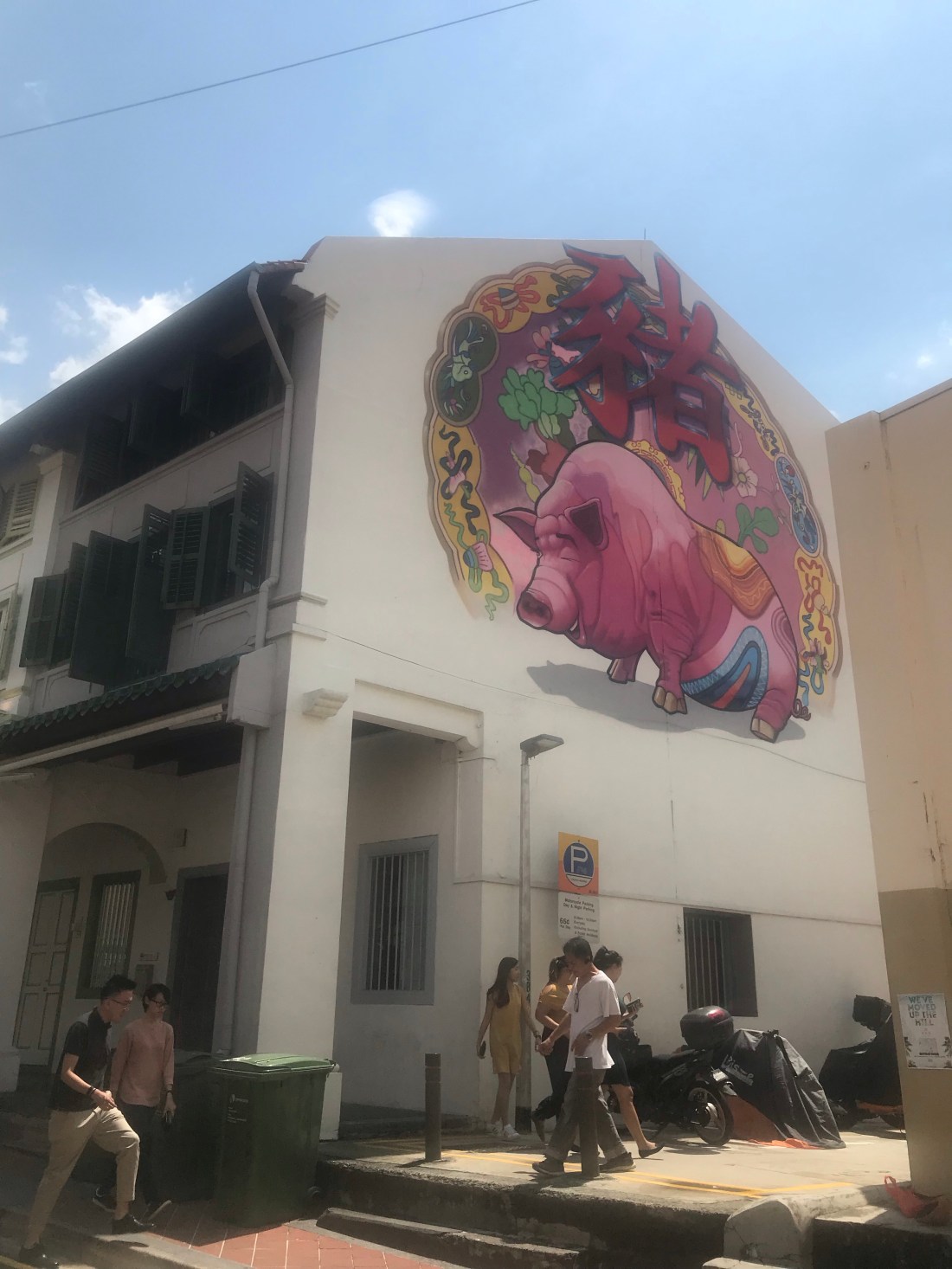
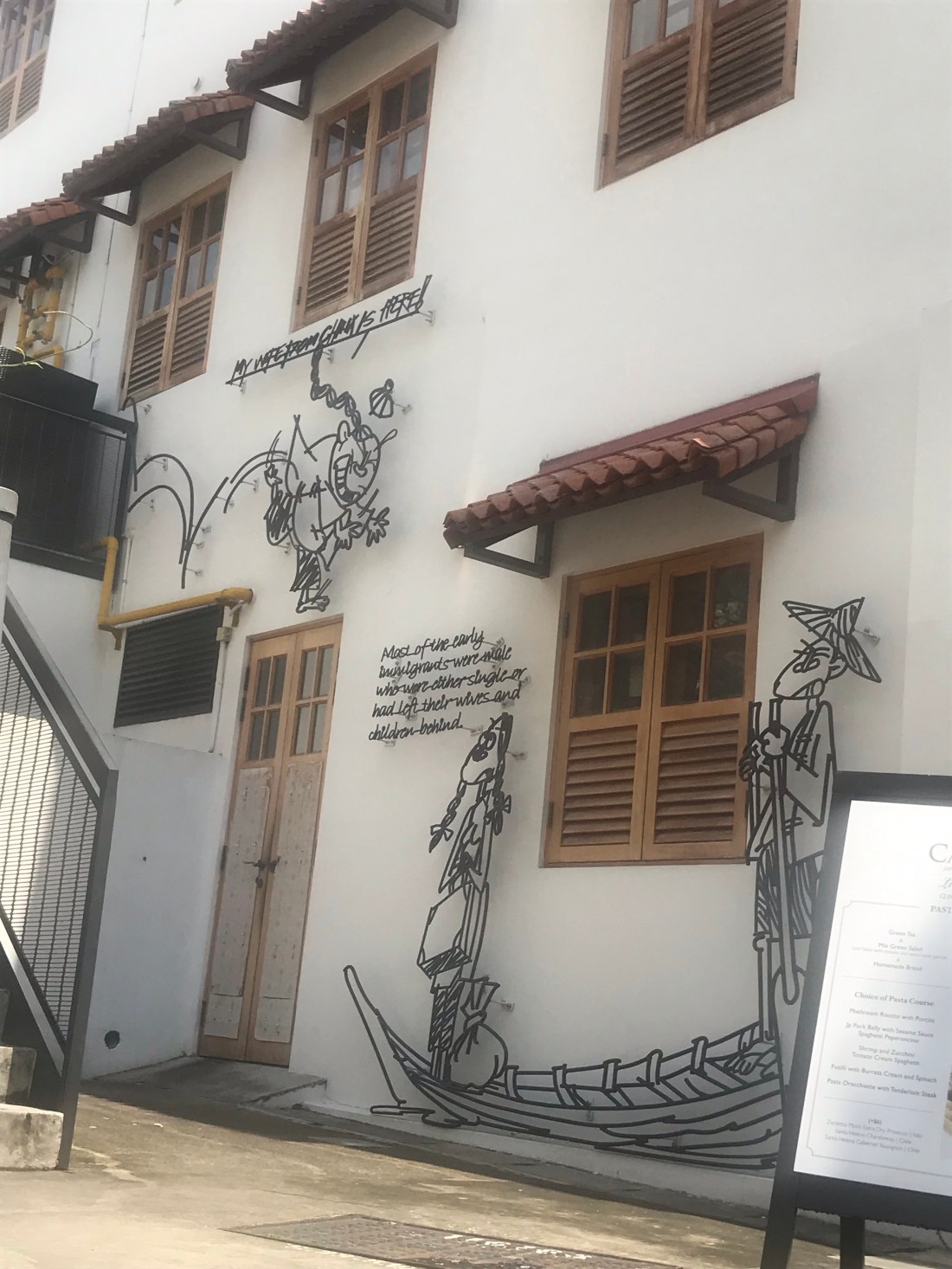
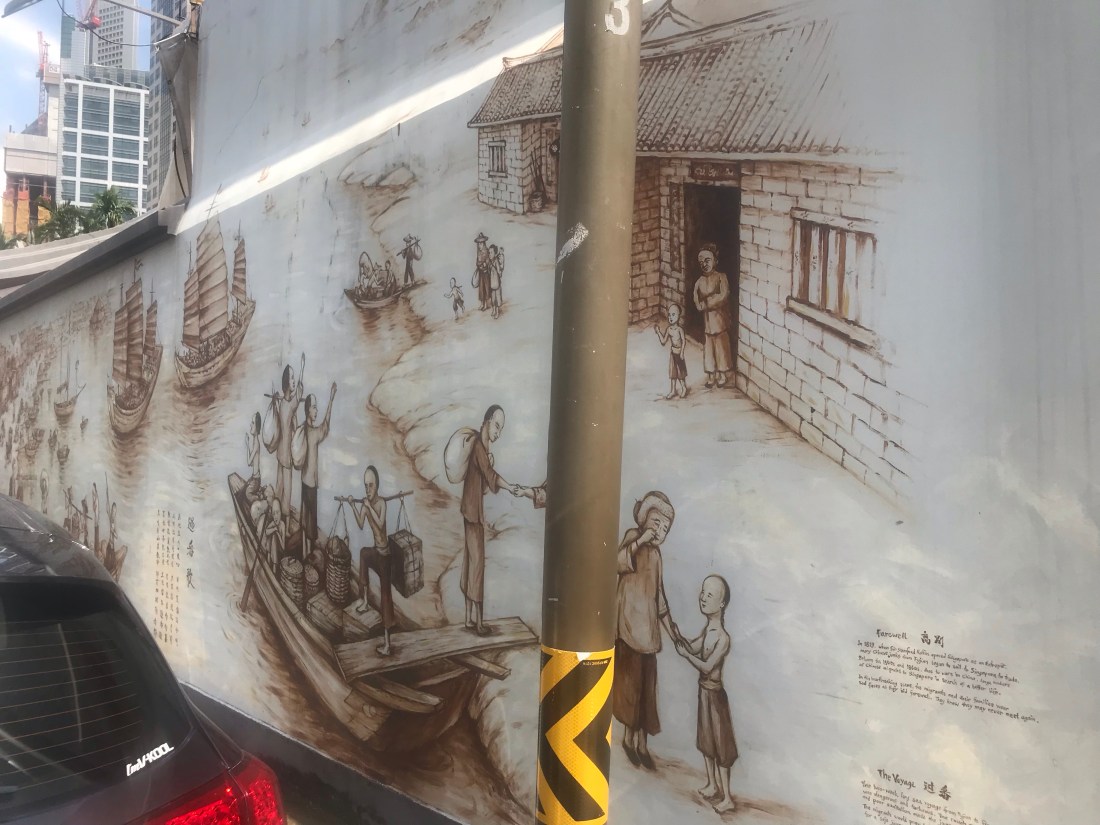
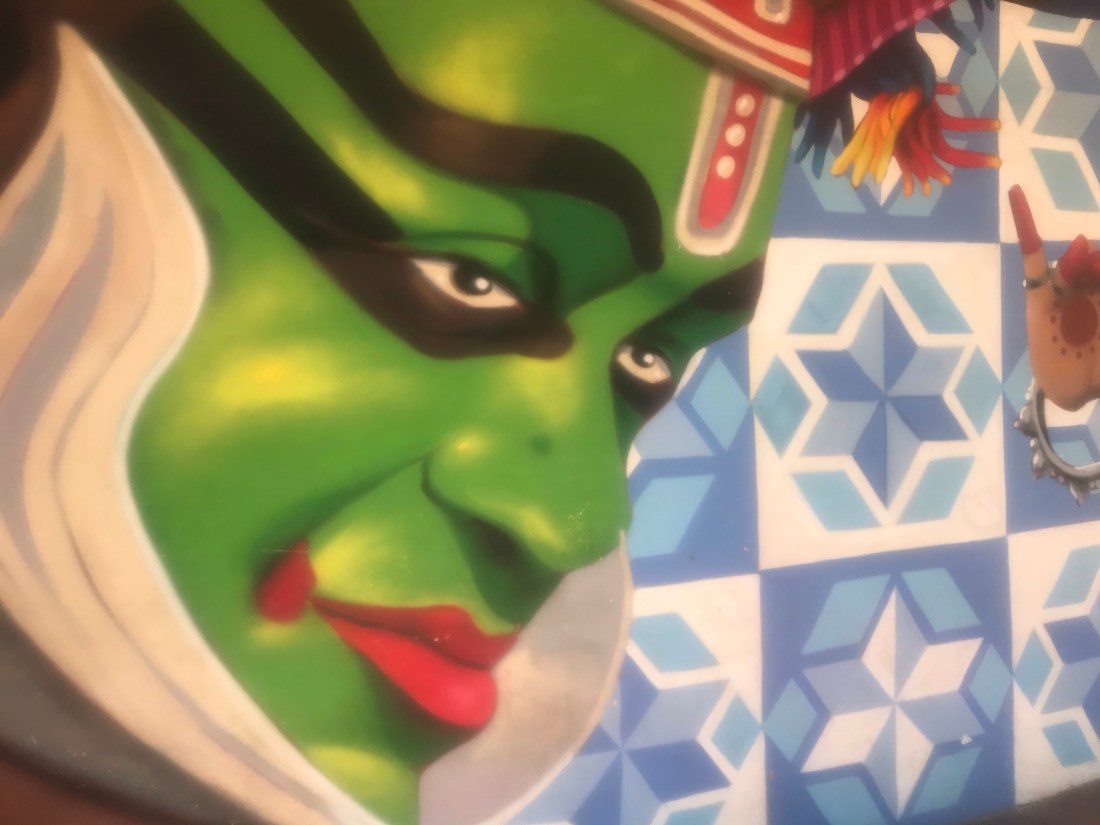
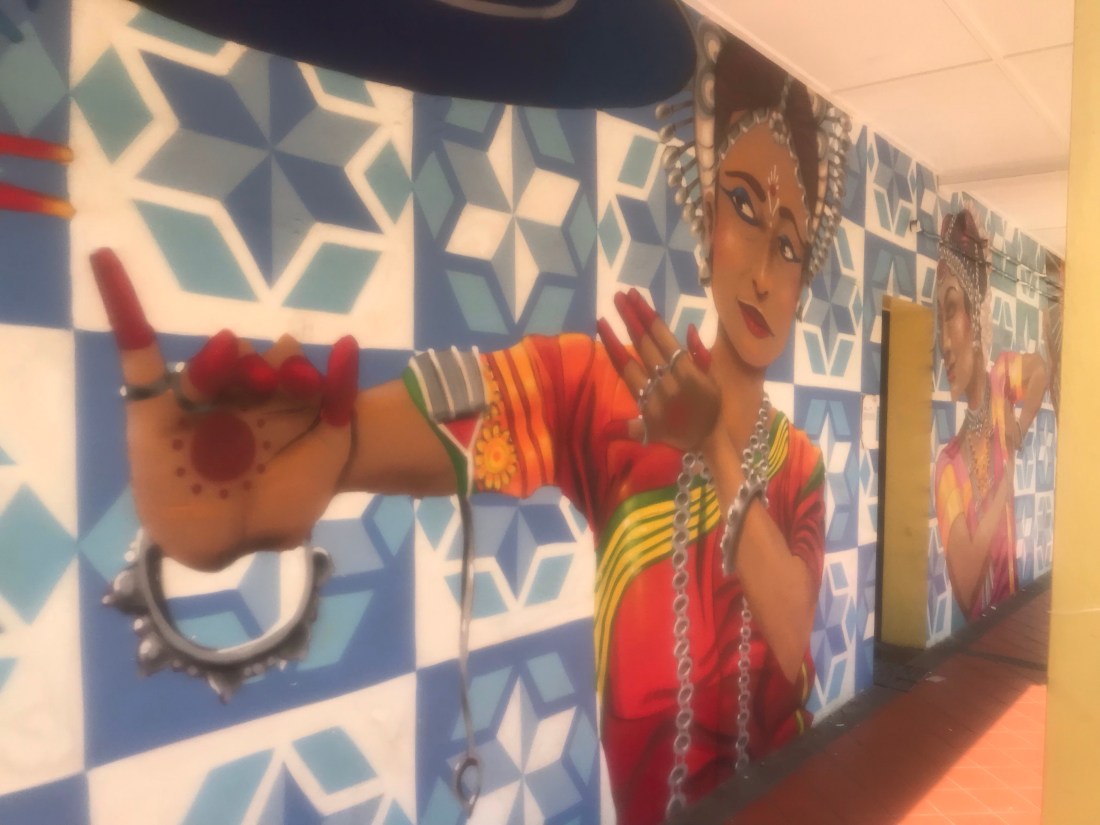
Chinatown street art:

A family weekend

I spent a lovely weekend mainly with my friends who have been hosting me so generously and their children.

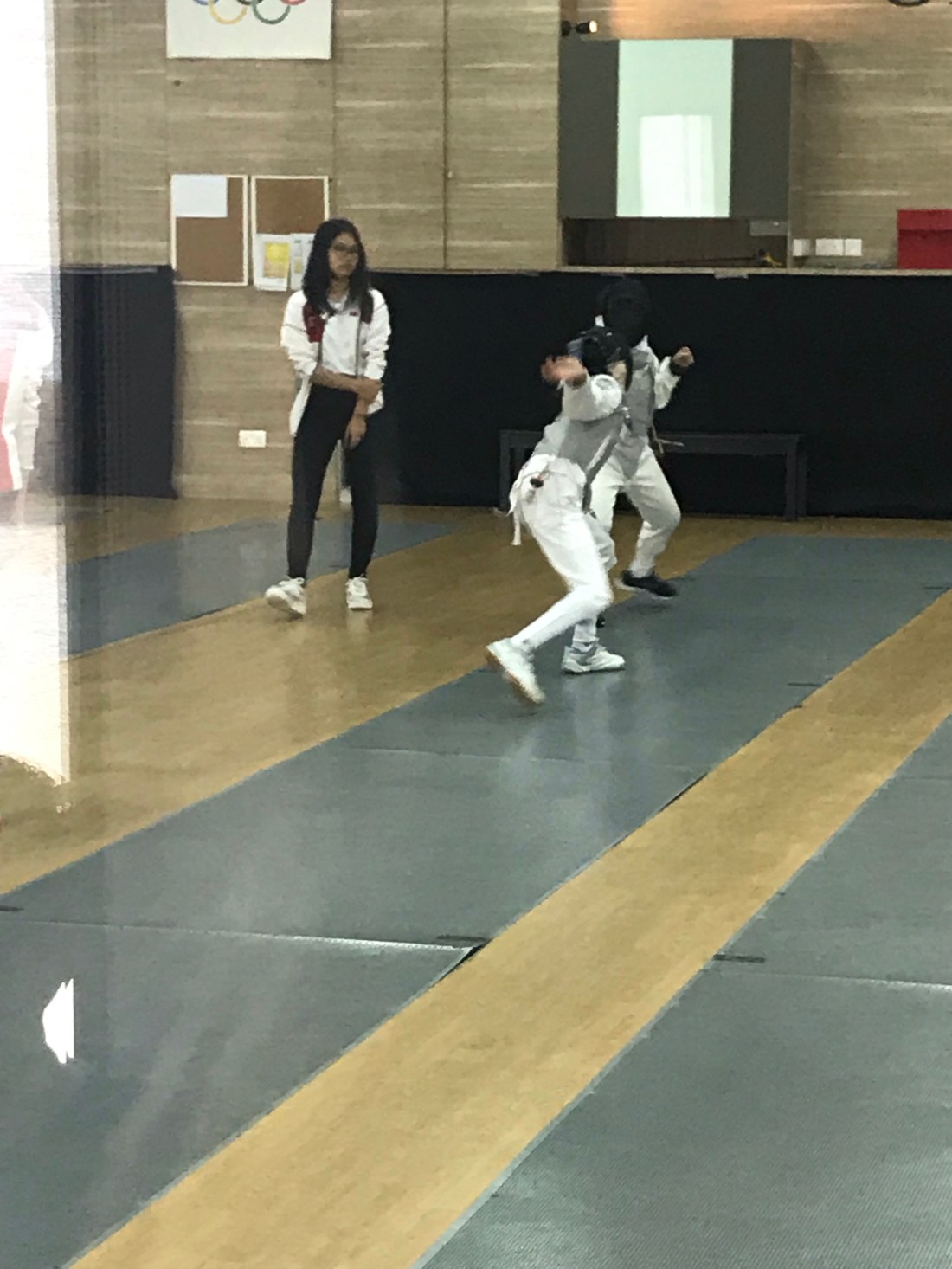
First stop: Fencing Gala competition with T, who only went and won the whole thing! But, as all the competitors (including some very small children) had to pledge right at the start, “When we win we will not be proud, when we lose we will not cry”, I had better not go on about how good she was! Anyway, good on her! I find myself mulling over the pledge, though. It’s good, and T’s opponent in the final was particularly sporting, giving her a hug and saying “well done” to her in a very genuine way.

But what happens if we’re never allowed to cry? Let me not extrapolate a whole lot of meaning from this one small thing, which is obviously mainly aimed at littlies. But I have just read The language of tears by David Runcorn, which highlights how, in rather repressed British culture, we are often not allowed to cry, or how derogatory words are assigned to crying, to try and avoid the – what – embarrassment (?) of it? And how problematic all the unprocessed griefs of our lives can become if we’re never able to properly lament them. I’m not sure whether the strong concept of shame I think I’ve heard about in Singaporean cultures might lead to similar problems.

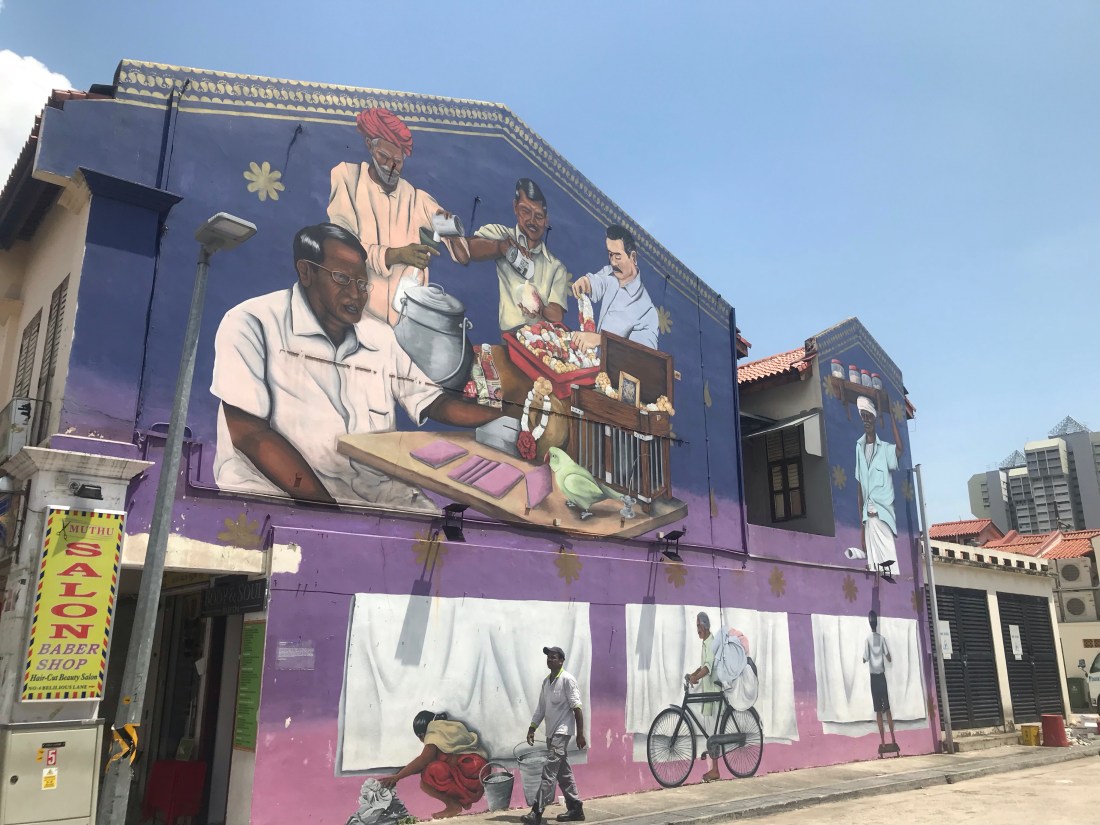
I hived off on my own after the fencing victory to have a look around Little India. I kid you not, this was the first sight that greeted me as I surfaced from the tube station (can’t beat a bit of Bhangra – what is it about it that means it’s impossible to not smile or start joining in the dance?!):

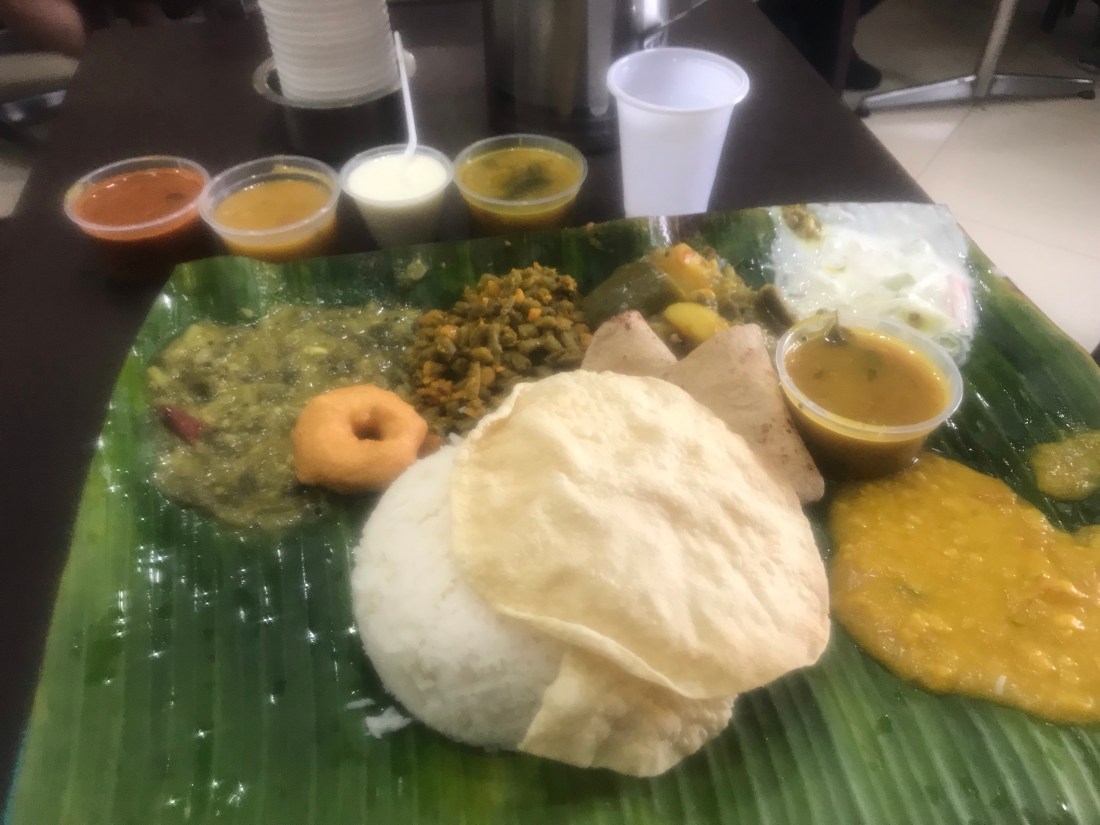
I followed Shiv’s recommendation of the veggie restaurant Komala Vilas, where I reckon I had the best curry I’ve ever tasted (and I’ve had a lot of curries!):

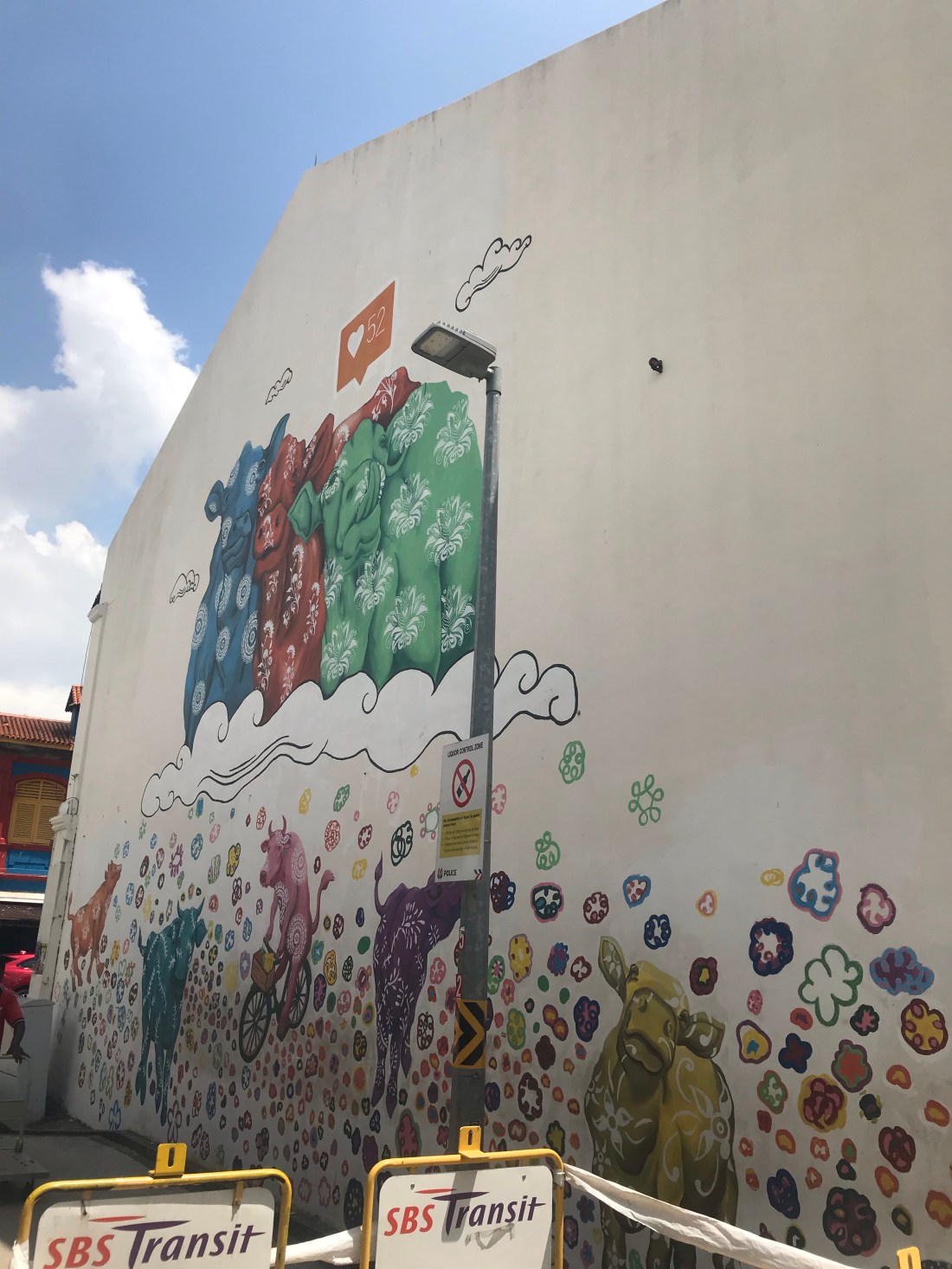
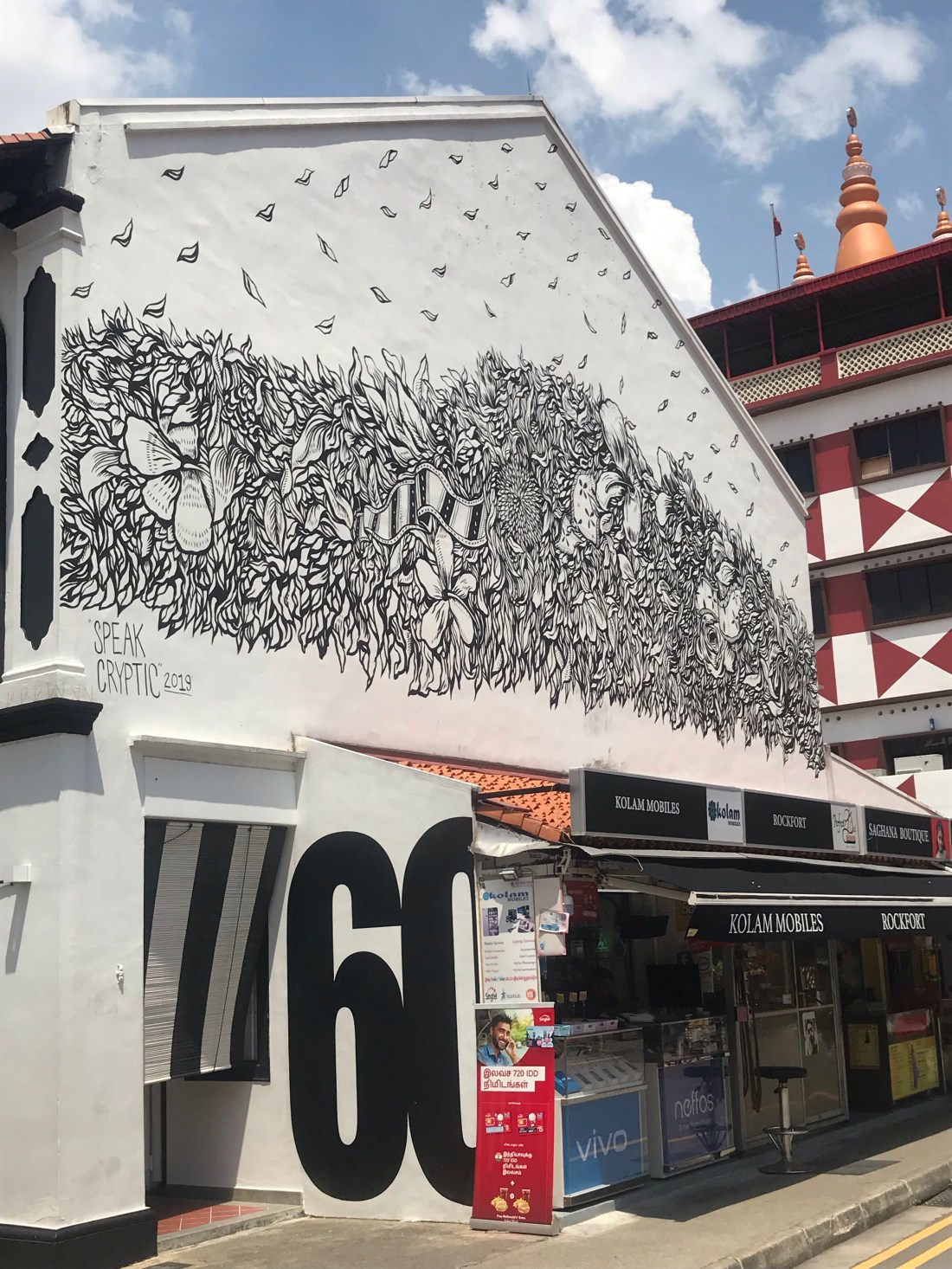
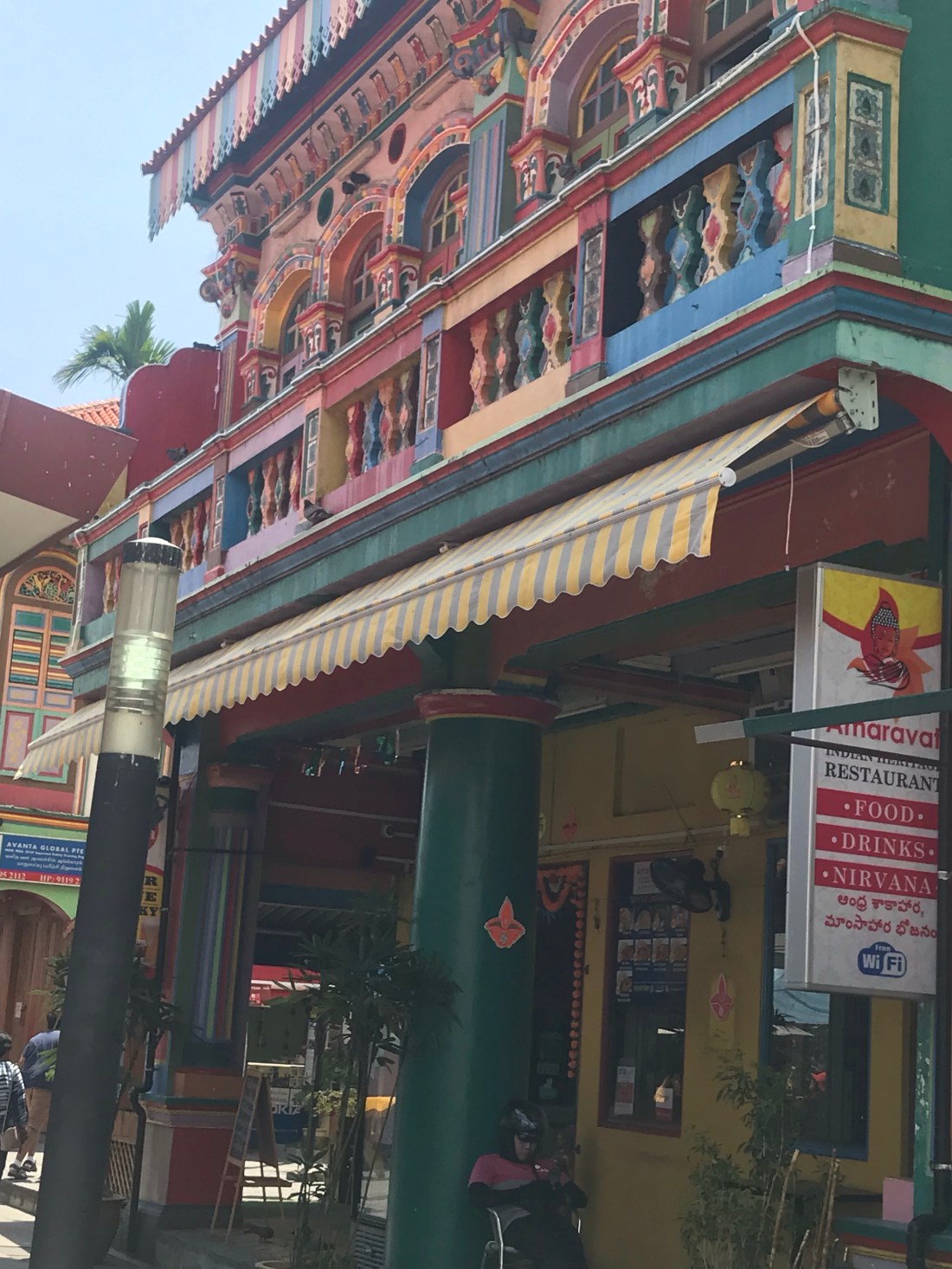
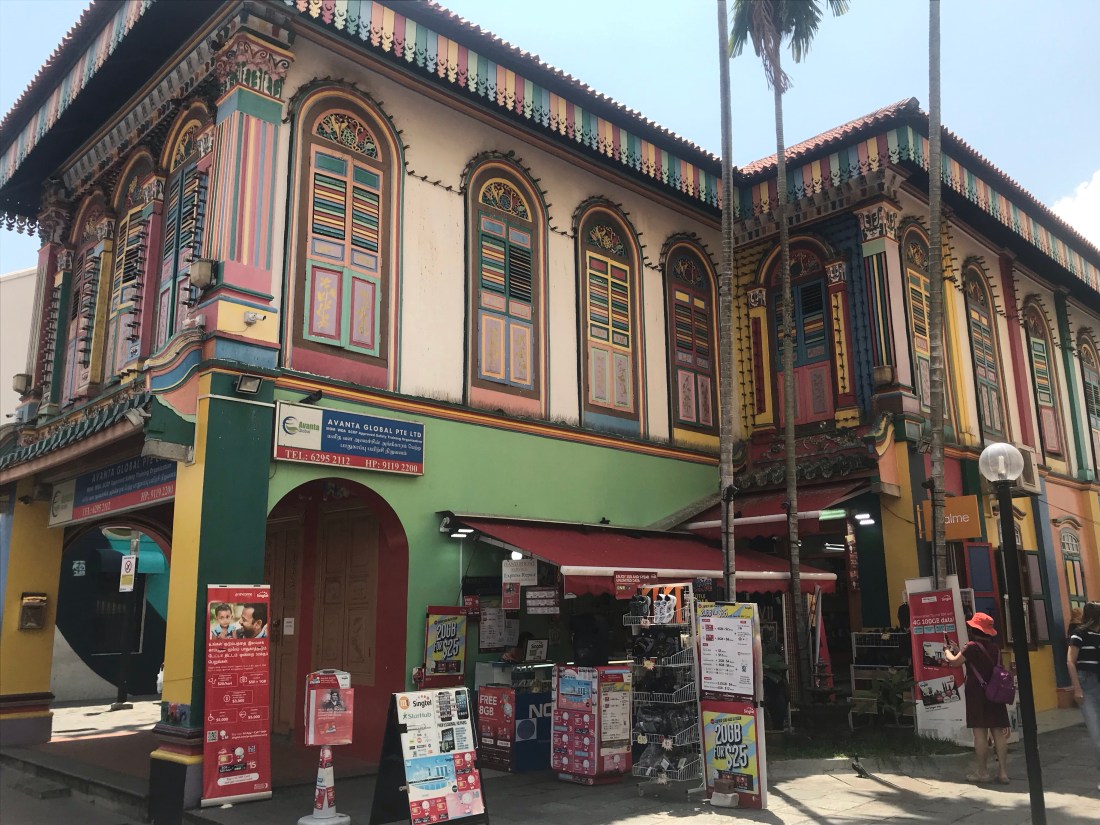
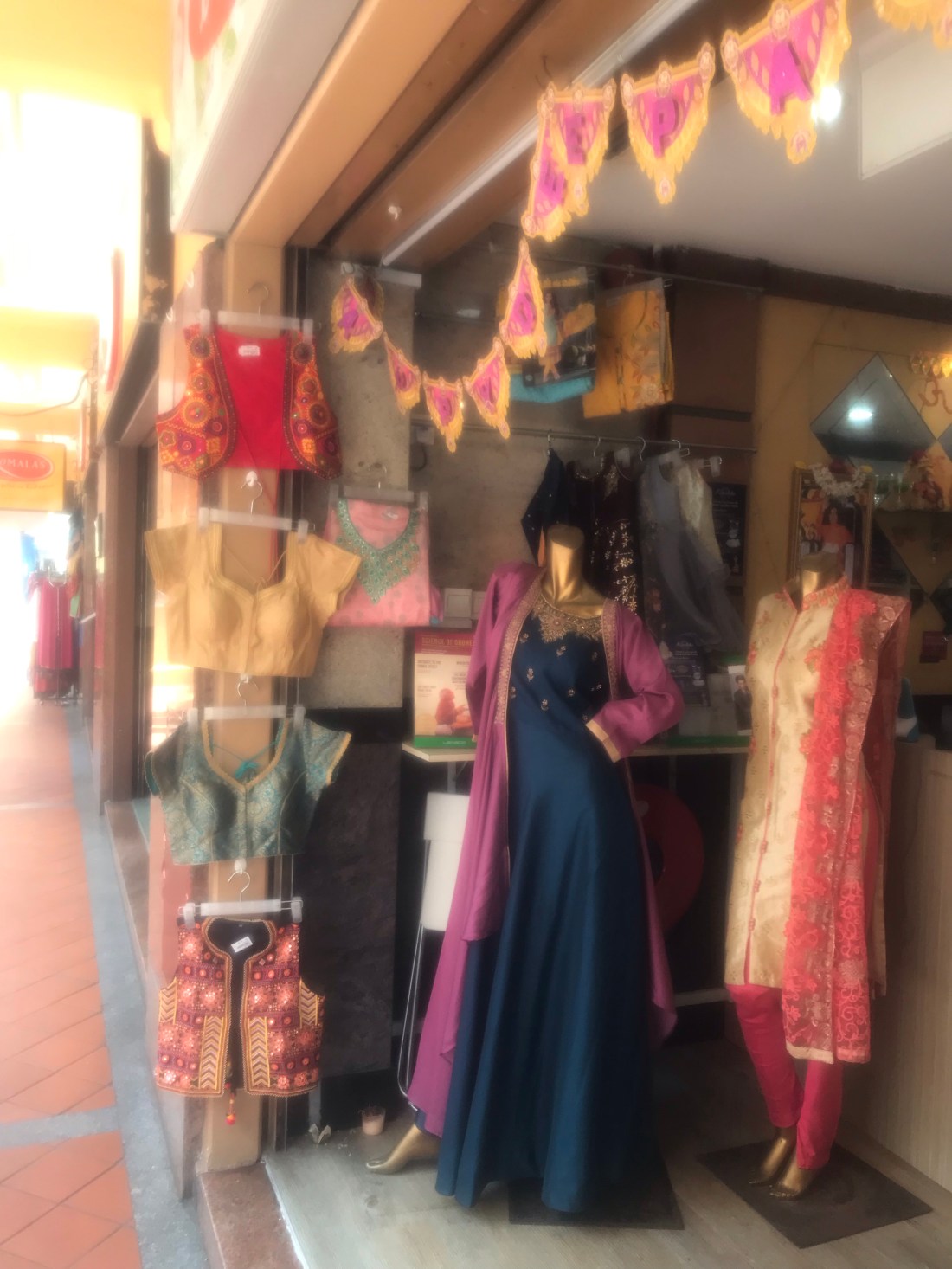
After this delicious repast (during which the waiters came round twice to offer me more even though you pay up front), I wandered around a few streets, looking at street art (there is a lot) and colourful buildings and shop displays, but before long found the heat just too much, so I found a café and soaked up the atmosphere from a well fanned seat, sipping a Singapore Sling (well, when in Rome…).

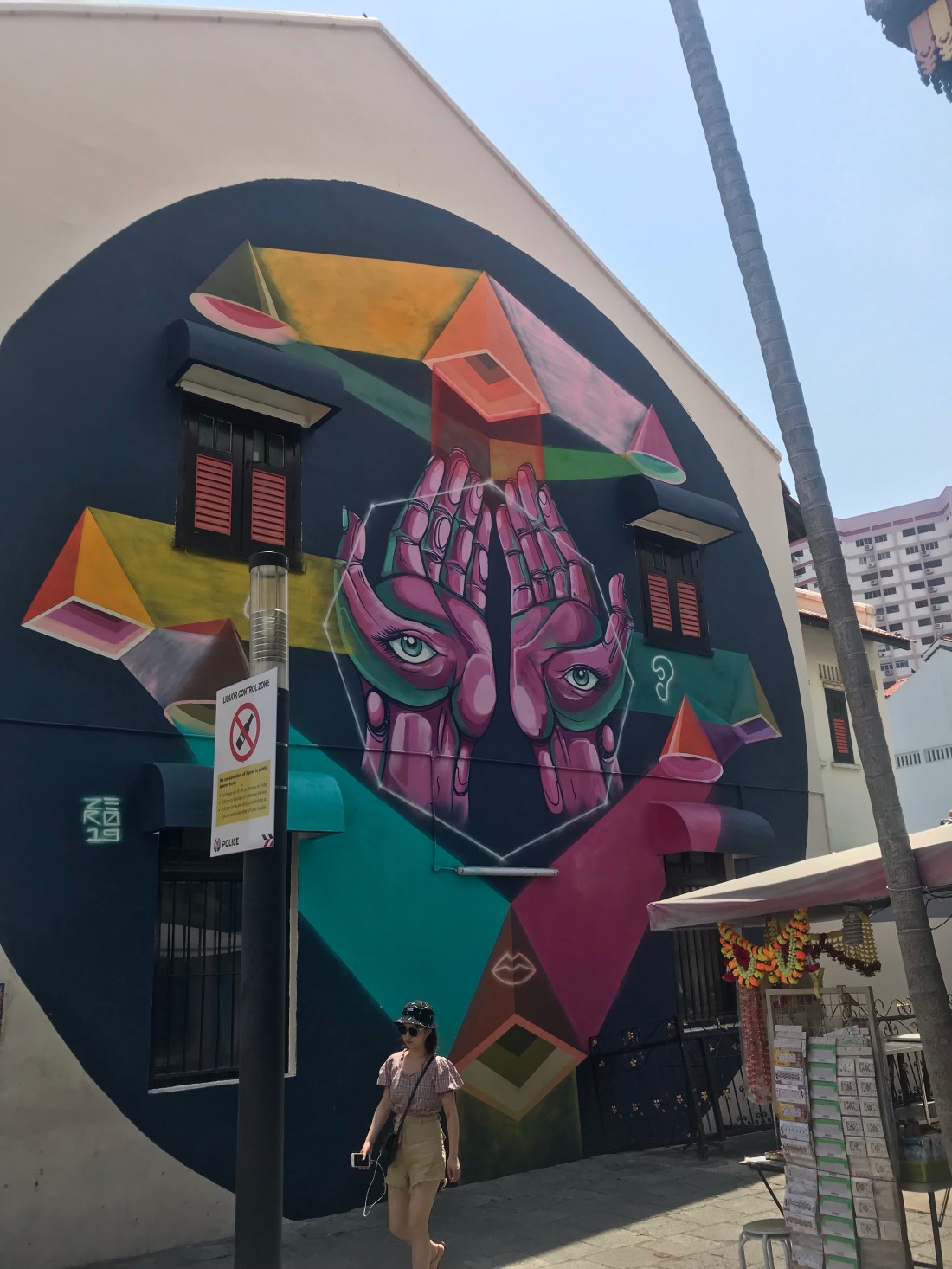
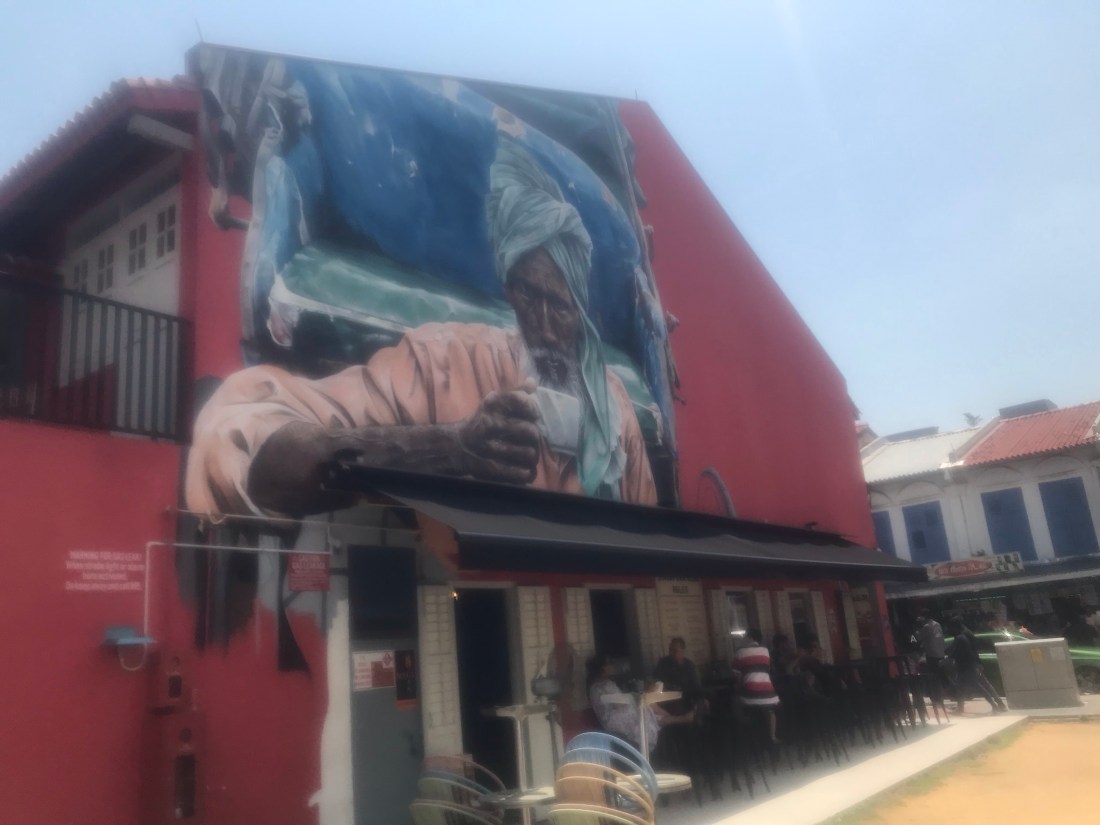
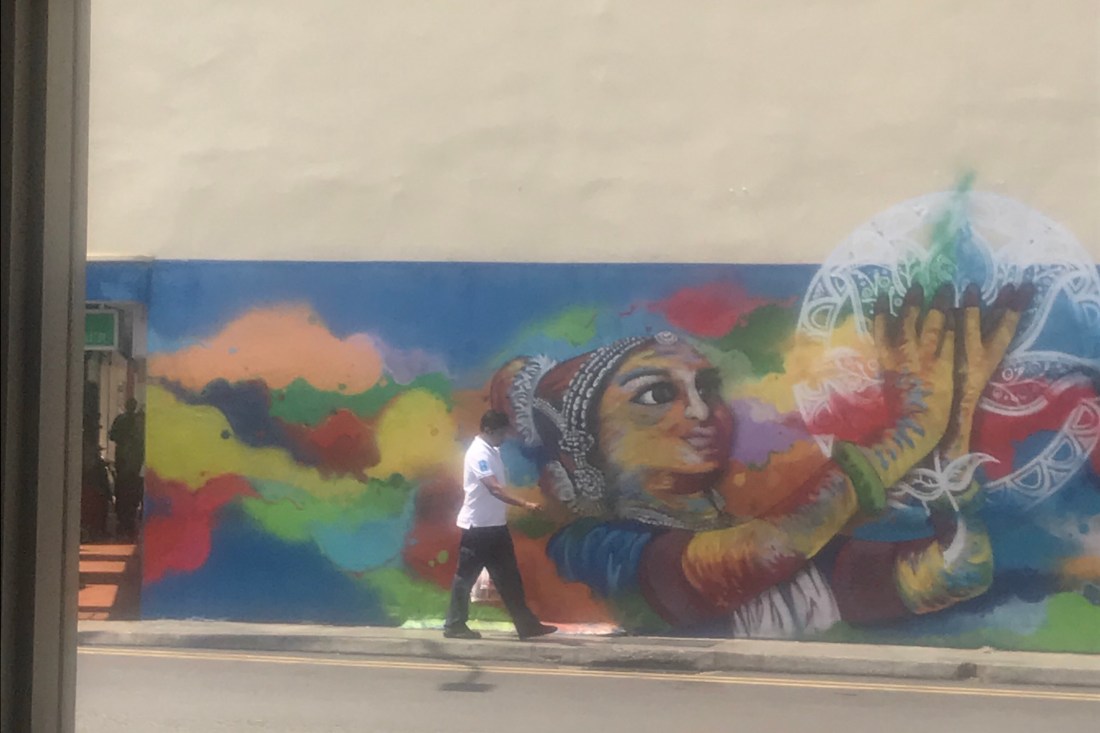
There is a real man walking past this huge mural, but it’s not easy to work out which one is real and which is just in the picture at first:

Later that evening we went altogether with one of T’s friends to a restaurant to sample some really top notch Hainan Chicken Rice, which I gather is really the national dish of Singapore (well, the Singaporean version of it anyway. Best cooked by people from Hainan province in China). Eating out is really very cheap here, and if you know where to go, the food you are served is really good, even though it may be served in a place that doesn’t look like it’s up to much. I was still full from my lunch, but managed to sample something of everything. It was really delicious.

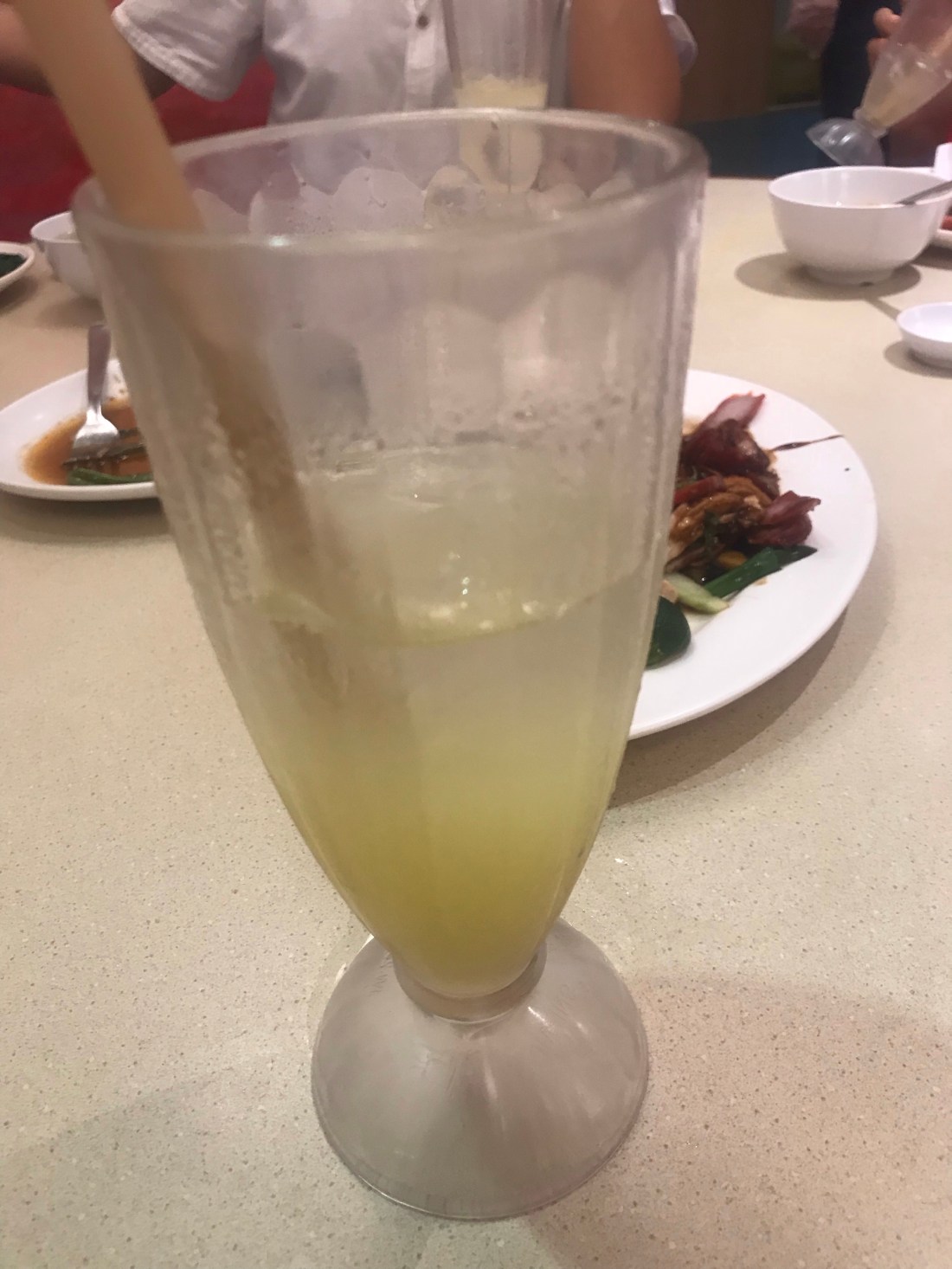
Calamansi – a type of lime juice (calamansi fruit look like limes but are sweeter and have orange flesh. The juice tasted like a type of orange to me)

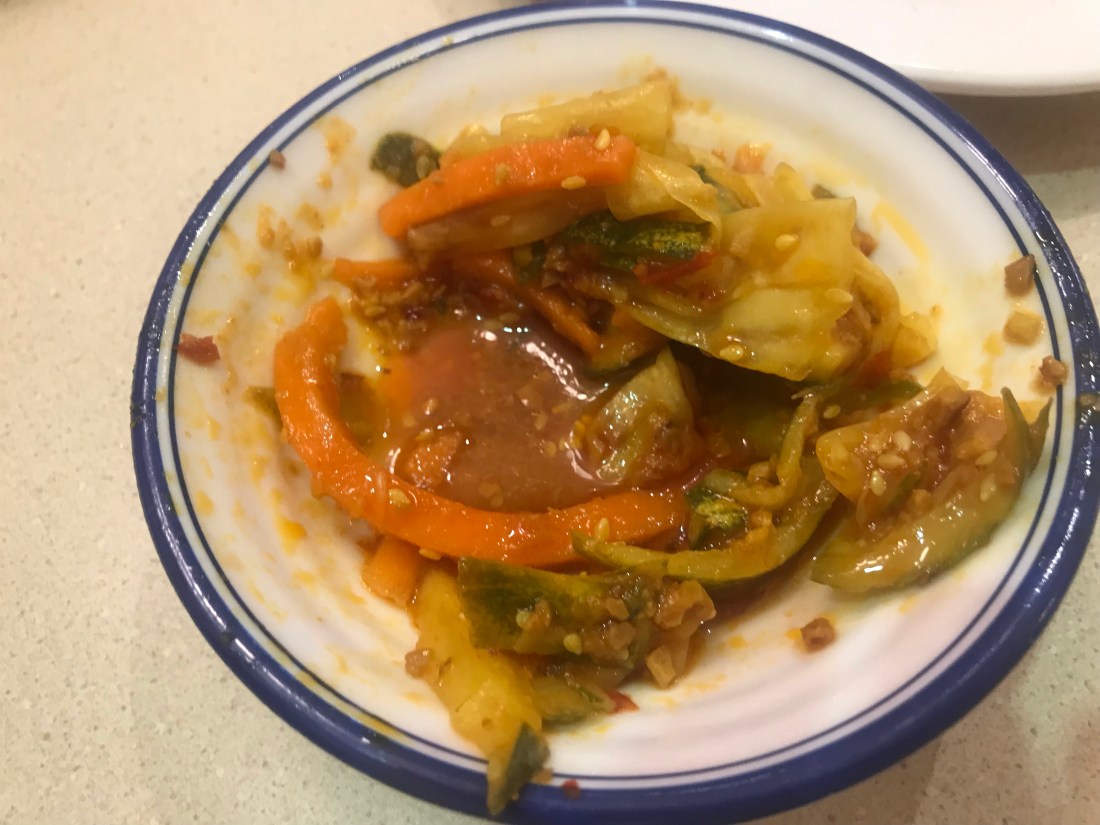
Achar (chilli chutney; a delicious sweetish vinegarish chutney)

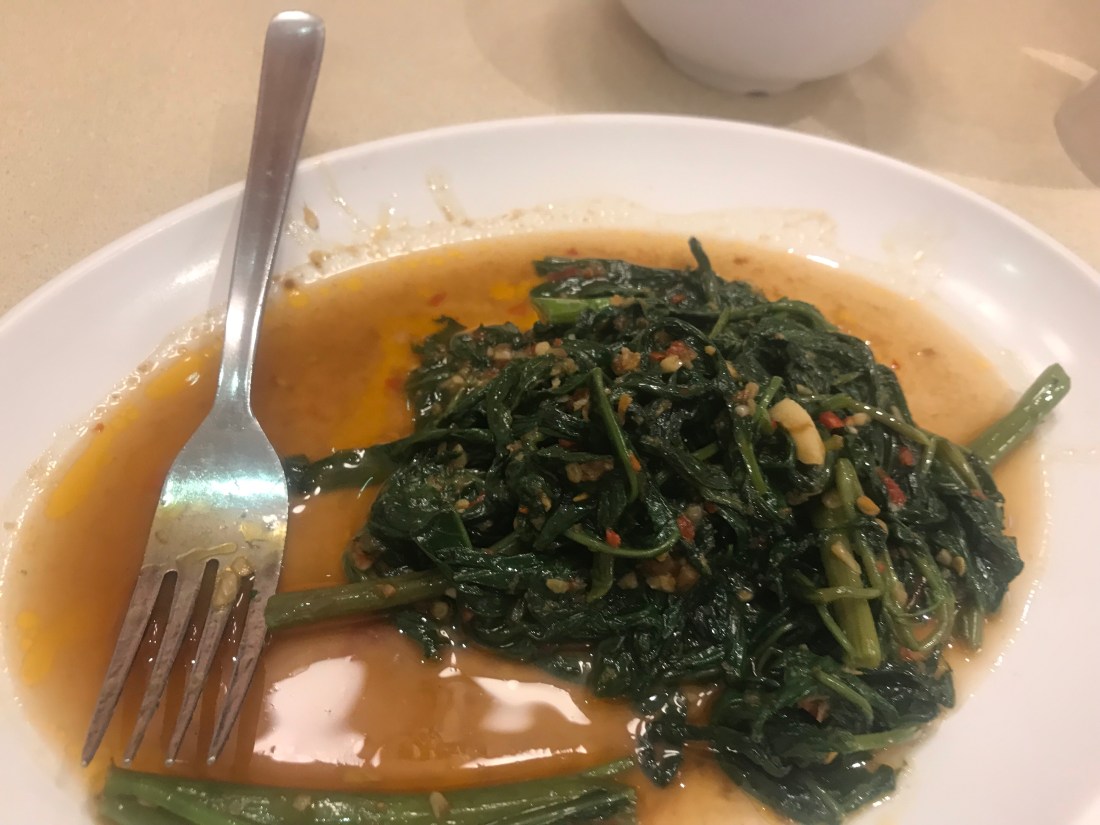
Morning glory (like spinach) in shrimp paste with other spices too.

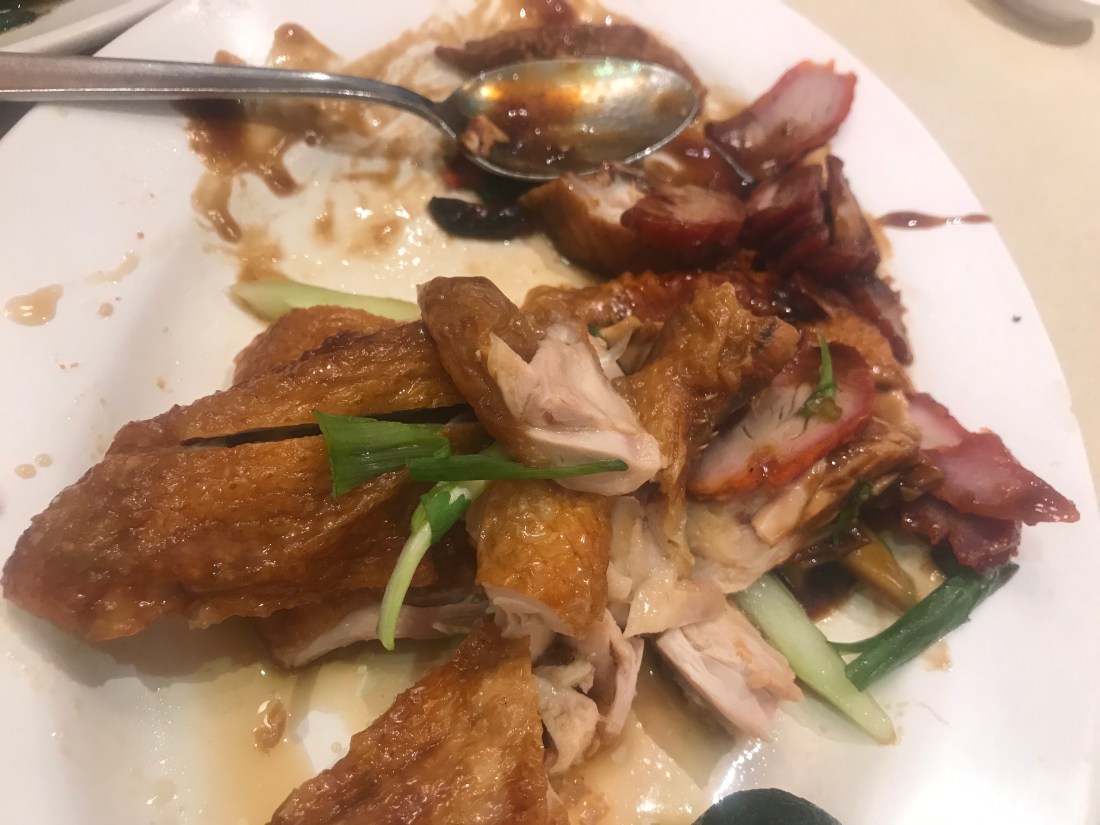
The chicken (and some pork too), which was roasted in a delicately flavoured broth, which was then used to cook the rice. Hmmm tasty!

On Sunday, we went to church together, which felt slightly disturbingly English to me after all of those temples! (It was an Anglican Church to be fair.) It was good to be on a kind of home territory, and to be among other Christians, doing what we do. Then we piled off to a local mall to eat in the food court there and for some time to chat together with extended family and others. Then we went back for a rest, which in my case was much needed!

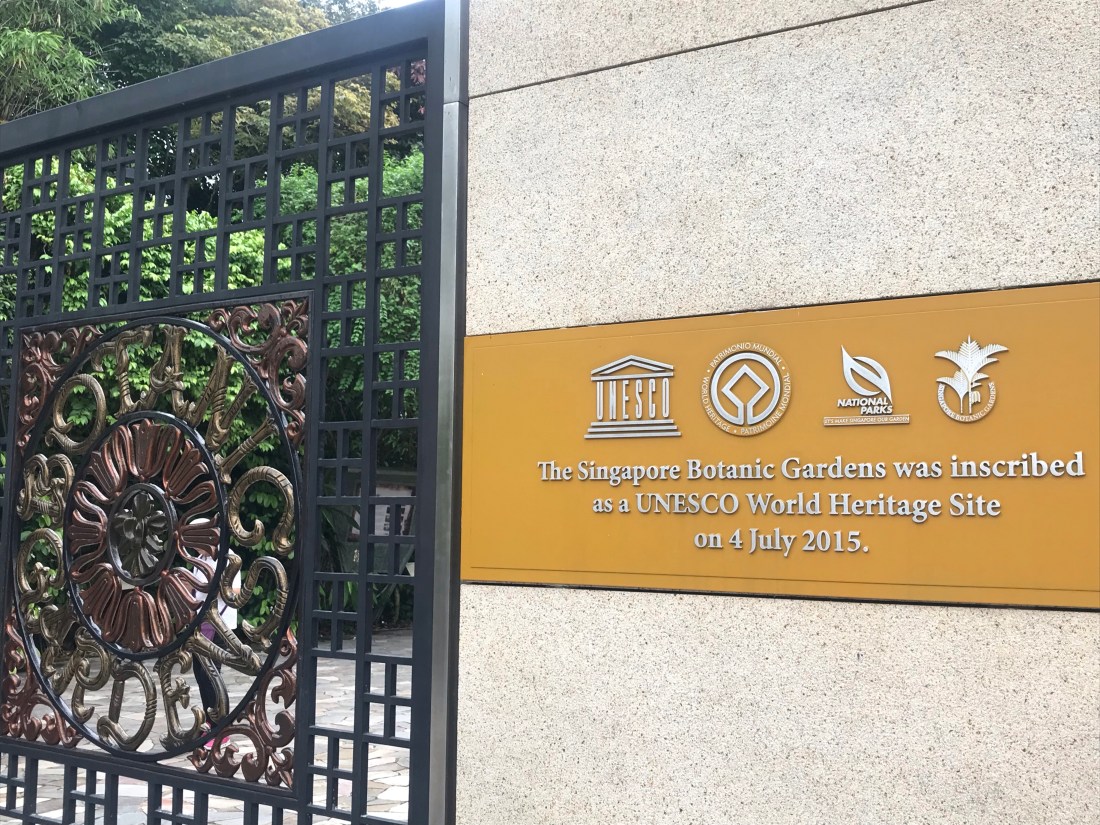
Singapore Botanic Gardens

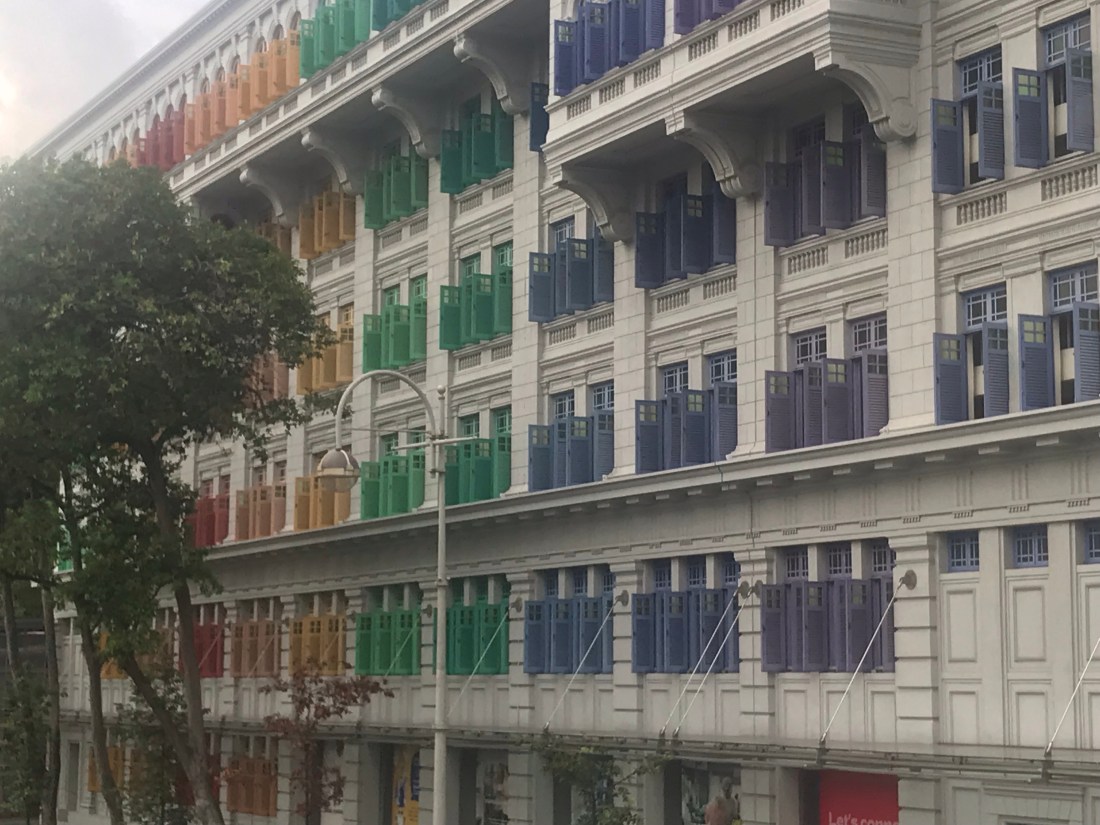
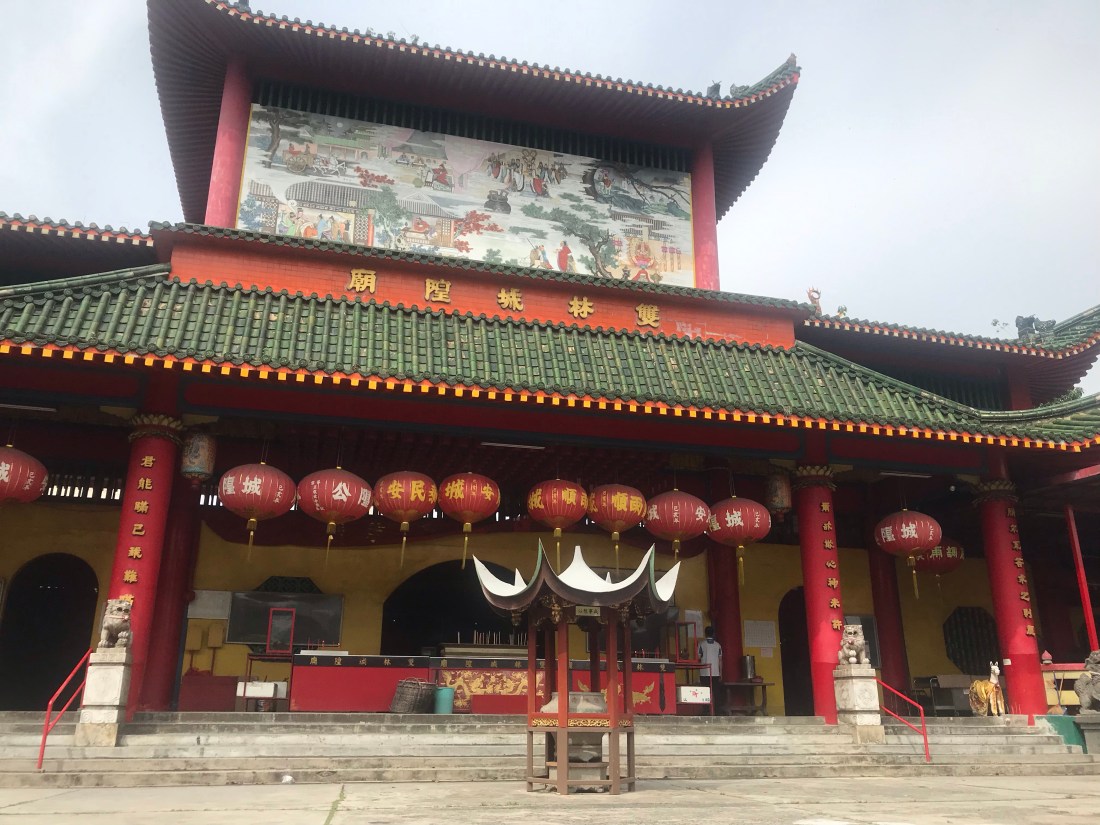
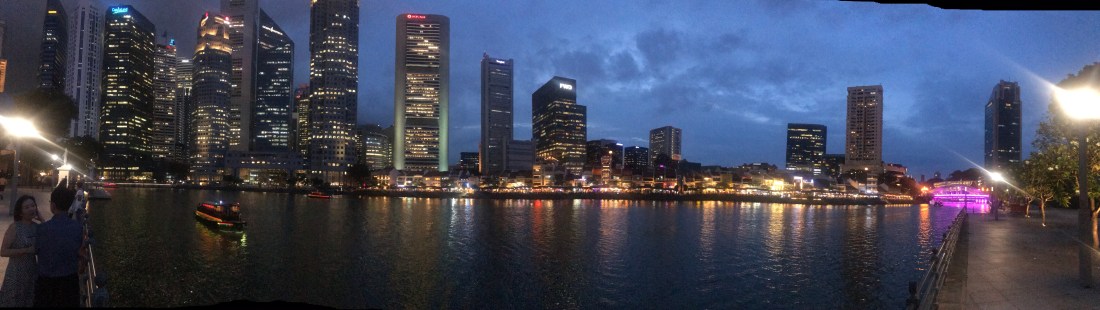
On my first full day back in Singapore, refreshed after a day doing not very much, I rather overdid it. I spent about half the day in the Botanic Gardens and National Orchid Garden, then half visiting Liam Shuang Lin Temple, then the other half (…?) going with Shiv and Jamie to a fabulous jazz concert in the Victoria Concert Hall, right in the middle of the city, in the area with all the beautiful colonial architecture, alongside the towering snazzy high rise office blocks, which, along with the river all makes for a stunningly beautiful place.

After that little lot, my phone reasonably reliably informed me that I’d walked 10 miles!! 😳 (Well the phone tends to add on maybe a mile at most.) No wonder I was exhausted!

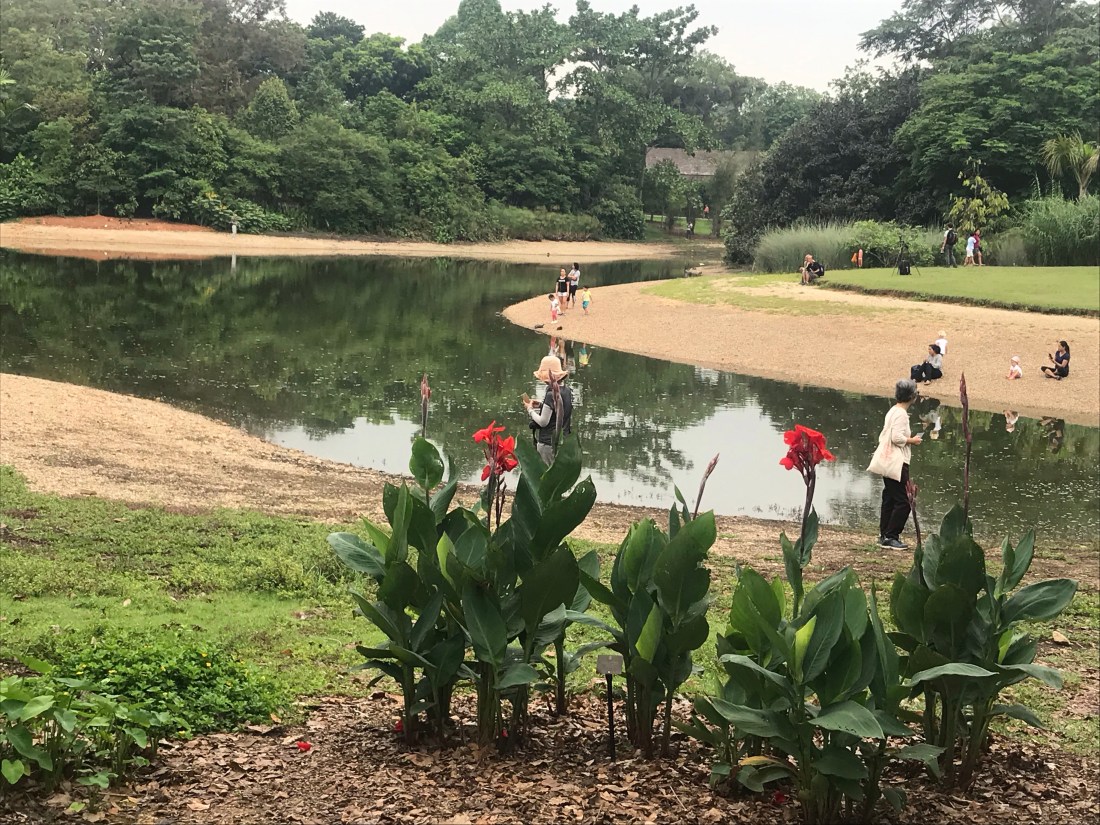
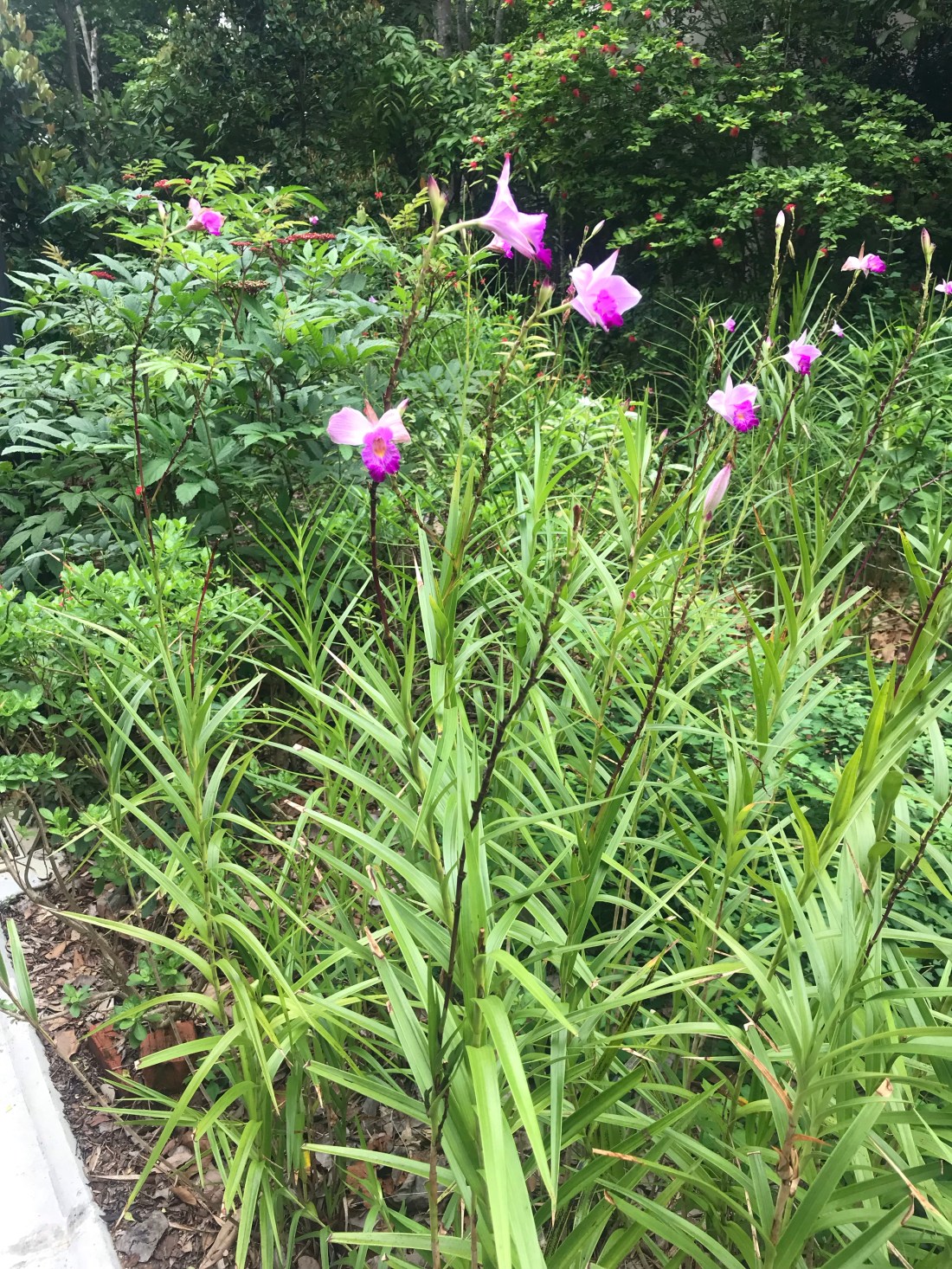
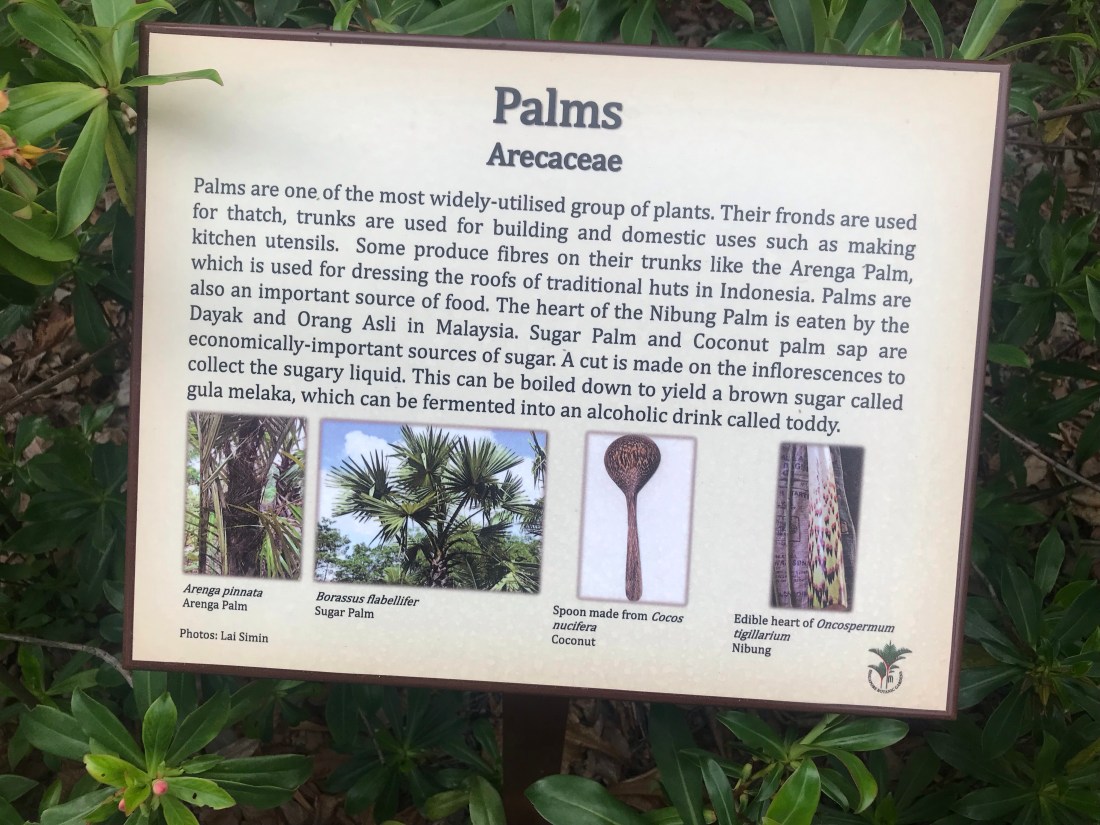
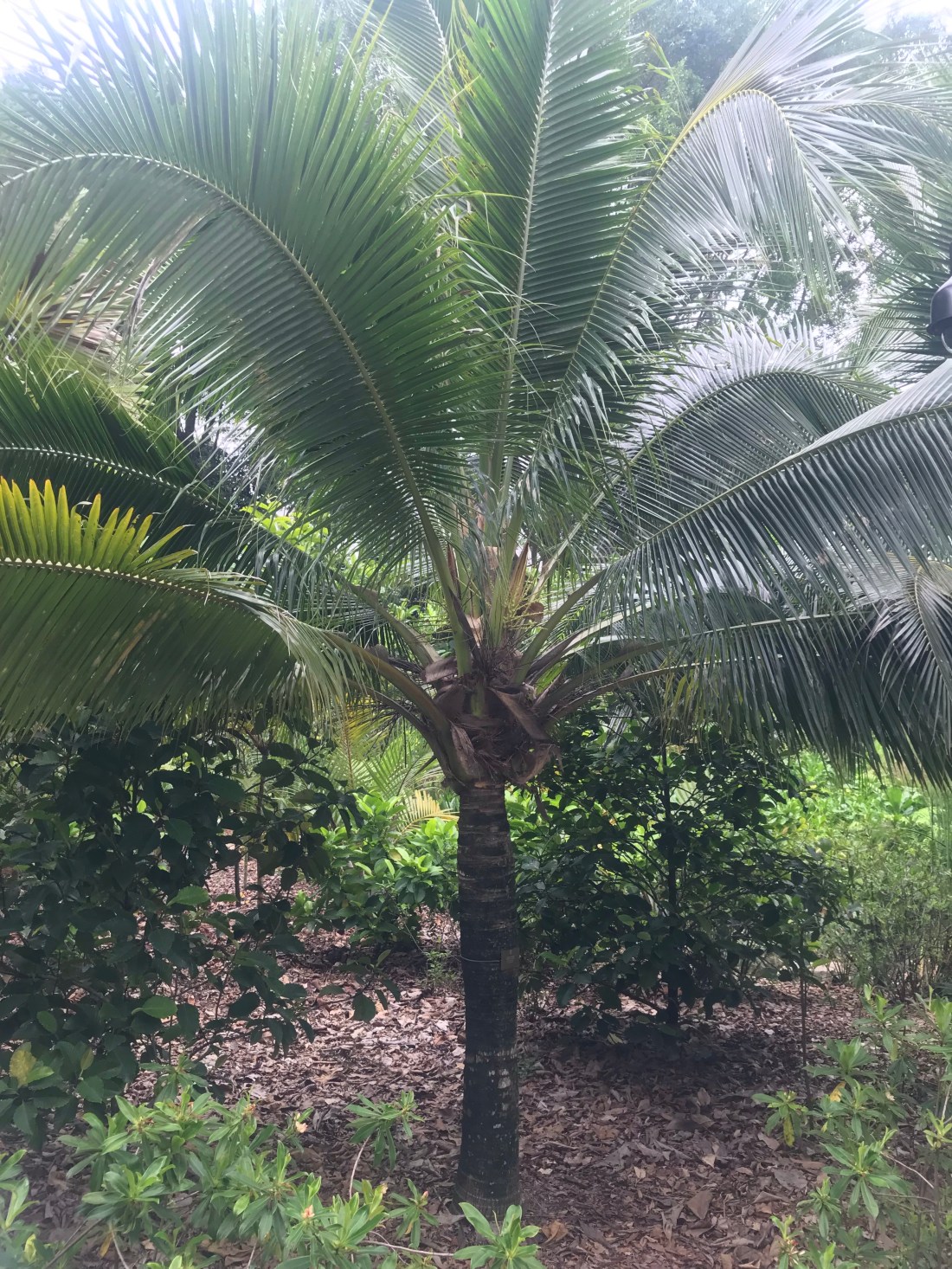
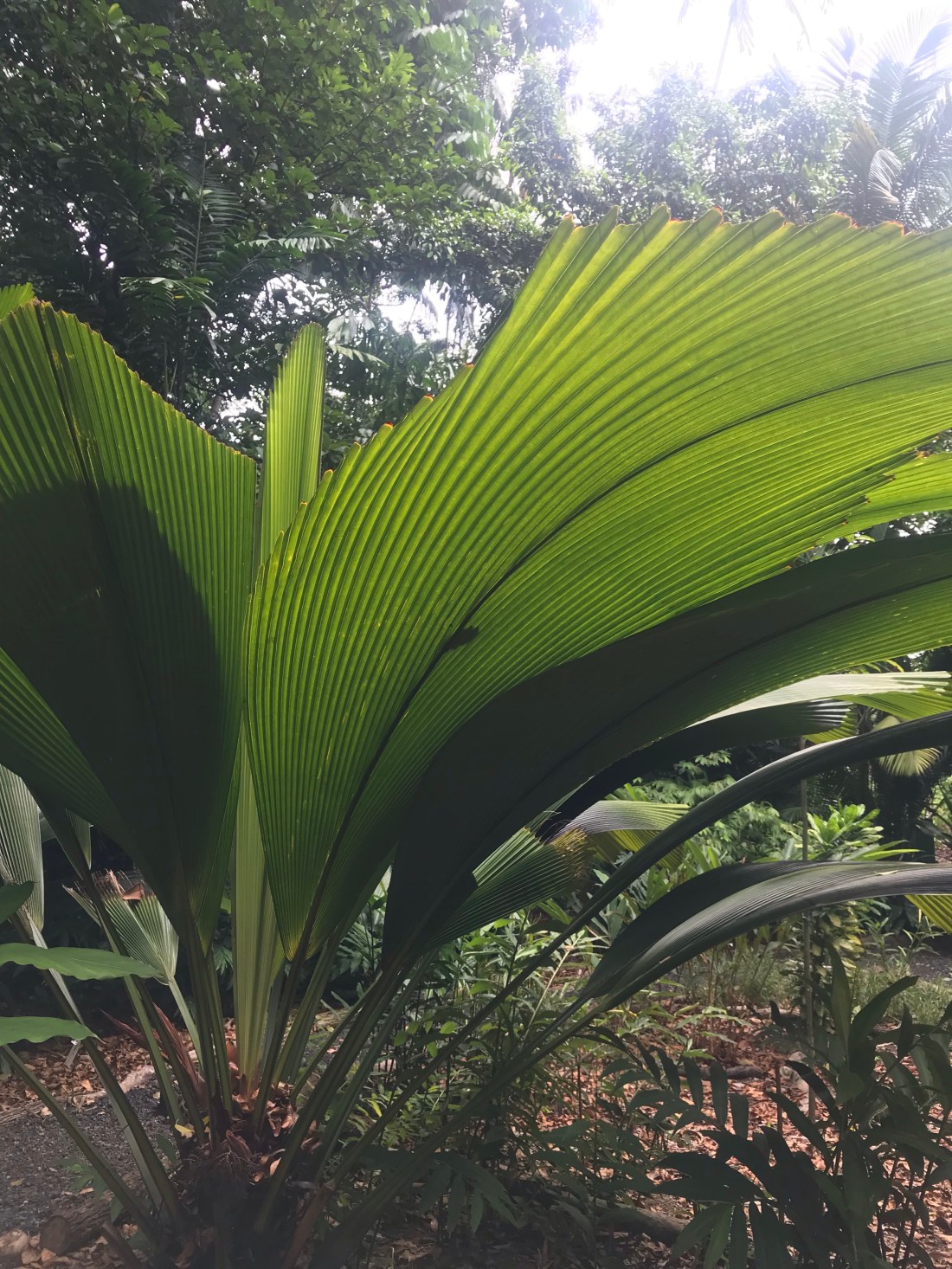
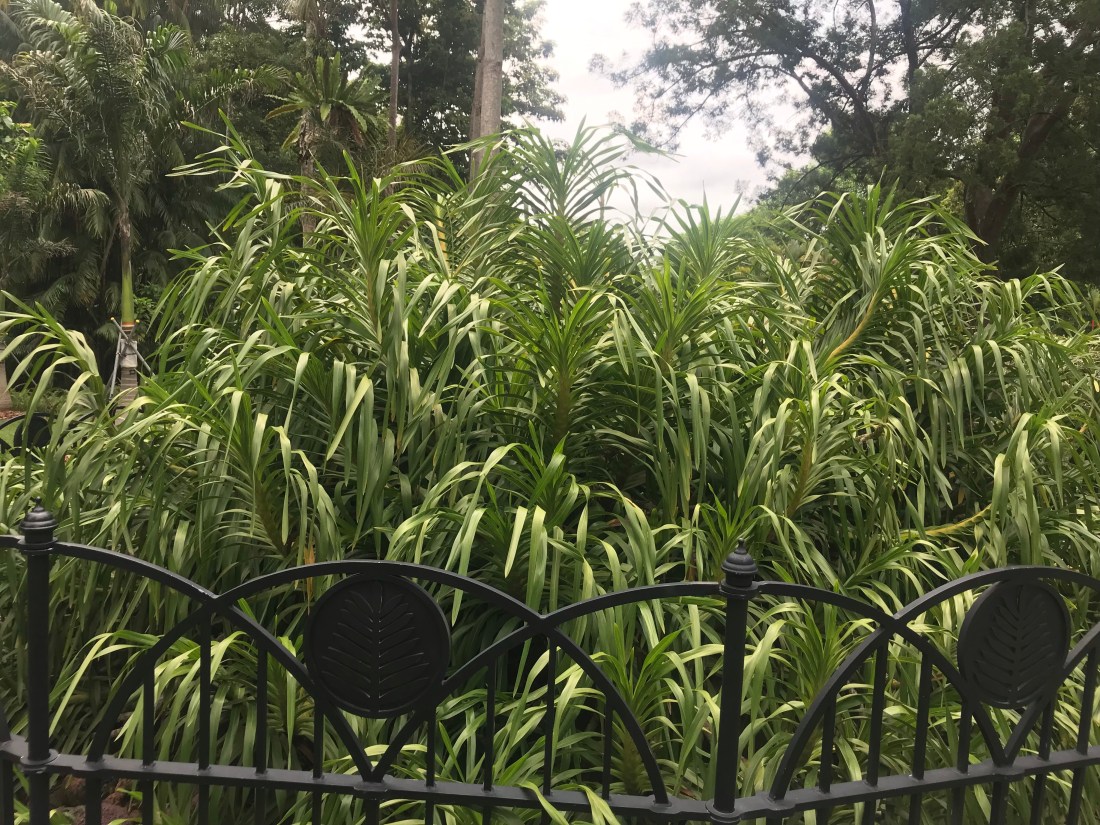
Anyway it was a beautiful day and here is a snapshot of it:

When I first arrived at the Botanic Gardens, I saw about 6 groups doing yoga in the grounds! I felt very smug, since Shiv had taken me to a yoga class the night before, run by a friend of hers, which I’m sure was the only reason I didn’t stiffen up in response to all the walking. Hmmm, thinking maybe I should find a yoga class when I get back home…?

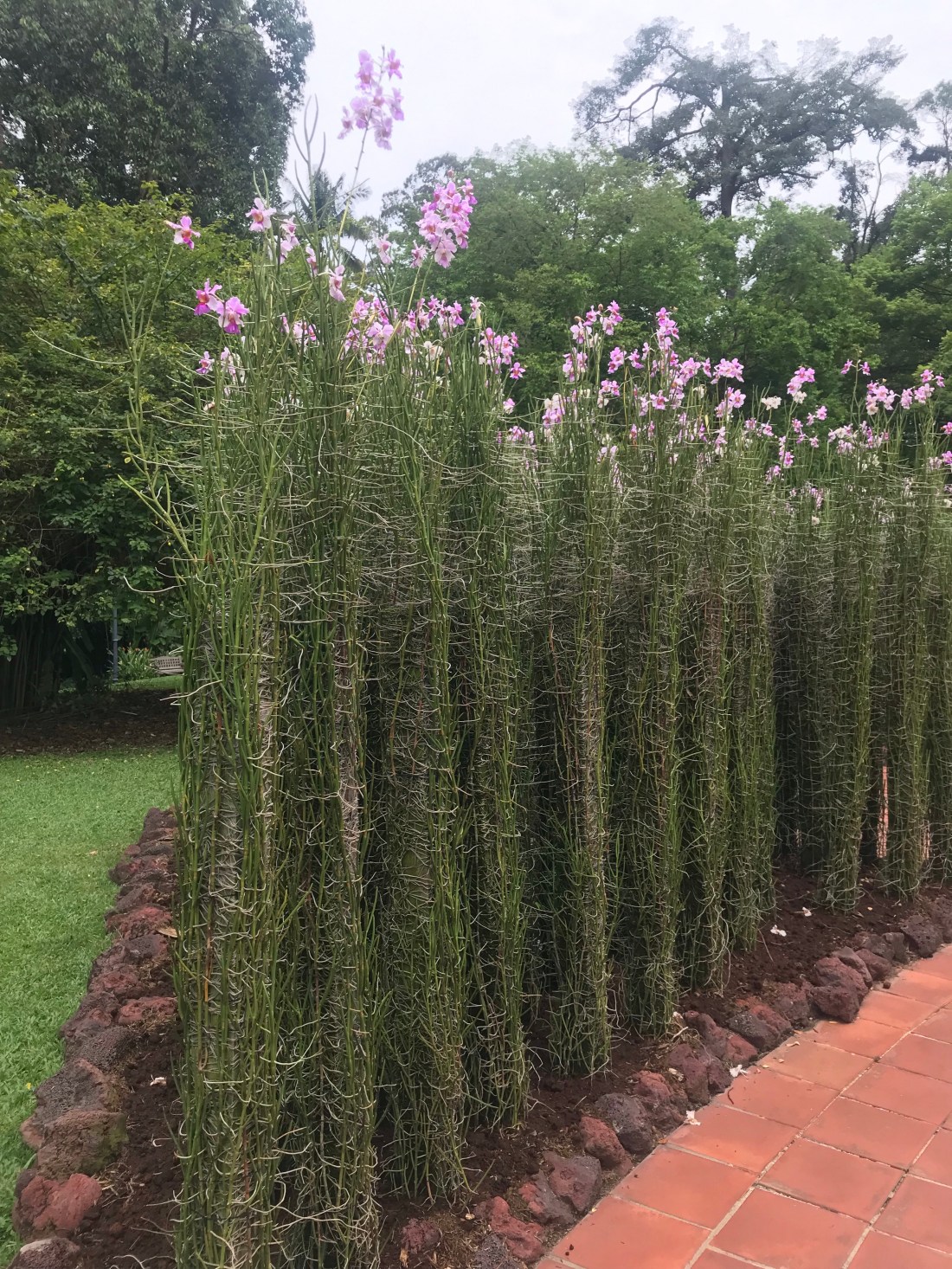
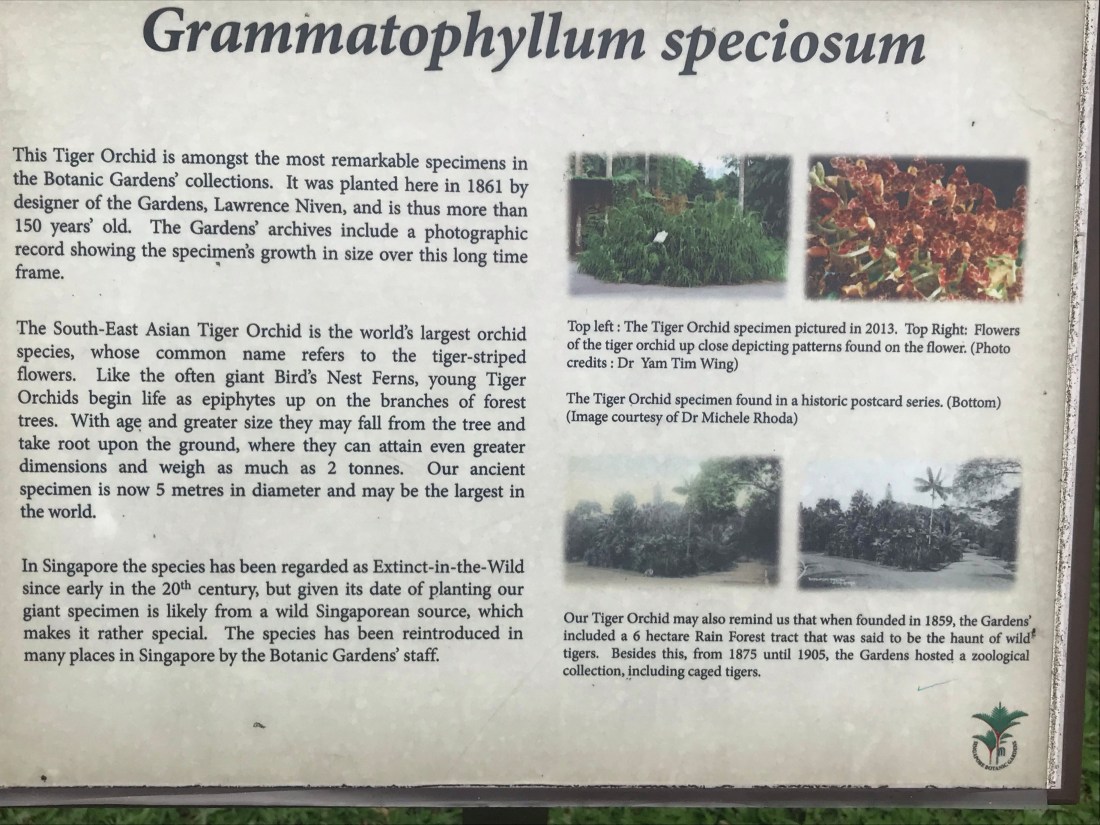
The world’s oldest Tiger Orchid (probably):

This is called a prayer tree because the leaves close vertically together like praying hands in the evening and then open out in response to sunlight each day👇🏼

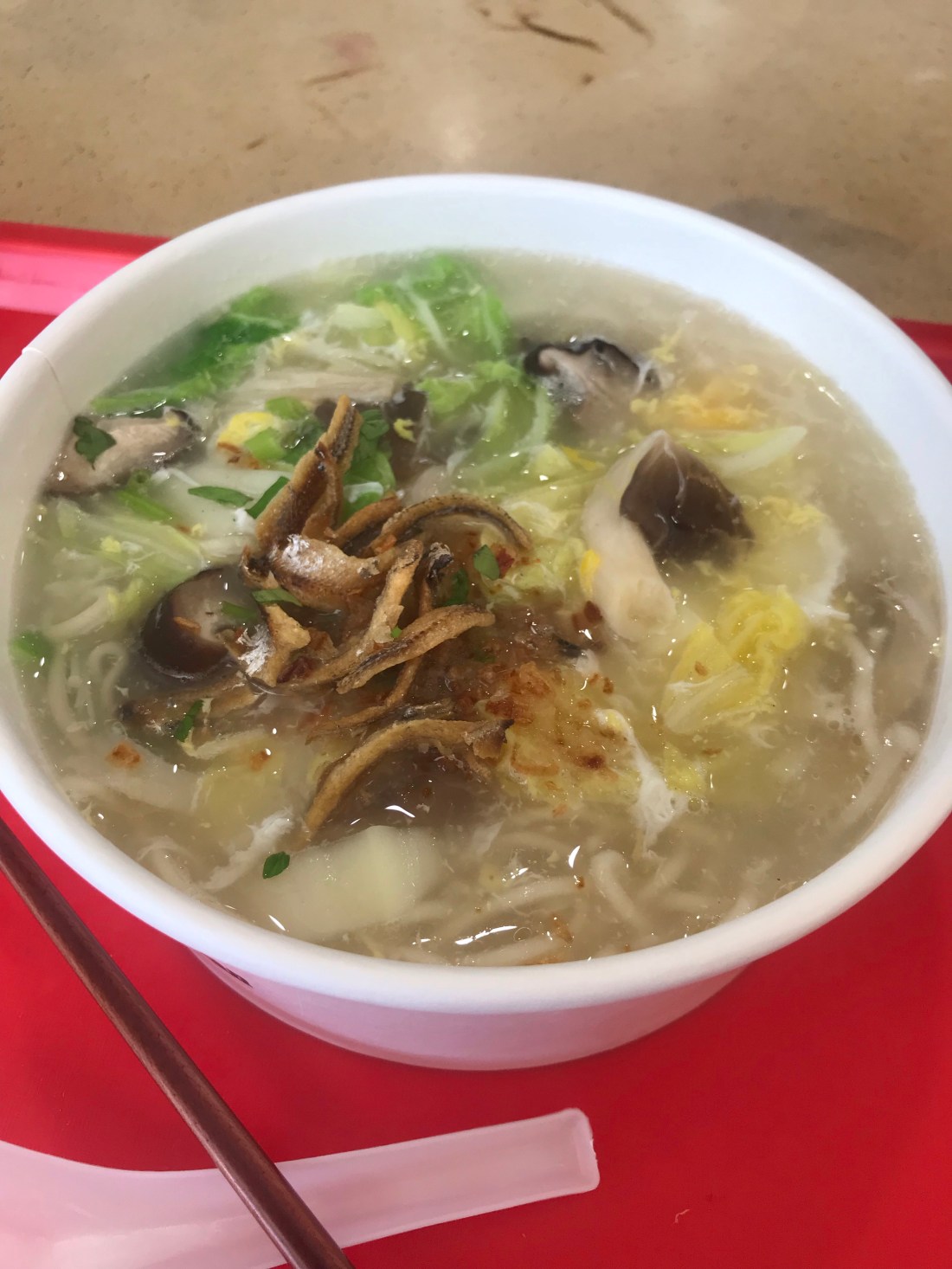
Lunch (my first successful solo foray into a foodhall). I went veggie, but then failed to notice the dry spices they offered to sprinkle on top contained dried anchovies. Oh well! It tasted good, anyway.

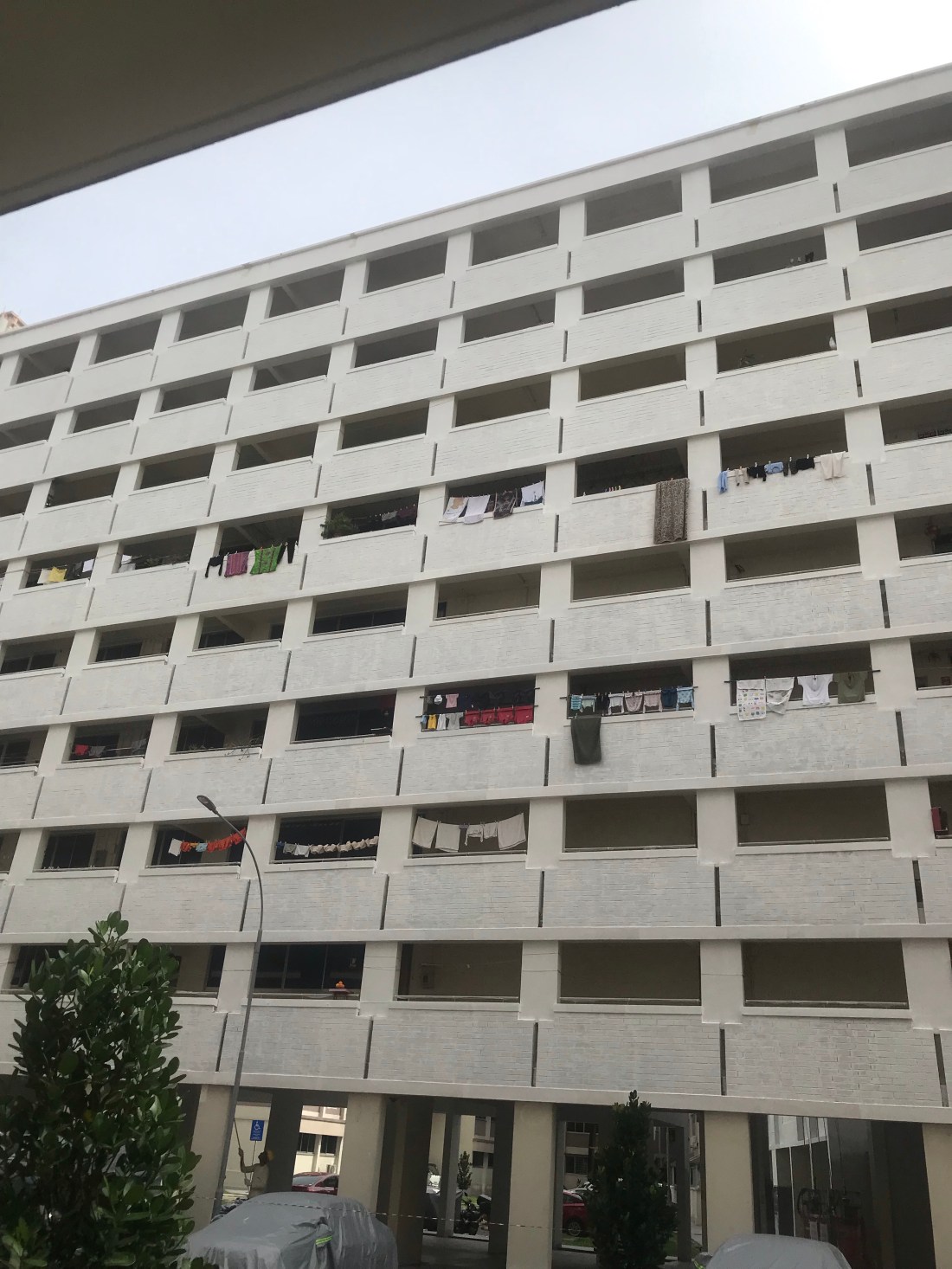
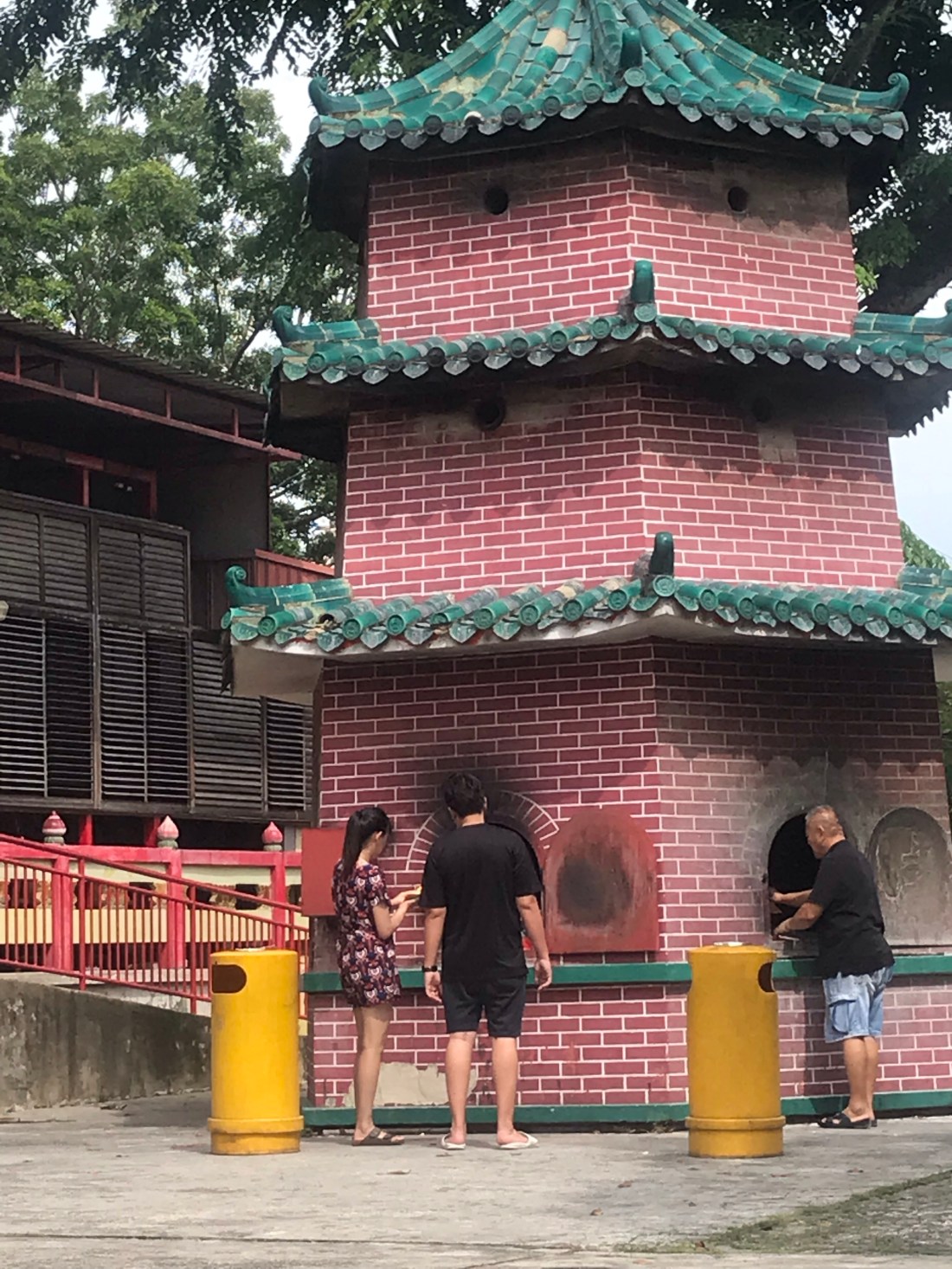
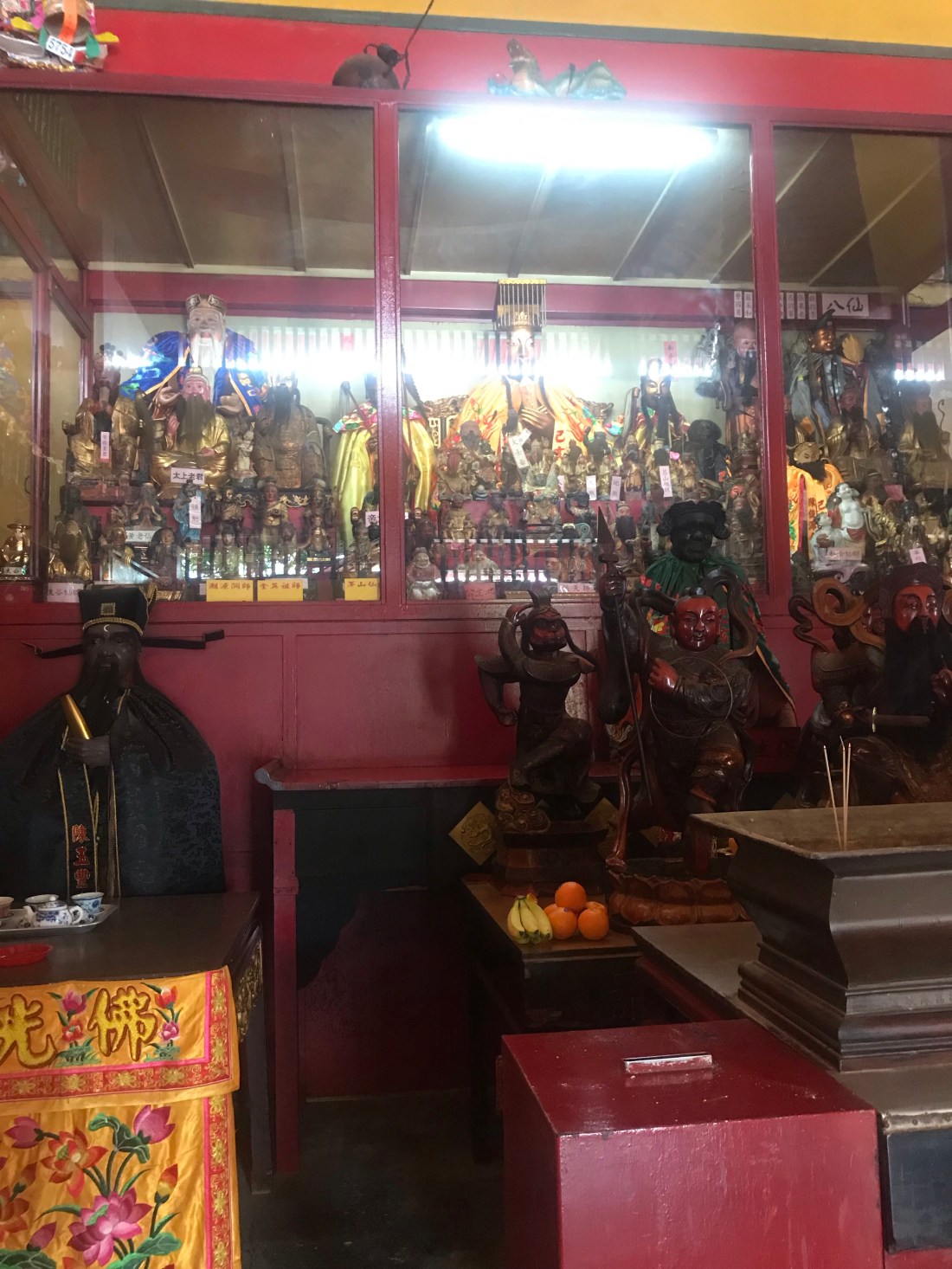
Liam Shuang Lin Temple is hidden on the edge of this huge social housing area.👆🏼People burning offerings to the gods or maybe to their ancestors? There seemed to be a bit of a mixture of traditions going on here in general…

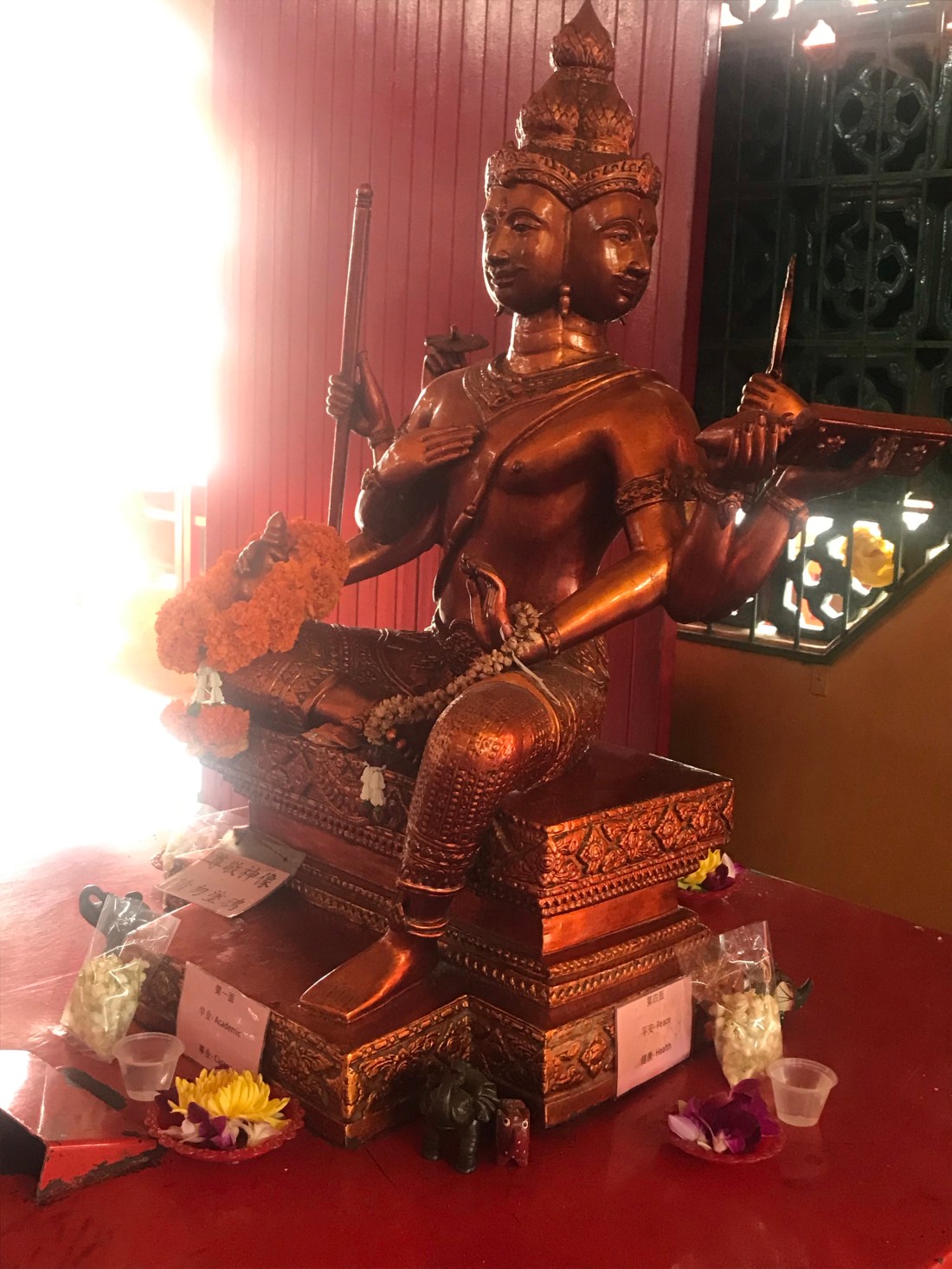
This guy👇🏼looks more like a Hindu god than anything Buddhist. He has one up on all those buddhas/disciples I saw in Penang, because he has four faces. You can offer different things to each face and receive a different blessing:

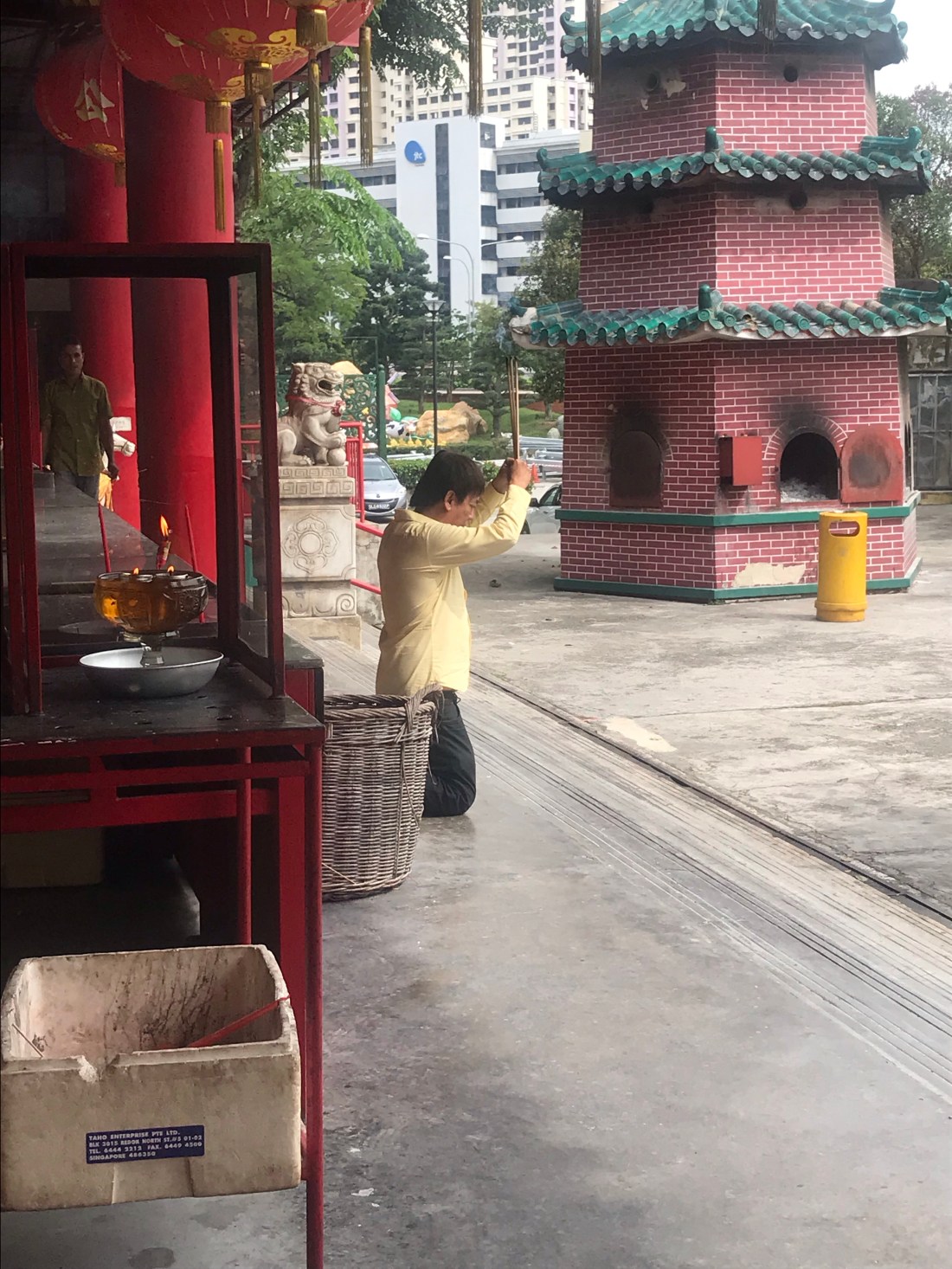
This very devout man was offering incense sticks at the big altar on the threshold. I found it strange to be in a prayerful place but to be anything but prayerful myself. Perhaps because, unlike the temples in Penang, you didn’t have to take off your shoes to enter here? And also, I think I’m becoming a bit templed out to be honest! And I guess although I want to engage with these traditions and learn from them, they remain very strange to me. In Christian terms, there would be a lot of scope for questioning of so many of these practices. But I really loved that this temple was right next to the social housing complex. And the fabulous children’s play area right outside.

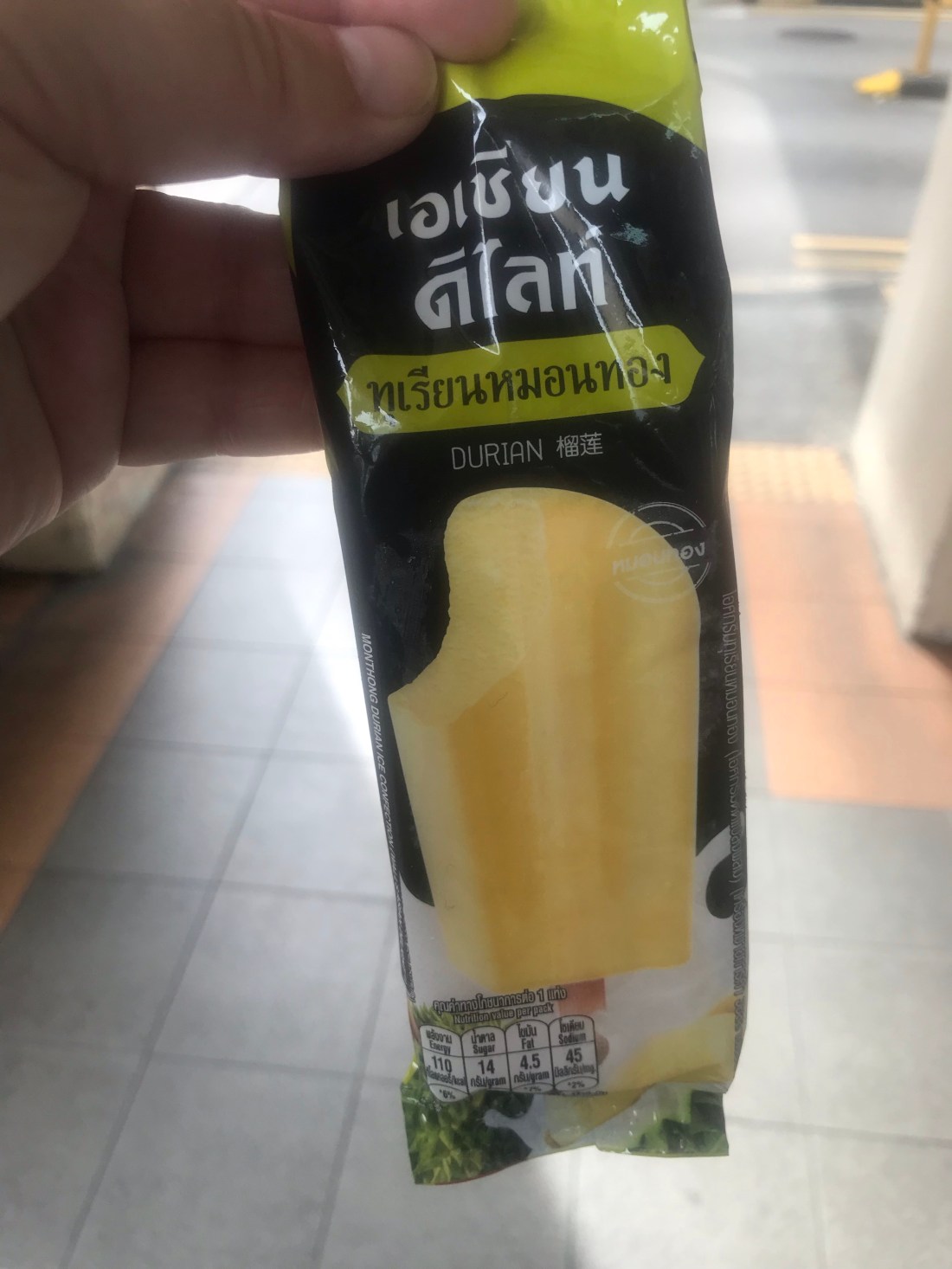
A friend has challenged me to try durian fruit. Which apparently smells rank but local people often love the taste. It smells so bad it’s banned in certain places! I must admit, I’m not sure… does this count?? Even after this, I felt the need to drink water to cleanse the palate!

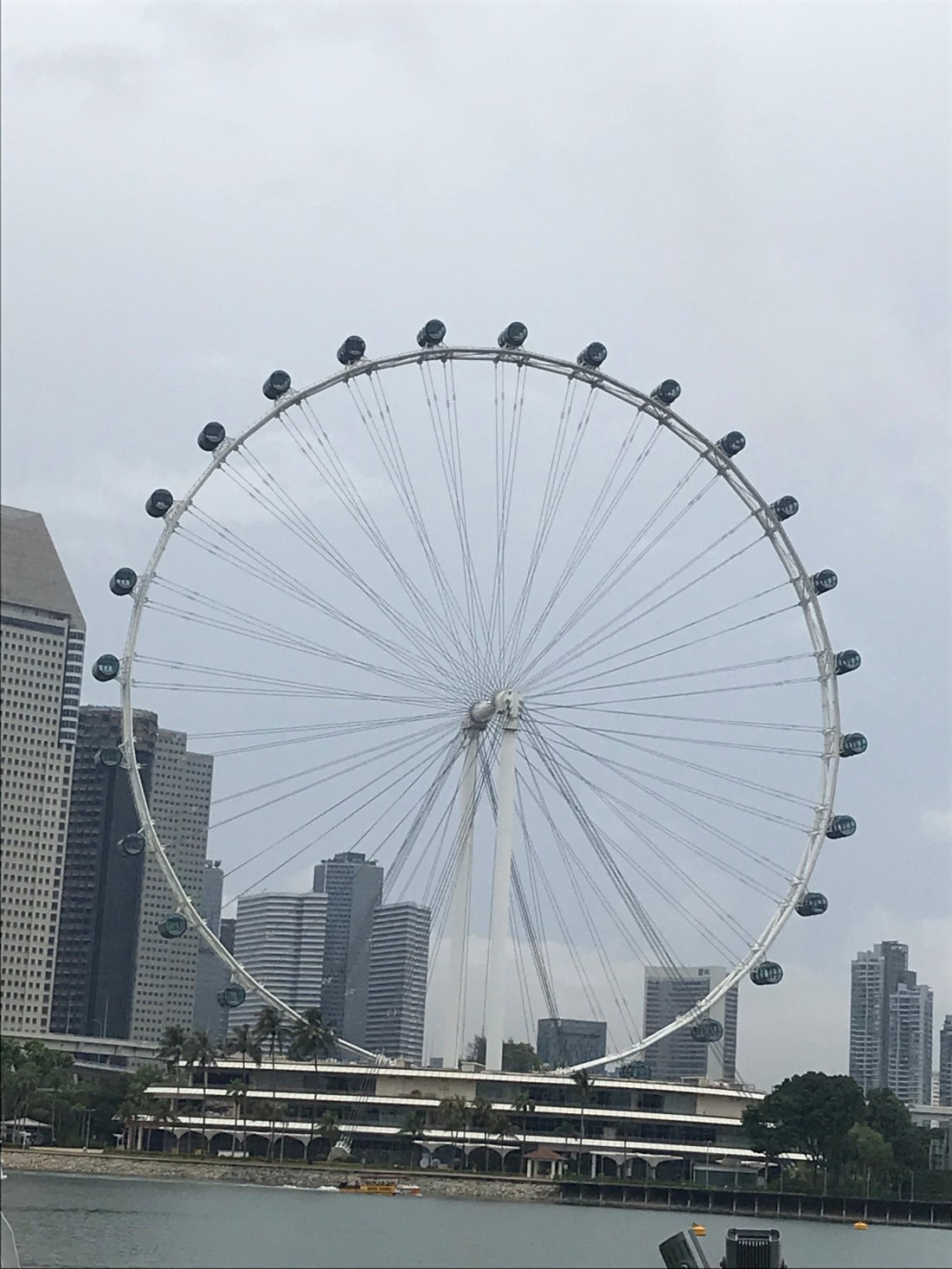
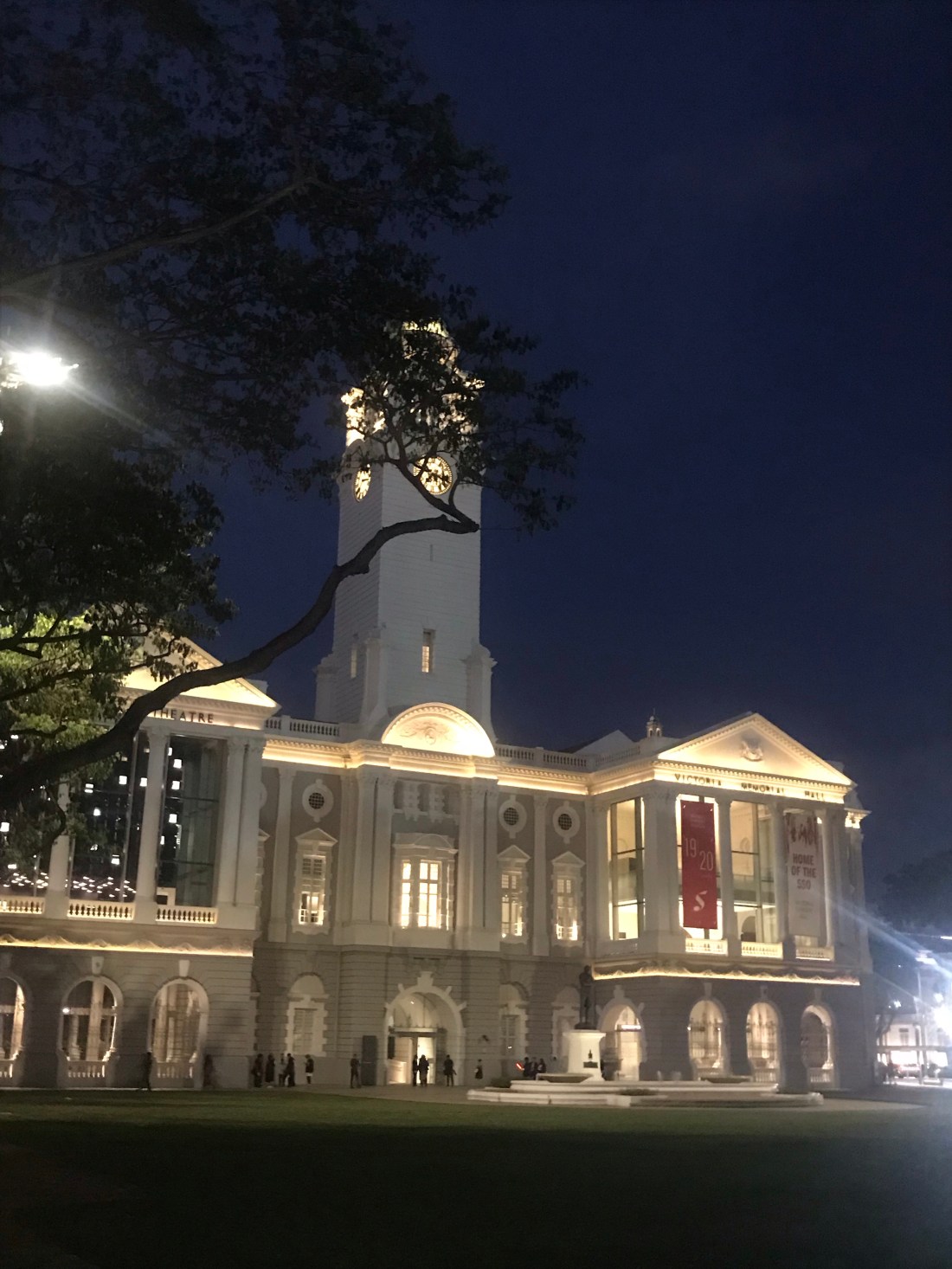
Victoria Concert Hall and Singapore by night:

Southern Ridges Walk

When I first arrived in Singapore (before all my travels in Vietnam and Malaysia), one evening, Jamie announced that he was taking the kids and one of T’s friends on a 10km walk the next day if I’d like to come. They’d be leaving at 7:45am 😳😳😳 Oh my goodness! That’s early. But, as he explained, it would mean that we would be done by 11am ish, which is really what you want to get with the programme about if you’re going to enjoy being in Singapore. I now understand what he meant! The humidity makes walking very impractical after mid morning.

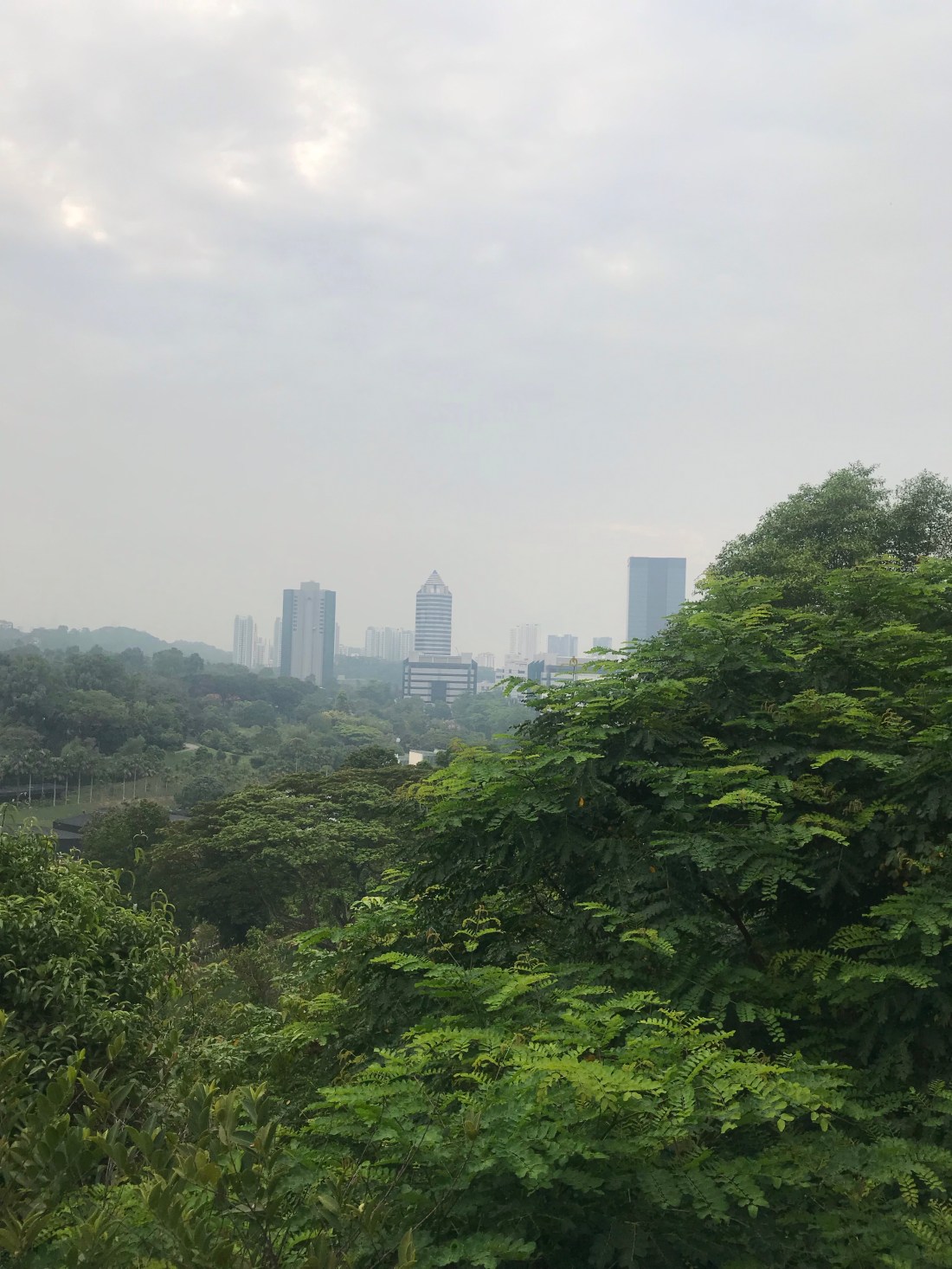
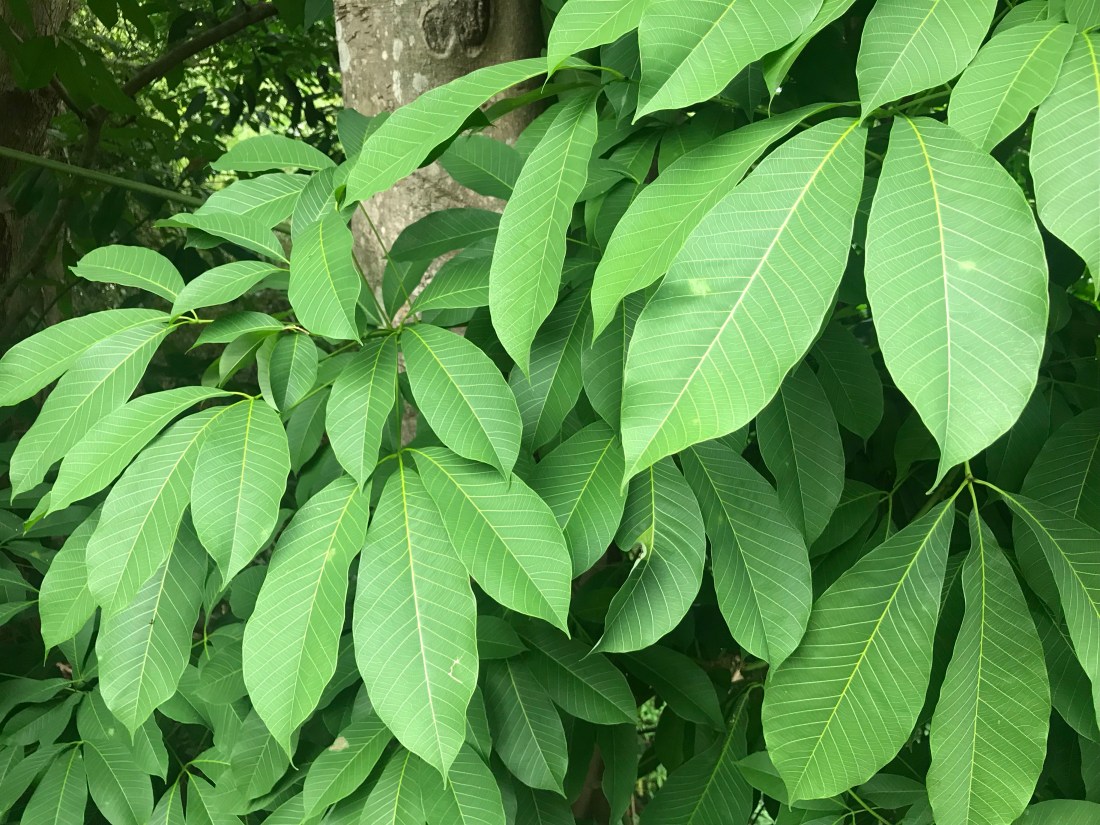
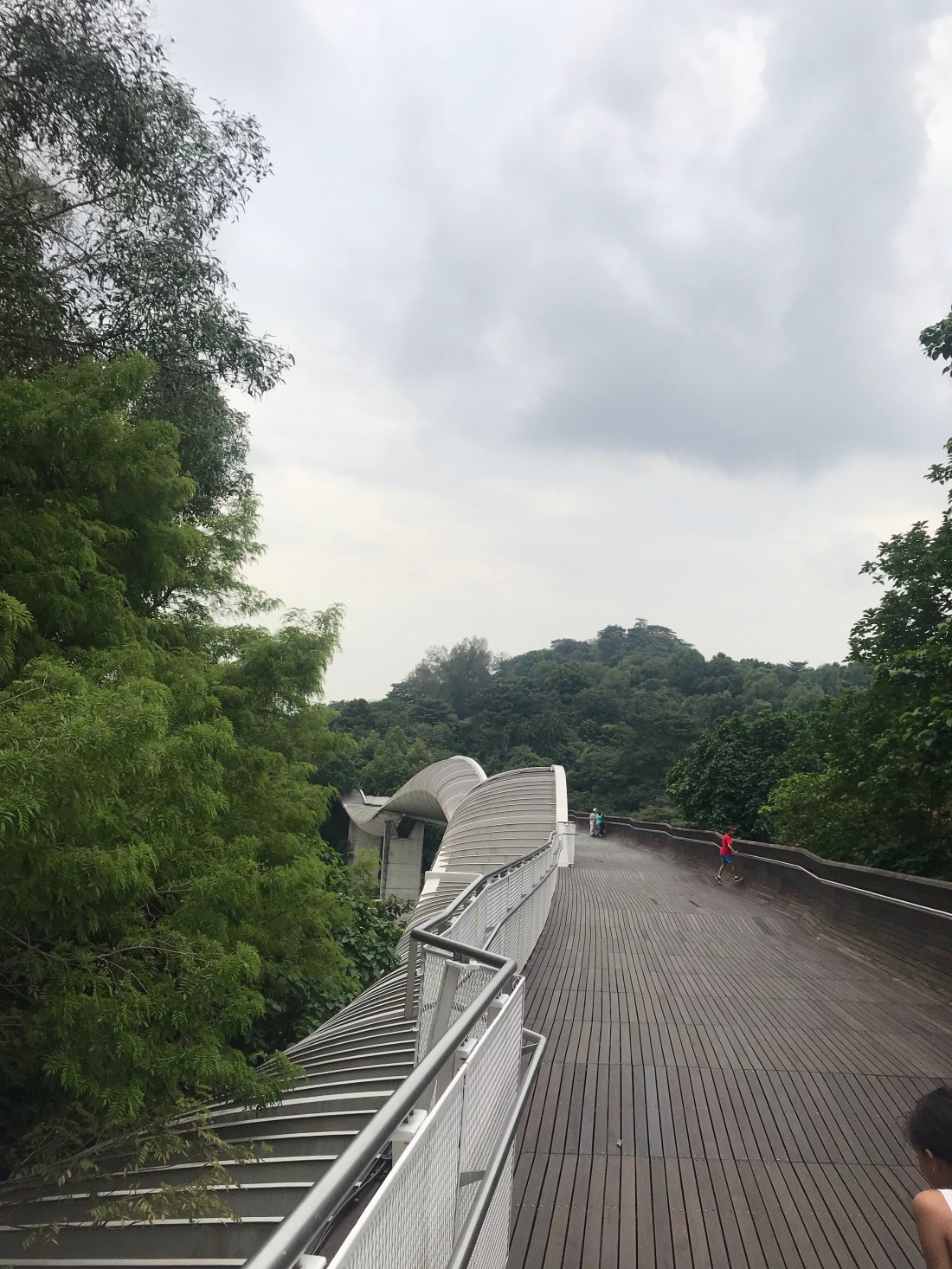
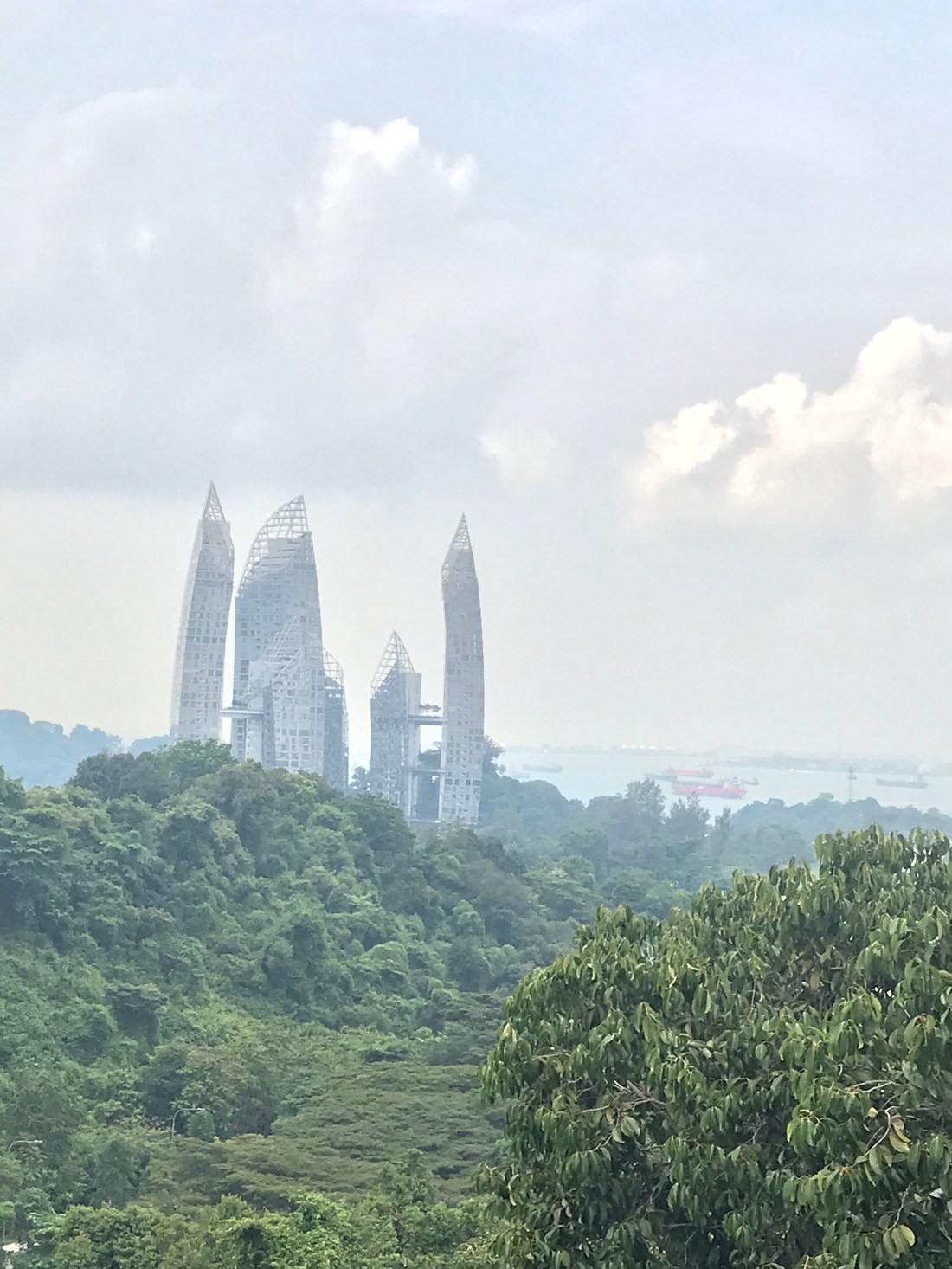
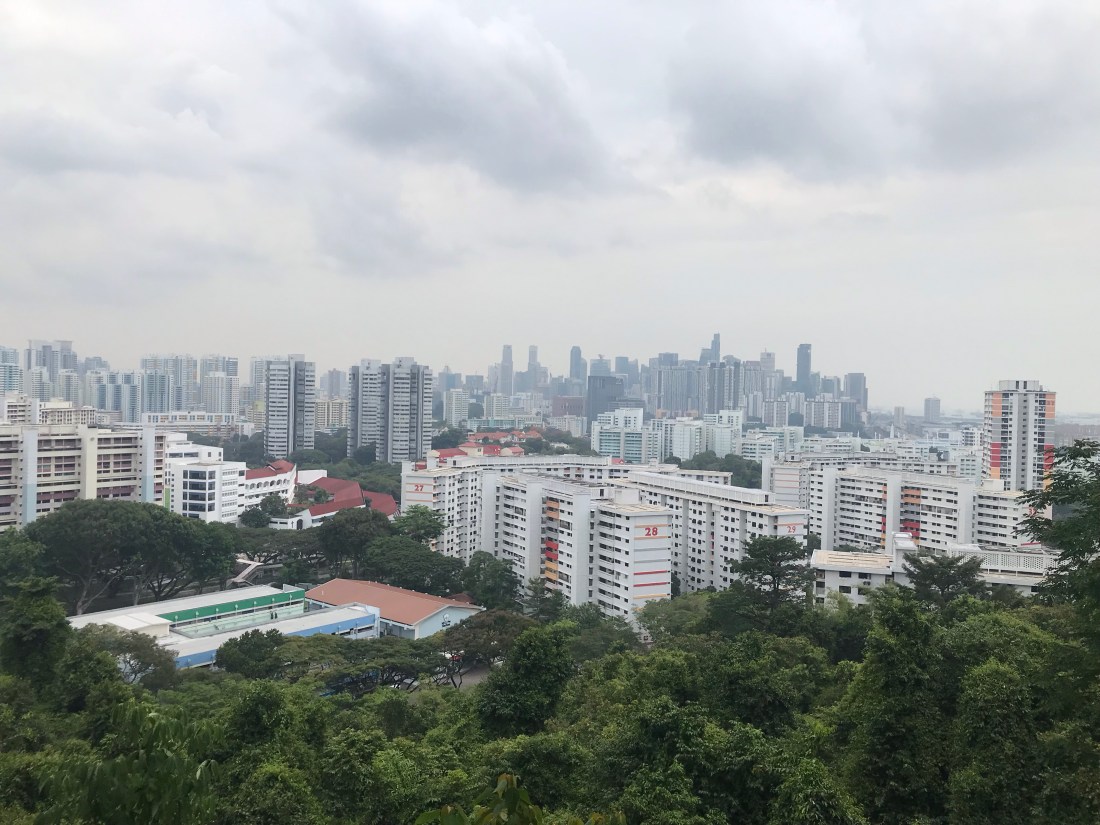
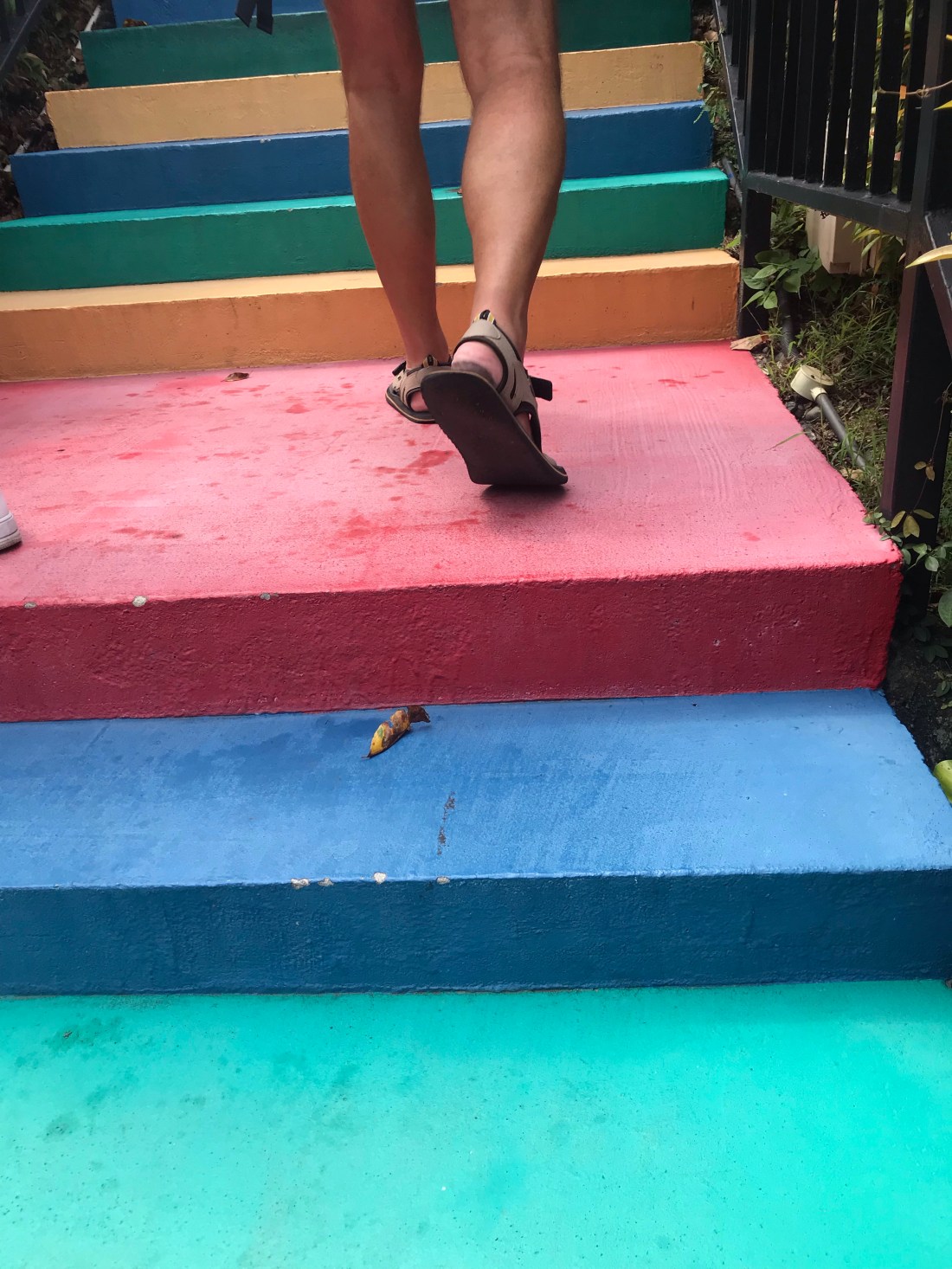
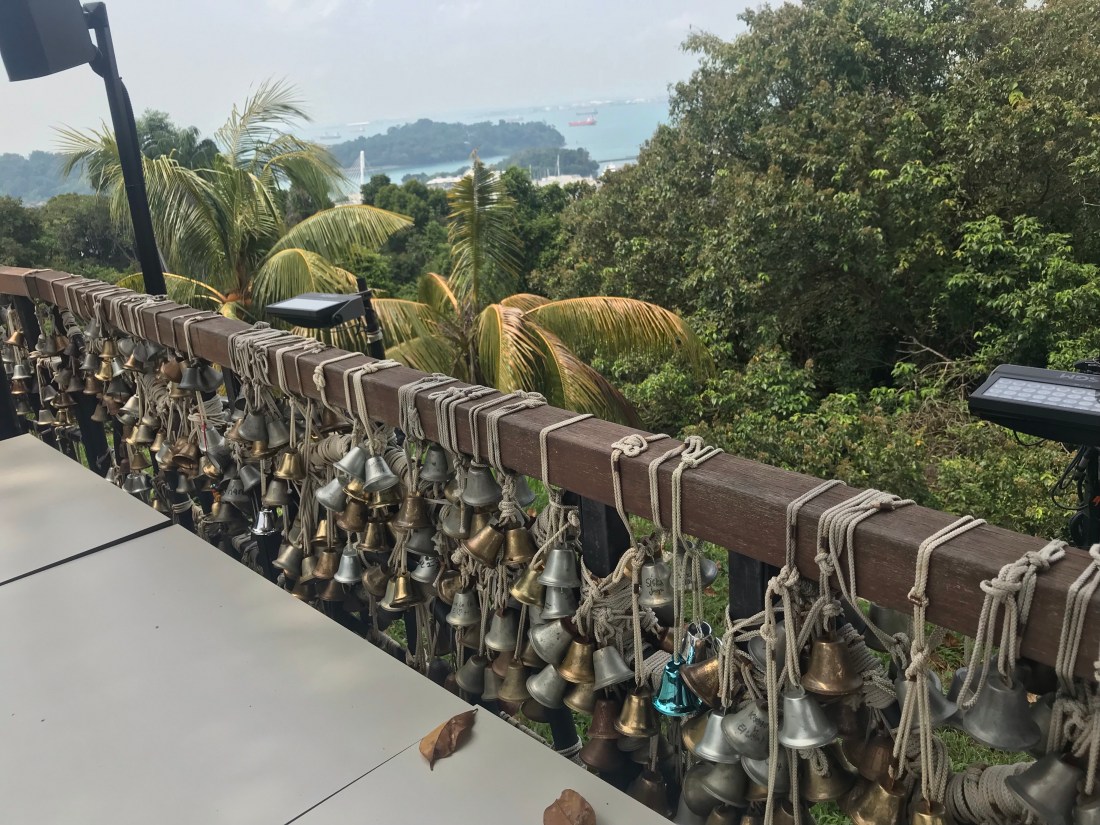
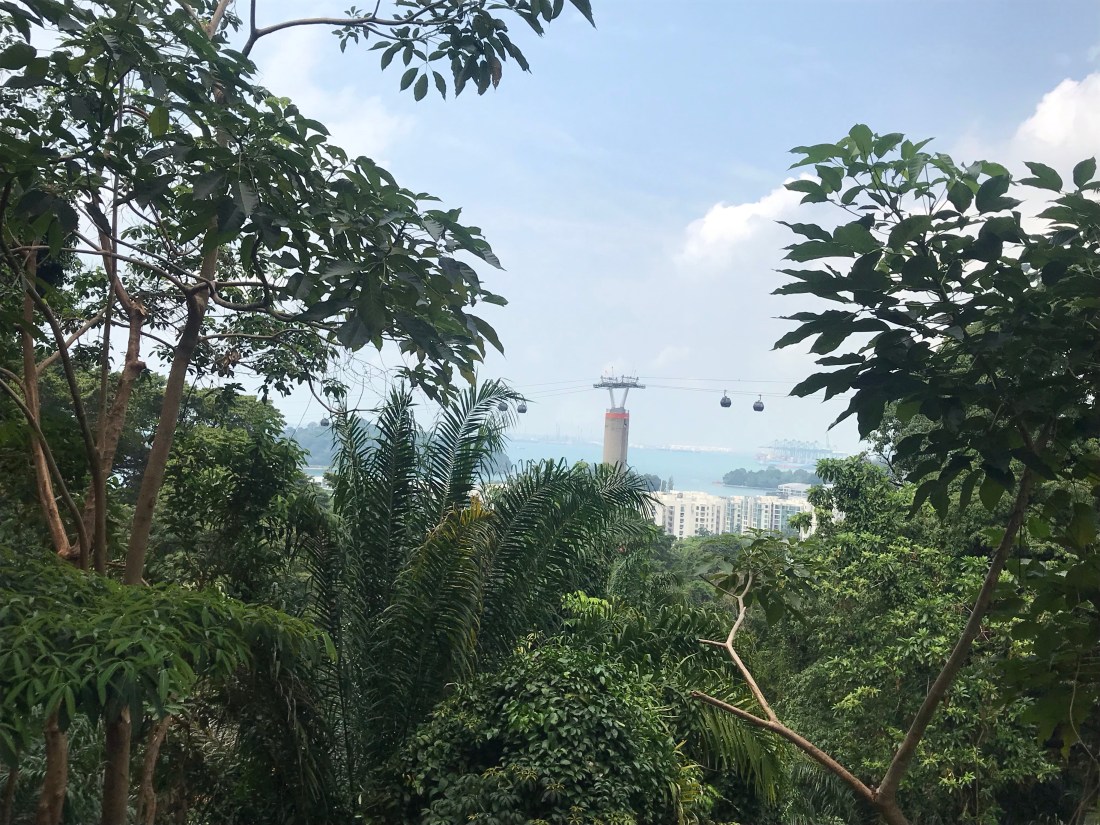
Anyway, the Southern Ridges Walk was a beautiful introduction to Singapore for me. It’s a way of walking the length of three neighbouring parks, including a lovely high up treetop walk, where you have some great views.

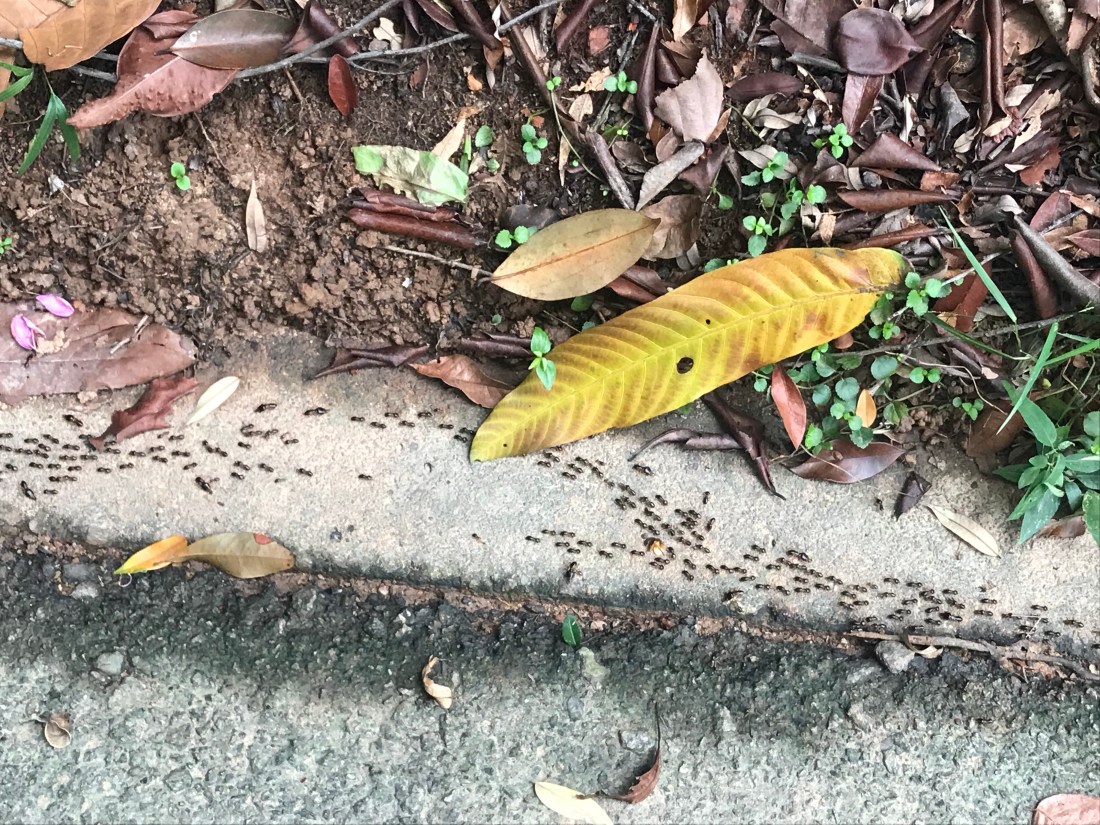
Look at all those ants! (We also saw a monkey, but I wasn’t quick enough to get a photo of him).

Hello, Singapore!

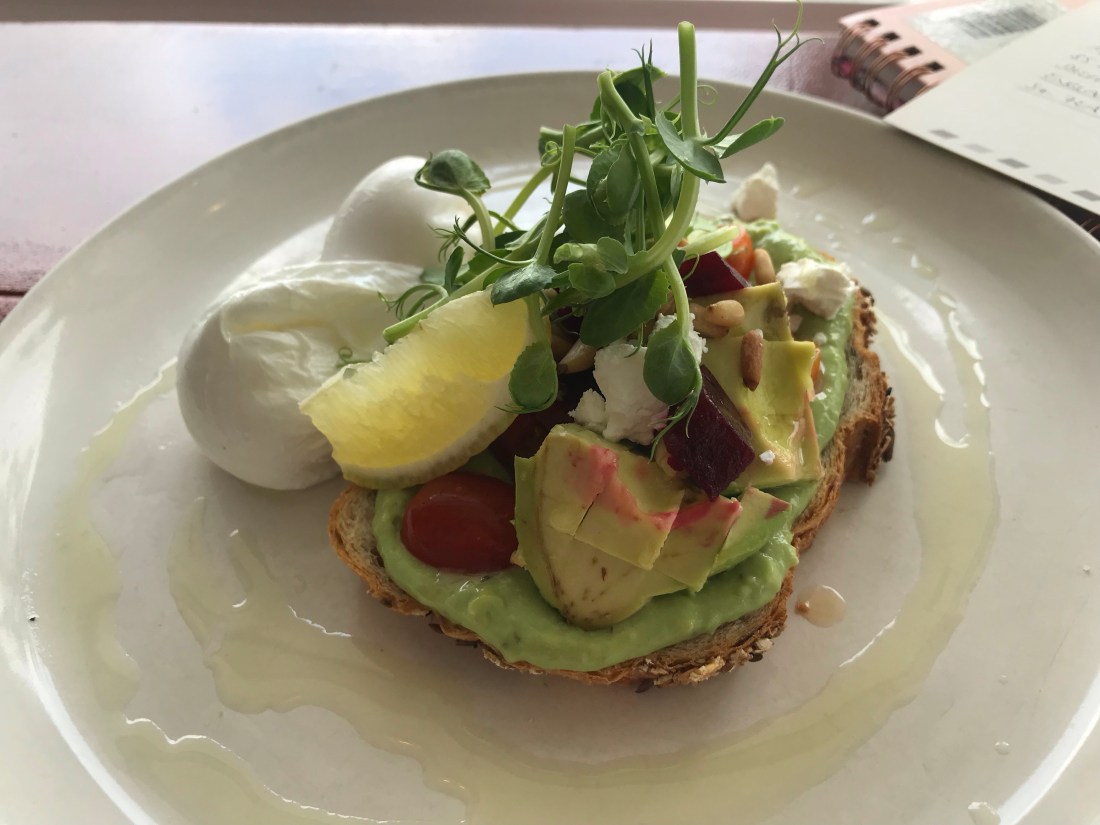
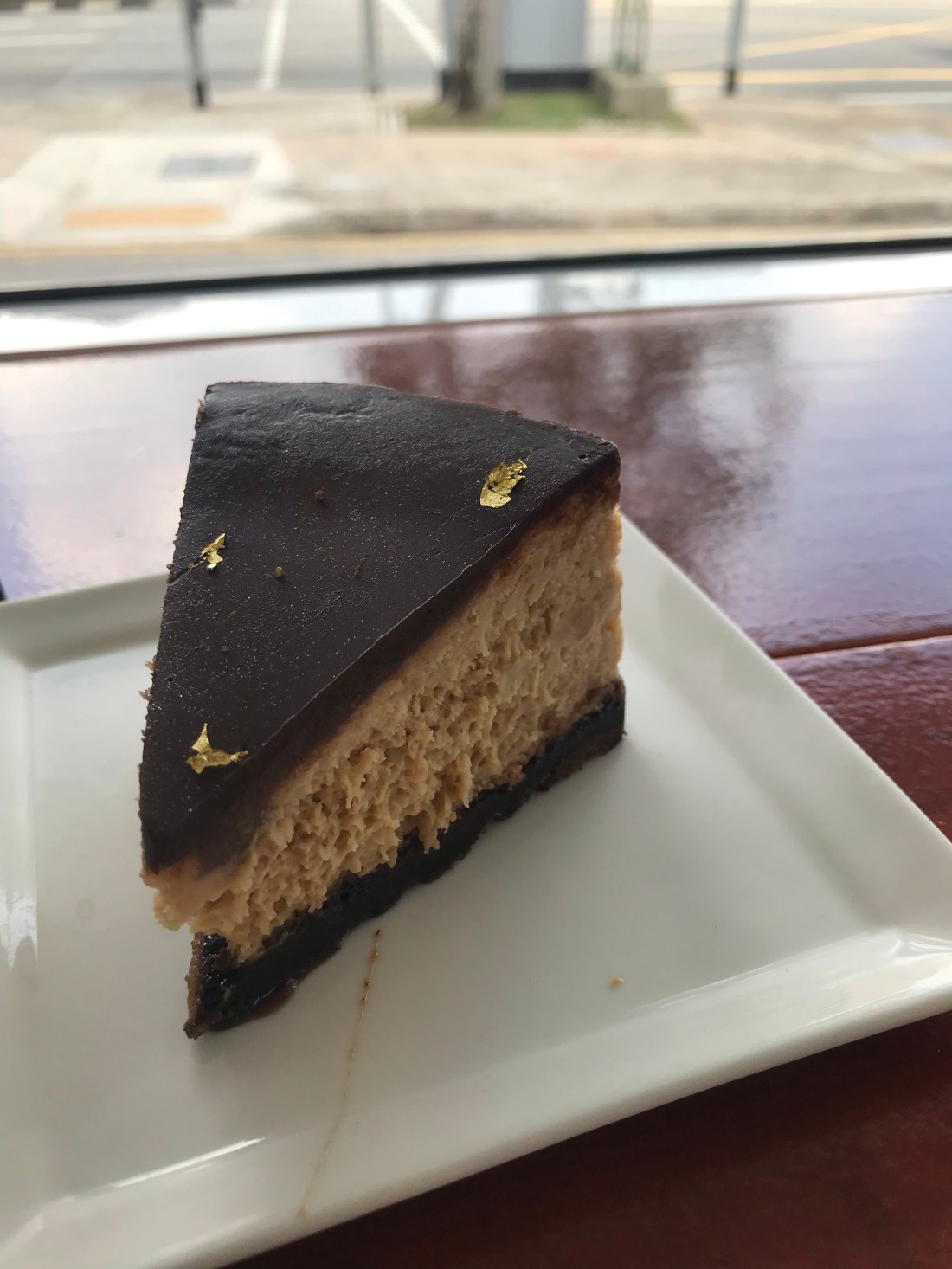
Well, after my late night border crossing ordeal, I spent a glorious morning relaxing, playing my friends’ beautiful Kawai piano and generally just coming round slowly. Then I headed out to visit a temple people had mentioned I should see, via the nearest coffee shop I could find to it for a posh coffee and late lunch back in a more Westernised environment. The coffee and lunch did not disappoint.

This cake was called “speculoos” cake. Intrigued, and wondering whether this was made with some particular local fruit, I asked about it and the young lady serving me explained, saying, “you know lotus? Speculoos is made with a kind of lotus”. I was very intrigued about this, especially once I tasted it, and it tasted anything but…flowery! When I googled it, speculoos is a kind of spread made with similar spices that they use in those little lotus biscuits you get with your coffee. (Made by the Belgian Lotus Bakeries company est 1932.) Did you know that? I’d never heard of it. That company’s really into something with just one main product that is found in so many places. The cake was delicious.

After refuelling, I looked at the location of the temple I was hoping to visit, and realised it was actually quite a long walk away, and would involve another long walk back to the nearest tube stop. I decided to quit while I was ahead, and just enjoy the walk back to the tube and getting back to base.

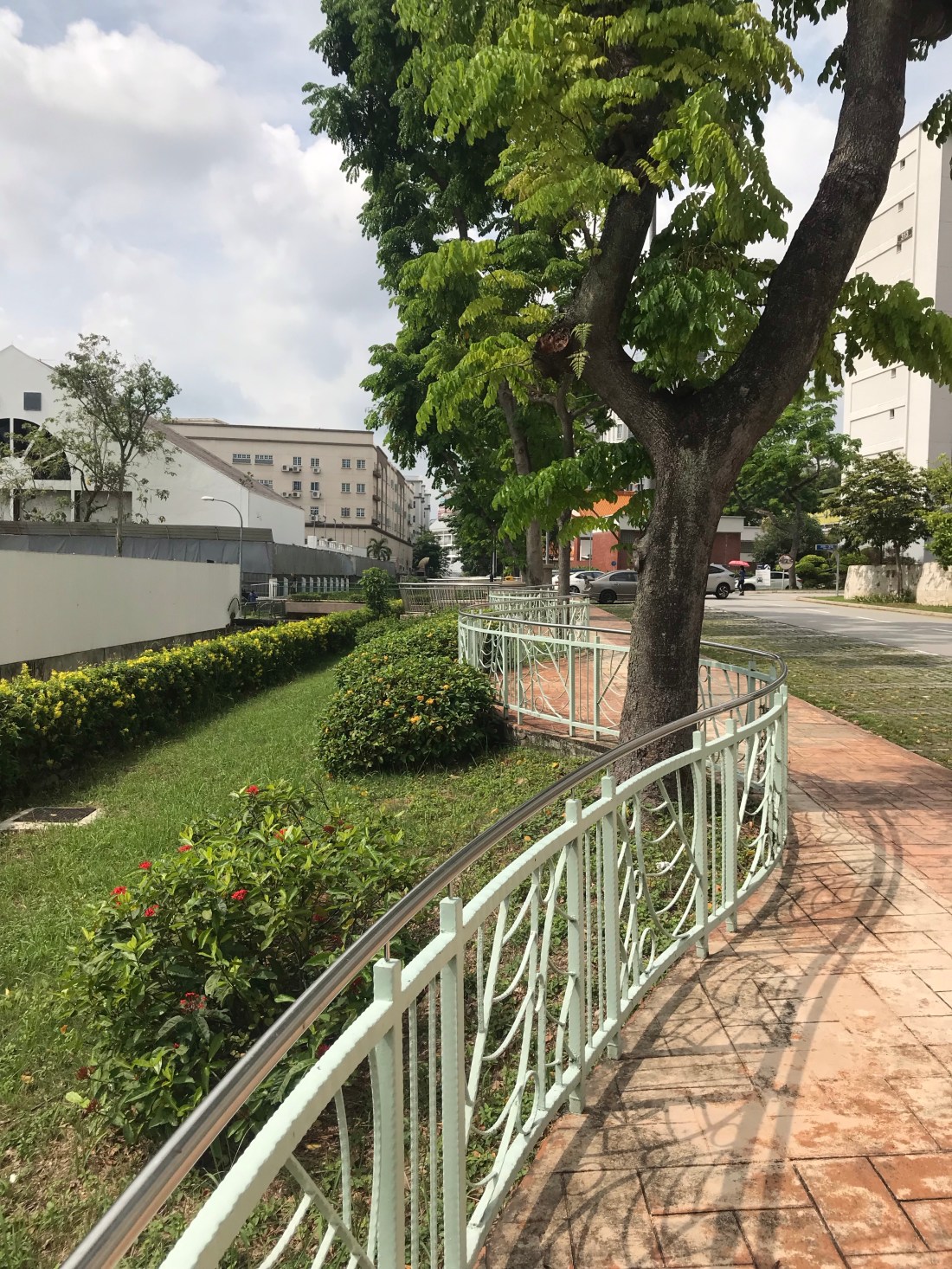
On my walks that day, I was so grateful for pavements that existed and were even and for zebra crossings, with traffic lights that people obeyed.

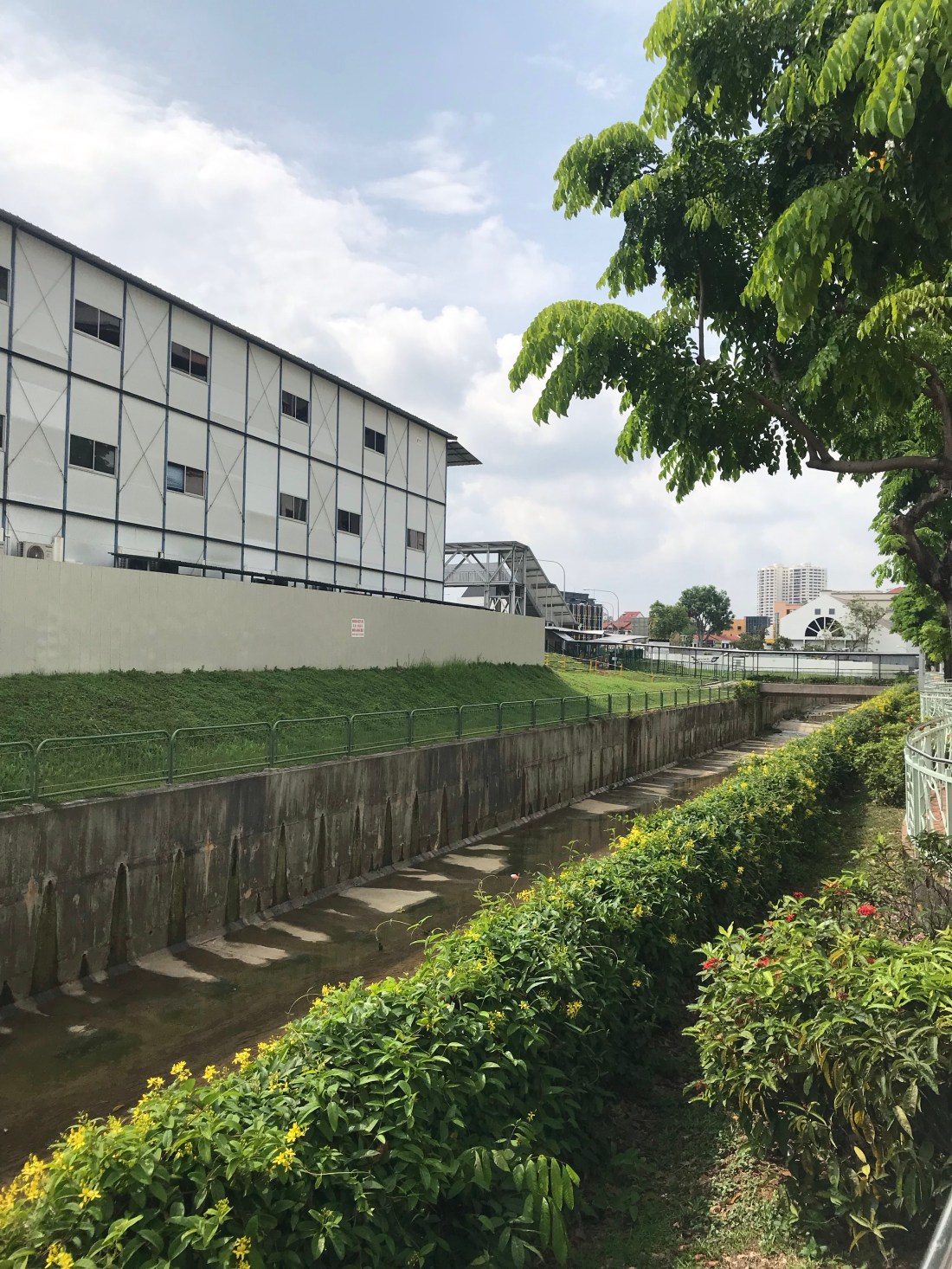
A storm drain – you see these everywhere in Singapore, like the levees in California, giving you an idea of just how much rain comes when it comes. Shiv tells me apparently that there is a clever system of redirecting the rainwater via these drains, so that it is taken to a plant where it is cleaned and then used as drinking water.

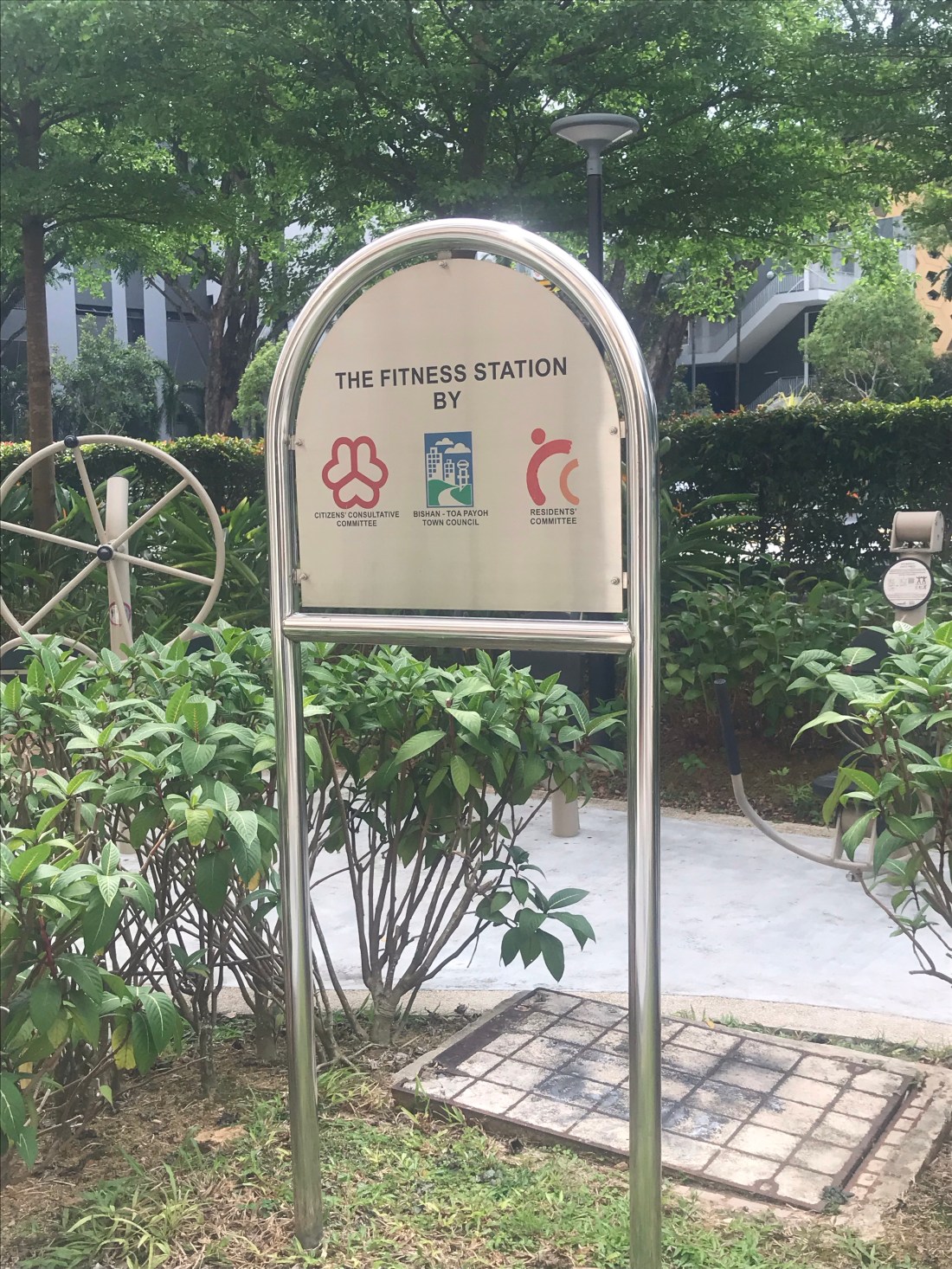
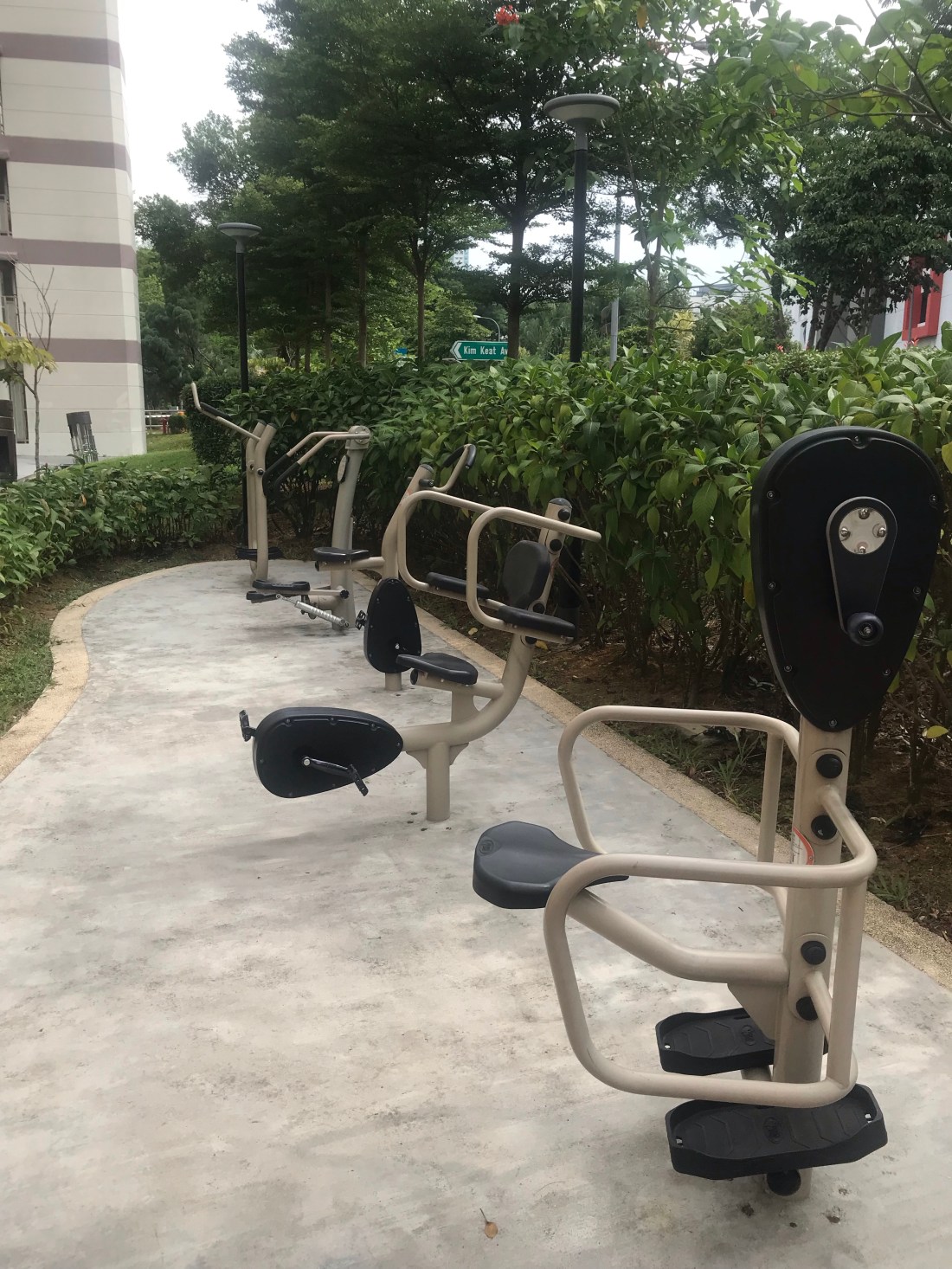
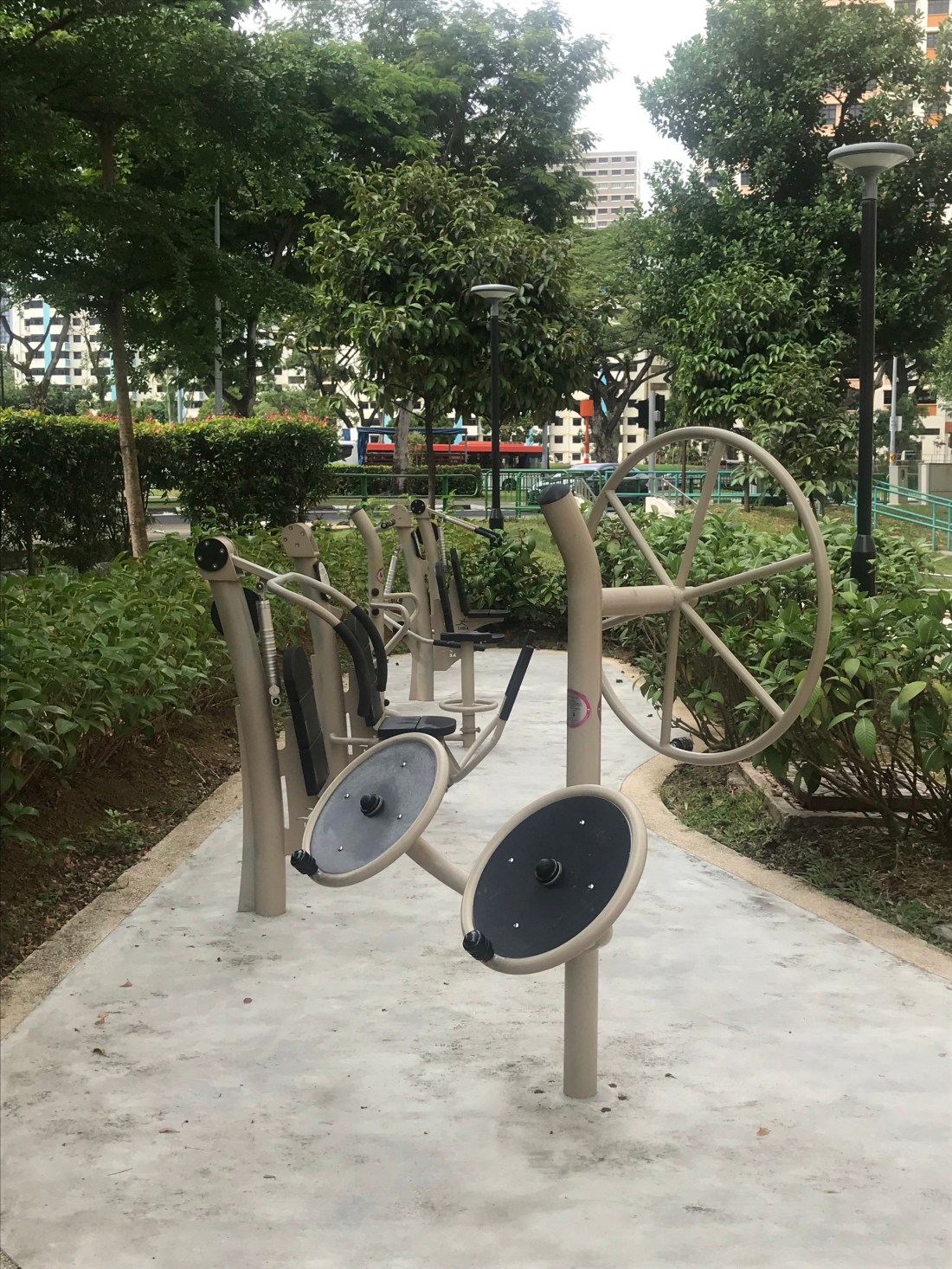
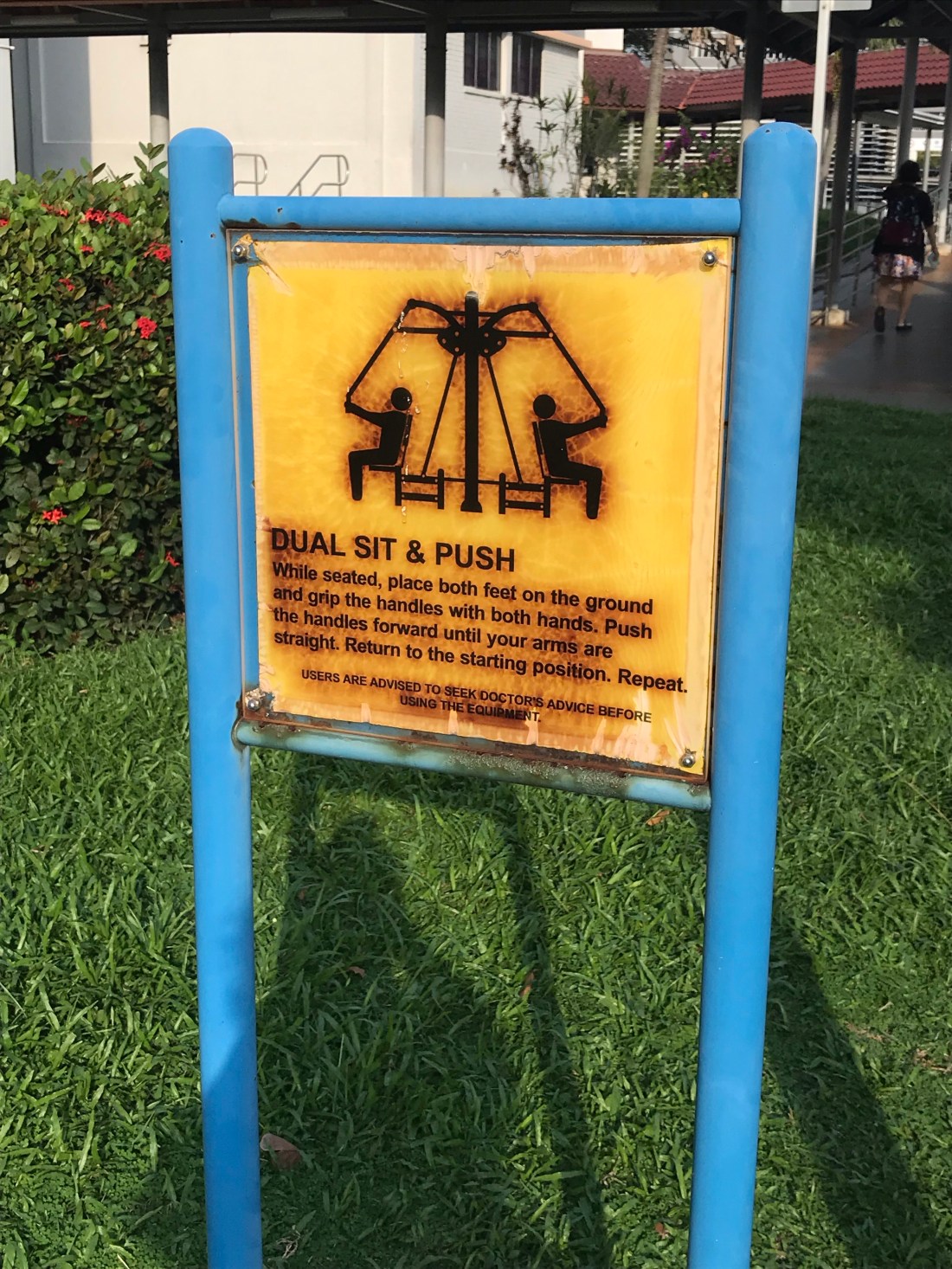
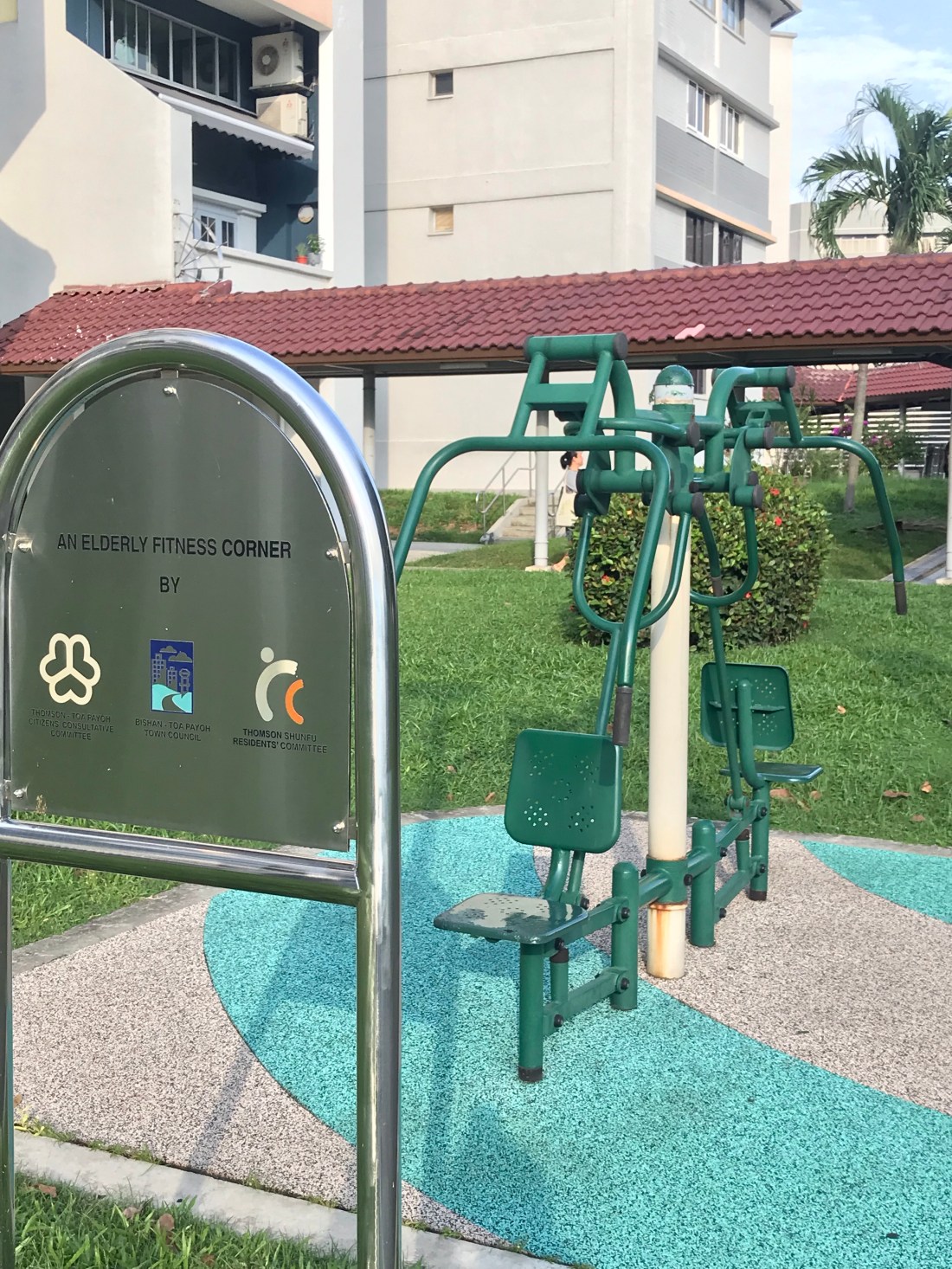
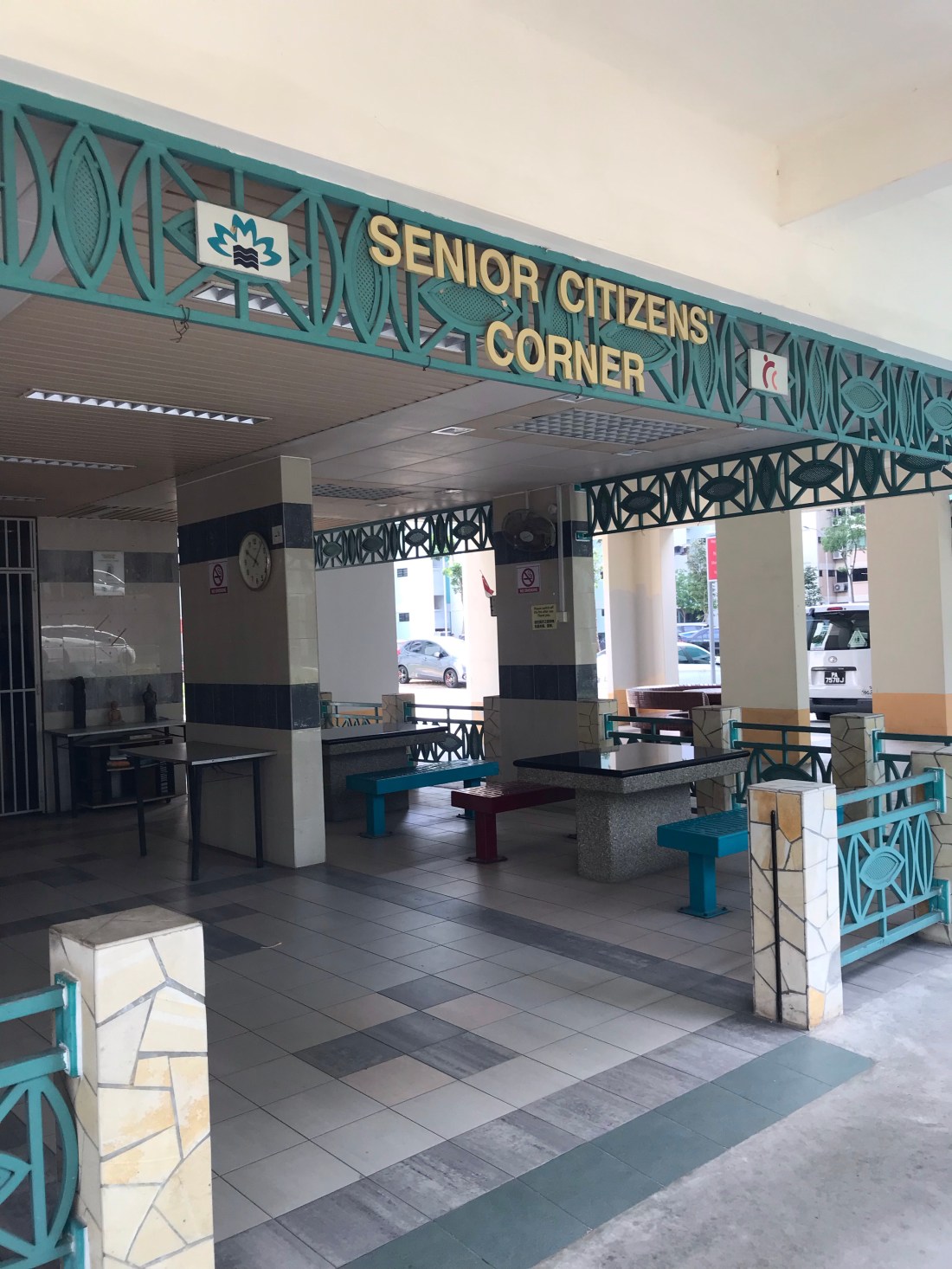
I was also reminded of something I noticed when I first came here. In Singapore, it seems, everyone has been thought of. In the Singaporean social housing flats, there always seem to be these outdoor gym areas, planned and paid for by the residents’ association and the local council. Sometimes there are special ones for the elderly as well. I had wondered how people keep fit in Singapore, as it’s so difficult to be outside most of the time with the humidity. Here’s part of the answer, perhaps?

Farewell Malaysia…

You couldn’t find a more smelly, noisy, dirty place in George Town than the bus station (why is it always like that everywhere??? though actually in the rest of Malaysia it didn’t seem to be), nor a more squalid looking office than the travel place I’d booked my bus with (via online 12go Asia who are a great company for booking train or bus travel in Southeast Asia – thanks to “The man in seat 61” for all the detailed info online (and to Shiv for telling me about him; actually he writes about train travel elsewhere too with detailed local knowledge): https://www.seat61.com/index-mobile.htm )

So when I got on this bus I wondered whether it was truly the correct one. It looked a bit too…smart, somehow!
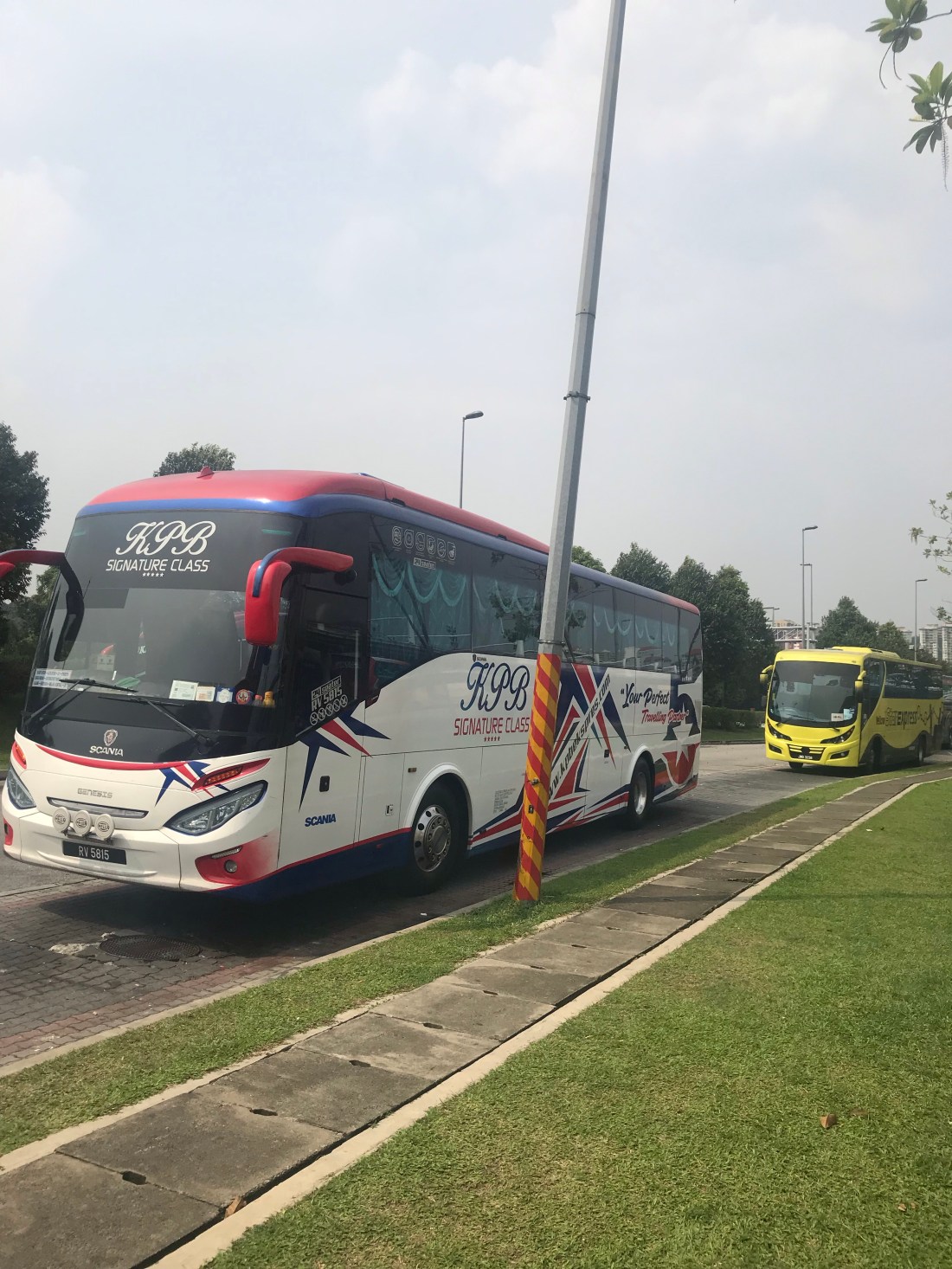
Also, the guys in the office didn’t come out to tell us our bus was here nor did the driver come out. He just parked about 20 yards away from the office on the dual carriageway under the bridge and waited. Thank God I noticed the time and also the Chinese guys who walked past me to go and investigate whether this was their bus. Most of the other waiting travellers were catatonic backpackers, sitting in a row on the random assortment of ex office furniture in a makeshift queue, staring into the middle distance in that kind of morning stupor of having got up too early and entering the traveller in between places zombie zone.

I showed the driver my paper ticket and he sighed and asked where I was going to. I said a destination that made sense to him, so he told me to put my luggage underneath and get on. After such attentive gentlemanly behaviour in George Town this was a bit of a shock! Still, on I got, and inside, the bus was so luxurious I again thought I’d made a mistake until I saw my seat numbered 4A (which seemed quite distinctive) was indeed vacant. I couldn’t actually reach the footrest it was so far away, but that didn’t matter because the seat had an inbuilt leg / footrest anyway. And approximately five times as much room as any bus I’ve ever been on before! And very effective air con and free WiFi, with the password printed in big bold lettering right at the front of the coach where everyone can see it.
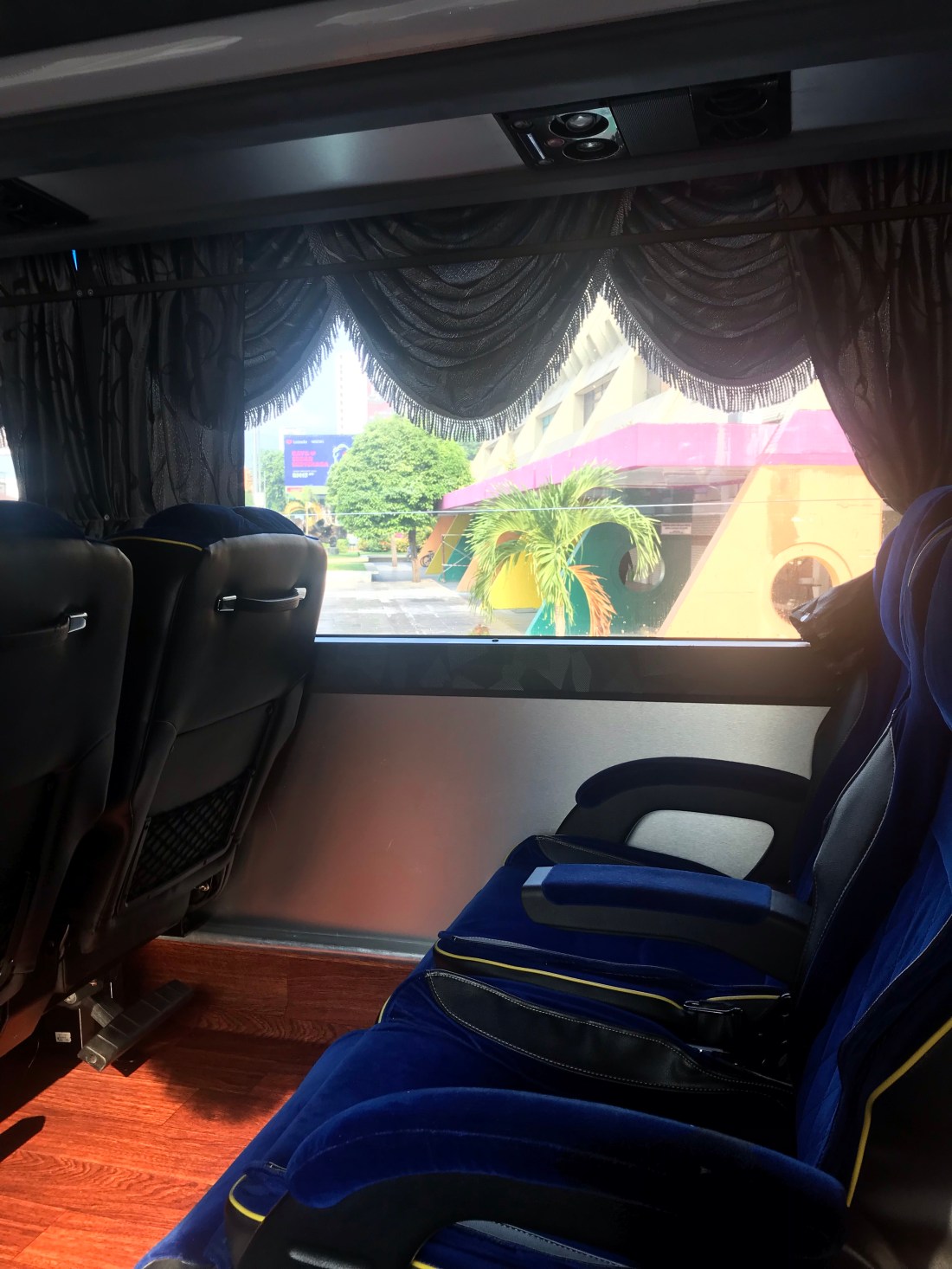
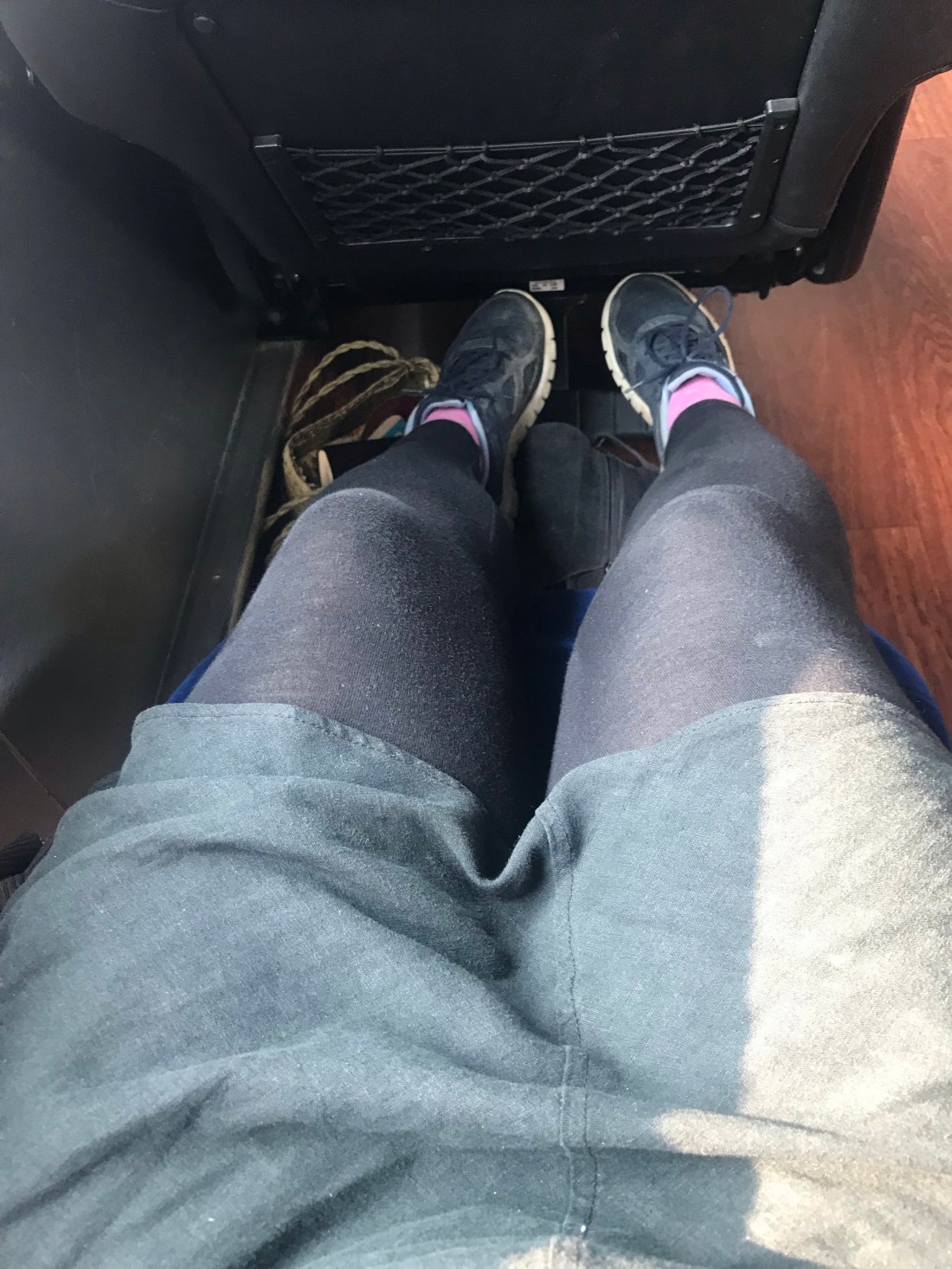
Well, it’s an 8 hour journey from Penang down to the border with Singapore, so, just as well!

I wrote the rest of this as it was happening so switching tenses back to present, though it’s now past…:

Ah, a guy has just checked my ticket (an hour into the journey!) and ticked me off his list. So I’m definitely in the right place. (I was congratulating myself yesterday that I managed to fit in coming to the bus depot on my wandering, and the lady printed my ticket which I carefully put in my purse, only to find it had gone this morning! I have no idea how that happened. I even emptied out the bin in my hotel room and pieced back together the receipts that I’d ripped up, but no bus ticket. Well, in all my travelling this is the first ticket I’ve lost. I still had the email confirmation, so I went early to the depot (thanks Raj for driving me again!) and they printed me another voucher although it looked different this time, which made me nervous.)

To give a further insight into the anxiety of travelling, I’d taken a screenshot of the email booking, because I only have access to email when I can get WiFi (ie not at the smelly bus station). And I’ve taken so many photos and videos that despite going through and deleting a load, iCloud is completely deleting photos I delete instantly (though with a warning each time). I was so paranoid that my phone might somehow delete the screenshot of the confirmation, I took another two screenshots of it.

I will not miss this type of stress when I’m done.

I noticed the settlements along the Eastern side of Penang are better developed than George Town, in terms of roads, pavements, infrastructure etc. Because they are not a UNESCO world heritage site I guess. It really looks very western.

We drove on the incredibly long E28 bridge across to the mainland. Is this the longest bridge I’ve been on on this trip? I think it must be. It’s 24km (15 miles) long including 16.9km (10.5 miles) over water. Wow!…
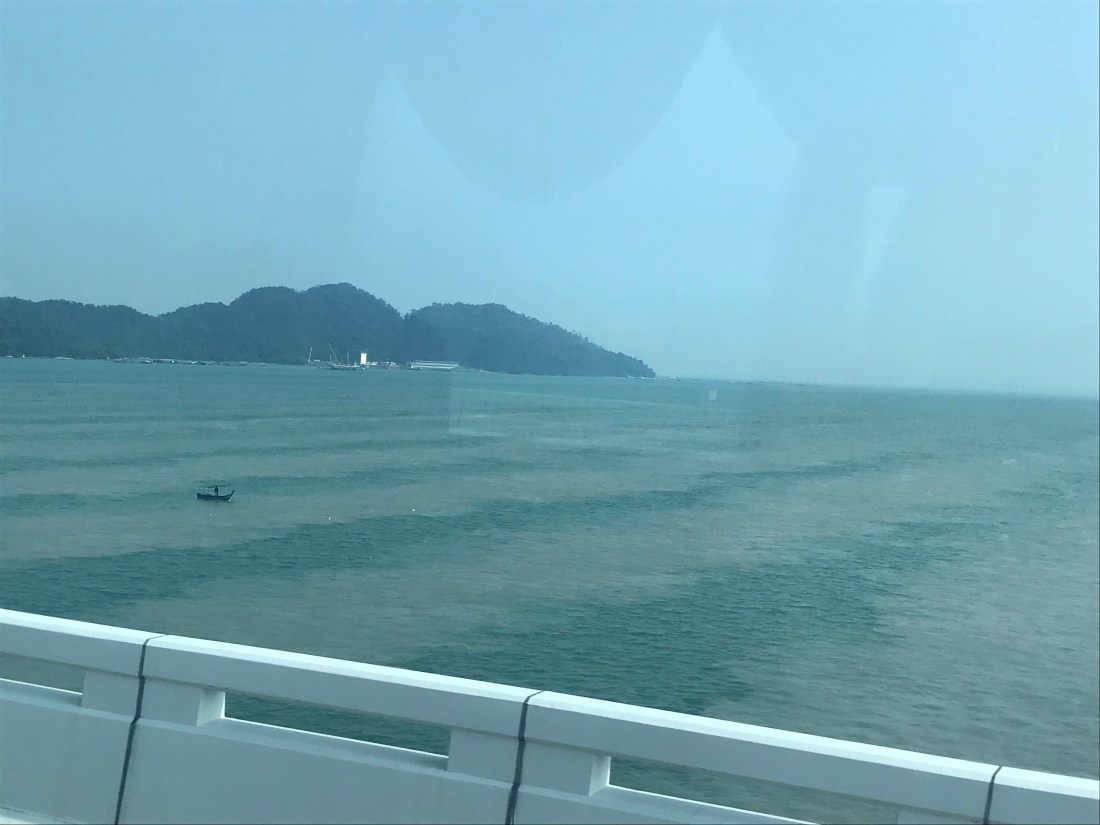
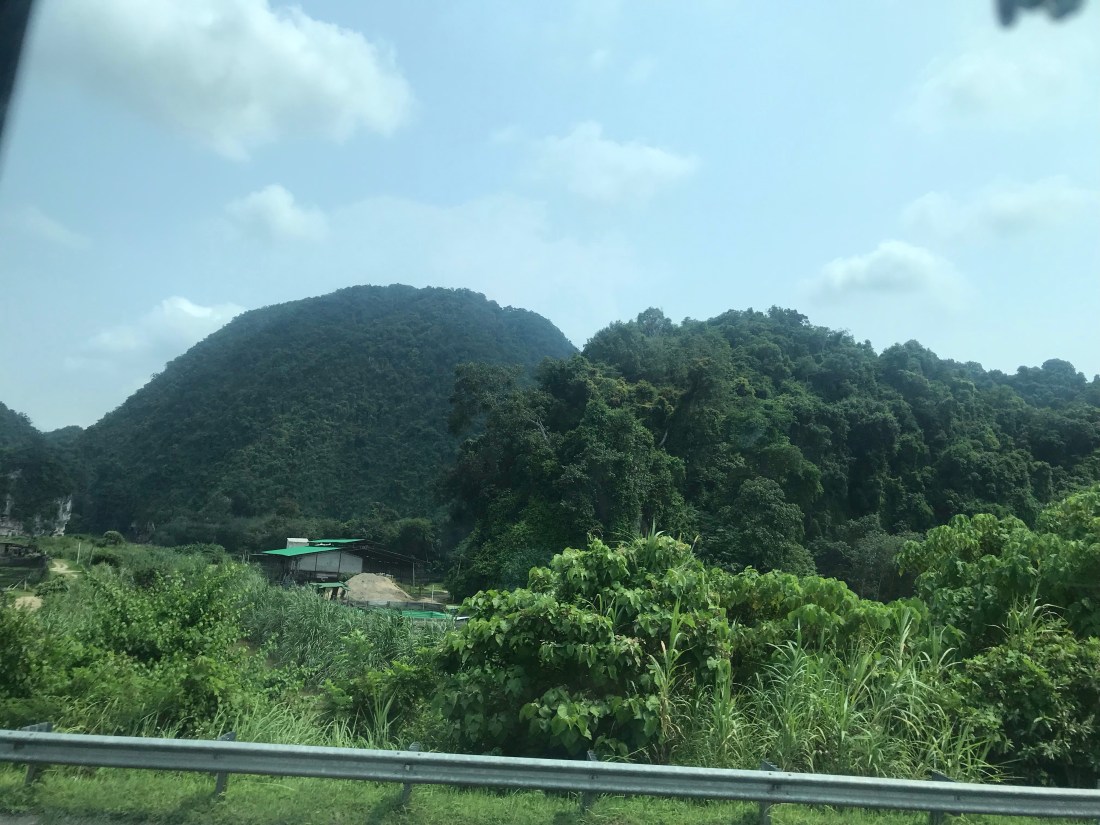
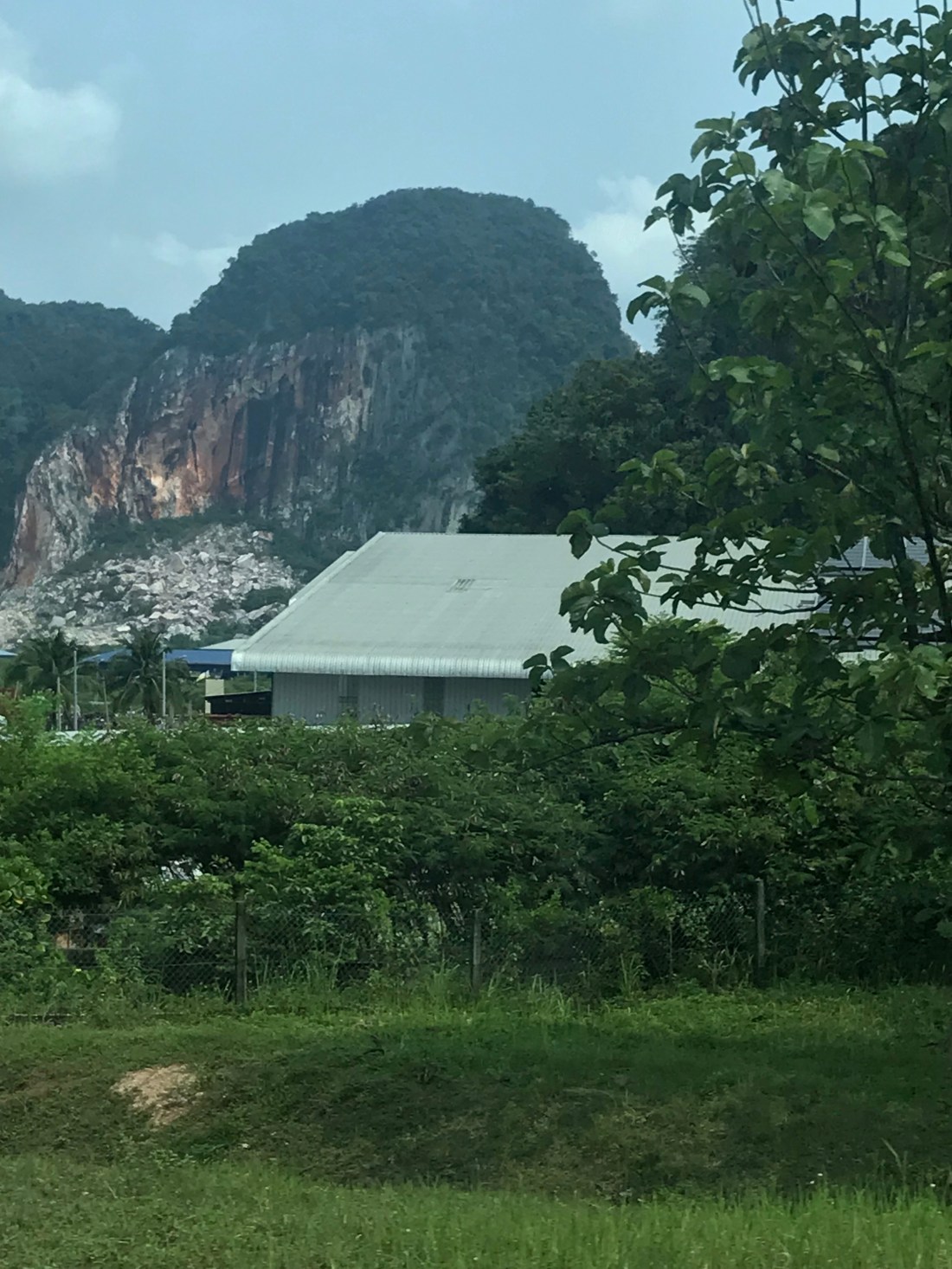
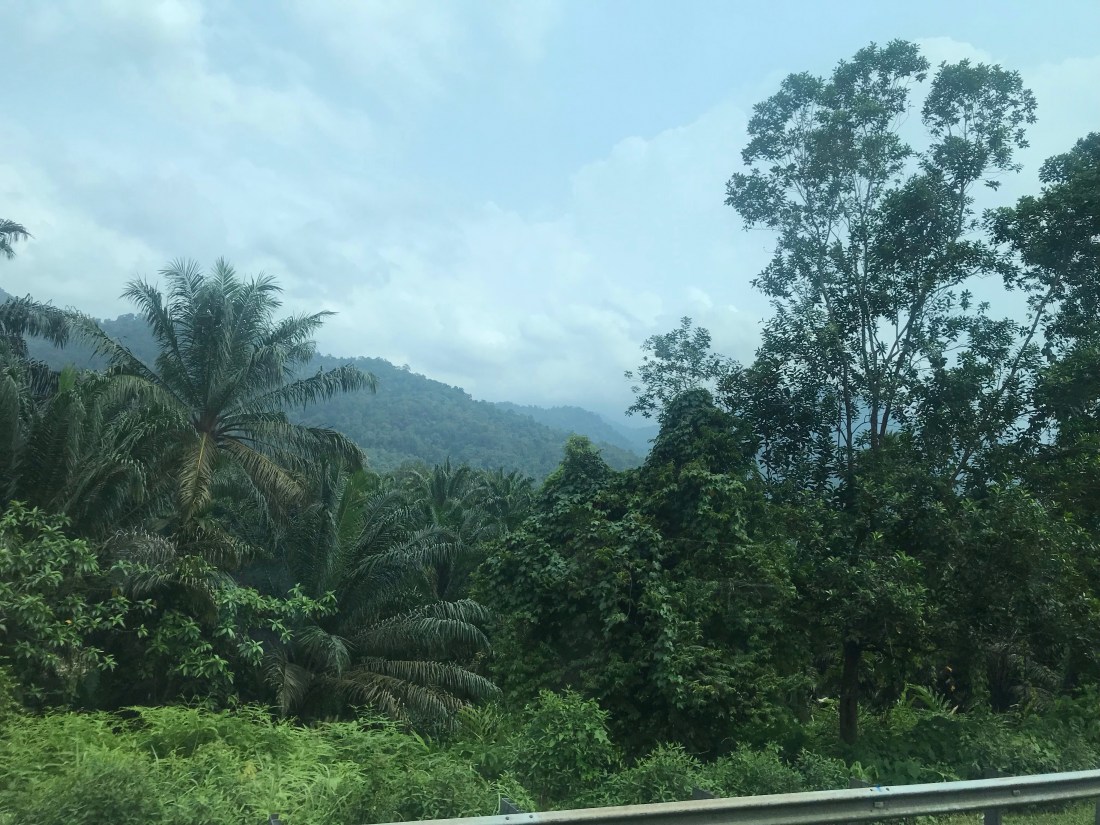
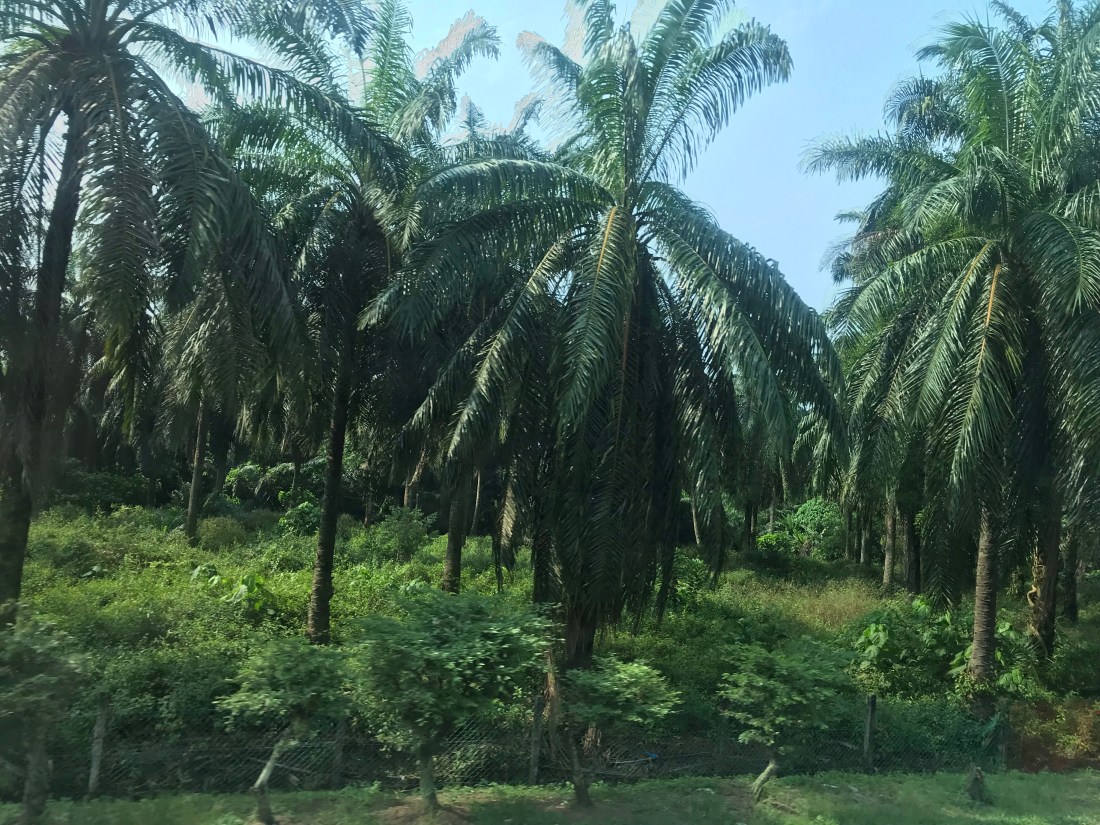
…Well, so far on the mainland, the motorway has been extremely good road. And the greenery on either side pretty lush too. Full of palm tree plantations that I noticed flying over Kuala Lumpur, and plenty of green covered hills with occasional rivers running through.
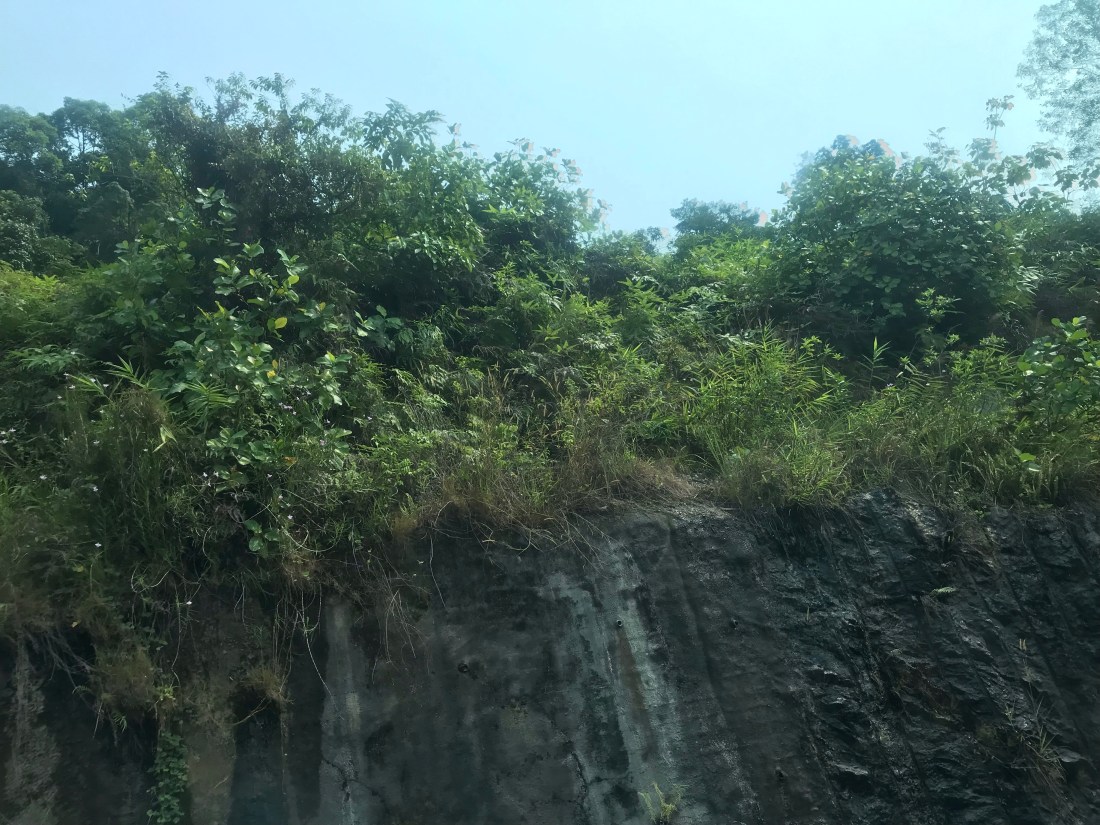
Kuala Lumpur, about half way to our destination, looks from the viewpoint of the motorway pretty much like a western city with high rise apartment blocks, although they appear more spread out than they probably would be in England. And it has enormous concrete flyovers – in fact it looks like they’re just building either another huge road or a high tramline in sections near the road.
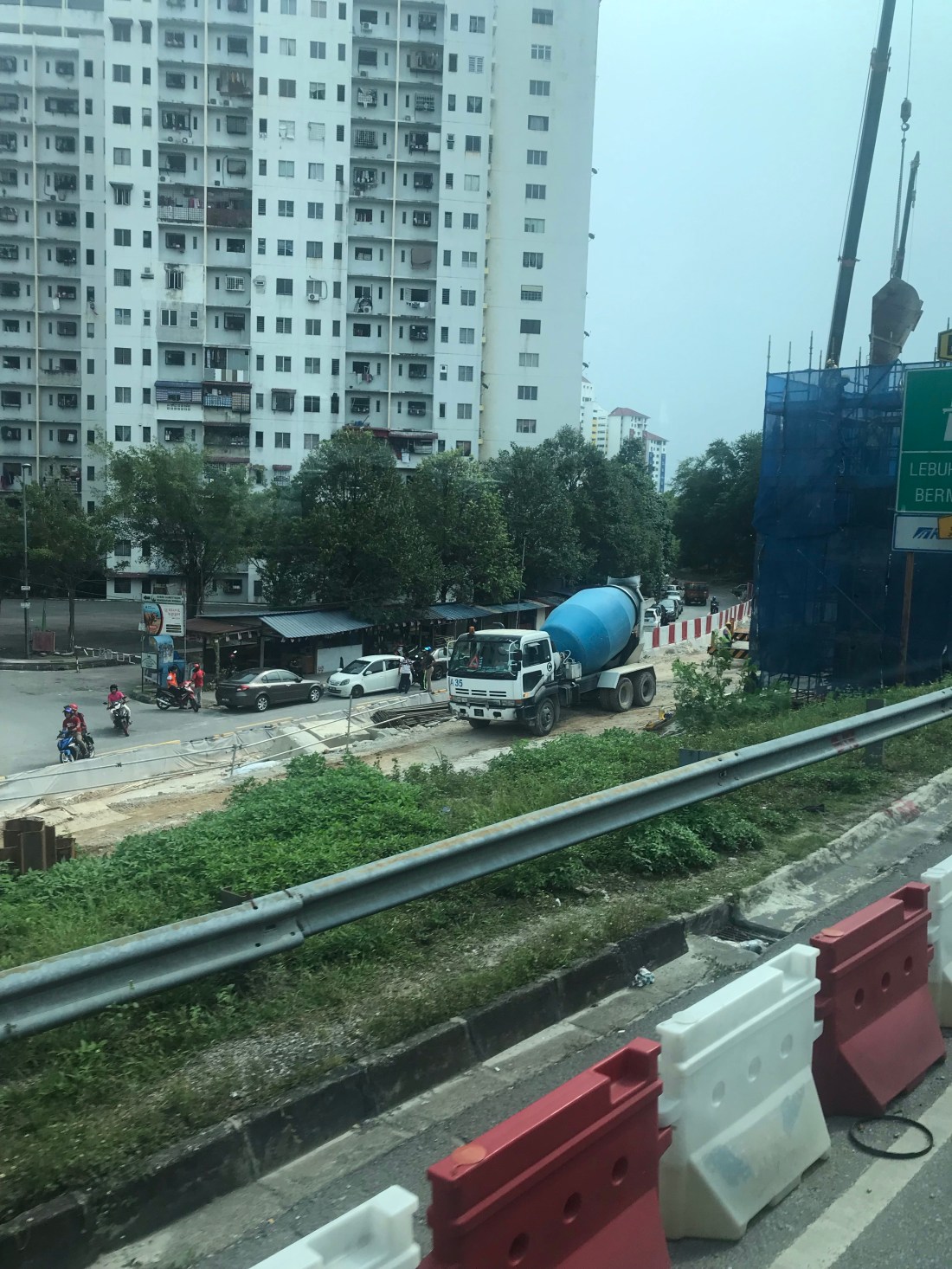
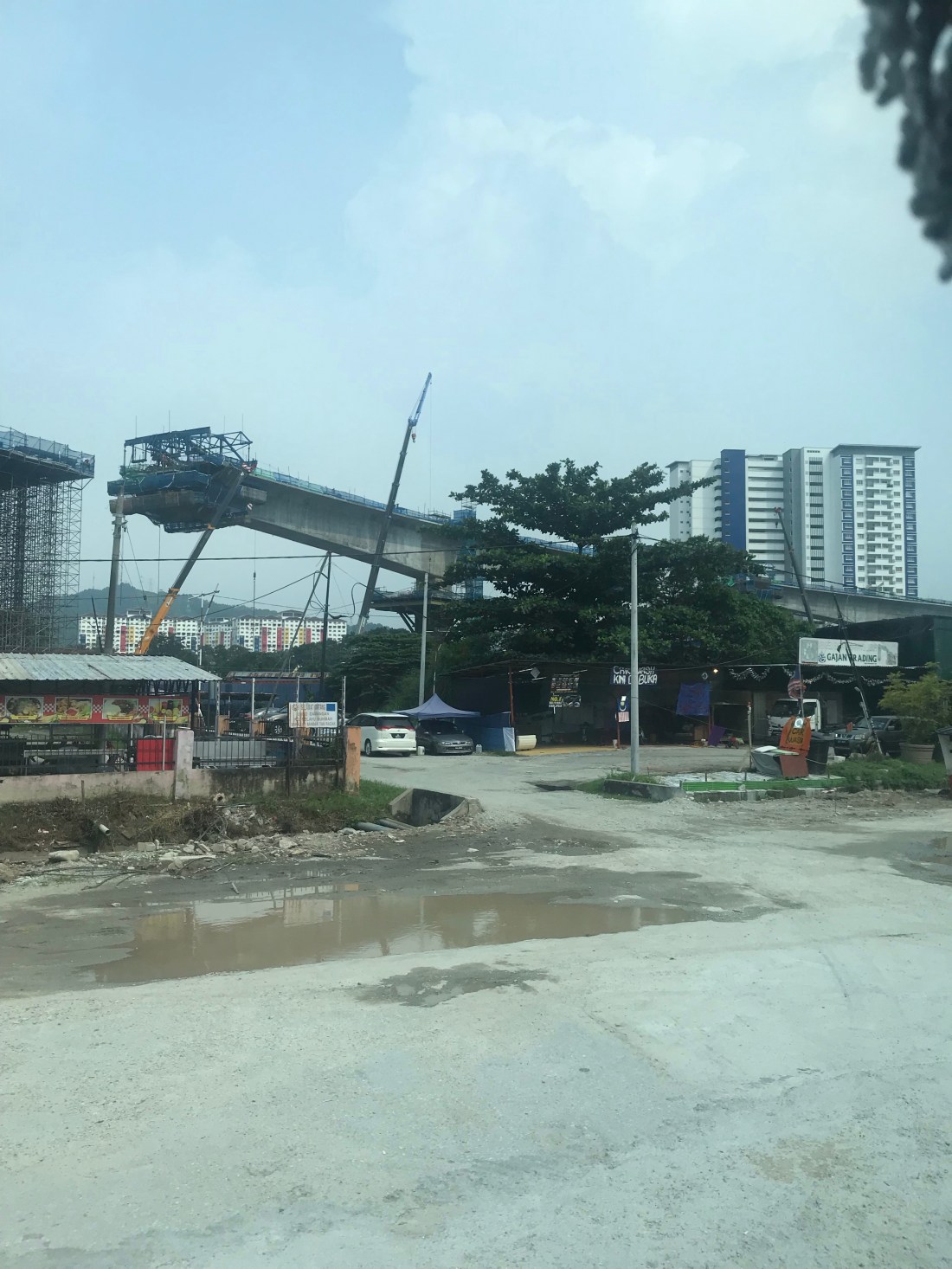
It’s noticeable that there are not so many urban areas down the length of Malaysia. But it’s entirely covered in greenery. The soil is an orangey colour, lending a brown/orange colour to the bigger rivers that I remember seeing some of from the plane.

We stopped at a rest stop around lunch time that had an outdoor canteen selling hot food and snacks. I’d stocked up on snacks the day before, but decided to brave the veggie area of the hot food and had a small plate of what I think was spinach, okra, aubergine and green pepper and fried tofu, which had all been cooked in oodles of oil with chilli and a bit of sweetness about it too. The tofu was particularly tasty and a bit less oily. Not bad for 3RM (56p!)

I’ve been teeming and ladling my Malaysian cash, trying to work out how much I’d need, but having done that for so long with Vietnamese currency, which is so tricky to handle because it’s mainly in tens of thousands of Dong, I got tired and over estimated what I’d need. Though I still don’t know how much it’ll cost me to get from Larkin terminal to Johor Bahru Sentral (JB) Terminal. Or to get from JB through passport control back to Singapore. I gave up trying to book that online and I’m glad because so far we’re half an hour later than publicised and also 1.25 hours away still! Hopefully I’ll have enough cash for whatever and it won’t all be terribly complicated or take too long. We shall see.

Palm oil must be a major industry for Malaysia, judging by the vast swathes of palm forests I’ve seen travelling down the country. The controversy from Europe and USA about it has been regarding its sustainability because of links to deforestation and recent widespread forest fires (and the subsequent impact on animal life/the ecosystem of while swathes of forested area). But there is a question of whether the negative publicity is partly motivated by alternative vegetable oil producers losing out to palm oil. I don’t think other vegetable oils will ever be able to compete with palm oil because of how easy it is to produce and how versatile it is. But the industry in Indonesia and Asia is complaining about the amount of regulation because although the big producers can afford to and should improve processes and sustainability, millions of much poorer people produce palm oil in these areas, and can ill afford to make the same improvements.

In some ways this trip has been one long geography lesson!

At various points along the way I’ve seen MacDonalds and KFC but not half as frequently as you would in the UK and certainly not at every stopping point.

Well, we’re two and a quarter hours later than advertised and now stuck in rush hour at 7:15pm coming into Larkin Terminal, JB, with thunder and lightning going on outside….
…Through asking people proactively (and constantly double and triple checking with several different people), I have transferred successfully to another bus driven by a toothless older guy who speaks very little if any English, that apparently will take me to Woodlands checkpoint for the princely sum of 1.90RM (35p). Then I guess there might be some passport control? Or maybe en route somewhere?? Who knows? Then I just have to get myself on the MRT (Singapore tube system) and I can find my way back ok.

The man in seat 61 did outline how this happens, but I found it difficult to nail down exactly which bus or train I should get at any point and why my bus was stopping at Larkin and not the JB Sentral place.

It’s dark now but I’m hoping to see the causeway and understand exactly how this works. Nothing quite like experiencing it! (Googling or Maps Me-ing public transport routes across this border was just confusing and both state their information is not up to date.)

So long Malaysia…

…Ah ok hello again Malaysia! Nobody has explained this properly. And there’s nobody official looking to ask either. So you get the shuttle bus from Larkin to JB Sentral. You get off still in Malaysia. You go through passport control. You walk down to bus platform A and find bus no 170 or 160 at area 4 or 3 down the escalator (how do people know all this??). You pay 1.50RM (the bus driver only takes small change and 5RM was not small enough for him. Thank God for Monzo. And contactless. Again.) Then he drives over the causeway to Woodlands. Then who knows what happens.

Why take one bus when three will do eh? There’s standing room only and I must admit my patience is wearing thin.

So now we go through Singapore passport control…where they also scan your luggage and do the metal detector thing.

We’re back to thumb prints not index finger prints here. It looks like I might have a half hour walk to get to the nearest MRT station once I’ve got through all this. It’s 20:18. I’ve been on the road for 12 hours.

I am unclear what the hold up is here. The passport control lady has just stopped sending people to the baggage people. Not enough baggage check machines I guess? Nor enough queuing room in that area.

Oh hang on no I think this is an MRT station as well. Thank God for that. So I should be able to get straight on and be there pretty quickly. I may just collapse into bed on arrival. After a nice cup of tea.

After 30 mins of waiting both the lady in front and I were turned away to go fill out another disembarkation card. Singapore are so slick at everything but are really bad at making it clear you need to do this and signposting you to where the blank cards are. And the pens don’t work either. Can’t believe I got caught twice by that. (Once at Changi airport too.) I needed the loo about half an hour ago but I daren’t go and lose my place in this infernal queue again! The trouble with travelling solo.

Carrying this backpack for an hour will probably have undone all the good work that masseuse did😱
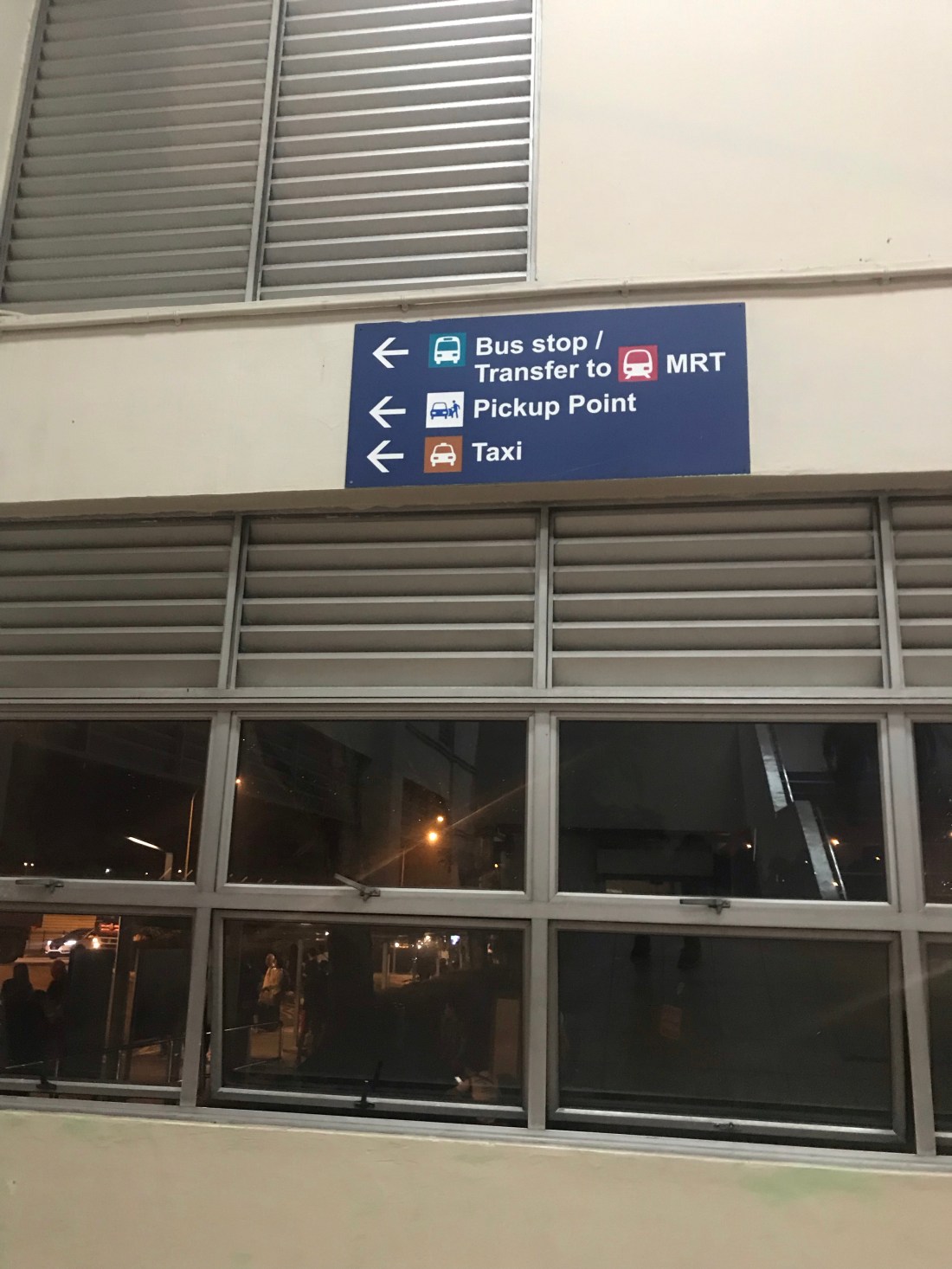
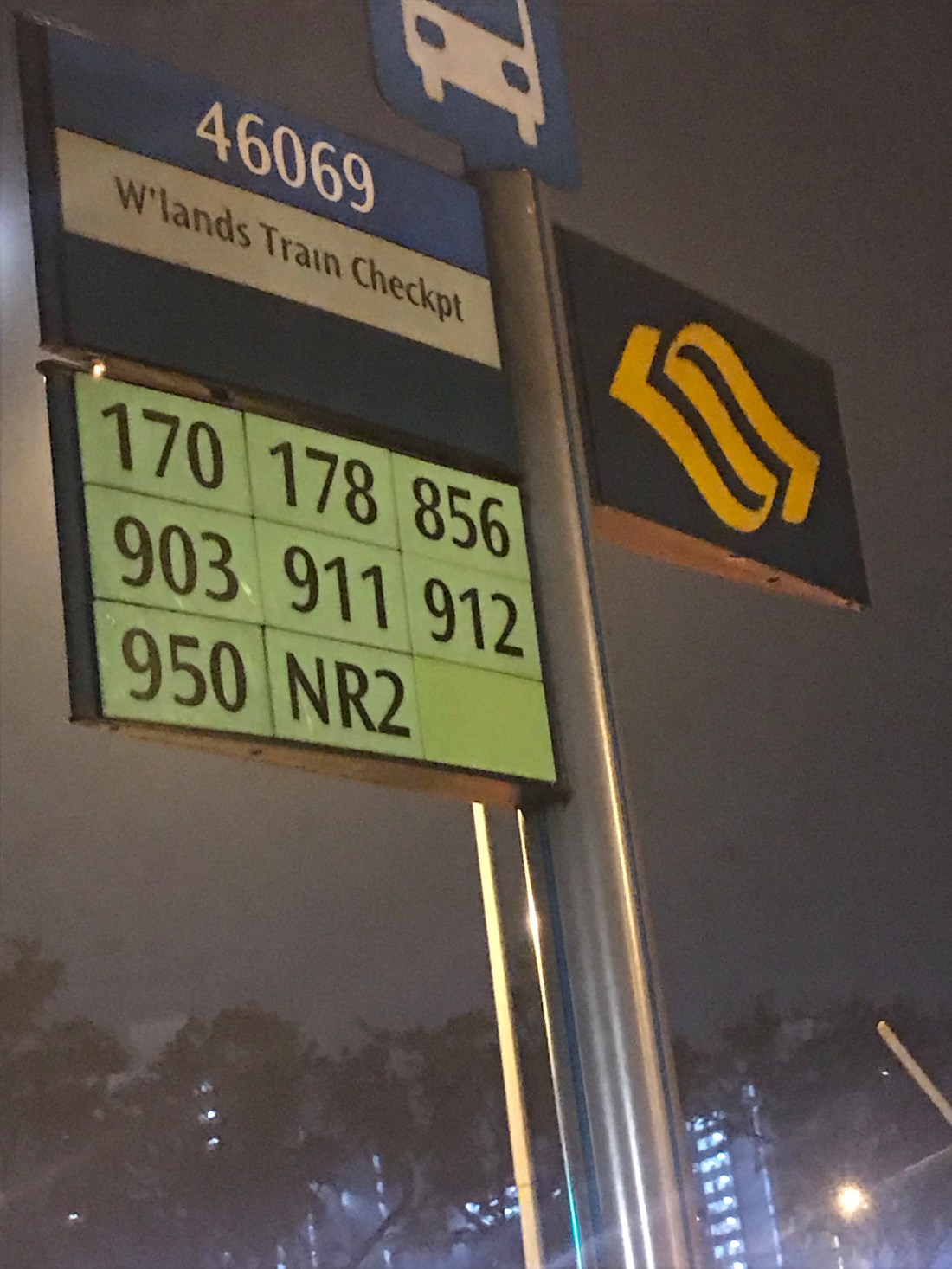
Oh my goodness a shouty man is telling me there’s only one bus to the MRT (tube system) now. It’s 21:33. It took me a lot of walking following signs for taxis to find the bus stop. After about 10 minutes following random corridors suddenly there was a sign for “bus transfer to MRT”. No one I asked could tell me how to get to the MRT back where we all came out of passport control.

The shouty official is now saying I should get the 911 that just arrived to Woodlands MRT. It’s 21:45. Through a process of deduction and using screenshots of the MRT map I took earlier when I had WiFi, I have located Woodlands MRT stop on Maps Me. I’m watching the bus’s progress towards it like a hawk so I know when to get off. It’s confusingly a long way from the Woodlands checkpoint where I went through passport control.

Once I was in the MRT I was fine (having experienced it when I first arrived in Singapore before my Vietnamese and Malaysian Trip). I finally reached Shiv’s at 22:45. Oh my goodness. They’ve got my room all prepared for me, inc cooled jug of water. I collapse gratefully into bed.

This is why people book package holidays and tours isn’t it? It was great being immersed in with ordinary local people, as well as other travellers, though. And people tried to be helpful though they mostly didn’t have the information to be able to answer my questions.

Here endeth the blow by blow account of my return to Singapore!
For the traveller (continued)

Another bit of John O’Donohue’s poem…

“…When you travel,

A new silence

Goes with you,

And if you listen,

You will hear

What your heart would

Love to say.

A journey can become a sacred thing…”

I think I assumed that by spending most time in the two homestays in Vietnam, I’d be spending quite a lot of time with people I’d never met before. I did spend some time with people, particularly at Mai’s wonderful Homestay in Ninh Binh, but in Hoi An actually apart from the tours I did, I didn’t meet anyone else at the Homestay (to be fair, I spent very little time there though, and most of that asleep, in the shower or talking with Dzung!).

I mention this because I sometimes find it difficult to carry silence with me when I am surrounded by people, much though I love to meet them. So perhaps to my surprise I did find myself carrying “a new silence” with me. And it was new, because of something O’Donohue says earlier in the poem:

“…When you travel, you find yourself

Alone in a different way,

More attentive now

To the self you bring along,

Your subtle eye watching

You abroad; and how what meets you

Touches that part of the heart

That lies low at home…”

It feels a bit like when someone is coming to visit your home and suddenly you look at it with the eyes of a stranger, and perhaps it makes you tidy up or have a quick hoover.

When you travel, you begin to wonder how these different people see you? And how do you see them? What is essential? And with all the challenges of language and unknown differing cultural expectations, you may ask how you want them to experience you. So when, as usually happens, people receive you with joy and interest, often ready to help you, and perhaps they say something that shows they also have struggled like you, or found joy like you, it is an almost overwhelmingly beautiful thing. Shared humanity.

I have found so much of this in my encounters with ordinary people everywhere. And I am so grateful for each one.

And this is a thought in process, but I think I can say something similar (though different) about how I’ve encountered animals, plants, trees, hills, sea and other non human beings on my travels. How do these respond and react to me? I find I want to show them respect. I’ve used very simple body prayers in a few places to silently do that. For me, this is not about worshipping the environment. It’s about honouring it, and the One who made us all.

This journey has indeed been a sacred thing. And it’s not over yet!

I have a whole week in Singapore! Imagine that…a whole week in once place (oh the relief)! Then next week I will fly to Switzerland for the last leg of my three month odyssey. Here’s to the sacred journey 🙏 🌍