Farewell Riehen

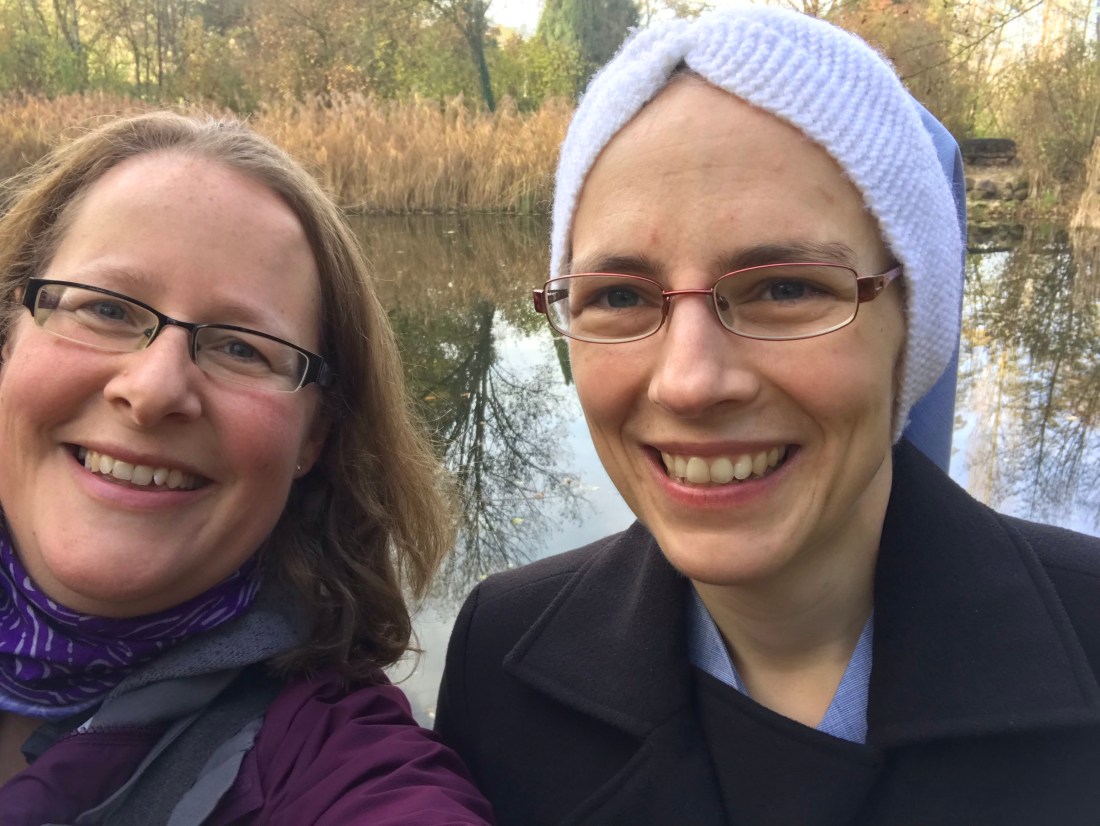
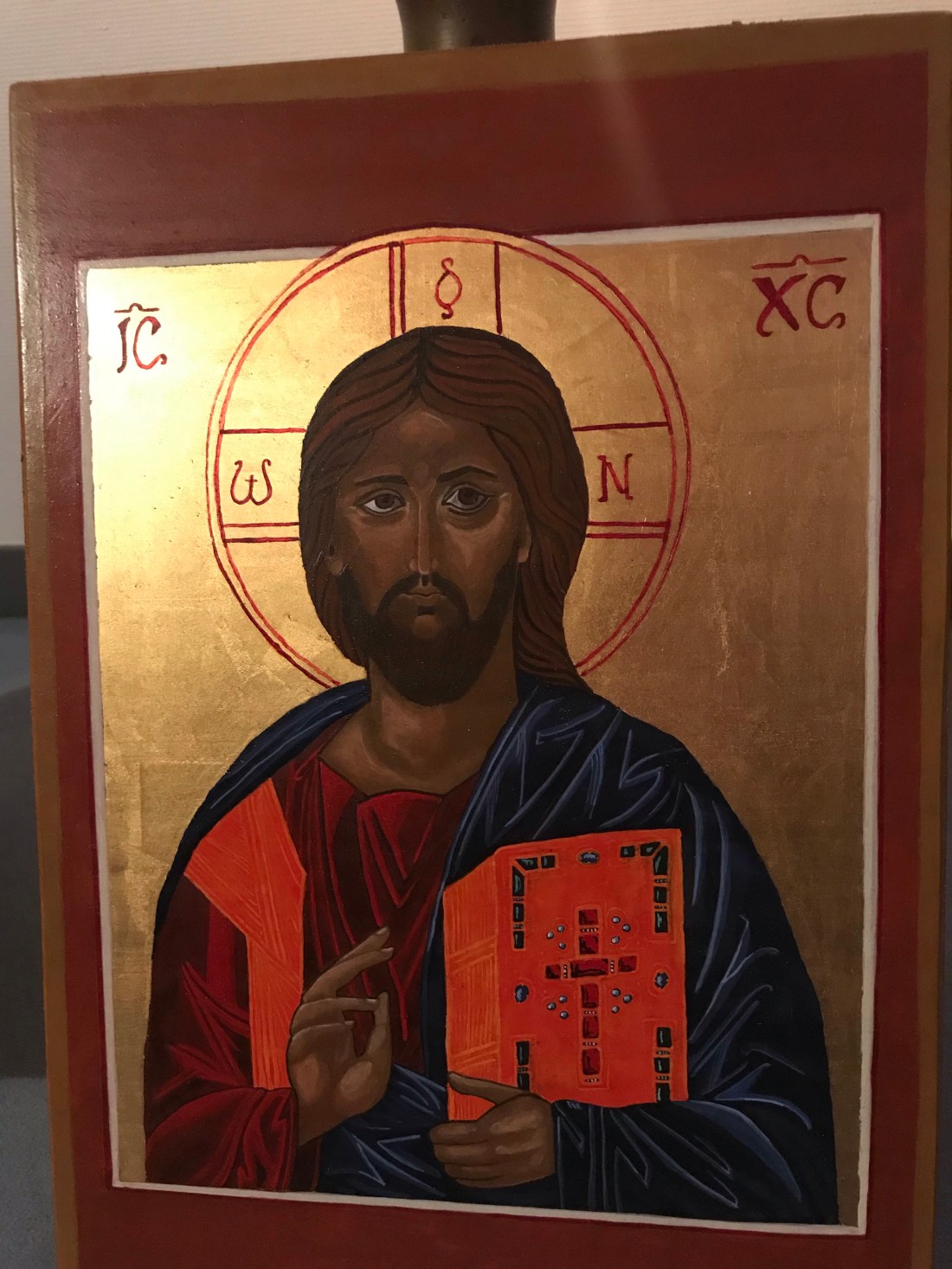
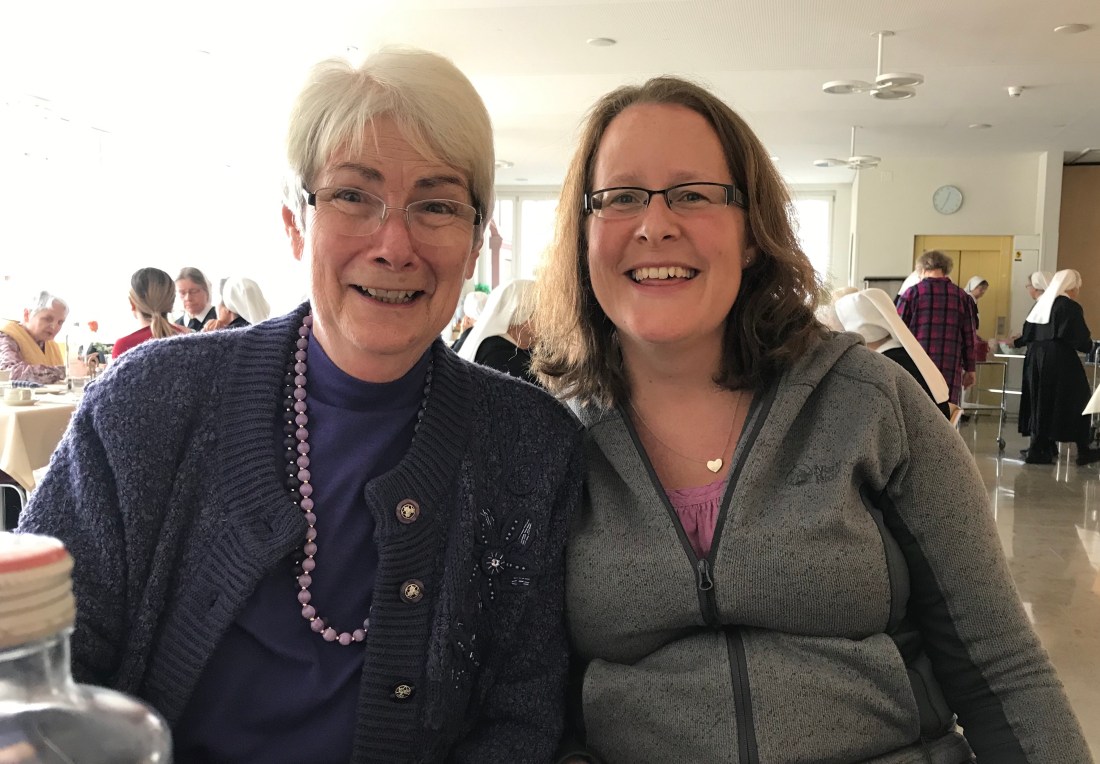
To finish our time together Sr Delia and I prayed with and for one another in a beautiful little chapel in the convent. We prayed with an icon she had painted as well, which I thought was extraordinary, even though she was at pains to explain that it was just a copy.

Icons depict certain aspects of the character of God (or of a saint from church history) that the artist wants to meditate on. So they are not the object of anyone’s worship, but more like a window helping people to focus on some aspect of God, who is always bigger than any picture, of course.

The left hand side of Jesus’ face (ie the right as we look at it) here represents the suffering Christ on the cross, and the right hand side (on our left) the risen Christ. But what I noticed most was the luminous word of God. Perhaps because I’ve spent a while in this country with all the Reformation talk. The Reformation, at its best, was all about giving ordinary people access to the word of God (the Bible) in their own language, so they could read it for themselves and not have to rely on whatever the priests told them it said. Well, that’s my very “power to the people” simple summary, anyway.

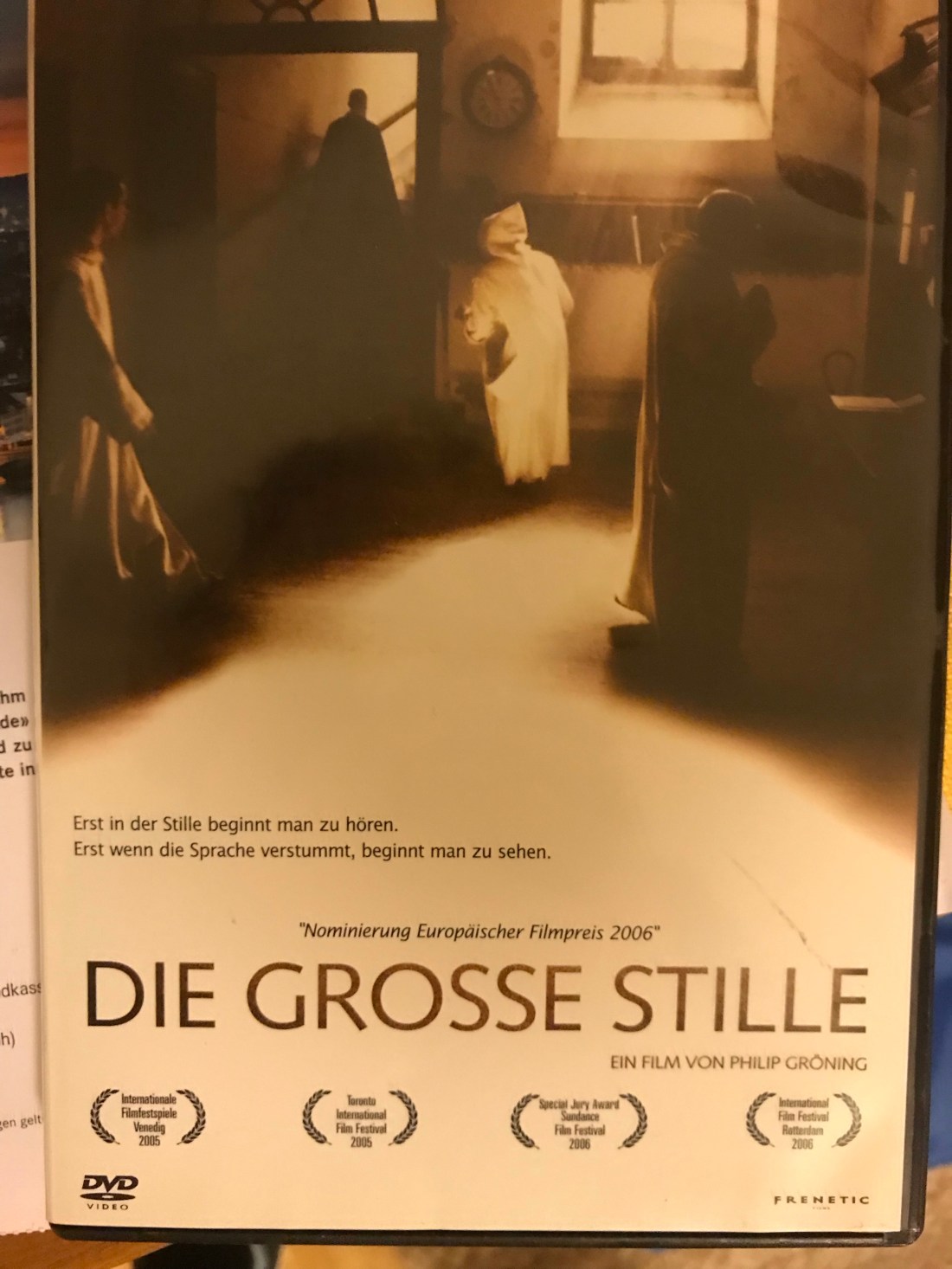
One evening we’d watched In Pursuit of Silence (a documentary film I mentioned in an earlier blog post) together. In response, Sr Delia gave me this, which I am looking forward to watching:

It seemed a very fitting way to finish our time together to pray and commit each other to God, and also to pray for the communities we each belong to. It’s quite an extraordinary thing to pray for someone and to be prayed for by them. I thank God for that gift.

Mariastein

One of the things I have most loved about my time with Sr Delia have been our walks and talks together. It was such a gift to have a week to catch up, to muse about life and theology and all sorts of things.

On one day we took the bus to a little village on (or maybe just beyond) the outskirts of Basel, and then spent the day walking through beautiful countryside at a leisurely pace, towards this famous (at least in Switzerland) pilgrimage site.

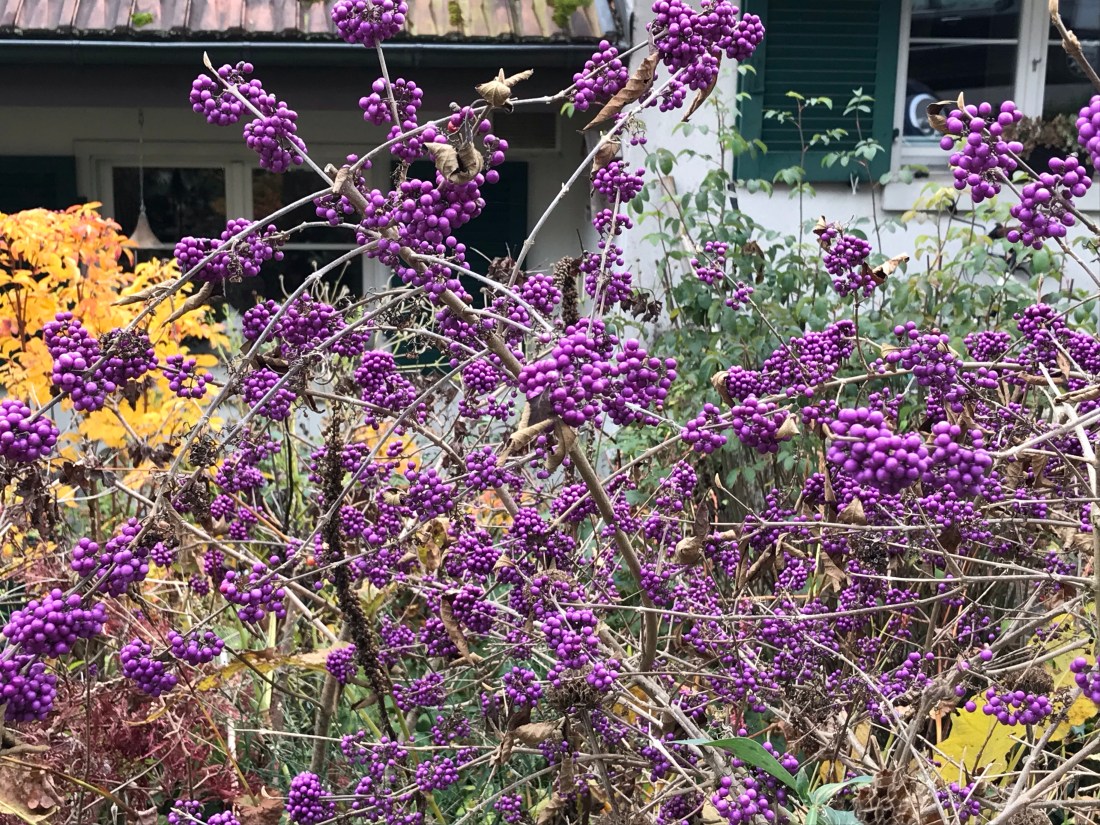
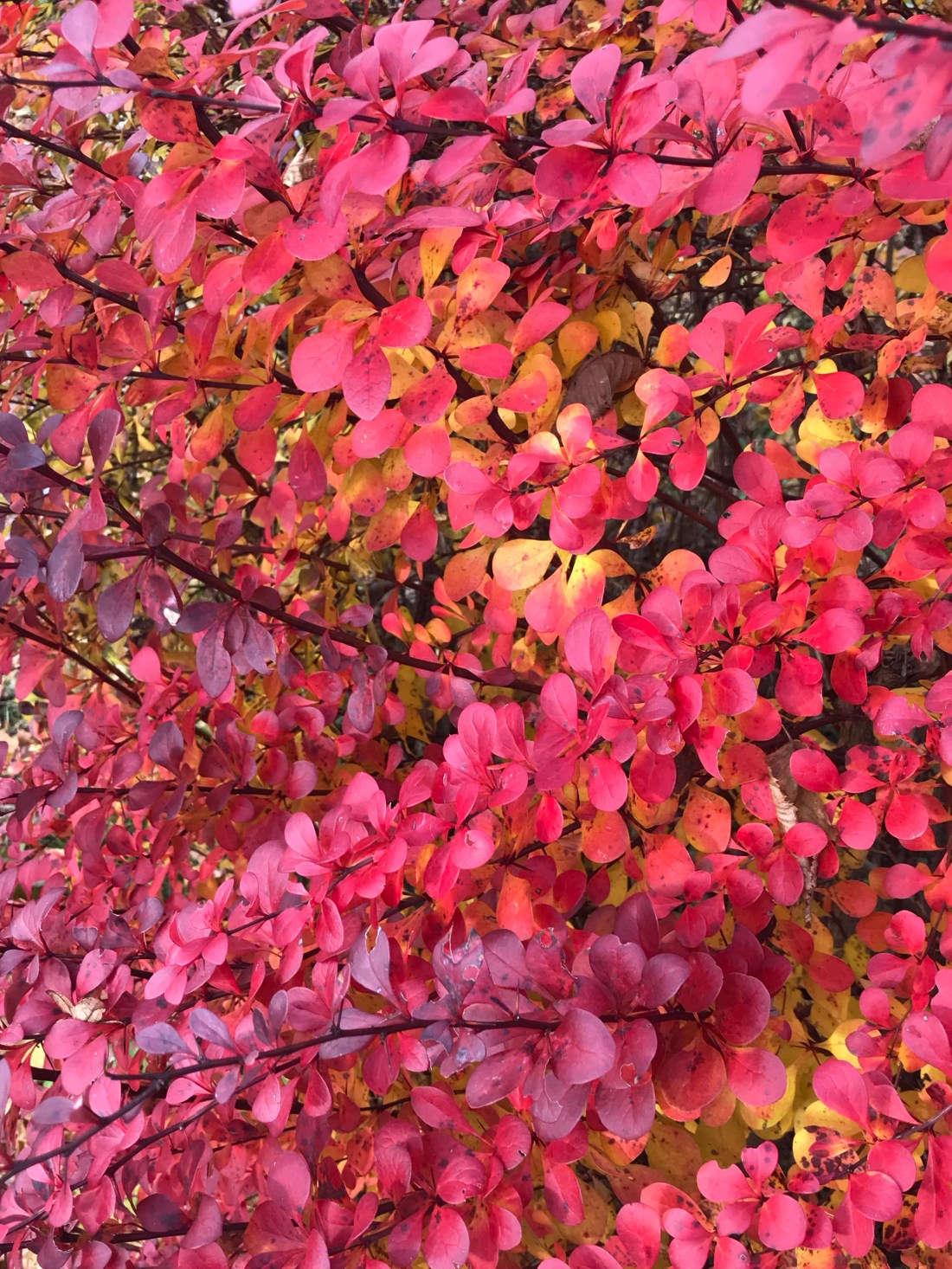
I have no idea what these berries are called. 👆🏼 If anyone knows, please do comment!

We stopped halfway up a hill by St Anne’s little fountain and Delia shared this delicious anisbrötli with me (a kind of sweet aniseed biscuit/cake). Apparently it’s quite easy to make. Hmmm might have to try that!

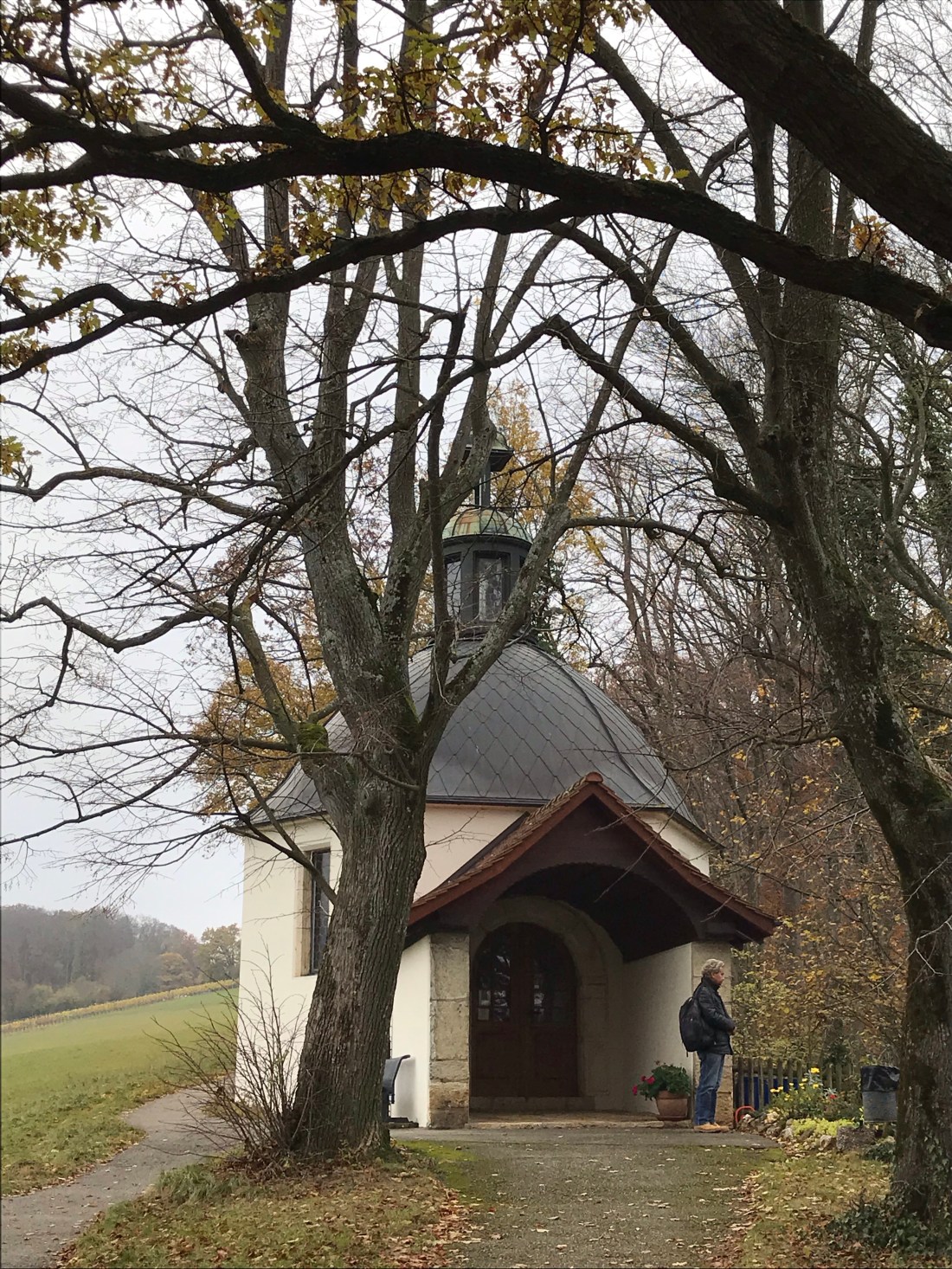
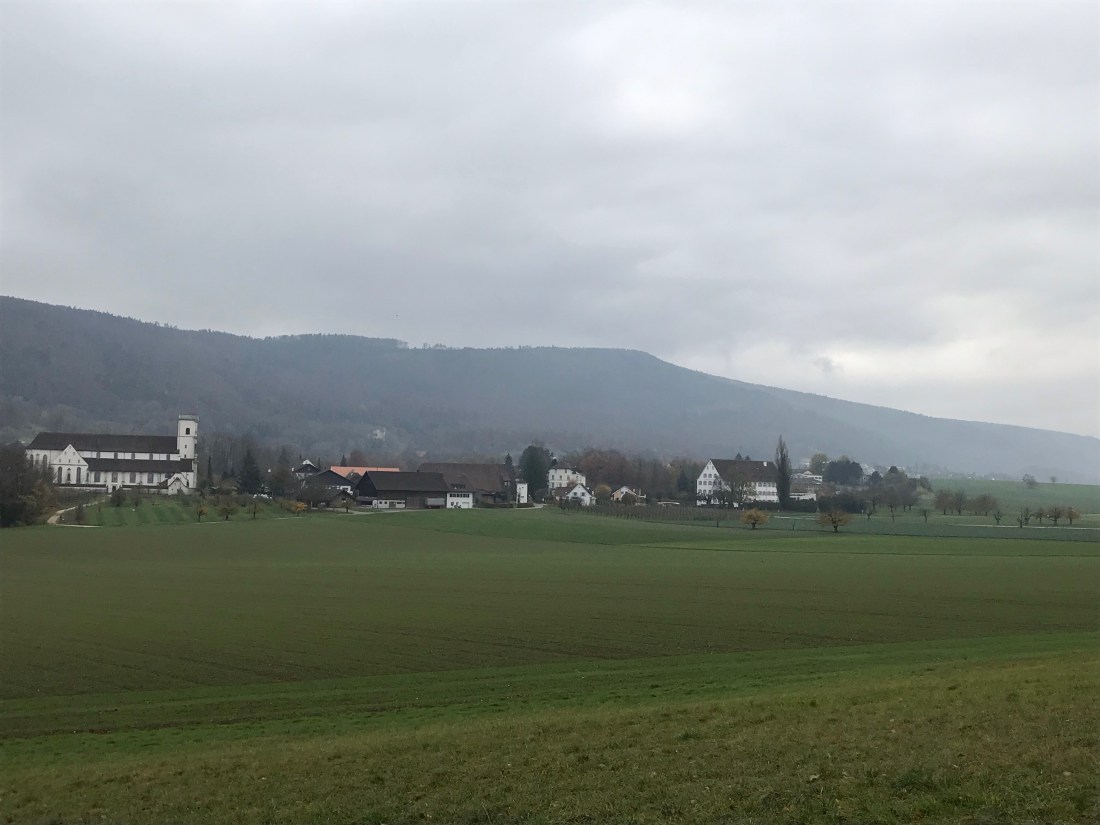
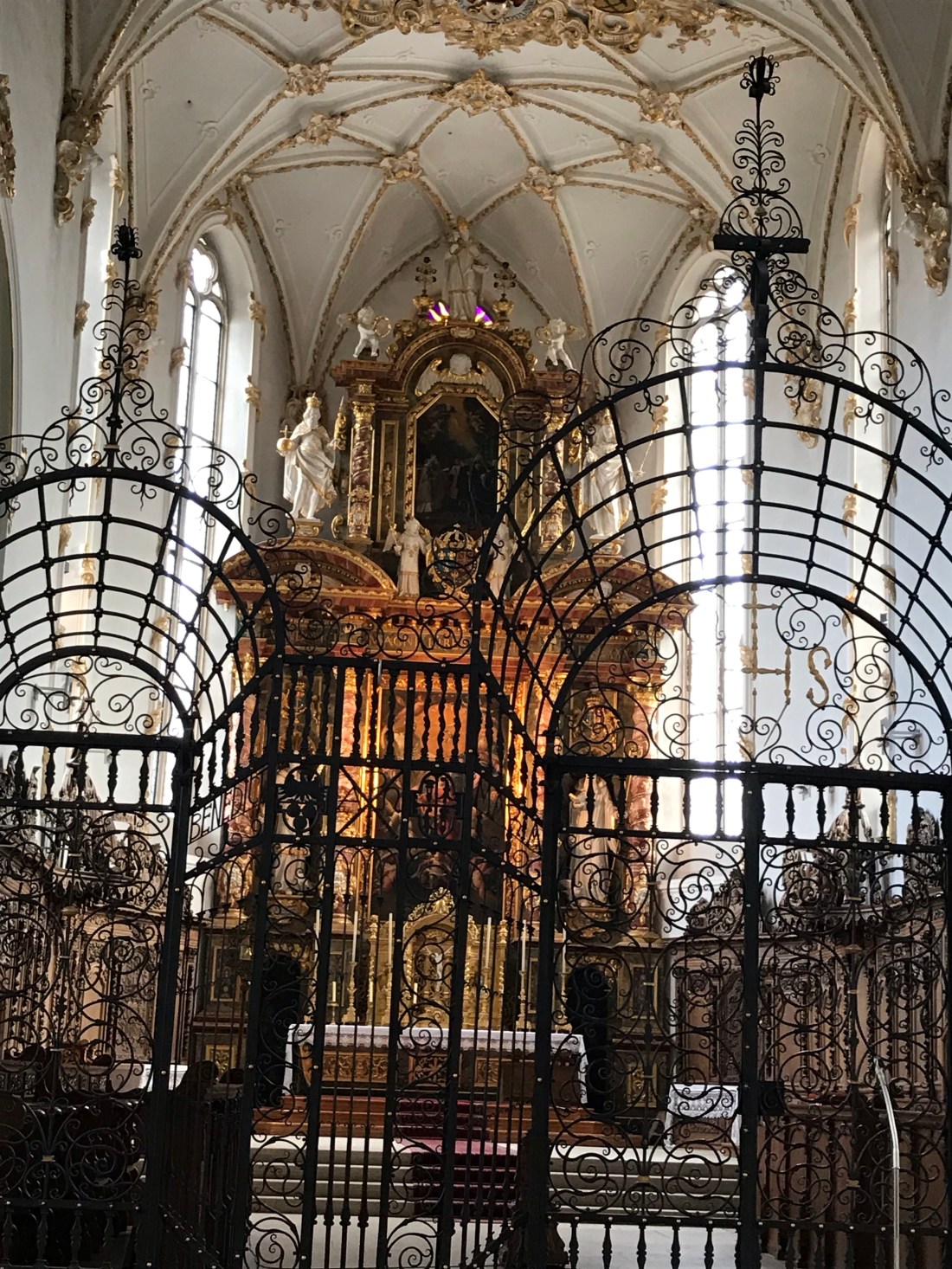
And here’s the Church with the grotto underneath it that people come here on pilgrimage for. Much though I like the very simple unfussy Reformation style churches, it was kind of nice to see a bit more church bling here! I’m not quite sure how this church survived the Reformation without having all the bling stripped away. Presumably it was partly because it was in the middle of nowhere?

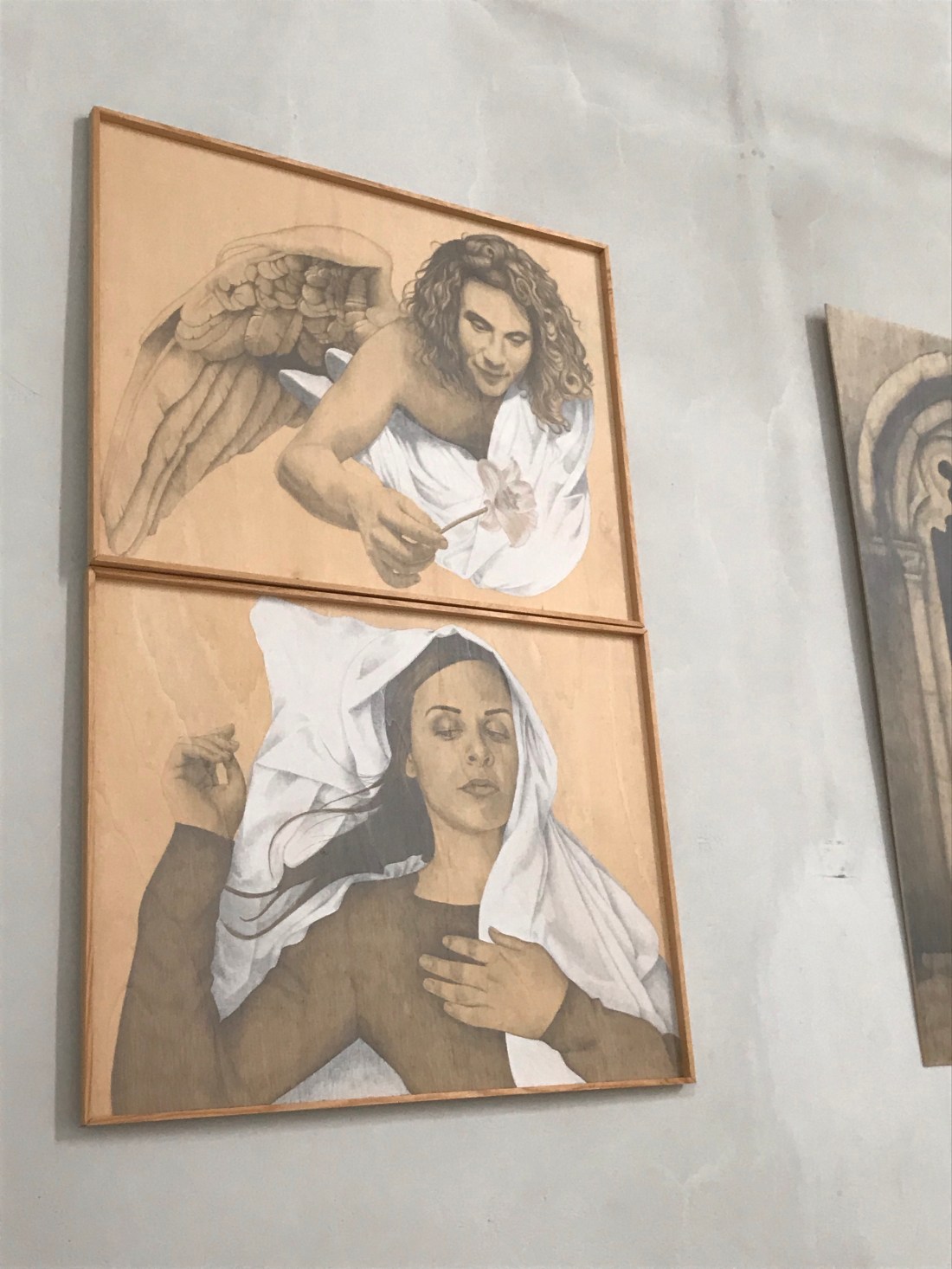
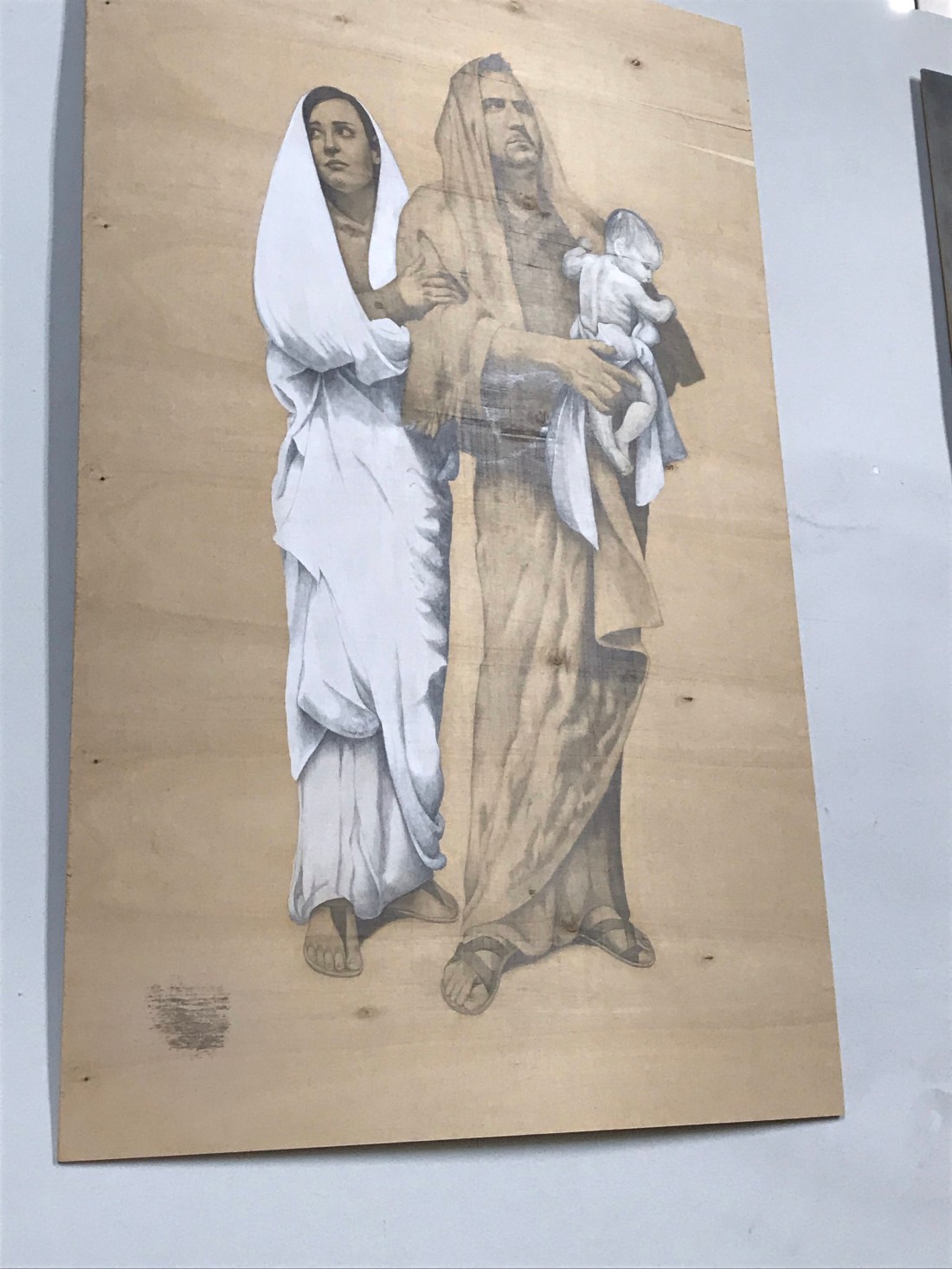
In the church there was an exhibition depicting the life of Mary by the Italian artist Stella Radicati. She made the angel Gabriel look pretty fit, I thought! And I liked that Joseph was taking responsibility for carrying the baby while the couple fled to Egypt, looking suitably worried:

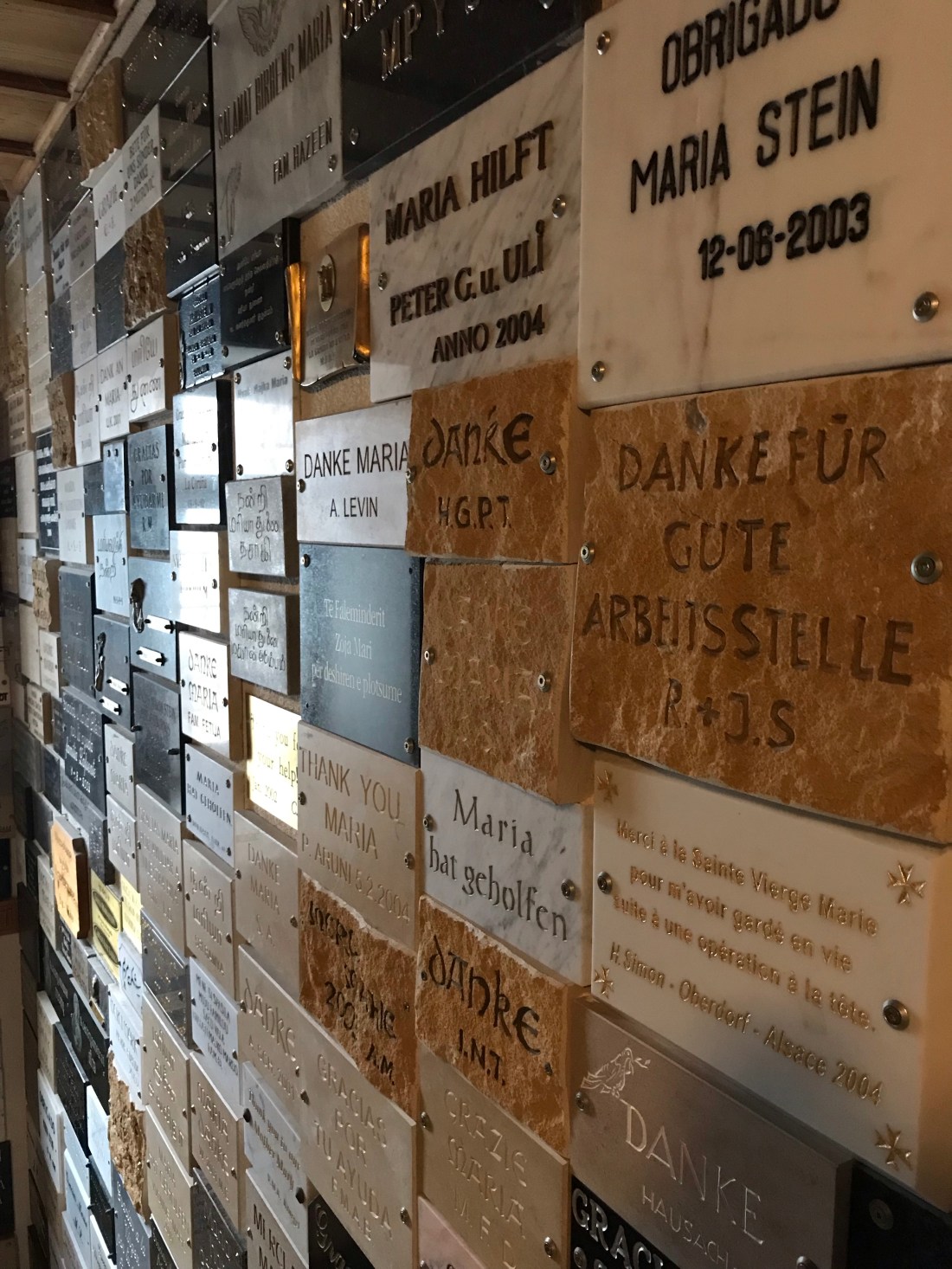
Hundreds of plaques line the walls of the tunnel that leads to the grotto under the church containing a famous statue of Mary. People have sent the plaques to record their thanks for answered prayers.

I didn’t take any pictures in the grotto as the light was poor and I didn’t want to disturb the pilgrims there. But, as often happens to me in these traditional holy buildings, I found I felt more connected with God just outside, surrounded by beautiful views of the natural world than I did inside the building. I guess it takes all sorts to make a world, as my Grandma used to say.

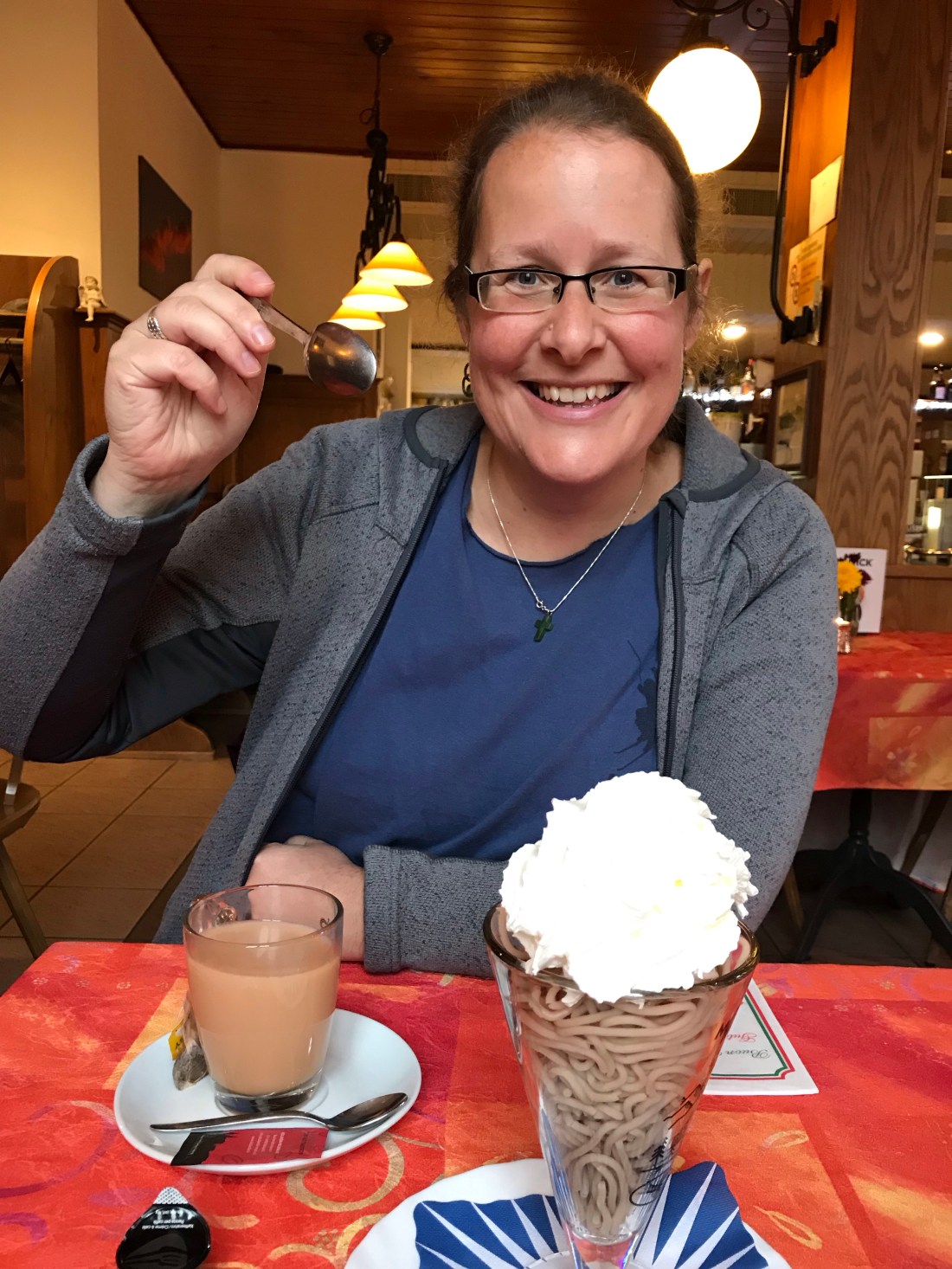
We repaired to a local café where Delia persuaded me to try Vermicell. A slightly sweet dessert made with cooked chestnuts mushed up and then squeezed through something like an icing bag to make the worm like shape.

Visiting…another country

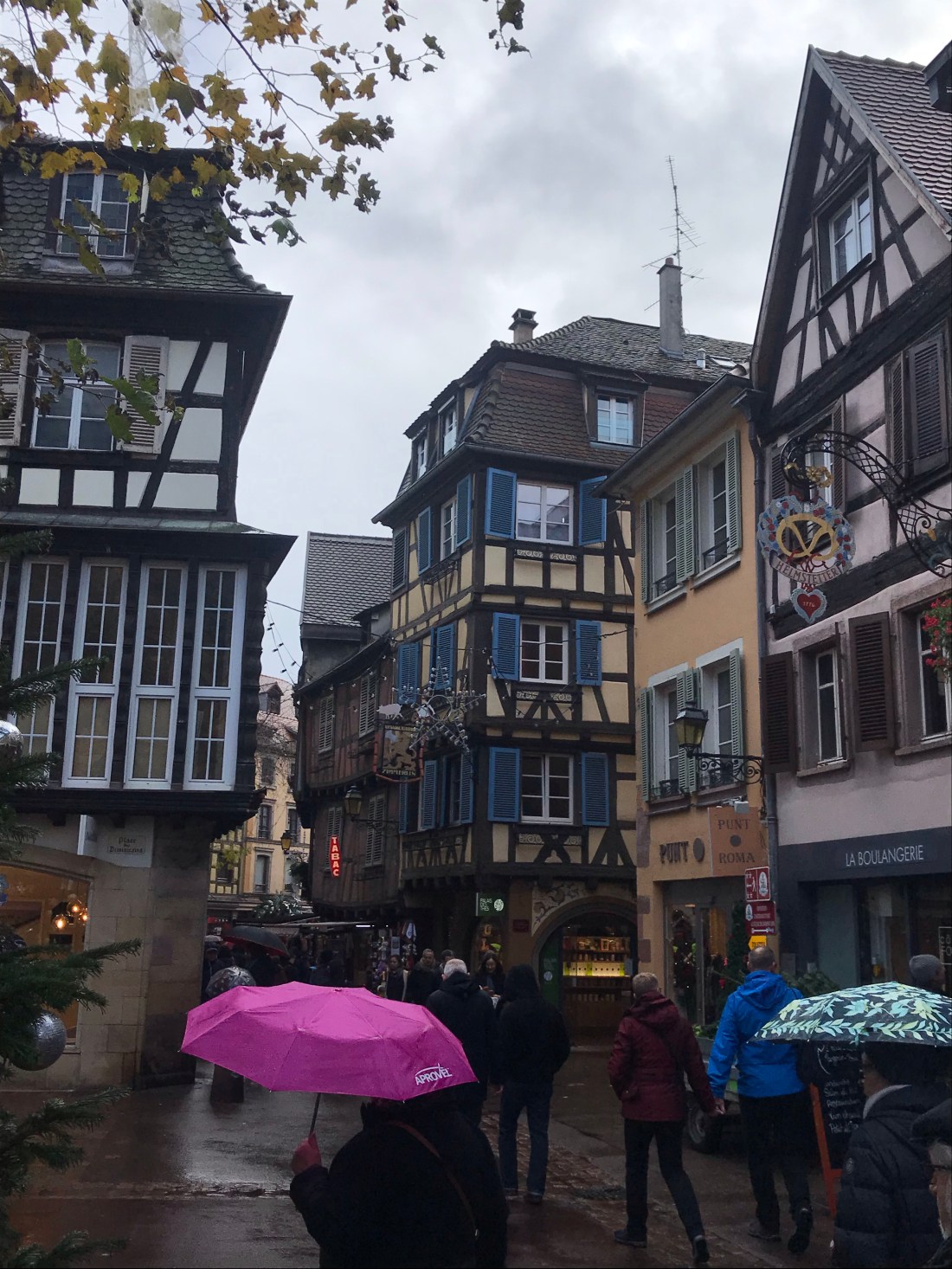
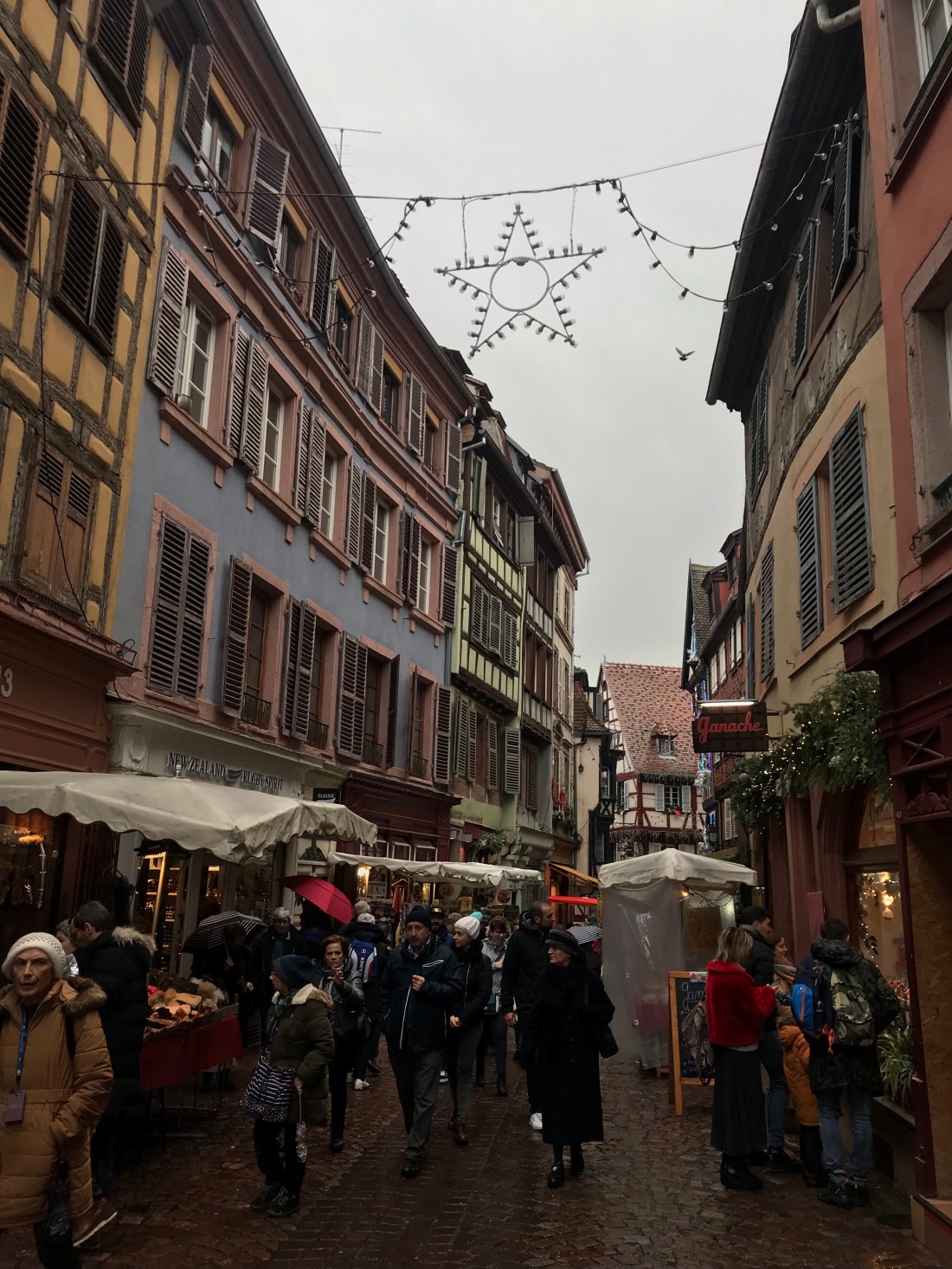
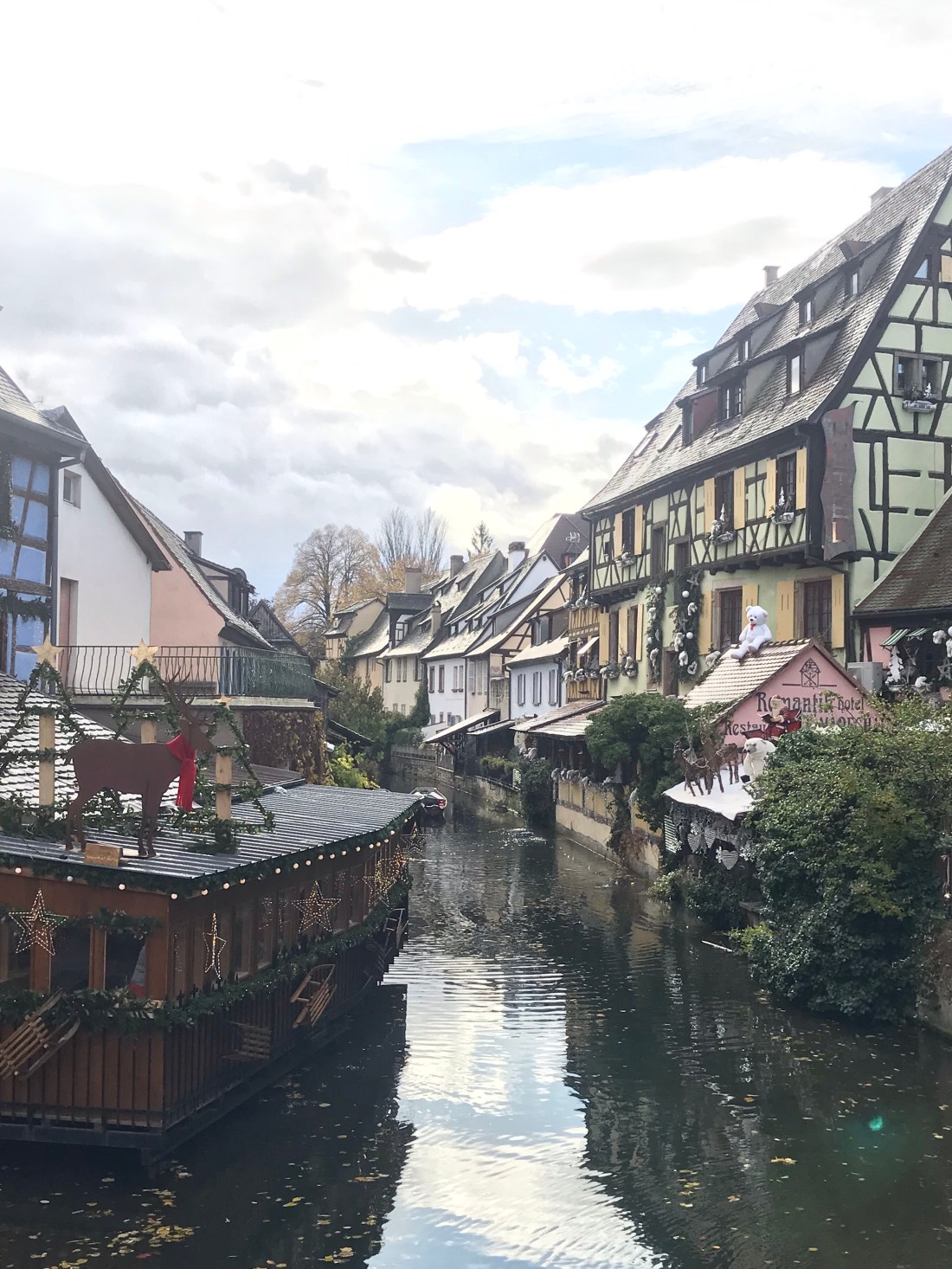
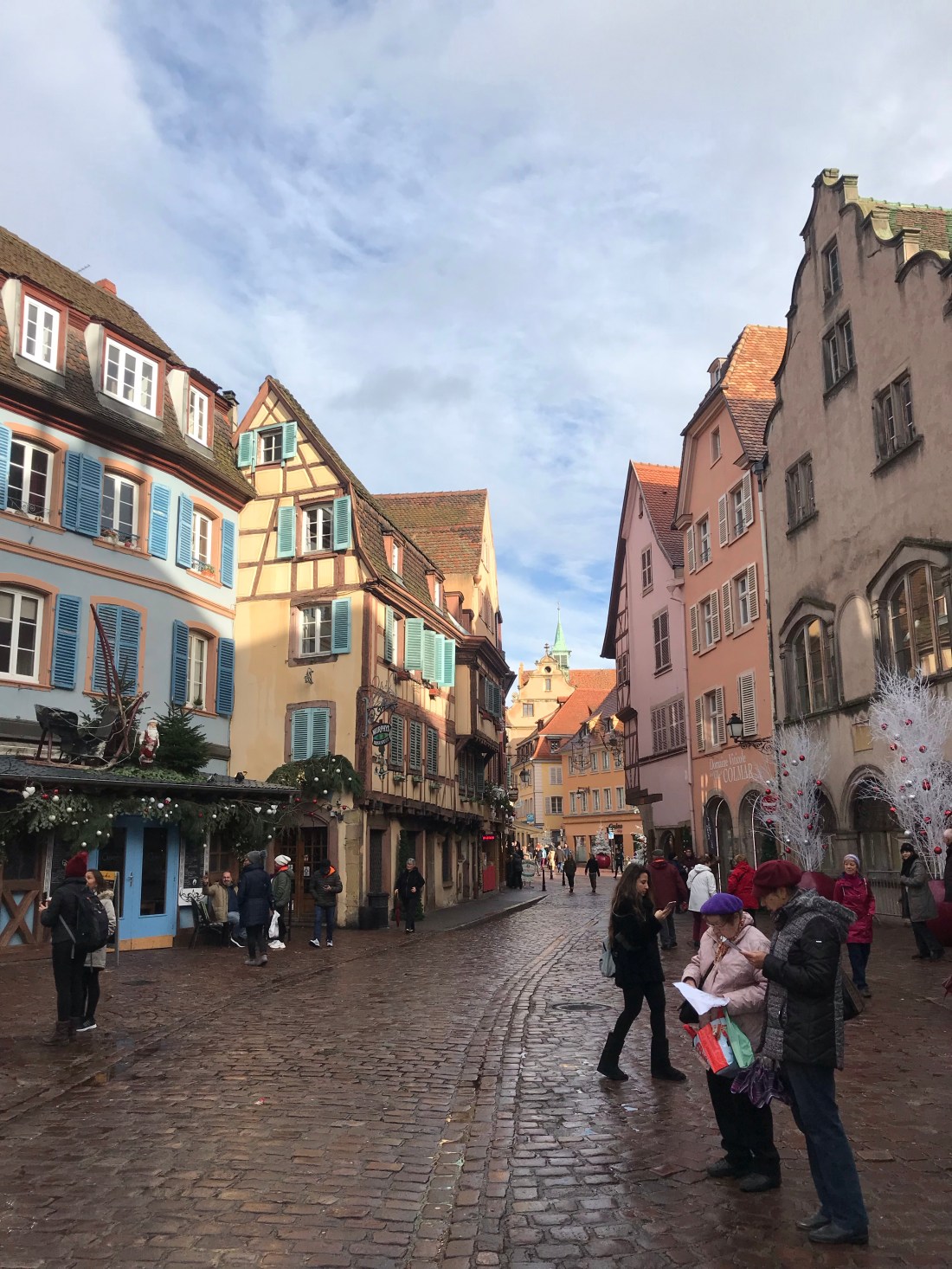
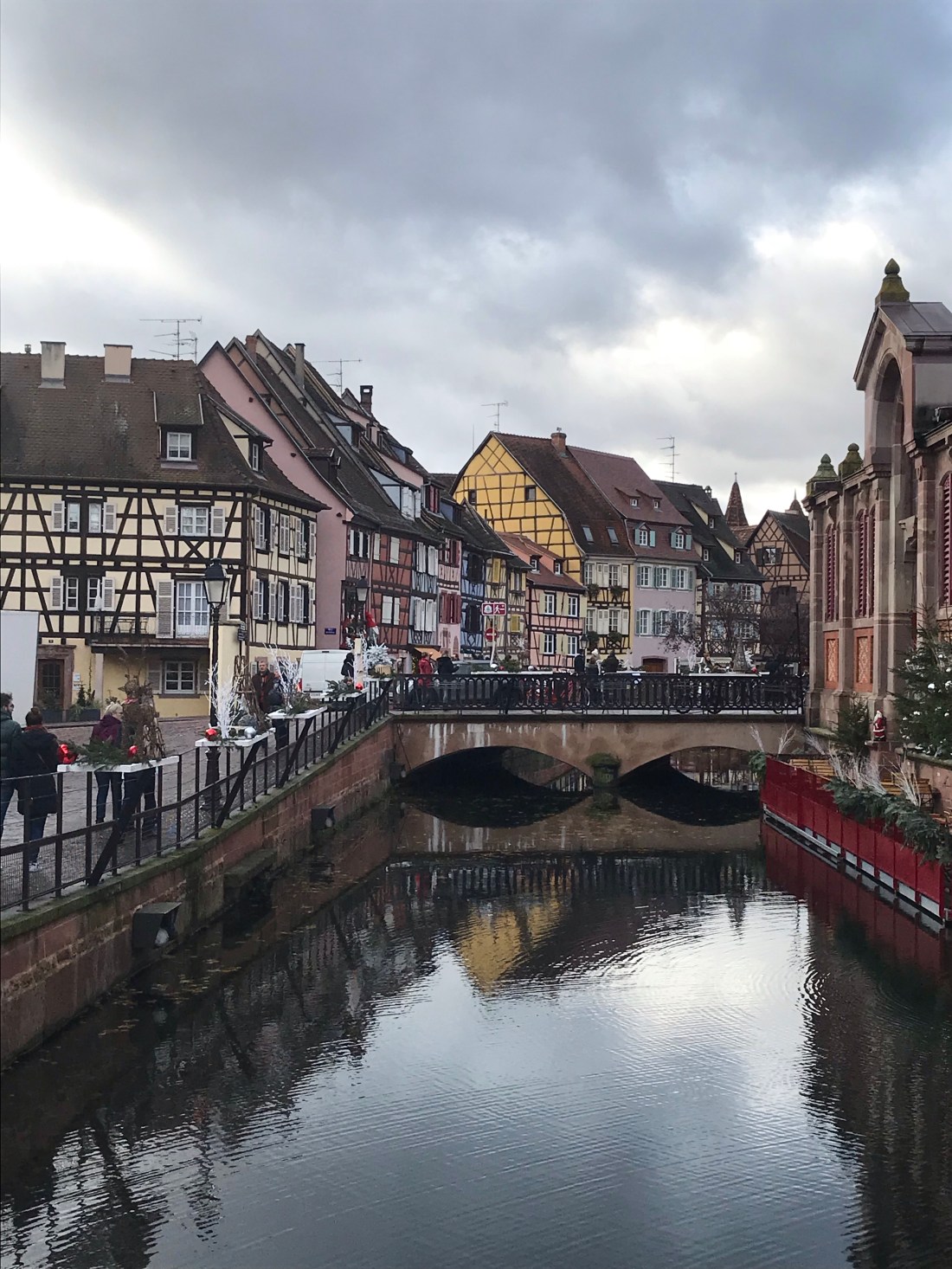
We decided to go to Colmar, which is in France, just because we could. It’s a famous little town in Alsace that’s very pretty and had begun it’s Christmas market already. We took the train from the French part of Basel station (having negotiated the completely different ticketing machine successfully, which took some time!). Then, when the ticket collector came round, we realised we’d failed to get the ticket stamped by the machine on the platform before we got on the train. Fortunately he was kind and realised we were not used to this system, so didn’t charge us double as a result (apparently the normal fine). Thank goodness not everyone is a “jobsworth”! The greater surprise to me was that at no point did we have to show any ID, even though we crossed a border. And no one inspected our bags. The ticket collector just looked slightly envious as he said, “I guess you’re going to the Christmas market are you?” (In French, of course.)

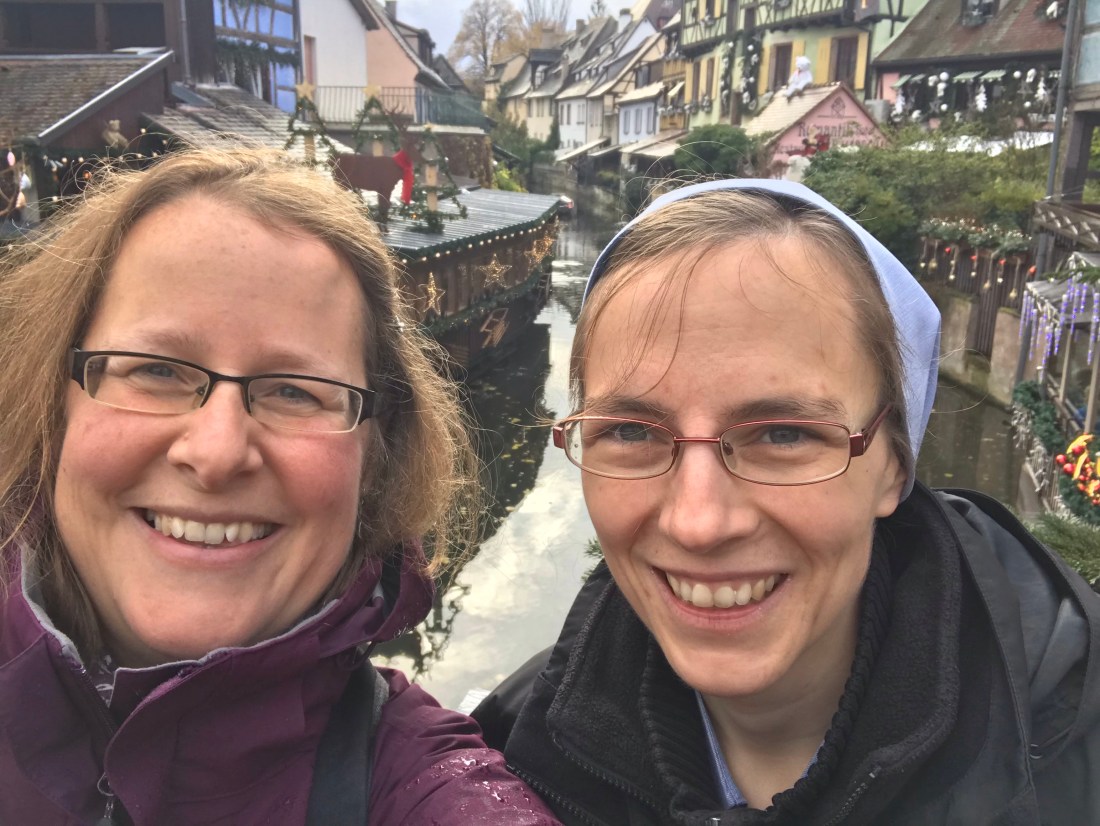
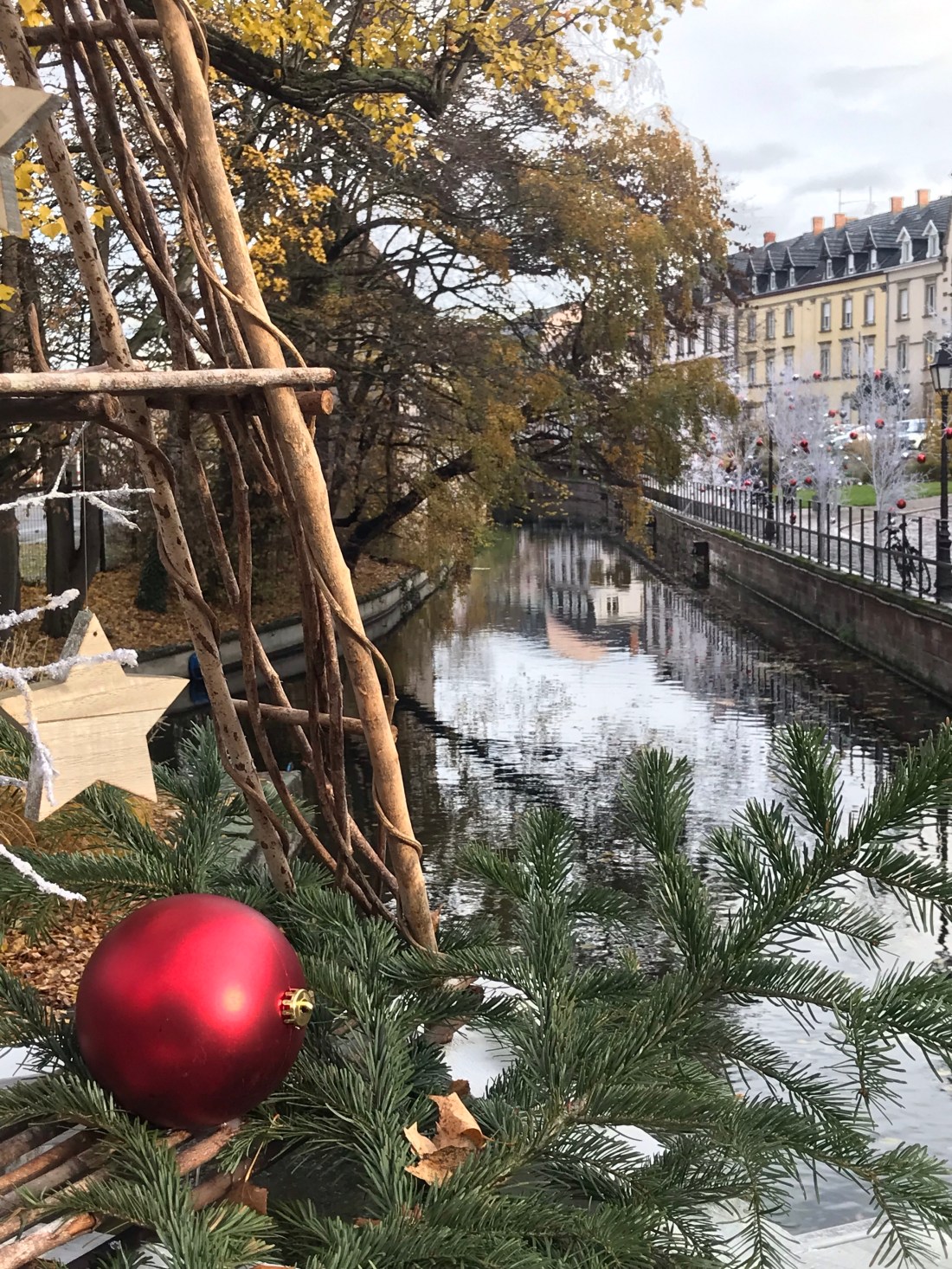
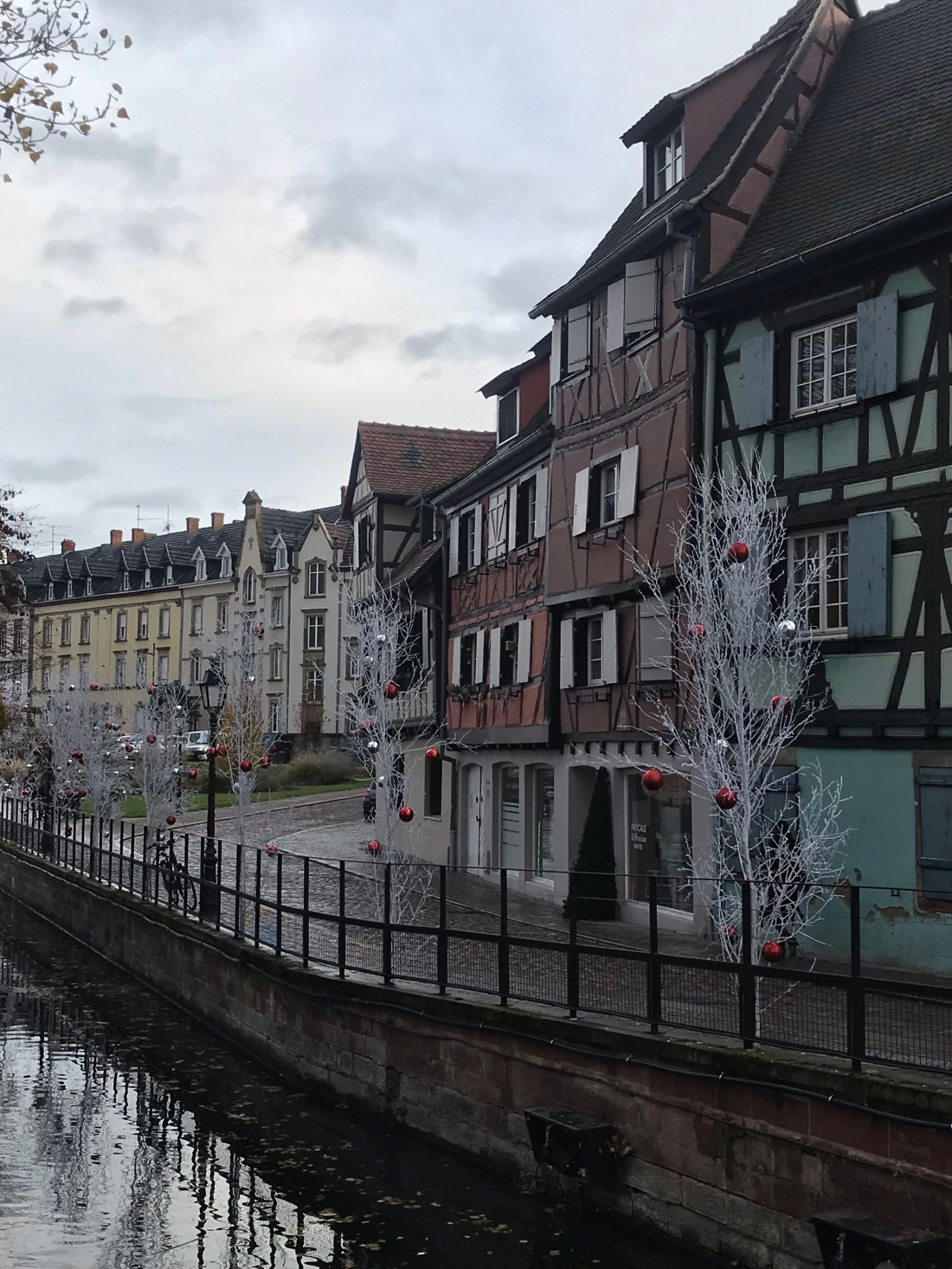
Colmar is very pretty. Here are some pics.

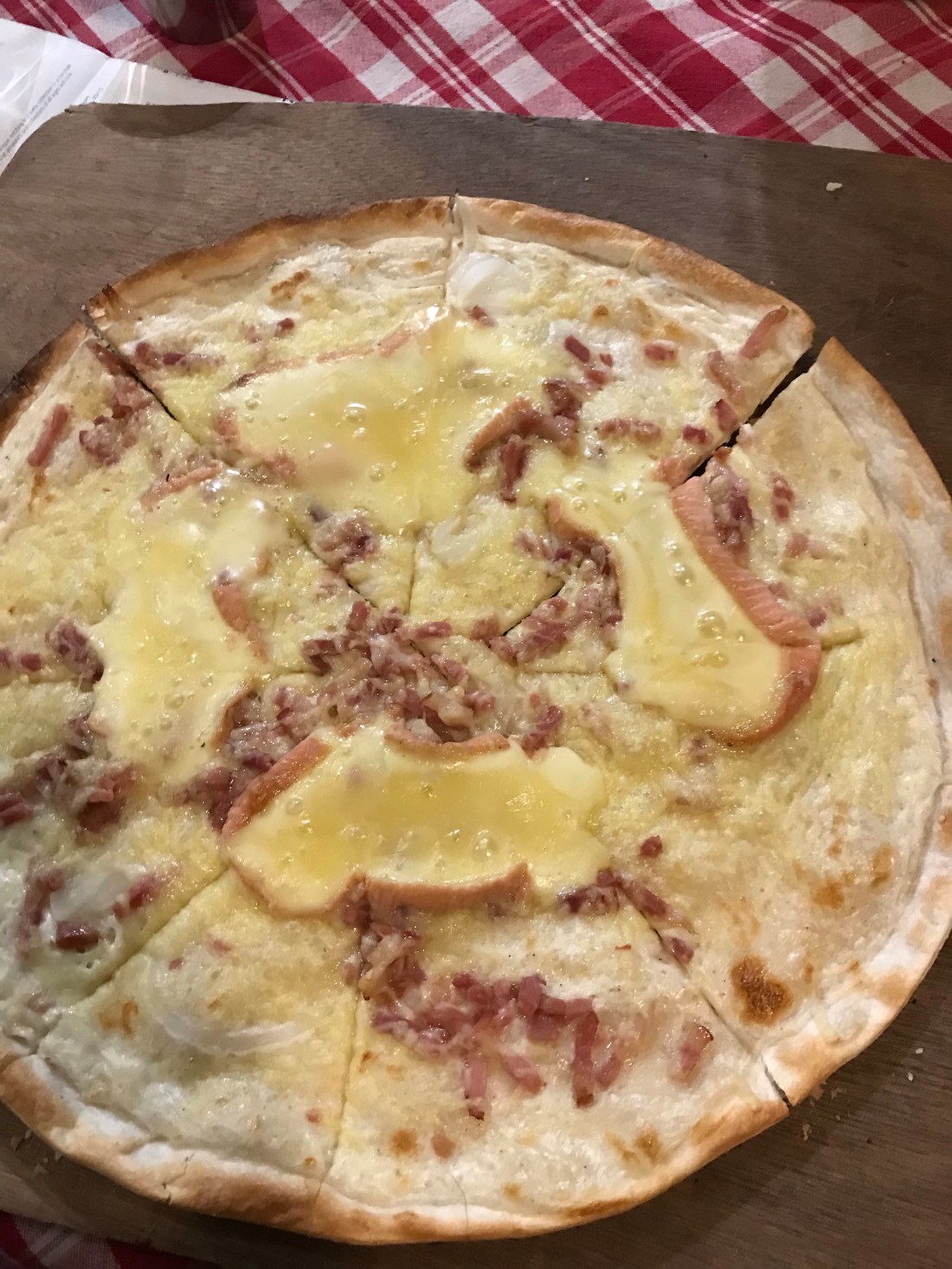
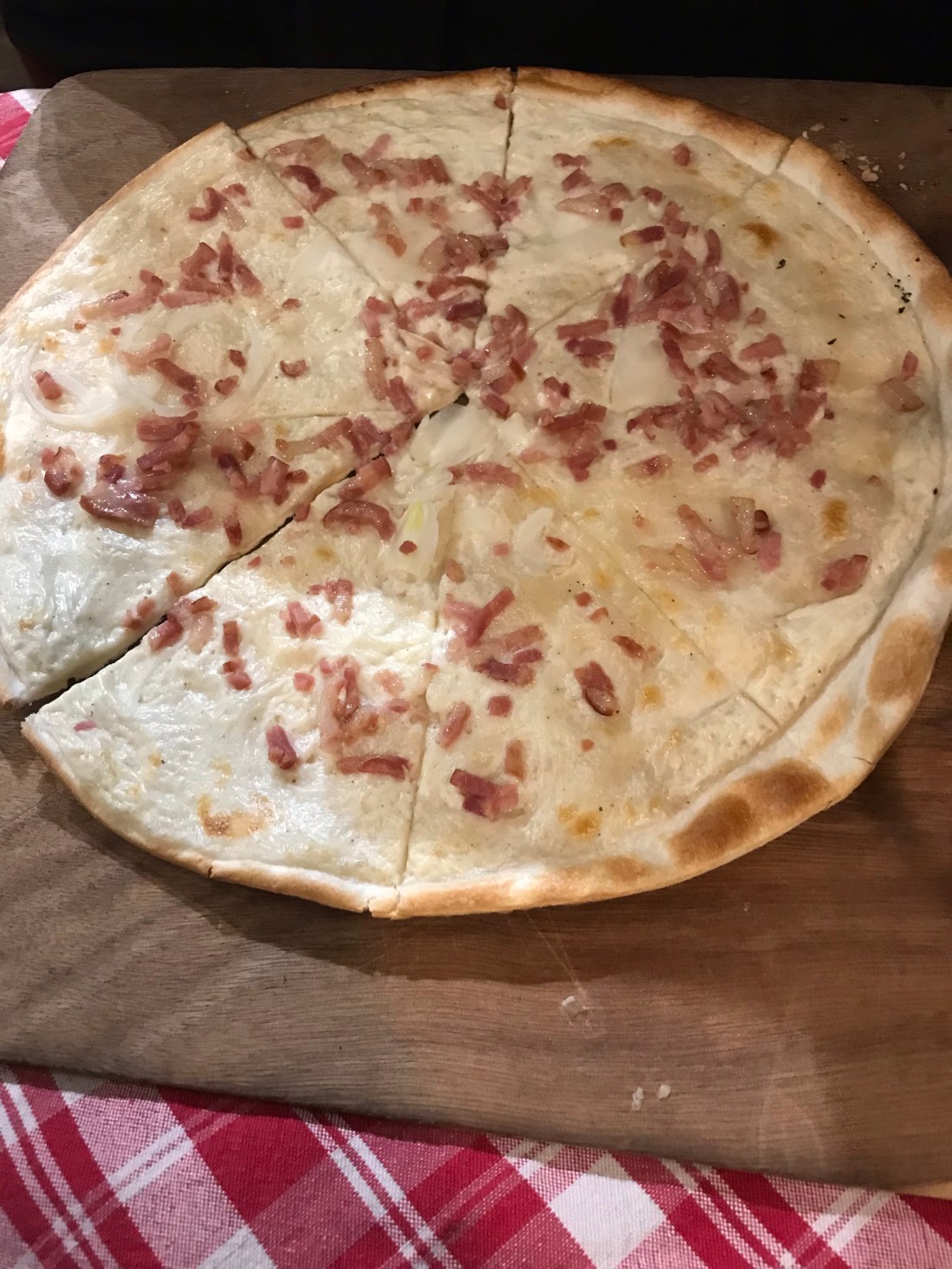
We had tarte flambée (Flammekueche) for lunch (a traditional Alsace meal, a bit like a light form of pizza, with bacon, onion, cream and cheese topping), and later on warmed up with du vin chaud in my case and a hot apple juice in Delia’s.

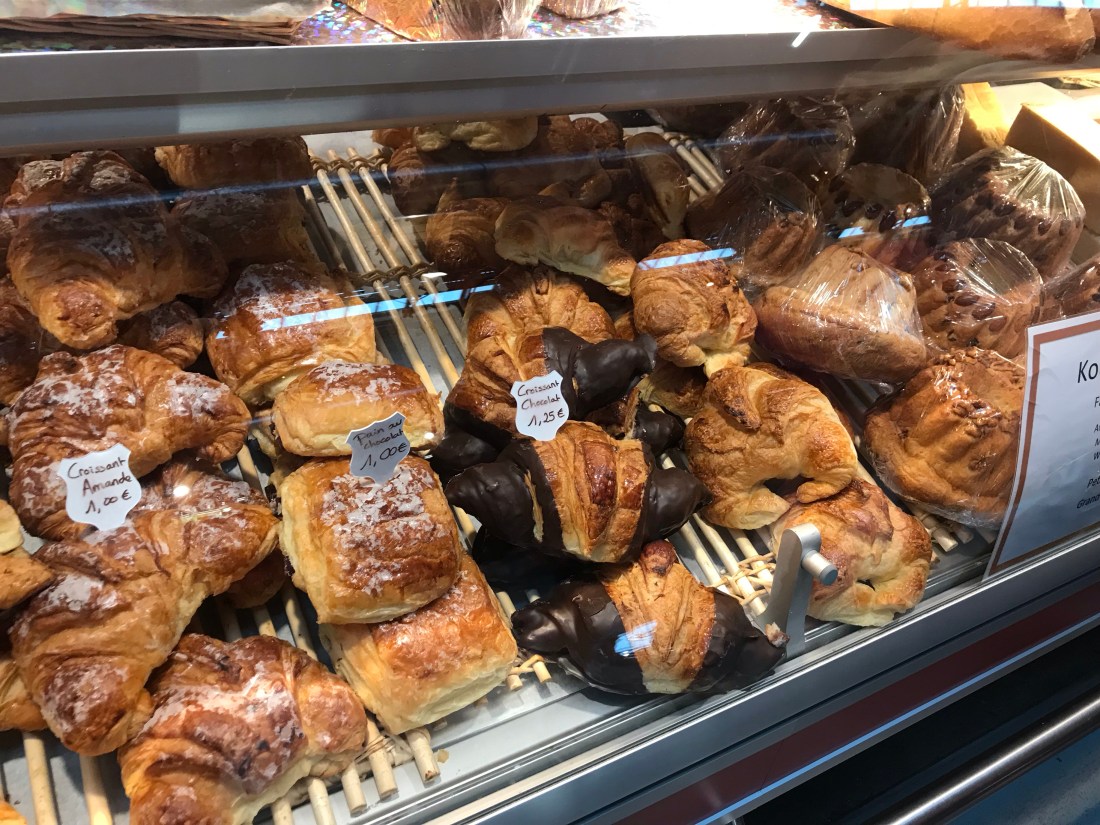
In the covered market, we saw this wonderful selection of breads and cakes…

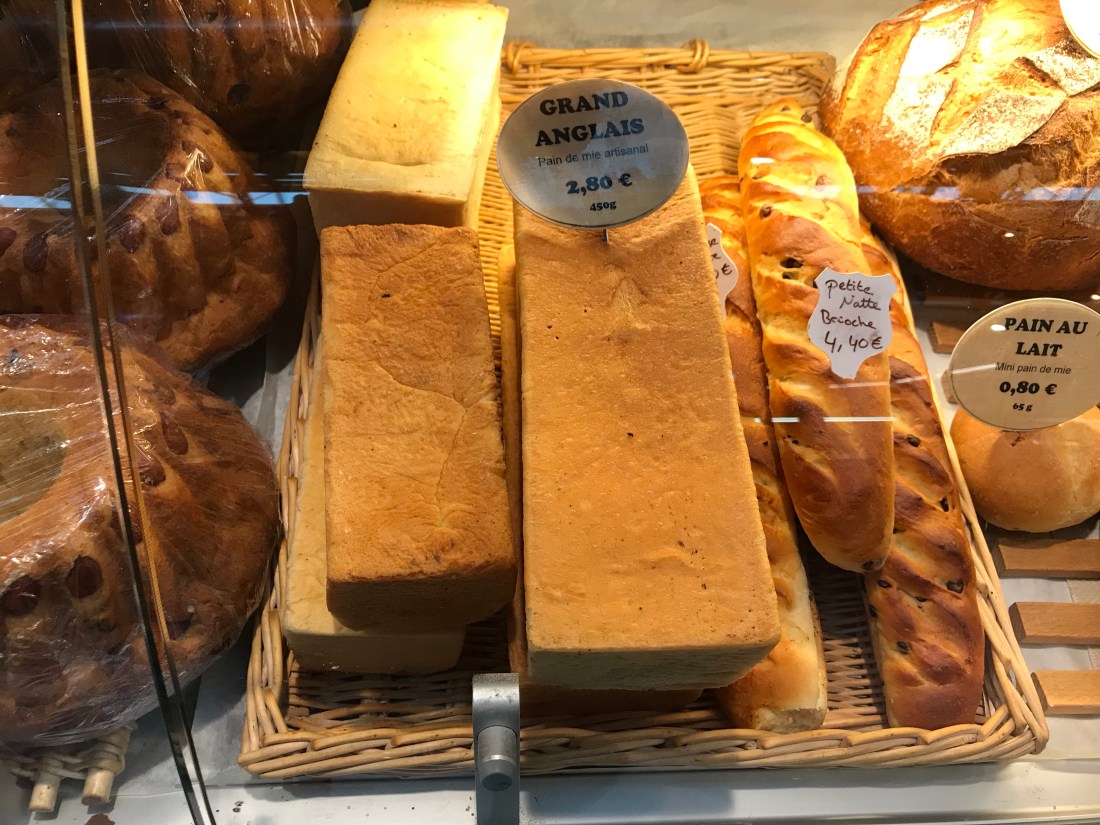
…followed by the terrible disappointment of this “Big English” loaf. (Square, probably dry, uninteresting looking thing… but someone must buy it or they wouldn’t be selling it, right??):

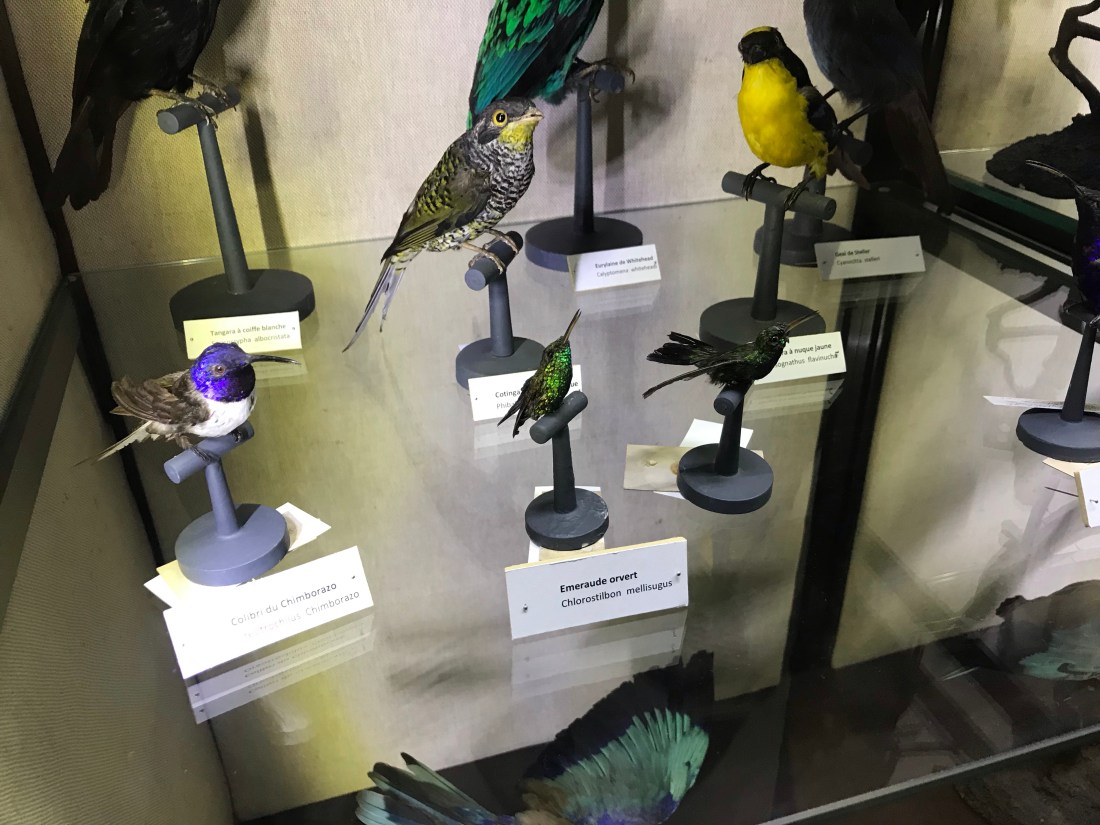
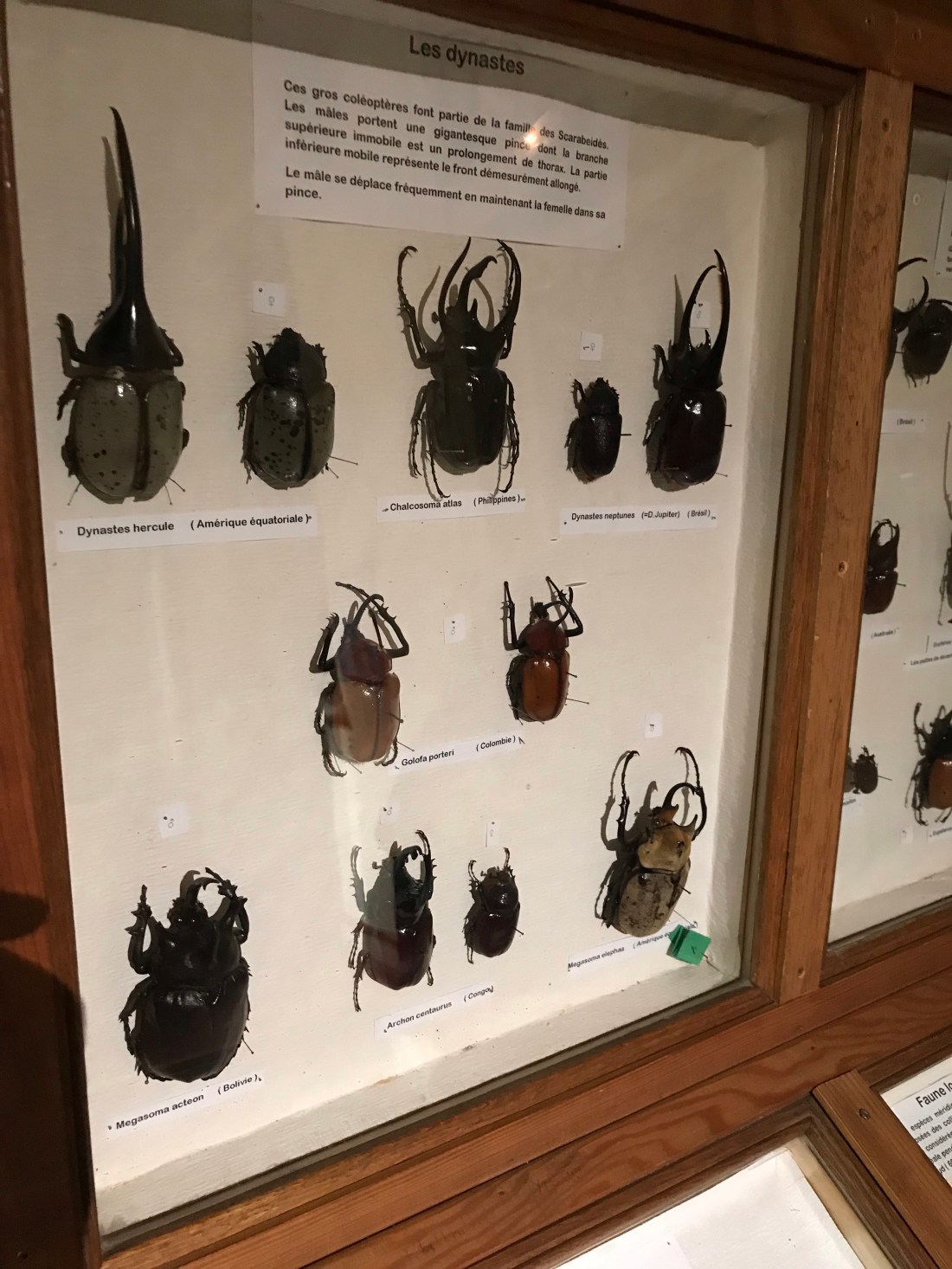
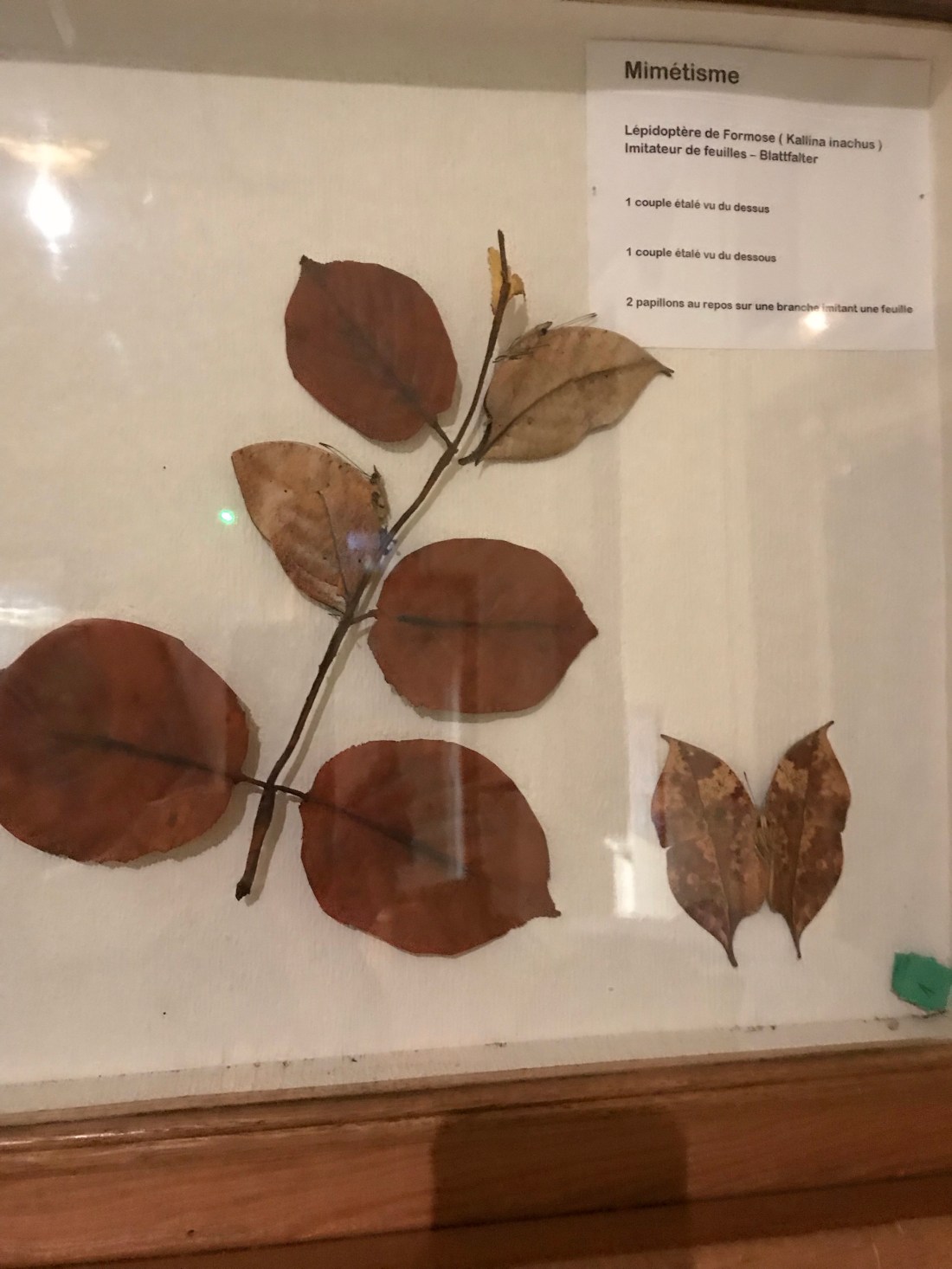
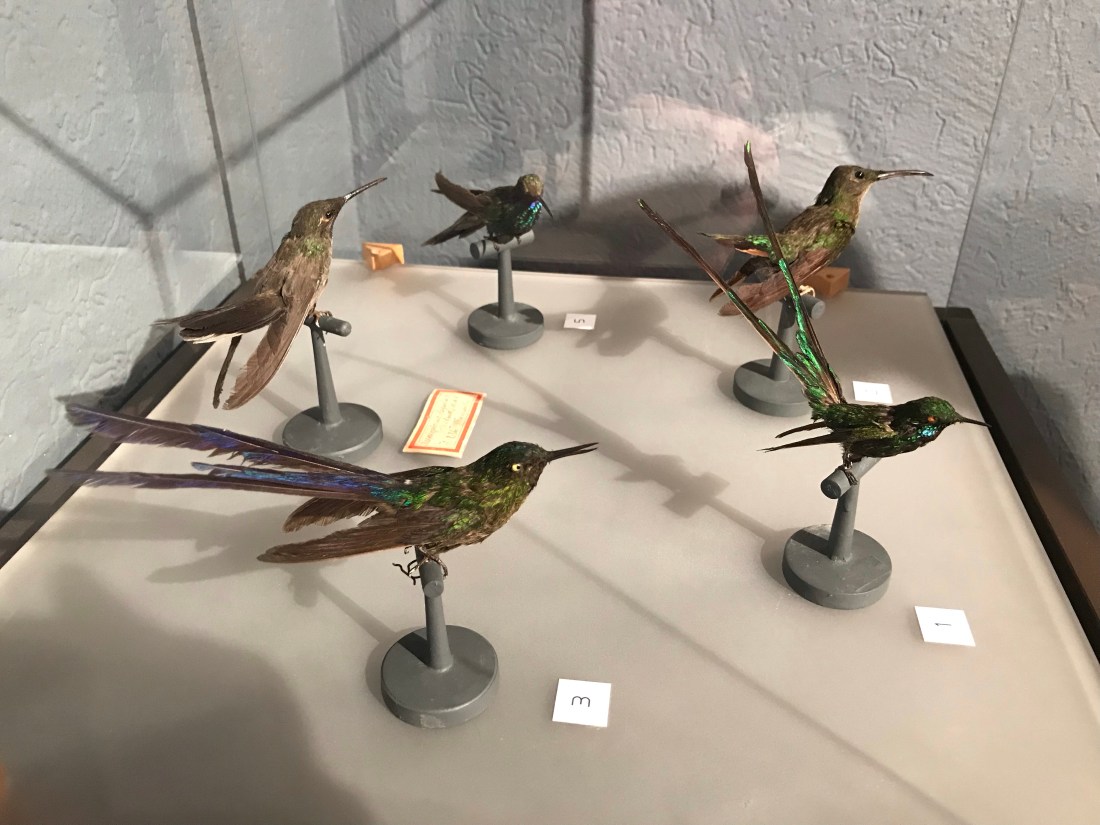
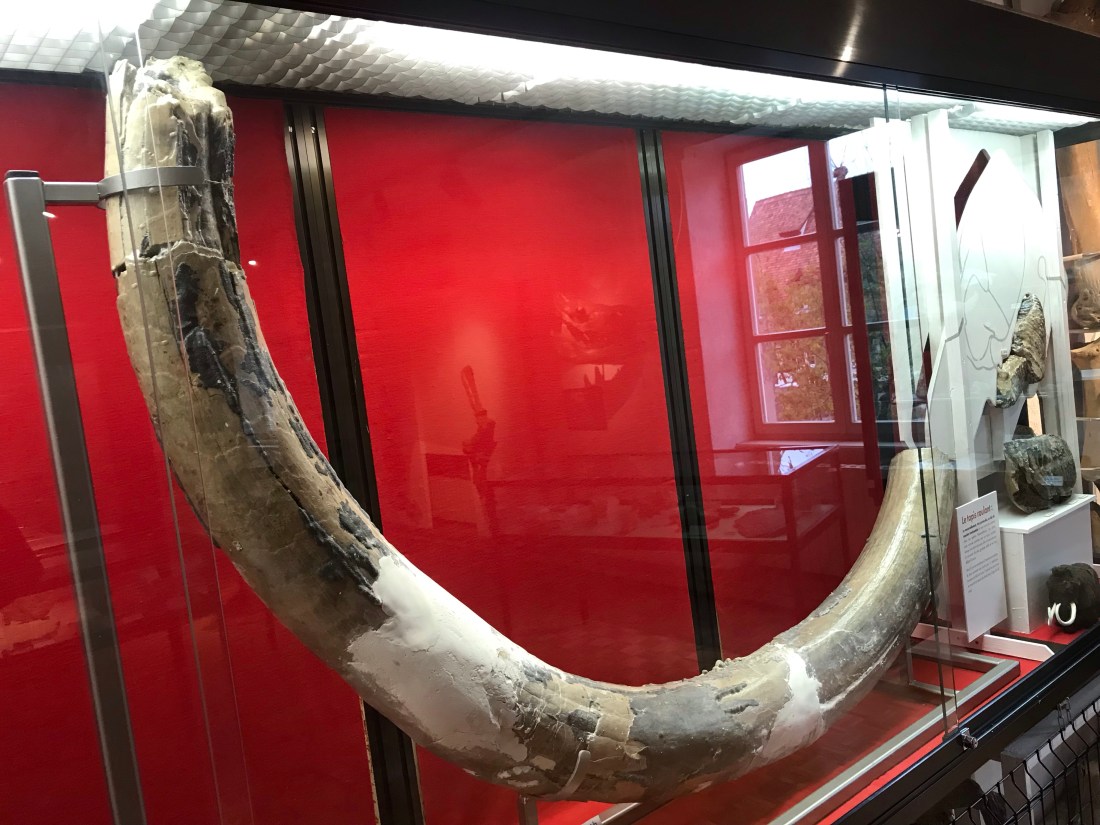
We had a look around the natural history museum, which included some great information on the current threats to biodiversity, as well as some really extraordinary stuffed / preserved animals, fossils and other artefacts.

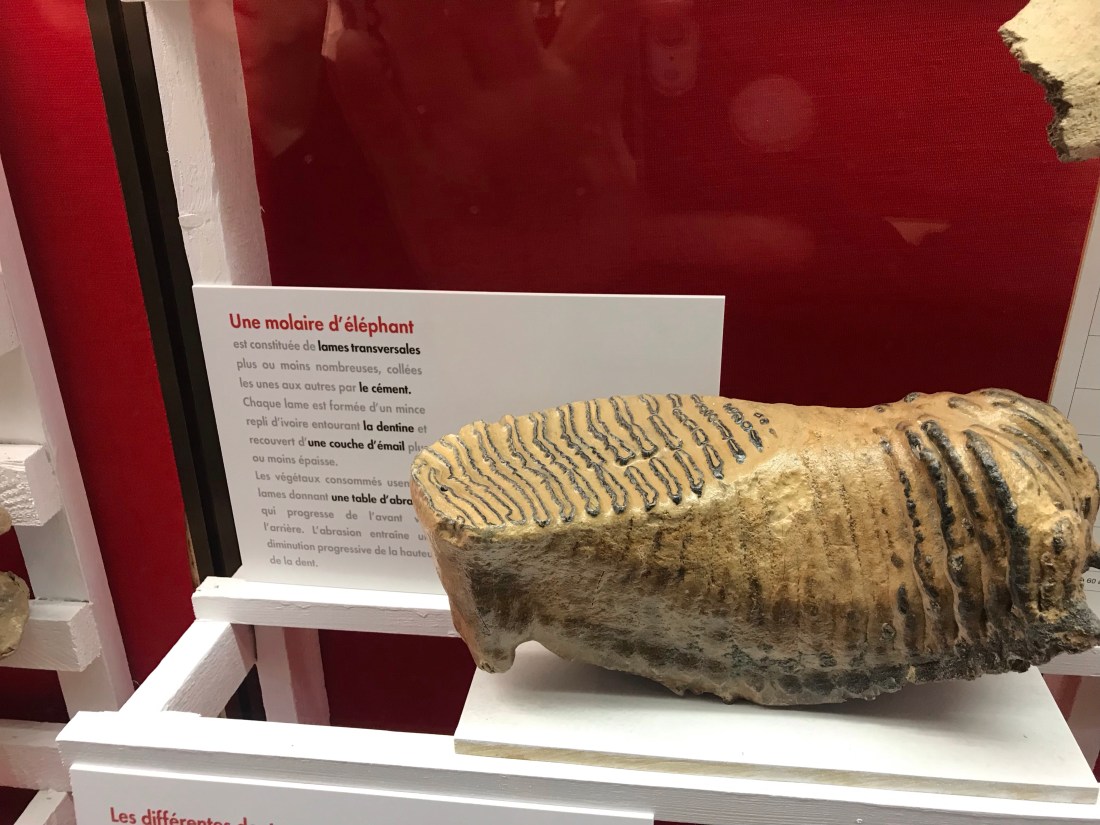
A mammoth molar:

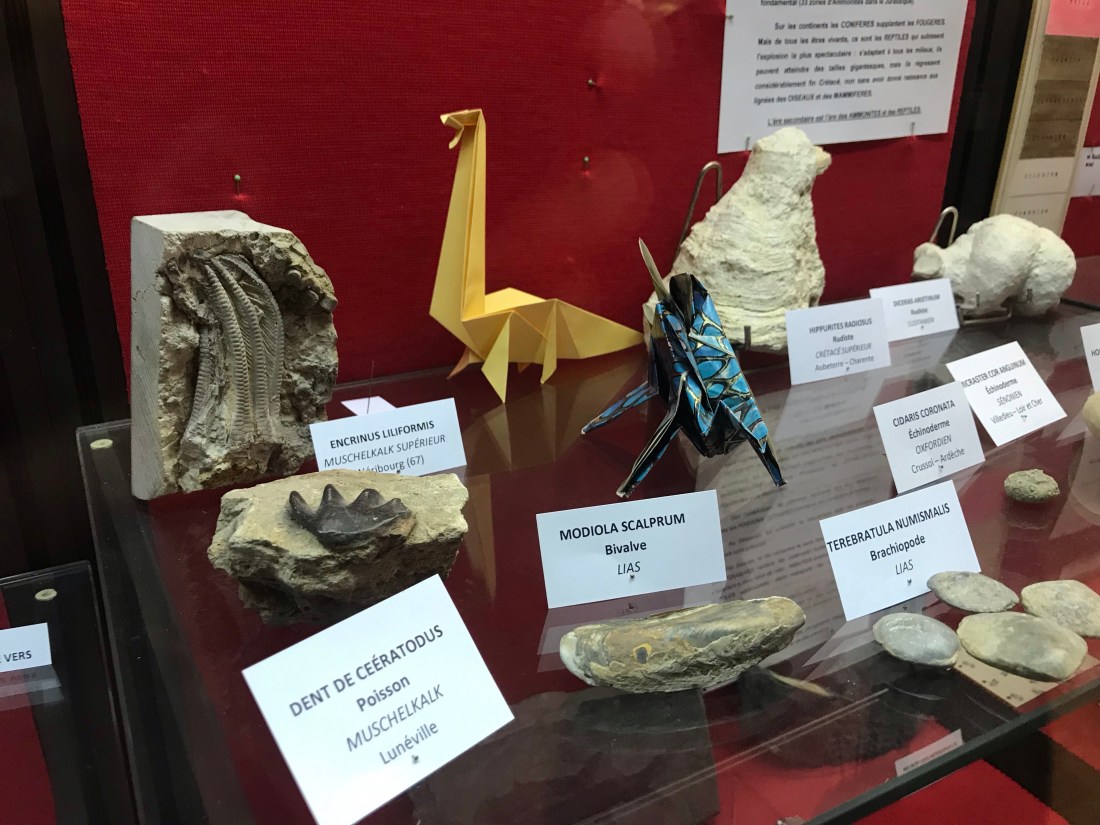
Towards the end of the exhibitions we found some interlopers. We weren’t quite sure whether this was the result of a drunken night out by the staff, or some kind of test to see how many people paid attention until the end, or some mischievous prank by some origami experts…? 😆:

The last Christmassy view of Colmar:

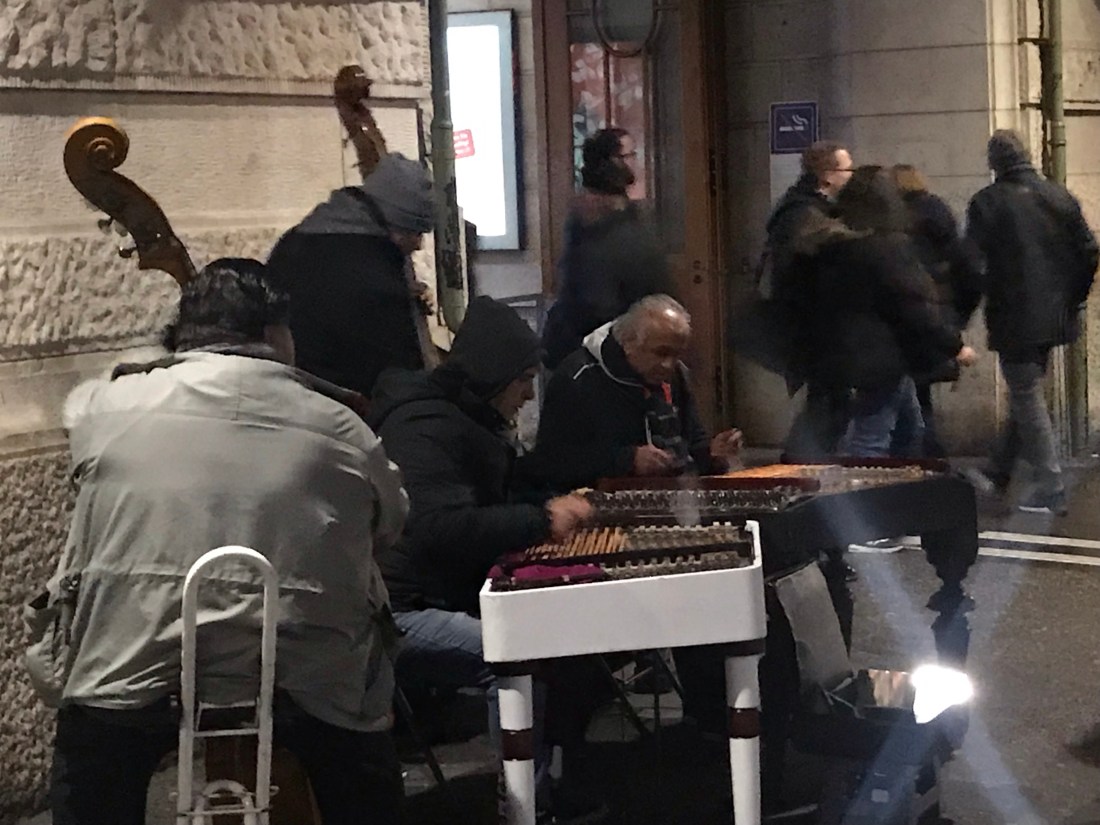
…and the fabulous band that greeted us on arrival back at Basel station. I should’ve made a little video, but we were in a rush to get the next train home.

A Grandmothers’ day

As I had to do some washing, Sr Delia suggested we spent what she called a “Grandmothers’ day” in and around the convent. We began with a very late breakfast (yesss!) which developed into a fascinating conversation with Jessica, who directs the convent choir, plays the organ and does innumerable other musical things extremely well here part time, as well as working as a professional musician in the city and beyond. Jessica is British, but has lived here for quite some time. An incredible privilege to meet such a talented person and exchange thoughts on so many things about the music industry, the church, hierarchical structures, politics, climate change, you name it!

Later in the day, we went for a little walk nearby and then Delia taught me how to make beeswax candles. At one point while we were waiting for the wax to cool, we popped into the convent café for Kaffee (in my case Tee!) und Kuchen. When in Rome…

Basel (ii)

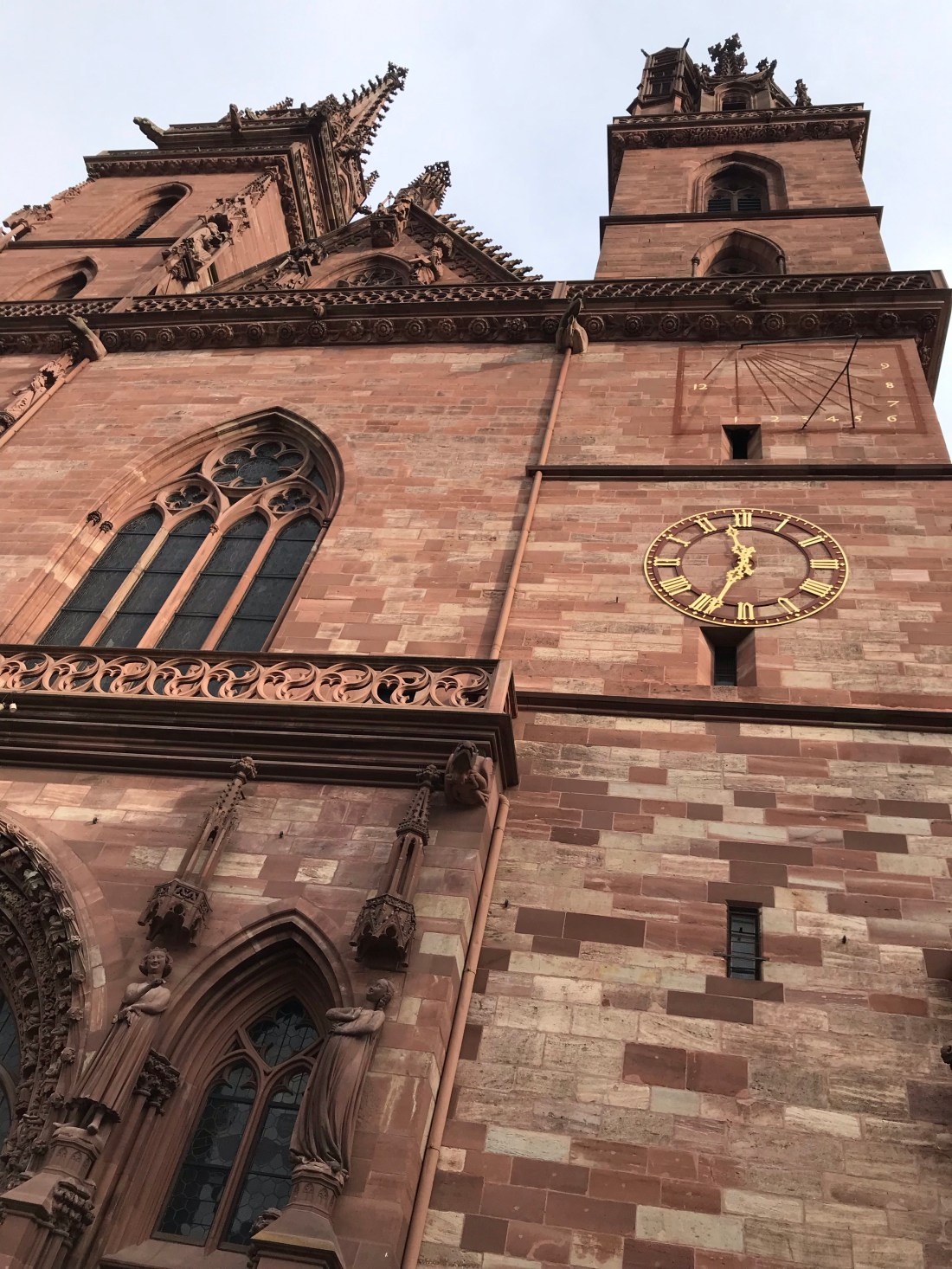
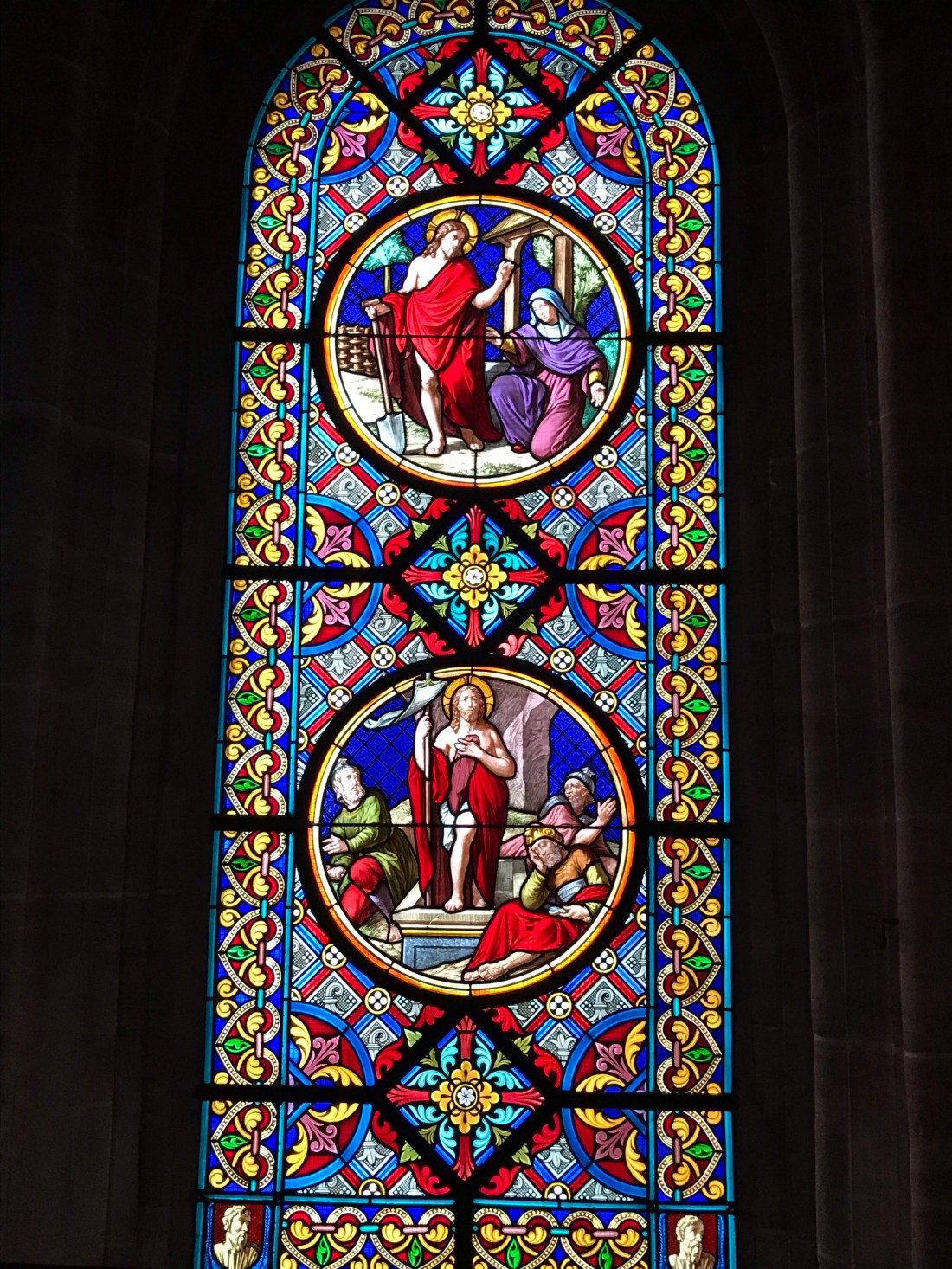
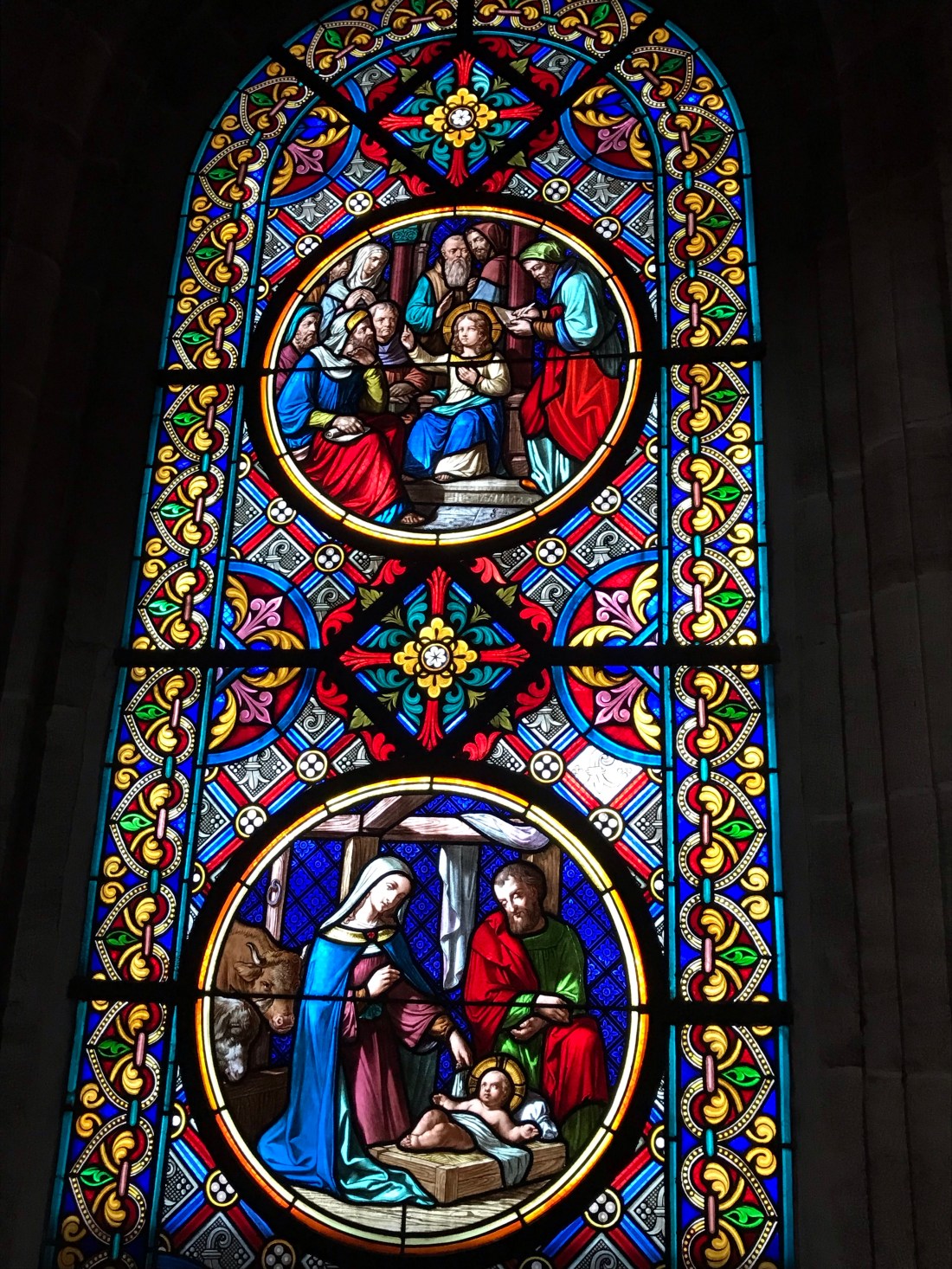
Basel Münster

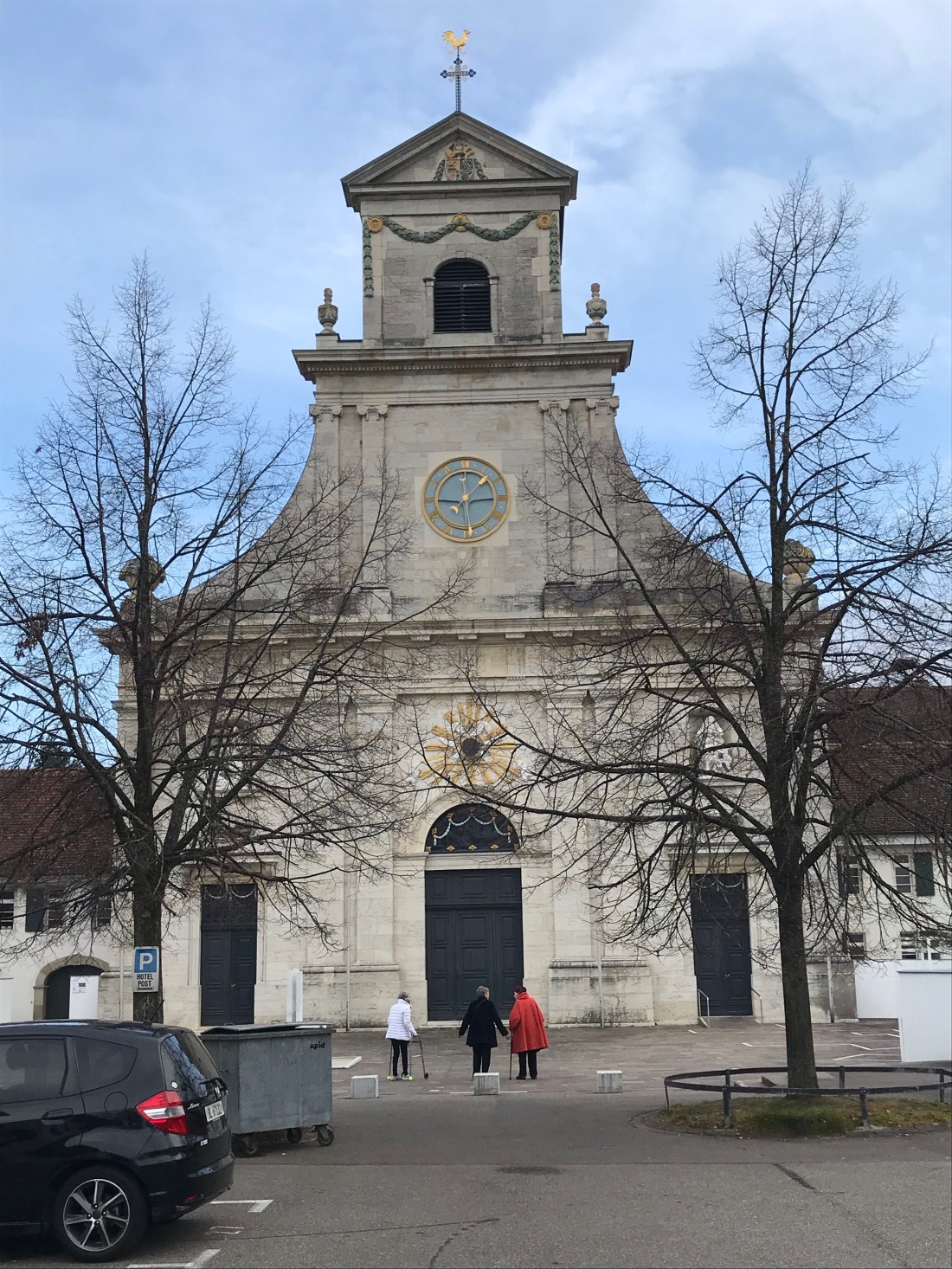
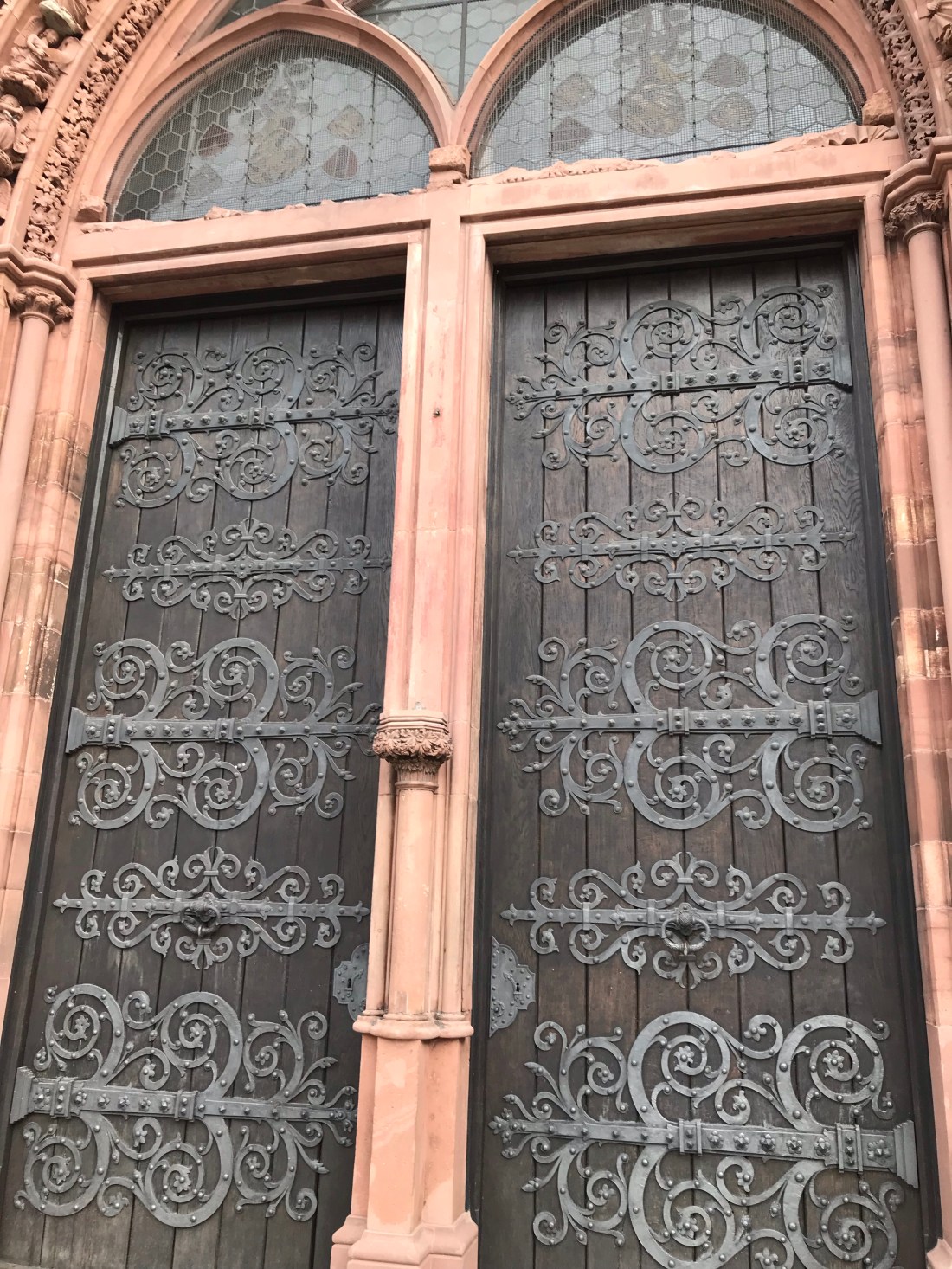
Below, you can see a plinth in between the doors, where once a statue of Mary, Mother of Jesus stood. The statue was removed in the Reformation, along with various other more Catholic bits of decor.

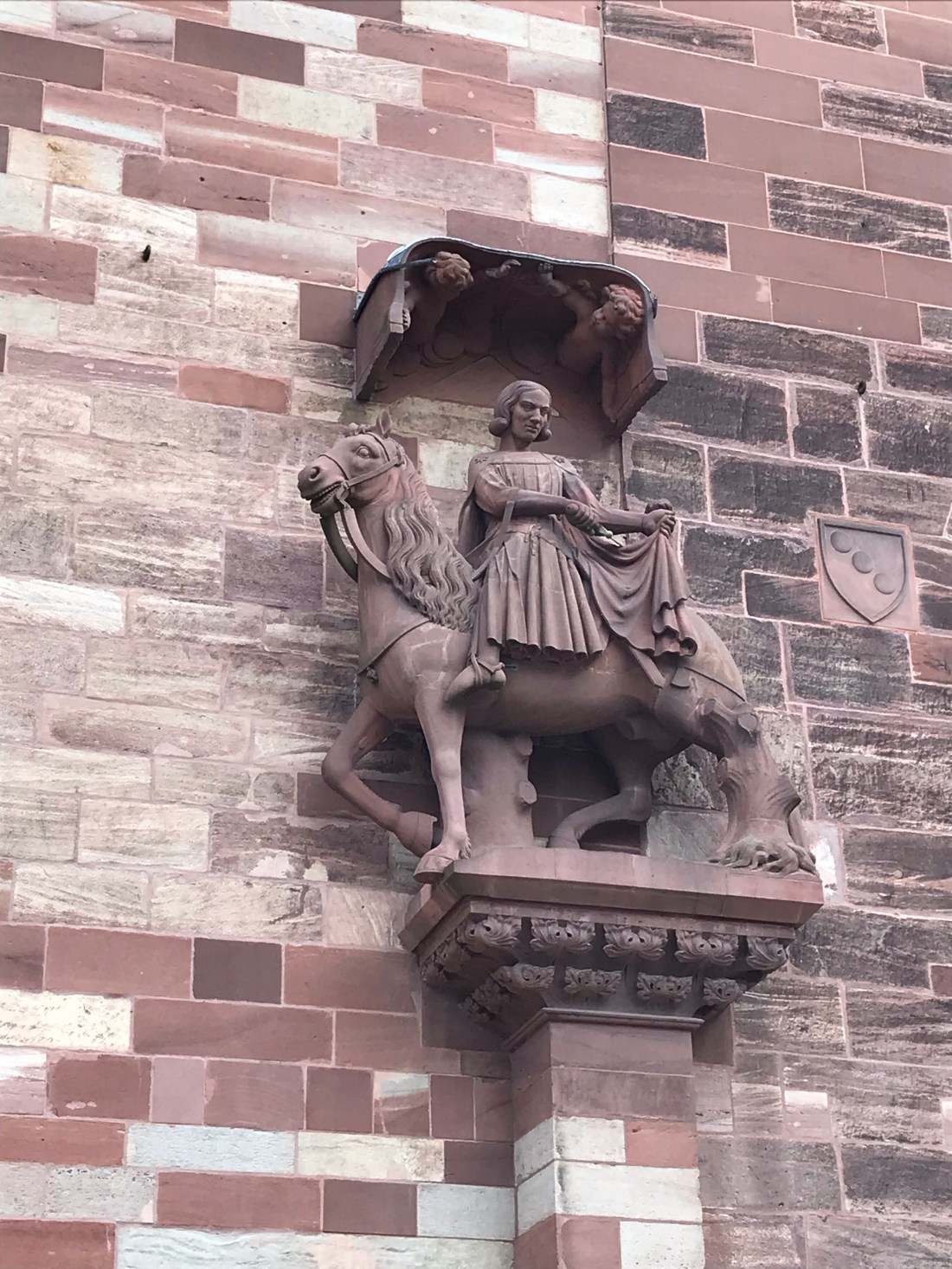
If I remember correctly, below is the figure of St Martin (you’ve a Saint who shares your name, brother!), who in the story cut off his cloak to give it to a beggar. But apparently at some point historically, the people didn’t want an unsightly beggar depicted on the front of their minster, so they changed the beggar into a tree stump. So now St Martin is apparently cutting off his cloak… for no good reason!!

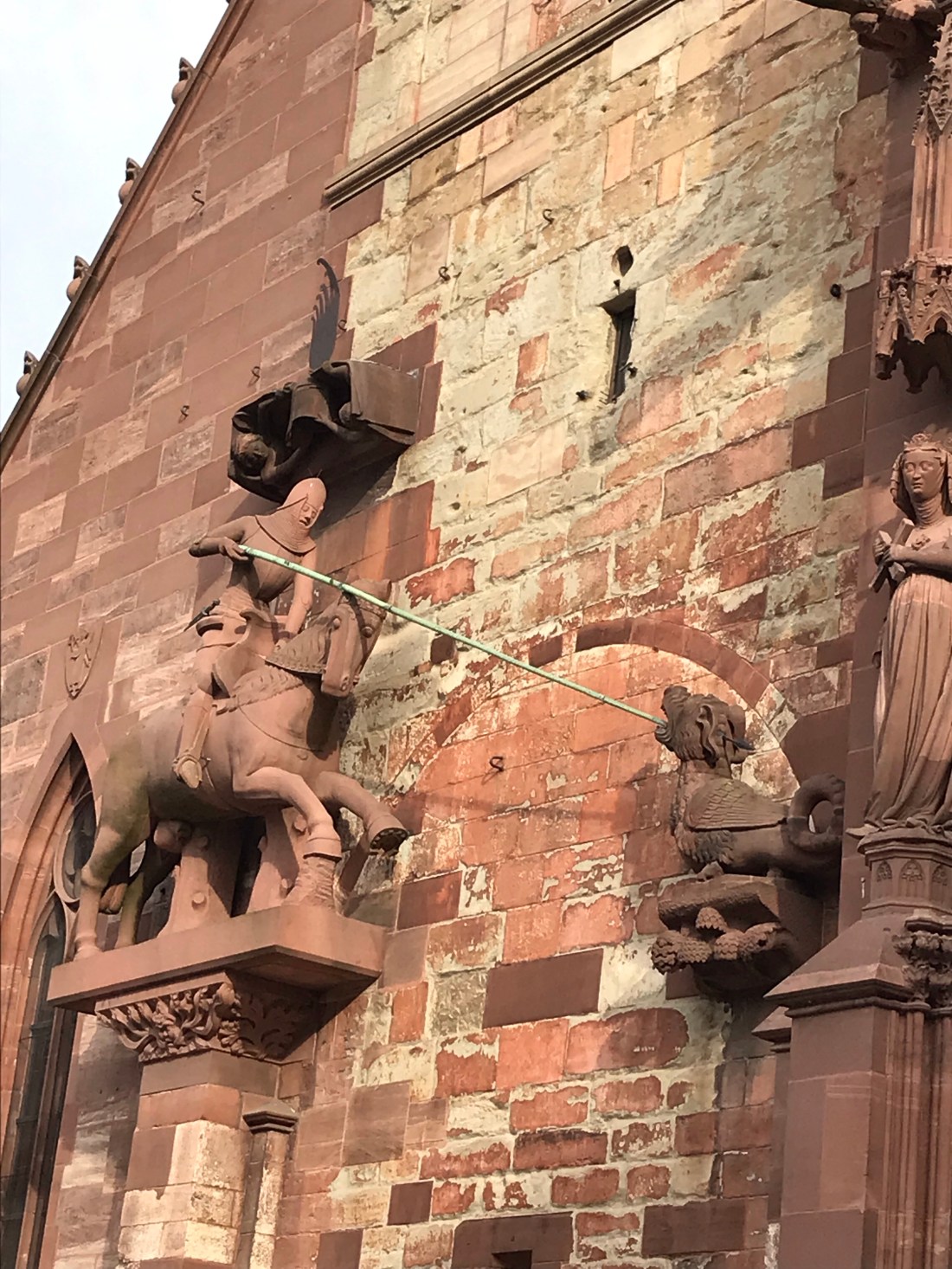
Here’s St George, slaying a somewhat puny dragon:

And here’s a figure representing temptation. From the front, he’s all good looking charm and friendliness, but behind his back he is full of worms…

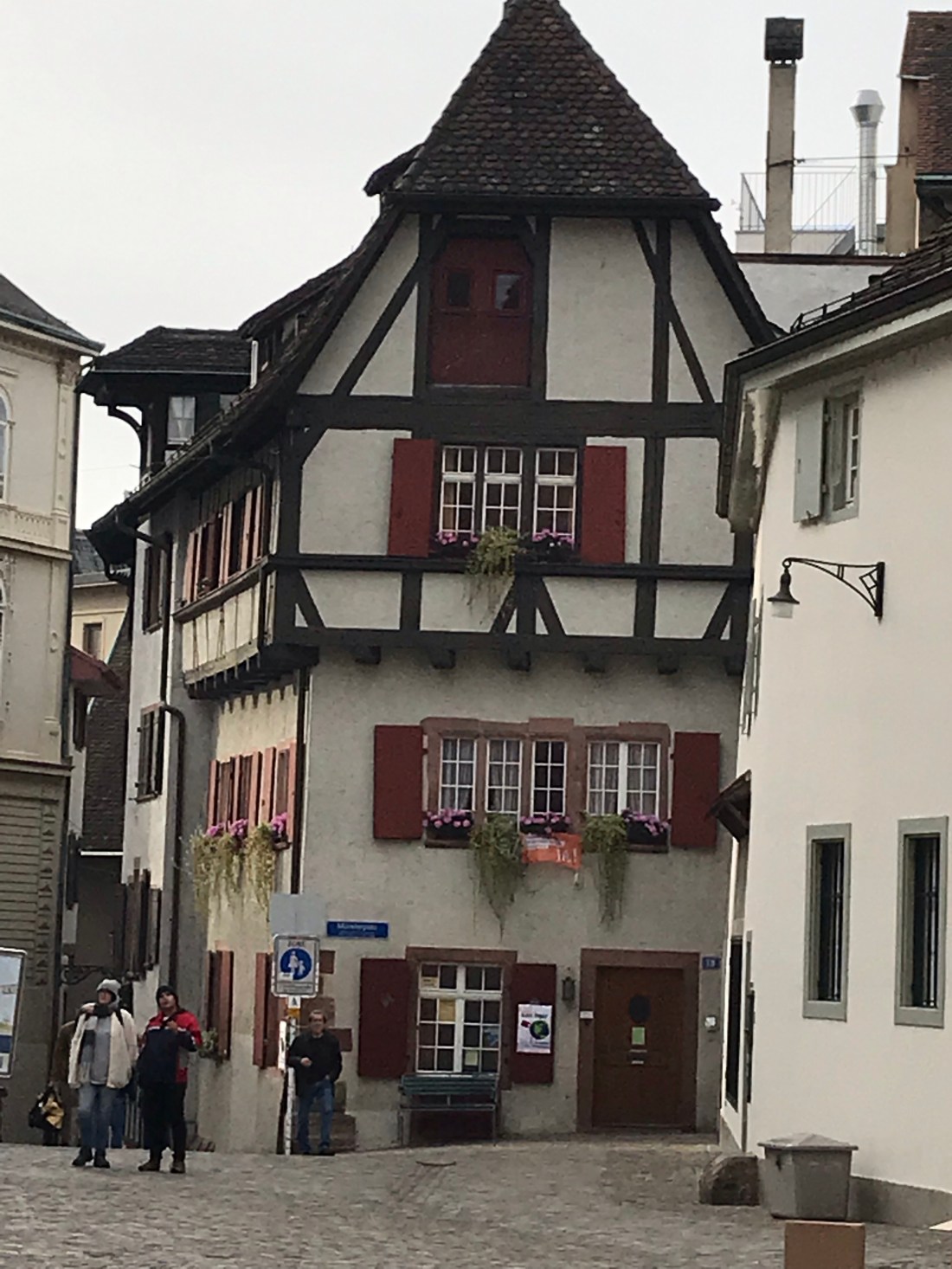
Here’s the verger’s house just opposite the minster, where three of the sisters from Delia’s community work, offering prayer for people and various other kinds of outreach to those in need:

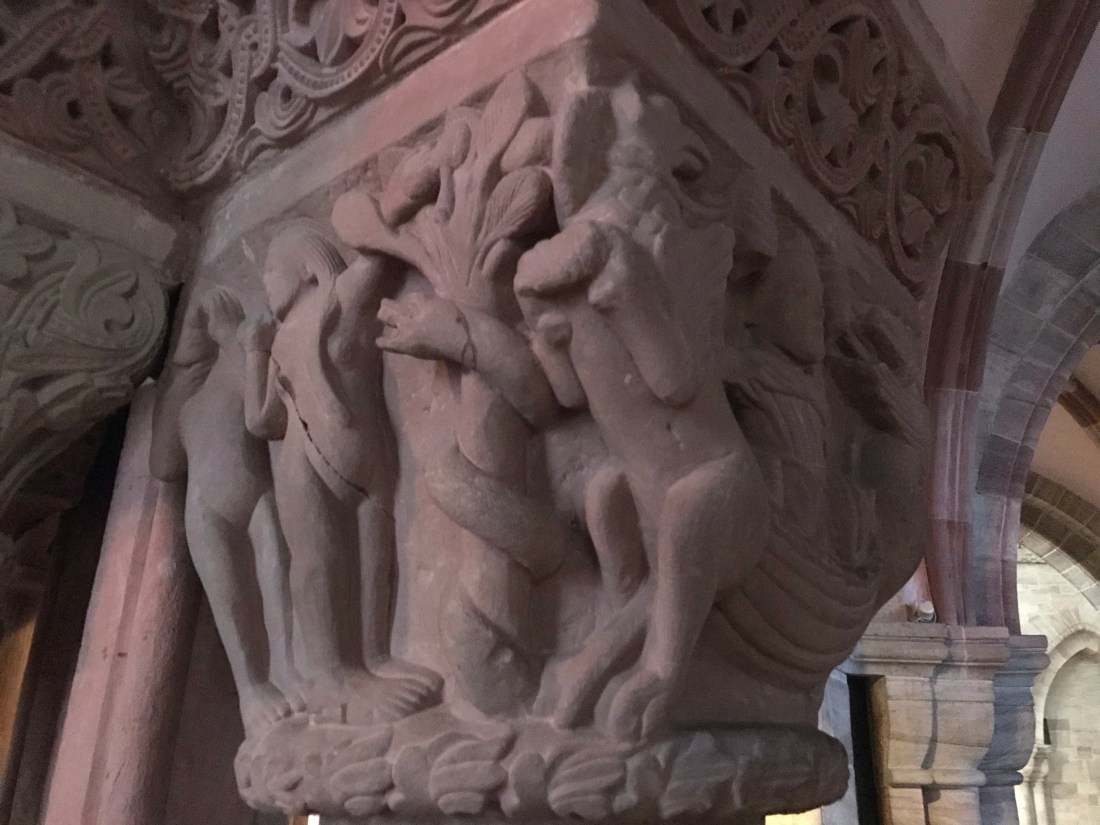
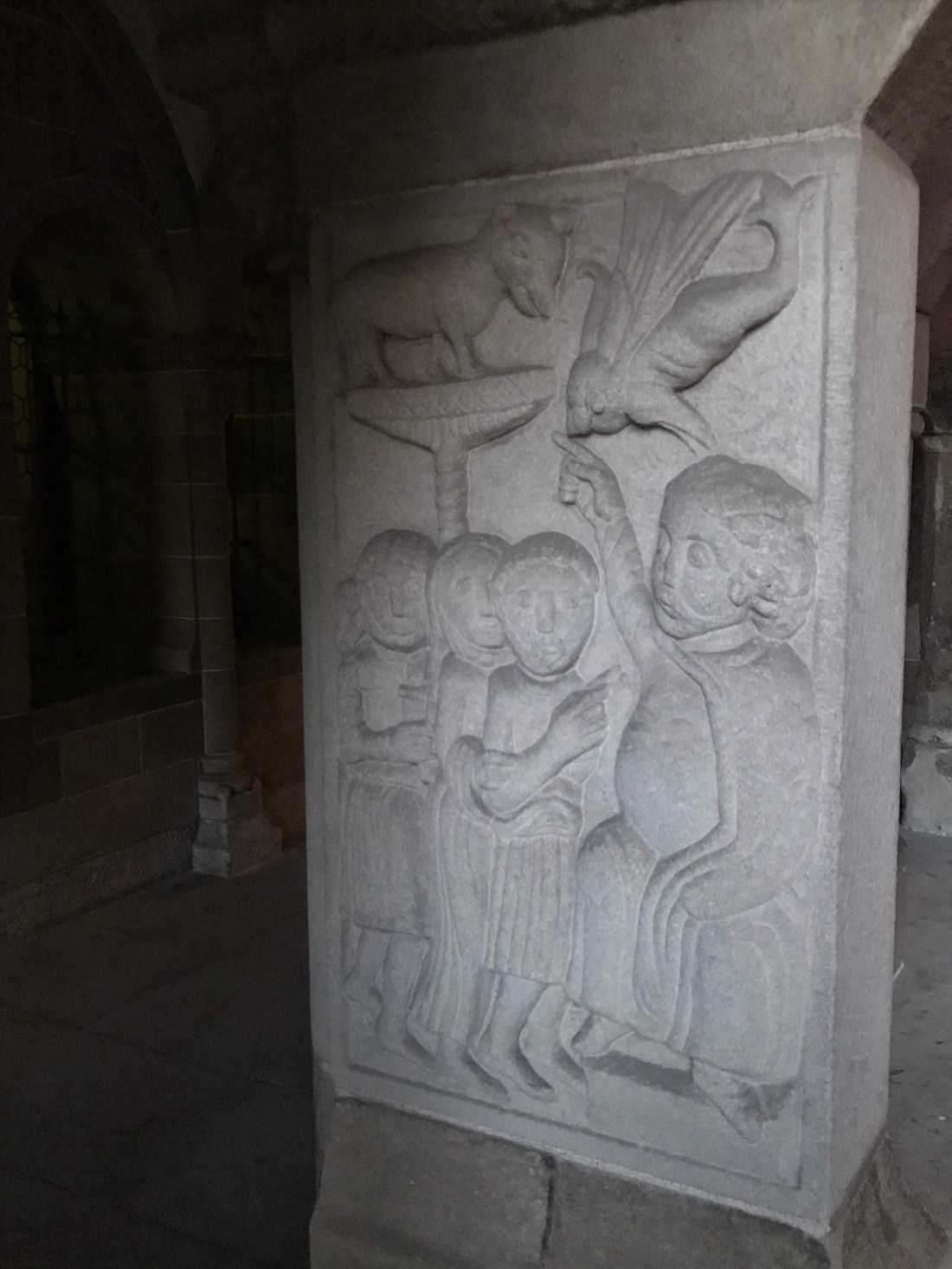
We admired some of the older stonework inside the minster. Some of it depicts Bible stories like this piece showing Adam and Eve and the serpent:

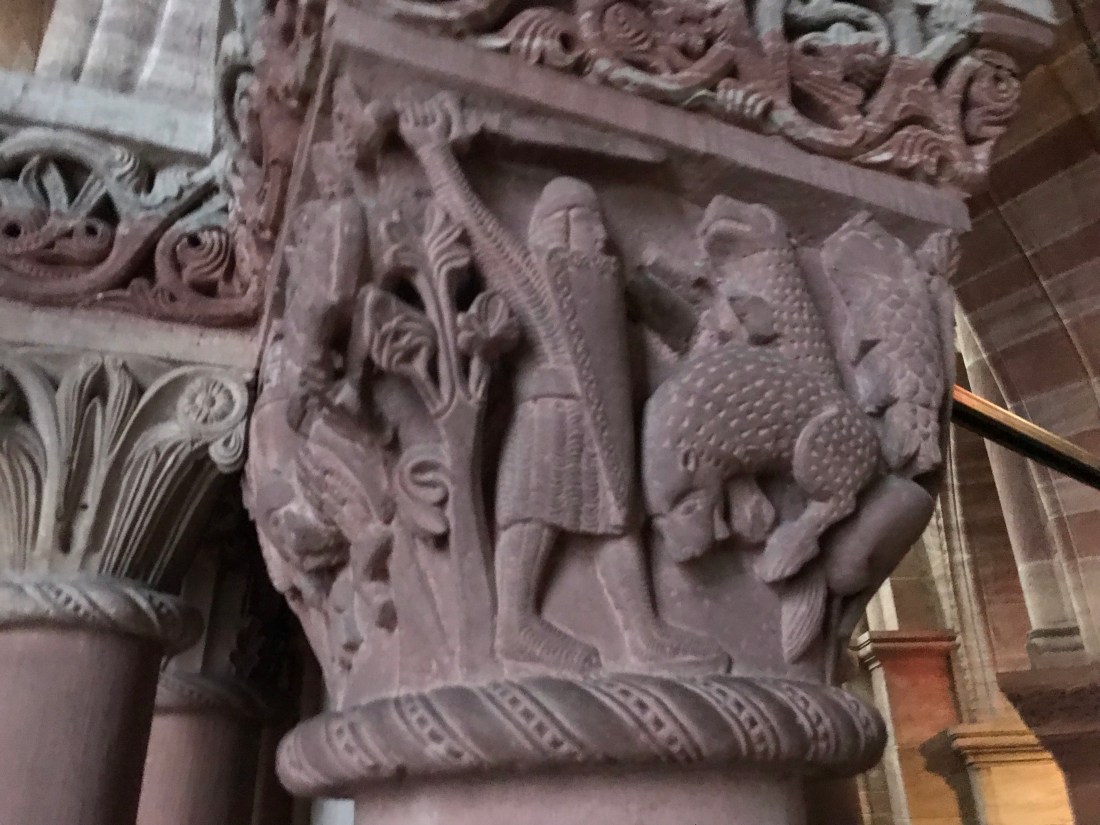
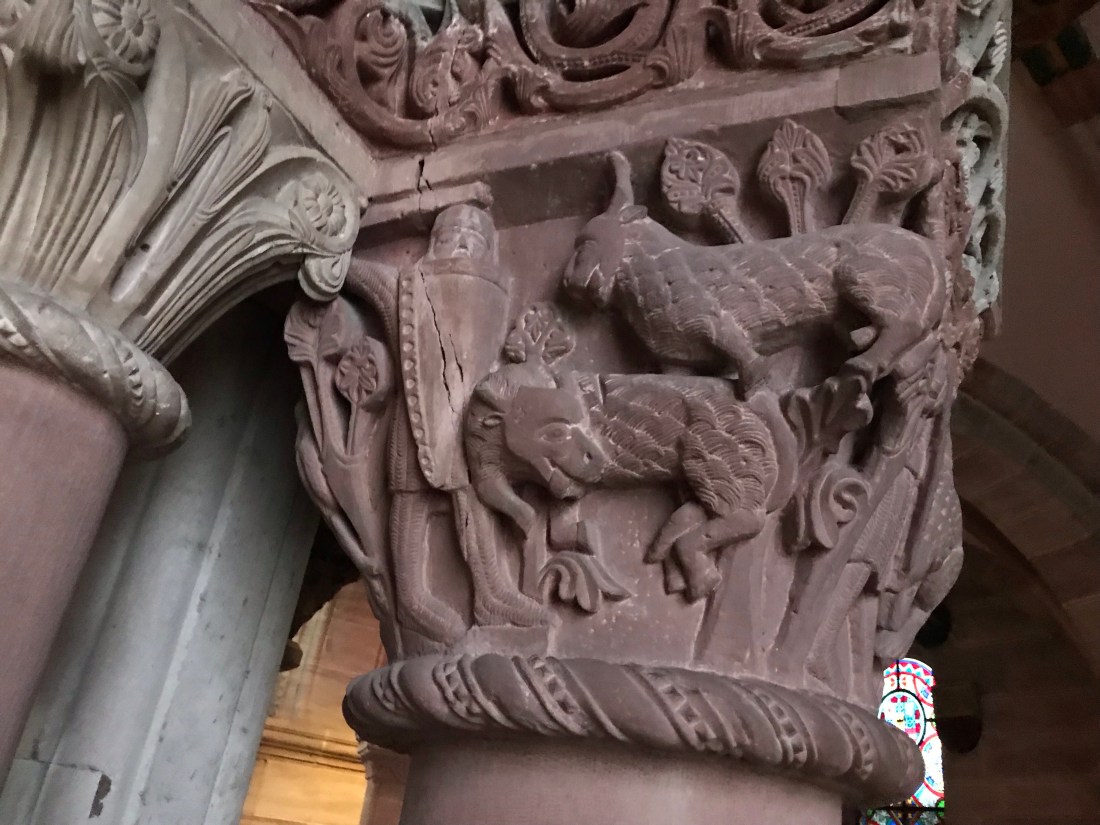
But we thought some of the other pieces were of more questionable provenance. Probably medieval fight scenes or from stories that do not necessarily have much to do with the Christian tradition. Although this minster was adapted in the Reformation, they left some of the questionable decor alone.

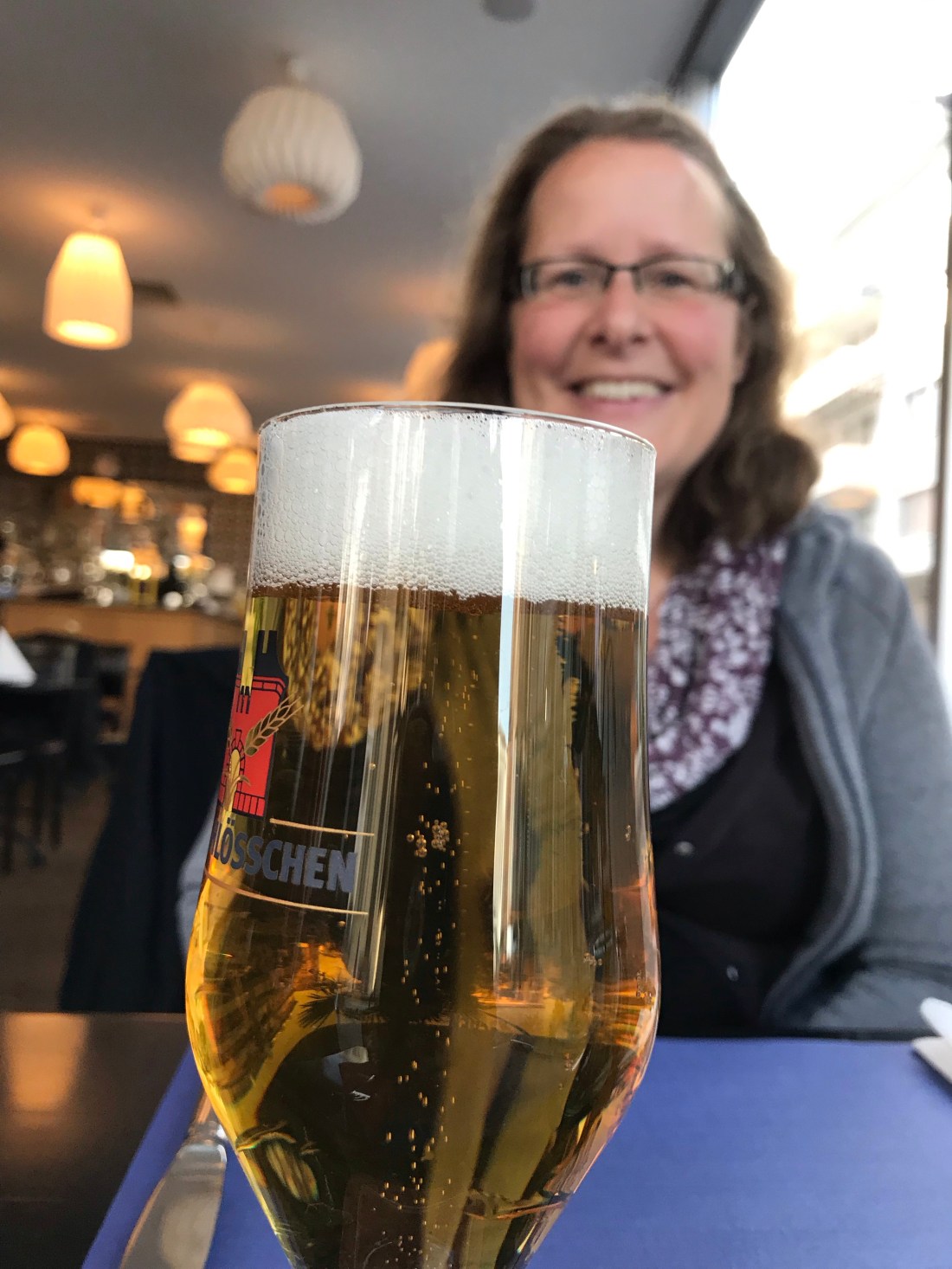
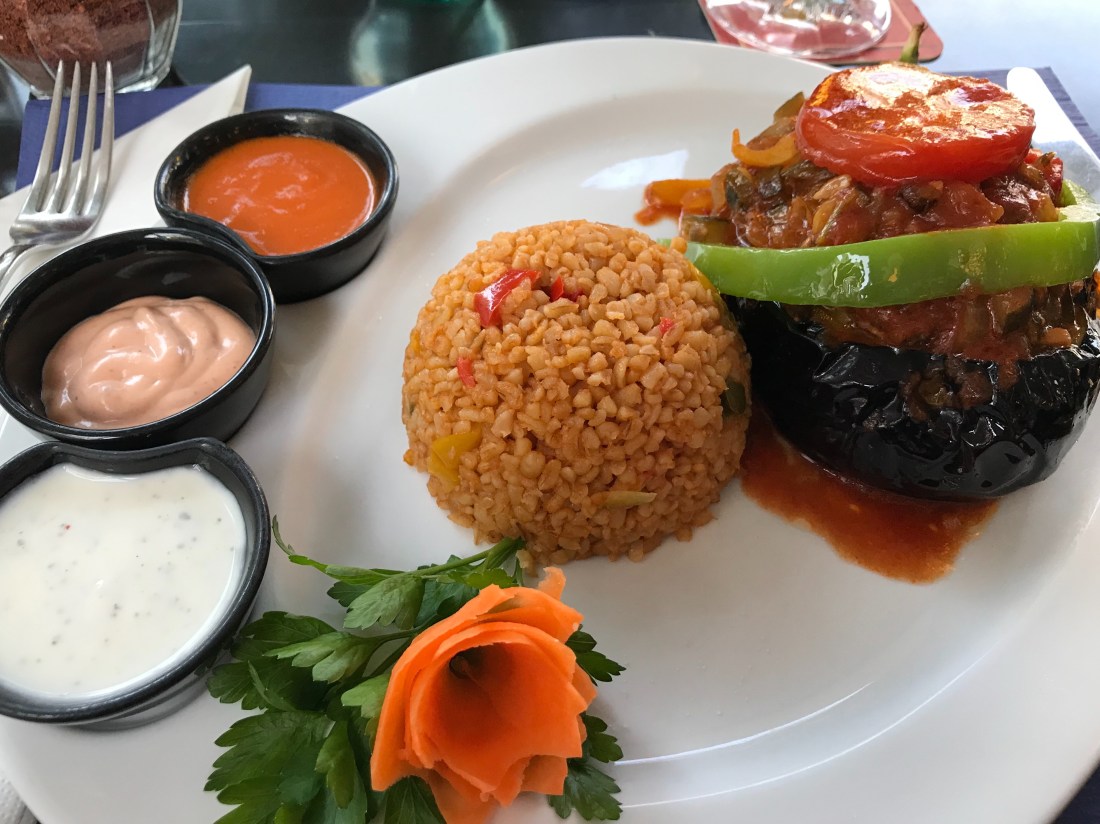
We enjoyed looking around the older parts of the city and then had lunch in a very nice Turkish restaurant, where I had the obligatory beer. (Not ein Grosses though; moderation in all things!)

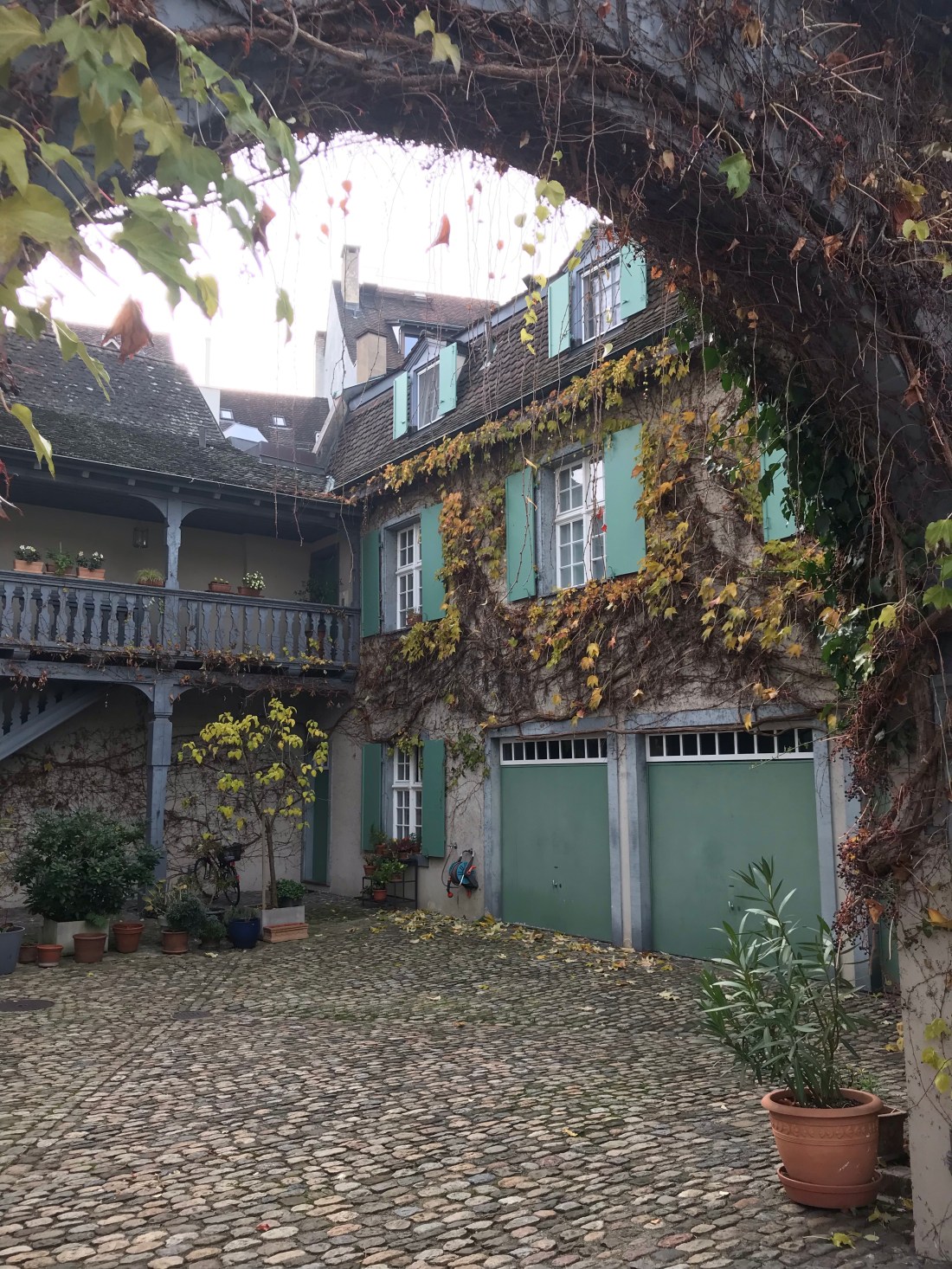
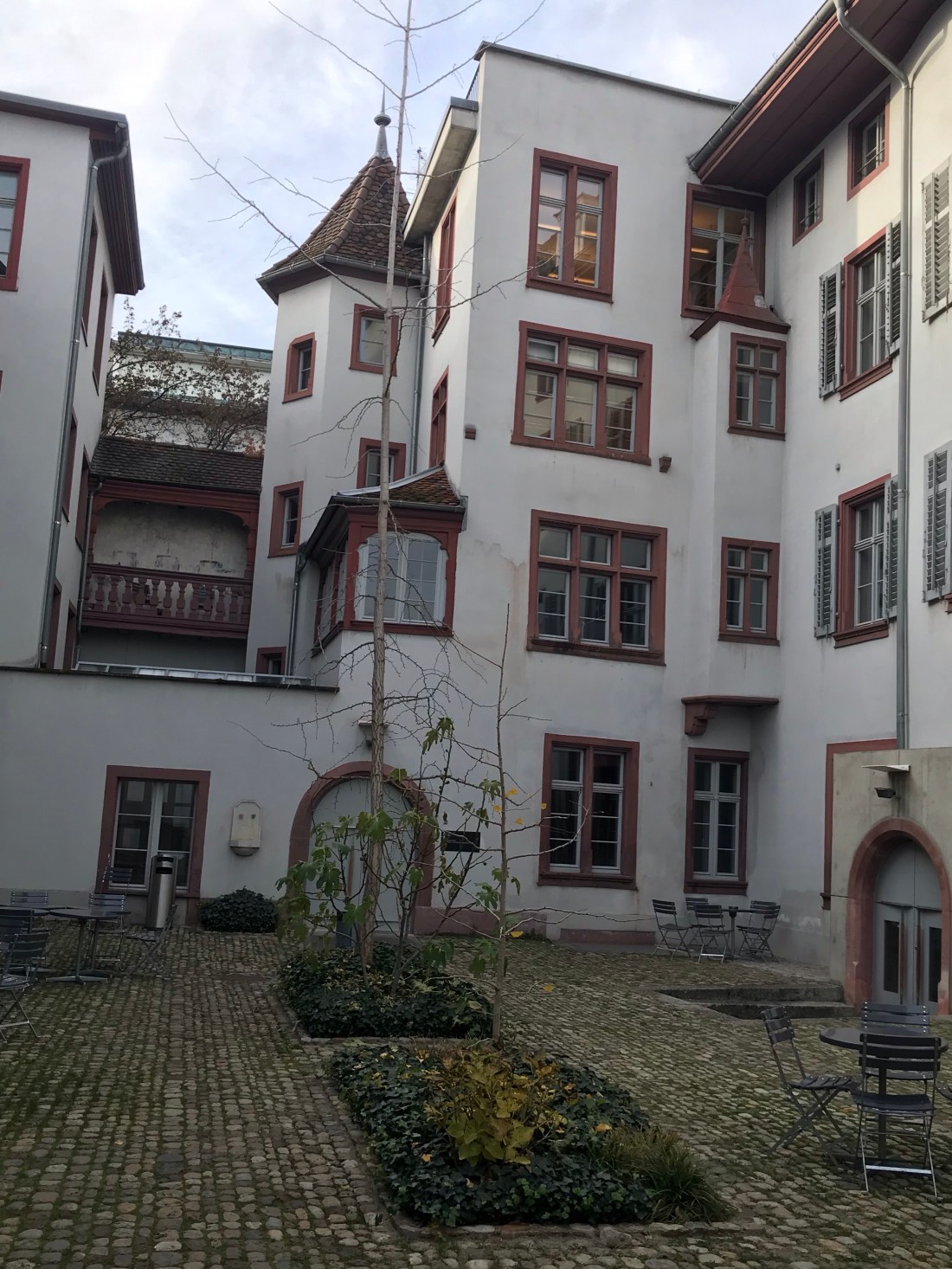
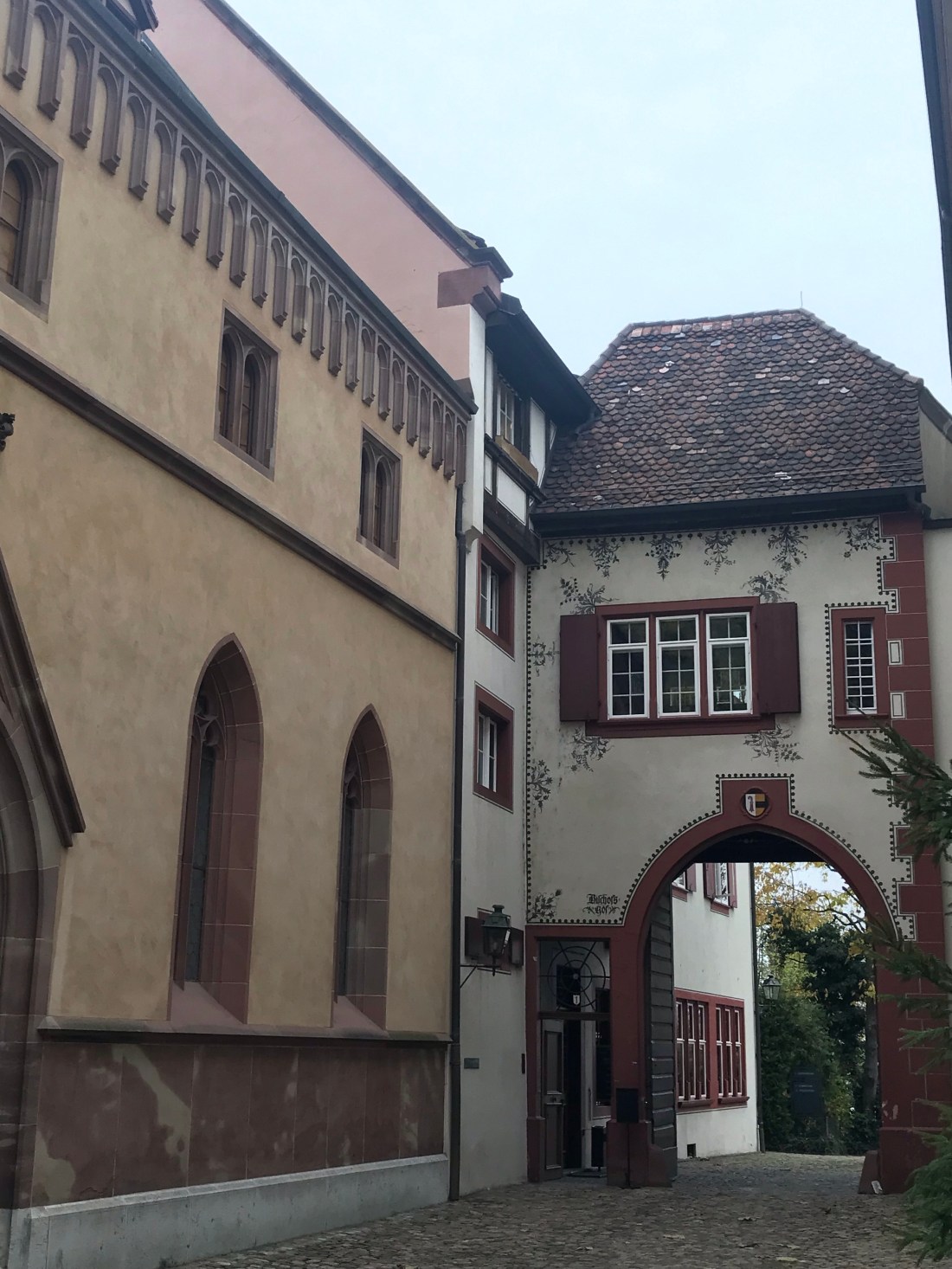
We explored some beautiful courtyards and some of the historical buildings now owned by the university:

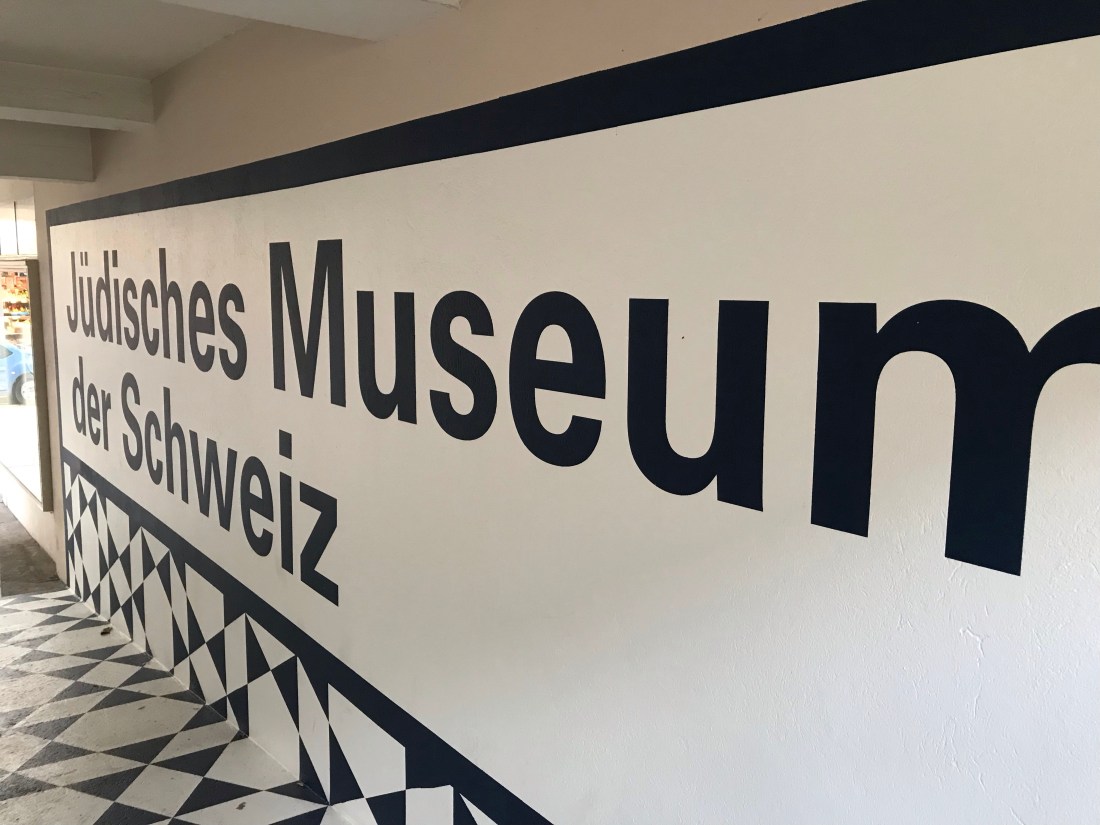
We visited the Jewish Museum, which gave some really interesting insights into the realities of Jewish life in Switzerland at various points of history. The significance and uses of the artefacts on display are explained by various Jewish people (of all ages including a young girl) in the somehow very Jewish video guide as you go around. (The people in the guide are sometimes quite funny and give the impression of always being open to debate, while stating some pretty harsh facts about how Jews have been caricatured and how they were treated at various points in history.)

This is part of a tombstone from the Middle Ages. Apparently a lot of Jewish tombstones like it have been discovered under the university buildings in Basel.

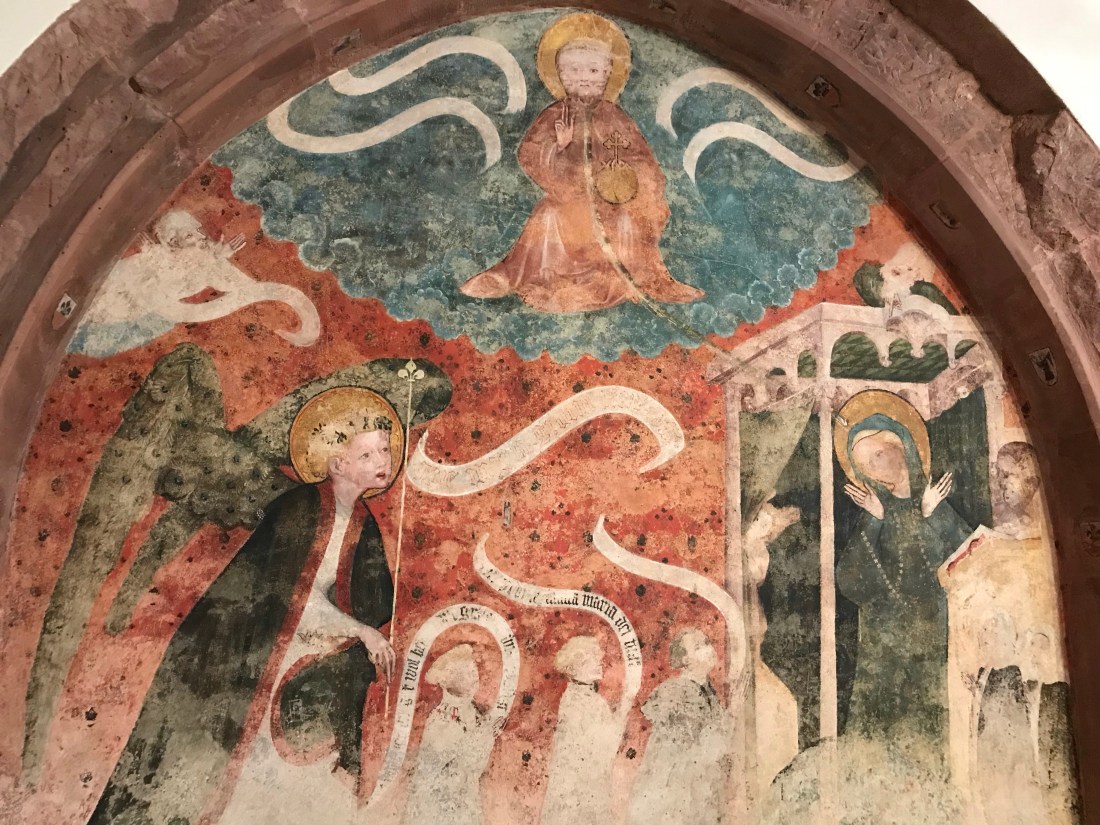
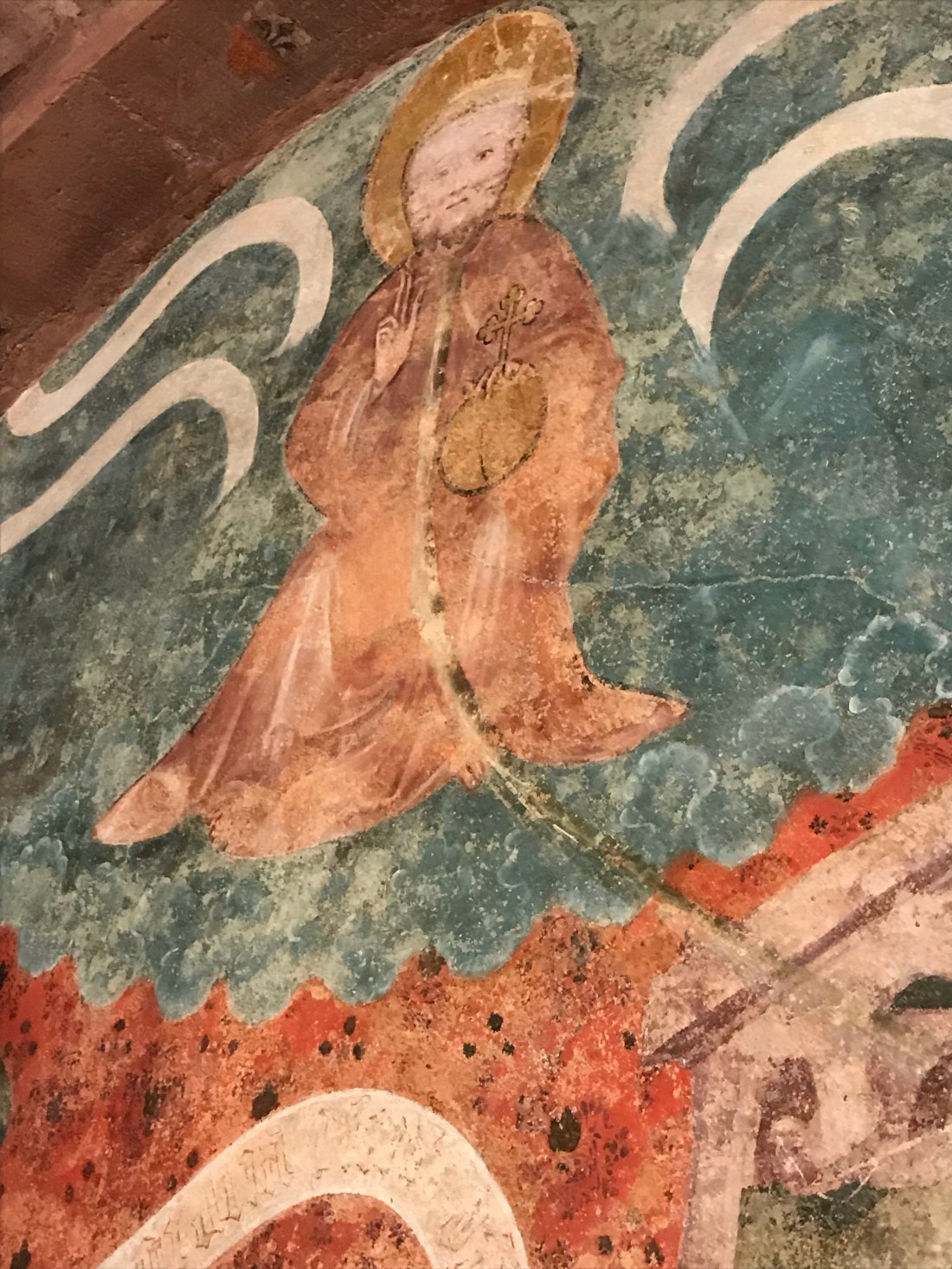
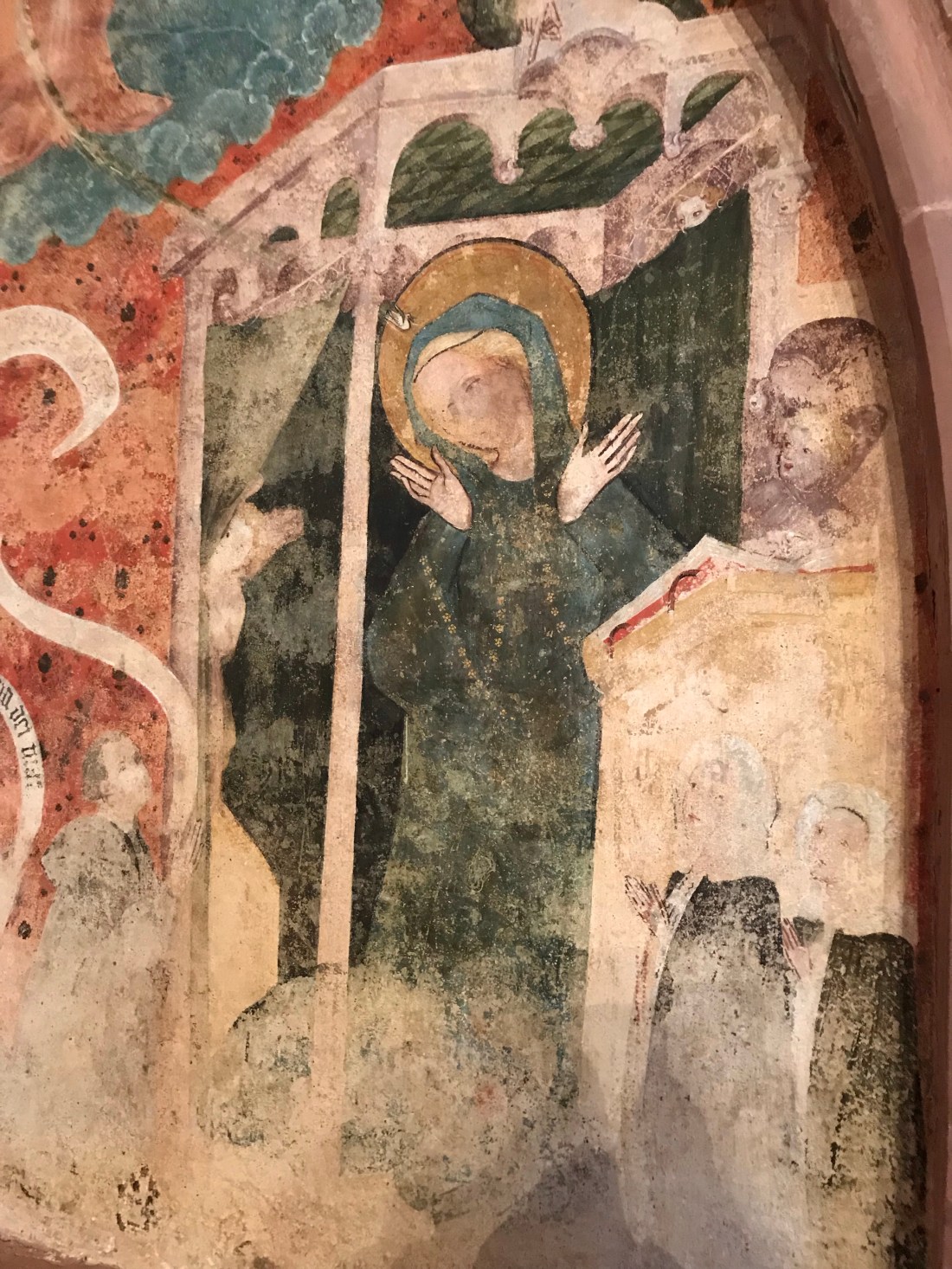
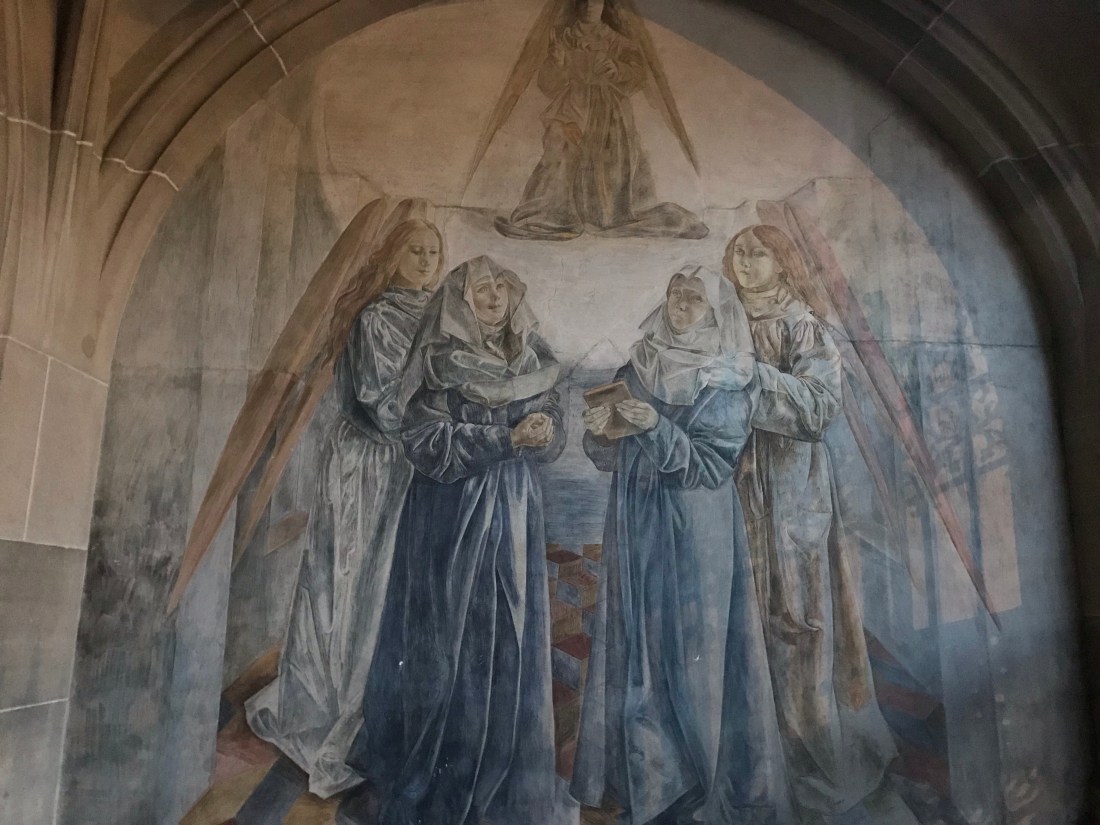
In another church near the main university building, Delia showed me an unusual icon, depicting the trinity as one being with three faces. You can tell this is a Protestant city by the fact that this precious fresco is in a room now used for the storage of tables and chairs etc!

This is the figure with three faces:

The line that extends from God’s mouth ends near Mary’s head in the form of a tiny dove, the sign of the Holy Spirit:

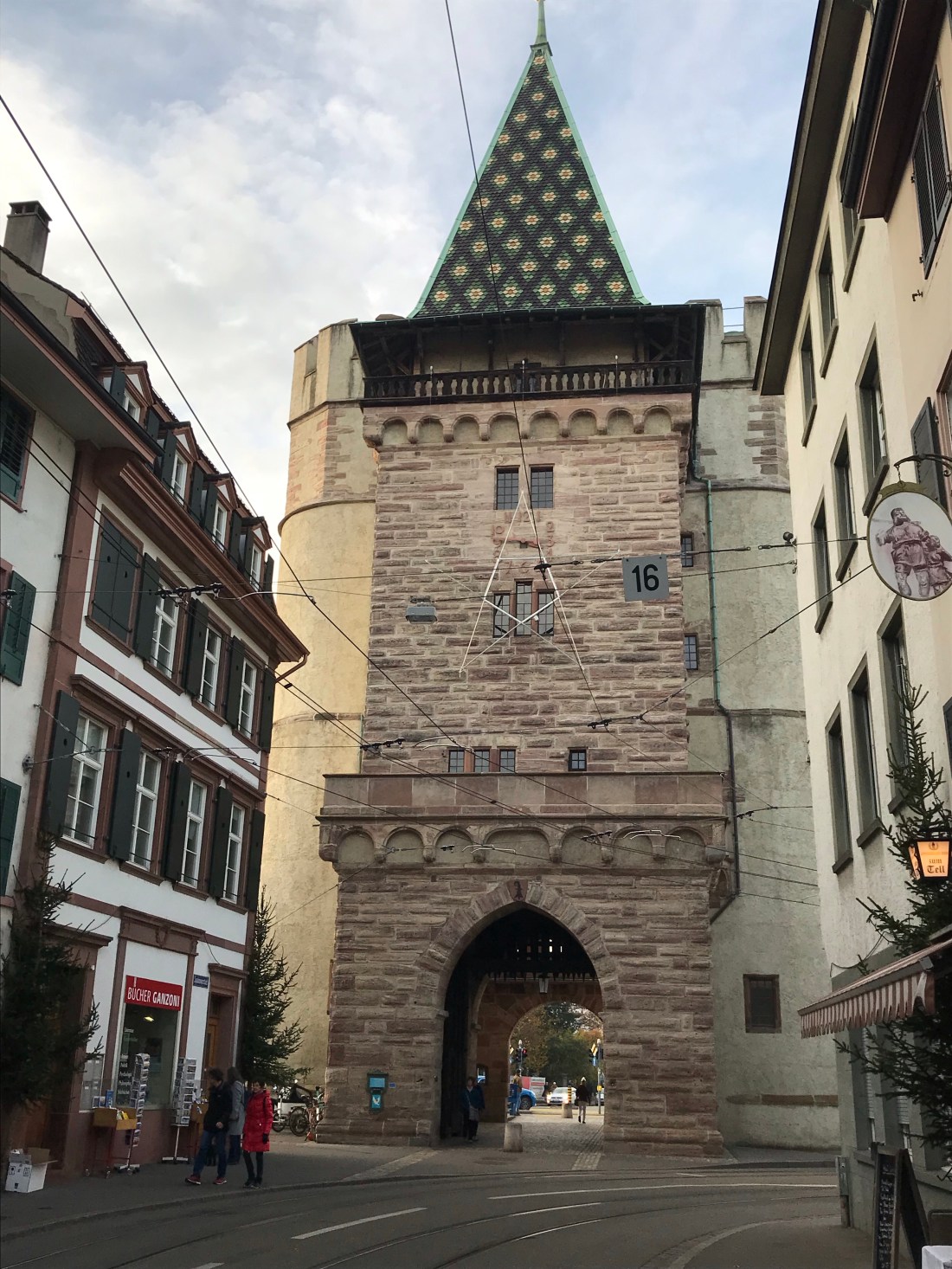
A well preserved historical gate of the city:

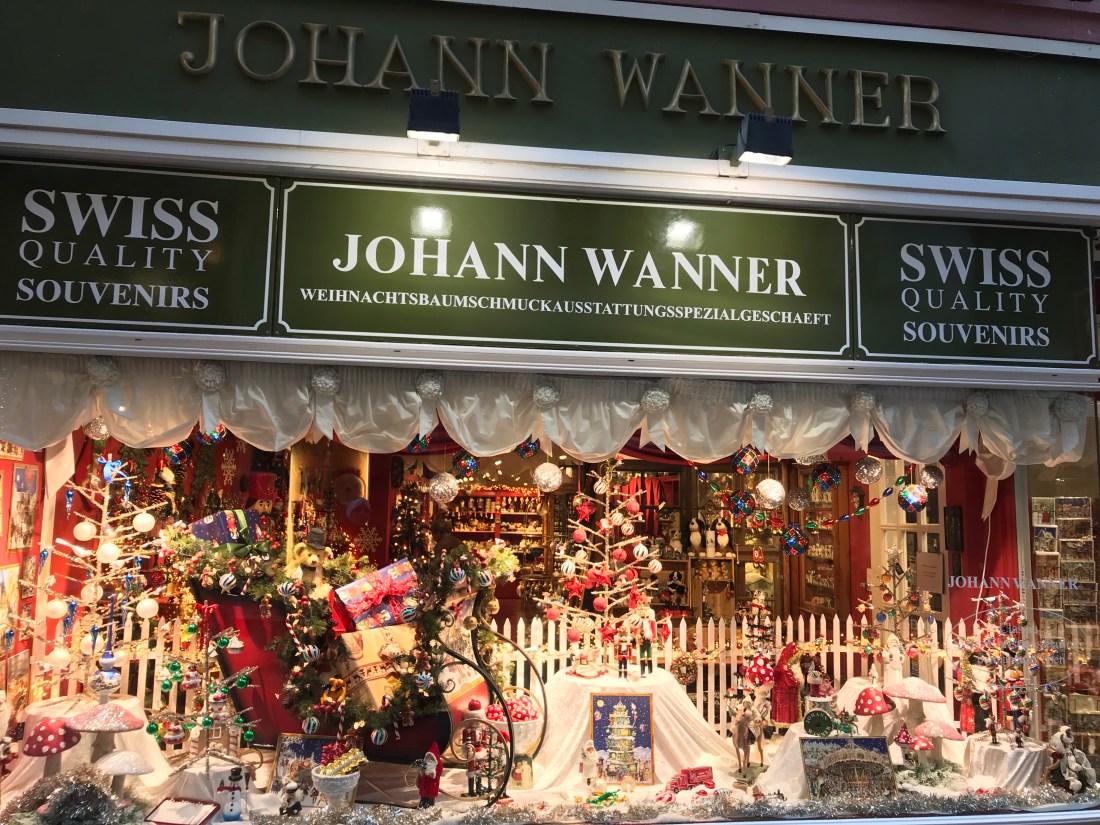
A shop famous for selling Christmas stuff all year round. It’s strapline is one of those incredibly long German words (presumably meaning something like “Shop that sells all sorts of Christmas stuff all year round”!):

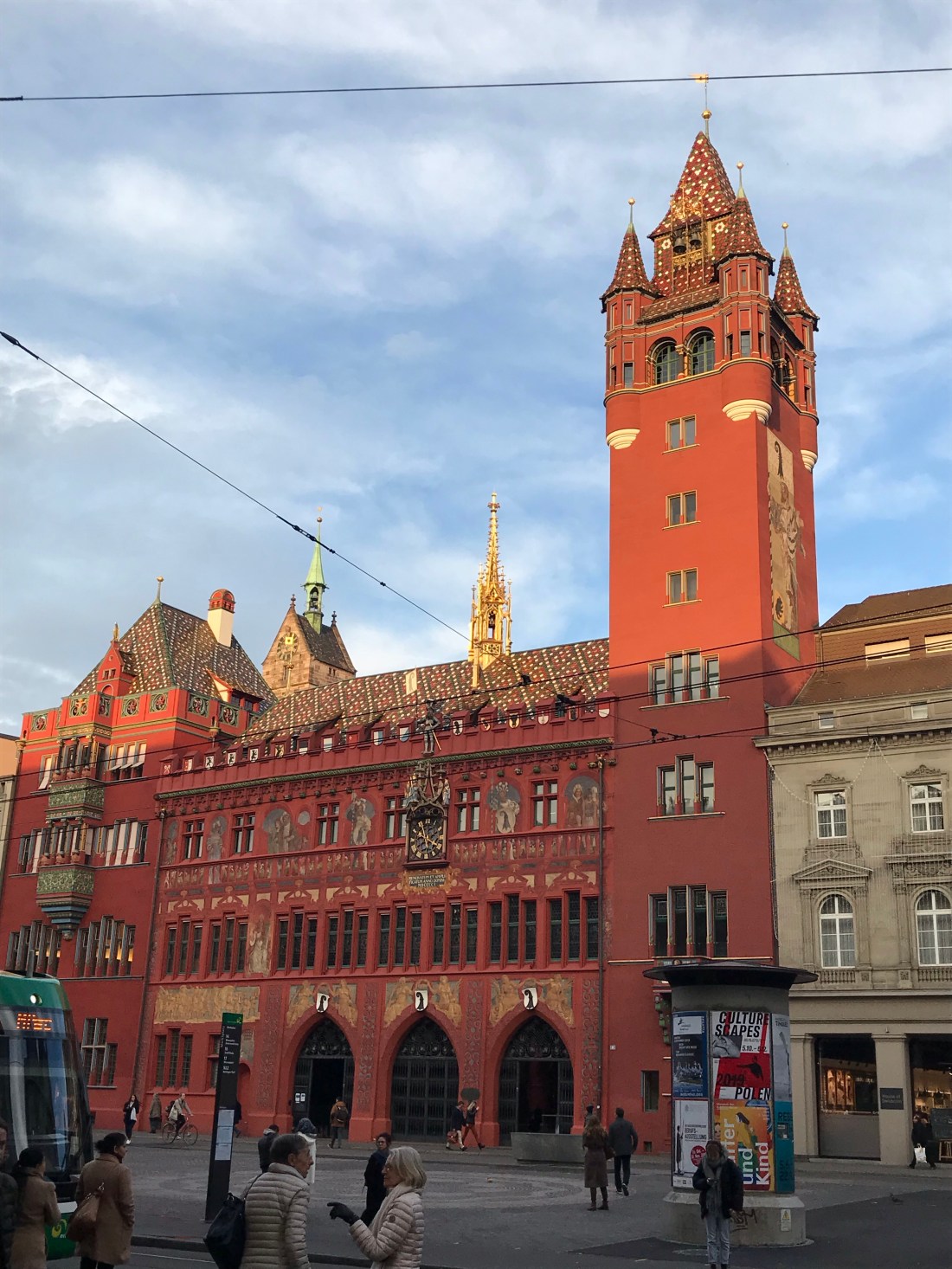
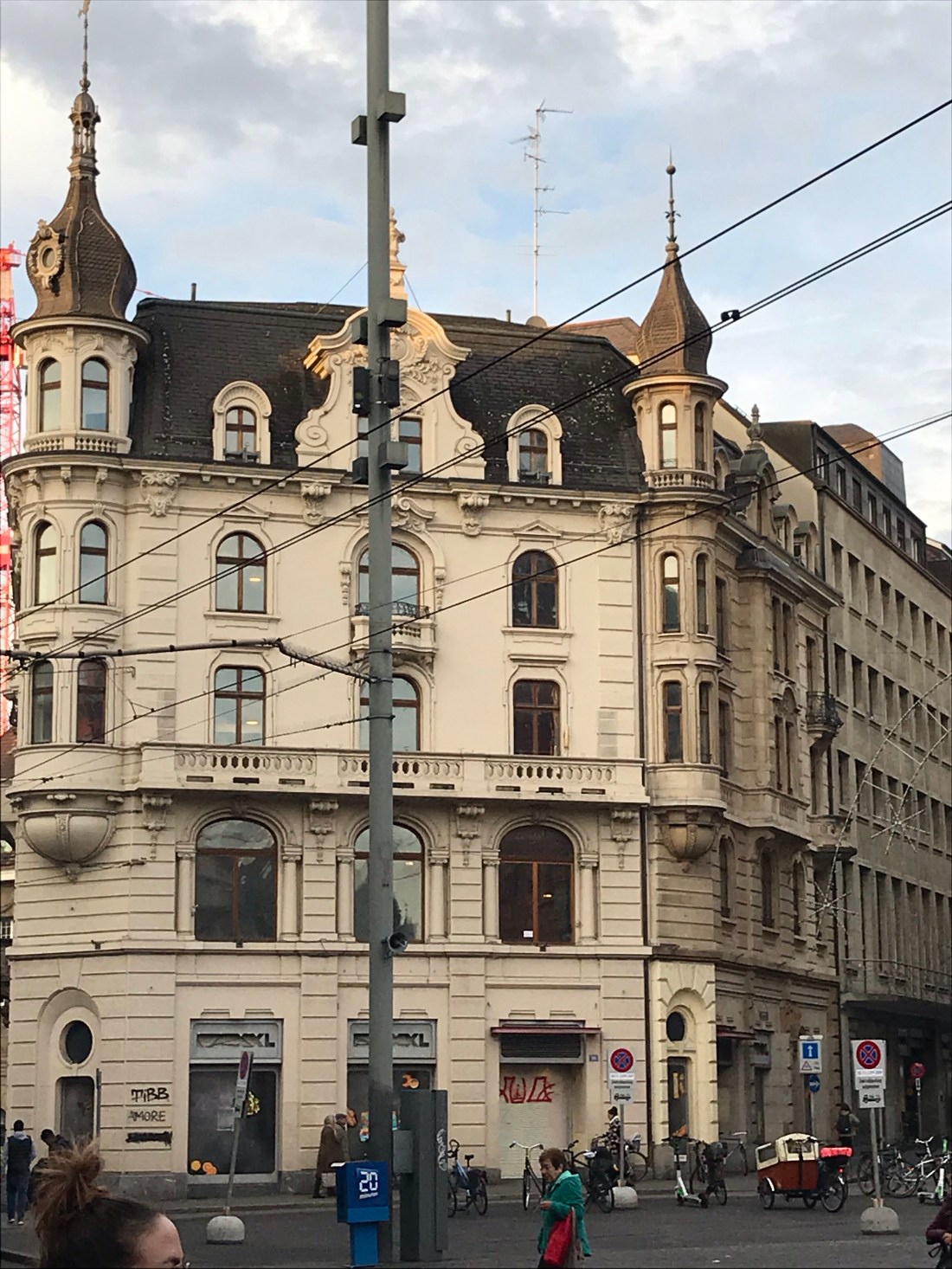
Another view of the splendid Town Hall in the sun, and some other beautiful buildings in the main square:

A small world

Would you believe it, over lunch on Sunday, I ended up sitting on the same table as another English guest… who turns out to also be from Sheffield, a member of a church of which my friend is the vicar, and, with her husband a great supporter of a community initiative run by a friend and colleague of mine.

Here is Ruth, who was staying in the convent just for the weekend, to present a paper (at a conference organised by Stadtmission Basel) about her Father’s friendship with Dietrich Bonhoeffer in between the two world wars:

And then, after choir practice, where I was enthusiastically welcomed as a one off singer, I discovered that Sister Gertrude, who I’d just been singing next to all evening, had been an au pair for a vicar in Sharrow, in Sheffield in the 1960s.

And yet another of the sisters came to England a long time ago and lived and worked for a while in the town where I was born.

Well, you travel all the way round the world, stop off at a convent in Basel for a week, and meet people from home (or who at least lived in your home town at one time). Who knew?!

Borderlands

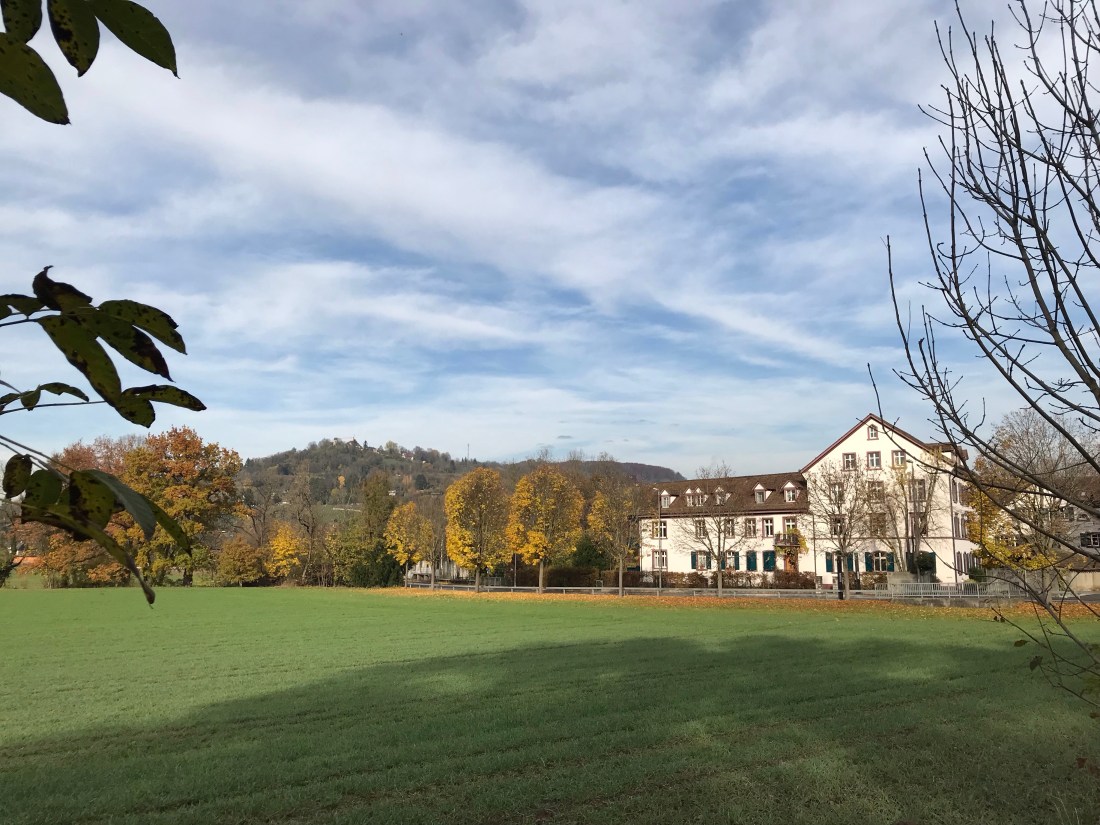
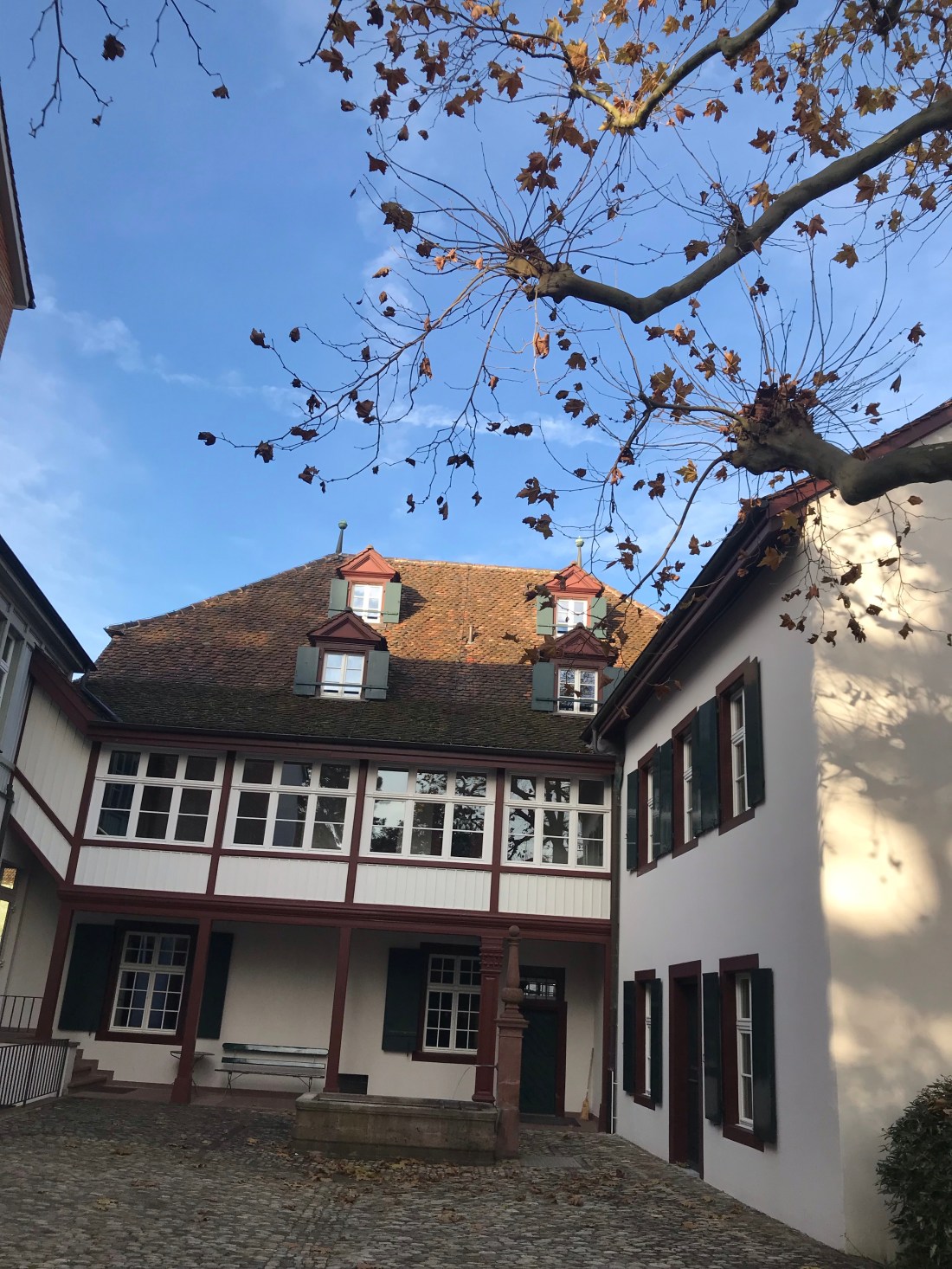
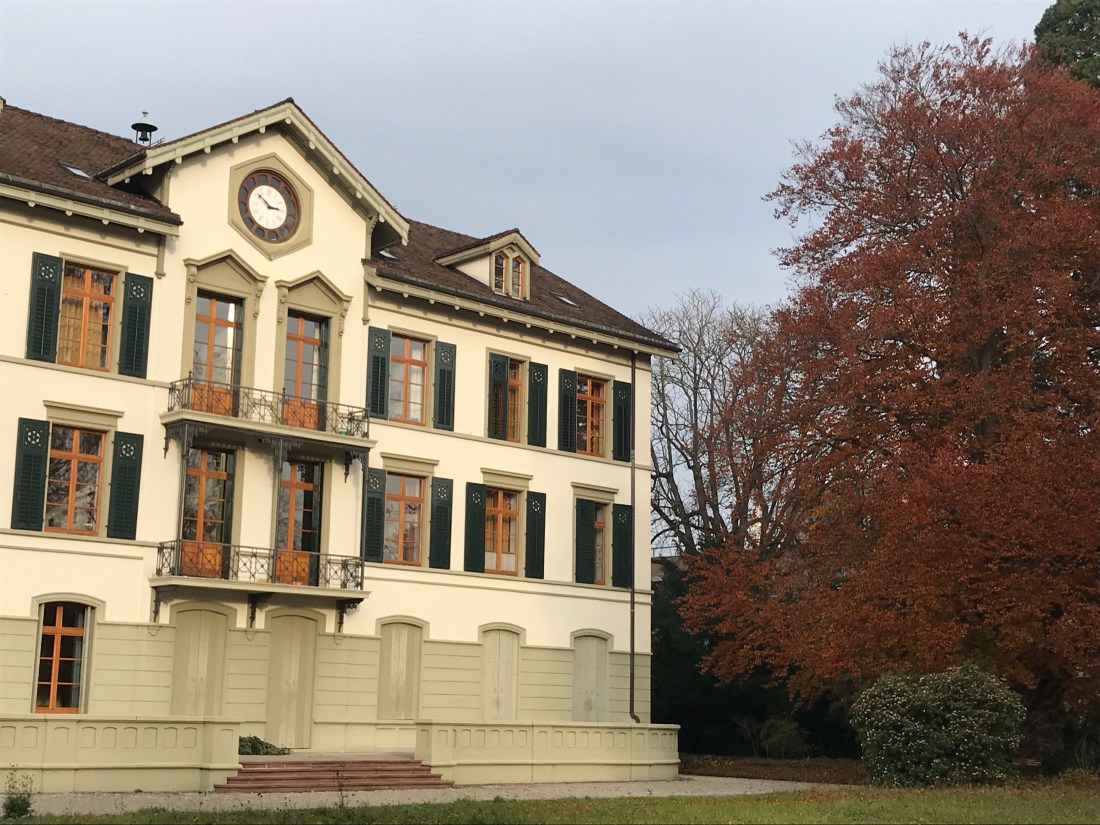
I have arrived at Kommunität Diakonissenhaus Riehen. This convent was founded in 1852 with just a few women living here. By the 1940s-50s the community had grown exponentially, and included hundreds of sisters, though not all of them were based here. Many lived embedded in local communities in various places. Now the community of 62 sisters and quite a few other inhabitants and guests connected with it is mainly housed in Riehen. I was very surprised to find such a thriving convent here, as many monastic orders in England are smaller now. I think I was picturing one building housing maybe about 12 sisters!

Here is the oldest original part of the convent:
And here is the current “Mutterhaus”, where I am staying, which also includes the chapel and main dining area:
One of the extraordinary things about Basel is its proximity to France and Germany. There are places where you can be standing in one country and you can see the other two. Or where you are effectively walking along the border between two of the countries, though there may be very little evidence of it.

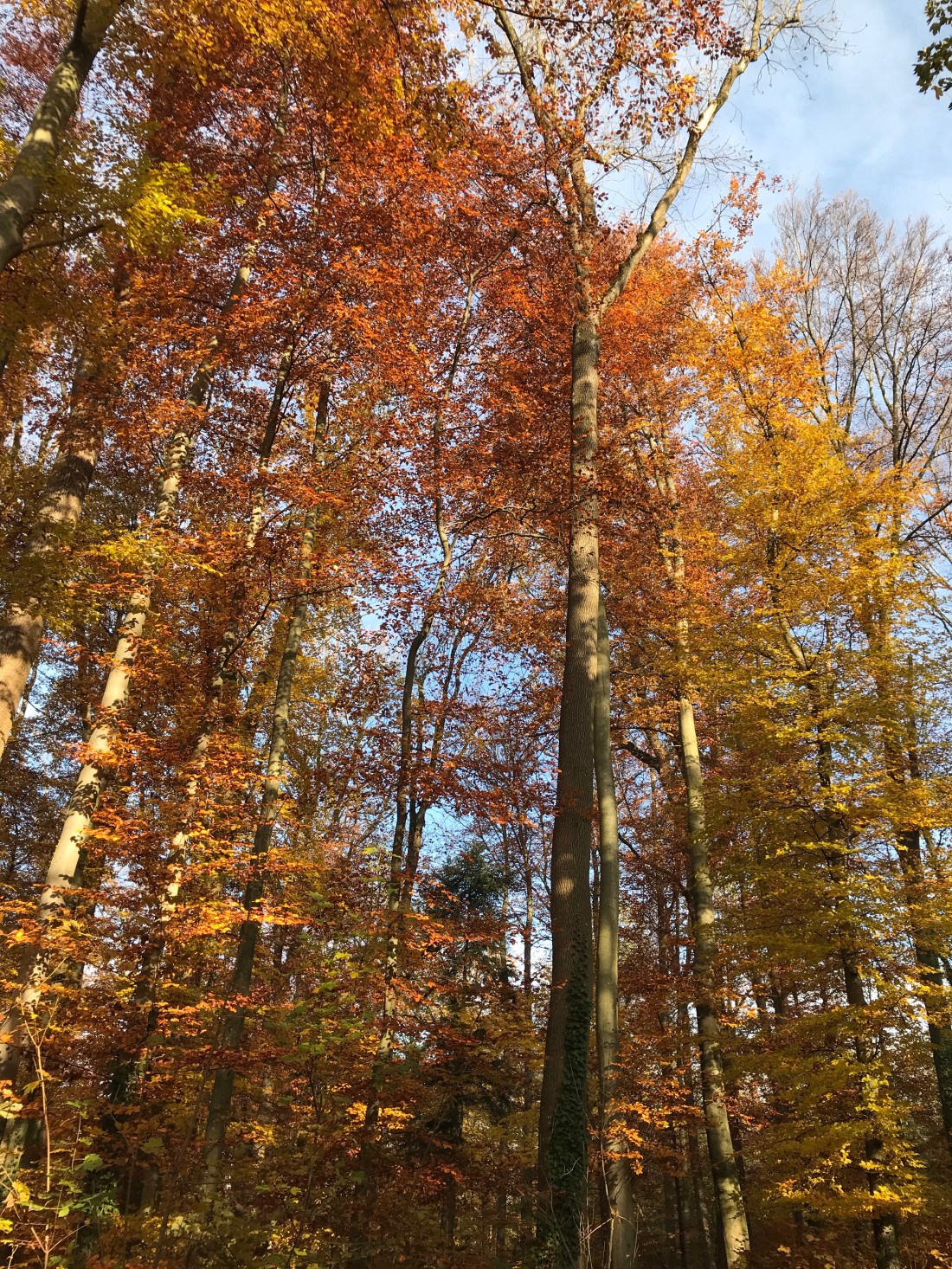
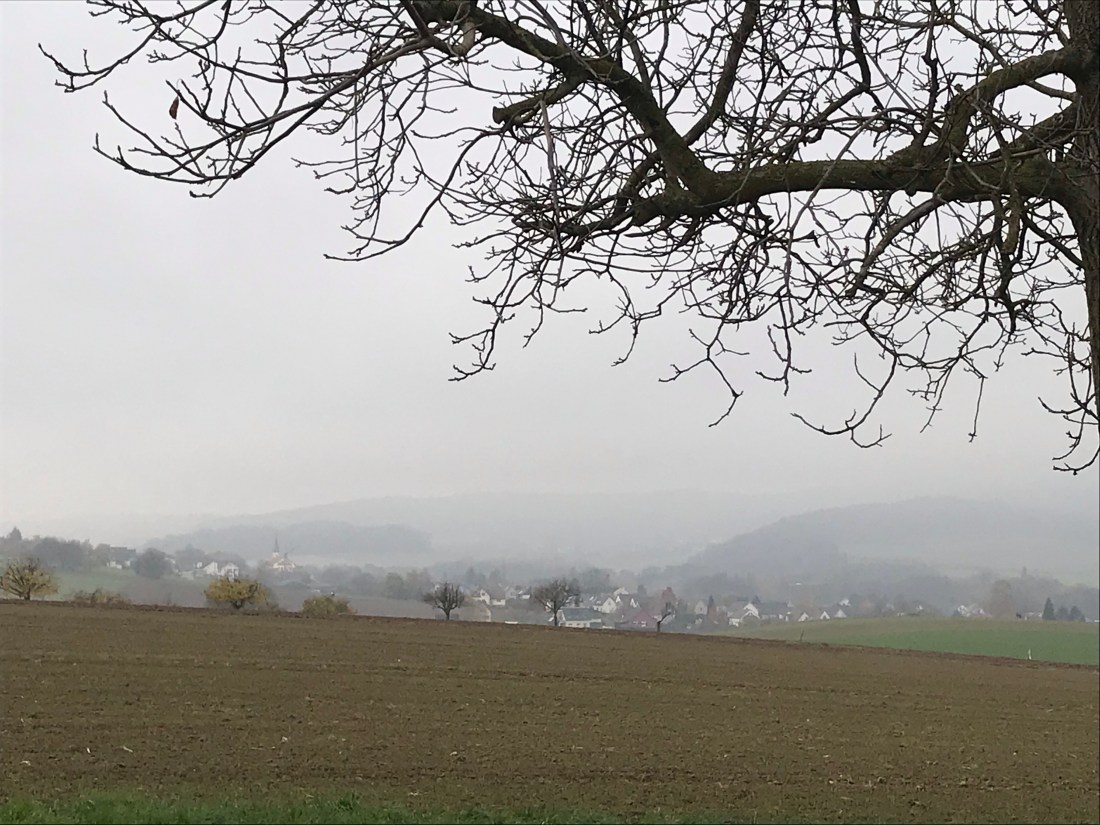
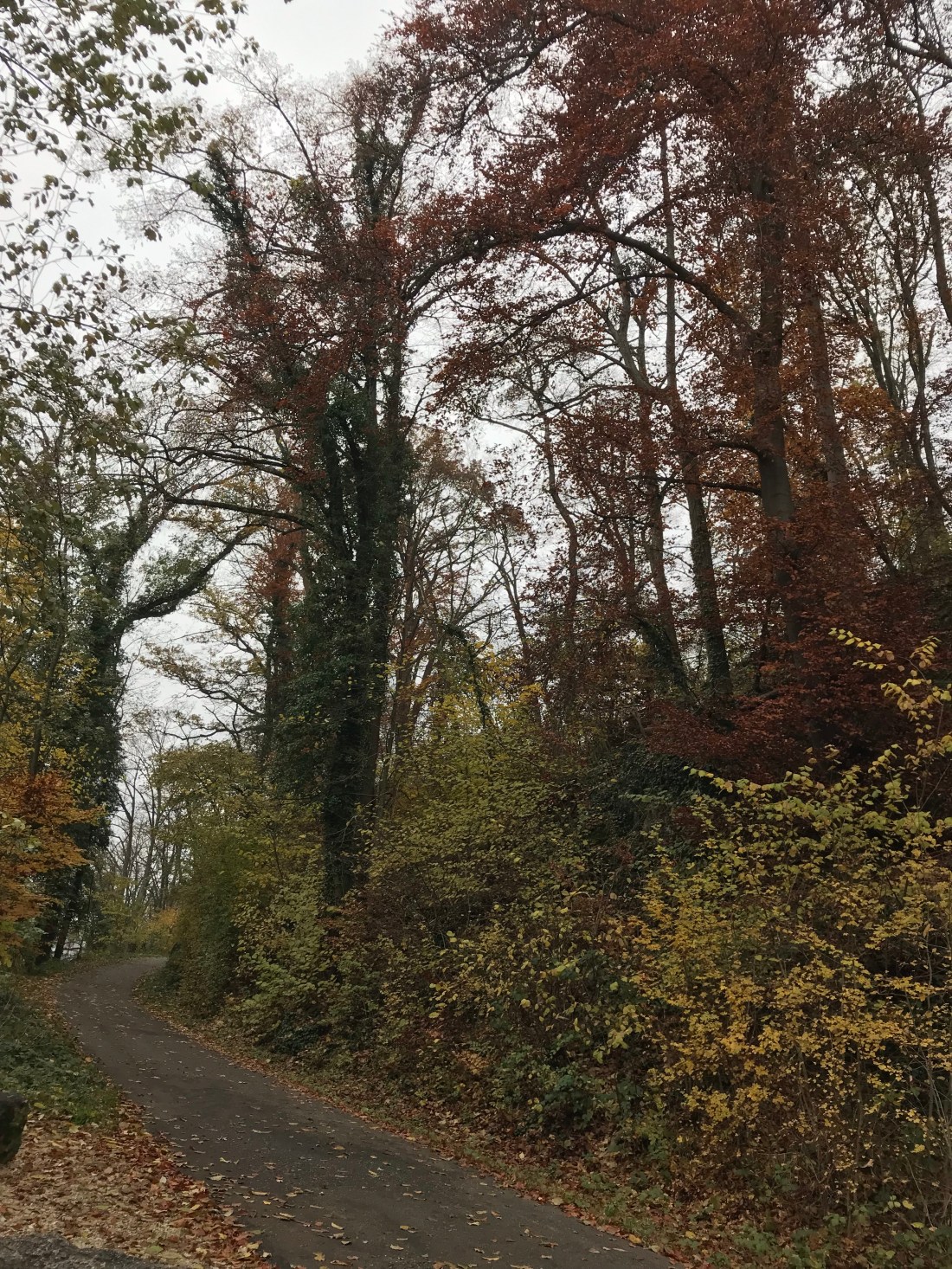
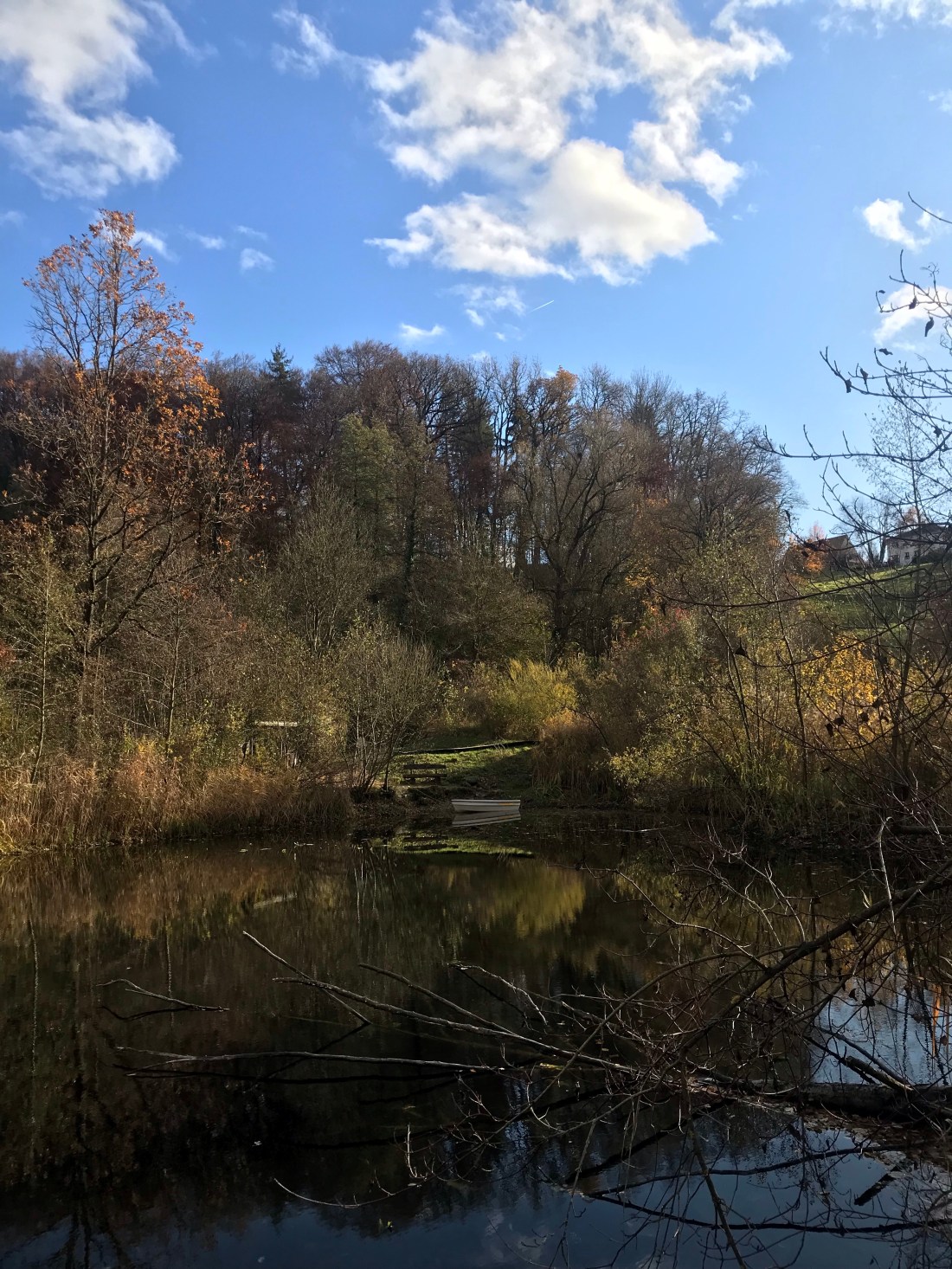
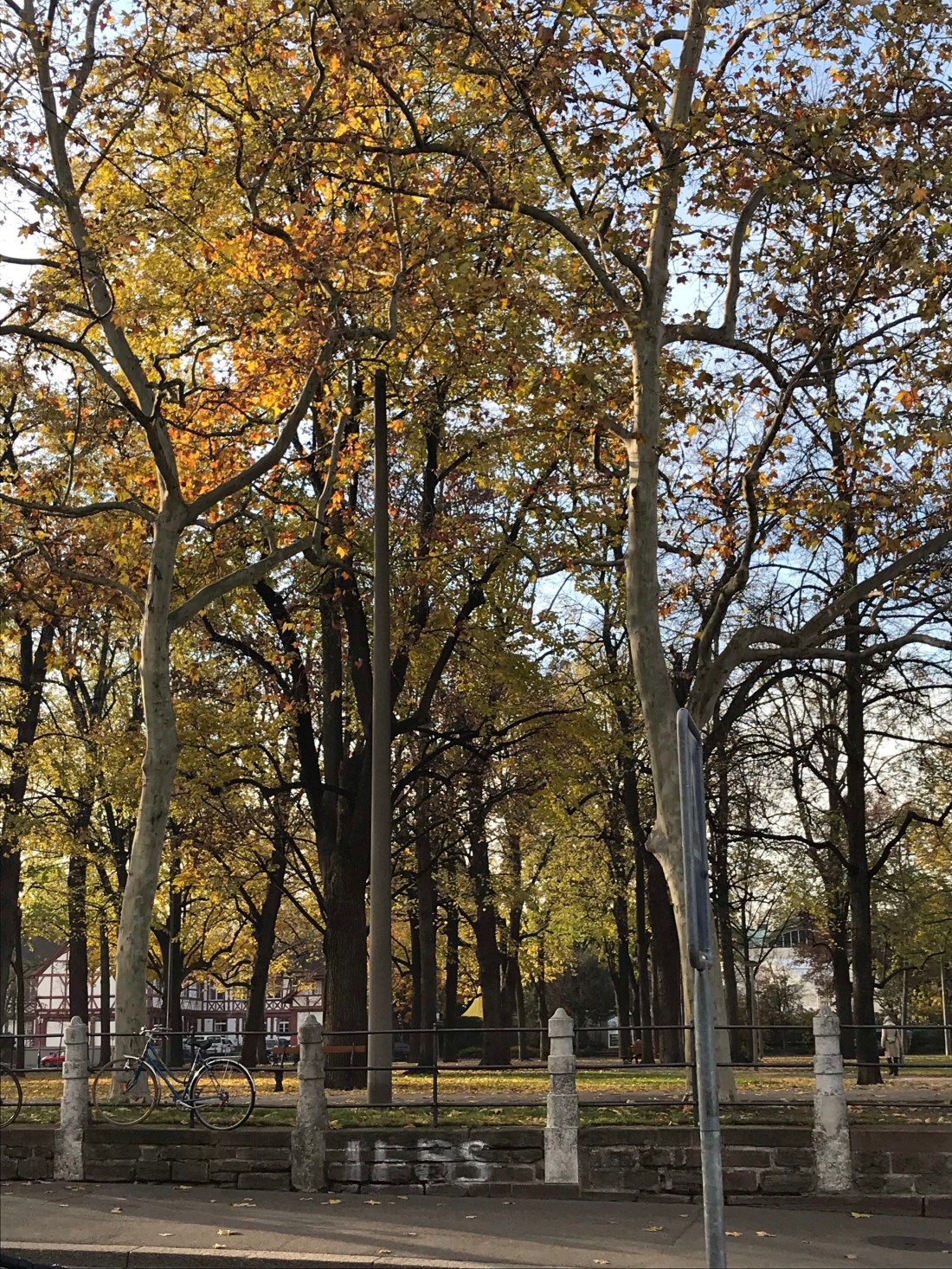
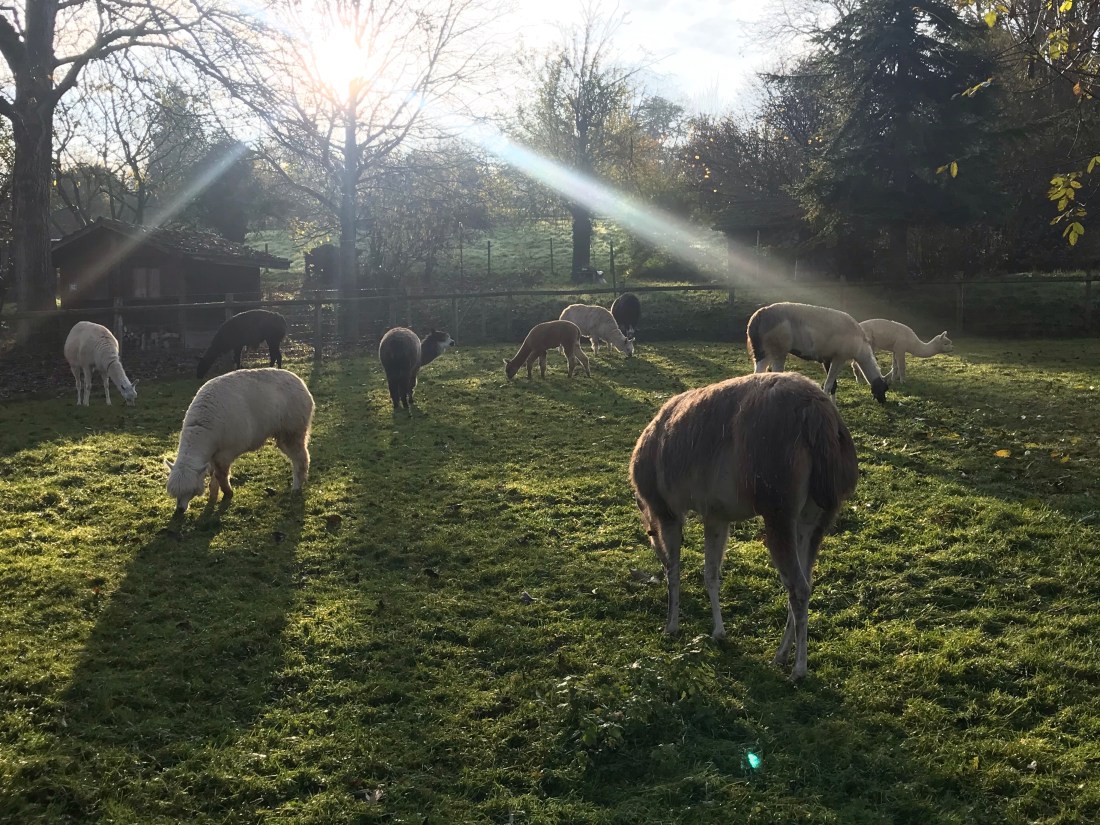
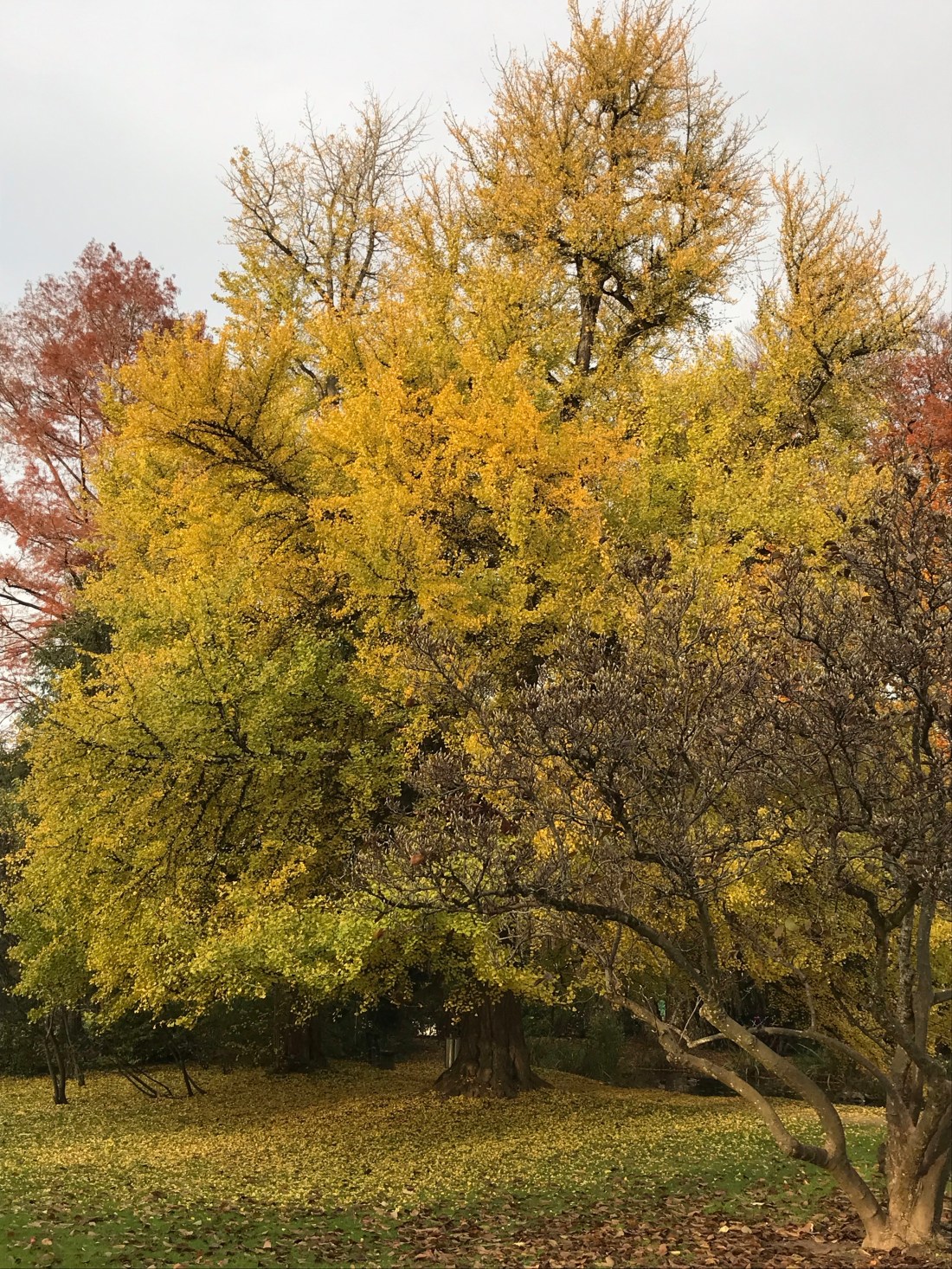
On Sunday, my first full day in Riehen, Sr Delia and I went for two walks in the surrounding countryside. I am absolutely loving the cold, fresh air, and seeing the beautiful autumn leaves all around. Here were some of the sights we saw:
As we walked along this path (below), Delia explained that the woods were in Switzerland, but the path we were walking was right on the border. In front of us was Germany and over to our left in the distance was France. A police car passed us, and she explained that this was the mobile border patrol. They were not at all interested in us, though later she mentioned how her adopted sister, who has darker skin, is often stopped and has to show her passport or ID card.
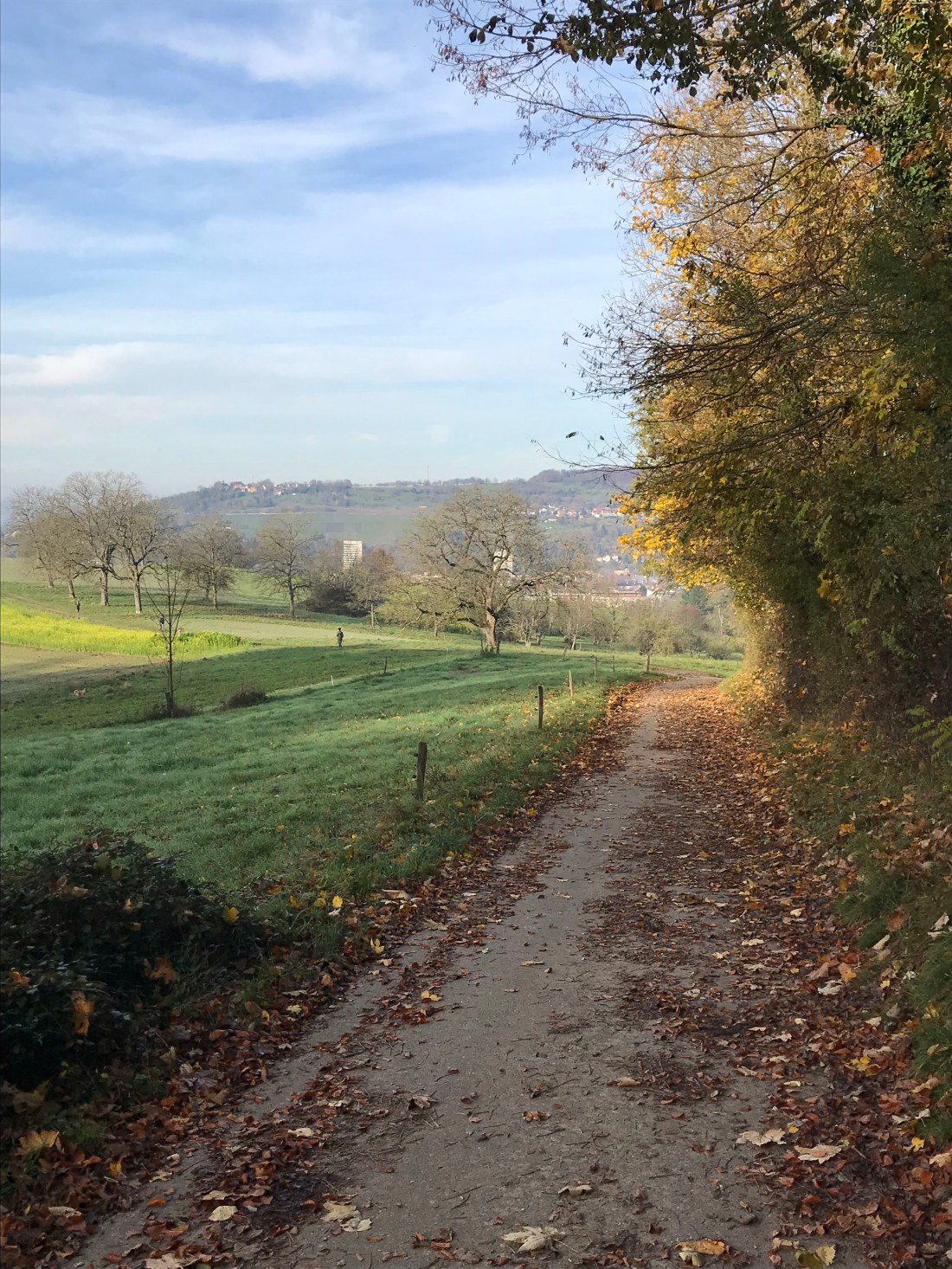
The view over towards France:
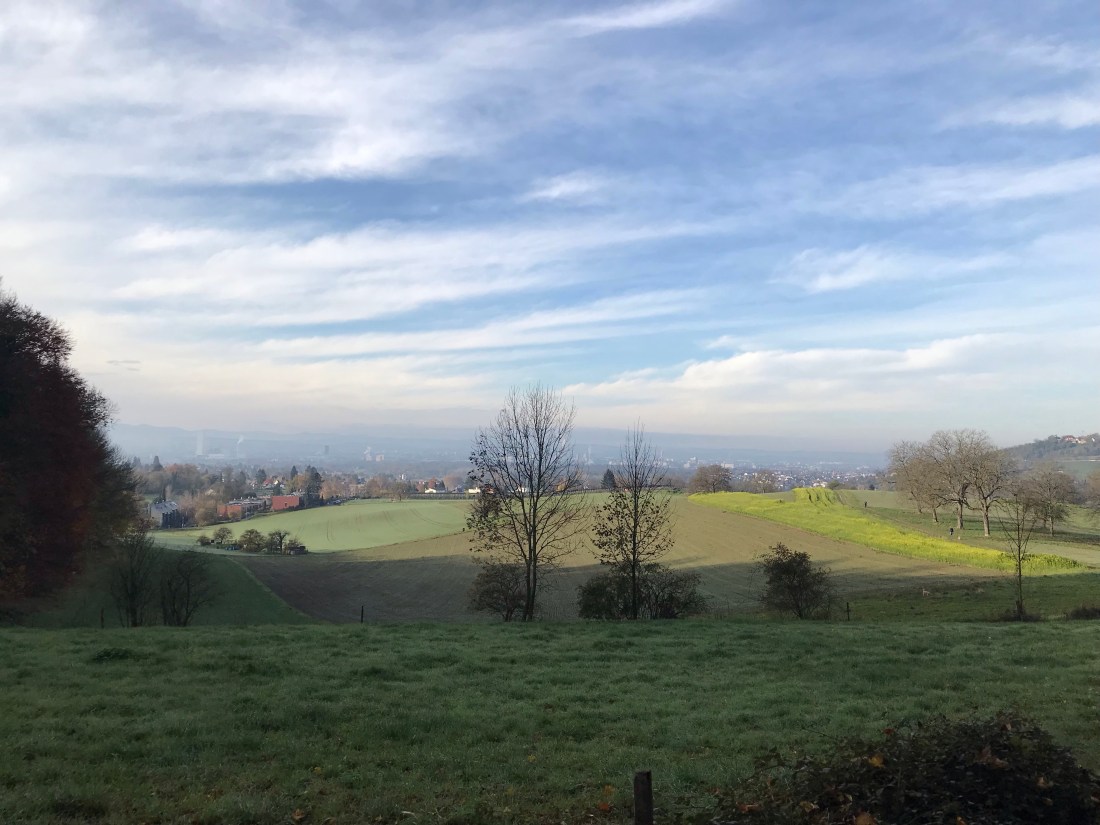
Apparently as recently as the mid 90s, the border controls were much more strictly enforced. But currently the borders are very open, so you often see German buses in Basel, which will take you right across the border to neighbouring towns and villages in Germany. Delia’s Dad and brother and his family have relocated to Germany, but in fact this doesn’t much feel like a relocation, because they always lived pretty close to the German border anyway.
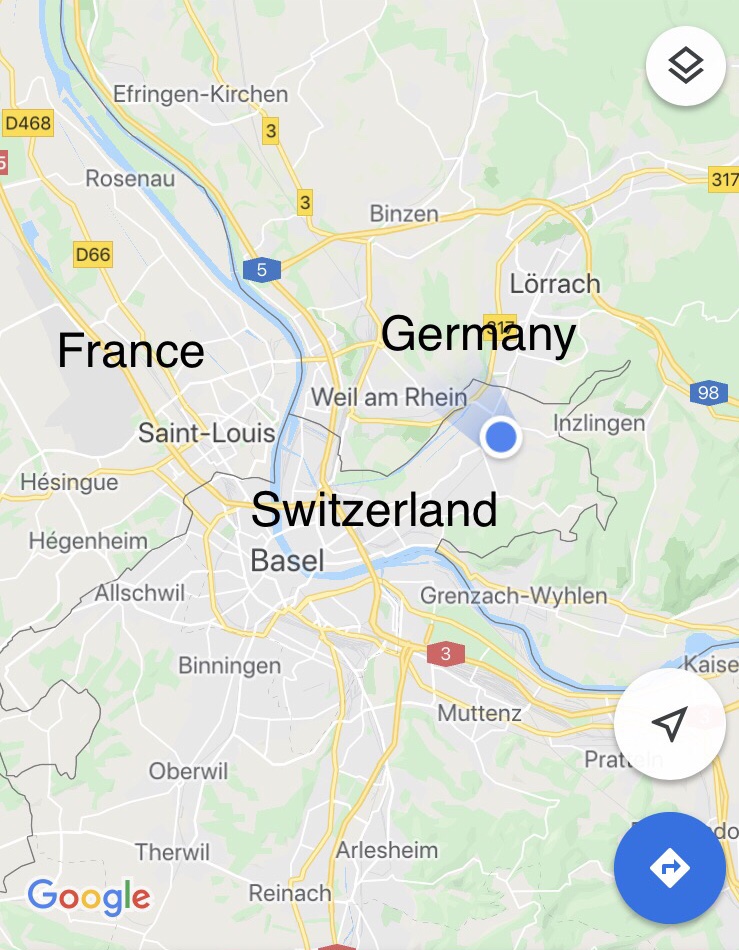
As I’m gradually discovering, Swiss German is an interesting dialect. I can’t appreciate this fully as I only speak a tiny bit of German. But in this region there are many French words or words that are at least a bit French sounding that people use all the time. For example, I noticed the ticket collector on the train said “merci” as people showed her their tickets. And if you want tea with milk you ask for “Tee Crème”, which seems wrong to me on so many levels! (Don’t put cream in tea!)

Of course there are French speaking parts of Switzerland too, mainly further to the Southwest of the country, Swiss Italian in the South and Romansch in a small, mainly mountainous part of the Southeast.

Apparently the dialect of Swiss German spoken in Basel is very different from that of Zürich, which is only an hour away! (And both are different from “High” German, the language you learn in school.) But consider this: there are only about 37000 people who speak Romansch (the smallest proportion of any of the nation’s languages), but there are five dialects of Romansch!! Five!! How anyone ever understands anyone else here, I’ll never know!

Switzerland is notable not just for its excellent chocolate, stinky cheeses (to use Sr Delia’s technical term!), glüwein and skiing, but also for its endless capacity for careful and extensively collaborative decision making. In Switzerland, virtually everything is decided by referenda, or so I gather. It’s a very cautious nation, always wanting lots of research before the potential choices are put to the people, even. Delia tells me that for this reason, decision making is terribly slow, but usually once the decision has been made, people accept it, even if it wasn’t what they wanted. (Hmmm… maybe in the UK we could learn something from this…? But I think our problem is we’re just not used to having referenda for individual topics, so we did the Brexit referendum spectacularly inadequately. If we had followed the Swiss model, everyone would have had a shed load more information about how this would impact the UK before taking the vote. And if we were more like the Swiss, we would probably read and inwardly digest all of this information carefully before casting our votes. And take out insurance against the outcome of the vote too! (Apparently there is insurance for everything here. “Insurances”, actually – Versicherungen – as my brother ably informed me, the word is plural, because of the many things that could go wrong, I guess?!)

It does seem pretty remarkable, though, how Switzerland has managed to be such an equitable and peaceful place, given the challenges of having people of multiple languages and cultures living here.

My experience at the airport was also that Switzerland polices its borders in a most unruffled way. I know I flew in from Singapore, so I guess they could have confidence my luggage had been checked already, but I breezed past the passport control in the airport much more quickly than anywhere else I’ve been in the world. Passport control consisted of an impeccably smart, cheerful lady who smiled and nodded me through without a second glance. No landing card, no scrutiny of luggage, no questions about my occupation or when I last visited, no stern appraising look designed to strike fear into the hearts of potential terrorists, nothing.

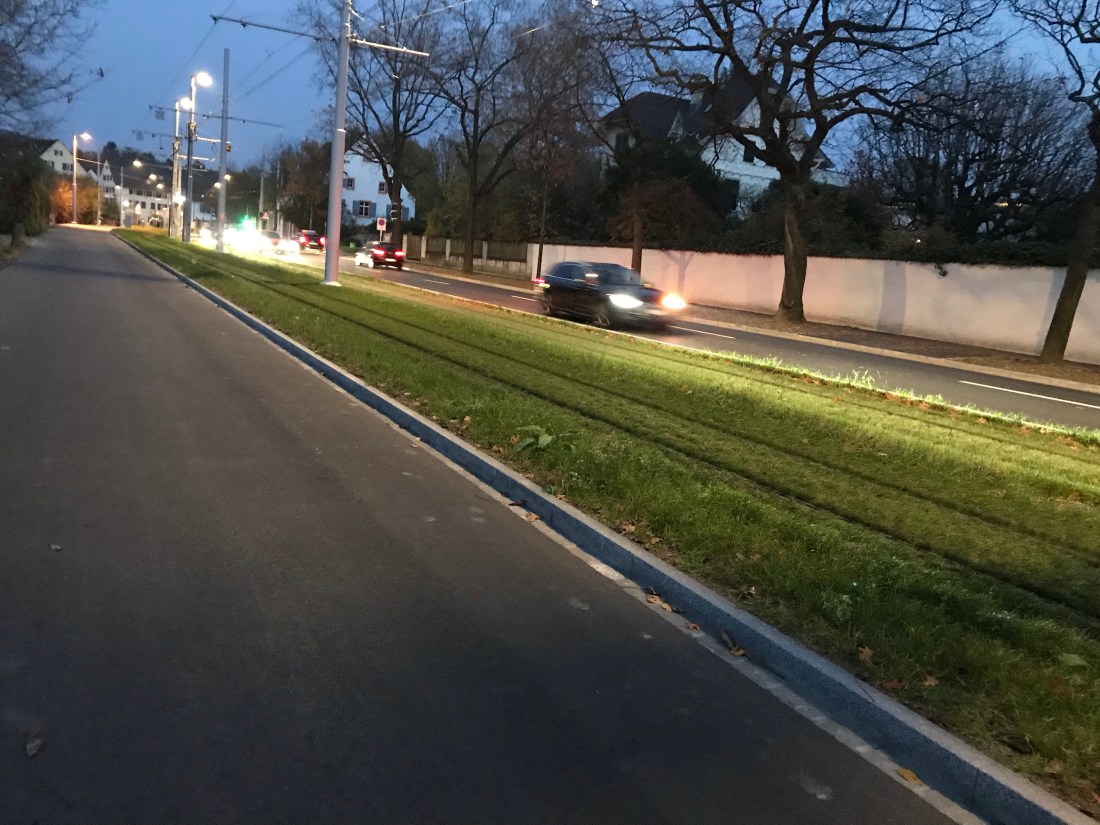
I have also been impressed with public transport here. Basel being a politically Left and Green leaning area, has reduced the width of roads and introduced substantial cycle lanes alongside the tramlines. I have never seen such frequent trams and buses. Except perhaps in Melbourne. But even there you wouldn’t get a traffic jam of trams. Here, that’s a common sight in the city and also sometimes further out. These lanes are for bikes/pedestrians, trams and then cars:
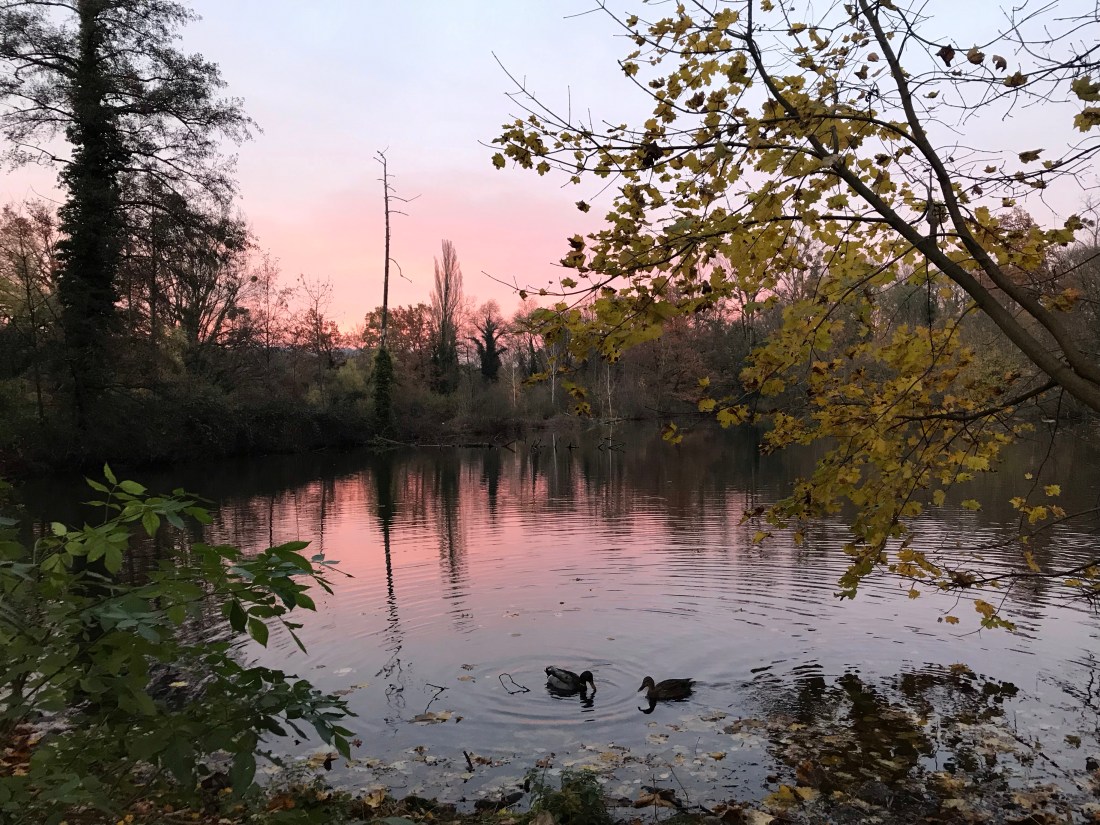
Some more pics of this beautiful countryside from our evening walk:
Basel

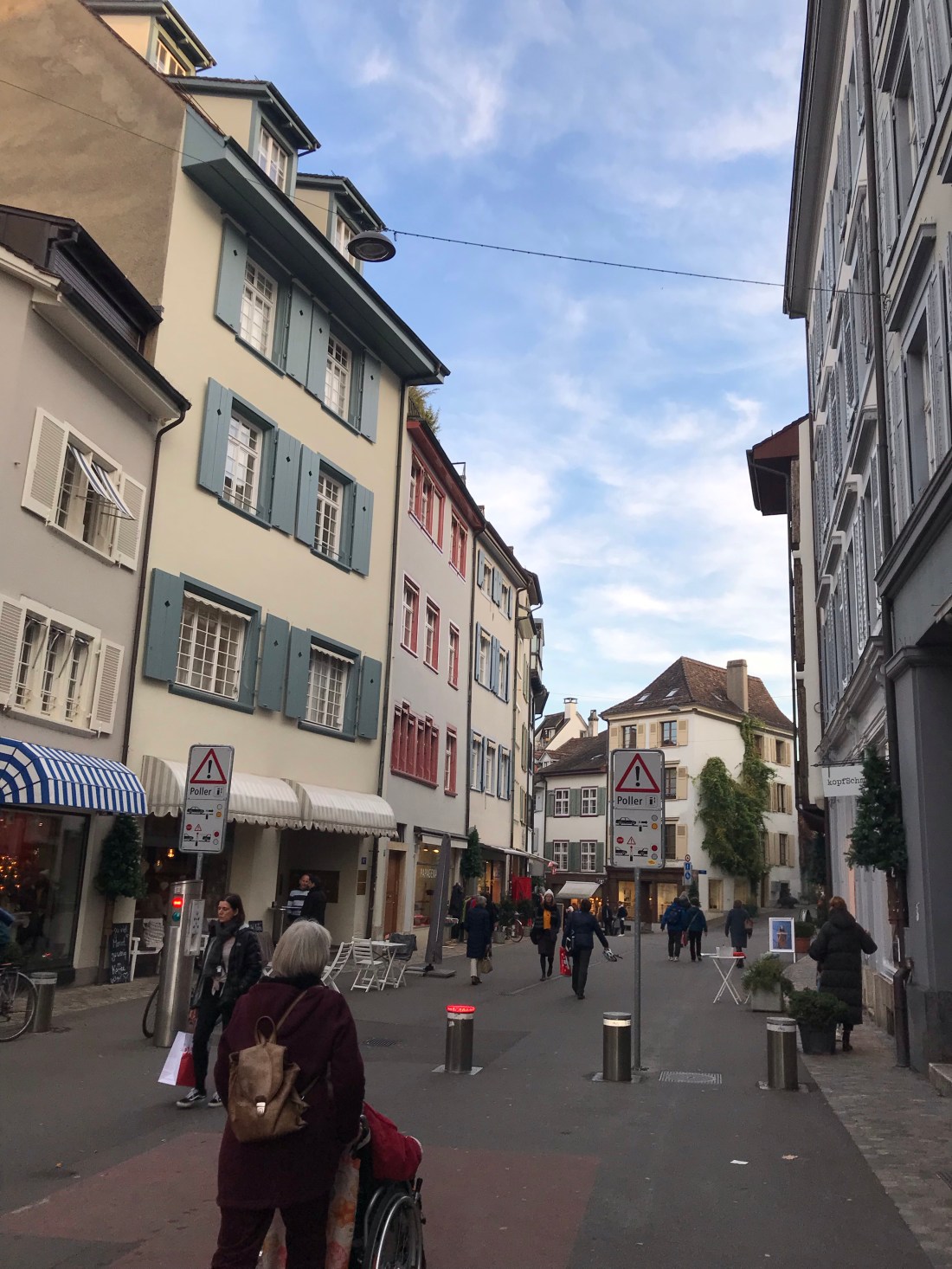
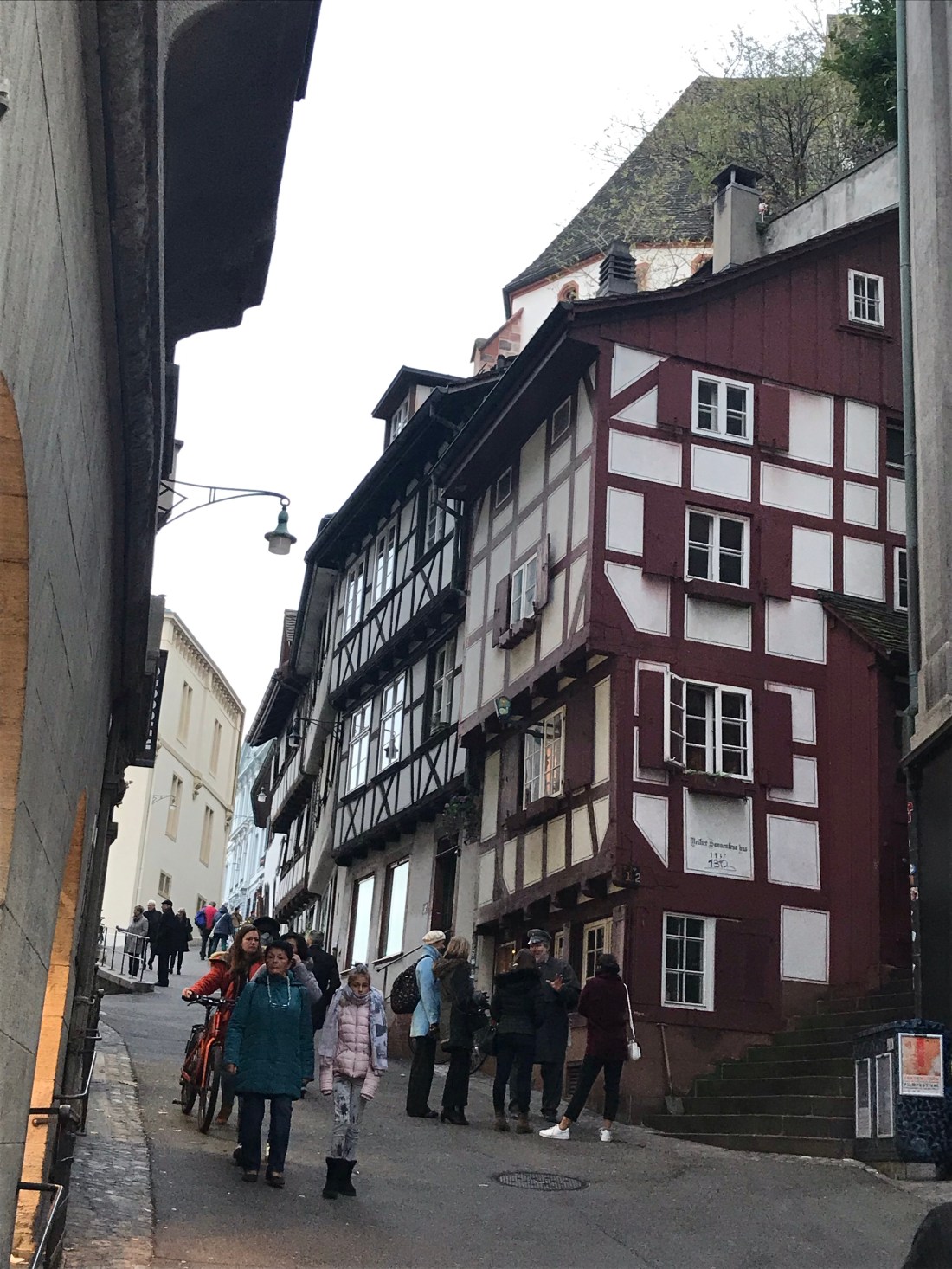
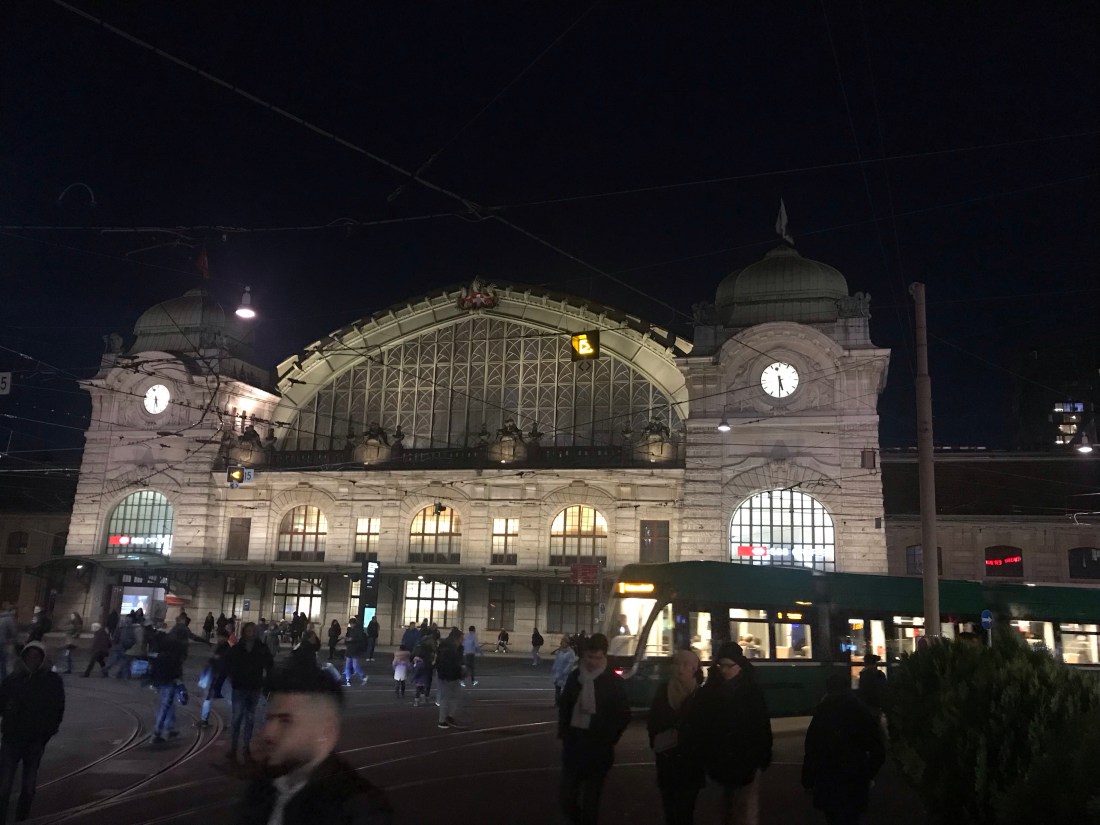
I arrived in Basel around midday, dropped my luggage in the unmanned and extremely efficiently automated left luggage area, and went off to explore the city before meeting up with my friend Delia to go with her to her convent in Riehen, where I am staying for a week.

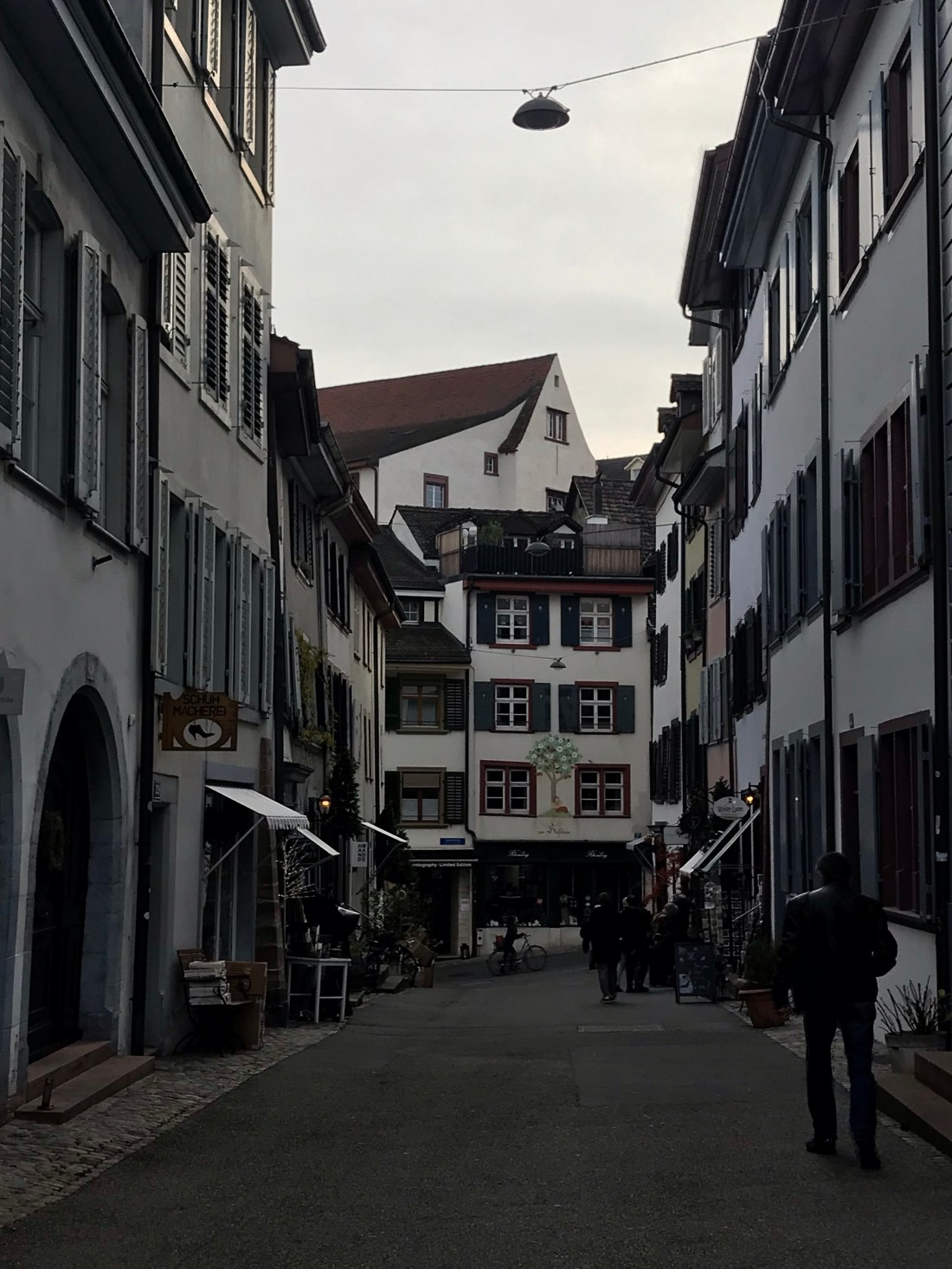
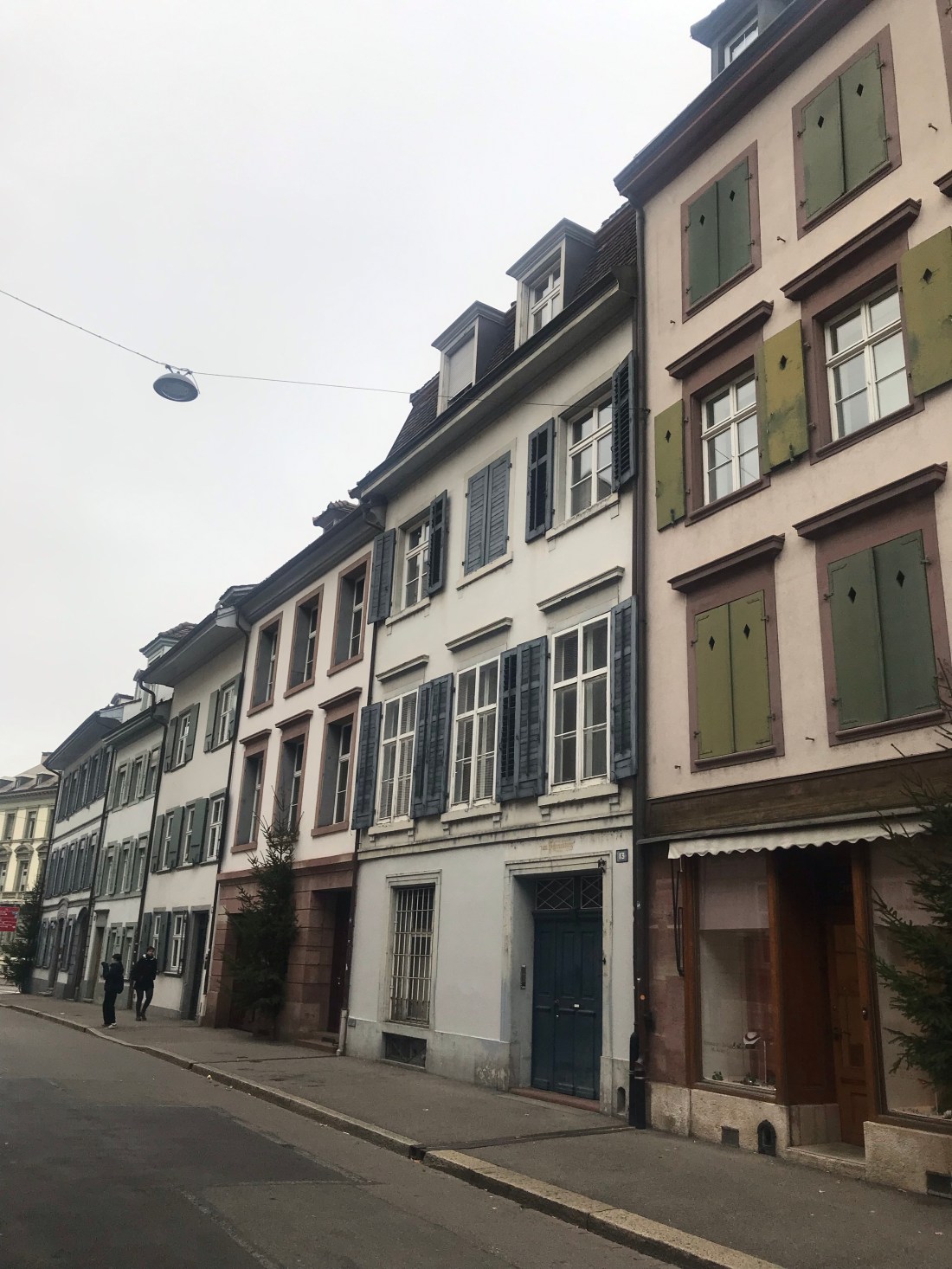
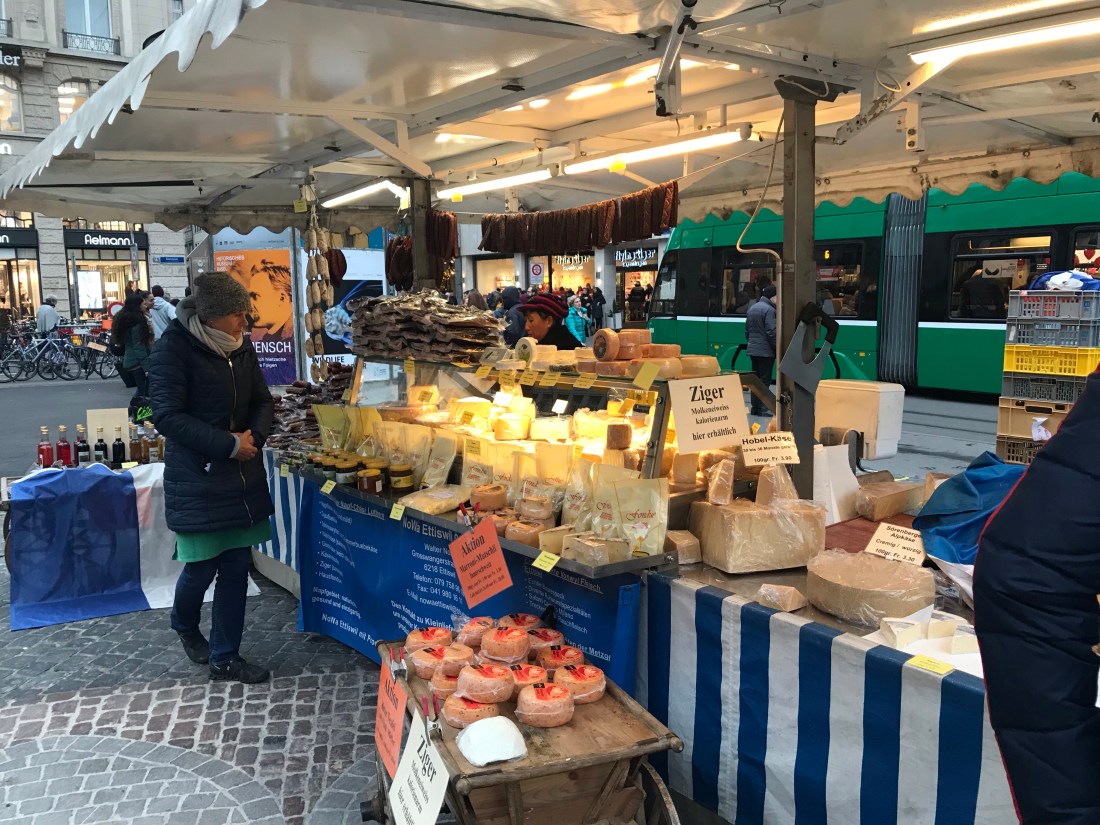
Here are some first impressions of Basel, which is a city I should have visited many years ago when my brother lived and worked here for a year. (Why? Why didn’t I visit? I guess I was scared of this far away place that would be so different from what I was used to. Ironic that in the context of my worldwide travels, I am deriving such comfort from the many familiar things I’m finding here.)

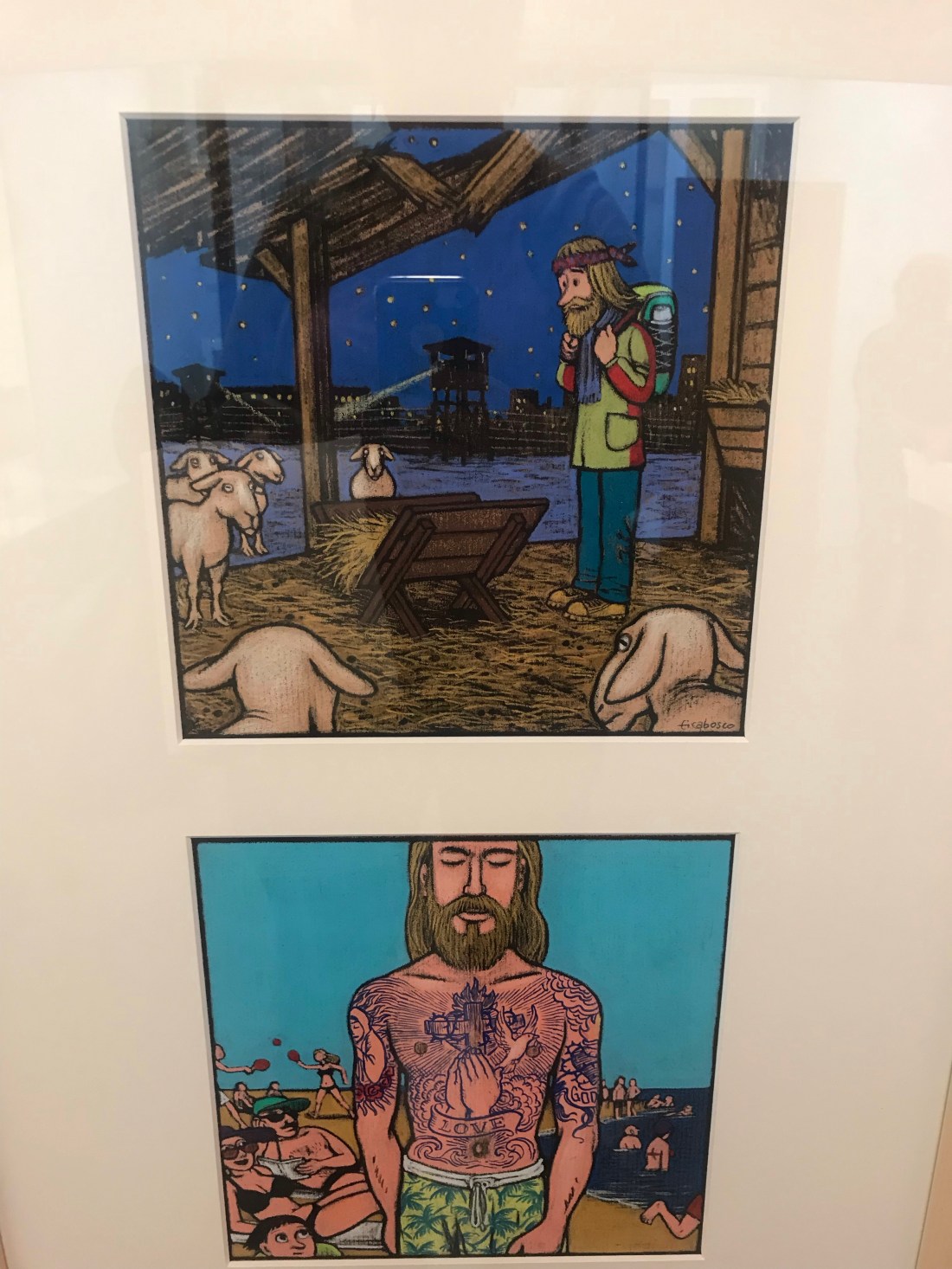
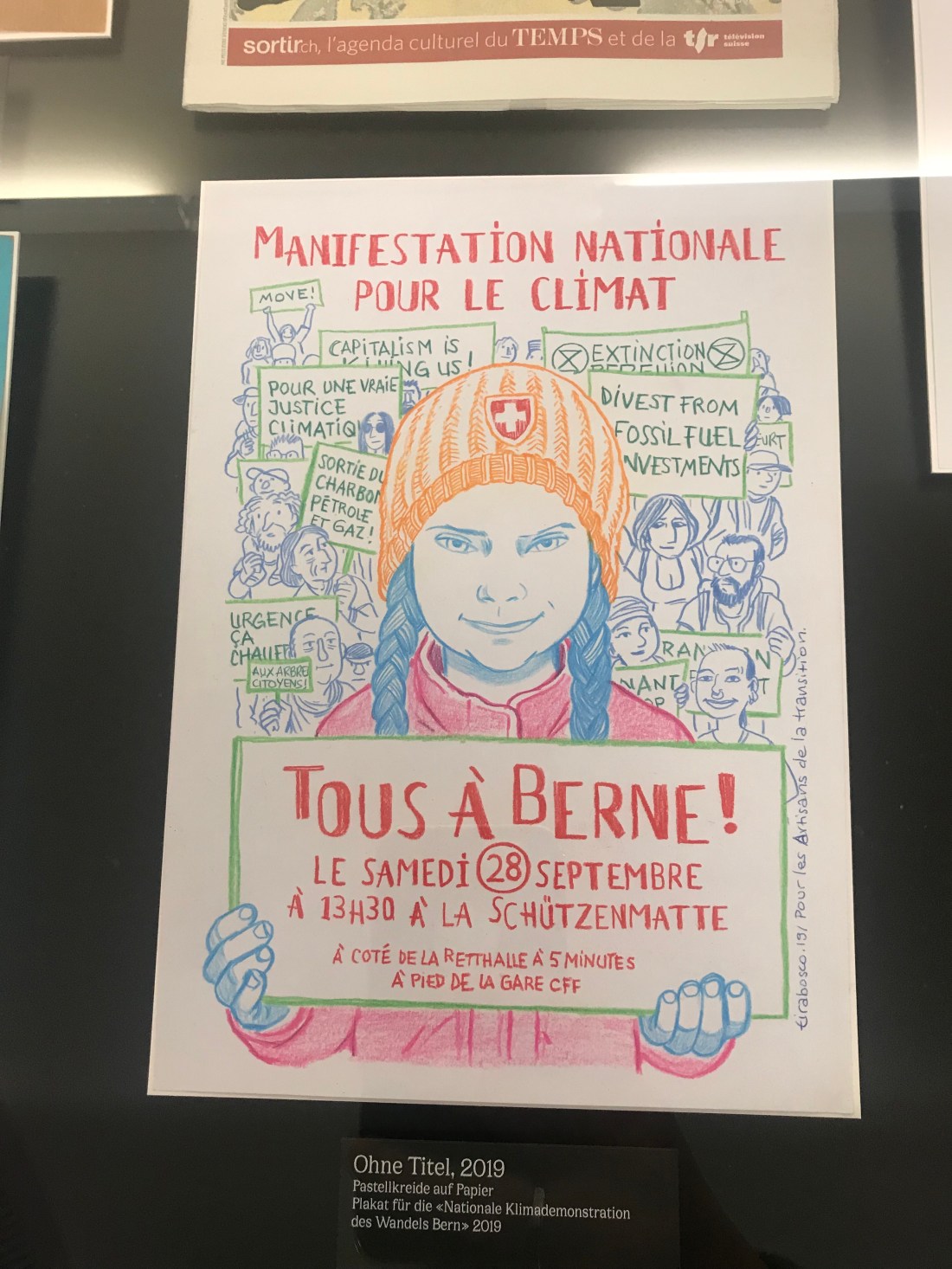
In the Cartoon museum (there seems to be a tendency to call art galleries museums here for some reason – maybe in the hope that the art will taken seriously? – aha! I have been corrected, this is because in Germany (and perhaps therefore also in German speaking Switzerland) a gallery is a place where the art is for sale, whereas a museum is where you just go to look at it. Come to think of it, maybe it’s like that in England too?), I saw an extraordinary collection by Tom Tirabosco who creates a lot of art relating to our relationship with the environment and climate change, often depicting businessmen in sharp suits with their heads obliterated by burning fossil fuels, interspersed with disturbingly accurate depictions of dead birds. Not what I was expecting from a cartoon museum, but well worth engaging with, anyway.

He also drew these enterprising speculations about the modern life of Jesus:
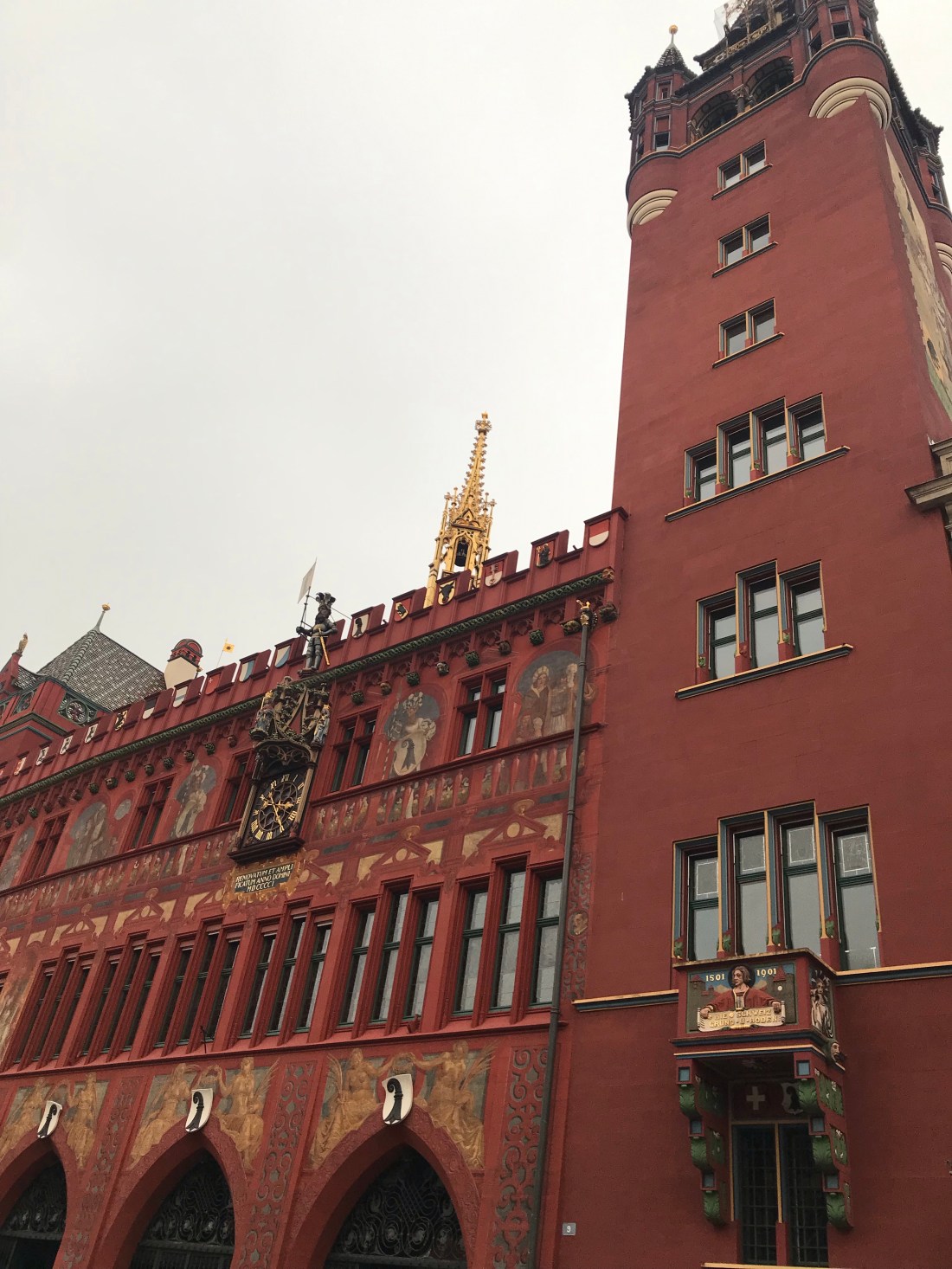
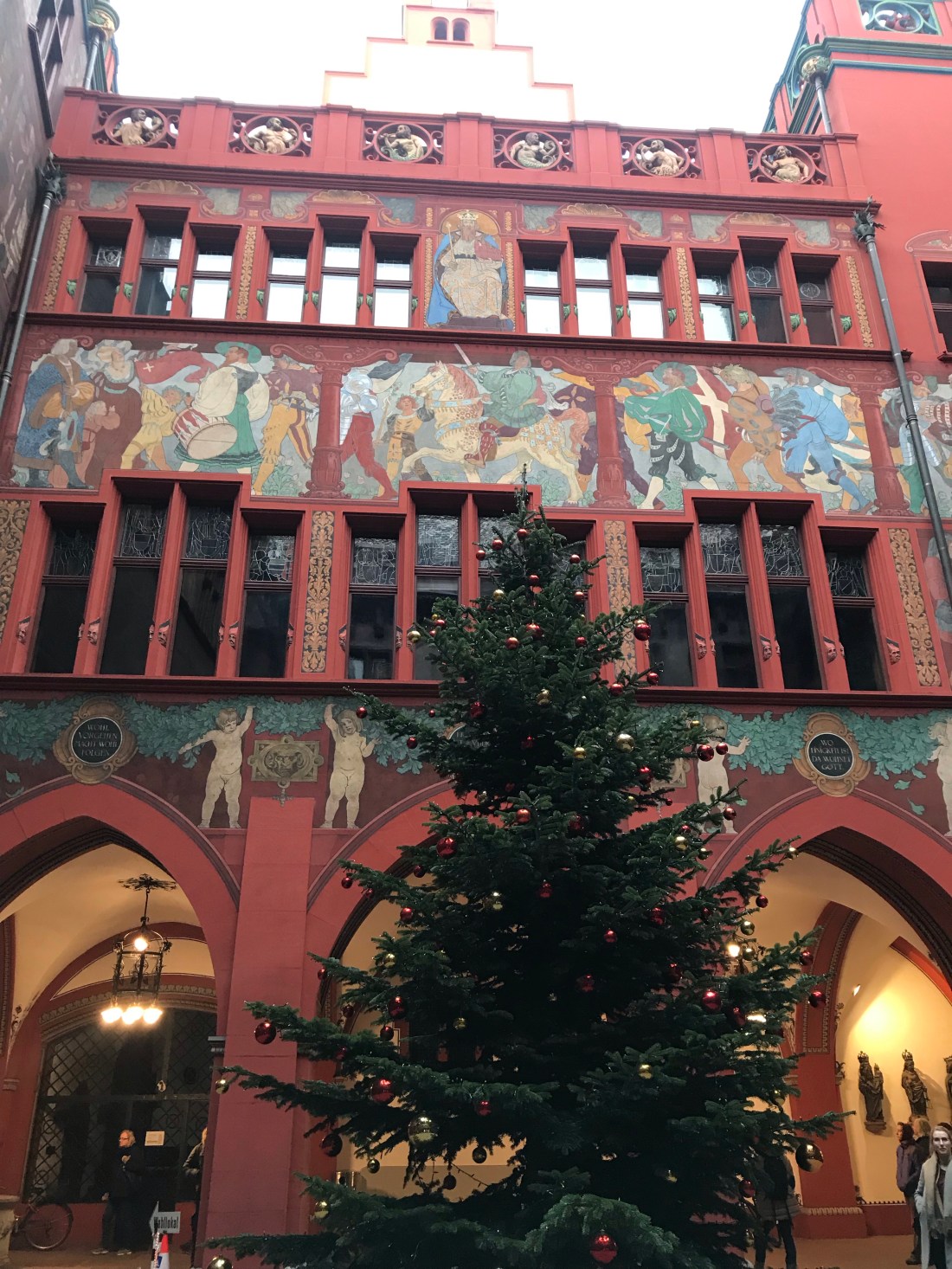
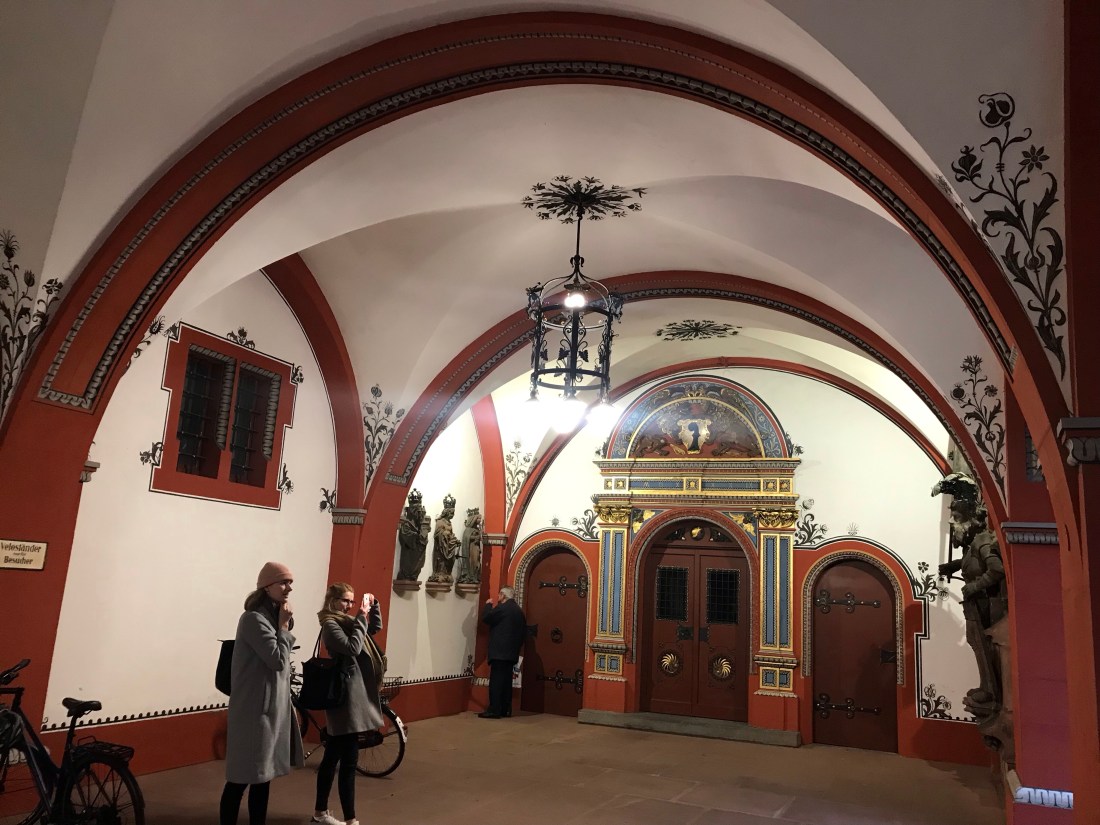
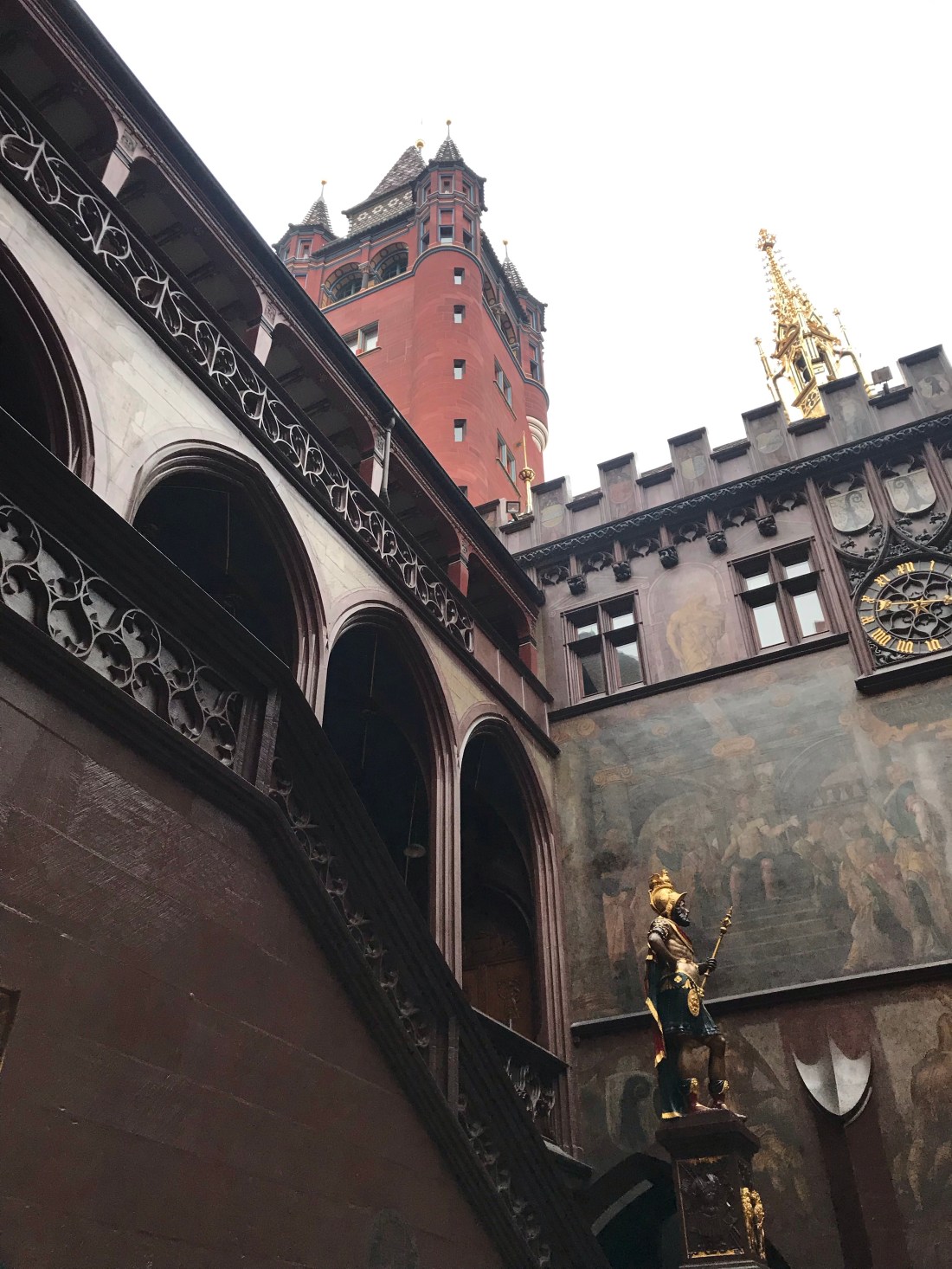
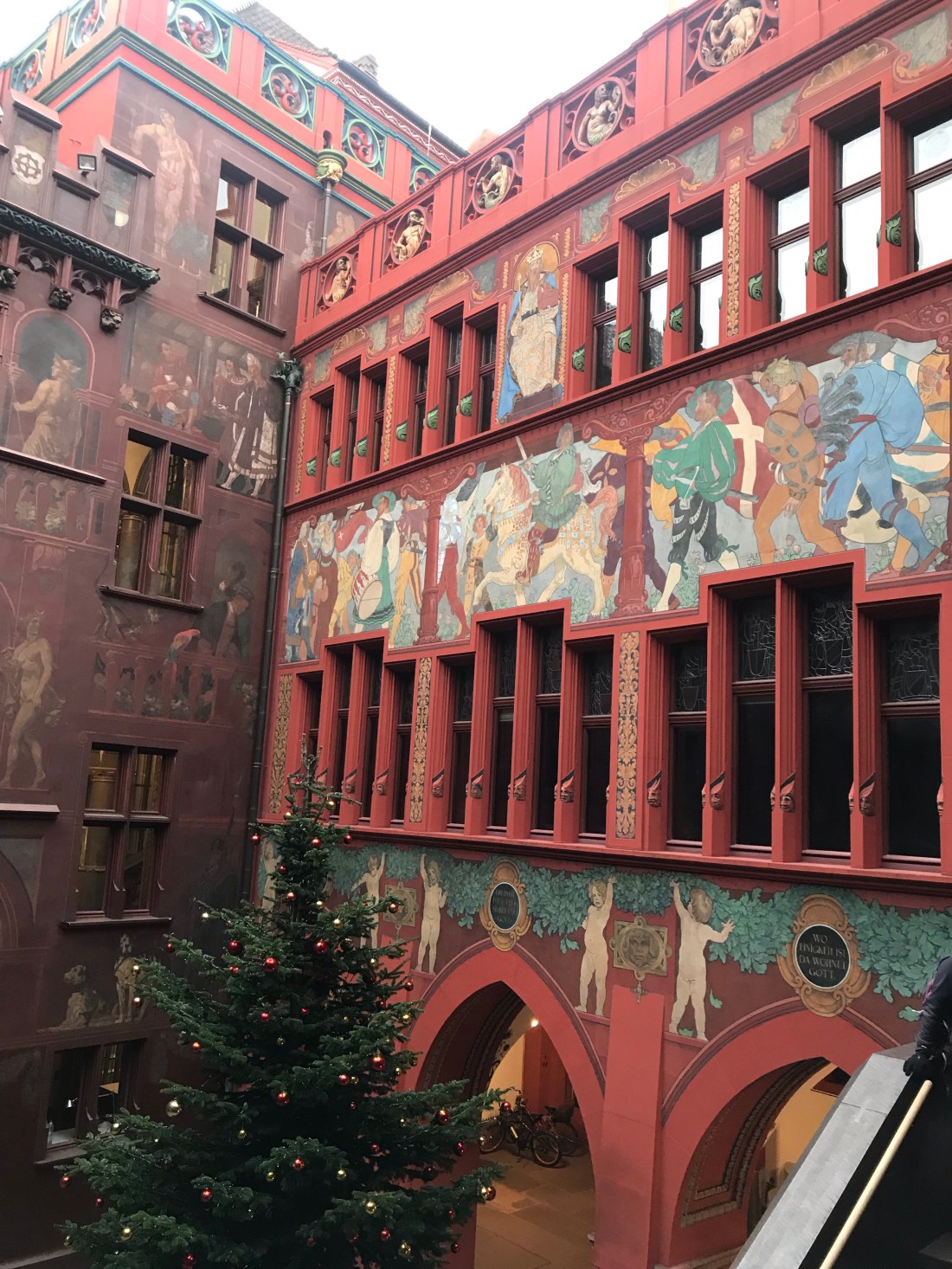
This magnificent red building is the town hall, where an extremely good cellist was busking some famous classical pieces to a backing track. I enjoyed the little concert as I wandered around the building:
Willkommen in der Schweiz

The air here is cold. Cold and very dry, somehow and I could see my breath as I emerged bleary eyed from the airport and gratefully walked straight onto the hotel shuttle bus at about 6:45am. Which for me today was about 12 hours after midnight (the wonder of traversing time zones).

The quickest way to get to Zurich city is to get the hotel airport shuttle back to the airport then hop on a train. The lady at the hotel reception waxed lyrical about the Christmas market which is already open and apparently very pretty. So, even though I felt tired from the flight, I decided to go with her suggestion while the hotel prepared my room.

5 minutes from the hotel, having decanted a rucksack of essentials and left the rest of my luggage at reception and I’m back at the airport. Half an hour later, having negotiated train ticketing and having asked people for help to find the correct station platform (asking for help like a pro now – well at least now it doesn’t take me so long to summon up the courage for it) and 15 minutes on a train and I’m here in the heart of Zürich.

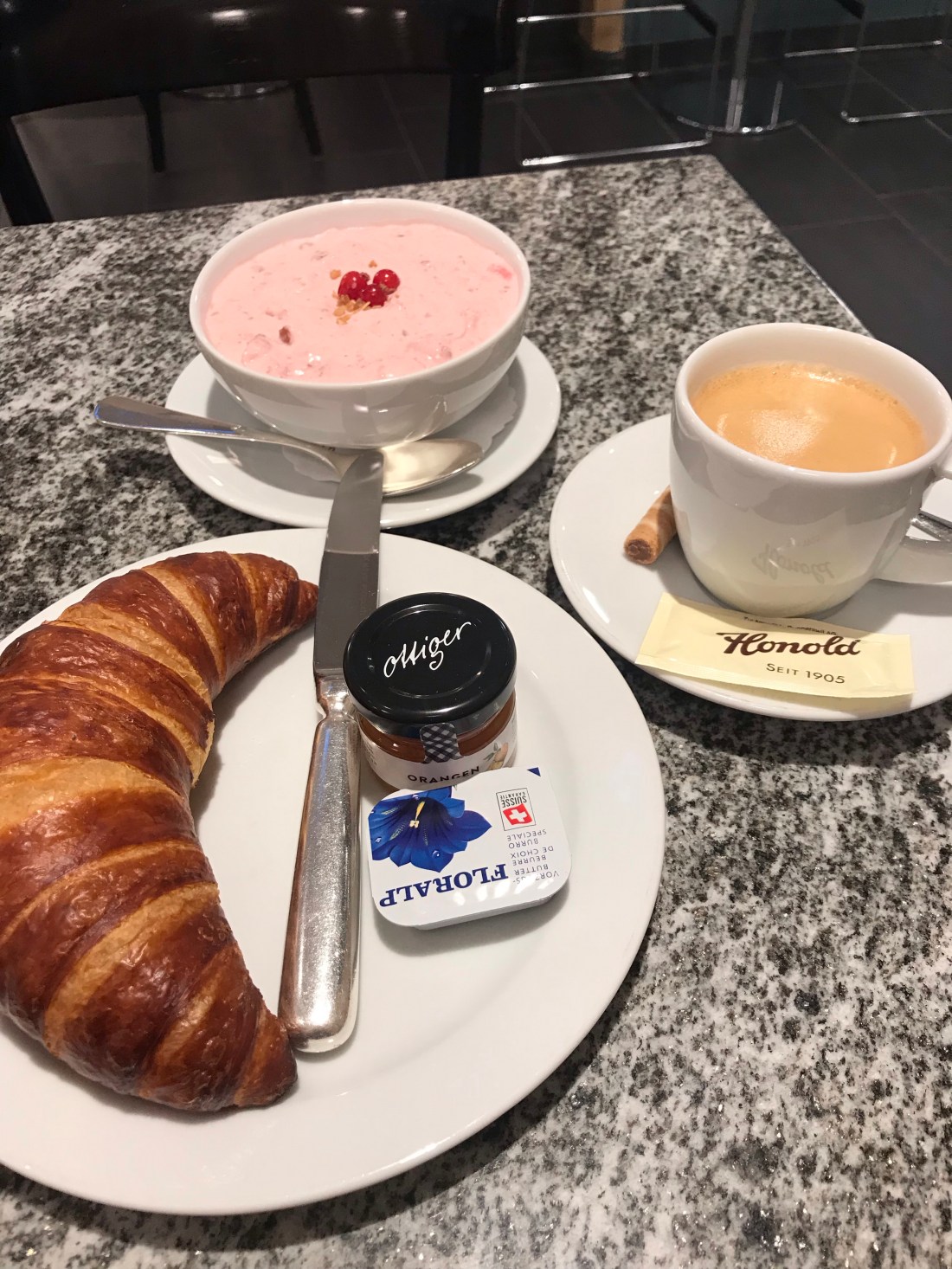
Most things were not open when I arrived, but I gratefully found a very swish café already serving breakfast, which I was ready for despite having had a collection of boiled veg on the plane (hmmm vegan breakfast fail Swiss Air! Though the hash brown was tasty). From the café I established contact with Delia who I’d meet the next day. The bowl of pink stuff was delicious bircher 😋

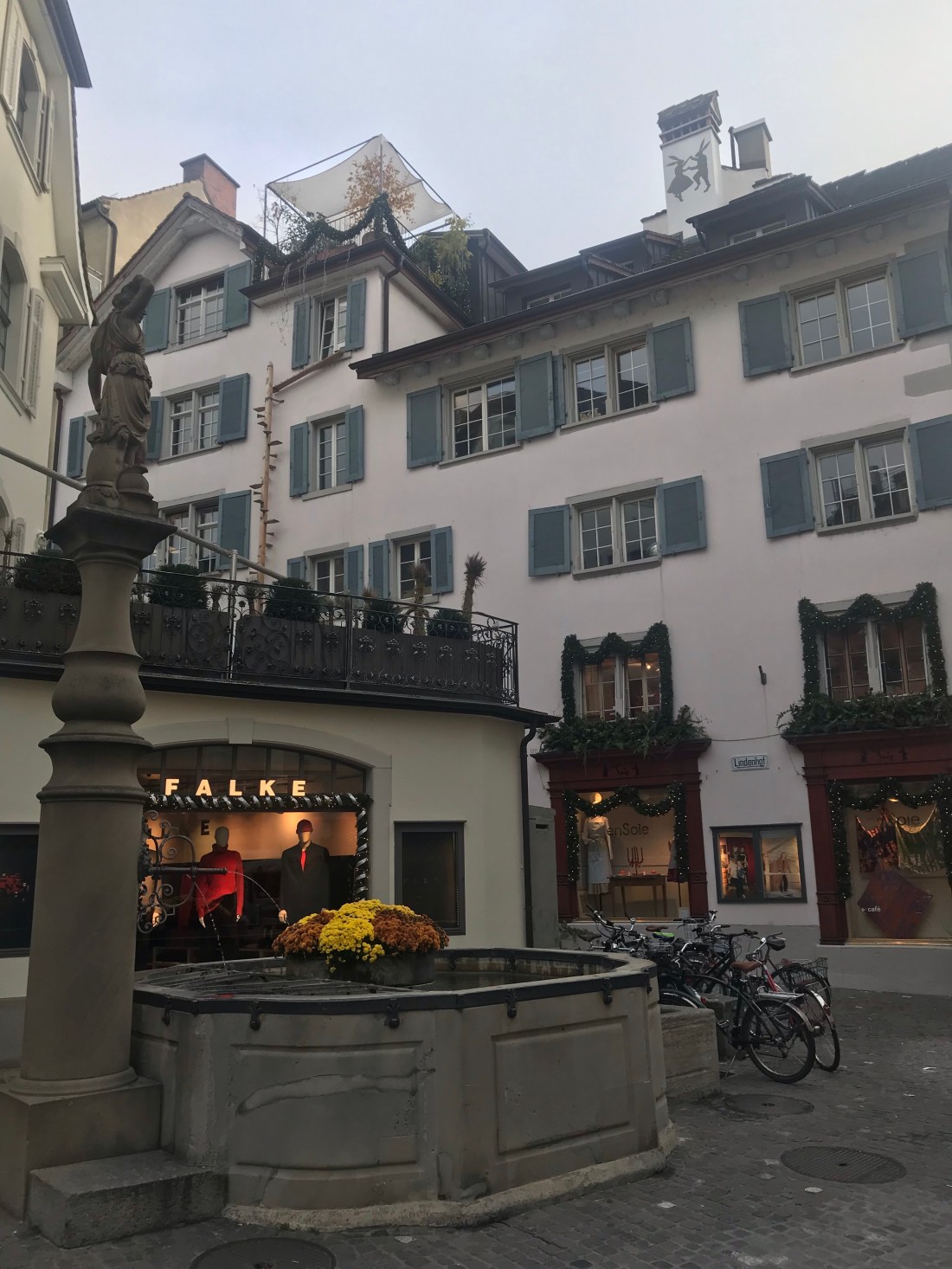
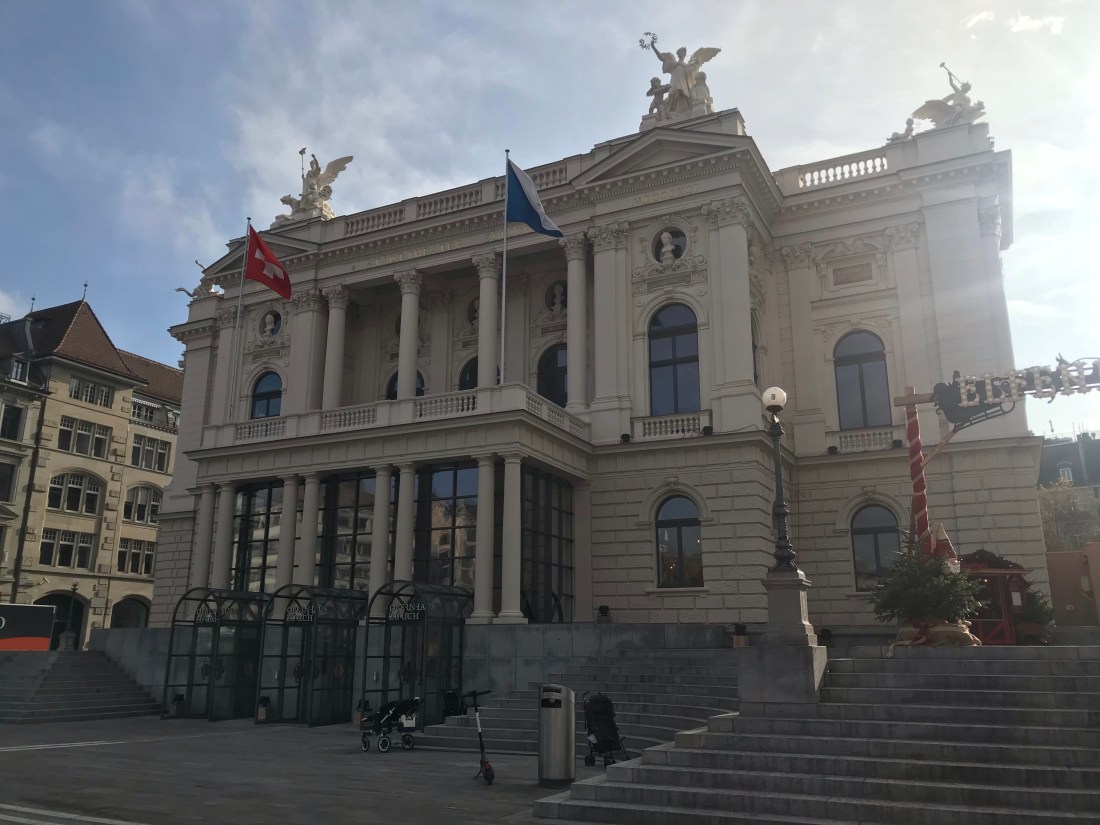
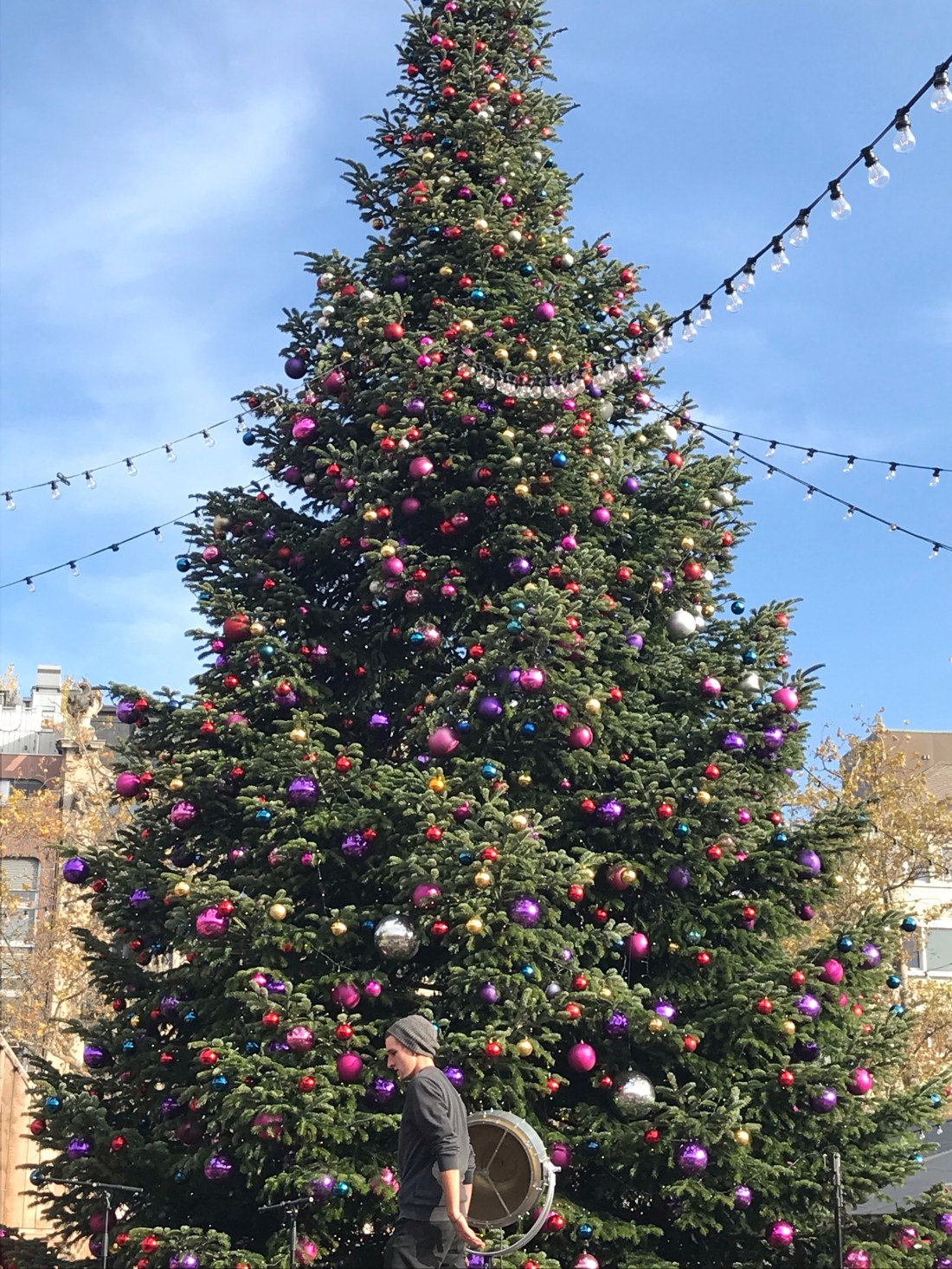
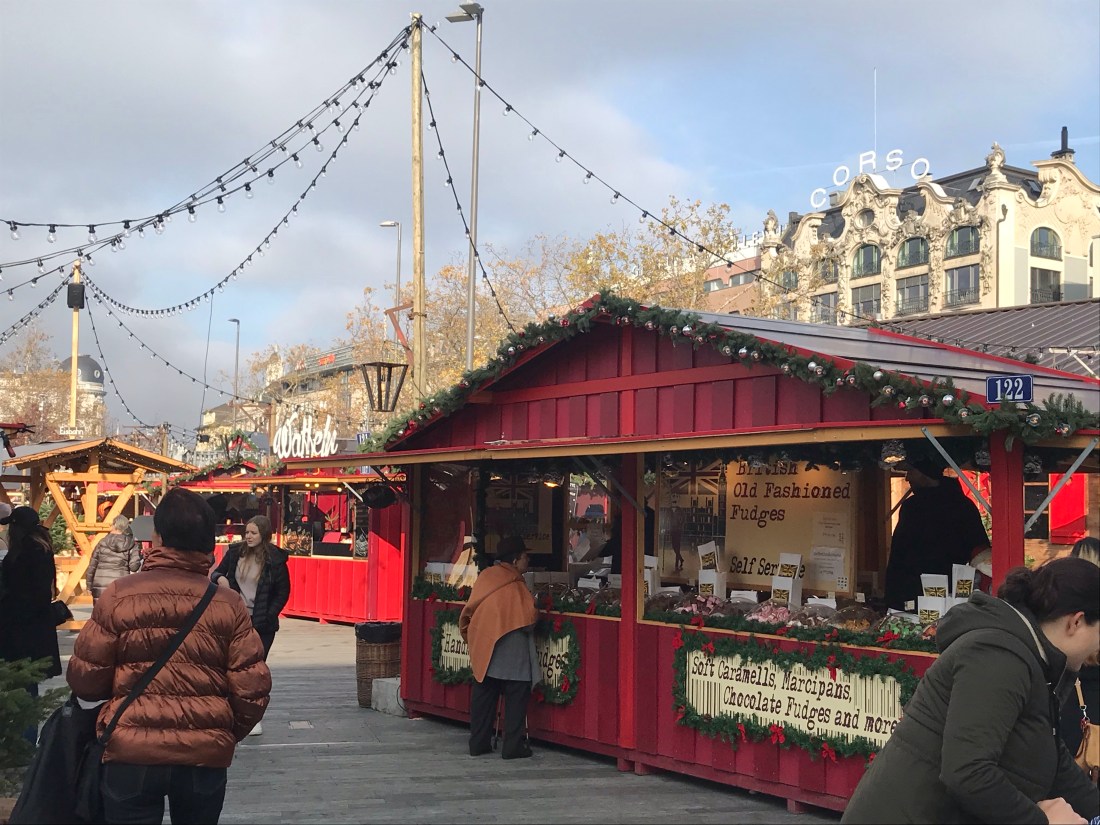
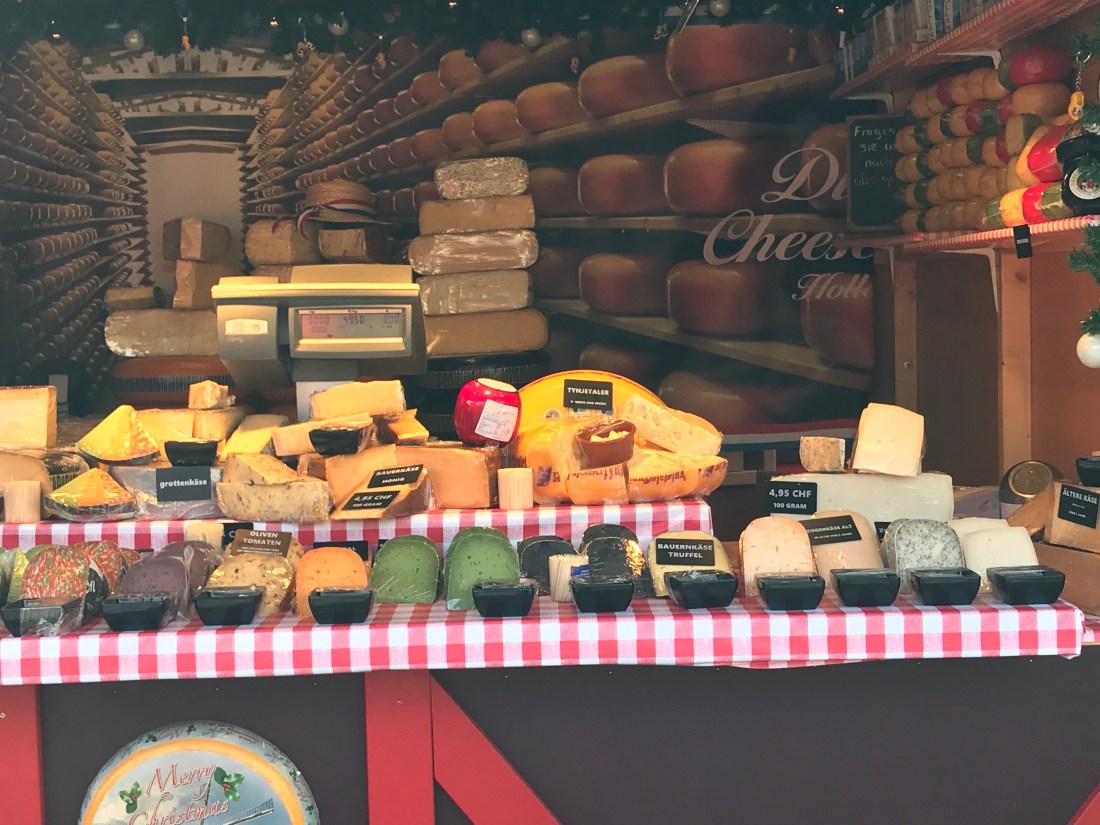
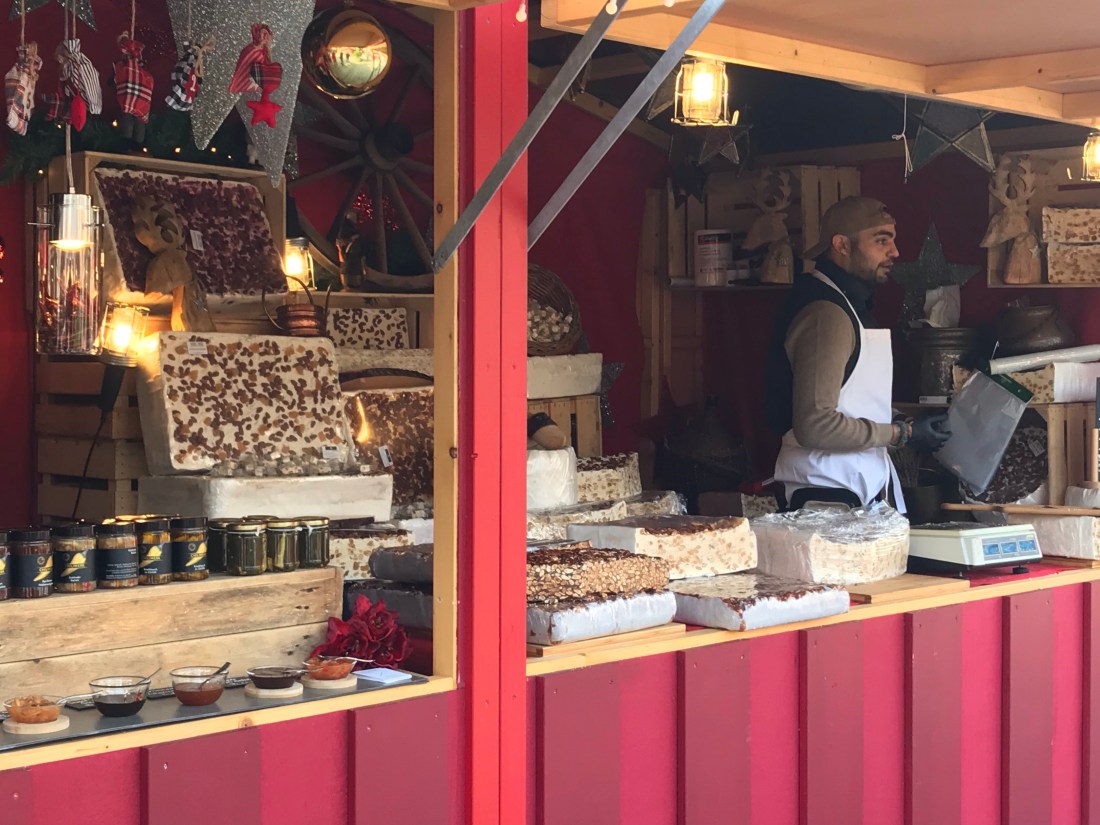
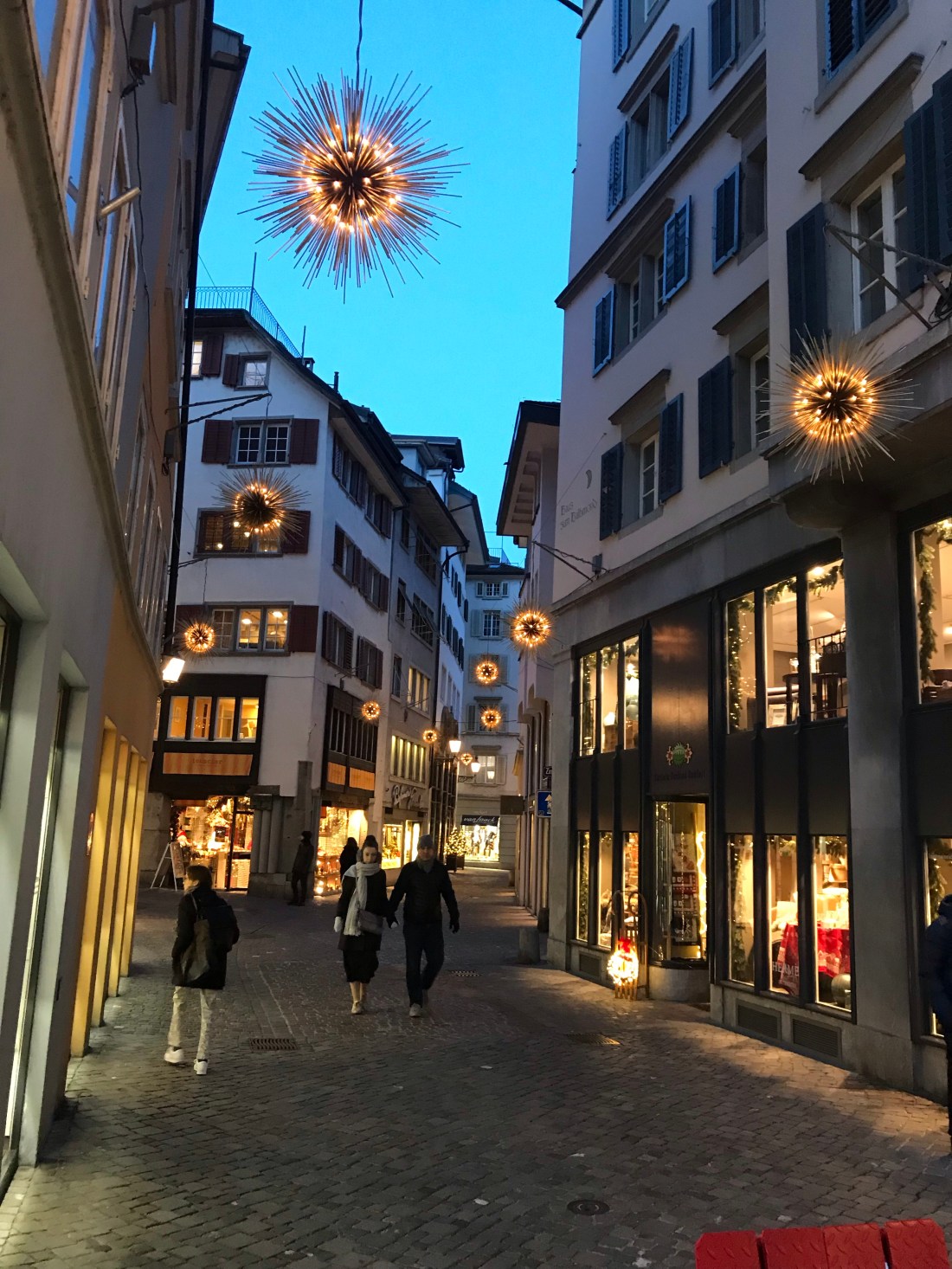
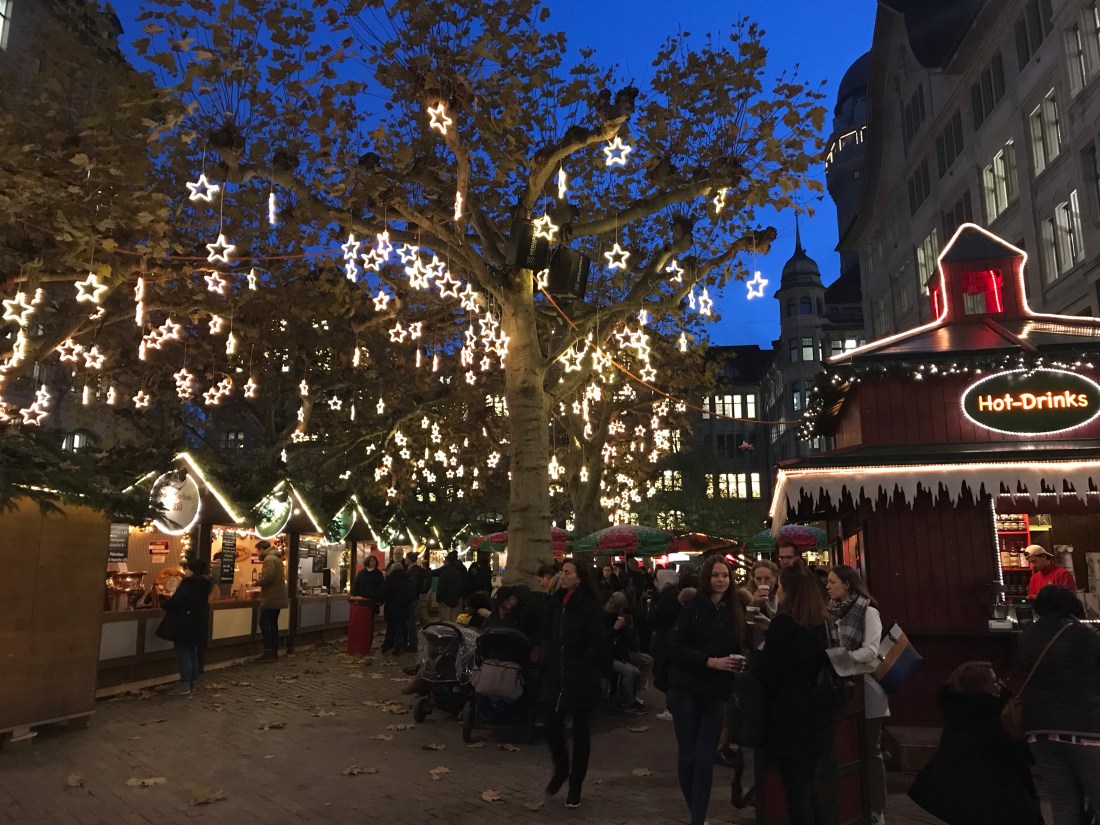
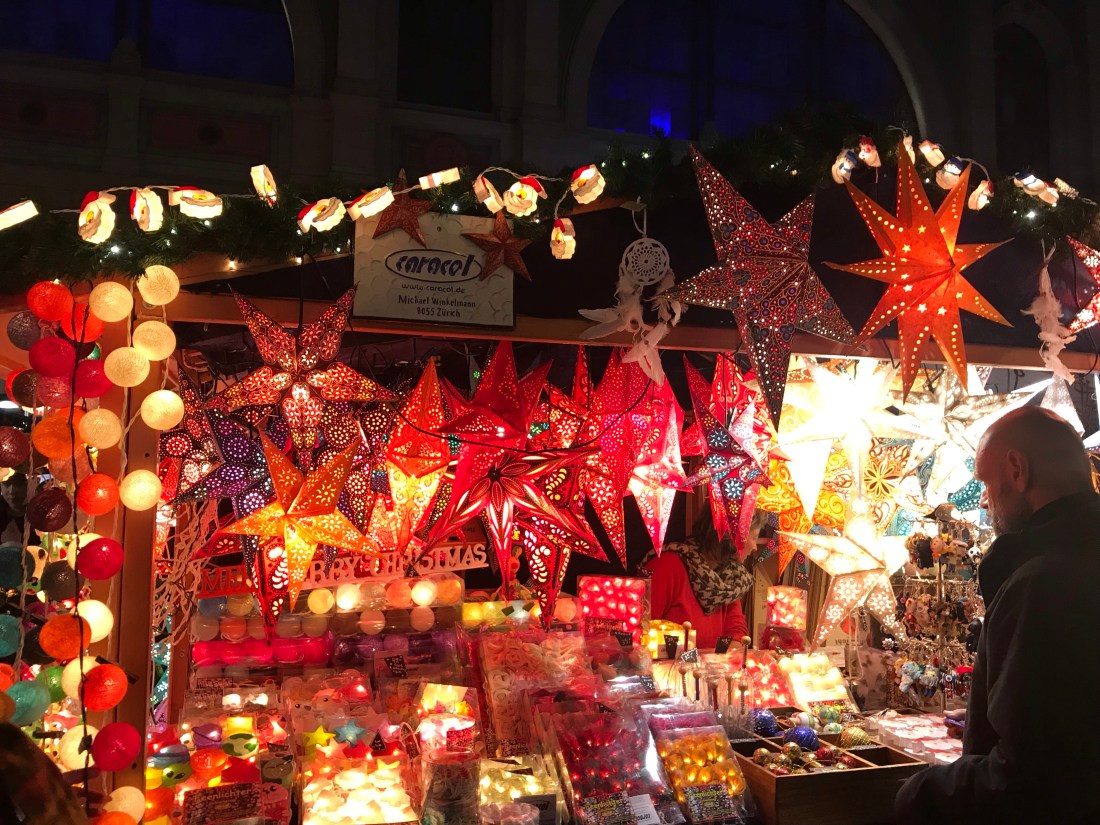
There’s a main Christmas market, not far from the river and the centre of Zürich, but actually there are lots of little cobbled corners lit up with huge Christmas trees and temporary lanes of wooden huts selling Glüwein, Wafflen, Würst, along with every kind of gift you can imagine.

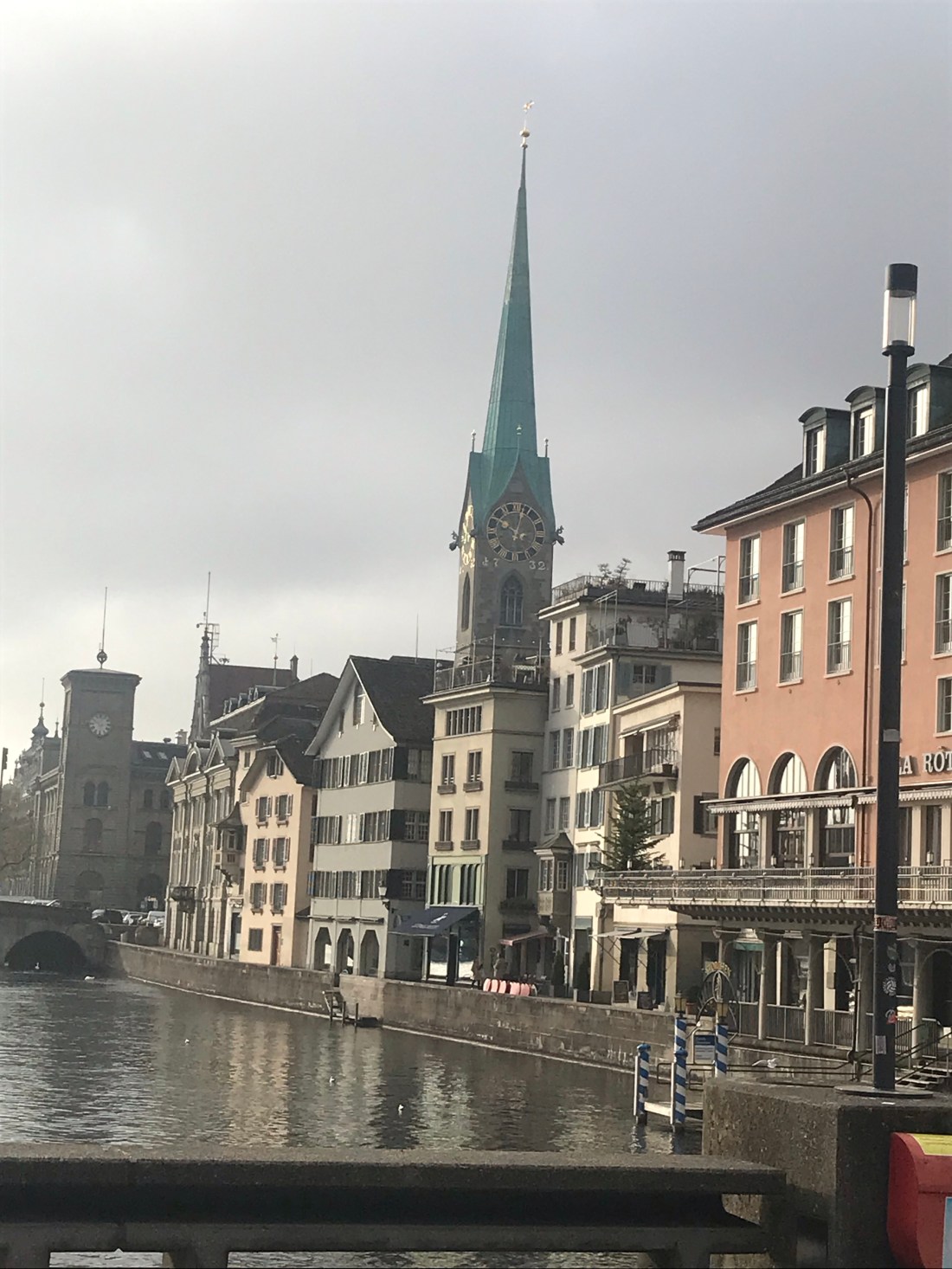
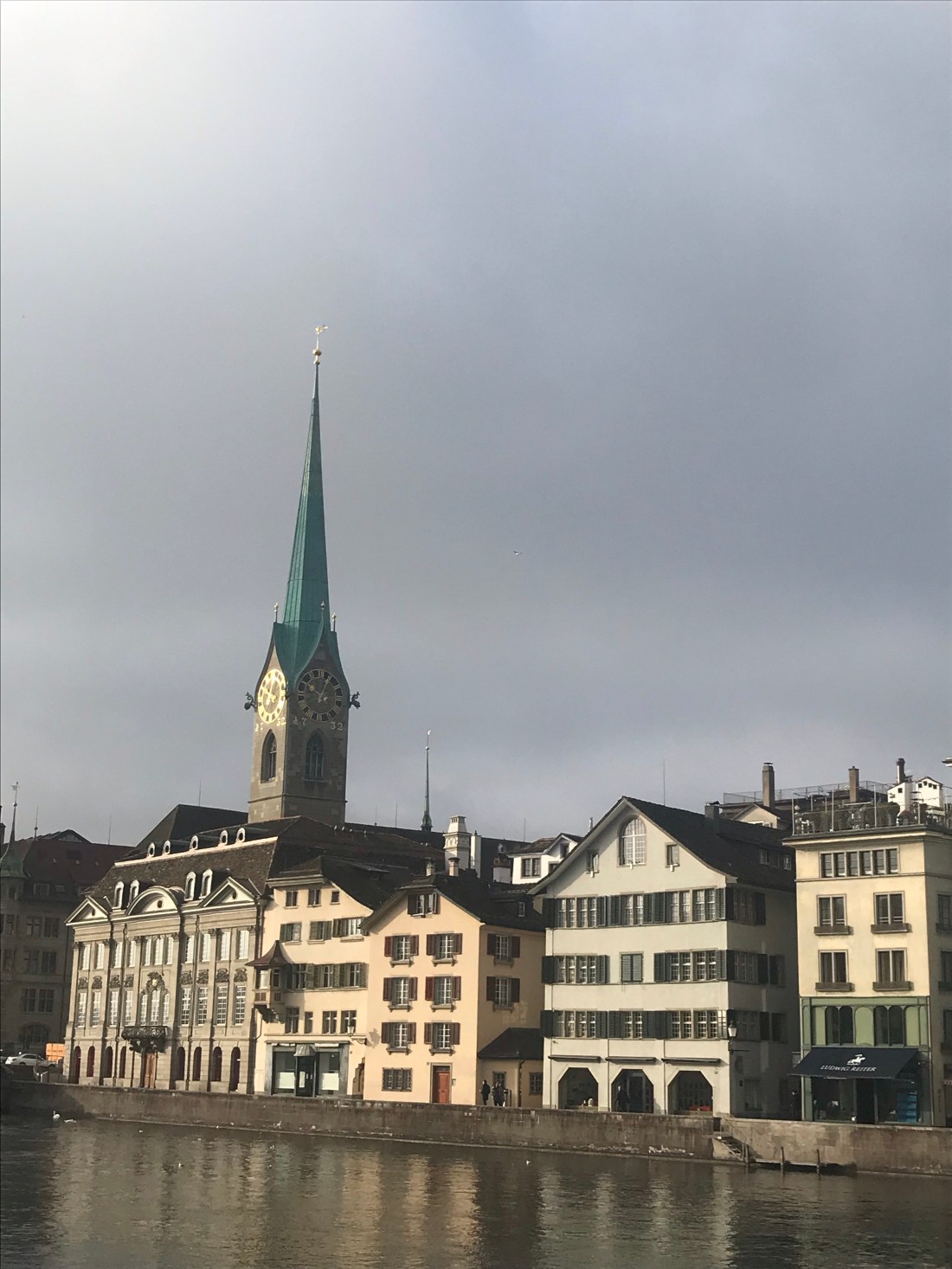
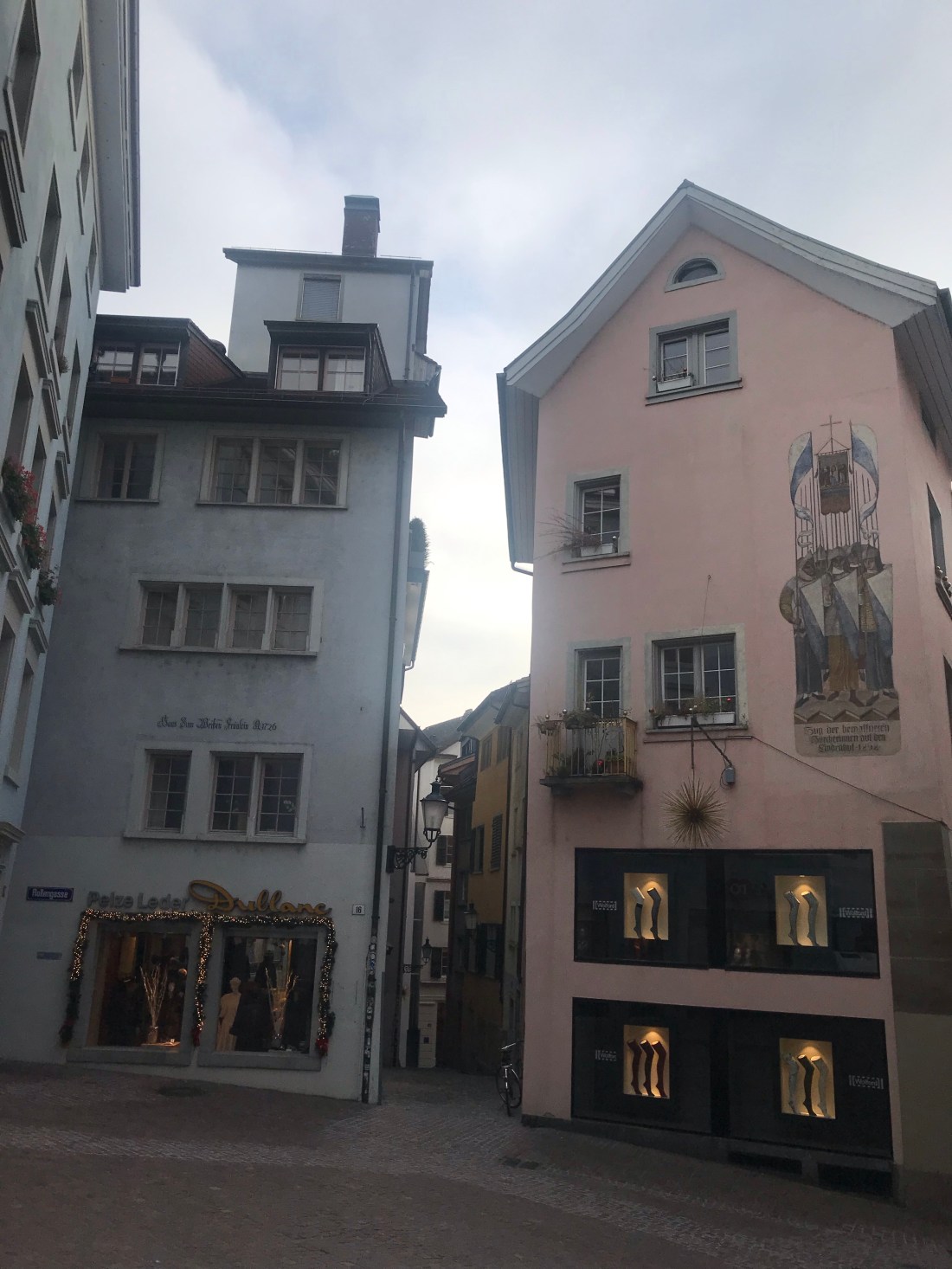
Attempting to feel my way towards the centre of things, I gravitated towards the river, lined with pretty Swiss houses replete with wooden shutters. Then stumbled across a music shop, where I warmed up for a bit browsing the shelves.

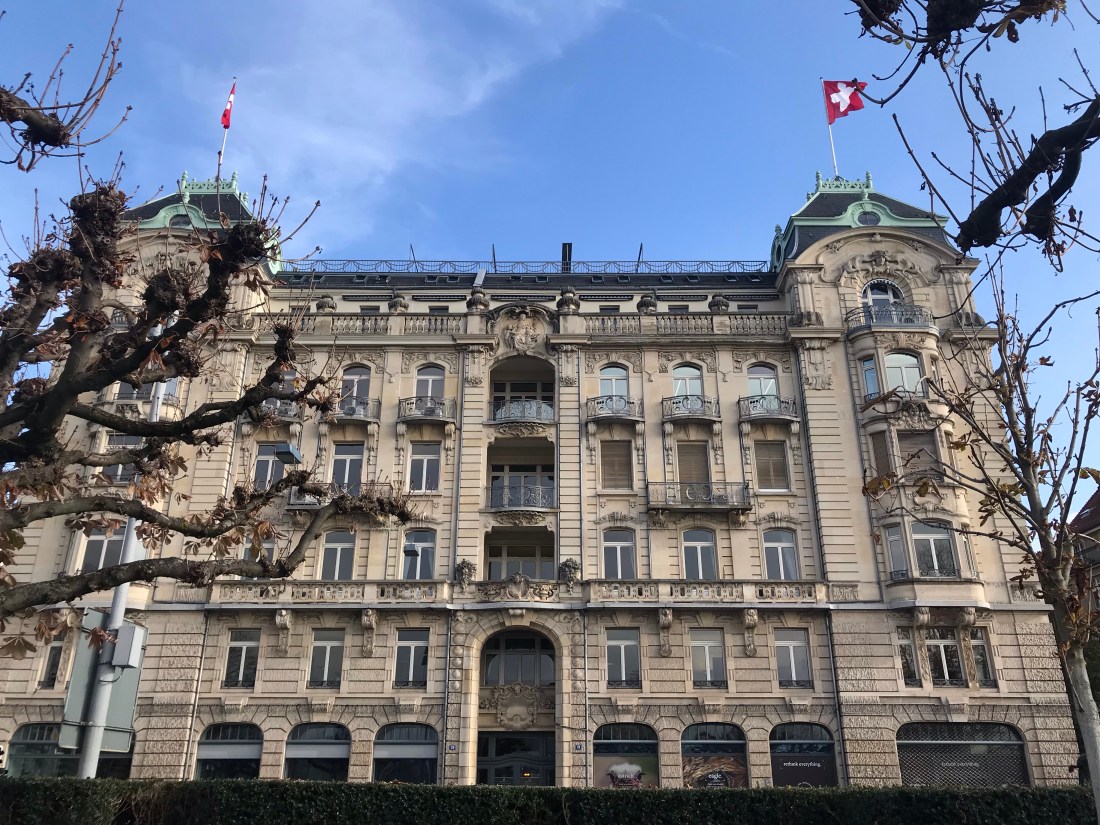
I never thought that architecture could bring comfort with it before, but Jamie and Shiv have mentioned this phenomenon to me, in terms of the post colonial architecture in Penang and Malacca in Malaysia and in Singapore too. In Zürich, virtually every corner I rounded I found another historical building, with a date painted ornately on the immaculate render, along with something about its history. Somehow it felt very comforting to be surrounded by old things again. I’ve really missed that.

Before long, I found myself near the Kunsthaus Art Museum, where I spent a couple of hours pondering sculptures by Rodin, sculptures and drawings by Matisse, paintings by Picasso and by quite a few Swiss artists and sculptures by Giacometti.

The Gates of Hell by Rodin

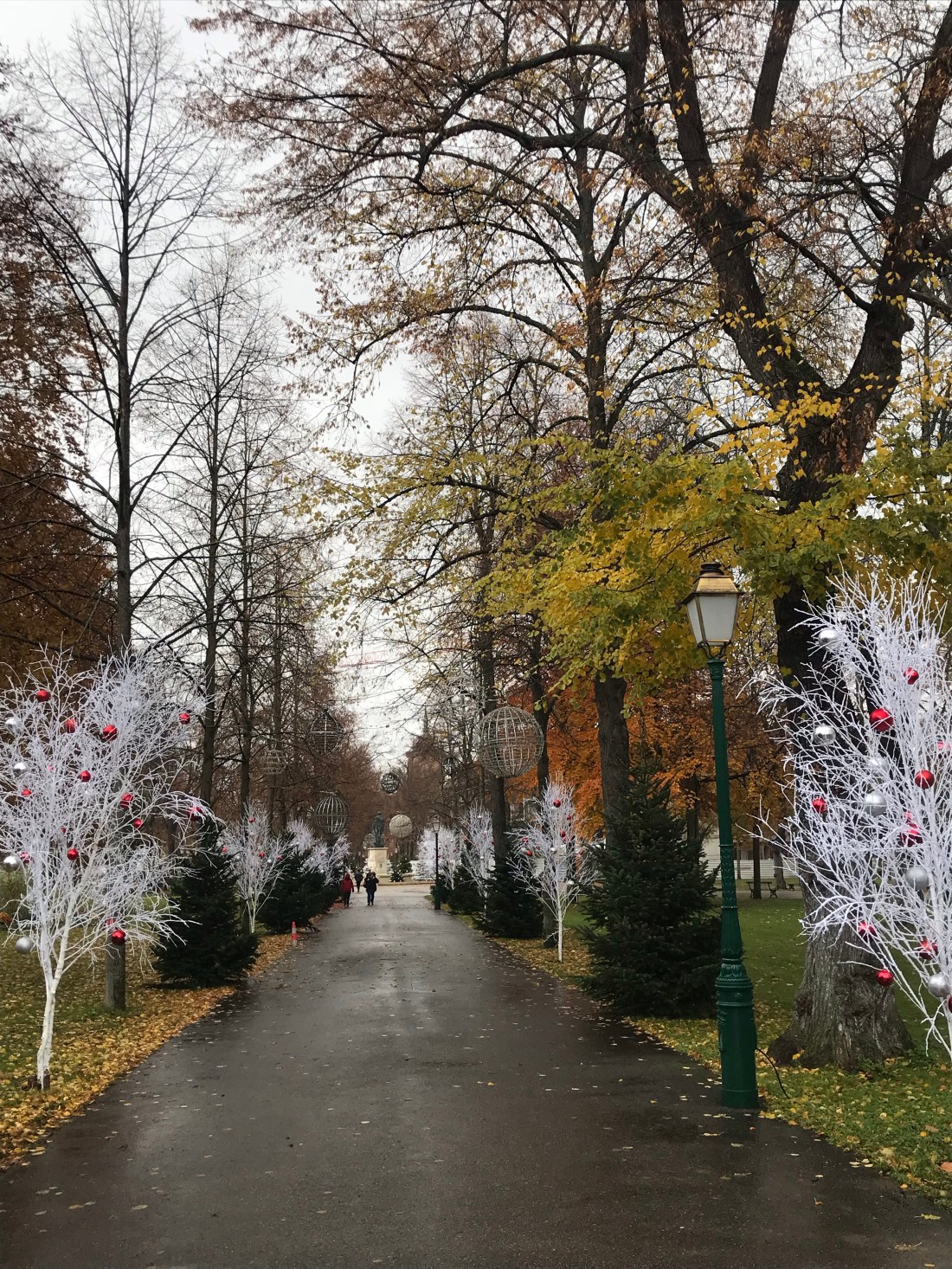
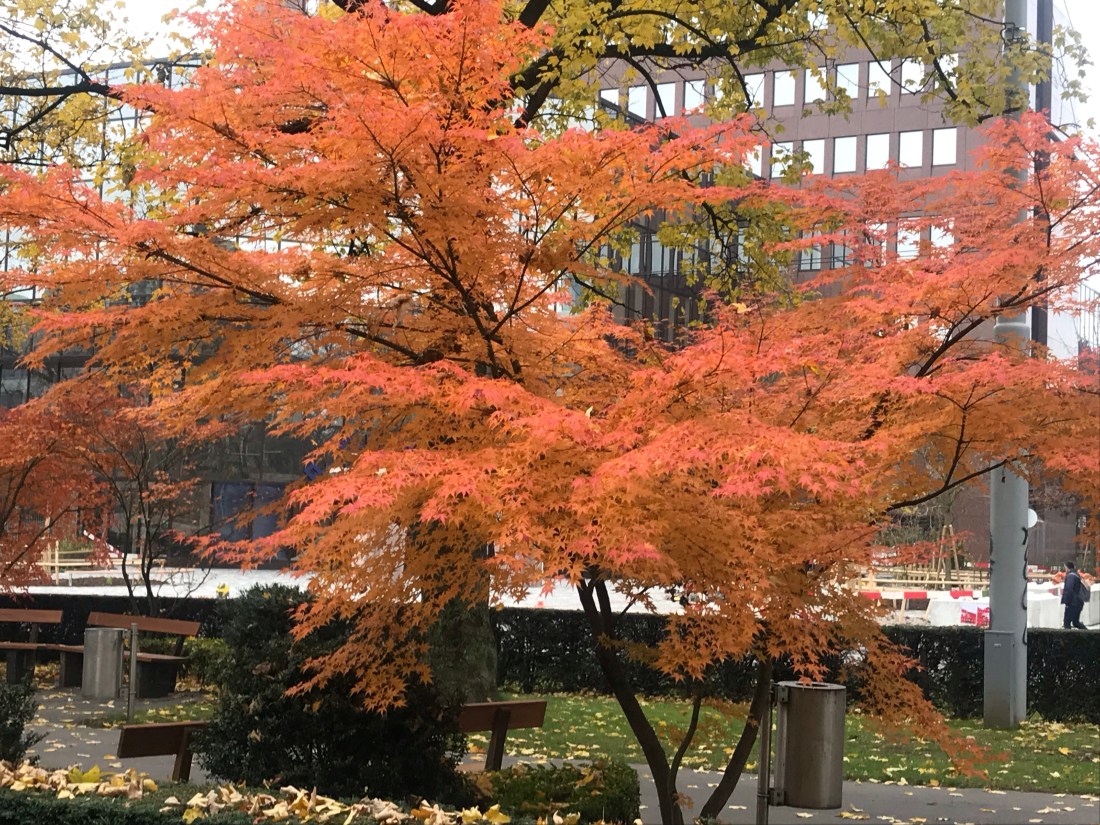
On my meandering path you can’t begin to imagine how much pleasure I was deriving from being in a place still experiencing the last vestiges of autumn. The colours of leaves on the trees, the misty sky, the cold air, all things I have so missed on my travels that I found myself feeling surprisingly at home here.

At the Christmas market, I resisted the many other temptations on offer but indulged in Würst for a late lunch.

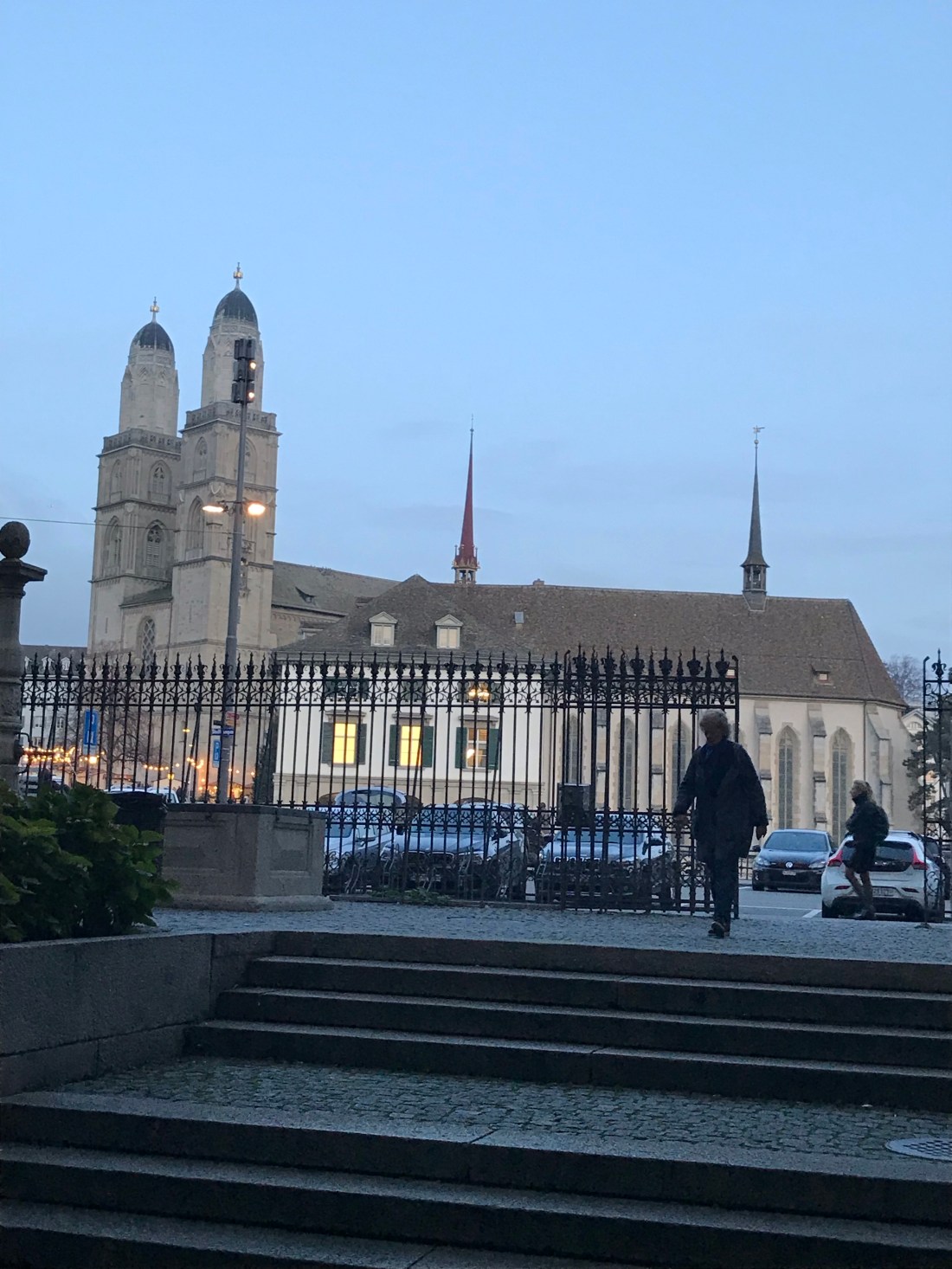
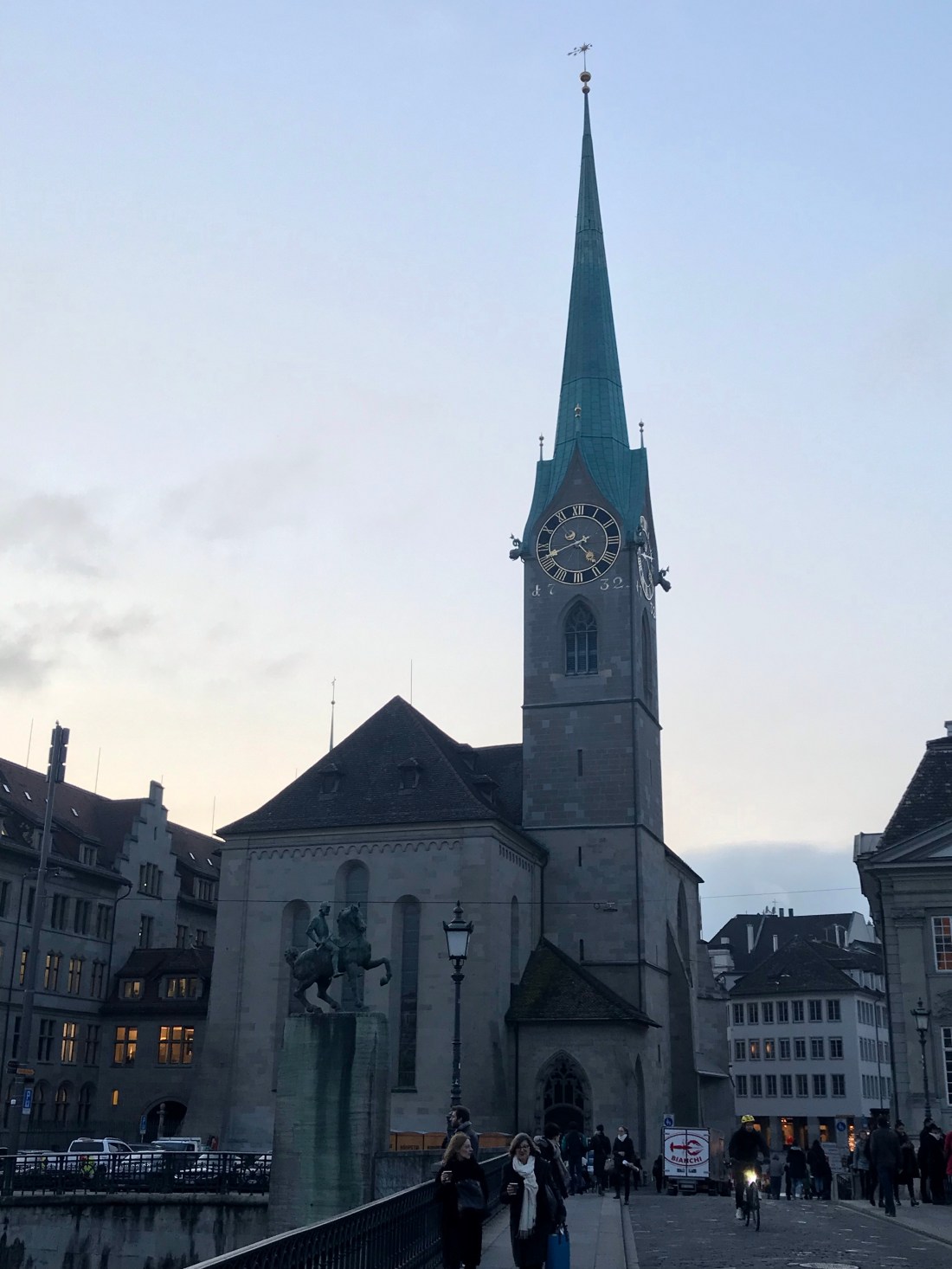
On my way back to the station, I managed to have a quick look around the Grossmünster and the Fraumünster (two of the biggest churches in the middle of Zürich) just before they closed. I was particularly interested in the latter, which began life as a Benedictine convent, founded in 853 by Louis the German for his daughter Hildegard. He gave the convent the land of Zürich, Uri and the Albis Forest. In 1045, King Henry III gave the convent the right to hold markets, collect tolls and mint coins, which apparently effectively made the Abbess the ruler of the city. But in 1336 the city’s first independent mayor was appointed (ie not the Abbess’ appointment), and the convent’s political power waned.

The abbey was dissolved in 1524 in the course of the Reformation by Zwingli. Its last abbess, Katharina Von Zimmern, to whom there is a memorial altar, agreed to its dissolution, though it must have cost her a lot. A lady also spending a thoughtful moment here, told me in halting English that Katharina was a great lady, because she was so concerned about disunity in the church that she decided to allow the abbey to be dissolved, rather than engage in a fight to save it that would create further discord with Zwingli and the Reformers. Food for thought.

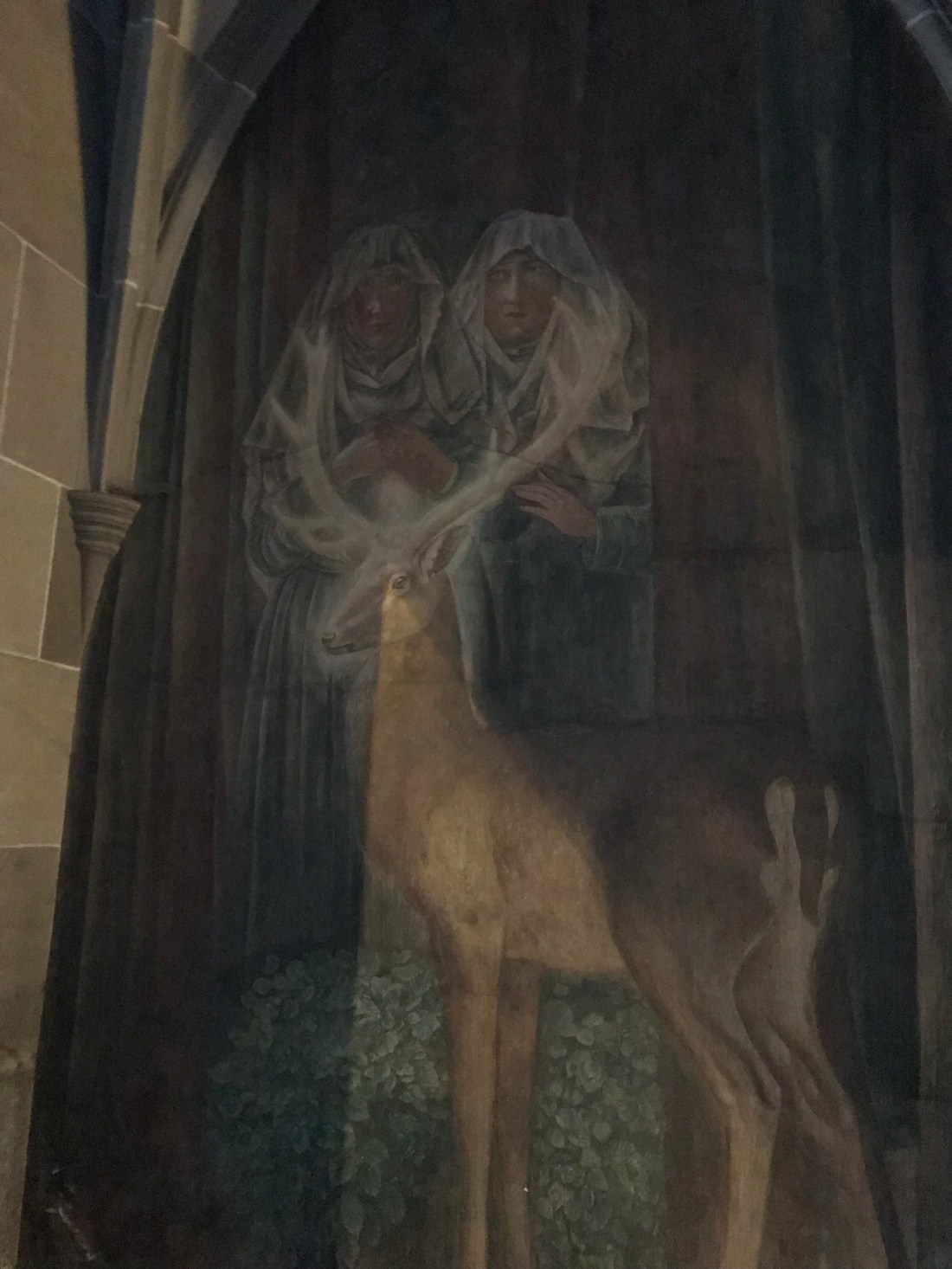
I was either too late or you can’t currently see inside the church space where apparently there are five windows by Mark Chagall and another one by Giacometti that I’d have loved to have seen. But I could see the numerous frescoes on the cloister walls.

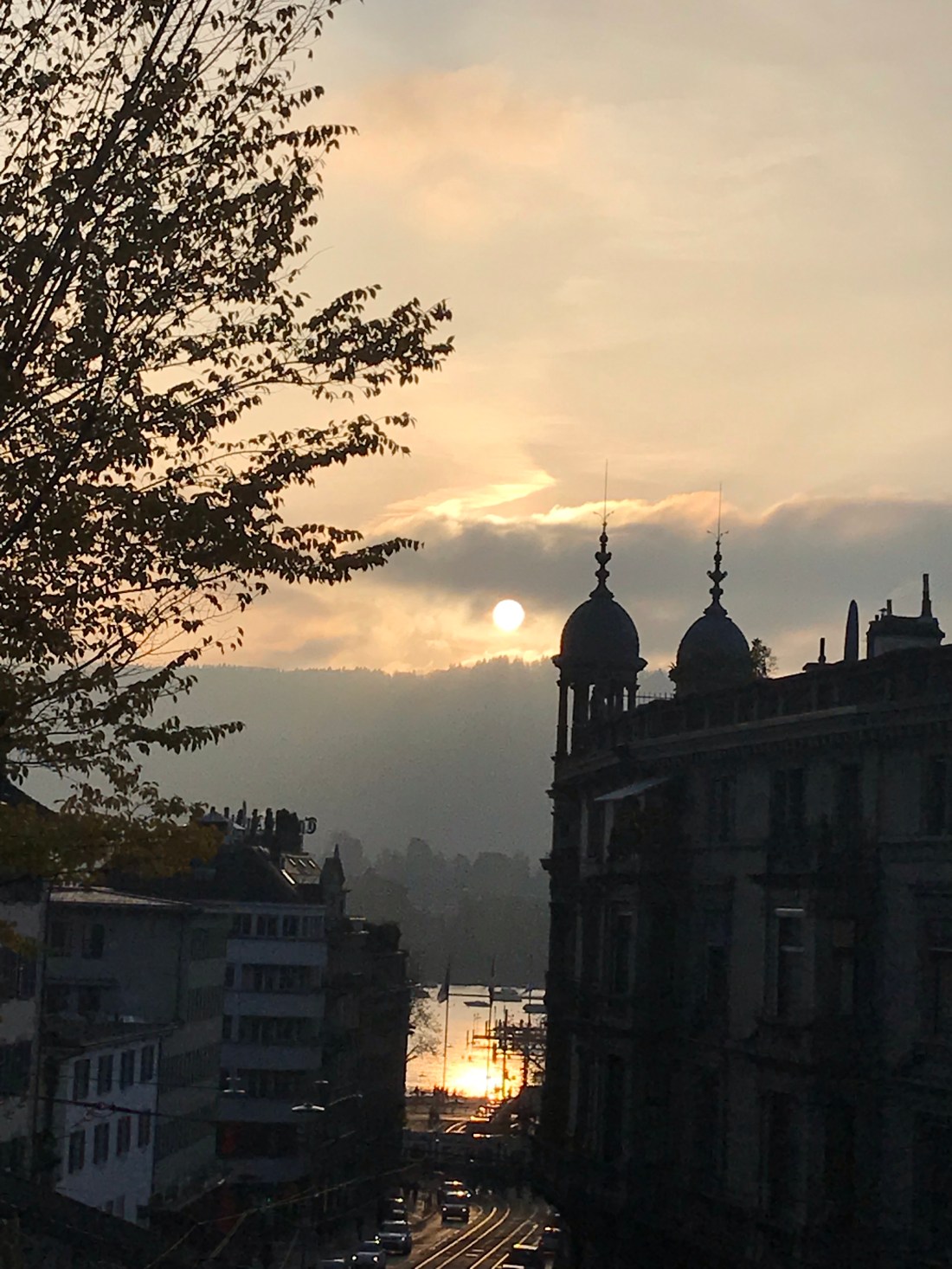
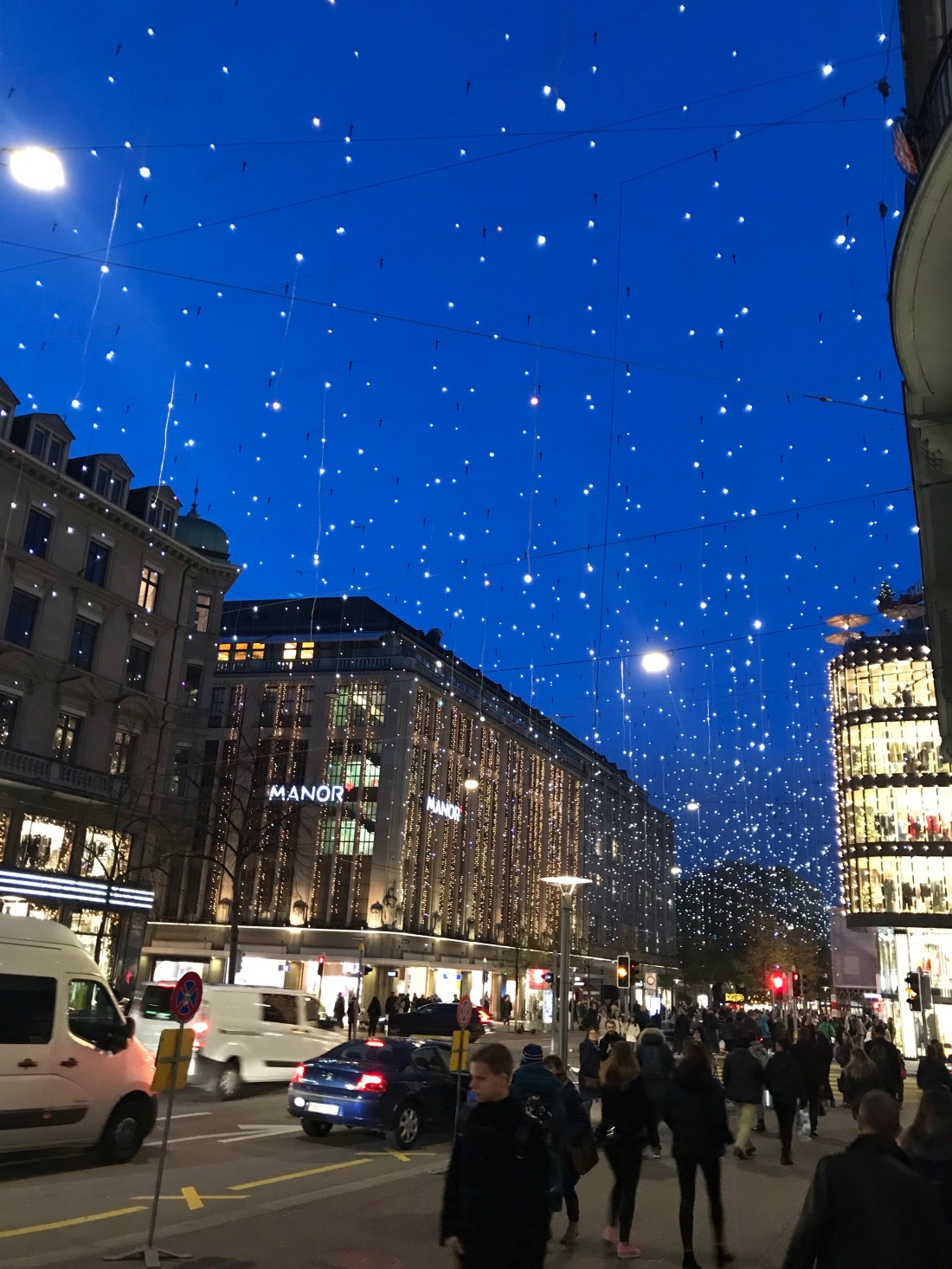
Somehow, in spite of my plans to spend a lazy day in the hotel, Zürich enticed me to stay until the evening, when the whole place was lit with tiny white fairy lights apparently strung from the sky like stars.

Farewell Singapore

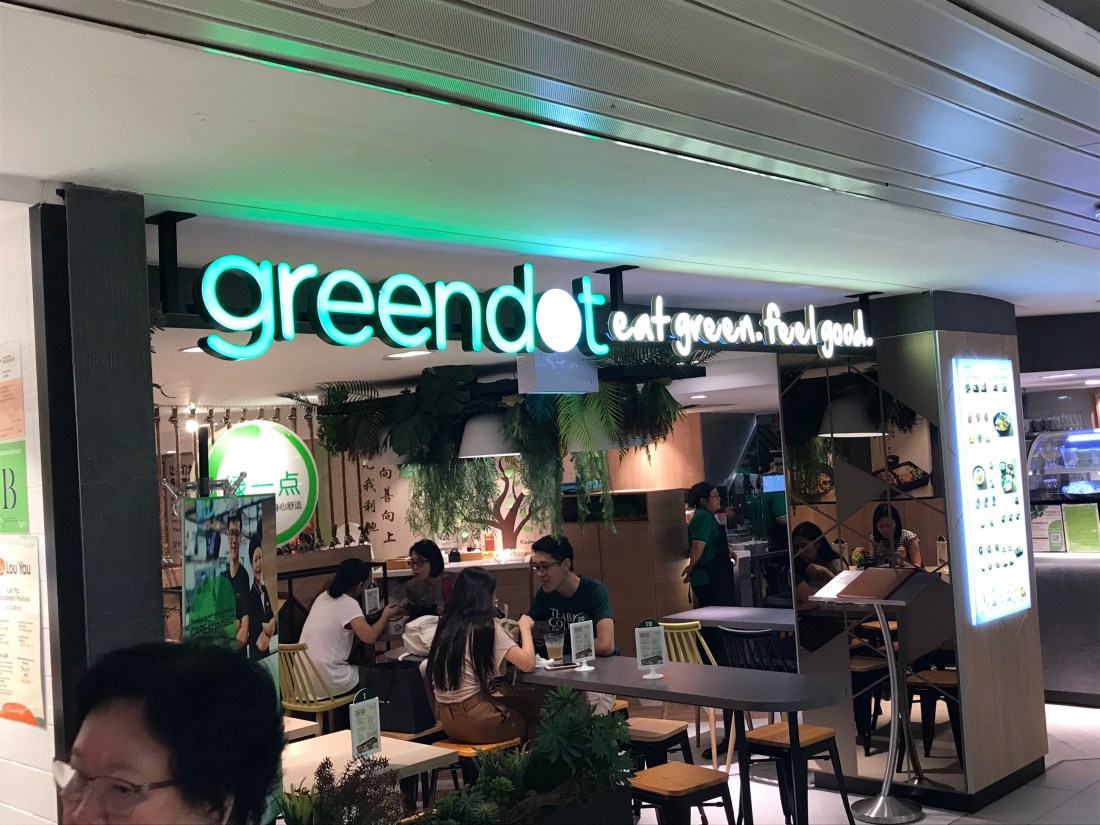
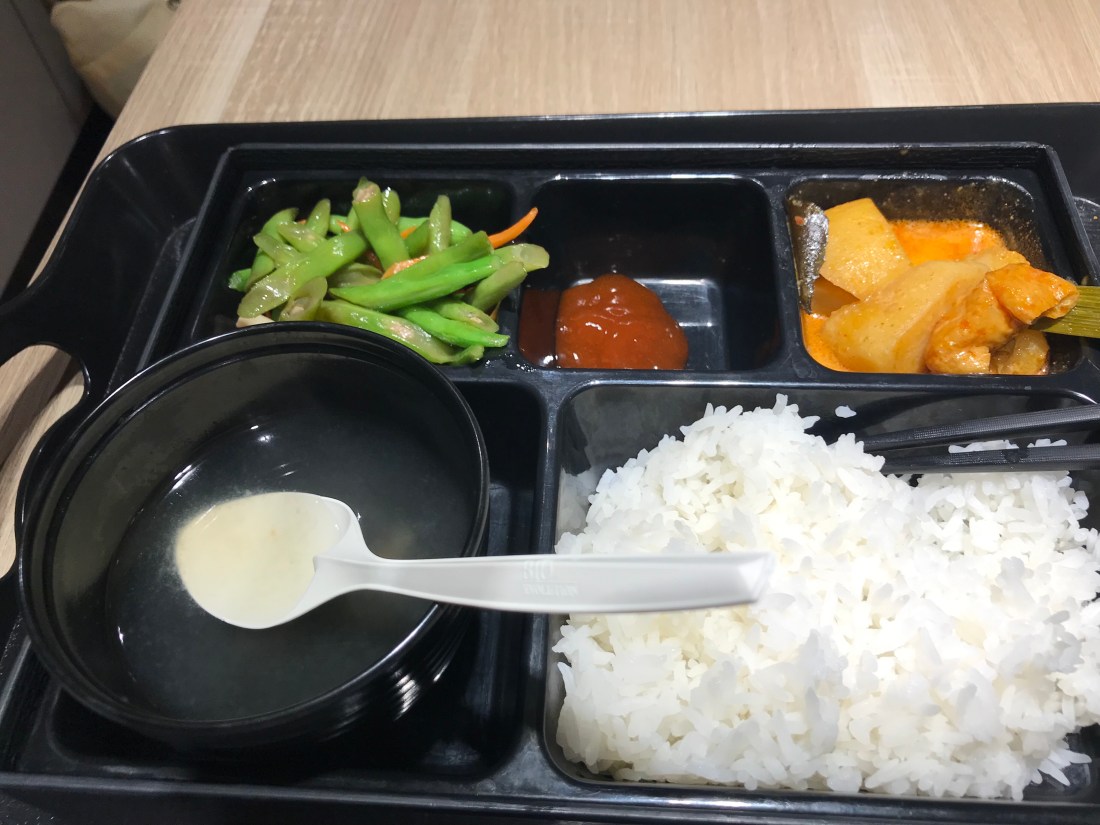
On my last day in Singapore, I got to taste some wonderful “Bento” (a box packed meal see pic below) from this veggie café that I’d spotted before. It did not disappoint. It’s amazing just how delicious simple food can be, with a little bit of skill at preparing it:

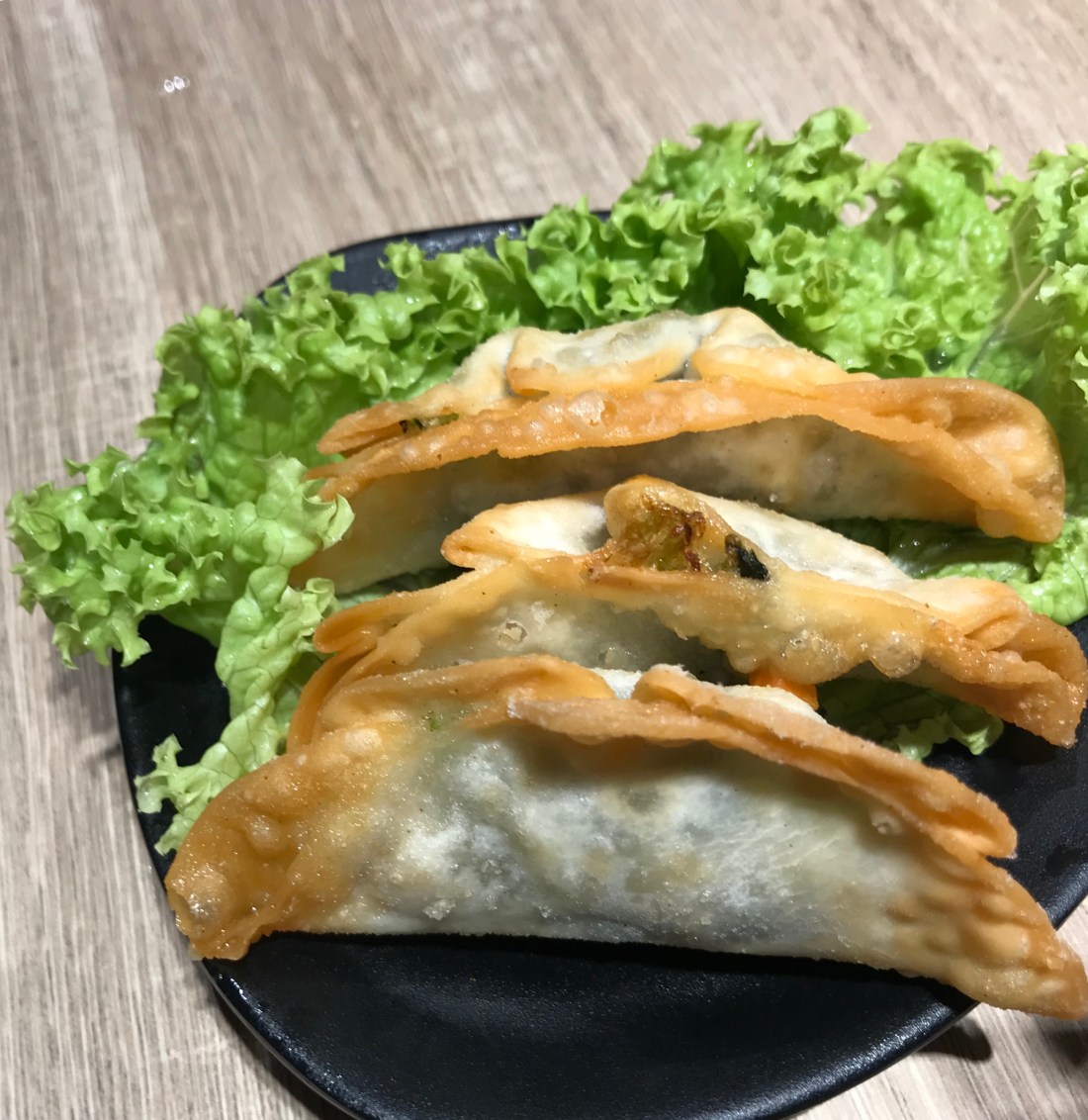
Fragrant rice, soup (remarkably tasty, served with every meal, perhaps aiding digestion?), beans and carrots cooked in some kind of sesame and soy sauce that was delicious, potato and various other veg curry (ooo that was good) and a squidge of chilli sauce, and some veggie gyoza (dumplings- below):

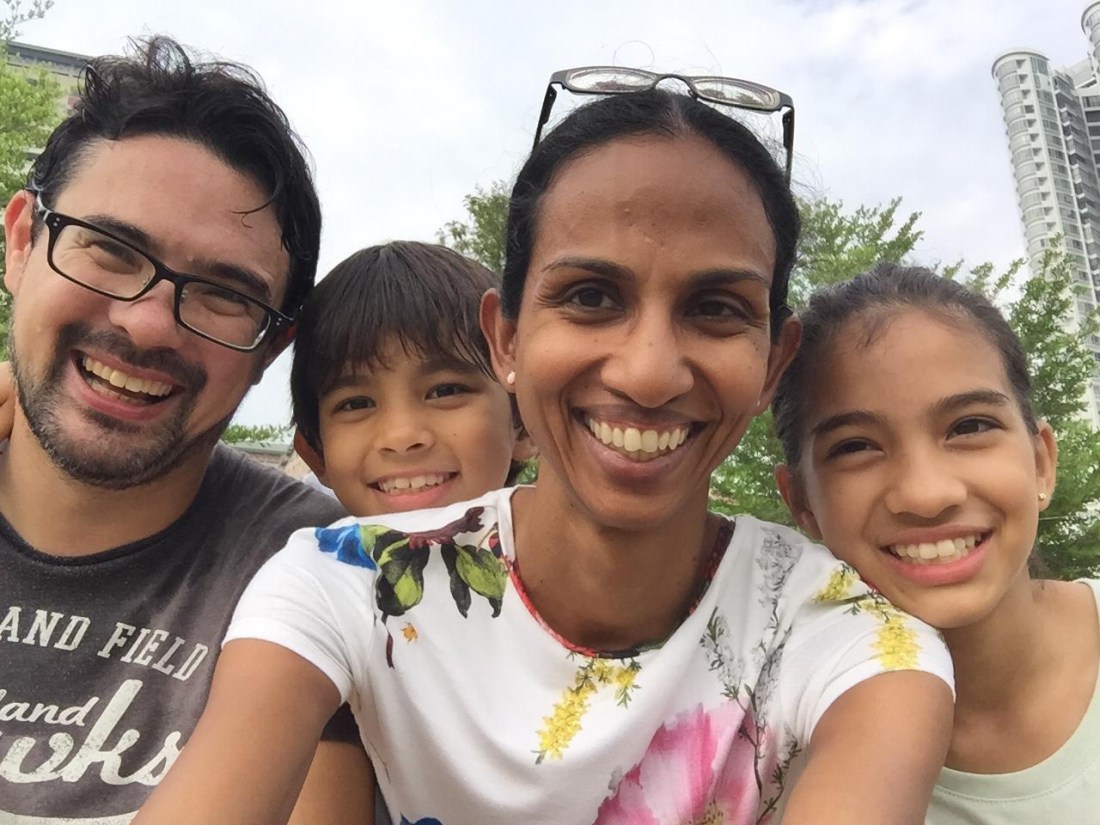
Well, what an incredible Southeast Asian adventure I’ve had! And I am very much going to miss these lovely people who have hosted me so very ably in Singapore. I feel very fortunate to have found such kindred spirits all over the world, who have offered me such amazing hospitality. There was a lump in my throat saying goodbye to these lovelies.

Apparently, when astronauts return to earth, there’s a phenomenon they experience where they cease to be able to understand why nations war against each other. From the viewpoint of space, we are really all just human beings on our one tiny planet, and it seems crazy that we should ever not just get along with each other. (I read about this in The Book of Joy, a very thought provoking and readable book by Douglas Abrams about the Dalai Lama meeting Archbishop Desmond Tutu.)

I know it’s more complicated than that, when people’s land, or means of survival has been taken from them. But then, actually, is it? Why should it ever even enter our brains to take things away from each other? And why should we ever not offer hospitality to a human being in need of it? (Especially those fleeing war or threat of torture or death.) Today it’s them, tomorrow it may well be us, after all.

Nearing the end of my three month journey around the world, I am beginning to feel a bit like the astronauts.