A small world

Would you believe it, over lunch on Sunday, I ended up sitting on the same table as another English guest… who turns out to also be from Sheffield, a member of a church of which my friend is the vicar, and, with her husband a great supporter of a community initiative run by a friend and colleague of mine.

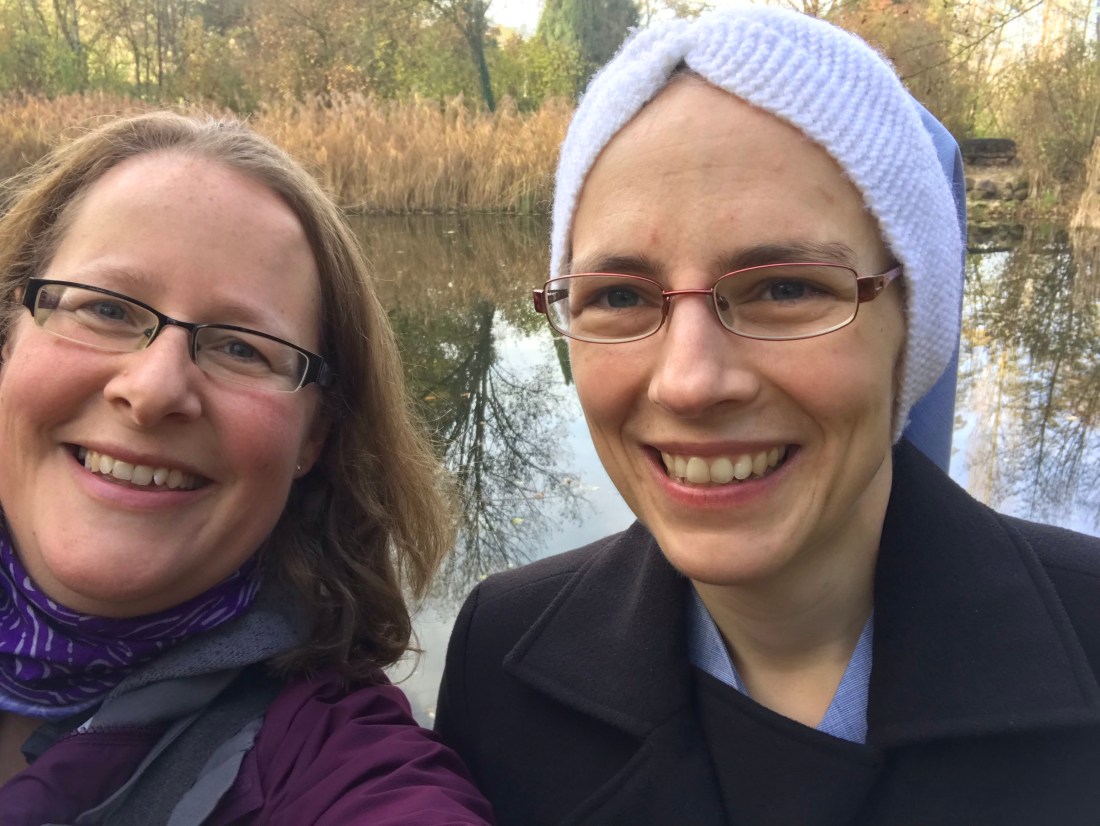
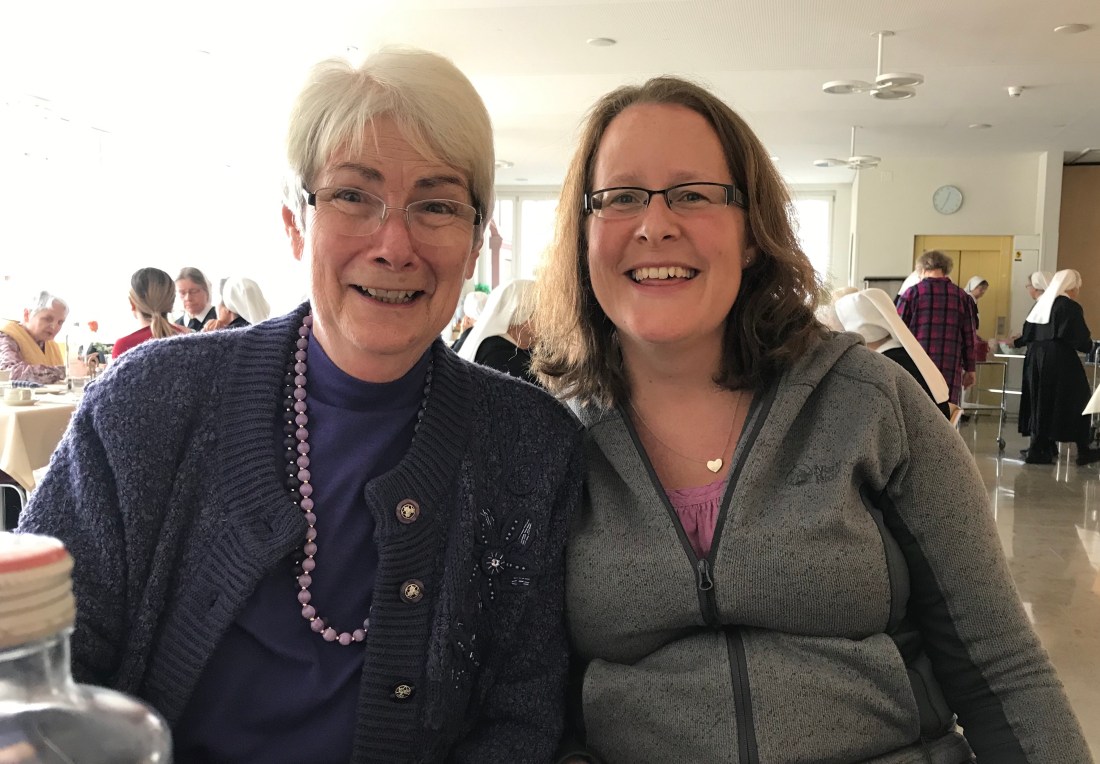
Here is Ruth, who was staying in the convent just for the weekend, to present a paper (at a conference organised by Stadtmission Basel) about her Father’s friendship with Dietrich Bonhoeffer in between the two world wars:

And then, after choir practice, where I was enthusiastically welcomed as a one off singer, I discovered that Sister Gertrude, who I’d just been singing next to all evening, had been an au pair for a vicar in Sharrow, in Sheffield in the 1960s.

And yet another of the sisters came to England a long time ago and lived and worked for a while in the town where I was born.

Well, you travel all the way round the world, stop off at a convent in Basel for a week, and meet people from home (or who at least lived in your home town at one time). Who knew?!

Borderlands

I have arrived at Kommunität Diakonissenhaus Riehen. This convent was founded in 1852 with just a few women living here. By the 1940s-50s the community had grown exponentially, and included hundreds of sisters, though not all of them were based here. Many lived embedded in local communities in various places. Now the community of 62 sisters and quite a few other inhabitants and guests connected with it is mainly housed in Riehen. I was very surprised to find such a thriving convent here, as many monastic orders in England are smaller now. I think I was picturing one building housing maybe about 12 sisters!

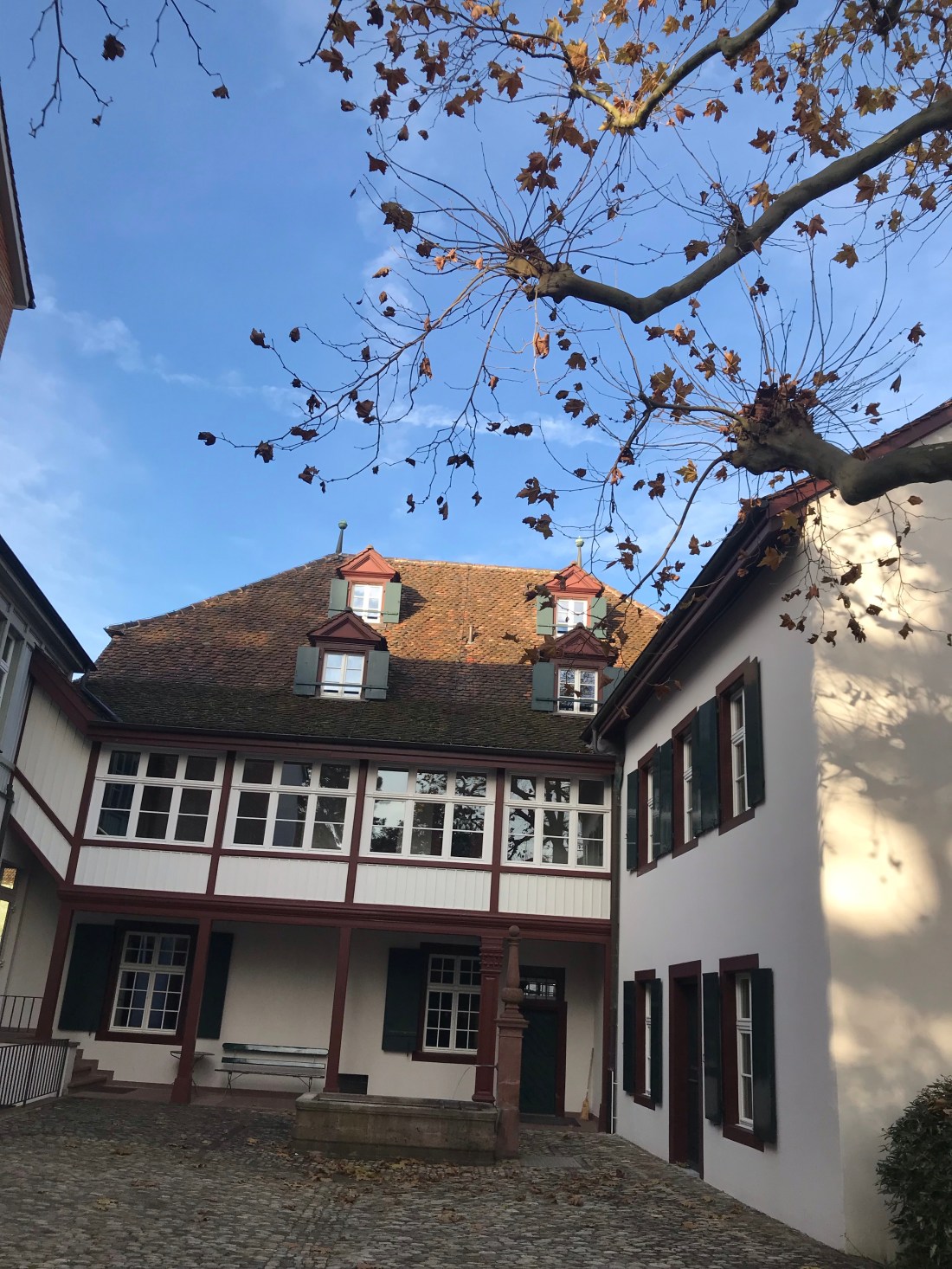
Here is the oldest original part of the convent:
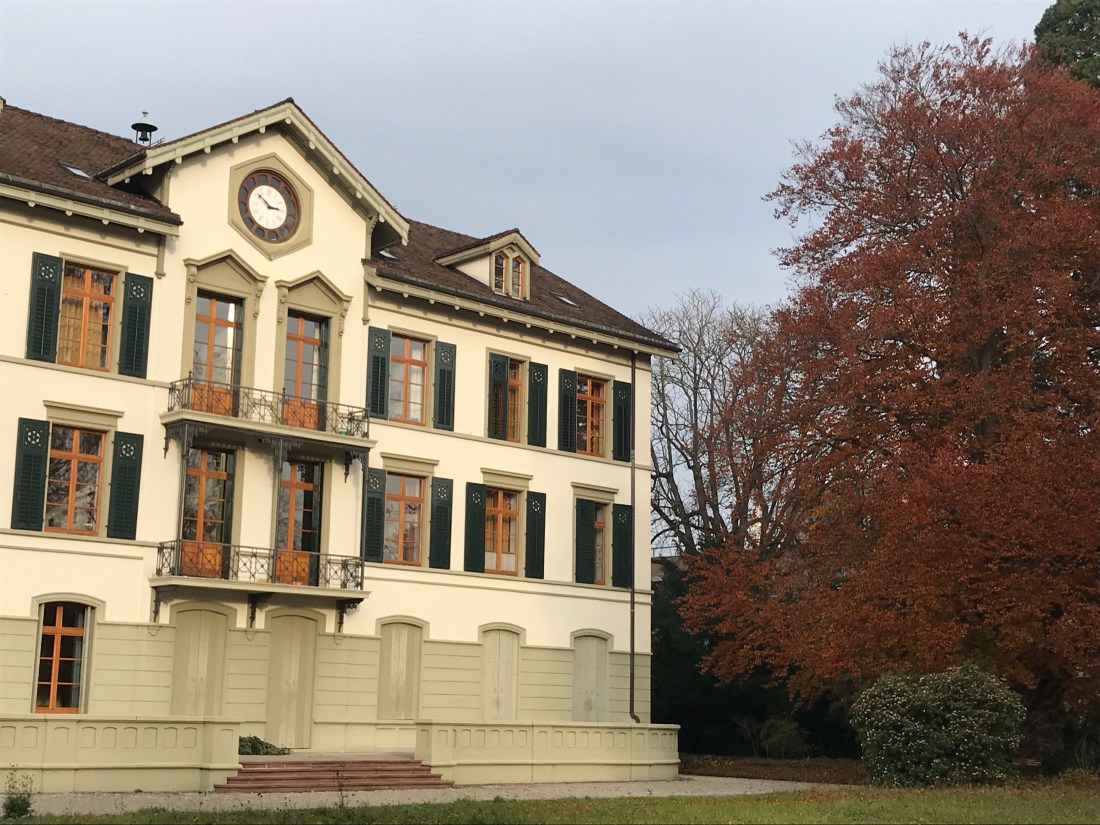
And here is the current “Mutterhaus”, where I am staying, which also includes the chapel and main dining area:
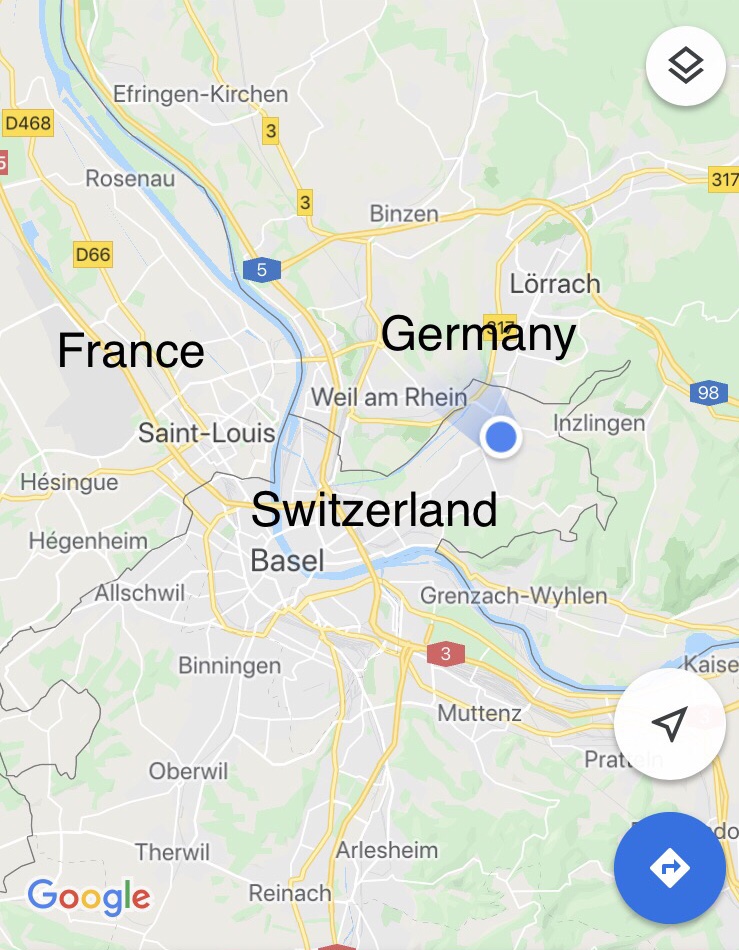
One of the extraordinary things about Basel is its proximity to France and Germany. There are places where you can be standing in one country and you can see the other two. Or where you are effectively walking along the border between two of the countries, though there may be very little evidence of it.

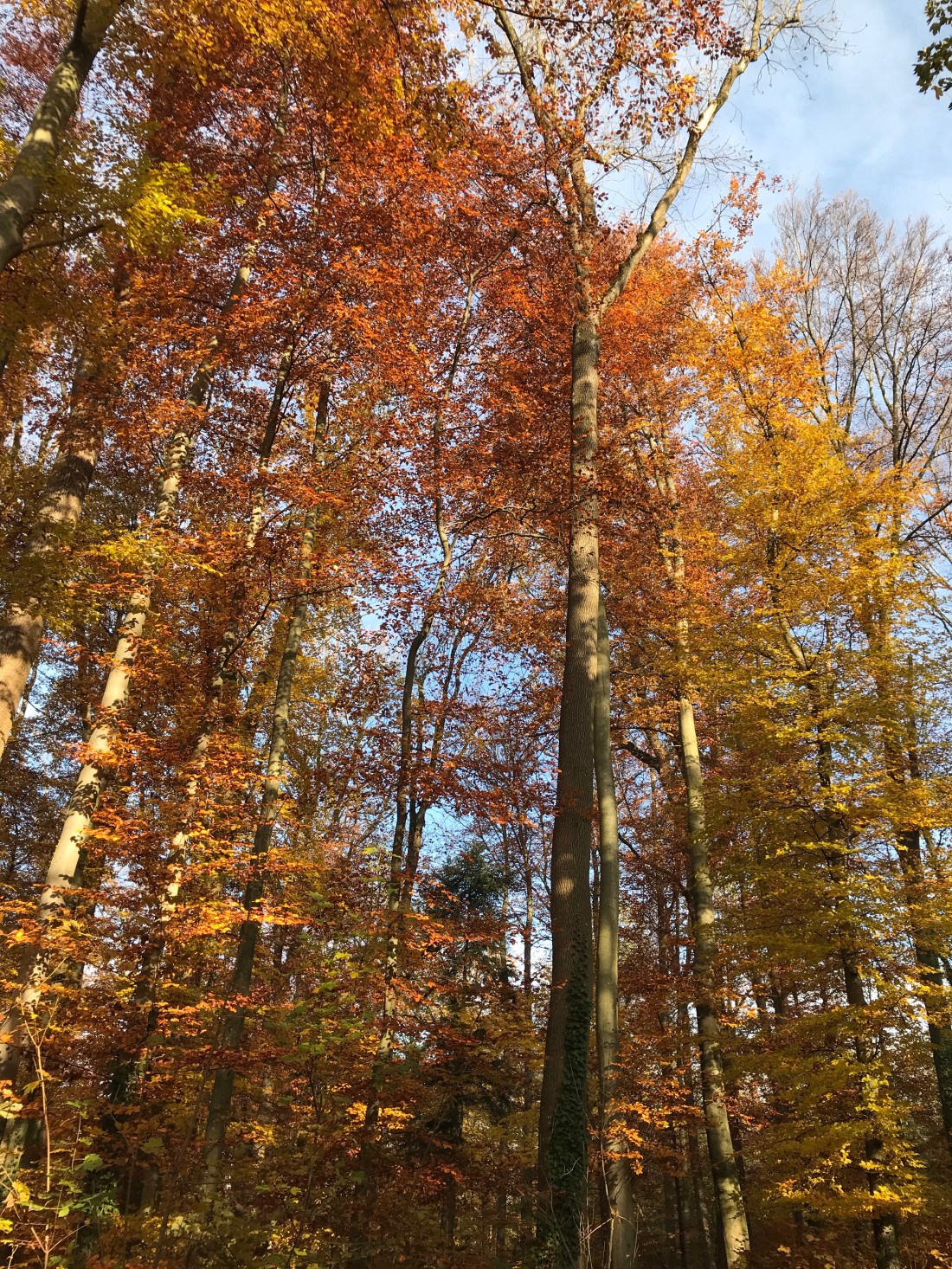
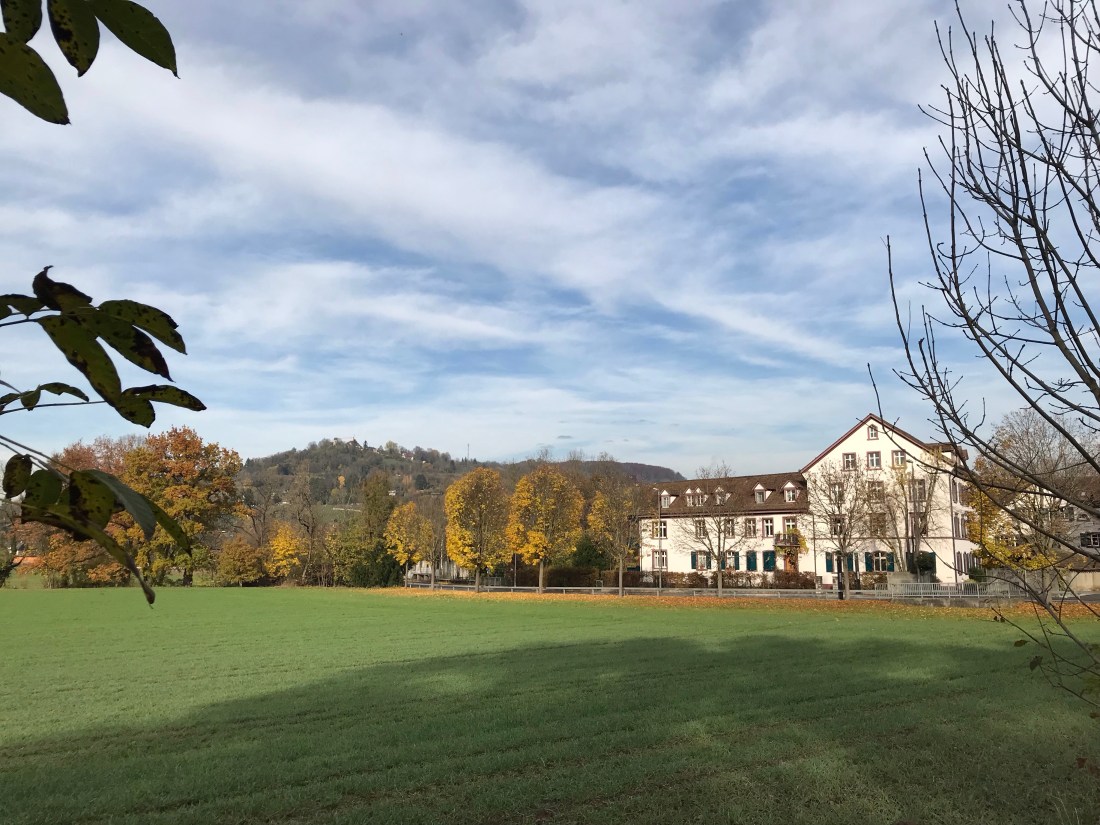
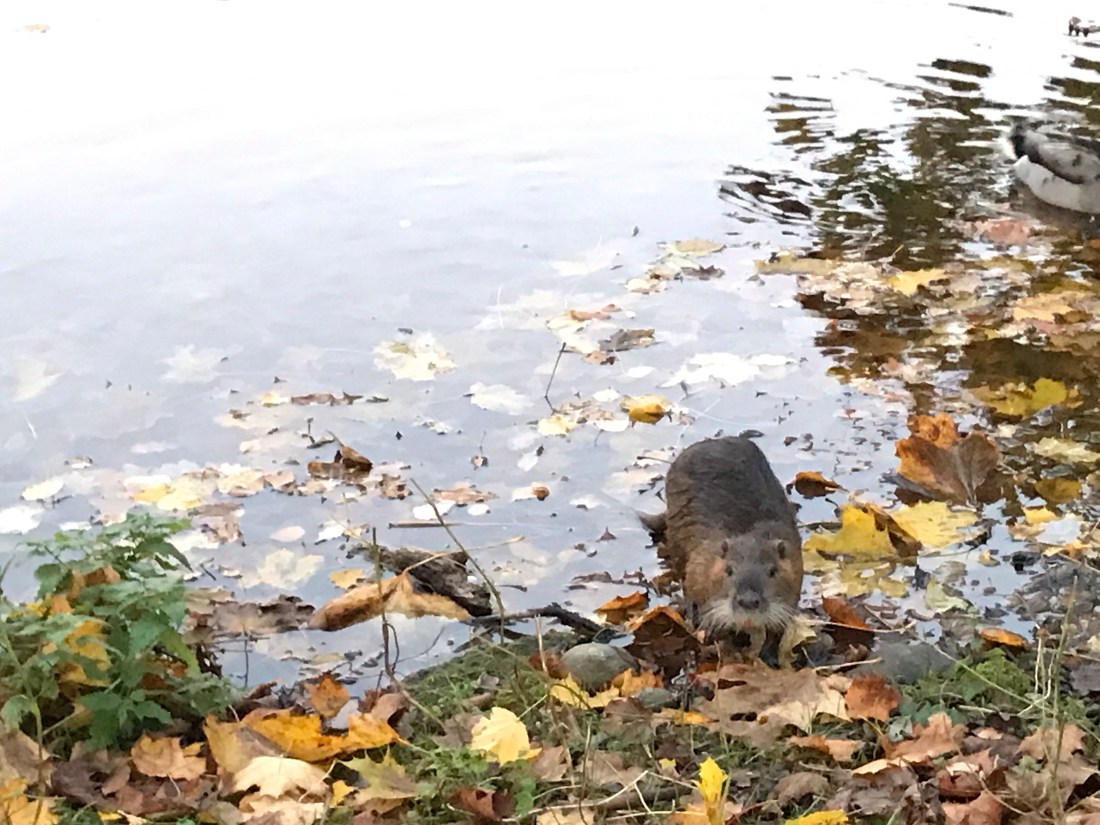
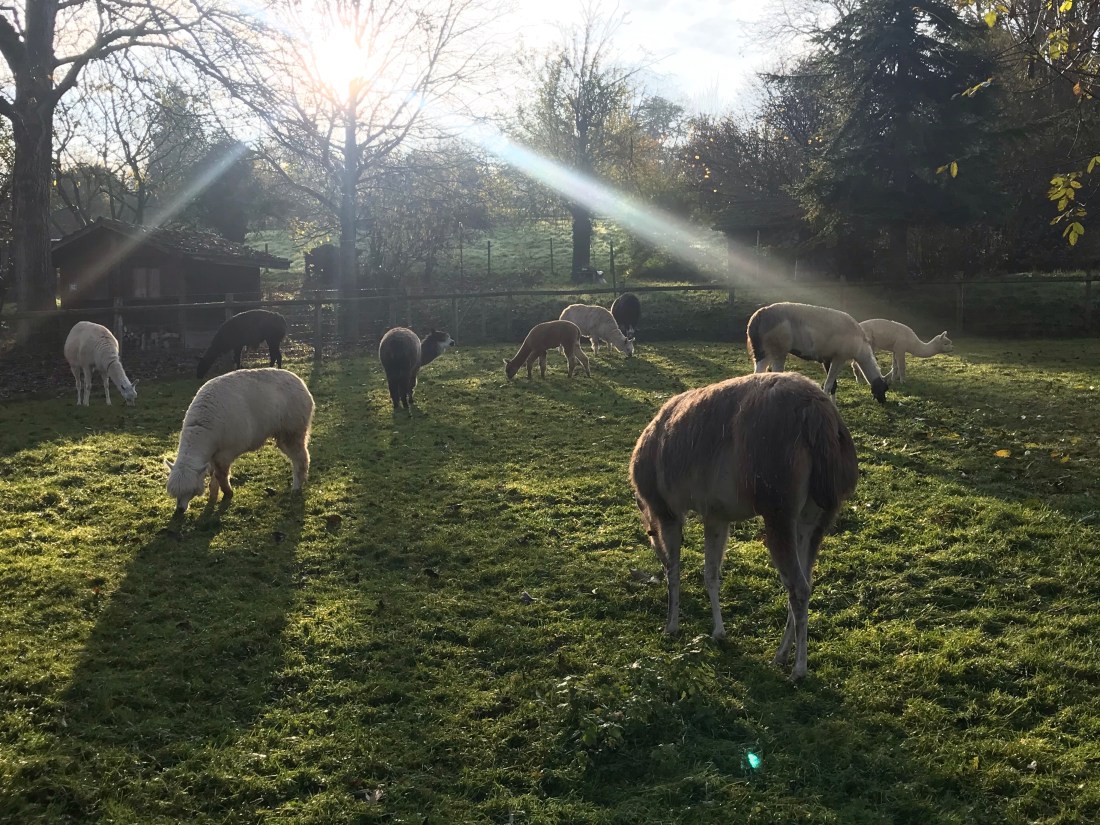
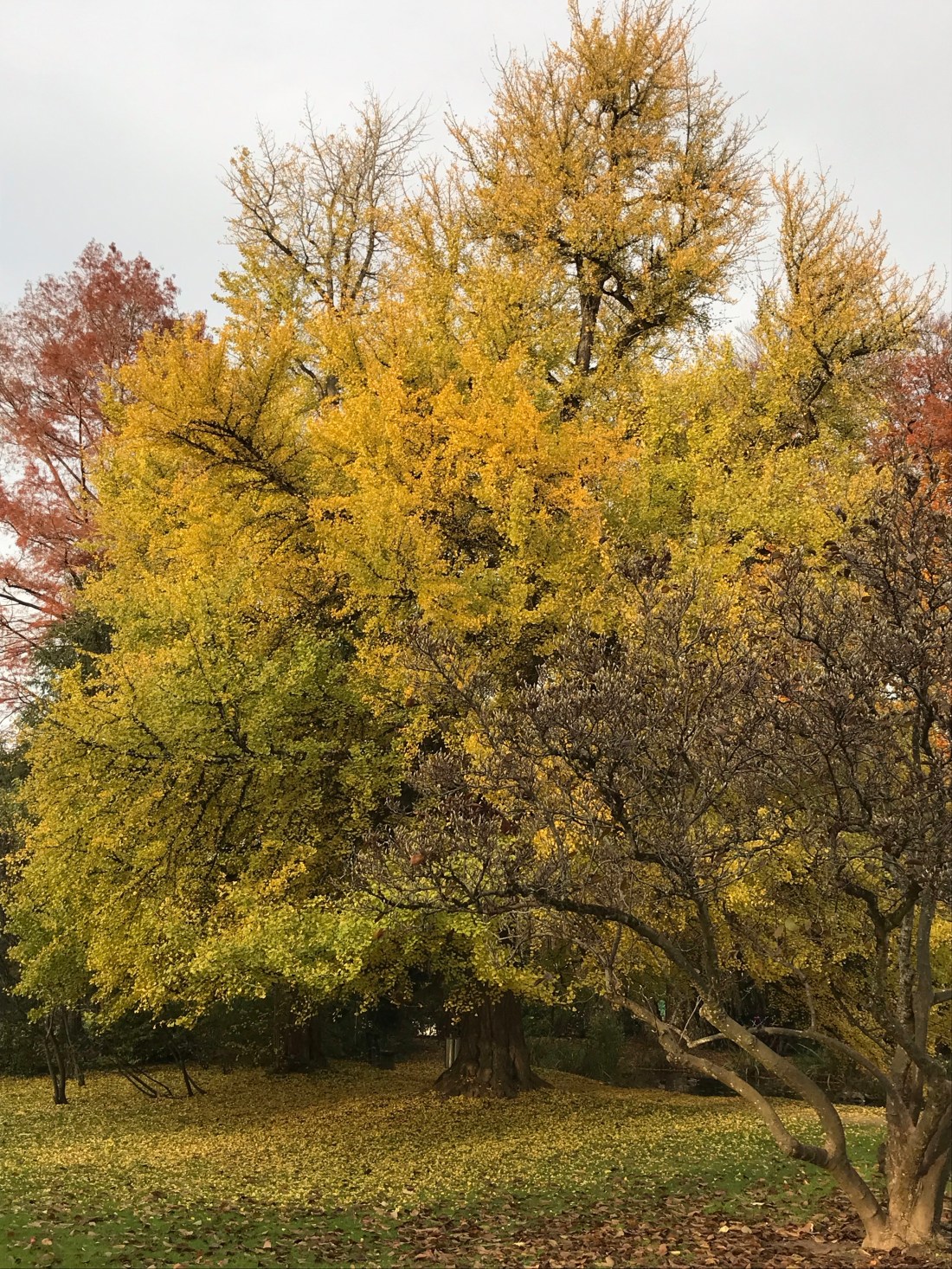
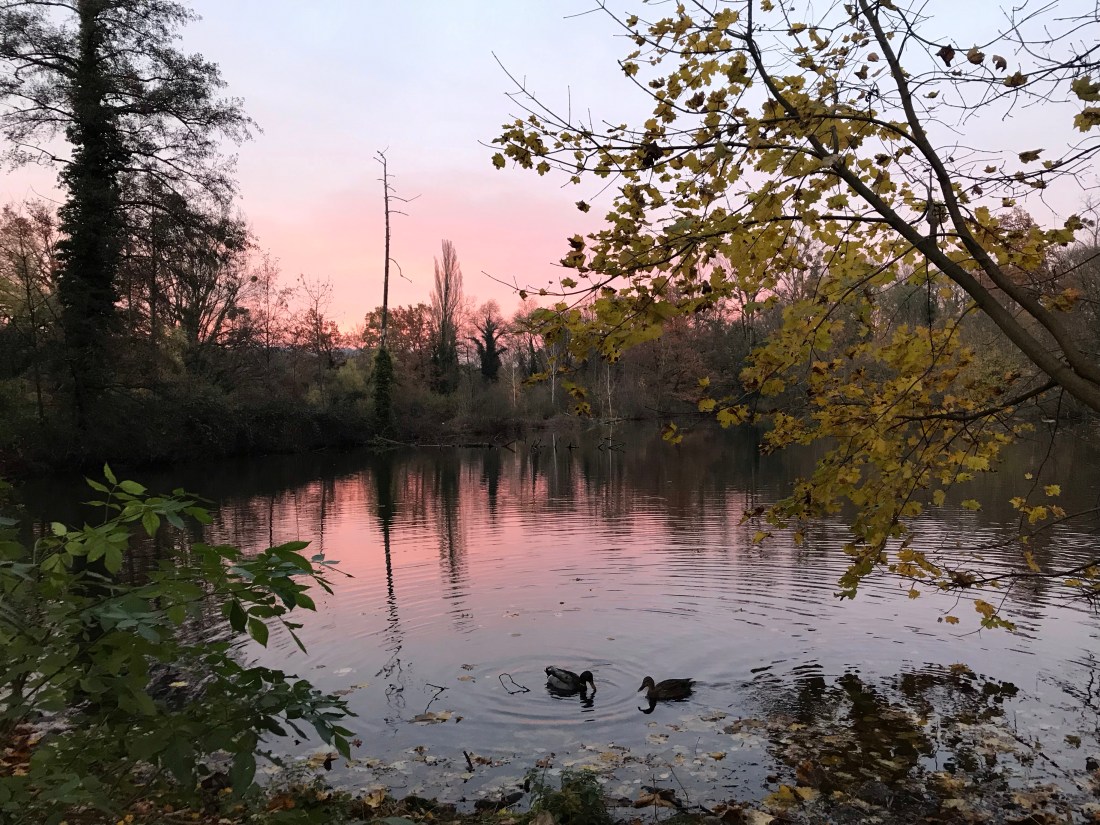
On Sunday, my first full day in Riehen, Sr Delia and I went for two walks in the surrounding countryside. I am absolutely loving the cold, fresh air, and seeing the beautiful autumn leaves all around. Here were some of the sights we saw:
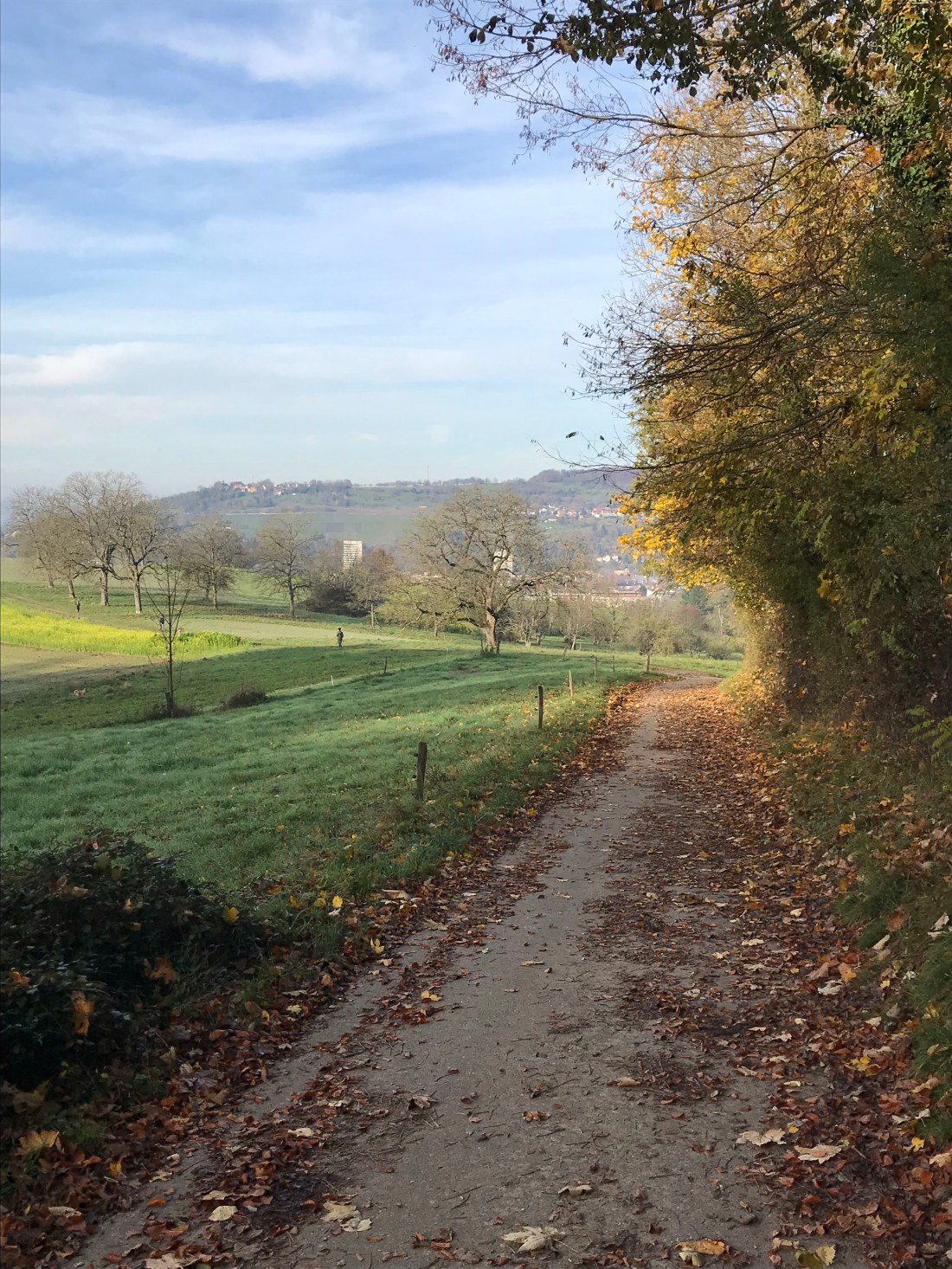
As we walked along this path (below), Delia explained that the woods were in Switzerland, but the path we were walking was right on the border. In front of us was Germany and over to our left in the distance was France. A police car passed us, and she explained that this was the mobile border patrol. They were not at all interested in us, though later she mentioned how her adopted sister, who has darker skin, is often stopped and has to show her passport or ID card.
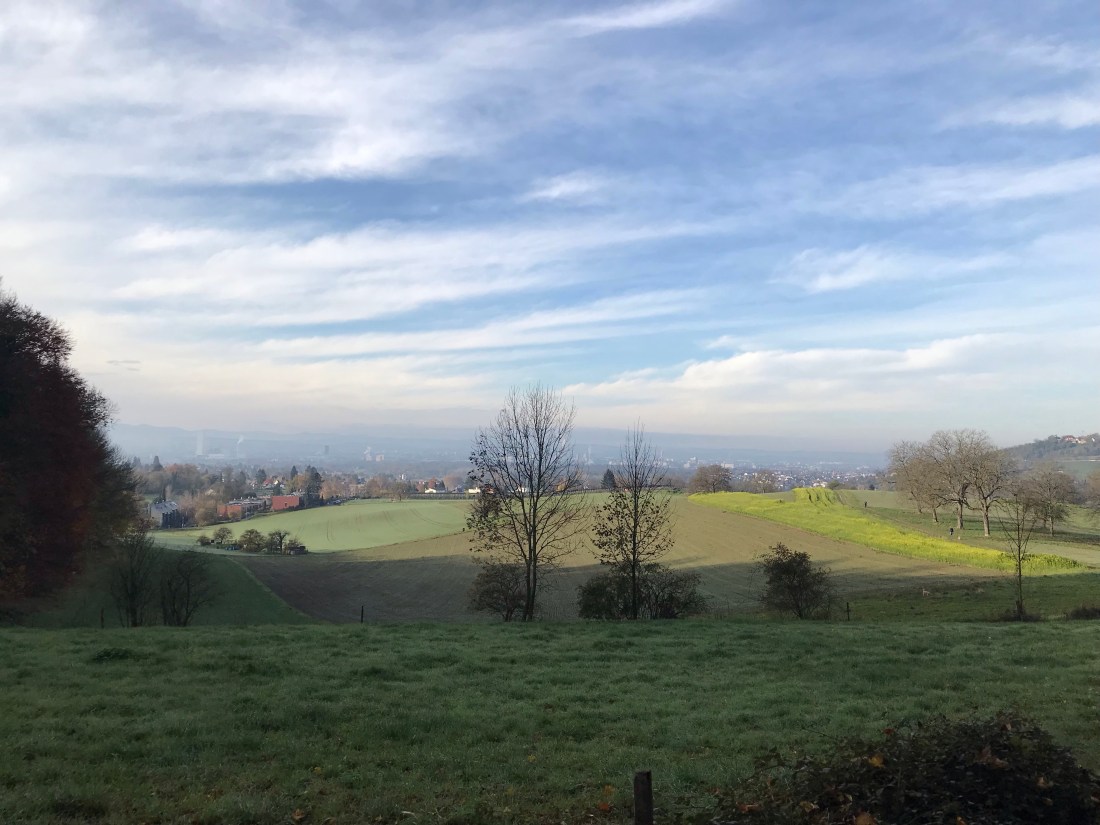
The view over towards France:
Apparently as recently as the mid 90s, the border controls were much more strictly enforced. But currently the borders are very open, so you often see German buses in Basel, which will take you right across the border to neighbouring towns and villages in Germany. Delia’s Dad and brother and his family have relocated to Germany, but in fact this doesn’t much feel like a relocation, because they always lived pretty close to the German border anyway.
As I’m gradually discovering, Swiss German is an interesting dialect. I can’t appreciate this fully as I only speak a tiny bit of German. But in this region there are many French words or words that are at least a bit French sounding that people use all the time. For example, I noticed the ticket collector on the train said “merci” as people showed her their tickets. And if you want tea with milk you ask for “Tee Crème”, which seems wrong to me on so many levels! (Don’t put cream in tea!)

Of course there are French speaking parts of Switzerland too, mainly further to the Southwest of the country, Swiss Italian in the South and Romansch in a small, mainly mountainous part of the Southeast.

Apparently the dialect of Swiss German spoken in Basel is very different from that of Zürich, which is only an hour away! (And both are different from “High” German, the language you learn in school.) But consider this: there are only about 37000 people who speak Romansch (the smallest proportion of any of the nation’s languages), but there are five dialects of Romansch!! Five!! How anyone ever understands anyone else here, I’ll never know!

Switzerland is notable not just for its excellent chocolate, stinky cheeses (to use Sr Delia’s technical term!), glüwein and skiing, but also for its endless capacity for careful and extensively collaborative decision making. In Switzerland, virtually everything is decided by referenda, or so I gather. It’s a very cautious nation, always wanting lots of research before the potential choices are put to the people, even. Delia tells me that for this reason, decision making is terribly slow, but usually once the decision has been made, people accept it, even if it wasn’t what they wanted. (Hmmm… maybe in the UK we could learn something from this…? But I think our problem is we’re just not used to having referenda for individual topics, so we did the Brexit referendum spectacularly inadequately. If we had followed the Swiss model, everyone would have had a shed load more information about how this would impact the UK before taking the vote. And if we were more like the Swiss, we would probably read and inwardly digest all of this information carefully before casting our votes. And take out insurance against the outcome of the vote too! (Apparently there is insurance for everything here. “Insurances”, actually – Versicherungen – as my brother ably informed me, the word is plural, because of the many things that could go wrong, I guess?!)

It does seem pretty remarkable, though, how Switzerland has managed to be such an equitable and peaceful place, given the challenges of having people of multiple languages and cultures living here.

My experience at the airport was also that Switzerland polices its borders in a most unruffled way. I know I flew in from Singapore, so I guess they could have confidence my luggage had been checked already, but I breezed past the passport control in the airport much more quickly than anywhere else I’ve been in the world. Passport control consisted of an impeccably smart, cheerful lady who smiled and nodded me through without a second glance. No landing card, no scrutiny of luggage, no questions about my occupation or when I last visited, no stern appraising look designed to strike fear into the hearts of potential terrorists, nothing.

I have also been impressed with public transport here. Basel being a politically Left and Green leaning area, has reduced the width of roads and introduced substantial cycle lanes alongside the tramlines. I have never seen such frequent trams and buses. Except perhaps in Melbourne. But even there you wouldn’t get a traffic jam of trams. Here, that’s a common sight in the city and also sometimes further out. These lanes are for bikes/pedestrians, trams and then cars:
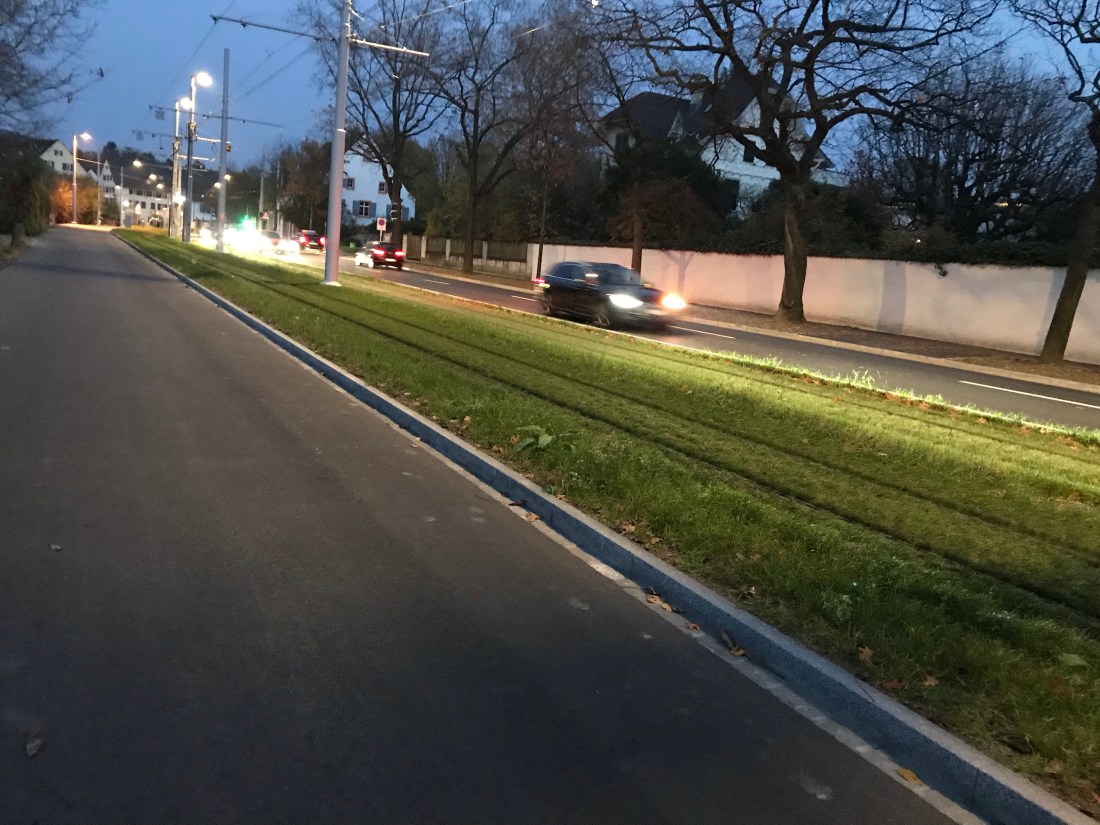
Some more pics of this beautiful countryside from our evening walk:
Basel

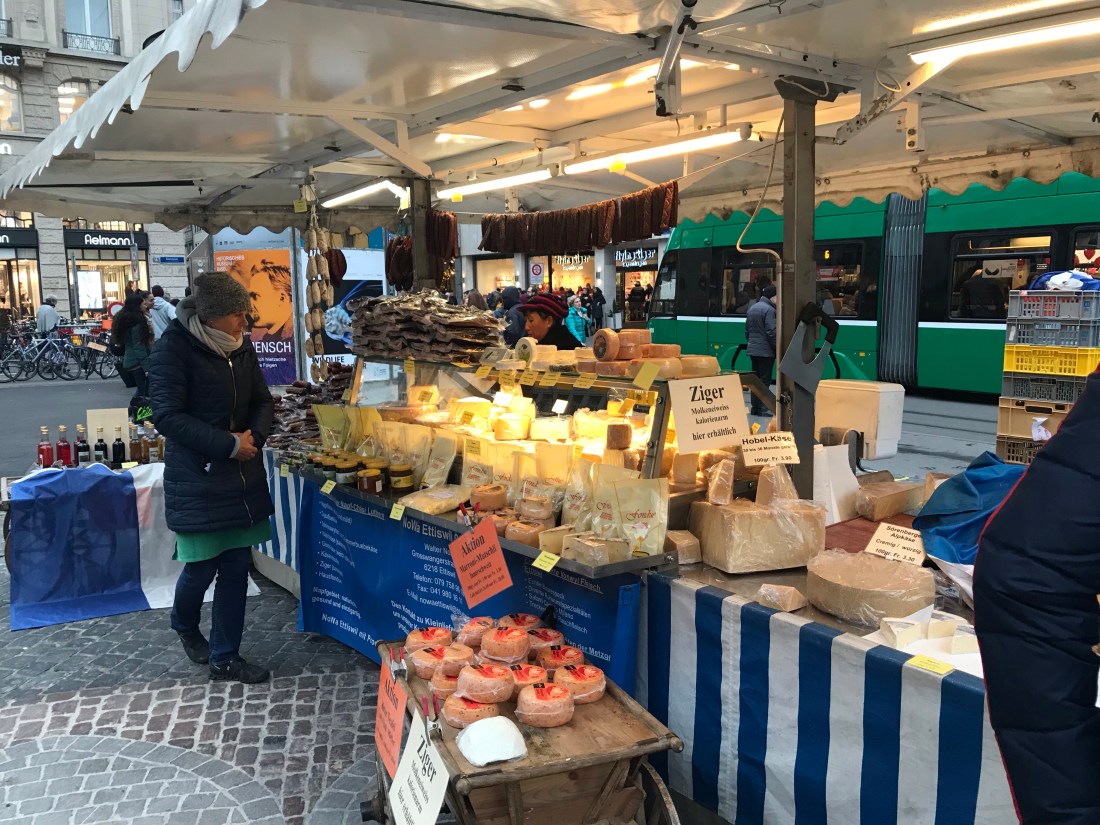
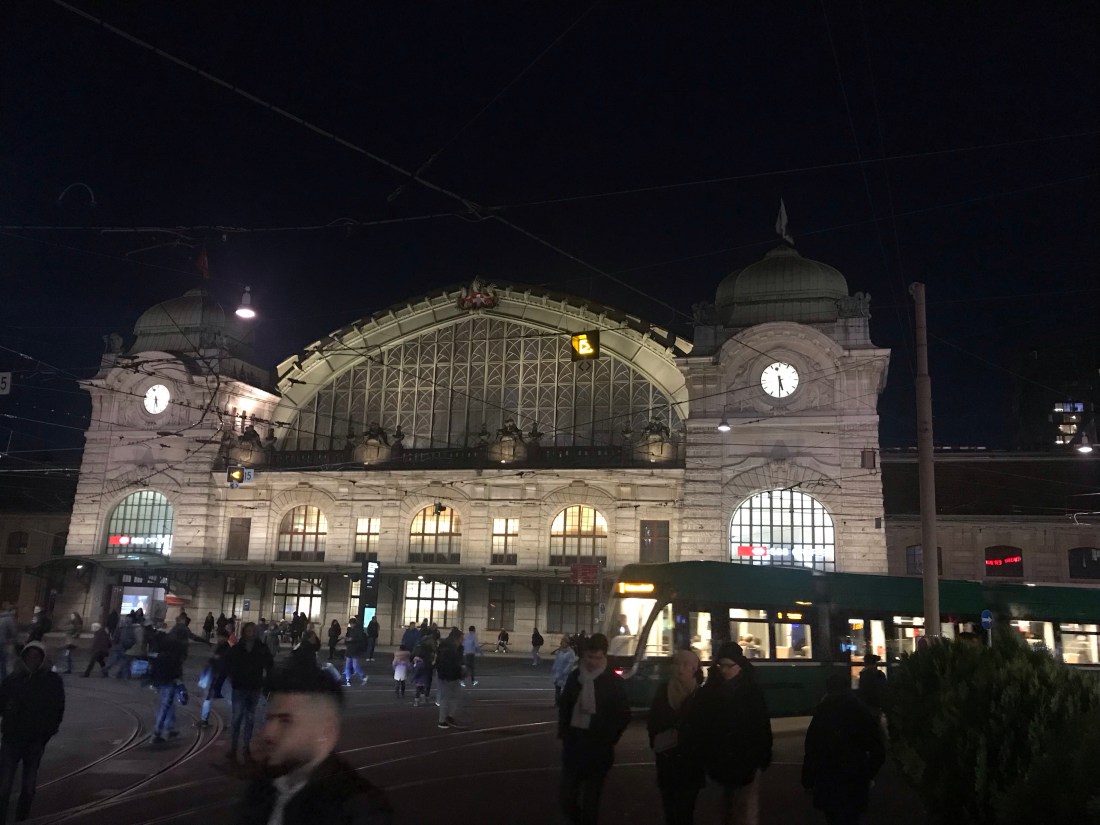
I arrived in Basel around midday, dropped my luggage in the unmanned and extremely efficiently automated left luggage area, and went off to explore the city before meeting up with my friend Delia to go with her to her convent in Riehen, where I am staying for a week.

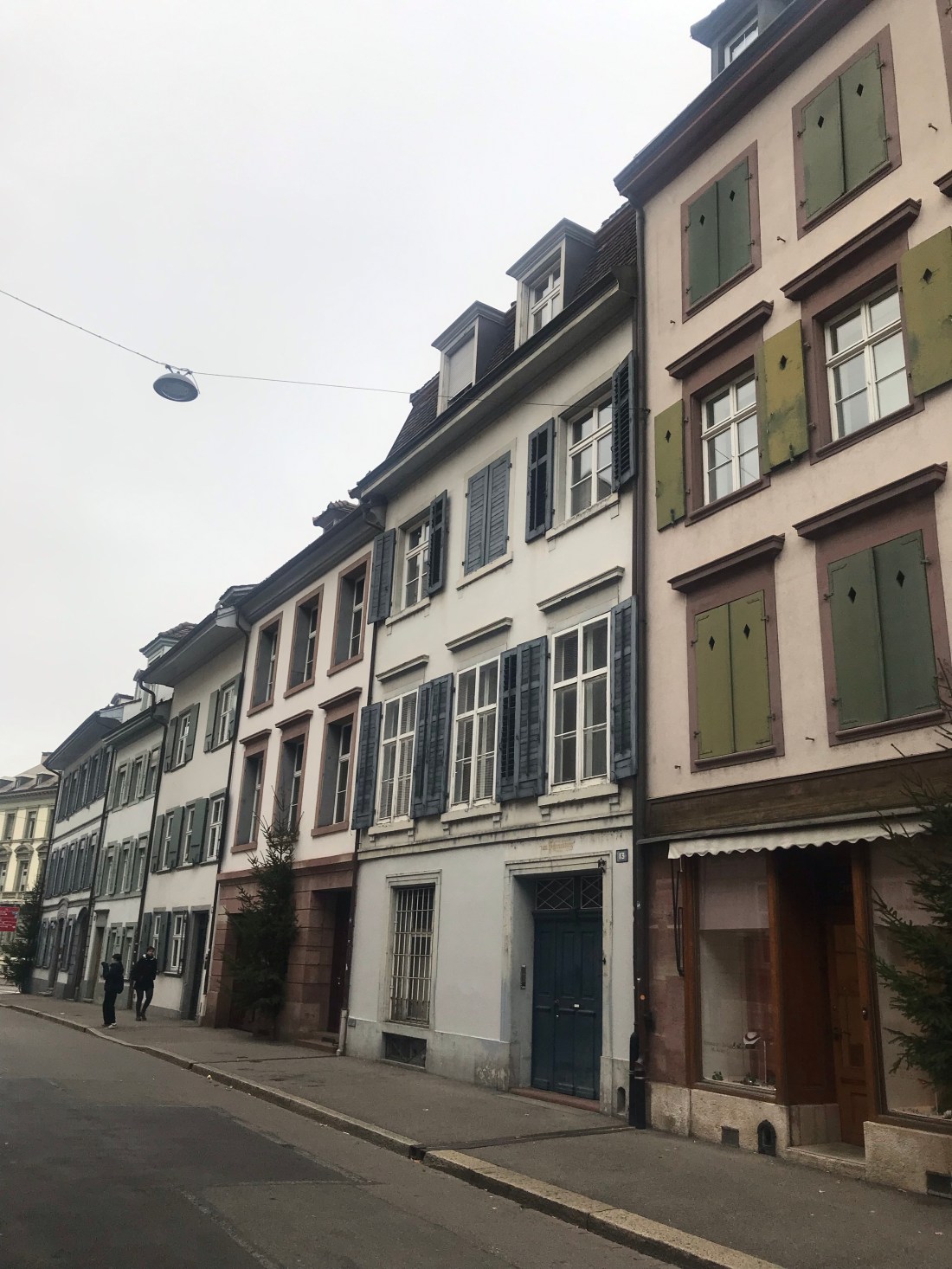
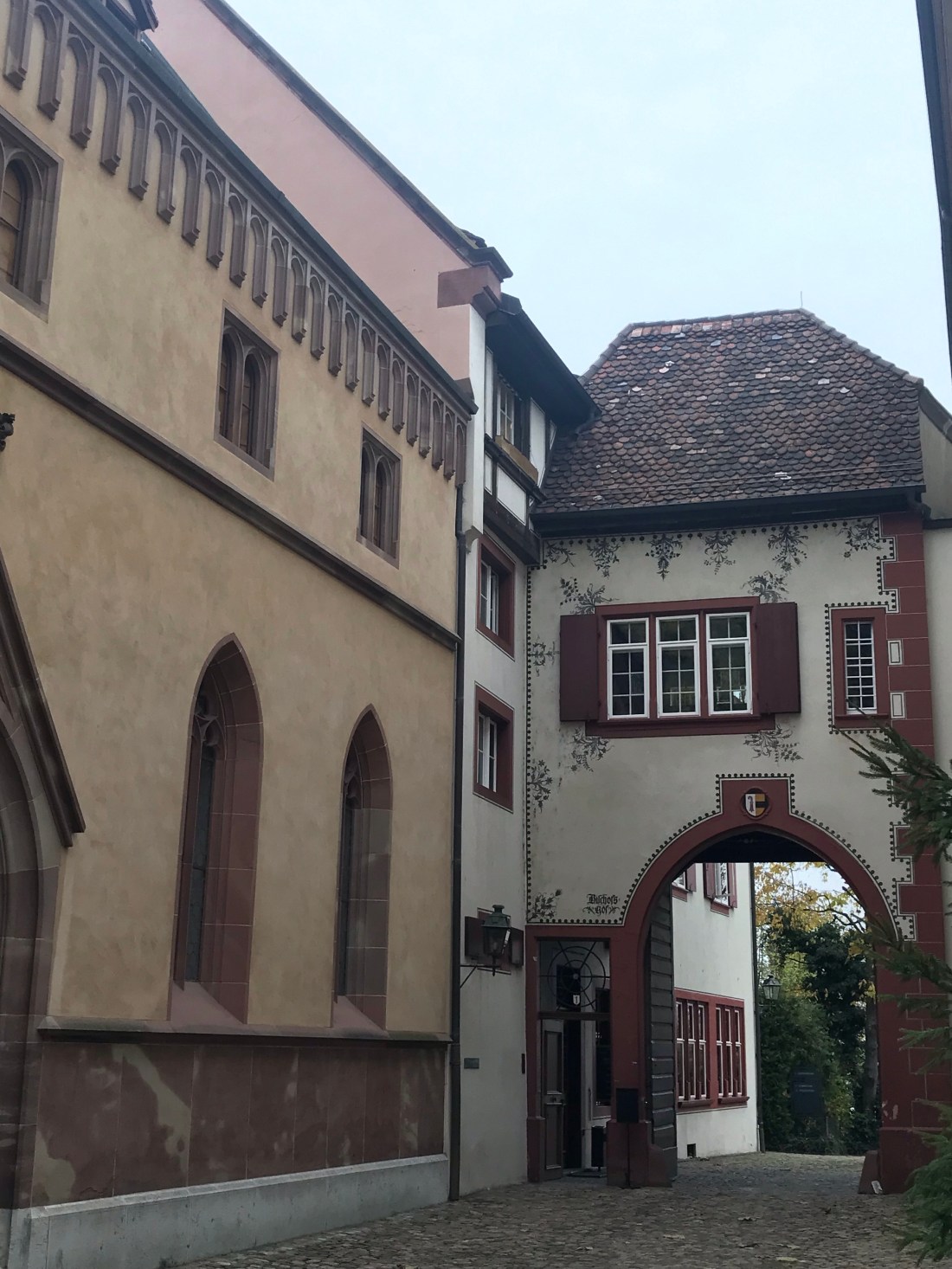
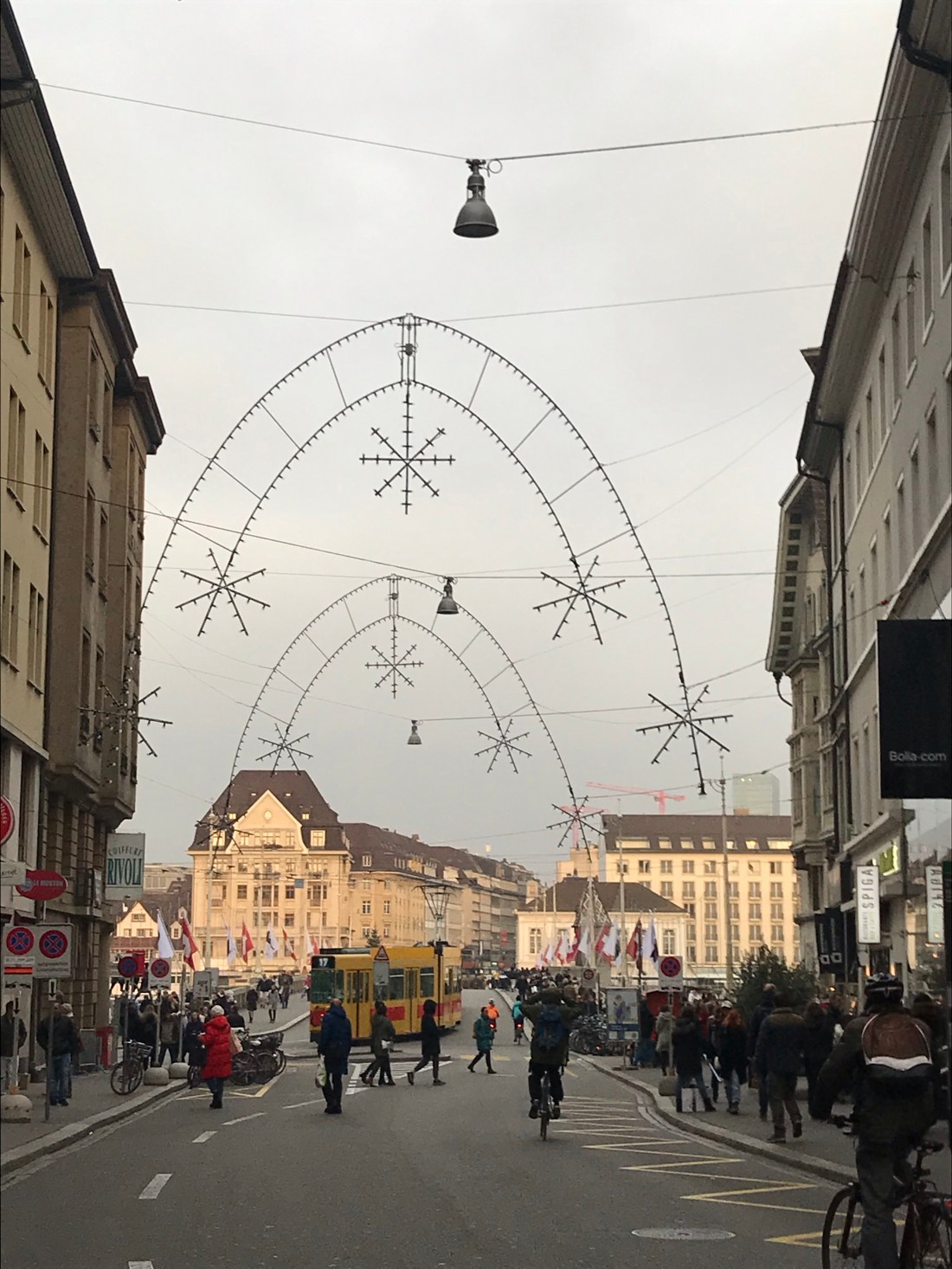
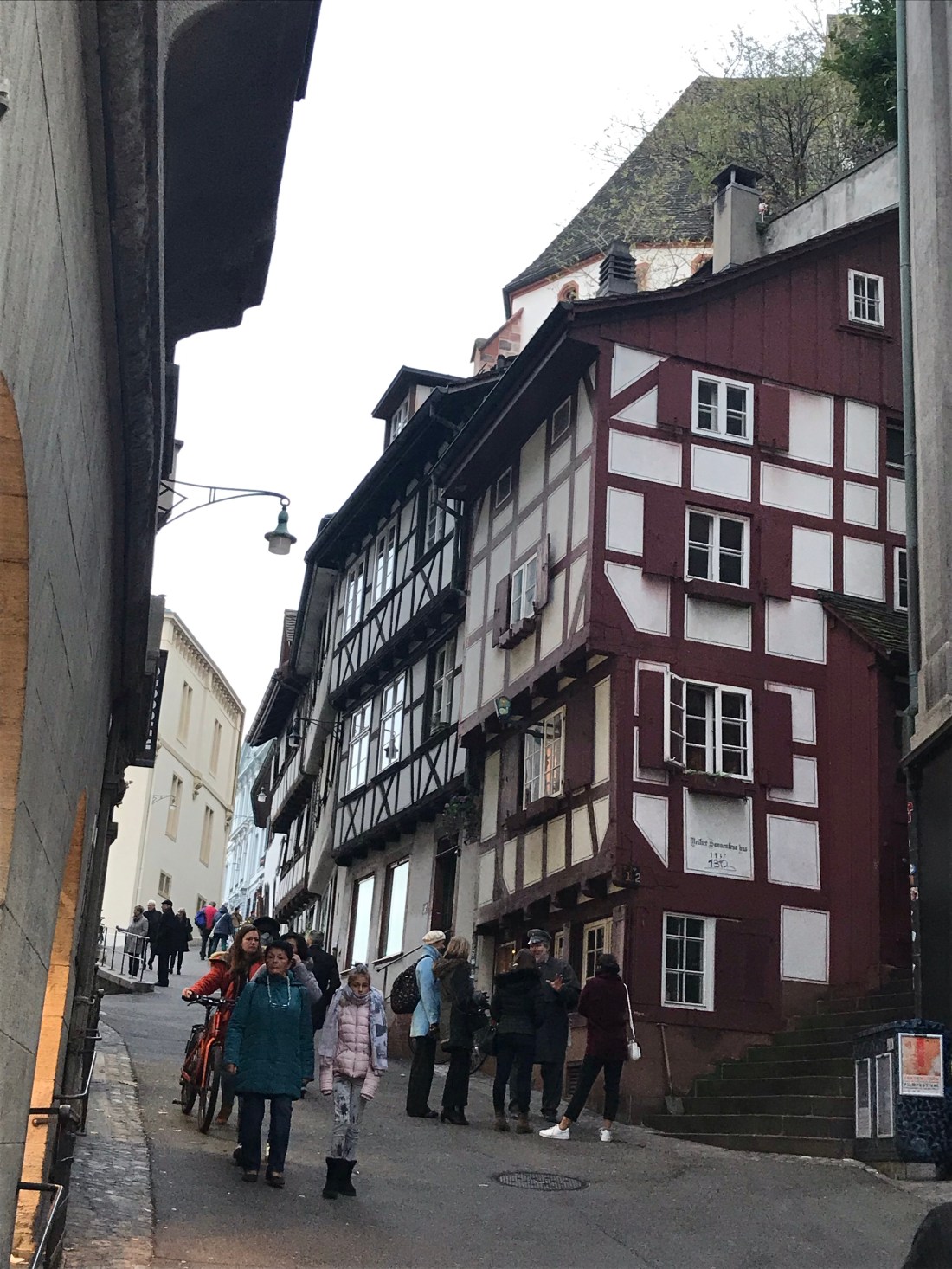
Here are some first impressions of Basel, which is a city I should have visited many years ago when my brother lived and worked here for a year. (Why? Why didn’t I visit? I guess I was scared of this far away place that would be so different from what I was used to. Ironic that in the context of my worldwide travels, I am deriving such comfort from the many familiar things I’m finding here.)

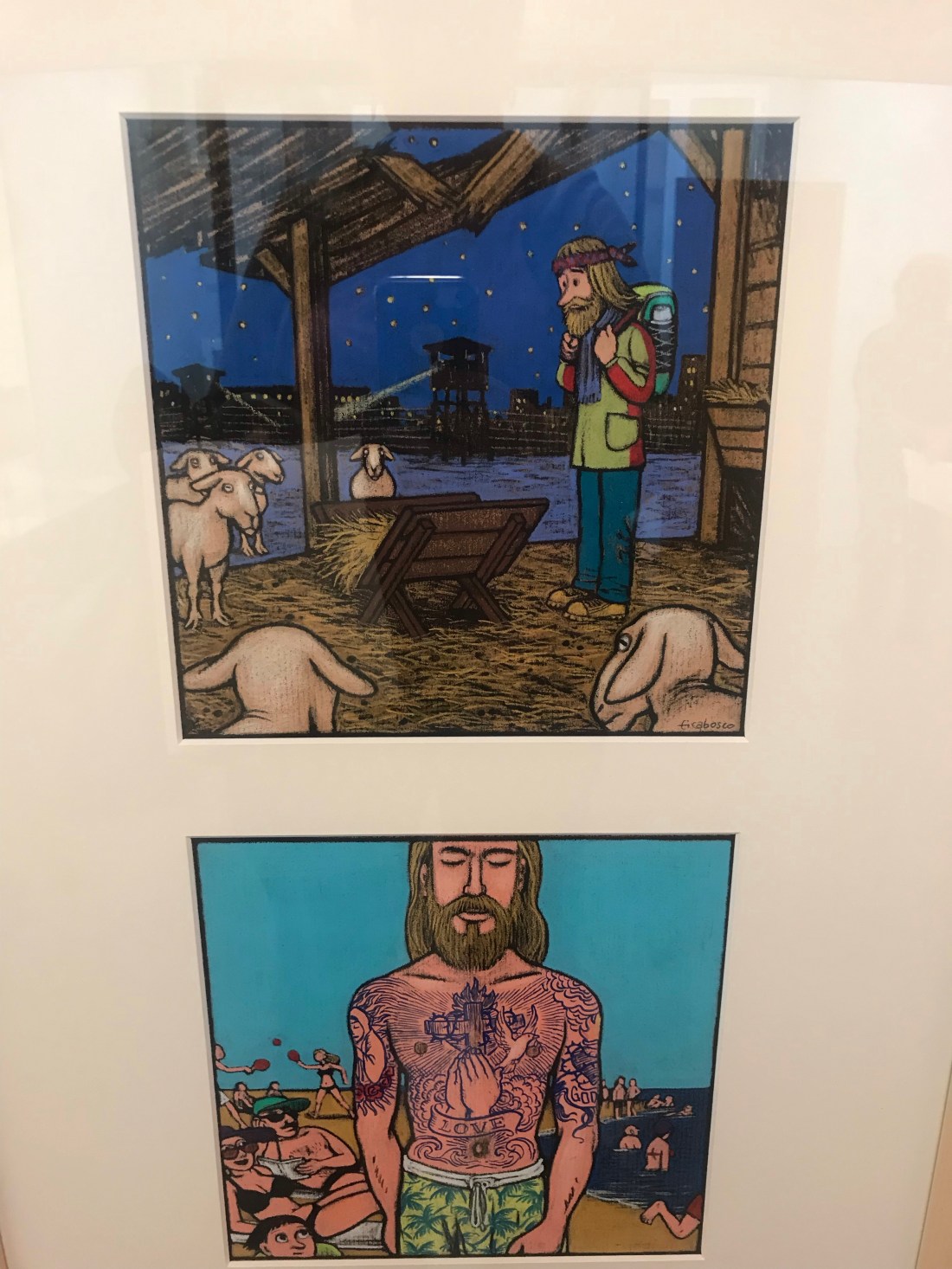
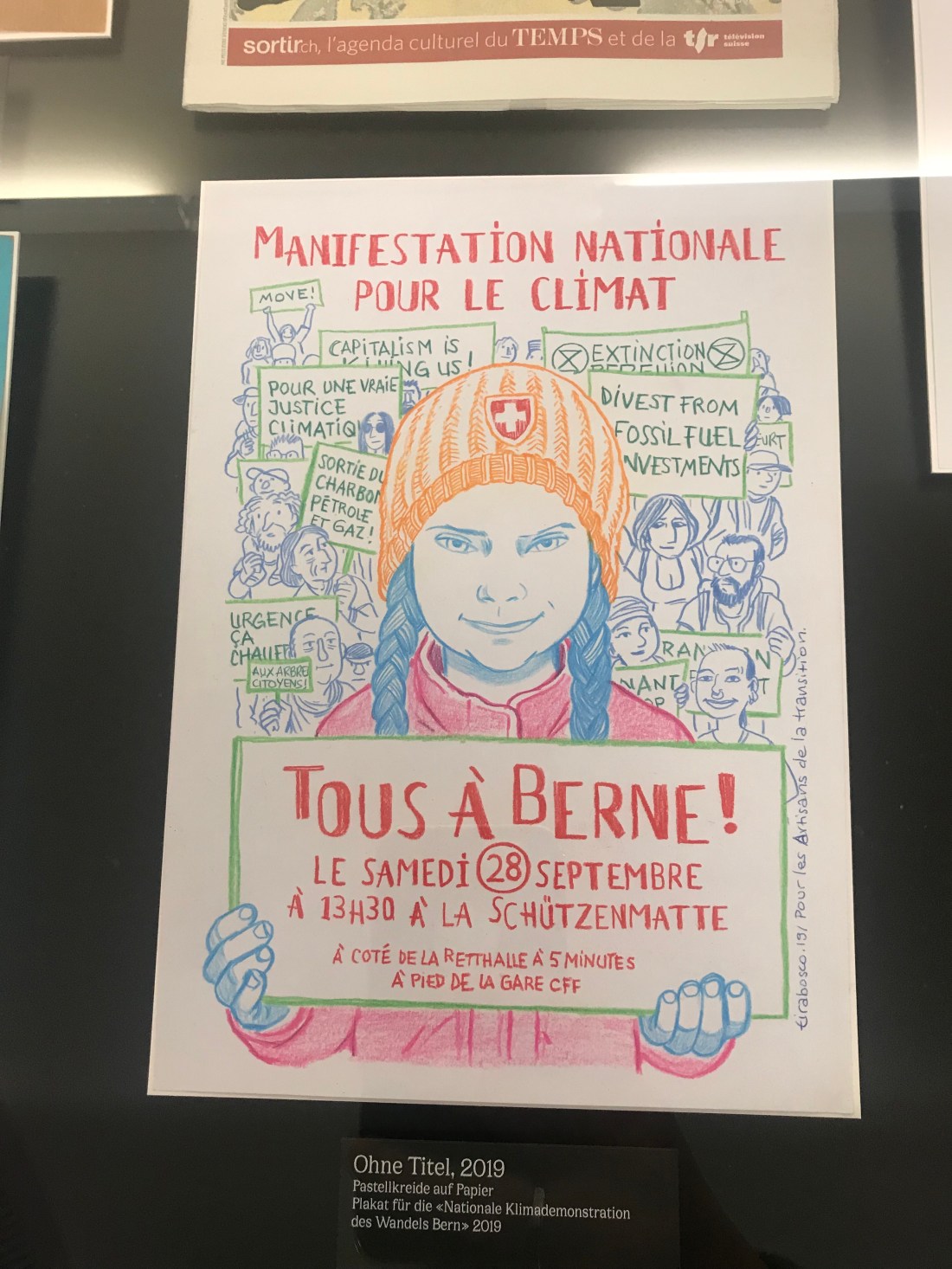
In the Cartoon museum (there seems to be a tendency to call art galleries museums here for some reason – maybe in the hope that the art will taken seriously? – aha! I have been corrected, this is because in Germany (and perhaps therefore also in German speaking Switzerland) a gallery is a place where the art is for sale, whereas a museum is where you just go to look at it. Come to think of it, maybe it’s like that in England too?), I saw an extraordinary collection by Tom Tirabosco who creates a lot of art relating to our relationship with the environment and climate change, often depicting businessmen in sharp suits with their heads obliterated by burning fossil fuels, interspersed with disturbingly accurate depictions of dead birds. Not what I was expecting from a cartoon museum, but well worth engaging with, anyway.

He also drew these enterprising speculations about the modern life of Jesus:
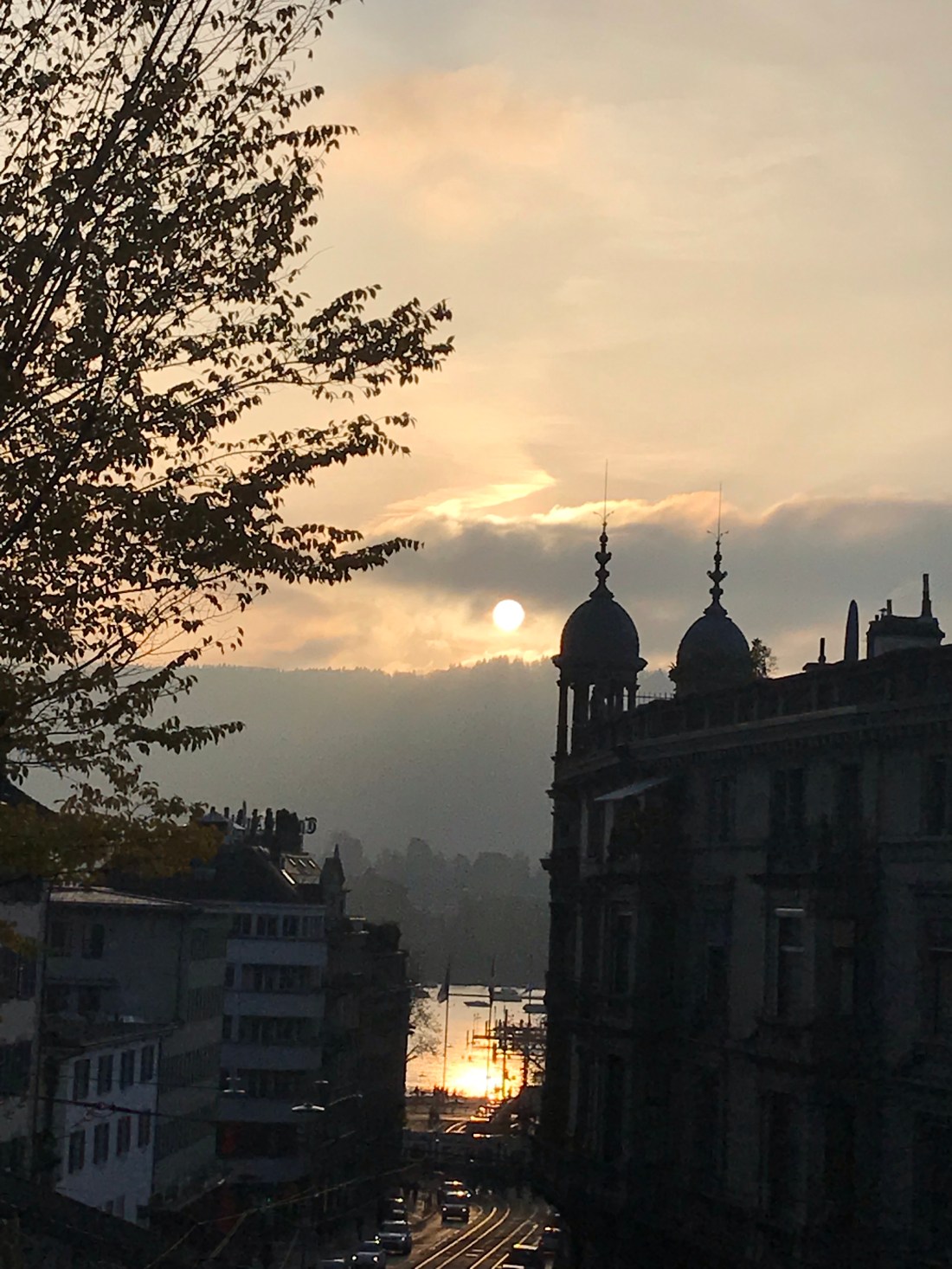
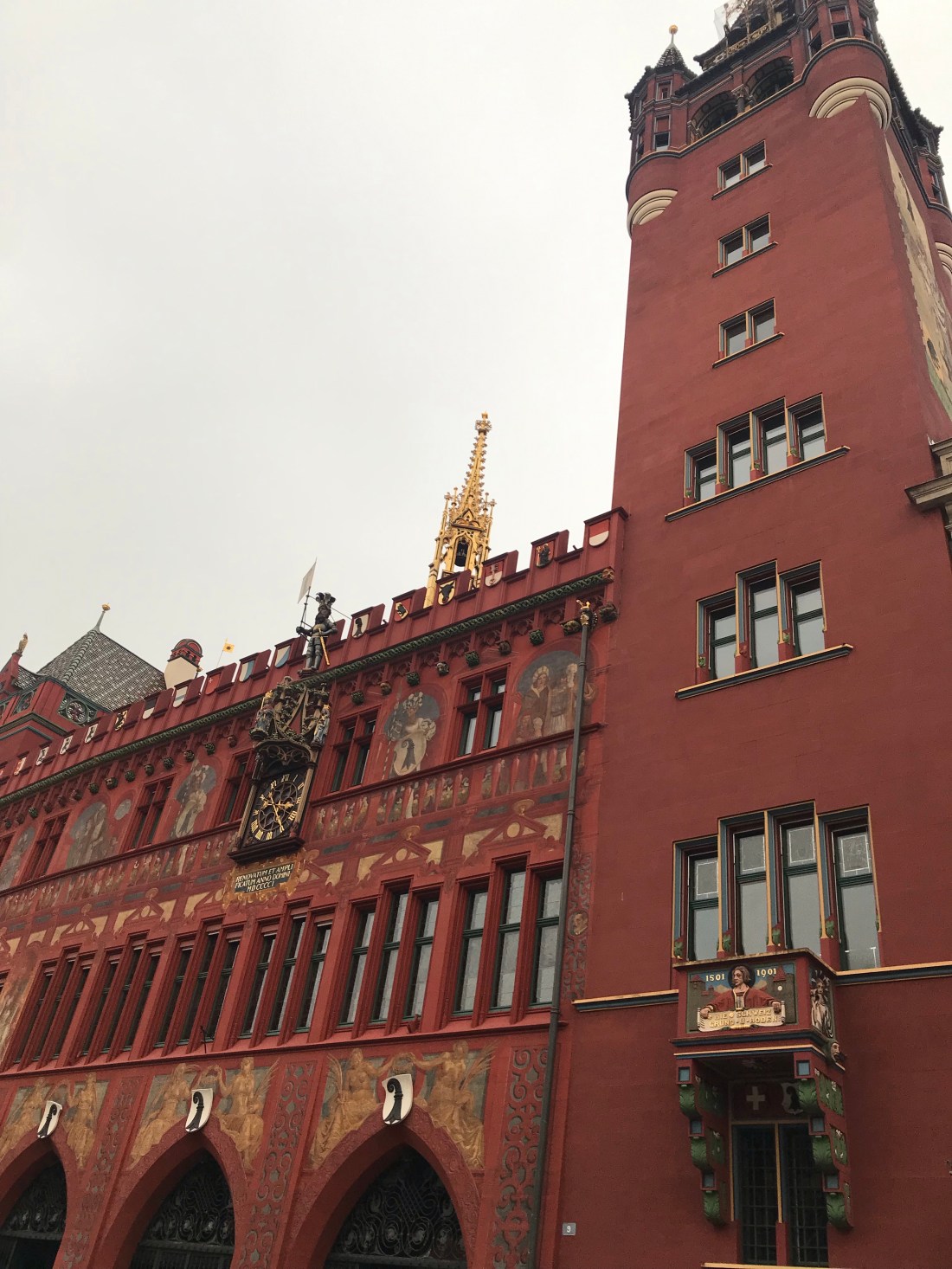
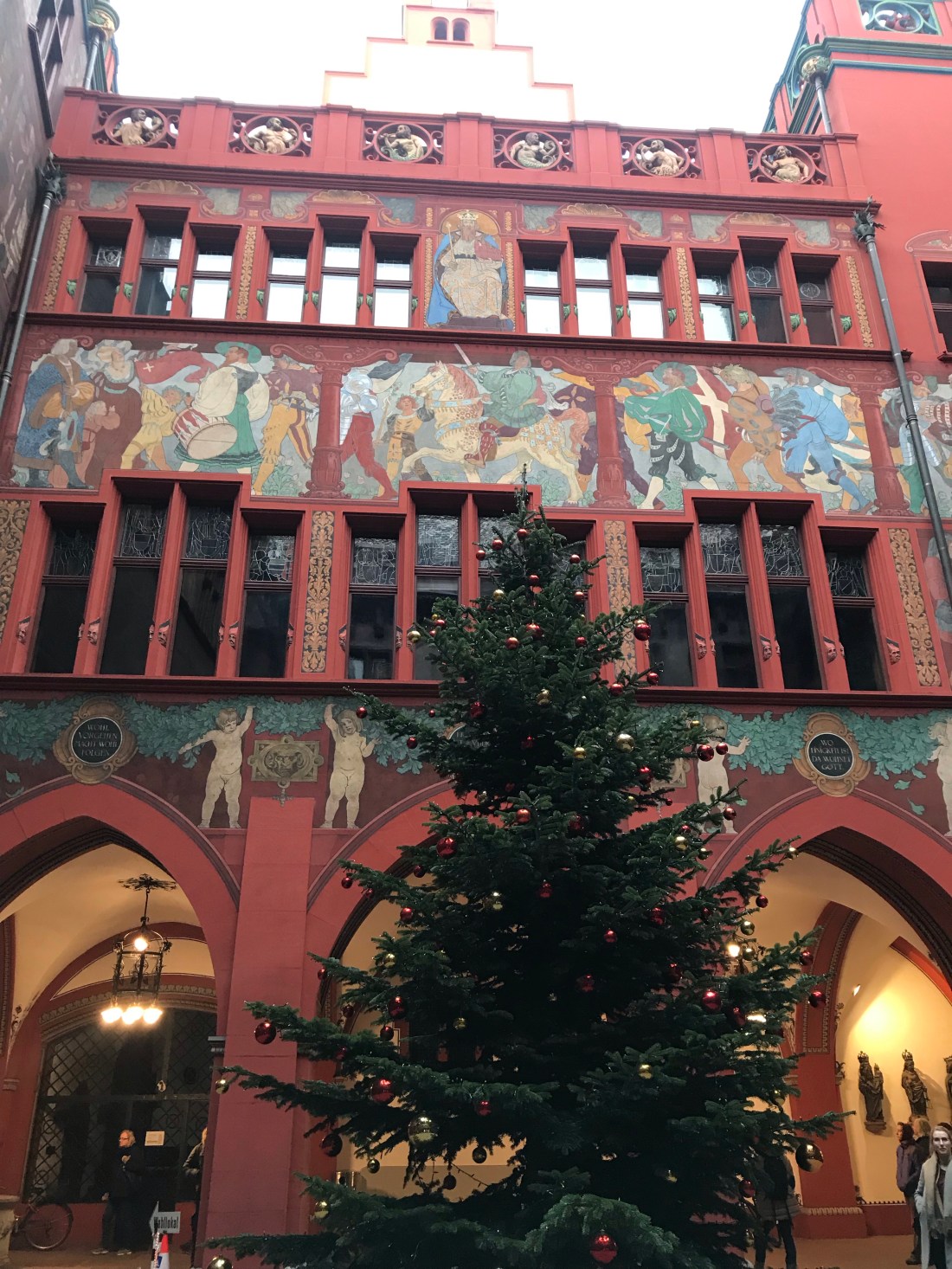
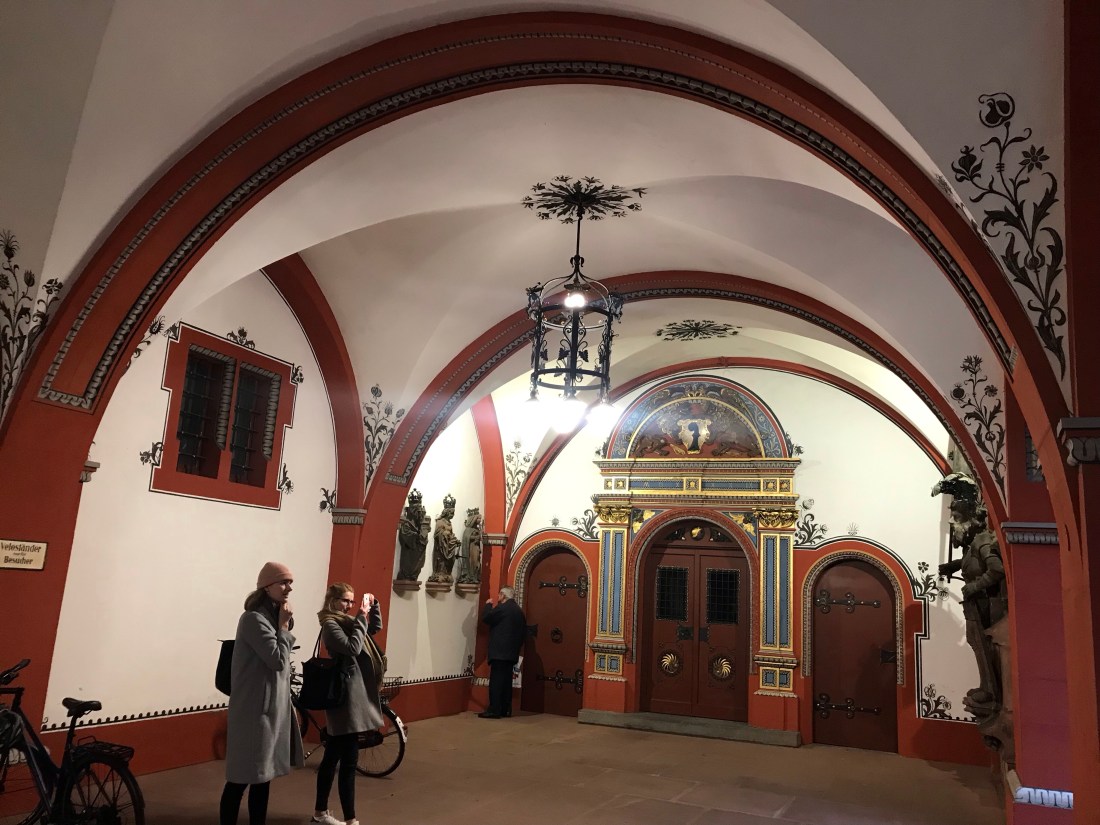
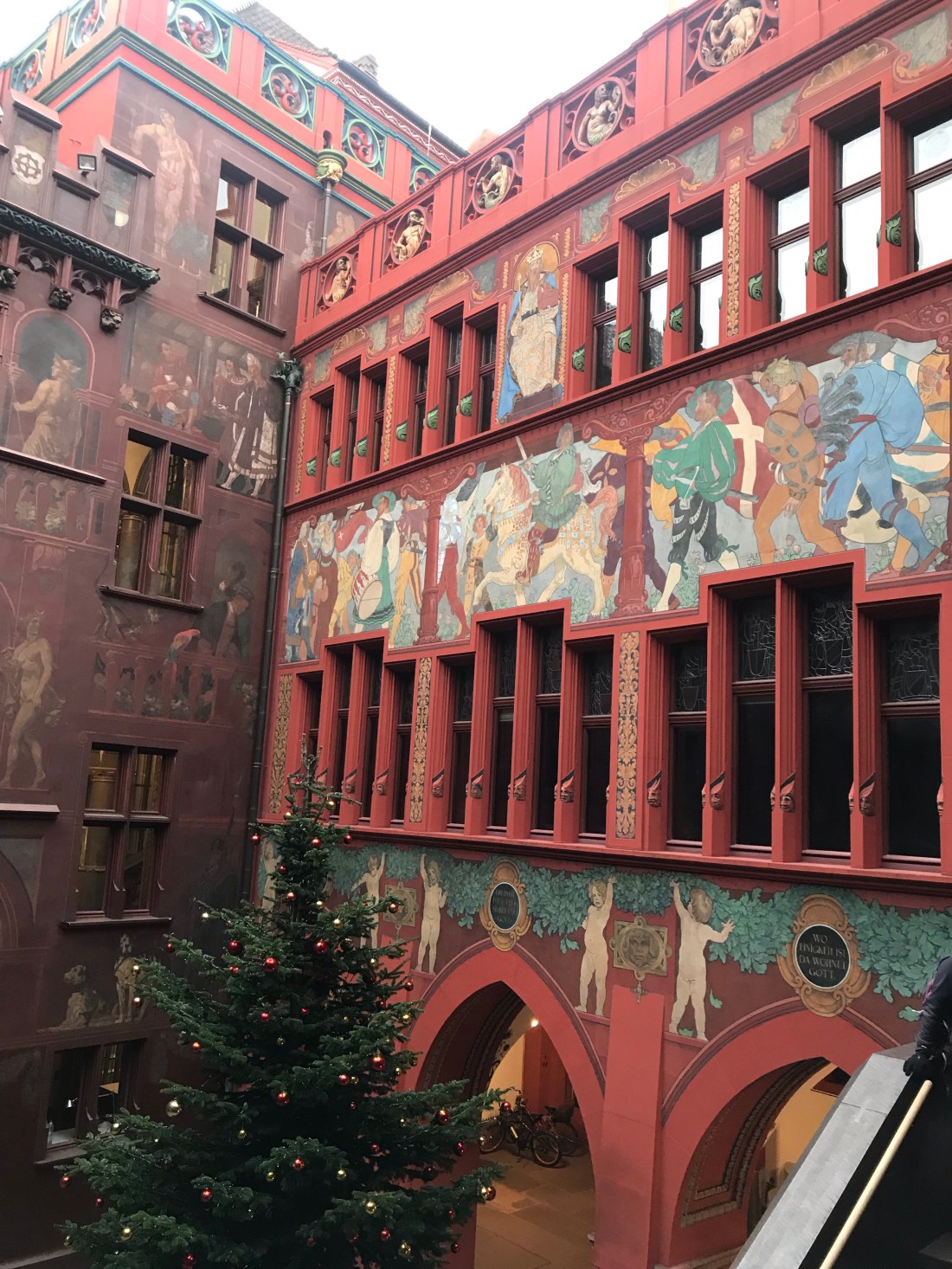
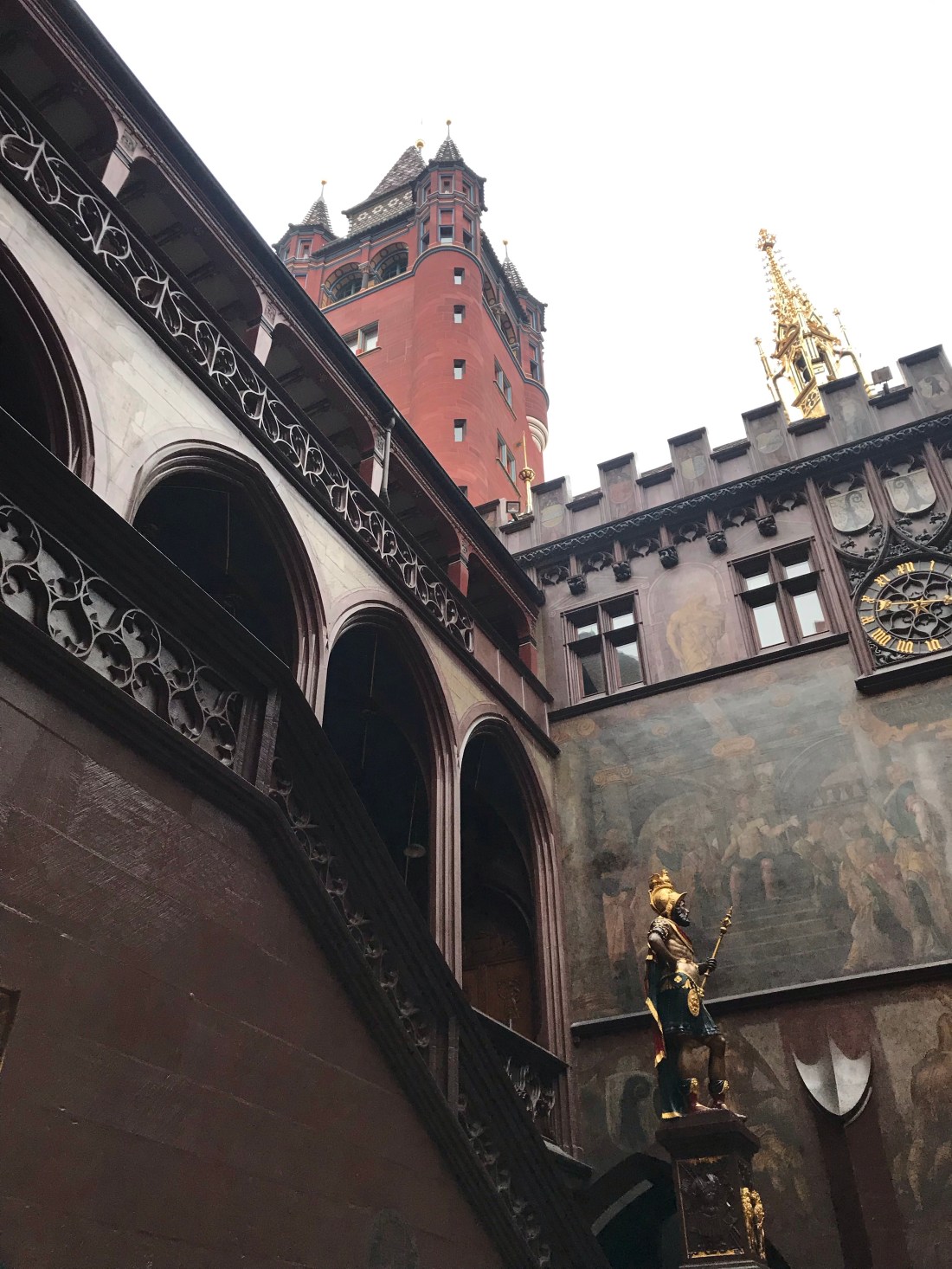
This magnificent red building is the town hall, where an extremely good cellist was busking some famous classical pieces to a backing track. I enjoyed the little concert as I wandered around the building:

Willkommen in der Schweiz

The air here is cold. Cold and very dry, somehow and I could see my breath as I emerged bleary eyed from the airport and gratefully walked straight onto the hotel shuttle bus at about 6:45am. Which for me today was about 12 hours after midnight (the wonder of traversing time zones).

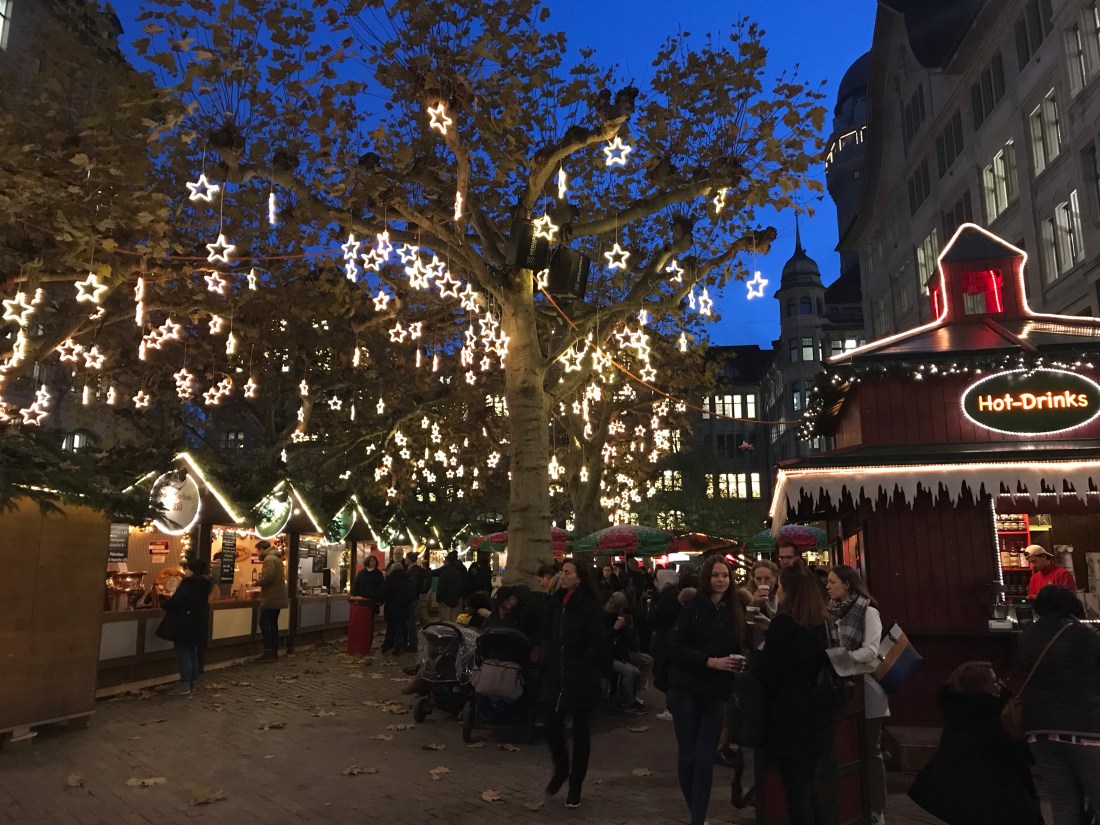
The quickest way to get to Zurich city is to get the hotel airport shuttle back to the airport then hop on a train. The lady at the hotel reception waxed lyrical about the Christmas market which is already open and apparently very pretty. So, even though I felt tired from the flight, I decided to go with her suggestion while the hotel prepared my room.

5 minutes from the hotel, having decanted a rucksack of essentials and left the rest of my luggage at reception and I’m back at the airport. Half an hour later, having negotiated train ticketing and having asked people for help to find the correct station platform (asking for help like a pro now – well at least now it doesn’t take me so long to summon up the courage for it) and 15 minutes on a train and I’m here in the heart of Zürich.

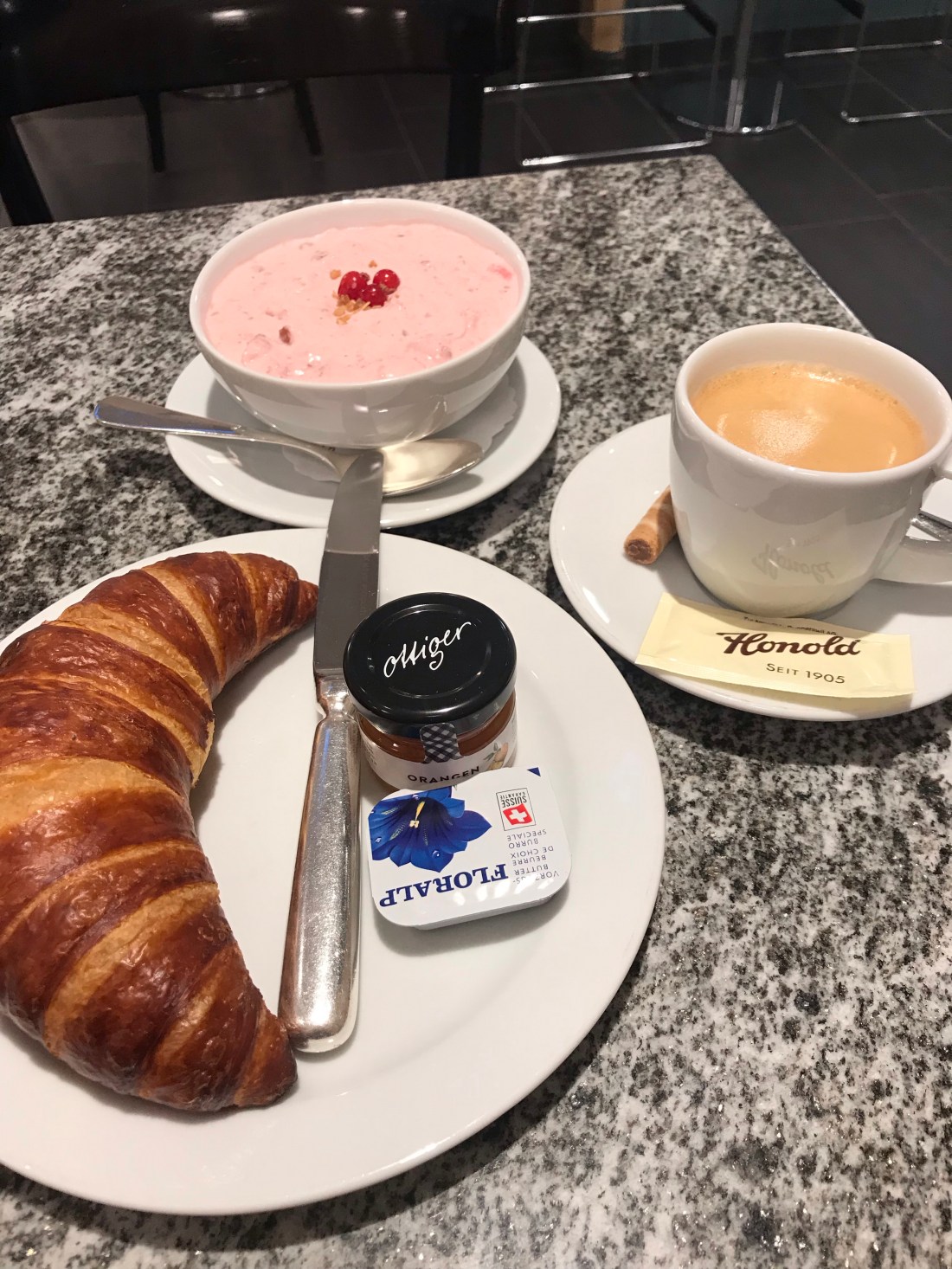
Most things were not open when I arrived, but I gratefully found a very swish café already serving breakfast, which I was ready for despite having had a collection of boiled veg on the plane (hmmm vegan breakfast fail Swiss Air! Though the hash brown was tasty). From the café I established contact with Delia who I’d meet the next day. The bowl of pink stuff was delicious bircher 😋

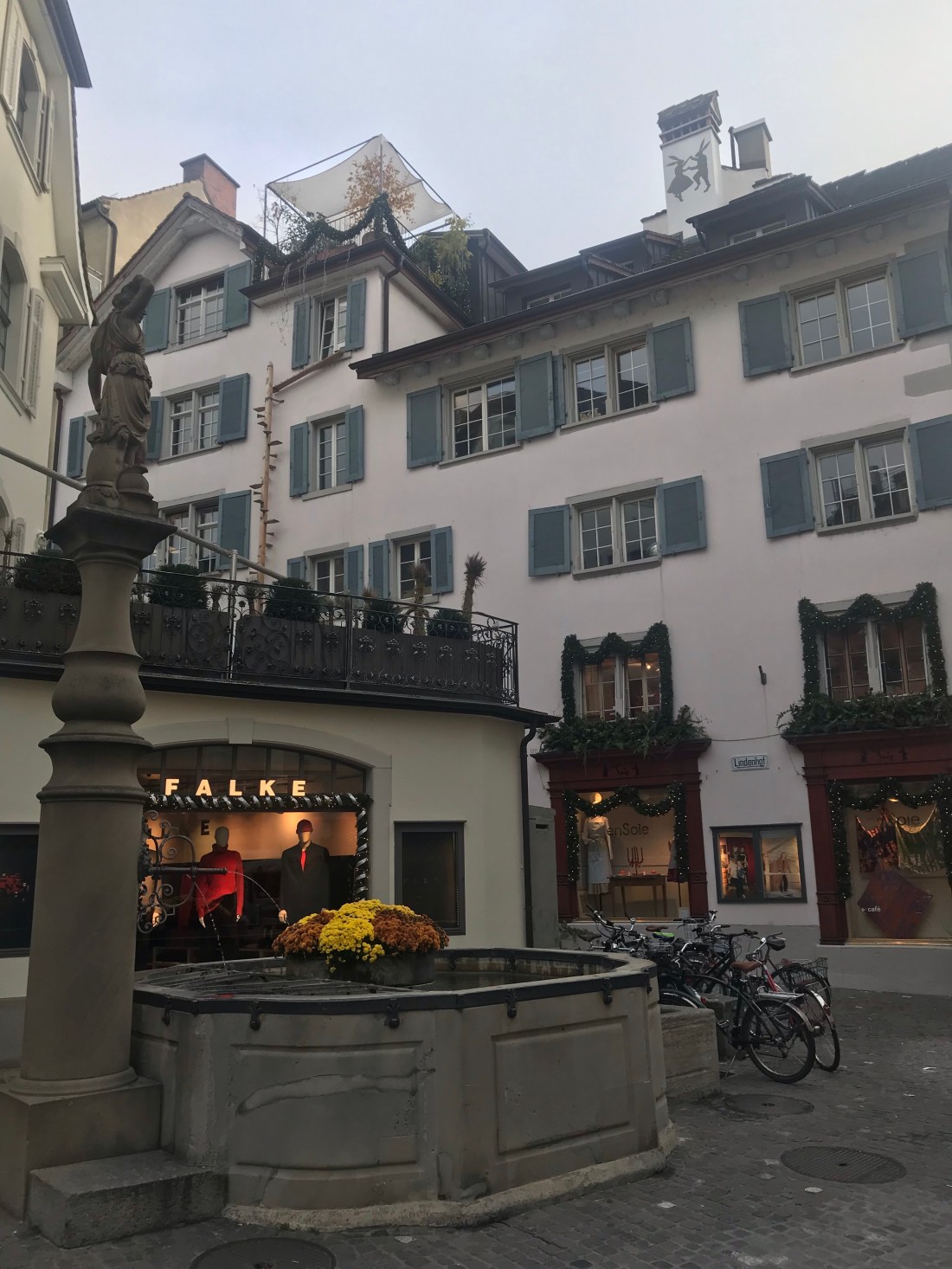
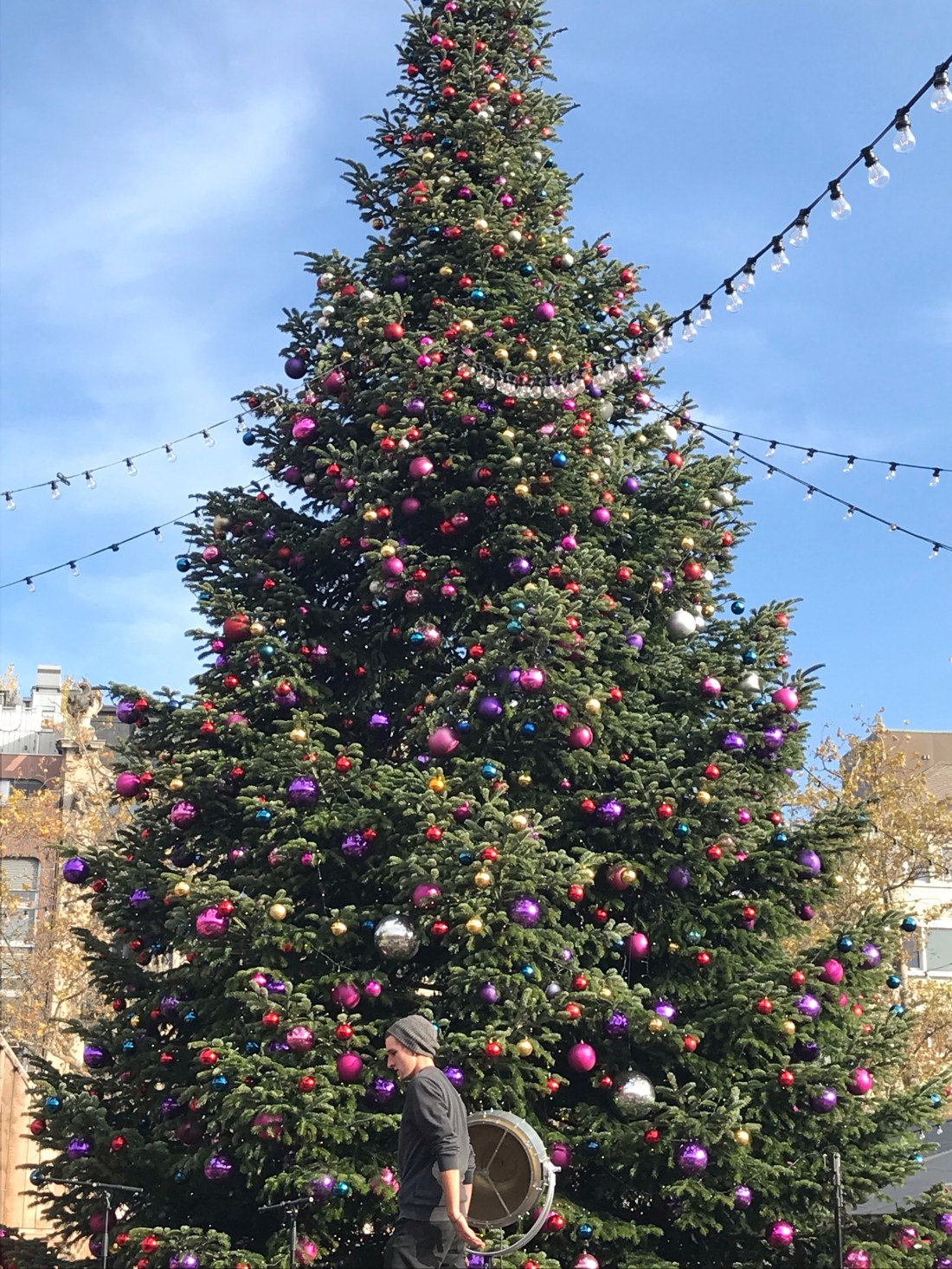
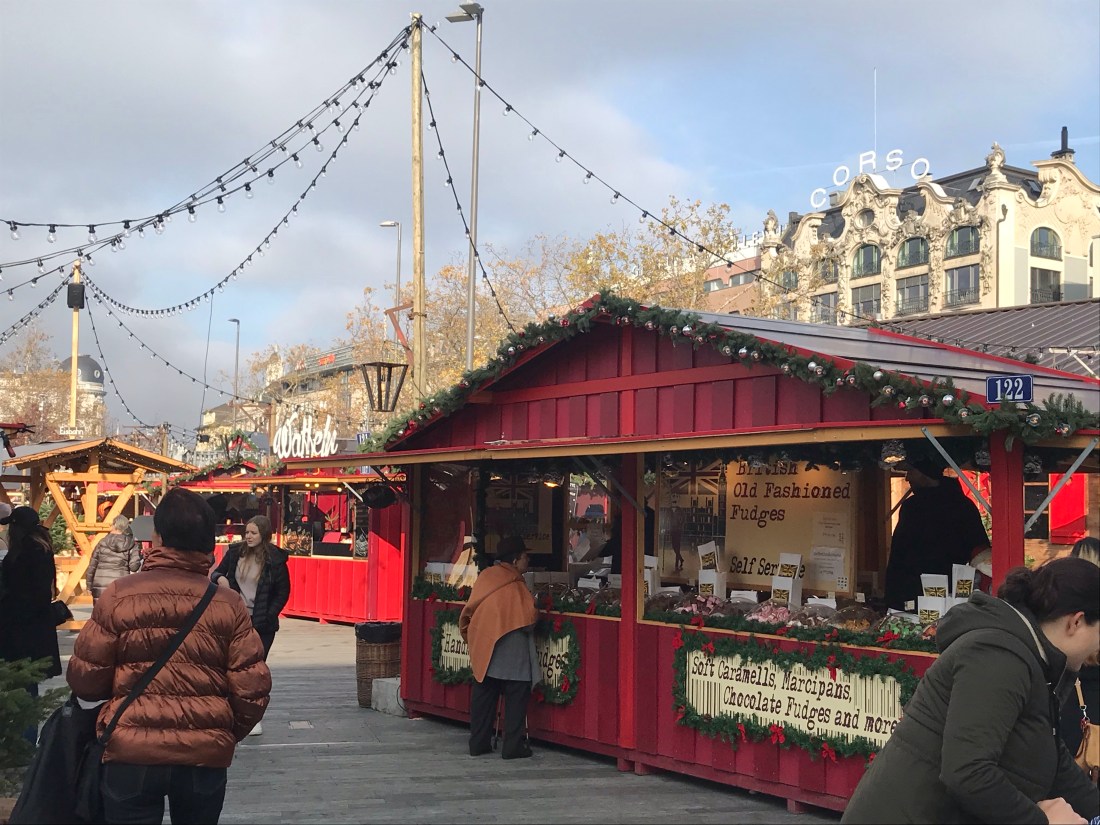
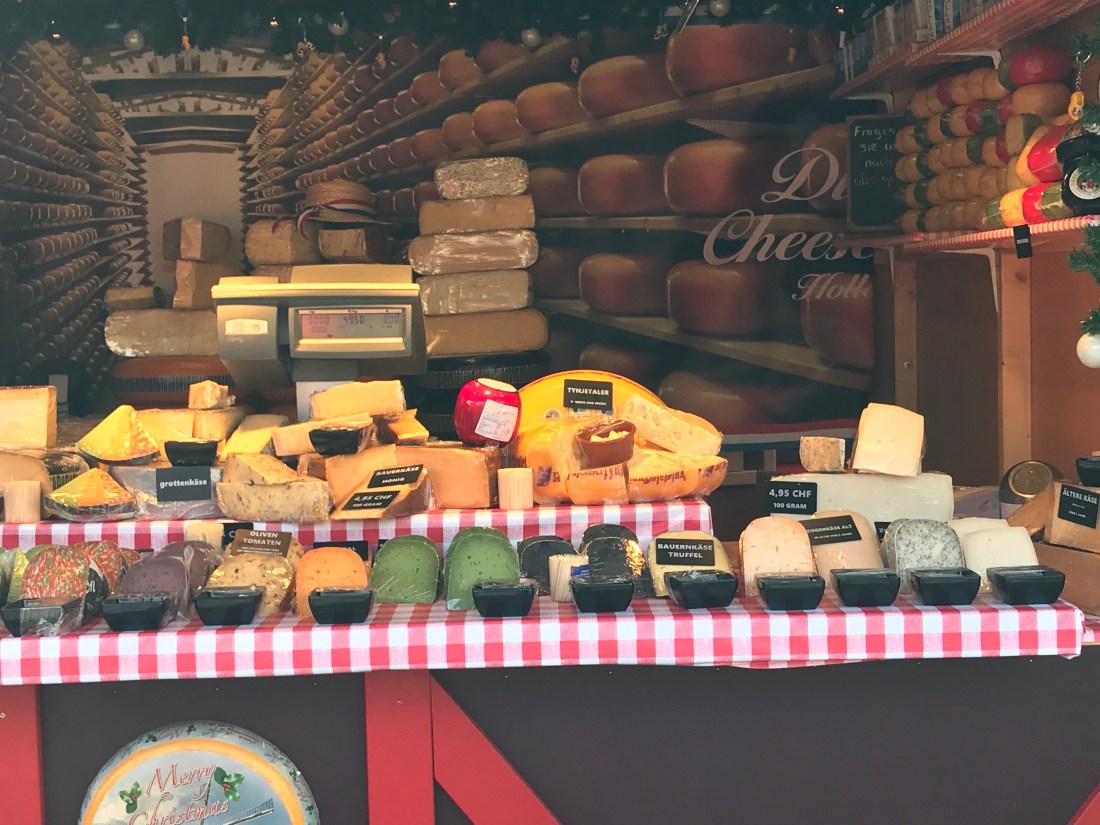
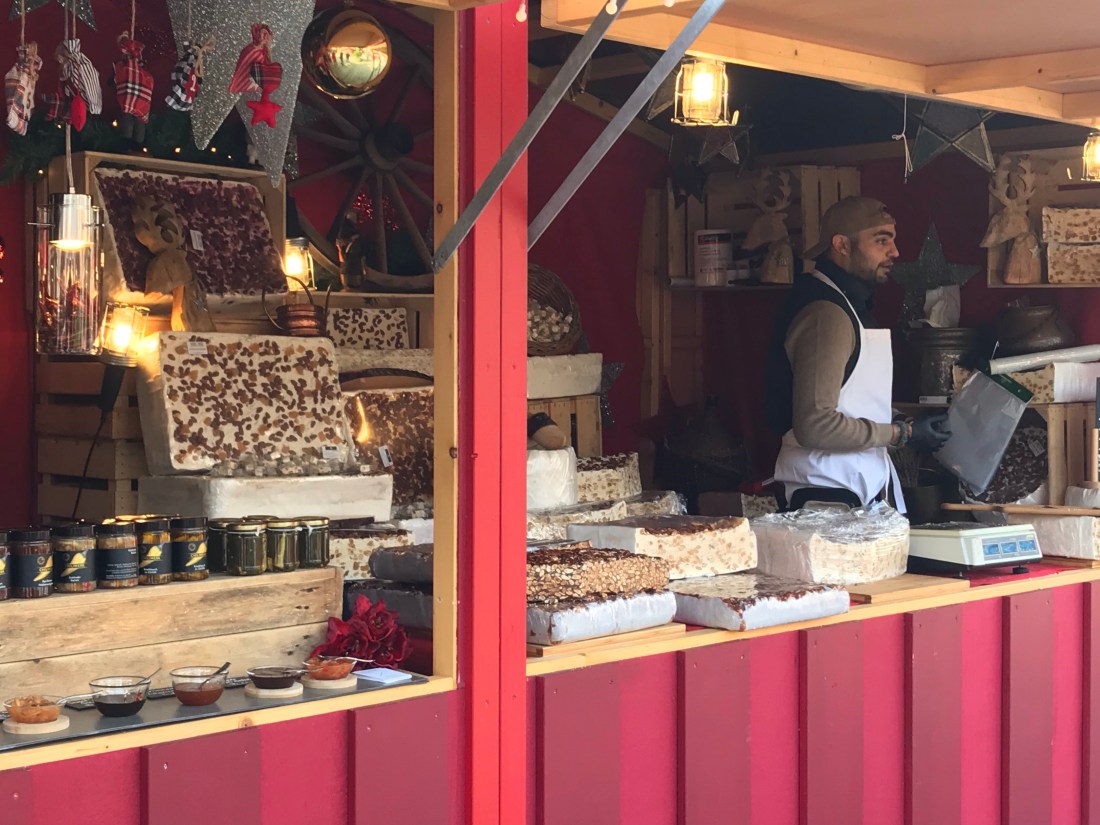
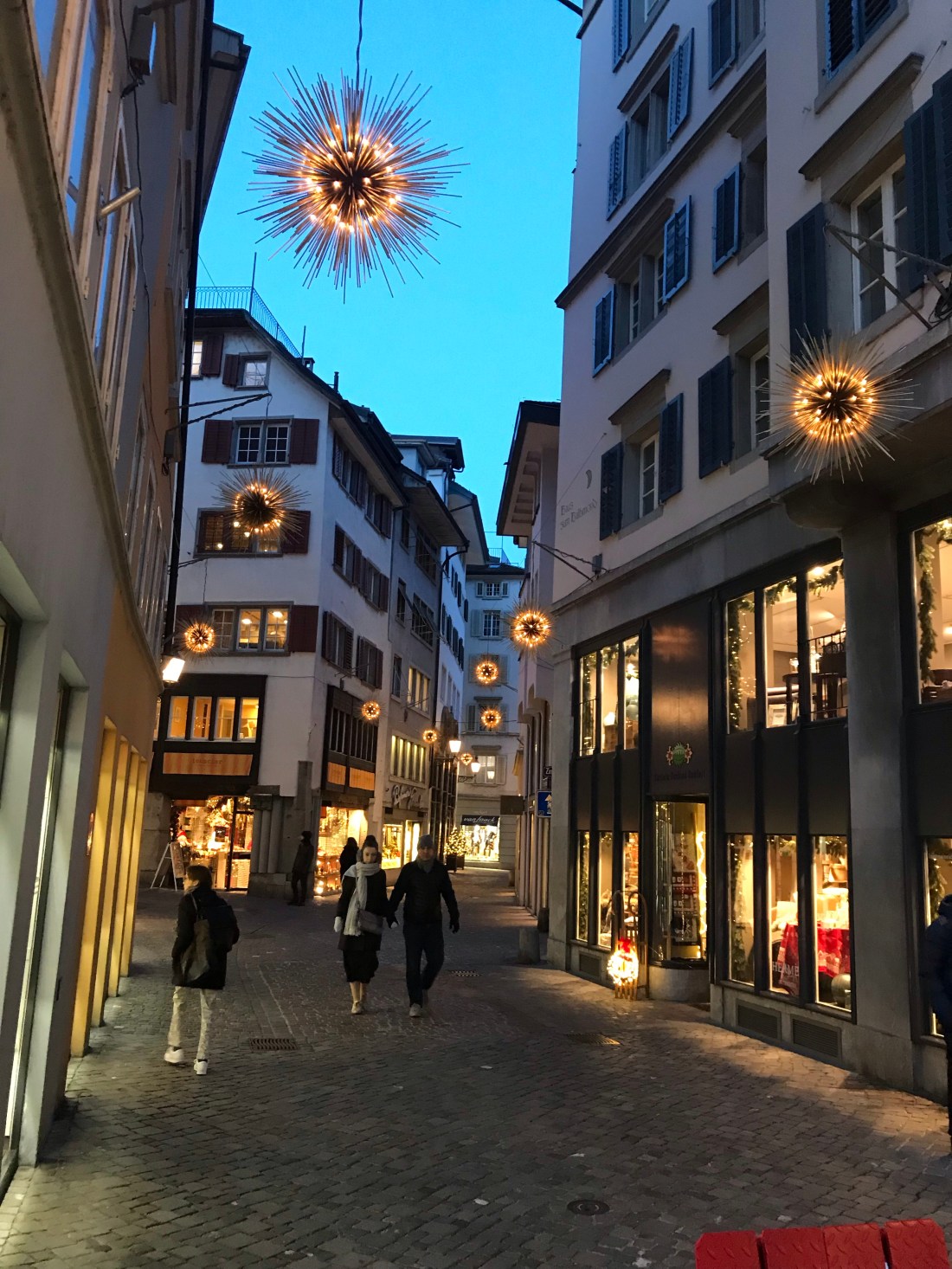
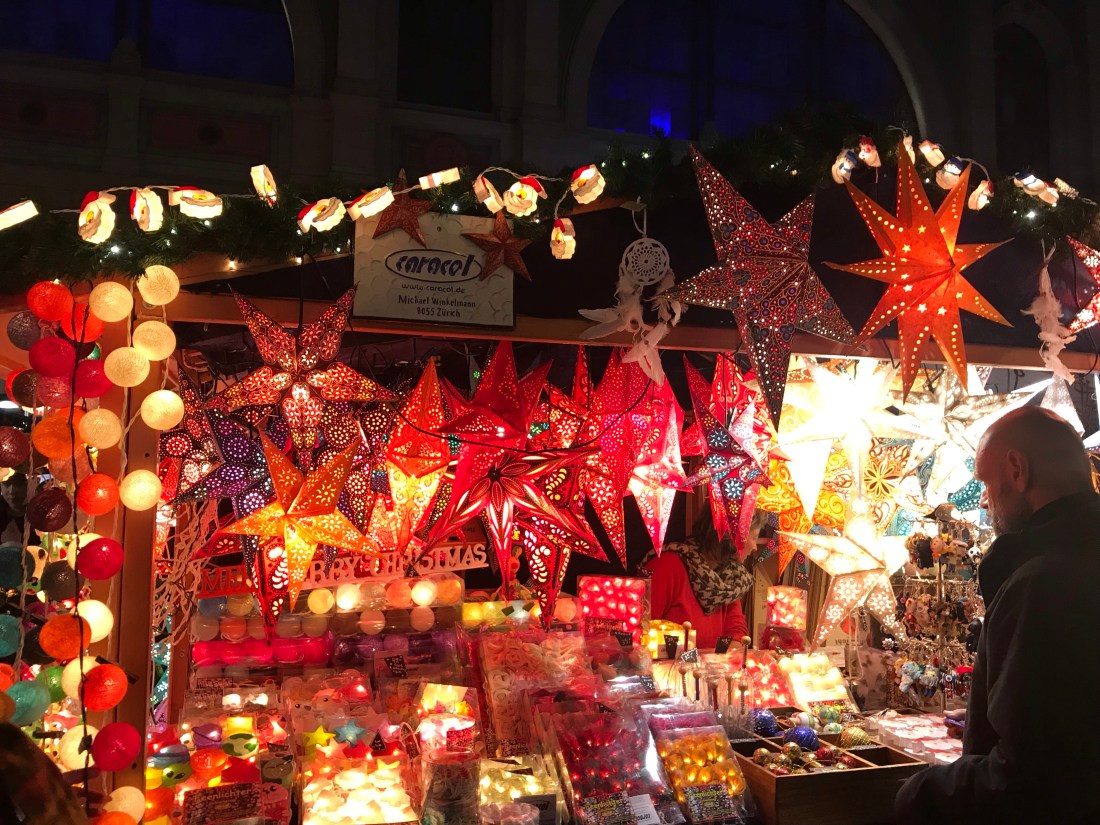
There’s a main Christmas market, not far from the river and the centre of Zürich, but actually there are lots of little cobbled corners lit up with huge Christmas trees and temporary lanes of wooden huts selling Glüwein, Wafflen, Würst, along with every kind of gift you can imagine.

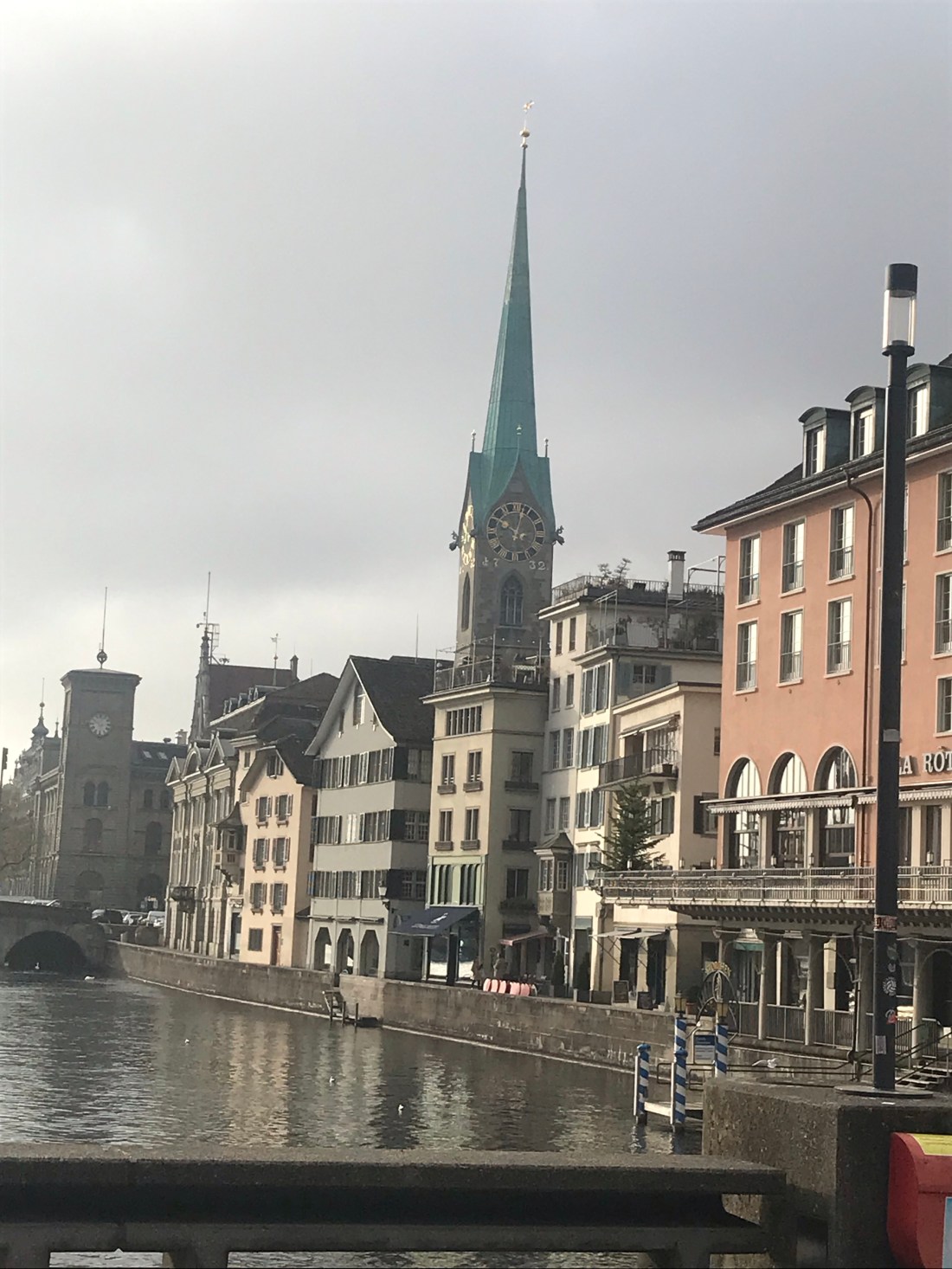
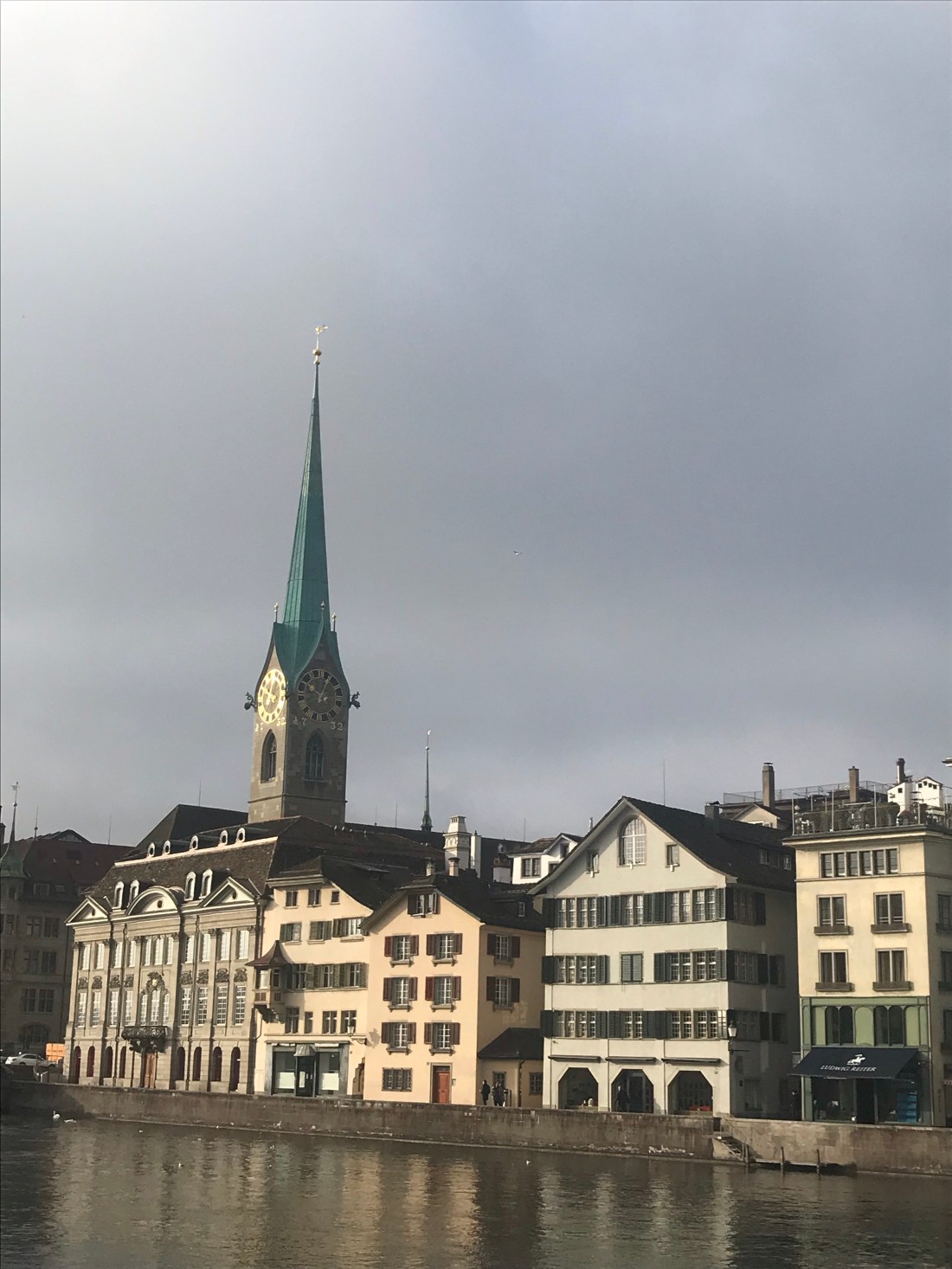
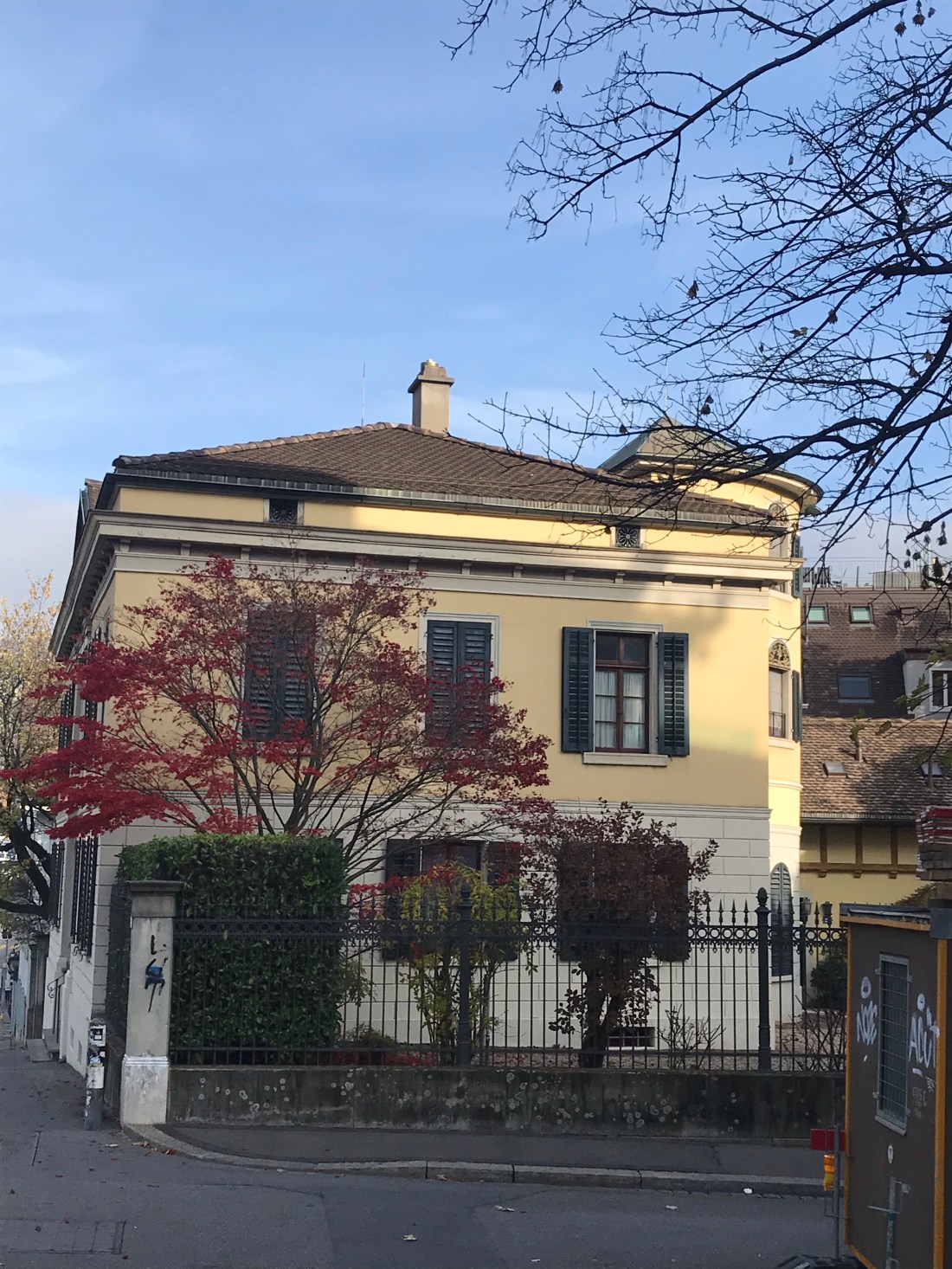
Attempting to feel my way towards the centre of things, I gravitated towards the river, lined with pretty Swiss houses replete with wooden shutters. Then stumbled across a music shop, where I warmed up for a bit browsing the shelves.

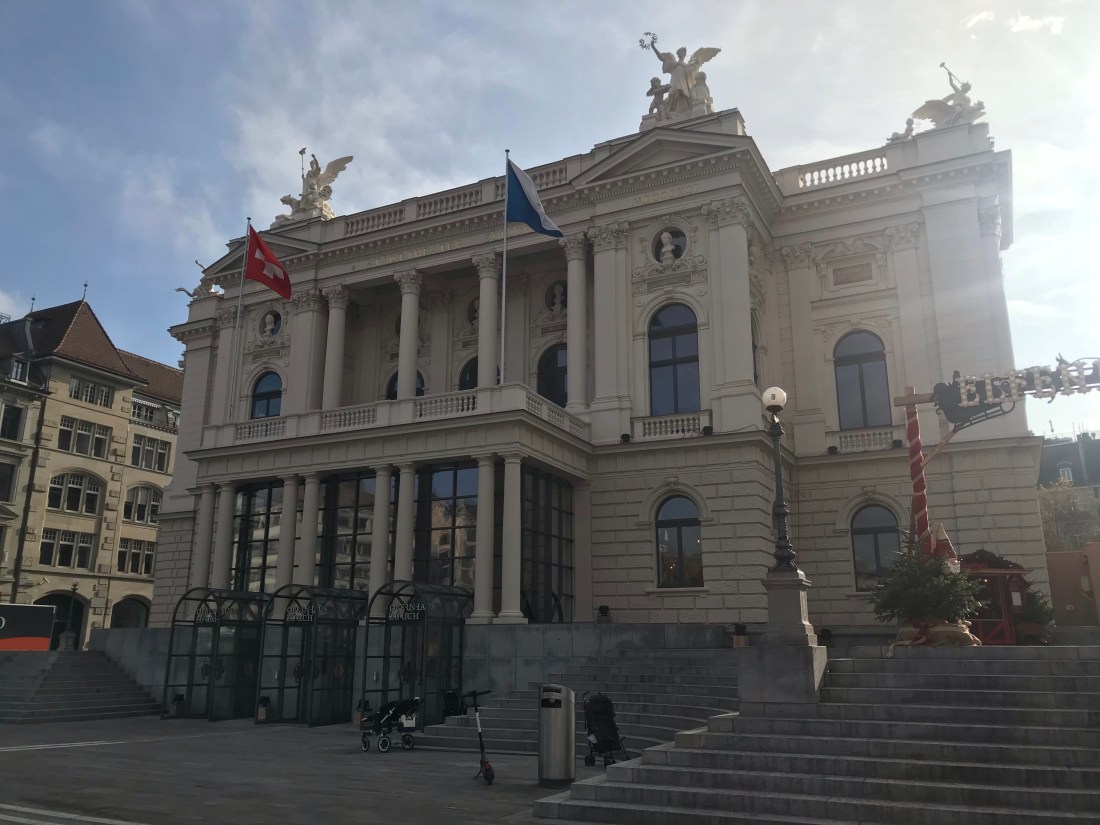
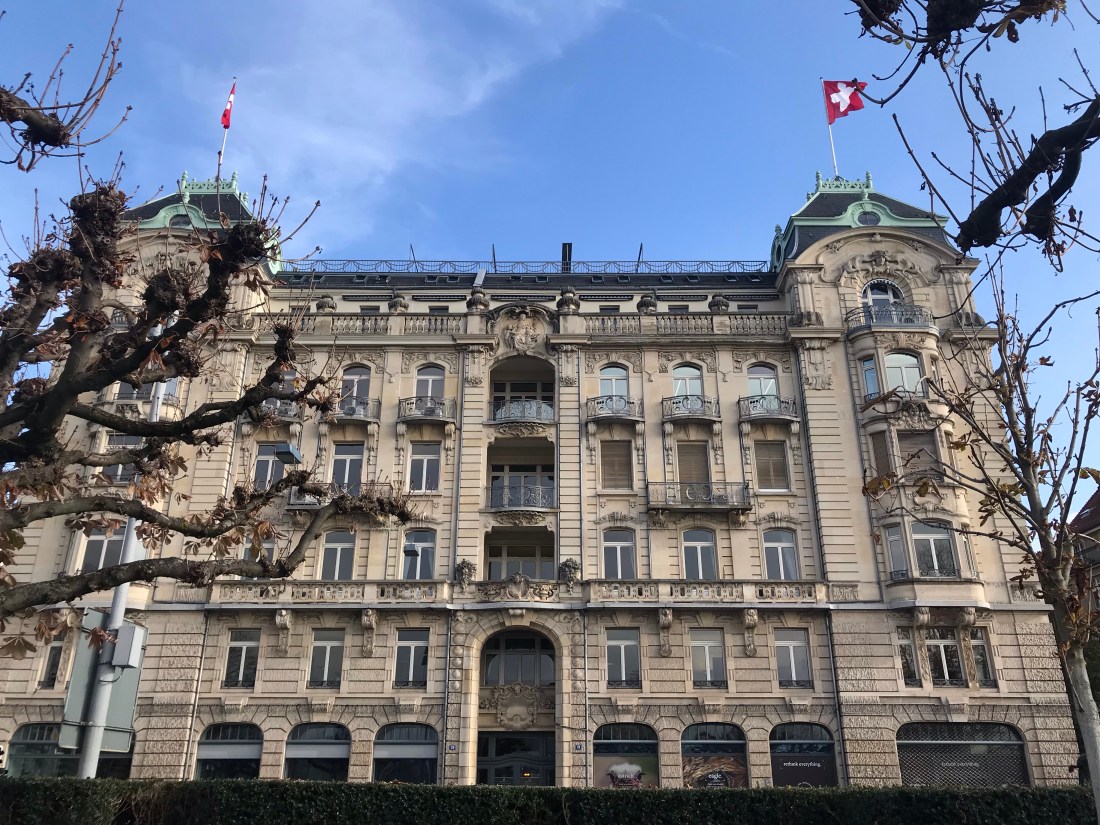
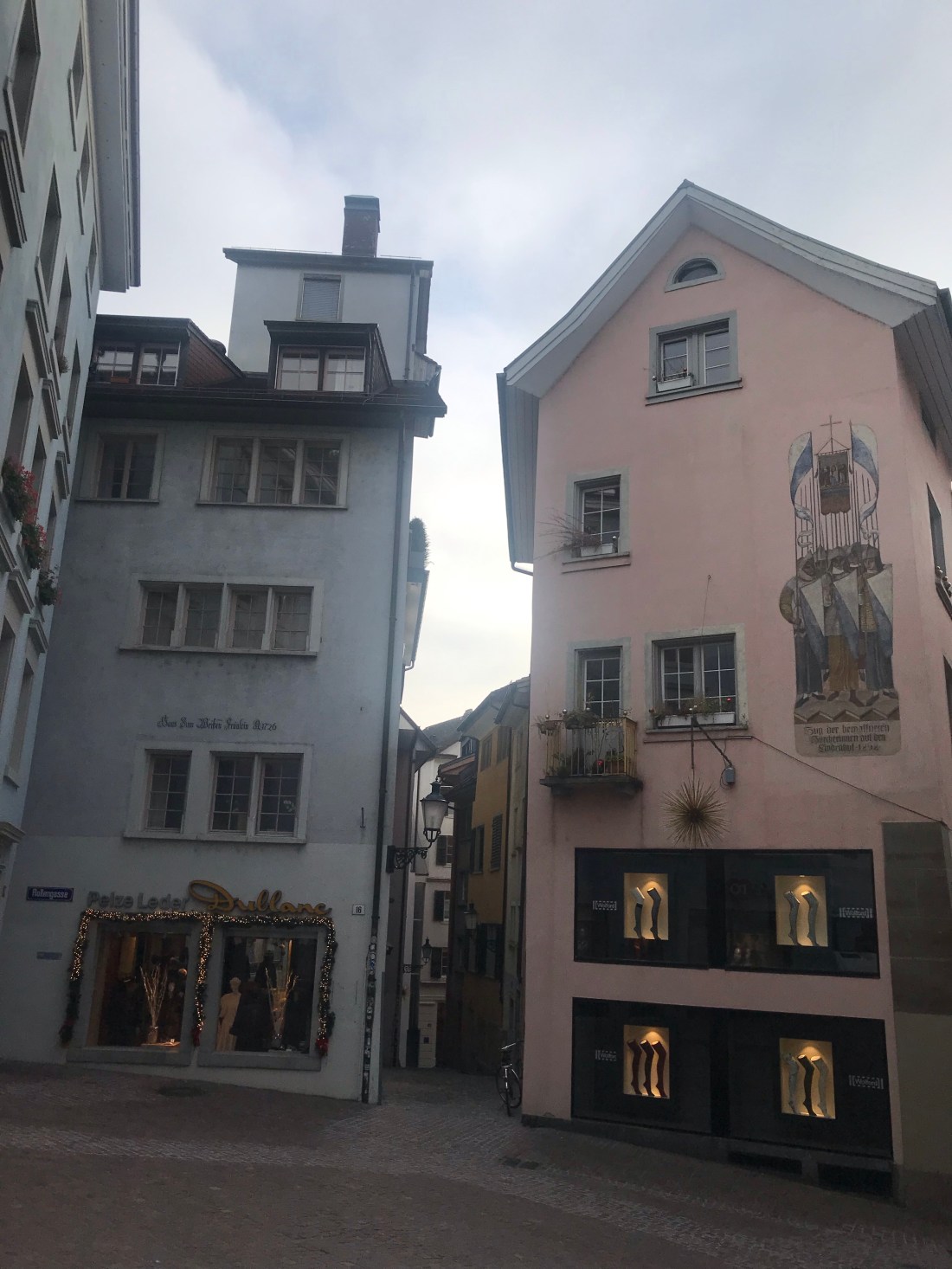
I never thought that architecture could bring comfort with it before, but Jamie and Shiv have mentioned this phenomenon to me, in terms of the post colonial architecture in Penang and Malacca in Malaysia and in Singapore too. In Zürich, virtually every corner I rounded I found another historical building, with a date painted ornately on the immaculate render, along with something about its history. Somehow it felt very comforting to be surrounded by old things again. I’ve really missed that.

Before long, I found myself near the Kunsthaus Art Museum, where I spent a couple of hours pondering sculptures by Rodin, sculptures and drawings by Matisse, paintings by Picasso and by quite a few Swiss artists and sculptures by Giacometti.

The Gates of Hell by Rodin

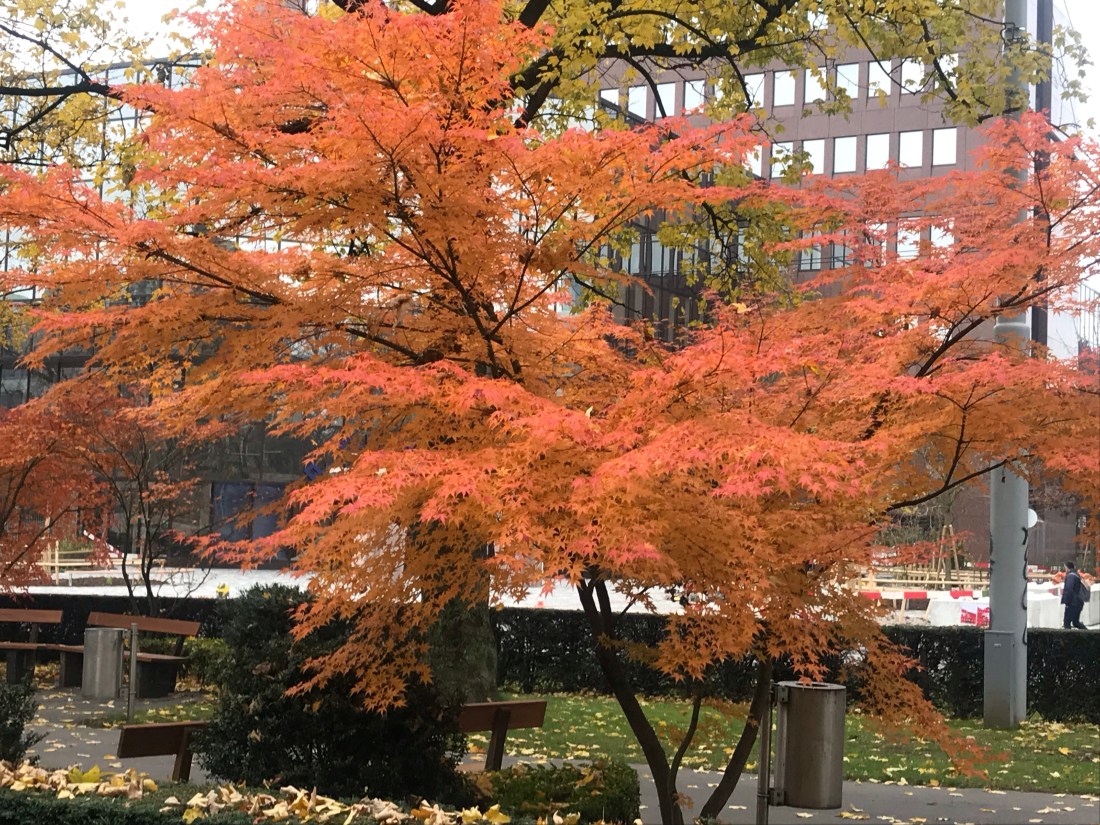
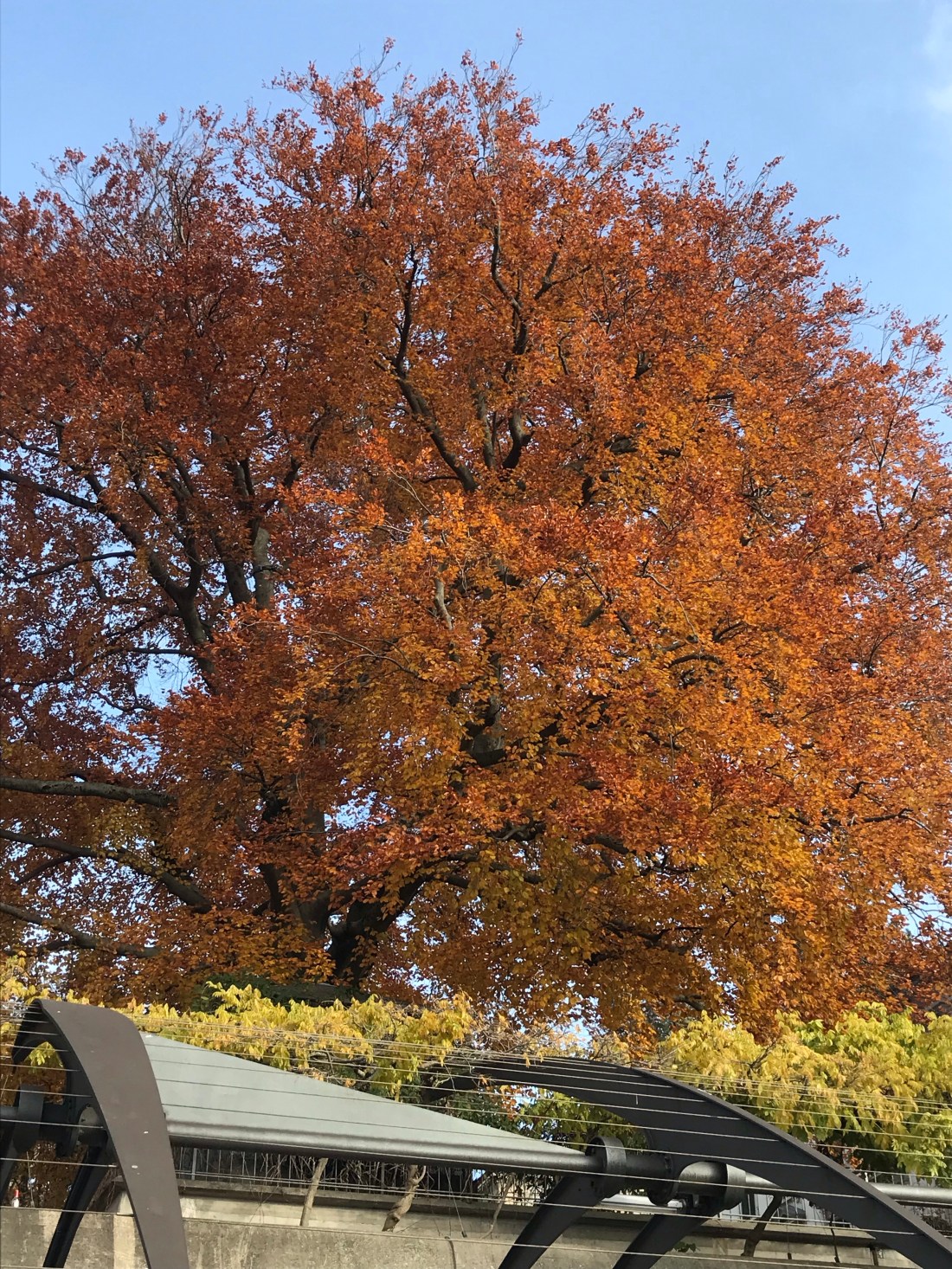
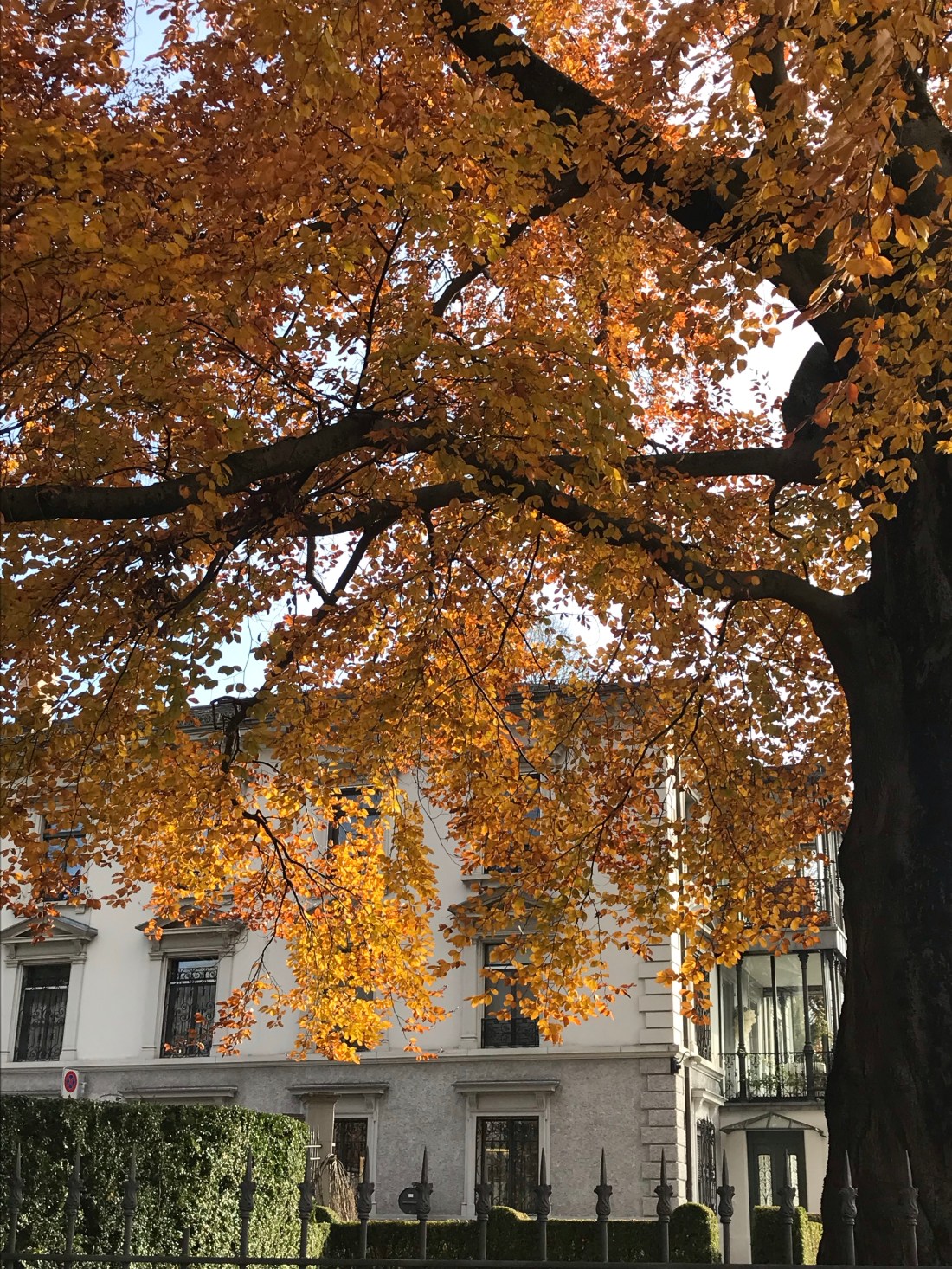
On my meandering path you can’t begin to imagine how much pleasure I was deriving from being in a place still experiencing the last vestiges of autumn. The colours of leaves on the trees, the misty sky, the cold air, all things I have so missed on my travels that I found myself feeling surprisingly at home here.

At the Christmas market, I resisted the many other temptations on offer but indulged in Würst for a late lunch.

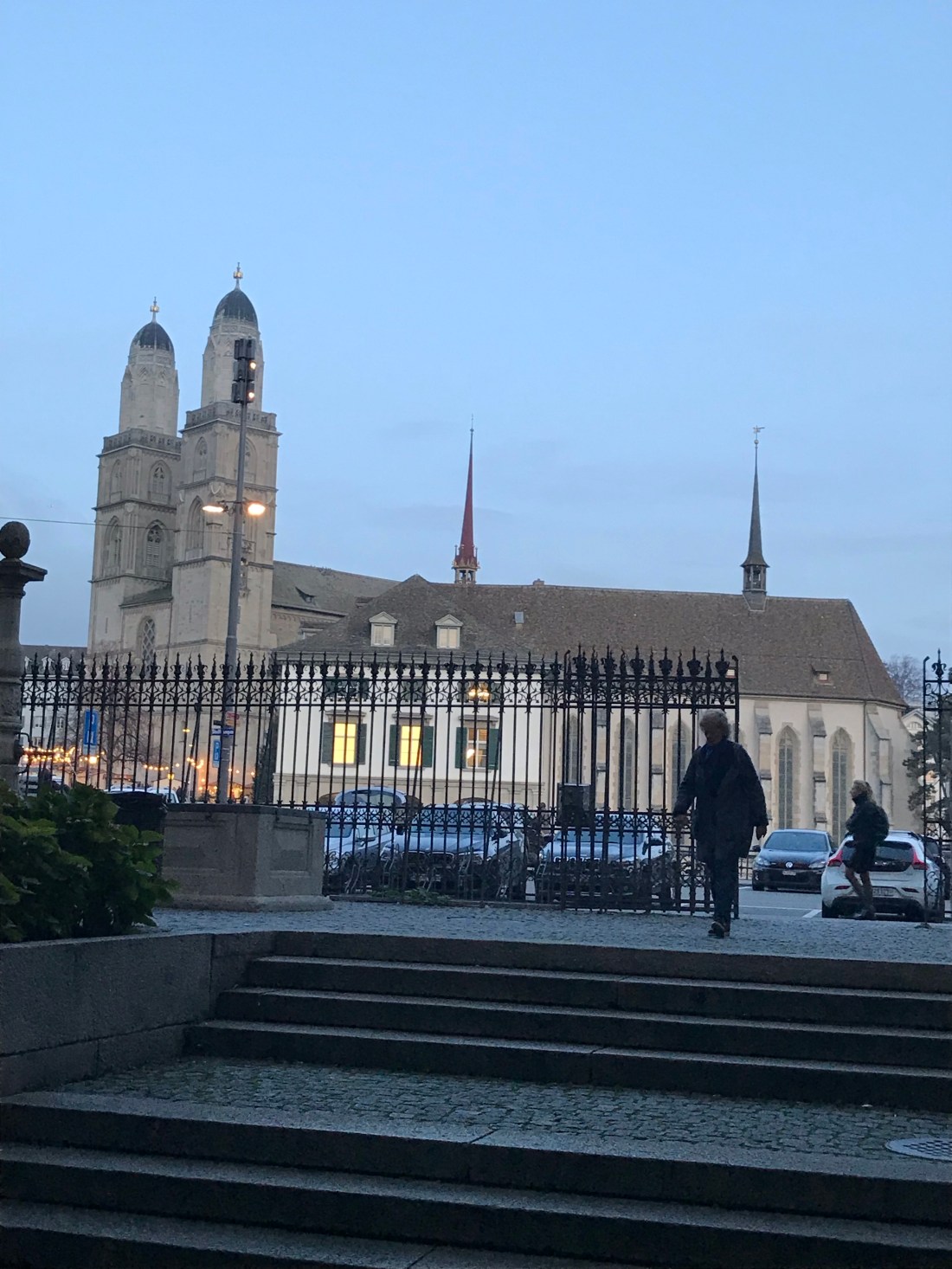
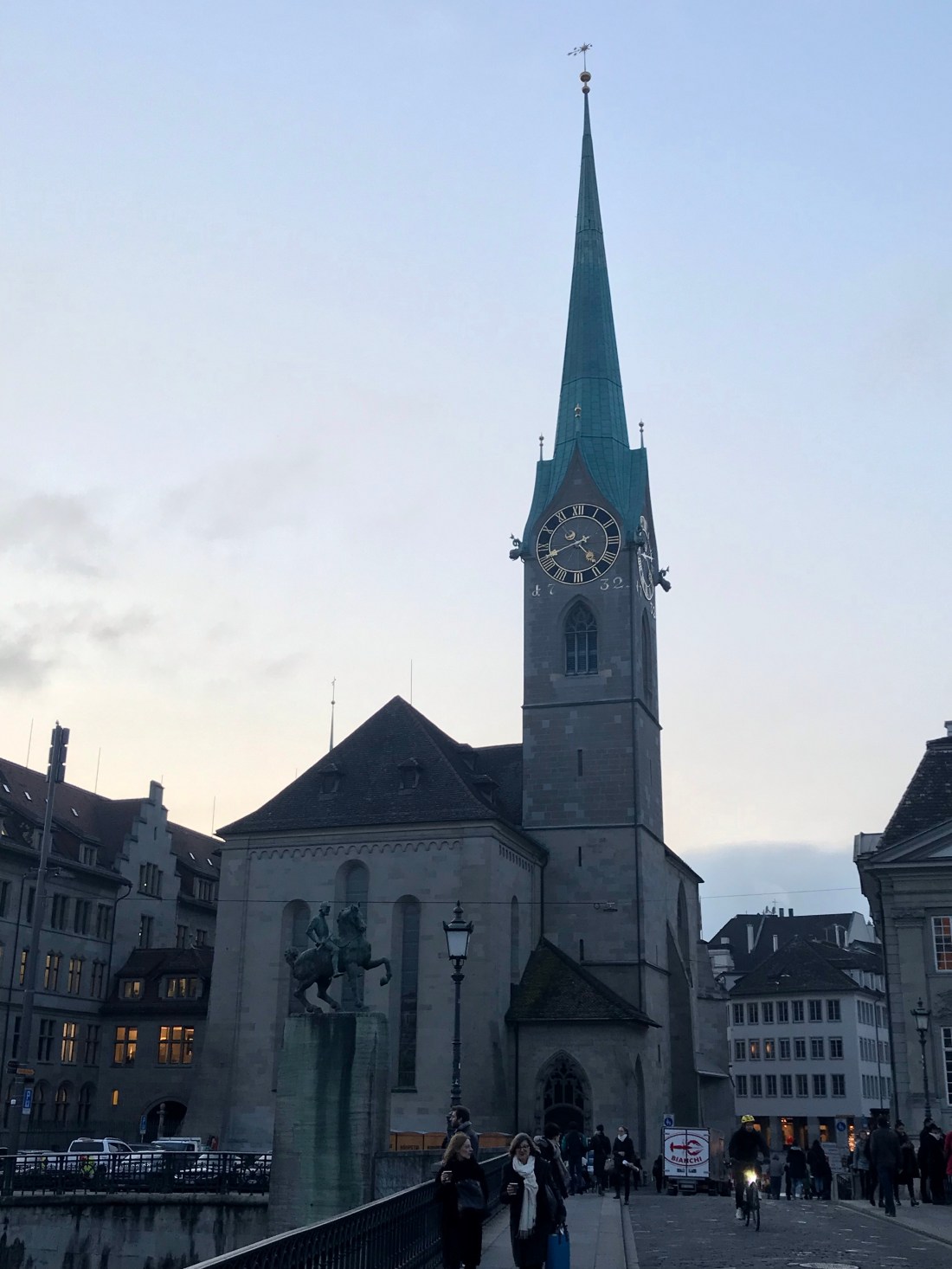
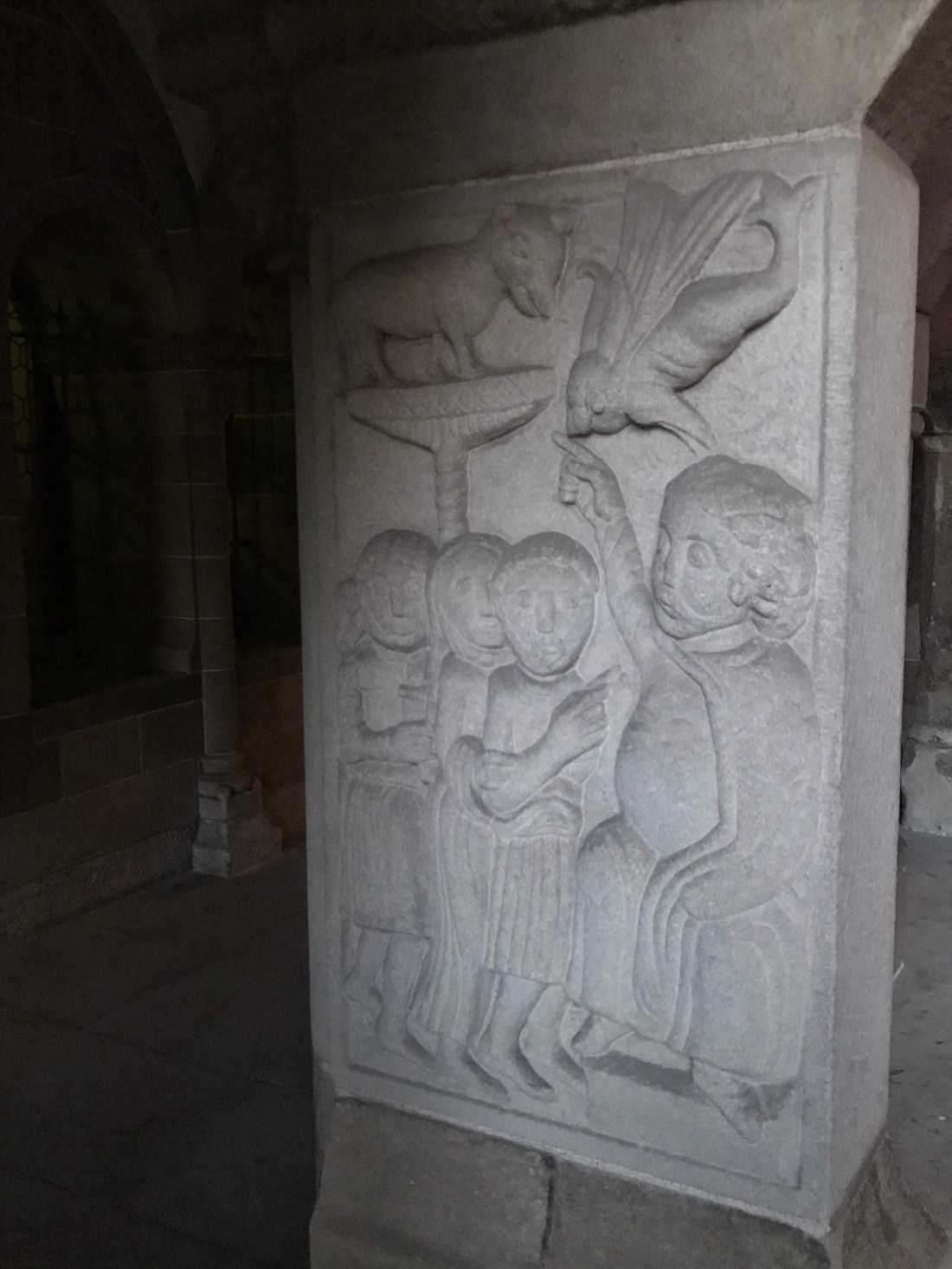
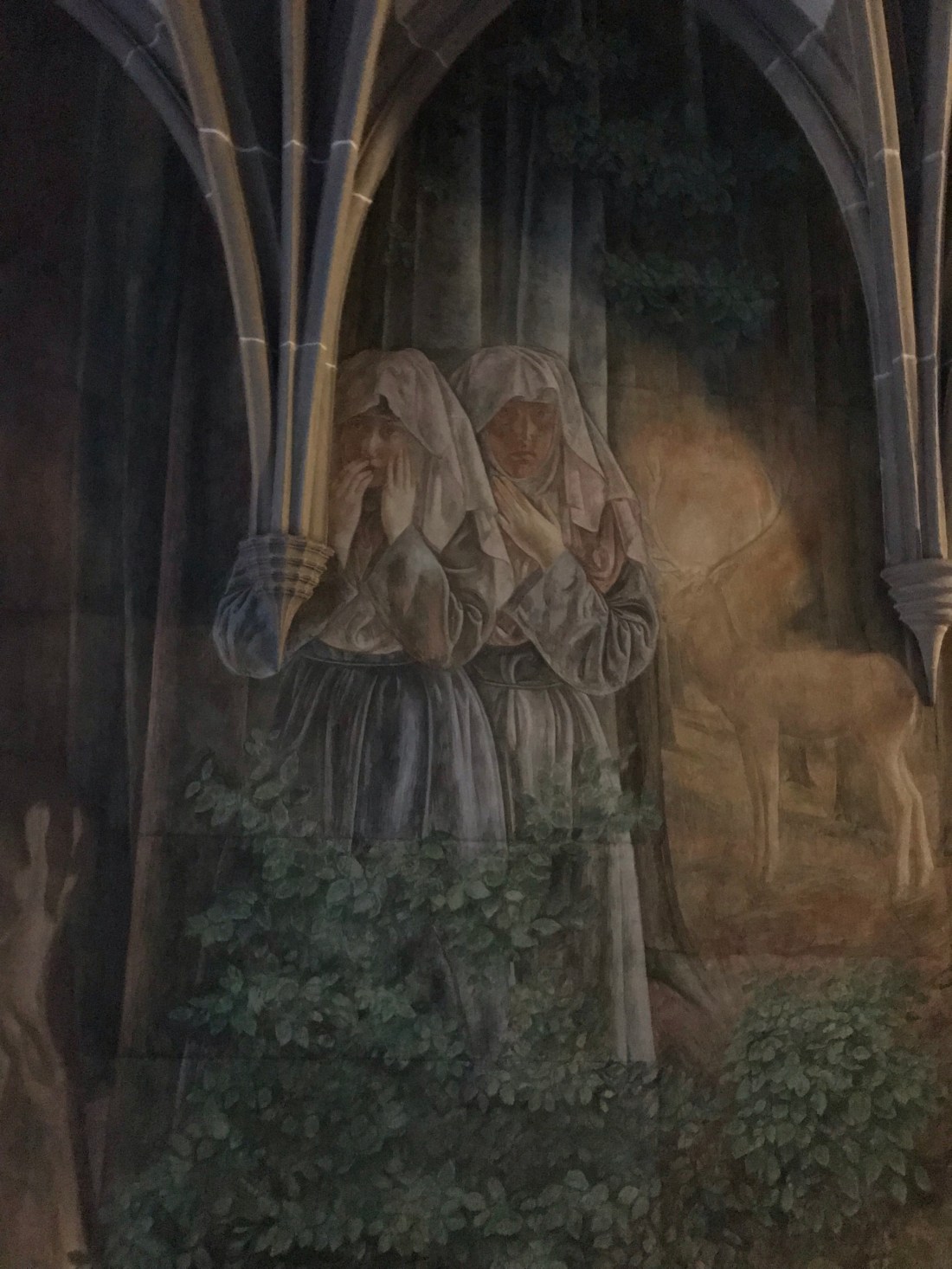
On my way back to the station, I managed to have a quick look around the Grossmünster and the Fraumünster (two of the biggest churches in the middle of Zürich) just before they closed. I was particularly interested in the latter, which began life as a Benedictine convent, founded in 853 by Louis the German for his daughter Hildegard. He gave the convent the land of Zürich, Uri and the Albis Forest. In 1045, King Henry III gave the convent the right to hold markets, collect tolls and mint coins, which apparently effectively made the Abbess the ruler of the city. But in 1336 the city’s first independent mayor was appointed (ie not the Abbess’ appointment), and the convent’s political power waned.

The abbey was dissolved in 1524 in the course of the Reformation by Zwingli. Its last abbess, Katharina Von Zimmern, to whom there is a memorial altar, agreed to its dissolution, though it must have cost her a lot. A lady also spending a thoughtful moment here, told me in halting English that Katharina was a great lady, because she was so concerned about disunity in the church that she decided to allow the abbey to be dissolved, rather than engage in a fight to save it that would create further discord with Zwingli and the Reformers. Food for thought.

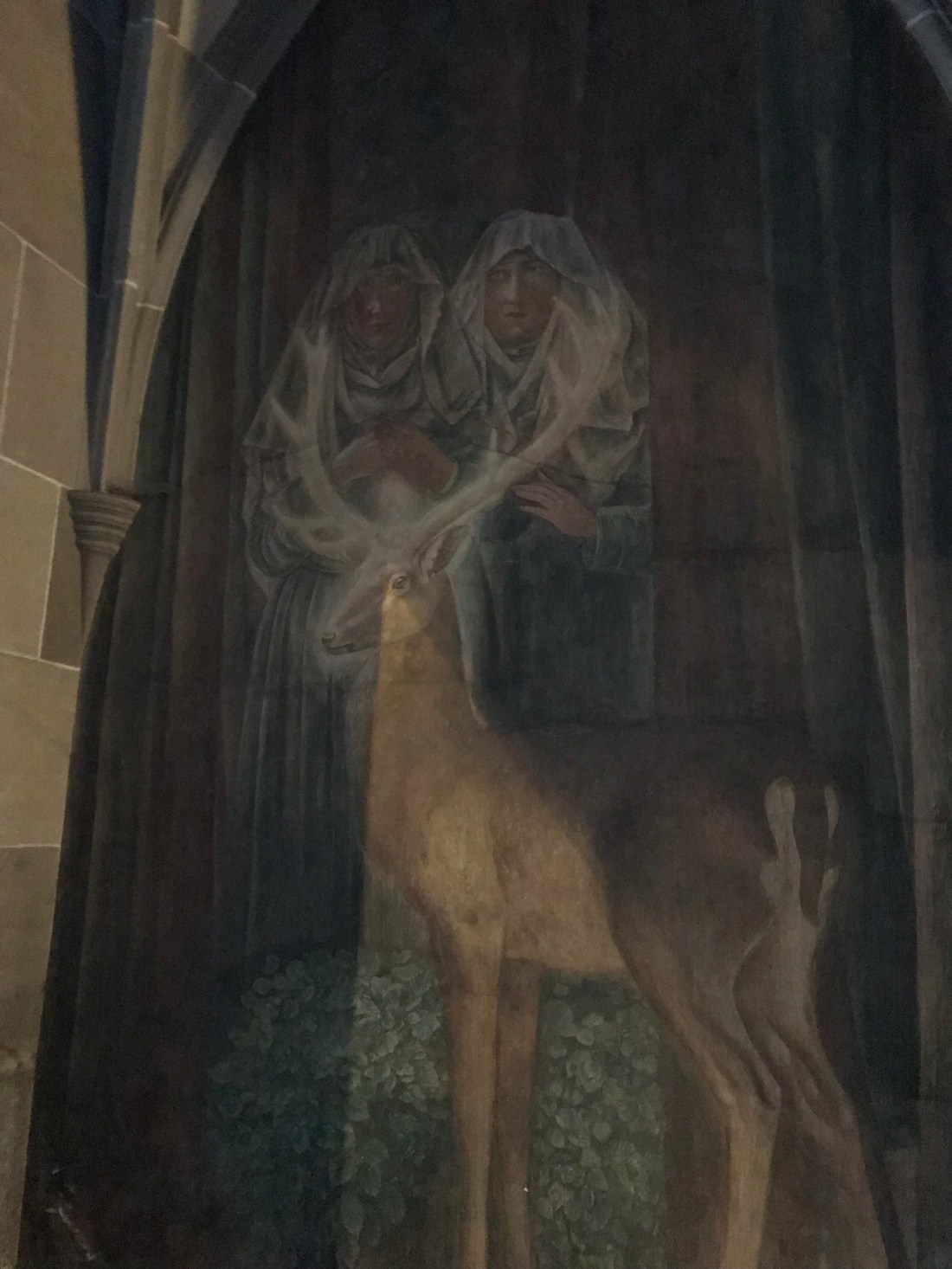
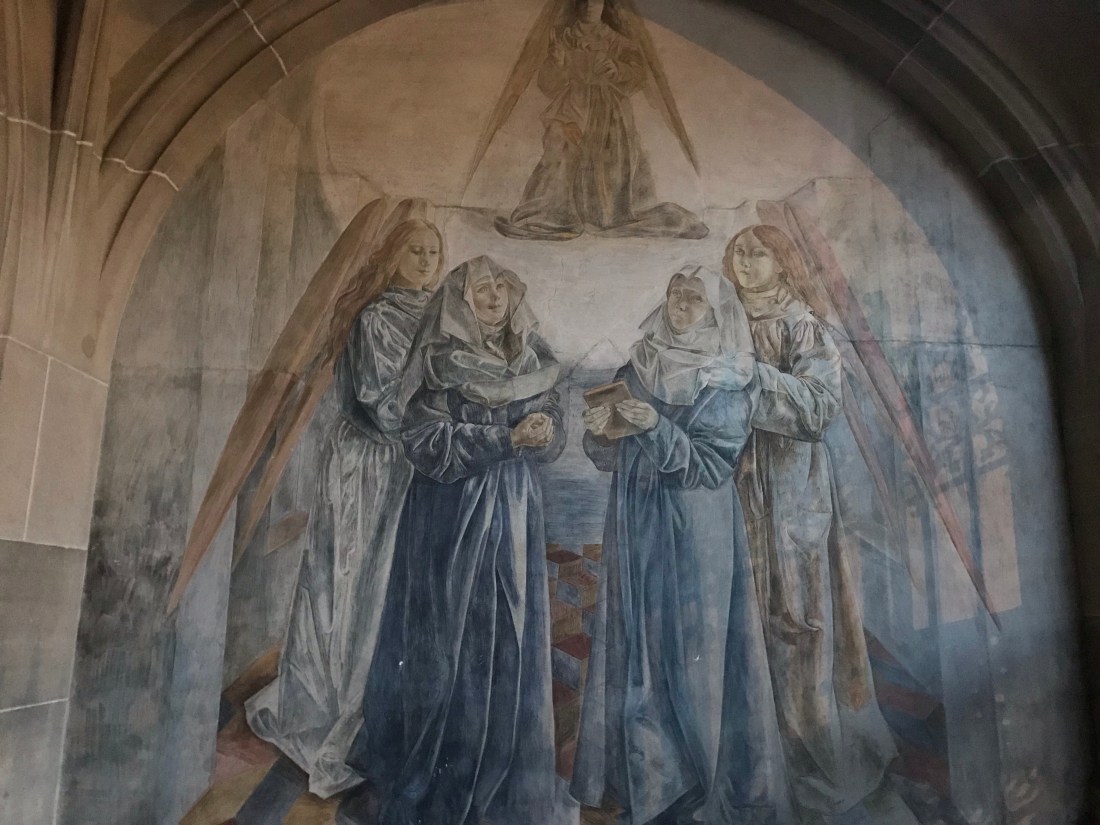
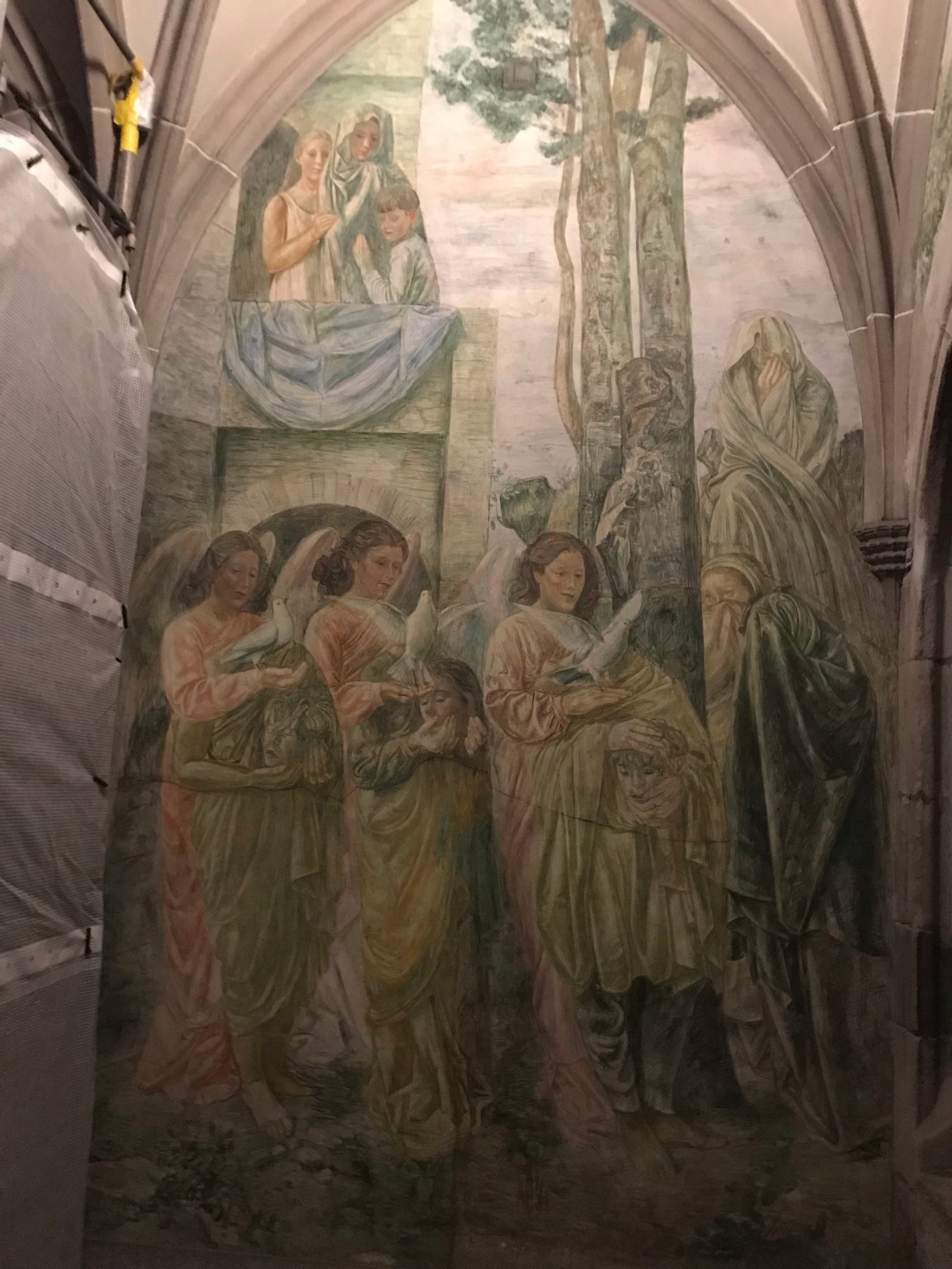
I was either too late or you can’t currently see inside the church space where apparently there are five windows by Mark Chagall and another one by Giacometti that I’d have loved to have seen. But I could see the numerous frescoes on the cloister walls.

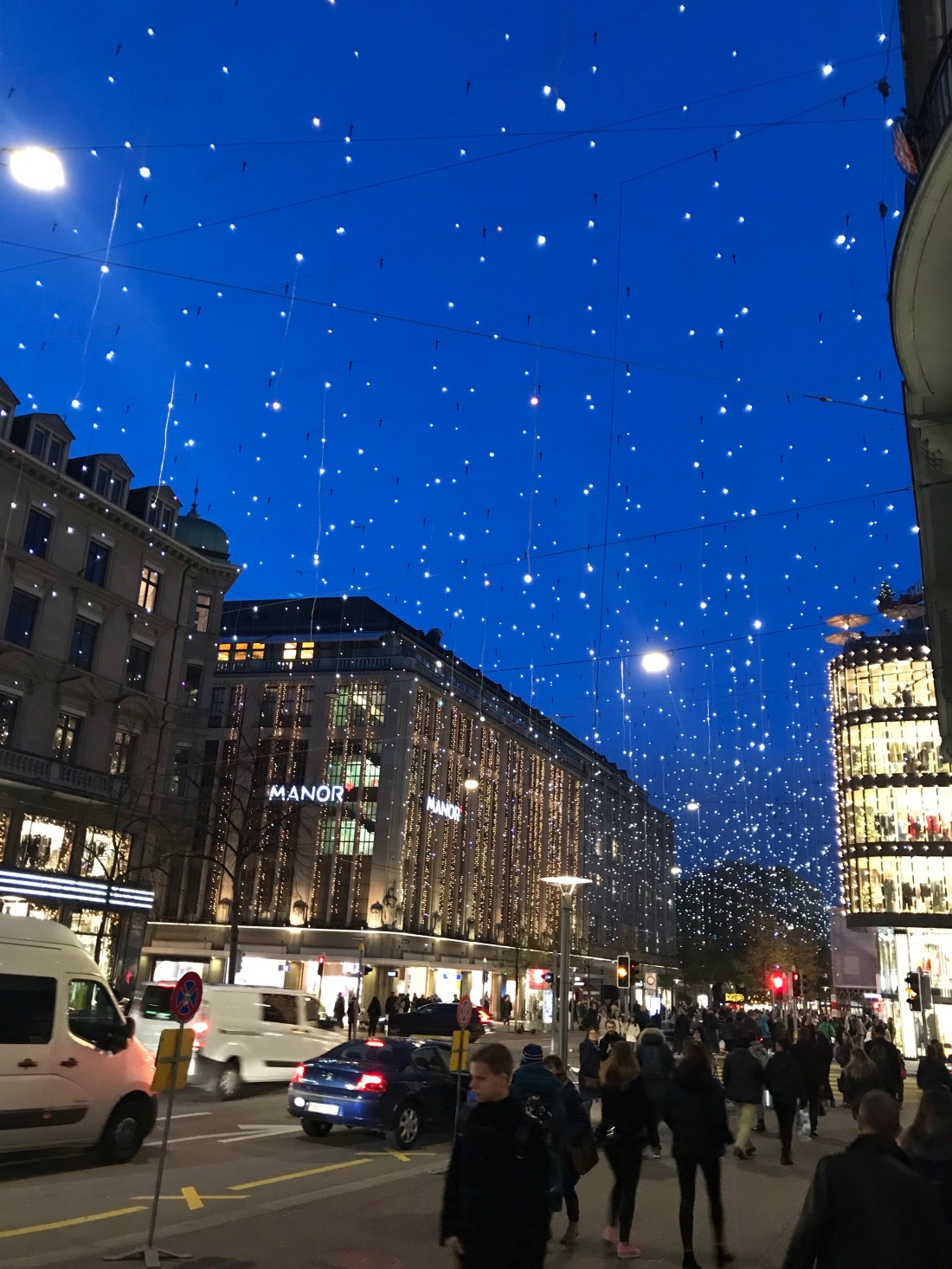
Somehow, in spite of my plans to spend a lazy day in the hotel, Zürich enticed me to stay until the evening, when the whole place was lit with tiny white fairy lights apparently strung from the sky like stars.