Wealth & Poverty

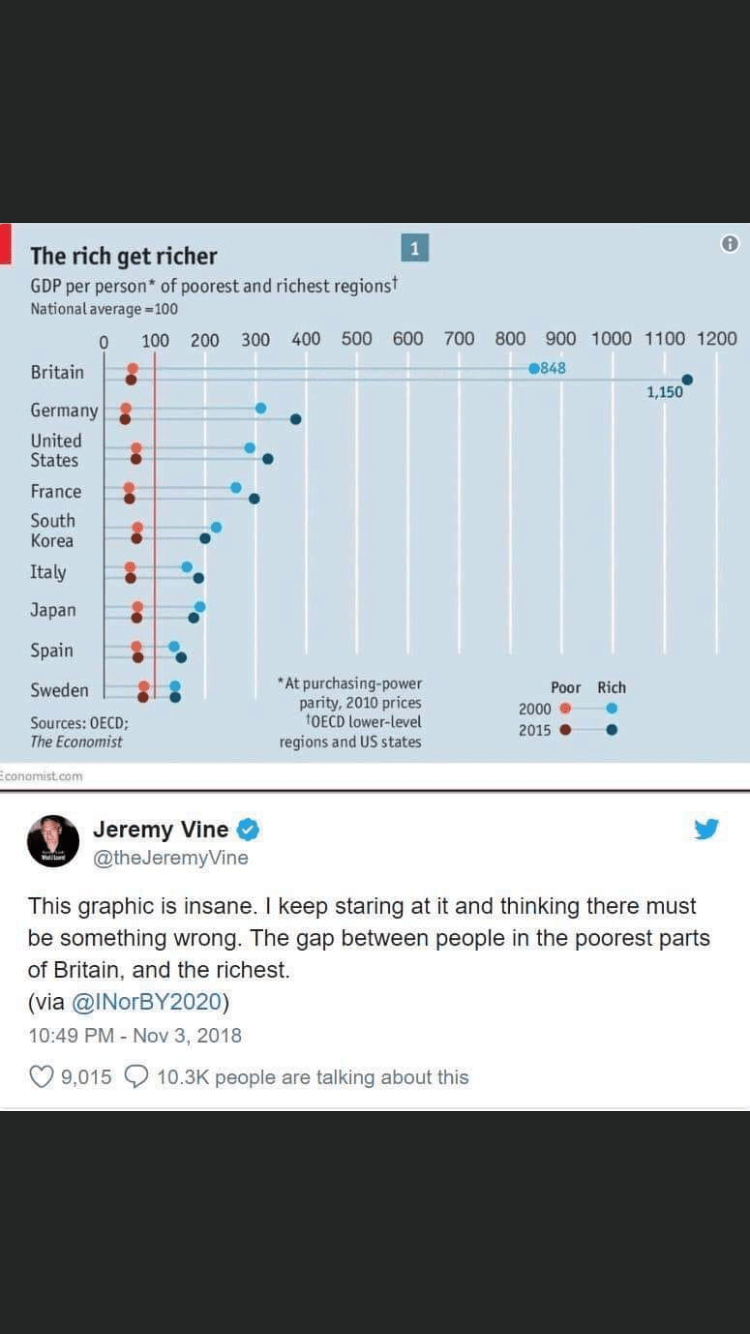
On the first post about Penang Island below, some thoughts and questions began to emerge about “wealth creation”. (When people work do they not create wealth rather than take it from someone else? Can wealth be created, or is it limited to the “wealth” the planet supplies us with always (since no amount of work will ever create anything new that hasn’t been made of stuff that was already here)? And is it true that in order to “create wealth” in the usual capitalist sense, planetary resources are ultimately taken from one group of people and given to another? Even if inadvertently etc)

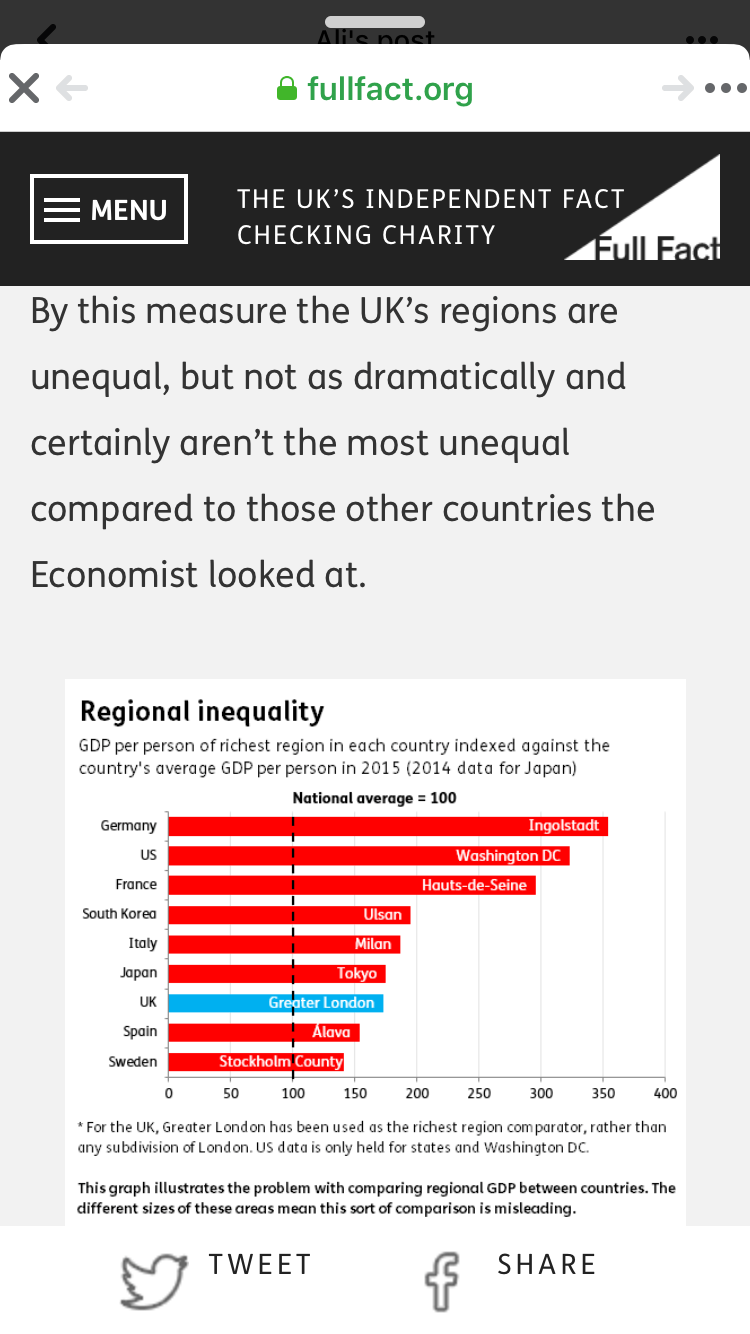
Anyway, a friend has just shared this graphic on Facebook, which, if correct, is pretty telling for Britain. Have a look, if you dare, Britons:

Following my sharing this on Facebook another friend has offered the following that redresses the balance a bit, and points out weaknesses in the way the above was put together: https://fullfact.org/economy/regional-inequality-figures-misleading/ Well worth a look… the first suggested fairer graph it offers is here, for those without time to read the whole article:

I’m still thinking about this, wondering if it misses the comparison with the poorest in each area though? It’s the gap between richest and poorest that was part of the shock of the original chart, for me.

Another friend has shared this website too, with some other interesting charts and data: https://www.equalitytrust.org.uk/scale-economic-inequality-uk?sfns=mo

…And, further to all the above is this shocking and clear Wikipedia article that provides a lot of food for thought. Including facts like; “The three richest people in the world possess more financial assets than the lowest 48 nations combined.” And “An October 2014 study by Credit Suisse also claims that the top 1% now own nearly half of the world’s wealth and that the accelerating disparity could trigger a recession.” And “According to a June 2015 report by the International Monetary Fund: “Widening income inequality is the defining challenge of our time. In advanced economies, the gap between the rich and poor is at its highest level in decades.” https://en.m.wikipedia.org/wiki/Economic_inequality#

Knowing your limits

I only had two complete days in George Town, and wished I’d booked a third, although to be honest, by the end of yesterday I was getting pretty tired of very hot and humid countries with little or no pavement for pedestrians.

I had not realised how much I took our pavements in England for granted. Having to constantly hop off into the road and then brave the traffic (not half as bad here as in Vietnam, but you’re still walking in a road battling traffic) becomes tiring, especially when you’re constantly having to figure out where you’re going.

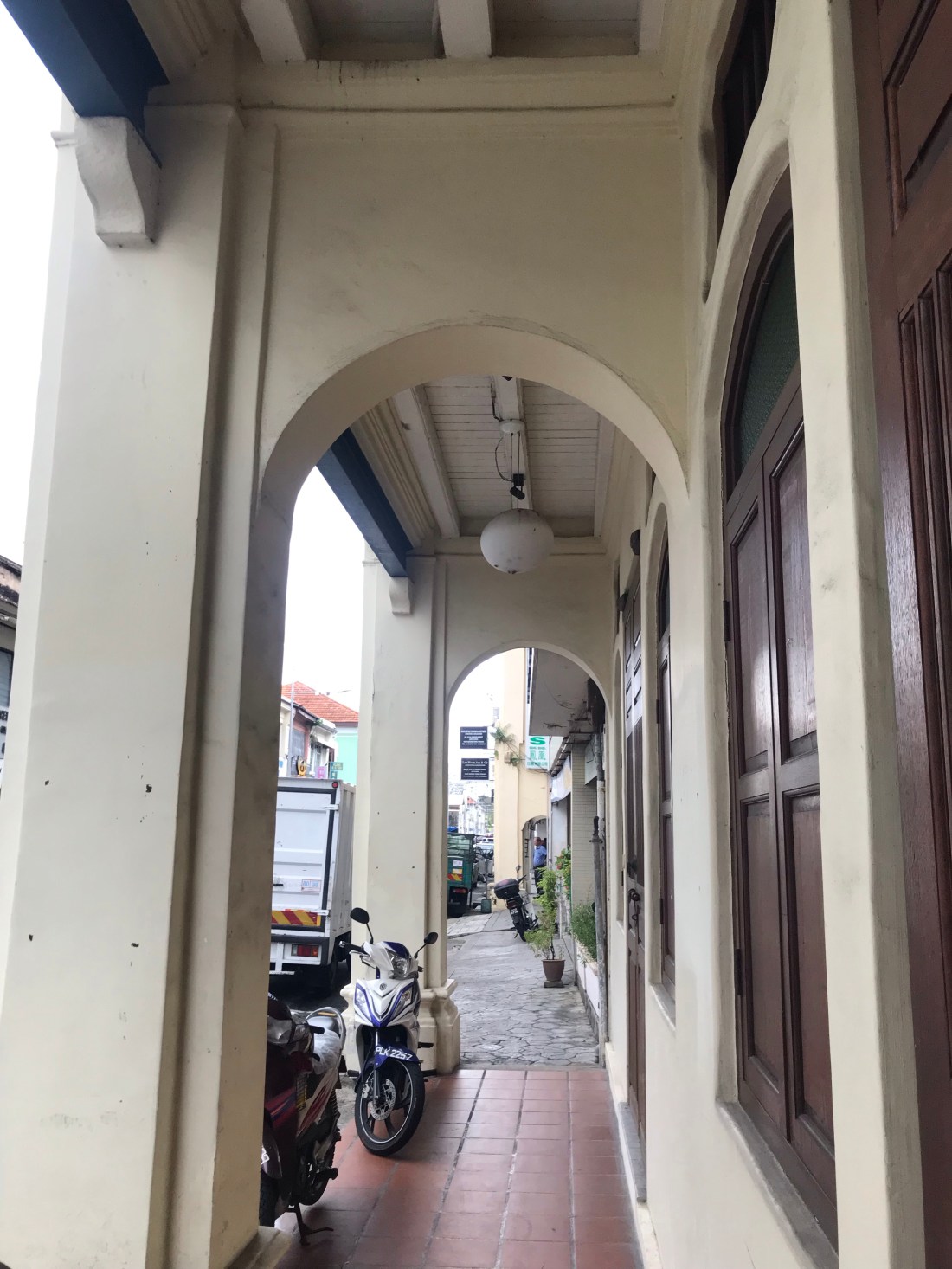
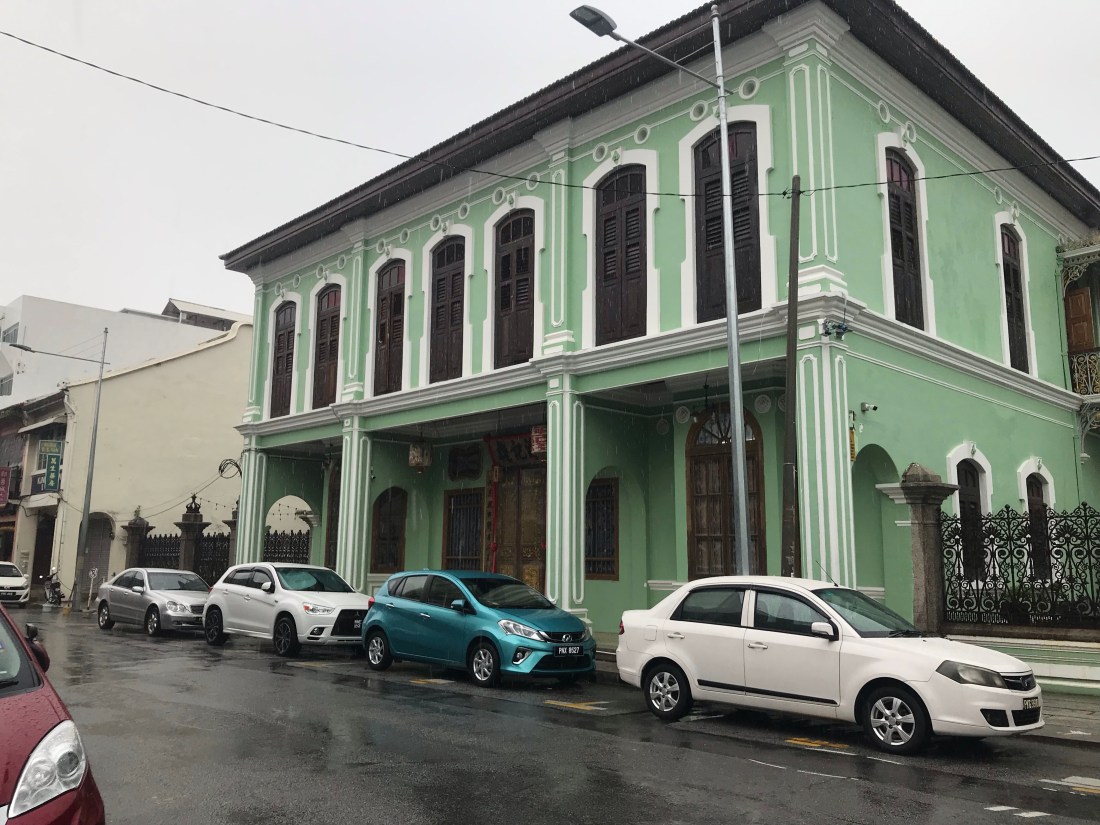
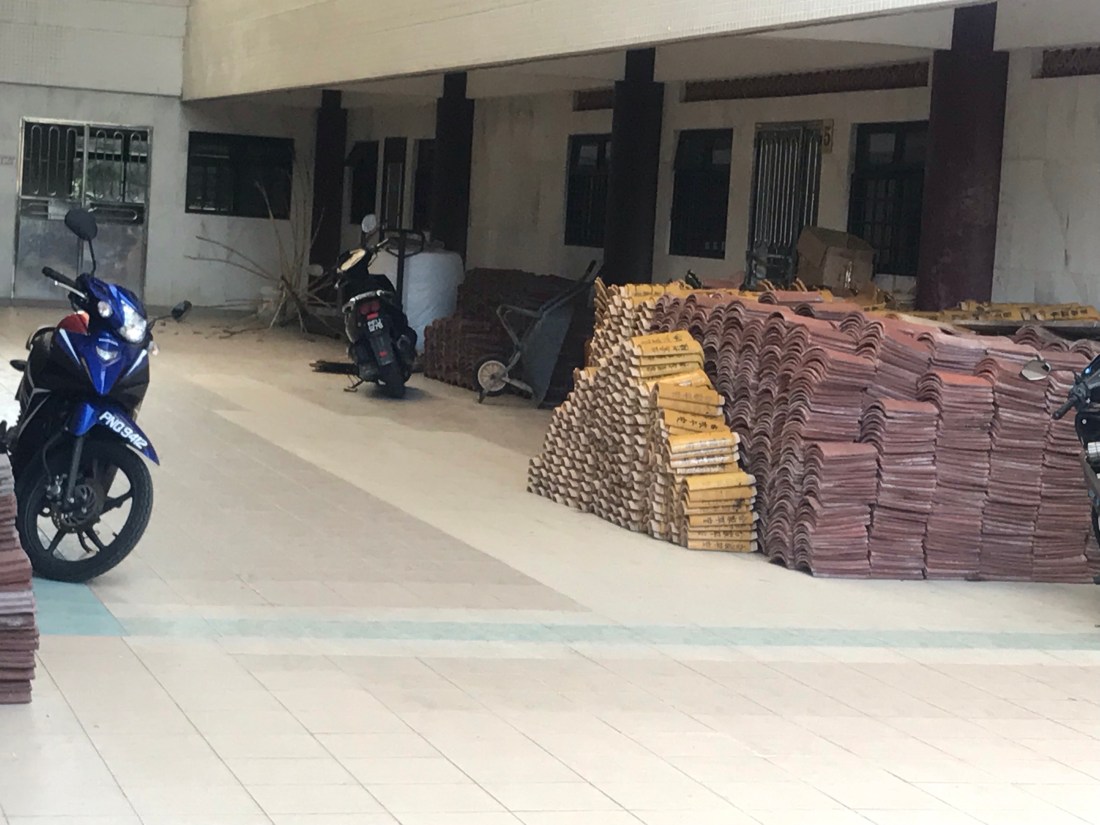
The colonial architecture provides great inbuilt awnings ideal for sheltering from the rain and traffic while walking, but now people mainly park their motorbikes in them so you can’t walk the length of the street along them as I imagine perhaps you used to be able to:

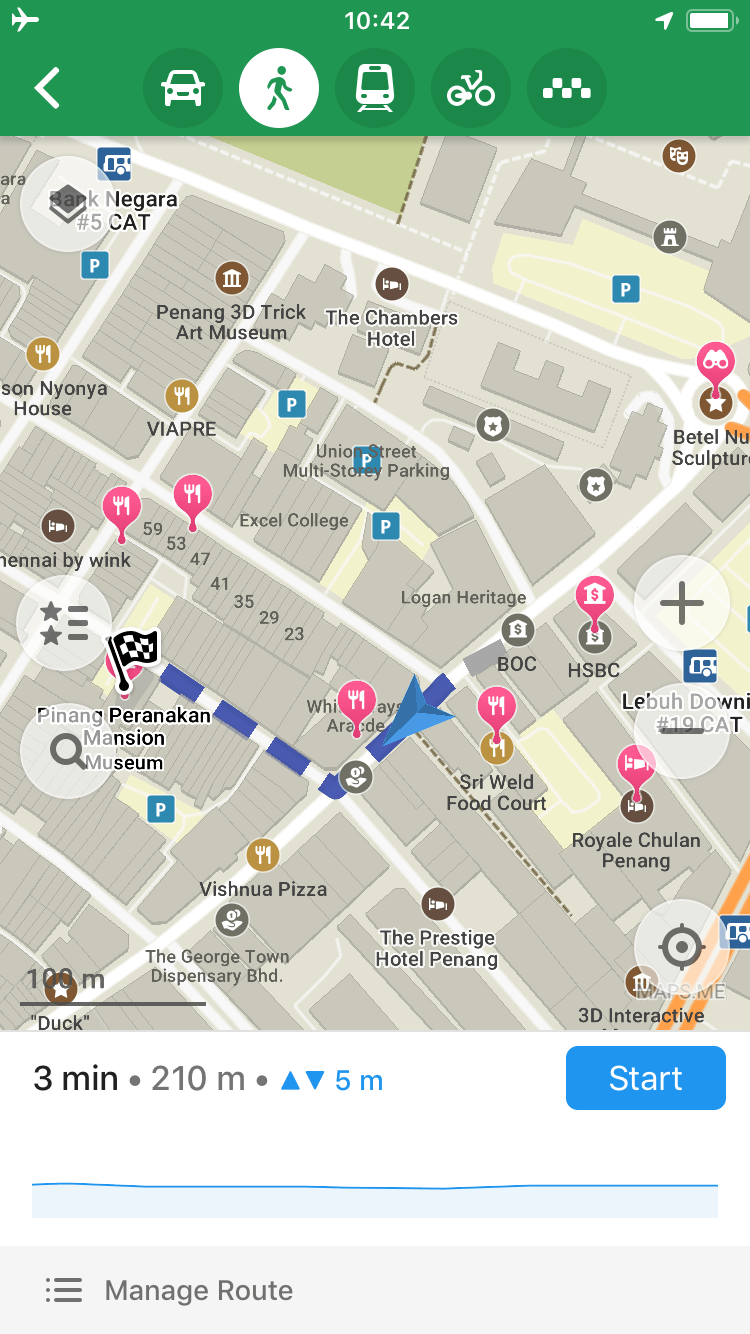
All of this was not helped by the fact that, in the humidity (? it seemed to not be a problem after dark), my Maps Me app kept telling me I was facing the opposite way to the way I was actually facing. You have to keep walking in order for it to right itself, but of course then you often end up walking quite a way in the opposite direction.

Also, while I’m on the topic, someone who I’d like to give a stern talking to has put the hotel I was staying at on the map in the app in the wrong place entirely. It’s in the correct place, but there’s a second hotel apparently called exactly the same thing in a place about fifteen minutes’ walk away. (And I haven’t managed to work out how to change it or tell them about it.) At the end of a long day, when I’d already walked 6.5 miles sightseeing, and I realised I was in the wrong place (and walking along a motorway with no pavement in rush hour), I actually cried. It was the correct road, but the wrong side of it (as I had suspected; should’ve trusted my instincts), and quite a way away. There was nothing positive about this experience except that I realised I had reached the end of myself, and I could push myself no longer. Sometimes it’s good to know where your limits are, I guess.

If you see people aimlessly wandering around looking at their phones, have compassion on them, because it’s possible they’re not texting or social media addicts, but actually are just trying to work out where the heck they are.

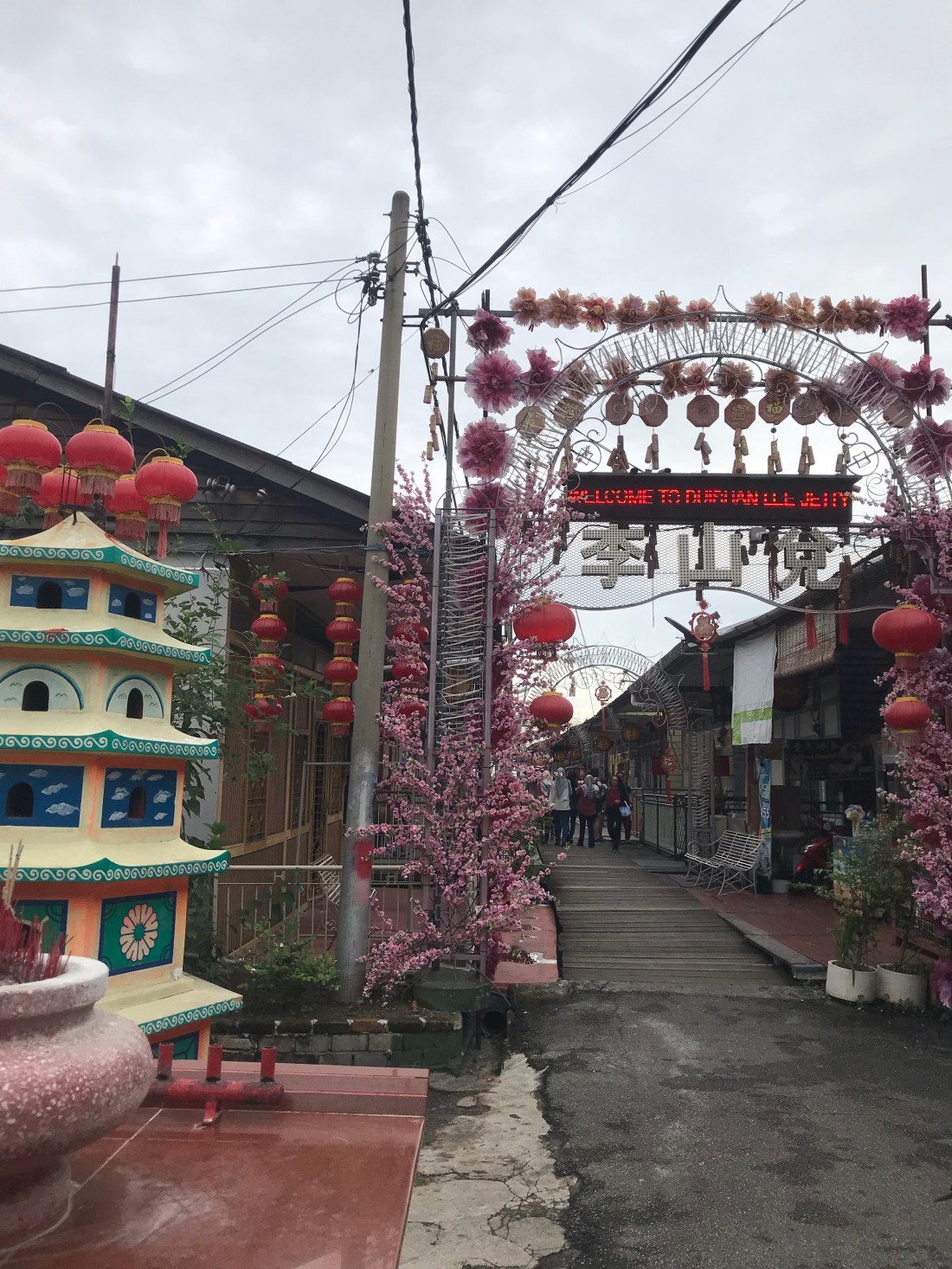
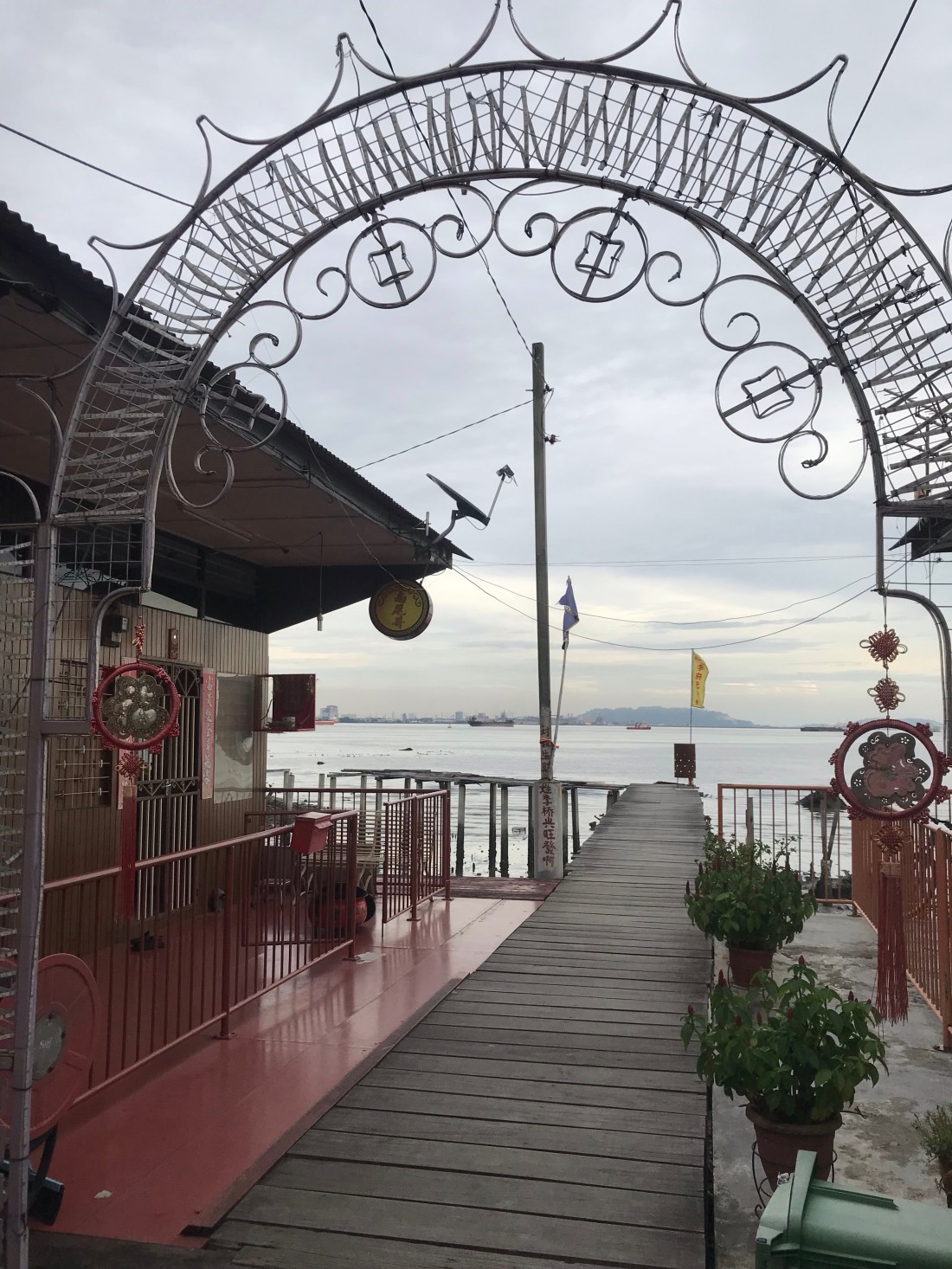
On my wandering, I did get to see one of the jetties:

I made it back to the hotel finally, collapsed in the bar with a cold drink and then went and had a back neck and shoulder massage. Which was a Very Good Thing. I had been stiff all day.

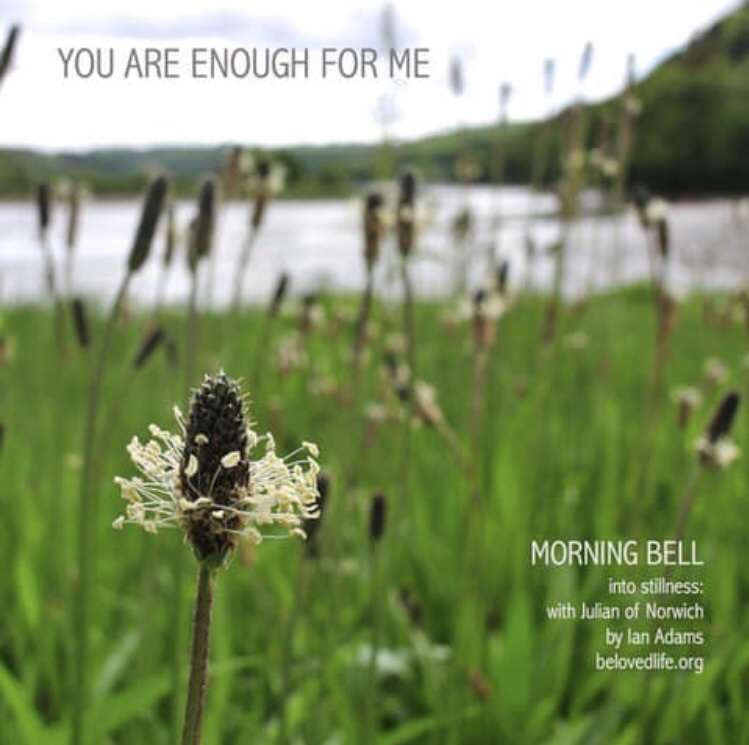
Morning Bell posted on Facebook the other day this pic and quote:

I think it might be good to spend more time pondering the word “enough”. So much of our western culture seems to always be about “more”. (Bigger, faster, stronger…) But perhaps enough might be good? Or good enough, at least?

I’ve often noticed that contentment, which is certainly what I long for, creeps up unexpectedly, in moments when it seems clearer that there is enough for me, for those around me, at least. (Has contentment got something to do with “home”, too? Maybe there’s more to be thought about regarding the relationship between home and contentment?)

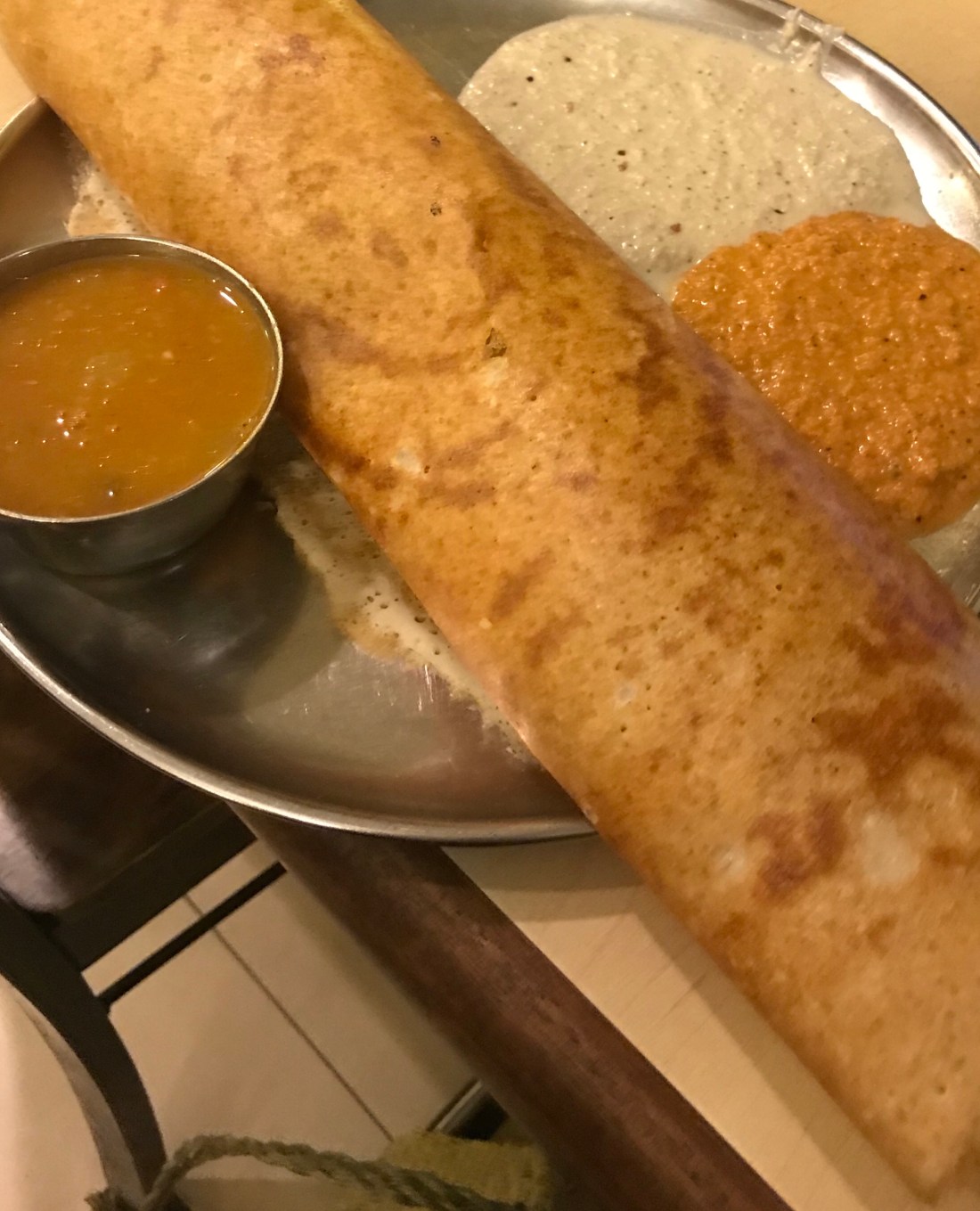
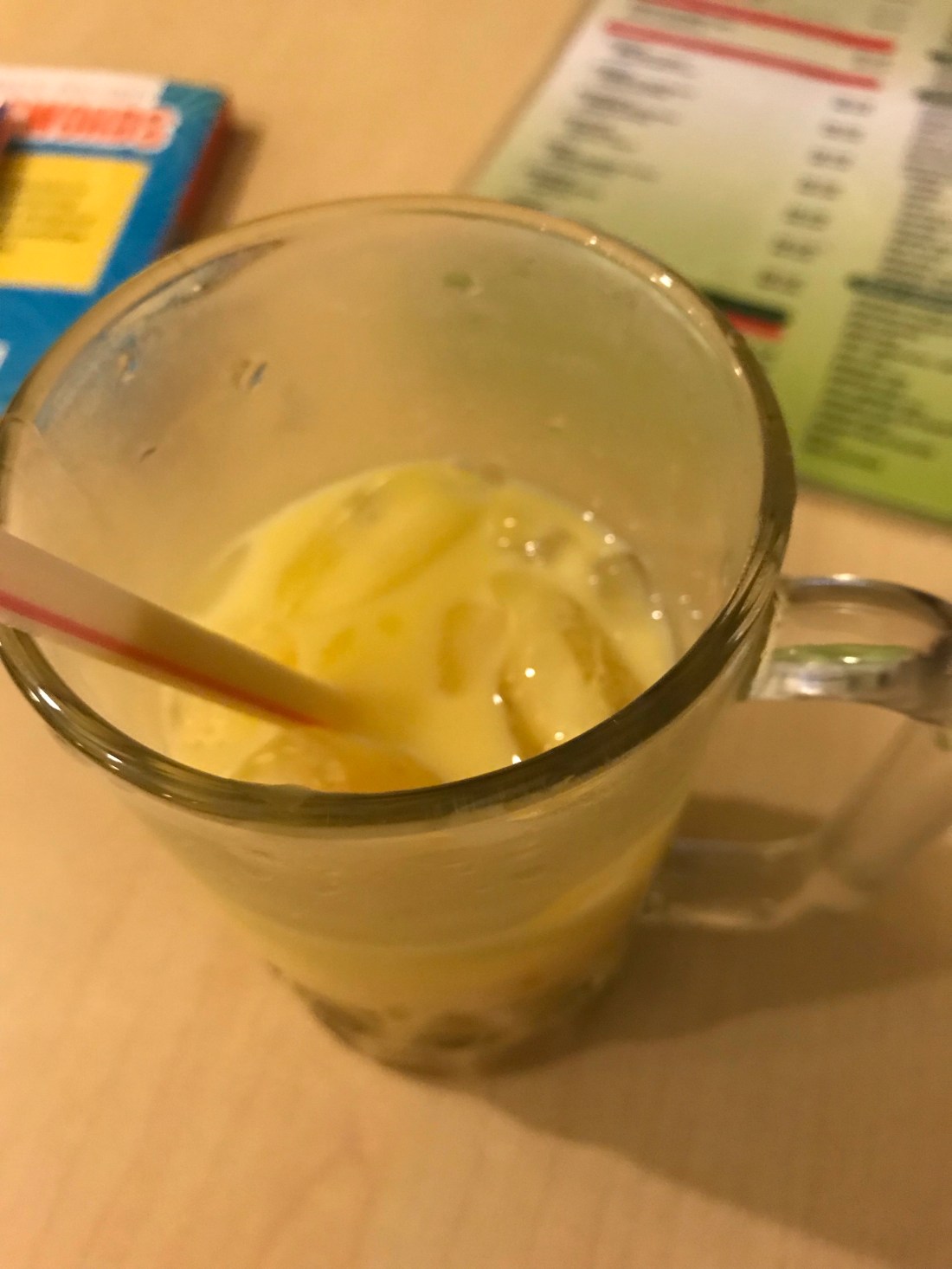
After all this I couldn’t face walking to the night market for dinner, so I settled for a South Indian place 5 minutes’ walk away and had a delicious dosa and mango lassi:

George Town

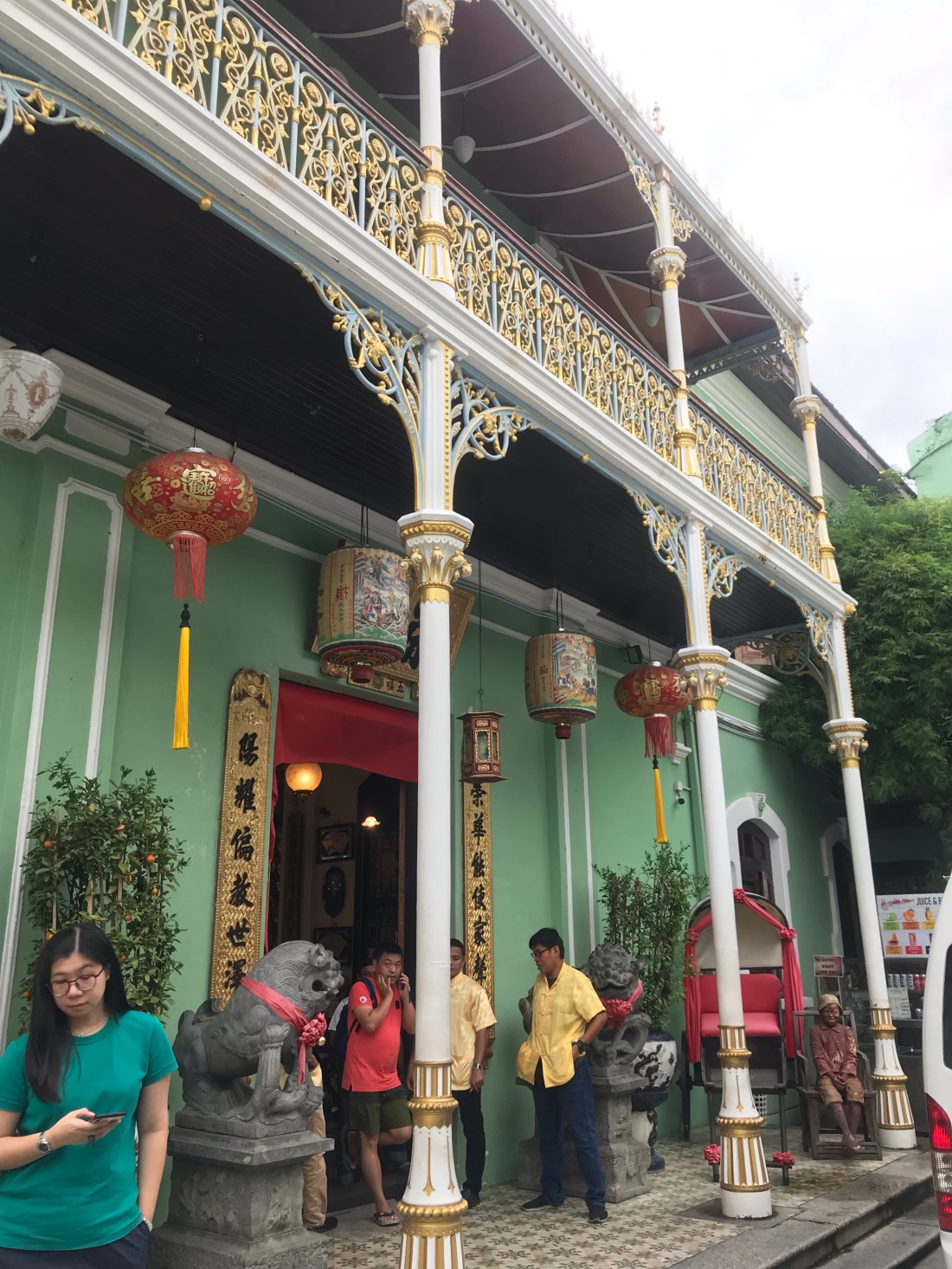
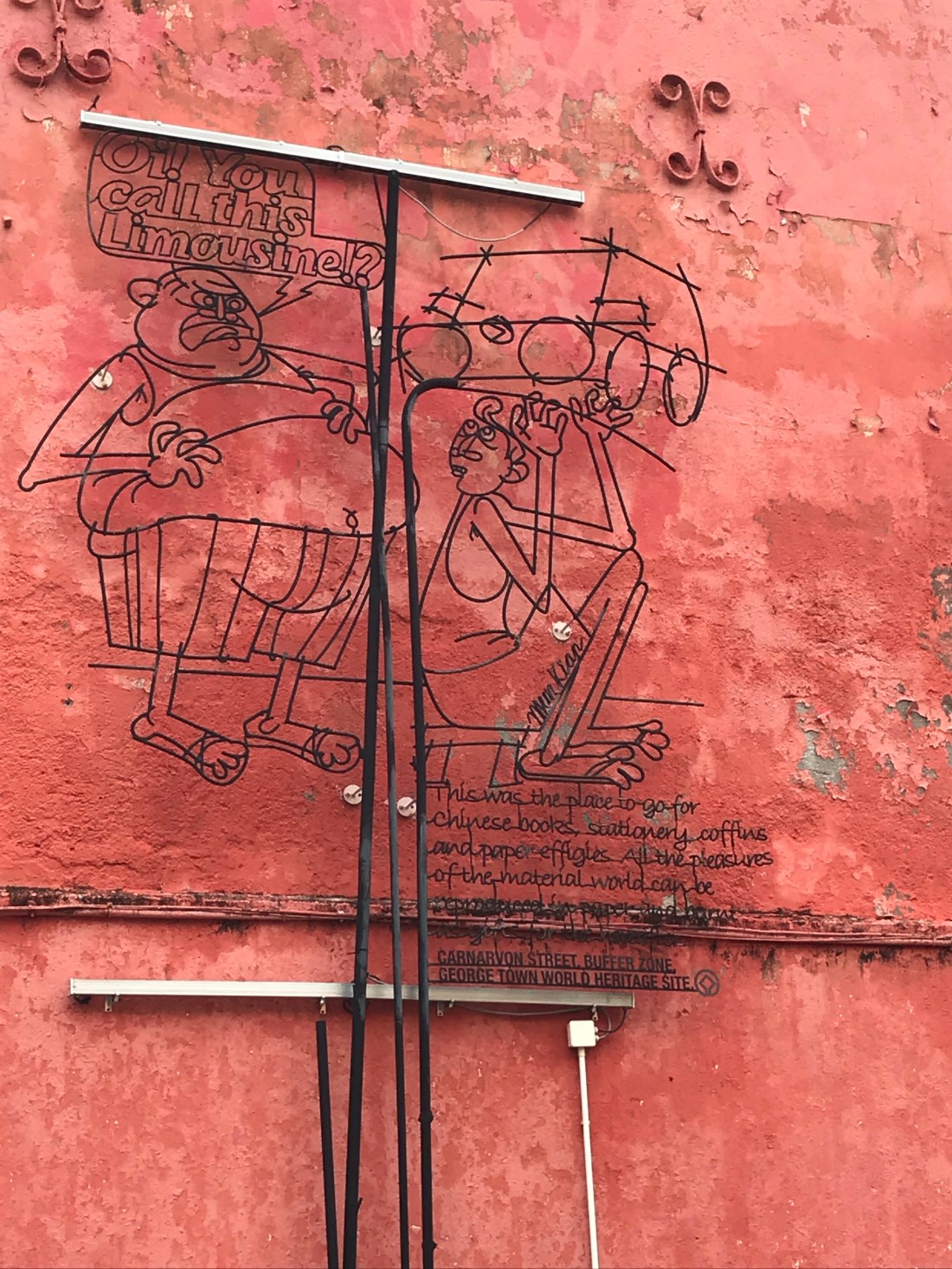
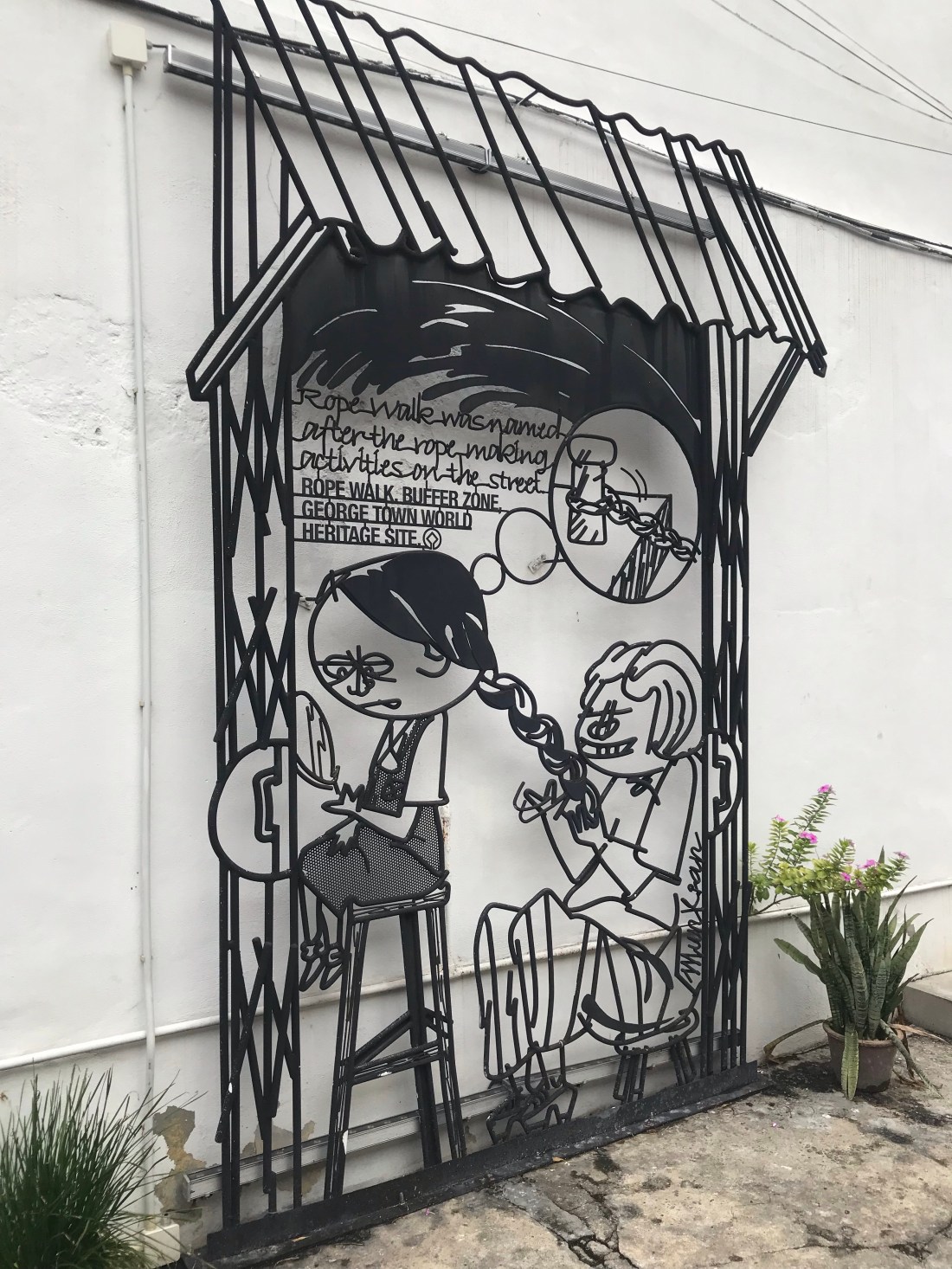
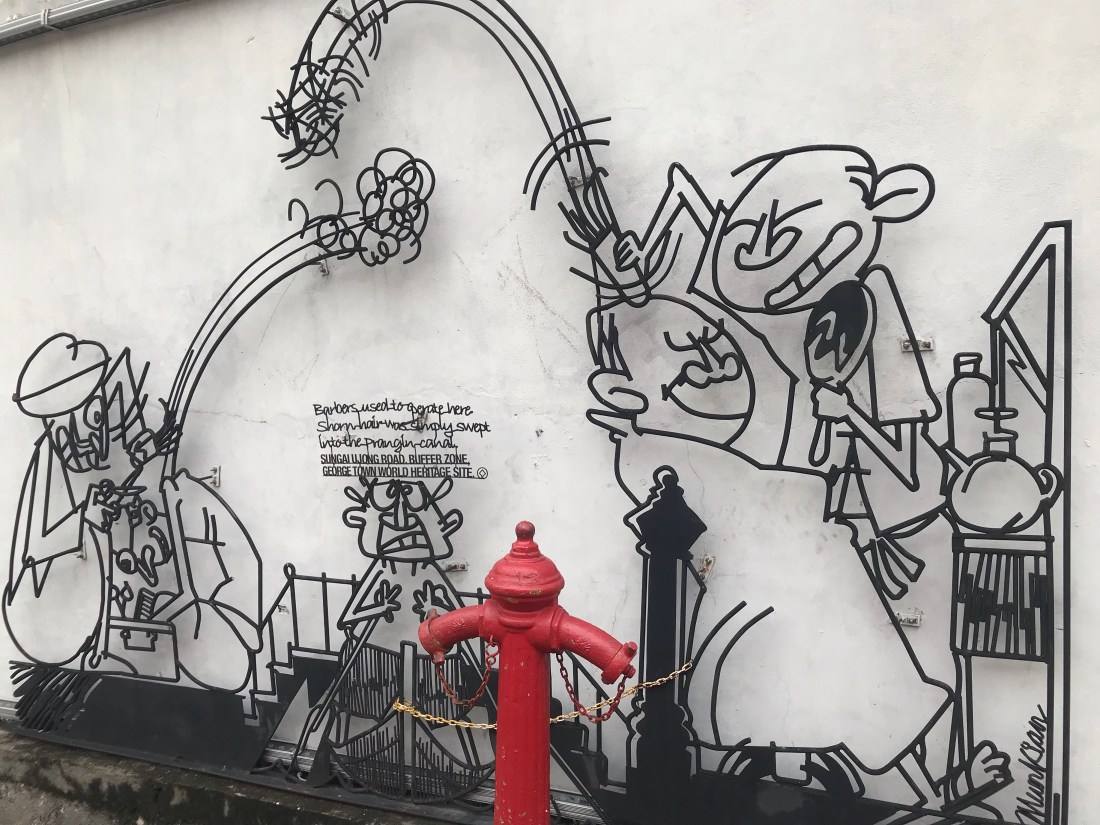
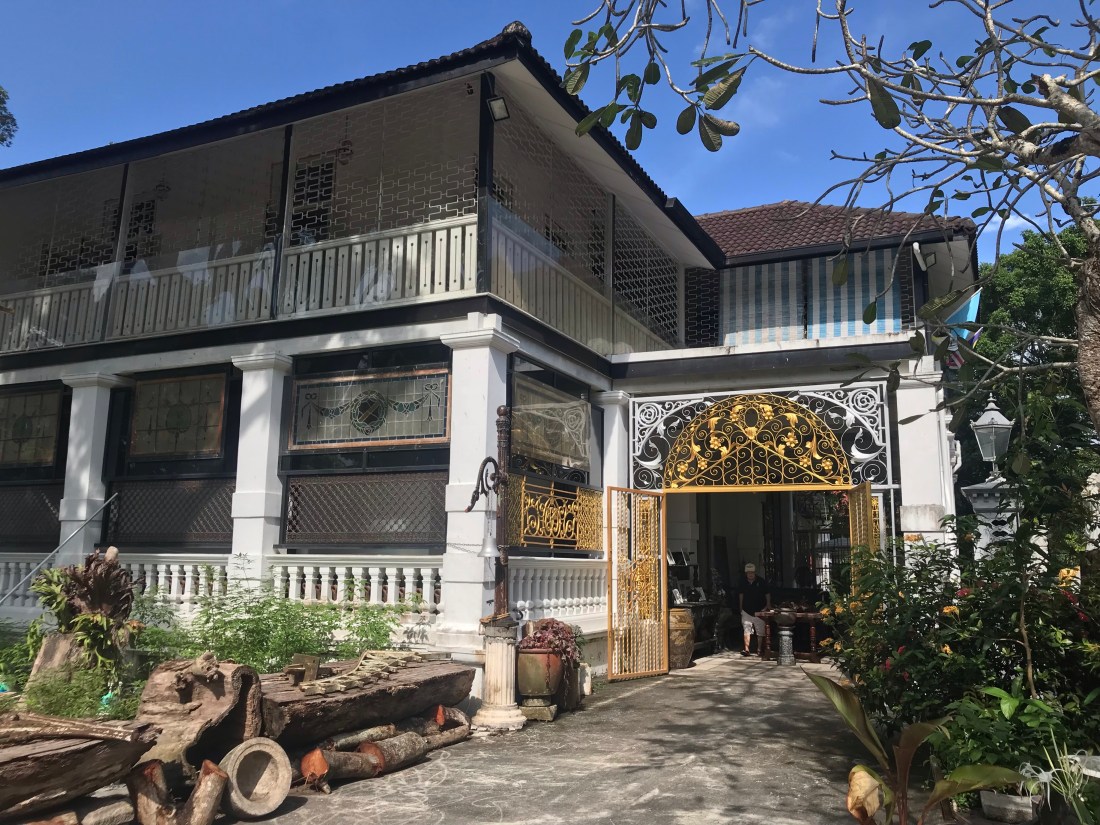
You can’t come to George Town and not visit George Town! So I spent this day (which was quite rainy – I did this the right way round!) admiring colonial architecture, visiting the Pinang Peranakan Museum (the ex home of a wealthy Chinese mafia gangster, now owned by another guy who took four years and millions of RM to restore it all… who knows where he got his pennies…), then taking myself on a mini tour of some of the famous George Town Street art on the way to the Penang House of Music, rated #1 of things to do in George Town (amazing really, considering it’s a mainly musical view of the history of George Town, and although it’s extremely well documented and researched and also very interactive and brilliant for all ages, it’s housed in a shopping mall all about IT, with broken escalators… the least likely place for it! The lady who runs it told me it costs a fortune for them to rent that place as well and they might have to close or move). Then I went more directly back to the hotel (well it was supposed to be direct, but see next post)…

Peranakan Museum

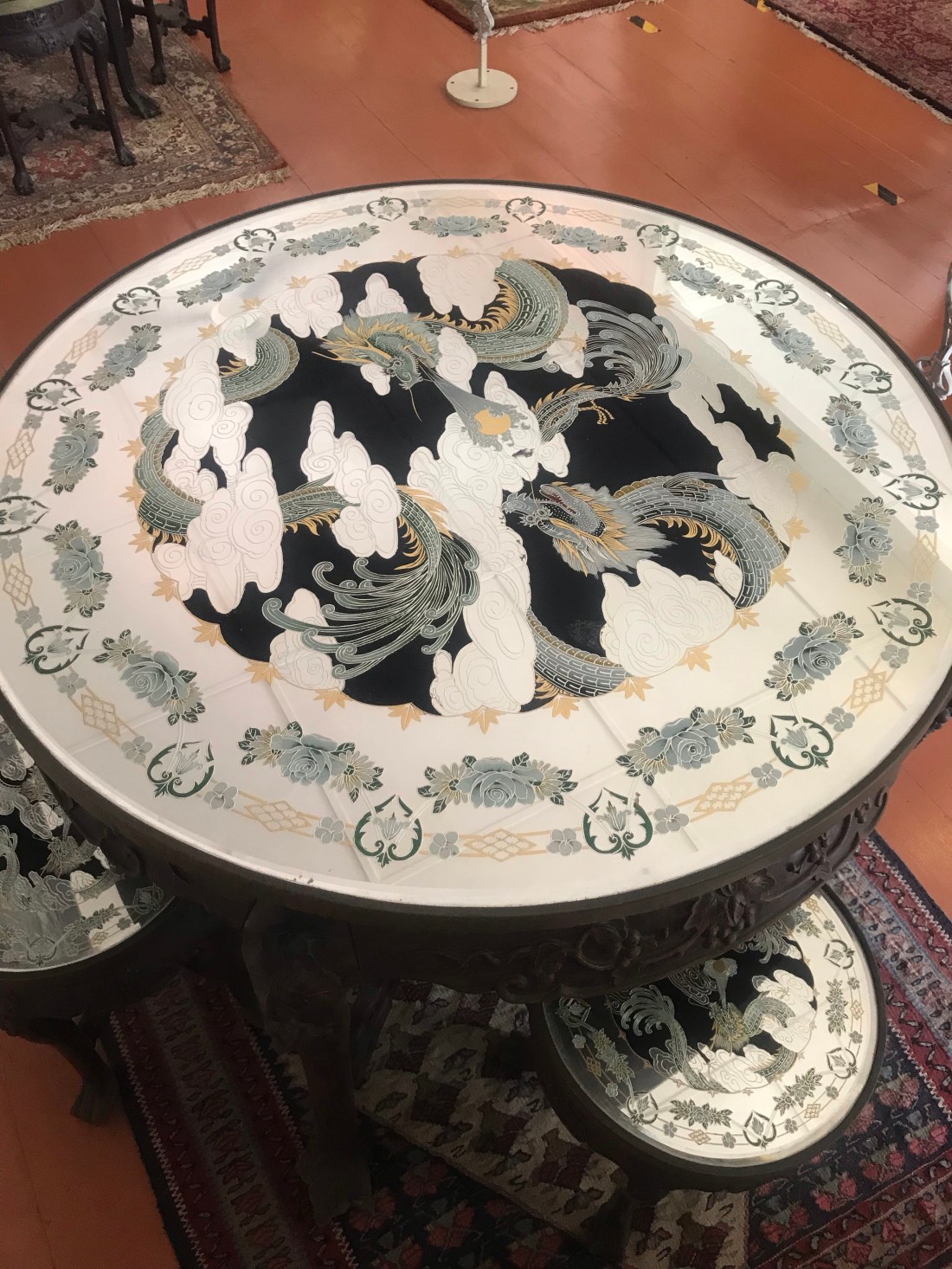
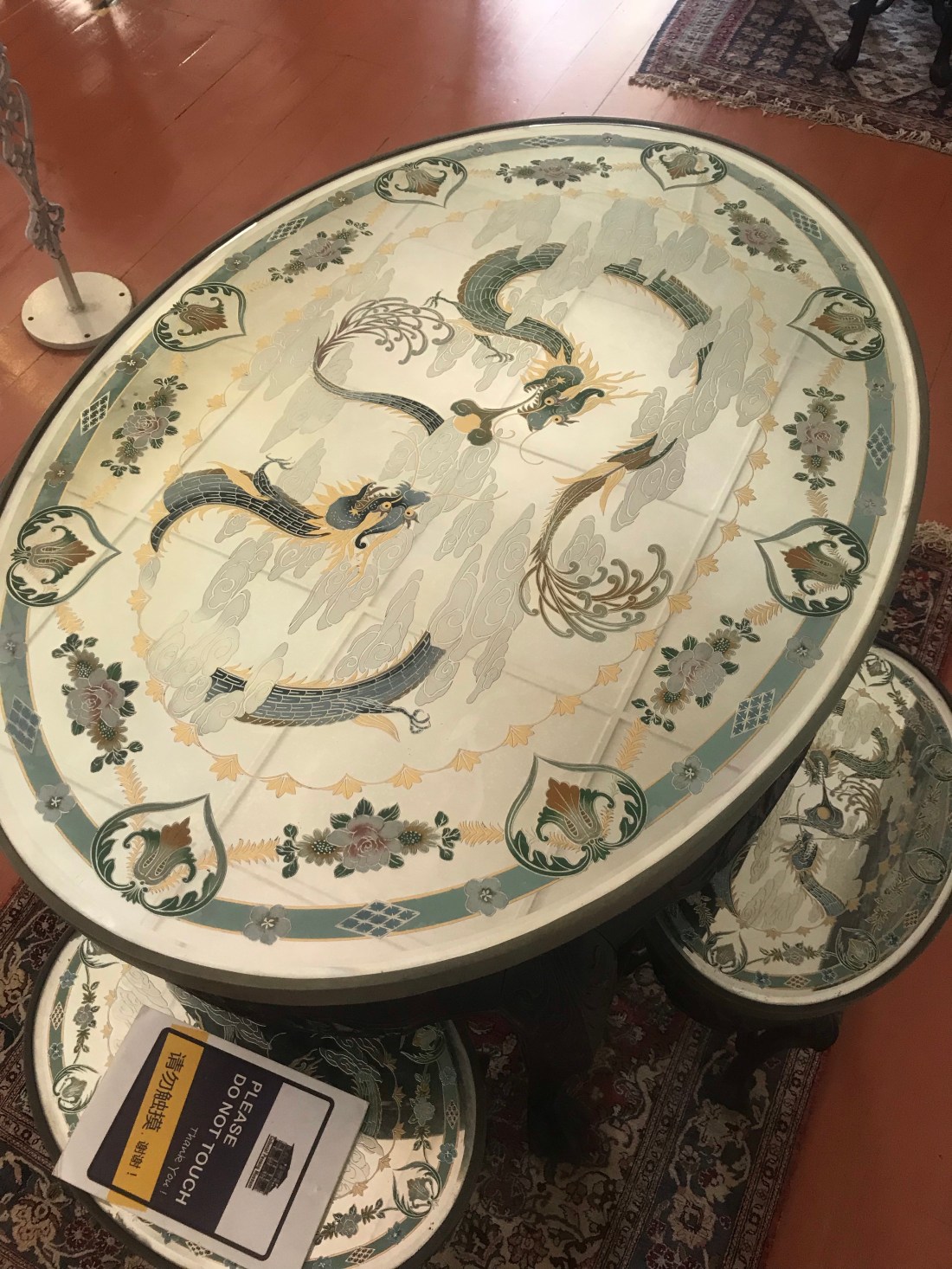
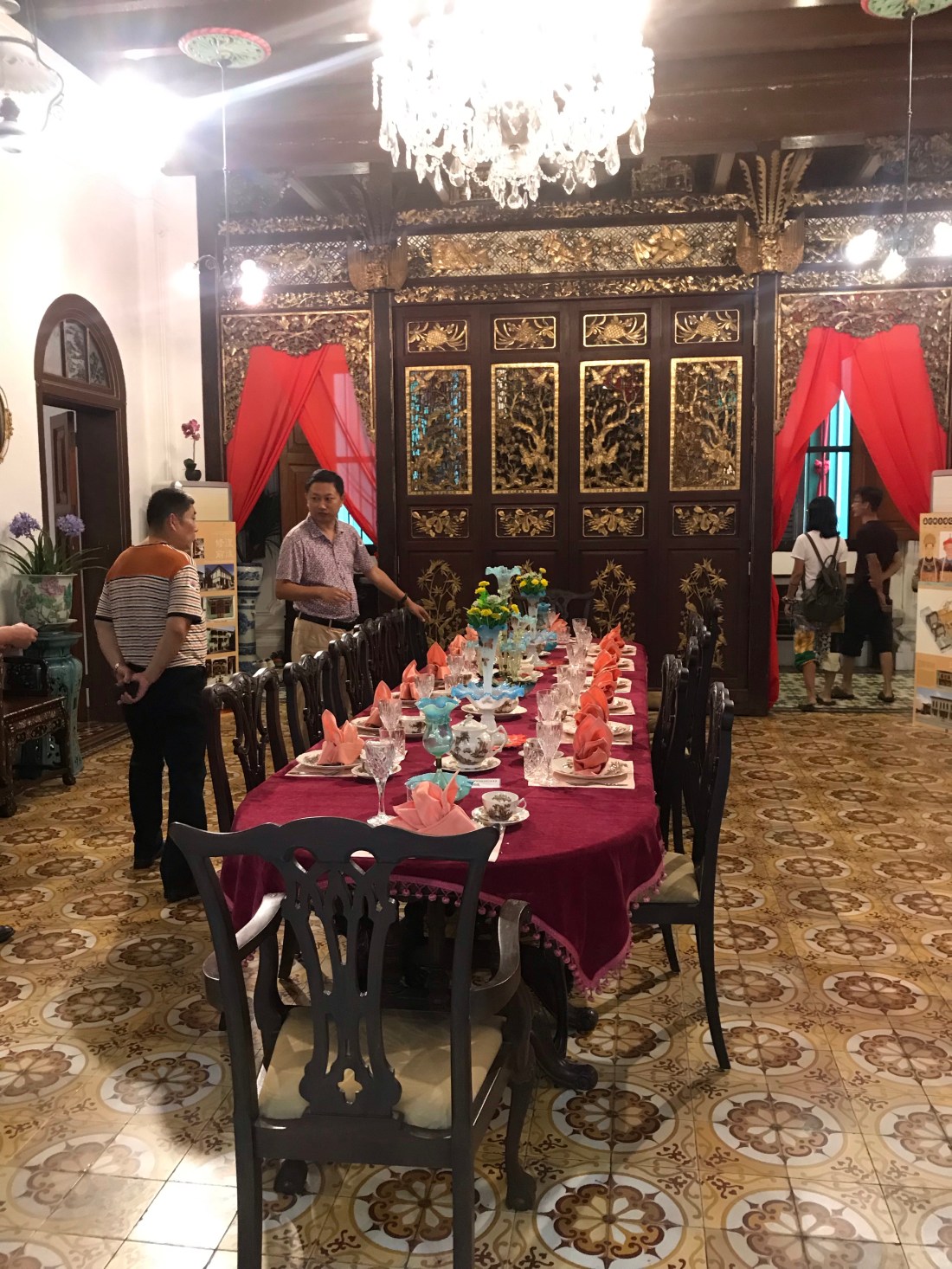
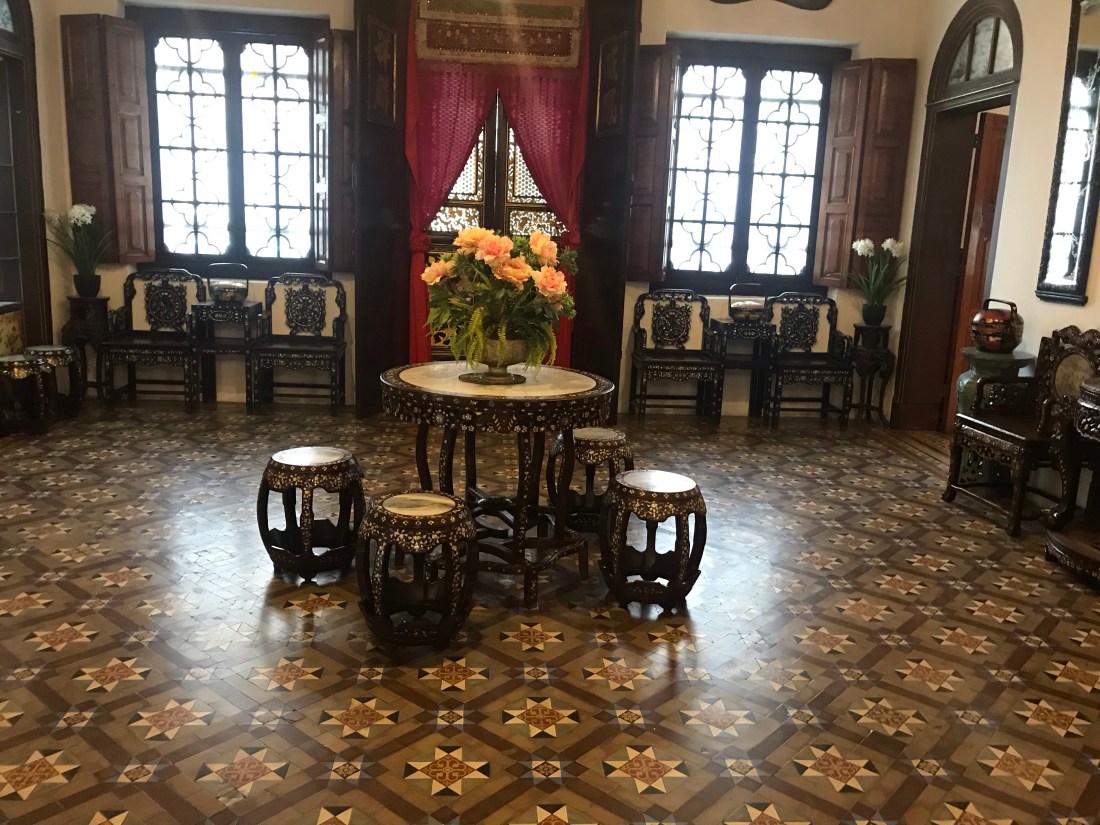
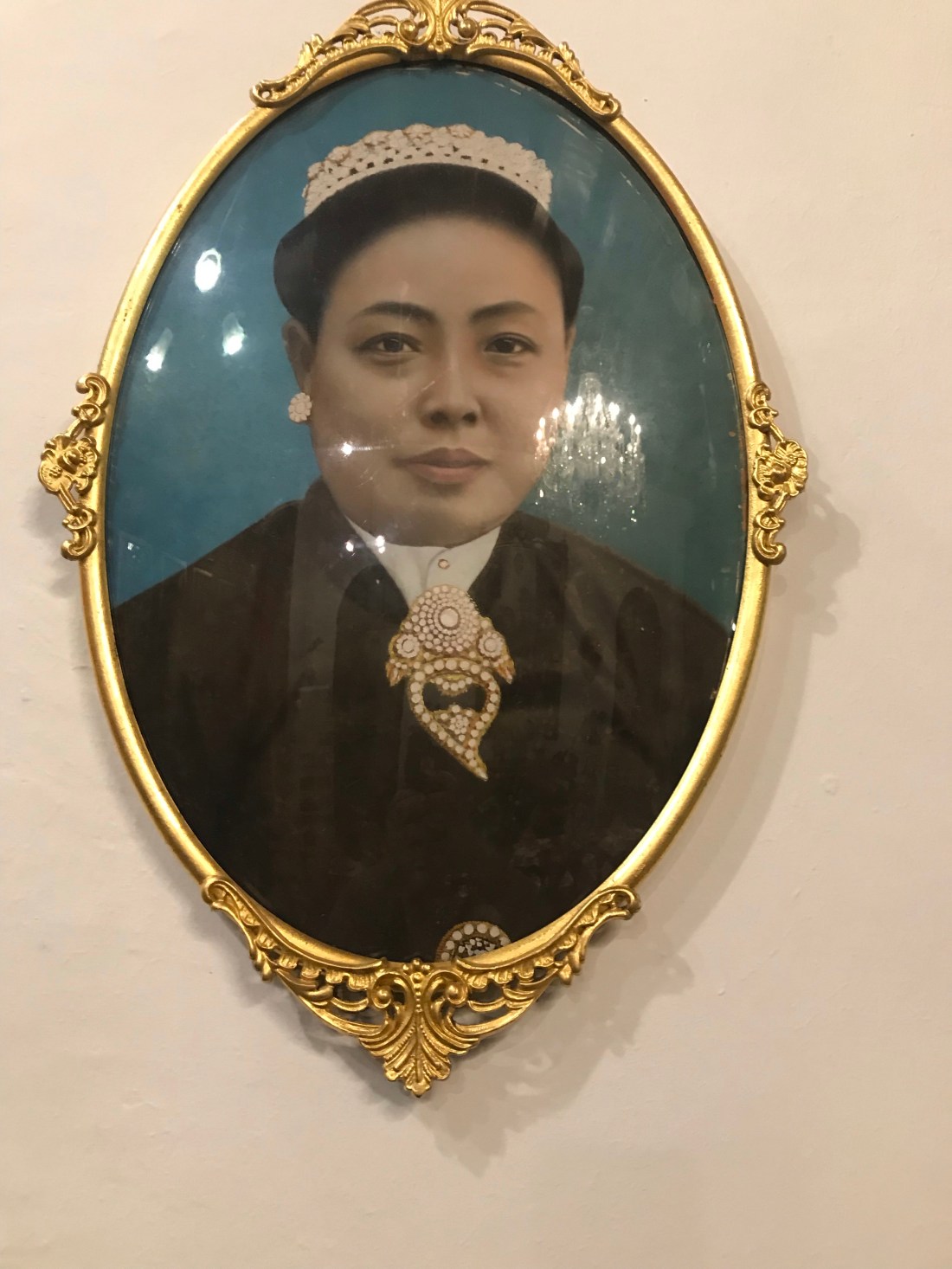
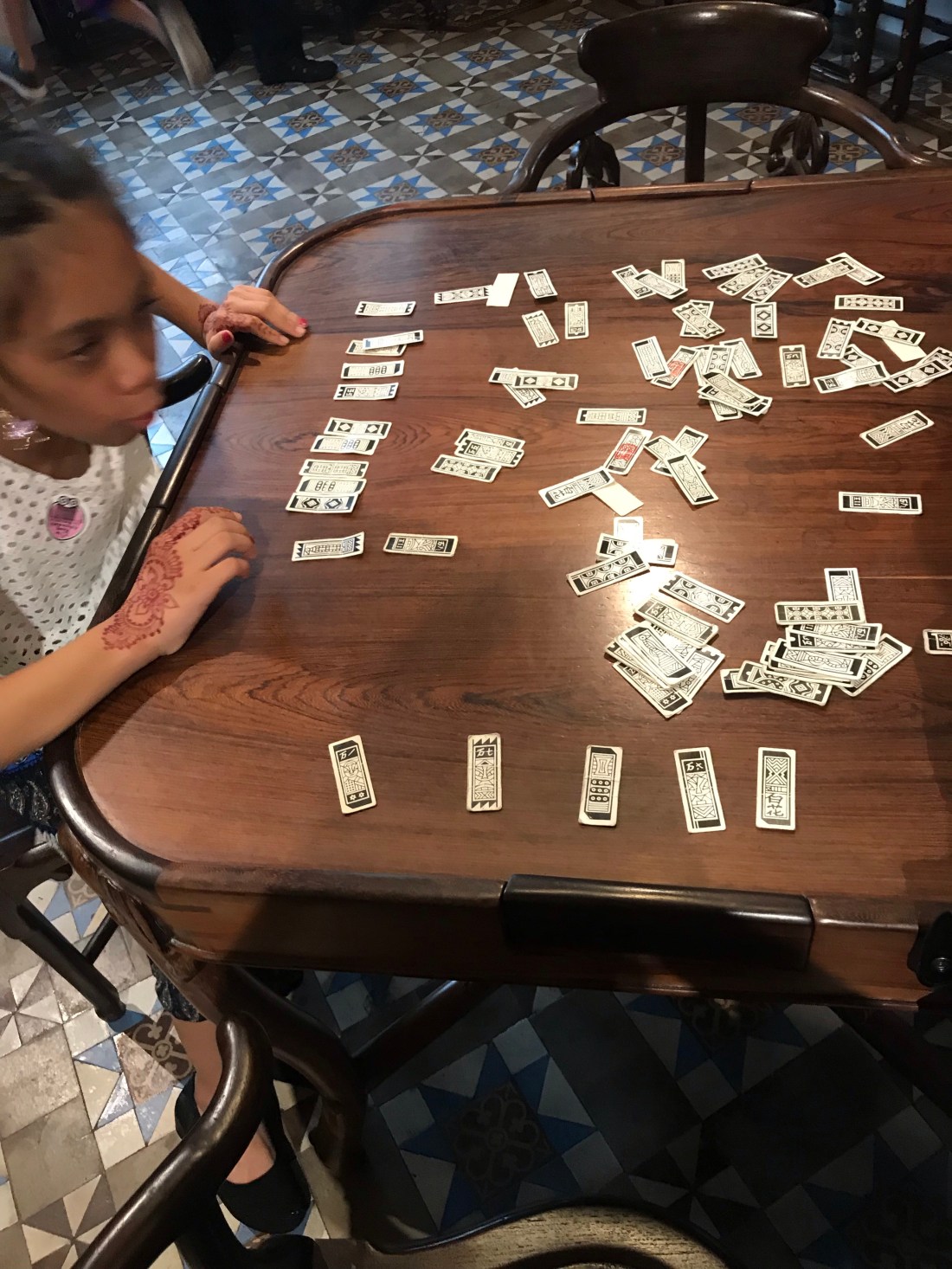
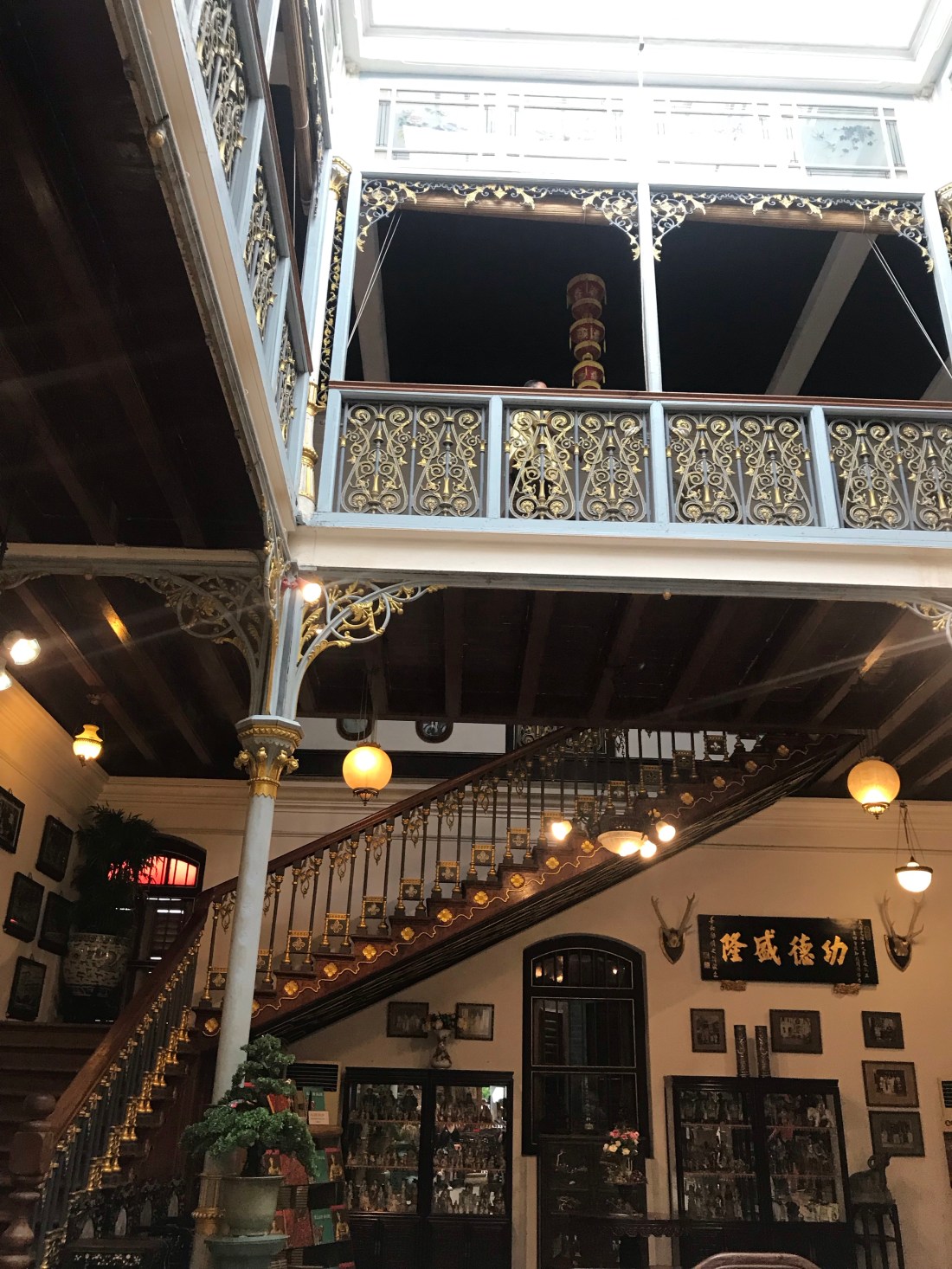
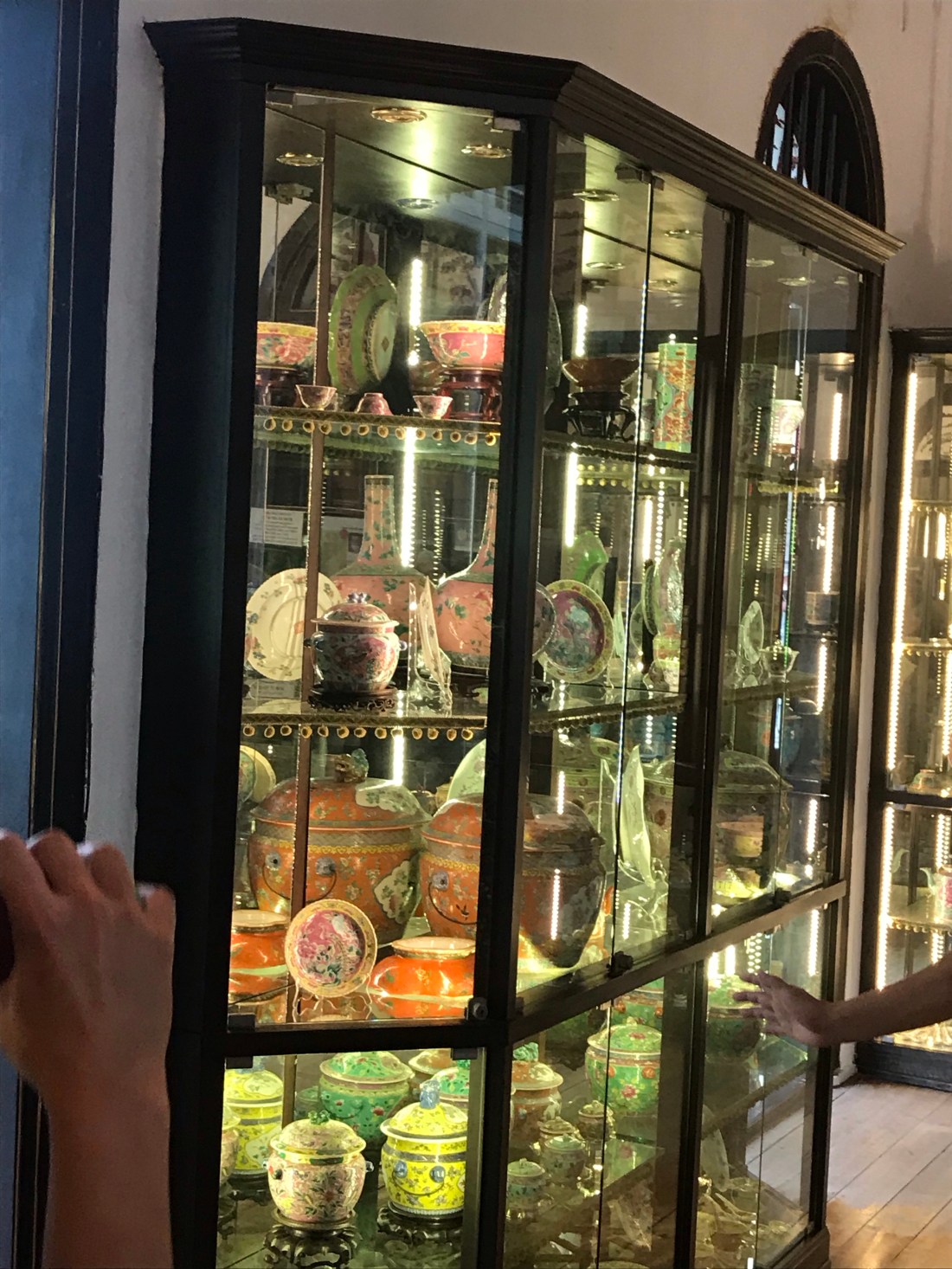
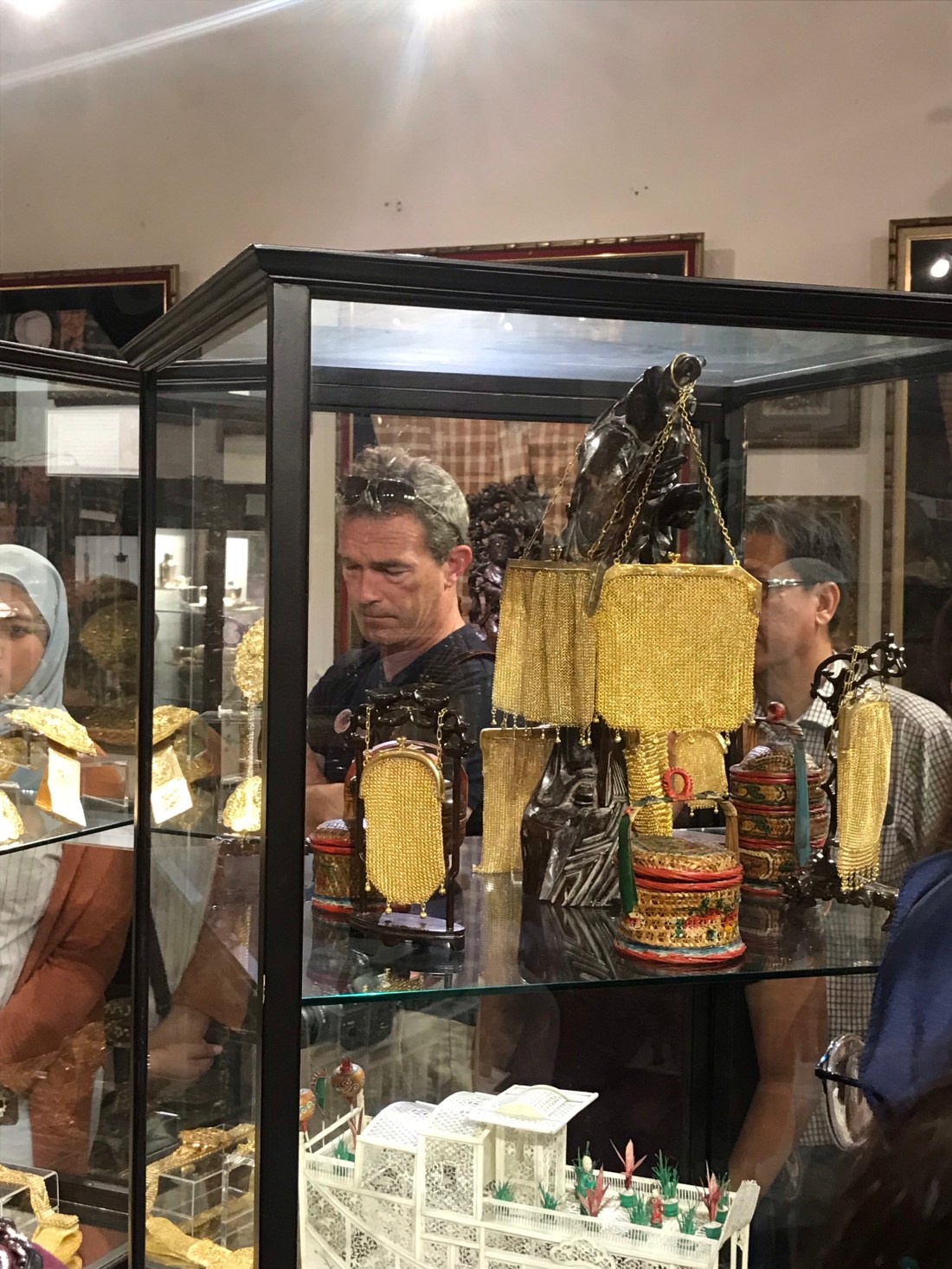
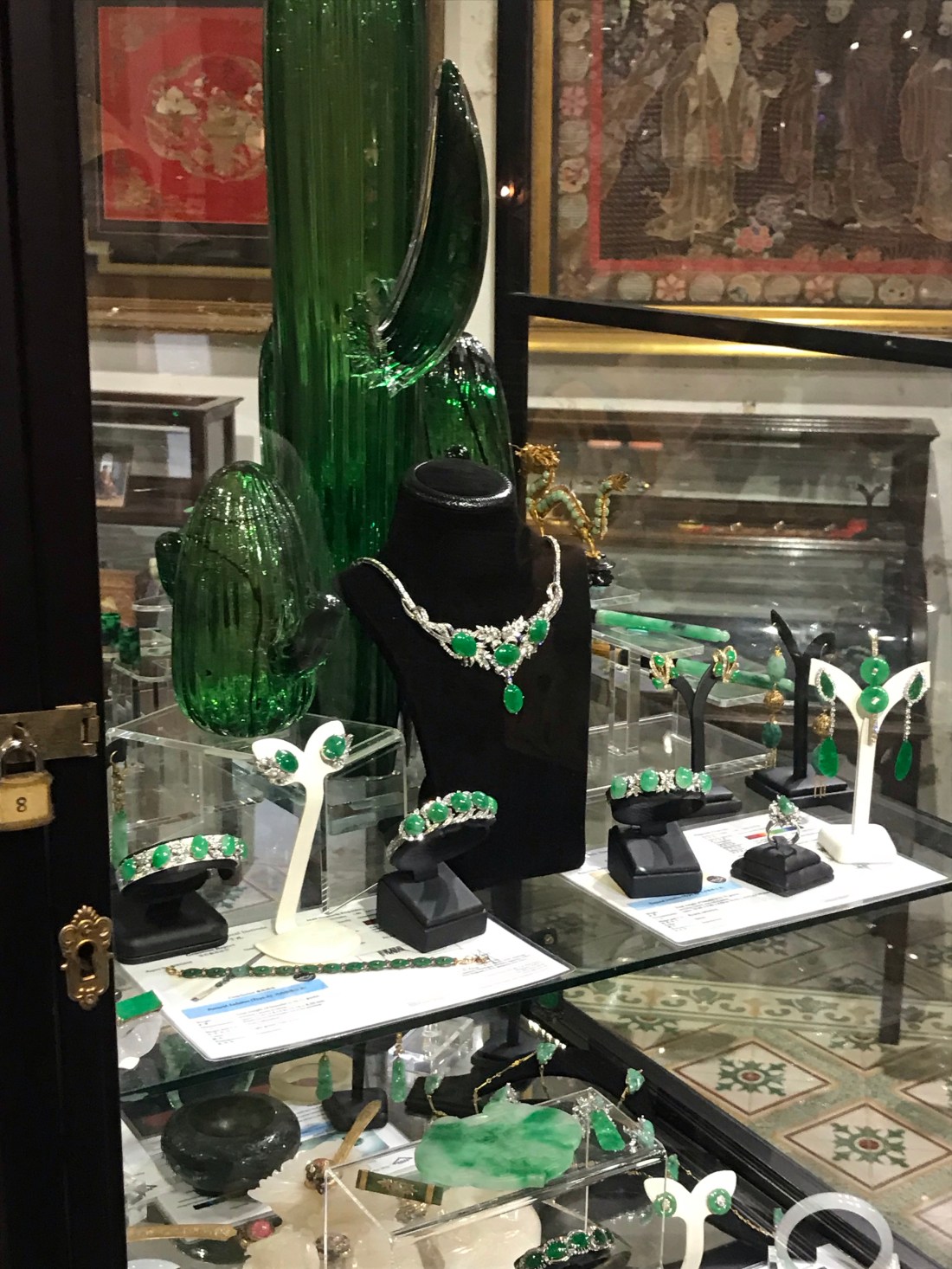
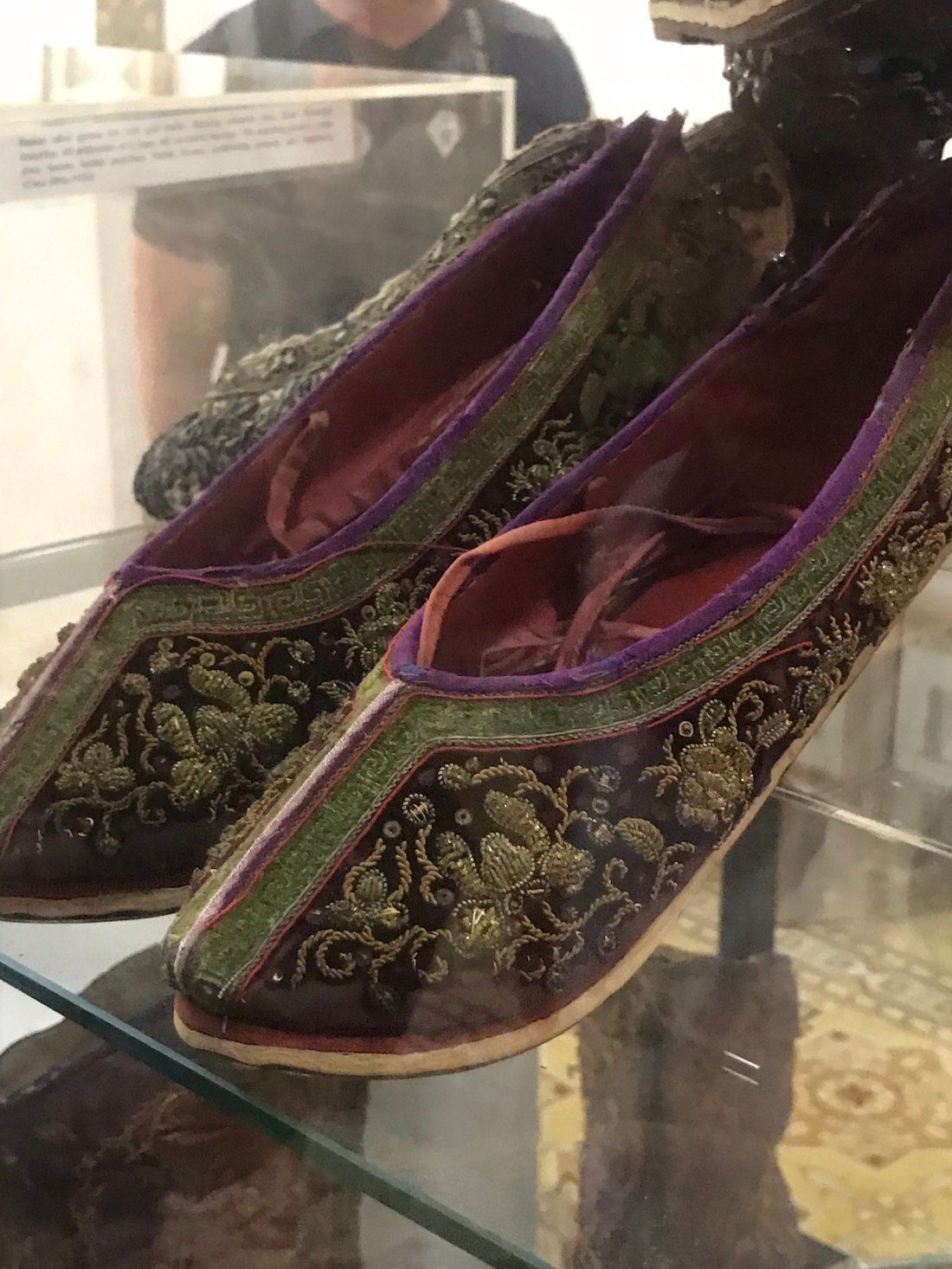
More colonial era opulence, this mansion was owned by a Chinese mafia/triad boss. It was in his interests to impress the English with all his fine trumpet vases, flooring, pillars, gold leaf wooden doors and screens. The pictures of the grandparents on the wall of the dining room show them dressed in British clothes. Which just looks…wrong to me.

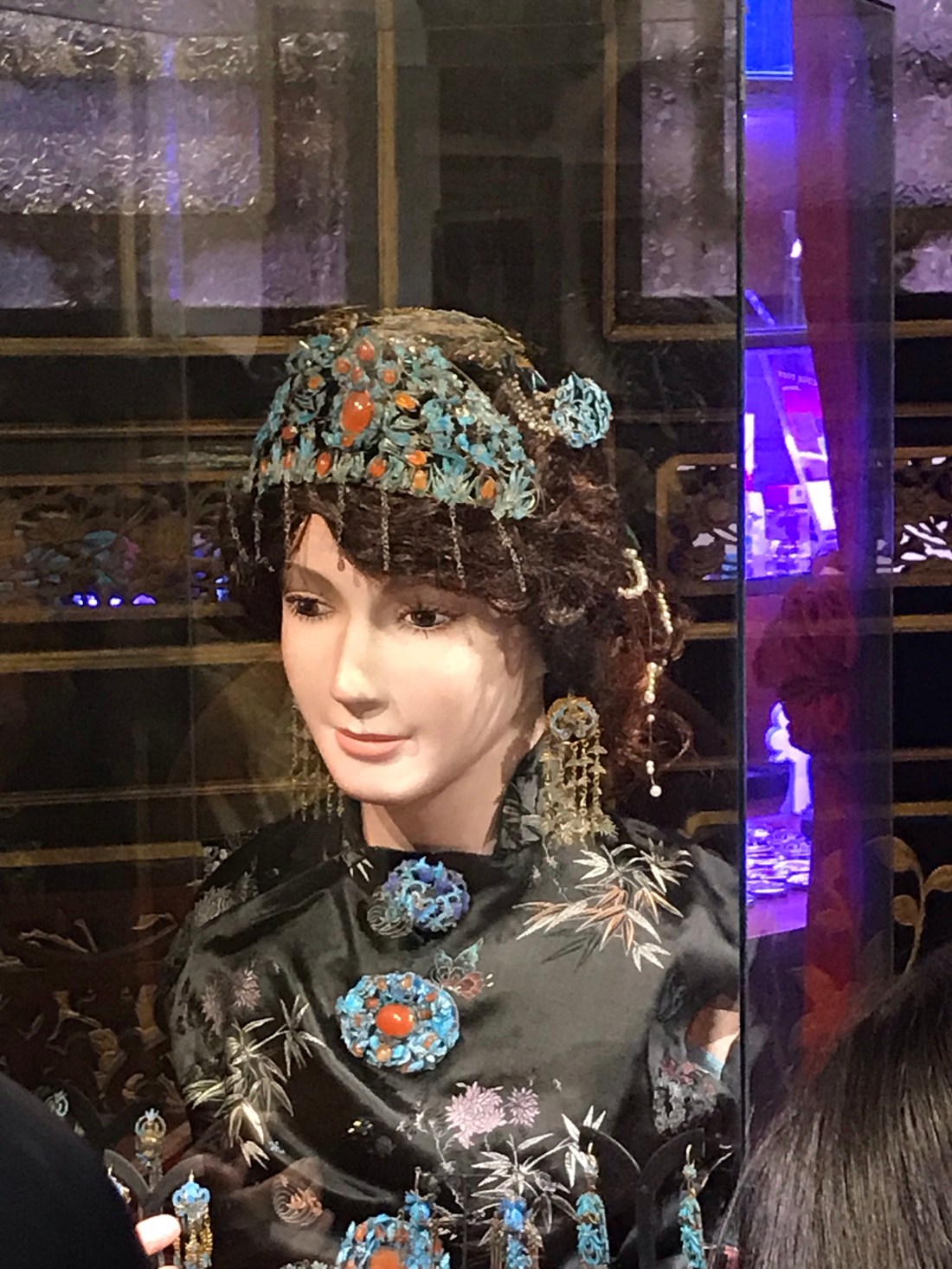
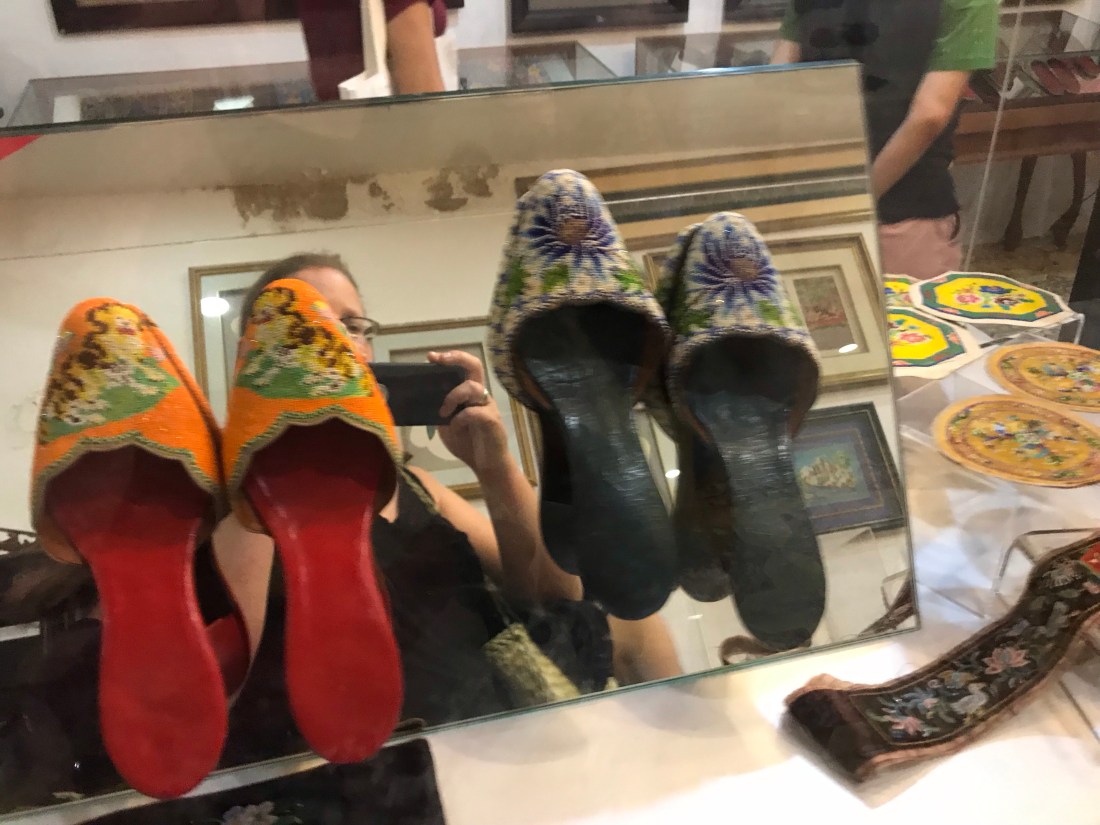
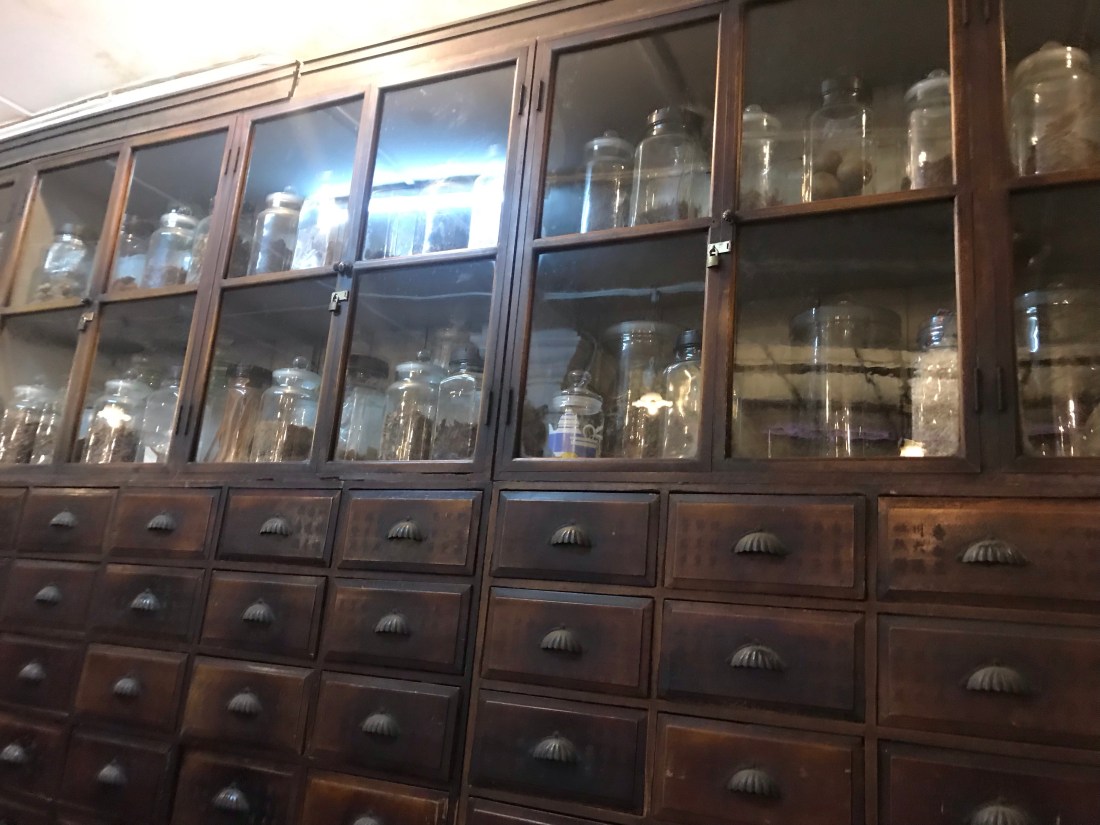
The Chinese mafia boss kept his own pharmacy and doctor, fearing someone might try to poison him – live by the sword and all that. In that time people also used silver to test whether there was any poison in food. (Usually it would turn the silver black.) Apparently this was the more than decorative function of some of the ladies’ hair pins.

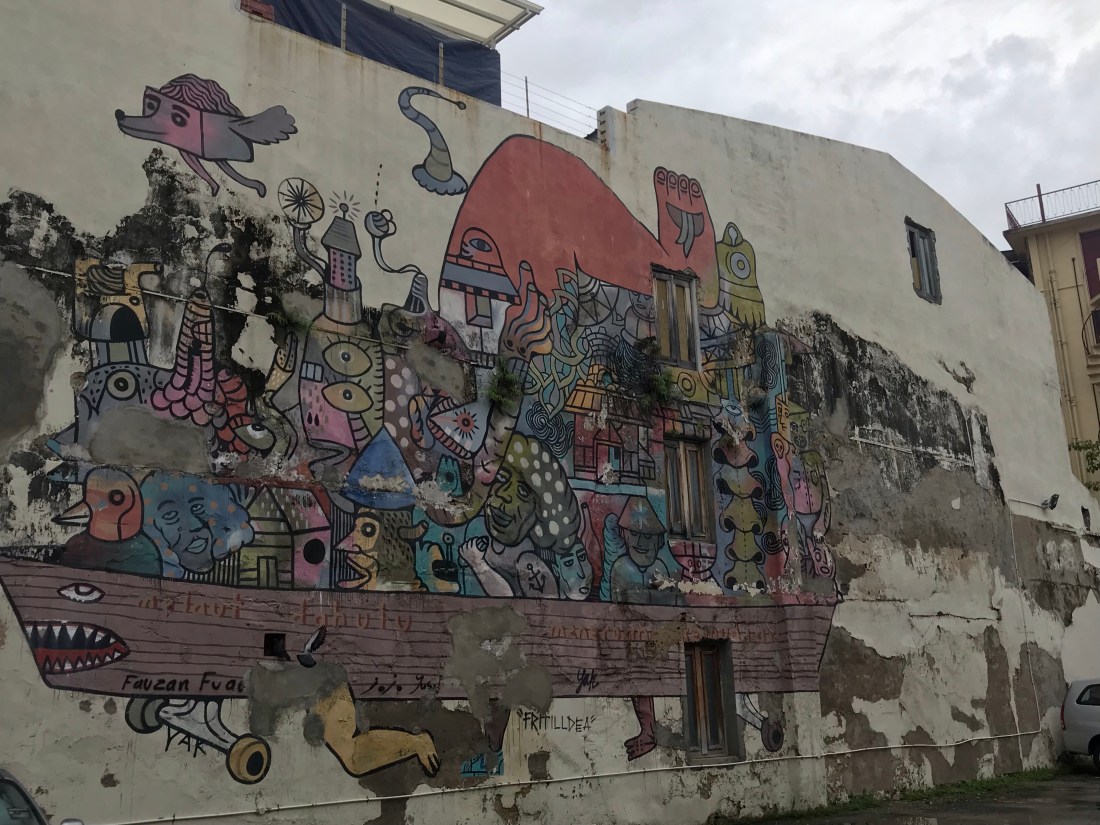
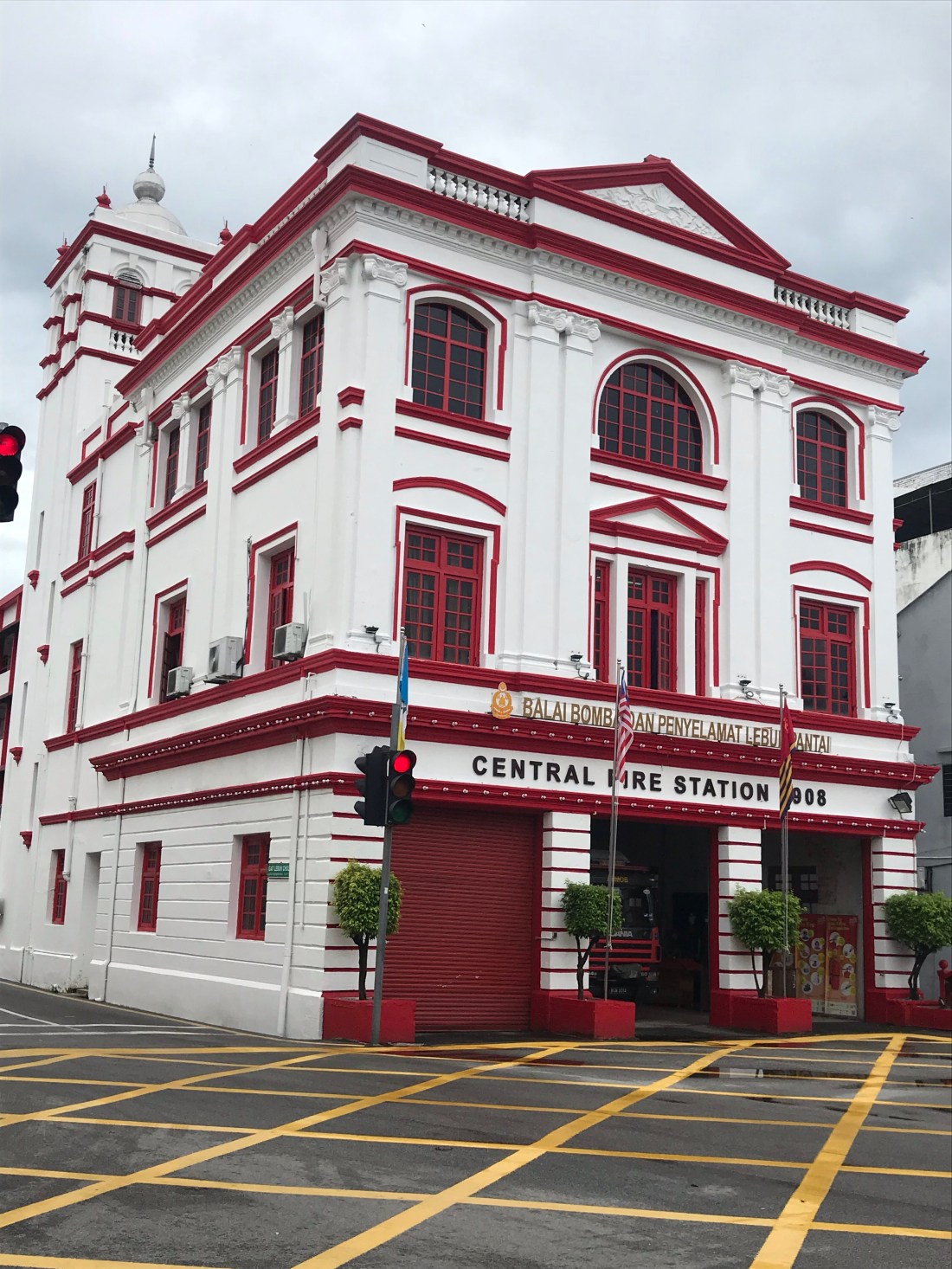
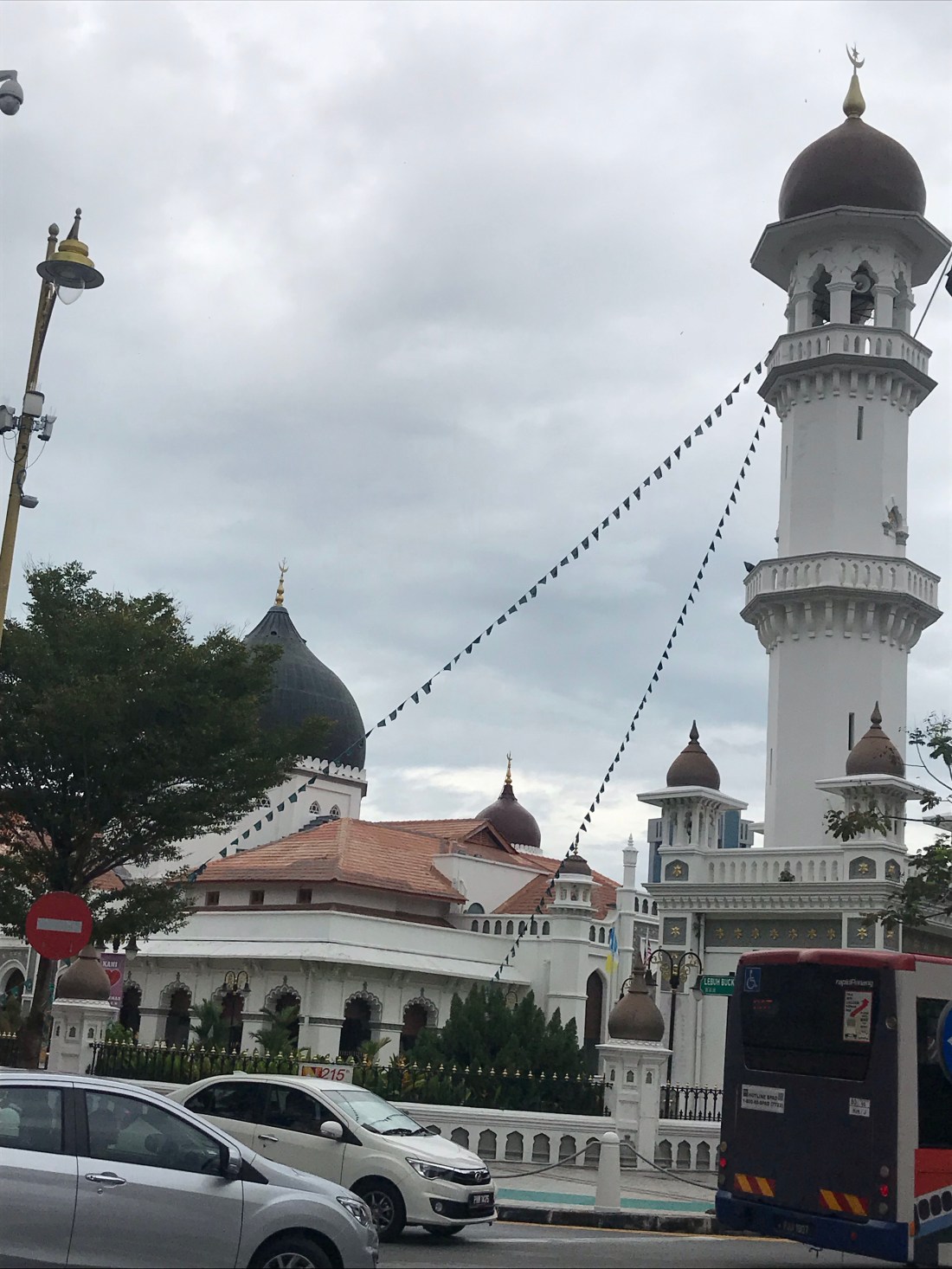
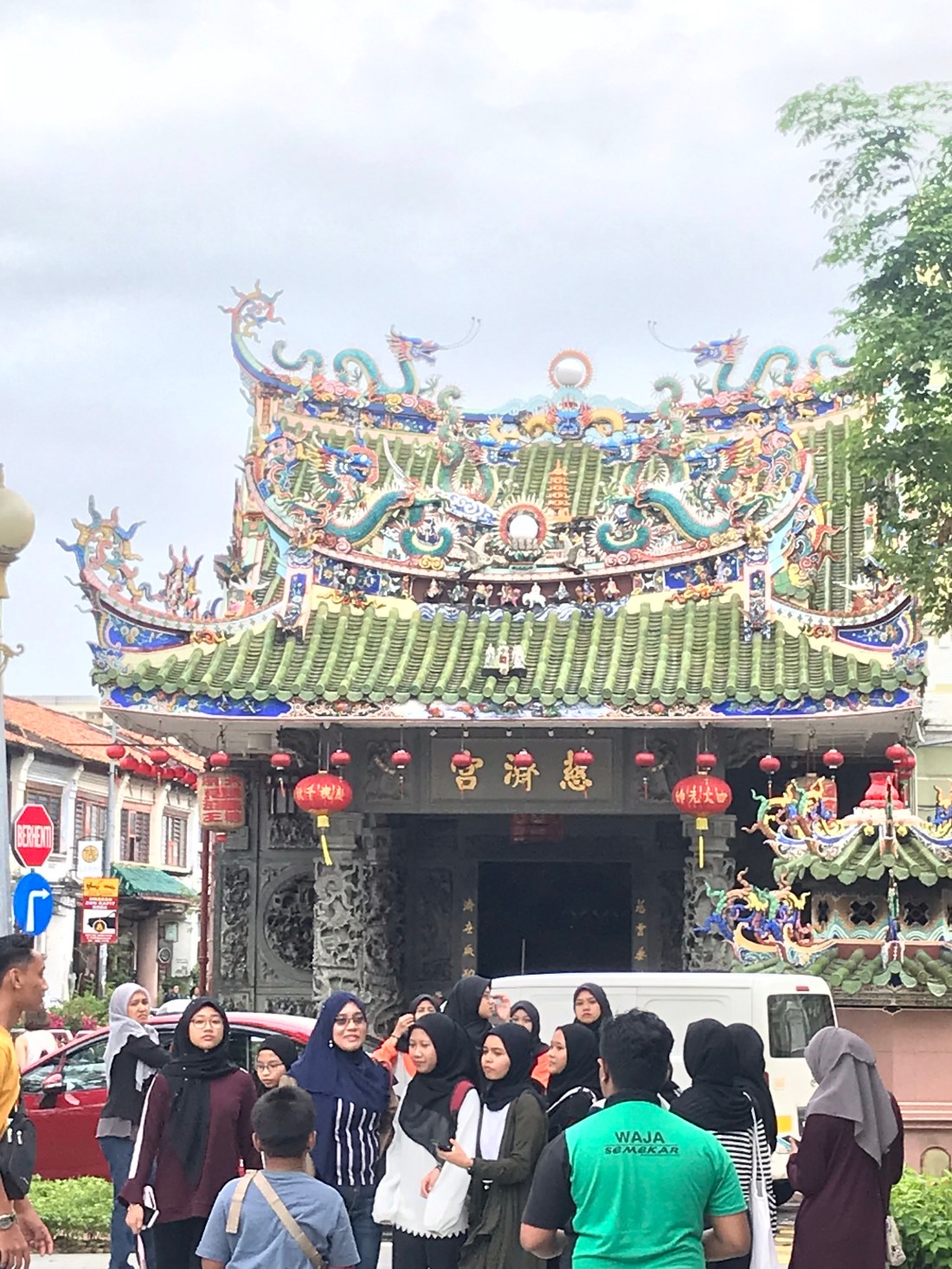
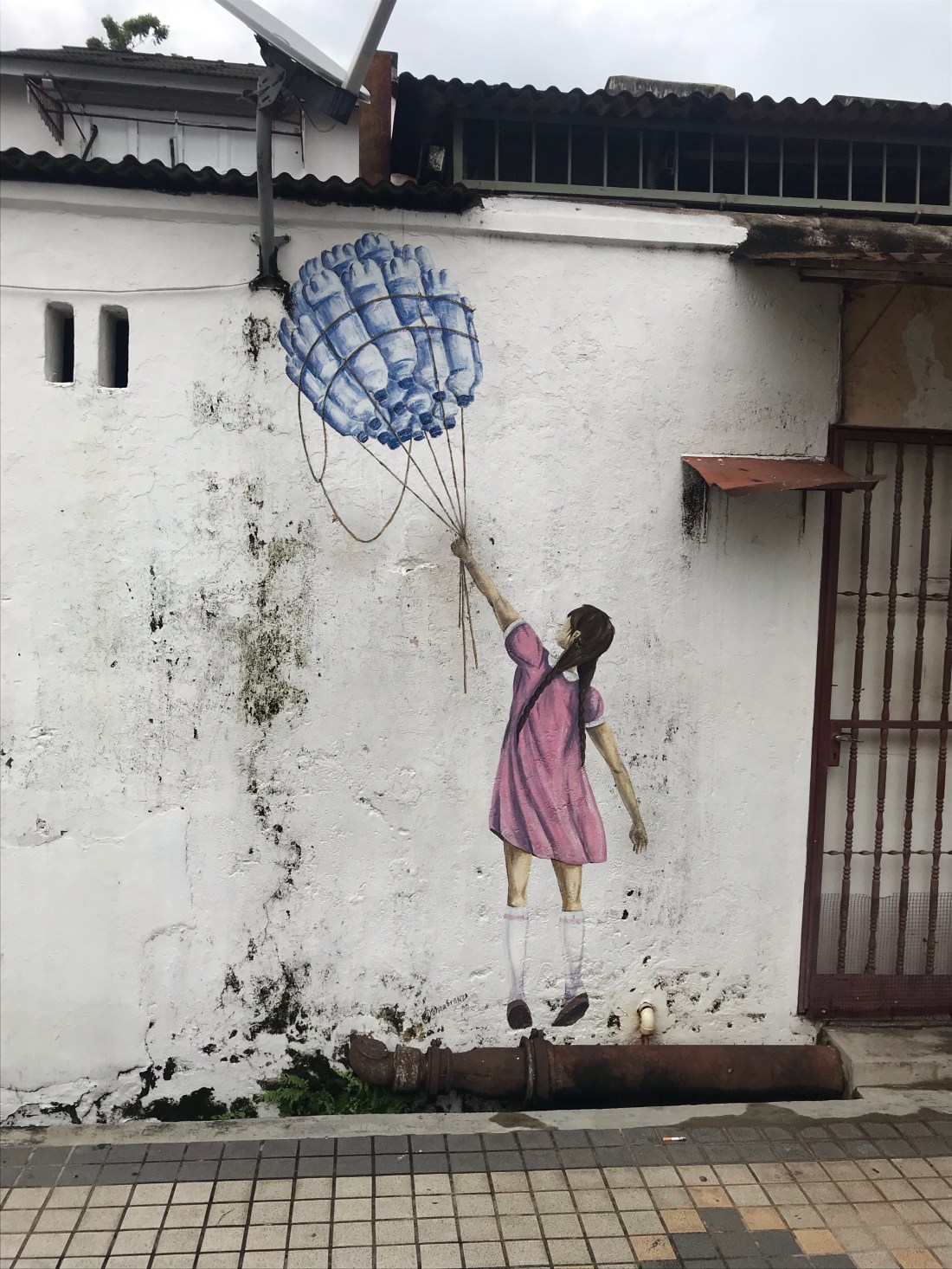
The street art pretty much speaks for itself. It’s a shame I didn’t have time to see more of it. Here’s some, along with some colonial buildings and another Hindu temple:

Penang House of Music:

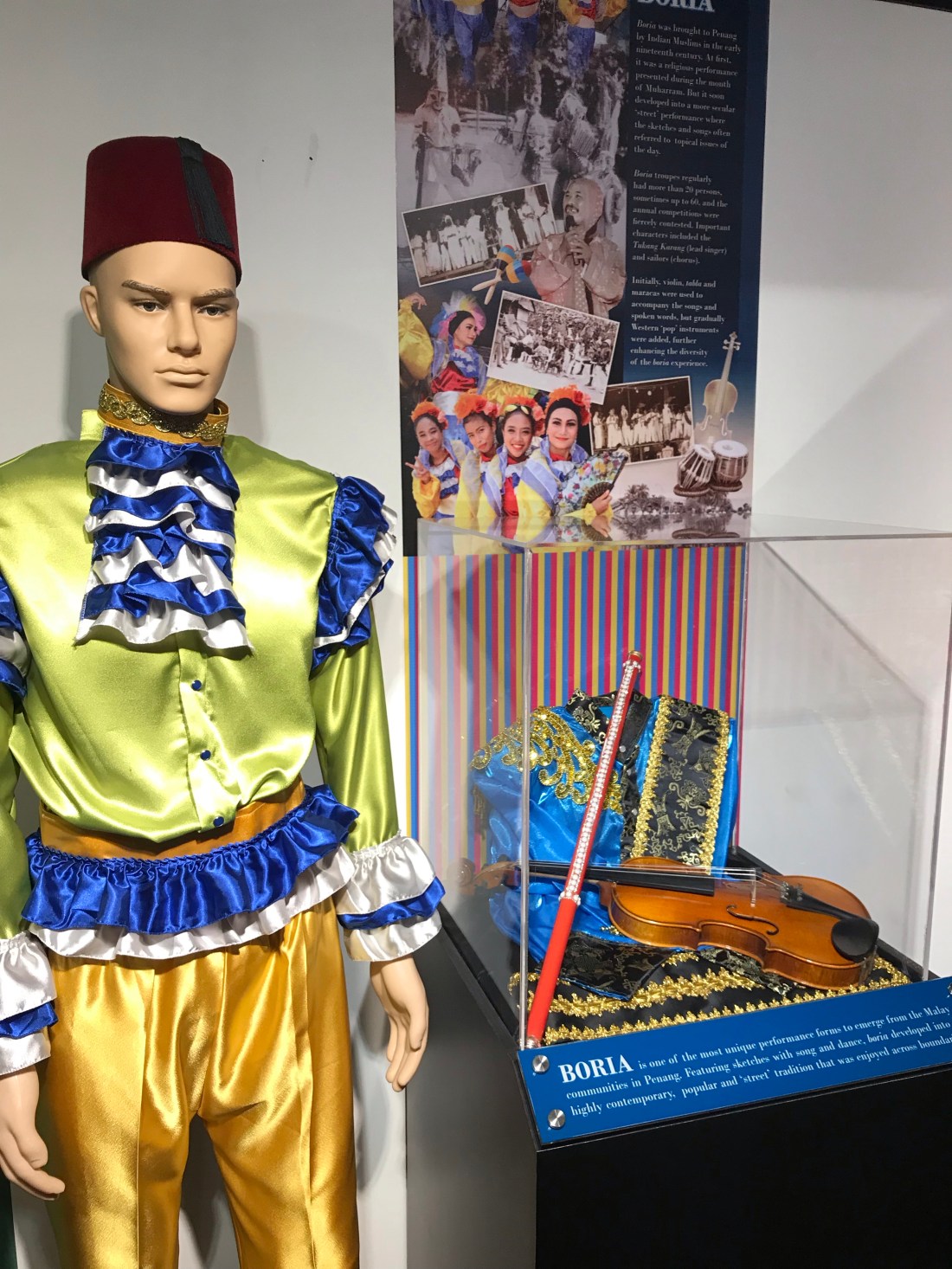
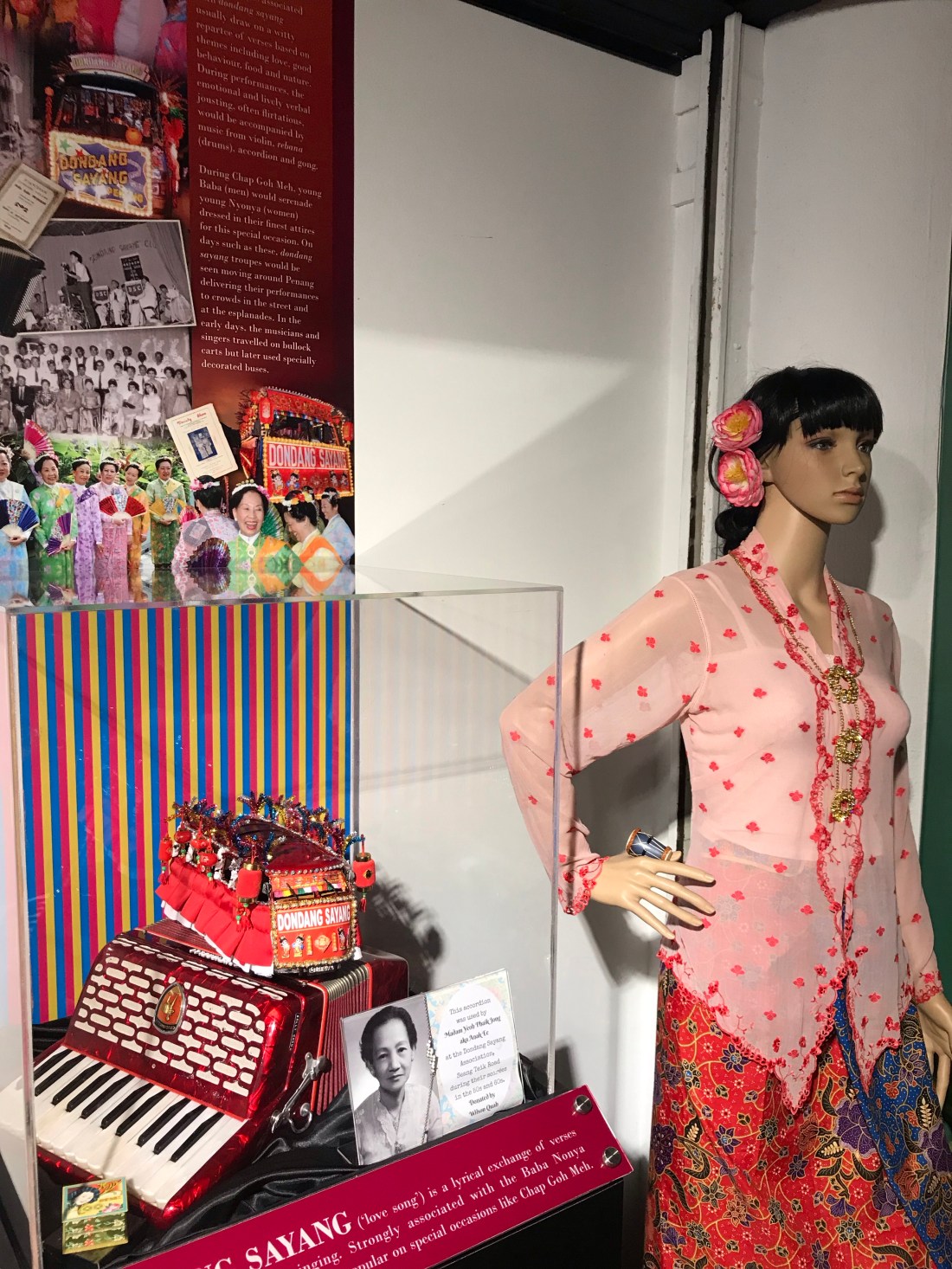
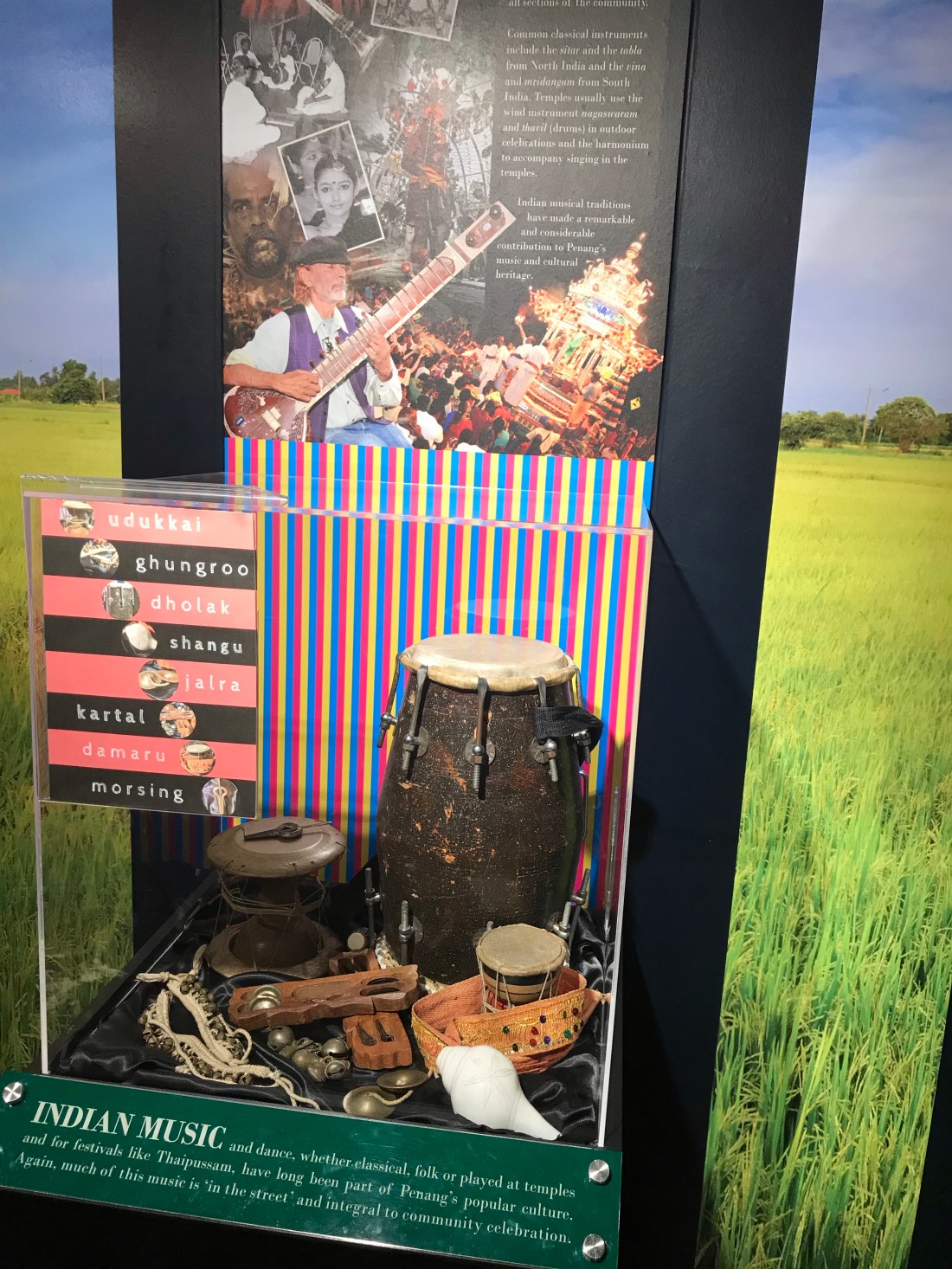
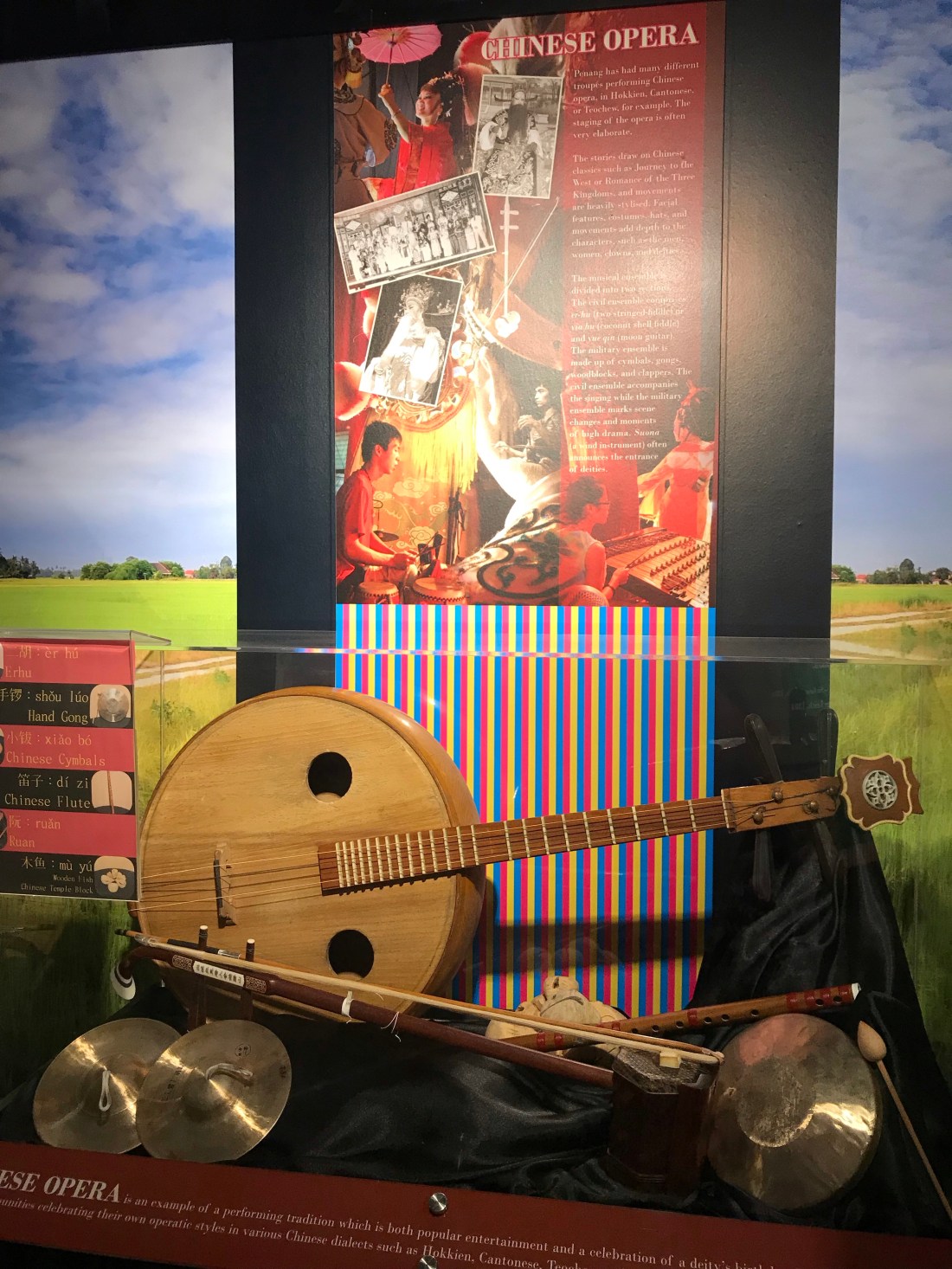
This was a great musical way of telling the story of the history of Penang, including lots of information about the different types of music from the many different cultures in Penang during different periods. (With genuine instruments for me to have a go at and a lot of snazzy technology to try out as well.)

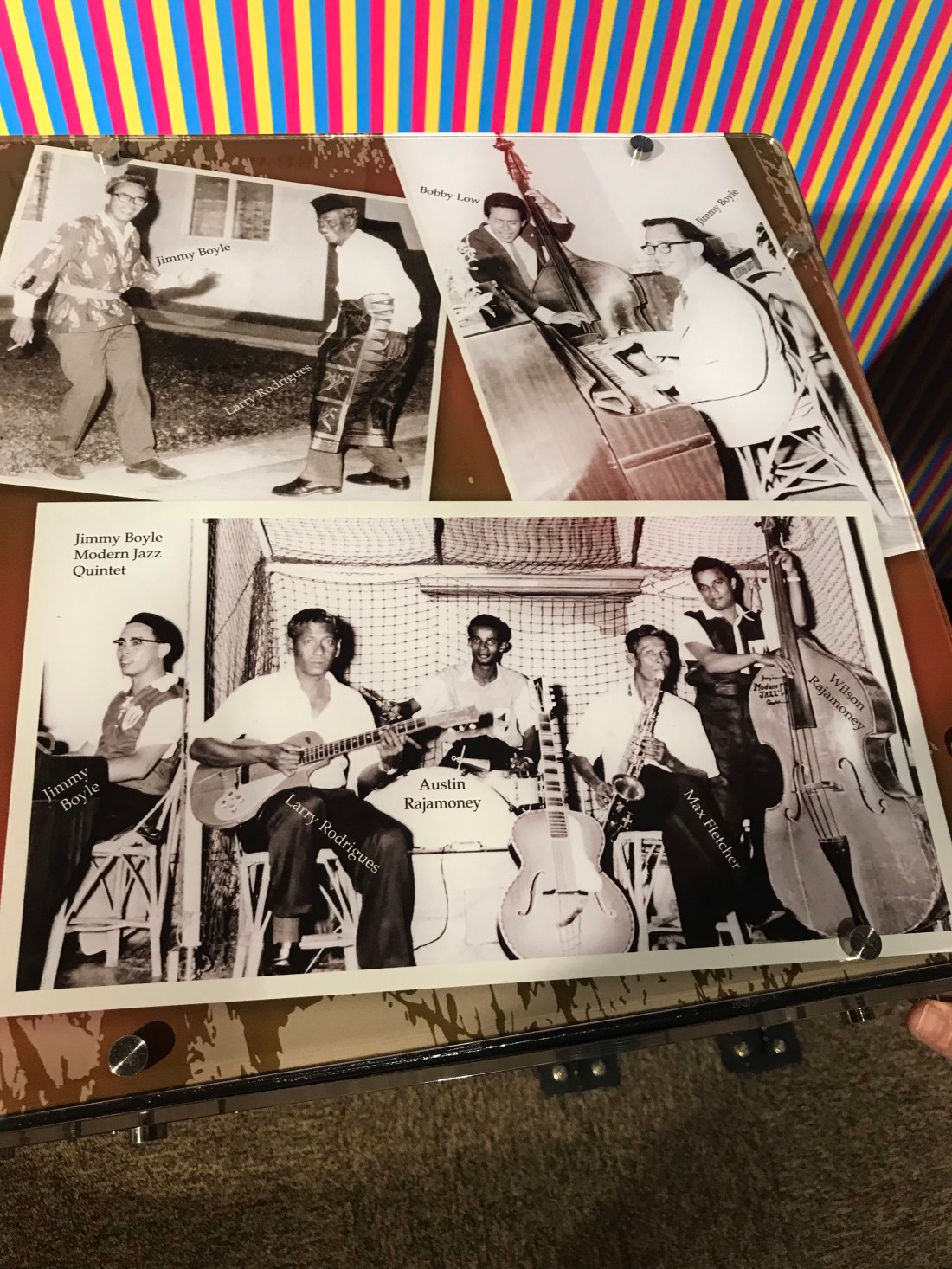
A lot of the music that became popular was influenced by British music, and especially jazz. During the Japanese occupation all radios were doctored so no one could listen to western music, and the musicians in Penang were forbidden from playing British music. So they put Malay words to their favourite British jazz standards and said they were Malay music, which seems to have fooled the Japanese in the main.

Although one jazz musician was imprisoned for 3 years by the Japanese for listening to western music, and made to dispose of the bodies of the other local people the Japanese slaughtered during this time. He survived, but was haunted by it all, of course.

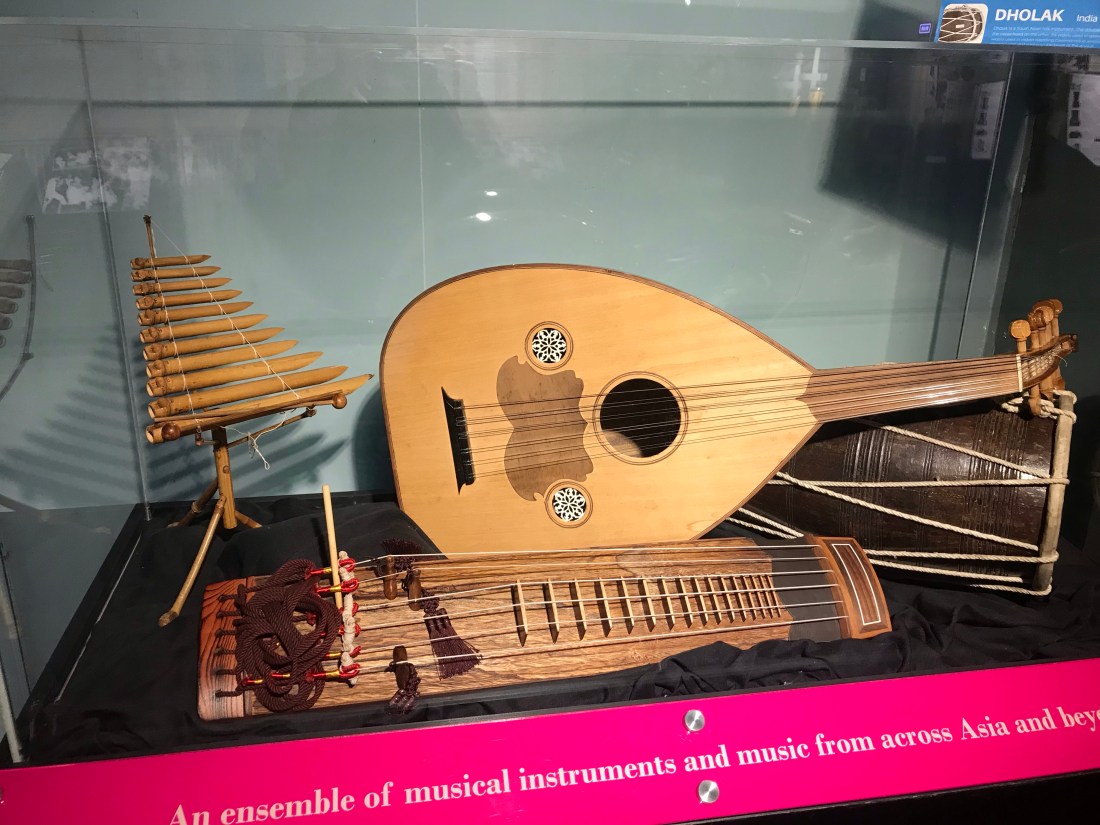
Here are some pics from the Penang House of Music. Well worth finding my way to:

Before the British came to Penang, the traditional Malay and Chinese music usually involved a whole troupe. The lead singer would wear distinctive clothing and carry the red baton to conduct with.

Out of this developed a kind of opera called Bangsawan, which the troupe would take on tour around to the rural places as well as in the towns. When the film industry began to develop in the early 20th Century, apparently the Bangsawan were sought out to perform, as they were skilled at acting singing and dancing. Unfortunately, so many of them went into the film industry (much preferable to travelling round all those log distances all the time) that the traditional Bangsawan gradually died a death:

Love songs of the Nyonya

I think Jimmy Boyle on the left below was the one who was imprisoned by the Japanese for three years for listening to western music. But he survived!

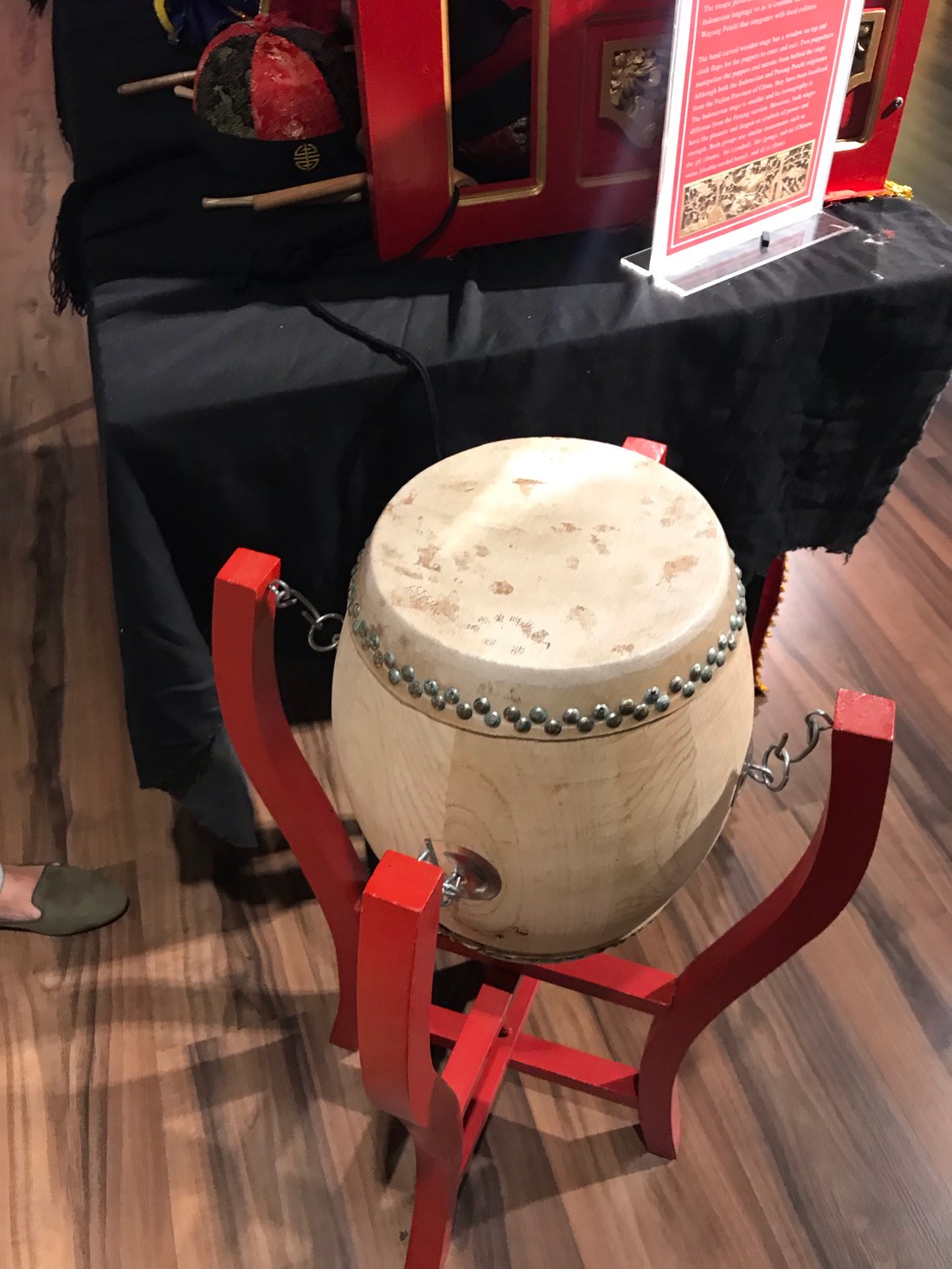
Chinese drum

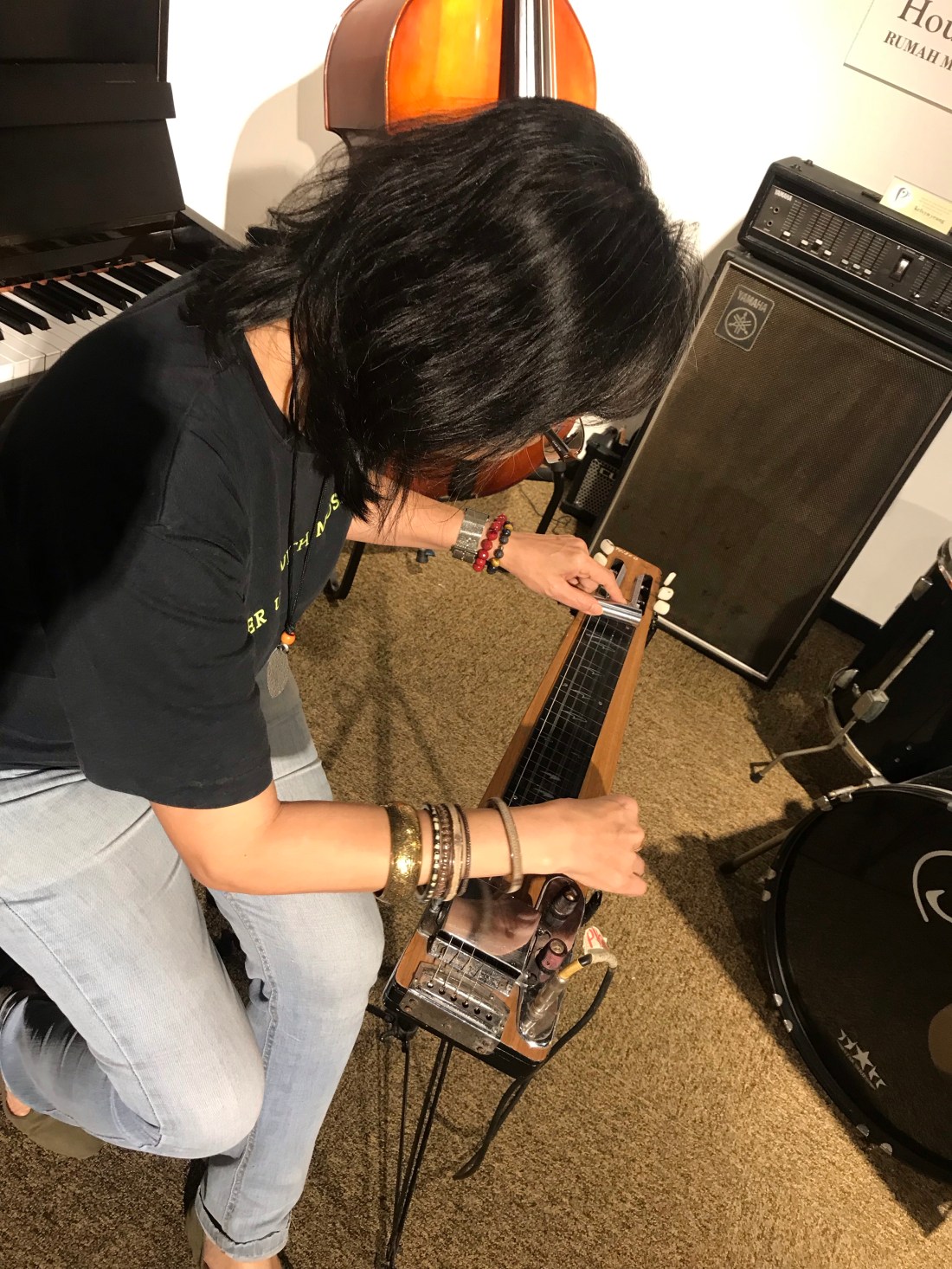
Hawaiian slide guitar

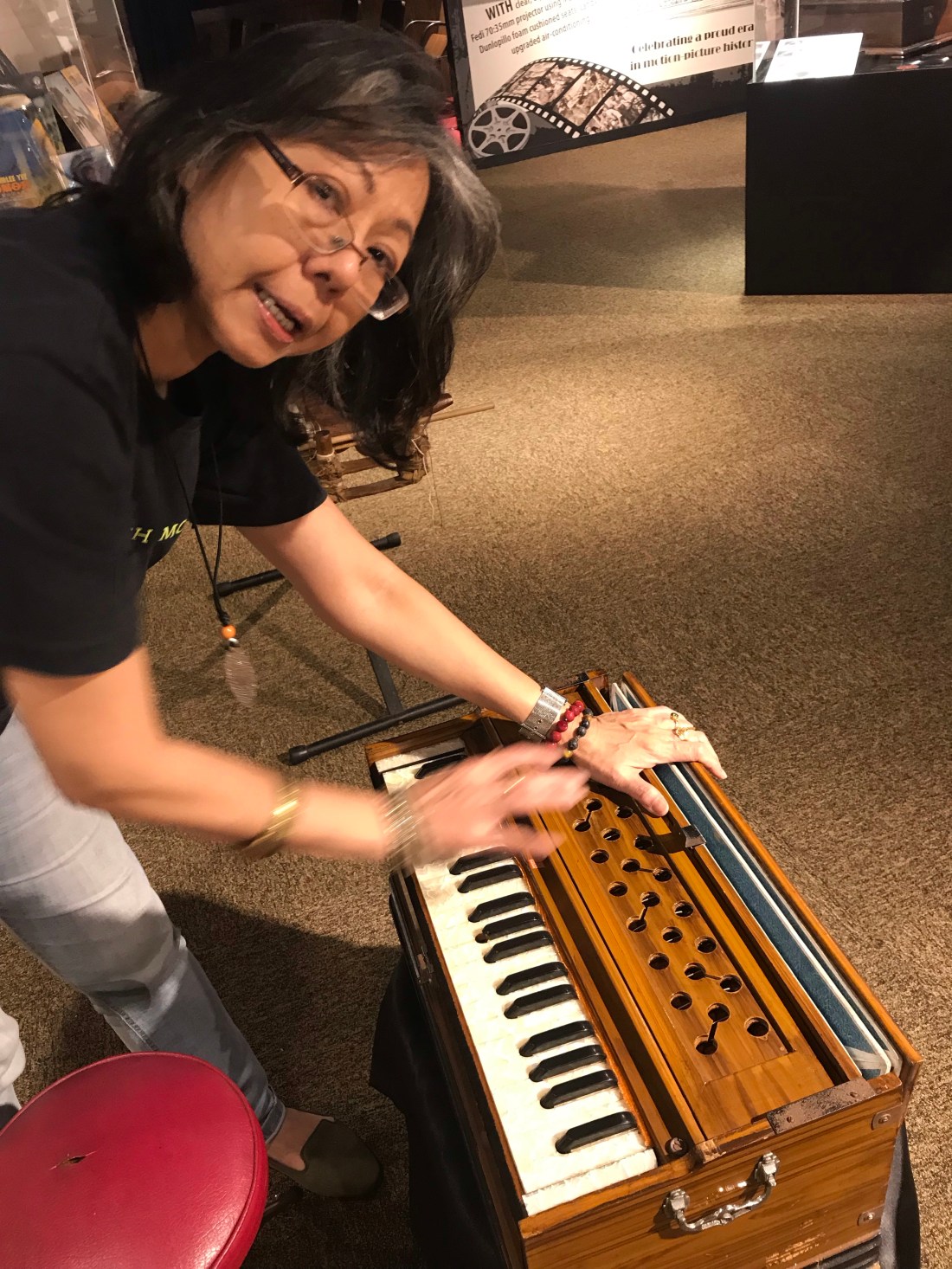
Harmonium
Homemade skiffle bass

Penang (iv): Kek Lok Si Temple & Penang Hill

So, we took in reclining and standing Buddhas, Colonial Museum, Botanical Gardens, Monkey Beach, then drove on around some of the more rural parts of the island, inhabited mainly by Malay people.

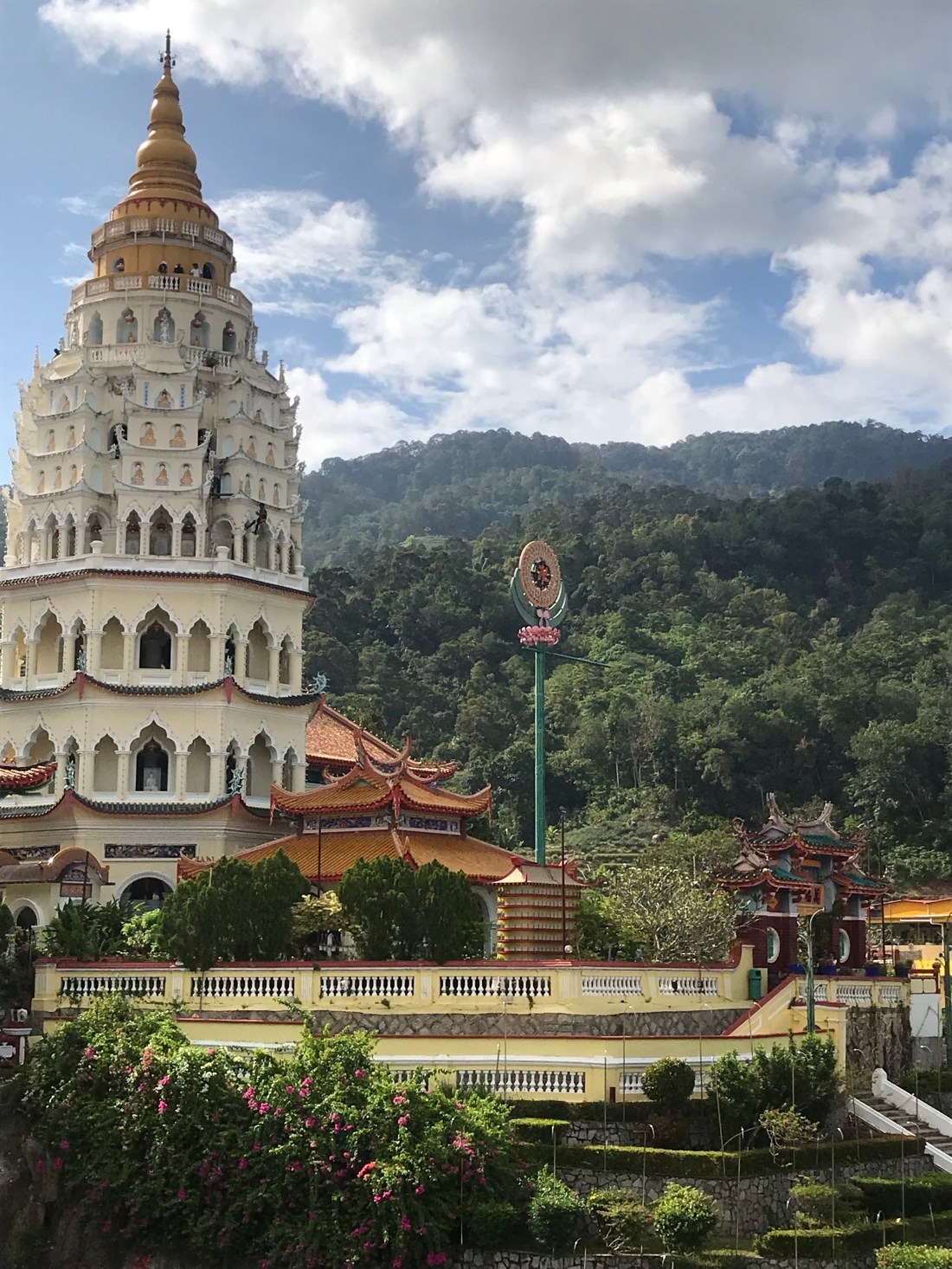
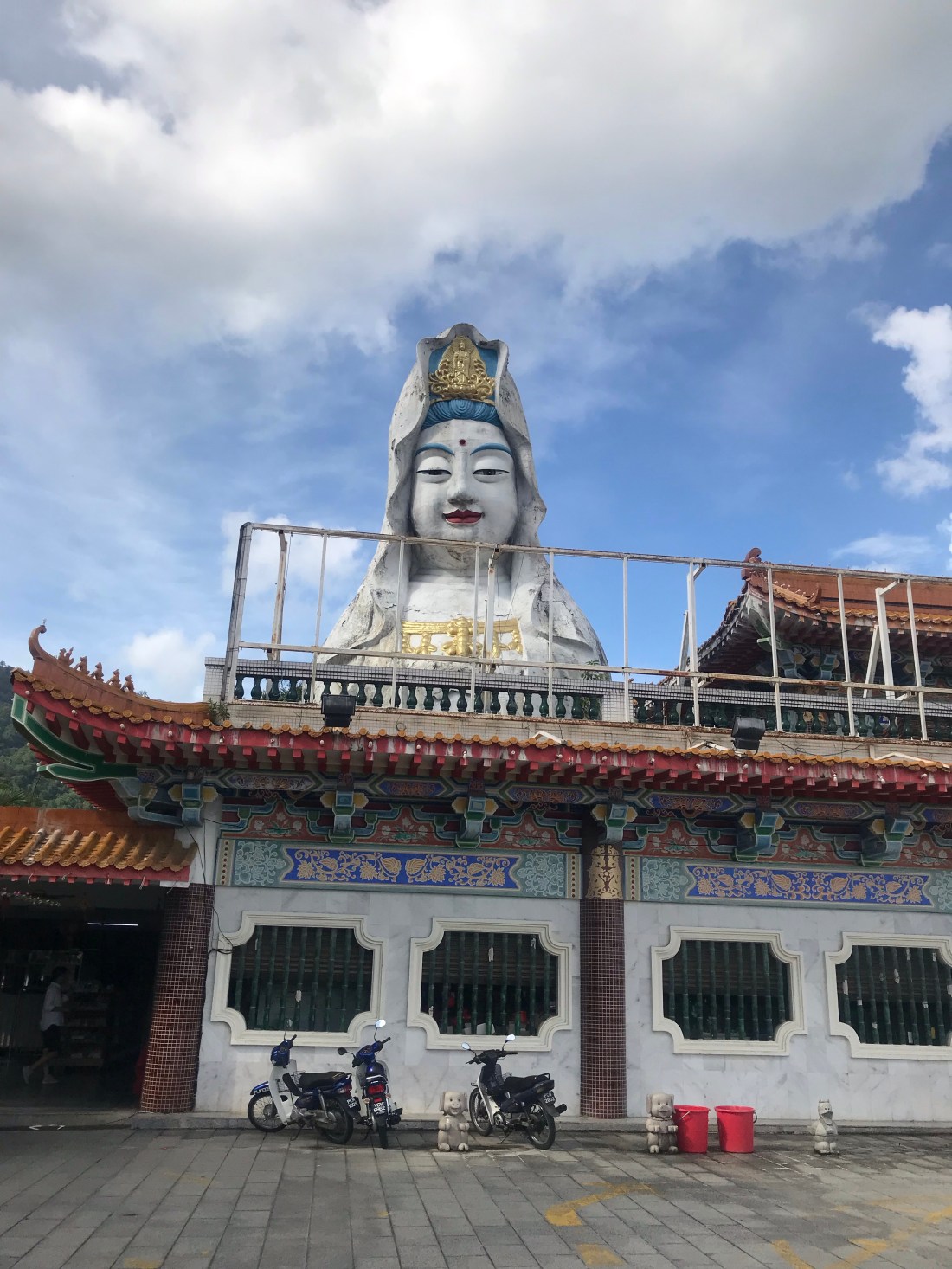
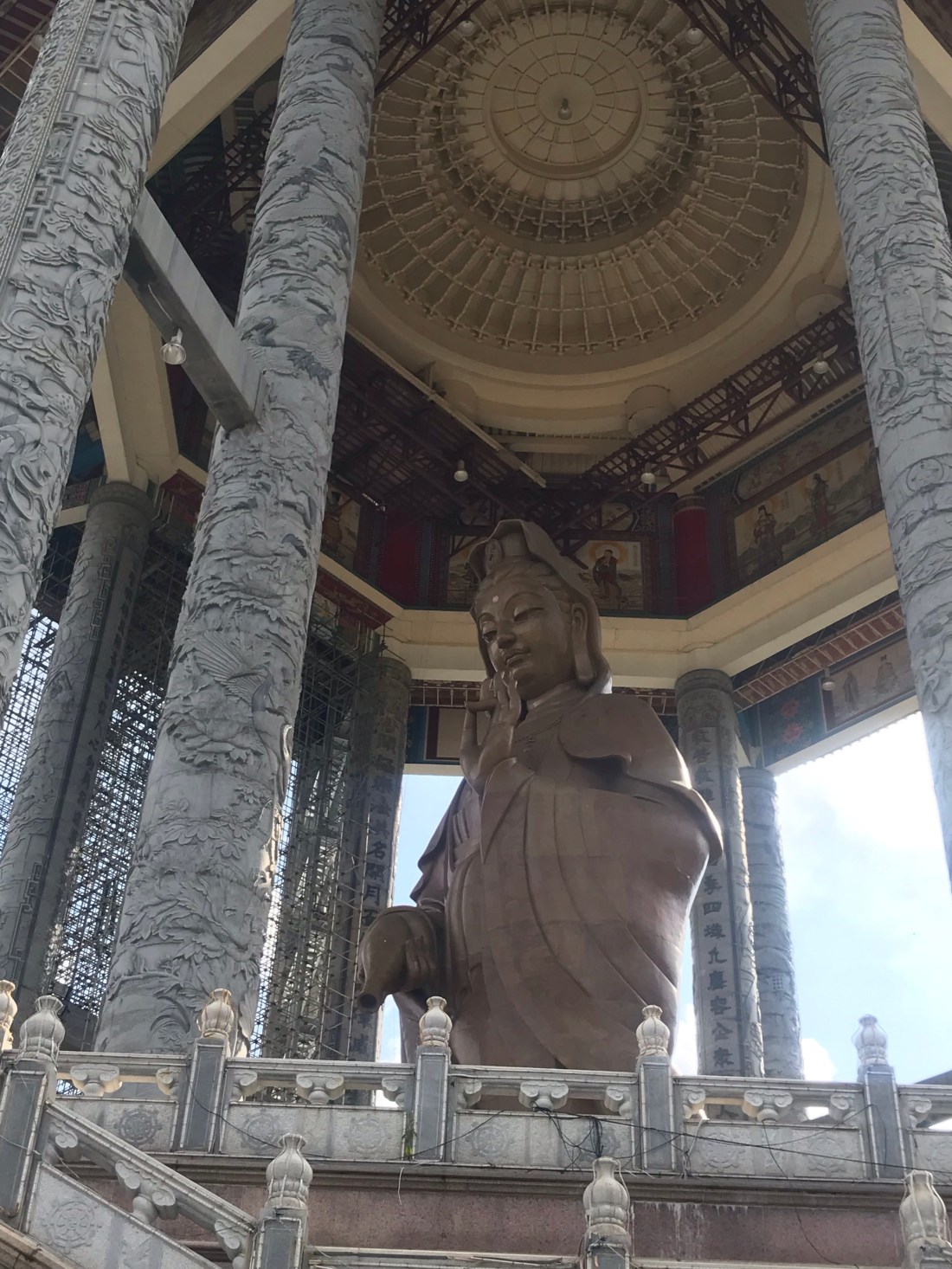
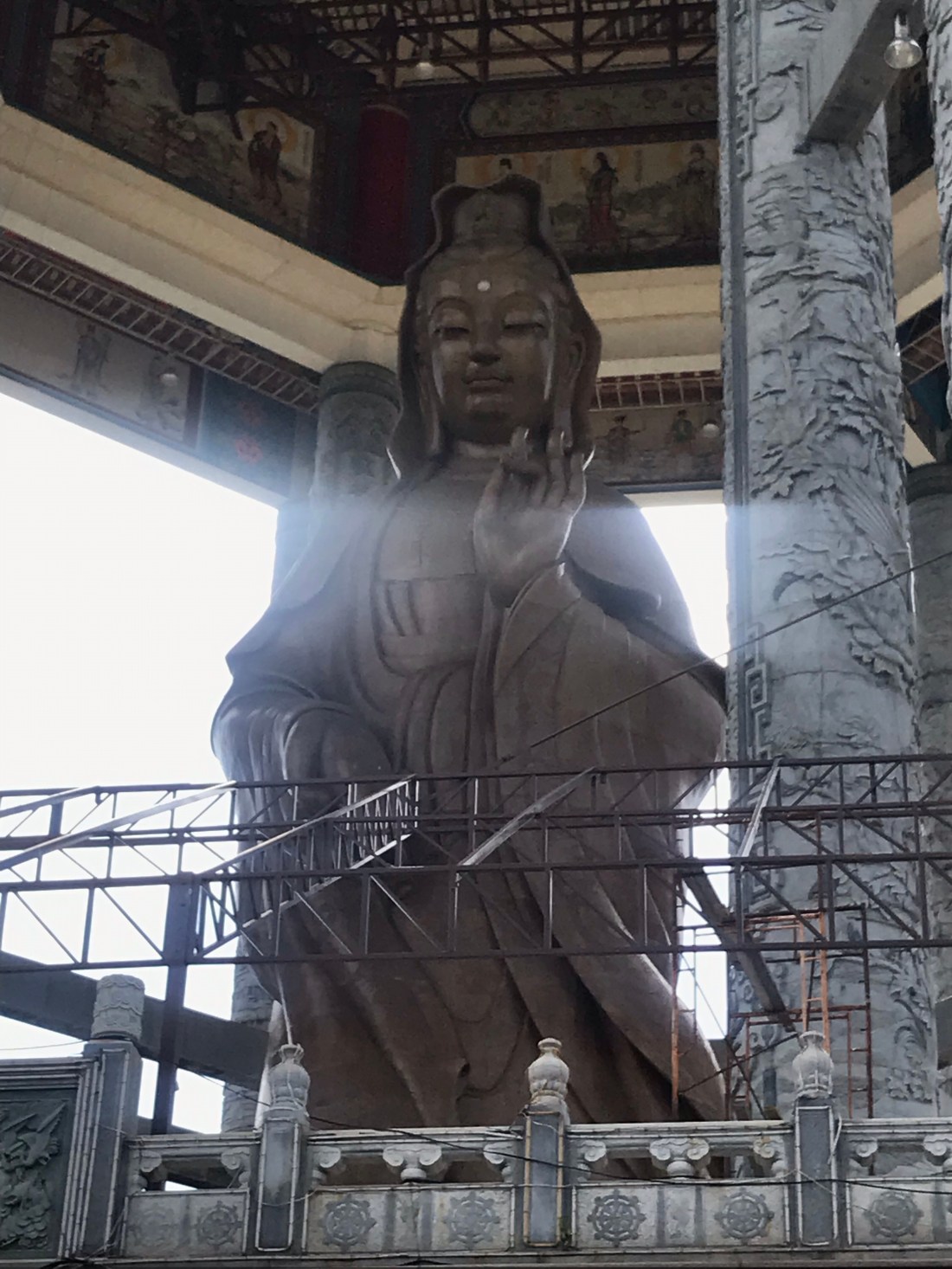
Then we continued onto Kek Lok Si Temple, another Buddhist temple set into a steep hillside with a huge statue at the top of it (I think a female image this time? Certainly there were other female as well as male statues on the way up too) and more pagodas, gardens and so on on the way up, which was by a short funicular railway ride.

It looked like the whole enterprise was a victim of its own success:

Or maybe less a victim, more a beneficiary, as there was a huge area of extra building work going on:

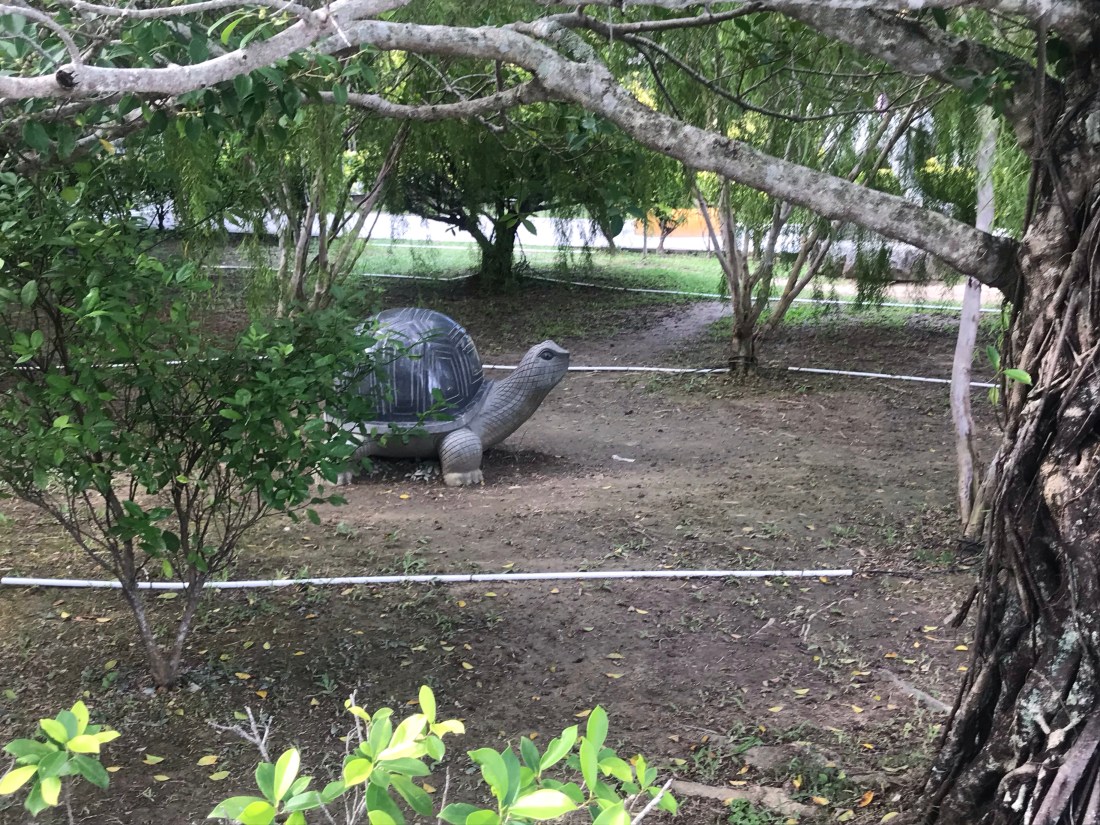
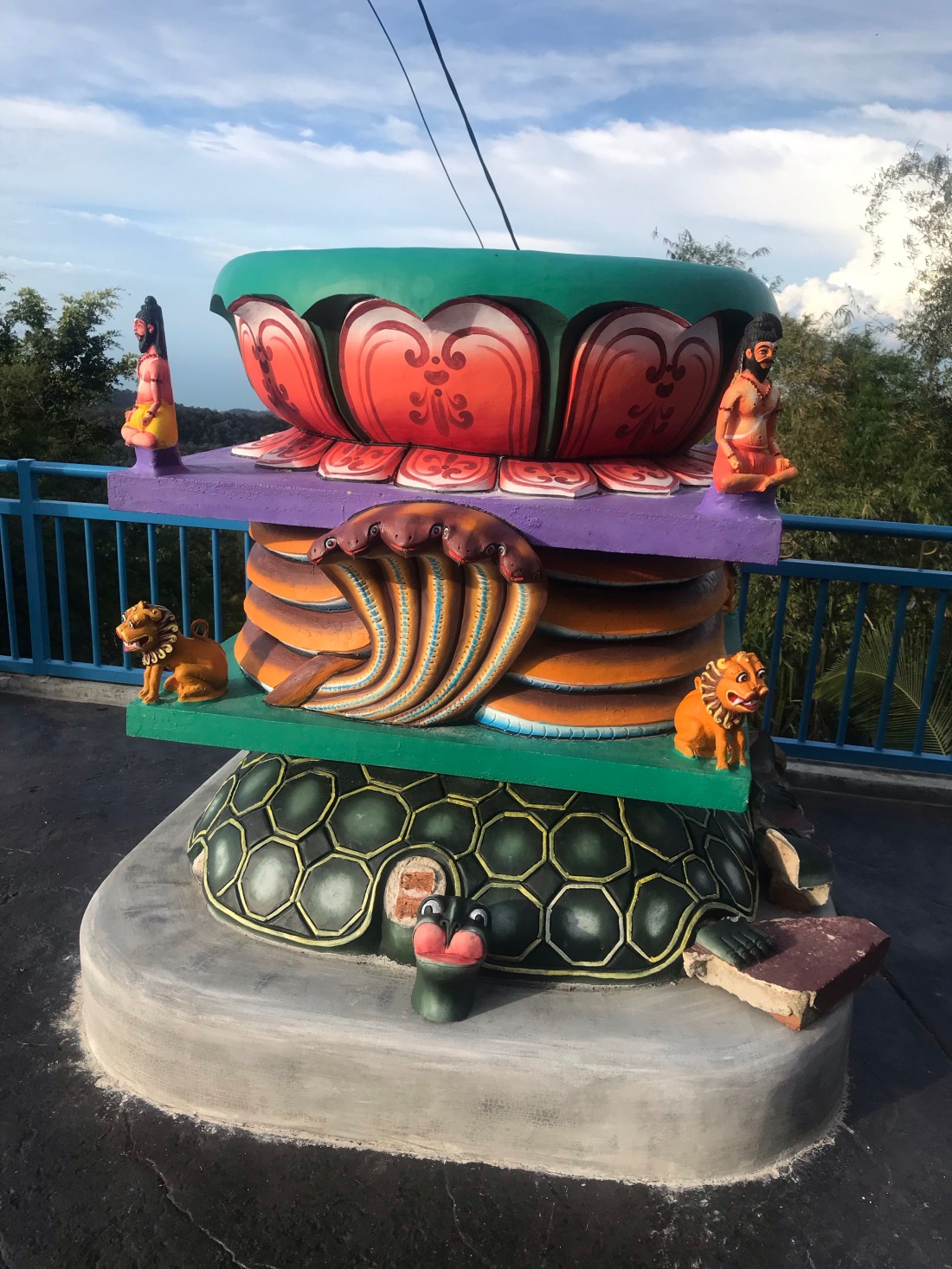
The tortoise/turtle is symbolic of longevity, so several were hiding around the place, including this guy:

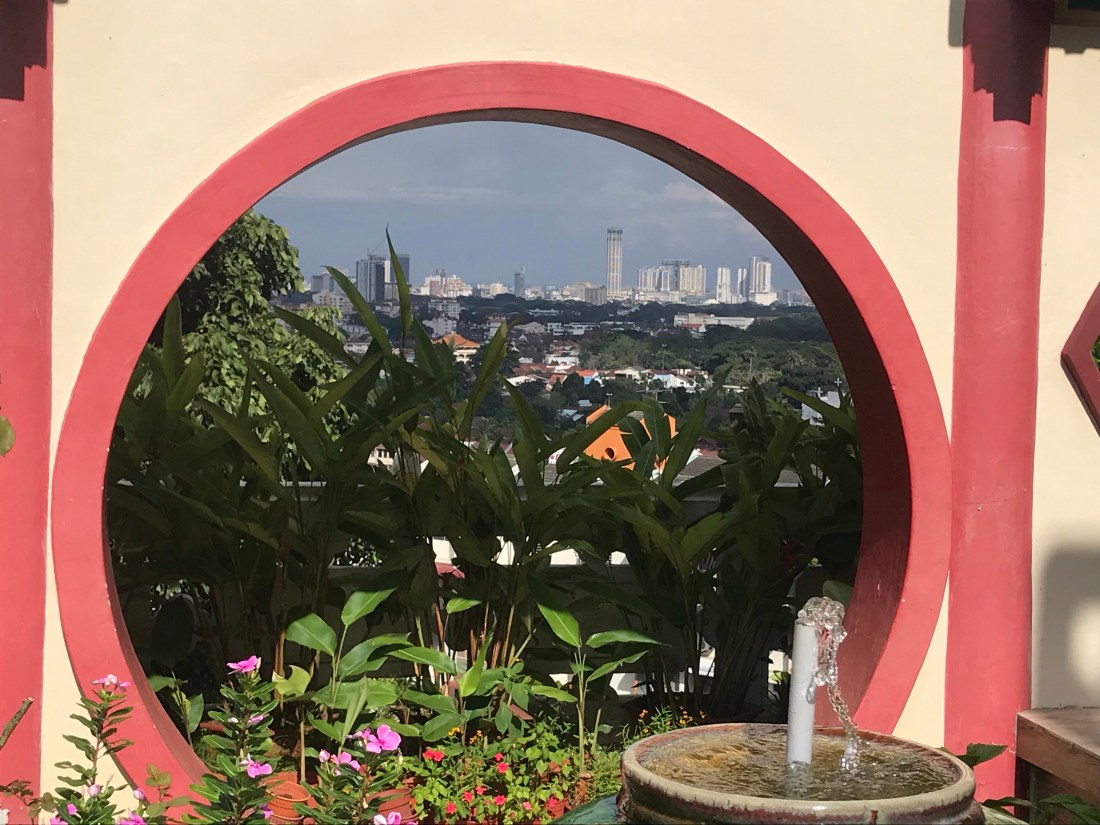
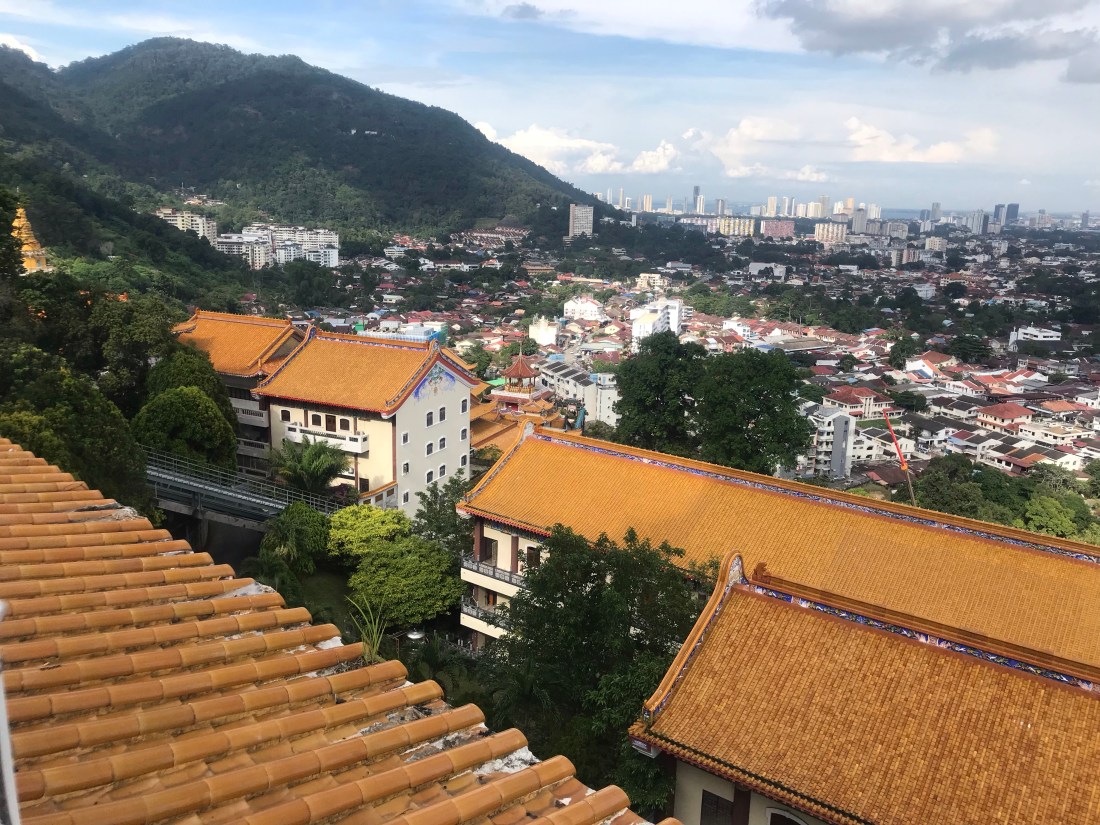
There was a great view of the area from the top too:

Having seen this view, I wondered whether it would be worth paying the extra for the (very fast) funicular train ride up Penang Hill. I’m glad I did though. Turns out it’s much much higher. And as we know, I do like to find a high place to survey the new territory from.

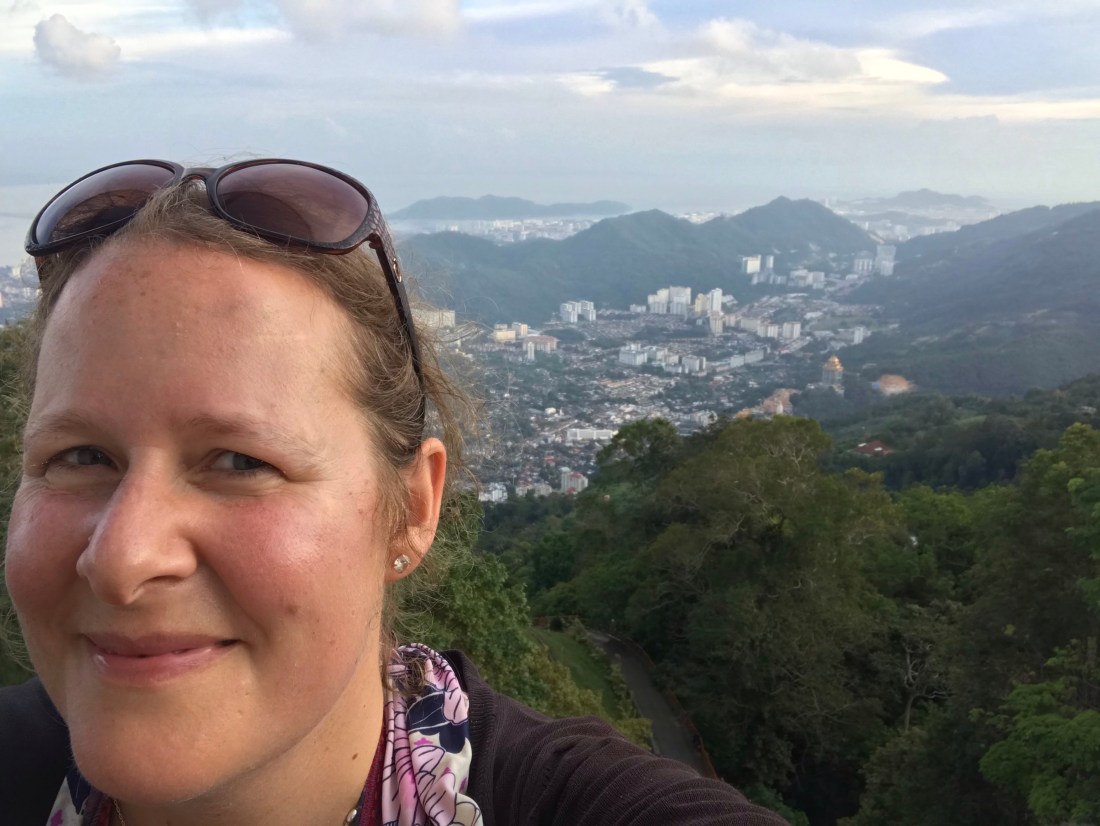
Here’s Kek Lok Si from Penang Hill (you can just make it out just over halfway between my left ear and the edge of the photo):

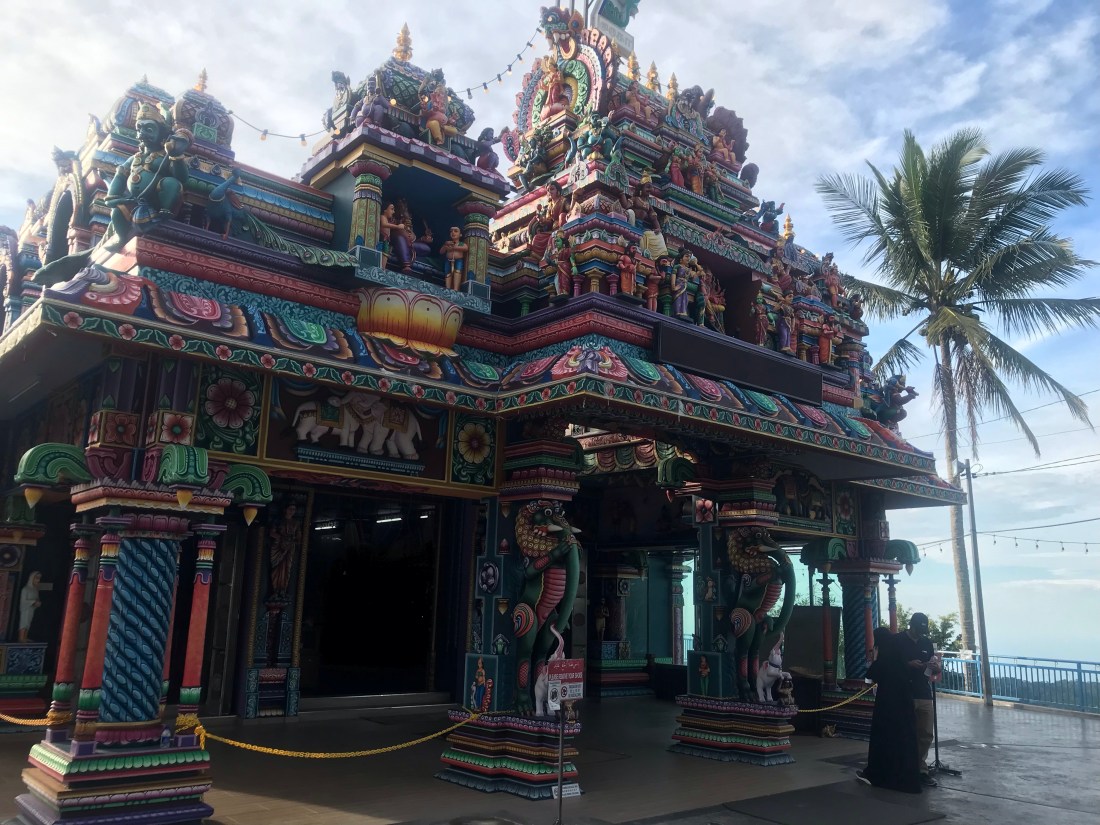
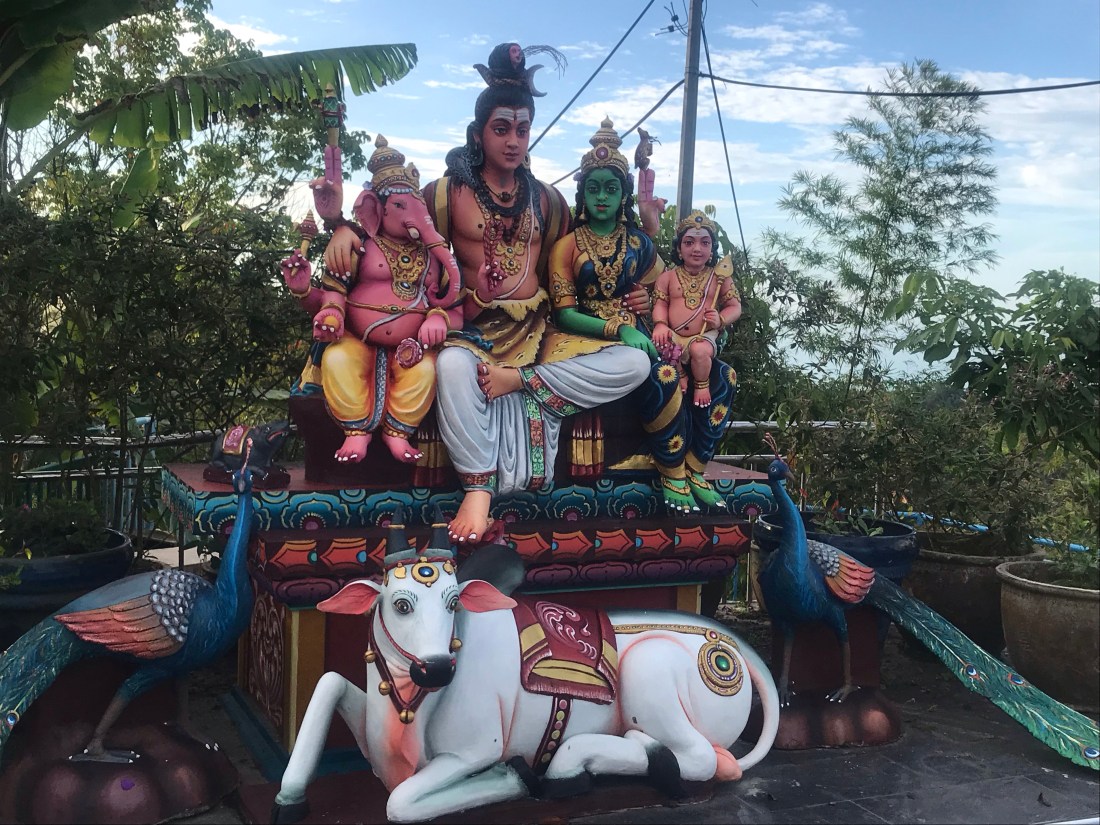
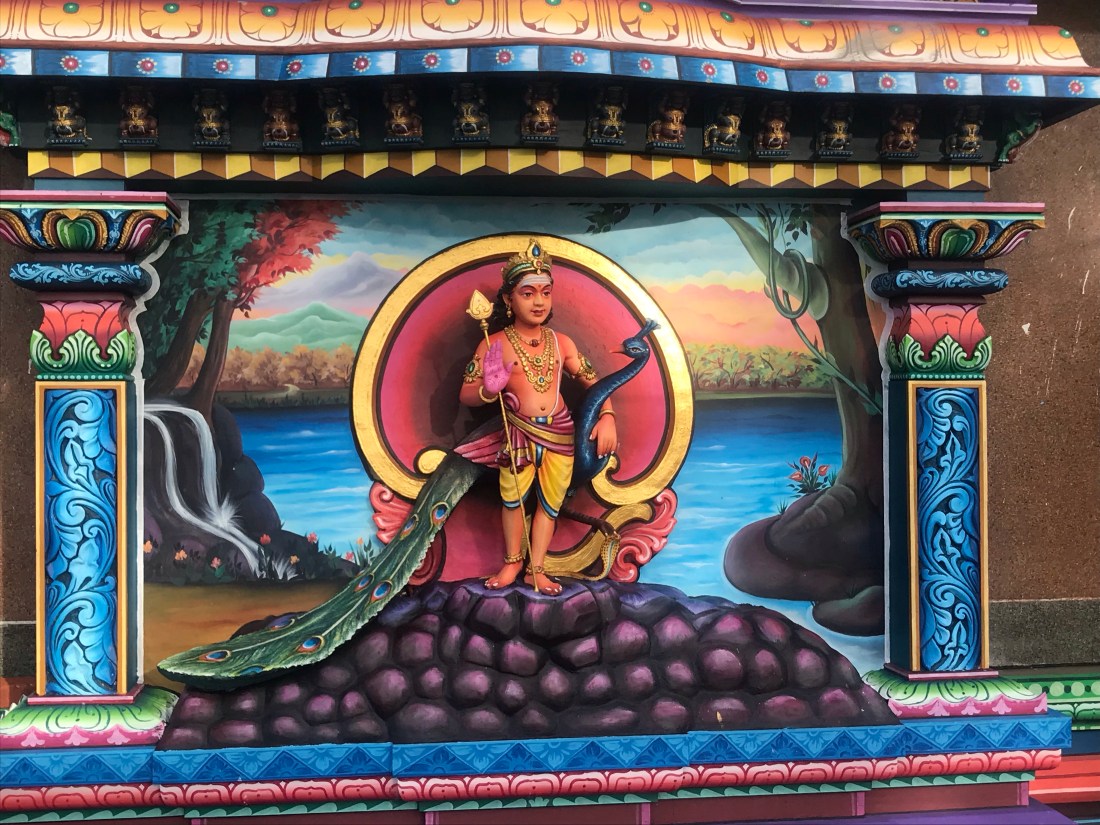
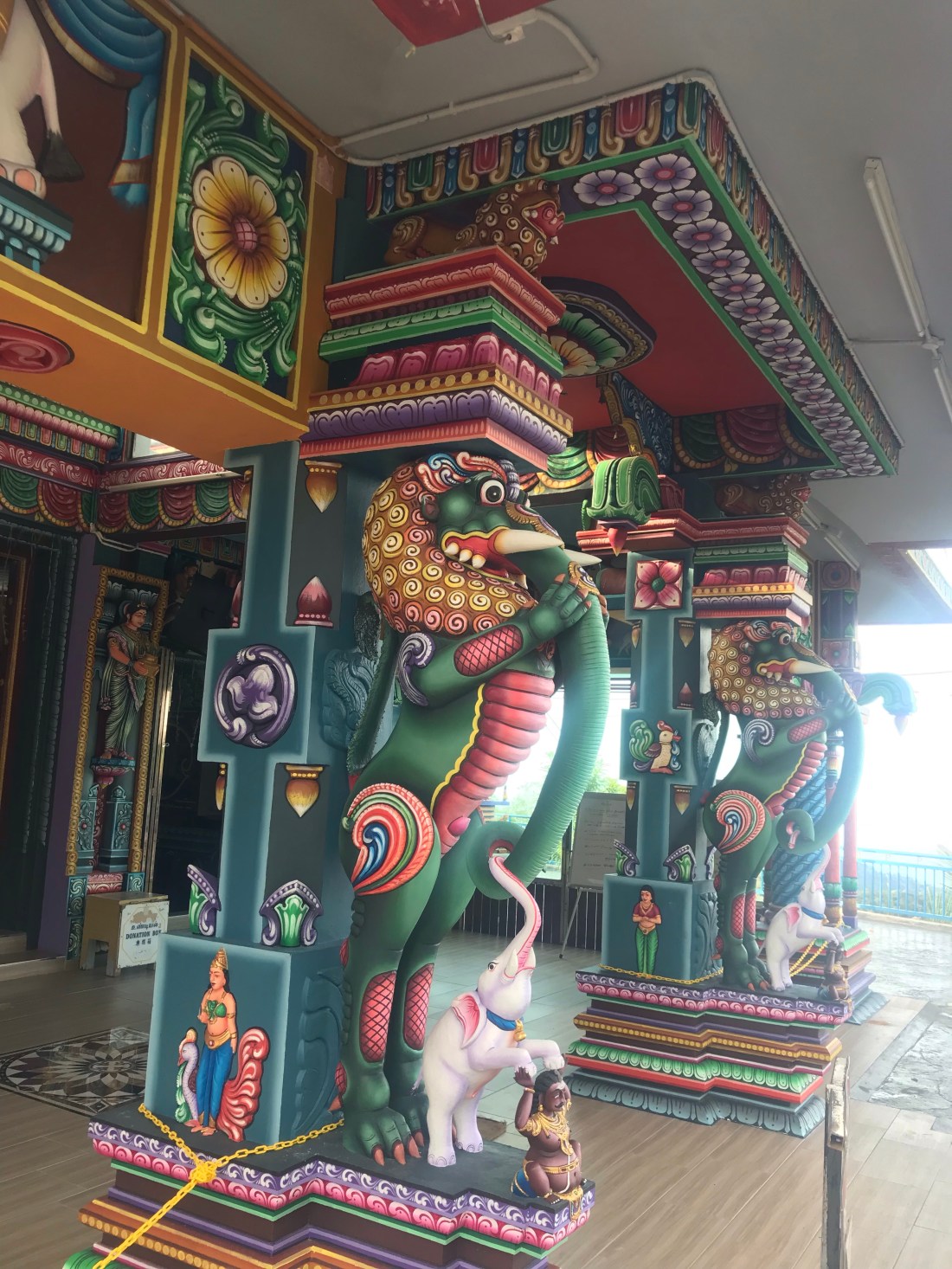
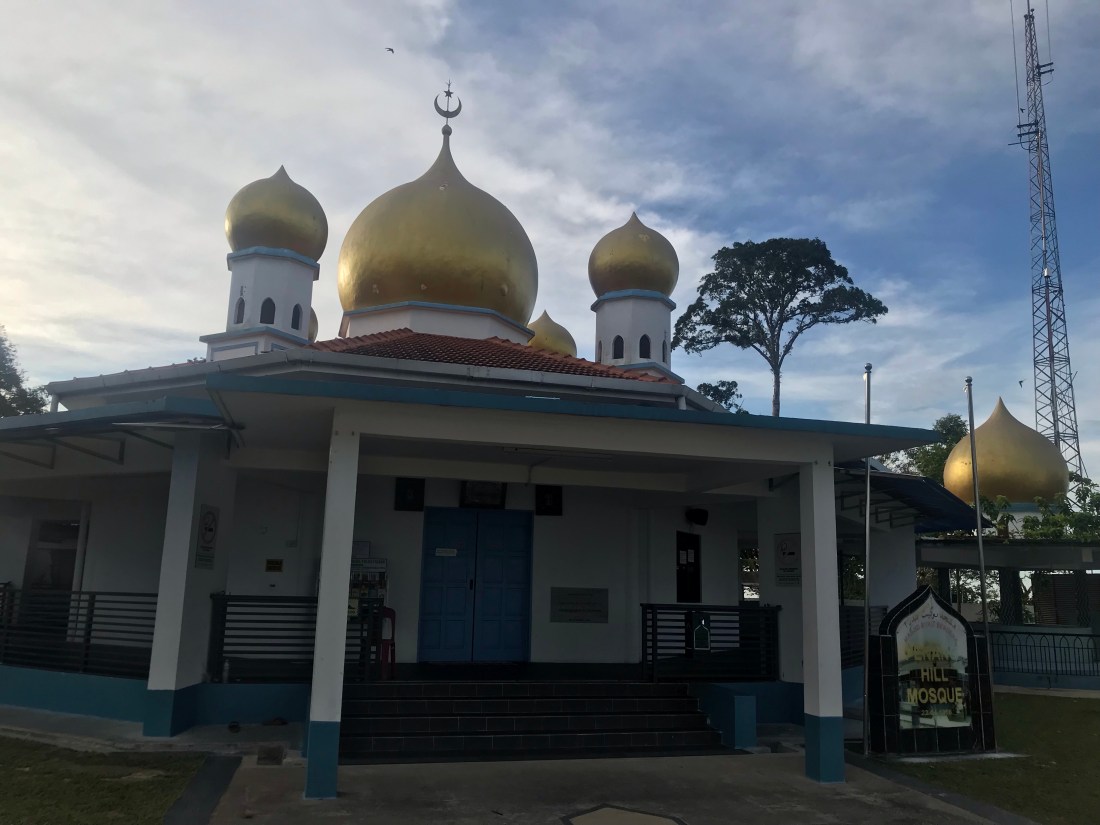
I noticed the Hindus and Muslims had seen the Buddhists and raised them, siting a Hindu Temple and a Mosque at the top of Penang Hill:

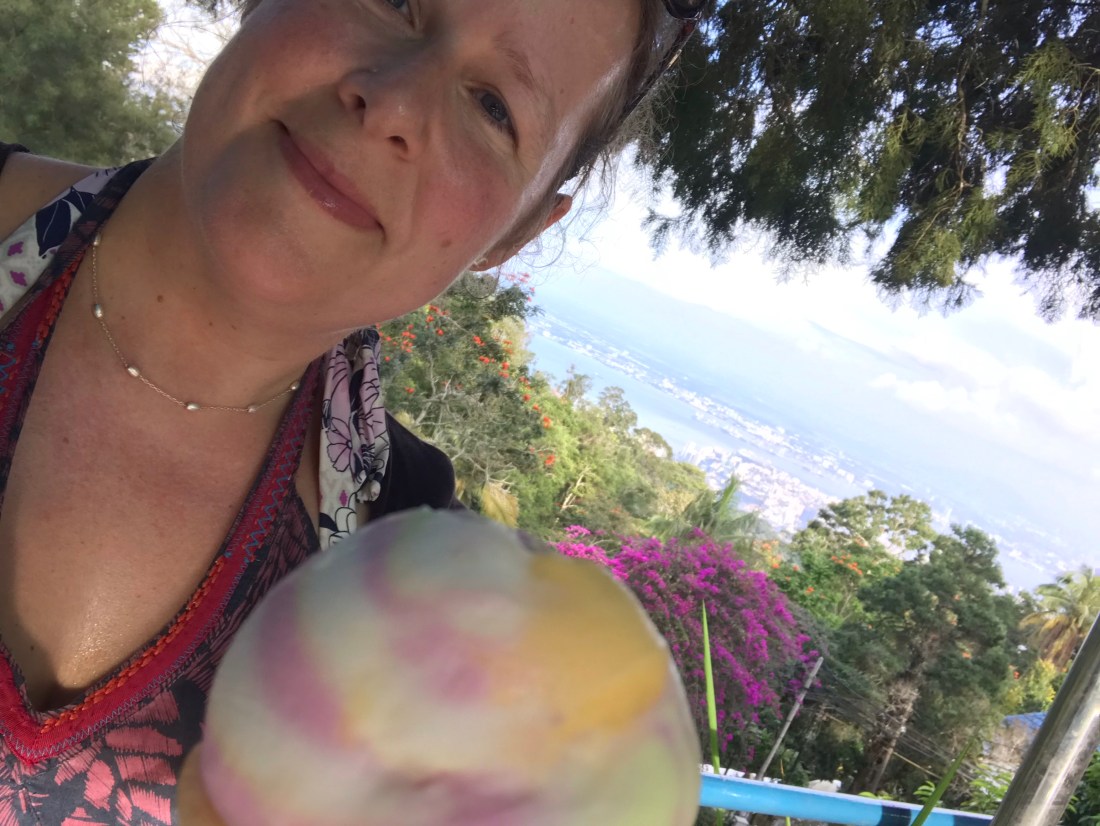
I found a guy selling ice cream here… guess what flavour this was…? (It’s actually a mix of two flavours…):

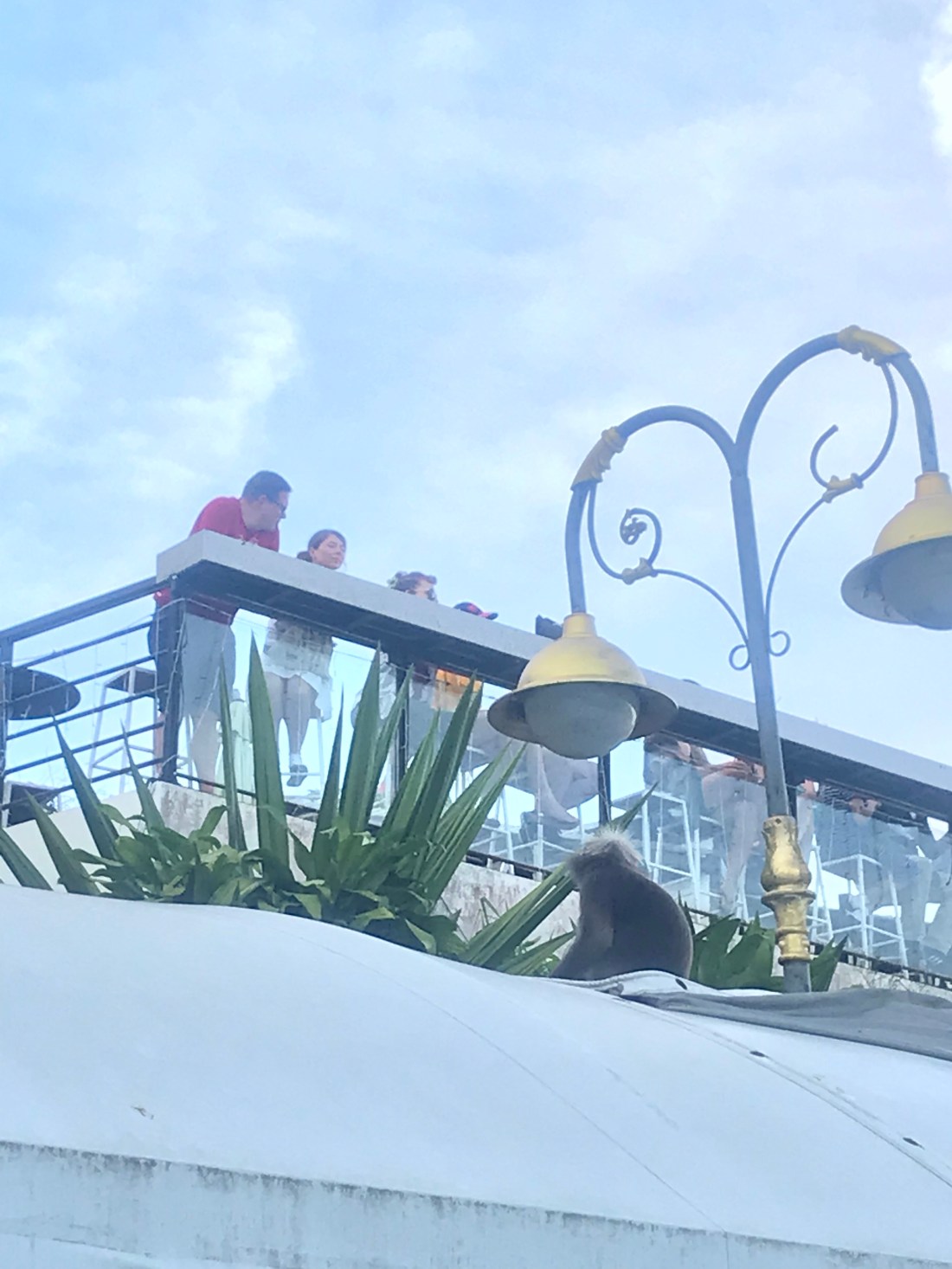
Monkeys played on the roof of the waiting area while we waited for the train to arrive to take us back down:

Raj was nursing the notion that it’d be great if I was able to see the sunset from the summit of Penang Hill. For that to work, he earned himself an extra hour and a half’s work, but I must say I was glad to pay him for it, although I was exhausted by the time we returned to the hotel at about 8pm. Yes, all the posts entitled “Penang” i-iv were all one day. I really did need a driver for that to work. I’m very thankful I had the means to bring it off. Just about.

By the time it came to eating I just wanted something light and fibrous and very definitely veggie and nearby. So I found Leaf (thank goodness for Trip Advisor), still open, where I obtained this delicious vegan meal for a pittance:

Then collapsed into bed, wondering why I was so very stiff having been driven around in a lovely air conditioned car all day and gone swimming. Too much for one day really. If I’d had longer than two days, I would have spent the following day just recovering. But…

Penang (iii): Botanical Gardens & Monkey Beach

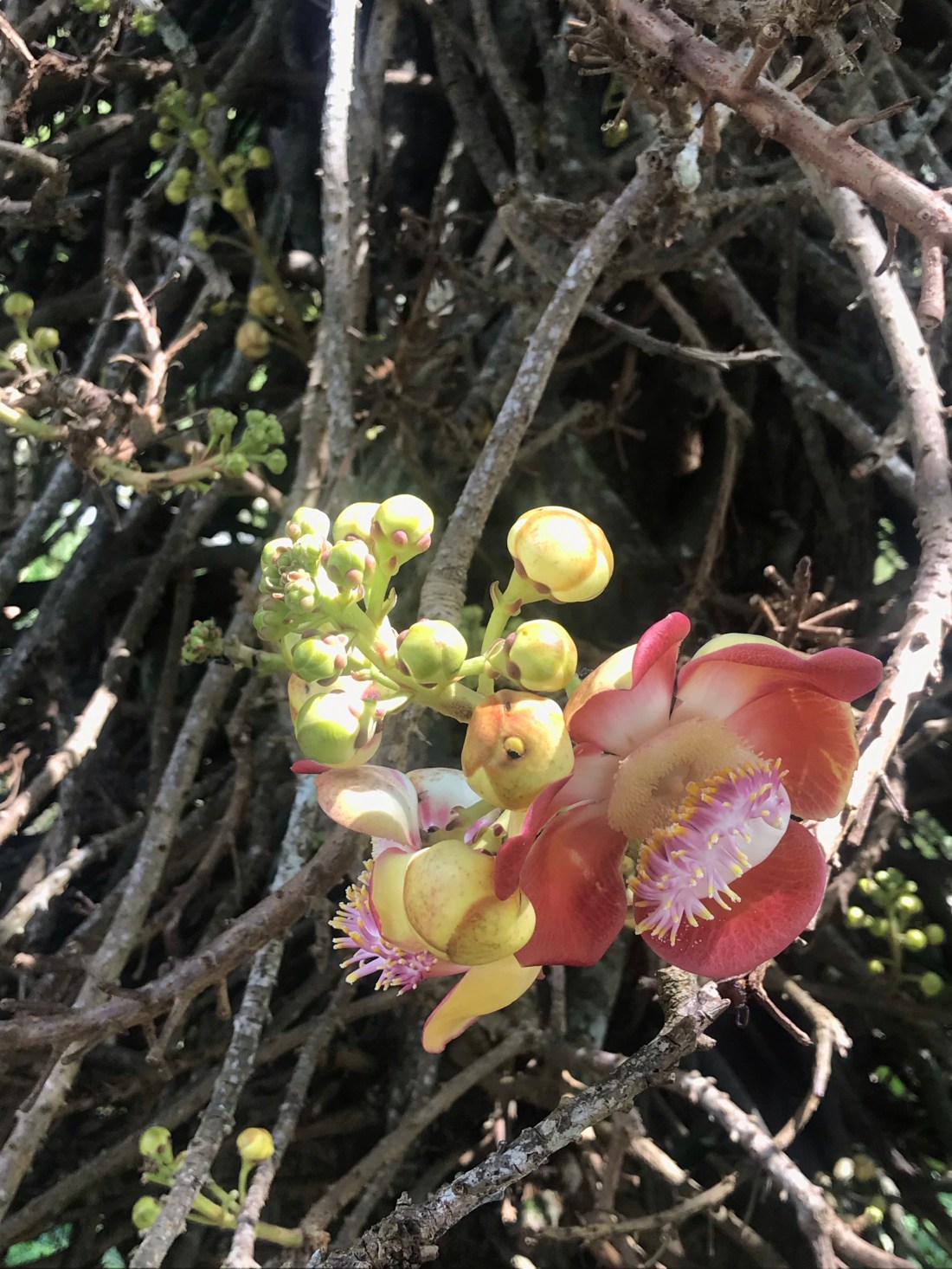
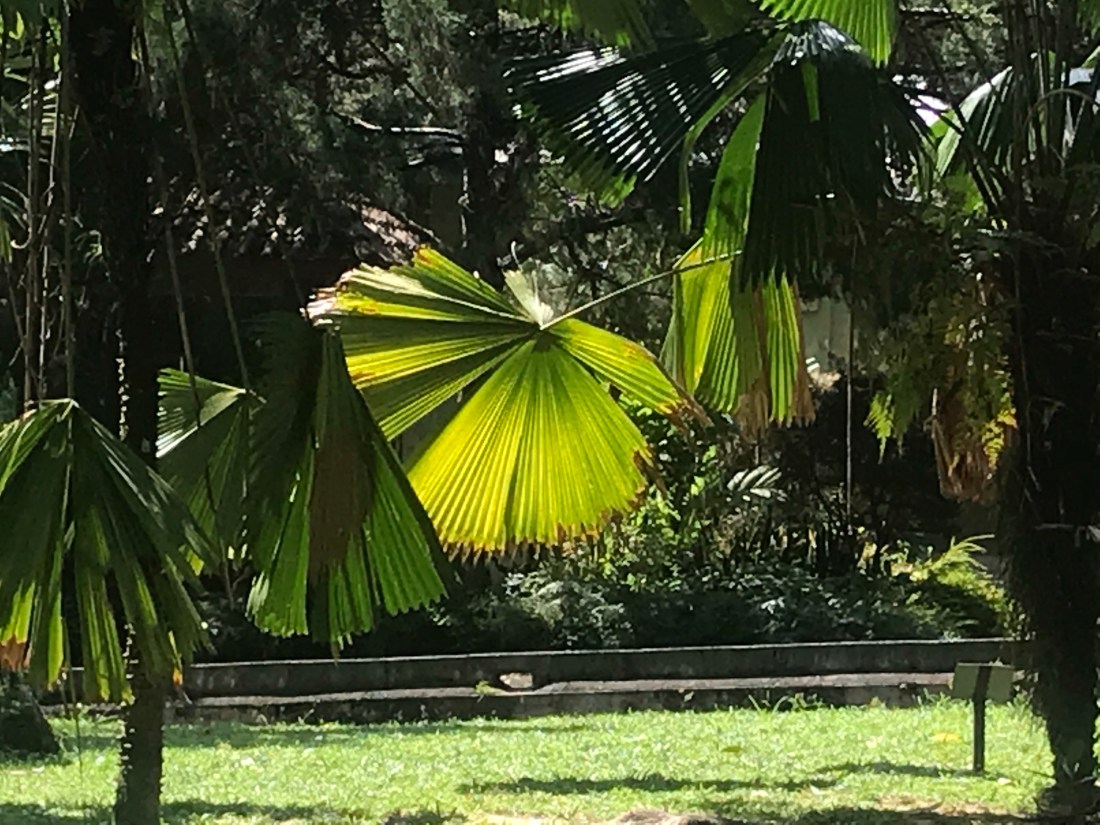
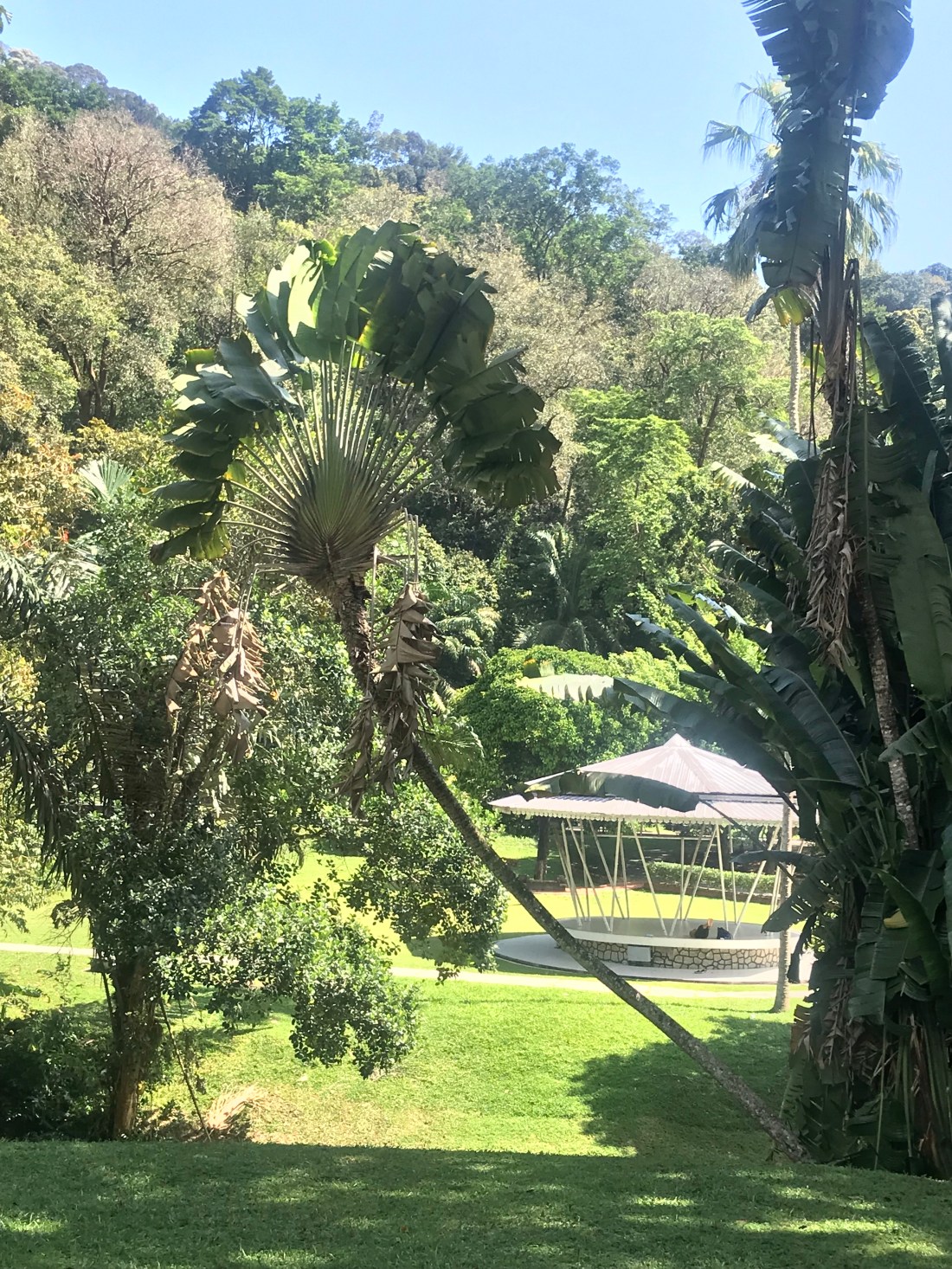
After the reclining and standing Buddhas, and the Colonial Penang Museum, Raj drive me to the beach, via the Botanical Gardens. Not much to write about the Botanical Gardens – it was too hot and humid for me to walk far, and though I followed the signs, I couldn’t find the things they pointed me to (although it’s possible the Japanese Garden was there but still under construction/reconstruction). I did however see the cannon ball trees (the only ones in Penang according to this guy) and a monkey:

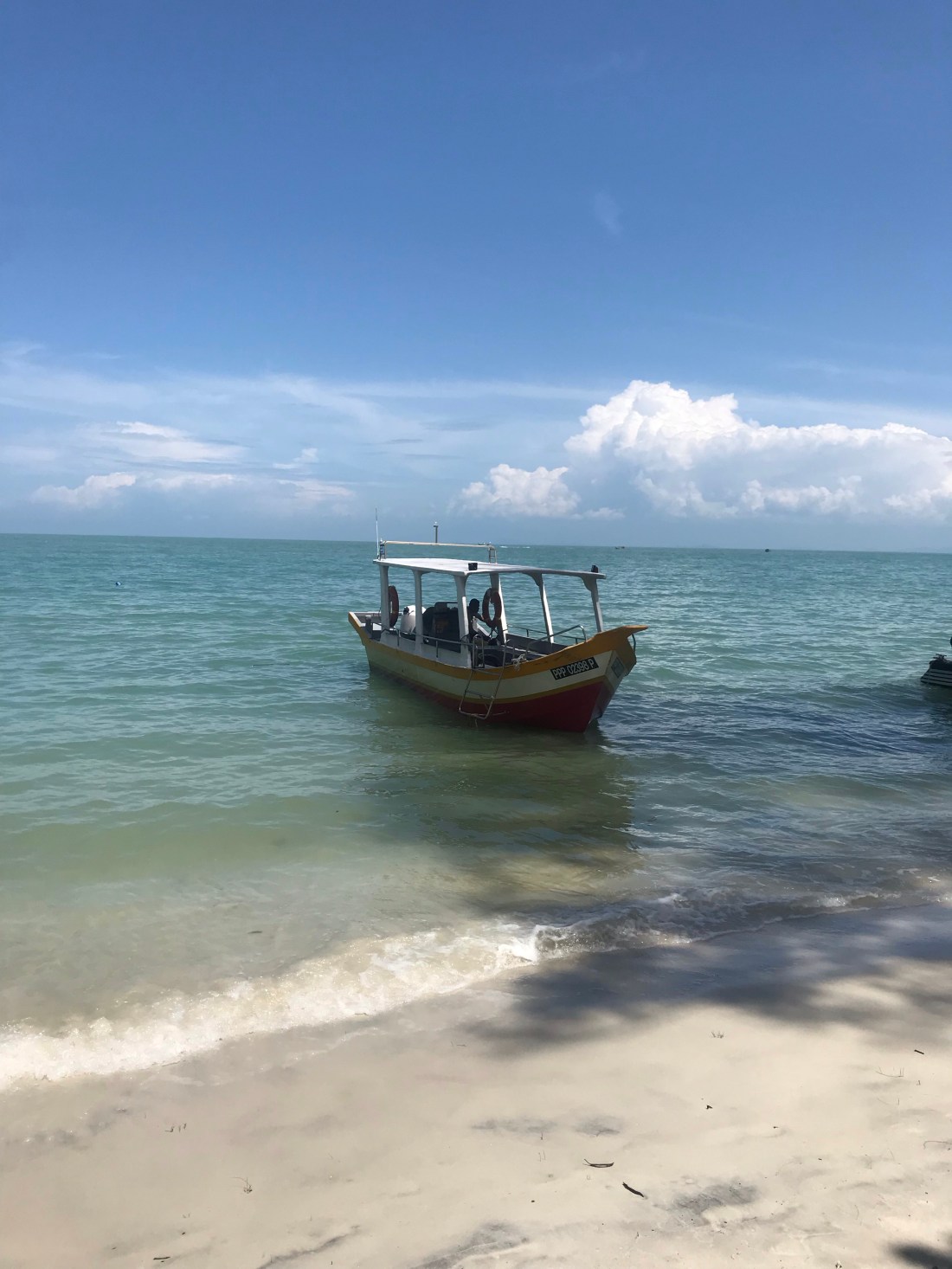
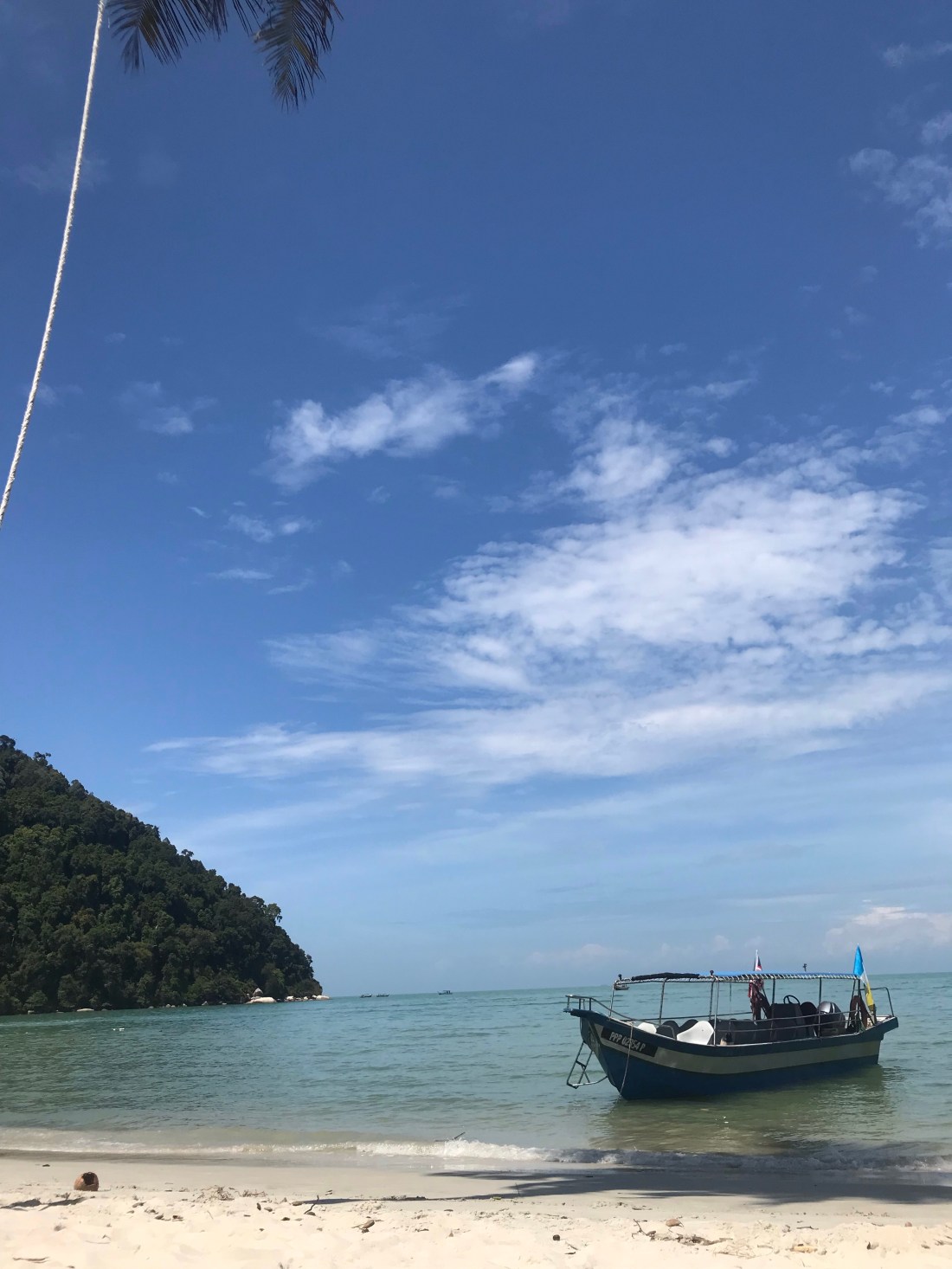
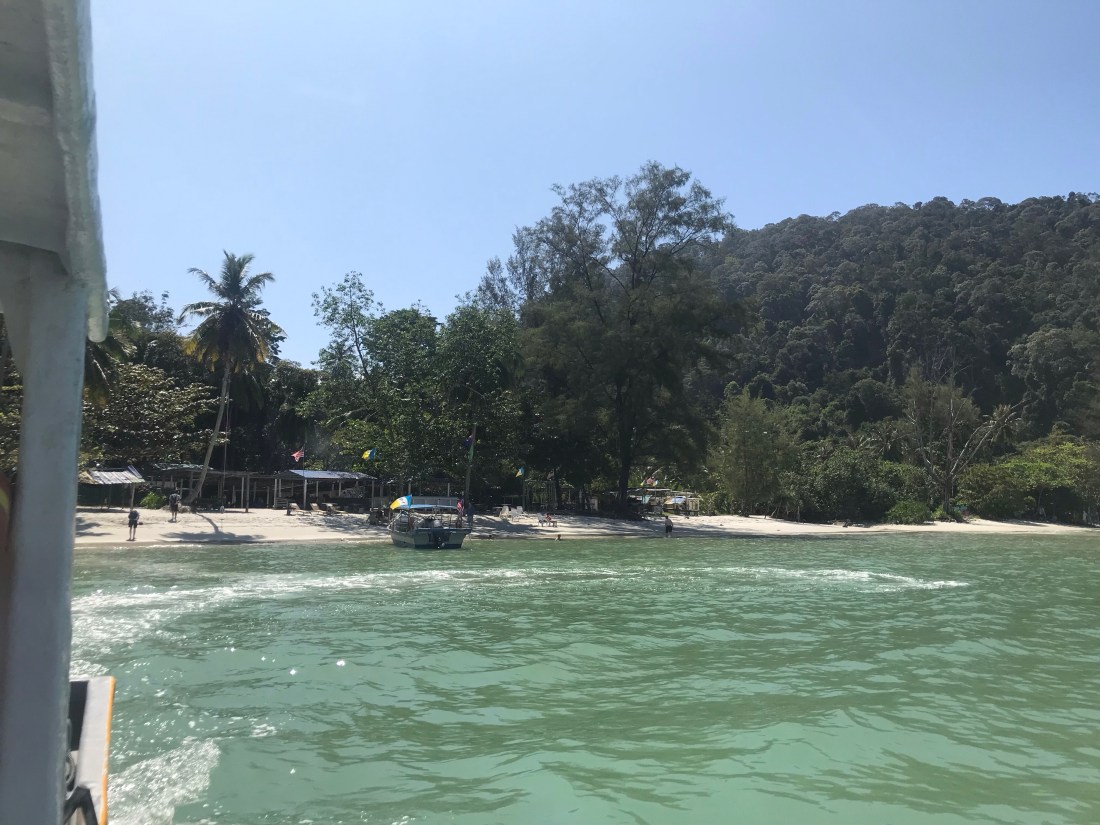
Raj recommended we went to the national park in Penang, and I took a short boat trip across to “Monkey Beach” to have a swim, as he said that beach is cleaner than the others nearer the hotels.

On the way to the beach this song by John Legend came on the car radio:

“…Cause all of me

Loves all of you

Love your curves and all your edges

All your perfect imperfections

Give your all to me

I’ll give my all to you…”

Throughout my Southeast Asian experience, I have been lamenting the state of my overweight body. (Asian women as so uniformly petite and beautiful. I felt like an elephant most of the time!) It’s a cheesy song, with not a lot of musical merit, but it seemed to me in this instance that God was singing it to me. The voice of God is like this wherever I go, even across the other side of the world, God sings an intimate love song over me. Relentlessly gentle and kind. The boat trip cost quite a bit. But I know when I’m being invited to something beautiful. I had a 12 seater boat all to myself. And the sandy beach had very few people on it.

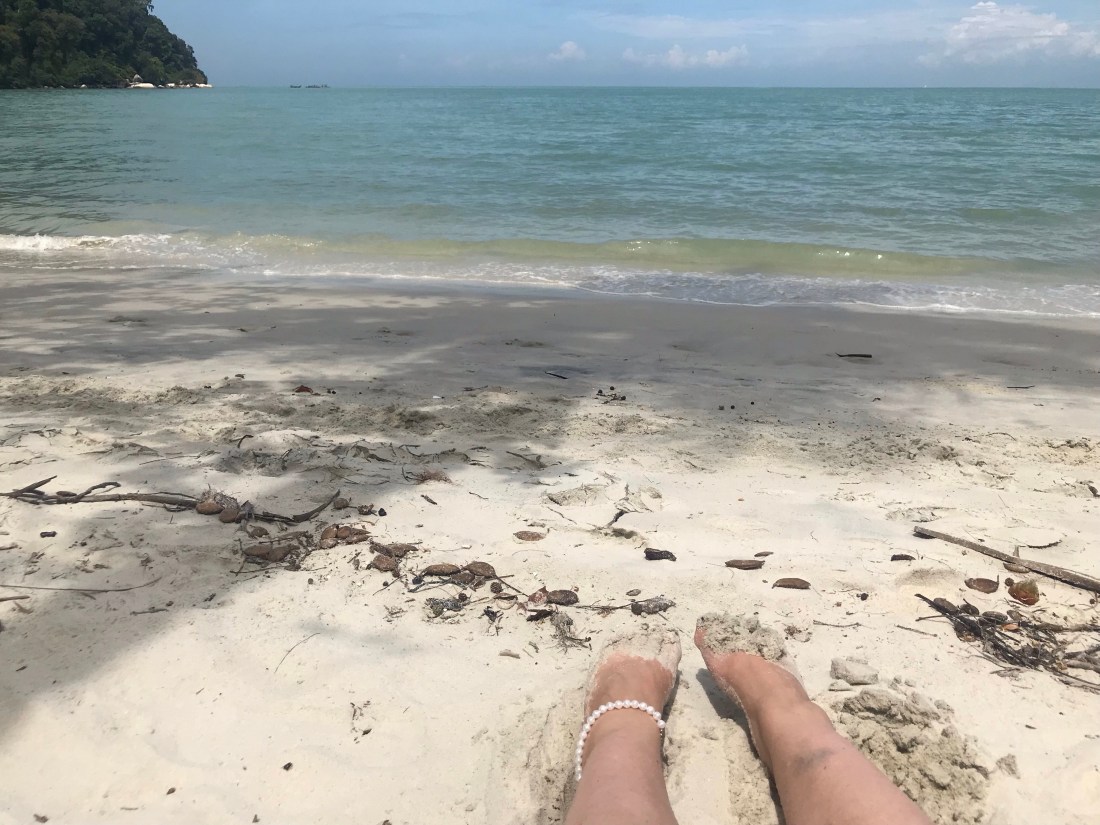
I guess there were monkeys at Monkey Beach. But I preferred to swim and then lie in the shade watching a huge hawk glide over the sea then plummet for fish. And to admire the unshifting clouds.

Those who live in England or other cold countries – you know how, when you brave the beach in the height of summer, you sometimes swim into a warm patch of sea and it’s lovely? Well, here in the Andaman Sea (part of the Indian Ocean), the whole sea is like that warm patch, and when you swim into a cool patch it’s glorious.

Later in the day, and in fact for the rest of my time in Penang, I ate very little. Probably partly to do with the heat and humidity, but also I think to do with the fact that I had been reminded that I am greatly loved.

Holiday injury report

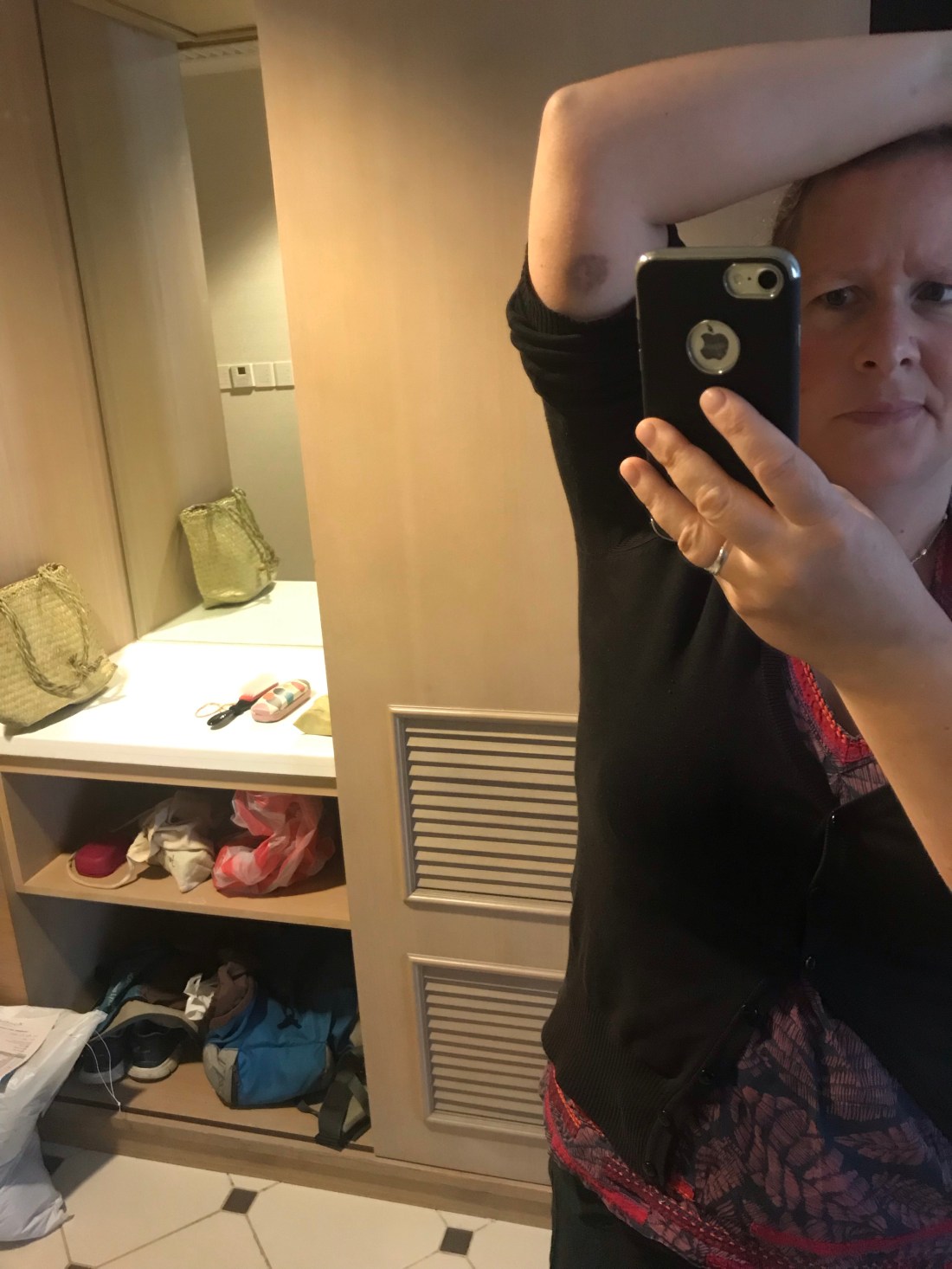
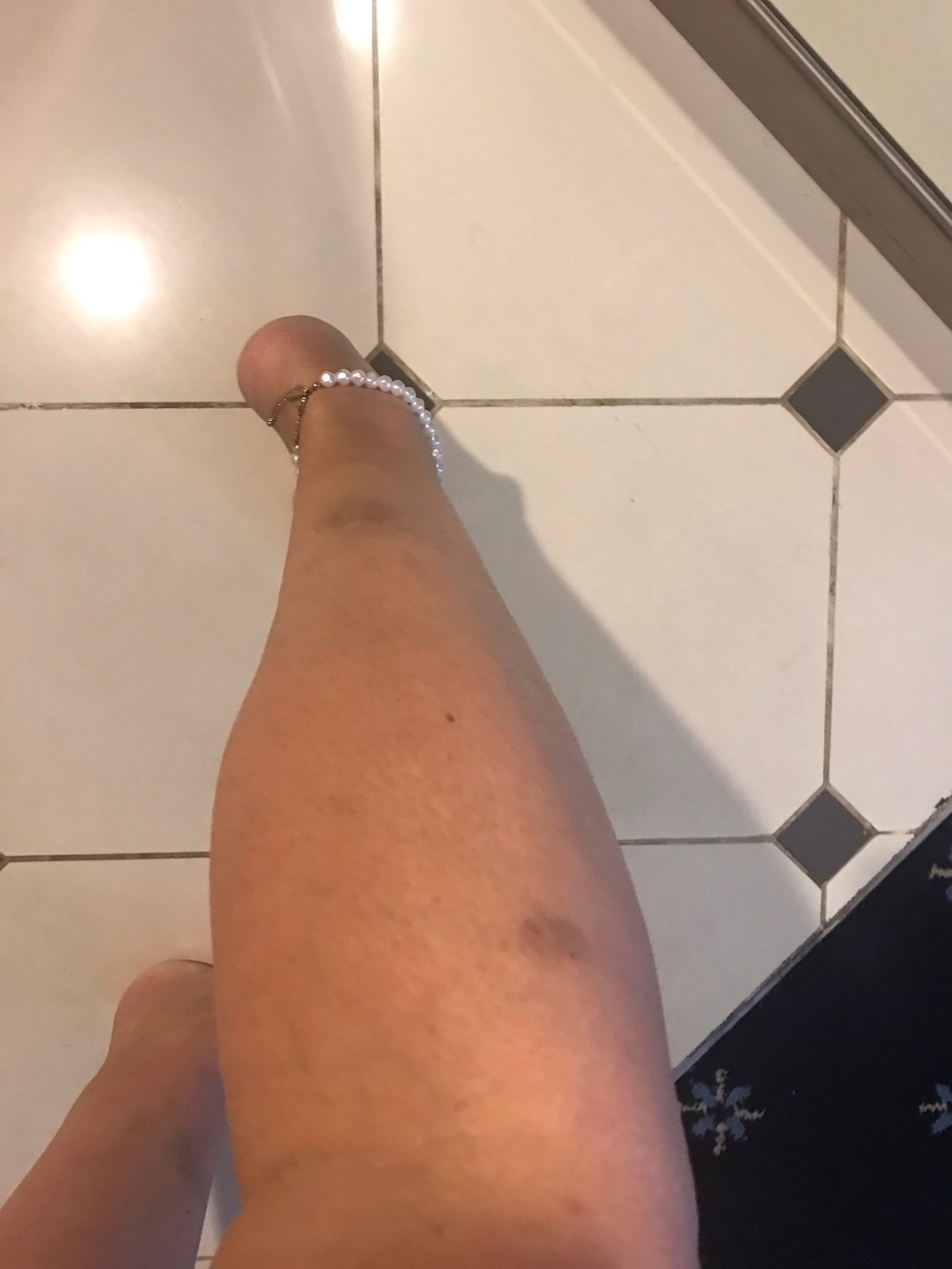
A brief pause in the history lesson to report on my holiday injury status. So far I’ve come off remarkably well. Only minor bruising though there has been quite a bit of that, mysteriously. I also developed a rash on the area above my chest but that seems to have cleared now. And I have several mosquito bites still, but they’re on their way now.

No idea how I sustained this bruise. No idea at all. But it’s taking ages to heal.

I am rejoicing in the fact that I haven’t been swept away in any more tides or drowned or broken any limbs or ended up needing medical treatment of any sort so far, bar a bit of antihistamine and tea tree oil (and my usual tablets of course) (I wonder if they make me more susceptible to bruising?).

Penang Island (ii) a history lesson

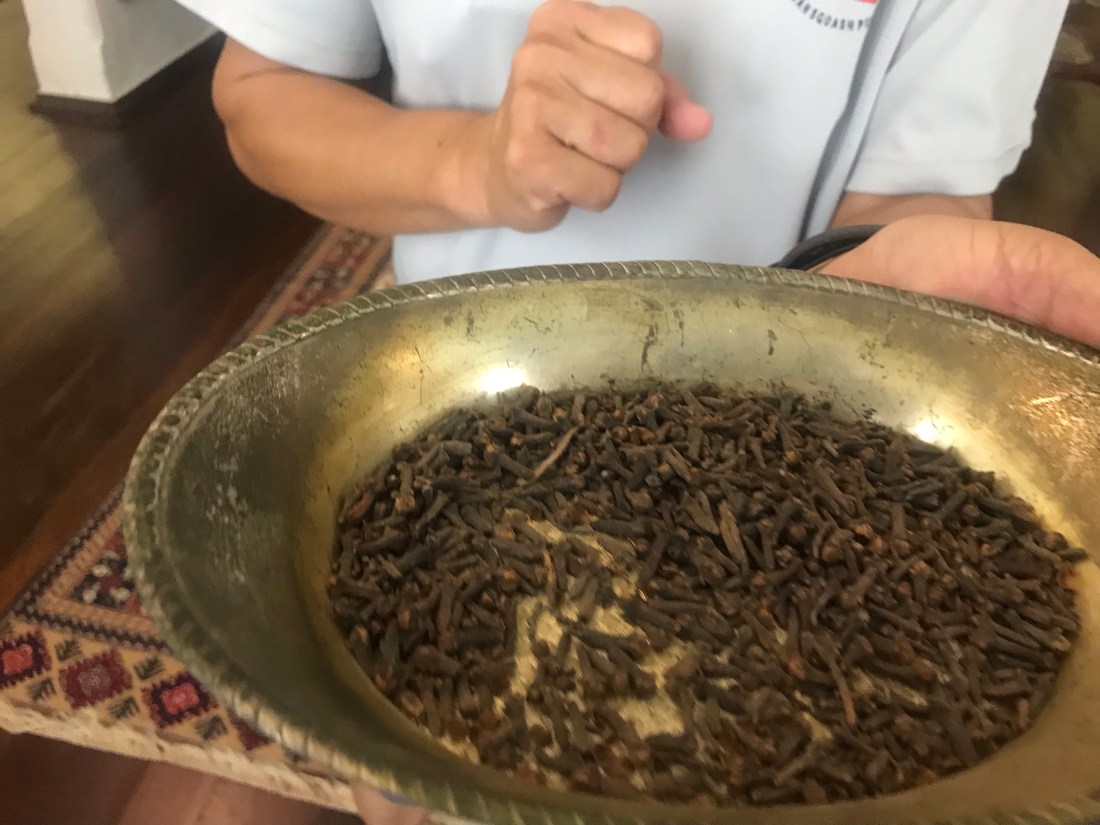
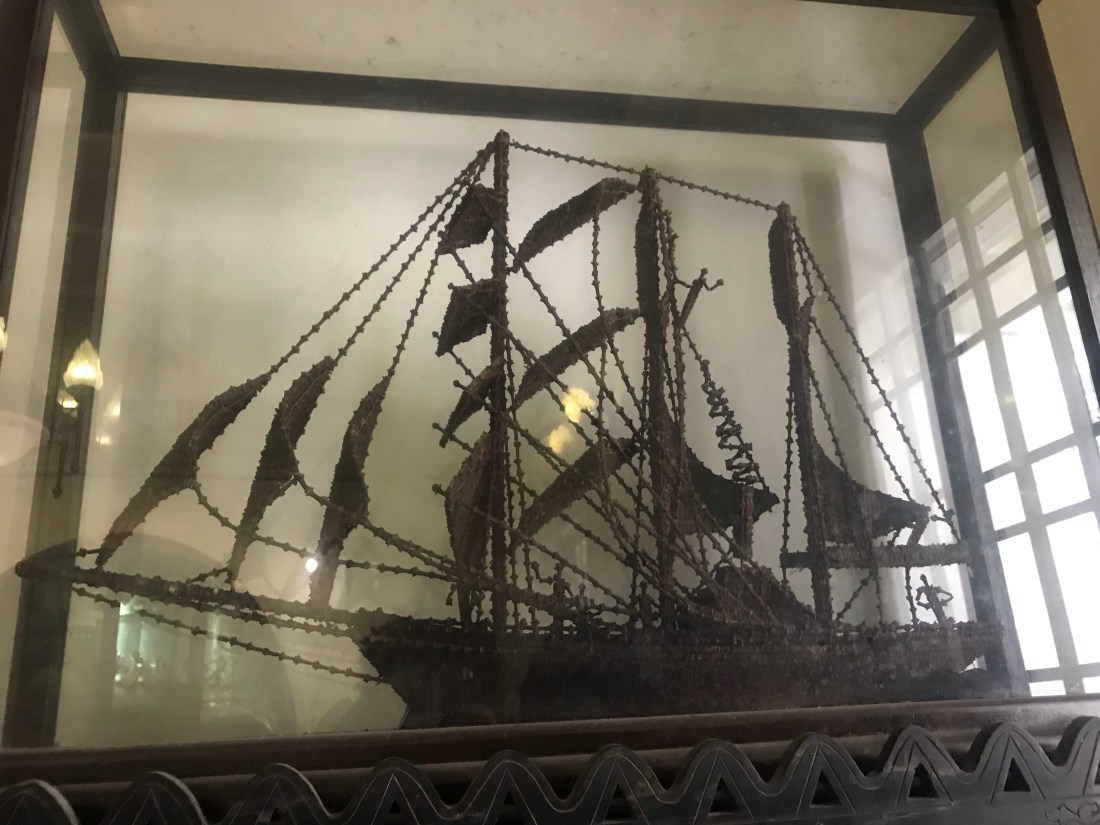
At one time, cloves were more valuable even than gold here, as the place was on trading routes for spices. The ship below was made entirely of cloves threaded together. As with much of this colonial era stuff, designed to impress people with the wealth of the owner.
Welcome to the Colonial Penang experience. The British “founded” Penang (never mind the Malay people and others who were here long before) on shaky ground to start with. Captain Francis Light got the Sultan of Kedah to give the British East India Company the Island in return for British military assistance (which never eventuated, because Light had acted without consent of his superiors) and a fairly paltry sum of money (6000 Spanish dollars / year). Covering ourselves in glory as always (not). George Town was established in 1786 and named in honour of King George III, and became the first British settlement in Southeast Asia, and a springboard for further expansion of the empire in the region.

When the Sultan realised Light had done the dirty on him, he tried to attack. Light tried to persuade him to stand down, but failed. Light had access to too much military might, and managed to defeat the Sultan.

In 1800, Sir George Leith, the first Lieutenant Governor of the island, managed to gain a further strip of land from the Sultan. In return, the annual payment to the Sultan became 10000 Spanish dollars. Apparently, every year, the Malaysian Federal Government still pays Kedah 10000RM as a symbolic gesture. And the British government pays nada. Hmmm.

But, business flourished and there was a lot that was good about the British influence here, bringing beautiful building design techniques and materials, and music and so on, which remain today. Local people are prodigiously proud of their island and of George Town, I think. Penang is one of the most well developed areas in Malaysia, apparently, although George Town itself is a UNESCO world heritage site, so can’t be as modernised.

During World War II, the British withdrew from Penang, leaving it vulnerable to attack. (When the going gets tough…) In December 1941 the Japanese bombed the island heavily, killing and wounding numerous civilians. The British had secretly evacuated all the European citizens in Penang beforehand as well. From December 1941 until September 1945, Penang was under Japanese occupation, which was a brutal regime, particularly for the Chinese, thousands of whom were massacred. On 2nd September 1945 at the end of the war, the island was recaptured by the British, finally.

A positive view of the British was never reestablished after all that betrayal, and Penang finally gained independence from the British Empire in 1957. The local people here seem very philosophical about it all now though, and they still all call me “Madam”. But I bet they wouldn’t trust a British businessman further than they could throw him!

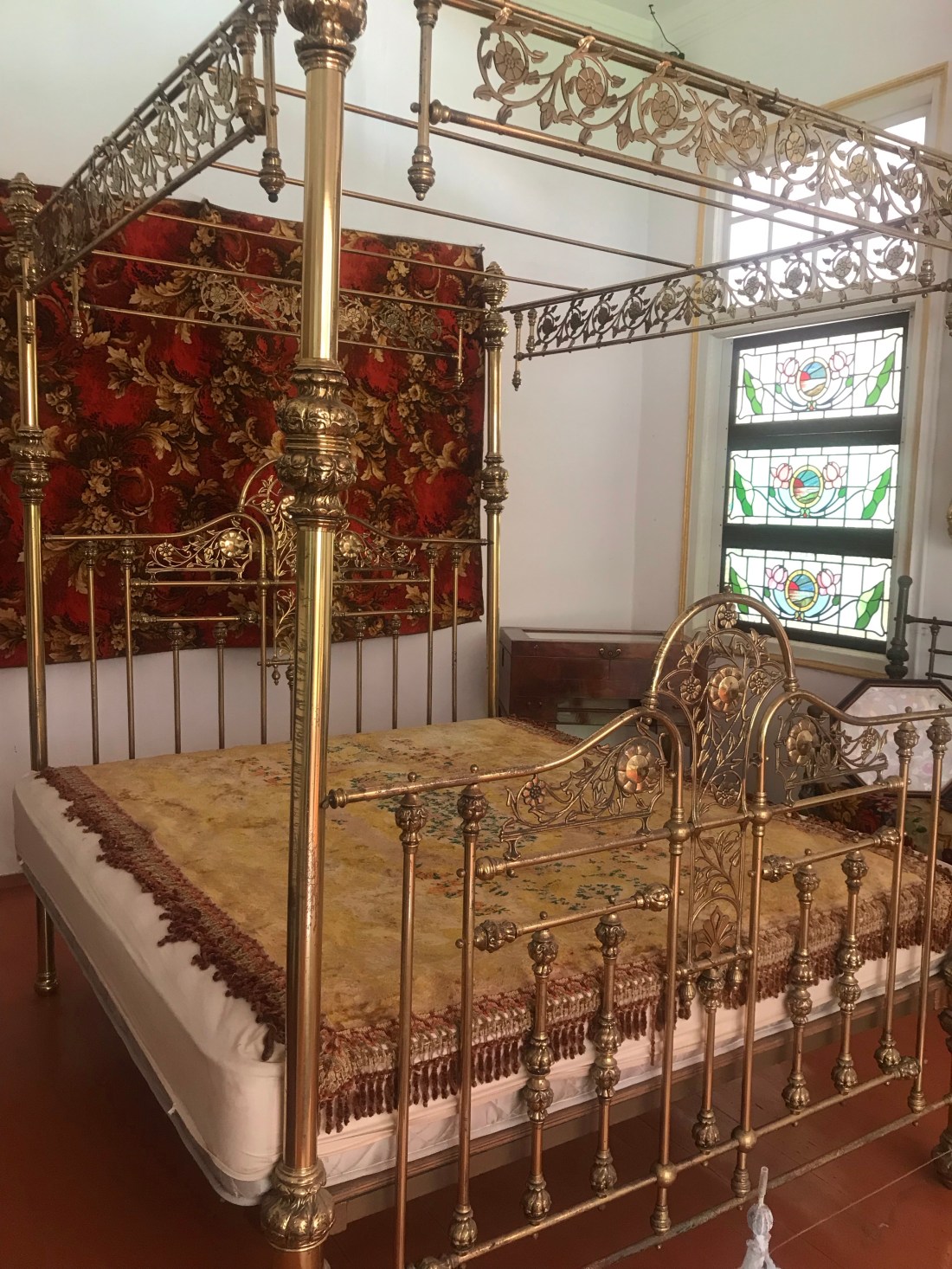
The opulence displayed in a lot of the museums in Penang was not actually British owned. Rather it was owned by Chinese tradesmen (Baba) who married Malay wives of high social standing (Nyonya), and built on their existing fortunes (the phrase “Baba Nyonya” is used a lot here to describe these beautiful and socially important couples). It was in their interest to keep in with the British, so they adopted a lot of things like British clothes and also at great cost imported British (and European) made building materials, stained glass windows, trumpet vases, furniture, you name it, for their mansions.
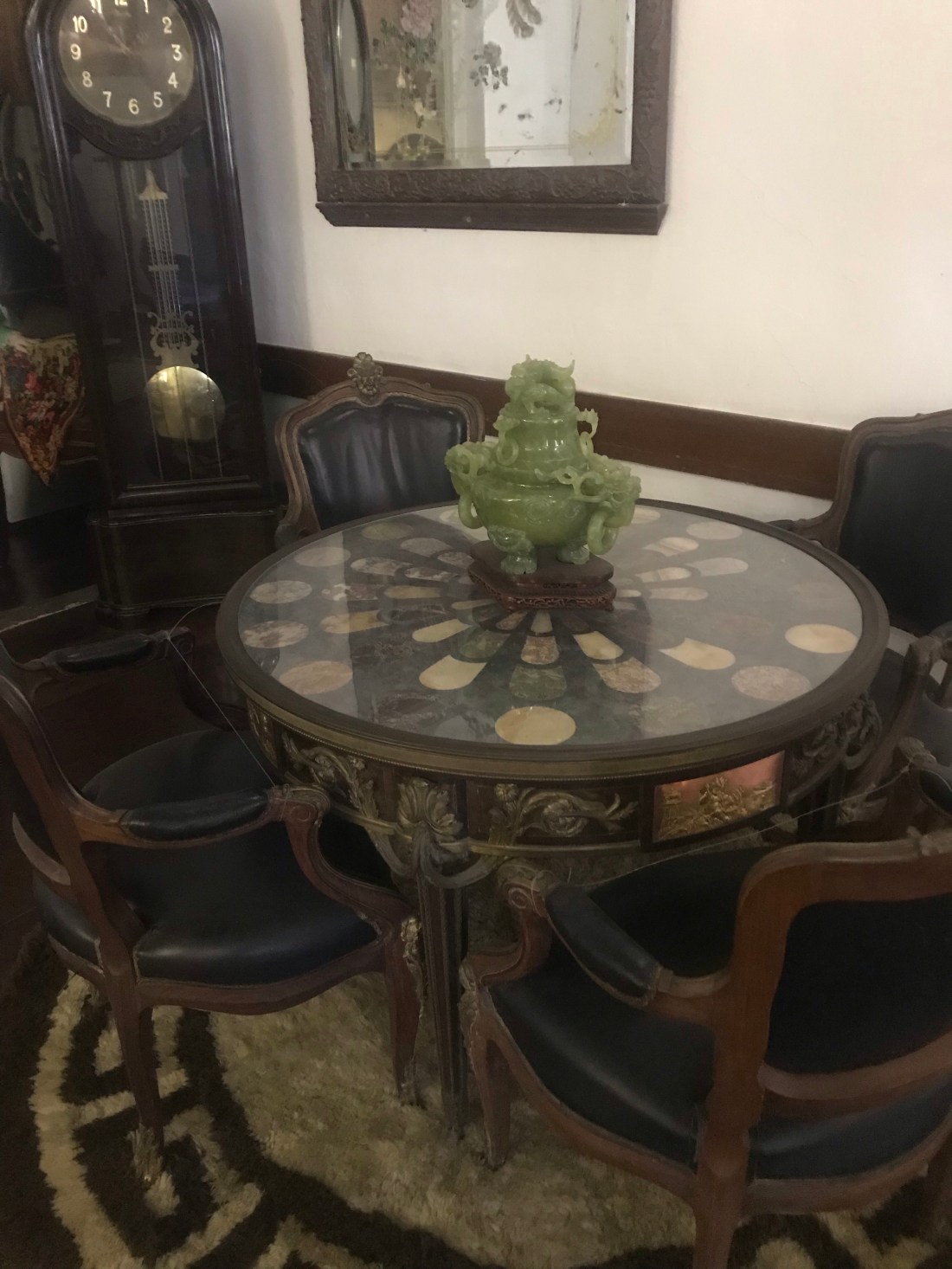
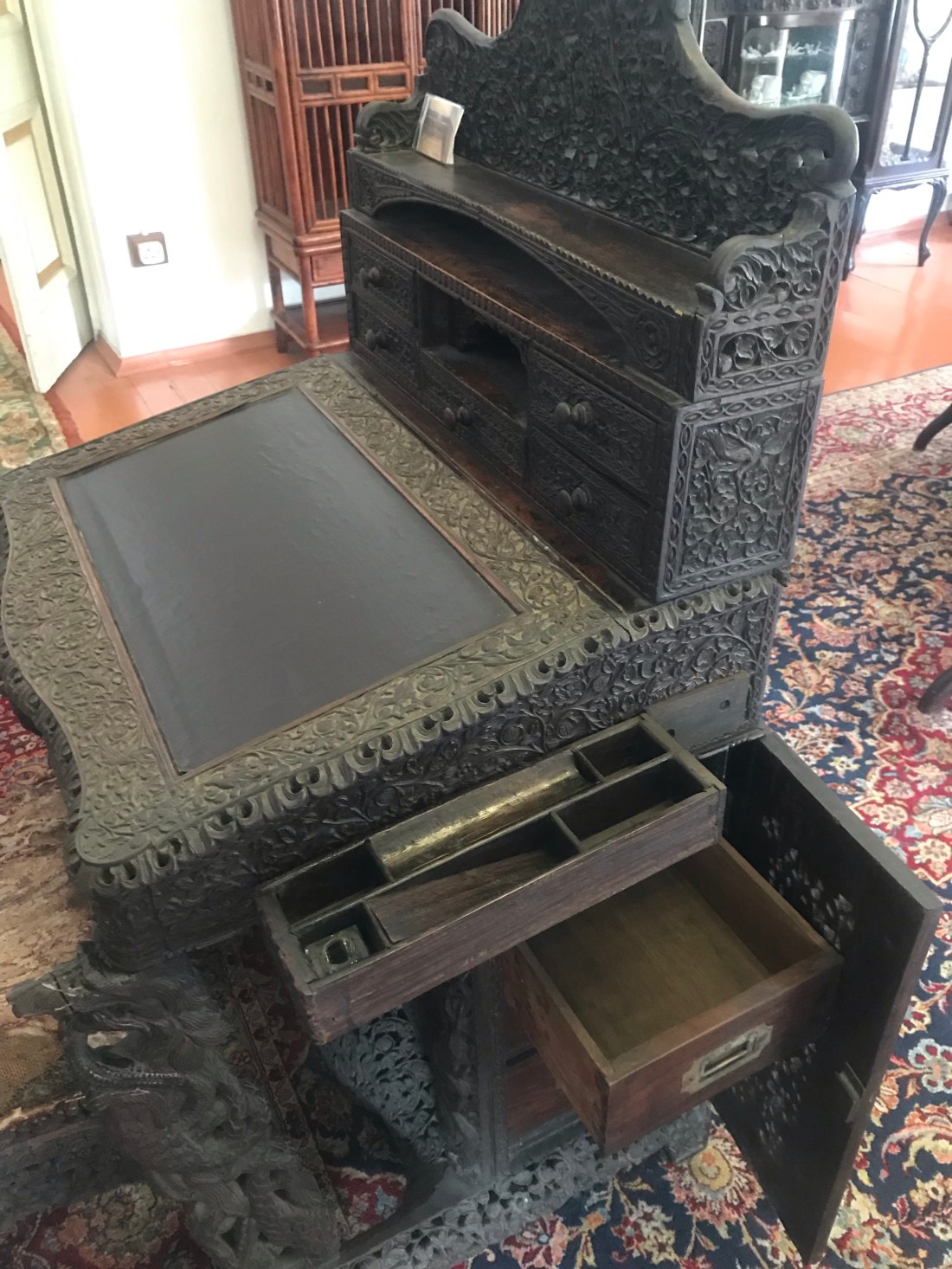
Captain’s desk made for the captain of a ship, including lots of hidden compartments for confidential documents as well as beautifully intricate carving:
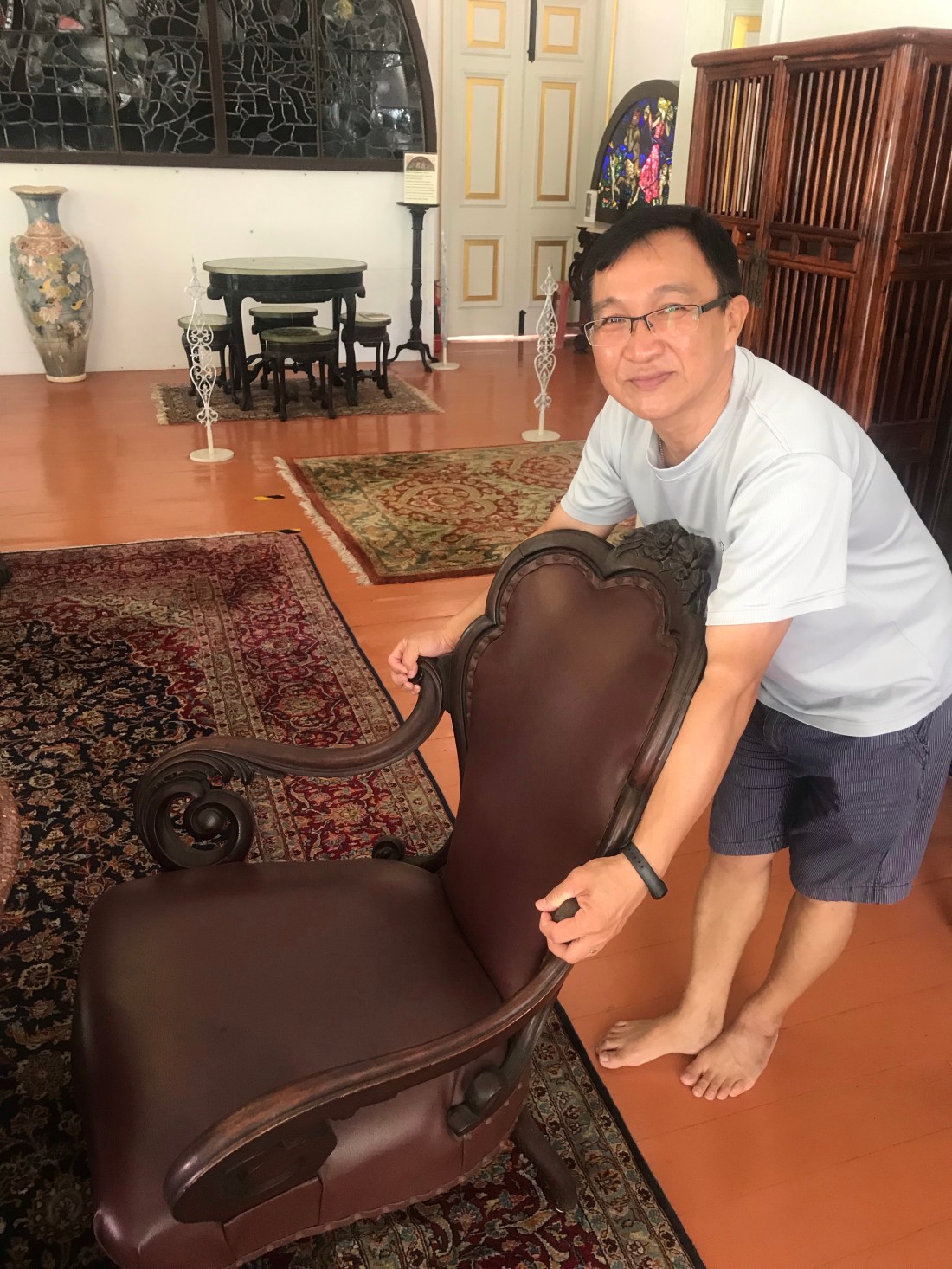
Scrolls carved onto the arms of this chair for ladies, so the gentleman can pull it back for them as my guide demonstrated here. Ah, there are some things I’m sad we’ve lost…!
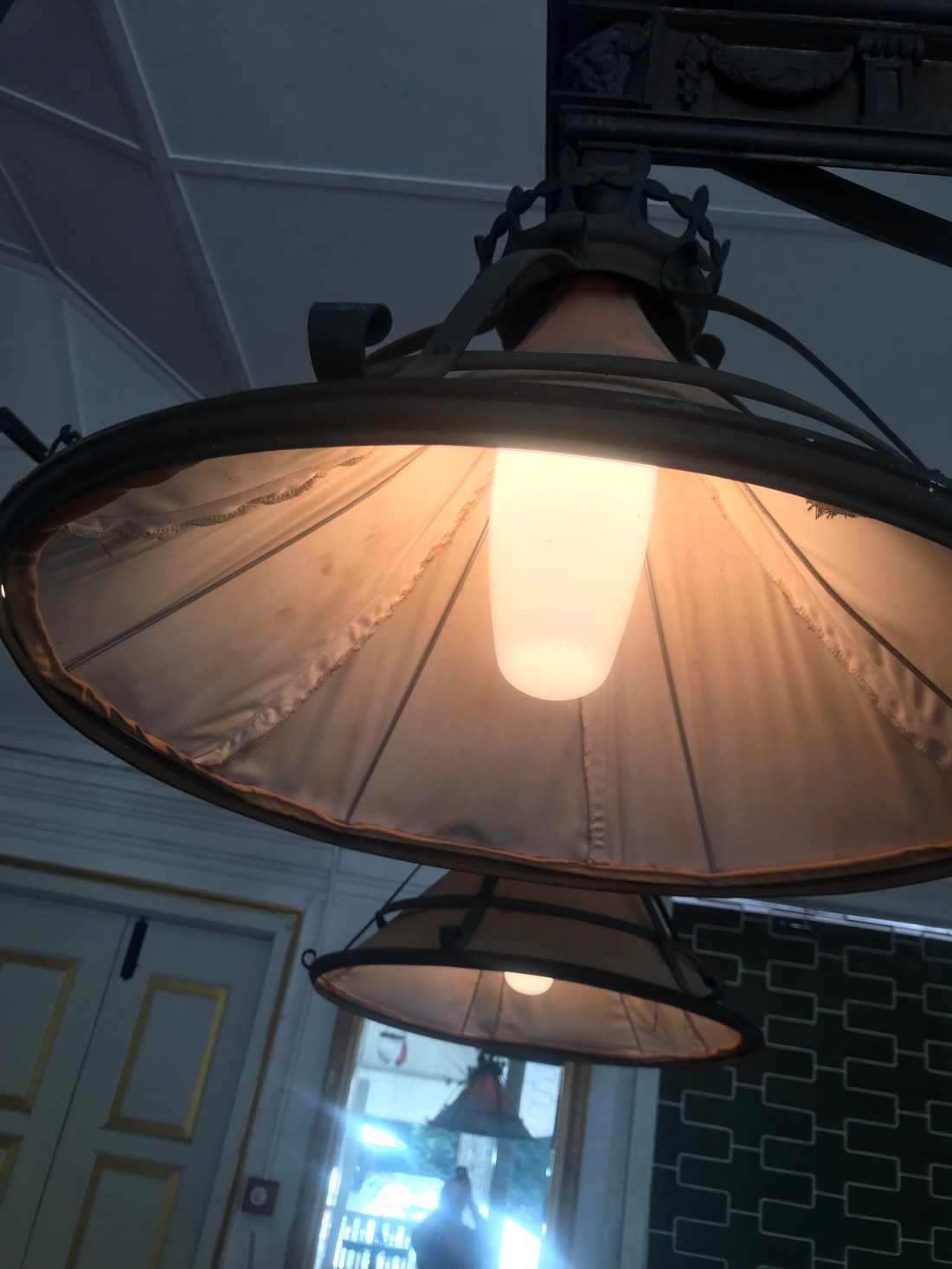
Here are some Philip’s light bulbs. They have been working since 1920!! Only one of them out of six has stopped working. So how come it took so long for us to get low energy light bulbs? That would last?
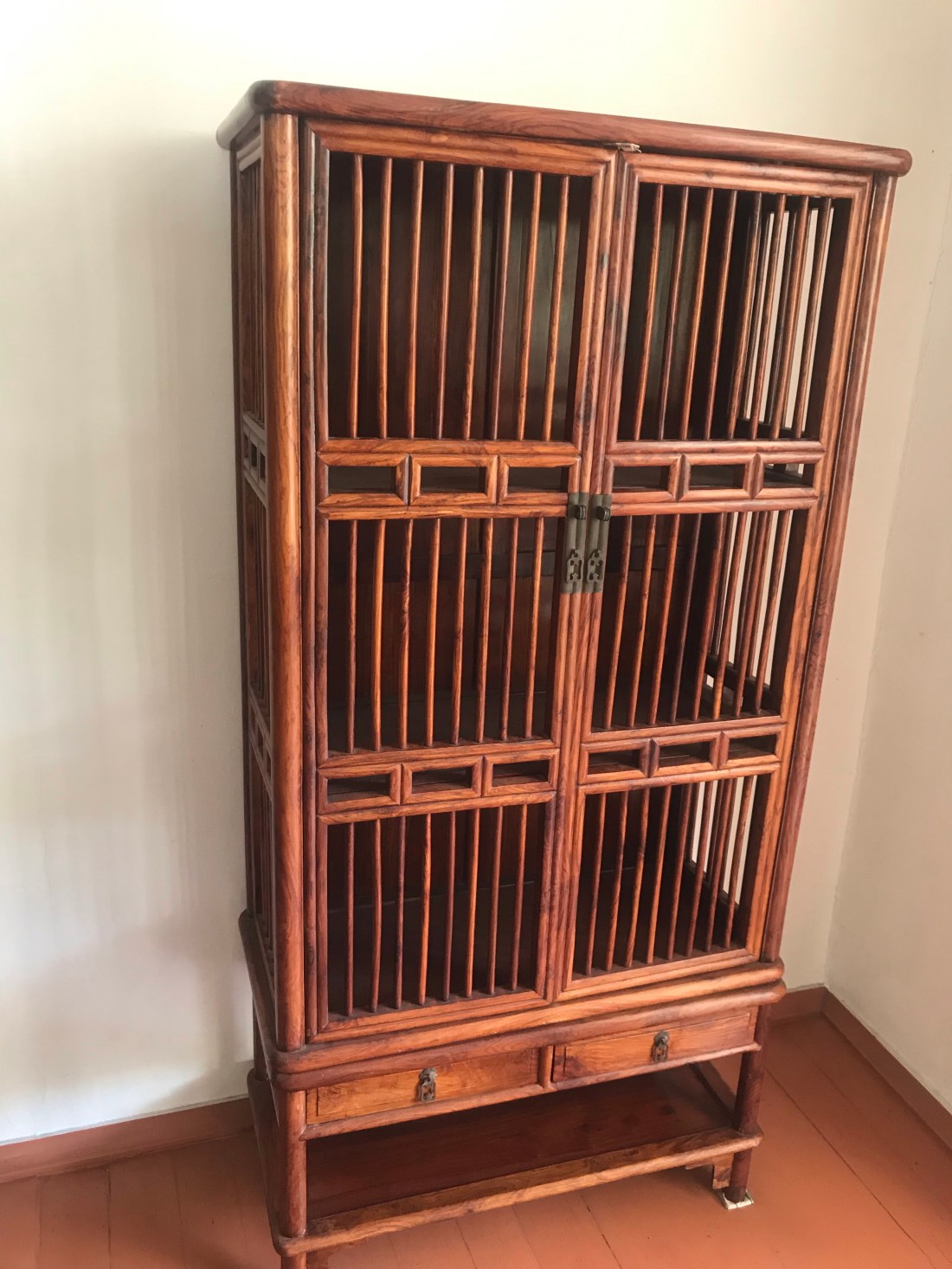
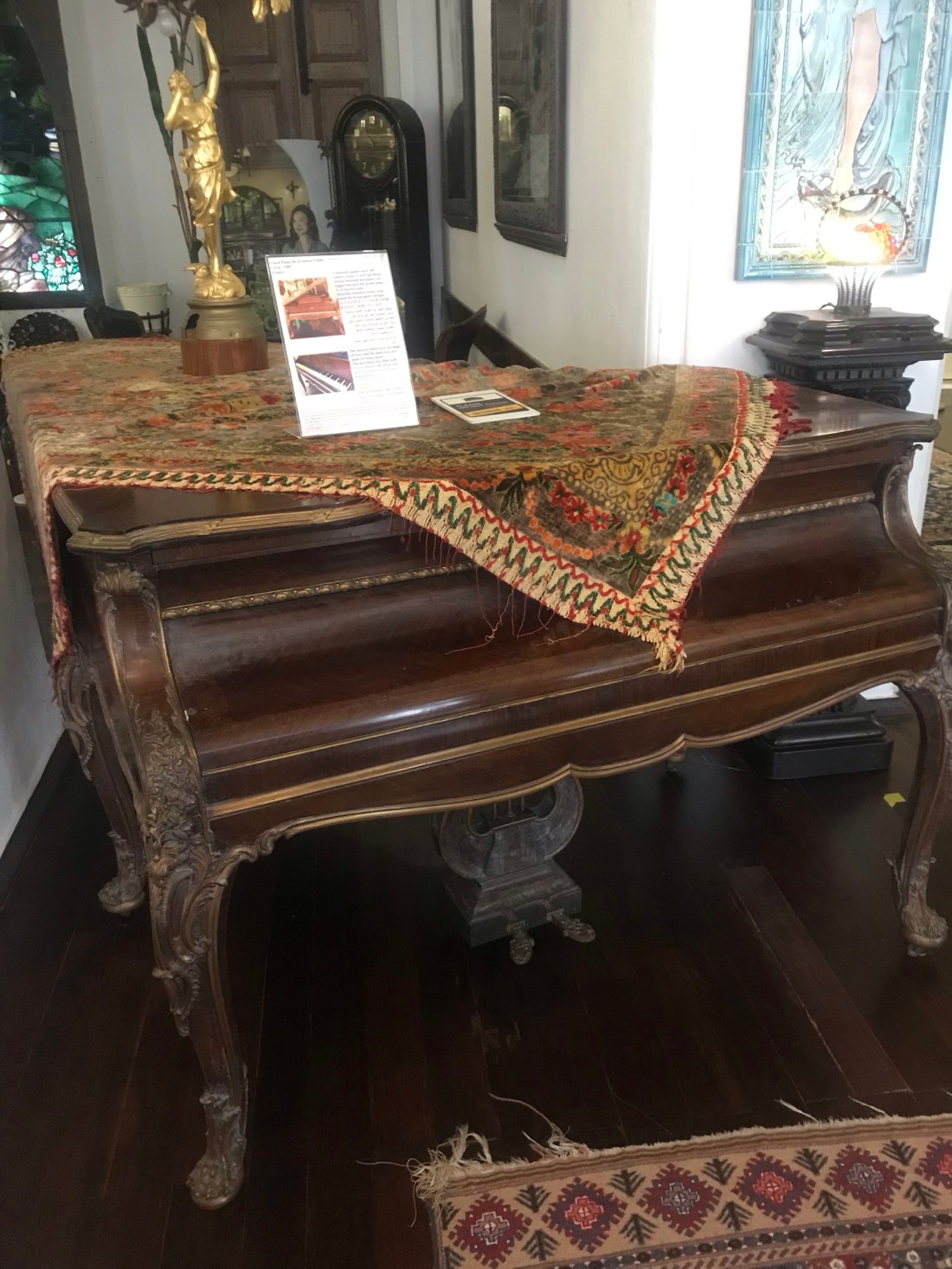
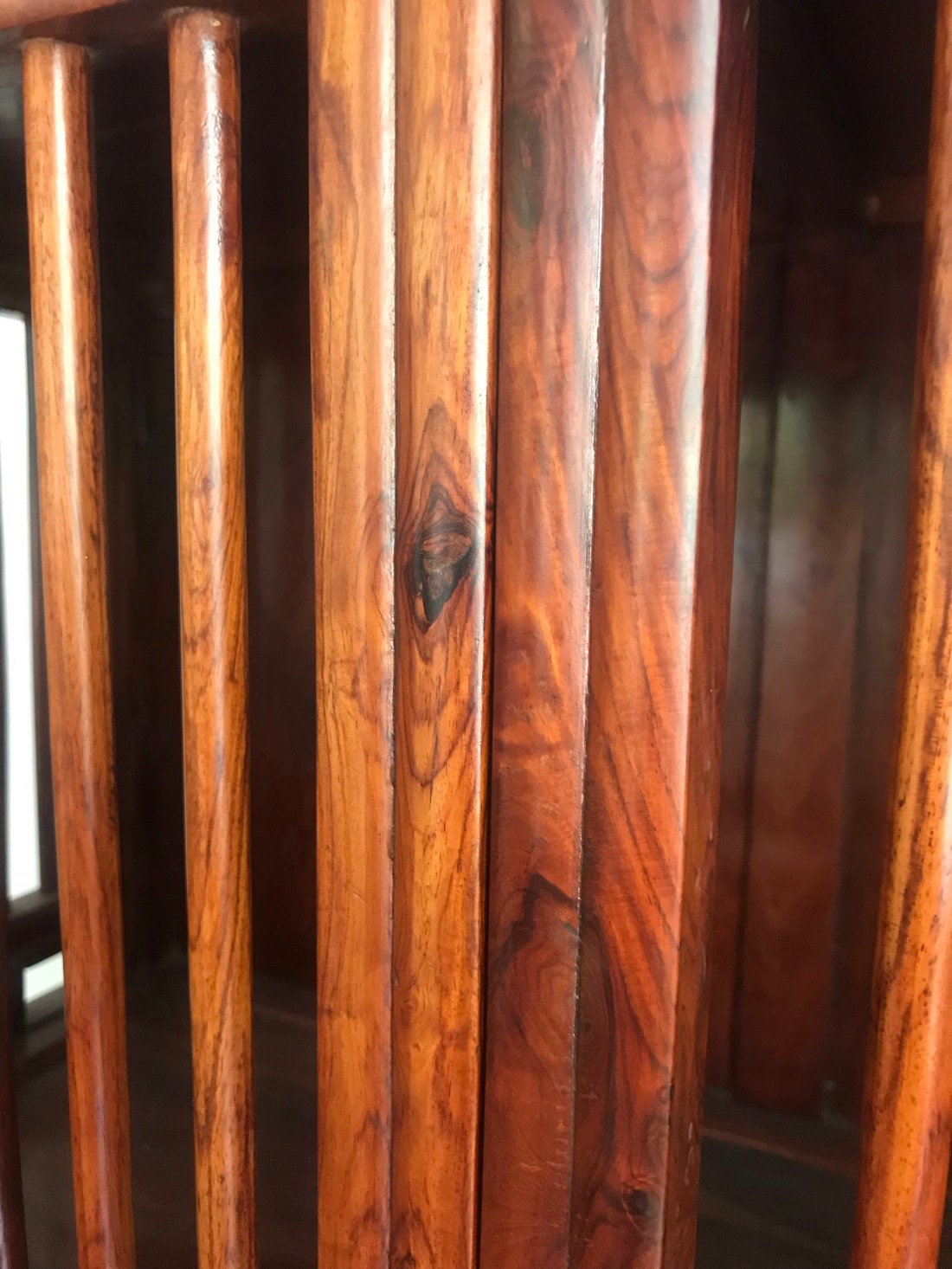
This bookcase is made with rare yellow flowering pear tree wood. Apparently, this wood now costs $3000USD/ounce! Everyone can touch it because that only makes it shinier.
This painting is from the early 1900s I think. One of the first to use really bright colours. It would have been pretty shocking at the time I guess, but also very fashionable.

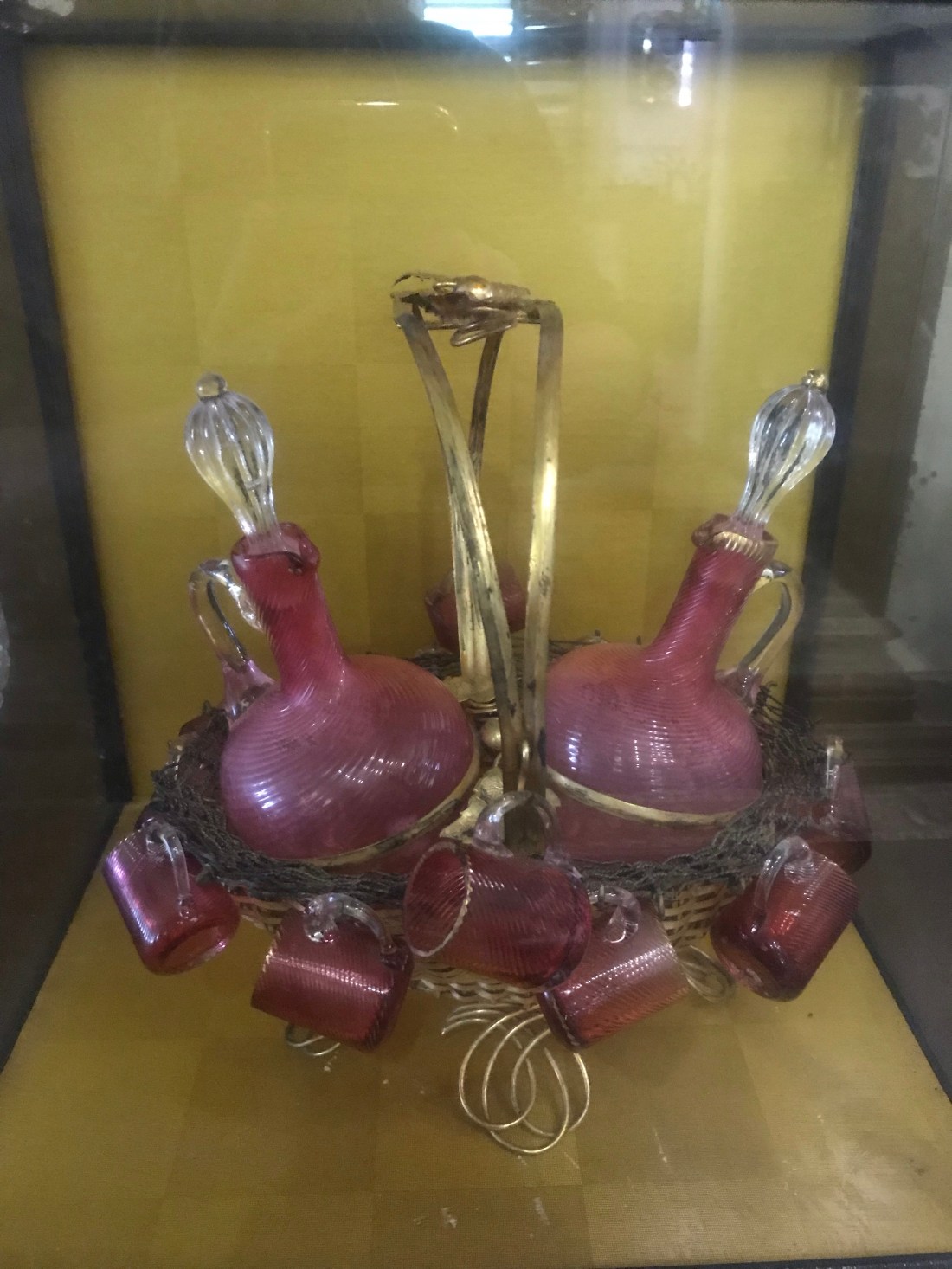
An ornate set for drinking liqueur. The shot glasses are so small because the liqueur would have been over 60% alcohol!
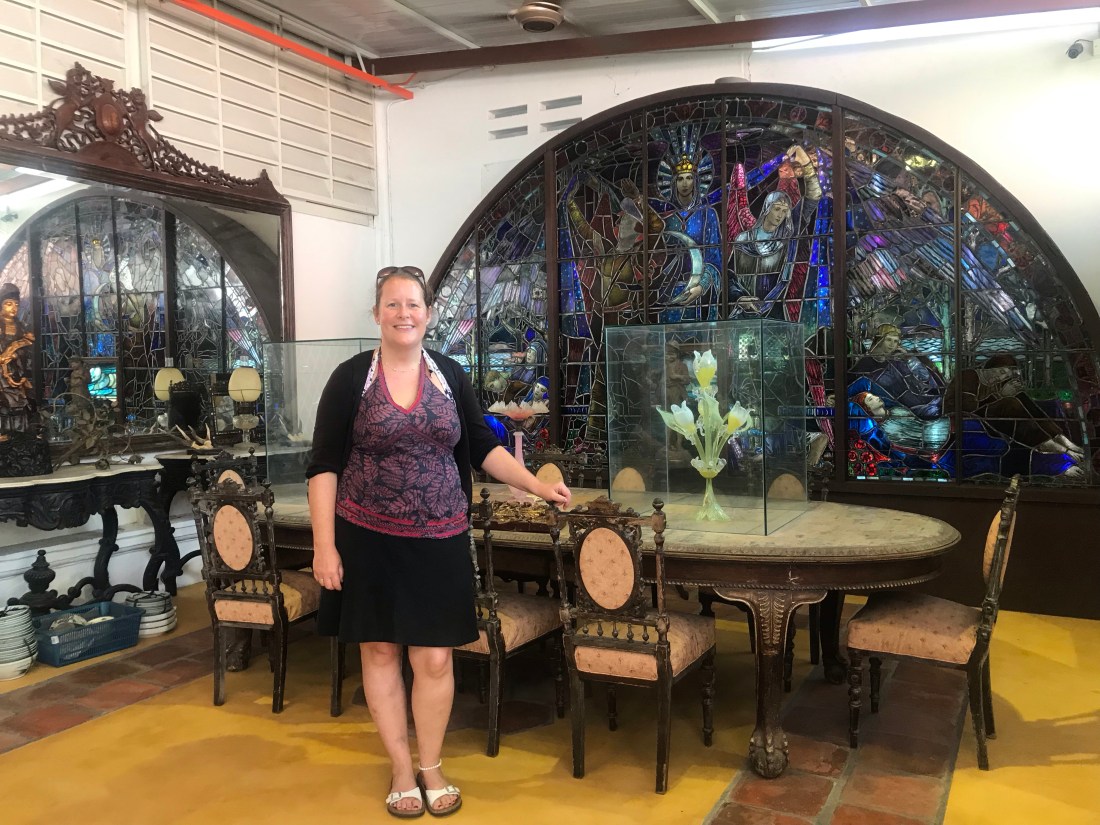
Do you reckon I could fit in here…? Hmmm…?
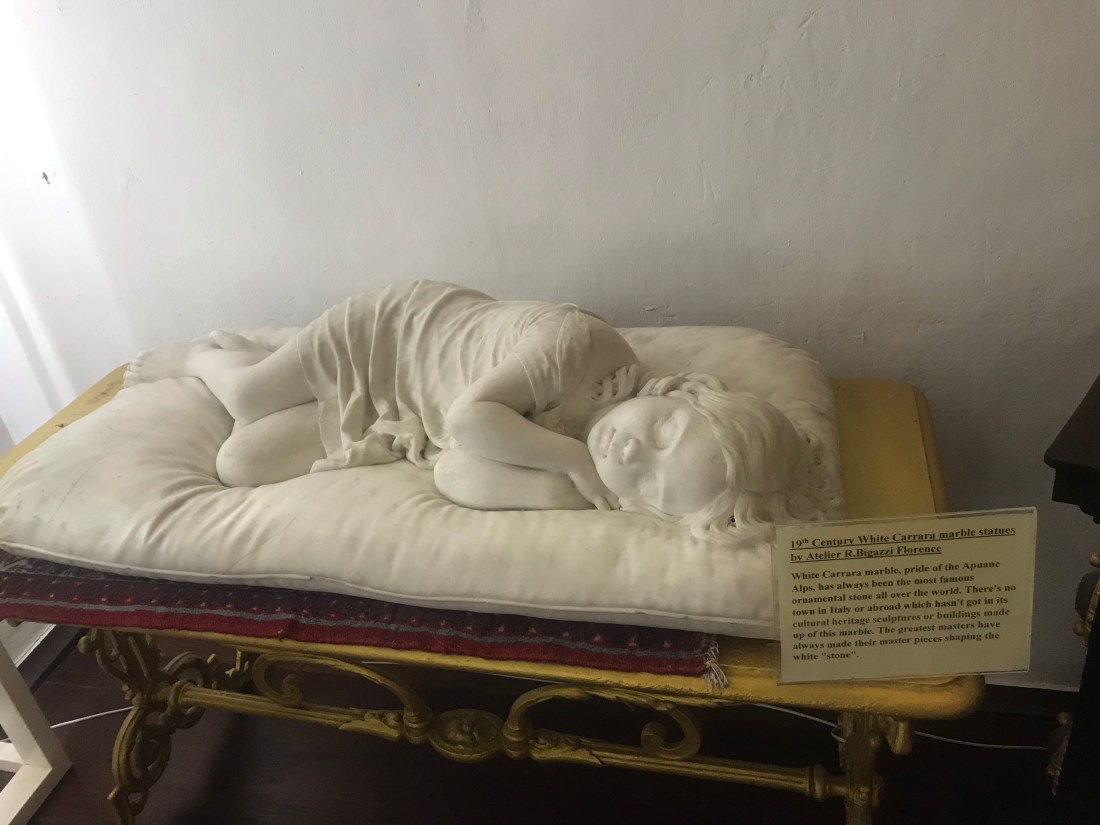
The owner of this mansion had a photo taken of his sleeping daughter, but then realised the photo wouldn’t last forever. So he sent it to Italy to have a marble sculpture made of her by a master sculptor and shipped back over to Penang. As you do.
Penang Island

Well, this has been quite an experience. I’ll draft more posts on the way back to Singapore tomorrow (I’m taking a day long bus ride down in the hope of seeing a bit more of Malaysia, if only in passing). I’ve been super grateful for a really good hotel. And everyone here addresses me “Madam”. I might have to introduce that back home!! 😂 Also, people are very genuinely kind and thoughtful. Today, as I walked through “Little India” in George Town, a man stopped, beamed at me, and said, “Have a nice day…God bless you!” And when I took shelter in a café from the rain, the waiter took my brolly and stashed it near the door, and, having established I only really wanted a drink and to read my book, moved me to a more comfortable squishy seat that was further back. Sometimes it’s really lovely to be treated like a lady by some gentlemen.

Anyway, here are just some of the extraordinary sights I’ve seen in the short time I’ve been here:

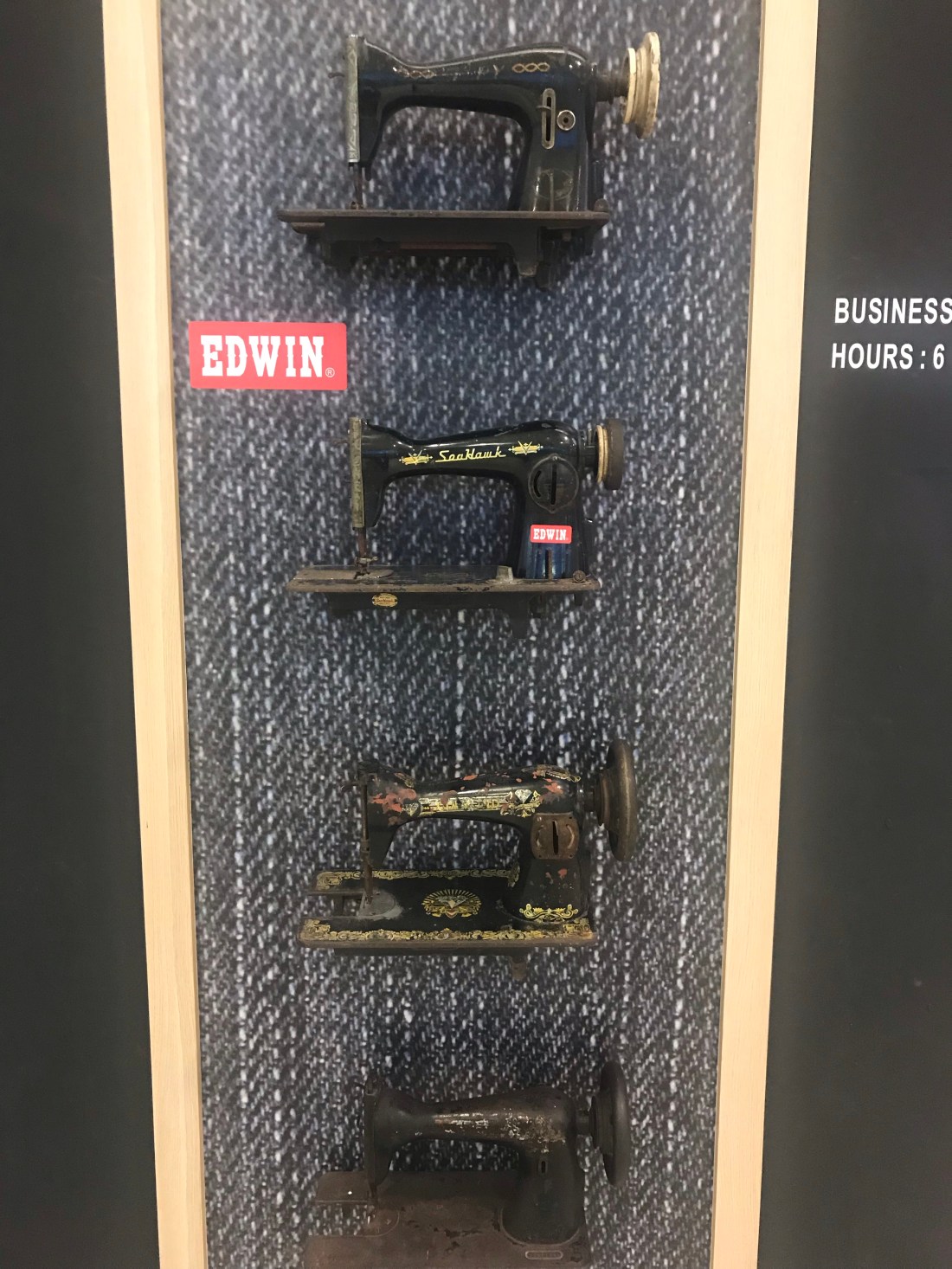
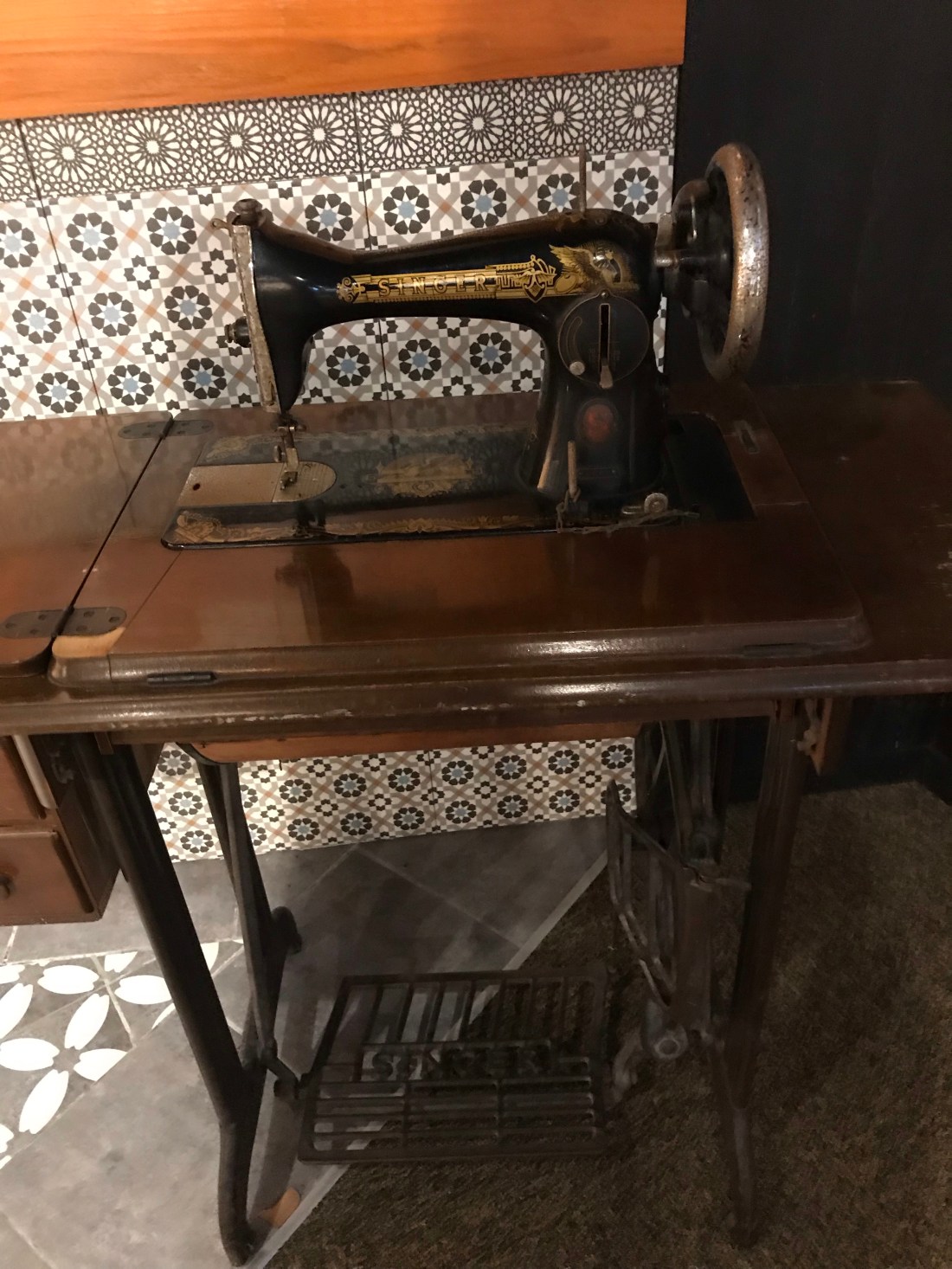
More Singer sewing machines than you can shake a stick at! 👆🏼

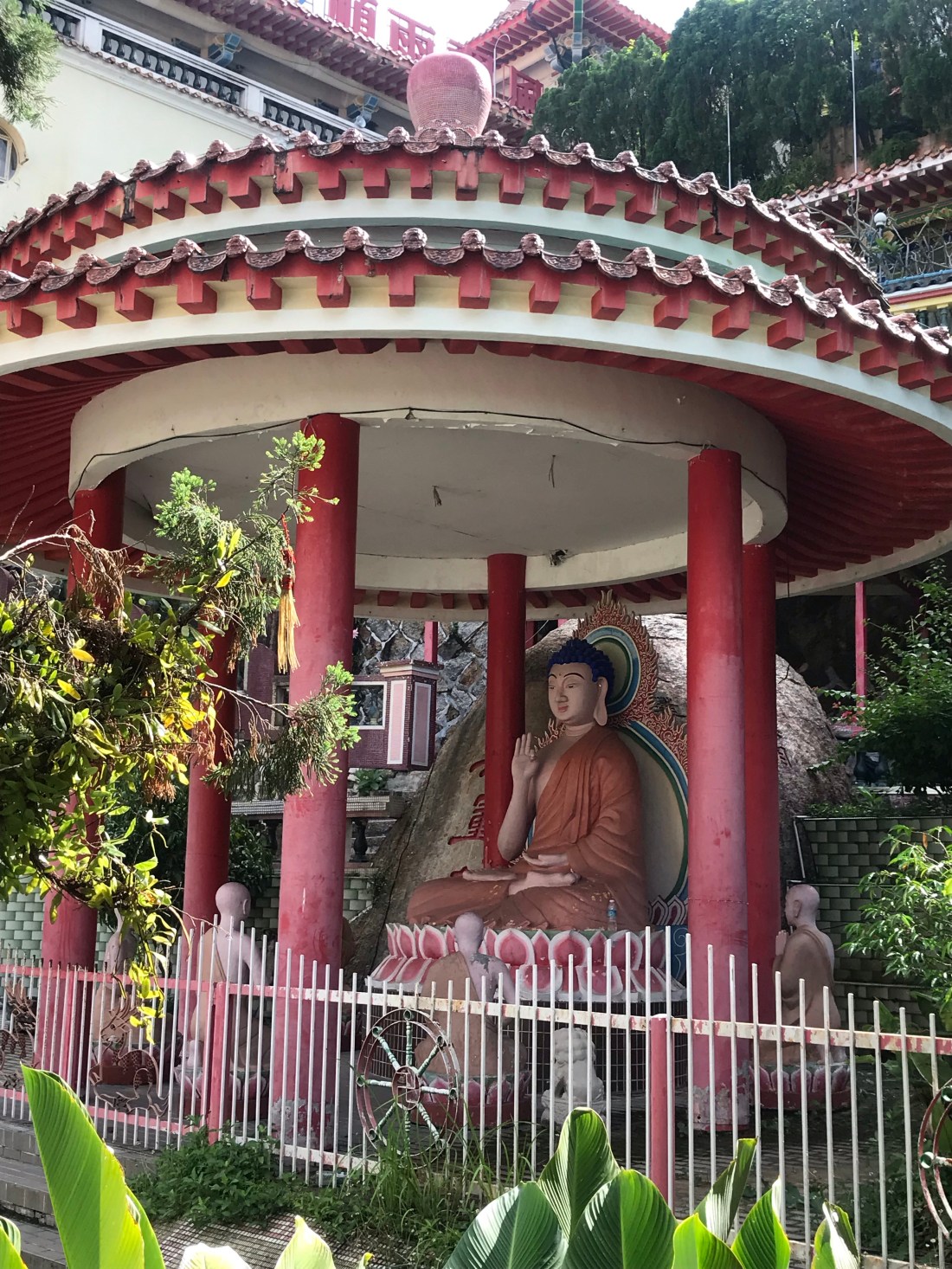
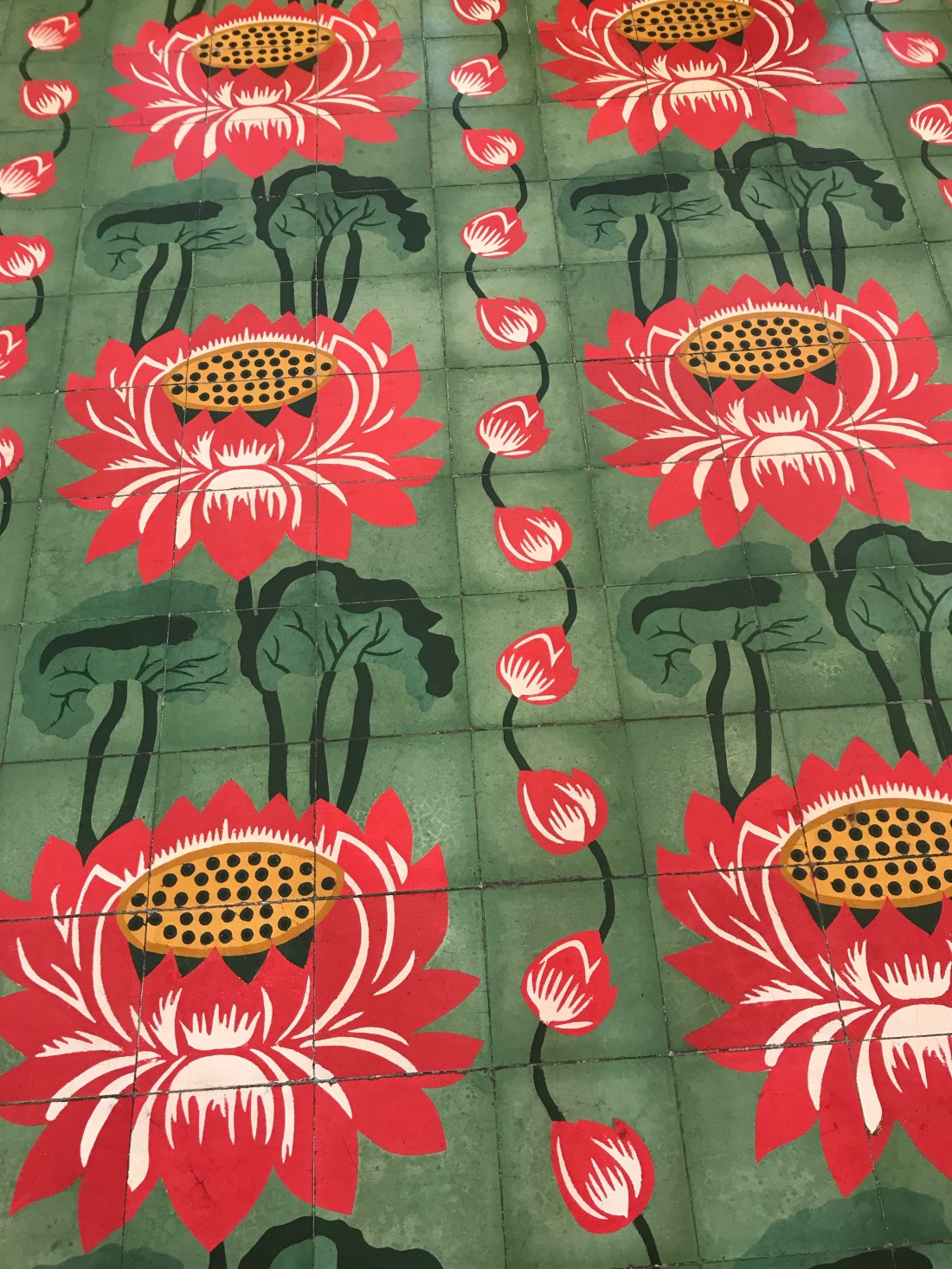
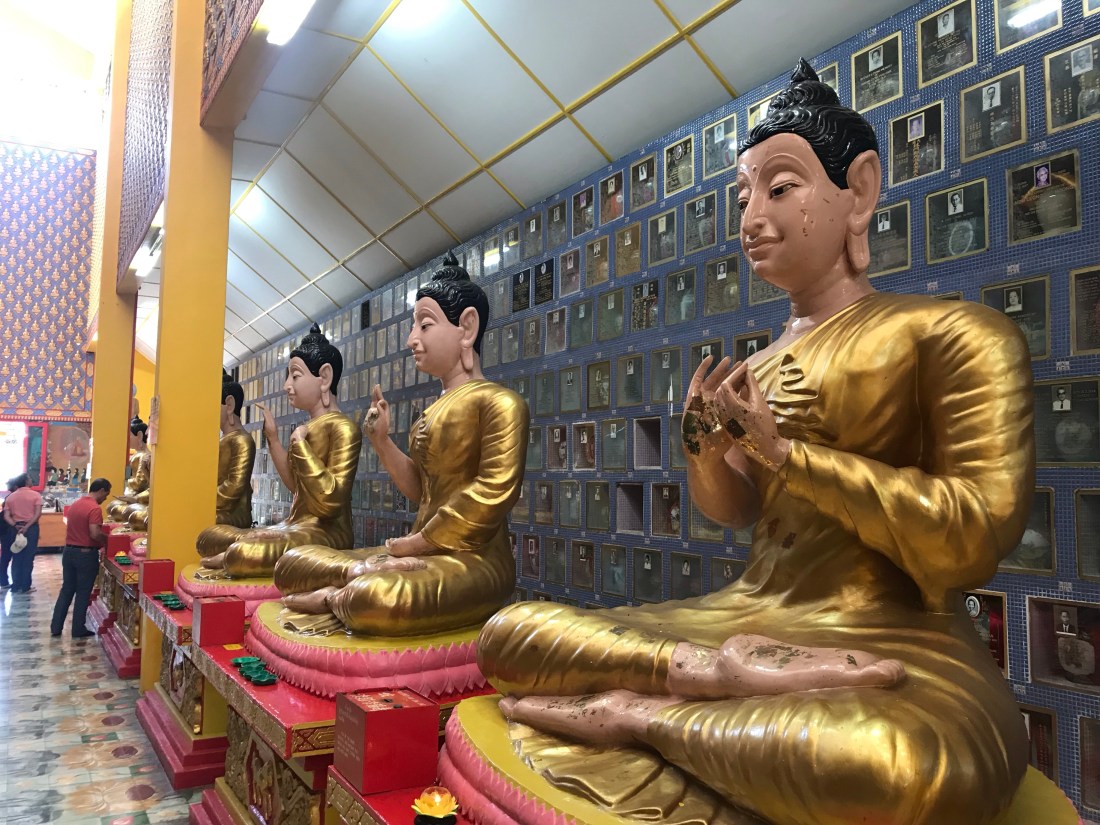
The Thai Buddhist temple:

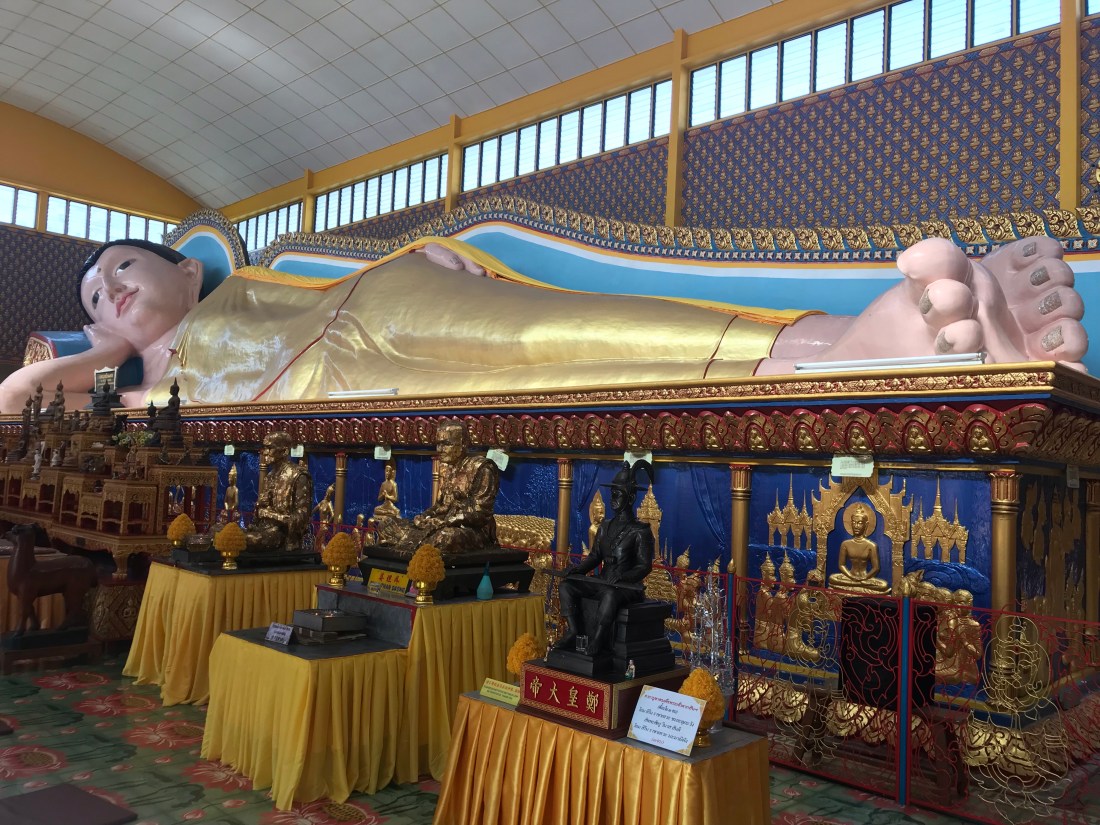
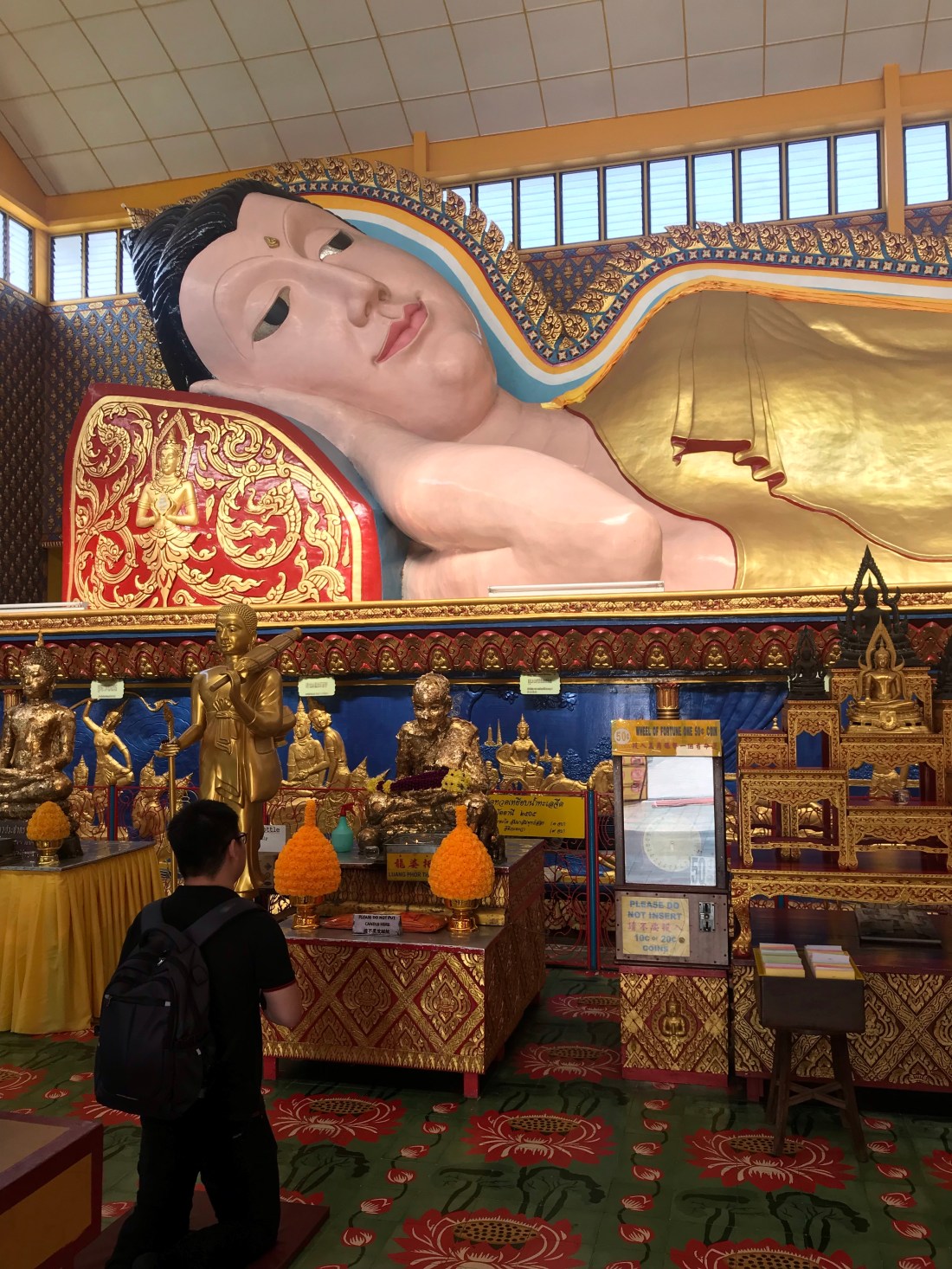
The reclining Buddha. Just look at the size of him!! Known locally as “the sleeping Buddha”, my Indian driver (yes I had a driver for a day…Penang has a lot of history with the British, not all of it good, as you may imagine. We brought Indian people to Penang to be servants and do the dirty work. But Raj tells me he does not bear any grudges because now a generation or two later, his family have a really good life, which they probably wouldn’t have if they’d stayed in India.) said to me, “You go in there Madam and tell him he’s been sleeping too long, he needs to wake up!” When I saw that his eyes were already open, I thought probably if he could speak he would say to me, “But I’m already awake”. Then I realised there was more to that, given that Buddhism is all about enlightenment, and one of its most important gifts to the world, I think, is the concept of awakening.

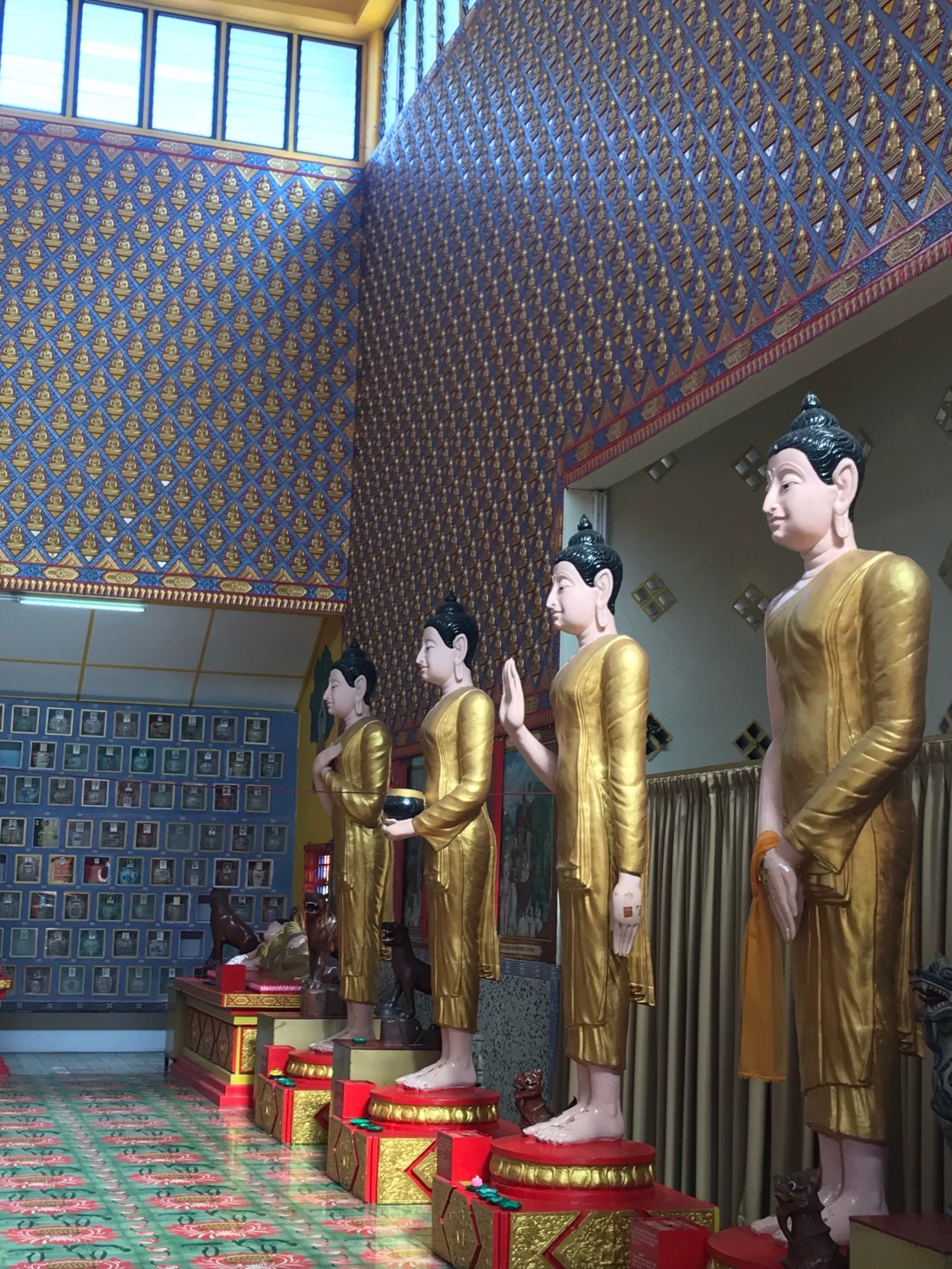
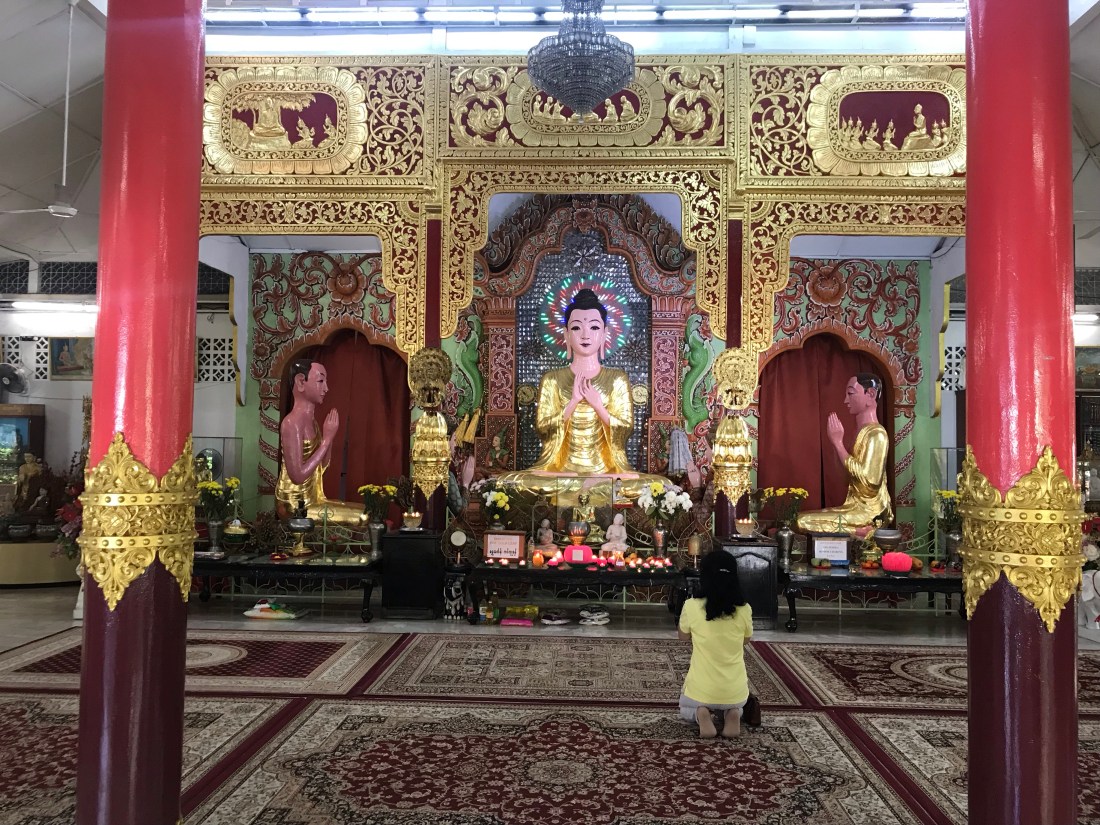
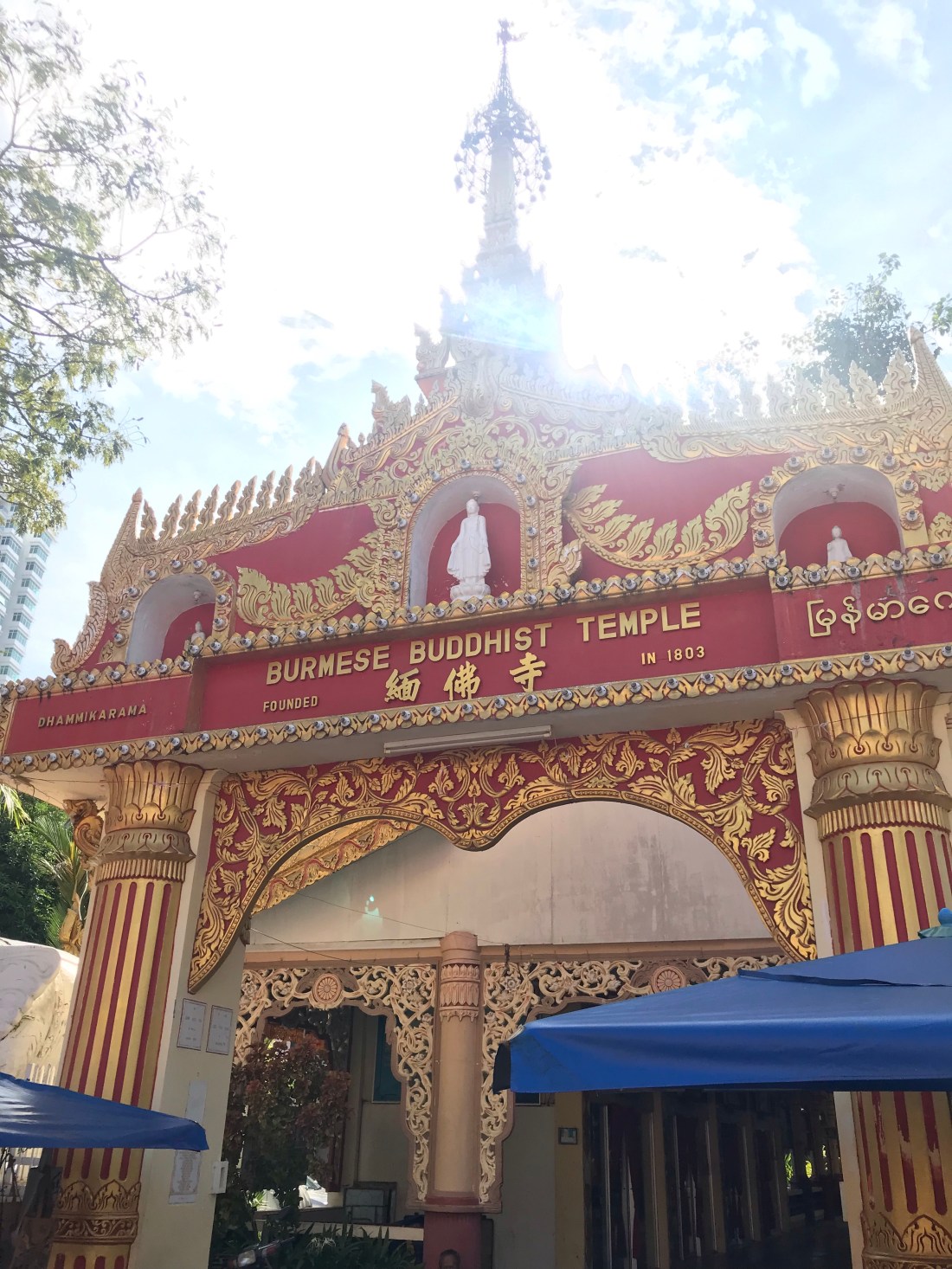
The Standing Buddha is in the Burmese Buddhist temple just opposite:

I’ve been impressed by the number of images of holy women here. This part of the Burmese temple was devoted to a female disciple? I guess?

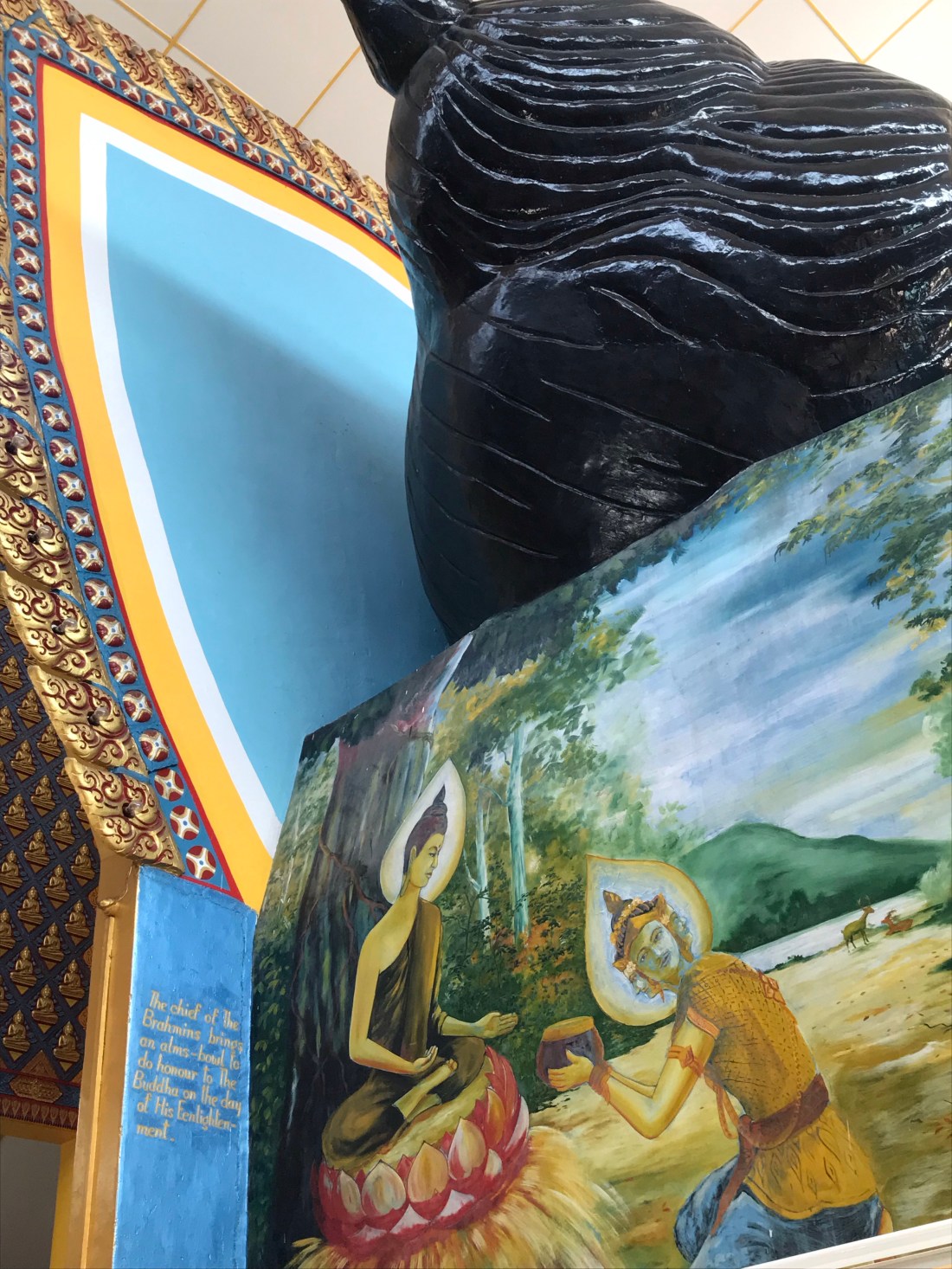
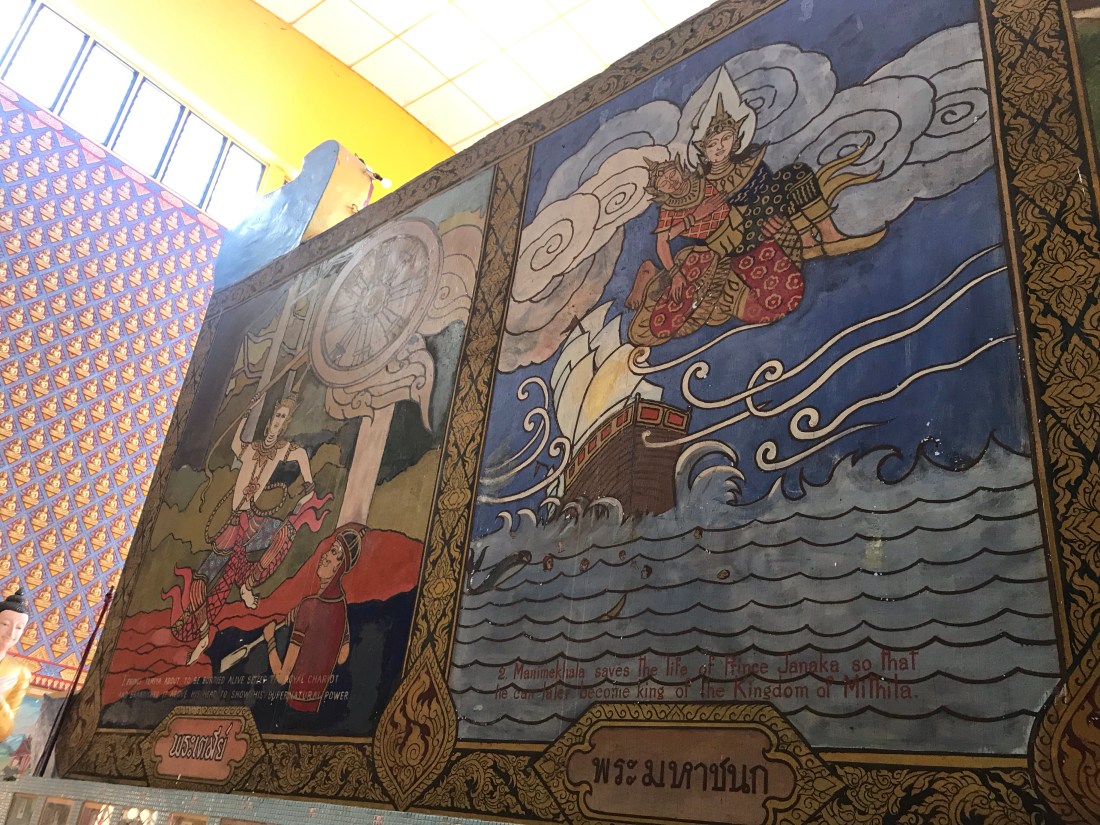
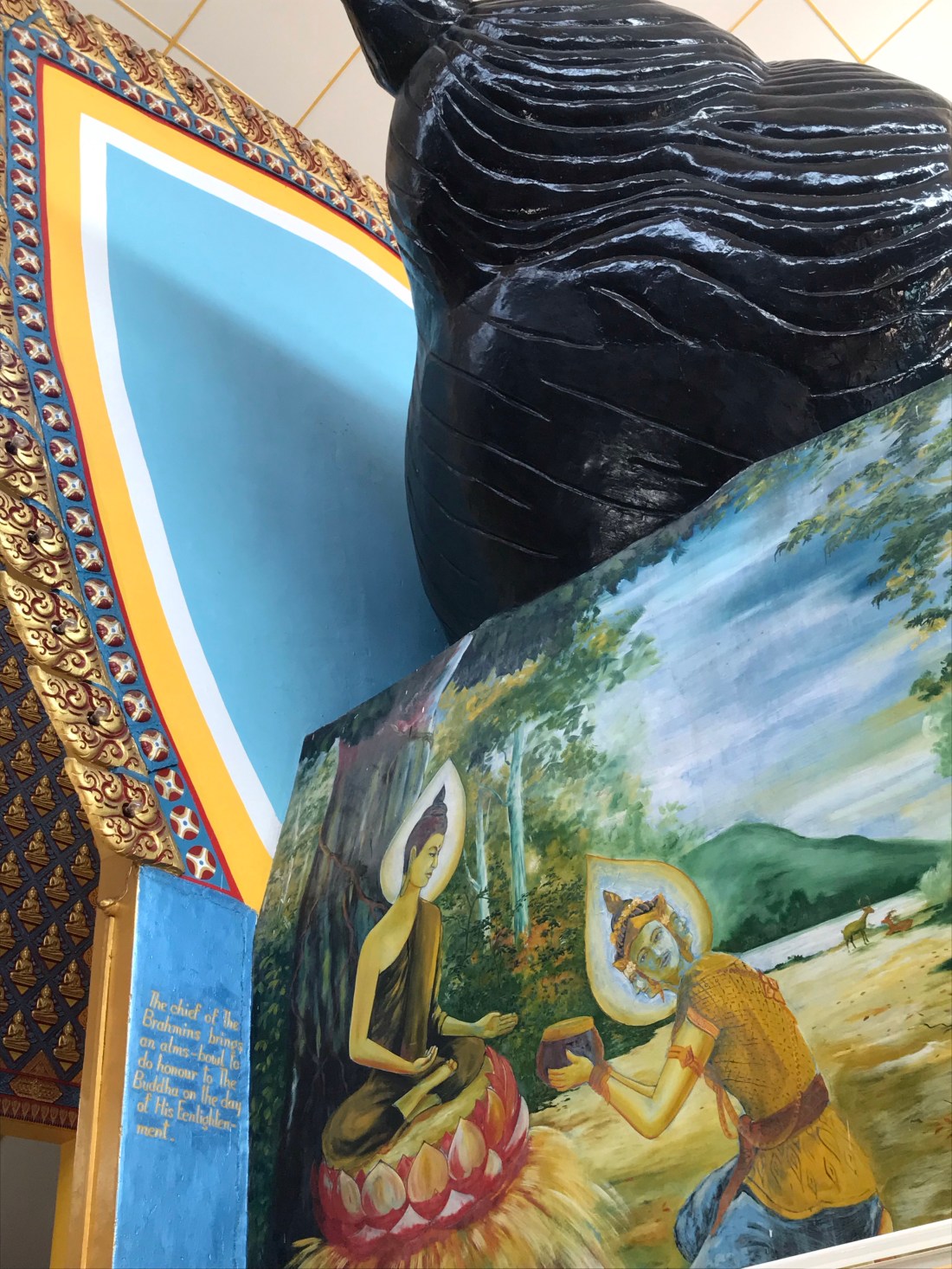
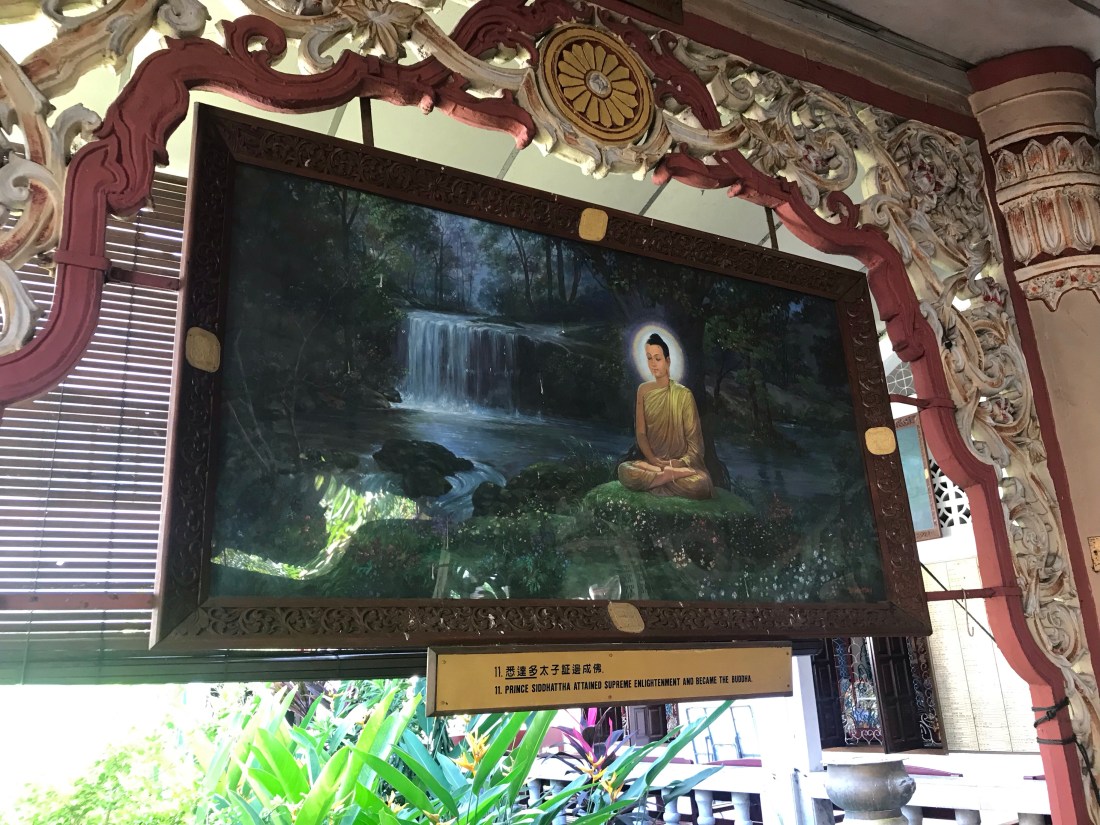
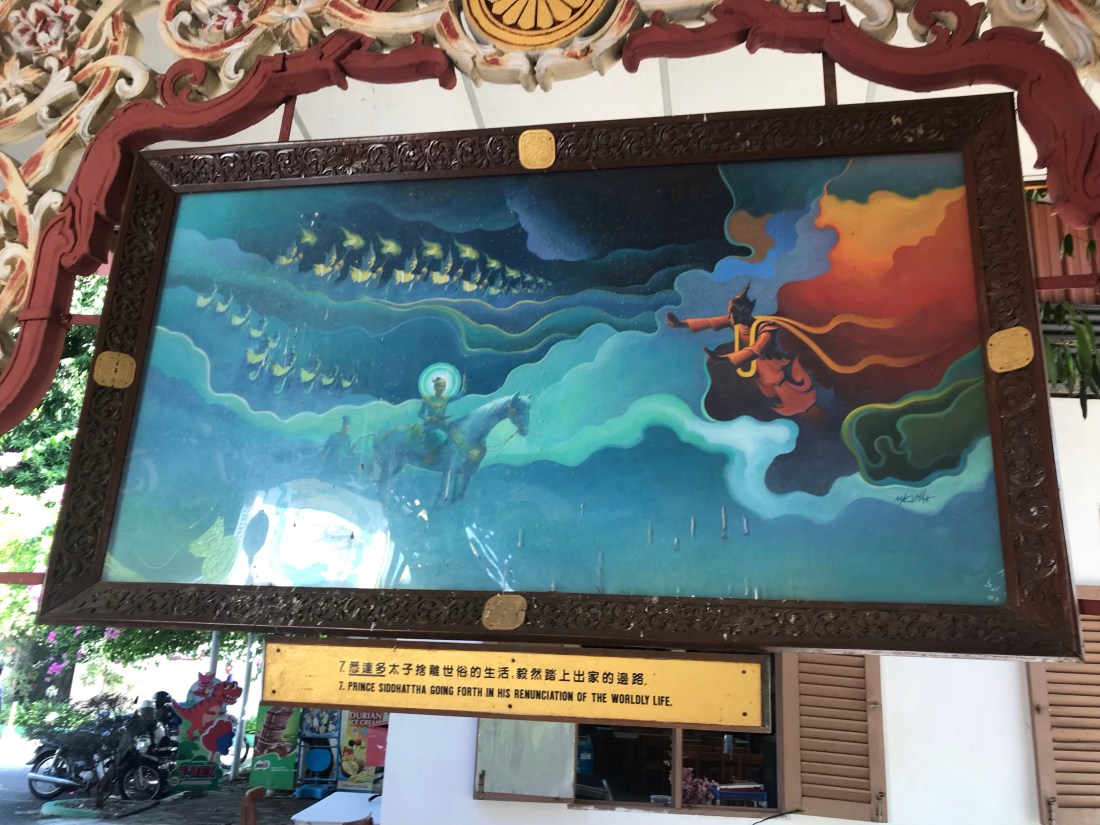
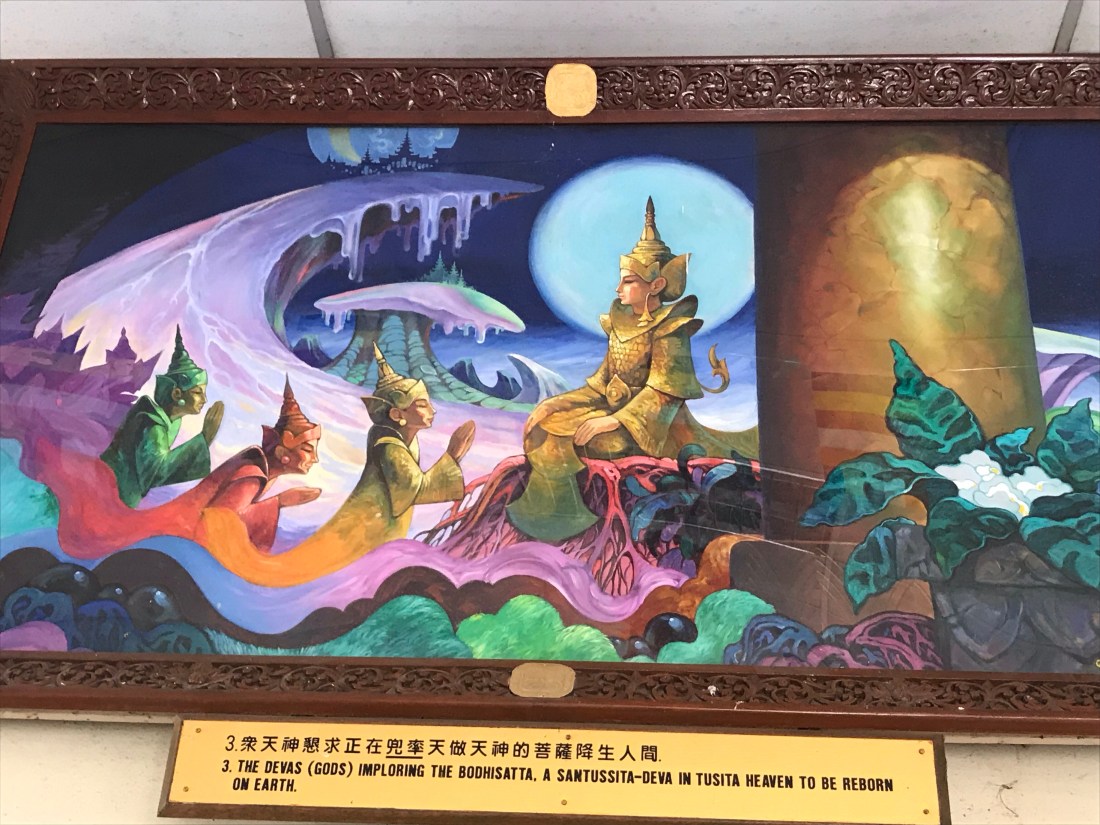
In both temples there were many pictures showing scenes from the Buddha’s life and the lives of other heroes of the faith:

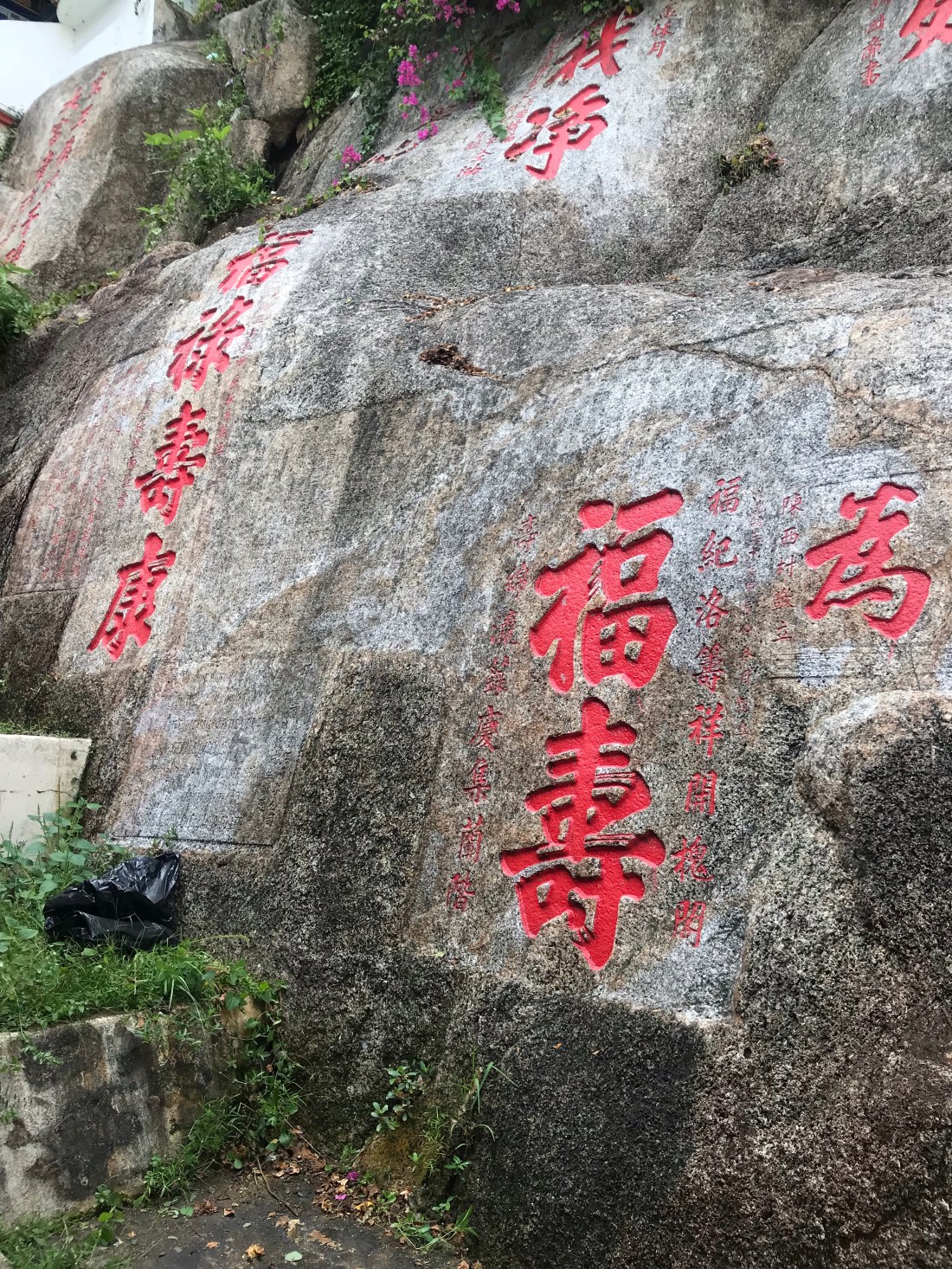
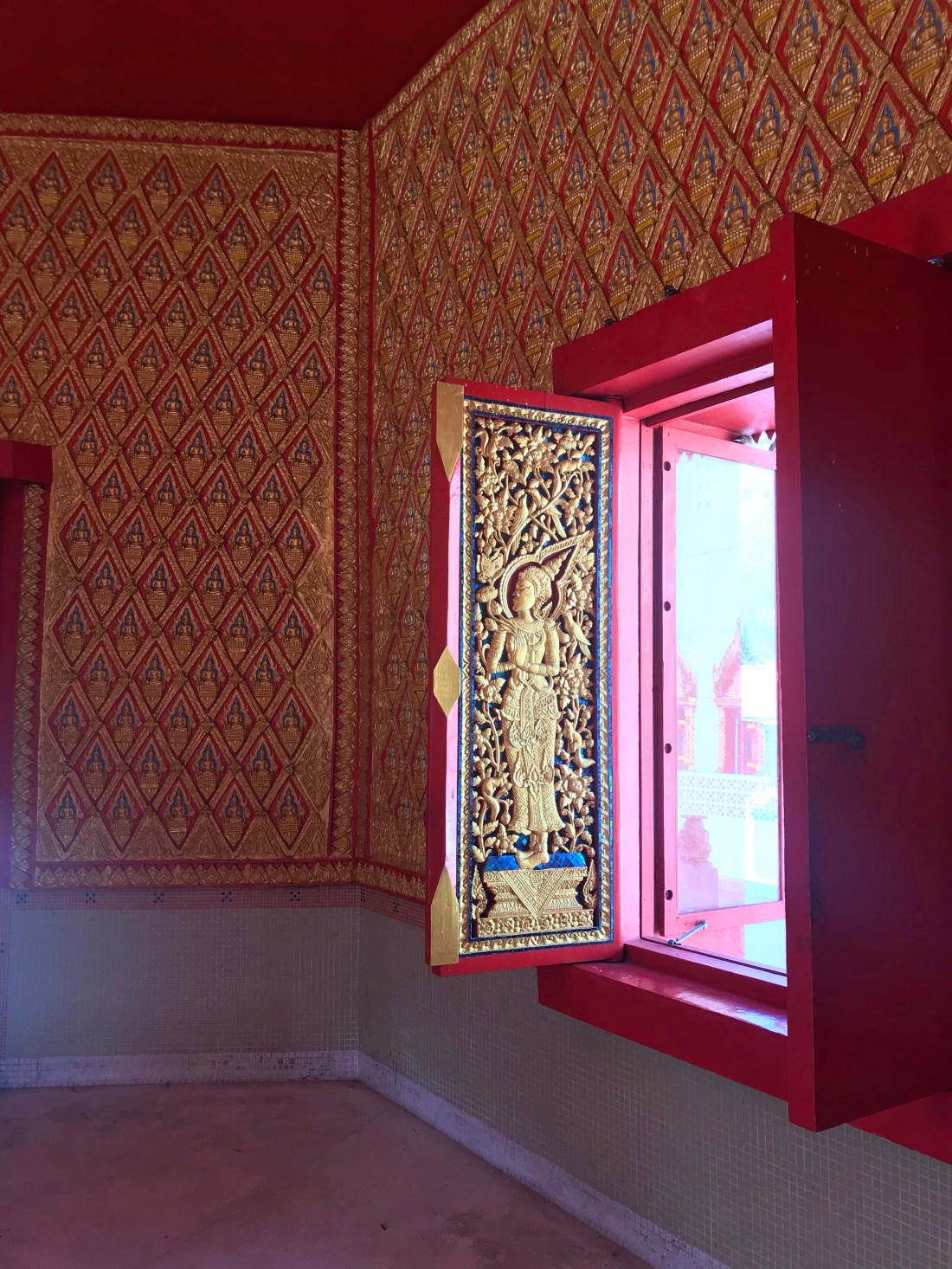
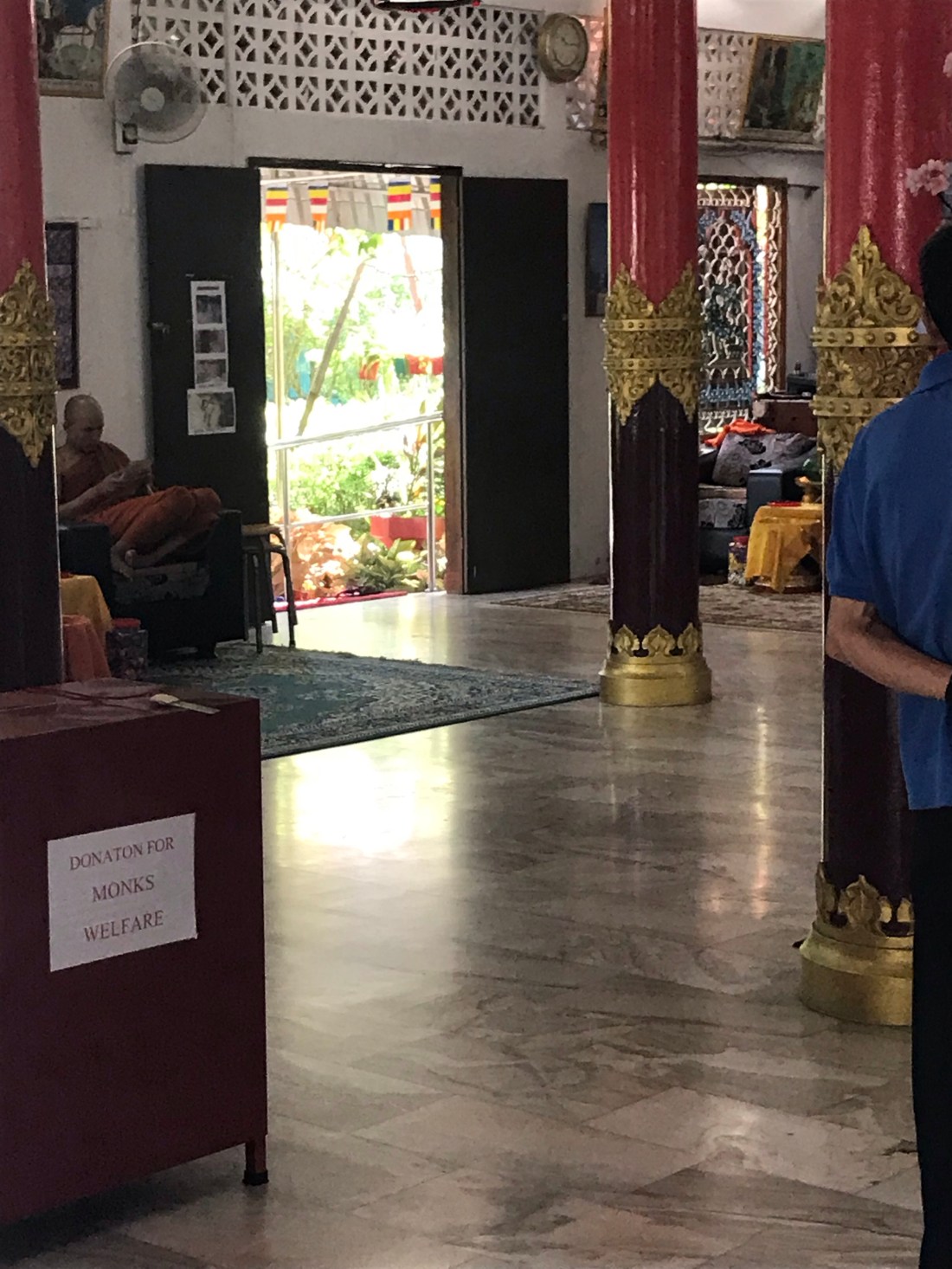
And these weren’t to be the only Buddhist temples I’d visit here. The opulence of them is extraordinary. The size of them immense. And I think all have monks living in the buildings around them, helping maintain the buildings along with other people and also meditating, studying and no doubt listening to people too. I saw monks wearing orange or brown or grey robes, all with shorn heads. Occasionally I saw a couple of monks having some down time visiting the tourist sights, too! You can just see one, texting/googling away in a quiet corner here!:
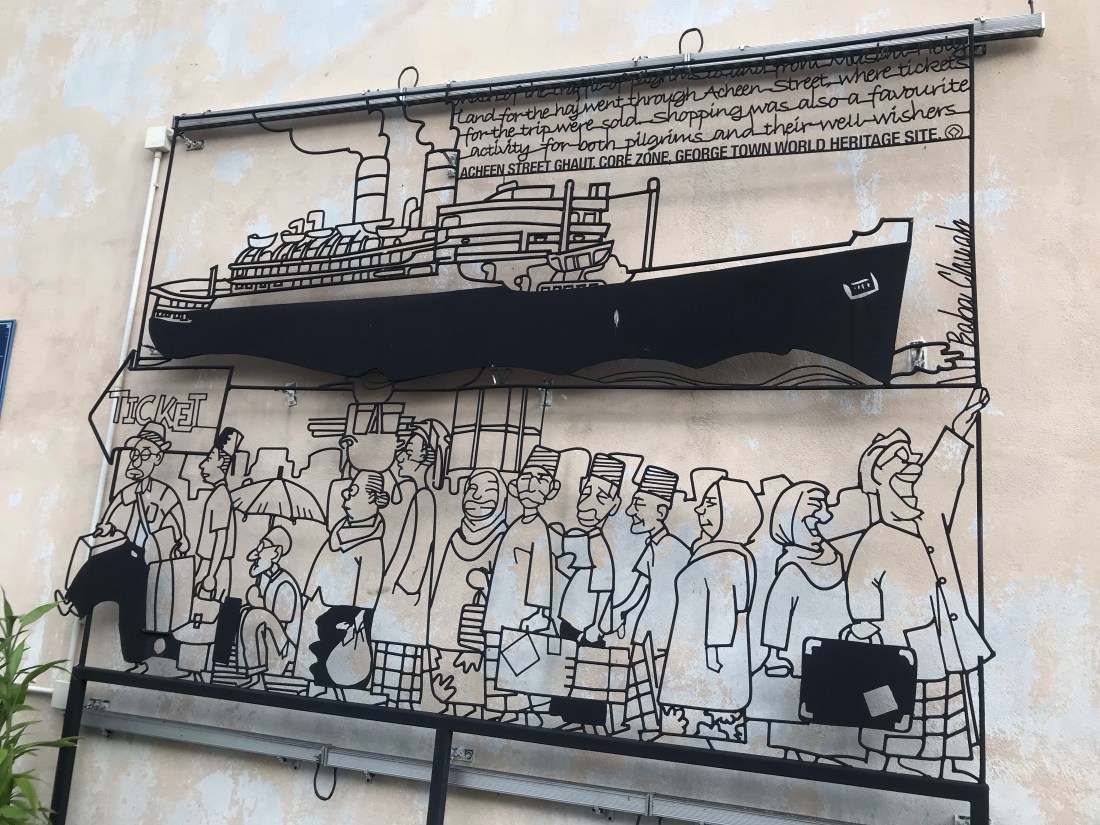
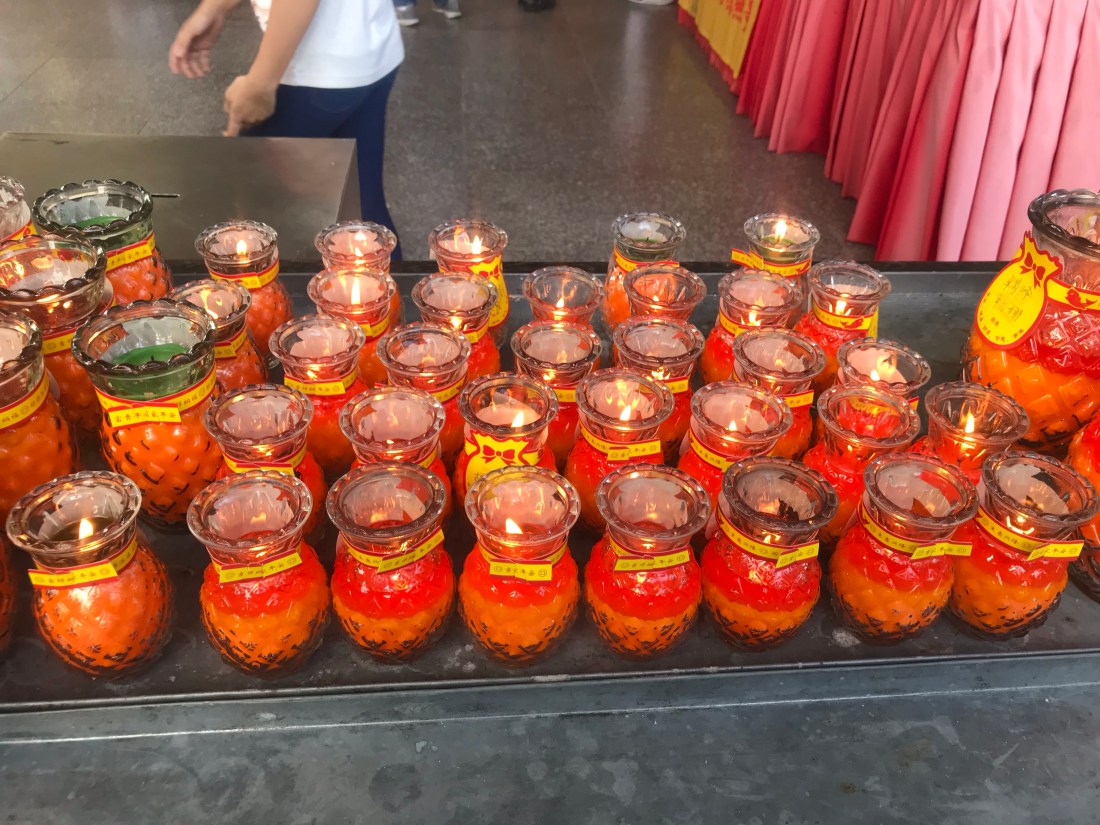
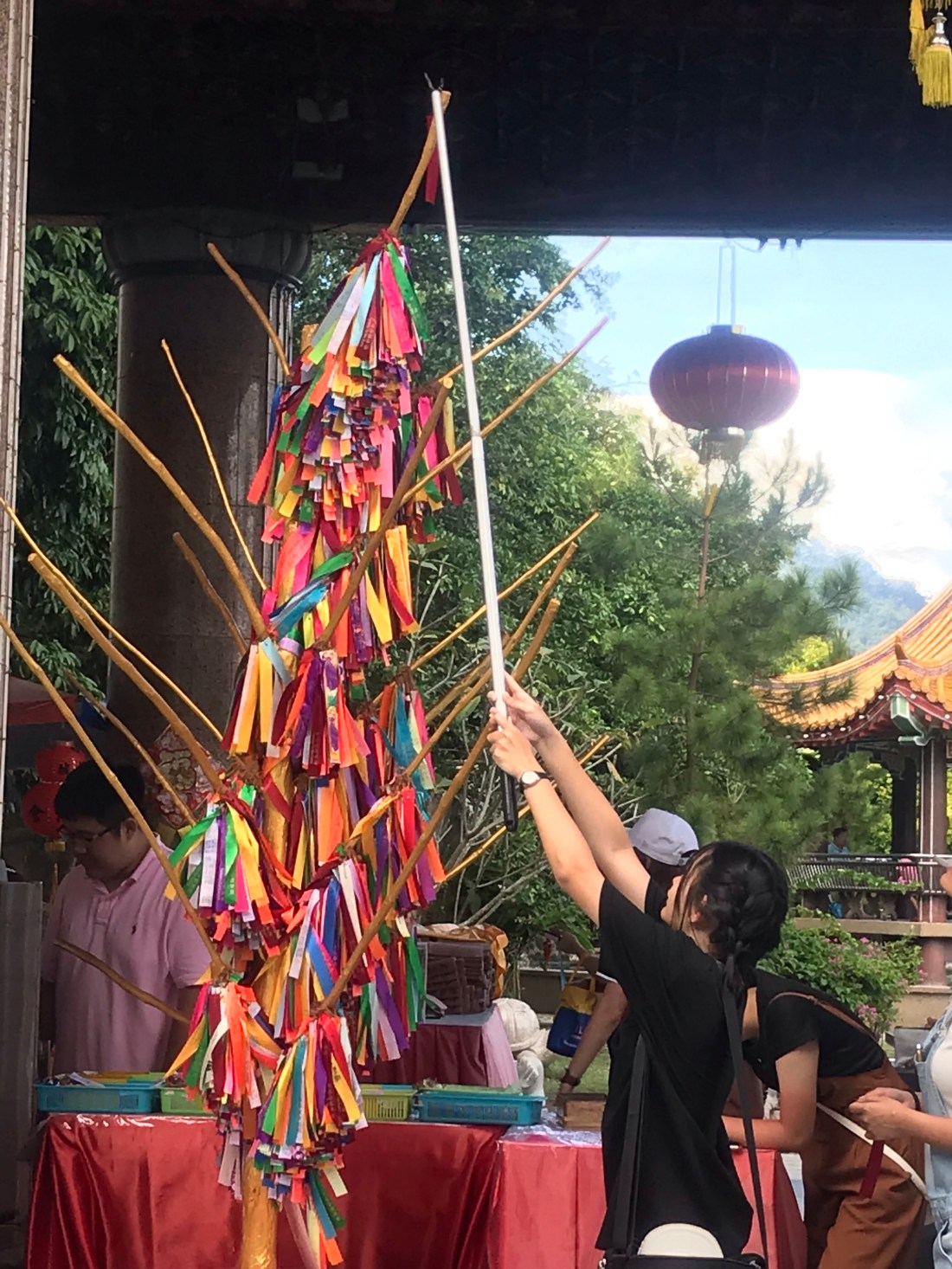
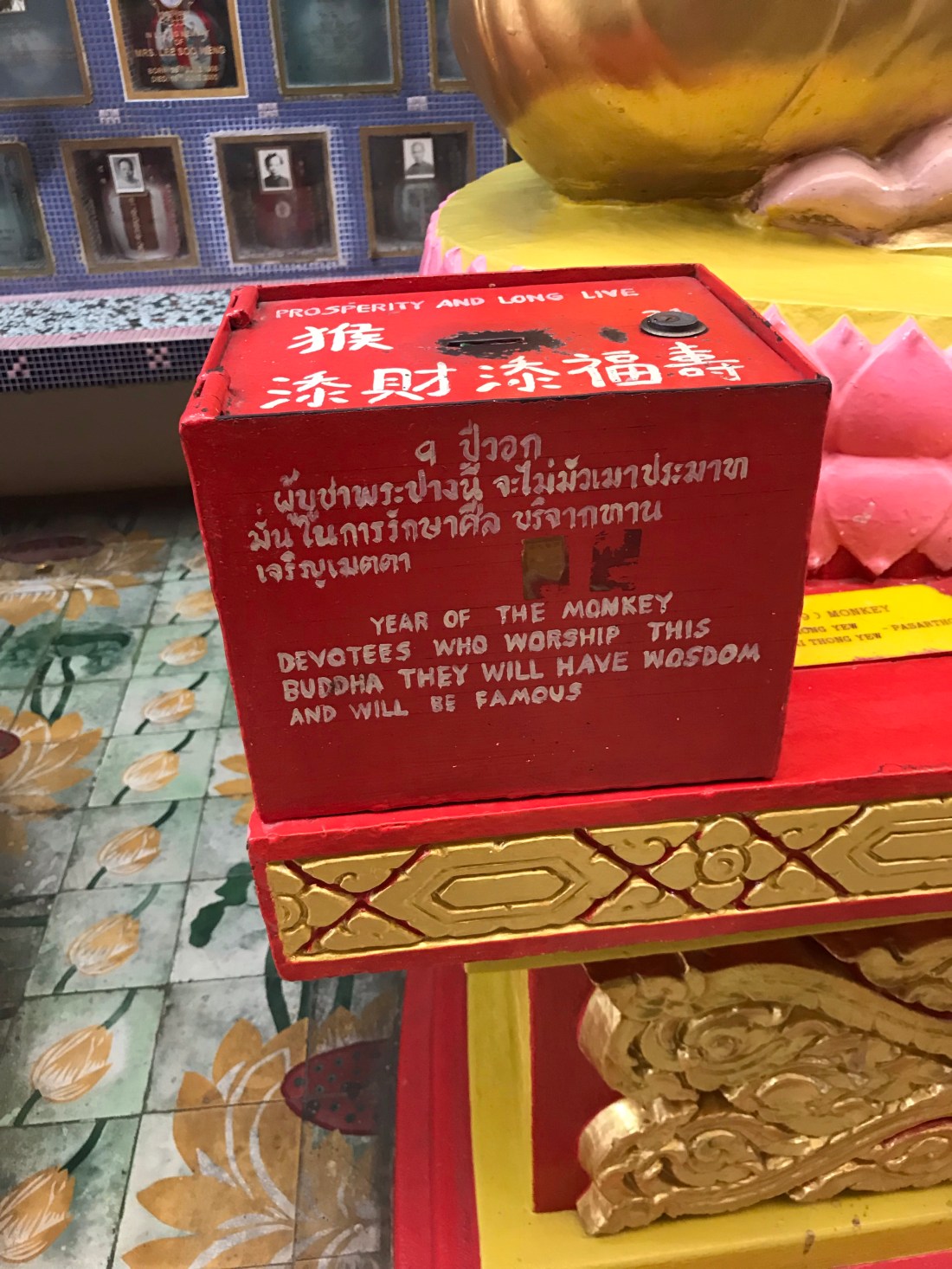
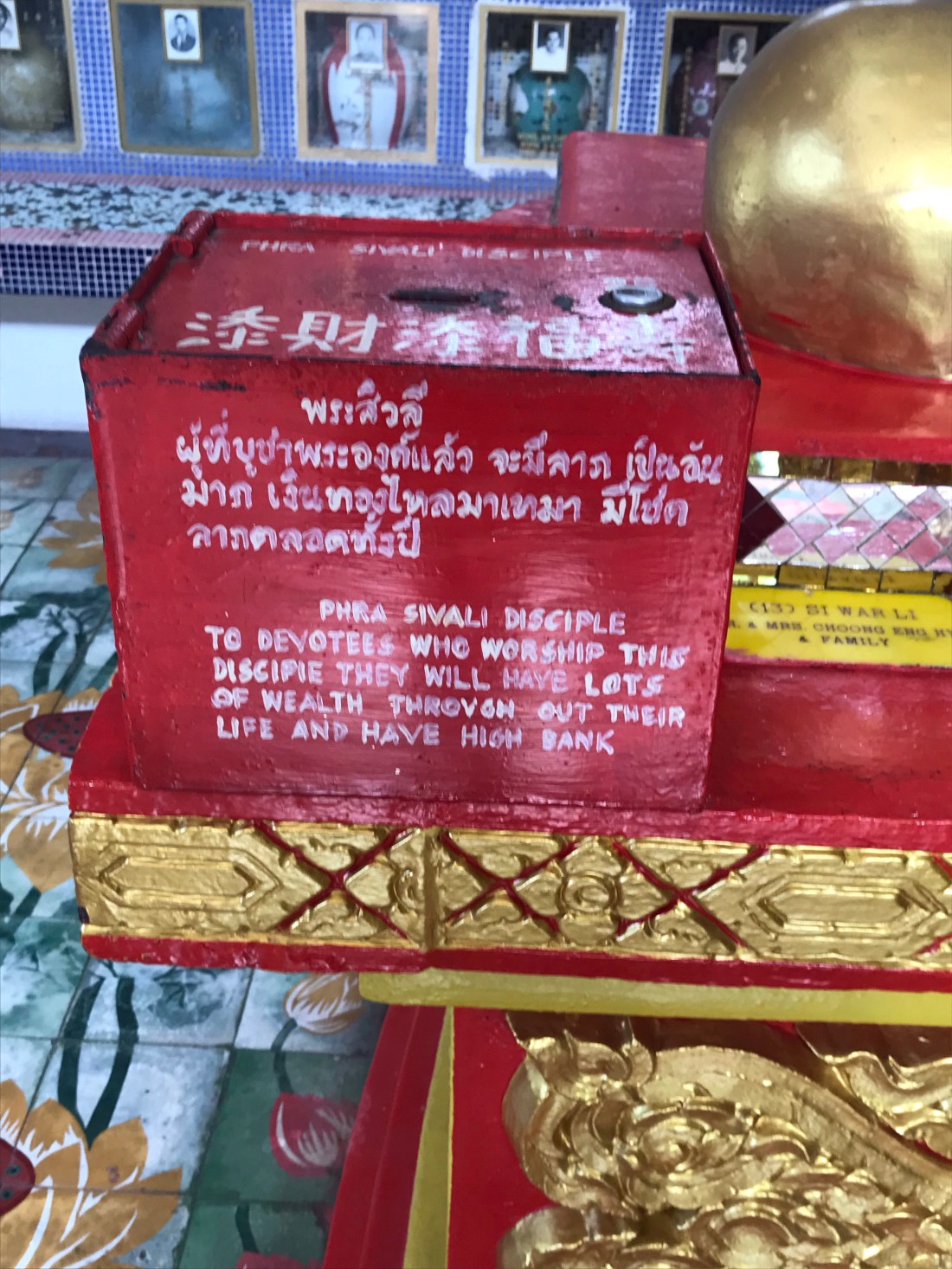
One thing that shocked me about the temples was the emphasis on the idea that if you pray to this or that Buddha / disciple you will receive riches (a lot of the time) or (sometimes) wisdom or fame or good health. I was a bit disappointed with that. Given that wealth is usually amassed at someone else’s expense, why would Buddha, his disciples or God want us to pray for it for ourselves? Or is this just a money making venture by the temples (we’ve done similar things in the Church for a pastime as well, I must admit)? Also, I have never seen so much religious tat in all my life! Shops full of things to help you pray. Flashing things, figurines, waving things, you name it. Some of these things I use to pray sometimes (incense sticks, beads). But, really…?
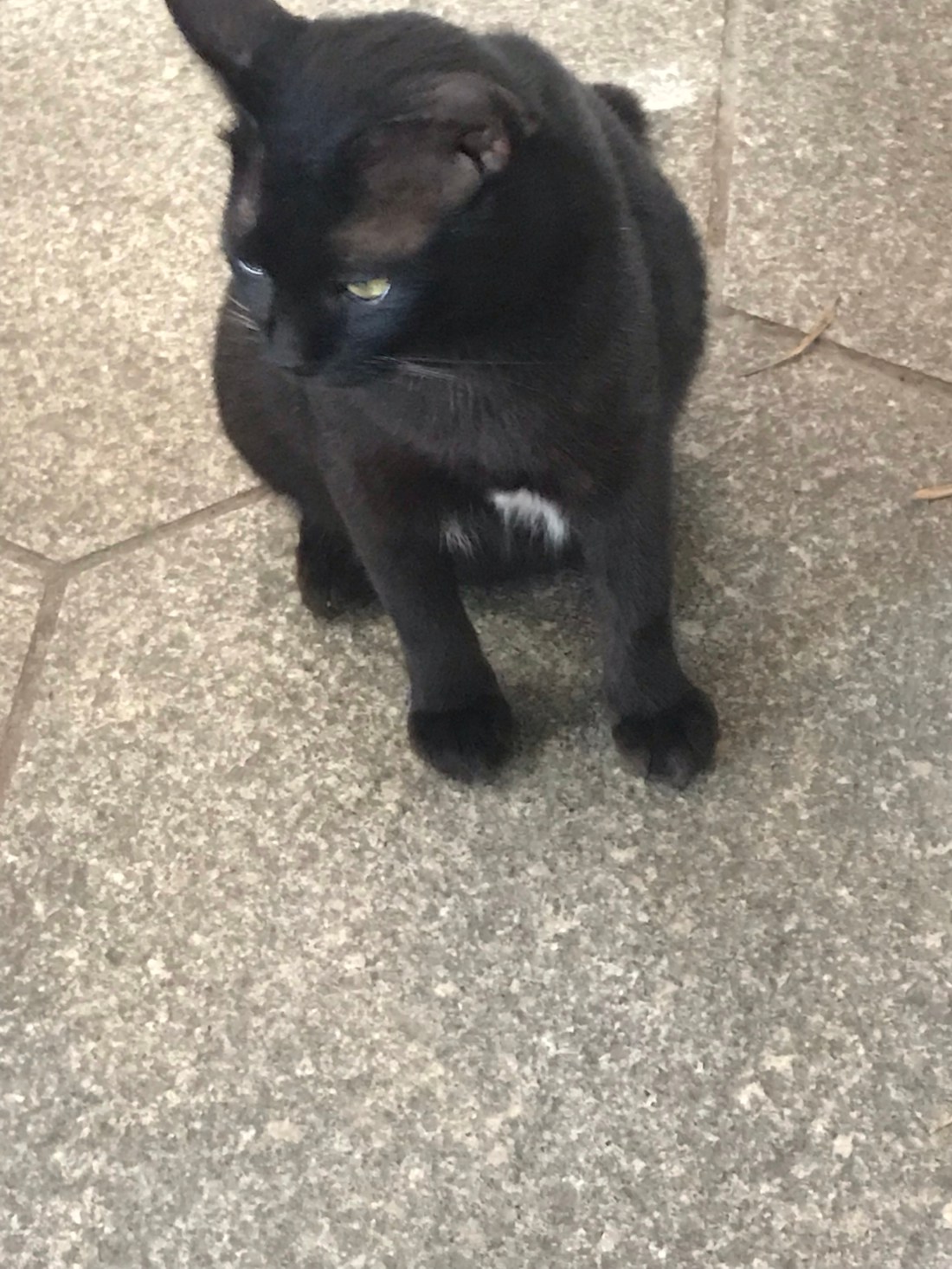
I couldn’t bring myself to take pictures of the religious tat, but at one temple I found a feline friend near the shop. I can confirm that cats the world over all enjoy having their chins tickled. It’s the universal language of pusskins 😁

Little comforts

Well I have arrived in Malaysia, to George Town, and a very nice hotel. I have to say there’s an inordinate degree of comfort to be found in a slice of buttered and marmaladed toast and a cup of tea. Well, with its colonial past, it seemed only appropriate to have cornflakes and toast for breakfast. And look! For all my critical questioning of the “peach teats”, here I am, really enjoying some New Zealand butter. 😋

Farewell Vietnam

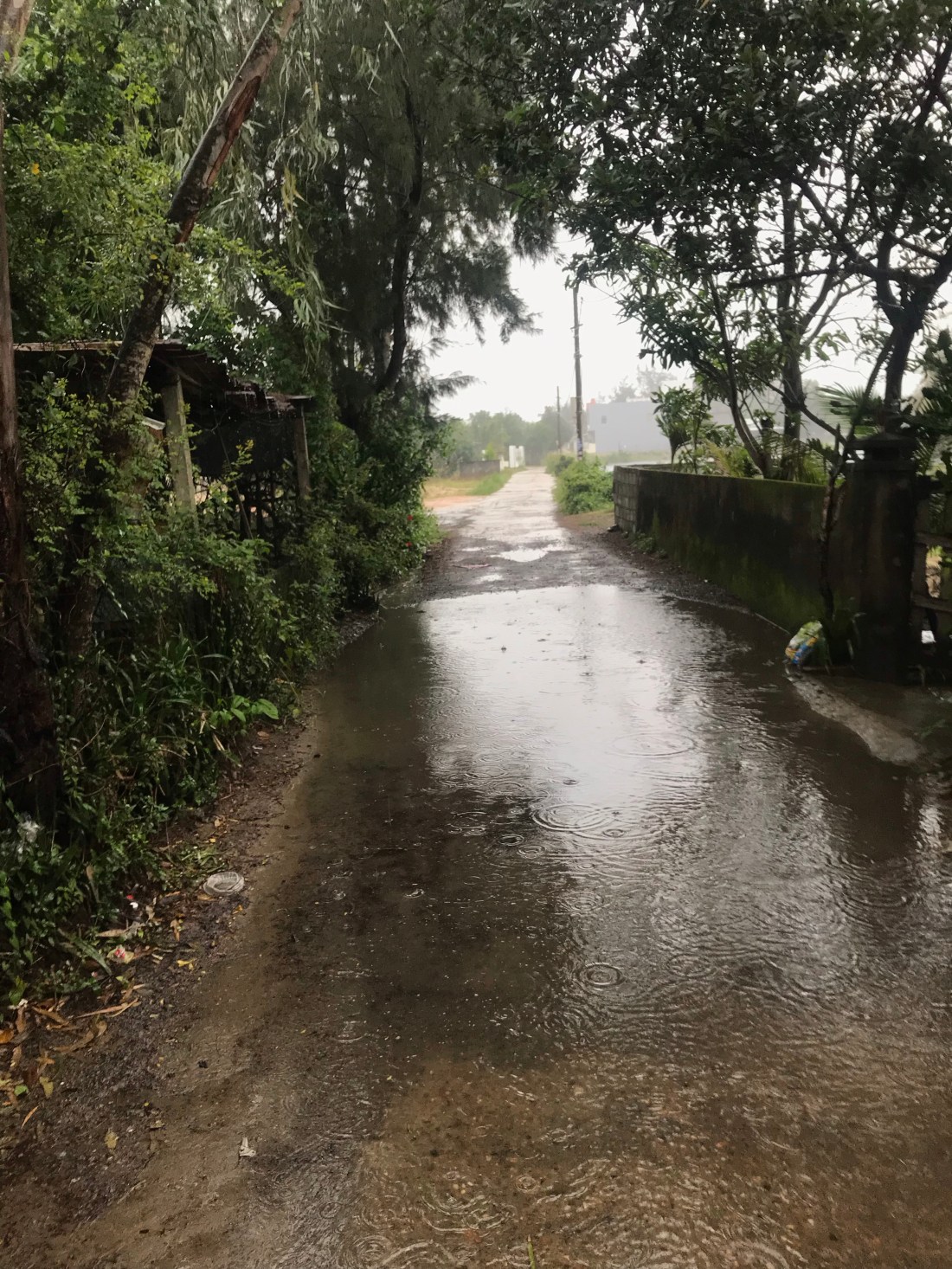
Well I didn’t manage to see the sea this morning because there was so much rain it made a huge puddle in the path that I was just not willing to wade through just before a flight.

The taxi Dzung’s ?grandson ordered for me is driving me pretty much parallel to the sea and quite close but I can’t see it because of all the buildings and an enormous construction site in the way. I shall have to content myself with the brief moment’s view I had of it from the night train on the morning we arrived into Da Nang.

Actually I’m not convinced this is a taxi. It seems a bigger newer car than I would have expected and I suspect is being driven by a relative of Dzung. Well, fair play to her! This is such luxury after all the bike and train experiences. I am enjoying it!

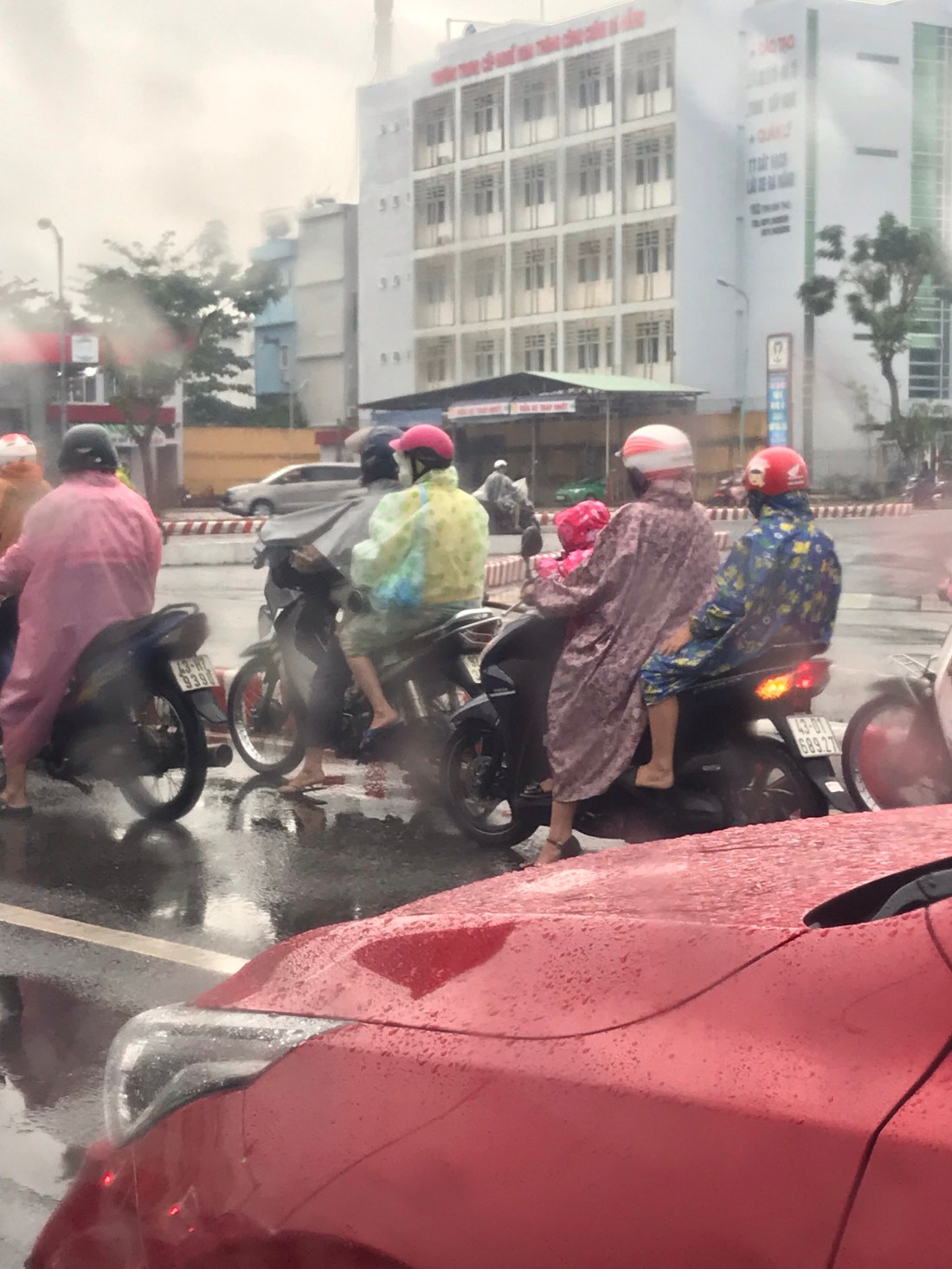
I had thought that it might be raining all the time I was here. I am so glad it wasn’t. That would’ve really made the trips I did less enjoyable. Emily told me that the coldest it ever gets in a Hoi An is normally about 8 degrees C. Once she can remember it reached 5. When it’s 8 degrees she said people don’t go out because it’s too cold! Gosh. That would render the UK an indoor nation!

The cheapest thing at the airport I could find was a bottle of pop, which would cost me $USD2.80 (and the most expensive place to eat here is Burger King – go figure!). Given that Hoang told me about 20 years ago motorbikes here cost $USD300, so many people purchased one for their family, that’s something to think about; 107 bottles of pop in the airport today for the price of a motorbike 20 years ago?! In the UK I very much doubt there’s ever been a time when that would apply. Except maybe if we’re talking about a fourth hand motorbike that is in need of very serious repairs.

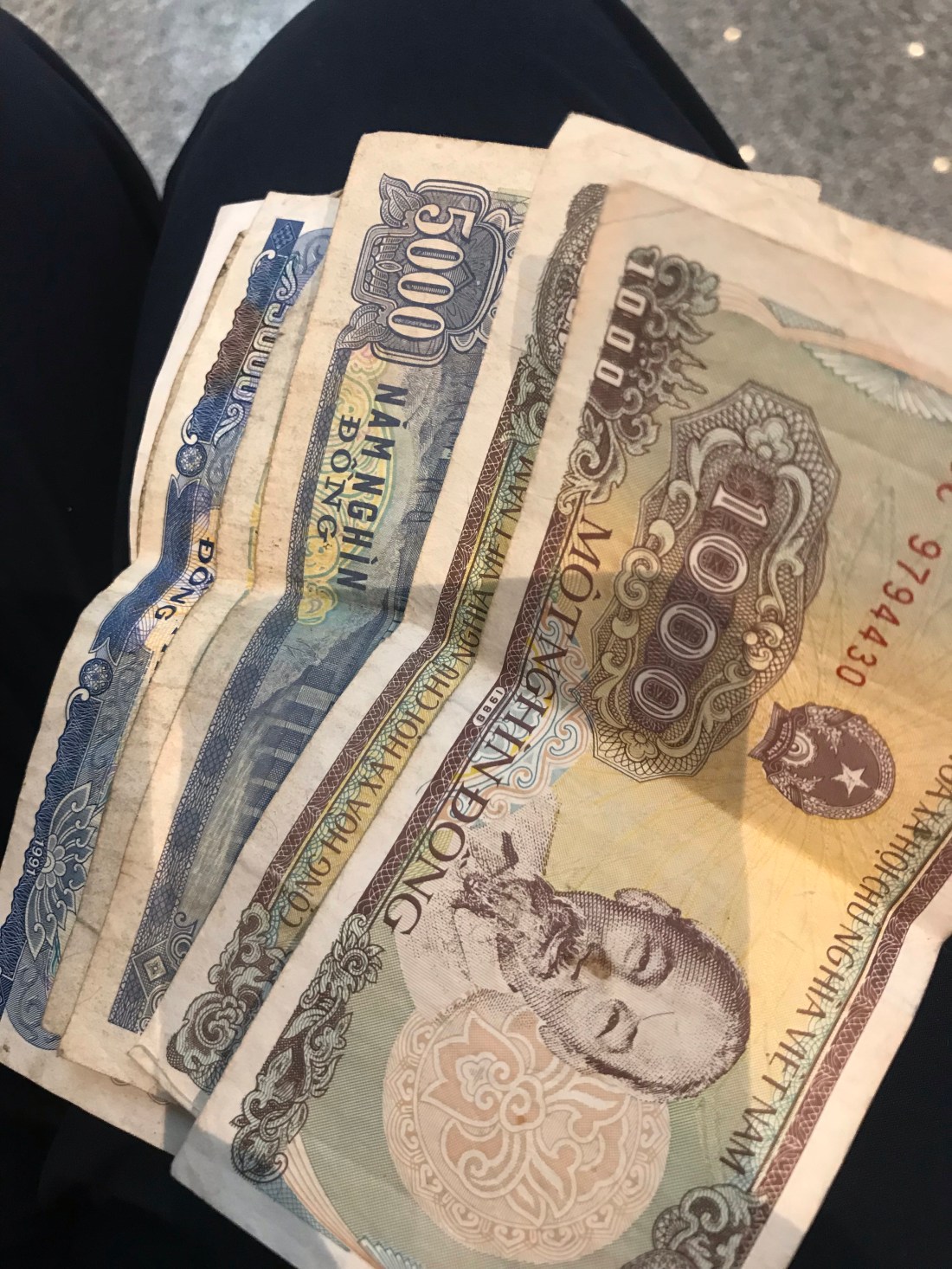
I have 27000VND left to get shot of which is worth about $USD1.16. Anywhere I’ve been in Vietnam that would have easily been enough to buy me a coffee or a cold drink. Oh well!

The other thing to note is that apparently after the Vietnam War (1975) the population of Vietnam was under 49 million people. Today, just 44 years later, it’s over 96 million people. No wonder the motorbikes are all over the place and the infrastructure is struggling to keep up.

There is a quiet determination and pride in their country in the Vietnamese people I have met. Their struggle for independence is beginning to pay off, the wars are ended, tourism is growing and bringing a lot more wealth to the country. They were quite shocked to hear my rather negative view of my own country’s politicians and current attitude to the wider world. Again and again I found myself reminded of how great wealth brings great power and opportunity, and with them, great responsibility. Which wealthy countries mainly ignore, keeping our eyes firmly fixed on the main aim of making more wealth for ourselves. Is that really the main aim of our time on earth? And if not, how could we live within the systems of our wealthy countries but adopt different aims, a more positive, generous and kind attitude towards the rest of the world, and a more humble narrative about our place within it? Is it possible, I wonder? Worth considering at least.