VE Day

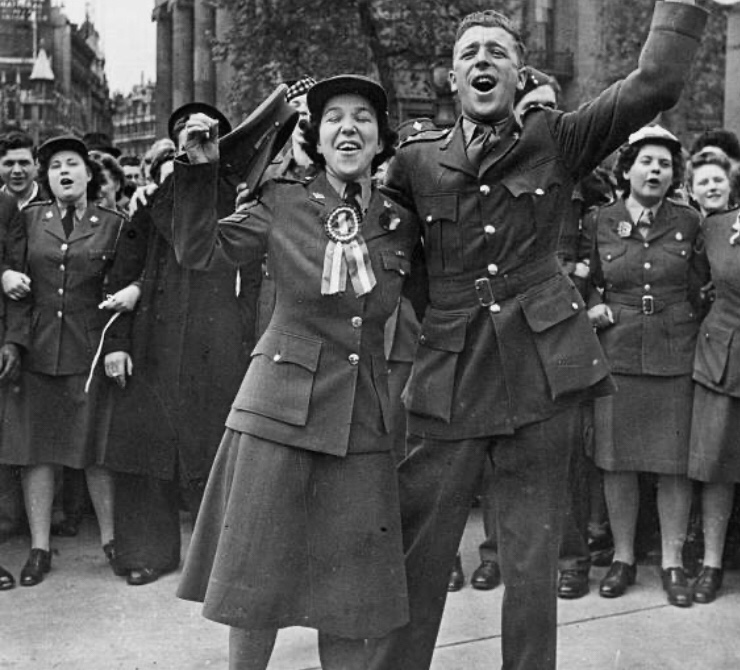
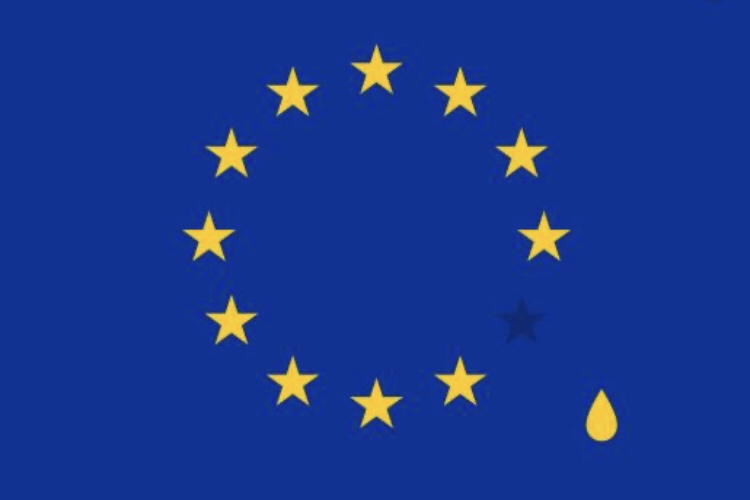
In my understanding, the European Union was set up to help bring about the end of wars and to increase international cooperation. Or to use the classic Miss World phrase, to promote “world peace”, the cause we all agree is so worthy. The UK wasn’t involved in the beginnings of the EU after the Second World War. We’ve often been slow to cooperate, and quick to hang onto what we deem to be ours. And, having come late to the party, we’ve exited the EU now as well. So I feel mixed about the 75th anniversary of “Victory in Europe”. I feel sad that we let go of something so precious, won at such cost, without seemingly remembering that the point of it all was to prevent war, with all its needless, tragic bloodshed from happening in Europe again.

For more about the history of the EU have a look here: https://europa.eu/european-union/about-eu/history_en

In a report about VE Day on the news last night, someone pointed out that when the UK welfare state (including the NHS, the world’s first free health service) was created, after the Second World War, even people who wouldn’t really benefit from it supported it, because they knew it would be good for others.

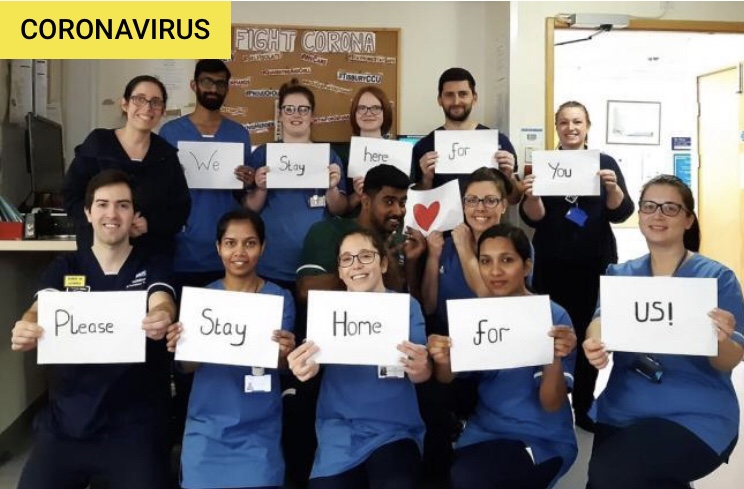
People who are staying at home and still physically distancing themselves during this pandemic are doing so not only for their own benefit, but out of consideration for other people, so they don’t inadvertently pass COVID-19 onto them.

I wish we could reclaim some of that post war clear-sightedness and selflessness now, for those who are not bothering to physically distance themselves from others. I imagine that anyone whose relative has died tragically from COVID-19 will continue to be careful about distancing themselves. The cost is real to them. I suppose by the end of the Second World War, probably everybody in the UK knew more than one person who had died in the war, and many others who’d been injured in it. Maybe this was part of what inspired such enormous public support for the welfare state, even though it must have cost tax payers dearly. Who cares about taxes when they’ve seen people die in wartime?

I understand that this isolation is a nightmare for some people. Especially those grieving alone, those having to shield themselves, and those who are really ill in hospital and for those who are trapped in unsafe homes, or who are finding the situation is triggering trauma from the past. But I hope that those of us who are not facing a direct mortal threat from being at home will manage to stay put for the time being, out of consideration for others, as well as ourselves.

…and breathe

Well, my little “retreat-at-home” went pretty well. The builders building the school nextdoor seemed to be at their noisiest last week, drilling up the pavement, but maybe I just noticed them more as I was being quiet? For this, and many other reasons, it was not at all like my usual retreats, when I would go away to a quieter place for 5 days or so. But it was a refreshing and good time. I particularly found the digital and tv detox helpful. I may have to do this more regularly.

One of the things the retreat drew strongly to my attention was something that I had been beginning to notice anyway about breathing. Slowing my breathing and breathing more deeply is becoming a more habitual part of my practice of contemplation and prayer these days.

This has come to me now for several reasons. I’ve been doing yoga in the lockdown, which encourages a type of active, aware breath, in tandem with physical movement. (I recommend https://www.youtube.com/yogawithadriene if you want to try some for free online.) Over the past few years, I’ve also had many conversations with friends and done various bits of reading and researching on the topics of trauma and anxiety. There’s so much to be said about this, and, although it may not be possible for everyone in every situation, generally speaking, finding a way of stilling yourself using your breath can be very helpful for many people.

For a long time, I’ve been aware of focusing on the breath as a starting point to prayer or meditation, but I don’t think I’ve ever practised this as consistently or habitually as I now find myself doing. Somehow, trying it out every time I’ve settled into a time of contemplation, meditation or prayer for a few weeks (and especially on my retreat week) is finally making its mark, and it is now becoming almost a reflex – as semi conscious as a night time brushing your teeth routine, really.

Maybe the right “tool” appears at the moment we most need it?

If you want to try slowing your breath, find a comfortable position with a strong foundation (notice the soles of your feet on the floor, your sit bones on a chair, or if you’re kneeling, the tops of your feet and shins on the floor etc). It takes me a while to make myself pay attention to my physical body. I wiggle to find the best position. Then I might open my hands in my lap, close my eyes, and just begin to notice my breathing.

After a few breaths, I gradually begin to deepen my breathing in and to lengthen my breathing out (so I breathe out for longer than I breathe in for). To really deepen my breathing in, sometimes I put a hand on my belly and feel it rise as I breathe in and fall as I breathe out. This reminds me that a deep breath fills the lungs from here, rather than from higher up around my chest, where we tend to gasp from if we’re anxious. As I’m doing all this, I also begin to gradually relax my face, jaw, shoulders, legs; wherever my body feels tense.

I stay with the deeper breathing for a while. On my retreat, I used an incense stick, which smoulders for half an hour, each morning as a measure of time, and also as a lovely fragrance to breathe in deeply. I only normally use incense like this when I’m on retreat. It’s not everyone’s cup of tea! It’s also quite tricky to commit the whole half hour to stillness. But as I noticed each day how the smoke curled its way unaccountably towards me, I was reminded of previous retreats, and I received a blessing from its gentle, silent, unpredictably curling, fragrant smoke.

Being still and breathing, even just for ten minutes before a meeting brings a blessing for me and for those I’m meeting with, I’m sure. Giving myself the freedom to be still and breathe for half an hour is glorious.

And rest… 😌

I am going to experiment with rest and retreat in the coming week, taking a break from everything online, phone calls and watching the news etc. I’m thinking of it as a kind of “retreat at home”. I’m also breaking our household routine of praying in the morning mon-fri, to allow myself some more lie ins, and the freedom to go with whatever rhythm my resting body and mind seem to need. I will still be cooking and eating with my housemates in the evenings though. And maybe I’ll join them for a film night once or twice.

If I feel in need of this, when I have not actually been all that busy, I’m wondering how many others must do? As I retreat I pray that somehow or other rest will come to all those who need it.

Hopefully by next weekend I will be full of beans and ready to dive back in again. Watch this space…!

Emerging hopes

After my previous couple of posts, here’s something more positive! Without at all wishing to downplay the awfulness of it all, there are good things beginning to emerge in the midst of this pandemic. One of the things that I’m finding particularly helpful is how people are starting to ask some really good questions. My previous post reflected on questions and thoughts coming from a place of anxiety. Here are some questions and thoughts that I think are emerging from a more positive place. These are opening up a space, tentatively beginning to explore possibilities and potential for a new world, which is why I love them. Thanks to everyone who has contributed one of them – albeit probably unwittingly!

How is this pandemic / lockdown changing me / us for better?

What are we learning from this situation?

I am suddenly aware that I need to show physical affection, but I can’t at the moment, and it’s really difficult. I realise now my need to hug people is not so much about other people’s need to be hugged, but about my need for physical contact.

How can I find rest in this time?

Can we begin to accept this season as a gift? Even while we know that for other people it is a terrible time of grief, fear, exhaustion and loss?

Suddenly, there’s nothing in my diary, and I feel free.

Could we find a way of sharing resources better in a simple way – like introducing a universal basic income or something like that?

I’m realising now that Universal Credit is not enough to live on. How did we get to the point where we expected our most vulnerable people to live on not enough? How can we make sure we never do that again?

What or who is it we’re longing for?

What is it we are dreaming of? Can we dream up a better future? What might it look like?

We’re suddenly finding that we’re having deeper conversations with friends and family than we had before. Even though they’re happening online, which is not as good as face to face conversations, the situation is making people question things more, and get to the heart of stuff, as all the surface distractions have been removed.

What risks is it good to take?

I’m realising that it’s all about people and relationships. It’s not really about tasks and action at all. When all the tasks and action end, the people and the relationships remain. I sort of always knew that’s what’s most important, but I didn’t dare say it before. But now I can say it.

“It is human to believe that we are in control and we have the answers when, usually, we aren’t and we don’t.” (This was a really striking sentence a recent course participant wrote in an assignment about the mission of God. What a gift!)

I think I am learning to let go. It swings between being very liberating, and quite scary!

Voicing our fears

This blog post may not be for the faint hearted. I just thought it might be good to reflect on some of the fears I’ve heard people articulate in video and phone calls over the past few days. Because several people have said that it has actually been very good to find a space to name their fears. I guess naming our fears may be the first step to beginning to deal with them (if “dealing with them” is possible). I’ll do another post about our hopes, but maybe it’s important to actually sit with our fears for a while. I do find it curiously comforting to realise that other people are facing many of the same fears I do, and some extra ones as well. There is a sense of solidarity emerging, which is how human beings have faced all kinds of adversity. Compassionate solidarity is the beginning of cooperation, which has enabled us as a species to survive a lot of storms. (Having said that, if reading these is not helpful for you at the moment, then please ignore this post!)

Who am I when I can’t do anything useful?

We’re just about OK at the moment. But if this lockdown lasts for months and months, how on earth will we cope?

What if we are back to some kind of “normal” in a year’s time, but people still don’t want to gather? Or they don’t want me to hug them? [Said by a very tactile person.]

People who are close to me have been diagnosed with Covid-19 and there’s nothing I can do to help them. I can’t even be with them, to hold their hands.

Have we made the right decisions about our young adult children living with their boyfriends/girlfriends (or not living with them) for the lockdown?

How do we take sensible precautions, without giving into anxiety?

How do we cope with the fact that one person in our household is very anxious about washing everything that we buy / observing more extreme social distancing / just avoiding other people altogether? In fact, how do we cope with everyone’s different anxieties and the different ways people are finding to cope with the situation?

We’re self employed and our business doesn’t qualify for any of the government support and we can’t work in the lockdown. How are we going to be able to pay the bills, or have money for food even?

When I was ill with Covid-19, at one point I felt so bad, I actually thought I’d wake up in a hospital bed. My spouse has underlying health conditions making them more vulnerable. When they got it, I thought it could be the end, and because of all the horror stories, I was afraid they’d have to go to hospital and I’d never see them again. [This couple have both recovered now, without needing hospital care.]

I so want our “new normal” when it emerges to be better than the old “normal”. But I am worried that it might be worse, because many people are feeling so anxious.

All shall be well

This is a beautiful song by Penny Stone, set to words by Julian of Norwich, who was an anchoress (a type of hermit, who lived in a tiny “cell” attached to a church building, with no door) who lived around 1342-1416 ish… if you want to join in, the words are: “All shall be well and all shall be well and all manner of things shall be well…for there is a force of love moving through the universe, that holds us fast and will never let us go”:

…and here’s the sound of the Easter dawn near me. Normally there’s quite a bit of traffic noise, but since it’s reduced significantly it’s been lovely to be able to hear more of the birdsong:

Facing the void

Alongside all the really laudable and vital practical help people are offering each other in this extraordinary time, I’m wondering whether there’s also an invitation for us to face our own powerlessness? However much we can do, there is a lot that is simply out of our control.

The journey of faith is ultimately about loss and powerlessness. We can’t always be the answer to our own prayers or good wishes for each other or for the world. When we face into the void, all there is is God, even if you’re not sure whether God is. And most people, when facing into the void, are not sure whether God is, even if they have a deep faith.

This is my experience, having had cancer. One of my invitations during that time was to face into the void. To recognise the limits of my own mortality. The darkness of what is unknown and unknowable by us. For me, it was an invitation to be deeply honest. Maybe the most profound prayers are the ones made by those who are at a loss?

To my surprise, I didn’t want to pray for my own healing. I didn’t even want to pray for strength to fight the battle with cancer. Instead, I found myself asking Jesus, from within the eye of the storm, “Will you be with me?” And I realised more profoundly than ever before that, whether I lived or died, that would be the most important thing. To know that God would be with me. It was probably the most profound prayer I have ever prayed.

People’s constant, kind love for others and care for them is truly beautiful. And the world so needs that at this time. But maybe we are also invited to stop all our activity for long enough to face what scares us most?

As I write this, I am acutely aware that many exploited, vulnerable people will be being mistreated and exploited even more in the current “lock down”. They literally live with their own demons, and now have no choice but to face them daily. And currently, they may be even less able than usual to escape them or find respite. I am at a loss to know how I or anyone other than their oppressors can really help them. I suppose my prayer is that they will somehow find their own agency, even now. And that something about the situation will radically change their oppressors in a positive way.

As we all face our demons and name them, may they flee from us, leaving faith, hope, healing and love in their wake. 🙏❤️ 🌱

Recognising the times

Someone shared this really helpful article “That discomfort you’re feeling is grief” (from the Harvard Business Review), with reflections on the pandemic and our current responses to it. It offers some ideas that address my discombobulation that I mentioned in my post Doh. Worth a read:

https://hbr.org/2020/03/that-discomfort-youre-feeling-is-grief

…and here is such a wonderfully Italian musical response to the situation that I am finding so uplifting this morning. Listen and be transported and heartened:

Here’s a link with the translation of the lyrics. No wonder it resonates so much. The whole opera is set during the Babylonian exile of the Jews, when their question was, “How shall we sing the Lord’s song in a strange land?”. This piece (from Verdi’s opera Nabucco) is known in English as The Chorus of the Hebrew Slaves, struggling with their difficult reality. They wouldn’t have known if/when their struggle might end. Translation here: https://www.yusypovych.com/eng/Va-pensiero-English-translation/

Doh 🙄

Well, my new found rhythm was working pretty well for the first two days, but now it’s all gone to cock! I had not anticipated what a grand expedition going shopping would be. Partly this was just due to the amount of preparation needed in terms of thinking about what we would need as we don’t have the luxury of going back for the things we forgot anymore (trying to be part of the solution not the problem!).

We went to local shop before the supermarket, as we like to support them but also thinking (we were correct) they might have some items the big supermarkets could be out of.

We delivered some essentials to a friend in isolation due to multiple health vulnerabilities. And I confess I took advantage of being in a different neck of the woods to hunt for flour for J’s birthday cake for tomorrow, returning triumphant, amazingly (there had been no flour at all in the other two shops).

All the time we were doing these shopping tasks today, I was thinking about all the people who have no money at all to access food with. Being thankful for all that the food projects and food banks are continuing to do to try and help, while feeling so angry that they are now put in an untenable position in terms of how they can practically get the food to those who most need it with the nation locked down. Britain’s shameful and needless food poverty situation, which has been rumbling on for 6 years or more is now becoming a tragic disaster at the very time when we could really do with not having to still manage it with volunteers.

Big picture, angry and frustrated thoughts like this are a constant present reality alongside all the details of the small tasks of each day for me. My brain is turning to mush with even greater frequency than usual.

But the real reason my schedule all went to cock today was because I am so discombobulated by all this, I keep forgetting what someone has just told me, or what I was in the middle of doing. I had about 5 things to do for work on my phone reminders today, which will have to wait until tomorrow. And I have had to leave stuff half done that I would normally really prefer to finish (if only so that I can remember where I got to with it!). I know full well that when I return to some of these tasks tomorrow I won’t have much clue as to where I got to or what I need to do next to progress them.

It’s so frustrating that our brains function so very poorly when faced with this level of systemic threat. I guess all of the things I’ve described are evidence that my body and brain have put themselves into existential high alert mode, even though the actual threat to me personally from this virus is hopefully limited (though who knows?).

Maybe this is something that could bring us hope though? That, even on a deeply subconscious level, we consider such a threat to the whole of humankind as A Really Big Thing. Perhaps it’s a sign that even the most preoccupied of us do actually care about one another in the end. And that we do instinctively realise what is most important, even when we are so bamboozled, we struggle to get our daily priorities in order.

I will revisit my rhythm for the day again tomorrow. And people will encourage me and help me to begin again. And I think I might make a personal rule that’s it’s OK in this season to sometimes literally just do the tasks that are in front of my face, and not think about too much else.

But that food poverty thing, I really mean that.

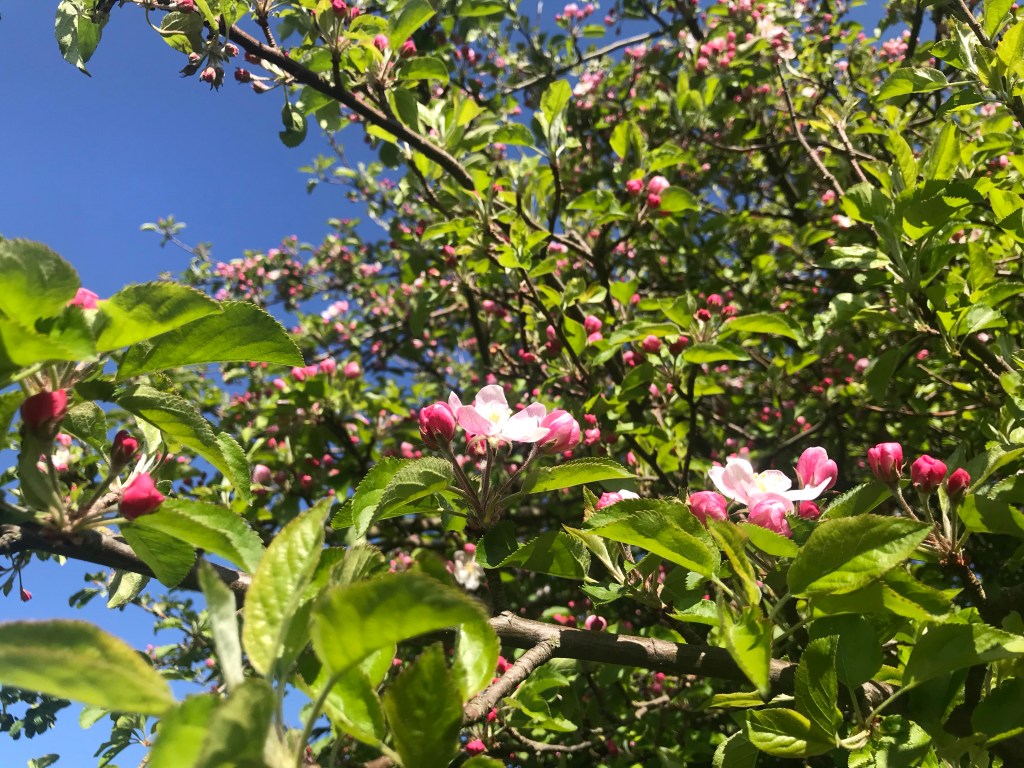
Here are two beautiful pictures from my walk today, where I wrote this to the sound of birdsong. The birdsong seems more prolific at the moment, with the lack of traffic noise. For this I am very grateful. Maybe they are singing to call us back to ourselves?

Routines and rituals

I am really not a fan of routines in general. But my experience of living communally and the wisdom of many ancient monastic communities (of monks and nuns) is that routines really help. Especially when you’re all living in the same space. I’m thinking it’s time to share some of this experience about how to create a good home together…

I have so much to share about this, but for now let me just say that I’m going to try out a daily rhythm from the Northumbria Community retreat house (https://www.northumbriacommunity.org/) (“Midday and Evening office” and “Compline” are other prayer times):

Northumbria Community Nether Springs House Daily Rhythm

I’m not sure how it’s going to work out, or how I will interpret the categories of activity. Already today I decided that washing up should be in the first “work” session. One thing I feel really concerned about is that we learn to properly value household tasks like washing up, cooking, cleaning, laundry etc, which have often been done primarily by women, and have rarely been accorded their proper social value. In times of pandemic, when we’re all at home more, these tasks matter more than ever and I believe everyone in a household who possibly can should share in them. They are not the sole province of women or even of adults.

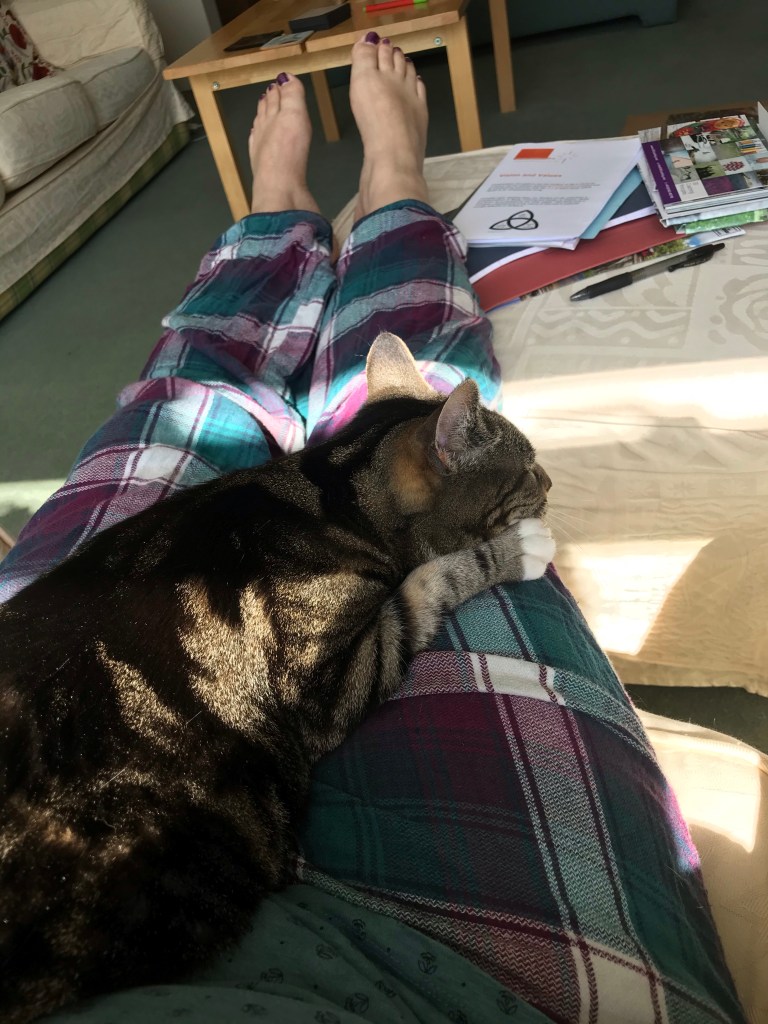
I do let the cat off though. She’s so lazy!

I am well aware that the freedom to live to anything like this routine is a real gift. I’m in the self employed category, so most of my work for the moment has been cancelled. My work now consists in figuring out how to adapt what I can to be online and then working out which work streams I’m going to be able to develop in this season, and also how to access any government help.

In the midst of so much uncertainty, I am wondering whether this little framework of routine could be useful. Feel free to use it or adapt it for yourself, if it might be useful to you too. Or maybe to come up with your own. And let’s see how we go…