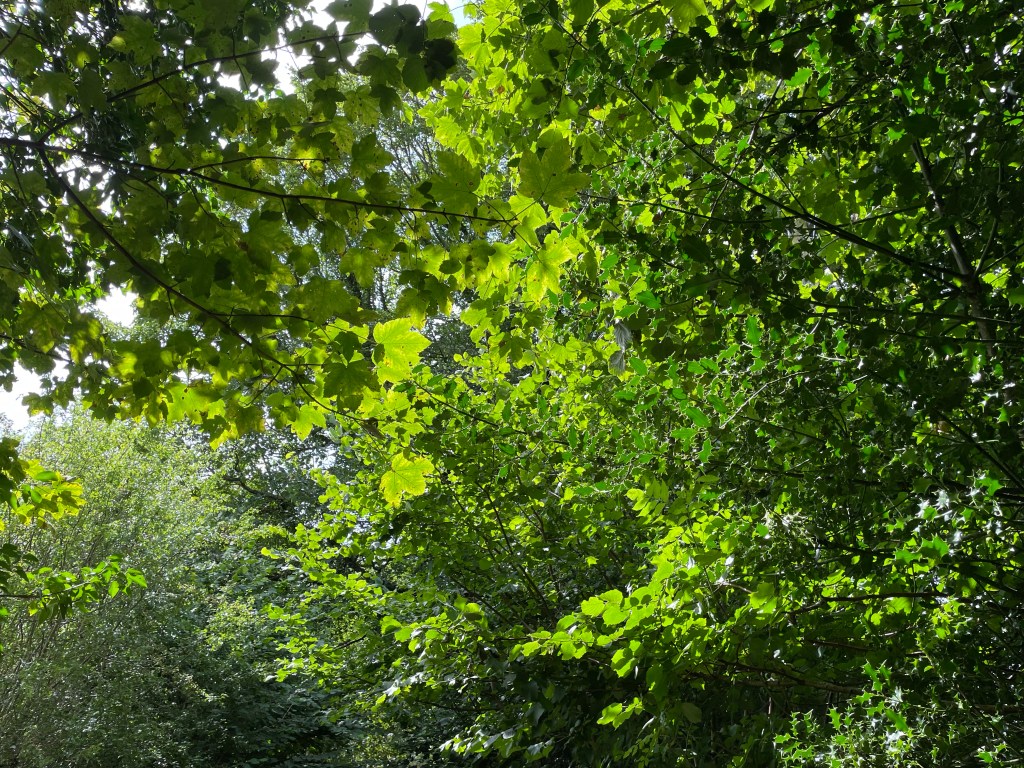
The trees have hope…
I know, because I asked them about their lament
for their sisters and brothers
torn down in the Amazon.
I asked the trees about their lament
and they struck me dumb.

They struck me dumb
with their towering glory,
their sheer age;
wild resilience
silencing me
in
an instant.

The trees have hope;
Just look at the leaves
that Mary Oliver spectacularly failed to count.(1)
Look at the branches
Reaching up into the sky,
silhouetting the view
Bearing birds, squirrels, bugs, lichen
Nonchalantly flexing in the wind.

The trees have hope;
leaves and sap
roots and fungal connections;
light flowing between and beyond
the microcosm and the macrocosm
All made
Of hope

So go to your activism,
But know it will never
All Depend On You.
The trees have hope
Their roots are deep, deep, deep
and their branches reach high, high, high to the sky
and are stronger than we can know
The trees have hope
And they will outlive us.
This poem was seeded in the hospitable silences of the Contemplative Fire community and of Quaker worship at Greenbelt Festival 2025. The time for sharing has arrived now.
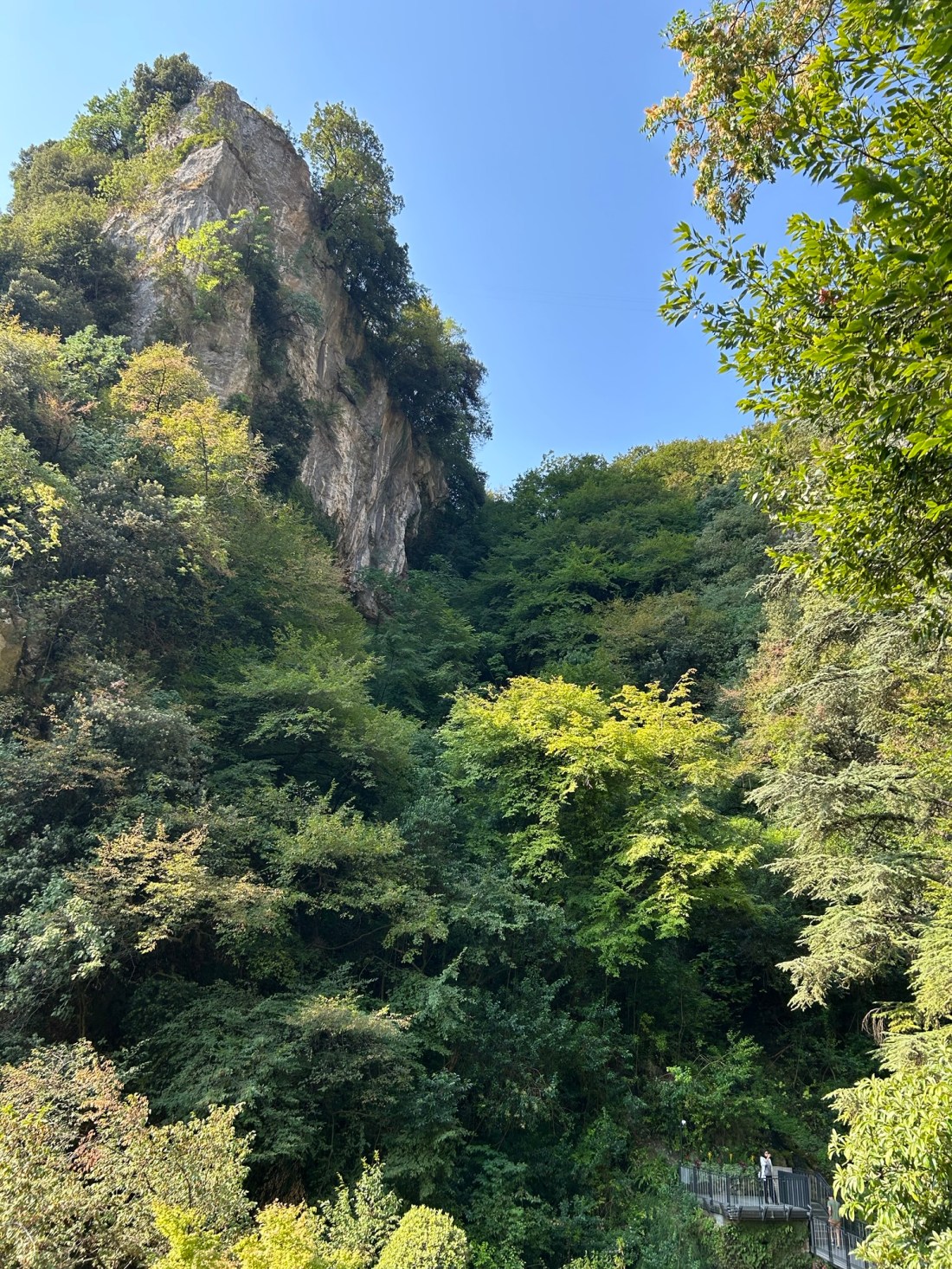
The other day I went for a walk with friends through some beautiful countryside. It was a warm and sunny day, lovely walking weather. At one point the path took us quite steeply down a tiny little valley – just a dip in the landscape really, with a little brook running through the bottom and trees all around. Suddenly the temperature cooled as we dropped down to the water. It was so refreshing!
I have been reading through this big tome bit by bit in my times of contemplation. Currently, it has got me praying for the trees…
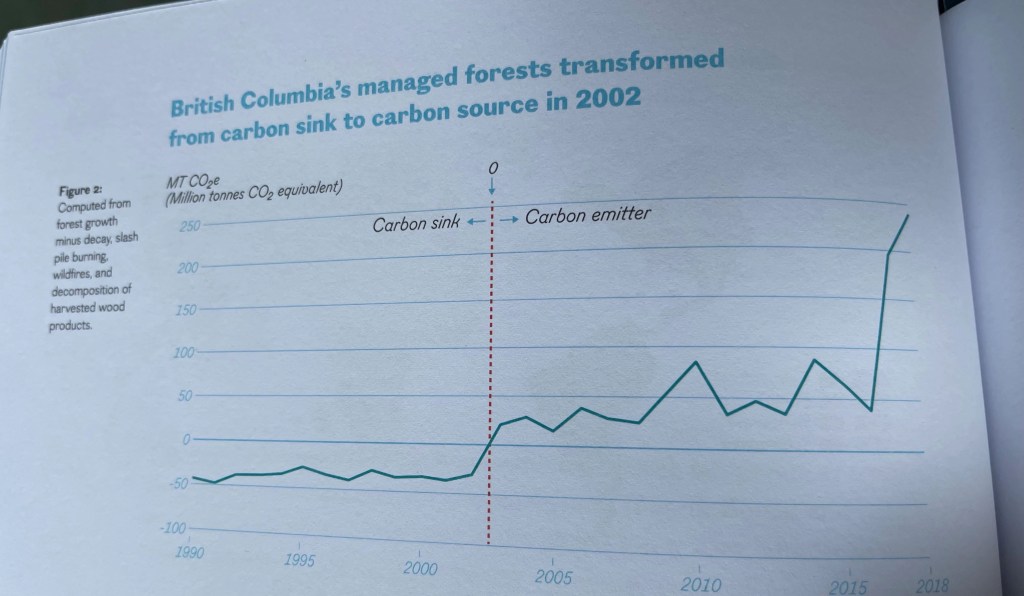
Today I am shocked to find that the wonderful forests of British Columbia, which I feel more connected to because of a friend who lives near to them, turned from being a significant carbon sink (good) to being a source of carbon (baaaad) in 2002, due to increased temperatures, which enabled mountain pine beetles to proliferate (fewer of them dying over winter as the winter temperatures have been warmer and there’s been less snowpack). The beetles bore through the bark of trees to lay their eggs, which kill the trees by consuming and blocking the flow of nutrients to the trees. The deadwood caused by this has made the forests more susceptible to wildfires, which emit a LOT of carbon into the atmosphere.
Now the forests in BC are a larger source of carbon than reported emissions from the energy sector in the region, according to a provisional 2021 report.
However, as with all the short articles in this book there is hope…
The hope lies in reducing the frequency of logging (cutting down trees for wood). This has the potential to enable the forest to become a carbon sink again, storing lots of carbon in the ground instead of releasing it into the atmosphere and causing more global warming. Also this means more mature trees for people animals and plants to enjoy for longer. The positive impact of doing this would be the single biggest thing that could be done in this type of region by the look of it. (Harvest reduction means reducing the logging frequency on this chart. Much quicker/more effective than planting new trees.)
For this to work, all of us, and especially those of us in richer countries, need to stop consuming wood. In any which way. To stop buying things made of wood, or living in such a way that we effectively are demanding the current level of wood harvesting, which is driving these companies to harvest wood on this ridiculous scale.
In New Zealand some years ago I remember seeing a lot of lorries transporting long logs (really I saw more of those than any other type of traffic in the more remote areas). And a lot of forest plantations where trees are grown only in order to be chopped down before they are fully mature to be used for wood. These half logged “managed” forests looked like ugly wounds on an otherwise jaw droppingly beautiful landscape. The same thing happens in the UK and all over the world.
So today I am praying for the trees. And wondering how I can consume less, intentionally. I want to be part of the solution not the problem…🙏🌳💕🌲