
A little chant by Philip Roderick that I’ve been singing alone and with others for a number of years. It made its way back to me via a couple of new friends and acquaintances recently. I am so glad it has been doing the rounds. Kick off your shoes, root yourself where you are and have a sing. Enjoy… 🌱
Author: Alidorey
A searcher after fine pearls.
Save the oceans like we saved the whales
I just had the opportunity to watch this remarkable film on the big screen today. I recommend it! It is breathtakingly beautiful, as you would expect, but also very effective at communicating the violent monopolisation of the oceans that we, the human race, have been engaging in.
At the end of the film David Attenborough highlights the UN ocean conference happening in Nice imminently. Something I was totally unaware of: https://westmed-initiative.ec.europa.eu/events/2025-un-ocean-conference-9-13-june-2025-nice-france/#:~:text=Co%2Dorganised%20by%20the,and%20sustainably%20use%20the%20ocean.
I hope conference delegates have the chance to see this film before they go. And that movers and shakers in their countries also see it and therefore realise how important conservation of the oceans is for our planet now.
The film is very hopeful. Apparently significant areas of ocean have made a remarkable recovery once they have been left alone and given time and space.
It seems totally unnecessary for us to be trawling the oceans in the way we have been doing for some decades now. The footage of trawlers was horrendous. I think the only reason this practice has been legal is because it happens out of sight a long way away. Now it’s not out of sight, thanks to this film crew.
Underneath all of the devastating practices lies endless, insatiable greed. The one thing all this industry relies on.
But there are a few stories in the film that show greed doesn’t have to be the whole story. The global campaign to save the whales, which I remember happening in my childhood, was incredibly effective. Whole species of whales were saved from the brink of extinction and whale populations in general are now thriving again.
Also, there’s a little village in the film where the people decided to stop fishing nearby altogether when that patch became a protected zone. One of my favourite scenes in the film is of a group of their children jumping off the jetty there into a beautifully restored, clean ocean, full of colour, light and life.
And in Hawaii there’s a vast area of ocean nearby that the people decided some time ago to protect and make a « no take » zone (called Papahānoumokuāke). Over the past two decades, that bit of ocean has recovered remarkably well, and of course because of this, tuna stocks in neighbouring areas have increased by over 50% as well.
Although the film was explicitly not saying fishing and fishers are evil, it was saying we need to protect much more of the ocean than we currently do (currently less than 3% of our oceans is properly protected). I will be paying more detailed attention to the amount of fish in my diet, and to where the fish comes from in response to this.
This was a beautiful but uncomfortable watch. Ending with pictures of David standing on Old Harry Rocks, which is a beautiful stretch of coastline near where I grew up. As he says, protecting our oceans could protect the whole planet, our home.
Light on water
I finally went for a walk in a local beauty spot that I don’t think I have ever walked in before, despite having lived less than 10 miles from it for 13 years!
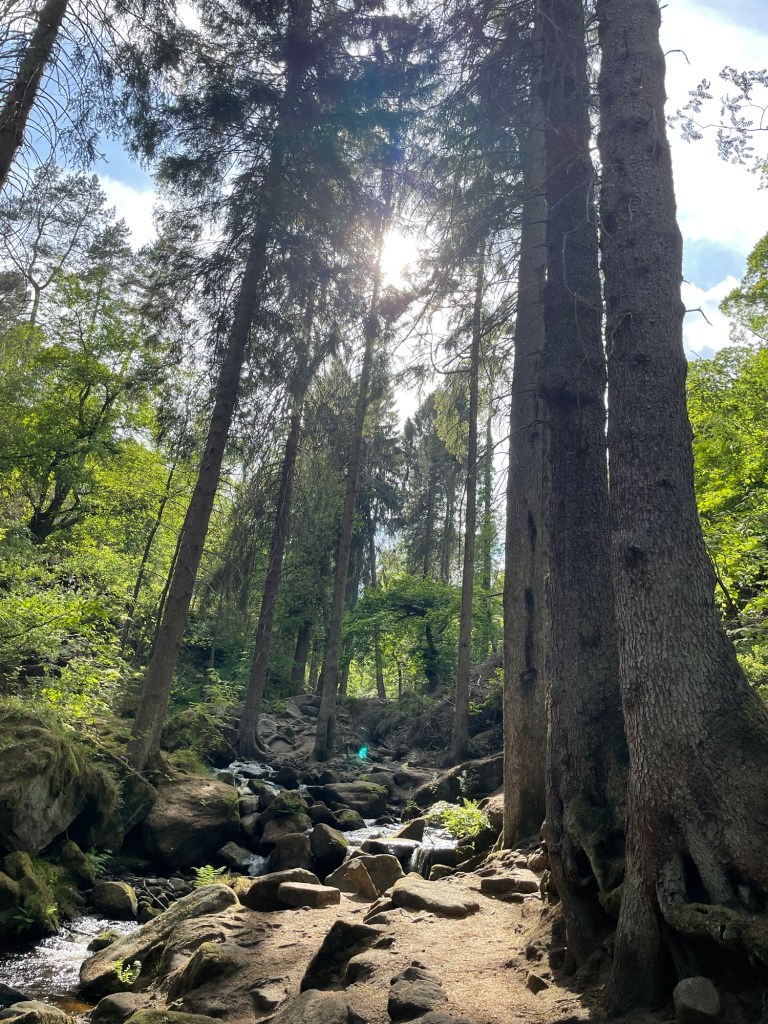
I particularly enjoyed watching how the light from the slowly sinking sun landed on the water and foliage, lending particular areas a sense of blessedness for a while. It reminded me of the feeling I get when the cat chooses to grace me with her presence! It feels like an honour, somehow. As I watched, the light « blessed » particular patches of earth and tumbling brook, then dimmed and moved away. Beautiful.
Disappearing cloud
I have never actually stopped and watched for long enough to see a cloud gradually evaporate in the sun before. But that’s what I found myself doing in some much needed time off the other day, lying flat on my back in the garden. I was transfixed! Here’s the video I took:
I think this moment marked the beginning of healing seeping back into my mind, body and soul. Not that I have been particularly unwell. Just overwhelmed with many things lately, and the constant, dramatically negative news in the world, which has formed the backdrop to challenging life and work situations I’ve been experiencing.
May something of the beginnings of wholeness, refreshment and renewal find its way to you, too, and to all who are currently besieged, grieving and helpless. Enough! May peace come, somehow.
Easter: the unsurprising story
Given the mind-bending miracles threaded through Jesus’ life on earth, his sudden resurrection, after dying a horrific and violent death and being laid in a tomb, was in a sense not that strange. His entire existence was woven through with extraordinary happenings, which were all about bringing life and wholeness where there had been death, disease and brokenness. He even actually raised someone else from the dead (his friend Lazarus) some time before his own death, in front of many witnesses.
So I might have expected people to be more ready to believe the reports of his empty tomb, at least those who lived alongside him and had witnessed all those other extraordinary things.
But people didn’t. Not initially. Why? Mostly because it was women who came across the empty tomb first, and people didn’t trust the words of women.
So when people today persist in not believing these reports, I find myself wondering how much of their disbelief is about the miraculous nature of the resurrection, and how much has been formed by our long history of patriarchy, which has taught us, above all else, to distrust the words of women.
Why are some people so content to assume these « silly women » made this up? These were not silly women. These were women whose lives had been materially revolutionised by the faith they’d found in Jesus, because of the time and attention he’d bothered to show them.
What is not surprising: it was the women who stayed with Jesus as he died, the women who brought spices to honour his body; the women who came back to mourn his death and their loss …and so it was the women who found the empty tomb and had the first holy encounters.
The other thing that’s not surprising: the women were not, and still are often not, believed.
And the final not surprising thing… millions of people; women, men, non binary… have discovered that the women told the truth and have encountered the risen Christ themselves. Millions, right across history and across the world. I hope in whatever form heaven actually takes, those first women can see this, know this, and be delighted with it. I’m sure somehow they do and they are.
I was inspired by this Substack post to write this this morning:
https://open.substack.com/pub/dianabutlerbass/p/sunday-musings-easter?r=2zmwo8&utm_medium=ios
Sabbath as Resistance (part two)
“Do you, when you wake up in the night, remember what you were supposed to have done, vexed that you did not meet expectations? Do you fall asleep counting bricks? Do you dream of more bricks you have to make yet, or of bricks you have made that were flawed? We dream so because we have forgotten the exodus! …
…Those who remember and keep Sabbath find they are less driven, less coerced, less frantic to meet deadlines, free to be, rather than to do…”
‘Sabbath as Resistance’, Walter Brueggemann (2014 pp.42-43)
That first paragraph pretty much describes a lot of my waking moments. When I was younger I spent a lot of time very focused on the bricks I thought I was supposed to be making (i.e. the work I was doing). Now I am wondering whether the bricks I made were of any value or not. I take refuge in the received wisdom that “nothing is ever wasted”.
With the benefit of a bit of hindsight I do now wish I could gift that younger version of myself the knowledge that my work wasn’t really all that important. And that life itself matters more. I had moments; flashes of insight about that, but all too briefly.
I remember once when I was a trainee teacher being on a very stressful placement, where I felt my neck being breathed down constantly by my supervisor. The school holidays interrupted and I went away with a few friends to a Christian festival. During the worship there, I realised that I had allowed that work supervisor to become something like God to me; a very unkind god they were too. I rested for long enough to notice what had happened, and then decided to refuse to allow that to continue. The next term, I stopped staying up till 2am every night producing endless differentiated worksheets for every lesson, and jumping every time the bell rang. I just did my best. Weirdly, the supervisor stopped engaging with me completely. They’d either seen I could actually be trusted, or just had a break themselves and decided to finally leave me be. It was such a relief!
So my question to myself now is; “Why do I find this pattern repeating over and over again in my life?” Lack of rest certainly has a lot to do with it. And as a self employed person rest becomes in theory a lot easier to get (I am my own boss after all), but in practice sometimes much harder, because of the fear of scarcity and whether I will be able to earn enough, rather than a posture of trust that what is needful will be gifted to me. I think for me there is also a fear that I will lose respect because I am not “doing enough” or “achieving enough”. I notice within myself a constant tendency to respond with fear when someone else in my world appears to be doing or achieving so much more than me.
Brueggemann points out that all of these fears have to do with the idea of possessing; of producing and consuming, rather than of being given what is needed. But God’s way throughout the biblical narrative and the Judeo-Christian experience of God’s people is about gift and collaboration, rather than production and consumption.
There will always be inequality if you base everything on production and consumption (some people will always be able to produce more than others), but there is never inequality in a gift given equally to all.
As part of the command to observe sabbath, the day of rest, the Israelites were to remember that they were once foreign slaves in Egypt living under the hostile, oppressive regime of Pharoah, who required them to make ever more bricks without straw, with no rest at all. Given this horrendous corporate experience of coercion, having escaped Pharoah’s rule, they were required to encourage everyone among them to enjoy sabbath rest, including any foreigners living with them, children, adults, even slaves of any sort should have sabbath rest. Because there is equality in this gift. And there is no anxiety about production because the Giver is to be trusted and the gift will be enough.
A lot of things are leading me back to the word “enough” again, this lent. and to the idea of enough, which I think may be one of the most radical notions in our age of production, acquisition and consumption. Enough. What a beautiful idea and reality.
Sabbath as resistance
During lent I am re-reading the book of this 👆🏼 title by Walter Brueggemann with a friend. So far many home truths have reasserted themselves for me, in the nick of time. One of them is that guarding time off for rest and recreation is increasingly difficult, because it’s an act of resistance in a culture where the prevailing value is about increase of production and consumption. No wonder that retaining this boundary requires a lot of effort which feels, ironically, like work. It is work. But perhaps some of the most important work we can do.
The most useful work we can do may be to break the cycle of anxious production and worry that there won’t be enough, simply by actually resting. I am finding that it’s only after rest that I can see the wood for the trees, and begin making better decisions about how I spend my time.
“There are limits to how much food Pharoah [and we] can store and consume and administer. The limit is set by the weekly work pause that breaks the production cycle. And those who participate in it break the anxiety cycle. They are invited to awareness that life does not consist in frantic production and consumption that reduces everyone else to threat and competitor. And the work stoppage permits a waning of anxiety, so energy is redeployed to the neighbourhood. The odd insistence of the God of Sinai is to counter anxious productivity with committed neighbourliness. The latter practice does not produce so much; but it creates an environment of security and respect and dignity that redefines the human project.” (Brueggemann Sabbath as Resistance Louisville, KT: John Knox Press, 2014 p.27-28)
All of this is resonating a lot for me. I am seeking to re-learn from a past mistress of proper rest how to really REST!
Not equal yet
I realise there are an awful lot of structural problems in the world right now. Horrendous diplomatic failures with the USA currently, climate crisis and all ensuing symptoms, ongoing terror in the West Bank and the devastation of Gaza, to name just a few. Perhaps in the light of all of those things, I find myself deeply disturbed by the removal of end-to-end encryption for UK users of many Apple products. I am only just beginning to grasp the potential far reaching consequences of that sort of thing, looking at the political world stage as outlined above. I will no doubt explore this more in a future post, but for now here’s an article outlining the current situation for the UK: https://arstechnica.com/tech-policy/2025/02/apple-pulls-data-protection-tool-instead-of-caving-to-uk-demand-for-a-backdoor/
In the meantime, back on planet Church of England, rather than managing to galvanise ourselves to address any of the world challenges above effectively, we remain stymied by systemic injustice among ourselves. Why we think that this is in any way a fitting offering to a world in turmoil from a Church that prays to God who we say we believe is a) deeply compassionate and b) always engaged with reality, I do not know.
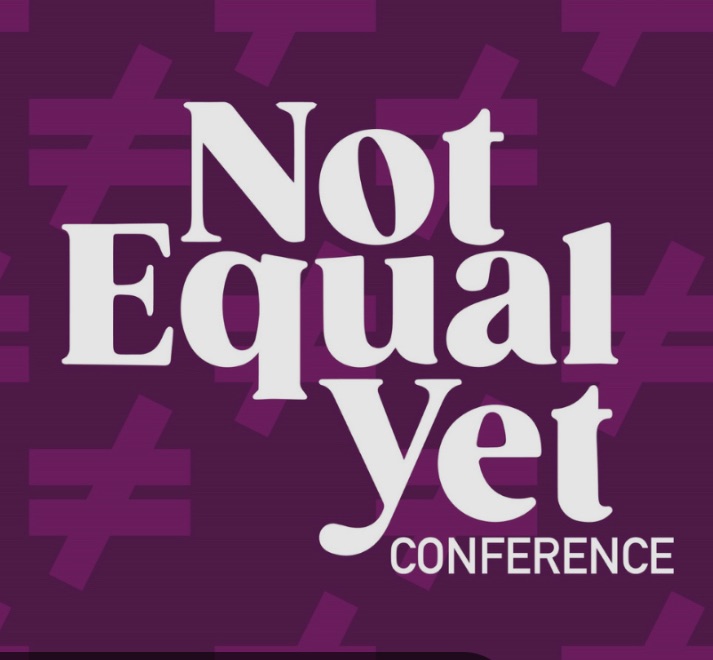
One of the massive glaring structural injustices in the Church of England continues to be the inequality between men and women. I can’t communicate the situation any more effectively than Liz Shercliff has in her blog post below, which will take anyone all of 2 minutes to read. So here it is, with a key quote at the top of it for anyone not wanting to follow the link:
“…The Church is not committed to mutual flourishing, other than as a way of silencing women by throwing us a few scraps and expecting us to be grateful. If women in places of governance dare to ask for actual equality, they are dismissed.”
https://www.womenandthechurch.org/blog/c0p9nbaqh8hvfnjvfngz1umf3vypvb
Win win
Giving thanks today and taking cognisance of something my environmentally well informed friend pointed out the other day; “the most sustainable thing is the thing that’s already in your hand”…
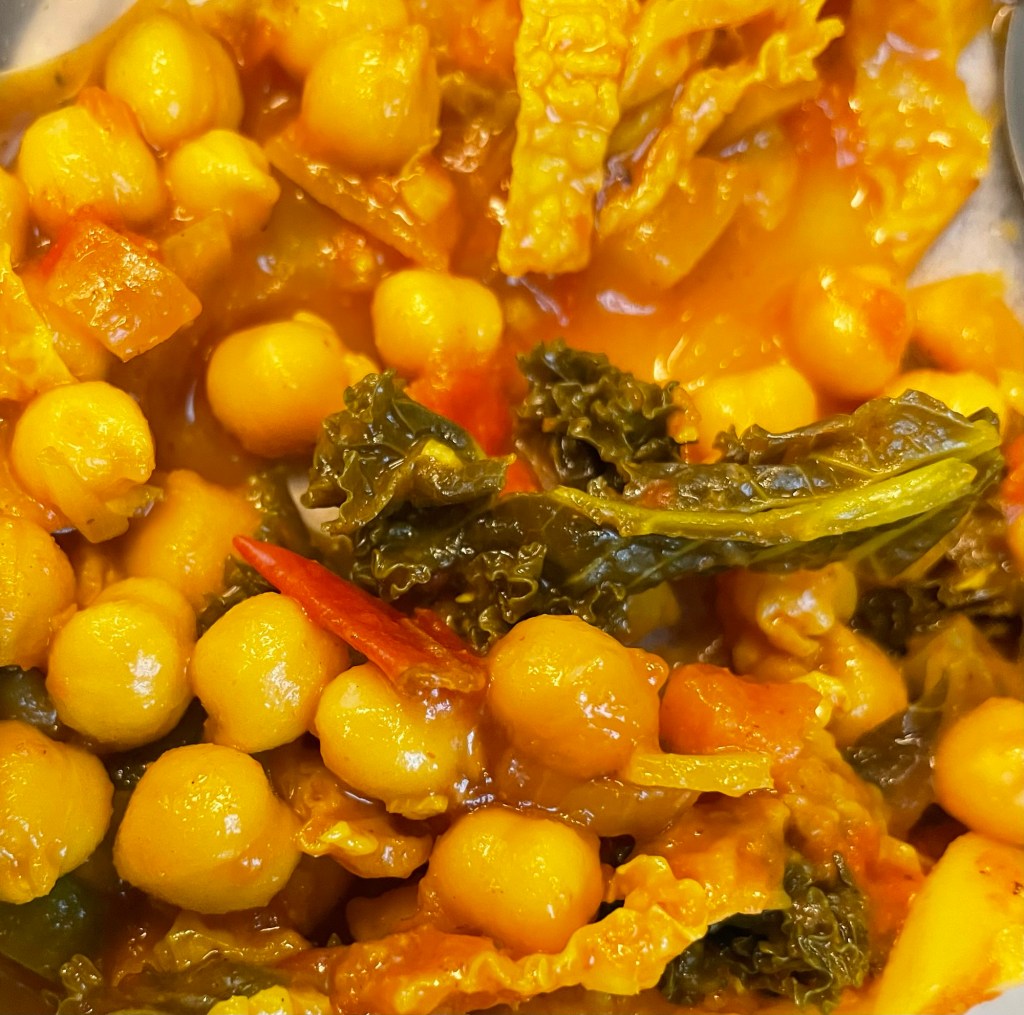
Here is my lunch (made by said friend); tasty, healthy, using up leftovers and saving me approximately £56 million (an exaggeration, but you know what I mean) as I travel today.
The most sustainable thing is the thing that’s already in your hand. Sometimes the healthiest and tastiest is too 🌱🙏
Thresholds
I went on a brilliant retreat last weekend with Anna from https://www.livelightdwelldeep.org/ and the Contemplative Fire community of which I am a Companion (https://contemplativefire.org/). It was called “In Between” and was all about St Brigid and thresholds; in between spaces, moments, seasons. We are currently in between winter and spring. On the brink.
On the retreat I found myself knitting in solitude quite a bit. And appropriately, a very short poem that has been brewing for sometime finally took form and was birthed on the retreat. It resonates with home and the threshold to our home, and also with recently shared experiences of seasons of knitting and not knitting, and with the fact that trains regularly speed past the retreat place where we were, like carriages of the liminal.
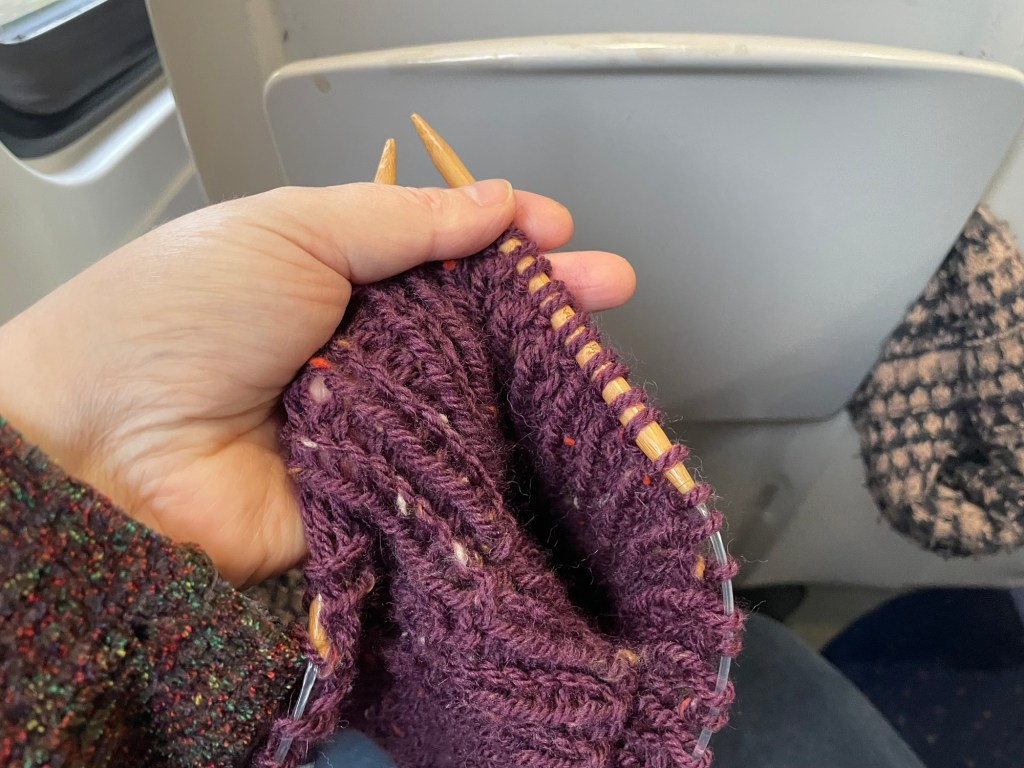
Ironically, I find myself on a train, knitting, half a week later, sharing this poem (maybe this is just part of a longer poem? I’m not sure yet):
I am knitting
I’m not knitting because I am waiting;
I am knitting because I have arrived.