I realise there are an awful lot of structural problems in the world right now. Horrendous diplomatic failures with the USA currently, climate crisis and all ensuing symptoms, ongoing terror in the West Bank and the devastation of Gaza, to name just a few. Perhaps in the light of all of those things, I find myself deeply disturbed by the removal of end-to-end encryption for UK users of many Apple products. I am only just beginning to grasp the potential far reaching consequences of that sort of thing, looking at the political world stage as outlined above. I will no doubt explore this more in a future post, but for now here’s an article outlining the current situation for the UK: https://arstechnica.com/tech-policy/2025/02/apple-pulls-data-protection-tool-instead-of-caving-to-uk-demand-for-a-backdoor/
In the meantime, back on planet Church of England, rather than managing to galvanise ourselves to address any of the world challenges above effectively, we remain stymied by systemic injustice among ourselves. Why we think that this is in any way a fitting offering to a world in turmoil from a Church that prays to God who we say we believe is a) deeply compassionate and b) always engaged with reality, I do not know.
One of the massive glaring structural injustices in the Church of England continues to be the inequality between men and women. I can’t communicate the situation any more effectively than Liz Shercliff has in her blog post below, which will take anyone all of 2 minutes to read. So here it is, with a key quote at the top of it for anyone not wanting to follow the link:
“…The Church is not committed to mutual flourishing, other than as a way of silencing women by throwing us a few scraps and expecting us to be grateful. If women in places of governance dare to ask for actual equality, they are dismissed.”
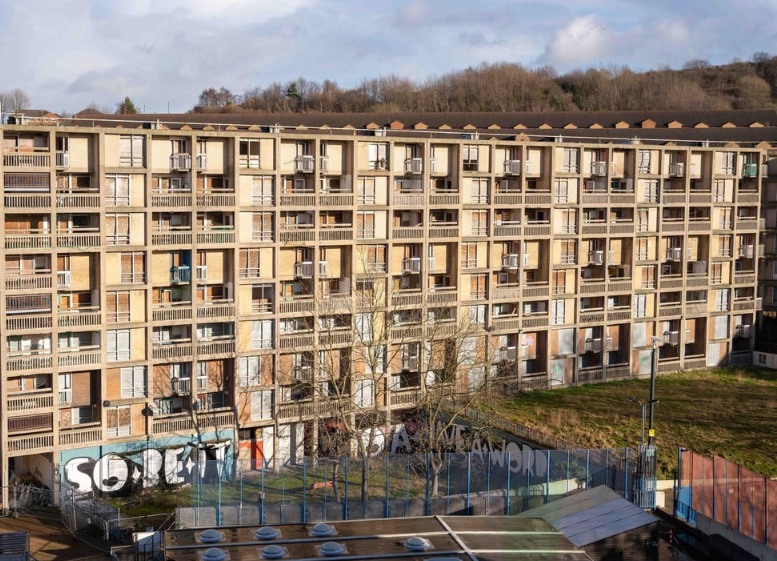
Back in the late 1990’s I was working for a tiny tin pot little community development project. We did some training with the members of a local tenants’ association based in some high rise social housing near where I lived. The then Labour government had housed quite a few Kosovan refugees there. Now I recall that, I think how amazing it was that not that long ago a UK government was without question housing refugees from a war zone. There was no renaming them « asylum seekers » or branding them in some way as less than human and deporting them to Rwanda. There was a genuine welcome. How far we have fallen since then!
Park Hill Flats, Sheffield
Understandably, the refugees formed quite strong social boundaries and often went about together, fearful of this new environment they found themselves in, the women particularly identifiable in their long black hijab. The local people in the tenants’ association were suspicious and rather hostile towards them. Who were these strange people standing huddled in groups on the street, who barely spoke a word of English, invading their territory?
I ran a visualisation session, where I invited members of the tenants’ association to sit in a circle and shut their eyes, then to put themselves in the shoes of the Kosovan women (they were predominantly women), hearing the bombs, fleeing for their lives from their homes which had become a war zone, losing family members including many of their spouses and sons, then eventually arriving in the flats, not speaking a word of English, wondering how they would manage in this strange country, with these strange foods and people.
You could have heard a pin drop. One woman began crying.
As a result of that exercise and their own good conscience and initiative, the women running the tenants’ association decided to proactively welcome the refugees. To give them vouchers to use in the second hand shop for children’s clothes and other useful items. To bridge the gap. To show kindness, consideration, empathy, compassion.
Who could we include?
A colleague of mine was reflecting with great sadness on the approach of the Church of England currently towards all sorts of things. They said « It seems to me that, instead of asking « Who could we include? » we are constantly asking « Who can we exclude? » » We were having a group discussion about who is and isn’t allowed to take communion (a meal of bread and wine all Christians share to re-member Jesus). People were asking why in some churches children can’t take it, given the church’s teaching that a sacrament like this is effective no matter how little understanding the participants have. It’s a good question. In many churches now anyone is free to participate and take communion. But some still lag behind. I am not sure what they are afraid of?
Who could we include?
I was listening to this fabulous talk recently given by Bishop Rose Hudson Wilkin, Bishop of Dover in the WATCH (Women and the Church) « Not equal yet » day.
Bishop Rose Hudson Wilkin Daring to claim the sky: enabling the souls of women to sing
In it, she refers to our Church’s teaching about sacraments; that they are valid and effective because of God’s work, irrespective of who the priest is or what the priest does. « But, » she says, « Suddenly it is a woman and it matters!? »
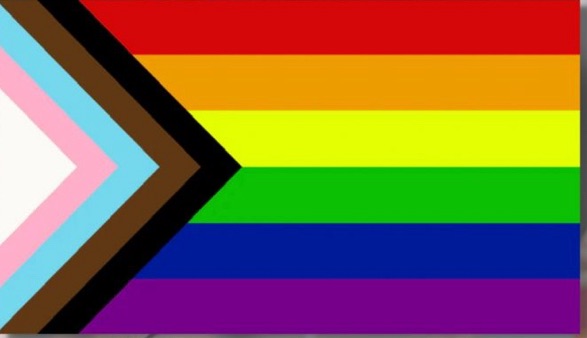
I have for some time now been working in the background to enable people in the structures of the Church of England to hear the voices of LGBTQ+ community and of women more clearly. It is hard work, because so many of us are so used to not being listened to, being silenced, undermined or disrespected, our gauge of what is OK or normal is often warped. It takes others to listen to our stories, before we finally hear ourselves speaking and realise the burdens we’ve been bearing and the hassles we’ve been putting up with all of these years.
This year is the 30th anniversary of the admission of women to priesthood in the Church of England. So we as women are now included. And yet we are still ordaining new priests who think that women shouldn’t be ordained.
We now have women who are bishops, who are in the unenviable position of having to sign to say they support the ordination of new priests who don’t even recognise them as priests let alone bishops! These new priests won’t be ordained by the bishop who signs this paperwork but by an alternative bishop, whose episcopacy (bishop-ness) they do recognise, firstly, because they are a man. And secondly because he’s a man who somehow remains a purer? (or something?) bishop than our many male bishops who do ordain women, because he has never ordained women or been ordained himself by a woman. That means that in a diocese like ours, where the main bishop is a man, evenhe can’t ordain these particular new priests, because he ordains women.
How can we have allowed this situation to come about? To enshrine discrimination in our structures like this is so abhorrent in an organisation that is supposed to be about love.
There is inclusion, and then there is equality, and then there is equity, and then there is also parity. The image below is not perfect (I wouldn’t fancy negotiating that slope in a wheelchair!) but it introduces the general gist.
Friends of mine who are not church members have expressed relief to me that they never became members of the church, and a clear intention never to touch it with a barge pole, because the Church of England is not signed up to the Equalities Act, and we are also flagrantly not an organisation that treats women equally. And also because we are basically hostile as they see it towards the LGBTQ+ community – even those who are already part of the church! This is what they see when they look at us.
This is a great shame, firstly because of the horrendous and ongoing cost of the discrimination and exclusion to LGBTQ+ people, women and people with other protected characteristics too. Many people walk away from the church because this becomes too much to bear, or because they can’t put their name to it when they see the cost of these policies and practices for their friends and family. We seem to have a habit of protecting those who are most powerful. I wonder why?
It is also a great shame because those same friends, by contrast, can see a lot of good in the way many Christians live out their faith, and what it leads them to say and do. The love and message of Jesus Christ is still attractive to people, and the fruit of it (which never has anything to do with this excluding attitude) still commands respect. There is so much fertile ground for mutual learning and sharing and mutual work for peace and justice. But all of this is constantly undermined by our discrimination and exclusion of whole groups of people, based on protected, God-given characteristics which most of us affected were born with.
Along with my aforementioned colleague, instead of all this nonsense, I propose we concentrate on the questions:
Who could we include? And how?
And that we create structures for listening attentively to the voices that have been systemically suppressed in the Church of England for generations; those of black and Asian people, LGBTQ+ people, disabled people and women. And that we prepare ourselves to act on what we hear.
This, to me, seems much more resonant with Jesus’ way.
After all, as one of my Christian friends delights in asking, « Who would Jesus exclude? »
To return to the start of this article, I also wonder what might happen if we in the UK began to focus on how we could include people who are fleeing horrendous persecution or war, rather than on how we can exclude them by policing our borders in such a draconian way? People do not voluntarily abandon their homes and country without very good reason. I long to see inclusion and compassion here again.


 la perle