During lent I am re-reading the book of this 👆🏼 title by Walter Brueggemann with a friend. So far many home truths have reasserted themselves for me, in the nick of time. One of them is that guarding time off for rest and recreation is increasingly difficult, because it’s an act of resistance in a culture where the prevailing value is about increase of production and consumption. No wonder that retaining this boundary requires a lot of effort which feels, ironically, like work. It is work. But perhaps some of the most important work we can do.
The most useful work we can do may be to break the cycle of anxious production and worry that there won’t be enough, simply by actually resting. I am finding that it’s only after rest that I can see the wood for the trees, and begin making better decisions about how I spend my time.
“There are limits to how much food Pharoah [and we] can store and consume and administer. The limit is set by the weekly work pause that breaks the production cycle. And those who participate in it break the anxiety cycle. They are invited to awareness that life does not consist in frantic production and consumption that reduces everyone else to threat and competitor. And the work stoppage permits a waning of anxiety, so energy is redeployed to the neighbourhood. The odd insistence of the God of Sinai is to counter anxious productivity with committed neighbourliness. The latter practice does not produce so much; but it creates an environment of security and respect and dignity that redefines the human project.” (Brueggemann Sabbath as Resistance Louisville, KT: John Knox Press, 2014 p.27-28)
All of this is resonating a lot for me. I am seeking to re-learn from a past mistress of proper rest how to really REST!
I realise there are an awful lot of structural problems in the world right now. Horrendous diplomatic failures with the USA currently, climate crisis and all ensuing symptoms, ongoing terror in the West Bank and the devastation of Gaza, to name just a few. Perhaps in the light of all of those things, I find myself deeply disturbed by the removal of end-to-end encryption for UK users of many Apple products. I am only just beginning to grasp the potential far reaching consequences of that sort of thing, looking at the political world stage as outlined above. I will no doubt explore this more in a future post, but for now here’s an article outlining the current situation for the UK: https://arstechnica.com/tech-policy/2025/02/apple-pulls-data-protection-tool-instead-of-caving-to-uk-demand-for-a-backdoor/
In the meantime, back on planet Church of England, rather than managing to galvanise ourselves to address any of the world challenges above effectively, we remain stymied by systemic injustice among ourselves. Why we think that this is in any way a fitting offering to a world in turmoil from a Church that prays to God who we say we believe is a) deeply compassionate and b) always engaged with reality, I do not know.
One of the massive glaring structural injustices in the Church of England continues to be the inequality between men and women. I can’t communicate the situation any more effectively than Liz Shercliff has in her blog post below, which will take anyone all of 2 minutes to read. So here it is, with a key quote at the top of it for anyone not wanting to follow the link:
“…The Church is not committed to mutual flourishing, other than as a way of silencing women by throwing us a few scraps and expecting us to be grateful. If women in places of governance dare to ask for actual equality, they are dismissed.”
Giving thanks today and taking cognisance of something my environmentally well informed friend pointed out the other day; “the most sustainable thing is the thing that’s already in your hand”…
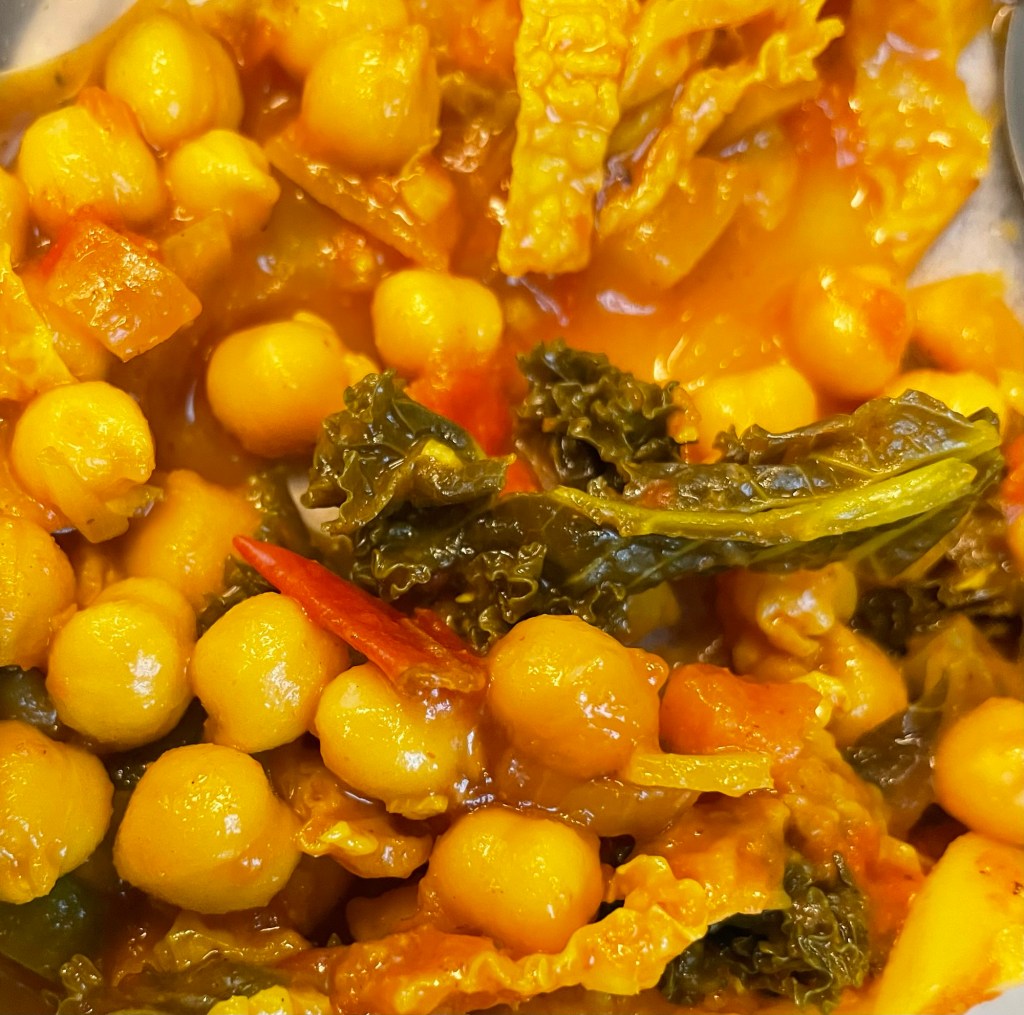
Here is my lunch (made by said friend); tasty, healthy, using up leftovers and saving me approximately £56 million (an exaggeration, but you know what I mean) as I travel today.
The most sustainable thing is the thing that’s already in your hand. Sometimes the healthiest and tastiest is too 🌱🙏
I went on a brilliant retreat last weekend with Anna from https://www.livelightdwelldeep.org/ and the Contemplative Fire community of which I am a Companion (https://contemplativefire.org/). It was called “In Between” and was all about St Brigid and thresholds; in between spaces, moments, seasons. We are currently in between winter and spring. On the brink.
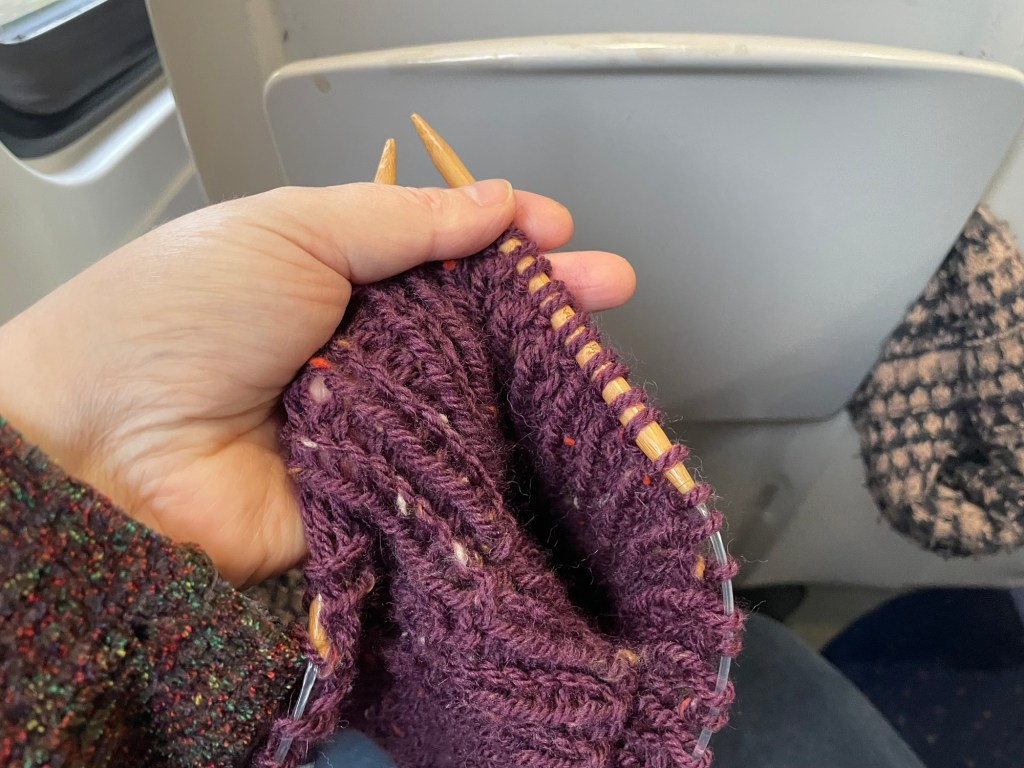
On the retreat I found myself knitting in solitude quite a bit. And appropriately, a very short poem that has been brewing for sometime finally took form and was birthed on the retreat. It resonates with home and the threshold to our home, and also with recently shared experiences of seasons of knitting and not knitting, and with the fact that trains regularly speed past the retreat place where we were, like carriages of the liminal.
Ironically, I find myself on a train, knitting, half a week later, sharing this poem (maybe this is just part of a longer poem? I’m not sure yet):
I am knitting
I’m not knitting because I am waiting;
I am knitting because I have arrived.
Interrupting before my second post about Mozart just to say I’ve been writing advent notes with a friend this year. In our final post, we included a reference to O Magnum Mysterium by Morten Lauridsen. It’s a beautiful meditative piece, which I offer as a Christmassy blessing here. Click the link below to hear it…
Lyrics:
O magnum mysterium Et admirabile sacramentum Ut animalia viderent Dominum natum Jacentem in praesepio! Beata Virgo, cujus viscera Meruerunt portare Dominum Christum Alleluia!
Translation:
O great mystery, and wonderful sacrament, that animals should see the newborn Lord, lying in a manger! Blessed is the virgin whose womb was worthy to bear the Lord, Jesus Christ. Alleluia!
Please forgive me for being a theology nerd and classical music junkie here. Music is a great source of joy to me, as is my faith. When the two coincide, the fireworks start! I hope this post helps you to find joy in either or both of them…
Mozart died when he was just 35 years old, having written more than 800 pieces of music. He wrote his « Great » mass in C minor, the last of his 17 masses (17?!), when he was just 27 years old. It is a really extraordinary work. I want to share two glorious movements from it, the first one in this blog, the second in the next.
The first is the Domine Deus from the Gloria (the 5th movement), which is just 2 mins 44 seconds long in this excellent recording, but in which things of eternal theological consequence happen:
Lucy Crowe, soprano; Olivia Vermeulen, mezzo-soprano; Berliner Philharmoniker; Daniel Harding, conductor
I’m going to run through this using timings, so you can identify the moments I am referring to. If you read music you might find the score in the video helpful/revealing! (But you don’t need to be able to read music to understand what I will share.)
Here is the text and translation:
Latin text: Domine Deus, Rex coelestis, Deus Pater omnipotens.
Domine Fili unigenite, Jesu Christe. Domine Deus, Agnus Dei, Filius Patris.
English translation: Lord God, King of the heavens, God the Father Almighty. (NB 👈🏼 this all refers to God the Father.)
Lord only-begotten Son, Jesus Christ. Lord God, Lamb of God, Son of the Father. (NB 👈🏼 this all refers to God the Son ie Jesus.)
0:21 the first voice comes in with « Domine Deus… » all the text about God the Father
0:42 the second voice follows with a tiny overlap with « Domine Fili… » all the text about God the Son
1:07 each voice takes the part of the Father or the Son and they sing in harmony, the two sets of words at the same time.
1:29 the two voices sing the words for God the Father together in harmony and then the words for God the Son together in harmony at the same time. Which to me symbolises God the Father and God the Son being one in heaven.
THEN…
1:48 is one of my favourite moments in this piece… can you hear when Filius (God the Son) descends from Patris (God the Father)? See if you can tell the moment when one voice descends from the other. It is tricky to hear because the performers are so good. The intention is for the Son to seamlessly emerge from the Father. Then they both sing « Filius Patris » « Son of the Father » in such a way that Filius and Patris interweave constantly.
To me, 1:48 represents the moment of incarnation, when Jesus (the Son of God) was born in human form, which Christians celebrate particularly at Christmas. As far as I know, no other religion has this story of God becoming human while still remaining God. It is an extraordinary, inexplicable paradox, here represented beautifully in music. In Christian language we describe it as God the Son (Jesus) being sent by God the Father. Both are in fact the King of the heavens and are God. They are One, and yet when Jesus was born on earth somehow their Oneness was stretched as far as it could be without reaching breaking point (for interesting theological insight on this the work of Jürgen Moltmann is a must. But only if you are a theology nerd as his writing is quite dense!).
AND THEN… (yes, there’s more!)
2:12 is my favourite moment in this whole movement, when Patris (God the Father) and Agnus Dei (the lamb of God – ie the Son) seamlessly echo one another’s glorious voice, as the sopranos take turns with these beautiful, soaring, sustained high notes. Again, see if you can detect the slight change of timbre as they swap the same high notes between the two voices. With good performers such as these, it’s very tricky to hear the difference, unless you’re at a live performance and can see when each takes a turn with the high notes by watching their body language. It sends shivers down my spine just hearing it again.
God the Father and God the Son; One voice, the voice of love that would always, always come down in tangible human form, to bring the miraculous possibility of something new; of joy. May this joy of miraculous possibility be yours today, whatever you are facing. 🙏🎵❤️
I have become more aware lately of so many people struggling with mental ill-heath. In the UK the clocks just went back an hour, which means our evenings have become suddenly much darker sooner. And the colder, wetter weather is setting in. That, along with the big scale strife and structural injustices in the world and people’s own deeply personal struggles, is creating a big challenge. Not for the first time, I wonder whether those who experience mental ill health in the face of all of these challenges aren’t the sanest people among us?
But among the struggles, I want to share some deep joy. Because autumn remains a favourite season of mine, and ever since doing the world trip that made me launch this blog, I have really cherished it (since during that trip I mostly missed it altogether due to being mostly in the Southern hemisphere).
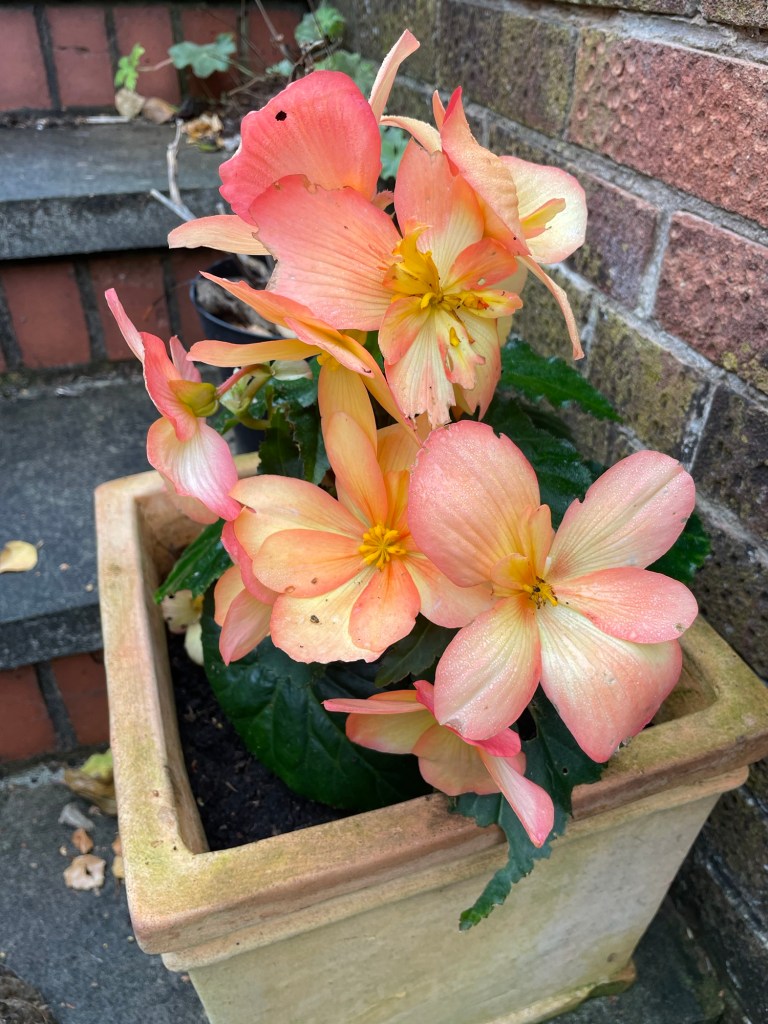
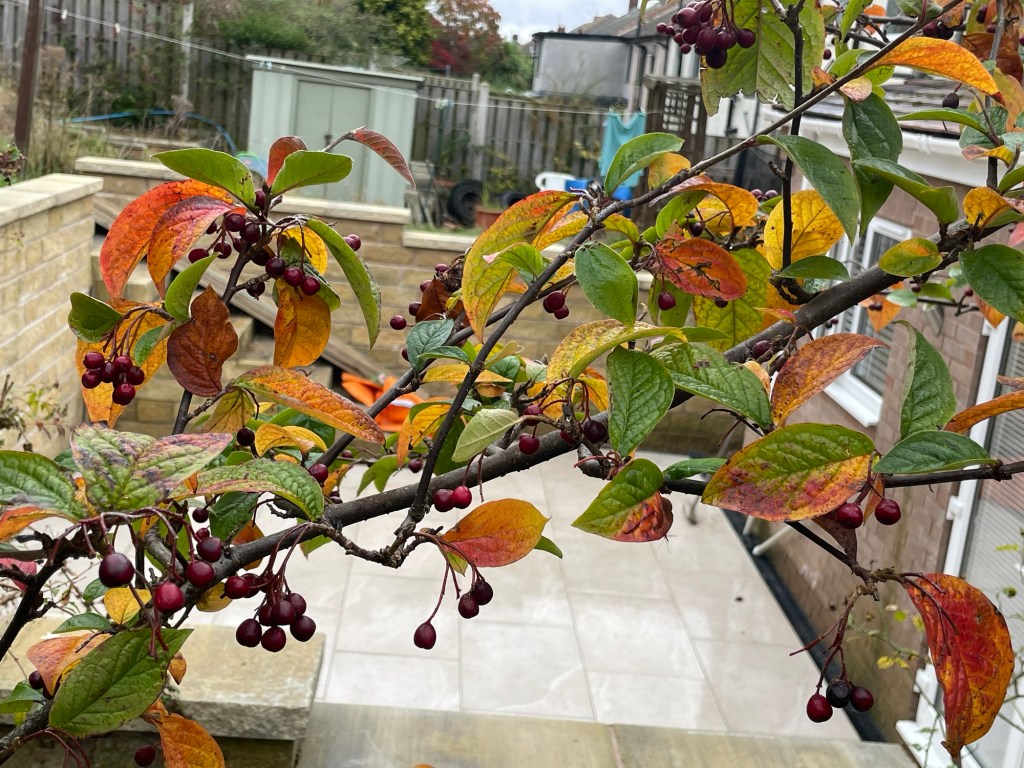
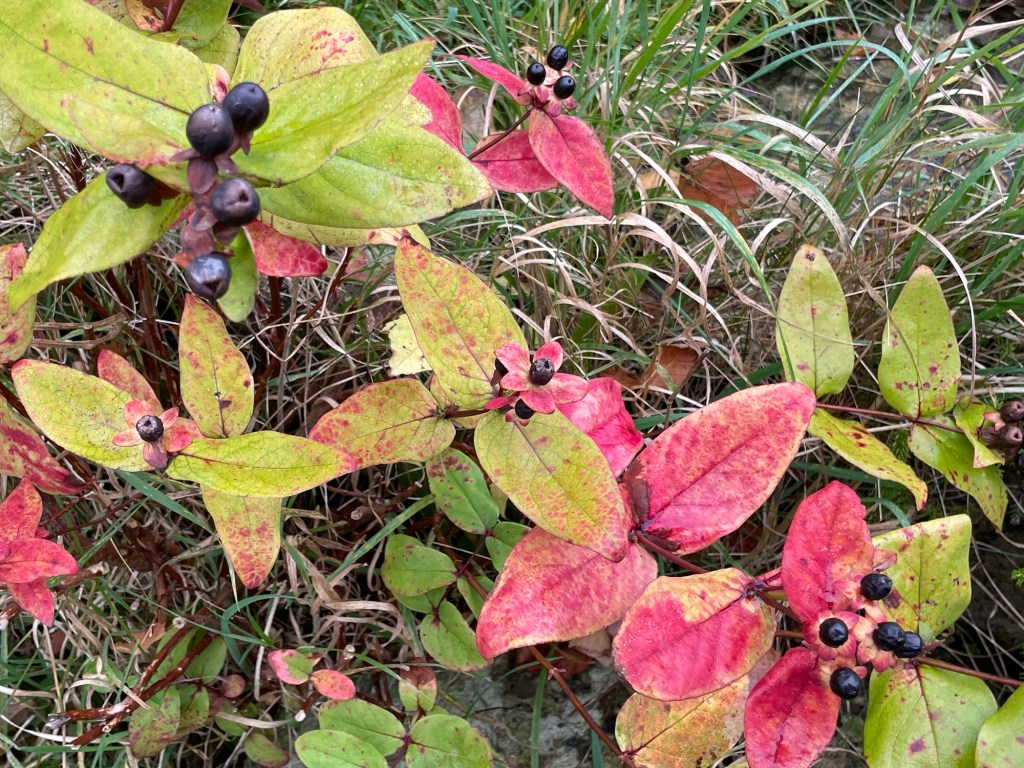
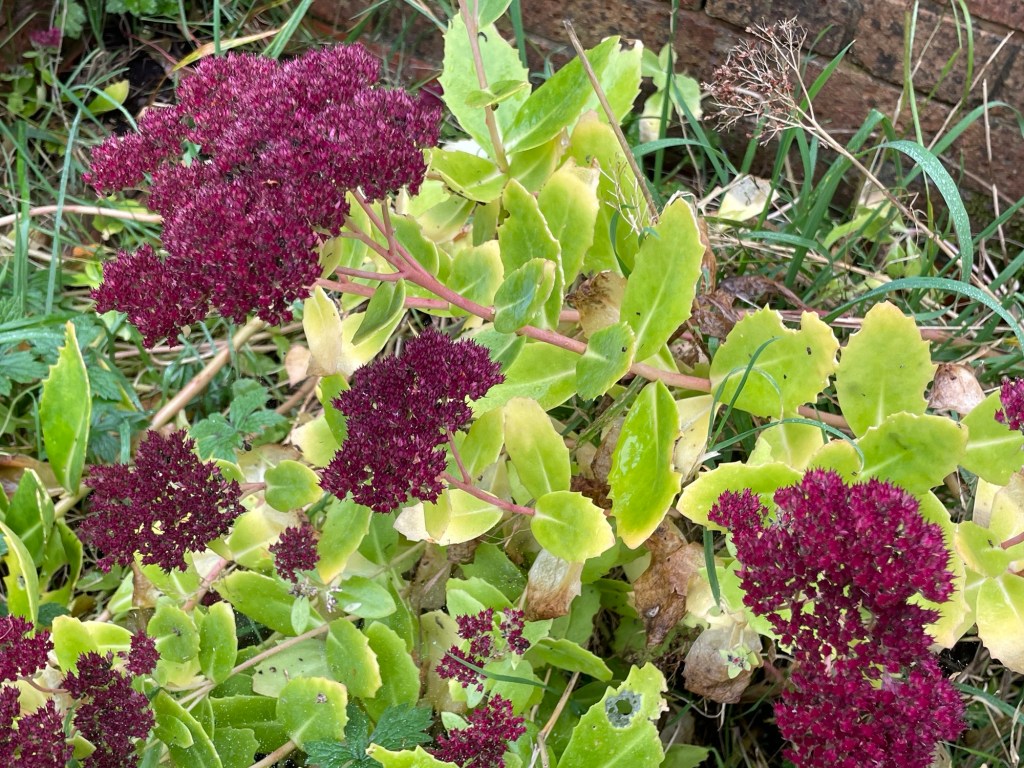
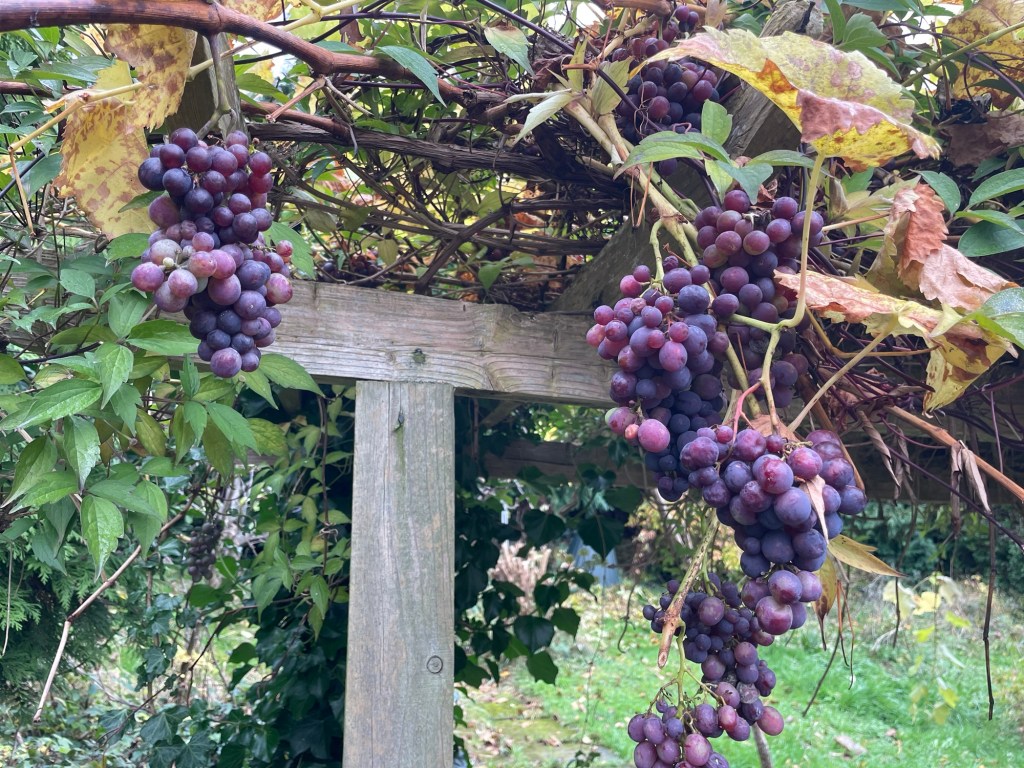
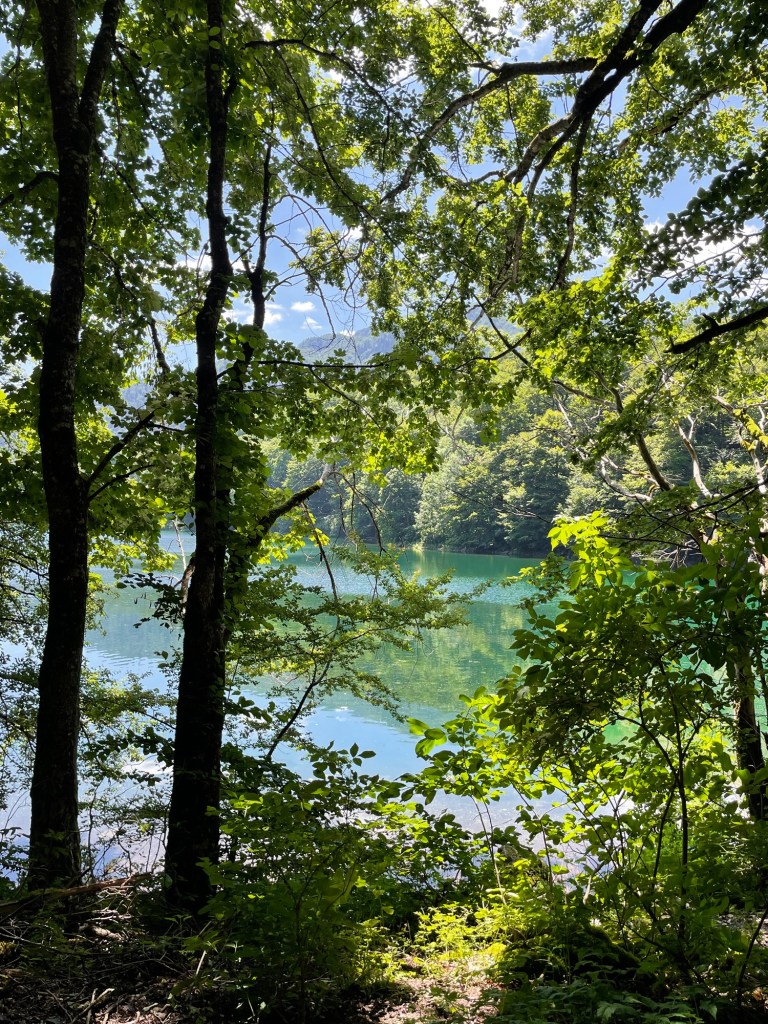
I hope you enjoy these forms and colours I saw this morning…
Grapes… in the North of England! Some are actually sweet enough to eat this year too…
And here is a friend simply standing in the sun in a quiet moment a few weeks ago (zoom in to see her in the distance):
To all of my readers; may you experience warmth and light, love and colour in this season, and may it be deeply real to you, whatever the challenges you are facing. 🙏❤️
There is an ongoing rift in the Church of England that has become something of a running sore. Although our Church « unequivocally decided », through its governing body the General Synod, 30 years ago, that anyone could be ordained priest, regardless of their gender, we are still ordaining men who think that women should not be able to be ordained priest.
Broadly speaking such men fall into two categories; those who are longing for unity between our Church and the Catholic Church, who are waiting until the Pope, leader of the Catholic Church, decides to ordain women too; and those who believe that the Bible says women shouldn’t teach or have authority over men, who don’t ever envisage a time when women should be able to be priests (though I guess for these it would be ok if we led churches with only women and children in them?).
Women have been presiding over Shabbat (sabbath – the day of rest) meal tables for centuries. Even for centuries before Jesus walked this earth. In the Jewish tradition it is the women lighting the candles on the eve of Sabbath, presenting the Shabbat loaf, often baked by their own hands.
For someone to refuse to eat at a table we women are hosting at feels like such a slap in the face to me. After centuries of hosting at tables, shopping, cooking, cleaning, making beds for family, friends and strangers, that each one might find rest. For someone to refuse point blank to sit and eat at the table we have yet again laid, and to refuse because we are a woman, is an unspeakable insult. That’s how I receive it.
I have absolutely no right to bear the weight of generations of women across the world whose service to others has been so much greater than my own. And yet, because I am a woman, it feels like they are all in me, with me. When my table is rejected, so is theirs. When their table is rejected, so is mine. In my mind’s eye we are all – the millions of us stretching beyond where any eye could see – outraged and indignant. And tired and bewildered, too.
After all, this is not only our table, it’s also the Lord’s table. Jesus himself is the real host here. The Creator who made the grape and the grain that the wine and bread are formed of in the first place. Who made the trees that supplied the wood for the table, even. If he is delighted to host at our table and to make the meal we share here sacred, why on earth would anyone who loves and honours him not be delighted to eat at it?
Our table is your table. You are welcome. Come, sit and eat.
Having said that, one needs a certain hospitality of heart to be a guest. And I can’t seem to find it in myself any longer to be a guest at tables hosted by men who think I am not the priest I am, in the full knowledge that they will probably never come and eat and drink at the table I host. Even though it is not I but Jesus who hosts really, which belief was the only way I used to manage to be at their tables before.
Many years ago I went and stayed for a weekend in the communal household of a wonderful Catholic priest in his mid-80’s called Father Peter, who lived in Preston in Lancashire in the UK. He was a man full of the love of God. I was there as a Church of England priest, wanting to learn about living communally with others and to wonder whether God might enable me to inhabit or create a similar kind of household with other people, as part of my priestly ministry.
To understand this story fully you have to grasp that in the Catholic Church you can’t take bread and wine at mass unless you are a practising Catholic. Even other types of Christians are not permitted to share in mass normally in Catholic churches. And women are most definitely not able to be ordained yet in the Catholic Church (though I have met many Catholics who are longing for the day they are).
On the Friday morning, I had a conversation with Father Peter that went pretty much like this:
Father Peter: Now then, so we’ve a Benediction of the Blessed Sacrament later today for an hour 5-6pm so people arrive into the silence as soon as they can after work, and then after an hour of silent prayer we share mass. Will you come? I’d love you to come.
Me: Oooh wonderful yes I’ll come. But I’ll not take the bread and the wine, right?
Fr Peter: You will.
Me: OK…?
Fr Peter: then there’s mass on Sunday morning…
Me: Well of course I’ll come to that too but I’ll not take the bread and wine.
Fr Peter: You will…
Me: Well OK I’ll come and take part but I’ll not wear my clerical collar then…? [The clerical collar is the sign that I am ordained.]
Fr Peter: You will… I hope? And I am going to say mass in your name for a month following your visit, to pray for you. If that’s ok?
Me: ….mmmpfff… Really? Oh wow.
I guess Father Peter figured he was too old for anyone to be able to get too upset with him. His church was rammed on the Sunday morning and full of joyful worship and love.
Unless we can sort this pickle out we will be nowhere with the new wine the Spirit of God is bringing. There are priests in waiting of non binary gender. Their tables will also be hosted by Jesus, who will make the bread and wine they share sacred. I will be honoured to re-member Jesus and to eat and drink at such tables. Because I believe that ultimately the love of God is greater than whatever obstacles we try to put in its way.
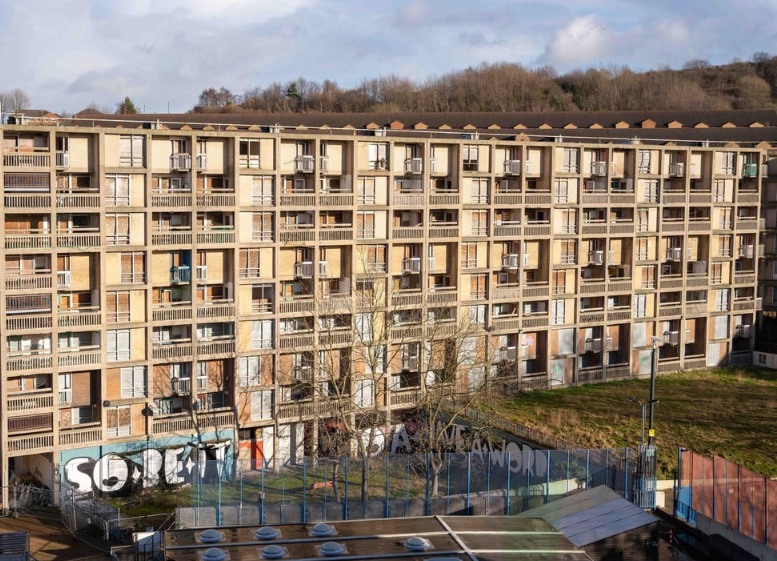
Back in the late 1990’s I was working for a tiny tin pot little community development project. We did some training with the members of a local tenants’ association based in some high rise social housing near where I lived. The then Labour government had housed quite a few Kosovan refugees there. Now I recall that, I think how amazing it was that not that long ago a UK government was without question housing refugees from a war zone. There was no renaming them « asylum seekers » or branding them in some way as less than human and deporting them to Rwanda. There was a genuine welcome. How far we have fallen since then!
Park Hill Flats, Sheffield
Understandably, the refugees formed quite strong social boundaries and often went about together, fearful of this new environment they found themselves in, the women particularly identifiable in their long black hijab. The local people in the tenants’ association were suspicious and rather hostile towards them. Who were these strange people standing huddled in groups on the street, who barely spoke a word of English, invading their territory?
I ran a visualisation session, where I invited members of the tenants’ association to sit in a circle and shut their eyes, then to put themselves in the shoes of the Kosovan women (they were predominantly women), hearing the bombs, fleeing for their lives from their homes which had become a war zone, losing family members including many of their spouses and sons, then eventually arriving in the flats, not speaking a word of English, wondering how they would manage in this strange country, with these strange foods and people.
You could have heard a pin drop. One woman began crying.
As a result of that exercise and their own good conscience and initiative, the women running the tenants’ association decided to proactively welcome the refugees. To give them vouchers to use in the second hand shop for children’s clothes and other useful items. To bridge the gap. To show kindness, consideration, empathy, compassion.
Who could we include?
A colleague of mine was reflecting with great sadness on the approach of the Church of England currently towards all sorts of things. They said « It seems to me that, instead of asking « Who could we include? » we are constantly asking « Who can we exclude? » » We were having a group discussion about who is and isn’t allowed to take communion (a meal of bread and wine all Christians share to re-member Jesus). People were asking why in some churches children can’t take it, given the church’s teaching that a sacrament like this is effective no matter how little understanding the participants have. It’s a good question. In many churches now anyone is free to participate and take communion. But some still lag behind. I am not sure what they are afraid of?
Who could we include?
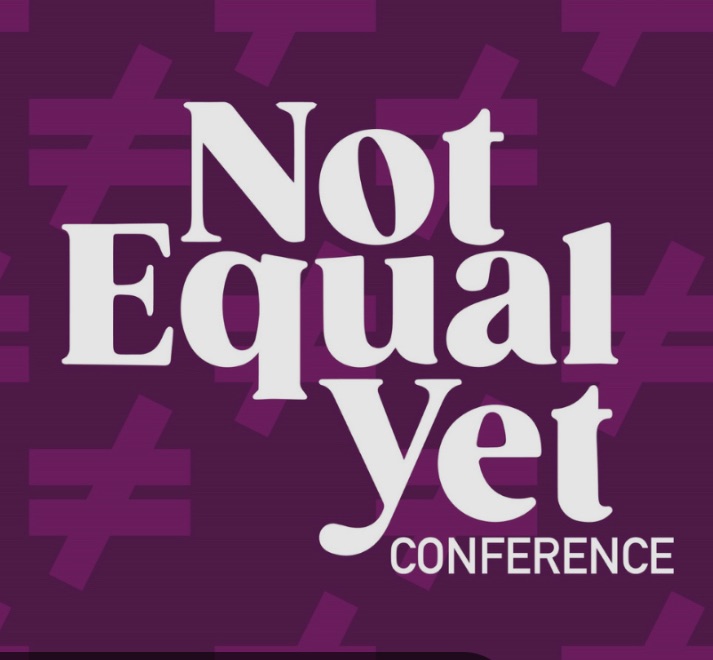
I was listening to this fabulous talk recently given by Bishop Rose Hudson Wilkin, Bishop of Dover in the WATCH (Women and the Church) « Not equal yet » day.
Bishop Rose Hudson Wilkin Daring to claim the sky: enabling the souls of women to sing
In it, she refers to our Church’s teaching about sacraments; that they are valid and effective because of God’s work, irrespective of who the priest is or what the priest does. « But, » she says, « Suddenly it is a woman and it matters!? »
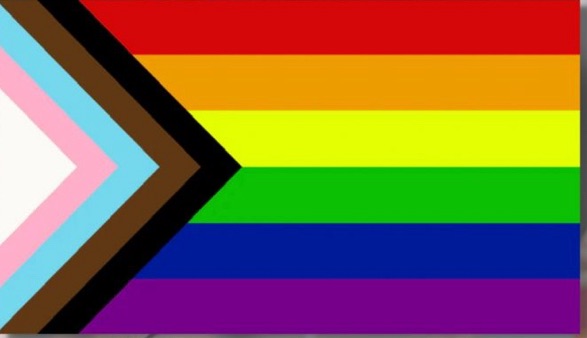
I have for some time now been working in the background to enable people in the structures of the Church of England to hear the voices of LGBTQ+ community and of women more clearly. It is hard work, because so many of us are so used to not being listened to, being silenced, undermined or disrespected, our gauge of what is OK or normal is often warped. It takes others to listen to our stories, before we finally hear ourselves speaking and realise the burdens we’ve been bearing and the hassles we’ve been putting up with all of these years.
This year is the 30th anniversary of the admission of women to priesthood in the Church of England. So we as women are now included. And yet we are still ordaining new priests who think that women shouldn’t be ordained.
We now have women who are bishops, who are in the unenviable position of having to sign to say they support the ordination of new priests who don’t even recognise them as priests let alone bishops! These new priests won’t be ordained by the bishop who signs this paperwork but by an alternative bishop, whose episcopacy (bishop-ness) they do recognise, firstly, because they are a man. And secondly because he’s a man who somehow remains a purer? (or something?) bishop than our many male bishops who do ordain women, because he has never ordained women or been ordained himself by a woman. That means that in a diocese like ours, where the main bishop is a man, evenhe can’t ordain these particular new priests, because he ordains women.
How can we have allowed this situation to come about? To enshrine discrimination in our structures like this is so abhorrent in an organisation that is supposed to be about love.
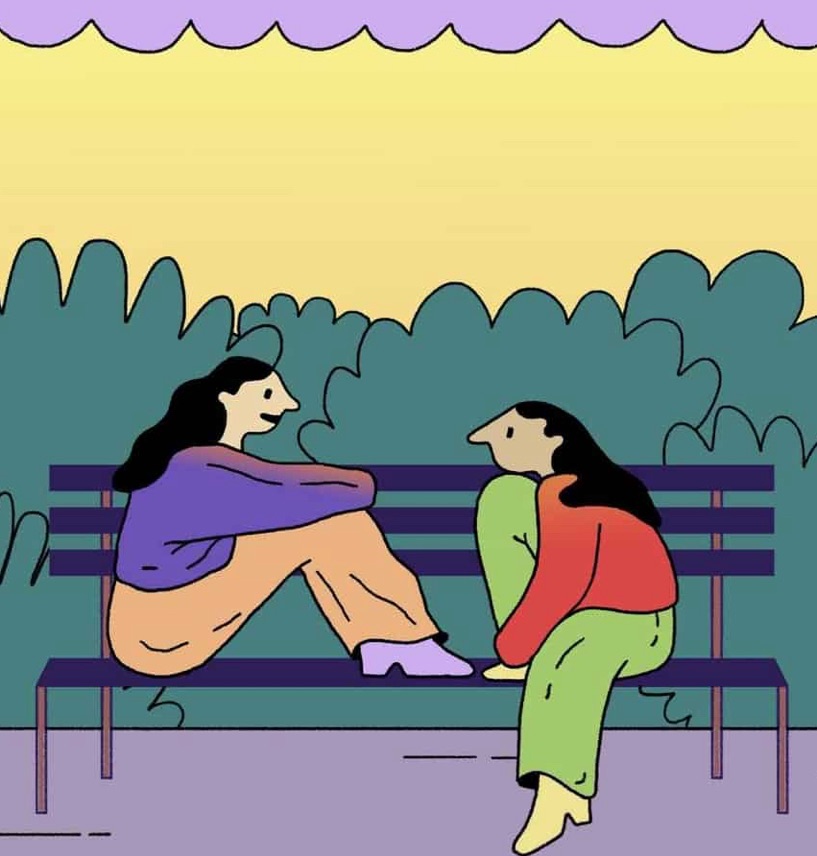
There is inclusion, and then there is equality, and then there is equity, and then there is also parity. The image below is not perfect (I wouldn’t fancy negotiating that slope in a wheelchair!) but it introduces the general gist.
Friends of mine who are not church members have expressed relief to me that they never became members of the church, and a clear intention never to touch it with a barge pole, because the Church of England is not signed up to the Equalities Act, and we are also flagrantly not an organisation that treats women equally. And also because we are basically hostile as they see it towards the LGBTQ+ community – even those who are already part of the church! This is what they see when they look at us.
This is a great shame, firstly because of the horrendous and ongoing cost of the discrimination and exclusion to LGBTQ+ people, women and people with other protected characteristics too. Many people walk away from the church because this becomes too much to bear, or because they can’t put their name to it when they see the cost of these policies and practices for their friends and family. We seem to have a habit of protecting those who are most powerful. I wonder why?
It is also a great shame because those same friends, by contrast, can see a lot of good in the way many Christians live out their faith, and what it leads them to say and do. The love and message of Jesus Christ is still attractive to people, and the fruit of it (which never has anything to do with this excluding attitude) still commands respect. There is so much fertile ground for mutual learning and sharing and mutual work for peace and justice. But all of this is constantly undermined by our discrimination and exclusion of whole groups of people, based on protected, God-given characteristics which most of us affected were born with.
Along with my aforementioned colleague, instead of all this nonsense, I propose we concentrate on the questions:
Who could we include? And how?
And that we create structures for listening attentively to the voices that have been systemically suppressed in the Church of England for generations; those of black and Asian people, LGBTQ+ people, disabled people and women. And that we prepare ourselves to act on what we hear.
This, to me, seems much more resonant with Jesus’ way.
After all, as one of my Christian friends delights in asking, « Who would Jesus exclude? »
To return to the start of this article, I also wonder what might happen if we in the UK began to focus on how we could include people who are fleeing horrendous persecution or war, rather than on how we can exclude them by policing our borders in such a draconian way? People do not voluntarily abandon their homes and country without very good reason. I long to see inclusion and compassion here again.
The UK government has licensed exploration in 24 new areas of the North Sea for extraction of more fossil fuels. In a time of global crisis, where we know that this must stop. We must find a different way.
Any political party not prioritising this in their election year manifesto is not worthy of our vote.
The beauty we will lose
There are many absolutely brilliant quotes from good people supporting the current vigil if you follow the link below. I’m profiling this one from younger people, who will have to live with the consequences of our actions:
Everyday we see the worsening effects of the climate crisis in a world which is becoming more and more vulnerable. Climate refugees, animals on the edge of extinction, our home on the brink. In Lent we are given the chance to reflect on our own part in all of this. As a charity working with and for students and young people, we see the desperate need to help them create a better future and call on our governments to do the same. As Dietrich Bonhoeffer puts it; “Silence in the face of evil is itself evil: God will not hold us guiltless. Not to speak is to speak. Not to act is to act.
Phoebe Edmonds, Faith in Action Project Worker, Student Christian Movement.



 la perle